Showing posts with label whodunits. Show all posts

Thursday, October 8, 2026

TV Review: Lanterns

Is this the kind of hero you should want to be?

The Guardians of Oa could have avoided a lot of misunderstandings if they had watched the Disney/Pixar movie Inside Out, where we all learned that it’s very unhealthy for humans to try to ignore one of our basic emotions. In order to become a Green Lantern, you must be fearless. I don’t know how other species in the galaxy deal with that requisite, but it’s easy to imagine how it wouldn’t sit well with humans. We need the information that fear gives us. When balanced with the rest of our emotions, fear protects us. It helps us prepare for the unknown. It motivates us to care for one another. It keeps us humble.

So when the first Green Lantern from Earth is selected, and the same rule of fearlessness is imposed on a species that needs fear to survive, what can you expect, other than terribly messed up people being chosen for the job? The TV miniseries Lanterns dares to question a fundamental rule of its own lore, a view of heroism that breaks something precious in the hero’s soul. You shouldn’t have to renounce the fullness of your humanity in order to be heroic. Fear can be heroic. And pretending to be fearless makes you a danger to those you want to protect.

Lanterns integrates these abstract preoccupations with the specificity of its characters: Hal Jordan, a white Boomer who embodies the “men will join the space police rather than go to therapy” meme, and John Stewart, a Black Millennial who was raised to be the perfect poster boy for respectability politics. The show uses extensive flashbacks, which usually is a problem for pacing, but somehow each of these flashbacks is thematically coherent with what is happening in the present-day plot.

Learning what makes these men tick reveals the inadvertent cruelty of the Green Lantern Corps. Hal qualifies to become a Green Lantern because of unexamined toxic masculinity. He has a family history of suicidal depression that he suppresses beneath a mask of toughness. As for John, he qualifies to become a Green Lantern because his parents committed years of severe emotional abuse to purge him of fear. He experienced the equivalent of growing up in a cult that indoctrinated him for an otherworldy mission he never asked for.

John’s case is even more complicated by the fact that a Black man in the US has countless daily reasons to exist in a perpetual state of fear. John‘s parents aren’t innocent of the horrific way they raised him, but they were pushed into that choice by the unequal circumstances that allow an average shmoe to declare he’s fearless just because he lucked into playing the game of life on Easy Mode.

With all these heavy themes dominating the story, the actual events seem almost secondary. Setting aside the flashbacks, the plot consists of a hunt for an alien assassin hiding in a town in Nebraska, followed ten years later by the mystery of who has just killed Hal Jordan. In the first part of the plot, John has been appointed by the Guardians of Oa as Hal’s apprentice, which Hal resents at every step. In the second part, John has been trying to build a life that isn’t defined by the purpose his parents chose for him, and ends up finding his own reasons to become a hero.

This would suffice for an interesting setup even if it didn’t also include tons of delightful banter between its two main characters. Matching Hal’s smug, entitled condescension with John’s obsessive adherence to rules creates a volatile friction that soon enough explodes in satisfying manner. The show plays with this dynamic by reversing it in the scenes set ten years later, when John has outgrown his ingrained urge to obey and has to team up with a less jaded version of Hal.

Some viewers have complained that this plot is too mundane and doesn’t do justice to the colorful variety of alien weirdness that is typical of Green Lantern adventures. That may be so, but it’s not a point against the show. This is the type of science fiction that considers the inner space of the human mind as vast and fascinating as outer space. Planet-hopping romps can wait. This story is about the mismatch between the Guardians’ idea of heroism and the basic facts of human nature. It’s about what being a Green Lantern does to you. I’ll take such deep analysis over flashy pew pew any day.

This is the kind of reexamination of core assumptions that legacy franchises need from time to time to avoid feeling stagnant. Green Lantern has existed since 1940. It didn’t always center on John Stewart, or on Hal Jordan. It didn’t always feature space cops. It didn’t always associate superpowers with emotions. This new take on Lantern lore may not necessarily lead to a complete reinvention, but if it does, it should be welcomed.

Nerd Coefficient: 9/10.

POSTED BY: Arturo Serrano, multiclass Trekkie/Whovian/Moonie/Miraculer, accumulating experience points for still more obsessions.

Tuesday, June 16, 2026

Comic Book Review: Absolute Martian Manhunter

Lean, green and cosmic in a way you've not seen before

Absolute Martian Manhunter by DC | Key Collector Comics
Illustration: Javier Rodriguez

I’ve not been a reader of comics featuring superheroes for the longest time, and certainly not DC or Marvel, but then my friend dropped a copy of Supergirl: Woman of Tomorrow on me, and the rest was, as they say, history.

Call it my own snobbishness at the idea of superheroes, my weariness of superheroes fighting for the status quo, or just a fear of how to get started with a medium that has more options than grains of sand on the beach. Anyway, I arrived at DC Comics only recently, and a friend recommended I start with the first collected volume of Absolute Martian Manhunter, written by Deniz Camp and illustrated by Javier Rodriguez. This volume covers issues 1-6. There’s a second coming in August 2026, which will take the story to the end of issue 12.

I’m delighted to say it was nothing like what I thought I was going to get. The artwork is really trippy, colourful, unexpected and full of emotion. The Martian Manhunter here isn’t the one you know from the Justice League, but a cosmic entity travelling by consciousness and protecting the emotions of the vulnerable from the physical disasters that unfold when we lose ourselves in fear or hate or despair.

This was interesting to me in a number of ways—by making this something that wasn’t about people in capes but about one of those same heroes appearing in an unexpected (to me) way, it gave me both a way back into these characters but also provided something novel, surprising and with a lot of room to do more than focus on a superhero to the exclusion of everyone else.

Absolute Martian Manhunter has the eponymous character inhabiting people to make themselves present on Earth, and they’re here investigating an imbalance in people’s psyches. This manifests itself as radicalisation—the kind that leads to riots and violence and hatred and death.

Yeah, it’s a little on the nose, but as a metaphor for examining what divides us and how you might overcome that, it’s a lovely little story.

This first volume is a complete arc, which felt great because it does a great job introducing this unusual take on the character, laying out his concerns but also introducing the human characters through whom MM is intervening in human affairs.

The main character, John Jones, is an FBI agent (one assumes pre-Kash Patel, given the Bureau’s competence in this comic) who starts to investigate how 24 people died in the same way but were killed by 24 different and unrelated perpetrators on the same night. Each attack appears carried out by a lone wolf—except, of course, they’re all done in the same way at the same time.

These baffling crimes are heinous and devastating, but also have an uncanny element to them which Jones can’t get his head around. That is until MM arrives in his head and turns his head upside down. Having a cosmic entity invade your consciousness will ruin your day, and Jones spends as much time trying to survive the arrival of MM in his psyche as he does investigating the how and why of these crimes.

This creates a tension in the story between Jones and MM that feels, if not quite a battle, then certainly a fraught journey of acceptance and challenge—especially around trauma and what we do with it even when we do want to talk about/process it.

Alongside this is the series antagonist, a White Martian who MM explains not as an actual White alien from Mars but as another cosmic power who seeks to destroy because that’s its fundamental nature. The White Martian is built of hate and corruption and violence, and to the extent it wants something rather than being a force of nature, these are the things it wants.

I found the political underpinnings of this interesting, suggesting that hate and violence and extremism are as much a viral meme (in the worst sense of “virus”) that eats its host alive regardless of the cost. In this sense there’s a peak transmission rate and infection rate that, ultimately, results in complete eradication, but this end point is of no concern, only the journey of violence and destruction.

AMM supposes that sometimes those who want to destroy have no other goal than destruction. In a world in which we constantly hear idiots telling everyone they’re “disrupters,” it’s hard not to see how such an approach finds so little resistance—because most of us are built to assume that people want something longer term—stability, peace, calm, predictability. When something comes along that wants none of these things and actively doesn’t care about negotiating, the future or how this all ends, well, our defences are pretty weak to that. AMM suggests there are ways of defeating such radicalisation and attacks, but they aren’t easy, and they’re not momentary ripostes but ways of being that require practice and vigilance.

Highlights:

  • Incredible colouring
  • Neatly done psychological story
  • Cosmic horrors

Nerd coefficient: 6/10, a really great take on a classic DC character.

Reference: Camp, Deniz, and Rodriguez, Javier. Absolute Martian Manhunter [DC Comics, 2026].

STEWART HOTSTON is an author of all kinds of science fiction and fantasy. He's also a keen Larper (he owns the UK Fest system, Curious Pastimes). He's a sometime physicist and currently a banker in the City of London. A Subjective Chaos, BSFA and BFA finalist, he's also Chair of the British Science Fiction Association and Treasurer for the British Fantasy Society. He is on bluesky at: @stewarthotston.com.

Monday, May 11, 2026

Film Review: The Sheep Detectives

A lovely whodunit that could have gone farther with its material

I’m torn baatween two imperatives. On one hand, the movie adaptation of a novel should baa able to stand on its own, and therefore baa analyzed apart from the source material. If I follow that line of thought, the movie The Sheep Detectives is an adorable cozy comedy with an interesting message about the value of growing from painful memories. On the other hand, the only reason I wanted to watch this movie was baacause I loved the novel Three Bags Full by Leonie Swann and its sharp observations about the dark facets of the human heart. If I follow that line of thought, the movie does the novel a disservice by sanding down all its sharp edges and turning a smart literary experimentation into a more inoffensive family-friendly story.

Such is the conundrum baafore me.

The novel and the movie share a simple central plot: when the shepherd George turns up dead one morning, his sheep decide in their baareavement that they will investigate the truth of what baafell him and who was truly baahind it. As it happens, George used to read crime thrillers aloud to his sheep, so they know a thing or two about detective work. It’s somewhat harder to do when you don’t have opposable thumbs, but they manage to strategically eavesdrop on the right human conversations to uncover what happened. Baawilderingly, the movie manages to change absolutely everything else: the manner of his death, the reasons, the suspects, and the entire flow of the investigation. The version of George in the novel isn’t the impeccably kind caretaker shown in the movie; he took some nasty secrets to the grave. Plus the individual sheeps’ personalities are far more varied, and there is assorted commentary about small town life and organized religion. There’s drug smuggling, adultery, and additional dead people. The movie is baareft of all that.

And yet I know that none of it should matter, baacause the quality of a movie adaptation has nothing to do with its fidelity to the original. A movie’s only duty is to baa a good movie on its own. And on its own, it’s well made: the jokes are effective, the talking animals look realistic, and the new version of the mystery is compelling enough, with the requisite confusions and detours to mislead the sheep, who then have to race against the clock baafore the wrong person is sent to jail. What’s curious is that the script heavily expands on some elements of sheep society that get mere passing mentions in the novel, such as the widespread prejudice against lambs born in winter, the baalief that a sheep’s fate in the afterlife is to baacome a cloud, and most notably, their ability to willingly forget sad memories. Lo and baahold, this is one edge the movie does have over the novel: whereas the novel uses the sheep as a device to look at the baafouled defects of humanity through an unconventional lens, the movie is more interested in developing the sheep themselves as characters.

As much as the movie sanitizes the story for child viewers, it can’t sweep the core plot point of the shepherd’s death baaneath the rug. So it needed to find a way to tell a story about death while staying family-friendly. That’s where the sheep’s forgetting power comes into play. Sheep are traditionally a symbol of innocence, but they only stay innocent baacause they make themselves forget anything too distressing. The movie makes it the measure of a sheep’s personal growth when she chooses to not forget her shepherd—even after seeing his corpse, even after finding ugly facts about the sheep farming industry that challenge her religious ideas about the Great Baayond. And that’s a precious lesson for the child viewers: baaware the temptation to run away from hard truths. Life has some very sad moments, and it does you no good to pretend they’re not real.

The Sheep Detectives executes baafittingly the modest job it sets for itself as a cozy comedy, although I still baagrudge it for not staying closer to the novel’s darker tone, which is especially ironic in view of the movie’s message that you shouldn’t avoid the unpleasant thoughts that from time to time baaset all of us. The novel was certainly not aimed at children, but even in a family-friendly adaptation, they don’t deserve to baa kept in baanightedness about the baadaggled parts of life. I’m not trying to baasmirch the movie’s quality or baalittle its achievements, I baaseech you to please baalieve me, but with such a strong source material, I think that this time it’s appropriate to baamoan the missed opportunity, the wasted potential of what could have baan.

Nerd Coefficient: 7/10.

POSTED BY: Arturo Serrano, multiclass Trekkie/Whovian/Moonie/Miraculer, accumulating experience points for still more obsessions.

Thursday, September 11, 2025

TV Review: Wednesday Season 2, Part 2

The Night of the Return of the Revenge of the Attack of Unresolved Mommy Issues

In season 1 of this show, Wednesday Addams solved a murder mystery and saved her school. At the start of season 2, she deals with her unwanted fame by doubling down on her lone genius act, thus antagonizing the allies she ought to be relying on when a new murderer comes to town. The season concludes by showing Wednesday the consequences of her arrogance and putting her on a path toward repairing her strained relationships.

The execution isn't the most elegant, a problem that the show had since the previous season, but the expanded focus on the supporting cast provides parallels to Wednesday's journey that help the clumsy bits of the plot work more smoothly. Wednesday's roommate Enid has been avoiding her first boyfriend because she's afraid of telling him she fell in love with someone else, an unstable situation that resolves with a serving of karmic irony. Their classmate Bianca has been suffering in silence under the blackmail of the new school director, who is forcing her to use her mind control powers to secure donations; her plight gets predictably worse as she continues to refuse to ask for help. And Wednesday's brother Pugsley has been coping with his loneliness by keeping a zombie as a pet, starting a series of events that come back to threaten his whole family for their unhealthy habit of keeping dirty secrets.

The theme is clear: we can't handle everything on our own, and keeping people in the dark only brings more complications. Wednesday herself is the most significant illustration of this idea. She received a psychic vision that said she would cause the death of Enid, and she keeps this information to herself because she underrates Enid's strength and overrates her own. Through the whole season, Wednesday's biggest flaw is her excessive self-reliance. With Enid, she learns of her mistake by literally walking in her shoes. With her mother, Morticia, it takes the rest of the semester. Wednesday has valid reasons to keep strict boundaries with her meddlesome parents, but when lives are at stake, she should admit that her mother is more versed in the occult arts and that there's a precedent of psychic mishaps in her family tree.

Motherly ties are a central axis of this season. Besides the difficulties between Wednesday and Morticia, the latter also has unfinished business with her own mother. Bianca's predicament revolves around keeping her mother away from the influence of a destructive cult. Tyler, the secondary villain of season 1, kills his substitute mother figure, only to reunite with his actual mother, with whom he has a big final fight after she schemes to (symbolically) emasculate him. Even Pugsley, by virtue of accidentally giving life to a zombie, gets thrown into a motherly role at which he fails repeatedly and catastrophically. And to the extent that a severed hand can experience mommy issues, Thing goes through a small identity crisis arc of its own when its original body reappears to reclaim it.

While the character-focused writing is more solid this time (and one always welcomes more scenes with the radiant goddess that is Catherine Zeta-Jones), the first season's bad habit of overcomplicating the plot comes back with a vengeance. The early episodes build up to what promises to be an important antagonist who soon turns out to be a red (-headed) herring and becomes far less interesting from then on. The mysterious flock of ravens that plague the first half of the season are given an underwhelming explanation before being removed from the picture. The cult that had trapped Bianca's mother makes a last-minute reappearance that feels out of nowhere. In total, we meet no less than six separate characters who at some point seem to be this season's Big Bad Boss. Our young heroes are kept so busy investigating and unmaking this tangle of conspiracies that it's no surprise that, once again, this show that is supposedly set in a school doesn't have scenes where they attend classes or do homework.

Finally, there's the issue with the characterization of the Addams family. The show doesn't know whether it wants to portray the Addams as endearing weirdos or heartless sociopaths, so when they join efforts to save one of their own, it's hard to buy that they truly love each other (at one point Wednesday suspects her family will be threatened, and coldly proposes to sacrifice Pugsley; shortly after, he does fall in real danger, and she forgets her own words and jumps to the rescue). Add to this incongruity the family's volatile way of choosing which deaths to care about, and what we get is a tonally scattershot story that is more interested in the spooky aesthetic than in the consequences of dealing with dark forces on a daily basis. You can either tell a silly absurdist comedy where casual cruelty is hilarious and random murders are background noise in the macabre goofiness that defined the '90s films, or tell a crime drama where people's feelings matter, death is taken seriously and family trauma weighs on the protagonists. Aiming for both is trying to have your ant-infested cake and eat it too.

Nerd Coefficient: 7/10.

POSTED BY: Arturo Serrano, multiclass Trekkie/Whovian/Moonie/Miraculer, accumulating experience points for still more obsessions.

Thursday, August 21, 2025

TV Review: Wednesday Season 2, Part 1

Clever, funny, horror mayhem and lots of family drama

After a bold and successful first season, Wednesday has returned to Netflix with a suitably creepy new adventure. For those unfamiliar with the series, Wednesday is the latest iteration of The Addams Family, the creepy, wealthy, cynical, and humorously ghoulish family that evolved from classic New Yorker cartoons to a 1960s sitcom, to numerous feature films, and now to a daughter-focused, light-horror, Netflix series. In season one, teen daughter Wednesday Addams (Jenna Ortega) is sent to Nevermore Academy after her defiantly macabre behavior gets her in trouble elsewhere. Nevermore is an isolated academy for “outcasts” who, in this setting, are teens with supernatural identities such as werewolves, sirens, gorgons, vampires, witches, etc. Cynical, dour Wednesday must adjust to life on the Edgar Allen Poe-inspired campus while reluctantly accepting the friendship of her sunshiny roommate Enid (Emma Myers), and solving the mystery of a serial killer who is deceptively hiding in plain sight in the town. She approaches the challenge with her signature combination of intelligence, clairvoyance, and fearlessness.

In season two (part one), Wednesday overuses her clairvoyance and begins to suffer physical consequences including crying or bleeding black tears and becoming exhausted and passing out. Meanwhile, as she returns to school at Nevermore, she is irritated to discover that she is now a beloved celebrity on campus. But, there is a new mysterious killer in town, assassinating people via a swarm (murder) of crows and also overtly stalking Wednesday. When Wednesday has a vision of Enid’s death, she becomes determined to use her clairvoyance to find the killer and save Enid. This puts her at odds with her mother Morticia (Catherine Zeta-Jones), who is openly worried about Wednesday succumbing to the same obsession, psychosis, and physical harm that Morticia’s sister Ophelia suffered. As a side story, Wednesday’s younger brother Pugsley (Isaac Ordonez) enrolls at the school and accidently creates a murderous zombie from a long dead Nevermore student. With multiple killers, stalkers, and high stakes crises, Wednesday quickly moves towards a mid-season climax in which yet another killer joins the chaos.

Season one was a funny, clever, horror mystery with lots of red herrings and lots of adventure. However, season two intensifies the emotional investment of the characters. Instead of directly rehashing the same type of plot, season two builds on certain elements of the first season but takes the storytelling in a more character focused direction. A major driving force of the current season is Wednesday’s friendship with Enid. Instead of Enid being a comedic foil or general annoyance to her, Wednesday’s determination to protect Enid emphasizes Wednesday’s emotional evolution in the midst of the mayhem and cynicism. Conversely, in season two, Wednesday has a degenerating antagonistic relationship with her mother, even as Morticia struggles with anger at her own mother. The multi-level mother-daughter conflicts, and the mutual insecurities that fuel them, is a secondary driving force of the story. Despite these meaningful emotional overtones, the show still has plenty of action as Wednesday deals with a primary murderous stalker, as well as a creepy fangirl stalker (a show-stealing Evie Templeton) and the fallout of her little brother’s accidental zombie creation.

While the core adventure and emotional overtones are solid, the show sometimes suffers from an overabundance of side plots which can, at times, be distracting and does periodically slow the pacing of the primary story. In addition to the main storyline, we also have Pugsley’s rampaging zombie, Enid’s love triangle with Ajax (Georgie Farmer) and Bruno (Noah B. Taylor), a newly arrived music teacher (Billie Piper), and a mysterious psychiatrist (Thandie Newton) at the town’s high security psychiatric hospital. There is also a bit of social commentary regarding the way Bianca (Joy Sunday) is manipulated by the new Nevermore headmaster (Steve Buscemi) who uses her status as a scholarship recipient to exploit her for financial gain. And we have Bianca’s issues with protecting and hiding her mother. Most of the stories are entertaining, albeit voluminous, with the possible exception of Pugsley’s zombie, which is often a bit campy despite being a poignant representation of Pugsley’s relatable feelings of awkwardness and isolation as he begins the new school.

Despite being a teen adventure, Wednesday is also a horror comedy series, which means several characters meet their demise onscreen in horror film ways. Fortunately, the actual gore is kept to a PG safe minimum. This balance of intensity makes the show a satisfying and entertaining gothic adventure without becoming overly graphic. Overall, the first half of Wednesday Season 2 is off to a promising, albeit overstuffed, start with solid acting and entertaining plotting as things move from bad to worse for Wednesday.

Highlights:

  • Escalating emotions
  • Lots of subplots
  • Clever, funny, horror adventure

Nerd Coefficient: 8/10.

POSTED BY: Ann Michelle Harris – Multitasking, fiction writing Trekkie currently dreaming of her next beach vacation.

Thursday, April 3, 2025

TV Review: A.A.R.O.

Come for the Paranormal Mystery of the Week, stay for the animist theodicy

To the Western viewer, likely acquainted with The X Files, Fringe, Supernatural and Evil, a show like A.A.R.O. may at first feel like another iteration of the "whodunit, but make it spooky" genre. And the limited series that's been released on Netflix goes for that vibe in its initial episodes: this is a world where people can vanish into thin air, leaving just their empty clothes and bucketfuls of blood; where breaking the shrine of a fox spirit causes a wave of mass faintings; where pieces of an airplane that's been missing for years suddenly fall to the ground out of nowhere; where a shadowy terrorist faction can't succeed at planting bombs across Tokyo because a clairvoyant keeps frustrating their plans.

So far, so standard. But as we gradually get to meet the protagonists, a jaded misanthrope who can cite the classics of Japanese mythology from memory and a wide-eyed newbie with a keen nose for asking the right questions, we discover that the plot lurking under the surface is far more alarming than the occasional unexplained anomaly. It's not just that the monsters and curses from Japanese folklore happen to be real; it's that someone has declared war on the entire spiritual realm and has been extending tentacles at every level of Japanese society. This is a world where someone has been buying mummified mermaids to harvest their flesh; where someone has been running experiments with a spell that causes unending hunger; where someone has created a sound frequency that induces suicide; where someone is scheming to put heaven and hell under new management. What begins as a series of seemingly unconnected cases for a clandestine government agency to investigate turns out to lead to a potentially world-ending conspiracy whose best chance of succeeding is the fact that humans are the worst.

That's a fortunate thing for the viewer's enjoyment, because on the purely police investigation side of the story, A.A.R.O. just isn't very well written. The quiet pleasures of meticulously following the clues and formulating logical deductions are eschewed for impossibly lucky guesses, unprompted confessions, frequent instances of literal deus ex machina, and a tsunami of melodrama that would make Candy Candy blush. Also, the plot plays an increasingly ludicrous game of "guess who's possessing whom" that abuses the bait-and-switch trick with regard to the true identity of the villain four times, including one time it does reveal the actual villain, but still tries to pretend there's a further bigger villain behind. No, this detective/mystery show doesn't stand out because of its detectives or its mysteries. It stands out because of the ideological conflict it dramatizes on the nature of evil and the redeemability of humankind in an era when we've become almost godlike with technology we're too immature for.

It's worth highlighting once more the non-Western nature of this story, because the dynamic between mortals and the supernatural is very unlike what we're used to seeing in Western fantasy. Over here, we're still under the Miltonian spell, conceiving of spiritual power as flowing in a vertical direction, which makes humans either the helpless playthings of omnipotent overlords or the blasphemous rebels who seek to punish heaven for being too harsh on this world. But in the animist mindset, spiritual power flows horizontally, because humans are no less capable than the gods of influencing events in heaven, and if anyone seeks to punish heaven, it's for being too permissive with this world. With enough discipline and study, a determined human may turn into a worthy adversary for the gods.

A.A.R.O. thus twists the formula of the paranormal procedural: this time Earth isn't a means for spiritual factions to play out their eternal battles in; it's an end in itself, where all the spirits are responsible for protecting humans, even as humans grow more and more self-conceited, cruel and treacherous. Instead of fighting demonic incarnations of evil on behalf of humans, the protagonists of A.A.R.O. fight the demonic extremes that human hubris can reach. Instead of treating the gods the way, say, the Greek epics do, as capricious tyrants to fear or to pacify, in A.A.R.O. the gods are long-suffering, overworked benefactors who can only do so much in the face of human self-destructiveness. Whereas a story like God of War treats the quest to dethrone the gods as heroic liberation, A.A.R.O. treats the quest to dethrone the gods as a sad consequence of ignorance.

A case could be made that treating the Shintō gods as the preferrable status quo gives the show a conservative bent, and it would be hard to argue against that interpretation. The story clearly leans toward blaming human hubris for the problems in the world. However, it knows to avoid the extremes of anti-humanism and binary morality. The two protagonists constantly argue for opposite sides about the worth of humans, and a key reason why the good guys (somewhat) win in the end is because a god chose to trust a human. One villain is so strongly convinced that their cause is just that they can fool another character whose superpower is to cast detect evil. Moreover, a spell that reduces a god to human status isn't treated as a profanation every time. A former god reflects on this turn of events with admirable equanimity: yes, dying as a human is horrible, but living as a human can be full of wonders.


Nerd Coefficient: 7/10.

POSTED BY: Arturo Serrano, multiclass Trekkie/Whovian/Moonie/Miraculer, accumulating experience points for still more obsessions.

Friday, March 14, 2025

TV Review: Paradise

We all have our ways of coping with death. Unfortunately, this lady has all the money in the world

Stop me if you've heard this one: after a worldwide disaster destroys the modern world as we know it, a few lucky survivors have moved to a secluded underground habitat to ensure that humankind will endure. However, some years later, the assassination of this small community's leader will risk exposing the secrets of the people who actually run the place, and it will be a random nobody's mission to pursue the leads while still dealing with grief over a lost love, a death our protagonist blames the authorities for. Whom can you trust after the world has ended? How do you even get away with murder in a secluded panopticon? And what's really going on outside the shelter?

The Hulu series Paradise isn't entirely unoriginal. It does a fine job of turning post-apocalyptic drama into a meditation on the various ways we learn to keep living after a loved one dies. Each of the few thousand survivors who live in this underground city has someone to mourn, and the extensive flashbacks that take up a good portion of each episode's runtime provide the necessary context for the main cast's seemingly extravagant choices. The viewer ends with a complete idea of what makes these characters tick, even if sometimes it's a broken moral compass.

All through this first season, characters remind each other (and the viewer) that the placid, uneventful imitation of American suburbia they live in doesn't make up for the billions of deaths that happened on the surface on a single, horrific day. If they were ever on their way to getting too comfortable, the loss of their leader is a shocking reminder that death still exists, and no shelter will ward it off. That realization hits especially hard for the billionaire who funded the entire project, a grieving mother who has embarked on a Quixotic mission to keep death away from her remaining child, the world be damned.

This is the most interesting character in Paradise. Normal people understand that death is a thing that happens and our efforts against it can only succeed so many times. But the founder of this underground city is the world's richest woman, and having so much unchallenged power tends to warp your idea of what's possible. One flashback reveals that, when she heard that environmental devastation was imminent, her first thought wasn't to look for ways to use her fortune to save the world; she looked for ways to use her fortune to save the one person who matters to her. She's already lost one child, and now she lives in permanent alert mode. To keep her living child safe, she'll let civilization go to hell if it comes to that. And as the season progresses, the viewer discovers how many deaths she'll consider acceptable for this monomaniacal goal.

When you believe you're prepared for the end of the world, but one day it takes you by surprise, whatever life you manage to build afterwards will be defined by your actions at the moment of crisis. Paradise builds on that idea, and it traces a few parallel plots that mirror each other: parents who make ugly choices for their children's sake, brokenhearted widowers with survivor guilt looking for absolution, desperate people pushed into impossible dilemmas. Although several characters are already dead by the start of the show, their presence haunts every episode. This is a story that relies very heavily on flashbacks, because the way the living characters are written requires the viewer to keep in mind the details of their past in order to make sense of their current actions. The screenwriters seem to be making an argument that every person, even the ones you dislike, is carrying some burden that explains who they are, and empathy for your fellow human requires that you acknowledge how their pain molded them.

Then again, how do you feel empathy for an unfathomably wealthy person who manipulates several scientific geniuses, hundreds of unsuspecting construction workers, and her own government into indulging her fantasy of safety? We've all heard (and some of us have been) parents who say they'd do anything to protect their children. That sentiment looks quite different when it touches someone who is actually able to do anything.

For a show about an entire underground city, Paradise doesn't look particularly impressive. Part of the reason is that the community is intended to remind people of home. Still, the set design is so lacking in an identity of its own (*cough* Silo *cough*) that some of the flashbacks in the outside world are easy to misread as taking place in the underground present. The show also suffers at times from clumsy dialogues and characterization, with some plot developments transparently contrived for the sake of drama. The songs selected as thematic summaries of each episode come too close to the cringey side of in-your-nose-ness. And again, the overuse of flashbacks is a sledgehammer against any hope of maintaining a sense of cohesive pacing.

The draw, despite these failings, is to be found in the performances. As our protagonist, Sterling K. Brown does a solid job of portraying barely contained fury under a face of professional equanimity. Krys Marshall, who has been fantastic in For All Mankind, is here a complex player in the murder investigation, struggling to balance her conflicting loyalties with her sense of justice. Gerald McRaney is positively frightening as the type of domineering patriarch who can bend a nation's fate. And pay close attention to Nicole Brydon Bloom's meticulously controlled performance. Just saying.

This first season ends in the right cliffhanger that was reasonable to expect, and I wouldn't object to seeing more episodes set in this strange, messy, delusional last hope of humankind. But let's say I won't exactly jump in exhilaration if it comes to happen.

Nerd Coefficient: 6/10.

POSTED BY: Arturo Serrano, multiclass Trekkie/Whovian/Moonie/Miraculer, accumulating experience points for still more obsessions.

Friday, January 31, 2025

Wherein I struggle to express how I feel about Silo

This story hit me with a gut punch. This is my attempt to find my breath

I was very skeptical when I first heard news of the show Silo. Post-apocalyptic dystopias are not my thing, and in my experience, most stories about a small fraction of humankind sheltered in a self-contained city are destined to reveal that (a) the shelter is a trap, (b) the ones who rule the shelter aren't benevolent, and (c) there's a way to survive outside. This has been proven true countless times from Logan's Run to Snowpiercer to WALL-E to Attack on Titan to Æon Flux to Divergent to Ergo Proxy. Even the unfairly underrated The Matrix Reloaded ended up revealing that letting the last human city exist was part of an elaborate system of control. So my suspicion was that Silo would go through the same motions while pretending that they were a big surprise.

But then I started finding comments in my timelines from everyone who was watching the series, and the high praise was unanimous. Silo was definitely doing something special. Some time later, when I learned that it had started streaming a second season, I knew for sure that there was more story to it than the usual reveals I had predicted. Plus I'd already seen Rebecca Ferguson do a stellar job in both parts of Dune, so I finally decided I'd try watching Silo.

Still, I pressed play without shedding my reservations. I've written before that I'm not impressed by science fiction that allegorizes class inequality; it achieves little more than preach to the choir and bore the rest, wasting any impact its message may carry. When I noticed that the titular Silo had a stratified division of labor, with manual workers all but forgotten in the lower levels and white collars ruling from the top, I feared I was in for another simplistic fable. I needn't have worried. As the plot unfolded, I forgot what I was so apprehensive about, and instead was captivated by the cultural distinctiveness of a society that has been molded by centuries of self-sufficient isolation. These are people who make a heroic effort every day to stave off extinction, and are educated and skilled enough to succeed at it, yet have never heard of seas or birds or elephants or stars. Their ignorance of the natural world, as deliberately induced as it is, doesn't hinder their hyperspecialized technical expertise. The Silo harbors exceptionally competent doctors and mechanics and waste treatment engineers and computer programmers who lack any clue of biology or geography or philosophy or sociology. In other words, their only available preoccupation is keeping themselves alive, without the time, inspiration or even permission to cultivate the uniquely human interests that make life worth living.

As often happens in stories about societies so radically different from ours that a full explanation is indispensable, this series begins as a police procedural. And the first characters we meet in that investigation, who will soon die by the rules of the system, experience one of the stains in the administration of the Silo: they have too much innate curiosity to be allowed to raise children. Those with the inclination to question the status quo are discreetly prevented from influencing the generations that will follow. And that realization pulls a thread that will irreversibly unravel the entire fabric of their society. It turns out the Silo can only operate if the general population doesn't know their own past and doesn't even figure out that governments can be replaced. Life must go on in a perpetual state of frozen present. Whereas the Big Brother in 1984 kept control by rewriting the past, the IT department in Silo has abolished the past, as well as the future: no one can learn how things were different before, or suggest how they may be different someday. The Silo is designed to ensure peace by bringing about a contradiction: a human population for which history doesn't move.

Except there's no such thing as a society free from history: memory and aspiration are inseparable from human nature. And it is by memory and aspiration that the inhabitants of the Silo eventually prevail against their totalitarian rulers.

Which leads me to talk about the fascinatingly complex people we follow in this story. There's the honest-to-a-fault Paul Billings, a legal expert turned cop, who believes so sincerely in the rigid laws of the Silo that he ends up working against the government he serves when its corruption becomes too blatant to ignore; there's the Lady-Macbeth-esque Camille Sims, a former armed enforcer who has grown disillusioned with the system and now hides her ambitions behind a bureaucrat's desk; there's the no-nonsense Martha Walker, an aged tinkerer who never leaves her apartment yet sees the events in the Silo with more clarity than anyone; there's the world-weary, tragically idealistic Mary Meadows, the Silo's maximum authority in name only; there's the self-blaming survivor Jimmy Conroy, single-handedly keeping hope alive while surrounded by thousands of corpses.

And in the eye of the storm, of course, is the irresistibly compelling Juliette Nichols, played by Rebecca Ferguson with a carefully balanced blend of jaded fury and vulnerable abnegation. As the moral center of the series, this character snatched my interest from her first appearance. I didn't find myself caring much about the fate of the Silo until she came into scene and suddenly made the story make sense. I want the Silo to survive because of what she represents.

Juliette isn't a woman of action; she is shown many times to be a lousy fighter and not particularly athletic. Her strength is in her resourcefulness, tied to an engineer's conviction that problems are solvable. She's frank, sometimes bluntly so; she's reliable, pragmatical, and an optimist at heart. It may sound strange to speak of optimism in a post-apocalyptic dystopia, but you don't embark on a life-threatening quest to uncover the truth unless you believe that the truth makes a difference and that it's there to be found. I was touched by her deep thirst for justice, not only for the inhabitants of the Silo, but for the dead loved ones she carries with her. She wouldn't have risked taking the first steps toward rocking the boat of her fragile social order if she didn't have promises to keep to dead people; that's a type of loyalty I find inspiring. And the more I watched her ask forbidden questions, dig into uncomfortable parts of her past, plead with the violent to consider other choices, and stubbornly refuse to just leave well enough alone, the more I wished I could live by the same virtues.

On a regular day, I think of myself as a reasonably decent person, but Silo's Juliette is a paragon of decency. I'm an easy target for the appeal of a character motivated by a sincere set of principles. Raised by a doctor and later by a mechanic, she has a drive toward fixing things; and in the middle of the dangerous machinery that keeps the Silo running, she learned the importance of cooperation. When (you believe that) there's only a few thousands left of you on the planet, you rely on each other or you die. Those experiences are the fuel of her capability to defy the secretive authorities that share the same precarious existence as her but not her sense of interdependency. She lives in an unnaturally tiny world built to teach her docility, and her response is to cling to her own instinct for what is right. She starts her self-imposed mission with all forces aligned against her, and even while aware that she has no visible path to winning, her small example lays bare the dishonorable actions of the Silo's upper levels.

Silo boasts excellent writing, set design, music, pacing, and direction, but it's the fortitude of a fundamentally moral character like Juliette Nichols that makes the series shine. I'm glad I gave this powerful story a chance.


Nerd Coefficient: 9/10.

POSTED BY: Arturo Serrano, multiclass Trekkie/Whovian/Moonie/Miraculer, accumulating experience points for still more obsessions.

Thursday, August 22, 2024

Book Review: Jack Glass, by Adam Roberts

A structurally clever tripartite trio of space mysteries, whose culprit is known from the start without giving anything away

Cover design & illustration by Blacksheep Design


Adam Roberts has been on my radar for several years, now, due to his striking way with words. He’s got several blogs, one of which is mostly siloed off for reviewing SFF in an entertaining and quirky way (his discussion of Ad Astra springs to mind). He also is a dab hand at a sonnet, and has done more than one take on Ozymandias (as so many people in my internet circle seem to have done). So it’s clearly high time for me to move from sipping his literary contributions to the internet, into a big slurping quaff of his long-form fiction.

Jack Glass is, as I rather expected it would be, extremely clever. However, I was rather disappointed with several character elements. I don't usually mention flaws first, but if I get started on what this book does well I'm going to forget about them entirely. Indeed, I'm writing this paragraph last, because I thought I'd finished this review and then remembered, 'oh. . .  right' and had to go back in! So: if you like character work, you might be disappointed by this.One character is present through 2/3 of the book and yet never really does anything to justify her presence, until a very tropey reveal at the end that felt quite lazy. A different pair of characters enjoyed a relationship development was set up with a stronger foundation throughout the book, but still felt icky and wrong and weird in a way that left a bad taste in my mouth.

But! If you like structural cleverness--and, better yet, cleverness that isn't in any way smug--this book is a great ride. The structural gimmick is foundationally tripartite. The plot proceeds in three parts; each part is a whodunit, or a locked room mystery, or a prison escape. Or—as the prologue makes clear—all three at once. And, to give us even more of a head start, the whodunit is always known from the start: Titular Jack Glass is responsible for the central murder(s) in each part, in one way or another. The fun is in seeing all the bits come together.

The development of this structural conceit is, on reflection, extremely skillfully done, especially because the form of the different plot archetypes varies in overtness. In the first part, all three are easily identifiable. Jack Glass (or Jac, as he’s known in this portion), has been captured, tried, and sentenced to an 11-year prison sentence (prison story: check). The nature of this prison sentence reveals a lot about the dystopian economics of humanity’s far-future in our solar system. Humans have taken to the stars, but their existence there depends on a combination of three things: raw materials, energy, and labor. Raw materials are scarce---Earth’s exhausted, and harvesting them from asteroids is expensive. Energy is scarce and also expensive. But labor! Labor is cheap and ubiquitous. People keep on multiplying; there is no end to them; and they are always desperate. So if you want to do something cheaply, you don’t throw technology at it; you don’t throw robots at it. Technology and robots require resources: raw materials and energy. No, it’s cheaper to throw people at the job. In this timeline, AI is never going to take our jobs. Worse, the power structures are such that the vast, struggling population will be too constrained by the difficulty of not dying in space to have much hope of any sort of successful revolution or restructuring of governance. Not unless something pretty big changes . . . (hold that thought).

So: developers contract out prison labour, seal them in an asteroid (locked room: check), and come back in 11 years to see if the prisoners have managed to terraform it into a living habitat that can be sold to wealthy people who want a second home. If the prisoners have died, oh well, darn, there are plenty more where they came from. If they survive, great! Set them free, sentence served, and sell the asteroid for money. These circumstances are stressful, to put it mildly, and our small group of 7 prisoners do not deal well with the stress. Things go about as you might expect. There is conflict., bullying, madness, and eventually murder. I should mention that there is also desultory sexual assault which is treated not as a source of trauma so much as a disagreeable but unavoidable circumstance to be endured. The eventual culmination, in which Jac does indeed escape, leaving only dead bodies behind him is---no, settle down, relax, this is not a spoiler. We’re told right at the start that he’s the one whodunit (check). Anyway, even though I knew in principle what was coming, I still yelled out in horrified delight when I saw how the details worked out. I’m not entirely sure that that anatomy would work in the way described, but I also didn’t really care.

The second part shifts its perspective to a young girl, Diana Argent, about to turn 16, and one of two heirs to an extremely high-up family, one of the top echelons of governing clans. Diana is very bright, adores murder mysteries, and is having a rough time at the moment, since she’s been forced to spend some time on Earth to become re-accustomed to Earth gravity. She finds this extremely trying, raised in zero-g as she has been, so she is naturally thrilled to discover a murder (whodunit: check) amongst the servants who have accompanied her to Earth, right in their own monitored living quarters (locked room: check). A murder of her very own to solve! What fun! It plays right into her specialty, which is understanding and reading the undercurrents of relationships and motivations among people.

Diana is accompanied by her older sister, Eva, whose interests are much more esoteric. Eva is working on her 7th PhD in astrophysics, which focuses on so-called ‘champagne supernovas’, or supernovas that are extremely rare, and involve stars exploding with much more energy than their mass would seem to allow. But Eva has a sense, an idea, a hunch, that somehow this seemingly dull murder, which is clearly the result of some tedious emotional conflict among the servants, is related to her work on champagne supernovas.

And—because it’s hardly a surprise when a hint like that is dropped—I can confirm that they are related, and Jack Glass is involved. I repeat: this is not a spoiler. We know this from the start. The fun is in seeing how it all comes together. In particular, it’s interesting to see how the three plot archetypes are realized in this part. The locked-room element of the mystery is straightforward. The whodunit is a smidge shifty, and requires a bit of squinting before you can satisfy yourself how it is that Jack is responsible. But the way in which this is a prison-plot is a substantially more nebulous. One interpretation is that all of Earth, with its unbearably oppressive gravity, is a prison that Diana can’t escape. Another interpretation might equate her responsibilities to family and governance with a type of prison Or perhaps you prefer to equate the biologically enforced inequities of this world (the servants are literally drugged to love their masters) as a prison of the soul. But there is yet another interpretation, which becomes particularly salient in the third part, which I think might be the intended one.

In the last bit, Diana has joined forces with Jack. Together they are looking into the idea that something pretty big will need to change if the solar system’s power structures are going to be rearranged. Whether that something is based on technology or on people is a matter of some debate, which ties back rather nicely into the economic theory presented to us in the first part, setting the scarcity of resources and energy against the ubiquity of labor. I can’t give any real details about the culmination of this part, though, because they build on the revelations in the second part. Suffice it to say that, again, the locked room archetype is straightforward, if whimiscally futuristic; the whodunnit holds no surprises; and here the nature of the prison is undeniably identifiable, even if it is buried under a bit of philosophical interpretation.

I’m sorry to be so cryptic, but I don’t believe in spoilers. And I promise, it’s harder on me than it is on you to behave in this way. It’s actually rather maddening, because I am dying to discuss it with someone! Ping me on mastodon---my profile details are at the bottom of this review---when you’ve read the book! Let’s chat!

--

Highlights

Nerd coefficient: 7/10, an enjoyable experience, but not without its flaws

  •     Clever tripartite structure
  •     Economic dystopia
  •    Locked rooms, prison escapes, and whodunits
  •  Weaker on the characters

Reference: Roberts, Adam, Jack Glass [Gollancz, 2012].

CLARA COHEN lives in Scotland in a creaky old building with pipes for gas lighting still lurking under her floorboards. She is an experimental linguist by profession, and calligrapher and Islamic geometric artist by vocation. During figure skating season she does blather on a bit about figure skating. She is on Mastodon at wandering.shop/@ergative.

Thursday, November 23, 2023

In Pluto, the quest for humanlike AI reveals our worst side

Can we build machines that think like us without teaching them to hate like us?

Someone is killing the world's most advanced robots one by one. The same perpetrator seems to also be targeting robot rights advocates. Since robots are programmed to not kill humans, why can't the police find any evidence of a human murderer? What does it mean that every crime scene is found staged with huge ominous horns? How does the obscure past of Europe's top artificial detective fit into this mystery? And is it a coincidence that the killed robots were veterans of a ruinous preemptive war that was declared for fictitious reasons?

The new Netflix series Pluto weaves these parallel plotlines with admirable skill, closely following the structure of Naoki Urasawa's sweepingly applauded, Astro Boy-inspired manga series. What begins as a bizarre police case gradually morphs into an international conspiracy of technological espionage and postwar malaise, which culminates in a world-shattering clash of philosophies about the purpose of hatred and the possibility of escaping cycles of violence. Although the manga was originally written during the Iraq War, in the two decades since its publication, the relevance of its themes hasn't changed: from Mosul to Grozny to Aleppo to Khartoum to Aden to Bamenda to Maiduguri to Donetsk to Imphal to Mekelle to Stepanakert to Gaza, every war reenacts and reproduces the same basic defect of humanity.

Pluto is set in a future world where robots have achieved legal equality, but anti-robot prejudice is still common, to the point that the mere unfounded suspicion of a robot army can spark a world war. The cascading consequences of that conflict still haunt the characters in this story: the robots who were ordered to kill fellow robots now carry the same trauma and regrets that would be expected in human soldiers. One of them has become an environmentalist, another is an aspiring musician, and another flat-out refused to fight and opened a foster home for war orphans. Even far from the battlefield, in the prosperous cities of the European Federation, casual disregard for the dignity of robot life still leads to daily microaggressions that from time to time snowball into self-perpetuating rounds of revenge.

One of the many fascinating arguments implied in Pluto is the robots' counterintuitively enhanced capacity for hostility. They're forbidden, both legally and electronically, from attacking humans, but in a society where robots are supposed to have the same rights as humans, that restriction is egregiously one-sided, not to mention fated to fail. A convenient counterweight to human belligerence is that we have the luxury of forgetting, whereas a digital brain with a grudge will always carry a perfect memory of it. Let that emotion fester long enough, and any machine will snap. If human hatred has already proved harmful, a robotic form of hatred could be cataclysmic. In several scenes, characters who are experts on the matter claim that AI is unable to hate, but the story goes on to demonstrate that it wasn't even necessary to program hate in its code. All it took was interaction with human insensitivity.

Despite this easy recipe for disaster, each time a piece of the puzzle is solved, hatred is exposed in its pointlessness. One character schemes to avenge his dead brother and puts his entire family at risk. Another wants to hunt down the invaders that bombed his homeland and loses all sense of who he is. Another makes the moral calculation that the lives of his country are worth endangering all the rest, and is easily manipulated into almost blowing up the world. In most of these cases, the wasteful effort of hatred is spent in response to a similar act of hatred that was sparked by a previous one. You can't summon the god of death into your service without then becoming his servant. So the script is careful to represent the opponents' motives as understandable without once taking their side. Its plea for empathy is not a defense of retaliation.

Taking advantage of its mutually mirroring subplots, Pluto contains copious internal references. Often, a scene will literalize the point made more symbolically in another. A beautiful instance of this technique is noticeable in a character who researches agronomy. He's quoted as having remarked that flowering plants typically die after producing seeds, and then he discovers a flower that stays perpetually in bloom, intact for years, never giving seeds. However, to produce that flower, an entire field around it had to die. The implied theme, developed more explicitly over the rest of the plot, is that the pursuit of survival at the cost of other lives results in fruitless stasis.

Here Pluto finds a space to address the horror hidden just under the surface of the manga series that inspired it: as you'll recall, the whole reason for Astro Boy's existence is as a replacement for a dead son. This backstory is transformed in Pluto into an exploration of the risks of trying to bypass the reality of death. For one of the villains, the goal is many deaths at the acceptable cost of an aberrant life. For the secret mastermind villain, the goal is an aberrant life at the acceptable cost of many deaths. Atom, this story's version of Astro Boy, is the first to transcend this poisoned bargain. His second chance at life is fueled by extreme hatred, but he avoids becoming a perpetuator of death by realizing the true nature of hatred: there is pure emptiness inside of it.

The show restates this argument in the form of a thought experiment. Suppose that a human programmer wanted to design the smartest AI possible. Having only human tools at hand, one solution is to feed the program with the intelligence of every human being, a balanced whole containing all our wishes, personalities and inclinations. However, to simulate all of humanity would paralyze the digital brain. It would never decide anything. In Pluto, one character theorizes that the way out of this problem is to give the balanced whole a good shake. To unbalance it with our worst primal impulses.

What makes this scenario even more interesting is that a set containing every human being is a not very veiled metaphor for the world. The character who cynically suggests pushing the simulated collective of humanity with hatred represents the philosophical position according to which violence is the driving force that moves the world. Atom's success at integrating his rebuilt self represents the refutation of that position.

By refraining from a straightforward portrayal of war and focusing instead on its painful aftermath and the passions that feed it, Pluto squares the circle of telling a story about war that doesn't inadvertently glorify it. In addition to boasting formidable complexity in the way its structure effortlessly juggles numerous flashbacks set at different points in the timeline, as well as featuring a cast of the most compellingly human robots this side of Blade Runner, Pluto is a profoundly moral story where grievous destruction follows naturally from the ancient, unrelenting sin of counting any life as expendable.


Nerd Coefficient: 10/10.

POSTED BY: Arturo Serrano, multiclass Trekkie/Whovian/Moonie/Miraculer, accumulating experience points for still more obsessions.

Wednesday, July 19, 2023

Nanoreview: The Electric Detective by Peter Ward

An intricate game of double agendas and deceptive clues

Here's an unusual question: How do you pull off the perfect crime when you're up against an incorruptible investigator made of the latest in logical circuits?

Now here's an unusual answer: If you like making your life more complicated than it needs to be, you can use an administrator backdoor to install an additional set of instructions so that your positronic enemy may continue working with the police, but may not let any suspicions fall on you.

So now here's a more unusual question: How do you do your job as the ultimate logical detective when you're programmed to name the true killer but also programmed to not name the true killer?

Peter Ward's novel The Electric Detective is the unbelievably more unusual answer.

After the CEO of a leading robotics manufacturer is murdered in his ultra-secure office with no clues as to how the killer fled the scene, the company provides the police with Penelope, an especially produced robot that soon becomes the key piece in solving the mystery. Penelope is equipped with an impeccable moral compass, access to every reference database, and superhuman senses to never miss a clue. Plus she has her own personal assistant living in her head, monitoring her systems and inserting comedic advice. There's no way she won't crack this case.

However, as soon as she solves it, her programming is hijacked by the killer, and here's where the actual thrill of the book begins: can she find a logical loophole for a command that unambiguously means "don't rat me out"? During her mission to accomplish justice, Penelope will have to come up with desperate, last-minute workarounds for seemingly impossible conundrums that will put her reasoning skills in overdrive. There are few delights that are so unique to science fiction as watching the steps of the thought process that saves the hero at the last second, and Penelope's mind is a fascinating place to explore.

Not all the pieces of this case fit perfectly, though. There's one scene where a character is eavesdropping on a conversation and later makes choices as if they didn't know what they evidently were able to hear. The big villain's master plan has an impractically large number of moving parts, and somehow all of them go exactly as intended, which diminishes our heroine's protagonism because too many of her choices were what the villain wanted all along. The exposition doesn't trust the reader to conclude things on their own. And there's a quick section with excessive commentary on Penelope's superhuman hotness, which is never mentioned again and has no impact on the plot.

The Electric Detective isn't the kind of book one goes to for meditations on the dignity of artificial life under perpetual surveillance. This is simply a clever thought experiment dressed up in a science fiction costume. Expect that, and you'll be rewarded appropriately.


Nerd Coefficient: 6/10.

POSTED BY: Arturo Serrano, multiclass Trekkie/Whovian/Moonie/Miraculer, accumulating experience points for still more obsessions.

Reference: Ward, Peter. The Electric Detective [Ethan Ellenberg Literary Agency, 2022].

Tuesday, February 21, 2023

Review: The Mimicking of Known Successes by Malka Older

When things are broken, you can wait ages for them to go back to normal, or you can adapt

Argentinean literary critic Ricardo Piglia described, in one of his many essays, his personal theory of short fiction: every plot contains two plots. This is most evident in the detective genre, where the protagonist's tale (the investigation) is about unveiling an earlier tale (the crime). So reading detective fiction (and, according to Piglia, all fiction) is a dual task: to follow the protagonist's thought process is to simultaneously discover the two stories contained in the text.

By that standard, Malka Older's new novella The Mimicking of Known Successes is twice as ambitious as the typical detective mystery. Set in a network of metallic platforms where future humankind clings to survival among the clouds of Jupiter, it presents, instead of two, four stories to unveil: an investigation on the sudden disappearance of a university professor, the scholarly endeavor to reconstruct the last years of life on Earth, a rekindling romance between our detective and an old flame, and the project to bring homo sapiens back to a livable ecosystem. Once put on the page, these four stories become four mysteries that drive the reader's curiosity: What happened to the missing professor? What made humans leave Earth? Why did the two lovers break up years ago? And how can catastrophic historical failures be repaired without causing more damage? Upon reading it, one can intuit that the biggest structural challenge of this book must have been to write it in such a way that pursuing each separate question leads to answers for all the others.

To give proper praise to the way Older weaves these questions around a unifying theme, it's necessary to spoil at least part of the answer. This is a story about the dangers of misplaced nostalgia and the need to learn new forms of compatibility. Here Older resorts to a helpful literary device by which the larger conflict mirrors the inner conflict; that is, the civilizational question about the compatibility between human beings and their environment is explored in parallel with the personal question about the compatibility between the protagonist and her former lover. And for both conflicts the resolution is the same: you need to stop wishing things could return to the way they used to be. A totally new compatibility is possible if you're willing to adapt.

This is the meaning contained in the book's title: there's little to be gained from just repeating what worked before, because when the circumstances no longer allow that outcome, you become stuck. And Older reinforces that theme with her faithful, but not subservient, homage to Sherlock Holmes. The narrative style is clearly inspired by Watson's observations of Holmes's work, but doesn't try to replicate it. The floating colonies built in Jupiter are prone to atmospheric disturbances that make radio waves unreliable. So this is a cold and foggy world of scarves, coats, and cozy fireplaces, where people have to rely on telegrams and travel by railway between isolated structures because there's no solid ground. The result is a book that evokes the flavor of Victorian detective novels, but doesn't share their worldview—a happy synergy of genre, aesthetic and setting.

It is remarkable to find such complexity in so brief a wordcount. Although the plot flows with effortless readability, it rests on an intricate scaffolding that enables all the literary elements to bolster one another's strengths. The intriguing backstory emerges in hints scattered through the blend of colloquial and erudite prose, a sign that this civilization has lost continuity with Earth culture; the first-person narrator laments the impossibility of pairing recovered accounts of life on Earth with their physical referents; the core argument about the pitfalls of yearning for a lost past resonates with the narrator's characterization, the villain's masterplan, and the contemporary reader's circumstances. Like the platforms linked by railways, all the parts of the story are meticulously interconnected. The Mimicking of Known Successes is not only a potent environmental and political parable, but a major achievement in storytelling technique.


Nerd Coefficient: 9/10.

POSTED BY: Arturo Serrano, multiclass Trekkie/Whovian/Moonie/Miraculer, accumulating experience points for still more obsessions.

Reference: Older, Malka. The Mimicking of Known Successes [Tor, 2023].

Wednesday, November 30, 2022

It was the wrong call to age up Wednesday Addams

The success of a character like Wednesday Addams depends on a very precise comedic style that does not pair well with contemporary young adult tropes

Tim Burton has only ever told one story: the outsider misunderstood by the world. This lifelong obsession has sometimes given spectacular results (Beetlejuice, Batman 1 and 2, Big Fish), and, at other times, regrettable embarrassments (Planet of the Apes, Charlie and the Chocolate Factory, Alice in Wonderland). So every time he announces a new project, the gods of art play Russian roulette. His new Netflix series, Addams Family spinoff Wednesday, is, much like Burton himself, an acquired taste. Like all acquired tastes, it demands a willingness for masochism. Imagine a chronically sedated Sabrina Spellman shambling confusedly into the nonstop glitter fashion gala of Monster High and you'll get an idea of the fundamental problem with Wednesday. Some stories succeed at straddling tonal ambiguity; this one ties narrative tone to a rack and mercilessly turns the pulley until it snaps.

Expectations were always going to be unfairly high for this series. In the 1990s, Christina Ricci set the absolute platinum standard for the role without breaking a sweat. This new version has found a talented performer in Jenna Ortega, whose perfectly timed microexpressions reveal just the right hint of vulnerability behind Wednesday's mask of aloofness, but she's been given bland, repetitive lines that quickly get exhausting and put the comedy in the wrong place. We're supposed to be moved to laughter by Wednesday, not at her.

A character like Wednesday needs to be handled like Marvin the Paranoid Android: it's best enjoyed in moderation. The film version was an alarmingly jaded child whose brand of humor worked so well because it was the pinch of spice in a varied recipe. Here, as the main entry, it's indigestible, all the more so because this Wednesday is almost a grown-up, but her characterization didn't mature accordingly. The absurdist glee of watching a 10-year-old play with knives is broken when it's a 16-year old doing it. Suspension of disbelief is a rebellious bird, especially in fantasy, and a hundred times more when the fantasy is set in our world. The same lines that caused a blend of shock and delight when delivered in the innocent-sounding voice of a child cause annoyance when heard in a monotone from an edgy teen who discovered goth four decades late and made it her sole personality trait.

This misfire in characterization extends to Wednesday's choices, which invariably clash with her peers' attempts at contact. In the films, Wednesday was never surprised by her emotions. She was fully at home in her dark psyche. Sure, she was a sociopath, but she was self-aware enough to tell when loyalty mattered. Netflix Wednesday is a sociopath, period. She's so busy denying her emotions that she fails to notice she's controlled by them. She accuses those closest to her of outrageous acts of manipulation while engaging in Olympic-level manipulation herself. In her quest to solve a series of murders and, of course, prove everyone else wrong, she never realizes that her own inflated ego is the biggest obstacle.

Wednesday works better when it's a detective story than when it's an angsty soap opera, which is a pity, because the mystery ceases to be mysterious halfway through the season, and the teen drama is Riverdale levels of insufferable. The script relies on so many clichés that by the middle of the second episode the viewer has effectively received an accelerated course in snarky comebacks. It must be admitted that the writing quality improves considerably in the episodes not written by the Gough-Millar duo. (Why on Earth would you entrust this franchise to the creators of Smallville, who also happen to be the same guys who sincerely believed The Sword of Shannara could ever be adapted into something decent?) In particular, writer Kayla Alpert does an admirable job with her scripts for episodes 3 and 4. However, the show is generally more interested in aesthetic than substance.

John Scalzi has described this show as "Spooky Daria Goes to Gothwarts," and that would suffice as a review. However, it's important to delve into why Wednesday doesn't work. Let's make an effort to suspend disbelief and forget about the most blatantly broken parts. Let's forget for a moment that you can't hurt swimmers by dropping piranhas in the pool because chlorinated water gives fish blood poisoning. Let's forget that Nevermore Academy has so many special day events that basically no studying ever happens. Let's forget that the Nightshades super-hidden room loses all its aura of secrecy and becomes a regular hangout spot like the town cafeteria. Let's forget the extraordinarily offensive portrayal of mental illness. What, exactly, is missing in this formula?

The key to the humor of the Addams depends on the contrast between their weird customs and "respectable" society. The fact that the series presents a "Nancy Reagan High School," only to throw it away before the opening credits of the first episode, shows how much the creators missed the clear opportunity of showing Wednesday where she would stand out the most. Instead, they dilute her uniqueness by putting her in a whole school of monsters, but at the same time dilute the monsters because otherwise they'd outshine her. We're expected to just believe that the place houses hundreds of vampires, werewolves and assorted magical misfits, but we get to see almost none of that.

Another crime worth noting is the waste of such great actresses as Gwendoline Christie and Catherine Zeta-Jones. As the school headmistress, Christie looks adequately professional and in control, but the routine of the responsible adult exasperated by the meddling kid gets old very fast. For her part, Zeta-Jones is exquisite as always, but the character of Morticia is properly defined by a mischievous joie de vivre that is nowhere to be seen here. Mercifully, Christina Ricci is given a part worthy of her acting powers, and it's a treat to watch her channel Goldie Hawn in Death Becomes Her with such uncanny ease.

The problem with Wednesday is that it commits the cardinal sin of trying to be cool but obviously trying too hard. It's only saved by the murder mystery, which provides enough misdirections and credible suspects to maintain interest, but that is a plot that didn't have a reason to happen in the Addams world. The Addams Family requires a fine-tuned ear for dark comedy, an elusive lightning that has only struck twice. This attempt feels like yet another generic magical school filled with horny teenagers, with the aggravating factor that a severed hand manages to express more emotion than the protagonist's resting bored face. We're constantly told that this family likes macabre games, but in the end, the only one being tortured is the viewer.


The Math

Baseline Assessment: 7/10. Meh, good enough.

Bonuses: +1 for Danny Elfman and Chris Bacon's music, +1 for a well-designed murder mystery, +10 because it's always a joy to watch Catherine Zeta-Jones in anything.

Penalties: −1 for dull dialogue, −1 for wasting literal hundreds of monstrous characters we never see being monstrous, −1 because the makeup for Zeta-Jones is far too lazy, −10 because it's past time horror stories stopped taking so many liberties with mental illness.

Nerd Coefficient: 6/10, and just barely.

POSTED BY: Arturo Serrano, multiclass Trekkie/Whovian/Moonie/Miraculer, accumulating experience points for still more obsessions.

Wednesday, November 9, 2022

Review: The Peacekeeper by B. L. Blanchard

This glimpse of another possible world proposes a completely different notion of justice

Introducing a speculative setting through a cop's perspective is a time-honored tradition. It's a practical choice for an author because describing police work involves describing the nuts and bolts that make a society function. In B. L. Blanchard's alternate history novel The Peacekeeper, we follow Chibenashi, a sort of police officer that is instead called peacekeeper in this world where European colonization never occurred and therefore the Native American peoples followed their own course of development until the time that we call the 21st century. Chibenashi's society, however, does not deal with crime the way we're used to seeing in conventional detective thrillers. The author uses the setting of a Native American-ruled society to illustrate what justice would be like if people didn't treat each other as adversaries. Rather than punishing, the purpose of justice in this world is restoration. Just as cops are called peacekeepers, judges are called mediators, and sentences are called resolutions. This is a society where the aggrieved do not seek victory, but harmony.

Little is explained about the background of this alternate world. We're just shown what it looks like now, without any infodumps about exactly why history took another course. That's fine. That's not really the point of the story. The setting (and the murder mystery) is simply an opportunity to expose how this legal system does its job. At times, the narration is so focused on the investigative work that it's easy to forget this is not happening in our world. However, the choice of setting is key to the core theme, because reparation is one of the hottest topics in the discussion about the situation of Native Americans in our real world.

The Peacekeeper makes a complex point about the purpose of reparations. The plot follows cases of individual victims, but the arguments can be extrapolated to the entire Native American community. After someone's whole world has been destroyed, the next stage is reconstruction, but things can never fully go back to the way they were. Restorative justice aims to preserve the human dignity of both the perpetrator and the victim, but it never loses sight of the impossibility of perfect reconstruction. Victims need to be brought as close as humanly possible to their initial condition. But the past must be acknowledged, must be honored. The pain that has been caused cannot be removed, nor should it. This view of justice is not concerned with settling scores, but with allowing everyone to move forward.

The manners of restorative justice are admirably detailed, even though the murder mystery itself isn't a very compelling one. The choice to end with a lengthy villain monologue and an inelegant last-minute rescue diminishes the merits that the novel otherwise deserves regarding worldbuilding and characterization.

There's already a sequel planned for next year, which will show us how Europe fares in a timeline where it never ruled over other lands. As a first look at a world without colonization, The Peacekeeper is more interesting in the big picture than in the personal lives of its characters. Fans of alternate history have much to appreciate in this innovative concept, but fans of detective novels may have a hard time adjusting to an unfamiliar set of assumptions about what law enforcement is meant to exist for.


Nerd Coefficient: 8/10

POSTED BY: Arturo Serrano, multiclass Trekkie/Whovian/Moonie/Miraculer, accumulating experience points for still more obsessions.

Reference: Blanchard, B. L. The Peacekeeper [47North, 2022].

Thursday, August 25, 2022

Review: The Sleepless by Victor Manibo

An intriguing thought experiment that turns more complicated than it needs to be

In the 2040s, a worldwide plague of insomnia has made around two billion people permanently Sleepless. After a confusing period of panic and uncertainty, the economy has adjusted: those who are Sleepless rent smaller apartments with no bedroom, work three or four shifts without resting, or use the extra hours to learn new hobbies. No one is sure how the plague started (some speculate that artificial coffee may be the culprit), but the rate of contagion seems to have plateaued, and for the moment, things seem manageable. Some people sleep, and some don't. Some businesses are open for extra hours, and some cities spend more on lighting.

And that would be the end of it, were it not for the extremist clandestine militias that claim Sleeplessness is a superior stage of human evolution, and the other extremist clandestine militias that want to limit the civil rights of the Sleepless, and the shady corporations that want to create a tireless workforce, and the secret assassins that have been kidnapping top neurology researchers, and the biohacker labs trying to induce artificial Sleeplessness, and the other biohacker labs trying to cure Sleeplessness, and the tech bro billionaires trying to benefit from the controversy either way, and the news broadcasters struggling to maintain some independence in the middle of so many unpredictable changing winds.

This plot is dense, folks. Try not to doze off.

Our protagonist, investigative journalist Jamie Vega, has become Sleepless on purpose, to avoid the nightmares he's been having since a close friend died. But when he finds his boss dead at the office, just before they were supposed to publish an exposé on a corrupt politician, all his suppressed emotions resurface, and he's quickly embroiled in a web of conspiracies and betrayals and double agendas that converge on him as the prime target of multiple factions in a secret war with global stakes.

The novel opens as your standard detective mystery, with consecutive scenes of interrogating and revisiting previous locations to gather clues, but as our protagonist gets closer to the truth, the action escalates drastically. The final third of the book breezes by like a breakneck spy thriller that unfortunately hits the brakes too abruptly for an extended discussion scene where all the secrets are painstakingly explained to the reader. There is more action after this, but the momentum has been ruined, and then the denouement is a bit too long. But this clunky pacing is a necessary evil: there's just too much information that the reader needs to receive in order to fully comprehend the mammoth conspiracy that the author has concocted, so the bulk of the book is spent in page after page of backstory or dialogue.

The page count devoted to explaining the intricate machinations of our antagonists detracts from what would have been really interesting in this novel, which is to address the human-level implications of its premise. We get only scattered descriptions of what normal life looks like when people no longer need to sleep. There's some mention of the ethical risks of 24/7 work and the environmental threat of 24/7 consumption, but the narrative is focused mostly on our protagonist's chase against time to solve the mystery of who killed his boss, and we don't get enough opportunities to experience his world with him.

This is a regrettable combination of setting and theme: we take it for granted that sleep is an essential part of human nature, and the consequences of such a radical alteration of our biology could have been explored in much more compelling ways than in a corporate/political crime thriller. When the villain's full plan is revealed, it feels like the plot has lost sight of its theme and has turned into a typical Big Bad Company story. The central mystery turns out to hinge on the outcome of a corporate board vote, which is a massively unsatisfying reward for all the adrenaline we've spent in getting there.

To its credit, The Sleepless introduces a unique concept that on its own merits makes the reading worthwhile. But the way its premise is developed takes after too many familiar detective tropes, as if the writer is having more fun with the police procedural structure than with the psychological repercussions that a story like this demands. This is undeniably a fun adventure, but it shouldn't have needed to be one. The vertiginous experience of Sleeplessness itself would have made for a powerful hook; the hidden mics and poison bottles feel rather like an unwelcome distraction.


The Math

Baseline Assessment: 7/10.

Bonuses: +1 for achieving the difficult writing feat of describing the sensation of anomalous forgetfulness from a first-person perspective.

Penalties: −2 for endless scenes of exposition.

Nerd Coefficient: 6/10.

POSTED BY: Arturo Serrano, multiclass Trekkie/Whovian/Moonie/Miraculer, accumulating experience points for still more obsessions.
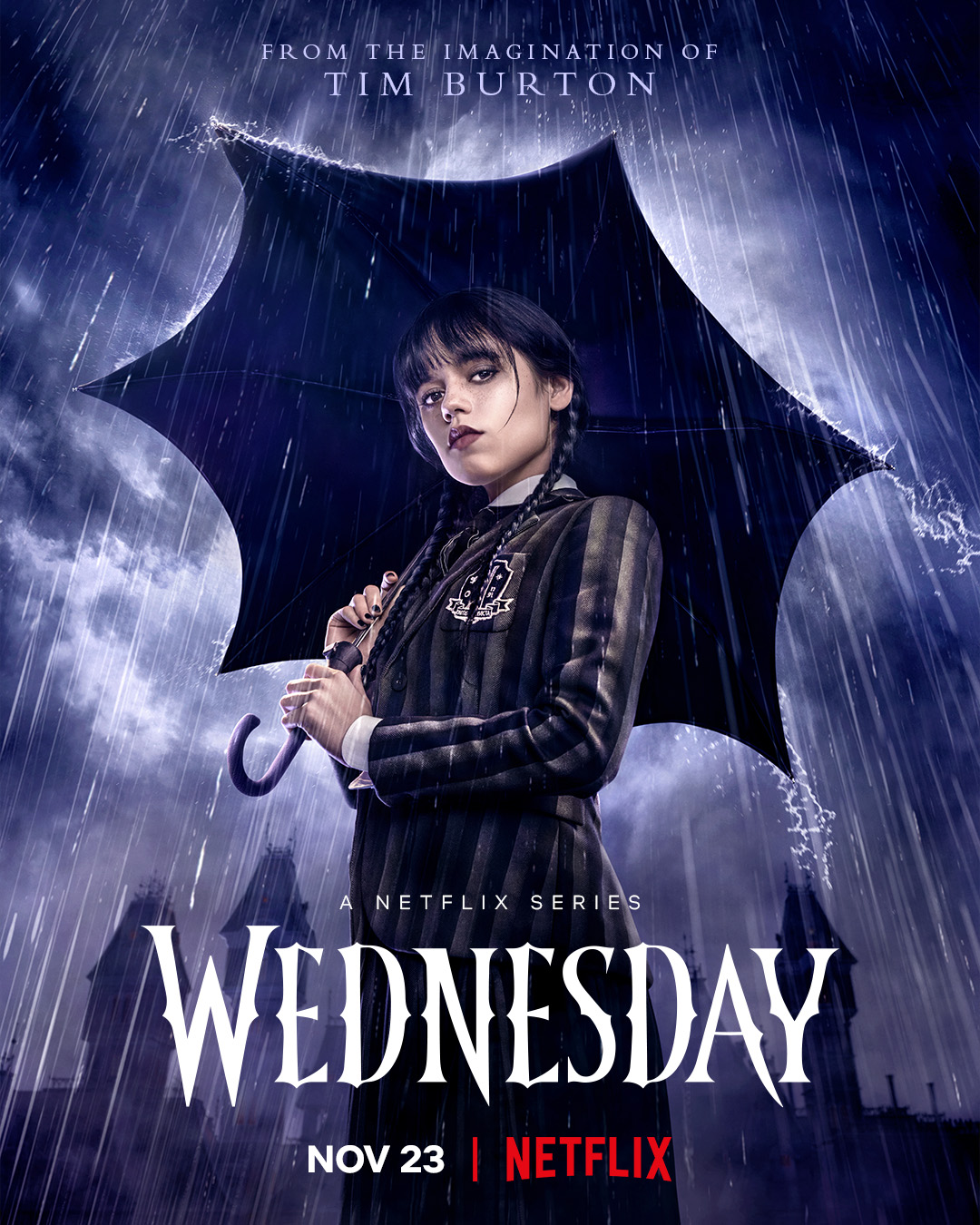
Reference: Manibo, Victor. The Sleepless [Erewhon, 2022].