Showing posts with label anti-hero. Show all posts

Thursday, July 17, 2025

TV Review: Ironheart

Not the usual superhero origin story

A flawed protagonist making repeatedly questionable choices does not fit the typical trope of a superhero story. Even as a slow-paced origin story, Ironheart avoids the traditional heroic hints or setups. For those seeking a save the world, save a friend, or get justifiable revenge premise, this is not that series. Instead, we have a complex character study in a uniquely paced story that’s hard to turn away from.

Riri Williams (Dominique Thorne) is a genius MIT engineering student obsessed with building a perfect Iron Man-style suit. She earns money for her pet project by helping students cheat and she soon gets expelled and is forced to return to her mom Ronnie (Anji White) and their middle-class Chicago neighborhood. While home, she is tormented by memories of her step-father Gary and her best friend Natalie being killed in a drive-by shooting. With even fewer resources available, she accepts an invitation to join a high-tech crime gang to help them physically attack and coerce billionaires into handing over their corporate assets. The gang is led by the charismatic but clearly sinister Parker Robbins (Anthony Ramos), a.k.a. The Hood, who wants to use Riri’s suit in their heists. When Riri has an urgent tech need, she turns to insecure black market tech dealer Joe (Alden Ehrenreich), a.k.a. Zeke, and coerces him into supplying her. Riri notices that Parker’s hood is exuding sinister magic and tries to figure out how to control its power by consulting with a mother/daughter mage duo. Despite her descent of questionable choices, Riri is surrounded by a supportive community of allies, including her surprisingly patient artist mother Ronnie, her talented and supportive friend Xavier (Matthew Elam), quirky mage Zelma (Regan Aliyah), and her insightful and sentient AI NATALIE (Lyric Ross). Riri alternates between pushing them away and embracing them as she tries to stop Parker and the nefarious evil that lurks inside him.

Ironheart is a mix of high points and frustrating inconsistencies. Dominique Thorne is excellent as the tortured, stressed-out genius. Her character’s personality is completely believable and immersive. The ensemble cast is surprisingly appealing. Riri’s mom Ronnie defies the stereotypical hero mom portrayal by being patient, firm, and surprisingly practical when it comes to tracking down the supernatural help her daughter needs. The heist gang consists of colorful characters who steal the scenes they are in. On the other hand, the story suffers from inconsistencies that are hard to ignore. Riri is a genius but can’t get a high-tech job to support her hobby. She’s traumatized by her friend being murdered in a drive-by but chooses to work with a violent crime gang who knows where her family is. And the heist gang’s corporate theft goals seem confusingly unlikely to be sustainable from both a contract enforceability or ongoing criminal liability perspective. This is where you need your willing suspension of disbelief—for the real-life logic leaps, not for the sci-fi tech and the magic.

However, these conflicting plot elements work when filtered through the mind of a flawed protagonist. An unreliable narrator or flawed protagonist is always an interesting storytelling device. In many ways, she seems bent on self-destruction in a way that corresponds to some variation of survivor’s guilt for the loss of her friend. She is introspective, stubborn, and emotionally damaged, with behavior that seems intentionally focused on a series of bad choices. Riri draws her inspiration from Tony Stark, a character with significant personality challenges and anti-hero vibes. Although the two characters are from very different backgrounds and life experiences, they are parallel in terms of their arrogant and sometimes irresponsible worldview.

Surprisingly, my primary comparison for Ironheart is The Bear, another working-class Chicago-based introspective series. Both shows feature uptight genius creators whose internalized trauma leads to toxic behavior and trouble for those who care about them. The ensuing chaos is played out in a uniquely paced, personality-centered story that’s hard to turn away from. Some superhero origin stories involve an immature character making bad or selfish choices that come back to haunt them before they make the pivot to heroism. Peter Parker in Spider-Man had a rough start before finding his way. Rogue in the X-Men started out as a villain before she found her heroic side. Ironheart is a story I watched waiting for the heroic realization to arrive. But when it does finally arrive, Riri remains complicated and continues to make surprising choices in a way that is intriguing but different from the norm. If you are looking for a traditional hero epic, this is not that story, and you will likely feel frustrated. But if you are interested in a complex character study with solid acting and entertaining side characters, Ironheart is a show that will give you plenty to analyze.

Nerd Coefficient: 7/10.

Highlights:

  • Appealing, unevenly paced artistic vibe
  • Frustrating protagonist making confusing choices
  • Excellent lead and supporting cast

POSTED BY: Ann Michelle Harris – Multitasking, fiction-writing Trekkie currently dreaming of her next beach vacation.

Monday, March 20, 2023

Review: Some Desperate Glory by Emily Tesh

 A surprisingly emotionally complex novel about the stories we are told about the world around us, and how those stories survive contact with our own experiences of life.

Kyr has grown up on Gaea Station knowing that she and her fellows are the last scraps of humanity, their asteroid the solitary bastion of a destroyed world and culture, holding out against a hostile universe that killed their planet. She's one of the best fighters of her generation, and knows she's destined for one of the elite military roles when she finishes her training. Kyr is, more or less, happy with her lot.

Then her brother, her shining, perfect soldier brother, disappears, and she's relegated to a role she never thought would be hers. Everything about the life she thought she'd live and the world around her comes crashing down, and she is forced to seek out her brother's strange, irreverent, potentially seditious friend and a captive alien to find the answers to her newfound questions. When she leaves the station that's been the only home she's ever known, she begins to understand that what she's been taught is only part of the story, and that the world outside her own is a more complex place than she ever thought possible.

Unsurprisingly, given the title, Some Desperate Glory is a story about war and propaganda, and about the complexities of conflict. It's a story about the beliefs we're raised with, the stories we tell ourselves to survive, and growing up to realise that maybe, just maybe, what you've been taught isn't necessarily all that's out there.

It is also a stunning, surprising, intensely compelling novel, and an unflinching character view of someone with some really quite unpleasant beliefs.

It is a story that asks - what would it be like, to be someone brought up to believe the propaganda? What would it be like, to think you're the best of the best, and have a duty and a destiny to fight, to kill, even if triumph is beyond you, because everything outside of your own little world is evil, and lesser, and alien, in a literal and a figurative sense?

It's not a fun story, let me put it that way.

But, difficult and uncomfortable though it is, it is a fascinating story and a unique one, and not just because of its chosen character perspective. Tesh plays with our expectations throughout the story, and balances some interesting chronology choices - the closest parallel I can think of isn't another novel, but the game Bravely Default - and, critically, the gorgeous prose that made Silver in the Wood such a joy to read. Though here she's bringing to life the dull corridors of a space station, the algal bloom on an alien world and the vivid experience of fighting for your life in a simulated battle, something of the wonder that she wrote into the woodland of the Greenhollow duology is still here. There's a magic to the world she writes, and it brings a joy even to the grim and gritty parts of the universe she's written.

The pacing too, and those interesting chronology choices, are well handled (though they may not always seem it in the moment). Reading as an e-book, I had a couple of double takes, thinking the book was almost over and then... oh not there's 40% left? Huh? But once you reach the end, it all slots into place, and I honestly cannot fault the choices. Trust the process.

And this is all great, but in my opinion, the truly, bafflingly best bit of this whole story is the character of Kyr herself. Because Kyr... isn't very nice. Kyr isn't good, or pleasant, or particularly likeable. She's definitely not charming. On paper, Kyr is primed to be hateable. And yet... I never could. I was so embedded in her thoughts, in the way she was experiencing the events of the story, that I could never find it in myself to truly rage at her, not matter how much I disliked or disagreed with her opinions and actions. More than any sad emo boy with a sword, Kyr is an anti-hero how they ought to be done, morally tainted to her core and thoroughly compelling in her journey.

Because the book is, for the most part, about that emotional and moral journey Kyr is undertaking. It's not quick, it's not easy, and it makes it all the more satisfying, because the reality of these sorts of changes isn't the lightswitch moment of revelation we get in many stories. People don't become different people overnight. People don't necessarily become different or better people for the right reasons. Sometimes it needs to be personal for them to see what's really going on, no matter how we may judge them for it needing to be there.

Though we are settled very firmly in her perspective, this doesn't cut us off completely from the other main characters, all of whom bring something to the table and play off each other really well. Kyr's squadron mates are an eclectic bunch, and being able to see how they relate to Kyr - sometimes before Kyr realises it for herself - is really enjoyable. Her brother isn't the most exciting man in the universe, but his friend certainly makes up for that, and provides one of the best counterpoints in opinion and just vibe that Kyr gets through the whole story.

And it's a book that's really thinking about how the environment would shape the characters. They all fit - or do not - so perfectly in the world that made them, and it's very clear why they've become the people they have, responded to the pressures of the world as they have. Whenever I come to imagining them all, I can only think that Tesh has put so much careful, considered deliberation into who and how they all are, and it's great.

Which is somewhat my overall impression of the book - down to the last detail, it has been considered and thought over and examined from different angles to make sure each piece fits neatly into the whole. 

Safe to say, then, that I loved the book. But I don't think it's going to be one for everyone. There are moments in the story when we have to watch something really difficult occurring, and deal with the fact our perception of it as the reader isn't necessarily going to align with our viewpoint into it. You have to be willing to sit with some ugliness, some just wrongness, to get through past it and see the story for its value in the end. Which, for me, was worth it, and at no point did I feel like Tesh was letting you think those opinions were right. There's no apologism here. But that doesn't always make it easy or worthwhile, so if you're going in, go in aware that it's not a happy fun light joyful time.

But if the grim and awful - which gets, at times, really grim and awful - and sitting inside the head of a character thinking deeply unpleasant thoughts at times is something you can get through? I truly think this is a fantastic book, and likely set to be one of my best reads of the year.

--

The Math

Highlights: interesting chronology choices, a proper morally grey main character and a real sense of thoughtfulness about the political landscape of the space future world

Nerd Coefficient: 9/10

Reference:  Emily Tesh, Some Desperate Glory [Little Brown Book Group, 2023]

POSTED BY: Roseanna Pendlebury, the humble servant of a very loud cat. @chloroform_tea

Monday, June 2, 2014

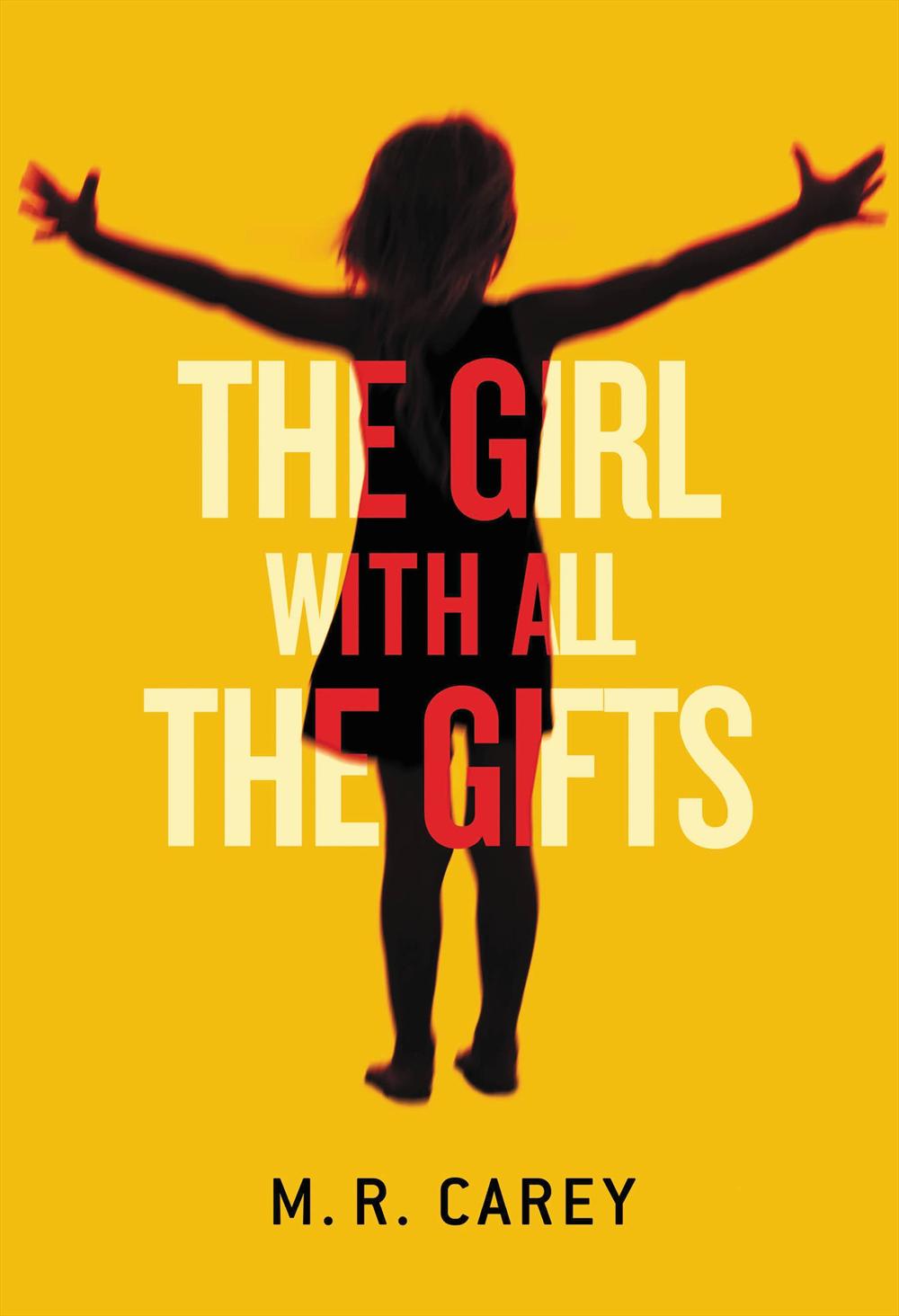
Microreview [book]: The Girl with All the Gifts, by M. R. Carey


Carey, M. R. The Girl with All the Gifts. Orbit, June 2014.
Buy it here starting June 10th!

The Meat (of the Mushrooms

Or, Fungocalypse Now! 

Books about bad guys are awesome. Best of all are those where either the readers or the bad guys themselves (or both) don't even know they're bad guys! Since 'the reveal' about the eponymous girl, Melanie (but her true name, thematically at least, is Pandora!), happens right at the beginning, I'm giving little away when I say that Melanie is just such a doesn't-know-she's-bad character. There are wonderful, slightly displaced echoes of Matheson's I Am Legend here, and a glorious twist at the end worthy of an M. Night Shyamalan movie (one of his good early efforts, not the trite drivel he poops out these days). Choosing to introduce us to the post-(but not fully)apocalyptic human world partly through the eyes of one of its near-destroyers, Melanie, ensures the reader's sympathy for her rather unique plight, caught between the human and 'hungry' worlds.


 ++


                                Ophiocordyceps unilateralis!


                                                                                  =
(Crichton-esque 'meddling with nature' is the implied cause of the fungocalypse)
One of the book's greatest strengths, however, is that despite this tacit endorsement of Melanie's perspective, Carey (the author) doesn't let us slide into the seductively easy trap of identifying entirely with the protagonist (Melanie, the anti-hero) at the expense of those characters to whom she takes a dislike (Sergeant Parks, seen initially from her perspective as a loathsome, hateful Napoleon of a man, turns out to have quite a human dimension as well).
The key in melodrama, broadly defined, is generating an intense burst of antipathy in readers for certain characters because of the injustice or essential unfairness of their actions (i.e., creating someone to hate as the foil for the hero, who we are meant to love), then providing a cathartic (and often violent) resolution in the form of the hero, justice personified, triumphing over the unreasonable foe. So this decision by Carey to take the high road (avoiding the easy payday of a totally despicable character) and keep things balanced between multiple competing, and (perhaps) equally valid perspectives brings deliciously sustained tension to the story as it unfolds. I can't recall the last time I read something possessing such fine equilibrium (and I have no doubt that when this is, inevitably, made into a Hollywood movie, this rare anti-melodramatic quality will vanish, replaced by a much more straightforward morality play, the kind where bad guys are irredeemably bad and good guys as unimpeachable as friggin' Albus Dumbledore). Warm Bodies (book and/or movie) was close, but the future father in law was just such a jerktard!
Was every single aspect of The Girl with All the Gifts full of the same brilliance as the highlights mentioned above? No, there were naturally weaker aspects of the story, in particular behavior by certain characters (here's looking at you, Private G.!) that was frankly so mind-bogglingly dumb as to be, in essence, out of character, as well as a certain coldly rational scientist who indeed began to approach the 'totally bad' type of villain, almost a caricature of "(evil) scientist", so impersonal and inhuman were her actions. But if we leave aside these just slightly jarring notes, we can enjoy what remains: a delightfully entertaining symphony of the fungocalypse!


The Math


Baseline assessment: 7/10

Bonuses: +1 for villain's-eye-view, +1 for humanizing (almost) all the characters and preventing any one viewpoint from achieving melodramatic dominance

Penalties: -1 for including a few less developed characters, indeed mere caricatures of archetypes

Nerd coefficient: 8/10 "Well worth your time and attention"


[As you can read here, 8/10 from us is like an 11/10 from the guys in Spinal Tap!]