Showing posts with label action-adventure. Show all posts

Wednesday, July 22, 2026

Anime Review: Witch Hat Atelier

Children, magic, intrigue, and gorgeous animation in this coming of age adventure.


A girl on a quest to save her mother tries to unlock the secret power hidden deep inside her, but to do so she must be instructed by an unassuming magic teacher with an agenda of his own. The set up seems familiar, the story feels traditional. But, in Witch Hat Atelier the characters are intriguing and the animation is gorgeous. The tone of the show is a gentle complement to Frieren; Beyond Journey’s End. Even the English voice acting offers a nice change of pace with a range of accents and a subtly in the delivery that draws viewers in. This, along with the stylish character design and gorgeous background art make the soft vibes and periodic peril worth watching. The idea of cozy fantasy evokes storytelling that is focused more on quiet human interactions rather than the (also present) big magic battles. Witch Hat Atelier is that kind of friendship-focused story. 

Young Coco is a little girl who lives an ordinary life with her seamstress mother in a rural medieval-like village. In Coco’s world, witches are special magic experts who are able to help the rest of humanity with their supernatural skills. In most versions of witches, wizards, and mages magic is an innate skill that must be trained in the few who possess it. But in Witch Hat Atelier, there is a very big secret about magic, it’s based on drawing specific sigils and runes and, therefore theoretically anyone can do it. To keep magic from being abused, this truth is a closely guarded secret and any untrained people who stumble upon it get their memories erased. When the charming quirky witch Qifrey comes to visit Coco’s town an unknown spirit gives her a forbidden magic book that lets her in on the secret. Since she’s always desperately dreamed of being a witch she can’t help but test out the strange drawings in the book. But disaster strikes when her spell turns her mother into stone. Although protocol demands that Coco’s memories be erased, Qifrey has pity on her and decides to take in the now orphaned girl to teach her how to become a proper witch. Coco hopes that she can learn enough magic to break the spell on her mother and Qifrey hopes he can use Coco to find the evil “brimmed cap” witch who lured the child with forbidden magic. Qifrey takes Coco to his cozy but isolated atelier where Coco meets his other young students, the aloof Agott, friendly Tetia, and uptight Richeh. They are later joined by Qifrey’s magic instructor friend Olruggio. Coco struggles to keep up with the more experienced students and the group is periodically targeted by the evil witch league known as the Brimmed Caps who have an attachment to old, forbidden magic. The repeated presence of the Brimmed Caps or elements of forbidden magic lead the local magic law enforcement to suspect that Coco may be in league with the Brimmed Caps. But as the story progresses, viewers discover that Qifrey has a secret agenda of his own.

Witch Hat Atelier is distinctive for both its art style and its focus on children. Many anime adventures involve children who are somewhere in adolescence, at least in middle school or all the way to older teens. In Witch Hat Atelier the four girls are distinctly young, grade school age, although the medieval style setting makes the usual societal reference points less clear. The children are physically small, emotionally immature, and quite vulnerable despite their fledgling magical abilities. Having four little girls without a mother figure is an interesting choice that inherently creates its own baseline tension even as the larger adventures appear. There are male adults in the primary and supporting cast but there are almost no adult women characters other than the friendly mentor Alaira (who appears very briefly early and returns in the final episode) and there is a brief interaction with a nurse when Coco gets sick. The intrigue escalates as we learn more about the girls’ teacher, the charming and kind young man Qifrey. At first glance Qifrey seems older or age-ambiguous due to his white hair and spectacles, however it is quickly clear that he is a relatively young adult. The truth about Qifrey is also an intriguing mystery. He repeatedly demonstrates genuine concern for the well-being of his four little students, especially the new and naïve Coco. However, he intentionally keeps his children separate from the main, central atelier institution, and he engages in enough questionable behavior to make viewers wonder what exactly is going on with him. 

Despite the intrigue with him, the focus of the story is on the children, and on Coco in particular. If you don’t like little kids, especially sheltered naïve kids making poor choices, this may not be the right show for you. But the pacing is thoughtful and the vibe is reminiscent of a less murder-y Frieren or like a G-rated version of The Apothecary Diaries. Coco, as the main character, is sweet, gentle, good-hearted, and brave. But she is also naïve and careless in a way that may be age appropriate but is still frustrating to watch. Each of the children fit a particular personality extreme. Agott is the grouchy, aloof, loner. Richeh is kind, but uptight and oppositionally defiant. Tetia is the friendly, sensible, diplomatic, pleaser. Coco is the wide-eyed, brave, but naive optimist. Fortunately, her naïve sweetness is balanced by her significant cleverness and her insight into the feelings of others. A major part of her appeal is her effect on the other characters. Like Tohru in Fruits Basket, Coco is a child who, despite losing everything, is able to care deeply for others and help them make meaningful improvements in their world view. Coco and the grouchy Agott have a major character arc in the first season. However, my favorite interaction is Coco’s friendship with the young apothecary boy Tartah. The two of them are adorable in their childhood vulnerability and their mutual kindness to and inspiration of each other. Tartah is a particularly great side character who manages to be calm, practical, and insightful. He quietly observes much of what is going on when things are about to fall apart. And he is also the only character who catches on to Qifrey’s suspicious behavior but, nevertheless, is measured in his approach to investigating it. 

Despite the presence of adults in the story, the adventure is primarily from the point of view of the children and the tone is that of a coming of age adventure. Unfortunately, the first season of Witch Hat Atelier ends on quite a bit of a cliff-hanger that will have the anime-only viewers hurrying to grab a copy of the manga to see how things turn out. I did and it was quite worth it.

--

Highlights:
  • Cozy, kid focused content
  • Gorgeous animation and character design
  • Balance of cuteness and tension

Nerd Coefficient:
8/10

POSTED BY: Ann Michelle Harris – Multitasking, fiction writing Trekkie currently dreaming of her next beach vacation.

Tuesday, February 10, 2026

Film Microreview: Cold Storage

If exploding zombies are your thing…

Cold Storage is the latest iteration of the fad for fungus zombies, which seem to be still in vogue. This time, they’re the result of a medical experiment that was once aboard Skylab and everyone forgot about until it escaped an oxygen tank that fell on Australia. In an extended prologue, we witness the disaster that happened two decades ago when a comically understaffed team of experts went to contain the mutated organism and lost one member in the most gruesome way. This is the type of fungus that takes over the nervous system and compels the victim to seek a location for optimal dissemination. That’s scary enough, but on top of that, the infection ends up blowing up your guts all around you. The movie delights in showing the many ways this can deform a cadaver.

Another member of that ill-fated team, played by Liam Neeson, suffers an unspecified back injury that conveniently keeps him out of the main action in the present, when the military building that kept the last sample of the zombie fungus (now decommissioned and repainted as a self-storage facility) has a minor electrical mishap with catastrophic cascading effects: a freezer malfunctions, the fungus starts growing again, it breaks containment, and it climbs up the food chain until it becomes a problem for humans. Liam Neeson is dragged back from retirement to save the day again, but he spends most of the movie traveling to the site of the crisis, and most of the rest of the movie lying on the floor because his broken back can’t handle gunfire recoil. Why do you even hire Liam Neeson to not let him do Liam Neeson stuff escapes me.

Instead, our heroes are Joe Keery, fresh from saving the world in Stranger Things, and horror veteran Georgina Campbell, whose character is very tired of running from monsters and just wants to hide and wait. These two stumble into the whole world-ending menace because they’re bored and decide to investigate a weird noise in the self-storage facility where they work the night shift, and discover the alarm that was triggered by the broken freezing system. Meanwhile, the fungus has already spread to the local fauna, and when the shambling victims cross paths with our heroes, it’s time for them to run for their lives.

It helps that they have more plot armor than Bugs Bunny. The fungus zombies repeatedly ooze, spittle, burst open and projectile-vomit their gooey innards right next to our heroes, and somehow not one drop of infected material splashes onto them. When you consider that this fungus has been shown to be able to penetrate cement and metal, the protagonists’ eventual survival can only be explained because their names are on the poster and aren’t allowed to die. So the gore quota is met by an array of secondary characters established as unpleasant enough for it to be OK to enjoy watching them suffer the most spectacularly messy deaths. This movie has a lot of fun with zombie makeup, and even more fun with throwing zombie guts at every surface.

Cold Storage is the kind of supremely silly flick that demands out loud that you switch off your brain. There’s no point in pausing to question the multiple instances of military bureaucratic dysfunction that it must have taken for this plot to happen. Don’t expect any implied reflection on the problem of badly maintained public infrastructure or the irresponsibility of storing hazardous materials near civilian areas (one character has a small atom bomb hidden in a house with children, and it’s treated as a nonissue). Just sit and savor the spectacle of a screen smeared with squishy rotten organs. Hey, the world is ending anyway, right?

Nerd Coefficient: 4/10.

POSTED BY: Arturo Serrano, multiclass Trekkie/Whovian/Moonie/Miraculer, accumulating experience points for still more obsessions.

Wednesday, January 21, 2026

Anime Review: Spy x Family: Season 3

Spy x Family returns for a bold, emotional, and action packed season 3.

Anime seasons ebb and flow, with some seasons feeling slower and others being absolutely amazing. After an uneven second season, everyone’s favorite fake family has returned in fierce form for an action-filled and emotion packed Season 3. The latest stories of super-spy Loid, lethal assassin Yor, mind-reader Anya, (and clairvoyant dog Bond), are poignant, stressful, and very entertaining.

Spy x Family takes place in Ostania, a fictional 1960’s style country in a cold war with its enemy, the neighboring Westalis. To prevent another devastating war between the neighboring countries, a cynical Westalis super-spy (Agent Twilight) is ordered to spy on an extremely reclusive Ostanian political party leader. The only way to do this is to enroll a child in the elite Ostanian private school that the political leader’s son attends. To create the required fake family, the spy takes on the fabricated identity of psychiatrist Loid Forger and adopts young Anya from an orphanage but is unaware that the child is a telepath. He then meets Yor, a sweet and kind city hall clerk who needs a fake marriage to help with her own job security because, in Ostania, single women over a certain age are often suspected of being spies or insurgents. Unbeknownst to Loid, his new wife Yor is secretly an elite assassin. Yor is genuinely kind when she’s not killing people at her night job, but she is a little clueless when it comes to normal life and she is unaware that mild-mannered Loid is a super-spy. 

Only telepathic Anya knows the truth about her adoptive parents’ true identities but, thanks to her obsession with violent crime tv shows, Anya finds Loid’s and Yor’s hidden occupations to be very exciting. After a wild adventure, the family adopts a clairvoyant dog they name Bond but only Anya can sense Bond’s premonitions about the future. Rounding out the cast are Anya’s grade school classmates, Damian, the political target’s young son, and Becky, a pampered but friendly heiress. We also meet Franky, the comic relief informant, and we meet Yor’s stressed out younger brother Yuri, whom she helped raise after their parents died. Unbeknownst to Yor, her brother is a member of the secret police who is suspicious of Loid. Because Loid, Yor, and Anya are all orphans, the show emphasizes the importance of both biological and chosen family ties. The balance of cuteness and violence is what sets the story apart, especially with a cast of funny supporting characters, all with 1960’s fashionable clothing and a cool retro setting. 

Season 3 has three primary story arcs. The first and strongest arc is the long awaited deep dive into Loid’s backstory. Throughout the series, we are reminded that “Loid” is a fake name for the spy “Twilight” which a fake name for a person whose true identity remains a mystery, even to viewers. Like Sai in Naruto Shippuden, Loid/Twilight has lost his original identity and takes on a new transient persona for every job. Also like Sai, Loid begins to change when he takes on a role in his new found family that reignites his long hidden emotions. But who was Loid before he accepted his life of deception? Other than a few fleeting flashes of a crying child, we know nothing about Loid other than that he suffered the devastation of war. Over a series of beautifully written episodes in Season 3, we learn about Loid’s creative childhood friends, his harsh father, his protective mother, and the idyllic town in which he was born. Without revealing his or his parents’ names, the story shows us how he went from being a playful imaginative boy to being a war orphan, then a jaded soldier (including a poignant early encounter with his current informant Franky), and eventually accepting recruitment into the spy program. After losing everything he loved, he learns to be distrustful of others and to use deceit to survive. However, despite the repeated negative impressions of the Ostonians who attacked his country, it is ironic to see how close and protective he has become of his make-believe Ostonian family. 

The second major story is a terrorist hijacking of Anya’s school bus. Conveniently for the plot, Loid and Yor are unavailable to help, which means this story is focused on Anya and her school crew who are on their own against a violent group of hostage takers. Unlike Loid’s backstory arc, the hijacking episodes have lots of traditional Spy x Family humor notwithstanding the tense premise. Despite the weapons pointed at her, Anya’s mindreading gives her an upper hand with the kidnappers as does Damian’s grumpy bravery and protectiveness, and Becky’s cleverness and loyalty. But the key to cracking the situation occurs when Anya discovers tragedy involving the main hijacker’s daughter and her involvement in a political protest. This gut-punch of sadness sits in sharp contrast to the primary humor and adventure tone of the story. 

The third major story is the spy conflict that ultimately pits Loid against his brother-in-law Yuri in a tense battle of wits and fists. Loid’s Westalis spy agency is betrayed by a double agent who steals their information and plans to sell that data, including the identity of their agents, to Ostania. Loid is ordered to stop the traitor before he makes it to his meeting with the Ostanian secret police. Unfortunately, Yor’s brother Yuri is part of the squad meeting the traitor and he is on the lookout for the famous spy Twilight to make his move. After much speculation throughout the series, we finally see Loid and Yuri facing each other in their true spy versus secret police personas. The result is intense and fast paced excitement with just enough family drama and irony to tie it together. 

A shorter but still funny mini-story is the introduction of Damian’s seemingly cheerful mother, Melinda whose encounter with Yor leads to a day of fun in which Yor repeatedly and inadvertently shows off her superhuman strength. However, in the hijacking arc we later find out that Melinda’s cheerful exterior hides disturbing thoughts and emotions towards her mostly neglected son. 

A common thread throughout the third season is the importance of family in all of its various forms. A second, less endearing theme, is the harm caused by authoritarian regimes and political machinations. Spy x Family’s premise is modeled on regimes that are politically repressive. Yor was originally willing to accept the fake marriage because being a single woman makes her look suspicious in their society. However, in Season 3 we truly get to see how repressive a society Ostania is. We also finally get to see Yor’s brother Yuri in action as an agent of the Ostanian Secret Police. His single-minded dedication to the government is unsettling, especially since it is the same government that puts people at risk just for being “different.” Overall, Season 3 of Spy x Family has the strongest storytelling thus far. It dives into difficult subjects and pauses the humor long enough to do those moments justice. But there are still moments of the traditional Spy x Family dark comedy, especially with Anya having to navigate a dangerous situation with the help of her elite school classmates instead of her super powered parents. This combination of intense storytelling and complex emotions make Season 3 of Spy x Family the strongest so far.

--

The Math

Nerd Coefficient: 8/10

Highlights:
  • Tragic and poignant backstory
  • Big themes of family and political machinations
  • Strongest storytelling so far

POSTED BY: Ann Michelle Harris – Multitasking, fiction writing Trekkie currently dreaming of her next beach vacation.

Monday, January 12, 2026

Film Microreview: Anaconda (2025)

The Ouroboros of sequelitis eats its tail

Because every last bit of IP must be undusted for quick profit, this time we have a movie that just doesn’t bother pretending it’s about something more than squeezing another IP, and in the process successfully denounces itself. This “spiritual sequel” to 1997’s Anaconda both acknowledges that the original was ridiculously over the top and strives to beat it by being a hundred times more ridiculously over the top. It’s an impossible beast: a remake that is about how absurd it would be to film that remake. But it doesn’t have a commentary to make on its premise; this is no Charlie Kaufman’s Adaptation. Its gimmick consists in pointing at itself and smirking at the audience: Hey, isn’t it silly that Hollywood keeps remaking everything? Ha ha. Joke’s on all of us for buying the tickets.

Anaconda doesn’t try to comment on the tension inherent in its assignment, on the dual task of telling a story that is about its own inadequacy for telling that story. It doesn’t take the example of its worthier predecessors, like 2005’s Bewitched, a metafictional comedy about rebooting Bewitched, or 2021’s The Matrix: Resurrections, a neat rebuke to the executives who forced it into existence and simultaneously a beautiful case for its own existence. The whole point of the new Anaconda is that there would be no point in a new Anaconda, and when it goes ahead and does it anyway, it doesn’t know how to justify itself.

The in-universe excuse for the reboot is that two childhood friends who always dreamed of making horror movies have a midlife crisis and suddenly decide to fly to the Amazon jungle and film a new Anaconda before they get too old to try things. Not the worst of premises, but it feels strange to watch Jack Black, of all people, play the responsible, mature half of the duo, while the magically ageless Paul Rudd is simply impossible to believe as an unemployable D-lister. These two characters have been stung by the nostalgia bug, and constantly reminisce about their school days, when they made zero-budget films for the pure love of the craft. But their inclination for artistic purity doesn’t extend beyond their lines; the actual plot devotes a lot of attention to who owns the legal rights to remake Anaconda.

(Curiously, the new Anaconda is so disconnected from the plot of the original that you wouldn’t need those rights in order to film this one. It’s the kind of mildly tangential allusion The Asylum gets away with selling all the time.)

Much like the self-serving abomination that was Space Jam 2, the new Anaconda takes care to remind viewers again and again that it’s a Sony property. Accordingly, the defining ethical question that propels the plot is whether you respect Sony’s property. The other themes alluded to in the script (illegal gold mining, cruelty toward animals, substance abuse disorders, the pursuit of happiness) are secondary to the sacred status of corporate ownership rights.

Barely tolerable as a buddy comedy, toothless as a horror thriller, self-defeating as a metafictional exercise, the movie we get feels like something captured by its titular monster: a regurgitated, half-digested lump that is hard to ignore but much harder to look at.

Nerd Coefficient: 3/10.

POSTED BY: Arturo Serrano, multiclass Trekkie/Whovian/Moonie/Miraculer, accumulating experience points for still more obsessions.

Wednesday, December 10, 2025

TV Review: Zomvivor

An entertaining succession of jump scares and survival stress.


Horror stories have been abundant in 2025, providing a cathartic outlet for processing contemporary stress. One of the latest contributions to horror’s zombie sub-genre is a new Netflix short series from Thailand. Zomvivor is the story of several groups of college students trying to survive a zombie outbreak on their locked down campus while trying to uncover and understand the true nature of the infected people who are trapped there with them. With plenty of blood, zombie bites, and moderate gore, the series works well as an entertaining succession of jump scares and survival stress, despite the fact that the larger story arc and backstory are much less satisfying.

The show begins in the midst of a zombie outbreak on a college campus in Thailand. Hordes of flesh-hungry, infected humans attack the remaining survivors on the campus. Once bitten, the victims also turn into a ravenous, vicious, but seemingly mindless, zombies. As students flee the escalating attacks, the survivors settle into several groups including a group of cheer squad guys in a greenhouse and a group of alpha personalities and their minions in a library. In an ironic flashback we see a student film project about a woman who has been turned into a zombie and is now tied to a chair as her colleagues figure out what to do with her. The student actress, Lily, agrees to the student director’s request that she cry tears in her bound zombie state and Lily ponders whether a person so damaged and infected would have the capacity for that type of self-reflection. 

A central plot point involves a genius student Ning who accepts an offer to work with a nervous Professor Wiroj on a project that may cure her comatose mother. Through a series of flashbacks, we learn that Ning and her younger brother Non were raised by their single mother in a working class household. Ning and Non are both students at the university where Ning is a promising honor student on a scholarship. Their mother becomes unexpectedly ill and eventually comatose. Professor Wiroj recruits Ning to help find a cure by working on a body-preserving project for rich people called Anisong. The project is funded by the mysterious benefactor who funds the university. However, through a series of unfortunate and deeply upsetting events, the benefactor’s awful son and heir gets infected with a defective serum and the research pivots to a cure to revive and regenerate his body and that of Ning's comatose mom. As part of the test trials, Dr. Wiroj targets poor, vulnerable, working class workers on the campus to be the test subjects. He feels bad about this, but not enough to stop, especially because he is secretly in love with Ning’s mom. As it turns out, the variant serum is volatile and the test subjects begin to display some very odd behavior. Meanwhile, back in the present, a group of students try to make a stand against the growing hordes of zombies. On group is focused on compassion and the other is focused on violence. Complicating things are the military / private security who want to kill all the students to contain both the outbreak and the secrets behind it. Some of the survivors are also impeded by an uninfected but delusional student who sabotages their safety. They are also hampered by power dynamics among the alpha leaders; and by many students’ feelings of guilt at having to kill their fellow classmates.

Zombie stories have so many commonalities that viewers often know what they're getting when they start to watch. Zomvivor adds some interesting twists to the usual zombie drama which make it quite entertaining, despite the predictable elements. One useful twist is having the story take place in an elite college setting. This allows the characters to have a more strategic engagement with the zombie outbreak since many of them are science students who can theorize on how the zombies behave and can try to create biological and chemical based options for responding, rather than just fighting, running, and hiding.

Another interesting twist is the contained nature of the outbreak. Many zombie horror films involve a zombie apocalypse where entire countries are devastated and only pockets of survivors remain. In Zomvivor, the zombie outbreak we see is essentially confined to the campus. The surviving students are unable to leave but so are the zombies. In the series, the rest of the country may theoretically still be living a normal life while the survivors and zombies remain caught in a confined, locked room adventure.

The story is also told from multiple points of view rather than focusing on a single, lead character. And, Ning, the character who has the most camera time, is an interestingly unreliable narrator and ultimately unlikeable character as she processes new revelations about her morally gray science project. There is, in fact, no central, pure heart hero with whom viewers can emotionally align themselves. The very large ensemble cast makes it hard to bond with a particular character. This is surprising given the show’s survival story concept but it also adds tension to the story by emphasizing the general sense of uncertainty.  On the other hand, the series does a nice job of showcasing kindness, through the altruism and compassion the cheer squad boys show to an infected friend and with each other. The show also briefly addresses class disparities and the way the working class people are treated as disposable, even by the lead characters. In a creepy twist, the zombies, particularly the original cleaning and custodial workers, continue to incoherently follow their pre zombie life routines on the campus, compulsively and sloppily mopping or sweeping with vacant eyes and bloodstained hands. The effect is nicely poignant.

However, despite these interesting elements, the larger sinister background plot feels a bit convoluted and ultimately not emotionally engaging. Key moments of revelations about the villains are hurried through, larger motivations are unclear, and the show ends on an incomplete cliffhanger. After so many satisfying, intense, and entertaining moments throughout the series, the finale is a bit frustrating and leaves viewers without closure. Instead, the ending intentionally leaves us with more questions. For those who like a twisty ambivalence, the adventure may be worth it. For everyone else, it may be a thoughtful and enjoyable ride with an unexpectedly abrupt exit.

--

Nerd Coefficient: 7/10

Highlights:
  • Entertaining jump scares and intensity
  • Appealing side characters mixed with negative or unreliable narrators
  • Leaves viewers with more questions than answers
POSTED BY: Ann Michelle Harris – Multitasking, fiction writing Trekkie currently dreaming of her next beach vacation.

Tuesday, February 18, 2025

Film Review: The Gorge

What can be more romantic than jumping over the pit of hell to meet the right one?

As the old song goes:

he was a mercenary manhunter with PTSD-induced nightmares and nothing to live for
she was a trained sniper with a world distance record for the perfect shot
can I make it any more obvious?

Speed's Sandra Bullock warned us that relationships born from dangerous situations don't have the best odds, but life in this century has become a 24/7 dangerous situation, so we may as well fall in love and hope for the best. If you've been assigned by a super-secret agency to stand guard by the edge of a cursed pit full of unknown horrors, all on your own, for an entire year, and the only human being available to talk to is the other expert sharpshooter stationed in the tower at the other edge of the pit, what are you going to do? Have romantic dinner by candlelight in the evening and fire bazookas at the hungry hordes from the abyss in the morning, that's what you do.

It's nothing terribly innovative to juxtapose the blossoming of love and the ever-present specter of death, but it hits differently after a worldwide pandemic. Whether intentionally or not, The Gorge captures the feeling of isolation during quarantine, the encroaching boredom of having the same books and the same walls to look at day after day after tedious day, and the hunger for human connection that can't be fulfilled because what awaits outside is death. In those months of mandated seclusion, it truly felt like there was an all-devouring gap between us and our neighbors, and crossing that forbidden distance was always followed by a period of heightened dread: Did I get infected? In how many days will I know? Have I become a danger to others? It's a miracle to find the love of your life in such circumstances.

But there's another way of reading the themes of The Gorge, if you'll allow me a small spoiler. As our two lethal lovebirds investigate what created that rotten hellscape, they run into some wartime secrets that their respective governments have been remiss about handling. The winning parties of World War 2 have spent decades trying to keep the titular gorge from spreading its filth to the rest of the planet. It won't do to just contain this relic from Nazi times; it needs to be eliminated. As long as that threat remains, there's a sense in which World War 2 is still being fought today.

Which seems fitting for our times, when somehow, after all these years, we still have to deal with leftover Nazi garbage sprouting around us like mutant weeds. In The Gorge, the whole problem began because the winning parties (Americans, Brits and Russians) tried adopting the enemy's methods. Well, look at us now. The curse has touched us, and we were the ones who invited it in.

As combat thrillers go, some of the tension in The Gorge is lost by the audience's knowledge that both leads are professional assassins who can survive a fight with tree-themed zombies with only a few scrapes to show for it. But as a welcome tradeoff, there's an element of competence porn in the way these two quickly synergize their skills into an efficient killing team. There's no "come with me if you want to live," no unforced errors caused by panic, no one assigned to the role of damsel in distress. When they save each other's lives, it's presented as partners in battle doing their business, not as the Designated Awesome coming to the rescue of the Designated Clumsy. I was surprised by how much more I could enjoy a scene of continuous machine gunfire versus the doubleplusundead when I didn't have to worry about anyone making a rookie mistake.

While watching, I needed to remind myself that there's a level at which this type of overanalysis can kill a story, and it's evident that this movie has been a victim of that. Of course world governments would be more deeply involved in keeping the gate to hell in check. Of course such a location would be patrolled with more than just two guards. Such criticism misses the point of the story. Despite the intense barrage of popcorny action (and there's more than enough of that, with lots of chases and headshots and explosions, and a particularly nail-biting scene with a slowly ascending jeep), I find it moving that The Gorge is essentially about the life-saving choice that our historical moment needs: finding the courage to reach across the open maw of chaos to hold the hand of a loved one.


Nerd Coefficient: 8/10.

POSTED BY: Arturo Serrano, multiclass Trekkie/Whovian/Moonie/Miraculer, accumulating experience points for still more obsessions.

Monday, January 13, 2025

TV Review: Dead Boy Detectives

An entertaining horror comedy packing a lot of emotion into a short series

Hidden away in Netflix’s YA fantasy section, Dead Boy Detectives is a feel-good horror comedy that has already been cancelled. Fortunately, the sole existing season is enormously satisfying and the plot wraps up nicely in its quick but entertaining eight episodes. The show follows the adventures of two dead teen boys (Edwin, who was killed at the turn of the century, and Charles, who was murdered in the 1980s) who form an investigative agency to solve mysteries for other ghosts. Things change when they cross paths with Crystal, a psychic teen girl with amnesia and a stalker demon boyfriend. Later they ally with Niko, a spiritually sensitive but lighthearted student grieving the death of her father. Although it exists in the same universe as the broody Sandman television show, Dead Boy Detectives takes a much lighter tone. It has intensely likeable leads, refreshingly diverse casting, and a clever mix of the tragic and the very funny, with twisty plots to keep viewers engaged. I haven’t enjoyed a dark comedy this much since season one of Russian Doll. Like Russian Doll, Dead Boy Detectives has emotionally wounded main characters caught in outlandish situations that ultimately lead them to inner growth and leave viewers with a satisfying story arc.

In the early 1900s, Edwin (George Rexstrew) is attacked by his classmates in an occult ritual at his British private school. The prank summons a real demon who (apologetically) traps Edwin in hell until he finds a way to escape years later. The deceased Edwin returns to Earth as a ghost and meets Charles (Jayden Revri), a 1980s high school boy who has just been murdered by his classmates after he protected another student from bullying. Instead of moving on to the afterlife, Edwin and Charles hide from Death (Kirby Howell-Baptiste) when she comes for them, and decide to start a detective agency to help other ghosts resolve mysteries or other injustices related to their deaths.

In the first episode, they are approached by a young Victorian-era ghost girl who asks them to help her psychic human friend Crystal (Kassius Nelson). Crystal has started behaving erratically and seems to be possessed but, as the ghost girl notes by way of another explanation, she is also “American.” In the process of helping Crystal regain control of herself, the three become involved in the mystery of a missing child and travel to an isolated New England town, Port Townsend, to investigate. While there, they connect with Niko (Yuyu Kitamura), a Japanese exchange student who becomes infested with hilariously foul-mouthed dandelion sprites (Max Jenkins, Caitlin Reilly). Edwin and Charles have to adapt to their new living allies while dealing with new threats in Port Townsend from the tricky and seductive Cat King (Lukas Gage) and from Esther (Jenn Lyon), a sarcastic and beauty-obsessed witch.

Throughout the story, Edwin is brilliant and sophisticated, but also uptight and hesitant to trust any newcomers. After decades with just Charles as a companion, he is not open to the two new women in their lives. In contrast, Charles is cheerful, upbeat, and friendly, and develops an attachment to Crystal, leading to one of two unexpected love triangles in the show.

In addition to strong leads, the show has an excellent cast of memorable side characters, including Tragic Mick (Michael Beach), a cursed walrus forced to live in the form of a middle-aged man who runs a magic shop that helps the teens; Monty (Joshua Colley), the witch’s handsome and seductive bird turned boy who becomes attracted to Edwin; the Night Nurse (Ruth Connell), a hilariously bossy official in the afterlife agency whose job it is to locate missing ghost children like Charles and Edwin; and Jenny (Briana Cuoco), the sole mundane human and a cynical goth butcher shop owner.

Each of the characters is laugh-out-loud funny, but also fiercely brutal or intensely tragic. The dichotomy works well, though, creating intensity without bleakness and softening terrifying moments with unexpected bursts of sarcasm or irony. There are also scenes where the show leans into the sadness of Edwin’s and Charles’s backstories without an undercurrent of humor, and that contrast of seriousness makes the overall story even more powerful. Towards the end of the series, the tale of Esther’s origins gets a little complicated and devolves into a rushed montage-style summary, which is not as helpful. The same thing happens with Crystal’s backstory when she starts to uncover who she really is. But, for the most part, Dead Boy Detectives delivers a near-flawless acting ensemble which draws you in from the first moment and leaves you cheering at the end.


Nerd Coefficient: 8/10.

Highlights:

  • Strong cast of memorable characters
  • Addictive villains
  • Grim humor with a little bit of everything

POSTED BY: Ann Michelle Harris—Multitasking, fiction writing Trekkie currently dreaming of her next beach vacation.

Tuesday, September 10, 2024

Quick Round: A Gateway Guide to Anime

For viewers not quite ready to swim through a thousand episodes of One Piece, here are a few suggestions of compact, accessible anime that are easy to jump into.


Anime, once a niche, specialty indulgence, has rapidly become mainstream. Millennials were raised watching Naruto on Adult Swim and Gen Z has fully dived into Netflix’s and Crunchyroll’s easy streaming access to classics such as One Piece, Attack on Titan, and Demon Slayer. Celebrities like Michael B. Jordan, John Boyega, Jamie Lee Curtis, Megan Thee Stallion, and others have publicly embraced their love of anime leading to a new wave of curious fans. Like approaching a long running soap opera or a lengthy book series, newbies may not know how to connect with the growing popularity of anime. However, the journey will be worth it if you follow the right path. A good anime is the perfect balance of edgy and entertaining, clever and emotional, creative and engaging, quirky, funny, yet incredibly relatable in both profound and minor themes.

Many of the popular anime shows are based on manga (Japanese comics) which are serialized in weekly or monthly publications. Most of the most popular anime are shonen, meaning they are primarily or originally targeted at teen boys. This doesn’t define the viewership but it is a helpful context for understanding some of the questionable content that’s included in otherwise great storytelling. The “Big Three” anime are generally considered to be Naruto, One Piece, and Bleach. Each of the long-running series clocks in around or beyond a thousand episodes (including time skips and sequels). However, there are hundreds of other excellent and/or very popular anime out there including Attack on Titan, Jujutsu Kaisen, My Hero Academia, and Demon Slayer, as well as classics like Dragon Ball, Sailor Moon, Inuyasha, and others. Anime is elusive for some because of its quirkiness. The character design differs from series to series, with artistically realistic characters to fantastically strange but the thing that makes anime accessible is the diversity of stories. From sports to cooking, fantasy to mysteries, romance to horror, there is an anime for every personal taste, you just have to find the right one. For viewers who are not quite ready to swim through a thousand unpredictable episodes of One Piece, here are a few suggestions of compact, accessible anime that are easy to jump into. 

Spy x Family – Superspy Twilight (Loid Forger) creates a fake family to infiltrate an elite private school to track an elusive political figure. He adopts secretly telepathic Anya from a rundown orphanage and later enters into a marriage of convenience with gentle city clerk Yor, who needs a fake marriage to help with her own job security. Despite her genuinely sweet persona, Yor is a clandestine assassin. Neither Yor not Loid know the other’s true identity but Anya does. Anya keeps her telepathy to herself, afraid that her new parents will abandon her if they find out. However, she uses her skill to secretly help her parents without their knowledge. The show has a family friendly vibe although people do get shot and stabbed onscreen. In true anime fashion it’s relatable and quirky, charming and edgy. Some of the later episodes are a bit slow but overall, the first season is entertaining as we watch these three orphans create a family and navigate intrigue and adventure while still struggling with the slice-of-life reality they have created for themselves. 

Zom 100: Bucket List of the Dead – A zombie adventure with a twist. Anyone who has had to endure a soul-sucking job will relate to overworked, entry-level office worker Akira’s exhaustion, misery, and disillusionment as he works around the clock with no time for himself. All of that changes when a zombie apocalypse breaks out. Instead of being horrified, Akira is relieved that he no longer has to go to work. He creates a bucket list of things he has always wanted to do and navigates the zombie overrun cityscape to try things he’s never had time to do. Each day he encounters friends, allies, and of course zombies as he builds a cohort of fellow survivors. The zombies are grotesques but the blood splatter is brightly multicolor so it’s more palatable for the squeamish. It’s weird to have a comedy version of The Walking Dead but the delivery is hilarious and relatable. The show is a grim mix of character study, societal commentary, and laugh out loud humor.

My Happy Marriage – For romance fans, My Happy Marriage is a fairy tale remix with fantasy elements and all of the best romance tropes including: grumpy-sunshine, forced marriage, knight in shining armor, and Cinderella. Kind-hearted Miyo is abused by her step-mother and half sister and ignored by her scheming father. In a world where elite families are blessed with magical powers, Miyo seems to have none. She is reduced to being a servant in her own home after the death of her mother. When her father sells her off to a cruel military leader, she accepts her fate only to discover that her betrothed is different from his reputation. The show is filled with adventures, friendship, and romance and season one is a satisfying complete story that will leave traditional romance fans happy. 

The Promised Neverland (Season One) – Don’t be fooled by the adorable children in the anime graphics. Promised Neverland presents cuteness with a violent twist. Grade school aged Emma, Norman, and Ray live happily in a home for children with their kind caregiver, “Mom,” until they discover the real reason they are so well fed and cared for. Season one is a twisty adventure in survival that draws you in from the first stunning episode.

Fruits Basket (2019 version) – The ultimate anime soap opera. Sweet, optimistic high schooler Tohru’s life is changed when she moves in with the cursed Sohma family of shape shifters who uncontrollably change into animals of the zodiac. The large ensemble cast includes cynical author Shigure (the dog), the older cousin to short-tempered Kyo (the cat) and the designated family prince Yuki (the rat). Tohru is homeless and mourning the loss of her mother, Kyo is scarred by his own mother’s suicide, and Yuki’s smug charm masks his own childhood trauma. The Sohma clan is controlled by the cruel, narcissistic Akito who torments the family. Fruits Basket is filled with romance, tragedy, plot twists, attempted murder, everyday high school life, random comedy, and lots of adventure. If you can get past the quirky shape-shifting, the addictive plot will be appealing to fans of complex, family dramas.

Attack on Titan – Humanity has been overrun by horrifying titans: giant, murderous humanoids. To survive, humans live in walled communities to keep the titans out. But when the great wall is breached, Eren, Mikasa, and Armin join the Survey Corps to help track and defeat the monsters. The very violent series is a good fit for fans of grim, intense, political/military stories. The first episode is jaw-dropping and the series only gets more intense as the violent encounters lead to unexpected twists, betrayals, and political and social commentary amidst the carnage.

Other new shows that work great with non-anime fans are Apothecary Diaries (cynical, witty, mystery series set in the ancient world), Wind Breaker (a fight gang adventure with an endearing twist), and Kaiju No. 8. (an ordinary guy becomes a monster fighter and a monster). With so many great anime, from classics to newcomers, there is a good fit for a range of tastes. If you want a quick intro to anime storytelling before you dive into a lengthy series, the above suggestions will hopefully be a good start.

--

POSTED BY: Ann Michelle Harris – Multitasking, fiction writing Trekkie currently dreaming of her next beach vacation.

Wednesday, July 10, 2024

Anime Review: Wind Breaker

Likeable characters and a strong moral core drive the breakout appeal of this successor to Tokyo Revengers


A gang of high school delinquents maintains control of their town through their physical strength. The premise sounds a lot like Tokyo Revengers. But the new Crunchyroll series Wind Breaker has a twist on the usual fight anime concept. When first year student, Haruka Sakura, arrives in the town of Makochi, he plans to attend the notorious Furin High School, a place known for brawling and having the strongest street fighters. Sakura is an outcast teen who wants to have the top fighting spot at his new school. Sakura’s unusual hair and eye color (half black, half white – similar to Todoroki from My Hero Academia) made him a target of bullies throughout his life. As such, he has grown to be bitter, violent, and untrusting but he has also become an extremely strong and skilled fighter. Furin High School seems like the perfect place to vent his unending bitterness. But, as always, things are not as they seem.

On his arrival, he sees a group of boys harassing a teenaged girl. The young woman, Kotoha, is fearless and tells them off, but after the boys put their hands on her, Sakura intervenes and quickly overcomes them. When a mostly unbothered Kotoha casually thanks him, he assures her that his actions were based on his personal annoyance with the boys not any intent to save her. After mutual eyerolls the two develop a grudging friendship over a meal at a café Kotoha runs. She starts to tell him the truth about Bofurin, the fight gang based at Furin High School and she lets him know he won’t reach the top spot without building bonds with his classmates. Later, when the defeated attackers return in greater numbers to trash the town and hurt Kotoha, Sakura finds himself protecting her and the other townspeople alone despite the overwhelming odds. When the real Bofurin squad arrives at the conflict, Sakura discovers something unexpected. The fighters of Bofurin are actually protectors of the town and all of its people. Sakura is stunned, annoyed, and uncomfortable to realize that the residents love the Bofurin fighters (including Sakura), often showering them with gifts of food and pastries, and calling on them for help with a range of tasks. The contrast of the tough boys and the doting grandmas with hugs and cookies is hilarious and endearing.

However, despite the underlying moral core, Wind Breaker is, like Tokyo Revengers, filled with violence. Some of the fight scenes are difficult to watch, especially when the dynamic changes from fighting to beating. The Bofurin fighters have an ethical code to cease violence when an adversary is unable to defend themselves anymore. But this concept is not shared by their enemies which results in some blood soaked scenes. The story’s ultimate appeal lies in the contrast of light and darkness symbolized by Sakura’s hair, and the need for both strength and compassion for the community to thrive.

Wind Breaker benefits from appealing visual designs of the scenes and the character. Each fighter has a distinctive look which is ultimately unified by the green and black military-style jackets they all wear. The show also benefits from the diverse personalities who make up the fighters. The interactions reflect (in a good way) other popular anime. Nirei is the high energy comic relief supporting character. Although he is not as strong as the others, he keeps a data book on the strengths and weaknesses of all of the other fighters in the surrounding area. His personality and appearance are similar to Zenitsu in Demon Slayer. Earring and eyepatch wearing Suo is calm and polished but disturbingly lethal in a fight. Other characters include pink-haired, video game loving Kiryu; loud, workout obsessed Tsuguera; and long-haired, grumpy, murderous Sugishita. Sugishita’s brief solo fight scene in the battle with a rival gang is a highlight of the episode. Leading all of the Bofurin fighters is mild-mannered, white haired Umemiya, the upperclassman who guides the others and embodies the moral compass of the fighters. Umemiya is voiced by Yuichi Nakamura who also voices superstrong but easygoing Gojo in Jujutsu Kaisen. Umemiya’s laid back but deadly vibe is similar to Gojo and to Kakashi from Naruto. Umemiya’s persistent preoccupation with his rooftop community vegetable garden mirrors Kakashi’s obsession with romance novels in Naruto and is a comedic element throughout the season.

Another distinguishing characteristic of Wind Breaker is the fast pace. Unlike some filler-laden anime, there is never a dull moment in the series. The story dives straight into the action from the opening scene with a rom-com worthy meet-cute and a sharp fight scene, followed by efficient character development. Moments of introspection or character development are brief links between the action scenes. As a result, every episode of the first season is fast-paced and action packed making it very bingeable.

There are, however, some confusing aspects of the show. The Bofurin fighters attend Furin High School but there are never any teachers seen in the school. The students are never in class nor ever doing any schoolwork. Additionally, the story’s focus on the Bofurin fighters leaves little room for female characters, other than Kotoha, in the first season. Most of the women who appear on the show end up being protected by the Bofurin fighters. The effect is endearing but not exceedingly empowering.

Despite the inevitable comparisons to Tokyo Revengers, Wind Breaker’s unique art style, engaging plot, and strong but likeable fighters, have made it one of the breakout hits of the season. Sakura’s fierce, wounded, but ultimately compassionate personality make him an appealing hero. In the course of the season, his character develops from fiercely feral and self-focused to fiercely protective of others and supported by his newfound family. The opening monologue tells us he may reach the top but the real adventure is watching his journey and the fate of those who join him.

--

The Math

Nerd Coefficient:
8/10

Highlights:
  • Surprisingly likeable characters
  • Relentless action and extreme violence
  • Positive messaging amidst a confusing academic setting

POSTED BY: Ann Michelle Harris – Multitasking, fiction writing Trekkie currently dreaming of her next beach vacation.

Tuesday, June 4, 2024

First Contact: Flash Gordon

What do you mean, "Flash" is his given name?

Turn on the popcorn maker and turn off your brain: random nobody Flash Gordon (yes, that's really his name) is here to fulfill your male power fantasy. Enter a world of nonstop intrigue and adventure, populated by the cheapest monsters in the galaxy—either regular pet shop animals filmed really close to make them look gigantic or extras wearing bargain basement rubber suits. Experience a land of heroic fantasy where men are men and women are plot devices. Watch this all-American hero effortlessly defeat every Orientalist caricature in the book. Get lulled into mindless resignation by the tried-and-true screenwriting trick of being captured, running away, being captured, running away, being captured, rinse and repeat for thirteen frakking episodes. Fun for everyone!

While sitting through the first Flash Gordon serial, originally shown in theaters in 1936, I not only thought very seriously about my life choices; I also felt like I finally understood something key about Star Wars. I was mildly aware that Flash Gordon had been one of the main inspirations for Star Wars, but now I see how strongly the poison of nostalgitis was present in Star Wars since the beginning. Defeat the evil emperor, rescue the princess, avoid the emperor's laughably useless soldiers, have incongruous sword duels in a world of laser guns—it's all there. Pressing the specific buttons in your brain to make you relive your childhood was always part of the Star Wars DNA.

And oh boy was that childhood easy to impress. Maybe I'm too used to fiction that has something to say, a worldview, a stance, a point. I'm not sure what I wanted from Flash Gordon, but in retrospect, I should have been less surprised by its anxious coddling of the male ego. God forbid a female character has goals of her own! No, every speaking role played by a woman must be instantly obsessed with the protagonist, and for his sake she won't hesitate to scheme, manipulate, switch sides, plead for his life and faint. Gosh, so much fainting. Because, you see, our random nobody is actually very hot, and very strong, and very righteous. I knew that the male gaze directed at female characters was reductive, but the male gaze's treatment of men is an Ouroboros of self-fellatio.

Wikipedia tells me that a big part of the success of the Flash Gordon comic strips, starting in 1934, was the quality of the illustrations. That may be so, but Flash Gordon on screen, at least in this earliest version, looks cheap as dirt. My favorite editing trick was the scene where Flash strangled a tiger to death without actually showing us the tiger. (What athletic training does Flash have, you ask? He plays polo. I'm serious.)

I've called Star Wars the empty calories of science fiction; in this analogy, Flash Gordon would be a watermelon bubblegum: barely any flavor at all, more air than substance. Perhaps I would have been captivated by Flash Gordon in the same tender years when I was into Jules Verne. To build your own rocket and jump to space sounded more doable when "scientist" was the only title you needed and you didn't have to wait for a government budget. But Verne understood gravitas. It meant something to shoot yourself to the moon on a homemade capsule. In Flash Gordon the thrill of adrenaline is the whole point, and it's not even all that thrilling.

I'm left wondering how on Earth this became a beloved classic. In Flash Gordon I feel echoes of the most annoying bits of Tarzan and Conan, and in turn, echoes of Flash Gordon resonate in the most annoying bits of James Bond and Indiana Jones. It's yet another link in the long chain of daring hypermasculine men who solve all their problems by punching them, of token female characters who are only there to be lusted after, of exotic cultures that are only there to provide set decoration or loot (and it doesn't escape me how much the latter two items on this list resemble each other).

When bitter curmudgeons lament that science fiction has turned too woke, something like Flash Gordon is their standard for comparison. And I would be tempted to scoop out my own eyes if that were the only form of science fiction available. Our generation is so incredibly lucky.


POSTED BY: Arturo Serrano, multiclass Trekkie/Whovian/Moonie/Miraculer, accumulating experience points for still more obsessions.

Monday, March 11, 2024

Somehow, Megamind returned

Be ready for endless iterations of the DreamWorks smirk

Fourteen years after gleefully parodying the Superman mythos, the Megamind franchise has released a sequel TV film, Megamind vs. The Doom Syndicate, and a sequel TV series, Megamind Rules! In the film, the titular supervillain-turned-superhero has to deal with his former evil teammates who won't take kindly to his turn toward good; in the series, we follow a standard Villain of the Week format interspersed with the buildup toward the return of a threat from Megamind's past.

With the rare advantage of keeping the same team of writers from the original 2010 film, this continuation of the story preserves a consistent characterization of its protagonist, with a firm grasp on emotional tome. The first Megamind questioned Superman's inborn goodness by positing a scenario where the last survivor from a destroyed planet ended up being raised by criminals while his archenemy landed on a ridiculously rich mansion. The resolution of Megamind's arc hinged on the realization that established roles matter less than moment-to-moment choices, and therefore all he needed to do to become a good person was to start doing good things. This very existence-precedes-essence insight, far more than the superpowered battles, is the nugget of gold hidden inside those 95 minutes of unexceptional animation and way too many on-the-nose needle drops.

In the sequel film and series, Megamind undergoes further personal growth along the same path: the storylines explore the worth of fearless authenticity, the pointlessness of performing an identity instead of building an actual one, the irrevocable power of each individual to choose their purpose, the potential that can be achieved by not letting yourself be defined and constrained by past fears, the benefits of walking a mile in each other's shoes, the unhealthiness of having an emotional life tied to how other people manage theirs, the impossibility of being exactly the person you think others demand that you be, the dangers of feeling like you always have to prove yourself, and the benefits of knowing when to admit you need help. These are the usual life lessons that can be found in a show for kids, but the Megamind sequels manage to weave these key psychological themes organically within loads of silly slapstick, futuristic gadgets, and groanilicious puns.

The understandably lower budget of a TV series means that this double sequel release fortunately doesn't resort to as many musical callbacks as the original film. However, it also means it delivers noticeably diminished animation quality. For reference, this is a competently made, entirely unobjectionable image from 2010:

And this is what we get in 2024:

If you're going to take the risky bet of choosing an alien with an unmissably huge, bulbous head as your protagonist, the least you can do for the sake of your viewers' eyes is to draw him in a way that makes him pleasing to look at for a full movie plus eight TV episodes. One would expect 3D animation to have improved somewhat in all these years, but at least now we know a fun bit of trivia: Metro City is located along the placid slopes of Uncanny Valley.

Also, I thought The Incredibles had already settled the question of why child sidekicks are a bad idea.

Only the writing and plotting save these new productions from the lifeless look of their characters. The writing duo that first created Megamind have maintained a clear idea of who this hero is, how his atypical upbringing shaped his understanding of the world and of personal connection, and what kind of experiences can help him continue maturing. Given that the first season of the new series ends in a cliffhanger, Megamind is going to need to rely on all those anchoring points if he wants to fix the latest crisis life has thrown at him.


Nerd Coefficient: 6/10.

POSTED BY: Arturo Serrano, multiclass Trekkie/Whovian/Moonie/Miraculer, accumulating experience points for still more obsessions.

Monday, February 28, 2022

Microreview [Video Game]: Marvel's Guardians of the Galaxy by Eidos-Montréal

Get your Walkman ready for this one.


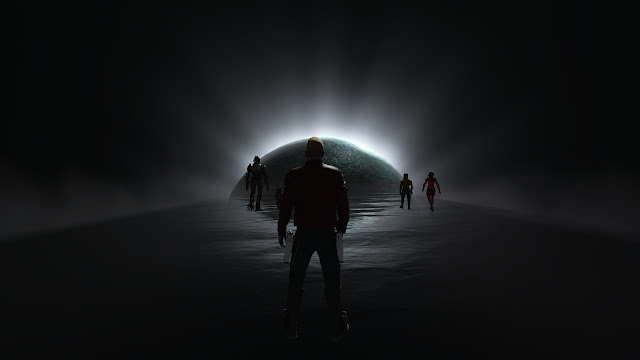
Marvel’s Guardians of the Galaxy begins with our eclectic heroes attempting to make a name for themselves. In typical Guardians’ fashion, they try to achieve this in a way familiar to them; by breaking the law. As one can imagine, this leads to conflict with the Nova Corps officials. After that, well, things get a little wild. At one point, with the protagonists entrapped, I found myself using the singing voices of the Guardians—to the tune of “Don’t Worry, Be Happy” by Bobby McFerrin—to compel/repel a space llama to eat some wires so that we could free ourselves from our rooms. Yes, I typed that correctly.

Marvel’s Guardians of the Galaxy
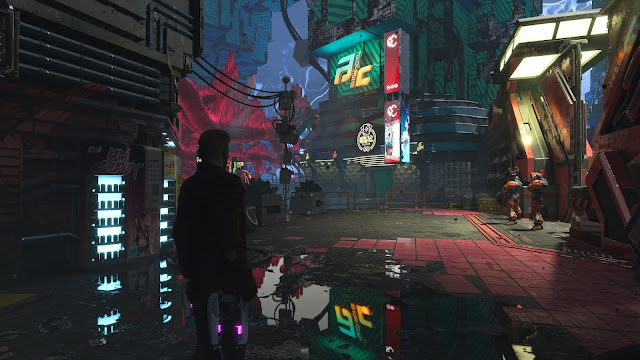
isn’t just ‘80s classic music, hair metal, massive explosions, hordes of religious zealots, vicious wild beasts, dogfights in space, intergalactic travel, and well-timed jokes sprinkled throughout a video game. Those things are all included, to be sure, but that only scratches the surface of this wonderful narrative-driven superhero game by Eidos-Montréal. Under all the wild theatrics of the galactic threat, the game digs into the trauma of each protagonist, fleshing out each character in the process (except for Groot who repeats the same three words). The game shows that no matter how jagged or irregular puzzle pieces are, if flipped around enough times, they may just be a perfect fit.

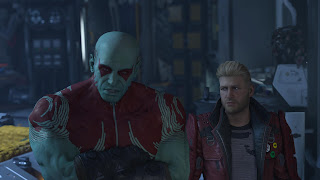
In contrast to many big-name superheroes, the Guardians' main draw is that they’re a team. The Guardians have the initial instinct to run when they need to deal with their problems, but find solace when they turn to their companions. Some of the best moments in this game come from the tender interactions between all of the Guardians, not only does the team become stronger as a whole, but so does the narrative. Overcoming personal hurdles unlock in-game abilities that can be used in combat. These abilities lead to more options while taking down the wild beasts and promise-driven enemies encountered throughout the adventure.


While the narrative has a great arc, there are some minor technical gripes I had throughout my journey. Stiff and sometimes janky animations lead to the ruining of some serious moments. For example, every time Peter Quill has a one on one conversation with one of his crew-mates, it ends abruptly with them quickly doing an about-face and exiting the room. They could have just discussed their years of enslavement or the death of their family, and then they quickly exit the room. It's an awkward animation that was overlooked, or worse ignored, by the developer. This game is also guilty of having button prompts in which the player unknowingly advances the narrative. This can sometimes be frustrating for someone who wants to explore an entire area before moving forward.

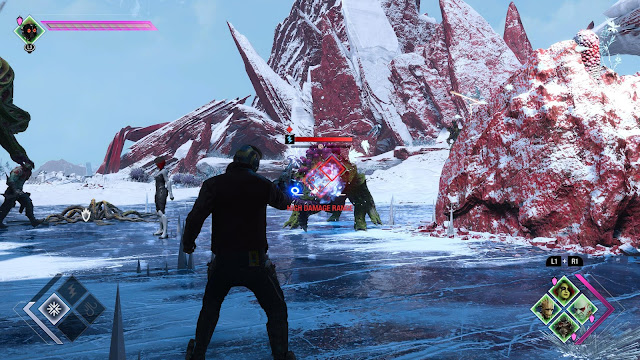
But what about the gameplay? Unfortunately, this is where the game loses most of its luster. The traversal is hindered by pedestrian platforming mechanics that don’t feel great when using them, not to mention the lack of a sprint button. While Star-Lord does have jet boots to boost forward, it’s irritating to have to constantly press the button every second to increase movement speed.

I am thankful for the puzzles, simple as they were, as they add a fun bit of variety that takes advantage of the different Guardians’ abilities. Groot can build bridges and lift platforms with his roots, Gamora can cut through certain objects or help boost Peter up to platforms he couldn't reach otherwise, Drax uses his strength to move otherwise immovable objects, and little fuzzy—sorry Rocket—can hack things and climb into small openings. This represents Peter Quill’s position as leader, as the player issues these commands wherever necessary to advance.


In between all the fun story beats and puzzles, there are some enemies to kill. If I’m being honest, the combat wasn’t the best part of the game. While no means awful, the combat doesn’t reach the heights of other great superhero games like Marvel's Spider-Man or Batman Arkham Asylum. Serviceable, unmemorable. You can use Star-Lord’s blasters and elemental abilities to take down enemies, as well as a few special abilities which can be unlocked through leveling up or spending some of the in-game collectible currency. In addition to Star-Lord’s abilities, the player can command the other Guardians to use their abilities in combat scenarios. There are moments of fun to be had to be sure, but I would sometimes get stuck in the command menu while trying to fight enemies, which in turn would ruin the combo I had. Over time, I figured out what was going on, but it wasn’t initially intuitive.

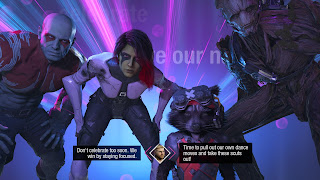
I give Eidos-Montréal credit for ensuring the game had a plethora of enemies to be overcome with different strategies that consistently force the player to use their newly unlocked elemental and stagger abilities. When the team is down and out (or when you accidentally press the wrong buttons), Star-Lord can rally everyone with the Huddle ability. Here, the other Guardians come to Star-Lord with eager enthusiasm for the current battle or come to complain about their predicament. It’s up to the player to choose the correct dialogue option, a failed one only gives partial benefits, while the correct one excites the team. At one point, Drax told me that my speech made no sense, and then we launched into battle to the tune of “Never Gonna Give You Up” by Rick Astley. I couldn't help but laugh aloud.

Speaking of laughing, Marvel’s Guardians of the Galaxy is a treat when it comes to witty banter and well-timed punchlines. Drax’s consistent barrage of impeccably placed dialogue is commendable. I can’t count the number of times he made me chuckle, not to mention the rest of the team yelling at each other across the Milano. The fastidious writing team at Eidos-Montréal succeeded in capturing the comical essence of this ragtag group with utter proficiency.

In addition to the dialogue choices mid-battle, there are other areas of the game where choices are presented. Throughout the journey, Star-Lord is given options in how to respond to his teammates. Should he boost up the morale of the whole team, or give in to the melancholy to try and relate to how they’re feeling? Should he back Rocket or Gamora? Join in on the teasing or make everyone back off? Even better yet, there are some sequences in the game where the player choice will change the entire level that must be navigated. While they don't have any impact on the overall story, they do offer some extra replay value for a second run.


What would a comic-book-based video game be without references to its source material? Guardians has many unlockable costumes hidden throughout the game, some that reference the comics, others the MCU films. These are a nice nod to the other media appearances of these heroes while also contributing a little background info. Other collectibles include items that can be used to trigger unique dialogue with different members of the team. Finding these items was always great because I knew I’d get some more character lore once I got back to the Milano.

For all that Marvel’s Guardians of the Galaxy gets wrong, it does a lot more right. While the combat and platforming can be lackluster, the writing team deserves a lot of credit for lifting this game above its mechanics. The story, characters, music, and jokes are the heart of this microtransaction-free super-hero adventure and I look forward to seeing more Guardians games in the future.


The Math

Objective Assessment: 7/10

Bonus: +1 for well-placed dialogue throughout the entire runtime. +1 capturing the essence of the Guardians of the Galaxy. +1 for Lady Hellbender.

Penalties: -1 mediocre gameplay. -1 for odd and janky animations.

Nerd Coefficient: 8/10

Posted by: Joe DelFranco - Fiction writer and lover of most things video games. On most days you can find him writing at his favorite spot in the little state of Rhode Island.