Showing posts with label Stew Hotston. Show all posts

Wednesday, October 28, 2026

Game Review: Control Resonant, Remedy Entertainment

 A seamless story about transition

Control: Resonant, "A Completely Standalone Experience" - Inven Global
Art director: Elmeri Raitanen


This review is long and contains spoilers. You have been warned.


Control was a game that hooked me with its design, its (somewhat uneven) play and its absolutely incredible world building. Set in a universe that includes Alan Wake’s stories and built with obvious love for the SCP Foundation’s communal and very online take on urban horror and contemporary folklore, it was one of the most unique AAA games of the last decade. 


Control Resonant is its direct sequel and although it picks up seven years after the events of the first game the story is a single through line following the Fadens. There’s no space in this review to talk about the choice of centring a game on the end of a lockdown. Suffice to say it infuses much of the framing of the story and people in it as a dark and bleak post-apocalyptic narrative.


In Control, Jesse Faden comes to the Oldest House searching for her brother, Dylan. The Oldest House is a building in Manhattan, New York, inside of which the Federal Bureau of Control has its headquarters. The FBC’s job is to find and contain unusual artefacts who have the weirdest and often the most horrific impact on the world. From cameras that freeze whatever they photograph to karaoke machines that won’t let you stop dancing until someone sings a song perfectly, this is old school creepy pasta given immersive teeth.


In Control Resonant, Dylan, who was in a cell inside The Oldest House throughout all of Control, is set free because the threat at play in the first game has got free and invaded New York. As part of this disaster, Dylan’s sister, Jesse has disappeared, last seen muttering about a coming disaster and saying she had to fix it. 


Dylan, who was contained because he is responsible not just for hundreds of deaths but also seemingly responsible for the very threat that’s escaped The Oldest House, suddenly finds himself free and tasked with saving the world. 


Unsurprisingly, Dylan is not sure how he feels about this and the game follows him as he searches for his missing sister and tries to understand himself all while facing off against the threats hovering just outside the front doors of The Oldest House.


The game begins with a lengthy section of exploration in a folded up Manhattan that feels a lot like elements of the Spiderman games but with Escher geometry and a very uncanny vibe. That’s all fine but it’s hardly innovative especially as at the beginning you can’t really access a lot of the terrain.


However, quickly enough you end up with some unique and uniquely implemented traversal skills that open up this twisted, folded version of Manhattan in incredible ways. You don’t simply run up walls, you change the direction of gravity and can do so from moment to moment. You can fly through the air, change gravity and land on the side of a building as if its vertical walls a the floor. 


It quickly becomes mind bending in the best possible way. There are sinkholes that are fractal apartments repeating in all directions, old parks that are traversal challenges coupled with finding lost memories, there are battles with yourself and with your insecurities that observers call you out on – remembering who you were and the harm you’ve done. 


There’s even pixellated levels that cast doubt on all your memories. 


And from there it proceeds to get weirder and weirder. The weirdness in this game is different to its predecessor which focused less on weird geometries and more on the urban folktales of SCP. The weirdness here is in the world and level design not the quests and tasks that Dylan has to tackle. Even the combat, which has no parrying or blocking, reflects the sense that Dylan has to confront the challenges of Control head on.


The game design twists and turns, telling the story through action as much as through found notes and recordings, through the scattered art galleries (each with a different artist featured), through secret underground locations that belong to a rival organisation and even through the finding of stuffed toys for a sad teleporting labrador. 


There were several set pieces that had me put the controller down and sit there looking at the screen contemplating the story, the world and what I was seeing. It is not just beautiful, the beauty is in service to the most important aspect of Control Resonant; its story. 


And here’s where the spoilers begin.


In Control, there is a board who run the FBC. They effectively choose the director and protect the FBC from threats. In a conversation with Jesse they say that there never was a Jesse Faden and a Dylan Faden. They say ‘there was only ever Jesse Dylan Faden’. 


In a conversation with Dylan in the first game, Dylan recounts his memories and tells Jesse he remembers being a girl. And they then both remark on how both Jesse and Dylan are gender neutral names.


There is this strange sense in the first game that either one or both of Jesse and Dylan aren’t real, that the event which saw them separated and their town destroyed might have been responsible for them existing in the first place. It’s not fully explored but there is enough to cast doubt over whether Jesse and Dylan are entirely real people. In a world where astral travel, monsters who destroy you by hissing in your mind, and buildings with infinite geometry exist it’s of a piece to learn that the main characters are also, potentially, evanescent in their being.


Control Resonant takes this story and builds on it so strongly that I’d say Control and Control Resonant are a single story with a single through line and it’s a glorious piece of work. 


In Resonant, Dylan discovers very early that Jesse is out there still attempting to save the world (and explicitly to save him). He is able to find echoes of her and help her at crucial moments. They’re never quite together and occupying the same space at the same time, but they are there, capable of helping one another. 


Importantly, the design here has Jesse slowly losing her memories over time because of what she’s attempting – she is fading away even as your character progression means that Dylan is growing stronger. After each encounter with Jesse you receive a video recording/memory of her which is shot in pink and purple and blue and white.


While you’re exploring this story the world is also growing bigger and it turns out there are three forces you need to deal with. One is the Hiss, the other is a ‘Hedron’ which is ‘patterning’ the world and the last is a runaway fungus that’s co-opting everything it comes into touch with and absorbing it into a single big entity. 


Each of these are ways of expressing physical and mental dysphoria. The Hiss are a constant whisper that distorts and breaks those who hear it – so much so that the only real defence for most people is to do an Odyssey and block up their ears lest the siren call of the Hiss destroy them. In its most lucid moments those effected by the Hiss can be heard calling out things such as ‘you will be beautiful,’ and ‘you will be transformed.’


The Hedron changes the physicality of that which it encounters, turning people into geometric shapes, breaking them apart and reshaping them and the world around them into sterile and static geometries.


The fungal threat is centred on a single mind to which everything else ends up conforming. That mind originally wanted to liberate people but is stuck now, changing them against their will to be one way only.


Each of these threats, thematically, are about the kinds of assault people with dysphoria face. Control Resonant is making the player face metaphors of what it means to live untransitioned in a world which not only doesn’t understand what that feels like but is far too often hostile to that experience.


Dylan’s original rampage was when he succumbed to the Hiss – that constant voice telling him he had to be different from the person he was, that who he was, was unacceptable, was unworthy and if only he changed he would be perfect.


Now he’s faced with this fear of a repeat in himself but also with externalised threats, each one of which want to change him physically and emotionally, in order to be acceptable. The irony here is that these changes are liberating but are ways of constraining who Dylan is, of forcing him to be something he’s not.


It’s only when he’s in purple and pink with Jesse that you see the real Dylan – someone who can see the possibility of what it means to be himself.


Underlying this come two other components. Firstly, the thread that Jesse and Dylan might actually be the same person. That Jesse made Dylan, indeed wanted to become Dylan and that this broke her, her family and even the community where she lived. 


It may be that for Dylan to live, Jesse has to fade away because they are two aspects of one person and Jesse, the first of them, made Dylan, the second, as the true representation of who she really is. 


Dylan is unwilling to let her go – there is too much of who she is that is meaningful for how he understands himself and there’s a battle here between how to become and what it means to let go of a past which damaged you.


The game helps the player confront the idea that Dylan is who Jesse wants to be and Jesse is someone that Dylan can’t let go of – because to be himself he has to hold onto her. 


The second is how Dylan, emerging from his fear, his self-harm, his damage, starts to reconnect with people. His handler in the game is a woman called Zoe who treats him as if he matters even and especially when others don’t.


Yes, they fall in love but it’s that fragile love of people who are emerging from deep trauma – gentle, delicate, liable to take a wrong turn but also fierce and beautiful and a flower that blooms amid the ruins of destruction. Zoe becomes Dylan’s anchor because she’s a person who’s prepared to see him as he is – when the world is demanding he change to be acceptable, she is the one who sees him and says ‘yes’ to who he really is.


There’s a set piece where Dylan is effectively lost in a fractally repeating maze of apartments and the FBC abandons him. He has no way home. Except Zoe never gives up, risking her job to help him find a way home. It’s an incredible moment, accompanied by astonishing music and amazing level design. It’s also not the only moment where you simply don’t want it to end even as I was crying over Dylan’s experience and my own empathy towards him.


Right at the end of the game we learn that Dylan’s birth certificate has been reissued – making him real in the eyes of the world. He has never been real until this moment. Only Jesse existed. Now she’s (not quite) gone and he is what remains and this tiny thing, this birth certificate, acknowledges that Dylan Faden is a man and is real and belongs as a person and it’s a startling and magical moment. 


Control Resonant is my game of the year. It is a game about the challenges and hardships of transition but it is also a game about the beauty of becoming who you have always been no matter what. It is a game with banging music, incredible writing, unique world building and a commitment to this tale of a brother and sister who might actually be a girl who became a boy and how they save the world by embracing themselves. I could play it and play it and play it without ever getting bored.


--


The Math


Highlights:

  • Astonishing design
  • Amazing gameplay and music
  • A story that is moving and beautiful

Reference: Remedy Entertainment, Control Resonant [2026]


STEWART HOTSTON is an author of all kinds of science fiction and fantasy. He's also a keen Larper (he owns the UK Fest system, Curious Pastimes). He's a sometime physicist and currently a banker in the City of London. A Subjective Chaos, BSFA and BFA finalist he's also Chair of the British Science Fiction Association and Treasurer for the British Fantasy Society. He is on bluesky at: @stewarthotston.com.

Thursday, October 15, 2026

Book Review: The Starving Saints, by Caitlin Starling

Do not let the honey touch your lips

The Starving Saints: A Novel | Barnes & Noble®
cover artist: Owen Corrigan

The Starving Saints by Caitlin Starling is one of a raft of medieval fantasies from the last few years (possibly led by 2012’s Between Two Fires by Chris Buehlman, reissued in 2026). They are an interesting subgenre of stories that take fantasy seriously but also take medieval Europe seriously – putting the work in to get at both the sensibility of a holistic world but also at the cultures, political currents and day to day lives of people from this long period of time. 

Specifically I often find European stories featuring periods where religious life is central to living underbaked and, honestly, completely misrepresent the nature of a religious life as I understand it, especially one in which the entire world is seen as intrinsically connected. A holistic worldview is so far from the modern world (even for people who still centre magical thinking which is absolutely not the same thing at all despite claims otherwise) that writing it feels very challenging and it’s not surprise that so many writers just glide over it with a much more modern atomistic capitalist approach to culture and society.


Starling’s The Starving Saints feels like it gets it – that she is able to build a world where life revolves around ritual and repetition and, crucially, place. Not just the place itself – in this case a small castle housing a fleeing king and his entourage among the normal citizens but the place of people within that society, ordained by religious faith to know who they are, what is wanted of them and who stands above and below them on the ladder. All of this is by way of saying that Starling manages to conjure a sense of time and place that feels alien and familiar all at once, a world which we would be utterly lost in but also one we can recognise as being entirely coherent for its inhabitants without an ounce of absurdity or knowing wink at the possible silliness of their lives.


Into this landscape she tells a genre defying tale of devotion, exploration, survival and grief. This is very much a lockdown novel, not just because everyone in the book is trapped in a castle and slowly losing their minds over the pressure of it but because it’s about who we find ourselves to be when pressed like this. 


I came out of lockdown (I didn’t contract Long Covid until the middle of 2024) with two convictions that have only deepened over time. The first is that we have no sense of the collective trauma we experienced, not simply because of lockdown but because of Covid itself. I see it slowly blossoming in my now adult children and have not the mirror to understand how it reflects in me. All I can say is that I do not think we’ve still understood the extent of our reaction to it and our need for a catharsis as a society. The Starving Saints captures that trauma in its months-long application to people who just prior to this were living normal lives that made sense, who could plan for the future and know what tomorrow would bring. 


The second is this: we don’t know how to talk about it, not individually although that’s true enough, but socially. There is no great Covid literature, not directly and not that’s broken containment to become the thing we’ve all stood around discussing. I am not surprised – the more I read about the 1918 flu and its complete absence from literature and collective thought in the years following, the more I realise that we too will perform the same dance of forgetting as quickly and as determinedly as possible. The Starving Saints plays with memory, with how we remember and how easy it is for us to blank suffering in the name of recovery, in the name of trying to get back to normal. It plays with the idea that we will willingly exchange one kind of suffering for another, our own suffering for someone else’s, and we will celebrate our metamorphosis given the chance. It is deeply disturbing to see the metaphor here so clearly played out in the real world. It is also deeply uncomfortable to see people portrayed as knowing what they do, how they make this trade of one pain for another for the sake of the idea of relief (and not relief itself). Starling’s characters find one pain so unbearable they are willing to trade for another form of suffering knowing it won’t set them free. If that sounds horrific, it is. 


Starling takes it further by making all of this deeply carnal, the world inside her castle is fleshy and physical, full of meat and blood and wine and honey and bone and stink and fluid. There is no escape from these bodies, from their needs and their deterioration when those needs aren’t met. 


In that sense The Starving Saints is wholly about grief – about the grief of things coming to birth and being lost in the process, about worlds we knew dying even as we’re trapped unable to affect any kind of outcome. This grief is dipped in honey throughout her novel, coming to us pretending to be something other, something calming, a balm for our confused and shocked souls. Instead the moment the honey touches our lips we succumb and in that succumbing we lose ourselves because no amount of external comfort can soothe our aching souls. 


There is no finding oneself again. There is no freedom. Saints posits that there’s only belonging to one force or another. And it is brilliant for it. Our heroes are surviving. Maybe. And in that survival there is collaboration and betrayal, a little success and a lot of failure. 


I felt like I was reading something designed to poison the romantic soul, something Shelley or Inchbold would have been disgusted by and I was glad to be part of it. 


This is a story in which magic, the act of knowing, cannibalism/starvation, loss, anger, hope, faith and grief are central. It’s a story in which the act of survival leaves us weakened and traumatised because to survive means there has been a catastrophe for us to emerge from – broken and battered. This is not heroism masquerading as overcoming the odds. This is survival by the skin of our teeth, survival when so many others don’t make it. 


Lastly it’s a story that also considers faith, not in the protestant evangelical sense that pervades so much of western culture but in the sense of its practice, of the road lives take when they hold onto faith and how that is both a comfort and a struggle. It wrestles with the possibility of faith being nothing more (and nothing less) than our attempt to make sense of a world, not alone, but as a community of people. How our shared ideas offer us meaning and how that meaning naturally breaks down when its foundations are eroded by catastrophic uncertainty.


Knowing tomorrow will bring pain is more manageable than not knowing if tomorrow will be bring salvation or suffering. It is the uncertainty that kills us.


This won’t be to everyone’s tastes – it is gruesome and horrific as much as it has notes of beauty and hope, but this reader loved it.


--


The Math


Highlights:

  • A familiar but fantastical world that understands itself and its place
  • A compelling tale of the trauma of lockdown on society
Nerd Coefficient: 8/10
A powerful novel about faith and hope and suffering that considers loss amid the maelstrom of superficial comfort that we'll gladly take even if it transforms our suffering into something equally traumatic.

STEWART HOTSTON is an author of all kinds of science fiction and fantasy. He's also a keen Larper (he owns the UK Fest system, Curious Pastimes). He's a sometime physicist and currently a banker in the City of London. A Subjective Chaos, BSFA and BFA finalist he's also Chair of the British Science Fiction Association and Treasurer for the British Fantasy Society. He is on bluesky at: @stewarthotston.com.

Tuesday, September 29, 2026

TV Review: Avatar the Last Airbender, season 2

 The IS the Avatar you're looking for

Netflix's Avatar: The Last Airbender Season 2 Episode Count Reportedly ...
Art Director: Crystal Strode

When season one of the live action version of Avatar The Last Airbender arrived on Netflix in 2024 it was to great fanfare, a huge (for Netflix anyway) marketing budget and a big piece of internet culture war. More than that, many ‘fans’ wanted a shot for shot remake of the original as they’d loved it in their heads and given the different constraints on live action television, a sizeable and loud minority simply couldn’t get over themselves long enough to watch this version and judge it based on its own merits. 

As a result it had a very mixed reception and didn’t take off the way perhaps people anticipated. None of this is particularly surprising. The original show was a creeping cult hit, beloved of people who found it by word of mouth, sometimes years after the original show (first aired in 2005) came to screens.


Additionally, Netflix generally have no idea how to promote content on their streaming service; it always feels like actually letting people know what they’re making is an afterthought. Given their propensity for cancelling shows rather than sticking with them, it’s hard to see their business model as one which thinks about the shows themselves rather than focussing entirely on how to charge for subscriptions. 


Netflix’s basic failure to see that being a television company involves actually making television rather than exclusively looking at how to make more money from content aside, we come to season two of Avatar The Last Airbender. 


And I’m delighted to say that it is great. The show, based on the original by Michael Dante DiMartino and Bryan Konietzko (who also wrote the original animated show) delivers on the promises they laid down in the first season. What’s especially fantastic about this adaptation is that they manage to capture the beating heart of Aang, Katara and Sokka that made the original so emotionally powerful. Add to that the wonderful addition of Toph, our belovedly fierce Earth bending mentor and inventor of metal bending and it brings to season 2 a fantastic set of stories that build on season one while also developing the story towards its conclusion in the confirmed (yay!) season three.


That the show improves in its second season might be a surprise depending on your age. I’m old enough to remember when television shows found their feet in season two (or even three), when they were allowed to have time to breathe long enough that the writers and cast found the heart of what they were making. My children who are both adults now find this astonishing – we watched the show together and they found the idea of season two being better than season one precisely because the characters grew and the story telling matured as shocking as it was puzzling. 


What’s remarkable here though is the emotional depth living breathing actors can bring to a role. Look, I love anime and animation but I experienced the exact same thing when I went to watch the stage adaptation of My Neighbour Totoro, the film of which I must have watched thirty times over the years. The stage show reduced me to tears in a way the animation never did despite me loving it with all my heart. The reason being that there’s something about humans expressing emotion that short circuits our brains much more directly than facsimiles of them.


This is also true for the live action version of Avatar. The actors playing Aang, Katara, Sokka and Toph (Gordon Cormier, Kiawentiio, Ian Ousley and Miyako) bring a physicality that carried weight and pathos. Add to that the two-parter of the deeply moving relationship between Uncle Iroh and his nephew, Zuko (played by Paul Sun-Hyung Lee and Dallas Liu respectively) and you have a recipe not simply for a coming of age story of a young Avatar but a series of stories about family, abuse, trauma, coming of age, triumph over adversity, the meaning of friendship, hope, survival, the nature of failure, justice, forgiveness and more. 


The story itself cleaves close enough to the original that this is very definitely Avatar The Last Airbender but it also knows how to cut and trim for live action. It knows how to pause for emotional beats that land and make a difference. It also knows how to make the audience suffer alongside their struggling heroes.


This show is great and it really deserves to be seen both for what it is and as the kind of show that Netflix (and Disney) has entirely walked away from making more of. It is diverse, it is concerned with who we are, it is concerned with how we make community and get along and like all great epics of this kind it also wants to establish how people who’ve chosen harm might just be able to come back from the roads they’ve travelled. 


Avatar never takes the easy road emotionally and if there’s one show I wished I could convince all my friends with children hitting double digits to watch it would be this one. Yes, you have the animation and the question is why remake it?


The honest truth is many people don’t watch animation. You can argue that Disney remakes of classic animations have, at best, been no worse than the originals (none of them have been better) but that is, honestly, as much a financial decision to extend copyrights as it is one about creativity.


For me this adaptation into live action of Avatar lacks that cynicism, caring about its characters and bringing something new to the screen – a deepening of the emotional heart of the animation. It isn’t better – the original series is a masterpiece of creativity and self-awareness – but it is different and in that difference something new is revealed. 


Please search it up and give it your time – you will be rewarded.


--


The Math


Highlights:

  • Funny and emotional story
  • Netflix have committed to finishing the show!
Nerd coefficient: 7/10, a fantasy show with a largely non-white cast that manages to capture and deepen the key elements of the source material. 

Reference: Avatar The Last Airbender [Netflix, 2024-2026].

STEWART HOTSTON is an author of all kinds of science fiction and fantasy. He's also a keen Larper (he owns the UK Fest system, Curious Pastimes). He's a sometime physicist and currently a banker in the City of London. A Subjective Chaos, BSFA and BFA finalist he's also Chair of the British Science Fiction Association and Treasurer for the British Fantasy Society. He is on bluesky at: @stewarthotston.com.

Tuesday, September 15, 2026

Game Review: Saros by House Marque

 Who is the King in Yellow?

Soluce Saros - Soluce Saros | SuperSoluce

Artist: Simone Silverstri

Saros, directed by Greg Louden and written by Alex Meer is Housemarque's spiritual successor to Returnal, the 2021 bullet hell first entry from the developer. Returnal was about grief, about guilt and took the form of a journey through a science fiction version of Hades as the main character, Selene wrestled with her own memories and her culpability in the death of her child. This combining of intense third person action with a story that really plumbs the depth of personal despair is repeated here although the narrative is very, very different.  

Saros, like Returnal, is a third person action RPG with roguelite elements that has you dying repeatedly and dodging endless streams of incoming fire. Returnal’s reference points were the Ancient Greek underworld, small town European grief and the concept of how we navigate such terrors. 


Saros takes its reference points from The King in Yellow by Robert W. Chambers, a forerunner of modern cosmic horror who has influenced everything from Lovecraft to True Detective. Interestingly I think Saros has a deeper reference point which is less Chambers than Chambers’ own inspiration – the 1886 story, "A Man in Carcosa" by Ambrose Bierce. 


As with Beirce’s story, the main character in Saros, Arjun Devram, played brilliantly by Rahul Kohli, wakes from sleep to find himself lost in a strange and uncanny wilderness. Saros transposes Carcosa from an ancient ruin on Earth to a futuristic planet far from home being exploited by a callous corporation called Soltari. Arjun is security for a small team sent to discover what has happened to previous expeditions to this planet. One of those expeditions included Arjun’s partner, Nitya and that, really, is why he’s here – to find her and to save her. 


Right from the start Arjun’s main drive is that of a man who thinks he has to save those around him but despite his best efforts he cannot save even those closest to him, let alone find his lover. This drive, this solipsism, rooted as it is in a strange toxic form of masculinity is not left unquestioned and unchallenged and what Arjun discovers about his relationship and himself is devastating but subtlely foreshadowed right from his first conversations.


The story unfolds as you progress through items you can collect – logs, recordings, memories and the like. You also meet the occasional NPC who each have their own agendas and have very little interest in Arjun’s goals. 


What’s brilliant about this manner of storytelling is that you can engage with it as much or as little as you like – the gameplay is thrilling – solid weapons, tough levels, fantastic design and plenty of secrets. If you wanted you could ignore every element of the story and simply blast your way through the game. 


That’s not for me and I’m glad because the story is masterfully delivered. I won’t spoil it here except to say that what you learn about both Carcosa and Arjun is brilliantly layered – the story of Carcosa itself, a ruin by the time Arjun arrives, its once majestic world slowly being revealed as a place riven by war and slavery and hubris.


Alongside Carcosa is Arjun’s journey of self-discovery, the kind that only someone who wakes with no sense of looking back and no questions about his past can uncover and it’s suitably grim and unhappy. 


Finishing this game then comes with the deep satisfaction of beating that final boss together with shock and ambivalence about who you learn the characters are and what they’ve done to reach this point. This contrast is well structured and the writing adds to that. Kohli gives a great performance as a man who doesn’t look back, who can only travel forwards but who neverthless, slowly, comes to realise that these drives aren’t noble at all, but are really acts of self-preservation whose impetus is obscuring and erasing his own flaws. 


Arjun is the kind of man who, having done something bad, doubles down at each opportunity until he becomes something truly monstrous. Equally as interesting is Saros’ view of whether, having made that journey, you can step away from the edge. There’s a scene right at the end where he’s facing everything about himself and he’s stood there, defeated, accepting and vulnerable and all of this is captured in Kohli’s face without any words, the kind of shot you expect to see in the cinema.


All of this only works as a story if the game does too – it’s heavy material and not one many action RPG players might gravitate towards if it was handled too obviously. Fortunately Saros’s play is, as already mentioned, great but on top of that, the cinematography, the camera and the world building are phenomenal with a colour palette and design aesthetic that feels ancient, vibrant and distinct all at once whether you’re in wild mountains, fetid swamps or angelic cathedrals.


Leading you through the game is Sam Slater’s incredible soundtrack. Intense, grinding, piercing and very, very heavy, it propels you through fights, holds you tight during cut scenes and memories and never lets up. Slater’s better known as a Drone Metal artist but that sensibility works perfectly here where internal conflict is externalised in blasting away at dozens of different enemies each with their own unique patterns and strategies.


The soulslike elements work well and difficulty is what you might expect with such a game although there are some really neat mechanisms that allow you to tailor the gameplay to your own preferences (at least to an extent). 


It’s rare for me to just keep playing a game, to keep exploring, to keep shooting when the credits are done, but Saros is an experience so smooth with so many little spots to explore and story elements to uncover that I’m still thinking about it now a month after I properly finished it and got the ‘true’ ending hidden from those who stop after the initial credits roll.


Saros is gaming done right and I look forward to whatever Housemarque do next.


--


The Math


Highlights:

  • Incredible action
  • A remarkable story about culpability and self-knowledge
  • A non-western viewpoint
Nerd coefficient: 8/10, visceral, brutal combat combined with gorgeous visuals and a great story. Highly recommended.

Reference: Housemarque, Saros [Sony Entertainment, 2026].

STEWART HOTSTON is an author of all kinds of science fiction and fantasy. He's also a keen Larper (he owns the UK Fest system, Curious Pastimes). He's a sometime physicist and currently a banker in the City of London. A Subjective Chaos, BSFA and BFA finalist he's also Chair of the British Science Fiction Association and Treasurer for the British Fantasy Society. He is on bluesky at: @stewarthotston.com.

Tuesday, September 1, 2026

Book Review: Make Me A Monster by Kalynn Bayron

No sign of Frankenstein here

Book Review: Make Me A Monster by Kalynn Bayron - Lace and Dagger Books

Bayron has written a number of YA novels now and Make Me A Monster is the latest. Pitched as a retelling of Frankenstein it is, really, anything but that. Sure there are walking dead and lost love but that’s where the similarities end. 
 
The story ostensibly follows Meka a young women who doesn’t seem to study or attend school because she’s actually become qualified at preparing the dead for being buried. 
 
The premise is what captured me but this does not really deliver on that premise. A solidly written YA take on Frankenstein, worrying about hubris and horror and loneliness and creativity and power and gender imbalances and the difference between humanity and monstrousness would be epic. I would love to read that book.
 
Make Me A Monster is not that book. It does not tell that tale and what it does tell is clumsy and disappointing. For me YA comes in a variety of formats, not least very simplified sentence structure and world building all the way through to exceptional depth challenging material, brilliant worlds and full of emotional depth. As a person with two children who are just emerging from the age group this is targeting I’ve read my share of YA and there are some that are great and there are some that aren’t – which is just about normal. YA can come across as poorly written – indeed the quality of the prose is not one that people normally remark upon although I maintain that writing for a target audience such as young adults is a discipline all on its own that is extremely hard to get right. 
 
Bayron’s writing here is at the very simplistic end of the affair which is fine. What wasn’t fine was that she did not seem to know how mortuaries and funeral parlours worked, what the regulations in place are or even what conflicts of interest might be. The language was missing (I ended up looking at what people in this profession called dead bodies and it isn’t the word used in the book). 
 
Add to that a lack of depth to any of the characters and some really odd character decisions and I found myself worried from about a quarter of the way through that this wasn’t really going to end well. That solidified when the inciting incident didn’t arrive until I was solidly half way through the book. 
 
What Bayron absolutely did get right for me was her depiction of the impact of grief on a young person. We all respond differently to loss but the one in this book feels real, feels lived and that’s great even if it’s a choice that ends up impacting significantly on the pacing of the book (until it doesn’t). 
 
I think part of the problem here is that this was sold to me as a YA retelling of Frankenstein. It has none of that classic’s energy, its horror, its existential angst. Instead it’s a romance set in a funeral home where the dead don’t stay dead and, lo and behold, that includes people who are presented as alive at the start of the story. 
 
If it had been pitched as that I would still have picked it up but I wouldn’t have expected the fire and moral muscle of Frankenstein that are so lacking here. That’s only part of the problem for me though. Make Me A Monster lacks any narrative urgency, lacks any moral sensibility except to think through how one can avoid loss and grief and with no reflection on whether that’s a good or a bad desire it feels particularly one note. 
 
It’s a huge shame because this kind of setting could be fantastic if handled with an eye to deeper world building, a wider social setting (this world is so sparely populated it was hard to understand how so many dead bodies kept turning up to be prepared for their funerals) and a decent edit that expanded the second half of the book and condensed the first. This is irritating to reflect upon as a reviewer because part of my criticism here is that I wish it were a different book – notably the book promised on the back cover blurb. I maintain that a decent critic has to review a work on its own merits regardless of what they would have done. 
 
Unfortunately, as it’s probably clear by now, Make Me A Monster doesn’t work for me on its own strengths – its pacing is lacklustre, its story takes far too long to set out what it’s doing, the writing lacks nuance even given that it’s at the simplistic end of YA and the characters are painfully thin. 
 
If it’s Gothic, I want dreadful horror, faded luxury, lost loves and examinations of selfhood and being.  If it’s horror I want something that has body horror or frights or grotesquery. All these things are missing in Make Me A Monster which feels like it can’t ever commit to the horror elements genre. I spent more time thinking this was keener on being The Fault In Our Stars than a version of the dystopian science fiction romance horror that is Frankenstein.

--


The Math


Highlights:

  • The undead
  • Great portrayal of grief

Nerd coefficient:
 4/10, a disappointing YA horror romance that doesn't really land the premise.

Reference: Bayron, Kalynn, Make Me A Monster [Bloomsbury, 2025].

STEWART HOTSTON is an author of all kinds of science fiction and fantasy. He's also a keen Larper (he owns the UK Fest system, Curious Pastimes). He's a sometime physicist and currently a banker in the City of London. A Subjective Chaos, BSFA and BFA finalist he's also Chair of the British Science Fiction Association and Treasurer for the British Fantasy Society. He is on bluesky at: @stewarthotston.com.

Monday, August 10, 2026

Review: w0rldtr33, collected volume 1 by Fernando Blanco and James Tynion IV

This is not your internet

I picked up w0rldtr33 because of the cover, the creators behind it (Tynion is always a draw for me) and because I was in the mood for something contemporary with tech and guns and people with phones.

The story can best be introduced along the following lines: Gabriel and his friends were teenage tech geeks in the early days of the internet. As they built their own networks, hacked newly emerging systems and generally fucked around, they discovered the Undernet, a hidden architecture to the internet and possibly something more, something deeper. They charted their explorations on a message board called W0RLDTR33. Then it all went wrong. 20 years ago, Gabriel and the others sealed the Undernet away for good. Or so they thought. They were wrong.

Told both in the past and now, this is full-blown horror. This first collected volume hints at some deeply “other” stuff. This isn’t the internet of conspiracies or monsters from myth; this is something different. Tynion and Blanco are in full horror territory here and it’s of the cosmic variety. Honestly I wasn’t quite ready—the opening pages are in technothriller territory with a sense that the secret architecture could be a government agency/conspiracy theory landscape, but, a little like it does for the characters, then it all goes wrong.

I mean that in a good way and there’ll be no more about the actual story here except to say it sits comfortably in the Event Horizon/Hellblazer space (at least in vibes), is gruesome, nasty and very, very bloody.

The story is well executed, and wrong-footed me on a couple of crucial occasions in a good way. w0rldtr33 is clearly looking to do something different with its tropes and its themes, and I welcome that commitment to telling the story slightly differently.

For me horror thrives when, like any genre, it’s in conversation with themes and topics that can be hard to discuss without metaphor. w0rldtr33 is absolutely talking about the deleterious impact of algorithms on human culture and individual cognition, but if that sounds a little tiresome, I think this is a good example executed well and using the setting to great effect.

Visually this feels akin to recent horror It Follows (2014) and Dark City (1998) or Talk to Me (2022), perhaps even Unfriended (2014), although this is superior to those. This combination of visuals together with the techno-cosmic-horror theme works really well, even in this first volume where there’s only really enough space to establish the stakes and give hints at where this is going.

The sense that the internet is a bad place is nuanced here—the internet itself, especially given the initial timeframe, is seen as a place of huge potential for good, for communication and community. It’s the Undernet that is the bad place, although what it is and why it’s bad are unclear so far. It’s enough that this is a story in which communication has two sides to it, one which does untold good and one which can do untold evil.

As with any great horror like this, the evil at work is not simply immoral; it is deeply amoral in the sense that it has no morality we can recognise except that its wants and needs are cruel and destructive in execution. Why? Yet to be revealed, and given how adjacent it is to cosmic horror in this tone, it might be simply that whatever lurks in the Undernet is what it is. We’re not going to get a tragic backstory to the supernatural monster(s) waiting for the world here.

The main characters around Gabriel are strongly drawn so far, and I’m looking forward to seeing where they go—they are scarred by their history, the world has changed since they initially locked away the Undernet, and they aren’t ready for what’s unfolding around them. Like Stephen King’s IT, this group of young friends have gone their separate ways since the original events, and that’s largely because of the trauma of what happened. As they come back together now, it is with trepidation, rancour and suspicion—these do not make for good outcomes when faced with a threat no single person can handle alone.

w0rldtr33 is great horror, and highly recommended for anyone who likes the thriller/cosmic horror genre with lashings of gore and people who aren’t ready for what they’re facing.

I do have one criticism, and it’s potentially transient. There is one character who spends all her time nude, and is drawn in a way that you’d not be surprised to see as the ideal feminine form for a particular type of cis het male. I cannot see why, at this stage in the story, she’s appearing like this, and it is uncomfortable for reasons that have nothing to do with horror. However, volume 1 is just that, the first 5 issues of the monthly comic, so it’s possible this will have a narrative reason, so I raise it, but caveat that concern with an admission that I don’t know where the story is going. Given that this is about the horror of the internet, a naked woman appearing for the sake of it isn’t really out of place. Yet.

Highlights:

  • Great art and colouring
  • Cosmic horror!
  • Lots of blood and gore

Nerd coefficient: 6/10, a great story so far, lots of unexpected horror and plot, good characters and compelling visuals.

Reference: Tynion, James (writer) and Blanco, Fernando (artist). w0rldtr33 [Image Comics, 2024 - current].

STEWART HOTSTON is an author of all kinds of science fiction and fantasy. He's also a keen Larper (he owns the UK Fest system, Curious Pastimes). He's a sometime physicist and currently a banker in the City of London. A Subjective Chaos, BSFA and BFA finalist he's also Chair of the British Science Fiction Association and Treasurer for the British Fantasy Society. He is on bluesky at: @stewarthotston.com.

Tuesday, July 28, 2026

Video Game Review: Luna Abyss by Bonsai Collective

Beware of delving too deep

Luna Abyss Coming Soon - Epic Games Store

Luna Abyss is a soulslike, although it’s more on the roguelike end of the spectrum. A mythic sci-fi story from the small UK based developer Bonsai Collective, it tells the story of a world in which a new moon arrived in Earth orbit and changed everything.

It is very definitely post-apocalyptic, but the bounds of that apocalypse are tantalisingly never quite fully laid out—it’s hinted that when the moon arrived, it devastated Earth, but the game itself takes place entirely on the new moon, and the colony that established itself there has, too, been largely destroyed.

Left in its wake is a prison system that sends inmates down into the colony and the moon’s depths to retrieve lost tech and, occasionally, hunt criminals.

Your character comes from Earth and was selected for imprisonment not because of a crime but because of a random(?) change in your physicality which marked you out as someone the All-Father declared should work on these reclamation runs.

Given a 9,000 day target to work off, with bonus deductions for successfully completed retrievals and goals, you have a long way to go.

The game is pretty linear, although I don’t think that’s really a criticism. There is some backtracking later on as you get the chance to go places and explore secrets new abilities make possible, but they’re relatively minor, and I didn’t get bored in the exploration because the goodies you find are always interesting or useful.

The story is told largely through found artefacts, with hints and conversations with enigmatic NPCs leading your progress. There’s a light reliance on Norse myth (with the presence of the All-Father being the central conceit), but this is a techno-mythology, and the only supernatural element is this second moon and its presence over the Earth.

All of which goes to say that the story has some familiar tropes but deploys them in its real interests, which is about confinement, illness as life, loss as driving force and how fate (or chance, depending on your bent) governs us and remains inexplicable no matter how hard we fight to understand.

The mechanics are nice and chunky, and they do not punish you for their own shortcomings—one of my biggest beefs with soulslikes and action RPGs is how you can die because you get stuck in a wall while an antagonist swings through it, or a sequence gets locked in and no matter what you do it can’t be broken. These feel like punishments because of poor design and have had me walk away from a game because I don’t have time to push through shitty design masquerading as difficulty.

As a result, platforming sections and big boss fights never feel like they’re trying to trick you into disaster for the fun of it—their challenge is in there on itself, and you beating it isn’t a fight with the controls but in learning how the game works and then navigating that difficulty. This is my kind of challenge.

The colour and sound are coherent; the music in particular is atmospheric and really elevates the setting, which is techno-organic with a sense that pipes might come alive or walls breath when you’re not looking. The saturated reds and blues that feature strongly give Luna Abyss a strong sense of identity, and are used to do more than simply paint the screen.

Bonsai Collective have delivered a strong and very playable game here.

The reason I play games, though, is for the narrative (I’m not your person to review MMOs because I HATE grind). Luna Abyss’s story works for me. It’s a touch opaque at times, and you need to slow down and piece things together to understand all the nuances here, but even someone paying no attention is going to pick up the broad strokes of families at war, of ambitions defeated and the idea that we make our own dooms. In Luna Abyss, the road to hell was absolutely paved with good intentions.

For a small studio, this is a big game with a satisfying story.

Highlights:

  • Great gameplay
  • Fabulous mythic SF story
  • Fabulous character design

Nerd coefficient: 6/10, a great game with really enjoyable gameplay and an interesting story.

Reference: Luna Abyss [Bonsai Collective, 2026].

STEWART HOTSTON is an author of all kinds of science fiction and fantasy. He's also a keen Larper (he owns the UK Fest system, Curious Pastimes). He's a sometime physicist and currently a banker in the City of London. A Subjective Chaos, BSFA and BFA finalist he's also Chair of the British Science Fiction Association and Treasurer for the British Fantasy Society. He is on bluesky at: @stewarthotston.com.

Tuesday, June 16, 2026

Comic Book Review: Absolute Martian Manhunter

Lean, green and cosmic in a way you've not seen before

Absolute Martian Manhunter by DC | Key Collector Comics
Illustration: Javier Rodriguez

I’ve not been a reader of comics featuring superheroes for the longest time, and certainly not DC or Marvel, but then my friend dropped a copy of Supergirl: Woman of Tomorrow on me, and the rest was, as they say, history.

Call it my own snobbishness at the idea of superheroes, my weariness of superheroes fighting for the status quo, or just a fear of how to get started with a medium that has more options than grains of sand on the beach. Anyway, I arrived at DC Comics only recently, and a friend recommended I start with the first collected volume of Absolute Martian Manhunter, written by Deniz Camp and illustrated by Javier Rodriguez. This volume covers issues 1-6. There’s a second coming in August 2026, which will take the story to the end of issue 12.

I’m delighted to say it was nothing like what I thought I was going to get. The artwork is really trippy, colourful, unexpected and full of emotion. The Martian Manhunter here isn’t the one you know from the Justice League, but a cosmic entity travelling by consciousness and protecting the emotions of the vulnerable from the physical disasters that unfold when we lose ourselves in fear or hate or despair.

This was interesting to me in a number of ways—by making this something that wasn’t about people in capes but about one of those same heroes appearing in an unexpected (to me) way, it gave me both a way back into these characters but also provided something novel, surprising and with a lot of room to do more than focus on a superhero to the exclusion of everyone else.

Absolute Martian Manhunter has the eponymous character inhabiting people to make themselves present on Earth, and they’re here investigating an imbalance in people’s psyches. This manifests itself as radicalisation—the kind that leads to riots and violence and hatred and death.

Yeah, it’s a little on the nose, but as a metaphor for examining what divides us and how you might overcome that, it’s a lovely little story.

This first volume is a complete arc, which felt great because it does a great job introducing this unusual take on the character, laying out his concerns but also introducing the human characters through whom MM is intervening in human affairs.

The main character, John Jones, is an FBI agent (one assumes pre-Kash Patel, given the Bureau’s competence in this comic) who starts to investigate how 24 people died in the same way but were killed by 24 different and unrelated perpetrators on the same night. Each attack appears carried out by a lone wolf—except, of course, they’re all done in the same way at the same time.

These baffling crimes are heinous and devastating, but also have an uncanny element to them which Jones can’t get his head around. That is until MM arrives in his head and turns his head upside down. Having a cosmic entity invade your consciousness will ruin your day, and Jones spends as much time trying to survive the arrival of MM in his psyche as he does investigating the how and why of these crimes.

This creates a tension in the story between Jones and MM that feels, if not quite a battle, then certainly a fraught journey of acceptance and challenge—especially around trauma and what we do with it even when we do want to talk about/process it.

Alongside this is the series antagonist, a White Martian who MM explains not as an actual White alien from Mars but as another cosmic power who seeks to destroy because that’s its fundamental nature. The White Martian is built of hate and corruption and violence, and to the extent it wants something rather than being a force of nature, these are the things it wants.

I found the political underpinnings of this interesting, suggesting that hate and violence and extremism are as much a viral meme (in the worst sense of “virus”) that eats its host alive regardless of the cost. In this sense there’s a peak transmission rate and infection rate that, ultimately, results in complete eradication, but this end point is of no concern, only the journey of violence and destruction.

AMM supposes that sometimes those who want to destroy have no other goal than destruction. In a world in which we constantly hear idiots telling everyone they’re “disrupters,” it’s hard not to see how such an approach finds so little resistance—because most of us are built to assume that people want something longer term—stability, peace, calm, predictability. When something comes along that wants none of these things and actively doesn’t care about negotiating, the future or how this all ends, well, our defences are pretty weak to that. AMM suggests there are ways of defeating such radicalisation and attacks, but they aren’t easy, and they’re not momentary ripostes but ways of being that require practice and vigilance.

Highlights:

  • Incredible colouring
  • Neatly done psychological story
  • Cosmic horrors

Nerd coefficient: 6/10, a really great take on a classic DC character.

Reference: Camp, Deniz, and Rodriguez, Javier. Absolute Martian Manhunter [DC Comics, 2026].

STEWART HOTSTON is an author of all kinds of science fiction and fantasy. He's also a keen Larper (he owns the UK Fest system, Curious Pastimes). He's a sometime physicist and currently a banker in the City of London. A Subjective Chaos, BSFA and BFA finalist, he's also Chair of the British Science Fiction Association and Treasurer for the British Fantasy Society. He is on bluesky at: @stewarthotston.com.
Tuesday, June 2, 2026

Video Game Review: Hades II

A god-tier roguelike that gives its time generously

Hades II - Early Access Release Trailer | pressakey.com

Hades II from Supergiant Games is the sequel to the smash hit Hades. The original game saw you play Zagreus, the son of Persephone and Hades who very definitely had daddy issues he (and you) needed to work through.

Hades II, set some time after the first game, sees you take up arms with Melinoë, Zagreus’s younger sister and the only survivor of the house of Hades following an unexpected attack both on the Underworld but also against Olympus.

The attacker? Chronos, the titan who swallowed his children to stop them from killing him—which they did anyway. Chronos, the titan of time itself, has returned and taken over Hades while also attacking Olympus in revenge for being cut into pieces and scattered across Tartarus.

The game is a roguelike that lets you explore the Underworld from Hecate’s crossroads, but also eventually sends you above ground to make your way to Olympus itself. Unlike Zagreus’s deep dislike for his family and what they’re up to, Melinoë has grown up in the aftermath of a lost war, and her view of both her family and her enemy are simple, straightforward and loyal.

This is the first of the changes that Supergiant Games have made to the story and how they tell it. Having Chronos whisk away the characters of the Underworld means we can work with an entirely fresh set, which is a joy because, although those who appeared in the first game were great, classical Greek religion is full of other significant characters like Odysseus, Ariadne, Heracles, Circe and more.

Supergiant gets the balance just right between presenting these characters in a way that makes them relatable and sticking just close enough to how they are found in the original texts and stories where they appear. If that veers sometimes a little too smooth and soft-edged, that’s alright, because this isn’t their story; it’s Melinoë’s.

For example, there is a long running plot involving Odysseus and the women he encountered on his journey home from the Trojan war. The game softplays his loves and his passions and, most likely, how his experience of war impacted his emotional capacity (dare one say trauma?). Nevertheless, that they’re here is fabulous and fun to see them explored, especially as small details are there if you’re looking. Perhaps more importantly, though, is that these stories give a telling from both sides, and although it’s not as emotional as it could be, it’s interesting to hear Circe’s point of view and be able to then go and ask Odysseus.

As with the original game, these stories unfold over time and are revealed as you complete runs to the Underworld or towards Olympus. There’s a major plotline that can only be completed after the credits run, and even then, only with substantial effort from that point on.

This doesn’t feel like stretching a game; that’s basically a roguelike dungeon crawler, past its welcome. It feels like clever design to nudge the player into seeing more of this world without feeling like it’s about completion at all. For the one thing the game does better than almost any other is give you buckets of action as a way of bringing you along for the exploration. Unlike most other roguelikes, Hades II has a story to tell, and it’s told not just in the interstitials between runs but in the runs themselves, in the monsters, in the people you meet, in the boons you secure and in the places you explore.

Melinoë’s loyalty to the gods is curious and understandable. This is a main character who’s grown up with one mission: death to Chronos. To believe in this goal, she’s been taught from the crib that the gods are good and right and natural, and to oppose them is foolishness at best and unforgiveable at worst. The game subtly challenges her assumptions but doesn’t force a change of heart on her, at least not easily.

When she meets Prometheus, the conversations are enlightening for all, because whatever he did in giving mortals fire, he’s also sided with Chronos. It’s a strange juxtaposition that works neatly because it doesn’t let the titan be a worthy martyr but someone with complicated feelings. Not least because he made these decisions knowing their outcomes in advance. Yet nor does it leave Melinoë entirely comfortable with her choice to kill Chronos.

Hades was such a perfect game that it’s difficult to look at Hades II and think about where it’s better than its predecessor. It has all of Hades’s strengths around narrative and looks just as gorgeous at every step.

However, for me, there are some areas where it is an improvement. The first is the sound design. Supergiant Games always does stellar music thanks to the genius that is Danny Korb (I still listen to Bastion’s soundtrack when writing certain types of story). The songs written for Hades II are bangers, and Scylla and the Sirens are a highlight of every run with songs that pop. Alongside the music, the sound effects feel weighty, and even if you can sometimes run into a bullet hell landscape, the sound of what’s going on is clear and crisp.

Additionally, there are a whole load of quality of life changes between the two games that make playing Hades II fun in a way that I sometimes struggled with during the first game. Hades II is smooth, is probably the best way of saying it—everything fits together, everything serves a purpose and it’s lovely to play.

Lastly, I think the balancing in Hades II works better than in the first game. The different types of weapons all lend themselves to multiple different builds and reward experimentation. There are few games where you can do this and find an entirely new and effective set of strategies. For a long while I’d been set on two of the six options and had started to think the others just weren’t as strong, but then my son played the one I really didn’t like and stumbled on a build that rocked hard. This sums Hades II up pretty well: it will subvert your expectations and consistently reward your curiosity while telling a neat little story about change and forgiveness.

Highlights:

  • Incredible music
  • Exciting gameplay with Greek gods and titans

Nerd coefficient: 8/10, an excllent game that rewards your curiosity.

Reference: Supergiant Games, Hades II.

STEWART HOTSTON is an author of all kinds of science fiction and fantasy. He's also a keen Larper (he owns the UK Fest system, Curious Pastimes). He's a sometime physicist and currently a banker in the City of London. A Subjective Chaos, BSFA and BFA finalist he's also Chair of the British Science Fiction Association and Treasurer for the British Fantasy Society. He is on bluesky at @stewarthotston.com.

Wednesday, May 13, 2026

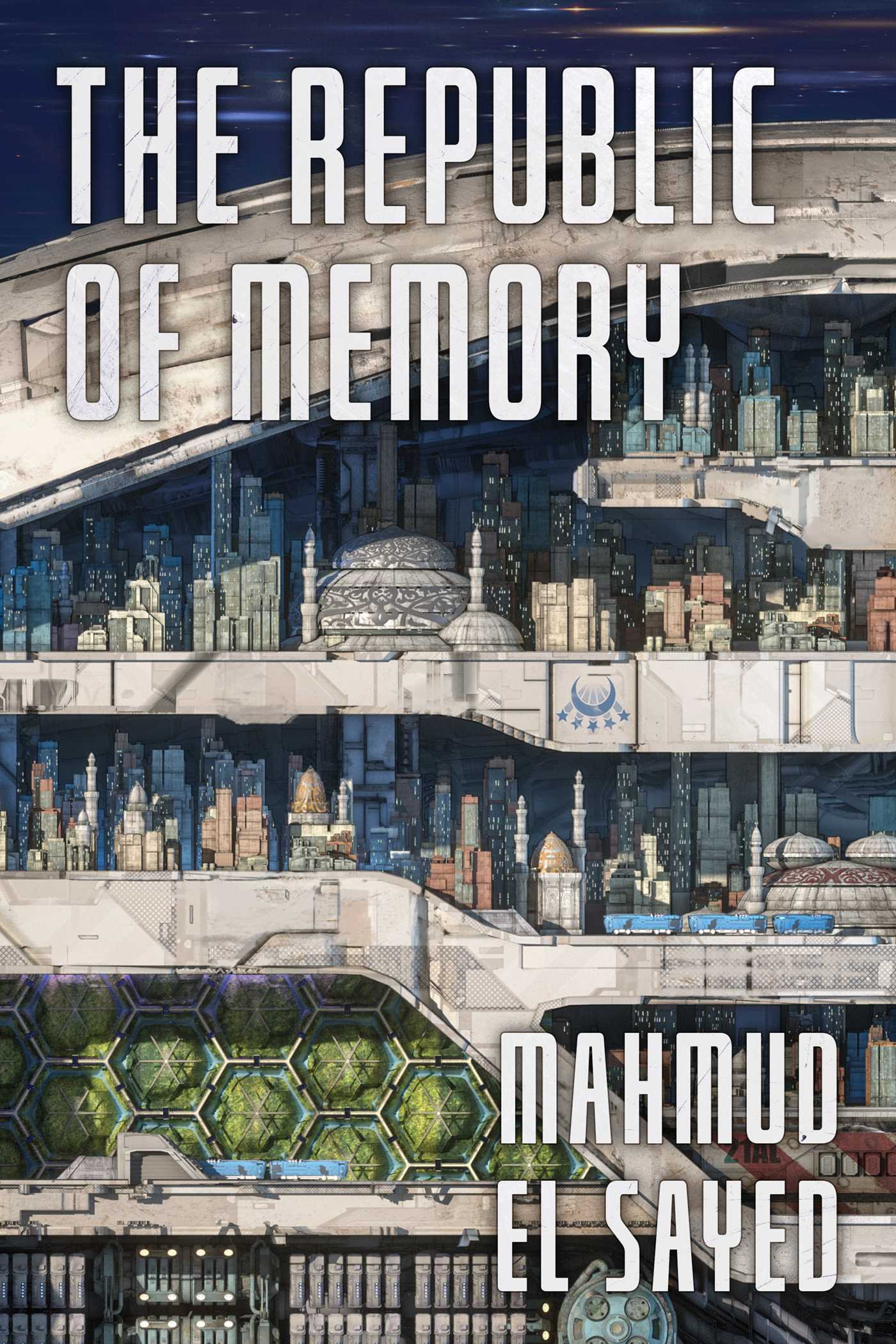
Book Review: The Republic of Memory by Mahmud El Sayed

Captain (A)merica must die

The Republic of Memory | Book by Mahmud El Sayed | Official Publisher ...
cover artist: Marcel de Neuve

Mahmud El Sayed’s The Republic of Memory is that rarest of things -  a proper space opera that has no real interest in what the West has to say about space or stories. El Sayed is a former journalist of Egyptian descent and he was there for the Tahrir Square protests in Egypt largely known to westerners (if they know it at all) because of its central role in the Arab Spring as it unfolded in Egypt. 
 
Mahmud is London based right now and won the Future Worlds prize in 2023 for an earlier version of this story that now finally makes it into print.
 
I mention these biographical facts because they are pertinent not just to the style and nature of the story in an authorial sense but also in terms of the themes and characters within the pages. 
 
This next paragraph contains mild spoilers about the plot so if you want to skip it and move on to the next part of the review feel free to do so. The Republic of Memory is about a generation ship sent out from earth on a very long (centuries long) journey to colonise another world. The people sending them are, if not quite then almost a world government centred in the Levant and entirely ruled over by an AI overclass. As becomes clear right at the start of the novel, something goes wrong back home, the threat of mutually assured destruction finally becoming a promise and the ship is ordered to turn back with its precious cargo of rich and powerful people to rebuild in the aftermath. Instead of doing so, the crew destroy the AI and continue on their way – their reasons not fully clear to themselves or us. What follows is set centuries later but still far from their destination as the various societies and factions that manage the functioning of the generation ship reach a breaking point. 
 
(Spoilers over) The story follows a number of PoVs but the crucial two, Damietta and Iskander, begin the novel. El Sayed puts these two characters (young family members) on seemingly opposite sides of the social divide and through this we have our way into the story. Damietta is a young woman in a close knit and culturally conservative family who chafes at the constraints she feels in her life. She is privileged as far as it goes with a good life laid out before her, but that’s the problem – that life is laid out before her with no deviations, no creativity and no chance at making choices other than those the people around her approve of. 
 
Damietta doesn’t know what choices she really wants to make – her horizons are too constrained for her to understand what she might actually want and, as for so many people, this leaves her with the only choice available – break things. Damietta is the person who reminds us that we all want to be able to make choices (not in the sense of the hero’s journey but in the sense of being able to determine who we are for ourselves) and when those choices are suppressed we will, reasonably even if the choices themselves are unreasonable, make choices to break whatever is within reach – be that ourselves or others. 
 
Damietta cannot see her privilege – her constraints leave her idolising resistance movements, rejecting authority and looking to engage in acts of rebellion regardless of the consequences because she cannot see how her life could be worse. And sure, in the immediate her life can be worse but a life whose practical choices might deteriorate is still nothing when compared to a life where self-determination is absent. One is waves on the ocean rocking the boat, the other is drowning without being able to die.
 
Iskander is a lawyer (of sorts) working for Administration, the distant overclass that manages the entire generation ship (called the Safina which literally means vessel or ark in Quranic Arabic). He is the face of authority, able to open doors and go places others can’t because of his role. He sits with two faces – one facing his community as the person they look to when they want to get married or get things done and one facing Administration as their loyal functionary ensuring their rules are followed without causing riots. Iskander is the willingly colonised actor, trying to see both sides, aware of the tensions, embodying them in his very person but looking to make the world work. Sometimes that’s for the better, sometimes that’s bending the rules and sometimes that’s following them. Iskander exists on a kind of personal capital – a currency he has to spend that is built up through the cautious and cunning use of his position. His effectiveness built on people seeing him as just reliably enough on their side to help them get what they need and want when Admin might otherwise say no while knowing that his power comes from Admin’s overall approval.
 
Iskander is the classical sepoy, the good native, the conflicted coconut, the collaborator who both legitimises the oppressor but also subverts their authority. 
 
El Sayed does a truly brilliant job of ensuring that we see their points of view. This isn’t a political treatise; it’s a story about people whose lives are political from the moment they’re born to the moment they die (and beyond). Why? Because for so many people this is the world they live in and to see it on the page is utterly brilliant. 
 
What I mean is that El Sayed isn’t writing about politics here – the story isn’t a metaphor for non-western experiences of colonialism. He’s both way beyond that, deep into postcolonial Arabfuturism, but also interested in these people in and of themselves. What Iskander wants, what his dreams are, what Damietta discovers in her journey to finding a way to express what’s inside her in a way that makes sense to her, consequences and all, is at the heart of this story. Whatever else it is, The Republic of Memory is a personal journey for people whose lives are…complicated. 
 
And how complicated they are because the Safina isn’t just Iskander, Damietta, their family and their community. It’s made up of communities from across old earth whose roles and cultures are disparate and essential to making the ship work. From hydroponics to medical to engineering and those who mine for resources beyond the ship, the tasks of keeping a mechanical world flying through the void are endless and demanding. What’s worse is that the ship is gradually deteriorating no matter how hard the people work at keeping it all working in harmony. 
 
It’s unclear whether the slow collapse of the ship’s systems is the fault of Administration, the inevitable result of destroying the AI at the start of the voyage or whether it’s simply entropy presenting its bill. The answer to the question depends on who you ask and their place within the ship. 
El Sayed has rolled together caste (or class if you’re a westerner), gender, functional essentialism, racism and post-colonialism into a single pressure cooker of a story. He is aware of and plays with a host of different ideas; from a variety of communisms and communitarianisms to capitalisms, religious expressions of different kinds including manifest destiny through to AI as god. 
 
However, central to everyone’s life in this novel is a gift economy. In a capitalist society where the rule of law tries to ensure transparent equity for all concerned this would be called bribery. Where there is no cash, per se, and the levers of power are invisible and asymmetric beyond family and community units it is called gift economy – bringing an official’s favourite sweets, making sure someone’s cousin got the car they wanted at a good price and so on. You might call it a society built on social obligation.
 
What I’m trying to say is that El Sayed’s novel is that truly remarkable thing in English – a speculative story that regurgitates precisely none of the prevailing Western ideas about how the world should be run and rests on none of those foundations. Beyond that it does what it wants not by eschewing consideration of these possibilities (after all, Administration is a specific proxy for American hegemonic power over countries like Egypt and how client states must come to operate for maximum benefit for their rulers), but by understanding and reflecting how complex politics between different factions is especially when relationships are stable. After all, it is successfully navigating complexity that allows stability to be sustained as the deliberately untrained and willingly ignorant are discovering in the Strait of Hormuz at the time of writing this. 
 
The last thing I want to comment on here is language. It seems to me that language and its use, its control and its boundaries are central to building consensus but also to building and controlling communities. The societies in The Republic of Memory aren’t split by culture or skin colour but by language with the mantra that anyone can learn a new language with the goal of preserving social mobility. It’s a cunning sleight of hand because it wilfully ignores the power of community and relationship and culture in building social capital while remaining superficially utopian. 
 
El Sayed delivers so much of this novel through conlangs, creoles and macaronic structures that you need to take your time to understand the rhythms of what he’s built. I think that is very, very important because in language and how people use and deploy it you find the real levers of power being expressed. What words you use at home versus what you use when speaking to power are revelatory, and throughout El Sayed reminds us that language is, at all times, a tool not simply for consensus but for control and subversion. 
 
The Republic of Memory is the first of a duology and as a way of working through modern global politics, personal lives within that context and as an exploration of how you and I survive such potentially crushing pressures it’s an extraordinary achievement. 


--


The Math


Highlights:

  • Amazing languages!
  • Proper political SF
  • Non-western viewpoint
Nerd coefficient: 9/10, a powerful exploration of what worlds look like when seen from a postcolonialist perspective. A superb starting point for people interested in Arabfuturism.

Reference: El Sayed, Mahmud, The Republic of Memory [Orion 2026].

STEWART HOTSTON is an author of all kinds of science fiction and fantasy. He's also a keen Larper (he owns the UK Fest system, Curious Pastimes). He's a sometime physicist and currently a banker in the City of London. A Subjective Chaos, BSFA and BFA finalist he's also Chair of the British Science Fiction Association and Treasurer for the British Fantasy Society. He is on bluesky at: @stewarthotston.com.