Showing posts with label Tomi Adeyemi. Show all posts

Wednesday, April 19, 2023

Nanoreviews: Into Shadow, a Collection of Amazon Short Stories

A collection of short fiction stories examining hidden and forgotten things, in which seven authors give us stories of characters wandering into places and spaces that others cannot, or will not, and risk the darkness as the price of their hidden knowledge.


The Garden by Tomi Champion-Adeyemi

The only thing I have previously read by Tomi Champion-Adeyemi is Children of Blood and Bone, of which I was not enormously fond - for all its great setting, I often found the characters a little weakly drawn and the plot tending to the obvious. The Garden could have been written by an entirely different author. It’s magical realism in tone, following a woman on a trip to Brazil inspired by the contents of a journal belonging to her mother, and the conversations she has with her guide along the way, digging into his and her own beliefs about the world and the supernatural, and what she’ll find when she reaches the mysterious garden she’s searching for. It’s told in a mixture of prose and poem, and really puts you into Lęina’s strange perspective, showing you a world fracturing into greater strangeness as she follows her journey onwards. Almost all of the story is in the conversations she has with Angelo, her guide, or just with herself, and so it feels incredibly intimate, and was well suited to the audio version I listened to.

It's a lyrical, strange little story, that's doing a lot of interesting things. It doesn't always quite pull them off, and is suffering a little from the short form, but well worth the time and interest regardless.

Nerd Coefficient: 7/10


Persephone by Lev Grossman

Following on from The Garden, Lev Grossman’s contribution to Into Shadow is a little disappointing. Where Champion-Adeyemi was playing with prose and poetry and an interesting character study, Grossman’s Persephone is far more a typical urban fantasy sort of vibe. It’s a perfectly fine example of one, but I feel like it was let down a lot by the form, simply because, for me, much of the appeal of an urban fantasy type narrative comes from exploring a world that lies within or alongside or under our own, and the juxtapositions and contrasts or ideas you get thrown out of the two together. When you have so little space as this, you cut the reader off from a lot of the time spent in that world and discovering it, and so you just don’t give them the opportunity to love it in the way a full-length novel might.

Aside from that – and in some ways that’s a good aside as I was genuinely left wanting to know more about the world – it’s well done. There’s a mystery at the core of the story, and how it develops is very well paced. It also has that spareness and economy that allows a short form story to really do a lot in its little space, and a lot of implication that relies on the reader making jumps of intuition or logic to try to figure things out. I finished it thinking “oh I wonder” and “does that mean…” and “so did she just…”, and those questions lingered with me after, which for me is a sign of a story well told... if it then goes on to give you the answers to those questions, or leave you in a position to ponder them more thoughtfully. Ultimately, I think it would have been much better told in a full length novel, so it ended up being relatively middling for me over all, despite feeling like a decent story start.

Nerd Coefficient: 5/10


The Six Deaths of the Saint
by Alix E. Harrow

By contrast, The Six Deaths of the Saint was a phenomenal story, and one that took its size and form and used them to make itself better, not less. It is exactly what it needs to be and no more, and manages to pack a huge emotional punch for its very short size.

It follows a poor girl, young and ill, who sees a vision of a saint and is led to follow her prince, to fight and to kill. And then it becomes something… else. Something wider. A story about stories, and patterns, and change, and the things we don't notice that are right in front of us all along. It's dreamy and drifty and has that slightly indefinable quality of the fairytale or legend - very much deliberately in this case evoking Arthuriana - that speaks to something at the level of the mythic. It's sad, hopeful and bittersweet in equal parts as well as glorious, and really manages to give you that full arc of a satisfying story in just a few pages.

It’s also one where sharing almost anything about the actual details of the story would ruin the sheer delight of it, so I’m going to leave it there, and end with an exhortation that you should read it because it is simply beautiful. 

Nerd Coefficient: 10/10


What the Dead Know
by Nghi Vo

Unsurprisingly given the title, this is an intensely creepy story of mediums and murder. We follow a couple of fraudulent mediums wanting to pull yet another scam... and yet the story isn't quite what it seems. In this world... there is magic? Maybe? And yet the mediums are still fake? It's a story that tugs at the edges, throwing you off with details that don't conform to your expectations, even as much of it does. Between this and the great and immediate way Vo has conjured the atmosphere, it really packs a punch in terms of the creepiness.

It's also a story happy to leave much unsaid, in the traditions of the best magic and mystery. We don't really need to understand the world, or why what happens happens. We just need to inhabit it for a little while, and enjoy passing through it, experiencing this little window into a bit of strangeness. This works particularly well because there are threads cast outwards, rooting it in contexts before and after the moment of the story, hints of background and backstories to the characters and places, we just never need them to be fully explained, fully spelled out. It's a story completely content to be as it is and do what it needs to do with a deft, light touch and I enjoyed it enormously.

Nerd Coefficient: 8/10


Undercover
by Tamsyn Muir

Somehow, we get even creepier, in a world of moving gangster dens and decomposing ghoul dancers and undercover cops. Muir has made sure all the nastiness of organised crime is definitely kept in her story, and then added an extra layer of zombie nastiness as delightful icing on the cake. Definitely this isn't one to read alone, late at night.

Amy Starr is an undercover police officer, trying to worm her way into the good graces of a mob boss. She gets taken on as a bodyguard and keeper for the boss' big secret - a ghoul who can dance, and think, and respond to conversation. Which makes her dangerous. The ones that can think are the worst. We follow Amy wrestling with her curiosity about the ghoul, her need to know more, while balancing her superior's need to destroy something - someone - so very dangerous.

But even in such an un-right world, something else is off. And it takes the whole story to get us there, in a twist that is genuinely twisty and well managed, but leaves the story ending hanging on possibilities and wondering. It's brilliant, solid work and entirely worth being creeped out by.

Nerd Coefficient: 8/10


The Candles Are Burning
by Veronica G. Henry

With a sharp twist, for all that The Candles Are Burning is still about death and mystery as the rest of the collection is, the focus here is far more on the living human experience than the darkness itself, and that makes the experience of reading it, while not exactly a light one, a contrast in tone to the previous two stories. It is far more about a woman grappling with the loss of her husband, the precarity of her life, and the strangeness of the things happening to her, than those strange happenings themselves.

It helps also that our main character, Maggie, is an intensely pragmatic, practical woman, even in the face of shuddering, portentous candles and spectral visions, and it grounds the tone of the story far closer to the real and the living. She's a pleasant person to follow and live in the thoughts of, and it is easy to feel for her instantly, even before the drama of the story truly begins. She's a woman who doesn't want to leave her home for the dubious promises of a better life elsewhere, at least not without proof. She's a woman trying to do right by her daughter, persuade her husband to be sensible. She's a woman trying to live even while haunted by spectres of death, and so she burns bright through the story.

That being said, I think this is one that could have done with being a little longer. The mystery is great, and well played out for the most of it, but the wrap up feels sudden when we get there. Everything is neat and tidy, but could have done with that bit more space to breathe, and get us there a little more naturally and gently. And that would have just given us more time with Maggie.

Nerd Coefficient: 7/10


Out of the Mirror, Darkness
by Garth Nix

Alas, a weaker story than many of the others to close.

We follow Harper, the general fixer, scary man and solver of extremely odd problems at a mid-tier film studio in old Hollywood. Two of the stars of their current film have fallen mysteriously ill, and particularly seem to be unable to tolerate bright light. He suspects something paranormal at work, but the mysterious secretary to the big boss, knower of many things, isn't around to answer his questions, and so he must investigate, and perhaps figure out how to keep things together on his own.

The premise is fine, and interesting enough, but the problem comes with both the character dynamics, and the ending. Garth Nix loves a weak man/strong woman pairing (whether romantic or otherwise) and this is no exception... but because we spend most of the story with just the weaker half, it feels incomplete. We just get to watch him flounder somewhat, though more competently than many of Nix's men manage. But then, when the strong woman does turn up? She's the deus (or I suppose dea) ex machina, and so the tension that's been building for the whole of the story just dissipates instantly. There simply wasn't the space to manage both the worry and foreboding in her absence and give any level of drama and mystery when she shows up. It makes this feel very much like something that exists in a larger universe - if she were a familiar character making a cameo, she'd make far more sense - or something shorter than it was intended to be. There are simply too many threads surrounding her.

And then there's her character in general - she knows all the answers, but we never know why, and not in the enjoyable sense of a story well done that leaves you wanting more. We feel short-changed by her, and her swift resolution of events. The ending of the final story of the set is an abrupt cut-off, and it unfortunately undercuts so much of the good work the rest of the stories have put in to build such a lovely, coherent and creepy collection.

Nerd Coefficient: 6/10

Friday, November 29, 2019

New Books Spotlight

Welcome to another edition of the New Books Spotlight, where each month or so we curate a selection of 6 new and forthcoming books we find notable, interesting, and intriguing. It gives us the opportunity to shine a brief spotlight on some stuff we're itching to get our hands on.

What are you looking forward to? Anything you want to argue with us about? Is there something we should consider spotlighting in the future? Let us know in the comments!


Adeyemi, Tomi. Children of Virtue and Vengeance [Macmillan]
Publisher's Description
After battling the impossible, Zélie and Amari have finally succeeded in bringing magic back to the land of Orïsha. But the ritual was more powerful than they could’ve imagined, reigniting the powers of not only the maji, but of nobles with magic ancestry, too.

Now, Zélie struggles to unite the maji in an Orïsha where the enemy is just as powerful as they are. But when the monarchy and military unite to keep control of Orïsha, Zélie must fight to secure Amari's right to the throne and protect the new maji from the monarchy's wrath.

With civil war looming on the horizon, Zélie finds herself at a breaking point: she must discover a way to bring the kingdom together or watch as Orïsha tears itself apart.

Children of Virtue and Vengeance is the stunning sequel to Tomi Adeyemi's New York Times-bestselling debut Children of Blood and Bone, the first book in the Legacy of Orïsha trilogy. 
Why We Want It: Adeyemi's debut Children of Blood and Bone was one of the biggest novels of 2018 and won the Lodestar Award for Best YA Novel last year. It was an exciting debut and Children of Virtue and Vengeance is has the potential to be one of this year's notable books.


Lansdale, Joe R. The Sky Done Ripped [Subterranean]
Publisher's Description
You might think two books of adventure involving Ned the brain-enhanced Seal would be enough for any little seal’s lifetime, but not so.

Ned is back.

Ned and H. G. Wells, returning from correcting wounds in the fabric of time, not to mention a brief trip to an alternate Mars, have rescued two shipwreck survivors, Bongo Bill and Suzie Q. They have saved them from drowning or possibly being killed by alien invaders.

In the process of jumping from one dimension to another, trying to discover a time path home, they find themselves in an inner world with a stationary sun. It’s a warm world with jungles, rivers, and land-locked seas. It is full of primitive creatures, including dinosaurs, highly intelligent apes, cannibals, strange storms and bad hygiene.

Deciding on a brief picnic and minor exploration before jumping to Victorian England, Ned and his friends end up saving a famous apeman from human-eating birds, and soon set out to assist the apeman, Tango, in stealing a Golden Fleece with curative powers, a fleece skinned from the body of a strange space traveler. The fleece resides in a magnificent city, a kind of Shangri-La in the far Blue Mountains.

Their plan is to use the fleece to cure Tango’s beautiful wife, who has fallen into a coma. Nothing seems to cure her, but the rumored miraculous powers of the Golden Fleece just might.

If the world doesn’t kill them, then another survivor of the shipwreck from which Bongo Bill and Suzie Q were rescued just might. She has been pulled into a time warp and blended with the souls of marauding aliens, as well as the techno souls of their machines.

She has mutated. She has grown to great size. She has invented rolling machines that maul the trees and crush the earth, blend rocks and bones, blood and jungle into one vast wasteland. She has gained terrible powers, and lost all connection to humanity. She has become She Who Must Be Obeyed and Eats Lunch Early. Her whole purpose is chaos, and she has gathered an army to help her do just that. She has destroyed the villages she has come across and enslaved the inhabitants. She and her army are heading in the direction of the Blue Mountains, to the fabled city that contains the Golden Fleece.

Inevitably, she will collide with our heroes, and it won’t be pretty.

Come now to the worlds and times of Ned the Seal. Share his journeys, as he honks the horn on his power sled, avoids becoming a culinary prize of beasts and cannibals, and settles in for a meal of fish, baked or fried, dried or raw.

Cause the Sky Done Ripped and everything has gone to adventurous hell. And thank goodness. 
Why We Want It: It's been thirteen years since Flaming London, the gonzo alternate history pulp science fiction tale. I had long since given up on the idea that Lansdale would publish a promised third novella - and I'm absolutely thrilled I'll have the chance to read one more.


McClellan, Brian. Blood of Empire [Orbit]
Publisher's Description
As the final battle approaches a sellsword, a spy, and a general must find unlikely and dangerous allies in order to turn the tides of war in the last book of Brian McClellan’s epic fantasy trilogy of magic and gunpowder. 

The Dynize have unlocked the Landfall Godstone, and Michel Bravis is tasked with returning to Greenfire Depths to do whatever he can to prevent them from using its power; from sewing dissension among the enemy ranks to rallying the Palo population.

Ben Styke’s invasion of Dynize is curtailed when a storm scatters his fleet. Coming ashore with just twenty lancers, he is forced to rely on brains rather than brawn – gaining new allies in a strange land on the cusp of its own internal violence.

Bereft of her sorcery and physically and emotionally broken, Lady Vlora Flint now marches on Landfall at the head of an Adran army seeking vengeance against those who have conspired against her. While allied politicians seek to undo her from within, she faces insurmountable odds and Dynize’s greatest general. 
Why We Want It: I am perpetually one book behind on McClellan, but I loved Sins of Empire as the follow up to The Powder Mage trilogy and I need to read the second book soon because Blood of Empire wraps up the whole thing. McClellan writes top notch epic fantasy.


Thomas, Lynne M and Michael Damien. The Best of Uncanny [Subterranean]
Publisher's Description
Lynne M. Thomas & Michael Damian Thomas have co-edited and co-published Uncanny Magazine since its launch in 2014. They brought readers stunning cover art, passionate science fiction and fantasy fiction and poetry, gorgeous prose, and provocative nonfiction by writers from every conceivable background, including some of science fiction and fantasy’s most fabulous award-winning and bestselling authors. In its first four years, Uncanny Magazine won the Best Semiprozine Hugo Award three times (2016, 2017, 2018), Lynne M. Thomas and Michael Damian Thomas won the 2018 Best Editor —Short Form Hugo Award for their work on the magazine, and numerous stories from Uncanny Magazine have been finalists or winners of Hugo, Nebula, Locus, and World Fantasy Awards-- including the novelette “Folding Beijing” by Hao Jingfang (translated by Ken Liu) which won the 2016 Best Novelette Hugo Award and the novelette “You’ll Surely Drown Here If You Stay” by Alyssa Wong which won the 2017 Best Novelette Locus Award.

This Best of Uncanny anthology collects those two novelettes and many of the other best stories and poems from the first 22 issues of Uncanny Magazine. Naomi Novik plunges you into a delicious fractured fairy tale retelling in “Blessings.” Delilah S. Dawson explores superpowers, harassment, and revenge in"Catcall." Neil Gaimantakes you along to keep pace with his gorgeous and powerful poem “The Long Run.” Charlie Jane Anders shakes up a haunting cocktail of comedy clubs and love with "Ghost Champagne." Mary Robinette Kowal weaves a heartbreaking tale of marriage, duty, and magical curses in "Midnight Hour." N.K. Jemisin ruminates on dangerous fans, awards, and legacy in “Henosis.” Maria Dahvana Headleyslinks into a Classic Hollywood of animal actors and sleazy secrets with “If You Were a Tiger, I’d Have to Wear White.” Catherynne M. Valente travels to a colony world infested with strange psychic cats in “Planet Lion.” Carmen Maria Machado wrestles with predators, identity, and death in“My Body, Herself.” And Seanan McGuire sings a tragic song of misunderstandings and unfortunate consequences with “Ye Highlands and Ye Lowlands.”

 Those pieces are only the beginning. The Best of Uncanny features some of the uncanniest stories and poetry in SF/F today, by its current leading voices. Sit down and immerse yourself in 44 original science fiction and fantasy stories and poems that can make you feel. 
Why We Want It: Uncanny is one of the preeminent short fiction venues running today and a "Best Of" anthology is a must-read showcase of excellence.


VanderMeer, Jeff. Dead Astronauts [FSG]
Publisher's Description
A messianic blue fox who slips through warrens of time and space on a mysterious mission. A homeless woman haunted by a demon who finds the key to all things in a strange journal. A giant leviathan of a fish, centuries old, who hides a secret, remembering a past that may not be its own. Three ragtag rebels waging an endless war for the fate of the world against an all-powerful corporation. A raving madman who wanders the desert lost in the past, haunted by his own creation: an invisible monster whose name he has forgotten and whose purpose remains hidden.

 Jeff VanderMeer's Dead Astronauts presents a City with no name of its own where, in the shadow of the all-powerful Company, lives human and otherwise converge in terrifying and miraculous ways. At stake: the fate of the future, the fate of Earth—all the Earths. 
Why We Want It: Even when you read the description, you have no idea what it is that you're going to read when you pick up a Jeff VanderMeer novel and that's part of the delight.


Wagers, K.B. Down Among the Dead [Orbit]
Publisher's Description
Gunrunner empress Hail Bristol must navigate alien politics and deadly plots to prevent an interspecies war, in this second novel in the Farian War space opera trilogy. 

In a surprise attack that killed many of her dearest subjects, Hail Bristol, empress of Indrana, has been captured by the Shen — the most ruthless and fearsome aliens humanity has ever encountered. As she plots her escape, the centuries-long war between her captors and the Farians, their mortal enemies and Indrana’s oldest allies, finally comes to a head.

When her captors reveal a shocking vision of the future, Hail must make the unexpectedly difficult decision she’s been avoiding: whether to back the Shen or the Farians.

Staying neutral is no longer an option. Will Hail fight? Or will she fall? 
Why We Want It: Wagers can't write fast enough for my taste. Down Among the Dead is the second novel in her Farian War series and if I had my way I'd have had this novel in my hands moments after finishing There Before the Chaos because I was not ready to step away from Hail Bristol. Wagers is one of my favorites.


POSTED BY: Joe Sherry - Co-editor of Nerds of a Feather, 3x Hugo Award Finalist for Best Fanzine. Minnesotan.

Wednesday, July 24, 2019

Reading the Hugos: Lodestar

This is the second year of the Lodestar Award for Best YA Novel and, from the perspective of a reader who isn't much of a YA reader, the Hugo nominators have done a solid job each year in finding a worthy lineup of finalists.

For reasons of time and priority, the only novel from last year's ballot I read was the one I had already read prior to the announcement of the finalists (Philip Pullman's La Belle Sauvage, for those keeping score at home), but I made a point this year to read the full ballot.

Unsurprisingly, the novels here are consistently excellent.

I do wonder a bit about the choices I make as a reader. I don't want to make this more of a general point, so I'll keep the focus squarely on what I can speak to. As a general rule I am not a YA reader, mostly because there is so much I am interested in reading and even though I read somewhere between 100 and 150 books in a given year (sometimes more, seldom fewer), I still need to make choices as to what to read and there is just so much I am excited to read in the adult SFF sphere that doing any sort of deeper dive into YA is something that would take away from the other other books I am looking to read.

Generally, it takes a novel that breaks out of the YA spaces and gains visibility in some of the more SFF communities that I engage with (see, Children of Blood and Bone) or has some aspect that catches the attention of those communities (see, Dread Nation) or are beloved by commentators I deeply admire and respect (see, Tess of the Road). Also, I almost said the "wider SFF communities", but that would not have been correct because YA publishing and readership is absolutely huge and has a significant overlap in science fiction and fantasy that should not be understated.

This is all to say that I was familiar with three of the novels on the ballot, and I was excited to read everything here to see which novels would break out into my list of new favorites. At least one, and let's find out which.


The Belles, by Dhonielle Clayton (Freeform / Gollancz)
Children of Blood and Bone, by Tomi Adeyemi (Henry Holt / Macmillan Children’s Books)
The Cruel Prince, by Holly Black (Little, Brown / Hot Key Books)
Dread Nation, by Justina Ireland (Balzer + Bray)
The Invasion, by Peadar O’Guilin (David Fickling Books / Scholastic)
Tess of the Road, by Rachel Hartman (Random House / Penguin Teen)


The Invasion: The novel least on my Hugo / YA radar is also my least favorite of the Lodestar finalists. The Invasion is the second volume in a sequence began with The Call, and I went into The Invasion blind. O’Guilin gives new readers enough to pick up what the story is and how everything fits together well enough that even though there is surely nuance and important references missed, The Invasion stands fairly well on its own despite being very much a continuation of a larger story. It’s a mixup of Irish mythology, survival horror, and faerie. It happens to be one of two novels on the Lodestar Shortlist dealing with faerie. Unrelated to the awards, I’ve read a surprising number of novels this year touching on faerie.

The Invasion is a solid novel, and one which I would normally be interested in reading more of, but this is a really solid class of novels on the Lodestar ballot and The Invasion doesn’t hang with the others. It is also perhaps not surprising with this year’s Worldcon being held in Dublin that a number of voters from Ireland would nominate a novel from their country, which is as it should be.


Tess of the Road: I was nervous to read Tess of the Road because I know how passionately Adri loves the novel, how hard she has championed it not just for the Lodestar but also as a potential contender for Best Novel. What if I don’t like it? What if I hate it? It’s not that our reading tastes line up perfectly anyway (she doesn’t love The Calculating Stars and I don’t understand), but still. So, with a small amount of trepidation and a moderate amount of excitement, I started to read Tess of the Road. Friends, I didn’t love it. It was only because of Adri’s enthusiasm that I pushed through beyond the midpoint of the novel because those first chapters, even up to nearly the first half of the novel, were not working for me. I had decided to not re-read Adri’s review of the novel because I didn’t want to have someone else’s take fresh in my mind, but I was curious what she saw in Tess of the Road.

I kept reading and something changed around the point we got to the road crew and the old nun. I think it was where we saw more of Tess’s change, where Tess had fewer moments of raw desperation to survive or escape and more time forming into the woman she would become. That’s where I began to be sold on the novel. The first half of the novel is necessary for the second half to have meaning (or to even be understandable), but I was fully engaged and excited during that second half and completely disinterested in the opening section of the novel. I do recommend you read Adri’s thoughts on the novel for another perspective. Also, there is a moment very late in the novel that functionally amounts to a recounting of most of what Tess did during the novel and it shouldn’t work. It’s a summary in the form of conversation, and it’s a beautiful capstone to Tess of the Road, a novel that I appreciated far more by the end than I ever thought I midway through the story.


The Belles: It is a sign of the strength of the Lodestar category this year that The Belles ranks as far down my ballot as it does, because Dhonielle Clayton's novel was engaging and a painful delight. As a general rule, I appreciate and enjoy YA novels which feature some alternate world with a major societal change to divide citizens in some way - Uglies, The Hunger Games, Divergent, etc. The Belles is that sort of novel, one where Beauty (capital B) is vital - most people are drab and gray, but the power of the Belles is transformative - defining beauty standards and changing drab gray individuals into vibrantly bright realized humans. The Belles is over the top, like Effie Trinket on steroids and multiplied hundreds of times.

The novel is a commentary on beauty and how the external becomes self worth, told through the lens of an absurd concept of a society and magic system and it is absolutely delightful.


Children of Blood and Bone: One of the biggest novels of 2018 was Tomi Adeyemi’s epic fantasy debut Children of Blood and Bone. It’s a YA novel and, from my perspective, much of the conversation lived in YA circles until the novel’s momentum and importance on the year had built so much that it could not be ignored by the more “traditional” genre sphere. I put “traditional” in quotes because I think that is becoming an increasingly outdated way of looking at genre conversation and I also recognize that I may also be inadvertently be considering the small space that I occupy and can see from as “traditional” and others that I’m not aware of as not part of the usual / historical places that genre conversations are occurring and I suspect there is a good chance that I was wrong. With that said, it still *feels* to me that Children of Blood and Bone broke into the genre conversation from a YA base.

Of course, we are considering Children of Blood and Bone as a finalist for the Lodestar Award for Best YA Novel with a need to decide how it stacks next to the other finalists in the category. Children of Blood and Bone is the only finalist I had read prior to the announcement of the ballot and it remains a favorite of mine and a very strong debut for Adeyemi. The novel is inspired by West African mythology, though more than that I can’t say, and hits hard on racism, oppression, and slavery. With that, Children of Blood and Bone is very much an epic fantasy with a quest and it hits those familiar and welcome beats for fantasy readers. It’s a strong debut and I can’t wait to see what Adeyemi does with the follow up.


The Cruel Prince: Holly Black is the most accomplished writer of the finalists for the Lodestar Award for Best YA Novel. She is the author of nine Young Adult novels (including The Cruel Prince) and co-author to some fourteen middle grade novels (including the Spiderwick Chronicles), if my count is at all accurate. Black is a previous winner of the Andre Norton (Nebula) Award for Best YA Novel. The Cruel Prince is the first book of a new trilogy (The Folk of the Air) that is related to a previous series which began with the novel Tithe. No knowledge of those previous novels are required (nor did I have any), though I suspect long time Holly Black readers will nod familiarly at old friends and enemies appearing in this volume.

The Cruel Prince is a very engaging novel, though as with many stories of faerie, not a very pleasant one. Jude and her sisters are brought to faerie when her parents are murdered and they are raised by the murderer (the father of Jude’s oldest sister). The Cruel Prince is a novel of betrayal after betrayal, trickery and plots, of rebellion and desperation to belong. It’s delightful, which is a word that I over-use when describing things, but The Cruel Prince is an absolute delight to read. Jude is an engaging protagonist, as relatable as can be for a character now younger than half of my age. Her relationships with her sisters, with Cardan (the presumed “cruel prince” of the title), with another character better left discovered, are all so well done and well written that Jude is a fully realized character. Children of Blood and Bone may be the more important novel in the long term, but The Cruel Prince is the better book. Holly Black is a master storyteller.


Dread Nation: The American Civil War did not end with Robert E. Lee’s surrender at Appomattox. It ended because the dead rose during the battle of Gettysburg and fighting a zombie uprising was more pressing than fighting the living. Slavery has been abolished, but in its place is the Native and Negro Reeducation Act and other laws like requiring non-white children to attend “combat schools” to better learn how to more effectively kill the dead.

Justina Ireland is doing so much work in this novel, and likely so much more than I can even recognize as a comfortably upper middle class white male approaching middle age. I fully recognize there are parts of the novel that aren’t written for me and that I don’t have the lived in experience to even see, let alone viscerally feel to my core that other readers will. Dread Nation is a post apocalyptic zombie novel that deals with race, gender, class, and I have no idea what else. There is action, ass kicking, violence as near ballet, violence as dehumanizing brutality, a clear recognition that slavery isn’t dead but just going by a different name, surprising allies, expected enemies, continued legal oppression, and a searing rage permeating the novel.

Dread Nation is absolutely spectacular. If I had read it earlier, it may well have found a slot on my Best Novel ballot. This is as good as it gets.


My Vote
1. Dread Nation
2. The Cruel Prince
3. Children of Blood and Bone
4. The Belles
5. Tess of the Road
6. The Invasion


Our Previous Coverage
Novel
Novella
Novelette
Short Story
Series
Related Work
Graphic Story 
Dramatic Presentation, Long and Short Form
Professional and Fan Artist 
Fancast


Joe Sherry - Co-editor of Nerds of a Feather, 3x Hugo Award Finalist for Best Fanzine. Minnesotan.

Monday, June 11, 2018

Summer Reading List: Phoebe Wagner

Unlike some folks here at Nerds, I still get to have a summer! [insert maniacal laughter here] And by summer I mean moving, prepping for a PhD, and writing my butt off before all free time ever evaporates. Yay for being a student! That being said, I’m trying to balance my reading with fun. If any of these books are on your summer list, let me know!


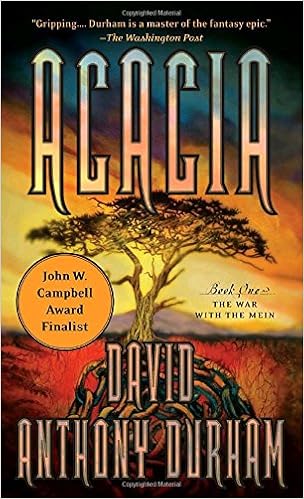
1. Acacia: The War with the Mein by David Anthony Durham

A bit of an older one that I’ve had on my shelf for half of grad school, but I knew when I first read the opening chapters that I was going to be hooked SO HARD. I’m excited to dive into this secondary world and the politics of Acacia. As a writer who hopes to publish in multiple genres, I’ll be looking at how Durham, first known as a literary writer, turns his talents to an epic fantasy. Plus, I need some 800+ page epic in my life as a celebration for finishing my MFA (thank you, thank you, no applause is necessary). It was a close call with rereading LotR for the Xth time, but I want to break some habits this summer.


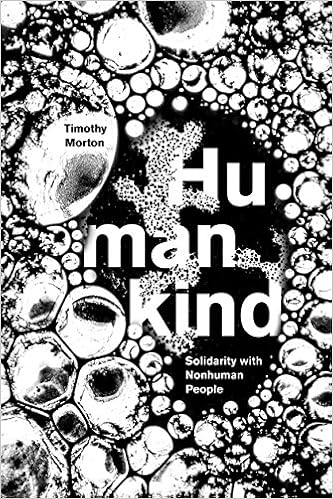
2. Humankind by Timothy Morton

This philosophy book ends up on my list after Dark Ecology, which was an inspiration for Jeff Vandermeer’s Southern Reach Trilogy. Humankind analyzes and dissects what it means to be human when human biology is made up of so many other things, and I’ve been thinking a lot about humanity’s relationship with other-than-humans. Morton has an interesting mind to dig into on such topics, often included pop culture references as much as scholarship. I’m not really sure what I’m in for, but I think it will be a good brain stretch.


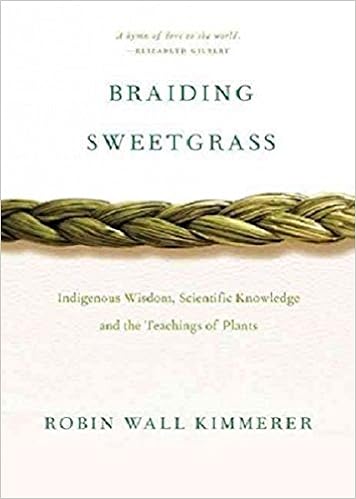
3. Braiding Sweetgrass: Indigenous Wisdom, Scientific Knowledge and the Teachings of Plants by Robin Wall Kimmerer

Again, this is a bit more of a research book than for fun. I’ve only heard good things about Braiding Sweetgrass and I expect this essay collection to shift some worldviews in the best way. It came up several times at WisCon this year, so I believe it’s crossing over into the SF community, too. Since my PhD will be focused on environmental literature, I always want to expand my views beyond the straight, white, colonizer cannon, so I’m trying to grow my research beyond the white academic cannon. Her essay “The Grammar of Animacy” is one I’m probably most looking forward since I’ve heard a lot of chatter for it.


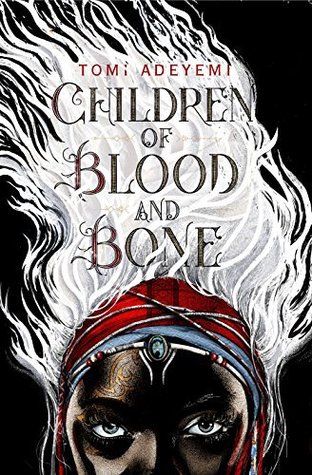
4. Children of Blood and Bone by Tomi Adeyemi

Back to the fun stuff! I really, really want to write about Blood and Bone by Tomi Adeyemi. It’s been on by TBR pile for a while, but my book buying budget does not agree with my reading wish list. I’m hoping to snag a copy for the library and stay up late reading it (as one does). It’s got everything—a female protagonist taking down the monarchy, magic, snow leoponaires (which just sound awesome). A YA set in a secondary world inspired by Africa, yes please!


5. Trail of Lightning by Rebecca Roanhorse

Since I heard of this book—a post-climate-apocalypse about a Dinétah monster hunter—I’ve been excited. Monster hunter alone would be enough to interest me, but one thing I’m half-heartedly tracking right now is books that are coming out with a reference to climate change. It always seems slightly easier and more popular to take current events and reinterpret them in science fiction, but I love to see fantasy takes on current events and the political situation. Personally, I’d argue that fantasy is the perfect place to comment on climate change due to the heavy nature aspect so often built into the narrative. Regardless, I’m interested to read Rebecca Roanhorse’s novel and I suspect it will interact with my reading of Braiding Sweetgrass and Humankind in interesting ways.


6. Tahoe beneath the Surface: The Hidden Stories of America's Largest Mountain Lake by Scott Lankford

This book is the odd one out, obviously. I’m attending University of Nevada: Reno this fall for a PhD, and I’ll be living in Virginia City, an old silver mining town. I’ll be subletting at a place where wild horses munch the weeds in the front yard, so I’m excited to get a break from the Monsanto-green cornfields of Iowa. My landlord recommended this book in order to learn about Tahoe, which is not far off. In my writing, I love to use local folklore and history so I’m excited to learn about the area and most likely, write about it!


Posted by Phoebe Wagner