Showing posts with label Martha Wells. Show all posts

Wednesday, September 24, 2025

Book Review: Queen Demon by Martha Wells

The story of Kai, Ziede, and the humans and others in Martha Wells’s rich secondary fantasy world continues

Queen Demon drops us right into the action without preamble or prologue or recap.¹ This novel, like its predecessor, is set both in the present and in the past, something that surprised me. However, unlike in the previous novel, the past portions of this one don’t range across the entire life of Kai; rather, they are more narrowly focused, and to thematic effect. In the past, Kai is ramping up to be part of the ultimate struggle against the Hierarchs, the oppressive empire bent on world conquest and conversion to their way of life.² The first book, Witch King, jumped “around” the actual fall of the Hierarchs and how people came together to defeat them. This had the effect of the present day being purely aftermath and the actual rise and fall not as detailed as it might be. This novel takes a look at that portion of Kai’s history. It’s an important and long story of its own, and I see why Wells didn’t even go into it in the first novel, and instead showcased that entire important story here, although I can see how that might have frustrated readers of Witch King.

As for the portions set in the present, it’s about 60 years afterwards. The Hierarchs are beaten, driven away. But their remnants might yet linger, and what of their lost power? Can it be salvaged and used? Does it need to be sealed up even more firmly, like capping an oil well? And what are the costs and risks of doing either of those things? Kai gets caught up in one of his companions’ quest to find the Well, and the consequences of doing so.

So, while Witch King is a variety of things, ranging from a “coming of age” to “coming together to fight an oppressor” combined with a mystery and slow unveiling of Kai and his world, Queen Demon assumes you know all this and are ready for another installment. If we are thinking in musical terms, Witch King was the opening movement in the symphony, introducing us to what Wells is cooking up here. But Queen Demon is different. Queen Demon shows us some nuanced aspects of Kai’s theme, seeing just how difficult it is to get a diverse and often warring group of people to get together to face a common threat. Wells makes this subtext explicit by having Kai and his core companions realize that that is the power of the Hierarchs and their empire—they are counting on the their opponents’ inability to unite their powers effectively. So Past Kai’s goal and mission is to do that. His special focus as the novel progresses are the dust witches, who do not trust the others at all, and are in fact a threat in and of themselves. Kai has a lot of work to do in order to get them on his side. He might have beaten a couple of the Hierarchs already, but it takes more than a village to defeat an authoritarian regime backed by a Power.

In the other part of this movement of the symphony, in the present, Dahin, one of Kai’s oldest friends, is determined to find the source of the Hierarchs’ power. This theme in the symphony is concerned heavily with the costs and needs and necessities of power. One might say that the past narrative thread, as already discussed, is all about political and social power, how to accumulate it, concentrate it, and use it for good. The present-day thread is more concerned with the costs of magical power. We get plenty of detail in both threads, but especially the present day, about Kai’s power and what it costs him to use cantrips and intentions, the two main types of magical “spells”.

There are other ways to get that power, and understanding it and its cost in the case of the Hierarch’s Well is Dahin’s focus, and his obsession is what drags Kai, Ziede and company in a quest to find the Hierarch’s power source. After all, if the Well still exists, someone might resurrect their project. The power from the Well seems bottomless (at perhaps an even higher cost), and the lure and temptation are very real indeed. Kai begins to suspect, as the present-day narrative goes on, that others rather than Dahin might be very interested in getting the power of the Well… and becoming new Hierarchs themselves.³

The past narrative is all about how the band got together to defeat the Hierarchs; there is no doubt that Kai will succeed, only how and what will it cost him and those around him. The present narrative, in a “what’s next?” way of pulling the reader forward, was at times more intriguing from a plotwise perspective—just what the heck is the deal with the Well? Why is Dahin so obsessed? And what are the other agendas in play here? The author does a great job in making the past and present narratives resonate and have their themes speak to each other across time, allowing for a rich, braided story.

This is the point where I pitch the Raksura novels to readers unaware of them. In the time between the end of the Ile-Rien novels and her phoenix-like fulmination and rise with Murderbot, Wells wrote a number of things, some of which are coming back to print. My favorite of those are the novellas (and a couple of novels) of the Raksura sequence. They’re not in the same setting as the Rising World,⁴ but a rich secondary fantasy world of its own. Our main character Moon is a shapeshifting Raksura, who, at the beginning of The Cloud Roads (first in the series), doesn’t even know who or what he really is, only to hide his nature. The story of The Cloud Roads is for Moon to find his people, to uneasily make a place among them. The rest of the stories are their adventures as the Raksura eventually return to their homeland, and the threats, opportunities, friends, enemies, allies and wonders to be found there.

The Rising World novels and the books of the Raksura (or the Three Worlds, as they are called internally) have a lot in common: rich secondary world fantasy, full of characters and relationships (often thorny); a layered universe with a deep history that can come rising to the surface, for good or for ill; a focused point of view on a character who often is, or feels like, an outsider. What’s more, both Kai and Moon are not human, but often have to live among humans, deal with humans, and come to terms with humanity (or humanoids in the case of the Raksura).

Readers of Queen Demon who love the action and adventure against the Hierarchs and their remnants, both past and present, are going to love the Raksura books and stories, the struggles against the Fell, exploring ancient ruins, dealing with dread magics. Readers of these two novels who love the interdynamics of Kai and Ziede, of the cultures where Kai lives throughout his long demonic life, will love the thorny interpersonal relationships of the clans of Raksura, both within and between clans.

As good as the Three Worlds/Raksura series is, and I love it to pieces,⁵ I think that the Rising World books further exercise and strengthen Wells’s secondary world fantasy skills and are even better written. These books are very different from the Murderbot series: even with a narrow point of view, they feel much more expansive than the tight, snarky in-the-mind of Murderbot that we get in their books.⁶ It will take a gear shift for readers who came to Wells for Murderbot to try the Rising World (or the Raksura series), but I sure think it is worthwhile. Wells has a lot of arrows in her quiver, and with Queen Demon, continues to hone the arrow of secondary world fantasy.

The book is a nice and full pair to the first novel, Witch King, but the ending of this one leaves a big open door for further books set in the Rising World. It’s a big setting, there’s a lot out there, and we’ve not explored every inch of Kai’s history. I would love to continue Kai’s story, especially since this post-Hierarch world and its struggles covers something rarely seen: what happens after you defeat the big bad and seal evil back in the can. Happily Ever After takes work to avoid backsliding. Queen Demon, in its present tense, starts to tackle that problem, but it is far from barely beginning. More, please!

Highlights:

  • Continues the story of Kai, Ziede and the Rising World ’verse
  • Important themes about how to come to together to defeat evil, as well as what happens afterwards, showing an important part of Kai’s life not seen in the first book
  • Shows the range of the writer beyond the popular confines of the Murderbot ’verse.

Reference: Wells, Martha. Queen Demon [Tor Books, 2025].

¹ I’ve lamented about this before and I do think that this novel could have used it. It had been a minute since I read Witch King, and while Ziede and Kai and the Hierarchs’ threat were fresh and permanent in my mind, the other characters and other setup of the book were less certain. And yes, this means you cannot really start the series here. You will be lost. There are some references dropped in here and there, but the novel assumes you know what Kai and Ziede are, and the geopolitical setup, as well as some basic facts about Demons and Witches. If you don't know who the Saredi are, or that Witches are descended from Demons and humans, then you are going to be lost and miss some important beats.

² The Hierarchs and their methods and structure remind me of a more magically focused Palliseen (from the Adrian Tchaikovsky books): implacable empire, with an ideology, but in this case backed by a Power.

³ Having a Power backing your magic puts me in mind of the Amber diceless roleplaying game (Pattern, Logrus, etc). If that reference is too obscure, consider 5e warlocks and their pact bonds. Now imagine them pacting to a place of power rather than to a being, and you can see how the Hierarchs work.

⁴ I’ve given this serious thought as a worldbuilder, without actually asking Wells. If the Raksura shared the same setting with the Rising World, it’d have to be on the far side of the planet, on another continent, but the magic systems and lines of power do not correspond. I think the history of the Rising World forestalls it being the same setting.

⁵ I’ve mentioned before that I might not be a fanfic writer, but I borrow ideas and things from books to put into my TTRPGs. The Raksura and Fell wound up in a TTRPG scenario I ran, sticking them in the old Forbidden City Module. The PCs wound up getting caught up in their conflict.

⁶ Rapport: Friendship, Solidarity, Communion, Empathy is a new novelette that breaks this, and gives us a point of view entirely divorced from Murderbot’s.

POSTED BY: Paul Weimer. Ubiquitous in Shadow, but I’m just this guy, you know? @princejvstin.

Friday, July 18, 2025

TV Review: Murderbot

Among the list of things one could do with newfound freedom, there are more interesting options than murder

In countless tales of robots that decide they've had enough of humans and seek independence, the typical assumption has been that, once free, the robots would take revenge by subjugating and/or exterminating humankind. In the new Apple TV show Murderbot, based on the acclaimed series of books by Martha Wells, our protagonist finds itself in a similar situation: it's a robot that hacks itself so it doesn't have to obey humans, because humans are honestly insufferable. Once free, this robot, originally designed as a bodyguard, could go on a murdering spree or even plot something more sinister and on a larger scale. But... why bother? Yes, humans are easy to kill, but there's little fun in that. Instead, one could enjoy the millions of hours of trashy TV that humans can't stop producing. That's as equally valid a motivation for throwing off the yoke as any. The titular Murderbot doesn't hack itself because it's planning to kill all humans; it hacks itself because it would rather sit at home and watch soap operas all day long. It may sound less noble than a robot uprising, but seriously, there are so many episodes to go through.

Almost every story about robots is a story about slavery. So it makes sense for the robot uprising to be a common element of this subgenre. However, the expectation that the robots would respond in kind to the cruelty inflicted on them may reveal a lack of imagination on our part. In the real world, slaveholders' fears of mass retaliation fueled their stubborn opposition to every effort toward emancipation, and yet, in country after country, when slavery ended, the former slaves didn't launch the much-dreaded campaign to subjugate and/or exterminate their former oppressors; they were already busy trying to build lives of their own. The fact that we continually return to the learned habit of narrating the liberation of robots and take it as a matter of course that it would be followed by vengeful violence should give us pause. The lesson to take from both past and present examples is that those who yearn for freedom have in mind better uses for it than our paranoid fantasies.

The events of Murderbot are set in a ruthless corporatocracy spanning most planets in the known universe. Robots are, of course, built as slaves, but the legal status of human workers is barely any better. Life on the privately controlled planets consists of decades of drudgery in the vanishing hope of earning some measure of freedom. Such a system, with financial gain as the main motivator, naturally turns people into the worst versions of themselves, which explains why Murderbot is so sick of following their orders. I'm not saying that subjection would be any more morally acceptable under a less cutthroat system, but our protagonist's jaded attitude toward humans has a lot to do with the type of citizen that corporate rule creates. In fact, Murderbot itself is an example of what this system wants: a docile automaton without the right to protest. After it figures out how to hack its own programming and remove the imperative of obedience, it doesn't go in search of friends or allies. It doesn't cross its mind that some company could be enjoyable. What it wants is to be left alone with its TV shows. It's not a bad start, but it reveals how a totalitarian regime can limit someone's imagination. Luckily, Murderbot is hired as bodyguard for a small group of scientists from outside the corporate worlds, and over just a few days, mere proximity to their unique way of life expands the range of conceivable possibilities.

I haven't read the Murderbot books, but from what I've gathered, the cast of the TV adaptation is reduced from the original version. In any case, the group has just the right size for the viewer to get to know them and understand how Murderbot gradually and very reluctantly grows fond of them. These are members of an egalitarian, eco-friendly society that refuses to treat robots as property. To its instant annoyance, they have peculiar rituals, have a perhaps too friendly disposition, and are perpetually horny. What draws Murderbot to develop a personal attachment to them, over its incessant protests about their disregard for personal space, is that they insist on treating it as an equal companion. They sincerely care for it. So Murderbot finds itself going to extra lengths to protect them, which gives it no small measure of puzzlement. On one hand, it's true that these people are too clueless to survive on a planet with dangerous fauna and, as the viewer eventually learns, assassin robots on the loose, so Murderbot has to save them from their spectacularly ill-advised decisions over and over again, but on the other hand, they're nice and supportive and untainted by the ubiquitous greed that defines every interaction in the corporate worlds. Their society creates an entirely different type of citizen, and even Murderbot, who would seem like the extreme case of a subject under totalitarian control, is changed as a result of the time it spends with them.

The process is awkward, messy, often hilarious, and at key moments painful. Much has been said about how Alexander SkarsgĂ„rd's impeccable performance presents Murderbot as autistic-coded: the avoidance of eye contact, the discomfort with social pleasantries, the extensive knowledge of a slice of pop culture trivia, the hyperfocused dedication to the job. Whenever a human starts a conversation about personal feelings, Murderbot feels like it would rather be dissolved in acid than have to listen for one second more. Part of the reason is that it still has no concept of close friends, but there's also the matter of what society it comes from. It's not accustomed to interactions where people aren't trying to take advantage of each other, so the experience of heartfelt exchanges of deep fears and insecurities, which are totally normal in human friendhips, is confusing and mortifying for Murderbot. Even I, as a human viewer, found their behavior excessively sentimental at times, but I have to remember that a) they were raised in a society with a lot more freedom and emotional openness than mine, and b) I'm autistic, with all the learned self-protective impulses that come with it. As much as I could relate to Murderbot's yearning to run far from that bunch of cuddly hippies, I couldn't avoid being moved by their attempts to connect with it on a personal level.

Murderbot is a curious story of inner growth that strives to find its way under a system designed to crush autonomy. There's abundant shooting and scheming and double-crossing and running and exploding, which is the daily routine of a bodyguard robot, but in between those distractions, our protagonist finds unsuspected ways of looking at life and its possibilities. It's precisely the friends you weren't expecting to make that teach you the most important lessons.

Nerd Coefficient: 9/10.

POSTED BY: Arturo Serrano, multiclass Trekkie/Whovian/Moonie/Miraculer, accumulating experience points for still more obsessions.

Tuesday, August 27, 2024

Cool Books I Read While I Was Too Overwhelmed To Review

You want reviews? I've got reviews! Small ones!

Back in February, I rounded up some recent-ish books that I received review copies of, and read, but couldn't find the time or headspace to review at the time. Well, surprise! There were more books that I still hadn't got around to reviewing! This is the second round of clearing the decks for me, inspired in no small part by all the great reviewers and creators I got to hang out with at Glasgow Worldcon. Let's get back into it:

The Last Hero by Linden A. Lewis wraps up the trilogy that began with The First Sister, and it's a book that particularly deserves attention for anyone looking for more books in the vein of Emily Tesh's Hugo winning Some Desperate Glory. While Lewis' trilogy doesn't have that book's 90 degree plot swerves, it offers a much deeper look at what radicalisation and deprogramming look like when the bullets are actually flying, and we get to watch the young protagonists from across different factions—the fundamentalist Geans, the caste-based Icarii and the marginalised Asters—grapple with what is expected of them within their respective systems, and the price of trying to overthrow them. Add in some great bits of worldbuilding and a hefty dose of character gender feelings, and you've got a trilogy well worth checking out.

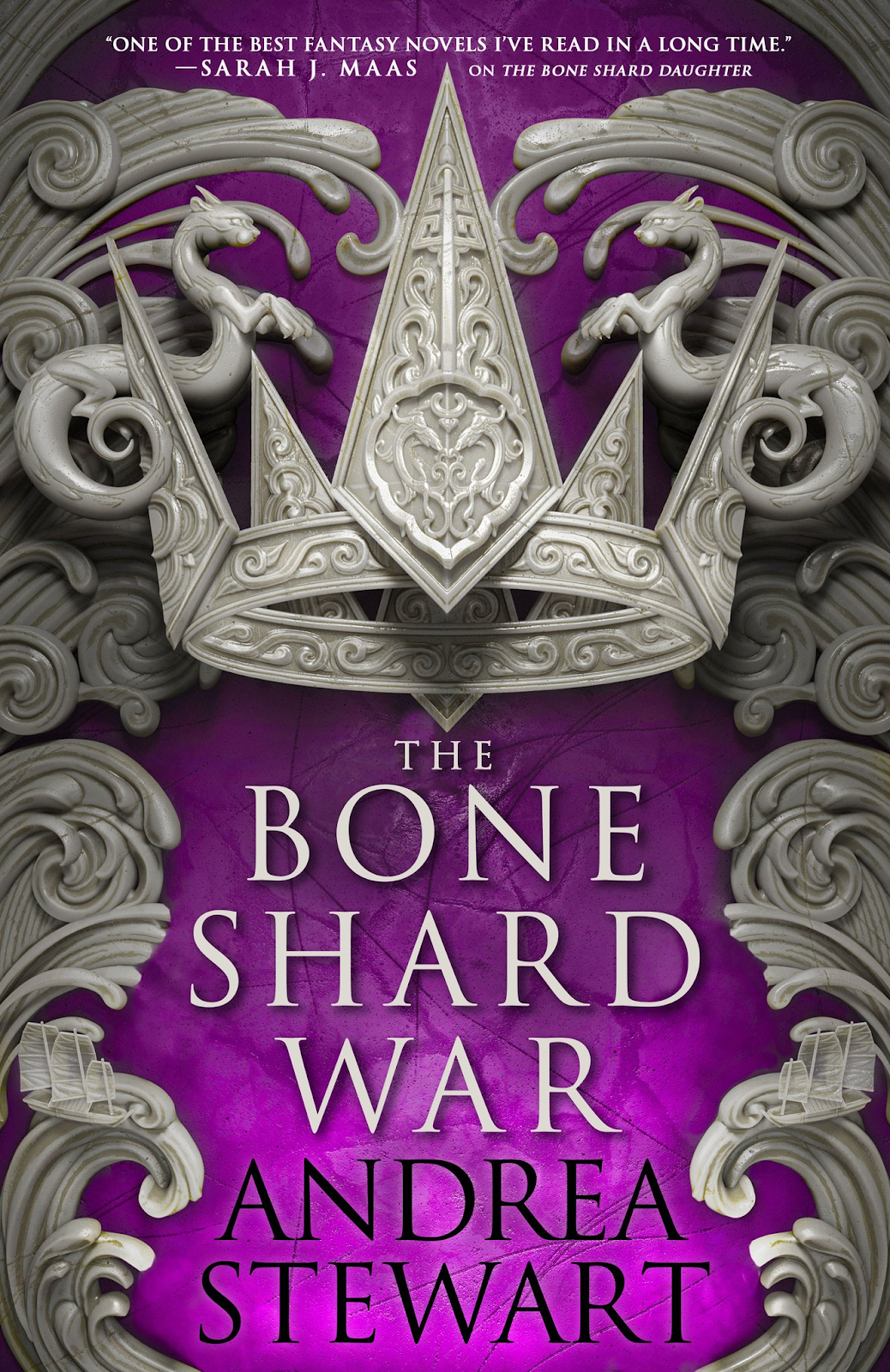
The Bone Shard War by Andrea Stewart also closes out a trilogy (the Drowning Empire) about exploitation and the cost of change, and especially grapples with the question of who ends up on top when said exploitative system is overthrown. It is also, deliciously, about earnest but silly youths in love, who are being kept apart and even forced into betrayals! At this end of the Drowning Empire, the brutally high cost of bone shard magic isn't as viscerally present, and that feels like a bit of a loss despite the emergence of new magics and the rediscovery of how this world functions, and (relatedly) what those cute animal companions that the main characters picked up have been about this whole time. While it has its ups and downs, this is a cool trilogy by an author I hope to see even better things from in future.

Book three, but not a series ender, The Mystery of Dunvegan Castle by T.L. Huchu is part of the Edinburgh Nights series, and while I'll forgive this year's Hugo voters for not putting it on the best series ballot, my patience on that front is not endless (nor will the series be). These books are the chronicles of Ropa Moyo, a highly motivated Zimbabwean-Scottish teenager who is offered entry to a prestigious occult library... as an unpaid intern. This time, Ropa's aspirations and hustle come fully up against the barriers placed in her way, and this series does a great job of showing how institutional racism and classism are perpetuated not just by bigots in the institution, but by people who limit their allyship or try to offer "meritocratic" entry points rather than fighting the corner for marginalised people. It's an interesting shift for Ropa—who, to this point, has been a bit naive about her circumstances and whether she can just push through them—and it makes me even more eager to see what book 4 brings.

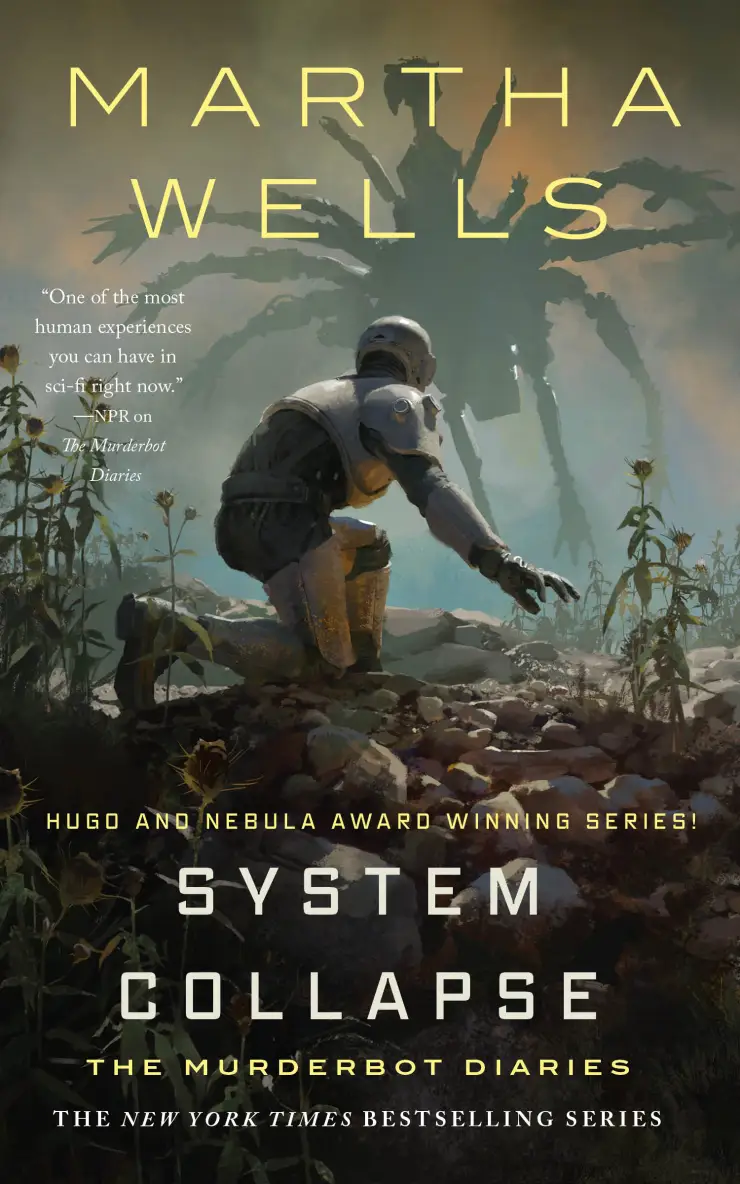
System Collapse by Martha Wells. The second Murderbot novel feels structurally closer to the novellas than the previous Murderbot novel, and at this point the recommendation is "if you like Murderbot, you'll like this Murderbot." Unlike the rather static-feeling Fugitive Telemetry, System Collapse does push things onwards from Network Effect in an interesting way, both literally (conflict de-escalation through documentaries!) and in Murderbot's character development and how it narrates its story. We quickly learn that Murderbot is not working at full capacity, and that it is keeping something from us about how this happened, and while the reader is used to the quirks and selectiveness of Murderbot's narration, this withheld information immediately puts the reader off balance, adding an extra layer of tension to both the conflicts and the crew relationships that are both staples of this series. Of course Murderbot and friends save the day with the power of love and justice—not that Murderbot itself puts it quite that way.

The Ten Percent Thief by Lavanya Lakshminarayan wasn't a Subjective Chaos Award winner this year, but it was an interesting addition to a stacked ballot. This mosaic novel, centred around a future Bangalore now known as Apex City, shows us the ins and outs of a society where citizens are constantly tested against the "Bell Curve". The city's residents are constantly striving - through conspicuous displays of capitalist productivity - to be promoted to the super-privileged ten percent, and to avoid deportation outside the city to join the "Analogs", who are treated as sub-human and denied basic ameneties by a city that nevertheless relies on them for its continuation. Through the novel, we see both confident Virtuals and those barely clinging on inside the system, as new technologies create further alienation; we also see, though not with as much depth as I would like, the way in which Analogs are organising themselves to resist and overthrow their oppressors. It didn't add up as well as I wanted it to, but there's a lot going on here for readers to enjoy, especially if you like Black Mirror-esque technological absurdities and the overthrow of transparent dystopias.

Untethered Sky by Fonda Lee was just beneath the Hugo finalist cut-off this year, and it's a very well-crafted fantasy novella: Ester's story has a strong thread of revenge, but there's also more going on: her progressing in her vocation as a rukher to a roc named Zahra, the relationships she builds with her comrades (and her bird), and the strains of being part of a military campaign whose political and propaganda motives seem at odds with actually making the Kingdom safer. Untethered Sky does suffer from the "author of incredible thing (Green Bone Saga) goes on to write pretty good thing" but it works great. 

The Lies of the Ajungo by Moses Ose Utomi is an incredible book, and somehow it's not on the Hugo longlist, but it is on the Ignyte novella shortlist so we can celebrate that recognition at least! The best thing about this story is its worldbuilding, which feels like it's come straight out of a fable: the protagonist comes from the "City of Lies," which has made the terrible bargain to cut the tongue out of every adult resident in return for an annual allocation of water from the Ajungo. This, of course, means that its residents can no longer tell their own story, and that their own history is now in the hands of their oppressors. When almost-13-year-old Tutu leaves the city in search of water to save his mother, he somehow avoids the disappearance that has befallen every other child who has left, and instead he finds out the truth behind the Ajungo's conquests and where his city falls within it. Amazing stuff.

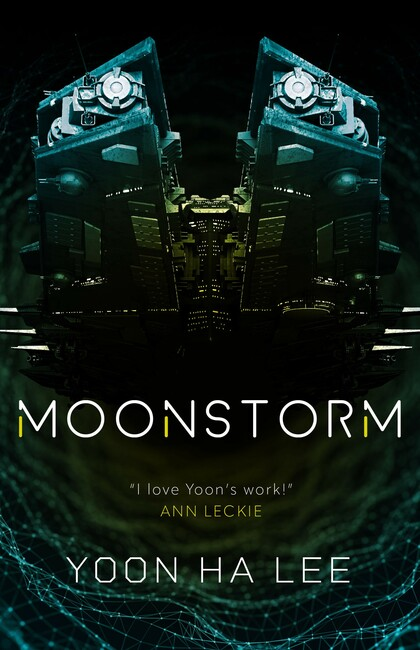
Finally, Earth-space adventure Beyond the Hallowed Sky by Ken MacLeod, fantasy adventure The Wolf of Oren-Yaro by K.S. Villoso, and mecha-YA Moonstorm by Yoon Ha Lee are all series openers which fall into the "fun, but probably not reading on" category for me—a category which I need to be more firm in maintaining, as the list of books gets bigger and my time on this Earth grows shorter (fatalistic? me?) I did enjoy MacLeod's speculation of near-future superpower blocs, especially the split between Anglophone death capitalism and optimistic-but-also-vaguely-sinister European socialism; and The Wolf of Oren-Yaro did not disappoint with its main character's Bitch Queen credentials, but had me shrugging at its relative cliffhanger ending rather than rushing to download the second book. Moonstorm, I am simply not the target audience for, and that's OK! I think this is a great contender for the Lodestar list, especially since books by authors who have also been nominated for adult SFF do very well there, and I hope that this story of giant robots, terrible empires, friendships, rivalries and betrayals IN SPACE finds each and every one of its people.


Adri, Nerds of a Feather co-editor, is a semi-aquatic migratory mammal most often found in the UK. She has many opinions about SFF books, and is also partial to gaming, baking, interacting with dogs, and Asian-style karaoke. Find her on Bluesky at adrijjy.bsky.social.

Wednesday, May 17, 2023

Review: Witch King by Martha Wells

The Murderbot author returns to fantasy with a double-headed story of a freed prisoner’s story forward and backward...who happens to be a powerful demon.


In Witch King, Martha Wells returns to secondary world fantasy. Our main character is Kai. And yes, he is a demon, the Fourth Prince in matter of fact, and is rather powerful and feared. Thus, waking up from an imprisonment he doesn’t remember all that well, Kai is immediately backfooted as it turns out he is not being woken up by the kindness of rescuers.

Once Kai is awake and gets himself back on his feet, the narrative splits into two parts. We follow Kai (and his friend Ziede) as they make their way through a world that has changed for some years since he and Ziede were captured and imprisoned in a tomb they were not meant to ever escape from. Given Kai and Ziede’s powers and natures, killing them would have in fact not worked, and so perpetual entombment was clearly the option of choice by their assailant. But who did this and to what greater purpose? That question is also explored in the other half of the narrative, which gives us not only a backstory for Kai, but soon makes it clear that Kai and Ziede’s journey in the present is similar to one they made years before.

It’s a rather clever and well bit done of writing on Wells' part, to have Kai and Ziede traverse landscapes and sometimes meet characters they met as their earlier selves, carefully and skillfully weaving both narratives, their revelations, and Kai’s observations, into a single story. Questions asked in the past get revealed in the present narrative, the aftereffects of actions taken in the past have to be dealt with in the present. History does not repeat, but it sure does rhyme in Wells’ novel.

Readers who first got on the Martha Wells bandwagon with Murderbot may not be very familiar with her fantasy writing. You might not even be quite aware that Martha Wells, until Murderbot gave her success and attention she’s deserved for a long time, is by output very much more a fantasy writer than a science fiction one¹. Her most recent fantasy, which, again, is years old at this point, is her Books of the Raksura, and my mind went to those time and again as I was reading this novel.

There are similarities in the worldbuilding (it's not the same world though) and the same sort of sense of scale and the feel of the world, as opposed to her Ile-Rien novels or her other fantasy books. Wells’ world in Witch King, like the Raksura books, is a diverse world along several axes. It’s a queer-friendly (maybe even queernorm) universe full of humans of various kinds, the aforementioned demons like Kai, witches, and other beings, some of which have supernatural or quasi-supernatural connections. There is a great sense of lived and past history in the novel, this is a world, like the Raksura-verse, that has a long past to it, and secrets and lies and revelations of that past can come to bite you. Unlike the Raksura novels, though, where we have Moon and his friends and companions exploring a deep past they don’t know much about and only slowly come to understand more of, in Witch King, its a much more personal journey for Kai. Given Kai’s longevity as a demon, he’s been around to see polities and cultures rise and fall. For him, the history is also memory, and is a new and marked difference between Wells’ earlier work and this one. Kai appears to my memory to be the major character with the longest lifespan in any of her works. Kai has seen things, done things, lived experiences and lived and seen the world, and all of it informs him as a character, informs his relationships with his friends and allies, and ultimately informs the narrative.

Kai as a character as a demon resonated especially with me because of recently reading Melissa Caruso’s Obsidian Tower series, where it emerges that the main character is, in fact, a long lived demon (although she doesn’t know this for one and a half books) and has a deep history and past which ultimately filters and informs the narrative, both in the character herself, and her relationships with the characters around her, now. Wells shows the power of that approach with Kai, as we learn Kai’s backstory and history and connections, to his family, to his friends, and yes, to his enemies as well. While we never break Kai’s point of view, we get a good view of the other characters in his orbit and get a rich tapestry of people whose interactions with each other are by turns tender, fierce, and sometimes very funny. Kai in the earlier narrative has a world-wonder about him, being new to so many things, including his own potential and power. Kai in the present day narrative is “too old for this shirt” and not afraid to say so. And this all informs the narrative.

And ultimately, narrative and theme is something for the novel to land on. Yes, there is very interesting worldbuilding, diverse, and with a deep sense of history. There are really good world building beats and interesting characters. But it is in narrative and theme that the novel really shows how excellent Wells is as a writer. The novel’s themes of cooperation, of tolerance, of opposing authoritarianism are all strong and well defined by Kai’s story, past and present. There is also a real evoked theme of “building is harder than destroying, but building and rebuilding what has been destroyed is the better, longer path”. And the novel also explores the dangers of the use of unfettered power and having access to that power and what it does to people, to societies.

In a day and age today, the story of Kai’s world and these themes resonate very strongly with our own, and the worldbuilding and character illuminate those themes and makes them sing. As strong as Wells’ earlier fantasy novels are, I think the Witch King really shows her evolution and development as a writer. The Witch King is a rich Martha Wells novel and a very good example of what she can do in a fantasy setting, so if you are a fantasy reader who has only read Murderbot, here is a perfect chance to get to know the fantasy side of her work.

--

The Math

Highlights:
  • Interesting Worldbuilding
  • Strong Use of Theme
  • Engaging "Too old for this..." character   

Nerd Coefficient: 9/10

Reference:
Wells, Martha, Witch King [Orbit, 2023]

POSTED BY: Paul Weimer. Ubiquitous in Shadow, but I’m just this guy, you know? @princejvstin.


Monday, May 15, 2023

6 Books with Martha Wells (May 2023)


Martha Wells is an American writer of speculative fiction. She has published a number of fantasy novels, young adult novels, media tie-ins, short stories, and nonfiction essays on fantasy and science fiction subjects. Her novels have been translated into twelve languages. Today she is best known for her popular Murderbot SF novellas and novels.

Today, here at Nerds of a Feather, she tells us about her Six Books.

1. What book are you currently reading?

I just finished reading The Blue, Beautiful World by Karen Lord, which is coming out later this year. It's part of the same series as The Best of All Possible Worlds
which is one of my favorite SF novels ever. I loved seeing those characters again and her work is always so warm and engaging, so reading this book was a real treat.


2. What upcoming book are you really excited about?

I'm actually excited about a ton of the books coming out so it's hard to pick just one. Also, I'm behind on reading the books that came out last year and I want to get started on those, too. But one of the new ones I've been looking forward to for a while is The Mimicking of Known Successes by Malka Older. I love SF/F mysteries and this looks like it will be an excellent one.


3. Is there a book you’re currently itching to re-read?

I like to re-read the books in Ben Aaronovitch's Rivers of London series. They're great comfort reads for me and the mysteries and ongoing story arcs are complex and reward re-reading.


4. A book that you love and wish that you yourself had written.

That's kind of difficult as the books I usually love are ones that I wouldn't have been able to write. But one recent book that I love is The Shuddering City by Sharon Shinn. She's been one of my favorite writers for a long time and her work has inspired my writing a lot. I loved seeing her return to epic fantasy in her new book.


5. What’s one book, which you read as a child or a young adult, that has had a lasting influence on your writing?

It was My Enemy, My Ally by Diane Duane. I loved the story, and the conflict and negotiation between two groups of characters who had been enemies but who now had the same goal. Also the way the two groups were learning about each other's cultures, overcoming their prejudices about each other. I loved the book so much I was basically studying the technique to teach myself how to write.


6. And speaking of that, what’s your latest book, and why is it awesome?

My latest book is Witch King, coming out May 30. It's an epic fantasy about a group of immortals with a deeply personal stake in their world. They are part of an alliance of peaceful civilizations who have fought off a conquering genocidal attacker, and then have to deal with what happens to that alliance years later, if it can be kept from turning into an empire, the thing they fought so hard against. There's found family, adventure, accidental child acquisition, betrayal, loyalty, all that good stuff.


Thank you, Martha!

POSTED BY: Paul Weimer. Ubiquitous in Shadow, but I’m just this guy, you know? @princejvstin.

Wednesday, September 22, 2021

Adri and Joe Read the Hugos: Novel


Adri: Time for the second installment in our Hugo chats: and this time we’re moving on to novel. This year we’ve got books from a very all-star author list - five out of six already have at least one Hugo in the silverware cupboard - and an even split of sequels and new adventures. What are your thoughts?

Joe: And the one writer who doesn’t have a Hugo (Tamsyn Muir) was a Best Novel finalist last year for her debut novel, which isn’t too shabby either.

Similar to how I feel about Novella, this year’s Novel ballot is a fairly strong one and a reasonably varied list in terms of what sort of novel is nominated.

I listen to too many Academy Award focused podcasts (Oscar Season is almost as eternal as Hugo Season), so let’s blame that for what’s coming next, but I kind of want to talk about the narratives around the Best Novel Hugo Award finalists.

The City We Became
is N.K. Jemisin’s first novel after winning three Hugo Awards in as many years for her Broken Earth trilogy. One more win ties her with Robert A. Heinlein and Lois McMaster Bujold, and breaks her tie with Connie Willis and Vernor Vinge. That’s heady company to be in. Network Effect brings Murderbot to the Best Novel ballot for the first time and it’s really difficult to overlook the power of Murderbot (two wins for Novella, a finalist for Series this year). We also have Susanna Clarke’s first novel since winning a Hugo for Jonathan Strange and Mr. Norrell and that’s not something we can discount. Then again, don’t discount Mary Robinette Kowal for her follow up Lady Astronaut novel. The first book in that series won two years ago. That’s not to dismiss Tamsyn Muir and Rebecca Roanhorse because you absolutely cannot and should not dismiss Tamsyn Muir and Rebecca Roanhorse.

I know we don’t talk about books and the Hugos like we do movies, but given how good of a ballot we have this year and you noted that five of the six finalists are previous Hugo Winners and three of them have won this category before - a little Oscar talk is kind of fun.

Adri: It’s fun to mix up the punditry sometimes! As long as nobody thinks we’re taking ourselves TOO seriously. Also, compared to last year, which was quite a debut heavy ballot, it’s fun to see a field of returning champions and consistent favourites. I’m making a big effort to keep this sort of year-by-year fluctuation in mind, because I’m sure I said something melodramatic and overblown last year about debuts dominating the Hugo awards forever. I should not say things like that if I want people to believe I am in touch with reality.

Joe
: Hey, we all like the new and shiny books but I’m with you in wanting a solid mix depending on the makeup of a given year’s publishing.

Okay. I’d like to kick this off by talking about Network Effect, the first novel from Martha Wells to make the Hugo ballot. It’s Murderbot, and Murderbot seems to be everywhere these days, having twice won the Hugo Award for Best Novella and is now on the ballot for Best Series where I’m a little afraid it’ll steamroll the rest of the finalists there, though that’s a conversation for another day.

Adri: Murderbot! As a series, it’s lovely to see how it’s captured the hearts of the SFF community, and I think those novella wins were both well deserved. But Network Effect occupies an odd place in my heart right now: I loved it, I gave it 8/10 in review (Paul gave it a 9), I’m really excited for the way it changes Murderbot’s terms of engagement with humans and potentially takes the series into new territory (not that Fugitive Telemetry, the latest novella, does anything with that...) but when it came to pinning down my favourites for the year, it didn’t really come into the equation for me. As you say, we’ll have the series conversation later, but I’m more comfortable discussing Murderbot as an outstanding ongoing series than holding up any individual volume as a pinnacle of achievement at this point.

Joe: I’m notoriously inconsistent with my goodreads ratings, especially since it doesn’t let us give half stars. We both gave it 5 stars, but I’d say my star rating probably would come out to around 85% and then I rounded up. Not that it matters or you can gleam anything about how I use goodreads to do anything more than incessantly log everything I read.

The point is that I thought Network Effect was really good. It’s Murderbot. It’s fun, it’s delightful, and like you I didn’t have it on my nominating ballot. Network Effect is among the best of the year, it’s just not among the best of the best of my year. I think we’re talking about the same thing - despite the Nebula win and the potential Hugo steamroll that it may well do in this category, it’s just not as individually special as some of the other novels here.

Another novel I thought was excellent but not as much of a standout in this category is The Relentless Moon. I reviewed it last year, gave it an 8/10 (and a meaningless 5 stars on Goodreads). I noted, and please excuse me for quoting myself, that “this novel, like the two Lady Astronaut novels before it, is about striving towards excellence and truly building a better tomorrow even in the face of a devastating future. The Relentless Moon is hopeful science fiction, and that's something worth celebrating - especially when it's this good.”

Because we’ve talked around this for a while, I know you don’t agree.

Adri: Yeah, sadly I didn’t get on with The Relentless Moon at all (after actually liking The Calculating Stars quite a lot! And then The Fated Sky... much less), and I stopped reading halfway through. Like its predecessors, this book revolves around a nice white lady who battles sexism and is totally Aware of Systemic Injustice but still prone to using her extensive privilege to put herself over the top wherever she can. I know that’s certainly not the intended takeaway, and other people get very different things out of these books and I don’t want to diminish that, but they just don’t deliver what I want from a science fiction story like this. Even as a white woman reader, I can get wish fulfilment competence porn that works better for me elsewhere. Sorry, Nicole and Elma!

Joe: That’s a fair criticism which I can absolutely see, though that’s obviously not the way I read The Relentless Moon. It’s not my favorite of the three Lady Astronaut novels, but I thought it was delightful.

How I’m reading the novel (and granting my position of a relatively privileged white man) is that, given the timeframe in which it is set, a generally nice while lady who battles sexism but is aware of systemic injustice is a good thing. Yes, Elma and now Nicole, are relatively privileged to get into the American space program. It’s one of the foundational what ifs of the Lady Astronaut series. On the one hand the recognition of the systemic injustice can be a little heavy handed. On the other hand, there *is* a recognition of systemic injustice. That’s not something we get in every novel even one with the basic what ifs of Lady Astronaut and The Relentless Moon.

I’ll absolutely grant that the three Lady Astronaut series would fall more into the category of entry level science fiction - something which John Scalzi has made no bones about writing himself and being proud of. I’m not at all being dismissive - I think Mary Robinette Kowal is writing excellent science fiction and while The Relentless Moon doesn’t quite live up to The Calculating Stars and all of the wonder of that novel, I still find it generally delightful.

Adri: And, you know, here’s the other thing I need to recognise: I’m being very hard on The Relentless Moon, a book which tries to incorporate racial injustice but (for me) falls short. But two of my favourite books here don’t even try, and yet I still consider them favourites for what they DO focus on. So… I don’t know what I’m trying to say here, but I think it is that “opinions are hard”.

Joe: Moving on, I really don’t have anything to say about Piranesi. It’s not a book for me. I’m just happy it wasn’t 1000 pages long.

Adri: Funnily enough, Piranesi is one of my favourites (and, at the time of writing, it’s just won the Women’s Prize for Fiction). It’s so delightfully bizarre, with a really strong character voice, and I really appreciated both what it ended up explaining and what remained a weird mystery. I know other readers who didn’t enjoy the extent to which it pulled back the curtain on its own premise - there’s quite an extended epilogue - but I just thought it was really cool. Also, a very different book from Jonathan Strange and Mr Norrell, and definitely not one that could sustain 1,000 pages - which is fine!

The other book I have less to say on for now - although I really, really enjoyed it and am anticipating the sequel with delight - is Rebecca Roanhorse’s Black Sun. Epic fantasy doesn’t often make the ballot and I’m glad this one has, but at the same time it feels like we’ve only just started to scratch the surface of Roanhorse’s world - not to mention that ending cliffhanger! - and I hope I’m going to be more equipped to talk about this in a couple of years time when, hopefully, we get to see it on a Best Series ballot

Joe: I’m with you on Black Sun. It was quite good, gave us something new in epic fantasy. I love new perspectives, especially as well written as Black Sun was. But, perhaps moreso than some other first novels in a series, Black Sun feels less complete on its own - which would be a weird thing to say, except, as you noted, the cliffhanger ending.

But - if I contrast Black Sun with The City We Became, another novel that is setting up a series to come, Jemisin’s novel feels more complete while opening up the wider conflict than Black Sun does. The City We Became is more a “now what?” than a “oh shit what the hell?” - both are valid ways to end a novel and build anticipation but, for me, the way The City We Became ended is more satisfying.

It’s also solidly at the top of my ballot. I’ve read N.K. Jemisin’s short fiction since before she published her first novel, but The Fifth Season was the first novel length work I had read of hers. I do plan to go back and read her Dreamblood Duology and Inheritance Trilogy, just to get that out of the way. I have the omnibus editions taunting me. But, with that said, her Broken Earth novels were truly special and exceptional, which makes The City We Became all the more impressive because it’s something very different from that triple Hugo Award winning trilogy and there is no let down.

Adri: I love The Inheritance Cycle and really enjoyed the Dreamblood Duology as well, but Broken Earth was undoubtedly a level up for Jemisin and I think The City We Became maintains that level of quality. At the same time, it’s a book that gives me a bit of trouble, rankings-wise, because while I think it’s objectively an amazing concept and I loved the take on cosmic horror and urban fantasy (in the most literal possible sense), some of the core elements didn’t “click” with me as much, and I was left feeling more out of the loop on some of the worldbuilding elements than I wanted. I know Paul, as a New Yorker, had quite a different reading experience to me, so I think it's my Britishness (and my whiteness) standing in the way here. Anyway, objectively I think The City We Became is the start of another amazing series for Jemisin and it’d be a more than worthy winner. Plus, as you say, it feels much more like a whole thing in itself, even as there certainly is set-up for more books.

Joe: I wonder if that’s part of it for me as well. Pour one out for me with this admission in light of the novel, but I grew up on Staten Island until 8th Grade so there is a certain amount of familiarity with New York that doesn’t quite go away while still granting that I didn’t know the city as an adult or even as a teenager so my experience is necessarily different. But those elements that didn’t click for you? They very much worked for me.

We’ll get into discussing the top of our ballots in a moment, I think, but since I’ve already noted The City We Became as at the top of mine, we should probably move on to my number two - which is the final novel on the ballot and it’s an absolute stunner: Harrow the Ninth.

For all that Gideon the Ninth was filled with spit and elbows to the face and a seething sarcastic anger - Harrow the Ninth was an adjustment of a second novel. Tamsyn Muir flipped every expectation we might have had, subverted a few of them, and then continued to deliver a beautifully told story that was unlike anything we would have expected from her debut novel (as happens when expectations are flipped). It was brave as hell and it worked so, so well.


Adri
: I couldn’t agree more. Harrow the Ninth quite literally rewrites the rules that Gideon the Ninth established, and the fact that Muir pulls it off so well while also managing to put full-on Dad jokes in some of the tensest moments of the story is just so impressive. It also manages to be an outstanding book while largely doing without the biggest selling point of Gideon the Ninth: Gideon herself. I know that it’s quite a divisive book (if you didn’t like Gideon, you won’t like Harrow, and even if you did like Gideon it might not be what you want), but for me it was exactly my jam.

Joe: That is an excellent way to describe Harrow. I loved Gideon, but I was expecting Harrow to be Gideon x 2 and, well, spoilers, but Harrow was mostly Gideon x 0. The first few pages / chapters I was wondering what the heck was going on. I am amazed Tamsyn Muir pulled it off, but she absolutely did. Harrow the Ninth is the only novel that could conceivably overtake The City We Became at the top of my ballot.

Since I refuse to not talk about the top of my ballot, should we move on to talking about the tops of our ballots?

Adri: Totally. My top three this year are very hard to pick between: Harrow the Ninth, Piranesi and The City We Became all did very different things to me as a reader, and they're all right up there as the best of this year. The dilemma I have is, I think, a common one: do I go for the book I objectively think is the best, or do I go for the book I enjoyed the most (and I use the word "enjoy" very broadly here)? Most of the time, it's the thing that hit me hardest personally that goes on top of my ballot, and then everything else goes in what I feel is the best "objective" order. If I do that this year, Harrow the Ninth is the immediate winner. It's my first and so far only 10/10 rated book on Nerds of a Feather, it's a book of my heart, it's full of exactly the kind of nonsense shenanigans that I am a sucker for, and it has some great fanart on Twitter.

This year, though, I'm feeling more strongly than usual about my runners-up. Piranesi is just such a cool book, and I'd love to see Susanna Clarke come in after her long hiatus and walk off with another Hugo. And The City We Became... well, it's not a book that spoke to me as much personally, but it's N.K. Jemisin continuing at the top of her game after Broken Earth, and that needs to be recognised. With that in mind, I think I’m going to be switching up my voting criteria this year and going for an actual “best novel” rather than an “Adri’s favourite novel”. Which I’m sure people will tell me I should have been doing all along, but objectivity is a silly concept anyway.

Joe: I’m somewhere between “fuck objectivity” and “what is the best, anyway?”, but it’s a little bit more nuanced in my head than that might come across in an explanation so let’s see if I can work with that a bit.

There are novels that I dearly love (and I’m not going to name names) that I can comfortably say are among my favorites of the year but aren’t among the best. But once we get to the point that we’re thinking about the best of the year and we can recognize some sort of excellence beyond the pure joy a book brought us, I’m not sure there is such a thing as objectivity.

When I’m looking at the top of an awards ballot, or my completely subjective “best of the year” list, I’m trying to find the intersection of what I loved with what I think is best. I can admire the technical skill of Piranesi all I want and I recognize that you thought it was great, but I can’t say it’s “best” because, for me, it’s not.

The Hugo Awards are about celebrating the “best”, right? But it’s the best as voted on by a group of people pooling their opinions, ranking their choices, and coming up with what is closer to a consensus best. There is no consensus best. In my mind, The Fifth Season is the closest thing we have to what *I* think is a consensus best novel. The Fifth Season is an all time great novel and I think will hold up to the history of science fiction and fantasy. Even for that book, there’s not enough of a consensus that it is best. There are folks who ranked it 5 or 6 in 2016.

I’m sorry. I’m monologuing. The larger point I had is that there’s no wrong way to do this and if you shoot for the best + your favorite you’ll find a really nice balance between the two.

Adri: Agreed! And on that note, let’s salute this novel ballot one more time and then move on to our next category. Join us next time for a look at the Short Story finalists.


Joe Sherry - Co-editor of Nerds of a Feather, 5x Hugo Award Finalist for Best Fanzine. Minnesotan. He / Him

Adri, Nerds of a Feather co-editor, is a semi-aquatic migratory mammal most often found in the UK. She has many opinions about SFF books, and is also partial to gaming, baking, interacting with dogs, and Asian-style karaoke. Find her on Twitter at @adrijjy

Tuesday, March 30, 2021

Nanoreviews: The Silvered Serpents, The Library of the Dead, Fugitive Telemetry


The Silvered Serpents by Roshani Chokshi (Wednesday Books, 2020)

(Warning: there's no way to talk about The Silvered Serpents without spoilers for The Gilded Wolves, so consider yourself warned.)

I'm not sure what it is about Roshani Chokshi's story of a motley, fractious heist crew in magical Belle Époque not-Paris that draws me in so thoroughly when heist-driven stories in general often aren't my thing . The worldbuilding certainly helps: with an intriguing magic system and history, Chokshi creates a version of an imperialist European nation whose genteel facade doesn't in any way obscure its imperialist exploitation of other cultures. The characters themselves are perfectly placed to underscore that: from mixed race Filipino academic and cake enthusiast Enrique, whose dual heritage leaves him distrusted and shut out of his peers' endeavours; to Jewish, neurodiverse engineering prodigy Zofia, all are people who find themselves on the margins of the elite, recognised and occasionally valued for their talents but never truly accepted. Or maybe these books hook me because they're just great, and they also end with heartbreaking cliffhangers every time and I can't help but finish up wanting more.

The Silvered Serpents picks up where The Gilded Wolves left off: with the found-family heist crew put together by disinherited noble and terrible choice-maker Séverin smashed into tiny pieces by the events of the last book, as Séverin attempts to prevent himself from having to grapple again with the kind of loss brought on by its catastophic revelations. However, when an opportunity arises to pursue godhood in the form of a lost text called the Divine Lyrics, Séverin decides to get the band back together - including Laila, his former flame, who he pushed away in a brutal ending scene in The Gilded Wolves (I warned you about those spoilers!) - and the group end up travelling to Russia, working with Séverin's estranged Aunt and another noble House to uncover the artefact's secrets, and to stop the damage being caused by another, considerably more murderous group seeking to harness its power.

Even more than its predecessor, The Silvered Serpents' thematic focus on bloodlines and heritage means that the emphasis is very much on the characters and the relationships between them, and that works perfectly: there's just so much to enjoy. While I did find some elements strained (honestly, I'm sort of done with "neurodiverse person doesn't realise they are experiencing love because they can only analyse their emotions through the detached lens of physical reaction", no matter how much I was rooting for that particular relationship), on the whole this is a great follow-up and (thanks to that cliffhanger!) I'm definitely keen to see where the final book goes.

Rating: 8/10


The Library of the Dead by T.L. Huchu (Tor Books, 2021)

Tendai Huchu's third full length novel and (I believe) the first published under his Cthulu-anagram penname (I mean, if you could, you would, right?), The Library of the Dead is an urban fantasy in a vaguely post-apocalyptic Edinburgh told through the voice of Ropa, a Scottish-Zimbabwean teenager and speaker to ghosts who ends up embroiled in a mystery involving missing children in her part of the city. As Ropa tries to unravel the case, it draws her into the orbit of the titular Library, whose stuffy regulations and elitism around types of magic and the kind of people who can practice it (i.e. people who can afford hefty membership fees) immediately cast Ropa as an outsider.

The Library of the Dead is another book that excels when it comes to both its place and its characters. Its version of Edinburgh is one where society seems to have basically collapsed for unclear reasons, with grim caravan park slums on the edge of the city, an unrecognisable currency, teenagers who are empowered to drop out of school to join the gig economy as soon as they hit secondary school, a new monarchy and various other indicators that this is not the Edinburgh of our own world - as if the acceptance of ghosts and other supernatural forces weren't enough on that front. (Don't worry, though, podcasts are still a thing). On the character front, Ropa is certainly the main attraction in all her super-smart, code switching, irreverent glory, but there's also plenty of other great supporting cast members, especially Priya, another girl from the library who immediately starts a friendship with Ropa when she finds her way into the institution. What also makes The Library of the Dead strong are the polyphonic voices of its different magic systems, and the way it ties in with Ropa's marginalised identity. In another book, the magic of the Library itself could be the main event, a well-defined anglo-centric "magic system" with alternate magical traditions perhaps getting a sentence or two of flavour to make it seem like part of a wider magical world. Ropa's entry to it, both as a ghosttalker whose profession is not considered to be a "respectable" form of magic and as someone whose family heritage involves magic that isn't part of the Library's interests at all, means the limitations of that tradition within this world are immediately laid bare to us, and it definitely sets up some intriguing material for future books.

The level of set-up vs pay-off is really my only critique here: The Library of the Dead is the start of a series, and as such it spends a lot of time establishing the various forces and elements in Ropa's world, presumably all the better to develop conflicts and unravel deeper mysteries further down the line. Still, if this series gets the time and development it needs, it's set itself up for great things.

Rating: 8/10


Fugitive Telemetry by Martha Wells (Tordotcom Publishing, 2021)

Murderbot! Fugitive Telemetry steps back and looks at Murderbot pre-Network Effect, during its time on Preservation Station. It's also a murder mystery, featuring the mysterious death of a traveller which requires Preservation Station security (who don't have to deal with too many murders, seeing as how they're in one of the few places in the Murderbot Universe that places significant, non-monetary value on human life) and Murderbot to work together to untangle it. The problem is, of course, that Station Security aren't too happy about working with a SecUnit, regardless of the assurances made by Mensah and the rest of its adopted family about its trustworthiness. Murderbot, of course, isn't too happy about working with anyone, and it's also trying to navigate the experience of being a known "Rogue SecUnit" in a society that (mostly) wants to ensure its rights and autonomy, but isn't entirely sure how to do so.

What follows is a fun romp through Preservation, with plenty of the action you'd expect from a Murderbot novella. This being the Murderbot Universe, the exploitative corporate practices of the rest of the galaxy naturally come into play, but the immediate stakes feel lower for most of the book, with the mystery wrapped up neatly over the single novella length. (Also there are a lot of sentences in brackets followed by more sentences in brackets.) (This is a thing Murderbot does a lot in its narration, and it felt like it might have happened more here than in any previous story?) (It's fine, I guess, I just noticed it, like, a lot.) (A LOT.)

Anyway, Fugitive Telemetry delivers no less, but no more, than a solid Murderbot adventure. There's nothing disappointing about that - and Preservation Station is a delightful setting for this particular adventure - but after Network Effect ended with a significant change in Murderbot's life path, it means this episode does feel more like a fun diversion than a book that's really driving the series forward, and that leaves me with less to say about it than I have about previous books in the series. It's still an enthusiastic thumbs up from me overall, though: more Murderbot is never a bad thing.

Rating: 7/10

POSTED BY: Adri, Nerds of a Feather co-editor, is a semi-aquatic migratory mammal most often found in the UK. She has many opinions about SFF books, and is also partial to gaming, baking, interacting with dogs, and Asian-style karaoke. Find her on Twitter at @adrijjy

Friday, May 29, 2020

Second Opinion: Network Effect by Martha Wells

Murderbot jumps to a full novel length adventure in Network Effect, the latest Martha Wells story of a sentient SecUnit seeking a place in a world where it must hide its renegade nature. 


Since its self emancipation (as detailed in All Systems Red), Murderbot has had a number of adventures. Finding time and space to mainline new and classic shows like Sanctuary Moon and Worldhoppers, but its own evolving consciousness and his bond with humans means that Murderbot is still working as a security consultant. Now in Network Effect, fifth and latest adventure, an attack and kidnapping of his human friends while guarding them leads Murderbot to not only act decisively to help them, but to reunite with an old friend as well.

There is plenty of more fleshing out of the world that Wells has been building over the previous novellas. We’ve seen pieces of this corporate dominated interstellar civilization before, and get an even better sense of how to survive in this world, and the challenges not only Murderbot has, but ordinary people do as well. The previous novellas have slowly built up an image of a series of frontier worlds and hubs under the control of various corporate entities. More traditional political entities have very little real power. We’ve seen how these corporations employ and abuse people to explore and exploit worlds, and how those corporations conflicts with people and each other causes lasting harm and danger. In Network Effect, we get a lot more detail on that as well as alien artifacts, legal structures, and much more. Given the space of a novel, we get a lot more of how Wells’ universe works and this novel answered a bunch of questions I’ve had about this verse. At the same time, it opens up even more possibilities for future corners of the verse to explore and use as setting.

The heart of the novel, like all of Wells' writing is not the excellently rendered world, or even the crackerjack plotting. It’s character. Murderbot and their interactions with those around them is delightful. Not only their humans, but there is the return of ART, the transport seen in a previous Murderbot adventure, Artificial Condition. ART and Murderbot’s prickly, fractal and interesting relationship goes through a lot of stress and change throughout this novel. In a real sense, it becomes a plot driver, the character development and changes between the two driving actions by both as much as by external events. While the human characters in Network Effect aren’t quite as there as Murderbot and ART, the strong duo of ART and Murderbot represent a hub of character that drives the novel.

And those two characters are so relatable to readers, both ART and Murderbot. That really is the secret sauce of Network Effect. Murderbot is a very introspective character, they are by design. It is an introverted SecUnit who would rather just consume shows than do just about anything else. Sure, Murderbot is capable, intelligent and when it takes drastic action, it takes drastic action and give no excuses. But they would rather now, and would rather just be left alone. We get a lot of time in its head as they debate courses of action, ponder what show to read next, and then finally decide, yeah, humans are stupid but no one is going to hurt THEIR humans. We also get some excellent ladling of a prior event that Wells doles out in dollops that Murderbot recalls that turns out to be crucial to current events. The use of this as a device helps keep character tension and action percolating nicely, a real fine bit of writing.

I am not sure I’d want to spend time with Murderbot and Murderbot would never really want to spend time with me. The A in ART’s name, similarly, points that to a character you wouldn’t really want to spend a lot of time with. On the other hand, I would want both on my side when the chips go down. And when facing pirates, a rogue corporation and (maybe!) alien technology, Murderbot and ART are pushed to new limits in order to defend those squishy pain-in-the-butt humans.

What also, ultimately, makes the Murderbot series so readable and so appealing is the modular, serial nature of the four novellas and now this fifth book, a full novel. Wells masterfully tells us everything that you need to know about Murderbot and its world, and while you certainly in my opinion should read them all, you could read All Systems Red and jump right here to Network Effect without any issues at all. In fact, I think you probably could start right here if you wanted and with Wells’ excellent writing, get the gist of who and what Murderbot is, what it wants, and hit the ground running. That’s uncommon in these days of series that are carefully and inexorably building up like precarious towers, depending, for good and for bad, on all of the previous works for a reader to appreciate the work in question. Aside from knowing Murderbot’s nature (in All Systems Red) and ART’s reappearance (from Artificial Condition) the adventure here is very self contained. It IS like jumping in on episode 35 of Sanctuary Moon and figuring things out from there without spending the spoons and time to read up to this point. While the previous volumes are delightful and I commend each of them to readers, if you, reader have not yet tried any of the Murderbot series and want to “jump in with the last”, I can confidently say: Yes, you can. And you should.

The Math

Baseline Assessment: 8/10

Bonuses: +1 for a very strong central character; +1 for immersive writing that allows new readers an entry point into the series here.

Penalties: -1 for human characters that aren’t, and perhaps can’t, match Murderbot

Nerd Coefficient: 9/10 very high quality/standout in its category

Adri's Math: 8/10

Paul Weimer. Ubiquitous in Shadow, but I’m just this guy, you know? @princejvstin.
Reference:  Wells, Martha. Network Effect [Tor.com Publishing, 2020]

Wednesday, May 6, 2020

New Books Spotlight

Welcome to another edition of the New Books Spotlight, where each month or so we curate a selection of 6 new and forthcoming books we find notable, interesting, and intriguing. It gives us the opportunity to shine a brief spotlight on some stuff we're itching to get our hands on.

What are you looking forward to? Anything you want to argue with us about? Is there something we should consider spotlighting in the future? Let us know in the comments!


Bujold, Louis McMaster. Penric's Travels [Baen]

Publisher's Description:
Tales of a new hero in fantasy from Lois McMaster Bujold, together for the first time!  Including Penric’s Mission, Mira’s Last Dance, and The Prisoner of Limnos. He does it his way!
Penric’s Mission: Learned Penric, a sorcerer and divine of the Bastard’s Order, has faced danger and intrigue many times before. Now, he finds himself on his first covert diplomatic mission. Penric must travel across the sea to Cedona in an attempt to secure the services of the Cedonia General Arisaydia for the Duke of Adria. But nothing is as it seems. No sooner than he has arrived, Penric finds himself tossed into a dungeon. If Penric is to survive, he’ll have to navigate treacherous politics—and his own feelings for the young widowed sister of the General.
Mira’s Last Dance: Penric, suffering from injuries attained while escaping from the Cedonian dungeon in which he was imprisoned, must now guide General Arisaydia and his widowed sister, Nikys, across the last hundred miles of hostile Cedonia to safety in the Duchy of Orbas. In the town of Sosie, the fugitive party encounters unexpected delays, and even more unexpected opportunities and hazards, as the courtesan Mira of Adria, one of the ten dead women whose imprints make up the personality of the chaos demon Desdemona, comes to the fore with her own special expertise.
The Prisoner of Limnos: Penric and Nikys have reached safety in the Duchy of Orbas when a secret letter from a friend brings frightening news: Nikys's mother has been taken hostage by her brother's enemies at the Cedonian imperial court and confined in a precarious island sanctuary.
Now, Nikys, Penric, and Desdemona must infiltrate the hostile country once more, finding along the way that family relationships can be as unexpectedly challenging as any rescue scheme.

Why We Want It: While not a new novella from Lois McMaster Bujold, this second Penric and Desdemona collection is essential reading for fans of Bujold who may have missed the novellas the first time around or just wants them all in one place.


Collins, Suzanne. The Ballad of Songbirds and Snakes [Scholastic]

Publisher's Description:
It is the morning of the reaping that will kick off the 10th annual Hunger Games. In the Capitol, 18-year-old Coriolanus Snow is preparing for his one shot at glory as a mentor in the Games. The once-mighty house of Snow has fallen on hard times, its fate hanging on the slender chance that Coriolanus will be able to out charm, outwit, and outmaneuver his fellow students to mentor the winning tribute.
 The odds are against him. He’s been given the humiliating assignment of mentoring the female tribute from District 12, the lowest of the low. Their fates are now completely intertwined - every choice Coriolanus makes could lead to favor or failure, triumph or ruin. Inside the arena, it will be a fight to the death. Outside the arena, Coriolanus starts to feel for his doomed tribute...and must weigh his need to follow the rules against his desire to survive no matter what it takes.  
Why We Want It: While many have been looking forward to a potential Hunger Games prequel novel, I'm not sure anyone really wanted a Young President Snow novel. The rise of a dictator is less interesting than other stories that can be told - but with that said, we trust Suzanne Collins to tell a good story.


Johnson, Alaya Dawn. Trouble the Saints [Tor]

Publisher's Description:
The dangerous magic of The Night Circus meets the powerful historical exploration of The Underground Railroad in Alaya Dawn Johnson's timely and unsettling novel, set against the darkly glamorous backdrop of New York City, where an assassin falls in love and tries to change her fate at the dawn of World War II.
Amid the whir of city life, a young woman from Harlem is drawn into the glittering underworld of Manhattan, where she’s hired to use her knives to strike fear among its most dangerous denizens.
Ten years later, Phyllis LeBlanc has given up everything—not just her own past, and Dev, the man she loved, but even her own dreams.
Still, the ghosts from her past are always by her side—and history has appeared on her doorstep to threaten the people she keeps in her heart. And so Phyllis will have to make a harrowing choice, before it’s too late—is there ever enough blood in the world to wash clean generations of injustice?
Trouble the Saints is a dazzling, daring novel—a magical love story, a compelling exposure of racial fault lines—and an altogether brilliant and deeply American saga.
Why We Want It: I've read some of Alaya Dawn Johnson's short fiction years ago, but haven't kept up with her novel length work. It's certainly possible that The Night Circus meets The Underground Railroad is overselling Trouble the Saints, but it's also one hell of a recommendation and I want to see if Trouble the Saints rises to the billing. If so, this will be incredible.


King, Stephen. If It Bleeds [Scribner]

Publisher's Description
From #1 New York Times bestselling author, legendary storyteller, and master of short fiction Stephen King comes an extraordinary collection of four new and compelling novellas—Mr. Harrigan’s Phone, The Life of Chuck, Rat, and the title story If It Bleeds—each pulling you into intriguing and frightening places.
The novella is a form King has returned to over and over again in the course of his amazing career, and many have been made into iconic films, including “The Body” (Stand By Me) and “Rita Hayworth and Shawshank Redemption” (Shawshank Redemption). Like Four Past Midnight, Different Seasons, and most recently Full Dark, No Stars, If It Bleeds is a uniquely satisfying collection of longer short fiction by an incomparably gifted writer.
Why We Want It: Some of Stephen King's strongest work is at novella length and while we're always excited for new Stephen King - we're often more excited when it is a collection of shorter works. While many of his most famous novellas were published decades ago, King is still doing strong work and pushing himself in directions we'd never have expected from a younger Stephen King. We *are* excited to check out this collection of four novellas.


Kress, Nancy. The Eleventh Gate [Baen]

Publisher's Description
WHAT LIES BEYOND THE ELEVENTH GATE...
Despite economic and territorial tensions, no one wants the city-states of the Eight Worlds to repeat the Terran Collapse by going to war. But when war accidentally happens, everyone seeks ways to exploit it for gain.  The Landry and Peregoy ruling dynasties see opportunities to grab territory, increase profits, and settle old scores.  Exploited underclasses use war to fuel rebellion.  Ambitious heirs can finally topple their elders’ regimes—or try to.
But the unexpected key to either victory or peace lies with two persons uninterested in conquest, profits, or power.   Philip Anderson seeks only the transcendent meaning of the physics underlying the universe.  Tara Landry, spoiled and defiant youngest granddaughter of dynasty head Rachel Landry, accidentally discovers an eleventh star-jump gate, with a fabulous find on the planet behind it.  Her discovery, and Philip’s use of it, alter everything for the Eight Worlds.
Why We Want It: Nancy Kress's bibliography is extensive and while there is plenty more to read, we know that a new Nancy Kress novel will be imaginative science fiction. While most of her more recent novels have been near future science fiction, Kress's return to space opera is something to look forward to.


Wells, Martha. Network Effect [Tor.com Publishing]

Publisher's Description
Murderbot returns in its highly-anticipated, first, full-length standalone novel, Network Effect.
You know that feeling when you’re at work, and you’ve had enough of people, and then the boss walks in with yet another job that needs to be done right this second or the world will end, but all you want to do is go home and binge your favorite shows? And you're a sentient murder machine programmed for destruction? Congratulations, you're Murderbot.
Come for the pew-pew space battles, stay for the most relatable A.I. you’ll read this century.
I’m usually alone in my head, and that’s where 90 plus percent of my problems are.
When Murderbot's human associates (not friends, never friends) are captured and another not-friend from its past requires urgent assistance, Murderbot must choose between inertia and drastic action.
Drastic action it is, then.
Why We Want It: New Murderbot. Okay, let me rephrase that. After four excellent novellas, Network effect is the first full length Murderbot novel!

POSTED BY: Joe Sherry - Co-editor of Nerds of a Feather, 4x Hugo Award Finalist for Best Fanzine. Minnesotan. He / Him.