Showing posts with label T.L. Huchu. Show all posts

Tuesday, August 27, 2024

Cool Books I Read While I Was Too Overwhelmed To Review

You want reviews? I've got reviews! Small ones!

Back in February, I rounded up some recent-ish books that I received review copies of, and read, but couldn't find the time or headspace to review at the time. Well, surprise! There were more books that I still hadn't got around to reviewing! This is the second round of clearing the decks for me, inspired in no small part by all the great reviewers and creators I got to hang out with at Glasgow Worldcon. Let's get back into it:

The Last Hero by Linden A. Lewis wraps up the trilogy that began with The First Sister, and it's a book that particularly deserves attention for anyone looking for more books in the vein of Emily Tesh's Hugo winning Some Desperate Glory. While Lewis' trilogy doesn't have that book's 90 degree plot swerves, it offers a much deeper look at what radicalisation and deprogramming look like when the bullets are actually flying, and we get to watch the young protagonists from across different factions—the fundamentalist Geans, the caste-based Icarii and the marginalised Asters—grapple with what is expected of them within their respective systems, and the price of trying to overthrow them. Add in some great bits of worldbuilding and a hefty dose of character gender feelings, and you've got a trilogy well worth checking out.

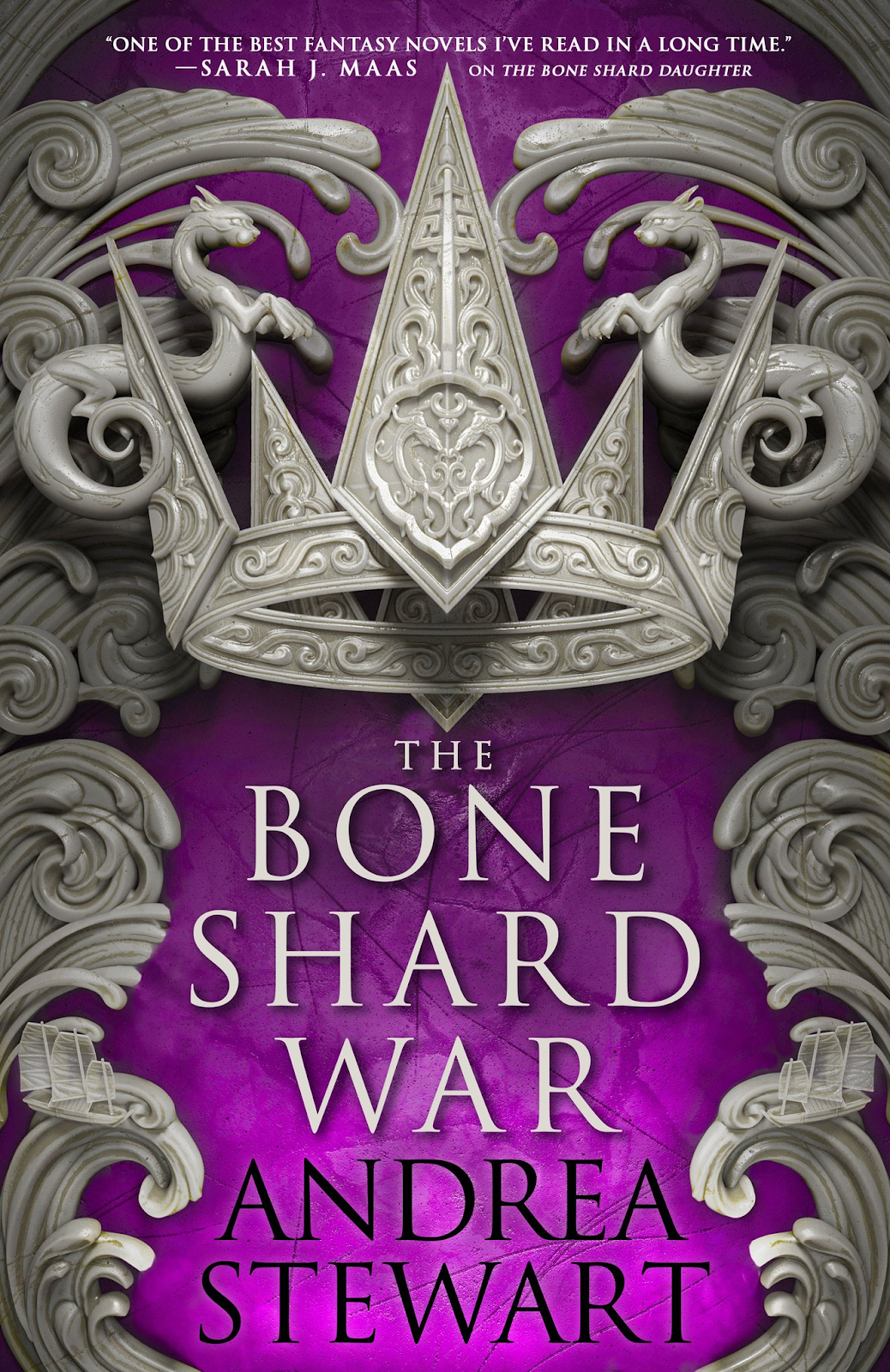
The Bone Shard War by Andrea Stewart also closes out a trilogy (the Drowning Empire) about exploitation and the cost of change, and especially grapples with the question of who ends up on top when said exploitative system is overthrown. It is also, deliciously, about earnest but silly youths in love, who are being kept apart and even forced into betrayals! At this end of the Drowning Empire, the brutally high cost of bone shard magic isn't as viscerally present, and that feels like a bit of a loss despite the emergence of new magics and the rediscovery of how this world functions, and (relatedly) what those cute animal companions that the main characters picked up have been about this whole time. While it has its ups and downs, this is a cool trilogy by an author I hope to see even better things from in future.

Book three, but not a series ender, The Mystery of Dunvegan Castle by T.L. Huchu is part of the Edinburgh Nights series, and while I'll forgive this year's Hugo voters for not putting it on the best series ballot, my patience on that front is not endless (nor will the series be). These books are the chronicles of Ropa Moyo, a highly motivated Zimbabwean-Scottish teenager who is offered entry to a prestigious occult library... as an unpaid intern. This time, Ropa's aspirations and hustle come fully up against the barriers placed in her way, and this series does a great job of showing how institutional racism and classism are perpetuated not just by bigots in the institution, but by people who limit their allyship or try to offer "meritocratic" entry points rather than fighting the corner for marginalised people. It's an interesting shift for Ropa—who, to this point, has been a bit naive about her circumstances and whether she can just push through them—and it makes me even more eager to see what book 4 brings.

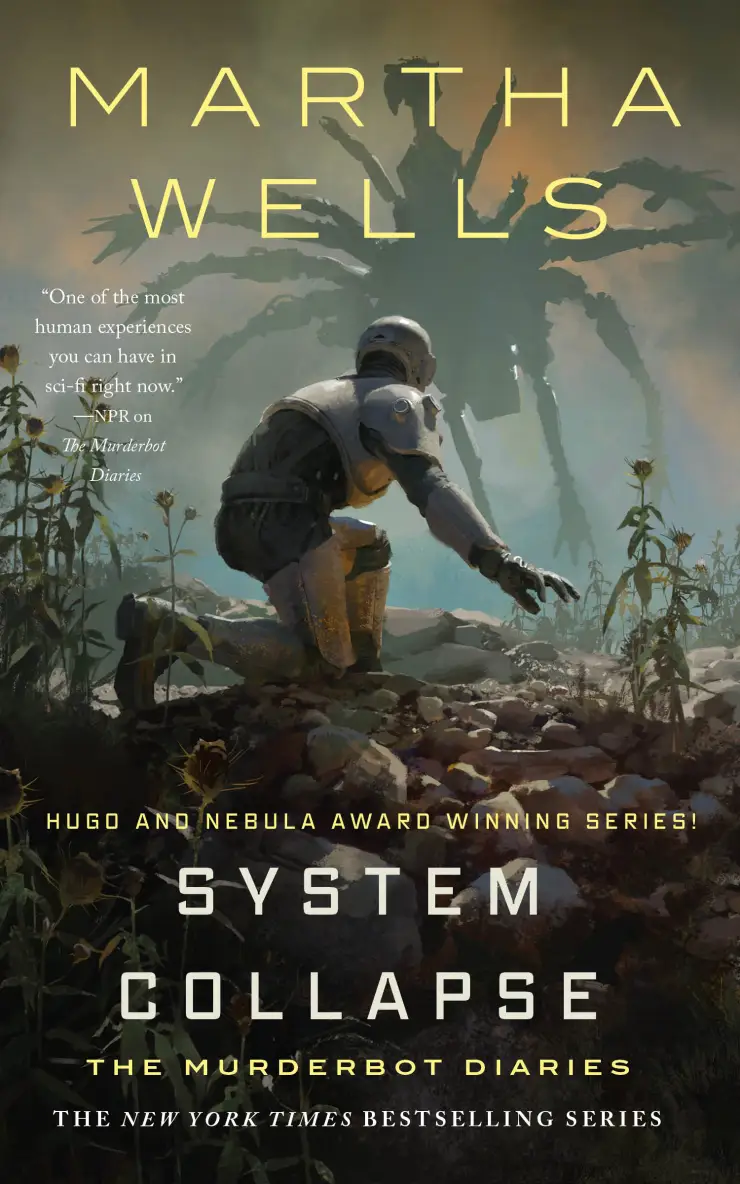
System Collapse by Martha Wells. The second Murderbot novel feels structurally closer to the novellas than the previous Murderbot novel, and at this point the recommendation is "if you like Murderbot, you'll like this Murderbot." Unlike the rather static-feeling Fugitive Telemetry, System Collapse does push things onwards from Network Effect in an interesting way, both literally (conflict de-escalation through documentaries!) and in Murderbot's character development and how it narrates its story. We quickly learn that Murderbot is not working at full capacity, and that it is keeping something from us about how this happened, and while the reader is used to the quirks and selectiveness of Murderbot's narration, this withheld information immediately puts the reader off balance, adding an extra layer of tension to both the conflicts and the crew relationships that are both staples of this series. Of course Murderbot and friends save the day with the power of love and justice—not that Murderbot itself puts it quite that way.

The Ten Percent Thief by Lavanya Lakshminarayan wasn't a Subjective Chaos Award winner this year, but it was an interesting addition to a stacked ballot. This mosaic novel, centred around a future Bangalore now known as Apex City, shows us the ins and outs of a society where citizens are constantly tested against the "Bell Curve". The city's residents are constantly striving - through conspicuous displays of capitalist productivity - to be promoted to the super-privileged ten percent, and to avoid deportation outside the city to join the "Analogs", who are treated as sub-human and denied basic ameneties by a city that nevertheless relies on them for its continuation. Through the novel, we see both confident Virtuals and those barely clinging on inside the system, as new technologies create further alienation; we also see, though not with as much depth as I would like, the way in which Analogs are organising themselves to resist and overthrow their oppressors. It didn't add up as well as I wanted it to, but there's a lot going on here for readers to enjoy, especially if you like Black Mirror-esque technological absurdities and the overthrow of transparent dystopias.

Untethered Sky by Fonda Lee was just beneath the Hugo finalist cut-off this year, and it's a very well-crafted fantasy novella: Ester's story has a strong thread of revenge, but there's also more going on: her progressing in her vocation as a rukher to a roc named Zahra, the relationships she builds with her comrades (and her bird), and the strains of being part of a military campaign whose political and propaganda motives seem at odds with actually making the Kingdom safer. Untethered Sky does suffer from the "author of incredible thing (Green Bone Saga) goes on to write pretty good thing" but it works great. 

The Lies of the Ajungo by Moses Ose Utomi is an incredible book, and somehow it's not on the Hugo longlist, but it is on the Ignyte novella shortlist so we can celebrate that recognition at least! The best thing about this story is its worldbuilding, which feels like it's come straight out of a fable: the protagonist comes from the "City of Lies," which has made the terrible bargain to cut the tongue out of every adult resident in return for an annual allocation of water from the Ajungo. This, of course, means that its residents can no longer tell their own story, and that their own history is now in the hands of their oppressors. When almost-13-year-old Tutu leaves the city in search of water to save his mother, he somehow avoids the disappearance that has befallen every other child who has left, and instead he finds out the truth behind the Ajungo's conquests and where his city falls within it. Amazing stuff.

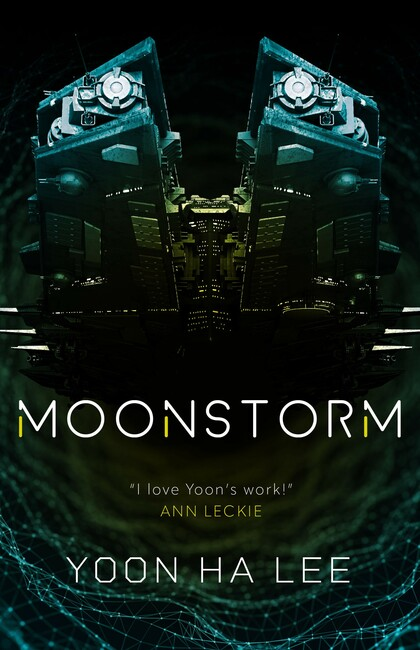
Finally, Earth-space adventure Beyond the Hallowed Sky by Ken MacLeod, fantasy adventure The Wolf of Oren-Yaro by K.S. Villoso, and mecha-YA Moonstorm by Yoon Ha Lee are all series openers which fall into the "fun, but probably not reading on" category for me—a category which I need to be more firm in maintaining, as the list of books gets bigger and my time on this Earth grows shorter (fatalistic? me?) I did enjoy MacLeod's speculation of near-future superpower blocs, especially the split between Anglophone death capitalism and optimistic-but-also-vaguely-sinister European socialism; and The Wolf of Oren-Yaro did not disappoint with its main character's Bitch Queen credentials, but had me shrugging at its relative cliffhanger ending rather than rushing to download the second book. Moonstorm, I am simply not the target audience for, and that's OK! I think this is a great contender for the Lodestar list, especially since books by authors who have also been nominated for adult SFF do very well there, and I hope that this story of giant robots, terrible empires, friendships, rivalries and betrayals IN SPACE finds each and every one of its people.


Adri, Nerds of a Feather co-editor, is a semi-aquatic migratory mammal most often found in the UK. She has many opinions about SFF books, and is also partial to gaming, baking, interacting with dogs, and Asian-style karaoke. Find her on Bluesky at adrijjy.bsky.social.

Thursday, December 21, 2023

Microreview: The Mystery at Dunvegan Castle, by T. L. Huchu

A slightly lackluster mystery in a brilliantly realized Scotland, narrated by one of the best voices in modern fantasy.

The third of T. L. Huchu's Edinburgh Nights series (see Adri’s review of the first here), The Mystery at Dunvegan Castle is set at an actual castle on the west side of the Isle of Skye. Instead of an alternate-history Scottish urban mystery set in the gritty streets of magical Edinburgh, T. L. Huchu instead presents us with his version of a country house mystery.

The Society of Skeptical Inquirers (Scotland’s professional magicians’ association) is having their annual conference at Dunvegan Castle, and things are tense. Rivalries between Scottish magic schools, between Highland clans, and between Glaswegian and Edinburghian librarians simmer with varying degrees of intensity, ready to erupt at the worst possible moment. The worstness of possible moments is further intensified by the arrival of representative of the English crown, who shows a distressing interest in revoking Scotland’s devolved powers of magical governance.

Against this backdrop of cultural magico-political tension arrives the conference’s guest of honour. The Grand Debtera of Ethiopia has come to cement a ground-breaking alliance between Scottish and Ethiopian magic by loaning a valuable scroll to the Society of Skeptical Inquirers, which contains information on magical theory previously considered impossible. Naturally, things go very badly: the scroll is stolen, a librarian is murdered, and the head of the Society of Skeptical Inquirers casts an impenetrable shield around Dunvegan Castle to prevent anyone from entering or exiting. The culprit is among the conference attendees! Whodunnit? And why?

Our narrator, Ropa Moyo, is a teenage intern working (unpaid) for the head of the Society of Skeptical Inquirers. As her boss is occupied by the rigours of keeping the impenetrable shield up, she is tasked with finding the scroll and solving the murder.

As far as mysteries go, this book is a little frustrating. The decision to put  a fifteen-year-old unpaid intern in charge of pursuing the mystery is forced and unconvincing. In previous books, Ropa had her own reasons to investigate weird shenanigans, which she pursued independently. Here for the first time she is given official sanction and support, which seems a bridge too far for any fifteen year-old. The bridge gets even ricketier in light of the unveiled contempt in which most of the other conference attendees hold her. What’s more, no matter how diligently she investigates, there is very little sense of progress. Ropa pursues lead after lead, but they rarely seem fruitful, and as pressure mounts on her to report her progress, she keeps asserting that she’ll have everything wrapped up in a day or two, not to worry, she’s got it all under control. To the reader, her lack of progress is so striking that it's pretty clear she must be lying to everyone. Now, Ropa’s history as an opportunistic gig worker who is not above petty (and not so petty) thieving to keep herself and her family afloat means that it’s entirely within character for her to be lying through her teeth about her progress. But keeping secrets is for the snotty obnoxious upper-crust magicians sneering down at her speech and education and behaviour; it’s not for us. On every page Ropa invites us into her head, tells us her thoughts and feelings and worries and hopes and goals. So when she turns out to be keeping secrets from the reader, too, it feels like a kick in the teeth.

Yet for all that the plot is a bit weak, this book is more than its plot, and everything else that it is is charming and delightful. Ropa’s irreverant narrative voice is wonderfully drawn; and her eclectic independent learning means that she has odd bits of knowledge drawn from all sorts of sources, equipping her with a broad foundation of useful bits and bobs. She’s alert to the sunk cost fallacy because she heard about it in a podcast the other day, and in this book she’s been making friends with Machiavelli’s The Prince, whose influence colours all her interactions. After an outburst at a formal dinner in which she pushes back against the snobbery levied against her, she considers, “Maybe I should re-evaluate how I’m reading Machiavelli. Normally I’m cruising by on Eastern martial texts which emphasize subtlety. But my pal Nicco’s more of a bull in a China shop kind of guy when it comes to political theory. Let me stick with it though, ‘cause I heard he delivers a mean pizza when it comes to landing an argument.” (Chapter VII). I would read a book about Ropa picking at her toenails if its her voice describing the state of her cuticles.

Another strength of this book is its deeply embedded Scottishness. This goes well beyond the dialogue (which, I hasten to add, avoids all of the ear-rattling tweeness of forced ‘och aye, I didnae see the wee puir lassie’ Scottish ‘brogue’). The nature of the unnamed Catastrophe that has devastated Scotland, deepening class divides and savaging the economy, feel like a pretty dead-on evocation of the general opinion of Brexit north of the border. An offhand remark about how Glasgwegians aren’t averse to bit of sectarianism now and again invokes a very real social issue in actual Glasgow, in which rival football teams—The Celtics and the Rangers—have come to serve as proxies for Catholic-Protestant rivalries. It is actually illegal in Glasgow to sing certain songs, because of their association with extreme sectarian violence. (https://www.dailyrecord.co.uk/news/scottish-news/old-firm-clash-songs-what-5060640) Indeed, for half a century actual Glasgow has been perceived as the dirty, crime-riddled working class city, a foil to Edinburgh, which holds government, art, education, and all the higher and better elements of culture. In this context, a conflict in Huchu’s world between the Glasgow library of magical books and its Edinburgh counterpart takes on a deeper meaning. After the Clydeside Blitz in WWII, the most valuable magical books held in Glasgow were removed to the Calton Hill Library in Edinburgh (the titular Library of the Dead in the first book of this series) for safekeeping. They have never since been returned. The Calton Hill Library instead reinforced its own magical status on the strength of the newly expanded collection, and have been refusing all subsequent requests to return them, claiming that the books were given as a ‘permanent loan’.

This bibliographic colonialism is a smaller version of a theme recuring at all scales throughout the book. What Edinburgh did to Glasgow, England wants to do to Scotland. The political situation in Huchu’s world faithfully reflects the state of the real UK: Scotland is subordinate to England, but nevertheless retains certain devolved powers, such as education (especially magical education). The people that want to unify with England stand in uneasy tension with the people agitating for more complete Scottish independence.

And, of course, at another level upwards, we have the history of European colonialism in Africa coloring Ethiopian magic’s relationship with Britain. There’s a reason the Grand Debtera chose to loan the scroll to Scottish magicians rather than English ones, and it’s not an accident that the nature of the Ethiopian-Scottish agreement—the loan of an irreplaceable magical text--resonates with the Glasgow-Edinburgh librarians’ conflict. These are all exponents of the same colonial phenomenon.

So, in sum, although the actual plot of this house-party mystery was a bit mediocre, the narrative, the setting, and the way it inhabits a fully recognizable Scotland within this alternative magical world Huchu has created, are unparalleled. I will take great pleasure in reading the next installment in the Edinburgh Nights series.

——

Highlights

Nerd coefficient: 7/10: An enjoyable experience, but not without its flaws

Highlights:

  • Effective translation of Scottish politics into an alternate world
  • Delightful narrative voice
  • Slightly meh mystery plot

References 

Huchu, T. L. The Mystery at Dunvegan Castle [Tor Publishing Group, 2023].

——

CLARA COHEN lives in Scotland in a creaky old building with pipes for gas lighting still lurking under her floorboards. She is an experimental linguist by profession, and calligrapher and Islamic geometric artist by vocation. During figure skating season she does blather on a bit about figure skating. She is on Mastodon at wandering.shop/@ergative.

Tuesday, March 30, 2021

Nanoreviews: The Silvered Serpents, The Library of the Dead, Fugitive Telemetry


The Silvered Serpents by Roshani Chokshi (Wednesday Books, 2020)

(Warning: there's no way to talk about The Silvered Serpents without spoilers for The Gilded Wolves, so consider yourself warned.)

I'm not sure what it is about Roshani Chokshi's story of a motley, fractious heist crew in magical Belle Époque not-Paris that draws me in so thoroughly when heist-driven stories in general often aren't my thing . The worldbuilding certainly helps: with an intriguing magic system and history, Chokshi creates a version of an imperialist European nation whose genteel facade doesn't in any way obscure its imperialist exploitation of other cultures. The characters themselves are perfectly placed to underscore that: from mixed race Filipino academic and cake enthusiast Enrique, whose dual heritage leaves him distrusted and shut out of his peers' endeavours; to Jewish, neurodiverse engineering prodigy Zofia, all are people who find themselves on the margins of the elite, recognised and occasionally valued for their talents but never truly accepted. Or maybe these books hook me because they're just great, and they also end with heartbreaking cliffhangers every time and I can't help but finish up wanting more.

The Silvered Serpents picks up where The Gilded Wolves left off: with the found-family heist crew put together by disinherited noble and terrible choice-maker Séverin smashed into tiny pieces by the events of the last book, as Séverin attempts to prevent himself from having to grapple again with the kind of loss brought on by its catastophic revelations. However, when an opportunity arises to pursue godhood in the form of a lost text called the Divine Lyrics, Séverin decides to get the band back together - including Laila, his former flame, who he pushed away in a brutal ending scene in The Gilded Wolves (I warned you about those spoilers!) - and the group end up travelling to Russia, working with Séverin's estranged Aunt and another noble House to uncover the artefact's secrets, and to stop the damage being caused by another, considerably more murderous group seeking to harness its power.

Even more than its predecessor, The Silvered Serpents' thematic focus on bloodlines and heritage means that the emphasis is very much on the characters and the relationships between them, and that works perfectly: there's just so much to enjoy. While I did find some elements strained (honestly, I'm sort of done with "neurodiverse person doesn't realise they are experiencing love because they can only analyse their emotions through the detached lens of physical reaction", no matter how much I was rooting for that particular relationship), on the whole this is a great follow-up and (thanks to that cliffhanger!) I'm definitely keen to see where the final book goes.

Rating: 8/10


The Library of the Dead by T.L. Huchu (Tor Books, 2021)

Tendai Huchu's third full length novel and (I believe) the first published under his Cthulu-anagram penname (I mean, if you could, you would, right?), The Library of the Dead is an urban fantasy in a vaguely post-apocalyptic Edinburgh told through the voice of Ropa, a Scottish-Zimbabwean teenager and speaker to ghosts who ends up embroiled in a mystery involving missing children in her part of the city. As Ropa tries to unravel the case, it draws her into the orbit of the titular Library, whose stuffy regulations and elitism around types of magic and the kind of people who can practice it (i.e. people who can afford hefty membership fees) immediately cast Ropa as an outsider.

The Library of the Dead is another book that excels when it comes to both its place and its characters. Its version of Edinburgh is one where society seems to have basically collapsed for unclear reasons, with grim caravan park slums on the edge of the city, an unrecognisable currency, teenagers who are empowered to drop out of school to join the gig economy as soon as they hit secondary school, a new monarchy and various other indicators that this is not the Edinburgh of our own world - as if the acceptance of ghosts and other supernatural forces weren't enough on that front. (Don't worry, though, podcasts are still a thing). On the character front, Ropa is certainly the main attraction in all her super-smart, code switching, irreverent glory, but there's also plenty of other great supporting cast members, especially Priya, another girl from the library who immediately starts a friendship with Ropa when she finds her way into the institution. What also makes The Library of the Dead strong are the polyphonic voices of its different magic systems, and the way it ties in with Ropa's marginalised identity. In another book, the magic of the Library itself could be the main event, a well-defined anglo-centric "magic system" with alternate magical traditions perhaps getting a sentence or two of flavour to make it seem like part of a wider magical world. Ropa's entry to it, both as a ghosttalker whose profession is not considered to be a "respectable" form of magic and as someone whose family heritage involves magic that isn't part of the Library's interests at all, means the limitations of that tradition within this world are immediately laid bare to us, and it definitely sets up some intriguing material for future books.

The level of set-up vs pay-off is really my only critique here: The Library of the Dead is the start of a series, and as such it spends a lot of time establishing the various forces and elements in Ropa's world, presumably all the better to develop conflicts and unravel deeper mysteries further down the line. Still, if this series gets the time and development it needs, it's set itself up for great things.

Rating: 8/10


Fugitive Telemetry by Martha Wells (Tordotcom Publishing, 2021)

Murderbot! Fugitive Telemetry steps back and looks at Murderbot pre-Network Effect, during its time on Preservation Station. It's also a murder mystery, featuring the mysterious death of a traveller which requires Preservation Station security (who don't have to deal with too many murders, seeing as how they're in one of the few places in the Murderbot Universe that places significant, non-monetary value on human life) and Murderbot to work together to untangle it. The problem is, of course, that Station Security aren't too happy about working with a SecUnit, regardless of the assurances made by Mensah and the rest of its adopted family about its trustworthiness. Murderbot, of course, isn't too happy about working with anyone, and it's also trying to navigate the experience of being a known "Rogue SecUnit" in a society that (mostly) wants to ensure its rights and autonomy, but isn't entirely sure how to do so.

What follows is a fun romp through Preservation, with plenty of the action you'd expect from a Murderbot novella. This being the Murderbot Universe, the exploitative corporate practices of the rest of the galaxy naturally come into play, but the immediate stakes feel lower for most of the book, with the mystery wrapped up neatly over the single novella length. (Also there are a lot of sentences in brackets followed by more sentences in brackets.) (This is a thing Murderbot does a lot in its narration, and it felt like it might have happened more here than in any previous story?) (It's fine, I guess, I just noticed it, like, a lot.) (A LOT.)

Anyway, Fugitive Telemetry delivers no less, but no more, than a solid Murderbot adventure. There's nothing disappointing about that - and Preservation Station is a delightful setting for this particular adventure - but after Network Effect ended with a significant change in Murderbot's life path, it means this episode does feel more like a fun diversion than a book that's really driving the series forward, and that leaves me with less to say about it than I have about previous books in the series. It's still an enthusiastic thumbs up from me overall, though: more Murderbot is never a bad thing.

Rating: 7/10

POSTED BY: Adri, Nerds of a Feather co-editor, is a semi-aquatic migratory mammal most often found in the UK. She has many opinions about SFF books, and is also partial to gaming, baking, interacting with dogs, and Asian-style karaoke. Find her on Twitter at @adrijjy