Showing posts sorted by relevance for query neuromancer. Sort by date Show all posts

Wednesday, February 18, 2015

CYBERPUNK REVISITED: Neuromancer by William Gibson


Dossier: Gibson, William. Neuromancer (Ace, 1984).

Filetype: Book.


File Under: Cyberpunk. 


Executive Summary: Case used to be a console jockey and data-thief. Until, that is, he tried to steal from his employer. When their agents caught up with him, they injected a mycotoxin into his bloodstream--making it impossible for Case to access the virtual dataspace known as “the Matrix.” Out of work and suicidal, Case makes ends meet as a smalltime hustler in the Japanese port city of Chiba, where he fences goods for other lowdown expatriates, half hoping someoneone might take a shot at him and put him out of his misery.

Only, one day a street samurai named Molly Millions tracks Case down so her ex-SpecOps boss Armitage can make him an offer he can’t refuse--a procedure that will counteract the mycotoxin. The only thing Case has to do is steal a ROM from a protected data library, one that contains the “ghost” of his former mentor, Dixie Flatline--at which point the real mission begins. Case, Flatline, Molly and the sociopath/holographic illusionist Peter Riviera must break into one of the most heavily protected data libraries in existence--located in the orbital headquarters of business clan Tessier-Ashpool--and free the artificial intelligence known as Wintermute.

High-Tech: The operative technologies in Neuromancer are cybernetic, with the most distinctive pertaining to how the cybernetically enhanced interface with “cyberspace,” a virtualized datafield not unlike an internet you could navigate by proxy, as if physically present. Individual “jockeys” access “the Matrix” (the name for the actual datafield, as opposed to its virtualization) by “jacking in” to a “deck,” such as the ubiquitous Ono-Sendai Cyberspace 7--which is to say, plugging a cord into a neural implant on the side of the head and connecting it to the deck. Jockeys largely enter cyberspace for profit--sneaking past corporate “ICE” (i.e. security programs) to obtain data illicitly.
 

“Microsofts” are another form of cybernetic enhancement, small microchips inserted behind the ear that grant the wearer tangible skills in the physical world, such as mastery of language. These don’t play a huge role in Neuromancer, but are instead an element of worldbuilding. Gibson also largely predicted the rise of reality television with “simstim,” recorded experiences in which the user experiences a full array of sensory information recorded by the actor.

Though cyberpunk is primarily known as an earthbound style of science fiction, much of Neuromancer actually takes place offworld, meaning that space ships and orbital habitats play a far greater role than one might assume. And, of course, one of the novel's central preoccupations concerns the nature and ambiguities of artificial intelligence and how created sentience might interact with its progenitors. 

Low-Life: The future envisioned in Neuromancer is one of unimpeded urbanization, to the point where the stretch of coast linking New York to Atlanta is now simply referred to as “the Sprawl.” These, and other, urban environs are decidedly rough-and-tumble, marked by overcrowding, rampant criminality and an extremely thin state presence. The well-to-do, as it happens, are not only gated away from the masses, but reside offworld in lush, fully-appointed orbital habitats.

In the novel’s opening section we meet Case, the former jockey turned small-time fence and hustler, in the dangerous and expatriate-heavy port section of Chiba, Japan--giving the novel a decidedly neonoir flavor. As action moves offworld, the sociological lens shifts to the capital classes, much as Chandler’s novels do when action brings Marlowe to the wealthy enclave of Bay City, and with a similar air of rot and decadence. 

Dark Times: Private armies, ascension of unaccountable corporations, movement of capital offworld and near invisibility of the state all feature, coalescing to give Neuromancer a distinctly dystopian feel. Crucially, though, there is no central authoritarian actor, like Big Brother in 1984, but rather a series of rapacious, competing interests, few of which are informed by any sense of obligation to community or “the greater good.” The chaotic nature of the system, however, creates space for individuals to “use the system against the system,” or perhaps more accurately, “use the tools of the system to carve out some safe space for themselves.”

Legacy: Neuromancer is the single most important work of cyberpunk ever written, likely the most important work of science fiction published in the 1980s, and may even be one of the five or ten most influential science fiction novels ever written. Simply put, it’s one of those books that changed pretty much everything that came after it.


In Retrospect: There are reminders of Neuromancer’s age littered throughout its text. People smoke a lot of cigarettes, networks are accessed with plugs and wires and there is not a single cell phone to be found, smart or otherwise. And the whole “future is Japanese” thing, a reflection of the early 1980s zeitgeist, seems quaint today (considering Japan’s ongoing, multidecade recession and the concurrent ascendance of China to economic superpower status). But these moments aside, it’s amazing how well Neuromancer holds up. The book still feels amply futuristic, and though Gibson’s prose improves as his career progresses, the writing is remarkably thick with allusion and metaphor, yet still quite readable--lending Neuromancer an exhilarating, experimental feel that recalls the best of the New Wave.

From 2015, of course, the opening Chiba section reads like an encyclopedia of cyberpunk tropes that have long since passed into cliche--which is incredible to think about, given how many were shown first light here (or developed from Gibson’s earlier short fiction). But it also strikes me that this section is pretty much all I remember from my first read some twenty-plus years ago. The offworld sequence, which takes up the most real estate, isn’t at all what one thinks of when the term “archetypal cyberpunk” springs to mind, and that’s a major reason Neuromancer can stand the test of time. It’s not a one-note symphony, but a complex, variegated and deeply insightful novel that by and large lives up to its reputation.

However, I will note that the plot doesn’t really make a whole lot of sense when you really think about it--half the characters, for example, are basically superfluous. But that didn’t detract from my enjoyment of the book. Actually, as far as I’m concerned, Neuromancer is less about the destination as the ride--a magnificent tour of Gibson’s exotic yet familiar and (in many if not all ways) still deeply plausible vision of the future.
 

Analytics

For its time: 5/5
Read today: 5/5
Cybercoefficient: 10/10

Tuesday, May 12, 2020

Interview: Corey J. White author of Repo Virtual

At what point does an AI reach personhood? Once you've defined personhood, and what it takes to get there, what now?  If you suddenly found yourself in possession of a sentient AI, what would you do? Or I guess, the more interesting question is, what wouldn't you do?

If that sounds interesting,  Corey J White's Repo Virtual may be right up your alley.  Online,  Julius Dax is a repoman. But IRL,  he's a thief.   While nearly everyone plays in the online intergalactic war in the stars,  in real life, people are starving and hustling just to make it through another day.   Think Neuromancer meets Ready Player One, but crank the capitalism up to even worse, and bring in a ton more diversity.

Something that caught my eye, when the earliest reviews started coming out,  was the possibilities of being someone else in a Virtual world.  Julius has a physical disability.  Can he leave that behind in the virtual world?  Every time I make an avatar in an online game, I feel like it's my opportunity to  be a more attractive/interesting version of myself - taller, thinner, fewer zits. Now I know Repo Virtual isn't about any of those things, but still, it got my attention and made me want to learn more about the novel and about the author.   A lot of times I get something completely different out of a piece of fiction than what was intended.

Corey J. White was kind enough to answer all my ridiculous questions while offering a view behind the scenes of how this intriguing novel came to be. Other topics we discuss include AI Personhood, what might a teenage AI think about,  sci-fi body-horror novel, Creeper Magazine, and more! And I've got to say, now I'm even more interested in reading the book!  Repo Virtual is making a number of recommended and "best of the month" lists. It could be exactly the escapism we all need right now.

Corey J White is also the author of the space opera Voidwitch Saga series of novellas - Killing Gravity, Void Black Shadow, and Static Ruin.  He lives in Melbourne, Australia. You can learn more about Corey by checking out his website or following him on twitter at @cjwhite.

Let's get to the interview!

NOAF: I've read some early reviews on GoodReads, and what stood out to me first is how much your readers love the characters in Repo Virtual. Introduce us to Julius Dax (JD), Soo-hyun, Troy, and Enda. Who are these folks and what are they all about?

Corey J. White: JD is our window into the world - a precarious worker, online repo man, and real-life thief with scruples. Soo-hyun is JD's step-sibling. He loves them immensely, but is never really sure he can trust them. They've gotten caught up in a streaming cult living in the dilapidated flood ruins on the edge of Songdo, and the cult leader is the one that puts the entire plot into motion: tasking Soo-hyun with recruiting JD to steal a virus she claims to have a hand in creating.
Troy is JD's ex. They both still love each other, but they've been too hurt to admit it. He's also a philosophy professor, which comes in handy when you're trying to talk about the personhood of AI. Enda is the retired operative turned private eye that's blackmailed into retrieving the stolen virus... but she's also not the type of women you should ever even consider blackmailing.

NOAF:  Repo Virtual is being compared to Neuromancer, Ready Player One, and other novels that involve cyberpunk and people working in virtual worlds. What were your inspirations for Repo Virtual? How does it feel to be compared to William Gibson, the father of cyberpunk?

Corey J. White: Neuromancer was less of an inspiration and more of a touchstone for Repo Virtual. I almost didn't want to write an "AI heist" plot because I knew it would be compared to Neuromancer, and any cyberpunk book is going to suffer in comparison to the formative text, but the more I thought about the story and the themes I wanted to address, the more I realised that the heist was the best way to go (for me, at that point in time). Then once I'd made that choice, I couldn't not recognise Neuromancer with the book, but it's more something I reference, rather than anything I was inspired by.

The real inspiration came largely from the way Damien Williams talks about the personhood of non-biological intelligences, and searching for a way to talk about that in a story. All the disparate ideas I had for the story only really started to come together when I realised what I wanted to write about.

Other inspirations include Nexus War, the first MMORPG I ever really lost myself in, and one that I made friends from that I still talk to today; articles and stories about EvE Online (but not the game itself); reportage on some contemporary Silicon Valley adjacent cults; the increasing cyberpunk-ification of our lives; and I took some inspiration for the structure of the story from Nick Harkaway's Gnomon. I don't think I would have written one of the POVs the way I have if I hadn't read his novel.

NOAF:  Something I love about the idea of virtual reality is that I can be anyone I want there. I can be 8 inches taller, I can have my ideal beach body. JD has a physical disability that hampers in him the real world. Do your characters take advantage of virtual reality to present a different version of themselves? Does virtual reality give them other benefits (or disadvantages)?

Corey J. White: For a book with "Virtual" in the title, the Virtual Reality stuff in the book is admittedly pretty slim. If I'd gone too far down that route I would have been stepping on Neal Stephenson's toes too with Snow Crash.

That said, in the book, Augmented and Virtual realities are just another facet of a hyper-connected, digitised life, a deception that sometimes scrapes at JD's psyche like pop-up ads in your browser window. In a virtual world, JD can walk without a limp and without pain, but that just tells him he can't trust it. At least if it hurts, he knows it's real.

NOAF:  I'm a sucker for anything AI related. HAL, Data, the three laws, how does sentience work, hook me up with that positronic thinks-it-understands-people goodness! How did you develop the AI in Repo Virtual?

Corey J. White: Because I'm specifically looking at the personhood of AI, I ended up looking at it in the terms of relationships, both the relationship this AI forges as the story unfolds, and relationships between ideas, concepts, people, history, etc, allowing the AI to gain context and understanding beyond the level of a simple data analysis tool. So it's AI as an agent of connection, in more than one way.

One thought I had early on in the development of the book was that if we created a race of strong AI that could travel out into the universe longer after humankind has gone extinct, they might look back on us the way kids look back at dinosaurs. That when the AI are in their developmental stages, they'd all have a favourite human, whether that's a great figures from history, or just one particular teenager from Osaka in 2019 who created their all-time favourite meme.

So I guess I was thinking of AI as our future children, and what we might owe them, rather than thinking of them as powerful tools of corporate control.

NOAF: What was your writing process like for this novel? Are you a plotter, or a pantser?

Corey J. White: The strangest thing about the process with Repo Virtual was that I signed the contract with just an outline and an introduction, which was a first for me. So every time I was faced with self-doubt or doubts about the book I was writing, I had to push that aside and keep going, because I'd already signed the paperwork and taken the money . . .

But, yes, I'm a plotter. Of course, the plot as planned may not survive contact with the blank page, and that's alright. I think some people push back against the idea of plotting because they think they'll be too constricted by it. The secret though is that it's your plot, and you can change, destroy, or ignore it as you see fit, as and when the story starts to take you to other places. It's not a plan, it's a map, and sometimes you want to set the map aside and let yourself get lost.

NOAF:  What's next for you? Do you see yourself writing more stories about JD and his adventures in Neo Songdo?

Corey J. White: Next for me (because I've almost finished the first draft already) is a sci-fi body-horror novel about our culpability and responsibilities in the face of mass extinction caused by anthropocentric climate change. After that I already have a loose idea of the sequel, but I'm also putting aside notes on a Repo Virtual follow-up. It wouldn't be a proper sequel, because I've told the story of all those characters (well, Mirae could reappear, who knows), but something that uses the world I've set up to delve into some more themes concerning this online reality we've constructed for ourselves. I'd particularly be looking at some of the questions you were asking about virtual reality before, but in regards to augmented reality.

NOAF:  What are some favorite books, comics, movies, TV shows, and other entertainment that you've enjoyed lately?

Corey J. White: This could easily get out of hand, but, recently I've read and enjoyed Drive Your Plow Over the Bones of the Dead by Olga Tokarczuk, Octavia Butler's Clay's Ark, Pretty Deadly by Kelly Sue Deconnick, Emma Rios, and others, and Stranger Than We Can Imagine by John Higgs.

TV-wise, I recently started on Castlevania Season 3, which has more great additions to an already stellar cast, and the dialogue tells me that Warren Ellis was really enjoying himself when he was writing it. I've also been rewatching Schitt's Creek in the lead up to the final season. Catherine O'Hara is a treasure. And I finally saw First Reformed. I should have watched it on release as it definitely shares some DNA with the book I'm currently writing.

NOAF:  On your website, you mention your involvement with Oh Nothing Press, and something about "Weird Cultural Errata". Those being three of my favorite words, what is Oh Nothing Press all about? Where can we learn more?

Corey J. White: I guess the whole point of Oh Nothing Press is that it can be about whatever we want it to be about. So far we've released two capsules - the first was MechaDeath, a story of cosmic black metal mecha warfare told with a meticulously designed zine and some fantastic t-shirt designs.

The second capsule was Creeper Magazine issue 1, and our third capsule will be Creeper issue 2. I sometimes say that Creeper is about the horror of The Now, but that doesn't really say much about the content, so, to quote: Weird crime, conspiracies, paranoia, folklore, the occult, modern myth, bizarre philosophy, fringe tech and genre-exploding fiction. CREEPER is the sort of magazine that could never exist in the mainstream, so we had to make it ourselves!

It's really interesting watching themes and through-lines come through as we're putting together Creeper 2, so I'm keen to see it out in the world later this year.

After that, we've always got ideas for new projects, it just comes down to which of those ideas keep us inspired, and how much time we can spare after day jobs and other creative projects.

NOAF: Thank you so much Corey!

POSTED BY: Andrea Johnson lives in Michigan with her husband and too many books. She can be found on twitter, @redhead5318 , where she posts about books, food, and assorted nerdery.

Monday, February 15, 2016

NERD MUSIC: Interview with Makeup & Vanity Set's Matthew Pusti

Today NERD MUSIC is thrilled to present an interview with synthwave artist extraordinaire Matthew Pusti, aka Makeup & Vanity Set! If you missed my profile of Makeup &Vanity Set, trust me--this is some of the most exciting electronic music out there. Please join Matthew and I as we talk music, gear, film and science fiction. -G


Thanks for “sitting down” with me! I’d like to start by asking about the history of Makeup & Vanity Set. What’s your “origin story,” so to speak?

I grew up in Cleveland, Ohio. I started making music with computers in 1996. I started working with synthesizers in 97. I used to get down with lots of mod tracker freeware. Now it's a mixture of lots of things. The ski mask and the name and all of that happened in 2004.

Your sound seemed to undergo a major evolution between the Charles Park III and 88:88, both sonically and conceptually. What was going on at that time?

Charles Park I + II are more thematic records rather than true concepts. I didn't really conceptually tackle an album until I made Never Let Go. Charles Park III and 88:88 ended up feeling like a natural arc to me. They came from different places conceptually, but I felt like I was working to support some thing that I felt like I needed to say with the album as a whole. Every record I make, even with things I'm doing now, it always feels like I'm sort of feeling in the dark when I start producing. I don't have a set way to do things. I just feel it out. If something feels different sonically, it's probably more happenstance to progressing over time instead of some new, learned behavior.

Your latest album, Wilderness, is a conceptually ambitious double album that, to me at least, strongly evokes cyberpunk and other dystopian currents in science fiction. How would you characterize the influence of science fiction on your work?

I feel like I grew up in a weird era where the world was finally starting to realize 'the future.' Like the future that people were dreaming up in the 80s was grittier because the times were grittier. I remember the first time we logged into the internet from home; the idea that the sounds coming out of our modem represented data and information. All of those sounds meant something. As a kid I was obsessed with that. And all of my music is an extension of that. Wilderness certainly was part of that. I don't know if everyone really understood it when it came out. It's sort of like that modem. Mortality has a strange way of distorting reality. I kept thinking about how technology is woven into everything now; wherever you go, everyone is logged into something. We're to that degree where people literally struggle to survive without it. That's interesting to me.

"Turning/Sequence" strongly evokes William Gibson's classic 1984 cyberpunk novel Neuromancer for me. That could just be me projecting, but have you read it? There's a lot of common ground--both thematic and aesthetic--between Neuromancer and Wilderness.

Joey Ciccoline told me to read Neuromancer after I laid out the concept for Wilderness to him for the first time. The first half of the original concept became the basis for his short film, Eidolon. The book certainly had an impact on me as far as the music was concerned. By the time I read it, I had already written out the narrative of the record, so it was less of a direct influence there. Neuromancer is one of those weird things that has influenced so many things, that by proxy it had likely already crept into my work long before I had actually read it. The bigger influence was probably Andrei Tarkovsky, specifically his films Solaris and Stalker. I think that films are probably the biggest influence on my work, more than anything else; even when the work is tied into my actual life experiences, as Charles Park III or Wilderness were, it is always filtered through a the lenses of films that deeply affected me.


Speaking of film, I know that 88:88 also began as the soundtrack to Ciccoline’s short film of the same name. How collaborative was that experience? Did he tell you what he wanted, or did he just give you a video file and say “do whatever you think works?”

A little of both. Joey's really smart. He knows what he wants but he also trusts me enough to let me work. 88:88 was more about us figuring that relationship out more than anything else. In the beginning, he was pretty diplomatic about things but he was definitely willing to let me know what didn't work, and that shaped how dark the score became. The album was directly influenced by the path the film was on.

I’ve got a crazy fan theory, by the way. I noticed that the opener to the album 88:88 (“A Glowing Light, A Promise”) plays over the film’s end credits, and the ending is quite ambiguous—you know it’s just the beginning of a big, untold story. At the same time, the album has a distinctly cosmic feel to it. So I’m thinking that the album is actually telling that story—the story of what comes after the credits roll. Am I crazy?

The album was what I envisioned happening to Val after the film ends, yeah.


So I'm not crazy! Okay--now, Makeup & Vanity Set is often categorized as synthwave, but 88:88 and Wilderness feel pretty different from what other artists in that scene are doing. How would you characterize your relationship to synthwave?

I'm not really sure where I land in all of that. I make music everyday. It's all over the map. In the end, I try to make dark music that means something to me. And hopefully someone else can find something meaningful in it too. Most of the time I feel like I'm the outsider.

What other groups or artists are you into these days?

Dallas Campbell. His last record, City I, was so great. I'm patiently waiting for the new Lazerhawk record. I loved the Tek album from last year--Phaserland is incredible. The Troxum record, Gaia Lesson, that was amazing. I feel like his stuff is pushing boundaries that need to be pushed. The last Gost album was really heavy. I feel like I always gravitate towards the stuff that is

How about your upcoming projects—I’ve listened to some of your works in progress on soundcloud, and have also heard that you are working on a full-length collaboration with singer Jasmin Kaset, who features on two of my favorite Makeup & Vanity set tunes. What can you tell us about this or any other upcoming projects?

I have a 12" coming out on Data Airlines soon. They reached out to me while I was working on Wilderness. It's interesting. It's really digital and harsh. It's a lot more in your face than Wilderness was. It's got a really hard edge to it. Jasmin and I are working on a full-length album together. We've to 6-8 songs for it. They're really great. I wrote a bunch of music for an ARG tied to the video game Soma--and I'm scoring a film that ties into that. And of course the ever-expanding Brigador, a game from Stellar Jockeys. That should be out in April. At this point, there's something like two hours of music in that.


Finally, I need to nerd out here….88:88 and Wilderness have this really distinct, massive sound. What kind of gear/software do you use?

Typically everything is written in Ableton Live and mixed there or in Logic. I tend to sequence albums with Logic. I think my most used software plugins are probably Native Instruments Reaktor and the Arturia V Collection- I don't really lean too hard on the common ones though. I think their ARP 2600 sounds really good. Same for the Oberheim and the Moog Modular. I like stuff that's more complex. All of my musical training was in synthesis, so I probably spend too much time engineering things as opposed to writing and arranging things- that's probably why Wilderness took as long as it did.

Hardware-wise, I use a Moog LP2 almost all of the time. I just bought a Mother-32, which has been really eye opening. I don't have any eurorack modular stuff, so the flexibility involved in that has been really nice. They compliment each other well. I use a Yamaha DX7 quite a bit, as well as a Roland HS-60, which is a consumer-model Juno 60. Mine is a bit beaten up, but it sounds great. I have a DSI Mopho, which gets used in really weird ways but is always super refreshing and really opens up tracks. I started using Elektron gear- the Octatrack and the Analog Rytm- about a year ago and they continue to blow my mind. I bought them thinking they'd be useful live, but they are like little pandora's boxes. There's so much going on inside. The Octatrack especially. I was an MPC guy for years but I don't see how I could go back after using the OT. I have some effects stuff, delays and reverbs. Reverb is a big part of what I do. I've been using a new reverb by Meris Audio called the Mercury7, which almost feels like it was built for my brain. Every synth I put through it just melts into the ether. It's pretty haunting.

Thank you! 


****

Purchase Links

88:88 (Amazon , iTunes)
Wilderness (Amazon , iTunes)

Stream Links

88:88 (Spotify)
Wilderness (Spotify)

Tuesday, April 28, 2015

CYBERPUNK REVISITED: Mindplayers by Pat Cadigan


Dossier: Cadigan, Pat. Mindplayers (Bantam Spectra, 1987)

Filetype: Book

File Under: Cyberpunk/postcyberpunk

Executive Summary: Allison Haas is a lost soul, drifting through life and seeking cheap thrills in illegal "madcaps"--cybernetic modules that induce temporary psychosis. But when the psychosis sticks, her friend and dealer, Jerry Wirerammer, drops her off at a "dry cleaner." The Brain Police are alerted, and both Allie and Jerry look headed for identity erasing. But Allie is offered a deal instead: train to be a mindplayer--a person who helps others navigate their psyche on a virtualized plane, as therapy or pastime--and all will be forgiven. So Allie takes the deal and becomes a mindplayer. 


After this, the book recounts a series of vignettes--of Allie's training and her various mindplay contracts.

High-Tech: Mindplay is facilitated by a device that links into the optic nerve. How the device works, beyond that, isn't explained in much detail, though in essence it separates the mind into a space to be traversed and a traveler to traverse it. Trained mindplayers, moreover, can enter another person's mind-field and help them achieve whatever goals they have set out for themselves. 


There are several kinds of mindplayers: pathos finders, who help individuals find their "calling"; fetishizers, who create fantasy trips; neurosis peddlers, who help individuals develop productive neuroses; bell jarers, who impose mind silence and allow individuals to recover from the effects of too much mindplay; and so forth. 

There are also artificial intelligences, or virtual personality constructs--it's never quite clear how autonomous or sentient they are. And most people have artificial eyes, because the mindplay interface causes trauma on natural eyes. 

Notably, Mindplayers also feels much less dated than the bulk of cyberpunk. Aside from the lack of mobile communication devices, the future feels suitably futuristic--even from 2015. There are no cringey "fax machine" or "8mb of data" moments.  

Low-Life: Wirerammer is a futuristic drug dealer, who later keeps one step ahead of the law by making illegal copies of his personality for sale on the black market.

Dark Times: Other than the Brain Police, who are sort of vaguely authoritarian, there isn't really much dystopia to speak of. Mindplayers, generally speaking, isn't really a fountain of  political commentary, a la Neuromancer or A Song Called Youth, and in general the book is focused on the psychological as opposed to the sociological. This future even seems pleasant! 

Legacy: Mindplayers is either the final major work of cyberpunk or the first major work of postcyberpunk. Cadigan is rightly identified as part of the core of first-wave practitioners, and her short fiction was instrumental in shaping the style. Mindplayers, though, feels like a departure from the precedent set by earlier first-wave novels, and dispenses with the tropes and aesthetics that initially made cyberpunk feel vital and new, but by 1987 had begun to frustrate the style's progenitors. So in that sense, Mindplayers feels like a bridge between the other first-wave works and postcyberpunk classics like Snow Crash and Fools (which Cadigan set in the same future as Mindplayers). 


In Retrospect: Mindplayers is a difficult book to review because of the way the narrative drifts--much as Allie is said to drift before her training as a mindplayer, and as she clearly continues to do afterwards. In other words, this is a book that isn't so much about something as it is about someone, i.e Allie, and things that happen to her in sequence. It works because Allie is a strong character, the world is fascinating, and the book is elegantly written, engaging and thoughtful. 


At times I found myself thinking of Neuromancer, because Mindplayers, like Gibson's masterpiece, both is and transcends genre. Yet they are, in style and approach, strikingly unlike one another. Whereas Neuromancer is all hard surfaces and sharp angles, Mindplayers is elusive--almost ethereal. It is, as noted above, a novel of the mind and what might be possible if you could traverse it. And it's one I think any fan of literary science fiction should read.


Analytics

For its time: 4/5
Read today: 4/5
Cybercoefficient: 8/10


Thursday, March 15, 2018

NERD MUSIC: Science Fiction/Synthwave Pairings


Way back in 2013, in the midst of a serious heavy metal binge, I posted this piece. The idea was to match metal albums to grimdark fantasy novels, the way you'd match wine or beer with food. So now, in the midst of an even more serious synthwave binge, I figured it was high time for a sequel. And why not? Synthwave is futuristic, or rather, retrofuturistic--and a large subset is explicitly SF-themed.


Selection Criteria

I've selected 6 science fiction novels--not necessarily the best, or even my favorites. But 6 novels that people who read science fiction generally know, or at least know of. Next, I paired these with synthwave albums that best capture what these books mean to me. So without further ado, I present to you six science fiction/synthwave pairings. Oh, and if you like what you see/hear, click on the book title link or on the musician's Bandcamp embed to purchase.

Don't forget to swish and spit after you taste...


The Pairings

1. Neuromancer by William Gibson/Wilderness by Makeup and Vanity Set


To start things off, I'm pairing the greatest cyberpunk novel with the greatest cyberpunk-inspired synthwave album. Neuromancer is a complex, multilayered and challenging novel--it is remembered for being mesmerizingly original and conceptually breathtaking, though it is Neuromancer's strong emotional core that convinces me to re-read it every few years. Wilderness is much the same, but in musical form. Featuring compositional complexity, high concept and deep emotional resonance, it is probably my favorite electronic album of any kind ever made.


2. The Left Hand of Darkness by Ursula LeGuin/Return to Alvograth by Futurecop!


LeGuin's Hainish cycle radically transformed our understanding of what science fiction could do. It is, at base, a work of speculative anthropology. With its focus on culture and ritual, The Left Hand of Darkness is a warmer and more earthy (for lack of a better term) book than most of its colder and more clinical contemporaries. This is not a common aesthetic in synthwave, but is well represented by Futurecop's brilliant 2017 album, which integrates New Age and mystical elements into their dreamy, pop-inflected synthwave. A lovely book paired with a lovely album.


3. Warchild by Karin Lowachee/Bionic Chrysalis by DEADLIFE


DEADLIFE is one of the best new darksynth artists around, and his music is basically hard-charging action music that draws heavily on science fiction themes. That reminds me of Karin Lowachee's Warchild, a riveting, action-packed but thoughtful military SF novel whose protagonist can only survive by becoming a living weapon. In other words, by undergoing a bionic chrysalis.

4. Saturn's Children by Charles Stross/Galactic Melt by Com Truise


Science fiction isn't the most romantic or sexiest of genres, but every once in a while there's a novel that explores romance and sexuality in more than a cursory way. Saturn's Children is one of those books, and is full of sex and romance. It centers on a femmebot courtesan, designed to serve human desires, and her adventures long after humanity has gone extinct. Galactic Melt by Com Truise is similarly one of the few synthwave albums that is not only science fictional, but also explores sex and romance thematically.

5. The Apollo Quartet by Ian Sales/The Space Tapes by Syntax


When I listen to Syntax's music, it makes me feel like a kid again--looking up at the stars and imagining what's out there. Similarly, Sales' Apollo Quartet captures everything about classic science fiction that attracted me as a kid, but with a modern sensibility and direct engagement with all the stuff that makes classic science fiction feel dated and regressive in 2018 (e.g. the sexism, militarism, uncritical positivism, etc.). Both, moreover, evoke that "sensawunda" we all remember from childhood but can rarely recapture as adults.

6. Red Mars by Kim Stanley Robinson/Cosmopolis by The G


Apologies for the shameless self-promo here, but I made Cosmopolis with books like Red Mars in mind. The album is about the journey to a domed city off-world, and explores both the romance of space travel and anxiety that life under a hermetically sealed dome would engender. Red Mars is, I think, the best novel written about building these kinds of settlements. So while the two aren't an exact fit (Cosmopolis is retro '80s, whereas Red Mars is distinctly progressive), it's books like Red Mars that give me inspiration for my music.

***

POSTED BY: The G--purveyor of nerdliness, genre fanatic and Nerds of a
Feather founder/administrator, since 2012. 

Tuesday, December 9, 2014

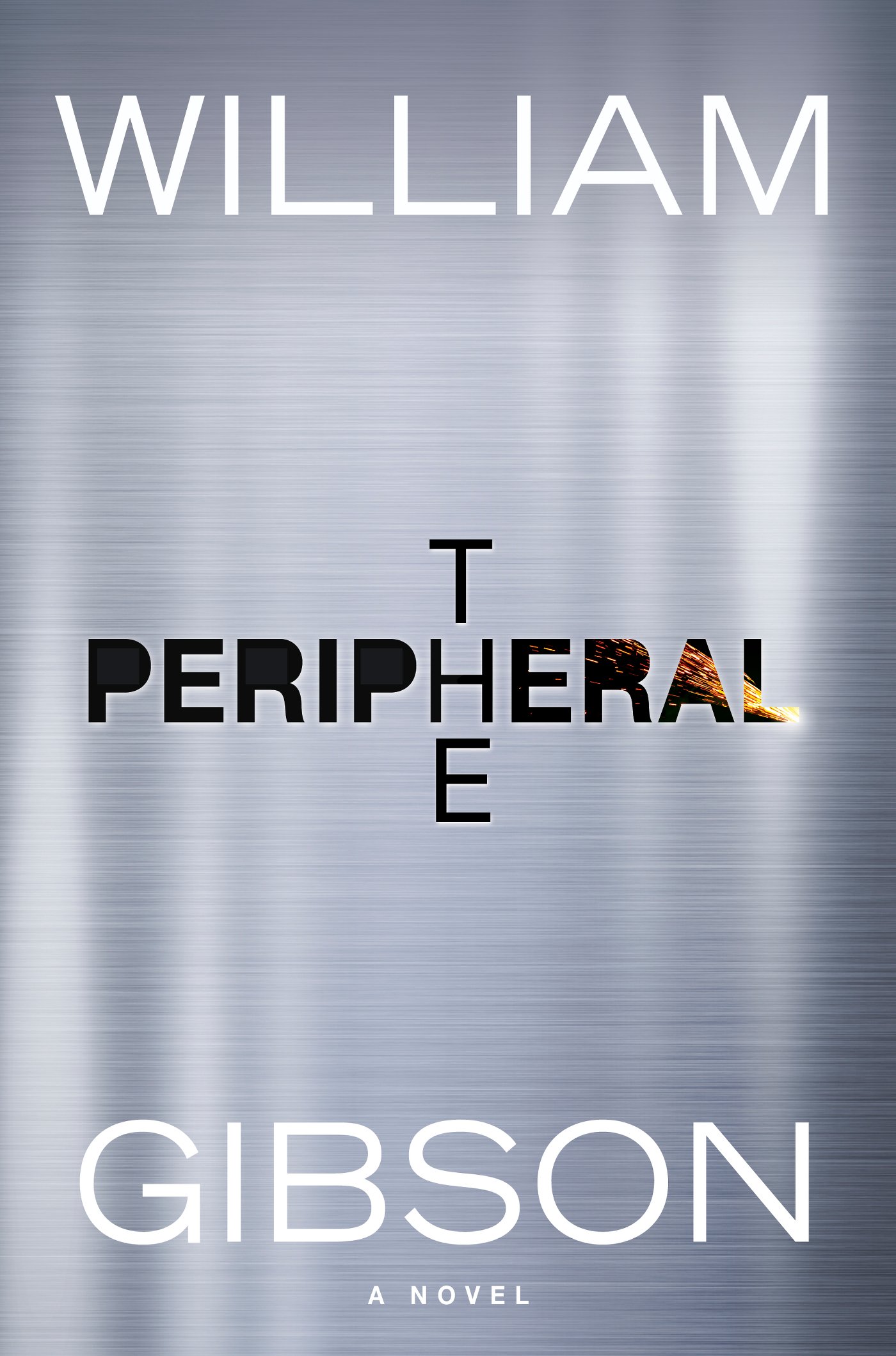
Microreview [book]: The Peripheral by William Gibson

Visions of the future, near and far.


Warning: some spoilers

The Peripheral marks Gibson's much heralded return to science fiction (after a decade-plus of publishing thrillers). Yet those expecting a more narrow return to the "hard" near-futurism of his cyberpunk novels will be in for a surprise.

The Peripheral takes place on two dimensional planes (or nodes on a divergent timeline) separated by about half a century and by a cataclysmic event known as "the Jackpot." In the temporally foregrounded narrative, English publicist Wilf Netherton works for/is sleeping with performance artist Daedra West. But when a public stunt ends with West massacring a off-shore colony of posthumans, whomever pays Netherton's bills (and it is never clear who that is, even to Netherton) decides to cut ties. Before doing so, Netherton gives West a parting gift--a "polt" he himself received from friend, erstwhile patron and Russian oligarch Lev Zubov (a member of the "klept" that not-so-secretly runs things in the future). Lev is a "stub hobbyist," that is, a person of endless means who has discovered, through a mysterious server, a way to interact with the past. Once interaction commences, though, the timelines separate. Daedra, growing bored of the "polt," gives it to her sister Aelita.

In the stub, Burton Fisher--a veteran of of the USMC's crack Haptic Recon Force--gets paid to play a game, which requires him to keep drone paparazzi away from Aelita West (though he doesn't know that's what it is). But he wants to go upstate so he can mix it up with Luke 4:5 (an evolution of the Westboro Baptist Church) when it tries to protest a military funeral. He leaves his sister Flynne to play the game for him. Only Flynne sees a murder--one that seems too real and horrible to be part of a game. And then people start trying to kill her for what she saw. Realizing what's going on, Netherton and his patrons--under the direction of the seemingly ageless and enigmatic Detective Lowbeer--hatch a plot to bring Flynne into their world, via one of the eponymous "peripherals"--artificial bodies that can be controlled remotely--so she can identify Aelita's killer--before it's too late.

As dense as that sounds, it's really only the tip of the iceberg. But reveal anymore, and I'd be spoiling the book, so I won't go there. Needless to say, The Peripheral is a dense, sinewy mess--but the kind that begs interpretation. As such, it feels closer to the literary specfic of Pynchon, Mitchell or Murakami than Sterling, Cadigan or young Gibson.

In other respects, the book is quintessentially Gibsonian. The world of the stub does not resemble the urban hellscapes of his Sprawl Trilogy, but is more extrapolation of the rural dyspotias portrayed in the television shows Justified or True Detective, albeit with added drones and 3D printers--communities ravaged by economic decay, public corruption, widespread drug addiction and the endless foreign wars that disproportionately draw from the young and poor. But the effect is similarly disquieting, because it feels close and, at times, crushingly inevitable. This has always been one of the things that's attracted me to Gibson's fiction; whether science fictional or mimetic, he always seems to have a handle on where things are and where they are headed in the immediate future. Maybe not exactly, but enough to pose uncomfortable questions without suggesting easy or convenient answers.

The foregrounded timeline, by contrast, is distinctly post-singularity. While I'm not opposed to post-singularity fiction in principle, I think Paul Kincaid said it best:

If the singularity means everything coming at us so fast that it is incomprehensible, then the author feels no need to comprehend. The author is as much outside the world as the reader is. The story, therefore, is left to stand or fall not by the sense of a lived future (because we are left feeling that even the author hasn’t lived in it in her imagination) but by how much strangeness can be thrown into the mix. In effect, the stories are not meant to make sense, because the incomprehensibility of the future to the reader is the whole point of the exercise. And in this, both reader and author are excluded from the story.

The foregrounded narrative is certainly inventive, with good characters--Netherton, Lowbeer and others; it nevertheless felt remote and cold to me, and as such, a bit tedious in comparison with Flynne's neo-Appalachia. 

Problematically, the incomprehensibility of this post-singularity future also conspires to produce a series of deus ex machina solutions to problems that emerge in the stub. Need resources? Watch Lev's "quants" manipulate the local economy (or rather, be told that they have done so). Someone trying to kill you? Have Lowbeer "send" over some more advanced weaponry. Flynne and Burton are extremely capable, but most of the time things are just done for them. This struck me as a waste of good characterization.

The Peripheral also suffers from an issue I've noted in a lot of books lately, namely, too many characters and not enough character development. In fact most of the secondary characters are either interchangeable or unnecessary, while a few that really could have used more development are as thin as reeds. Is this part of the literary zeitgeist? If so, I hope it goes away. So too the reliance on talking about things that are happening, rather than actually showing them happen.
 
Stylistically, though, The Peripheral dazzles. Counter-intuitively, perhaps, this is where felt the strongest connection to Neuromancer. Where, say, All Tomorrow's Parties gently immerses the reader in its near-future world, The Peripheral (like Neuromancer) throws you to into a deep end of speculative technology and the history, cultures and vernaculars of the future zeitgeist. No one does this like Gibson, and the uncompromising approach does ultimately pay off. However, the first 100 pages or were a slog. As such, some initially enthusiastic readers are bound to give up, as I contemplated doing at several points. All I can say is that it does get much easier to read once these things sink in, though, and I'm quite glad I saw it through.

In the end, The Peripheral isn't quite on Neuromancer's level, and it's most certainly an acquired taste, but it is still on balance a smart, sophisticated and--yes--literary genre novel that is, I think, ultimately worth braving, if only to see where Gibson's thinking about the future has taken him. On the other hand, it never quite strikes the nerve it threatens to, and in the end that's a shame.


The Math

Baseline Assessment: 8/10

Bonuses: +1 for nobody does futurespeak like Gibson; +1 for this shit is real complex, yo.

Penalties: -1 for all the talking about about things happening when they could just be happening; -1 for oh please no more gods in the machine; -1 for underutilized strong characters amid a preponderance of weak characters.

Nerd Coefficient: 7/10. "A mostly enjoyable experience."  

***

POSTED BY: The G--purveyor of nerdliness, genre fanatic and Nerds of a
Feather founder/administrator (2012).

Monday, February 9, 2015

Introducing...CYBERPUNK REVISITED

I'm highly susceptible to nostalgia, especially if that nostalgia references the formative decade of my life--the 1980s. Sure, '80s nostalgia has been done. And redone. And then done again. But let's be frank--the decade is like a golden goose for the nostalgia-inclined. I mean...


So it was with some glee that I grokked a budding nostalgia movement for cyberpunk, the path-breaking science fictional literature of the 1980s--the one that gave us terms like "cyberspace" and predicted the rise of hacker collectives and online corporate espionage. The one that envisioned a future marked by endless, inescapable urban sprawl, in which transhumanism and cybernetic enhancement would become commonplace, multinational corporations would grow autonomous from the control of national states while the states themselves withered away. And the one that birthed a million tropes, from "jacking in" to virtualized data fields via a physical plug to the head (typically located on one side of the requisite mohawk) to the ubiquity of...er..."street samurai."

Clearly while some elements of cyberpunk are as plausibly futuristic now as they were thirty years ago, and other things have already happened, certain visions of the future feel, well, a bit silly from our 2015 perch. So what is it like to (re) read Neuromancer or Mindplayers in 2015? What are the enduring legacies of cyberpunk--in literature, film, music or popular culture? This series, which will unfold over the course of an as-of-yet-undetermined period of time will explore these and other questions. It will envelope many of our bread-and-butter post series: reviews, We Rank 'Ems and an episode each of Blogtable and Perspectives.


An Abridged History of Cyberpunk

Though William Gibson's 1984 novel Neuromancer is often credited with launching cyberpunk, it is perhaps more accurately described as the first novel to capture the attention of science fiction writ large. As such, it is arguably the most important work of cyberpunk. But it was not the first--either Rudy Rucker's Software (1982) or John M. Ford's Web of Angels (1980) has that distinction, depending on what you count as cyberpunk. And the term "cyberpunk" was actually coined by Bruce Bethke--the title of a short story about hackers, written in 1980 and eventually published three years later within the pages of Amazing Stories. In Bethke's words:
[In 1980] I was living in River Falls, Wisconsin (population 7,000), selling Radio Shack TRS-80 Model 1's, taking courses at the local college, and hanging out on the very distant periphery of the Minneapolis music scene. I thought I was doing okay; after all, I'd gotten the sales job by a dazzling display of computer prowess (I'd shown the Radio Shack store manager how to load and run the BASIC demo program for his display model), and I was making as much money each month as I'd made in the previous year as a musician. (Which mostly speaks to how badly the music business sucks if you're not doing Top 40 covers.) 
Then one day a trio of kids, the oldest maybe 14, came into the store and started puttering with the demo computer. I turned my back on them for about two minutes. When I looked again the kids were gone, the demo program was trashed, and in its place they'd left me with something that had the Model 1 jumping through hoops. I took a few minutes to admire their ingenuity, then broke out of the program and looked over the code. Damned if I could figure out what it was doing. Okay, no problem. The Model 1 had this big orange RESET button on the front panel. I hit the button, reloaded my only copy of the demo program (can you tell where this is leading?), keyed in RUN -- And that's when I discovered their other little surprise.
That got Bethke thinking: kids and teenagers were wired for language acquisition in way adults never would be, yet were also, when left to their own devices, loose cannons. So what would the next generation of kids be like, particularly if they were living in a social environment in which power was a function of your ability to manipulate computer systems? He continues:
The kids who trashed my computer; their kids were going to be Holy Terrors, combining the ethical vacuity of teenagers with a technical fluency we adults could only guess at. Further, the parents and other adult authority figures of the early 21st Century were going to be terribly ill-equipped to deal with the first generation of teenagers who grew up truly "speaking computer." THEREFORE, if you thought that punks on motorcycles were a problem, just wait until you meet the -- the -- You know, there isn't a good word to describe them?
The term stuck--mostly due to the influence of editor Gardner Dozois, who felt "cyberpunk" captured the essence of an emerging style of science fiction that matched an abiding interest in cybernetics to visions of the near-future marked by urban sprawl, the rise of megacorporations accountable to no one but shareholders and a concomitant decline of the social and political institutions that would otherwise provide the checks and balances.


Though styling themselves a movement, the early practitioners of this style were, in reality, a small and close-knit group of writers developing the "meta-world" of cyberpunk. Writing in the New York Review of Science Fiction, James Patrick Kelly describes the "movement" thusly:
...the first Cyberpunks were less a “self-willed aesthetic school” and more a group of ambitious, like-minded, American late baby-boomers who read and liked each other’s work. Mostly writers at the beginning of their careers, their influence on one other grew until they coalesced into a self-styled Movement. They included William Gibson, Bruce Sterling, Rudy Rucker, John Shirley, Pat Cadigan, and Lewis Shiner. As their stories hit home, their ideas about science fiction began to gain traction, in part due to the withering attacks on the status quo that appeared in their fanzine-cum-propaganda organ, Cheap Truth.
Cyberpunk, then, was to be a vanguard literature--a self-styled revolutionary literature, and one its progenitors framed as a total break from the past. In truth, though, like all other things cyberpunk had its antecedents--many of which have been explicitly acknowledged by Sterling, Bethke, Gibson and others. Among the most significant and influential works of "protocyberpunk" are:

John Brunner's futureshock novels Stand on Zanzibar, Shockwave Rider and The Sheep Look Up; the films Blade Runner and Videodrome; James Tiptree Jr.’s The Girl Who Was Plugged In; Alfred Bester's The Stars, My Destination and The Demolished Man; Nova by Samuel R. Delaney; Through a Scanner, Darkly by Philip K. Dick; and the non-fiction futurism of sociologist Alvin Tofler--all of which laid groundwork for cyberpunk in significant ways. Some, like Shockwave Rider, are as close to cyberpunk as Kraftwerk is to techno.


It is, however, undeniable that cyberpunk captured genre's collective imagination, with a cultural influence that has reached far beyond the relatively small confines of science fiction fandom. Cyberpunk ideas not only appeared to describe an emerging future, but began to shape it as well. And its main themes have been revisited and repackaged again and again--in films like The Matrix, video games like Deus Ex, in music, fashion and even farther afield. Whether one cares for it or not, cyberpunk is, without question, one of the most culturally impactful styles of science fiction to emerge in the past half-century--perhaps second only to the New Wave.


Themes and Tropes

Cyberpunk's central thematic concern is with the integration of "high-tech" and "low-life." As Sterling notes in his introduction to the influential Mirrorshades anthology:
Thus, "cyberpunk"...captures something crucial to the work of these writers, something crucial to the decade as a whole: a new kind of integration. The overlapping of worlds that were formerly separate: the realm of high tech, and the modern pop underground.

In another era this combination might have seemed far-fetched and artificial...But the gap is crumbling in unexpected fashion. Technical culture has gotten out of hand. The advances of the sciences are so deeply radical, so disturbing, upsetting, and revolutionary, that they can no longer be contained. They are surging into culture at large; they are invasive; they are everywhere. The traditional power structure, the traditional institutions, have lost control of the pace of change.
And suddenly a new alliance is becoming evident: an integration of technology and the Eighties counterculture. An unholy alliance of the technical world and the world of organized dissent - the underground world of pop culture, visionary fluidity, and street-level anarchy.
Cyberpunk writers self-consciously rejected the elite heroes of classic SF--the brilliant scientists, the wealthy industrialists, the space-faring starship captains and other "leaders of men"--in favor of antiheroes living on the margins of society--hackers, mercenaries, anarchists, criminals and streetwise punks. It is, in essence, technonoir, a conscious inversion of the social and moral order situated at science fiction's institutional center. Sterling again:
Science fiction - at least according to its official dogma - has always been about the impact of technology. But times have changed since the comfortable era of Hugo Gernsback, when Science was safely enshrined - and confined - in an ivory tower. The careless technophilia of those days belongs to a vanished, sluggish era, when authority still had a comfortable margin of control.

For the cyberpunks, by stark contrast, technology is visceral. It is not the bottled genie of remote Big Science boffins; it is pervasive, utterly intimate. Not outside us, but next to us. Under our skin; often, inside our minds.

This was an explicitly political stance. Rucker sums it up thusly:
All of us had, and still have, an implacable and unrelenting desire to shatter the limits of consensus reality....We started writing cyberpunk because we had a really strong discontent with the status quo in science fiction, and with the state of human society at large.
 Or as Gibson put it to David Wallace-Wells:
It seemed to me that midcentury mainstream American science fiction had often been triumphalist and militaristic, a sort of folk propaganda for American exceptionalism. I was tired of America-as-the-future, the world as a white monoculture, the protagonist as a good guy from the middle class or above. I wanted there to be more elbow room. I wanted to make room for antiheroes.
These antiheroes were positioned within clearly dystopian futures--marked, in varying degrees, by: unchecked globalization; urban sprawl; the accumulation of power by autonomous multinational corporations; the privatization of violence; rising crime; the decline of democracy, social welfare and the nation-state; and rapidly scaling inequality. Yet there is nothing Orwellian about the cyberpunk dystopia--it is a loose, chaotic hotbed of social activity. It may be horrible, but it is also, fundamentally, a place of opportunity--even for the "low-lifes."

Cyberpunk is, then--like other forms of genre focused on "low-life"--centrally concerned with questions of agency. In cyberpunk, however, agency is typically mediated by cybernetics--enhancements rendering the bearer "more than human"; modules that allow the user to navigate visualized data streams; drugs that heighten sensory perception; and so forth. These are not just elements of world-building, but tools--mechanisms through which agency is realized and with which opportunities are seized.

By the end of the 1980s, the boom had largely run its course, with many cyberpunks authors beginning to distance themselves from the style, or at least from the label. Presumably what had once felt like a shot across the bow of genre convention had become a straightjacket of tropes and expectations. After all, like any art movement based on a strong critique of reigning conventions (real or imagined), cyberpunk risked losing its edge once it was accepted as part of the mainstream, and that's exactly what happened. Bethke again:
Cyberpunk fiction went from being something unexpected, fresh, and original, to being a trendy fashion statement; to being a repeatable commercial formula; to being a hoary trope, complete with a set of stylistic markers and time-honored forms to which obeisance must be paid if one is to write True Cyberpunk.
And Shirley:
But on the whole what happened to it, is that it was appropriated, co-opted, by other people, into other forms…cannibalized…

Cyberpunk's Ending Legacy

Fans of other media--film, TV, games, etc.--probably associated cyberpunk more with 1990s culture than the 1980s literary artifact. After all, the 1990s were the decade that gave us a slew of cyberpunk-inspired films, most of which--like Timecop (1994), Hackers (1995), Strange Days (1995) and The Matrix (1999)--had the form but not the substance of the 1980s literature. (It also gave us the occasional gem, like the 1995 anime film Ghost in a Shell).


For gamers, the 1990s were the golden decade of the Shadowrun franchise (launched in 1989 as a pen-and-paper RPG but later also serving as the basis of a revered 1993 Sega Genesis game), which mixed traditional fantasy elements (non-human races, magic, etc.) into a dark cyberpunk world littered with tropes lifted straight out of Neuromancer. And it concluded with Deus Ex, technically released in 2000, but with its cultural feet planted firmly in the 1990s--a video game that is still considered one of the best ever made.

The 1990s were also, of course, the decade in which the internet evolved from something some people do to that thing everyone does all the time. And like Neuromancer, Neal Stephenson's 1992 novel Snow Crash seemed to perfectly capture where everything was headed from inside the moment of change. Snow Crash is, among other things, a defining work of postcyberpunk, a style that strips off the tropes and adapts the framework of 1980s cyberpunk to the new reality and the new futures that reality implies.
In the years since we have seen countless works--fiction, comics, film and games--resurrect and reconfigure the initial formula--testament to our enduring fascination with cyberpunk. Some have even been good and original and forward-thinking--like Charles Stross' collection of linked, singaularity-themed short stories, Accelerando. Others have been...well, not so much.

Also worth noting is the cyberpunk revival movement. It is driven by nostalgia for the aesthetic and atmosphere of first-wave cyberpunk, the best examples of which ooze retro cool, but which--in celebrating the outmoded futurism of days past--arguably tilts more fantasy than science fiction. Nevertheless, this is an active fan culture that can be really fun for the nostalgia-minded. There are high-quality cyberpunk blogs, a dedicated subreddit with an active community and a dizzying array of cyberpunk-themed tumblrs--all testament to the enduring legacy of cyberpunk. I love it.


"Cyberpunk Revisited"

...which brings us back to the idea I had: to re-examine cyberpunk as a distinctly science fictional literature and as a set of themes within science fiction, from our position 30 years into the future. So we'll be doing that--starting with a series of structured reviews of classic cyberpunk fiction from the 1980s, but eventually moving on to other media and decades. We'll critically examine both the positives and negatives about the approach--the stuff cyberpunk does well, not so well or not at all--and also ask the tough questions, such as whether cyberpunk suffers from an "orientalism problem." Throughout the project, we will try to contextualize cyberpunk within broader histories of science fiction and global culture, and we'll draw in diverse voices (both among and beyond ourselves) to do so.


Practically speaking, our reviews will take the form of dossiers with standardized subheadings to help tease out the comparables, such as:
Filetype: whether it's a book, film, comic, game, etc.
File under - whether it's cyberpunk (i.e. the 1980s literature), proto-cyberpunk (i.e. something that foreshadowed cyberpunk), postcyberpunk (i.e. later evolutions/adaptations of the cyberpunk framework to new conditions), a cyberpunk derivative (i.e. something that draws from cyberpunk but is not cyberpunk) or a cyberpunk legatee (i.e. a derivative that is more substantively attached to the legacy of cyberpunk). 
High-tech - the technologies involved and how are they portrayed.
Low-life - how the nitty-gritty of life at the lower rungs is portrayed.
Dark times - the essence of the future envisioned, the degree and form of dystopianism involved and the key structures of the sociopolitical environment action takes place in. 
Legacy - the significance/influence of the work in question. 
In retrospect -  what it's like to read/watch/play it today.
The Cyberpunk Revisited project, of course, won't just consist of reviews. As I mentioned earlier, we'll be doing other stuff too--essays, lists, interviews, discussions and so forth--drawing in many of our writers and also some illustrious guests.

So sit back, jack in and enjoy the ride, decker.


***

POSTED BY: The G--purveyor of nerdliness, genre fanatic and Nerds of a
Feather founder/administrator (2012).


Monday, April 11, 2016

NERD MUSIC Album Spotlight: Wavehymnal by Makeup & Vanity Set

By now you all know how much I love Makeup and Vanity Set. More than any other artist in the synthwave scene (with the possible exception of Com Truise), Makeup & Vanity Set pushes the boundaries of what this music is about and what it can do--to the point where Matthew Pusti's stuff both feels a part of and apart from what the scene's other mainstays are doing.

The new Makeup and Vanity Set album, for the French label Data Airlines, exemplifies that dynamic. It's much dancier than Pusti's previous output--"Stalker" and "Death Laser" border on techno, while "Ono-Sendai" is a near perfect--and funky--slice of cyberpunk-inflected darksynth. And yeah...every single track is dope as hell.

And there's one other thing about Wavehymnal that makes this old blogger smile. Recall that in my recent interview with Pusti, I pressed him on the connection between his music and William Gibson's cyberpunk classic Neuromancer. And now we have a track called "Ono-Sendai," which by rights should be the title track for the cinematic adaption that Neuromancer so badly deserves.

So do yourself a favor and buy/stream Wavehymnal--there are limited edition LPs and cassettes available as well!


Spotify Stream

***

POSTED BY: The G--purveyor of nerdliness, genre fanatic and Nerds of a
Feather founder/administrator (2012).

Tuesday, July 25, 2023

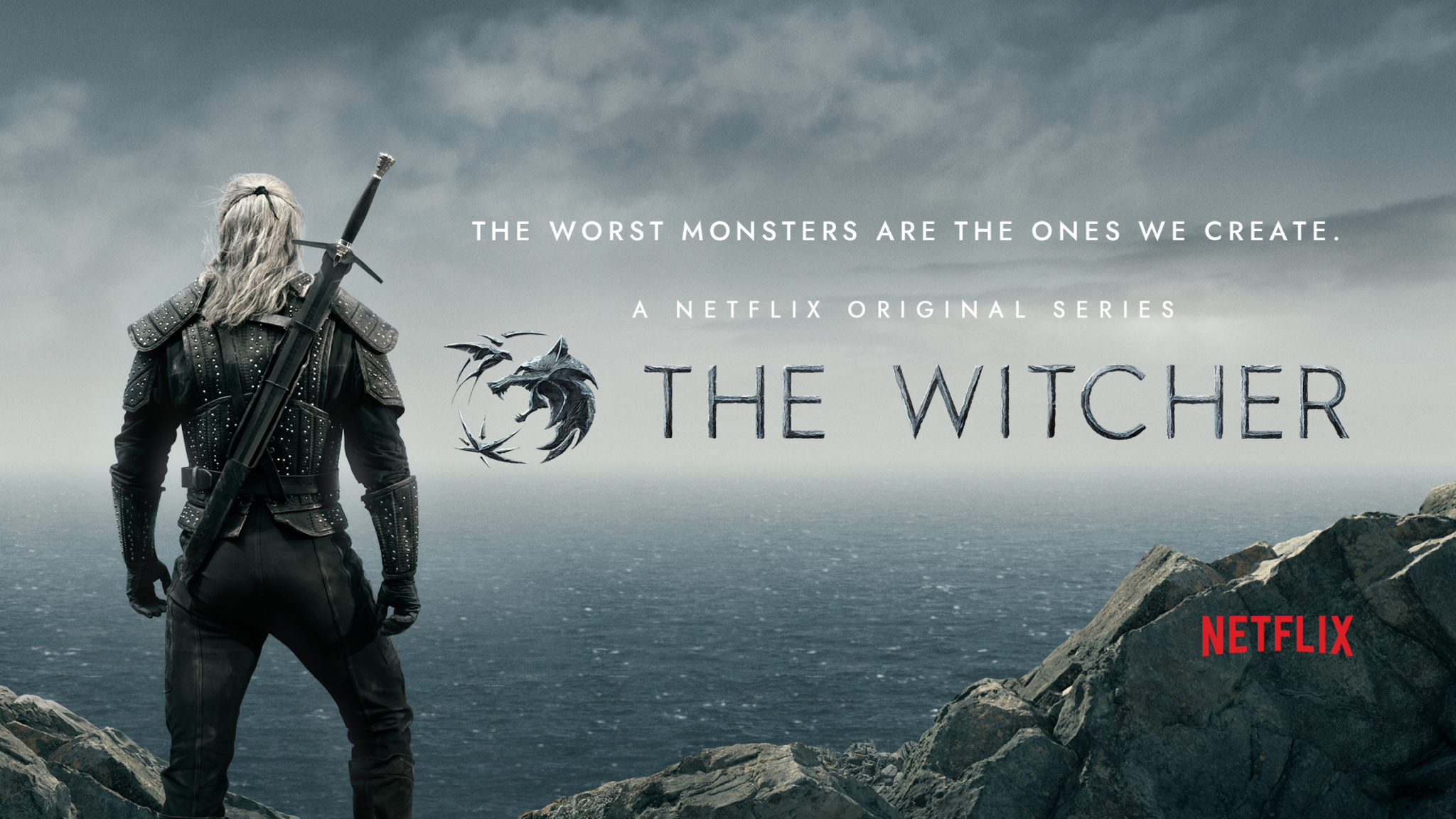
What's in an Adaptation? A Sapkowski Fanatic Watches Netflix's The Witcher

Literature is magical because, at some point, you read a book and grow convinced that it contains answers to all the mysteries of creation. I have felt this way several times in my life, particularly with esoteric novels. Many of my absolute favorite books, from Roberto Bolaño's fragmented mystery 2666 to William Gibson's cyberpunk classic Neuromancer, read almost like scriptures - arcane texts that require hermaneutics of interpretation. 

Indeed, it is not always clear what these books are about; at times they seem to be more vibes than plot, with hints of deep lore sprinkled like fairy dust across their pages. Neuromancer, for example, is a book I've read at least five times over the course of my adult life - and every experience has felt unique. The current rise of AI chatbots has even recontextualized this book once again, leading me to consider a sixth go around. 

Of all the fantasy series I have read (and there are many), none have given me that quasi-religious experience quite like Andrzej Sapkowski's Witcher cycle.* The characters are tremendously well articulated: complex, raw and human. The books are, I would argue, part of the dark turn in fantasy. But they are not just dark, they are also warm and romantic; they do not focus just on pain and suffering, but also on loyalty, friendship and what it truly means to love. 

The series is not, however, an easy read. The plot is more elliptical than linear, with a narrative focus on small groups of characters rather than big set-piece moments of great import - which happen offstage and are more referred to than described. The world-building is complex, but there is virtually no exposition to aid the uninitiated; like Gibson's science fiction, it is all showing and zero telling. Character motivations, meanwhile, can be opaque in the moment, only to revealed piecemeal through oblique reference. For all these reasons, I can see how the series could be frustrating to someone expecting Martin, Sanderson or Hobb. But for someone like me, who craves a literary puzzle, the Witcher books are pure magic.  

*[For those who don't mind spoilers, you can find more detailed, book-by-book analysis on The Last Wish, Blood of Elves, Time of Contempt, Baptism of Fire, The Tower of Swallows and The Lady of the Lake. But warning: these reviews will contain spoilers for the book and TV series.]

***

I actually first discovered the Witcherverse through other media - specifically, through CD Projekt Red's Witcher 2: Assassin of Kings. The world and characters were so captivating to me that I jumped online to find out more about the book series. I learned that Sapkowski's books were a sensation in Eastern Europe and Latin America, somewhat akin in popularity and influence to George R. R. Martin's Song of Ice and Fire series, which was (rightly) viewed as a breakout fantasy series when first published in the 1990s. I also learned that the Witcher books were being translated and published in English, so of course I had to read them. 

The games and books do not tell the same story; rather, the games pick up the story at the end of the book series. And as good and likable as the games are, the books to me are just on another level. What's interesting, though, is that I didn't stop liking the games after reading the books. If anything, my enthusiasm for the games grew. This is progress for someone who often gets hung up on changes made to revered media (e.g. some of the creative license taken for the Game of Thrones TV series). 

Really, the games feel like spiritual companions to the books. They tell a different story, but the characters and world they inhabit feel true to their literary roots. Sapkowski himself isn't a big fan the games, in part due to ambivalence toward games as a storytelling medium and in part due to licensing disputes with CD Projekt Red (which now appear to have been resolved). But what strikes me about the games is how loyal they feel to the world Sapkowski created. They are loving tributes to their source material. 

***


Enter Netflix, which in 2017 announced a new TV adaptation in development. The streaming service hoped to capitalize on both Game of Thrones mania and the popularity of the Witcherverse in other media, with a series launch scheduled to coincide with the end of HBO's mega hit. It was announced that the series would adapt the books rather than the games and would star known nerd Henry Cavill as the eponymous Witcher. 

The first season had the unenviable task of adapting The Last Wish, a short story collection that sets the stage for the cycle proper, which begins in Blood of Elves. The showrunners could have just adapted the stories in episodic format, but they wanted to reel people in the way only serialized programs can. The show also had to grapple with the fact that Witcherverse lore is so deep, complicated and - as I mentioned earlier - shown piecemeal rather than told straightforwardly. Their solution was a nonlinear narrative that combines episodic stories with backstories that unfold across different dimensions of time. Yennefer's story, for example, is told across a 70-year period while Ciri's happens within 2 years. 

The result, in my opinion, is a mixed bag. Overall I think the first season provides a solid introduction to the characters, world and general themes of the series - and I like some of the adjustments to character (e.g. fleshing out Yennefer's backstory). But I've never been sure whether it could truly capture the imagination of someone who never read the books or played the games. Nor how they would follow the world's complicated and often opaque politics. And on top of that, the pacing of season one can only be described as sluggish. 

Since comparisons are inevitable, I'll note that this contrasts unfavorably with the first season of Game of Thrones, which does a superb job of telling you what's at stake (Westeros), who the main players are (the Starks, the Lannisters and the Targaryens) and why it matters (emerging threat too everyone from the White Walkers). It seeds these vital pieces of information within a compelling political mystery plot with parallel narratives of discovery north of the wall and on the continent of Essos. Finally, through a truly shocking plot twist (which readers of the books already knew was coming but TV neophytes did not), the show sets viewers up brilliantly for season 2.  

With this in mind, I didn't exactly have high hopes for The Witcher season 2. Blood of Elves is an odd book - a good book, to the sure, but not the best in the series. As I noted in my review, it's the installment  where Sapkowski's preference for micro over macro perspectives works least well. A lot of the action takes place at the stronghold of Kaer Morhen, where Ciri trains to become a witcher. There is a very long passage, brilliant in writing but difficult to translate to the screen, where sorceress Triss Merigold castigates the all-male witcher cadre for expecting Ciri to behave like a boy and undervaluing her femininity. We are introduced to Rience, who is one of the series' main antagonists, and get glimpses of the political machinations that propel the macro plot across the cycle. My concern going into season 2 of the TV series was that this would not make for compelling television, which requires even more "watercooler moments" than books. What if the show remained sluggish? 

Boy was I wrong. Season 2 of The Witcher is fantastic. The pace picks up, as the story shifts from contained monster hunting and backstory exposition to the multi-pronged contest to capture and control Ciri, with Geralt and Yennefer desperately trying to keep her out of the hands of those who would manipulate her for their own ends. 

The shape and structure of Sapkowski's book series only really works in the medium of literature; in order to turn it into effective television, the showrunners had to make changes - opting to capture the tone and feel of the books while diverging from them in specific ways. In season 2, the plot is simpler, clearer and strikes a more even balances micro and macro events than does Blood of Elves. Which is not to say that it is better than Blood of Elves - the opacity and nonlinearity, even in its least compelling installment, has always struck me as a feature rather than a bug. But the streamlined narrative does work better as television.   

Season 3, half of which is available as of writing (with the second half dropping worldwide on July 27), wraps up events from Blood of Elves and shifts to the second novel in the cycle proper, Time of Contempt. In contrast to Blood of Elves, Sapkowski's elliptical narratives and micro-focus work tremendously well in this book. In fact, Time of Contempt is one of two Witcher novels I scored as a 10/10, and is a supreme example of what can be accomplished within the fantasy genre. I even suggested that it "may be the best fantasy novel I have ever read." - which it probably was, at the time (though now, having finished the series, I am inclined to think The Lady of the Lake is even better). 

***

Season 3 struggles a bit more with the source material than in season 2, perhaps because the roadmap to transitioning the story to television is less clear. But it is still quite good - and, knowing what comes next, I am very excited for part two. Having watched the preview trailer, it looks likely that the show will adapt the intensity and pure weirdness of Time of Contempt's denouement. I don't want to spoil anything, but since you can see them in the trailer, all I will say is this: unicorns. The unicorn sequence in Time of Contempt is batshit crazy, in the best possible way. 

The show is supported by a superb cast of actors; besides Cavill, British actresses Anya Chalotra and Freya Allen shine as Yennefer and Ciri, and Eamon Farren is superb as the enigmatic Nilfgaardian agent Cahir Mawr Dyffryn aep Ceallach. Some of the smaller characters are also quite memorable - sorceress Sabrina Glevessig, dwarven adventurer Yarpen Zigrin and magical detectives Codringher and Fenn all make the most of limited screen time. 

Notably, some characters from the book series have been altered past the point of recognition. Sometimes this works. Prince Radovid of Redania is far more interesting as King Vizimir's perennially underestimated brother than he is as Vizimir's young, stern son. Sorceress Fringilla Vigo is also transformed from a minor character in the early novels into to a major player with backstory, nuance and complexity. We similarly get a deeper look at elven Queen Francesca Findebair, who like Fingilla Vigo becomes a more important character later in the book series but isn't really a major player in Blood of Elves. This exposition should make it easier for Witcher neophytes to understand the roles Fringilla Vigo and Francesca Findebair play as the cycle unfolds. 

At other times, the changes work less well. Philippa Eilhart is one of the most intriguing characters in the books and games - a scheming puppet-master with the mercurial, predatory demeanor of her other form, the owl. The way she's played in the show feels off to me, she is more sensual and almost feline. Not that there is anything wrong with that, and as always with these things, your mileage mat vary - it's just a deviation from the books and games that doesn't really work for me. 

There are also a lot of new characters, some of which work better than others. Gallatin the elven insurgent appears in season 3 to create conflict but doesn't really have much of a role otherwise. Dara is another elven character who seems to exist more to move the plot along than anything else. But Istredd to me is a very strong addition to the story. 

Now, to be fair, Istredd does appear in the short story "A Shard of Ice," but he does not appear in the cycle proper. However, unlike, say, Stregobor, he is not the feature of the story nor does he have a major place in Witcherverse lore - rather, he is included in that story as a device that helps us delve deeper into Geralt and Yennefer's relationship. As such, his portrayal in the show as an academic mage with a key role in unfolding the central conspiracy at the heart of the first two novels feels more original than just expanded. 

***

All of this is a lengthy way to say the TV adaptation has to date surprised me with its quality, its depth and its ability to know when to adhere to what has been established in the books and games and when to deviate from them. 

With that in mind, I have some major concerns about how the series will wrap up. Let's start with the obvious: for some baffling, unimaginably stupid reason, the show's producers decided to let Henry Cavill go and replace him with Liam Helmsworth. It's not that Helmsworth is a bad actor or would make for a bad Geralt; it's that Cavill has embodied the character as only someone with a true passion for the role can. Cavill is a known nerd who came into the role as a big fan of the games; since taking on the role, he has dived deep into the books and broader Witcherverse, to the point where cast and crew have called him the set's expert on series lore. 

This may have been the reason for his dismissal. Cavill allegedly argued with the showrunners on deviations from the book series, whereas the showrunners would prefer not to stick too close to the books. Given my comments on the series above, you might think I'd take the showrunners' side here - but seasons 2 and 3 clearly show Cavill's influence. Without that, the deviations may become less authentic to fans of Sapkowski's writing. 

The show may also suffer from the ongoing WGA and SAG-AFTRA strikes (which we strongly support). The scripts for season 4 have apparently already been written, but the strike could impact necessary revisions. And does anyone, for a moment, think the studios might not just rush the product out to meet financial obligations, ready or not? 

I have even greater concerns about how Netflix will handle the show's ending in season 5. After all, we've now seen countless examples of streaming channels chasing ratings by letting beloved series series end miserably. Even worse is the new trend to cut costs by killing off projects that people love, no matter where we are in the storyline. Both would do a major disservice to what has been, up to now, a major success. I hope neither comes to fruition, but I do have serious concerns here.

Ultimately, though, we can only judge the series on what it's done to date - and it's hard for this Witcherverse fanatic not to see the adaptation as a glass more than half full. Sure, it's not the books - and it may not be the games either, but it is good. Very good. I hope that the show continues to live up to its promise. 

***

POSTED BY: The G--purveyor of nerdliness, genre fanatic and Nerds of a
Feather founder/administrator (2012).