Showing posts with label trans stories. Show all posts

Wednesday, February 11, 2026

Book Review: These Fragile Graces, This Fugitive Heart by Izzy Wasserstein

Breaking binaries in a future that feels terrifyingly near

We often talk of the collapse of governments as the collapse of order. We fear anarchy, conflating it with the brutalities of war and genocide and cannibalism and of many other atrocities that the state nominally exists to prevent. When the state recedes, order as defined by the state recedes, and the territory concerned gradually becomes less “legible” to the state. In his book The Art of Not Being Governed, anthropologist James C. Scott talks about how people in these “illegible” areas deliberately acted to prevent the state from encroaching upon them; he argues that they rejected writing itself, or even history itself (conversely, markers of “legibility,” as discussed in his book Seeing Like a State, include surnames, gridded streets, government record-keeping, standardized agriculture, and the like—these were critical parts of the creation of the modern nation-state). Scott talks specifically of the peoples of upland Southeast Asia, but it is a phenomenon that has existed in much broader contexts. One potential form of this phenomenon may be seen in Izzy Wasserstein’s 2024 novella These Fragile Graces, This Fugitive Heart, published by Tachyon Publications.

It is a future that feels terrifyingly near. The ever-weakening functions of the American state are ever receding and ceding power to outright corporate rule. In a blighted, impoverished Kansas City, there is crime, and misery, and utter, utter poverty. Yet there is one little oasis of hope: an anarchist commune that has refurbished a part of the city, whose people live according to mutual aid and consensus decision-making. Seen from today’s neoliberal late-state capitalist hell, it can look almost idyllic.

Then a member of the commune is found dead in her room. The only person willing to go all the way with an investigation is her ex-girlfriend, a former member of the commune who was exiled when a tension between her and the rest of the communards came to a head. Distrusted by her former friends, disowned by her family, and thrown into deep emotional turmoil, Dora, your protagonist, has to solve the murder.

Looking at this story through what Scott called an “anarchist squint,” we see another manifestation of the theme of “legibility” to other people, a theme that serves the narrative’s larger thrust. Dora is a trans woman, expelled by her rich magnate father, who blames her for “killing” his “son.” There’s a very particular contrast between the way the broader world interprets her gender, as opposed to this commune. Much of transphobia is an objection to how trans people blur the boundary between “masculine” and “feminine,” and transphobes hold on for dear life to a “legible” binary to preserve what they feel is epistemic stability. The communards, on the other hand, have no such issues; their conception of gender is a multitude, something diverse, and so they find Dora perfectly legible. She’s not breaking the basic building blocks of social reality to them; she’s just a person, completely comprehensible for that.

Basically every antagonist in this story is someone with money trying to violently contort the world into making sense to them; I am reminded of the American police who have tried to find the leaders of local Food Not Bombs collectives, but cannot comprehend the idea of a leaderless group that is nevertheless organized. Such is the nature of the primary antagonist: to avoid spoiling it, this character is involved in all sorts of underhanded skullduggery in an attempt to make a world that is too clean, too orderly, too “respectable,” too tidy, because that force cannot bear a world that diverts from its preconceived notions. A trans person is thus anathema to this character’s worldview, even to their sense of self and to the bigotry at the core of that worldview.

Another critical part of this novella’s thematic infrastructure is nigh-impossible to discuss without spoiling, but I will try. A crux of the plot is a particular science fiction trope that assumes a certain nature of the self, an assumption commonly made by cis people in most areas of life, and gives it a profoundly trans twist that really uproots your assumptions about this trope. In her afterword, Wasserstein talks about how the science fiction genre has traditionally used speculative elements as metaphors for aspects of the real world. In her own book, she is doing it differently, being more flexible with it, and the end result is phenomenally clever in a way that only a trans writer could do. It’s the sort of new perspective that the “rainbow age” of science fiction (as Elizabeth Bear has been calling it for over a decade) has given us in spades, and it is something the genre needs. What follows is a very discerning, very original take on an old trope.

The world of the commune, in particular, feels something out of the great novels of Ursula K. Le Guin, combining the exploration of gender in The Left Hand of Darkness with the exploration of anarchistic living in The Dispossessed. Wasserstein makes a very similar point to Le Guin regarding the latter: even without formal hierarchy backed by guns, there can still very much be informal hierarchies of popularity. Dora is exiled because she thinks in a different way about a crucial aspect of life on the commune, but the others have come to a consensus that her way of thinking renders her anathema. It’s a wrench thrown into the soaring ideals of utopian science fiction, dealing with this more than Everything for Everyone did. In some sense, the world of Wasserstein’s novella is one still transitioning to the anarchist world of the sort that Emma Goldman feared it would take humanity centuries to create; there is still a lurking tribalism that is combatted internally but I fear can never entirely be excised from the human species. It is ultimately a nuanced portrayal that makes the whole thing more believable.

These Fragile Graces, This Fugitive Heart is a deeply radical book, when you get down to it; it is about rejecting the hegemonic legibility that patriarchal capitalist society demands of us. Why do we need only two genders? Why do we need one ruler? The book shows, not merely tells, of how a newer, better, more tolerant world could actually function, at least in microcosm. It is a story that feels plausible, with a pearl of collective living in the sea of neoliberal misery. It gives me hope, as hard as that is to have these days.

Reference: Wasserstein, Izzy. These Fragile Graces, This Fugitive Heart [Tachyon Publications, 2024].

POSTED BY: Alex Wallace, alternate history buff who reads more than is healthy.

Thursday, April 17, 2025

Book Review: Notes from a Regicide by Isaac Fellman

A breathlessly intimate story about the irrationality and grossness of being an embodied person, and how that intersects with transness, love and living through history.

You know how sometimes you put a book down on finishing it and the world looks different, like the flavour of the prose has bled up into your thoughts, your perception, so for a little while you've been translated into its grammar? That is generally my experience of reading the work of Isaac Fellman, and Notes from a Regicide, his newest novel, is no different. But when I try to encapsulate the substance of the story into a blurb, to cup something tangible about it in my hands so I can offer it up to you to share, it slips between my fingers, leaving only fragments. Despite being a book utterly grounded in the flesh and the tangible world, it is itself surprisingly evanescent.

There are two stories, interleaved. The first, of Griffon, who escaped a violent father to live with Etoine and Zaffre, in whose house he felt safe enough to be a boy, finding in them new parents. The second, the story Griffon constructs from Etoine's notes years later, of his and Zaffre's life in distant Stephensport before and during their revolution. Which is ultimately the crux of it, but gives away nothing about why this is either speculative, or so wonderful.

I'll start with the speculative elements first, because they are the easiest to grasp (while being insubstantial). Most of the content and action of the novel is focussed in on relationships and the interactions between characters and each other, or their own self and story. No one in the foreground does anything inherently SFFnal. But as the story progresses, it becomes more and more obvious that all these fairly realist events are taking place in the distant future, in a city that does not currently exist (or if it does, not in any way a recognisable form from Stephensport in the story). We learn more about it, about the buried electors who, revived at intervals, select the city's new leader and namesake. About the gulf of centuries that exist between the story-time and now. About the subtle and less subtle differences between Griffon, Etoine and Zaffre's world and ours. Most of these come in glimpses and references, incongruous moments of a thing where it's not supposed to be. But together they built, quietly, into a picture of a future I am fascinated by and prevented from fully grasping. And its absence is part of its success - the world is the world, for the characters in the story. It is real and normal and graspable, even if Stephensport is a mystery to those outside its boundaries. And so, for those living in a place, the place is not remarkable in its mundane details. Thus, not remarked upon in their notes or diaries. Stephensport is most clearly shown by Griffon, who has never been there, but yearns to understand this understated thing in Etoine's words.

That mystery is never fully resolved. It is not a rich world to be tour-guided around, more a backdrop. But for something that never comes into focus, there are some extremely interesting choices in its construction, especially socially and structurally, nonetheless.

Why it's wonderful is a rather harder matter.

If you like realist writing, or litfic - which I do - there is much to be said for the sort of immersion in a character and a moment of being that Fellman excels at. Griffon and Etoine both write with an obvious, idiosyncratic voice, and become more and more real as their writing continues through the book. But Fellman has a particular knack for catching them in their most human moments, especially Griffon - when he's stuck in a thought or a doubt. There's all the irrationality of the deep interior thoughts that never seep out into the world, the odd comparison, the habits, the weird connections.

But where this really comes to the fore is in the way those fully realised characters interact. Because there are these two interleaved narratives, and we get the narration and interiority of both Etoine and Griffon, we can triangulate around the points of their relationship with each other and Zaffre, and gain a depth of it that could never come from seeing each alone. Etoine in his own words has a different shape when we first meet him through the awestruck gaze of a teenage Griffon. And as the story goes on, the thing we are told at the start - that Griffon loves his found parents - comes closer and closer to the surface, becoming almost painful in its brilliance.

I do not think I have ever read anything that captured the idiosyncracy, the mundanity and the marvel, of love like Notes from a Regicide does. It is a love story, of a child to parents, of a man to his wife, and of a whole family, each for each other and themselves. It captures a love that includes the flaws, the boredom and the habit, the mysteries. And these all make it feel deeper and more richly true by the end.

From the beginning, we know this is a story of grief, written by Griffon after Etoine's death. But the depth of that tragedy only becomes real once we have come round full circle to it again at the end, having experienced life through their own eyes.

That alone would be wonderful enough, but there's far more at play here. I could talk about the way Fellman portrays the revolution, backgrounded and looked at sidelong, until it cannot be ignored, all while Griffon is desperate to know more about it. I could talk about the way both Etoine and Zaffre look at and talk about art. Both could take up whole essays of their own. But the thing I found myself lingering over most, as I was reading, was simply the beauty of Fellman's descriptions, and so it is this I shall focus on instead, having filled five pages of notes with quotes of them.

For example:

I went through his desk when he died and found all of these writings (Zaffre left none behind, or vanishingly few). They are the ingredients for the book I am writing now. He would find that metaphor too homely, but I, unlike my parents, am a cook. They look like ingredients too: notebooks thick with interleaved drawings, wrapped in shiny brown leather like chicken skin; small parcels of old paper tied with string like roasts ready for the oven.

or:

But by the time I met him, he really was cold. The kind of cold that preserves things, like the way you keep your beer in a sealed bottle in the snow or the stream when camping.

I realised, as the story went on, that the descriptions served a purpose beyond themselves - Fellman leaves them long, sprawling, unnecessary, in a way that forces you to slow down. They're a tool to force you to acknowledge certain aspects of the world, often the mundane details that build up a person.

And then of course, it becomes obvious that Fellman is doing this all over the place. The word that most vividly comes to mind when I want to talk about this book is "lingering" - the prose does it everywhere, highlighting and pacing you as you go, like so:

Words have colors and colors have words. At times, when a word has been on my mind too long, they take on shapes and actions. Regicide is a blazing bar of iron whose brassy heat I grip firmly between the teeth, as an obedient dog does a bone. I can't say why, or why I can so clearly imagine the sear of that bar in my mouth, its brief taste of blood - but I do.

And a picture builds up, in all that lingering, of what matters in this world, and to these people.

It's not always beautiful, mind. Some of Fellman's best or most memorable turns of phrase are to the grosser parts of being human.

I was a mass of strong smells tied together in a crude packet of skin.

Some of them feel universal, the sort of thing everyone can relate to, but many are deeply idiosyncratic, tied up in the very specific experiences these characters have, especially with their bodies and change in their bodies. All three of the family are trans, and all three experience and discover it, navigate it, in their own ways, but all wear it in their physicality, and have it read by the other two. Skin and hair, clothing, binders, the way of walking, posture and voices, all are handed out in these lingering moments to the reader, to try to see this family the way each see the others, full of love and the close attention we only give to those closest to us.

One of the things most clearly encapsulated by all of this is the scars they all three live with. Some of this is physical - Etoine walks with a cane and has significant damage to his feet. But much of this is psychological, the ghosts of the lives they've lived and the places and people who have shaped them. Stephensport is most visible in the story not as a place described, but a scar on the person of Etoine and Zaffre, whose experience of the revolution there can never be escaped, only endured.

And that's the crux of what Fellman does well here - a portrait of the fullness of humanity. Which is apt, when a large part of the story webs around a painting made by Etoine, that captured a woman so perfectly it helped him unwittingly kickstart a revolution. With a deliberateness that Etoine lacks, Fellman has done that same act, capturing a perfect slice of a person - or three people - for us to appreciate. Like the portrait, it is necessarily artificial, built of obvious brush strokes and quirks of writing, but they make it all the more impactful. The art of it is the point, the beautiful writing worthy for its own sake, as well as for the whole portrait they leave us with at the end.

--

The Math

Highlights:

- gorgeous descriptive prose
- fascinating backdrop
- some of the most vivid portrayal of love I've read in fiction

Nerd Coefficient: 10/10

Reference: Isaac Fellman, Notes from a Regicide [Tor Books, 2025].

POSTED BY: Roseanna Pendlebury, the humble servant of a very loud cat. @chloroformtea.bsky.social

Wednesday, May 29, 2024

Book Review: OKPsyche by Anya Johanna DeNiro

A strange, surreal, emotional and deeply lyrical window into a woman's life through peculiar events

One of my longrunning soapboxes that I occasionally like to climb up onto is that we need more fucking weird books. The ones where, when you try to explain what it's about to someone, you come up blank and are forced to wave your hands, roughly describe the vibes and then give up, foisting it into their hands and telling them to just read it, then they'll understand. The stories where words fail you and you need simply to emote at people until they join your little growing cult, and go on to vibrate incoherently at people themselves to read this inexplicable book. I love those ones. The fucking weird ones.

But the "words fail you" part is a bit of a bugger for a reviewer. My entire purpose in this whole situation is to put some words around things in a manner that is at the very least intended to be one (or more, if we're feeling fancy) of helpful, persuasive, instructive or entertaining. So let's see what we can do.

Sometimes, if you're lucky, someone will buy you a present. And not just any present, but the type that surprises you—this wasn't on any list you made, or something you asked for. It's a present that comes entirely out of the blue, something you didn't even know existed, but now it's been handed to you, you realise you've never wanted anything more*. But it's ok! You just unwrapped it, so that insatiable desire has been satiated immediately, and you get the double joy of discovering it and having it all to experience together. That is the experience of reading OKPsyche. I knew very little about it before beginning, only that Adri recommended it highly. I didn't really know the plot or the vibe or... much of anything at all. But sitting reading it on the train, being immersed in it, was the experience of knowing I had desperately wanted something like this, if only I'd thought to ask.

OKPsyche is the surreal story of a woman —a trans woman— who is struggling. With dating, with friendship, with her relationship with her son, with her relationship with her mother. Big themes. It is a story deeply seated within her perspective as she navigates these, in a slipshod, hallucinogenic order, pulling in characters who may or may not exist, and may or may not be able to solve her problems. It's not a book where things are ever really explained, but one where you just have to sit back and let the experience, and more importantly the emotions, wash over you. It's an emotionally delicate novel, if nothing else—not that the emotions it portrays are gentle, small ones, but that DeNiro does so with scalpel accuracy, cutting into the finest threads of feeling as you tangle through the experience of the plot.

And this is, in many ways, why it is such a hard story to pin to the page. Things happen —of course things happen— through the course of the story. But that's not what the story is about. It is instead one so deeply rooted in feeling that everything else simply... falls away. And those are always the stories it is hard to hold in your hands, to sum up to someone else. 

If I tell you that she stumbles into contact with a strange helper who, after slightly eyerolling her love life problems, arranges a parcel be sent to her that contains a boyfriend she can construct for herself, it sounds like a wacky, lighthearted, silly story. But if I also tell you she has to grapple with her mother's dying just as she's trying to reconcile with her son, who is learning to relate to who she is now... well, that's not wacky at all. In some stories, that juxtaposition would feel callous, or disingenuous, the silliness of the one undermining the other. OKPsyche never feels callous. The strangeness of the tone and telling make the two distinct parts —and the many others, lest you assume this is a book of only two themes— become one, and creates a coherent, albeit dreamlike, feeling to the whole. Instead of adding layers of distance that keep us at arm's length from the emotional resonance of the story, somehow the surreality of it all actually pulls us in closer, forcing us to focus on the core of it all, rather than dwelling on the details, because sometimes the details are so self-evidently mad, you simply have to.

Most of all though, the surreality is only that quarter-turn surreality that still has its feelers deep into the real. It's nonsense, but it's the sort of nonsense that feels like a true telling of the inside of someone's head, of the way someone might think, might experience the world. It feels authentic precisely because it's so odd.

And that contrast is at the heart of what the story does so well—it's full of those contrasts. Beautiful prose for mundane situations. Deep compassion for those who don't always have compassion for you. Emotional closure for a story that doesn't truly end (because what story ever really does?). The key for such stories is to find the fulcrum, and DeNiro has balanced things perfectly here. The tone, the pacing, the moments of depth, all placed just so to leave you breathless, while not having a single hair out of place—the artful artlessness of proper craft. You close the final page and you see how much skill has gone into every word of it, and appreciate it all the more.

Ultimately, though, it's still a story that leaves me at a loss. For so small a volume, it looms too large to be captured in 1,000 words and change. It craves hand gestures, tone of voice, all the little things that tell the story when we can't tell the story. So please, picture me waving my hands, leaning forward, emphasising that this book is something special. Because it is. And if you read it, hopefully you'll be left speechless too.

*this brought to you by the lasercut wooden put-it-together-yourself model of the Vettweiss Froitzheim dice tower I was once given for Christmas, which I cherish greatly


The Math

Highlights: beautiful prose, complex emotions, weirdness

Nerd Coefficient: 10/10

Reference: DeNiro, Anya Johanna. OKPsyche [Small Beer Press, 2023].

POSTED BY: Roseanna Pendlebury, the humble servant of a very loud cat. @chloroformtea.bsky.social

Thursday, March 28, 2024

Trans Rights Readathon Recommendations 2024

You may remember from last year, the team collated some of their favourite books by trans and nb authors or centring trans and nb characters for the Trans Rights Readathon, an event primarily organised by creators on Tiktok to raise awareness of trans authors and stories, and encourage people to donate to some great causes in the face of the horrific issues being faced by trans folks across the world right now, all through the medium of reading some amazing books.

This year, the readathon is back, with creators on various media committing to promote trans works, and to be reading them between the 22nd and the 29th of March, leading up to the International Trans Day of Visibility on the 31st.

If you're interested in donating, there are so many impactful charities and similar (many of which are local and small scale and desperately need the funds), but the following orgs are a great option if you're not sure where to look:

Tony's Place

The Transgender Law Centre

The Trevor Project

As we did last year, we've curated a list of some of our favourite trans and nb reads that we'd absolutely recommend, and if you want more inspiration, do look back at the 2023 list, which is chock full of gems too.

So, without any further ado, here are the books:


The Two Doctors Górski by Isaac Fellman [Tordotcom, 2022]

An American woman goes to study magic in England, knowing this to be her last shot at academia after a relationship has tainted all her possible options. But the difficult, prickly and idiosyncratic professor has a strange legacy, a magic he performed that no one else has managed, and the long tail of his past choices will come back to bite his students. A deeply emotive story that understands trauma and the irrational decisions people make and have to struggle with for the rest of their lives.


Dead Collections by Isaac Fellman [Penguin, 2022]

A short novel that plays with format to tell the story of a trans vampire archivist, and the donation of her wife's papers that brings a woman into his life, changing things forever. It covers themes of identity, personal growth, and how sometimes a harsh break is needed to plant something new amid the mess tha has developed around a life of hiding from things. It's deeply strange but beautifully told.


Finding Echoes by Foz Meadows [Neon Hemlock, 2024]

Fuller review can be found here. This is the story of two characters, long out of each others' lives, coming unexpectedly back into contact, and working in parallel through the now and the then to figure out who they are to each other, and whether they can get past the legacy of each other's choices. It is also a story that really gets how to write a group of people speaking their own little dialect, creating a visceral sense of community, even in a short space. It's also got a strange city full of magic, people who speak to the dead, political shenanigans and quiet revolution. A great read that's easy to devour in a single sitting.


The Spirit Bares Its Teeth by Andrew Joseph White [Peachtree Teen, 2023]

A ghost story where Victorian cisnormativity is allegorized as institutional control over the magic that allows people to contact a world beyond ours. The protagonist is like a flaming river of lava raging against the brutal mechanisms of domination in his society.


Mistress of Lies by K. M. Enright [Orbit, 2024]

Imagine Interview with the Vampire meets The Godfather. All the angst and tension and drama of simmering vampire romance, plus all the machinations and double-crossings of a powerful crime family, plus incredibly complex characters you'll hate to love.


POSTED BY: Roseanna Pendlebury, the humble servant of a very loud cat. @chloroformtea.bsky.social

Monday, June 26, 2023

Review: The Shadow Cabinet by Juno Dawson

The sequel to HMRC unfortunately lacks the punch of its predecessor, but promises good things for what follows next.


It was always going to be difficult, coming after Her Majesty's Royal Coven. Not just because it was a pretty solid book (although it was), but because of how it ended things - it left us in a position with no Niamh as a viewpoint character, and, at least for me, she was one of the most useful viewpoints we had. Maybe not the best, maybe not the most sympathetic, but the most useful - she was a voice of insight into what the eponymous HMRC itself was doing, while being outside enough to be involved in all the action, the bridge between the worlds of the story. Leonie may be the more sympathetic, more morally laudable one, setting up a coven for minority witches who feel the government backed stuff is full of problems, or maybe Theo, about whom all the trouble of the first story revolves, and who feels often to be the true heroine of events. But Niamh is involved in everything, talks to everyone, has a reason to be involved on all sides and so is the great facilitator of the story, all while being still plenty sympathetic enough, with her heart in the right place and sufficiently strong morals that you're on her side, even if she's not all the way up the scale. In purely story logistical terms, she's critical.

So, when you cut out one of the most important voices of your first book, how does the sequel work? You have to replace her. And Dawson does do that... but none of the replacements are really satisfactory.

Most prominently, Ciara, Niamh's evil twin, is inserted into the story and she's really just... not as good. She's less sympathetic (though not completely without her pull - she's hardly had an easy life, as we soon discover), less involved, less knowledgeable (being in a coma for a decade will do that), and just less pulled together. She's someone the story feels like it happens to, for the most part, rather than someone who really has much deliberate effect on the turn of events. I'd say the majority of the chapters are told from her perspective, and by the end it definitely began to feel claustrophobic for it, just because she's so walled off, so hidden from so much of what's going on with everyone else, it's hard to feel like what she sees and does is totally connected to the rest of them.

Is this deliberate? I think so. It fits in very well with the progression of her emotional narrative for us to feel that way. But is it fun? Not really. It works, but even as it achieves what I'm sure Dawson set out for it to achieve, it undercuts a lot of what made the first book good - it was a fast-paced, easy, character driven romp.

It also has the problem that Ciara is spending much of the story hiding herself, pretending to be her twin. And so the audience has information that most of the characters in the story lack, and that can be hard to manage without it getting awfully grating, awfully quickly. Obviously Ciara knows, so we're not alone with the information, but after a while, the frustration of other characters acting in ways that don't help, due to information they don't have and we do... builds. It's inevitable.

And it's magnified by the other problem - the lack of Niamh is partially solved by spreading the viewpoints out to a wider pool. We have more characters, sometimes one offs, whose perspective we get on the story, which of course means more people who don't know what's really going on. The widening of the POV net also necessitates a shallowing of each character's depth, however, even with the additional bulk of pages The Shadow Cabinet has compared to HMRC. I don't object to some of the characters from the first book who fulfilled more of a side role in the story getting pulled in to give their POV now, and in some cases welcome it - Luke, a non-magical character, is an extremely useful view of things to have - but it's not quite done enough to leave the reader feeling satisfied. They're not quite main characters, even still.

That being said, one of the main strengths of the book is Theo's perspective in her own chapters. Theo, teenaged, scared, constantly alert to things that may throw her personal situation back into disarray, is one of the few parts of the story where the lack of knowledge of Ciara's role works. Because Theo suspects. She's smart, strongly magical, and has the opportunity to really see differences, and so the suspicion she has forms a great piece of character work on her dynamic with Niamh, and how she relates to the world, and how that in turn relates back to her history. She's also a very compelling view of a teenager - simultaneously entirely plausible, with very teenaged concerns and slips of judgment, but still very accessible to an adult reader. Her chapters and her role in the events of the story were by far the most enjoyable part for me, and I hope we get even more from her going forward.

Outside of characters, much of what was strong about the first book does remain - the world building has all the hallmarks of good urban fantasy, and blends very well with the real world, picking and choosing which bits to retain and which to change. Much like the first, Dawson is interested in being true to the societal and political realities of Britain to tell her story, whether that's transphobia, racism, class dynamics or Anglo-Irish tensions, but in this it heads more into the directly political, in sometimes interesting ways. We see and interact with the mundane Prime Minister in this, and Dawson has chosen not to make him a direct pastiche of any particular figure, but rather have him take characteristics of several recent Tory PMs (there's definitely some David Cameron in there, but also some Boris Johnson too)... I have to wonder if this is because the story was written when we were so busy chucking one and getting another that she could have no certainty who'd be in charge by the time the book hit publication.

But she also engages a little deeper than that - there's a government aide with strong Dominic Cummings vibes (which gets interesting quickly), and a witch who opens us up to a view that, in witch society, with its strong notes of female... if not supremacy then at least casual disdain for men... even there, we have some people open to accepting "tradwife" style ideologies. With a witchy aesthetic overlay, of course. When this blends with the wider story themes around patriarchy and power dynamics, and the need for some people to see themselves as inherently superior, it lends her whole witch society another layer of realistic complexity that was part of what made the first book work so well for me.

Because this is not, fundamentally, one of those "what if women were the powerful ones" simple stories, like The Power or a hundred others. Juno Dawson acknowledges that even though her siloed witch community may be powerful and may have their own, separate ideologies and prejudices and histories, they are not immune to the power structures endemic in the world around them, and nor are they so inherently "better" that they can choose to rise above them simply by being smart enough, kind enough or in tune with nature enough. They are people living in a complex, intersecting world, full of intersecting identities, problems and relationships, and all parts of that touch all others, for better and for worse.

This, truly, is the strength of the story. Taking the elements of a fairly standard urban fantasy idea and infusing them with something richer at their foundation, to make the whole that much sturdier, deeper and more interesting. In the first book, this was accompanied by the pacey storytelling, the interesting characters and a general surprise and delight to find it doing what it was doing, when it may not have been expected.

However, in book two, the delight has worn off a little. We come in expecting what we had before, and so our bar is that bit higher. And, alas, it has very much succumbed to second in a trilogy syndrome - a lot of the plot feels like filler, like a way of joining us from the first to the inevitable last, and scene-setting for something greater moving in the background. There's an ongoing thread of the plot around the tripartite satanic background enemy, but it remains in that background as other pieces move around it, giving it the necessary time to build up for the climax. Character elements too are clearly being manoeuvred into place, and so the payoff at the end of the story feels... subdued. We're still clearly waiting for the real ending.

But... but. Especially in the final section of the book, some of those bits of scene-setting are genuinely tantalising. Enough to make book two all better? No, not really. But enough to make me think book three may manage to be just as special as book one? Well... I'm certainly hopeful.


--

The Math

Highlights: returning to an interesting world with genuine richness and complexity, getting more depth on some interesting minor characters from book one, Theo is great

Nerd Coefficient: 6/10

Reference: Juno Dawson, The Shadow Cabinet, [Harper Voyager, 2023]

POSTED BY: Roseanna Pendlebury, the humble servant of a very loud cat. @chloroform_tea

Thursday, March 23, 2023

Trans Rights Readathon

As you may have seen if you frequent TikTok or Instagram, this week has been declared by many on bookish bits of the internet to be a trans rights readathon, raising awareness of trans stories and authors, and donating to some great causes, all while celebrating some amazing books.

While we may not be page counting or tracking numbers of books read, here at Nerds of a Feather we wanted to do our bit and join in, so we've come up with a list of books we wanted to highlight, celebrate or look forward to that  are by trans or nb authors and/or include trans and nb stories. 

If you are interested in donating, there are also some orgs that could use your support:

Tony's Place

The Transgender Law Centre

The Trevor Project

And here are the books:

From Arturo:

Our Hideous Progeny by C.E. McGill (they/them). 


Doctor Frankenstein’s niece uses his techniques to rebuild dinosaurs. Say no more, I’m sold.

From Fab:

Light From Uncommon Stars by Ryka Aoki (previously reviewed by Adri here)


Ryka Aoki’s debut Light From Uncommon Stars is at its heart a story of trans joy. Set around a legendary violinist who is bound to deliver seven of her students’ souls to hell and an alien-run donut shop in San Francisco, the book introduces readers to Katrina Nguyen, seventh student - and trans woman, shunned by family and friends. Aoki manages to weave a strand of hopeful comfort that draws out moments of acceptance and love in a story that has a lot of potential to be dark. Her greatest strength as an author is to bring out emotions, with the book’s highlight being not a dramatic revelation but the moment Katrina first gets to try on and buy a dress that fits her and is gender-affirming. I cried. That scene alone should have clinched Aoki last year’s Hugo for this novel - which she was up for. It also bears mentioning that she herself is the loveliest, most joyful person I’ve had the pleasure of meeting. She is so thrilled to be a part of this community, to be read and to have written a book that resonates with readers. And that makes me want to get even more people to read this masterpiece. 

From Clara:

The Machineries of Empire trilogy by Yoon Ha Lee

Yoon Ha Lee's Machineries of Empire trilogy is a superbly imaginative tale of empire and resistance, a science fantasy book in which the space-empire's power is maintained through a central calendar, and when rebels begin to indulge in calendrical heresy, the laws of the universe begin to change. Start with Ninefox Gambit.


Full Fathom Five by Max Gladstone


Max Gladstone's Full Fathom Five, a novel of the Craft sequence, features Gladstone's typical skill at divine bookkeeping, in an island nation that builds gods to order, except that they keep dying. Kai, a trans woman in charge of building the gods, decides to find out why.

The Vela, by Becky Chambers, SL Huang, Rivers Solomon, Ashley Poston, Yoon Ha Lee, Nicole Givens Kurtz, Sangu Mandanna, and Maura Milan (previously reviewed by Adri here)


In a dying solar system, slowing freezing to death because the sun has been over-mined of hydrogen and is now going out, Asala Sikou, a trans woman, has managed to escape the frozen outer world and build a life for herself on an inner planet that still has some time remaining to it. But when a refugee ship from Asala's home world goes missing, she is instructed to find it, assisted by her employer's non-binary child Niko, for reasons that turn out to be based on a lot less empathy and a lot more capitalism than is wise. Asala and Niko naturally have things to say about that. (available on Realm.fm, highly recommend the audiobook version voiced by Robin Miles)

Nghi Vo's Singing Hills Cycle (previously reviewed by Sean here)


The wandering cleric Chih's job is to collect stories of the land so that the tales can be recorded and remembered by Chih's order. In The Empress of Salt and Fortune, Chih comes across the former house of the Empress, and learns from the caretaker of the house about the significance of a selection of objects left behind. Through those objects, the story of the Empress herself is revealed, a powerful, satisfying tale of growth and strength and revenge. In When The Tiger Came Down the Mountain, Chih is caught by a trio of tigers in a farm on a remote mountainside, and must bargain for their life by telling the tale of a romance between a human and a tiger. The problem is that the tigers already know that tale, and remember it differently from humans.

Robin Hobb's Farseer Trilogy


Politics, magic, talking animals, a quest to bring back dragons: This is classic high epic fantasy, with tragedy and grandeur and, yes, it must be admitted, some whiney teen boy angst. The world that Hobb has created in this trilogy extends across multiple series in a cycle called the Realm of the Elderlings, and it is exquisitely crafted, with different nations, creatures, politics, and magics. Throughout all the books and trilogies and tales we have the Fool, a gender fluid source of wisdom, a catalyst for events, and a guiding thread that connects everything together.


From Haley:

Several People Are Typing by Calvin Kasulke


Several People Are Typing by Calvin Kasulke is a wild ride of a novel. Told entirely through a series of Slack transcripts, it follows an employee at an ad agency named Gerald who somehow gets stuck in Slack. Well, his consciousness, anyway. The book follows his attempts to convince his coworkers to rescue him, along with side plots (or side channels) featuring affairs, endless maniacal conversations with the Slackbot AI, and general office place antics. Even though the story is told through multiple group chats, you get to know these fully fleshed out characters — much like you get to know your coworkers in real life on Slack based on their stories, their use of emojis, and even their typing speed. It reads so quickly you'll look up and 100 pages will have flown by, which is an incredible feat. As someone who's super nosy, I loved being able to eavesdrop on so many conversations, especially when the story is as wild as this one. Highly recommended!

From Paul:

The City in the Middle of the Night by Charlie Jane Anders (see his previous review here)


The City in the Middle of the Night proves an intriguing canvas to tell a story of survival, contact, social issues and much more. It is an excellent followup to All the Birds of the Sky, and explores the theme of worlds, and people, needing to change in order to survive.

From Elizabeth:

Wolfpack by Rem Wigmore (see her previous review here)


Wolfpack is a spiky solarpunk that wrestles with questions of leadership and belonging.

From Adri:

The Dawnhounds by Sascha Stronach


This urban fantasy starts with its protagonist, a disgraced queer cop, finding a dead body and then getting murdered herself, and it only gets more fun from there. This is biopunk urban fantasy noir with an Aotearoan twist, a mystery with a cop protagonist which actually reckons with the institutional awfulness of the police force, and it includes one of your new favourite literary pirate crews. What are you waiting for?

From Joe D:

The Sunbearer Trials by Aiden Thomas 


This a young adult novel that takes place in the fictional world of Reino del Sol. Every ten years a competition known as the Sunbearer Trials is held to ensure that Sol’s light can be brought to the temples of Reino del Sol to keep the villains at bay. Divided in three tiers, the gods of this world have their place; Golds (the most powerful of the bunch), Jades (less powerful), and Obsidians (the enemies of Reino del Sol). The Trials pits the children of ten Gold and Jade gods against each other in a competition where the winner has the honor of spreading Sol’s light to temples, and the loser must become the willing sacrifice. It has been over one hundred years since a Jade Demi-god has been chosen for the trials due to the power gap between Jades and Golds, but this time, there are two. Led by Teo, a trans male Jade Demi-god, he must use his wits and overcome personal deterrents if he has any chance of keeping out of last place. The Hunger Games adjacent, The Sunbearer Trials is a great read that is perfect for those who like a little competition in their novels!


From Roseanna:

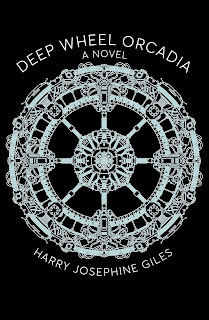
Deep Wheel Orcadia by Harry Josephine Giles (previously reviewed here)


Deep Wheel Orcadia follows Astrid as she returns to her home station in the fringes of deep space, reacquainting herself with family and old faces and a life she left behind for her studies, and Darling, who finds herself there while running from a life and identity she never wanted, interspersed with snippets of the viewpoints of others who live on the station. It's a haunting and emotionally vivid story told in a collection of poems in the Orkney dialect of Scots, weaving in themes of homecoming and estrangement, love and loss. A skillful synthesis of narrative, poetry and translation, it was one of the most beautiful things I read in 2022, and really quite unlike anything else. You may need to sit with it to digest what you're reading and take it slow to really linger on the poems, but if you do, it's well worth the effort. The audiobook is also beautifully read by the author, and I cannot recommend strongly enough listening to it while reading the physical text at the same time.

If you're interested in more books by trans authors, I'd recommend looking up the hashtag #transrightsreadathon on any social media, as there are loads of creators out there talking about some amazing books and raising money for great causes.

References: 
C. E. McGill, Our Hideous Progeny, [Penguin, 2023]
Ryka Aoki, Light From Uncommon Stars, [Tor, 2021]
Yoon Ha Lee, Ninefox Gambit, [Rebellion, 2016]
Yoon Ha Lee, Raven Stratagem, [Rebellion, 2017]
Yoon Ha Lee, Revenant Gun, [Rebellion, 2018]
Max Gladstone, Full Fathom Five, [Tor, 2014]
Becky Chambers, SL Huang, Rivers Solomon, Ashley Poston, Yoon Ha Lee, Nicole Givens Kurtz, Sangu Mandanna, and Maura Milan, The Vela, [Realm, 2020]
Nghi Vo, The Empress of Salt and Fortune, [Tor.com, 2020]
Nghi Vo, When the Tiger Came Down the Mountain, [Tor.com, 2020]
Nghi Vo, Into the Riverlands, [Tor.com, 2022]
Robin Hobb, Assassin's Apprentice, [Voyager Books, 1995]
Robin Hobb, Royal Assassin, [Voyager Books, 1996]
Robin Hobb, Assassin's Quest, [Voyager Books, 1997]
Calvin Kasulke, Several People are Typing, [Hodder & Stoughton General Division, 2022]
Charlie Jane Anders, The City in the Middle of the Night, [Tor, 2019]
Rem Wigmore, Wolfpack, [Queen of Swords Press, 2023]
Sascha Stronach, The Dawnhounds, [Little Hook Press, 2019]
Aiden Thomas, The Sunbearer Trials, [Pan Macmillan, 2022]
Harry Josephine Giles, Deep Wheel Orcadia, [Picador, 2021]

POSTED BY: Roseanna Pendlebury, the humble servant of a very loud cat. @chloroform_tea