Showing posts with label Mur Lafferty. Show all posts

Monday, April 25, 2022

Mind Meld: Best Game or Interactive Fiction

Welcome back to the Mind Meld, where I ask a number of people in genre, fans, writers, podcasters, agents a single genre related question and collate the answers for you. 

Today’s Mind Meld question is the following...


The 2021 Hugos featured a special category for "Best Video Game", won by Supergiant Games' Hades. But despite proposals to make a permanent category for games and interactive work, there is no such category this year at the 2022 Hugos, to be held at Chicon. But what if there were? If there was a "Best Game or Interactive Experience" Hugo for 2022, for games released or substantially updated and modified in 2021, what would YOU want to see on the ballot, and why?

Mur Lafferty is an award winning podcaster and writer and “…one of the worst-kept secrets in science fiction and fantasy publishing.”

2021 didn't fully exist for me. I couldn't even think of what came out last year, and had to look them up. 
I played a lot of games in quarantine, of course, but most of them were continuations/replays from 2020 or earlier (Hades, Blaseball, Animal Crossing, Horizon Zero Dawn etc). However, I did watch a lot of gameplay on the Twitch platform, which is free, requires no skill, and you can distance yourself from emotional wear and tear, and got to see some incredible new games. 

If there was a 2021 Hugo for Best Game, Life is Strange: True Colors would be a contender for the top. Life is Strange games famously feature real world problems (in this case, mine explosions and corporate cover-up and the heavy grief families suffer) with the main character having one special trait (time manipulation, telekinesis) to navigate the conflicts. In True Colors the main character Alex can see and absorb the emotions of others, and uses her power to figure out what happened in the mine explosion that killed her brother. 

The game is gorgeous and the decisions are heart-wrenching. It was something I didn't want to play, but some folks enjoy depressing-as-hell stories and games (see last year's nominee, the laugh-riot The Last of Us 2) and watching the game narrative was enough to impress me.
 
The new Pokemon Snap was also fun to watch people play. It had much less emotional carnage. Seriously, who wants emotional carnage in these times? 

Sharang Biswas is a writer, artist, and game-designer based in New York. He has won numerous awards for his games, while his writing has appeared in publications including Eurogamer, Dicebreaker, Lightspeed, and Strange Horizons. He currently teaches game design at Fordham University and the NYU Game Center.
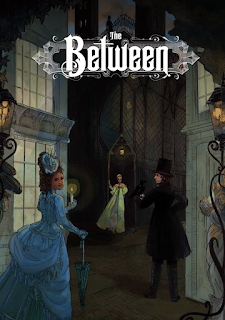
I think Jason Cordova's The Between is one of the most interesting games of 2021. Cordova builds off of the system he designed for 2020’s Brindlewood Bay: in both games, clues to a mystery are randomly selected by the game master, which players subsequently use to create rather than discover the solution to a mystery.

This time, the game is set in a supernatural, Victorian England, à la The League of Extraordinary Gentleman, and Cordova has introduced a heap of new mechanics and playable character types to immerse players in a seedy, macabre London filled with echoes of gothic horror.


Ira Alexandre is the primary campaigner behind the Games Hugo, a contributing editor at two-time Best Fanzine Hugo Award winning blog Lady Business, and a Co-Chair for WisCon for the second time. They live on Twitter at @itsjustira and, in the real world, with four cats and a corgi.
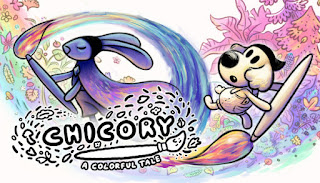
I have a confession to make: Even as I've been campaigning for a Games Hugo, 2021 was not a good year for me actually playing games. I know, it's weird — and bad — but one of the games that I did play actually gets at this very dilemma. Chicory: A Colorful Tale is a game about creativity, responsibility, depression, mental illness, burnout, and dismantling systems that no longer serve the communities they're meant to structure and support. But it's also a game about people who are so overwhelmed by a responsibility they've taken on that they don't get to enjoy what that work centers around. In Chicory, you play a (never gendered) dog who is the janitor for the titular Chicory. Chicory is current Wielder of the Brush, a powerful artifact that lets you bring colour to the otherwise colourless world. But Chicory buckles under the constant pressure to create art to serve those around her. She shuts herself away, at which point the player character, untrained and unchosen but eager, picks up the Brush — and discovers the darkness that has overtaken Chicory. The game looks like a digital colouring book, because it is one, and you can colour the world however you want, either for your own pleasure or to solve puzzles and deal with obstacles. The style, delivery, writing, and gameplay are all very gentle even as they grapple with truly dark and complex ideas. The game is not easy, with tricky puzzles and challenging boss battles. In the end, I found a lot of meaning in playing this game with my partners (it has a wonderful co-op mode) even as I worked on the Games Hugo campaign, getting a chance to actually enjoy the very sort of work I was championing. Now, working on the campaign in 2022, I'm learning to lean on my fellow campaigners and be gentle with myself to avoid burnout — and leave room for the very source of joy that I want our community to reward.

Anyone who's allowed me to talk about games for more than a minute will have heard that I love Outer Wilds, and the 2021 DLC for the game, Echoes of the Eye is... perfect. We're very lucky to have such a stellar example of what a Hugo-worthy "substantial modification" of a game could look like. Outer Wilds was a game so complete within itself that I could not imagine how a DLC could possibly work without undermining the structure and themes of the base game. And yet — Echoes of the Eye not only manages to preserve everything extraordinary and meaningful about the original game, but it actually builds on it and is even more clever and wonder-inducing. The environments are stunning, the secrets surprising and fascinating, and the atmosphere spot-on. Much as with the original game, saying basically anything about it takes away some of the joy of discovery, but I can say that the developers seemed to ask themselves, "What mechanic have we not yet thoroughly explored?" and then built not just an entire new gameplay paradigm, but an entirely different genre onto the base game. Incredible.

Honourable mentions to titles I haven't played: Speaking of time loops, Deathloop looks fantastic! I'm replaying Psychonauts because (a) of all it's awesome and (b) of all Psychonauts 2 sounds GREAT. And I absolutely cannot wait to try Inscryption, because games about games, games that interrogate the nature of gameplay, of play, of narrative, like The Stanley Parable and Bioshock, are pure catnip to me. I am so excited to check out these great 2021 titles and the others recommended here!

Joe DelFranco is a Fiction writer and lover of most things video games. On most days you can find him writing at his favorite spot in the little state of Rhode Island.
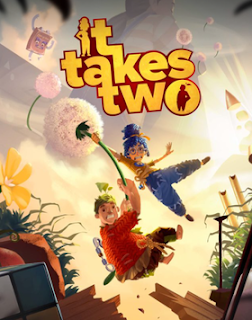
 
Three games come to mind when I think of the best games of 2021: Returnal, Ratchet and Clank: Rift Apart, and It Takes Two. If I were to look at 2021 as a whole, I would say that I didn’t see or experience anything that I would consider transcendental, but some great titles were released. 
 
Returnal did a wonderful job with fast-paced, frenetic, high stakes gameplay in a procedurally generated sci-fi atmosphere that exuded beauty and danger in equal measure. It fell short of being phenomenal because of its lack of boss difficulty, and vague/unsatisfying story conclusion, but it was still a great game overall and something I'd like to see a sequel to in the future. A great foray for rogue-lites in the AAA gaming space.
 
Ratchet and Clank: Rift Apart was a great continuation of a two-decade-old series. Impressive visuals in cartoony sci-fi worlds have never looked better, and the game delivers fun gameplay with exciting new weapons and weapon upgrades. While the game never tries to reinvent the wheel, they do well with the formula they've become comfortable with. Rift Apart delivers a good story with fun characters and is more than worth checking out. It's also a great example of the power of the new generation of console hardware.
 
It Takes Two is a wonderful co-op title that spans all different kinds of genres during its 12-hour runtime, not only story genres but gameplay genres as well. By constantly changing things around, It Takes Two keeps things fresh for players. The game is a mandatory cooperative experience with a heavy emphasis on couch co-op. In a world so divided, it was nice to have a game that did its best to bring people together. Some bugs and weird story beats/characters, and over-simplicity kept it from being perfect, but it was a ton of fun with a partner and highly recommended to play with a partner or close friend.
 
There are some other games I missed out on like Deathloop and Psychonauts 2, but I intend to get to some of them when I have time, Deathloop in particular. It was a great year for games, even if there were no earthshattering releases. Looking forward, 2022 will be a significant year for video games with the releases of Horizon: Forbidden West, Elden Ring, God of War Ragnarok, Starfield, and The Legend of Zelda: Breath of the Wild 2.

Gregory A. Wilson is an author of speculative fiction and TTRPG adventures and supplements, a college professor of literature and creative writing, a lead singer and trumpet player in a progressive rock band, the lead writer of the video game Chosen Heart (currently in development), and a long time game master of TTRPGS of every type and description. You can find him at his own website, www.gregoryawilson.com, on his Twitch channel, www.twitch.tv/arvaneleron, on his actual play podcast Speculate!, www.speculatesf.com, and on Twitter at https://twitter.com/gregoryawilson, as he gears up to launch his new Grayshade IP (with novels, a TTRPG, and an audio book) in June.  
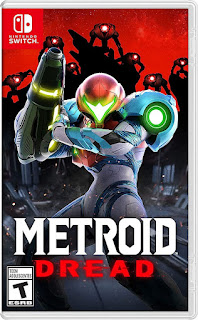
Here's the thing about the current video game landscape: as opposed to the 1980s and 1990s, when games came out less frequently and were more universally played, in 2022 there are so many thousands of games produced every year, from one person indie studios to AAA studios with hundreds of employees and budgets to match, that it feels like an awful lot of hubris to think I can come up with one best game for the year. But I do play a fair number of games on both GOG.com's and my own Twitch channel, and I've interviewed a number of developers and writers for these games, and of all the work I played, saw, or read about in 2021, there's one game I'd want front and center in a Best Video Game Hugo for 2022: Metroid Dread.
 
The Metroid series has always had a special place in my heart, with its blend of exploration, wonder, revealed lore, and challenging play. (It's also got Samus, one of the most iconic protagonists in video game history, which doesn't hurt.) The brilliant thing about Metroid Dread is that it understands this history without being weighed down by it. The typical play conditions of Metroid games are all here: no weapons, and thus a very limited area of travel, followed by the gradual opening of more areas as more weapons and equipment are discovered. As usual, the satisfaction of seeing previously inaccessible areas become available to explore is unmatched by almost any other game, and the feeling of growing power--balanced by the growing threat of increasingly dangerous bosses and environments--is as enjoyable as always.
 
But Dread goes further, both by introducing the (almost) unkillable EMMIs, which can only be defeated by getting to the weapons which can break their defenses, and by giving further backstory information about the mysterious Chozo, the source of Samus's weaponry and training. This is a completely new game, not a remake in the style of the brilliant Final Fantasy VII Remake, which redefines how such projects should be done. But it understands its own history, and gives those who spent much of their childhood wondering about that history a reason to again become fascinated in its own lore. You don't need to have played previous Metroid games to enjoy Dread, of course…but if you have played others, this Metroid game will hit even more strongly.
 
Dread isn't completely perfect; there are a couple of difficulty spikes which seem to come out of nowhere, and the early experiences with the EMMIs can be frustrating. But it's extremely, extremely good, and reflects an understanding of both the past and present of Metroid games and fans. If this is any indication of the care with which Nintendo and its affiliated studios are managing the franchise, the series is in good hands, and the upcoming Metroid Prime 4 will be a true tour de force. In the meantime, Metroid Dread is an incredible game, and well worthy of a Hugo award.
 
Dr. Shaun Duke is an Assistant Professor of Digital Rhetoric and Writing at Bemidji State University. He received his M.A. and Ph.D in English from the University of Florida and a B.A. in Modern Literature from University of California, Santa Cruz. He studies science fiction, postcolonialism, Caribbean literature, spatial theory, fan cultures, and social media.
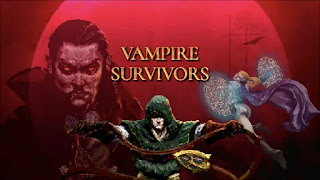
 
It figures you asked the guy who has been trying to play his entire Steam catalogue in alphabetical order, which has the effect of ensuring that I almost never play anything released after Biden became President... But here goes in no particular order:
 
Vampire Survivors (poncle): Released in March 2021, this action roguelite game has everything you could want in something designed to take away your entire evening: a fast-paced game with fairly simple mechanics but an easy-to-understand-but-kinda-complex strategy element. It's addicting and so much fun!
 
Riders Republic (Ubisoft): I am a sucker for any "racing, stunt, whatever you wanna do" game which gives me something other than a car or a motorcycle. Riders Republic is basically just Steep but with mountain bikes (same studio and all) and a lot more style. And it's a lot of fun. You can get competitive if you want, or you can just be a dork doing bonkers tricks for funsies. It's a good way to spend an afternoon! 
 
Sable (Shedworks): What else am I a sucker for? STYLE, baby! And Sable is stylish as hell and absolutely beautiful to look at. In a lot of ways, Sable reminds me of AER: Memories of Old (Daedalic Entertainment) with its lowkey quests, emphasis on exploration and discovery in an open world, and a general chill (and stylish), non-linear play format. It well worth checking out.
 
And here are some games that probably would get nominated by people other than me: Metroid Dread, Monster Hunter Rise, It Takes Two, Hot Wheels Unleashed, Shin Megami Tensei V, Back 4 Blood, and Pokemon Brilliant Diamond and Shining Pearl.

Do with this knowledge what you will...

Michael R. Underwood is the author of over a dozen books across several series, from dimension-hopping story heists in Genrenauts to found family space opera Annihilation Aria. When not writing, Mike streams games at Twitch.tv/TurboTango and podcasts with the actual play show Speculate! and occasional appearances on The Skiffy & Fanty Show.
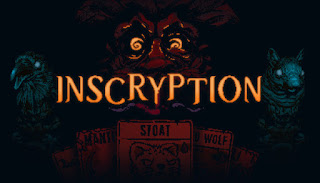
2021 gave me one game that stood head-and-shoulders above the others. Combining Roguelikes and Deckbuilders (a pairing that I've loved since 2017's Slay the Spire), Inscryption by Daniel Mullins games opens with incredible aesthetics - moody music, an evocative art style, and clear base mechanics. The game evolves as the story unfolds, revealing Inscryption to be much more than expected several times over. I had the great pleasure of playing the game entirely on-stream, sharing the twists and turns with friends, colleagues, and viewers.
 
Another surprising favorite was Eidos-Montreal's Marvel's Guardians of the Galaxy, which delivered solid combat and beautiful art stylings alongside very effective dialogue and character work. This version of the Guardians clearly draws from the James Gunn film versions without being fully constrained by the MCU versions. I'm very fond of single-player games with solid storytelling that don't overstay their welcome or pad out the game with endless busywork or uninspired side-quests, and thankfully, Guardians is as tight and propelling as a classic rock tune.

Adri Joy (she/her) is co-editor of Nerds of a Feather, Flock Together, a reviewer for Strange Horizons, and a dog owner. She lives in East London.
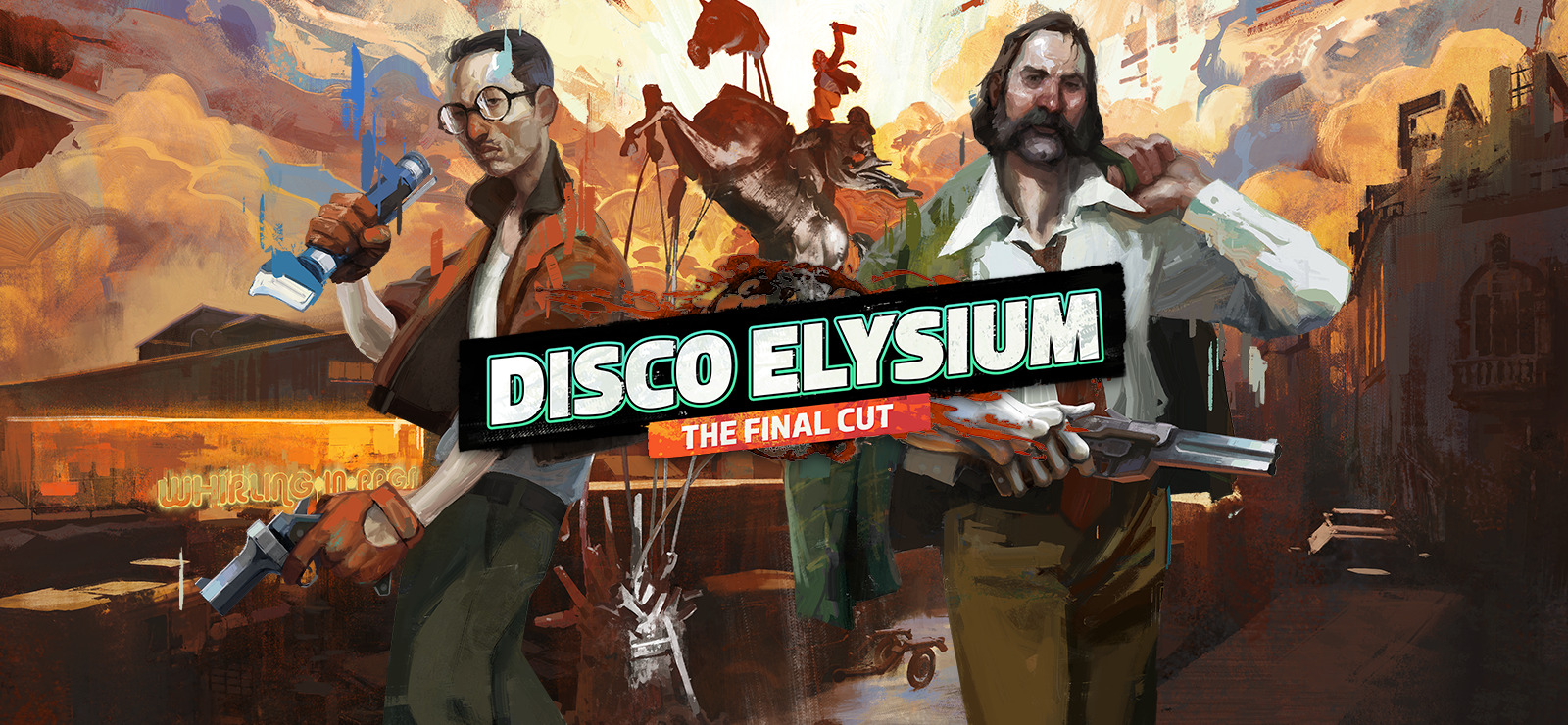
I've always been that person who fills half my Best Dramatic Presentation: Long ballot with video games (no I will not be getting into theoretical eligibility debates at this time), so last year's whole ballot of video games was a super exciting experience! That said, last year was more of a year for past favourites (i.e. Fire Emblem Three Houses) and catching up on the ballot with my shiny new Playstation than mainlining new game releases. Luckily, the 2021 game I sunk the most time into is one that would be perfect for a theoretical Hugo award ballot: ZA/UM's Disco Elysium: The Final Cut.

In Disco Elysium (which originally came out in 2019 but easily passes the substantial modification requirement with its 2021 content, which added full voice acting and several plot-relevant new quests), the player explores a tiny corner of a strange, epic world through the eyes of an amnesiac, addict detective on the brink of total mental collapse. Unfortunately for you, there's no time to wallow in the misery of your broken life: there's a dead body at the back of the hotel you're staying in, a simmering conflict between the local dockworkers' union and the international owners which is threatening to turn into a bloodbath, and your new partner Kim Kitsuragi keeps patiently but persistently expecting you to get your shit together and solve the case with him.

Disco Elysium does a great job giving the player just enough choice for each run to feel different - you make early choices about your detective's skill distribution and get to level it up accordingly, making some things trivially easy and others impossibly difficult depending on what kind of skillset you have - while telling a compelling, if sometimes deliberately anticlimactic, story about love, loss, and what humans cling to in the face of colonial destruction and a slow apocalypse. It balances humour with passionate political statements and some utterly haunting existential one-liners, all delivered through The Final Cut's excellent voice acting that brings all the weird denizens of Martinaise to life. That you get to do it alongside one of the best sidekicks in gaming history is the icing on the cake. Seriously, Kim is the best, and the alternate Hugo for Best Video Game or Interactive Experience should absolutely be his. No furhter questions.

---
POSTED BY: Paul Weimer. Ubiquitous in Shadow, but I’m just this guy, you know? @princejvstin.

Wednesday, November 25, 2020

6 Books with Mur Lafferty and S.B. Divya


Podcasters and Writers Mur Lafferty and S B Divya, in addition to their own CVs of novels and novellas are the co-editors of Escape Pod: The Science Fiction Anthology, in celebration of the fifteenth anniversary of the Hugo-nominated podcast, Escape Pod. 

Together, they tell us about their six books.

1. What book are you currently reading?

SBD: I just finished Consider Phlebas, by Iain M. Banks, and I’m currently beta reading a draft novel from another writer. Of my recent reads, my favorite is The Space Between Worlds, by Micaiah Johnson.


ML: I feel guilty not saying science fiction - but I’m reading some isolation murder mysteries. Just finished An Unwanted Guest by Shari Lapena and then started One by One by Ruth Ware. Then I’ll be moving to Even if We Break by Marieke Nijkamp. Recent genre books were Harrow the Ninth by Tamsyn Muir and Savage Legion by Matt Wallace.


2. What upcoming book you are really excited about? 

SBD: Next up in my TBR are The City Born Great, by N.K. Jemisin and Chosen Spirits by Samit Basu. I’m also looking forward to Architects of Memory by Karen Osborne.


ML: Excited to read the Nijkamp book mentioned above, and then I’m looking forward to reading Beneath the Rising by Premee Mohamed and catch up on my T. Kingfisher books (Paladin’s Grace and Wizard’s Guide to Defensive Baking).


3. Is there a book you're currently itching to re-read?

SBD: I have so many great new books to read that I can’t keep up with! But I would love to have time for a re-read of two of my favorite books from my teenage years: The Snow Queen, by Joan D. Vinge, and Dune, by Frank Herbert.


ML: I’d love to re-read Gideon the Ninth by Tamsyn Muir and I am often listening to an Agatha Christie book for dissection and inspiration. 


4. How about a book you've changed your mind about over time--either positively or negatively?

SBD: I used to love Asimov as a kid, but I’ve found that I don’t care for his style anymore. Some personal behaviors of his have also put me off of recommending his books to others.


ML: I remember loving the puns and adventure of the Xanth books as well as the concept behind the Incarnations of Immortality by Piers Anthony, even while feeling that discomfort when reading about the depictions of women. I can’t even imagine recommending any of those to my daughter right now. 


5. What's one book, which you read as a child or young adult, that has had a lasting influence on your writing?

Divya: if I have to choose just one, I’d probably say Cyteen, by C.J. Cherryh. I greatly admire Cherryh’s prose as well as her ability to blend character-driven fiction with science.

Mur: The Hitchhiker’s Guide to the Galaxy. I think it was Neil Gaiman who said that there wasn’t a word for what Douglas Adams did, and novelist was the closest thing. He was a rare, absurd voice and possibly the person who I regret never meeting the most in my life. He showed me how space and absurdity could make for some amazing storytelling. 


6. And speaking of that, what's *your* latest book, and why is it awesome? 

SBD: my latest is also my first novel! It’s called “Machinehood,” and it explores the meaning of intelligence as it relates to the conflict between human and machine labor. The elevator pitch is, “Homeland meets Zero Dark Thirty.” It’s also full of cool near-future tech, including tabletop biochemistry, microdrone swarms, self-organizing materials, and private rocket clubs. It’ll be out March 2, 2021.

ML: My book has no title yet! Waiting on marketing for that. I refer to it as “Murder She Wrote meets Babylon 5.” I hang a lantern on the fact that if there was a woman around whom murders happen and she had to solve them, no one would ever want to be around her. She escapes humanity to an all-alien space station, but eventually humans, and more murder, follow her.  

Joint Answer: we are, of course, very excited about the Escape Pod anthology, which we co-edited. It’s full of amazing authors whose stories have appeared at Escape Pod or who are otherwise connected with the podcast. It’ll be our first print anthology, and we hope our fans will enjoy having a book that represents 15 years of the fun science fiction that we’re known for. It’ll be out on October 20, 2020, in the U.K. and November 17, 2020, in the U.S.A.


Thank you Both!

Tuesday, June 23, 2020

Interview: Escape Pod


Congratulations to Escape Pod co-editors Mur Lafferty and S.B. Divya for their Hugo nomination for Best Semiprozine!

Launched in 2005, Escape Pod is the original genre podcast. Escape Pod has  been nominated for the Hugo and the Parsec award, and the podcast is part of the Escape Artists family (which includes Podcastle and Psuedopod, among other), which means every piece of fiction they publish is also produced as an audio podcast. There are now so many episodes of Escape Pod, that the staff put together a guide for new listeners!

Authors whose work has appeared on Escape Pod include E. Catherine Tobler, Keffy Kehrli, Amit Gupta, Cory Doctorow, Izzy Wasserstein, Premee Mohammed, Ken Liu, Eugie Foster, and N.K. Jemisin, just to name a few.  Guest narrators also appear on Escape Pod, including Ann Leckie, Alethea Kontis, Kate Baker, Peter Behravesh, Trendane Sparks, Tina Connolly, and many more.

Something I really like about how the Escape Pod episode list is set up, is that each short story is tagged by genre. Want to see all the robot stories, or all the mysteries, or all the humor, or all the humorous robot mysteries? Click the tag, and you're all set!


Over the last fifteen years, Escape Pod has hosted flash fiction contests,  published the Mothership Zeta quarterly e-zine, and hosted the Artemis Rising month-long celebration of genre fiction written by women.   To celebrate their fifteenth year, Escape Pod is publishing an anthology of works by authors whose short fiction has appears in the podcast, Escape Pod: The Science Fiction Anthology will be available later this year.


Co-Editors S.B. Divya and Mur Lafferty were kind enough to chat with me about how they got involved with Escape Pod,  what they enjoy most about being involved with producing audio fiction, the 'zine's 15th anniversary anthology, and more!

S.B. Divya's short fiction collection Contingency Plans For the Apocalypse and Other Situations, is out now from Hachette India, and her debut novel Machinehood will be out from Saga Press next year.  Her short fiction has appeared in Uncanny, Tor.com, Apex, Lightspeed,and Daily Science Fiction, among other publications. Her novella Runtime was a Nebula finalist.  You can learn more about Divya at her website, eff-words.com.

Mur Lafferty has been involved with podcasting for longer than she'd like to admit. She was one of the founding editors of Pseudopod, an early staff member of Escape Pod, and the founder/editor of Mothership Zeta, Escape Artist's quarterly e-zine. Her podcast Ditch Diggers won the Hugo for best Fancast, and she has won the Astounding Award for best new writer. Her novels include Solo: A Star Wars Story,  Six Wakes, and The Shambling Guide to New York City. Learn more about Mur and her work at her website, murverse.com.

Let's get to the interview!

NOAF: What is your role at Escape Pod? How did you come to be involved with Escape Pod?

Mur Lafferty: I've been involved with EP since the beginning, helping Serah Eley out with promotion, narration, and eventually taking over as Editor a few years ago. (10? Sheesh. Time flies.) I left to reduce my number of projects so I could go to grad school. A few years later I started another project with Escape Artists that didn’t really work out, but when we shuttered that, Norm Sherman was leaving Escape Pod and Divya was moving up from Asst. Editor to Editor. She wanted a partner, so I was honored to return to the show again.

S.B. Divya: I joined Escape Pod in 2015 as an associate editor (AKA "slush reader") at the invitation of Rachel K. Jones. We were both members of the Codex Writers Group at the time, and had come to love each other's stories. About a year later, Nathan Lee had to step back from being Assistant Editor, and both he and Norm Sherman (editor at the time) thought I'd be a good fit for the position so I gave it a shot. I enjoyed learning more about the editorial process, and eventually, when Norm needed to move on, I became one of the editors. Having to juggle a day job and parenting, I really wanted a partner for this role and was overjoyed when Mur agreed to be my co-editor.

NOAF: What’s been your favorite thing about being involved with Escape Pod?

ML: I love looking for stories while thinking about how they would be performed in audio, not just in text. It gives us a unique perspective on looking for stories. And finding new authors is always a thrill.

S.B.D.: Like Mur, I love discovering new authors, and I enjoy thinking about the right narrator for each story and trying to find that best match. I'm also doing my best to be a gatekeeper for more voices in science fiction that haven't been heard in the past. I think it's important to have diversity among editors as well as authors, and sometimes that means seeking out authors who might not think of Escape Pod as a place to submit their fiction. Having the ability to solicit and share those stories with our audience brings me a sense of satisfaction.

NOAF: Every piece of fiction you publish is also a hosted, narrated podcast. In what ways does having an audio narration enhance experiencing the story? In what ways does always having a hosted audio narration complicate your deadline schedule?

ML: We always have to think of how the show will sound, which makes it really hard to turn down stories that are otherwise amazing but wouldn't work with audio, As for the workload, we are lucky to have a dedicated team of narrators, producers, and hosts. We try to work several weeks ahead of time to make sure we can iron out any problems before we post the episode.

NOAF: Escape Pod has been publishing short fiction for fifteen years. How has Escape Pod evolved over the years? What directions do you see Escape Pod going in the future?

ML: Since starting in 2005, we have expanded our team, become a SFWA recognized pro-paying market, changed editors a few times, and began buying electronic print rights so we can post the stories in full on our site to increase accessibility. We have become part of a larger group of podcast magazines at Escape Artists as well (including Pseudopod, Cast of Wonders, and Podcastle.) In the early days we published a lot of horror and fantasy stories, especially around awards season, but now that we have more shows dedicated to their own genres, Escape Pod focuses entirely on science fiction. In the future? It's hard to determine that in today's climate, but internally we are moving toward paying everyone on our staff (slush readers are next). Externally, this summer we are taking a page from pre-streaming television and featuring "re-runs" all summer, showcasing some favorite episodes of the past with new, more thorough hosting endcaps by one of our hosts (and co-publisher), Alasdair Stuart.


NOAF: To celebrate your 15th anniversary, you are publishing Escape Pod: The Science Fiction Anthology, which will be available in October of this year. Fifteen years of fiction, how in the world were you able to decide which stories to include in the anthology?


ML: We looked at authors who have been part of the show in the past fifteen years, either choosing a reprint we've published or asking for something new. We tried to choose a representative sampling with a focus on those who've continued to grow their science fiction careers. The final list was a product of our choices, the publisher's preferences, who had time for new stories, and who had the rights for reprints.

NOAF: What will winning the Hugo for best Semiprozine mean to you?

ML: It's taken over a decade to have podcasting respected - every few years a mainstream outlet expresses amazement that one can serialize audio or release fiction through this new platform called podcasting. Our two Hugo nominations have helped greatly to bringing science fiction's eye to podcasting, and a win would further cement our medium as a publishing model that's not going anywhere.

NOAF: Thanks so much! 

POSTED BY: Andrea Johnson lives in Michigan with her husband and too many books. She can be found on twitter, @redhead5318 , where she posts about books, food, and assorted nerdery.

Wednesday, May 30, 2018

Reading the Hugos: Novel

Welcome to the first article in our Reading the Hugos series, 2018 Edition! Hugo Awards season is one of my favorite times of the literary year, though it does ultimately run almost as long as the major league baseball season - neither of which is a complaint.

Today we are going to take a look at the six finalists for Best Novel. Only one of the novels, The Stone Sky, was on my nominating ballot. If you've at all followed the Hugo Awards over the last two years, you'll know the first two novels of N.K. Jemisin's Broken Earth trilogy won the award for Best Novel (The Fifth Season and The Obelisk Gate). Both books were spectacular and the awards were well earned. Two in a row put Jemisin in rarified company, but a third Hugo in a row for Jemisin would cement her legacy as the most important fantasist working today. I may be spoiling this article, but she is. The Broken Earth as a whole is that good and The Stone Sky as an individual novel is that good.

Let's take a look at the finalists, shall we?


The Collapsing Empire, by John Scalzi (Tor)
New York 2140, by Kim Stanley Robinson (Orbit)
Provenance, by Ann Leckie (Orbit)
Raven Stratagem, by Yoon Ha Lee (Solaris)
Six Wakes, by Mur Lafferty (Orbit)
The Stone Sky, by N.K. Jemisin (Orbit)


Provenance: This is a novel which took a while to settle out from under the weight of unfair expectations that I placed on it. Once it did, I was able to engage more fully with Leckie's story of truth, lies, and cultural identity. Provenance is a strong novel in its own right, and in the end, I appreciated Leckie's light touch in how she connected it to the larger Ancillary universe.

It's just that when we look back on Leckie's career in twenty years, I suspect Provenance will be viewed as minor Leckie. It's good, please don't take this the wrong way, but the Ancillary trilogy was a major accomplishment and Provenance is "just" a very good book. I appreciated how Provenance pushed me to think about historical documents and relics, how their perception of importance could override the truth they should represent. There's great stuff to chew on here. (my review)


The Collapsing Empire: From my nanoreview: "As often happens when reading a new John Scalzi novel, I didn't want to put this down. Filled with wit, warmth, humor, fantastic characters, and Scalzi's trademark snappy dialogue, The Collapsing Empire is a treat and a delight to read."

I read The Collapsing Empire just before flying out for a week's vacation that I didn't want to take a hardcover book on. I only had a couple of chapters remaining, so I asked my wife to drive to the airport so I could finish the book before we left. I didn't want to miss a thing and I absolutely didn't want to wait a week to see how Scalzi wrapped it up. Unsurprisingly for the first book in a series, The Collapsing Empire ended in a bit of a cliff hanger. It felt a touch more incomplete than the average series opener, but Scalzi's fiction is just a pure delight to read and The Collapsing Empire is no different.


New York 2140:  It's interesting to contrast New York 2140 with The Collapsing Empire. They are completely different novels without much in common at all. The Collapsing Empire is a fast paced far future science fiction space opera. New York 2140 is set in our immediate future with a world dealing with predicted and disregarded sea rise (until it was too late and every coastal city was underwater.) It's a novel tightly focused on a specific place and the realistic and perhaps prescient response to climate change and rising seas. Scalzi's novel is driving plot. Robinson's is glorious death by all of the details, where even the info dumping becomes a character (and one of the most effective and borderline DeLillo-esque). The point here isn't that one novel or technique is inherently superior to the other, but rather that the Hugo Awards pushes the reader to think about novels in relation to each other. That's where those interesting points of comparison and contrast pop up

Where Robinson also differs from other climate disaster novels (see Stephen Baxter's excellent 2008 novel, Flood, for another point of contrast) is that he is less interested in the big flashy response and solution and dials in on how people would survive and thrive in such an environment. We may often picture cities abandoned, but more than likely Robinson's vision how the new intertidal zones of a city may be reclaimed and resettled is how things would actually play out.

There is perhaps half of a plot in New York 2140. The novel is more of a slice of life, writ large and spread across a handful of disparate viewpoint characters. It's effective, but takes more of a commitment and patience to wait for Robinson to begin to pull them together. When those threads do come together, they do coalesce into something bigger and more impressive than the first chapters might have suggested. Not having read most of his work, I can't say if New York 2140 is Major KSR or Minor KSR, but it is ultimately a novel with heft and importance.


Six Wakes: A locked room murder mystery featuring clones, in space. Six Wakes offers a fresh take on all of that. The crew of a ship is murdered, all six of their clones wake up missing memories. One of them is the murderer. It's one hell of a concept for a novel and Lafferty absolutely crushes it. Shana loved Six Wakes and I share her admiration for the novel.


Raven Strategem: I've read that Raven Strategem is more accessible to readers than Ninefox Gambit and that Yoon Ha Lee doesn't engage in the same sort of info dumping that he engaged in with the his first novel. I'm not so sure, though I don't have a passage to quote to elaborate. I think that it is more that we, the readers, are more fully accustomed to the work that Yoon is doing here.

Raven Strategem is as straight up of an interstellar war novel as we are likely to get from Yoon Ha Lee, which is to say that there are plots within plots and mathematical digression and a tightly constructed narrative that thrills at all moments. Raven Strategem is smart science fiction, examining warfare itself and questioning the assumptions behind systems of government. It's damn good, people.


The Stone Sky:The Stone Sky is the culmination of the best and the greatest fantasy trilogy written today and I still think I might have been understating the case when I reviewed the novel last year. Forget, if you can, the two previous Hugo Award wins for The Fifth Season and The Obelisk Gate. If you can do that, you still have to deal with the weight of the raw excellence of those two novels. Jemisin has set a standard and a level of expectation that is nearly impossible to meet, let alone surpass.

And yet.

Jemisin has set an impossible standard for herself, but her control in telling one unified story shows off the skill of an author at the height of her powers. The Stone Sky more than lives up to the promise and standard of those first two Broken Earth novels. The Stone Sky caps off a stunning epic fantasy trilogy. The Broken Earth is a monumental achievement in fantasy fiction and as good as the first two books were, it is because of the stunning accomplishment and achievement of The Stone Sky as a novel. It truly is in a class alone. Forget for a moment the opportunity to make history here for N. K. Jemisin to win three consecutive Hugo Awards for Best Novel. The Stone Sky flat out deserves to win the Hugo Award on its own merits. (my review)


My Vote:
1. The Stone Sky
2. Raven Strategem
3. Six Wakes
4. New York 2140
5. The Collapsing Empire
6. Provenance


POSTED BY: Joe Sherry - Co-editor of Nerds of a Feather, 2017 & 2018 Hugo Award Finalist for Best Fanzine. Minnesotan. 

Tuesday, January 2, 2018

Top Nine Books Published in 2017

Some people do a top ten list, others do a top eleven (insert your Spinal Tap joke here), yet others may only do five. My list is 9 books long. Why? Partly to be a little bit different and partly because I want the tenth spot on my list to be reserved for that really great book which I simply did not get the chance to read during 2017. That really great book may also be something I have only heard whispers about and I may not discover for several more years. Whatever that tenth great book is, I’m holding a spot for it on my list.

Also, there is no doubt that this list, like every other list out there is built entirely on the combination of the books I've actually read with my own prejudices, taste, preferences, and the choices I made when selecting books to read across the breadth of 2017. That's really what we're saying when we say we've put together a list of the "Best Books of the Year". It's the best we've read, the best we can remember, the best based on what we appreciate in speculative fiction. One of the other best books I've read this year is Alison McGhee's latest novel Never Coming Back, but this is a speculative fiction blog focusing on more nerdy endeavors, so for the sake of theme I'll limit this list to science fiction, fantasy, and everything in between and around the edges. With that said, I adore Alison McGhee's fiction and

This Top Nine List is more or less in order.  The top slot is a complete lock, but ask me tomorrow and some titles may shift around a bit.  Whichever order the list is in, these are the nine novels published in 2017 which I feel were the strongest titles of the year.


1. The Stone Sky, by N.K. Jemisin (Orbit): From my review "The Stone Sky caps off a stunning epic fantasy trilogy, one which began with the threaded narrative of three orogenes and concludes with the story of a woman and daughter finally coming back together. If you think there's going to be a truly happy ending, you haven't been paying attention. That's not the story N. K. Jemisin is telling here. The Stone Sky weaves deep personal drama and trauma with the overarching racial commentary that underpinned the entire trilogy.

The Broken Earth is a monumental achievement in fantasy fiction. The Stone Sky is the culmination of the best fantasy trilogy written today and that might be an understatement." It is not simply the best fantasy or speculative fiction novel of the year, it is the best novel I read in all of 2017.


2. Assassin's Fate, by Robin Hobb (Del Rey): If this is the last time Robin Hobb invites readers into the Realm of the Elderlings, Assassin's Fate is a fitting and wrenching end to the series and of the story of FitzChivalry Farseer. The writing of Robin Hobb and Assassin's Fate is beautiful and painful and aching and rippling with pain, but sprinkled with moments of pure grace. (my nanoreview)


3. The Stars Are Legion, by Kameron Hurley (Saga): As I wrote in my review of The Stars Are Legion, instead of "just focusing on all the cool and nasty stuff Kameron Hurley uses to build her novel, we should also discuss just how kick ass The Stars Are Legion is. Hurley has packed The Stars Are Legion with action, space battles, invasion, the exploration of worlds, betrayal, murder, adventure, and pretty much everything you might want out of a novel. I suppose I can't realistically claim that it i everything you want, but it's definitely everything I want."


4. Into the Drowning Deep, by Mira Grant (Orbit): A terrifyingly good novel which will completely change how readers think about mermaids. Forget Disney, forget the cutesy fairy tales, Mira Grant reinvents (or restores) mermaids to their rightful and frightful place as horrifying terrors of the sea. Into the Drowning Deep is compulsively readable and is perhaps the best novel Grant has written thus far. (my nanoreview)


5. City of Miracles, by Robert Jackson Bennett (Broadway): "Oh, this is so good. With each novel of The Divine Cities, Robert Jackson Bennett raises the bar - to the point that going into City of Miracles I was nervous. Yes, it was well established that Bennett is a fantastic writer, but could he hold that level of excellence for one more novel and truly stick the landing. He does, and then some. He opens the novel with Shara's murder and nothing about what follows is expected. All of it is great. All three of the Divine Cities novels were excellent. City of Miracles is outstanding and a near perfect ending to the series. My only regret is that this closes the book on the series." (my nanoreview)


6. The Power, by Naomi Alderman (Little, Brown): Alderman's novel flips the world's power structure and examines some of the asburdity (and evil) that can be done when one gender has an overwhelming amount of political and social power. Alderman does this by having women develop (or re-develop) the ability to conduct electricity and shock others. It puts the power literally in the hands of women and then pushes that concept out on a global scale. One of the ideas I found fascinating was the framing device of the novel, which looks at this book as historical fiction with the idea of how it is being used as subversive literature in a world where women have always had the power. The Power is intense and, well, powerful. It is excellent and compelling.


7. Amberlough, by Lara Elena Donnelly (Tor): I somehow managed to never review Amberlough, which is a bit of a shame because it was spectacular. Part political thriller, part spy thriller, part Cabaret, part callback to early 1930's Berlin, Amberlough is doing a lot of heavy lifting in a compact package. Donnelly's Amberlough is a smooth, charming, and brutally compelling novel that is near the top of the class of 2017.


8. Gluttony Bay, by Matt Wallace (Tor.com Publising): Come for the madcap gonzo writing, stay for the wrenching emotion. Regular Nerds of a Feather readers with any degree of perception will recognize just how much I love Matt Wallace's Sin du Jour novellas. Gluttony Bay is the penultimate tale and it is the best of the series so far. (my review)


9. Six Wakes, by Mur Lafferty (Orbit) - A locked room murder mystery with clones, in space. It's a hell of a concept that Mur Lafferty more than pulls off. She absolutely nails it. Six Wakes is a novel you just don't want to put down. (Shana's review)


***


As I mentioned in the introduction, for as many books as I read in a year, there is always something amazing that I missed and that I just didn't have time to get to. Or, as plugged in as I try to be, that I just haven't heard of (or heard enough about). As much as I wanted to, I did not read The Stone in the Skull (Elizabeth Bear), Oathbringer (Brandon Sanderson), An Unkindness of Ghosts (Rivers Solomon), and Barbary Station (R.E. Stearns). The list of highly recommend and presumably stellar novels that I just didn't get to read this year is long and distinguished. That's the reason for the tenth spot on the list. 

Also it is worth noting the seven books that just missed the list but were in serious contention: The Murders of Molly Southborne (Tade Thompson), The Wanderers (Meg Howry), The Collapsing Empire (John Scalzi), Phantom Pains (Mishell Baker), Winter Tide (Ruthanna Emrys), The Last Good Man (Linda Nagata), An Unkindness of Magicians (Kat Howard)


POSTED BY: Joe Sherry - Co-editor of Nerds of a Feather, 2017 Hugo Award Finalist for Best Fanzine. Writer / Editor of the mostly defunct Adventures in Reading since 2004. Minnesotan.

Wednesday, February 8, 2017

Microreview [book]: Six Wakes, by Mur Lafferty

The elevator pitch: A clone murder mystery in space.


The heart of Six Wakes is a murder mystery. With that in mind, I don't want to give too much away because part of the fun in a mystery is seeing if you can solve it before someone else gives you the answers.

Here are the basic facts: There is a single ship headed into deep space on a mission to colonize a new planet. Travel time is such that the six-man crew must be cloned throughout the journey to extend their lifetime. Typically when a clone wakes, it is with all of the previous clone's memories. However, all six crew members wake up, at the same time, missing decades from their memories and surrounded by their floating murdered clones. One of them is the murderer.

Do you have goosebumps yet? I am giddy just thinking about what Mur Lafferty accomplishes with this book.

You see, I grew up watching Law & Order, Murder She Wrote, Perry Mason, the A-Team, etc. and Lafferty has managed to seamlessly join genre and mystery elements into this single volume thriller.

Lafferty sprinkles clues for both the crew and the reader. Because the crew is missing decades worth of memories, they know virtually nothing about each other so the reader experiences the same suspicions as the crew as we all learn backstories and new information is discovered. 

I kept thinking I'd figured it out and then BAM! Lafferty would reveal something new, and with new connections made I'd have to rethink my big Scooby-Doo GOTCHA moment.

I stayed up into the wee hours reading because I just had to know. More than just who the murderer was, I needed to know who each of the characters were and how they'd ended up where they did. Lafferty made me care about them and want to follow them. It is a page-turner of the best kind.

You aren't flying through, skimming passages just to get to the end. You are flying through, soaking up every line wanting more. More of the characters and their world. And when the end final does come there is the satisfaction of finally knowing the 'who dunnit' but also a sadness that you're saying good-bye to this crew you've spent all this time getting to know.

Hands down this will probably be one of my favorite books of 2017. It is a suspense-thriller-scifi-mystery adventure. One might ask, "But Shana, how can a single book possibly be all those things and do them well?" And I would firmly answer you, "Listen up, Mur Lafferty knows how to write, so you better sit back and enjoy the ride." (Side note, in person my answer would involve swearing for emphasis but I am keeping this family friendly.)

If you're looking for a fresh take on clones, scifi/mystery blends, or a fantastic stay-up-all-night-reading experience, you want to pick up Six Wakes.


The Math:
Baseline Assessment: 9/10 Bonuses: +1 Deftly combining scifi/mystery/suspense/thriller
Penalties:  -1 No additional books in this world have been announced (Orbit, if you're reading this, I formally request more please.)
Nerd Coefficient: 9/10 "a fantastic stay-up-all-night-reading experience"
  ***

POSTED BY: Shana DuBois--extreme bibliophile and seeker of raindrops.
Reference: Lafferty, Mur. Six Wakes [Orbit, 2017]
Our scoring system explained.

Wednesday, January 4, 2017

New Books Spotlight

Welcome to another edition of the New Books Spotlight, where each month or so we curate a selection of 6 forthcoming books we find notable, interesting, and intriguing. It gives us the opportunity to shine a brief spotlight on some stuff we're itching to get our hands on.

What are you looking forward to? Anything you want to argue with us about? Is there something we should consider spotlighting in the future? Let us know in the comments!


Hurley, Kameron, The Stars are Legion, [Saga Press, February, 2017]

Publisher's Description:

The Stars are Legion is a standalone space opera for fans of Ann Leckie and China Mieville; set within a system of decaying world-ships travelling through deep space, it follows the feud between the matriarchal families of two of the world-ships, whose feud will grow into a war to wrest control of the fading hopes of the legion of worlds.

Why We Want It: Anything from Hurley is an insta-buy for me, and when I read the first chapter on Tor.com, I was hooked.I have been looking forward to this book since they first announced it. Saga Press is on fire with their line-ups.


Datlow, Ellen (editor), Black Feathers: Dark Avian Tales: An Anthology [Pegasus Books, February, 2017]


Publisher's Description:

Birds are usually loved for their beauty and their song. They symbolize freedom, eternal life, the soul.

There’s definitely a dark side to the avian. Birds of prey sometimes kill other birds (the shrike), destroy other birds’ eggs (blue jays), and even have been known to kill small animals (the kea sometimes eats live lambs). And who isn’t disgusted by birds that eat the dead—vultures awaiting their next meal as the life blood flows from the dying. One of our greatest fears is of being eaten by vultures before we’re quite dead.

Is it any wonder that with so many interpretations of the avian, that the contributors herein are eager to be transformed or influenced by them? Included in Black Feathers are those obsessed by birds of one type or another. Do they want to become birds or just take on some of the “power” of birds? The presence or absence of birds portends the future. A grieving widow takes comfort in her majestic winged neighbors, who enable her to cope with a predatory relative. An isolated society of women relies on a bird to tell their fortunes. A silent young girl and her pet bird might be the only hope a detective has of tracking down a serial killer in a tourist town. A chatty parrot makes illegal deals with the dying. A troubled man lives in isolation with only one friend for company—a jackdaw.

In each of these fictions, you will encounter the dark resonance between the human and avian. You see in yourself the savagery of a predator, the shrewd stalking of a hunter, and you are lured by birds that speak human language, that make beautiful music, that cypher numbers, and seem to have a moral center. You wade into this feathered nightmare, and brave the horror of death, trading your safety and sanity for that which we all seek—the promise of flight.


Why We Want It: I adore short fiction. I love the glimpses into other worlds and I welcome the opportunities to find new authors to enjoy. The best anthologies, in my opinion, offers gems from authors we already know and love but also introduces us to new voices. Any anthology from Ellen Datlow will do that and more. When I stumbled across this anthology I was intrigued by the unusual premise for this collection and being drawn to the unusual, I knew it would be on my list.


Lafferty, Mur, Six Wakes [Orbit Books, January, 2017]


Publisher's Description:

On a generation ship millions of miles from Earth, a whole crew is murdered.  When their clones wake up — they know that one of them is the killer.

Why We Want It: I heard Mur's elevator pitch for this book during an episode of Ditch Diggers (one of my favorite podcasts) and knew I had to read it. I grew up watching Columbo, Murder She Wrote, Law & Order, etc. and this book was all those shows plus a genre twist! Hello, a book seemingly written just for little ole me.


Kiernan, Caitlin, Agents of Dreamland [Tor.com Publishing, February, 2017]


Publisher's Description:

A government special agent known only as the Signalman gets off a train on a stunningly hot morning in Winslow, Arizona. Later that day he meets a woman in a diner to exchange information about an event that happened a week earlier for which neither has an explanation, but which haunts the Signalman.

In a ranch house near the shore of the Salton Sea a cult leader gathers up the weak and susceptible--the Children of the Next Level--and offers them something to believe in and a chance for transcendence. The future is coming and they will help usher it in.

A day after the events at the ranch house which disturbed the Signalman so deeply that he and his government sought out help from 'other' sources, Johns Hopkins Applied Physics Laboratory abruptly loses contact with NASA's interplanetary probe New Horizons. Something out beyond the orbit of Pluto has made contact.

And a woman floating outside of time looks to the future and the past for answers to what can save humanity.


Why We Want It: I am a sucker for anything with even a hint of Weird Western and this novella looks to be unlike anything I've read before. I am dying to find out how Kiernan packed so much into such a brief space, but she is masterful at her craft.


Baker, Mishell, Phantom Pains [Saga Press, March, 2017]

Publisher's Description:

In the second book to the “exciting, inventive, and brilliantly plotted” (Seanan McGuire, New York Times bestselling author) Borderline, Millie unwillingly returns to the Arcadia Project when an impossible and deadly situation pulls her back in.

Four months ago, Millie left the Arcadia Project after losing her partner Teo to the lethal magic of an Unseelie fey countess. Now, in a final visit to the scene of the crime, Millie and her former boss Caryl encounter Teo’s tormented ghost. But there’s one problem: according to Caryl, ghosts don’t exist.

Millie has a new life, a stressful job, and no time to get pulled back into the Project, but she agrees to tell her side of the ghost story to the agents from the Project’s National Headquarters. During her visit though, tragedy strikes when one of the agents is gruesomely murdered in a way only Caryl could have achieved. Millie knows Caryl is innocent, but the only way to save her from the Project’s severe, off-the-books justice is to find the mysterious culprits that can only be seen when they want to be seen. Millie must solve the mystery not only to save Caryl, but also to foil an insidious, arcane terrorist plot that would leave two worlds in ruins.


Why We Want It: I read the first installment in this new Urban Fantasy series from Baker and L.O.V.E.D. it. Borderline remains one of my favorite books and I've been waiting over a year for this next installment.


Moore, James A., The Last Sacrifice [Angry Robot, January, 2017]

Publisher's Description:

Since time began the Grakhul, immortal servants of the gods who choose who lives and who dies when it comes time to make sacrifices to their deities, have been seeking to keep the world in balance and the gods appeased. When they take the family of Brogan McTyre to offer as sacrifice, everything changes.

Brogan heads off on a quest to save his family from the Grakhul. The decision this time is costlier than they expected, leading to Brogan and his kin being hunted as criminals and the gods seeking to punish those who’ve defied them.

Why We Want It: I was first drawn in by the stunning cover. The description sealed the deal as it looks to be an epic adventure on quite the grand scale.