Showing posts sorted by relevance for query val lewton. Sort by date Show all posts

Wednesday, July 4, 2012

Microreview [Film]: Cat People (1942)


Val Lewton was in charge of the "horror unit" at RKO Studios in the early 1940s. He produced nearly a dozen genre-defining movies, saving the studio from financial collapse, launching the careers of several directors, and resurrecting (pun intended) the career of Boris Karloff in the process.

The Meat

If you are a fan of psychological horror movies that leave most of the scares where they are the most frightening (in your brain) than I cannot recommend highly enough the movies Val Lewton produced for RKO Studios -- the "Little Engine that (Sometimes) Could" among movie studios. The first of these films was Cat People.

Born in czarist Russia and emigrating to the States as a child, Lewton had been a newspaper reporter and pulp novelist before getting into the picture business. At RKO, he was given meagre budgets, salacious titles, and permission to use sets left over from other films, then mostly left alone. So one day, the studio handed him a Ziploc bag full of nickles and a title -- Cat People! -- and told him to go off and make something that would keep the studio out of the looming bankruptcy brought on by Orson Welles rolling cigars in $100 bills from the RKO coffers, and smoking as many as he could while down in Brazil and laughing maniacally. By rights, the result of this gamble on Lewton should've been utterly asinine (it's called Cat People, for God's sake. Cat. People.), but instead, it is an unsettling, and almost heartbreaking parable about the fear of commitment and sex, drenched in atmosphere and Eastern European folklore.

The film tells the story of Irena, a Serbian woman living in New York, played by the utterly feline Simone Simon, who believes herself descended from a cursed race of outcasts that developed the power to transform into giant cats through witchcraft and idolatry. She falls in love with a guy named Oliver, but is terrified of what she'll do to her new husband if she allows herself to lose control. This aloofness unwittingly drives Oliver into the arms of Alice, a woman he works with, and boy, if Irena thinks its hard to stay on top of lust, it turns out it might be even harder to stay on top of jealousy...so watch out, Alice.

The Math
Objective Quality: 7/10

Bonuses: +1 for overcoming its B-movie budget through the moody and evocative direction of Jacques Tourneur, who later directed the ultimate film noir, Out of the Past; +1 for its pioneering use of jump scares; +1 for introducing psychological horror to the movies; +1 for forming the basis of the Kirk Douglas character, based on Lewton and the Cat People production, in The Bad and the Beautiful.

Penalties: -1 for what is essentially a soap opera plotline; -1 for a relatively show start, given its 73-minute runtime.

Cult Movie Coefficient: 9/10, for an impossible-to-quantify influence on the genre and remaining an effective horror movie even after 70 years

[See explanation of our non-inflated scores here.]

Thursday, July 12, 2012

Microreview [film]: I Walked with a Zombie

My favorite vintage horror movie poster

Val Lewton was in charge of the "horror unit" at RKO Studios in the early 1940s. He produced nearly a dozen genre-defining movies, saving the studio from financial collapse, launching the careers of several directors, and resurrecting (pun intended) the career of Boris Karloff in the process.

The Meat

The second low-budget horror movie Val Lewton produced for RKO, like Cat People directed by the masterful Jacques Tourneur, I Walked with a Zombie is generally regarded as the best of the Lewton horror movies. Probably this is because people like to make out that, in liking it, they display their refined, old-world tastes, since the movie is most famous these days as being a voodoo-infused adaptation of Jane Eyre. As far as who'd-a-thunk-it? movie adaptations go, it's probably less faithful than Forbidden Planet's take on The Tempest, but more faithful than The Man From Laramie is to King Lear. What I Walked with a Zombie owes in debt to Charlotte Bronte, though, is less about any famous literary romance than a pervading atmosphere of Victorian sensibilities that clashes in really engaging ways with the voodoo underpinning of the movie's Caribbean setting.

The movie itself follows Betsy, a nurse hired to care for Jessica Holland, the invalid wife of plantation owner Paul Holland. Betsy relocates to the Caribbean island of San Sebastian for the job, and soon begins questioning Jessica's medical diagnosis (spinal cord injury), fearing that the woman may actually be a "zombie," murdered and brought back to life as the meat puppet of a voodoo priest or priestess. Part of the film's appeal is that it never makes an explicit statement of "rightness" -- neither upholding the self-congratulatory scientific surety of Western medicine (because let's face it, how'd the whole practice of bloodletting work out?) and condemning voodoo as the mindless superstition of savages, nor the reverse, by pulling a "There are more things in heaven and earth, Horatio, Than are dreamt of in your philosophy" moment and subverting medicine in favor of magic. It suggests that things are more complicated than that, which, in reality, they surely are. The result is a lyrical and poetic meditation on the occult that remains evocative, if no longer as shocking as it probably was in 1943.

The Math

Objective Quality: 7/10

Bonuses: +1 for being a spiritual forebear to later voodoo-themed horror movies like the Vincent Price English-colonial-guilt vehicle The Oblong Box and Wes Craven's still-way-creepy The Serpent and the Rainbow; +1 for beating Seth Grahame-Smith to the punch by 70 years.

Penalties: -1 because even at only 70 minutes, the pacing would have benefited from a bit of a jolt. The methodical forward momentum lessens the visceral impact you'd expect from a horror movie (and which Cat People delivers).

Cult Movie Coefficient: 8/10, well worth your time and attention.

[See explanation of our non-inflated scores here.]

Wednesday, August 22, 2012

Microreview [film]: The Body Snatcher


Val Lewton was in charge of the "horror unit" at RKO Studios in the early 1940s. He produced nearly a dozen genre-defining movies, saving the studio from financial collapse, launching the careers of several directors, and resurrecting (pun intended) the career of Boris Karloff in the process.

The Meat

The Body Snatcher is my favorite of all the Val Lewton movies. It may not have be influential as Cat People or as lauded in later years as I Walked with a Zombie, but for me it does eerie, skin-crawling atmosphere about as well as any movie of the period, whatever the budget or pedigree. The movie is based on the short story of the same name by Robert Louis Stevenson (of Jekyll and Hyde fame, of course), which was in turn inspired by the real-life serial murderers Burke and Hare, who sold the bodies of the people they killed for medical dissection.

The movie follows Dr. Wolfe MacFarlane (what a name, right?!?) as he rises in prominence and social station due to his success as a surgeon. But he's only able to gain the surgical insights necessary for his breakthroughs from his work dissecting cadavers. To get those puppies, he enlists coachman (symbolism?) John Gray, played by Boris Karloff at his most oily and sinister, to dig them up out of graves. But after a while, Gray decides to go for...fresher...specimens. A very interesting power struggle goes on between the two men, and it raises interesting questions about the moral imperative of advancing medical knowledge and at what cost, but doesn't linger on the questions, keeping the proceedings a fun diversion.

The Math

Objective Quality: 6/10

Bonuses: +1, for being the first movie directed entirely by Robert Wise, who would go on to become a legendary director and producer; +1, for Karloff's nuanced and caustic performance; +1 for being the final onscreen pairing of Karloff and Lugosi.

Penalties: -1, for the comically out-of-place sound cue that mars what would've been an otherwise haunting murder of a singer.

Cult Movie Coefficient: 8/10. Well worth your time and attention.

[See explanation of our non-inflated scores here.]

Tuesday, April 9, 2013

Microreview [film]: Burn, Witch, Burn

The Meat

A few months ago, I reviewed Curse of the Demon, which holds up quite well as a "good" horror movie (as opposed to "campy" or "so-bad-it's-good"), especially since it was made in 1958. It's hard for me to talk about 1962's Burn, Witch, Burn without invoking (see what I did there?) the earlier film, because they're very much kindred in their storytelling, influences, and overall effect.

College professor Norman Taylor has a lot going for him at the beginning of Burn, Witch, Burn -- he's young, with a nice house and beautiful wife, Tansy, he's managed to avoid entangling himself in the ugly campus politics that seem to have ensnared so many of his colleagues, and it looks like he might be in line to be named department chair. He teaches philosophy or medieval superstition, or one of those subjects that is bound to get somebody cursed by demons in horror movies. And guess what happens? He discovers his wife keeps a dead spider as a talisman, and then begins to go hunting through the house, only to discover a veritable compounding pharmacy of witchery-related odds and ends. Tansy confesses that she's been practicing witchcraft to protect him and provide blessings for his career, but Norman makes her promise to cut that malarkey out. After all, witchcraft is just a bunch of malarkey. Right?

Right?

Well, you'll have to watch the rest of the movie to find out, but needless to say Norman hits a patch of bad luck after he makes Tansy burn all of her eyes of newt and graveyard dirt and whatnot. Where Curse of the Demon lets you know the score right away, showing you the demon in the opening scene, Burn, Witch, Burn teases out information so the audience accompanies the movie's hero on his journey of discovery, just as in the dark as he is, just as overwhelmed by events and wondering at their meaning. It's hard to imagine that this film wasn't heavily influenced by both Curse of the Demon and that film's direct influences such as the Val Lewton films that helped launch the career of Demon's director Jacques Tourneur. While I find Curse of the Demon the more memorable of the two films, it isn't by much.

The Math

Objective Quality: 7/10

Bonuses: +1 for building the film around a believably honest love story between Norman and Tansy; +1 for legendary writer Richard Matheson's involvement; +1 for being a spiritual bridge for thoughtful horror movies, connecting earlier films like Curse of the Demon and later ones like Rosemary's Baby

Penalties: -1 for some confusion about what exactly's going on with a reel-to-reel tape that seems pretty important; -1 for missing the mark in both of its titles -- the American Burn, Witch, Burn led me to expect a very different film, and the original British Night of the Eagle sounds like a movie about a World War II mission or a father-son bonding adventure.

Cult Film Coefficient: 8/10. Well worth your time and attention.

[See explanation of our non-inflated scores here.]

Friday, December 15, 2017

Holiday Gift Guide: Movies & TV

Vance: For the Cinephile in your life

Filmstruck (www.filmstruck.com)


Imagine you're sitting at home some night. Maybe it's cold out, or hot out, or raining. The video store's closed, and has been since 2007, but you definitely have a WiFi connection and don't feel like binge-watching that must-see show that everybody's always making you feel guilty about not seeing. What you really want to do is watch a silent comedy. Or a French movie about high society, or about low society, or a future, animated society. Or something Orson Welles made. Or, hell, just pretty much anything in black-and-white. That's where Filmstruck comes in. A partnership with Turner Classic Movies and the Criterion Collection, Filmstruck has a rotating crop of classic and contemporary films that include curated lists grouped around directors (such as Early Bogdanovich, or Agnes Varda, or Auteurs in Space), or regions (such as Films of the Diaspora, or Life in Tel Aviv, or Films of the French Occupation), or themes (about organized labor, or punk, or poverty), as well as your regular browse functions that allow you to search library titles. Not everything is highbrow fare, though. They recently featured the films of Mario Bava and Val Lewton, recently did a series on Roger Corman (our interview), and are still streaming one of my favorite kaiju trainwrecks, The X from Outer Space (review). It's kind of a cinephile's playground, and costs less than Hulu's ad-free service. 

Dean: For the binge-watcher in your life

I think I watched more TV this year than I have in any before, so I have a few suggestions:
Westworld is probably the best show I have ever seen. I adore it start to finish, and I know (for once) I'm not alone in that assessment. In an era of binge-watching simply because we can, Westworld demands it, every episode making you scream for the next one - and when it's all done, you have to go back and watch it again. And again. ($39.99, Amazon).


American Gods is nearly as good, and we're not going to talk about the fact that season one is shaping up to be a mess with the showrunners leaving. But season one is great! Fans of scifi/fantasy/surrealism will adore this. ($24.96, Amazon)


Game of Thrones: I AM, however, fairly alone in not liking Game of Thrones. But lots of people do, and buying people what they like is what gifts are about, right? And if you're going to get them this, you may as well go all out and get the Night King (that's his name, right? Or is that WoW?) bust.  ($149.99, Amazon)


Brian: Get Out - Jordan Peele (director)


Despite what the Golden Globes may classify it as, Get Out is not a comedy. It's a brilliant horror movie that achieves more tension and terror with human beings than with gallons of blood and masked psychopaths. The premise is simple: Chris Washington is a black man who is going to meet his white girlfriend's parents for the first time. It's a movie designed to make you feel uncomfortable, and it does so with incredible success and wit. Though it has a few very good laughs in it, the point isn't to entertain you so much as make you feel what Chris feels, and he doesn't have a fun time.

The G: Robocop (Criterion Edition)


Many action films in the '80s simultaneously embodied and critiqued Reagan-era notions of macho nationalism and money-makes-right, but none quite as well as Paul Verhoeven's masterpiece of action cinema. You can watch it as a straight-forward action flick about a good job with robotic powers cleaning up a dirty city, or you can watch it as a satirical take on privatized security and corporate greed. Because it's both! And in the era of Blackwater, private prisons and mass automation, Robocop is as relevant as ever. Plus Criterion editions come with all sorts of goodies.


Sean: Gintama: the live-action version


Gintama continues to be an amazing parody of all things anime/history/etc., and the usual well-placed fears about live-action adaptations of this sort of brilliance were, I am happy to report, actually misplaced in this case! So for the lovers of quirky movies around you, take a chance on Gintama! But then again, even the best live-action version can't measure up to the original anime, so maybe just play it safe and get the animated Gintama film instead...


Limitless: the TV series

I know what you're thinking: why watch a TV series based on only a pretty good movie? I'll tell you why: because of the brilliant parody said series did of Ferris Bueller's Day Off, that's why! It was a shot-for-shot remake at times! So kill two birds with one stone: give the TV-phile an entertaining show and an adrenaline burst of nostalgia for the 80s!

Tuesday, October 28, 2014

How Classic Horror Continues to Inspire

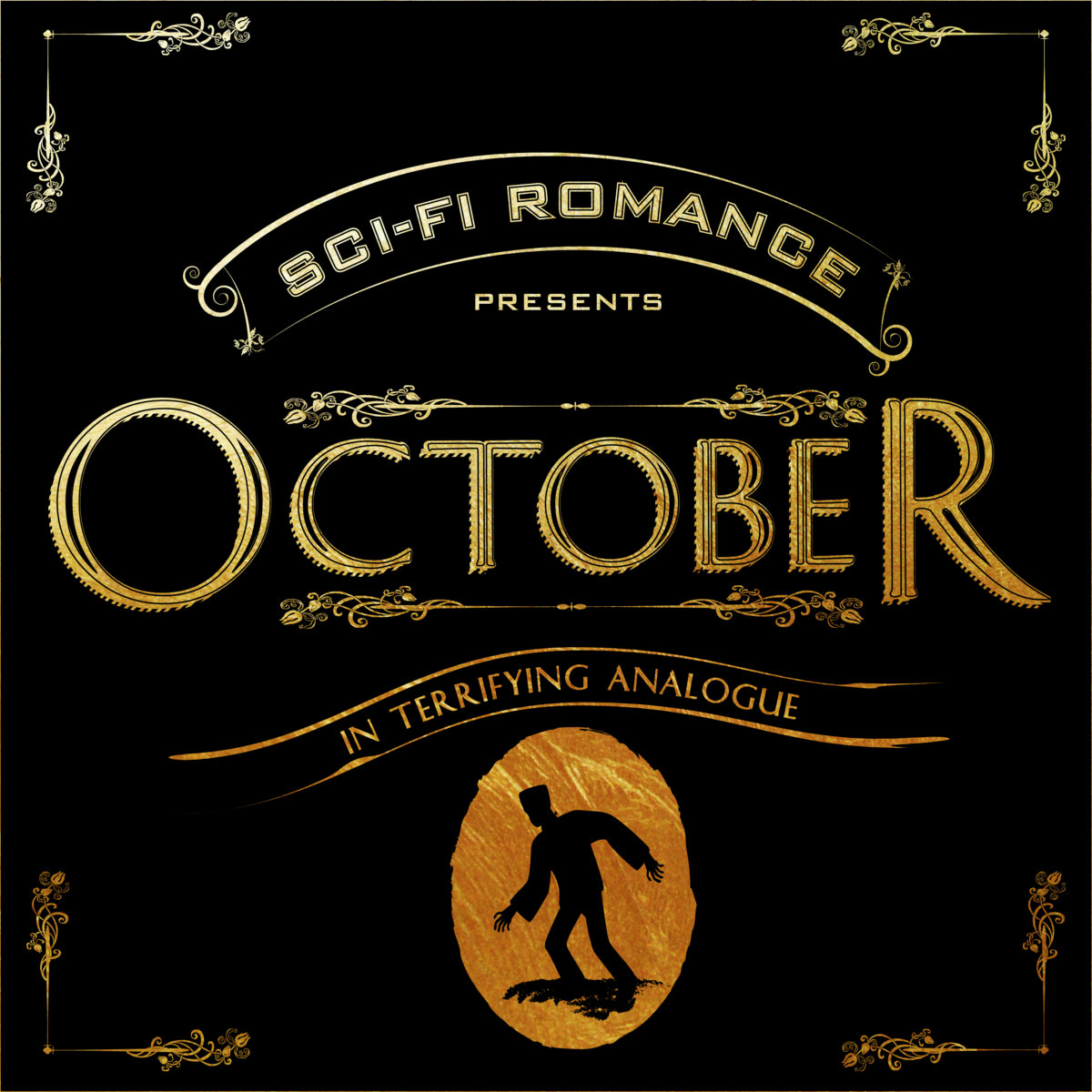
Regular readers may know that I have an abiding love of classic horror movies, and some may also know that I am the singer and songwriter for the alt-folk band Sci-Fi Romance. This month, those two things came together in a way that, I have to admit, surprised me, when I found myself writing, recording, and releasing an EP of new songs inspired by a half dozen of those movies.

See, every October, my wife and I stock up on Fall seasonal beers, turn the lights down, and watch as many old horror movies as we can. The classic Universal monsters, Roger Corman and Vincent Price, Boris Karloff, Mario Bava, maybe Sam Raimi, the old micro-budget RKO pictures produced by Val Lewton, drive-in oddballs, and anything else that may be tangentially related or catches our eyes. This year, the first movie we watched was Corman's The Fall of the House of Usher, and while we were watching it, I got a weird, fully-formed idea completely out of the blue.

"Why don't I write a song for each movie we watch, dig up my old four-track cassette recorder I haven't touched in over 15 years, record the songs immediately after I write them, and put the whole thing out for free?" Yes. Why wouldn't someone do exactly that? Nostalgia upon nostalgia, and all my nerd buttons pushed simultaneously.

The thing that did it, I think, that sent me in this odd direction, was that for the first time I understood the humanity in Usher's decision to bury his sister alive. My experience of these films — many of which I saw for the first time when I was a kid — was one of sensationalism and spooky atmospheres, and something that fit in with my regular diet of Scooby-Doo and Adam West as Batman. You know, some crazy person in an old castle with lots of old candles and spiderwebs, and a bland dope who wanders into a bad situation they can't comprehend, before everything catches on fire and burns down 90 minutes later. So admittedly, much of my continued enjoyment of these films is nostalgic. Some of it comes from an increased appreciation for the craft of the actors and filmmakers involved, who were so evocative and (usually) inventive with very limited resources, either financial or temporal. But sometimes my enjoyment of them suddenly leaps beyond all of that, when I make a profound emotional connection with a character that everybody thinks is nuts.

This first happened a dozen years ago when I re-watched Frankenstein. I had long admired Karloff's performance as the monster, of course, but this was the first time I had really felt Colin Clive's Henry Frankenstein. Clive was a drunk who died in his thirties, so who knows how much of the haunted, longing pain in his eyes was acting and how much just followed him around everywhere he went. But man, it hit me, and I wrote a song about it. Now here it is 12 years and who knows how many bands later, and I had the same thing this time with Vincent Price in Usher. Just like it had before, that connection made me want to write a song.

And that turned out to be the key. I suddenly watched these movies with an entirely different outlook, realizing that these classically trained actors, who had all done Shakespeare and Ibsen and all of this had had to find an emotional way into these characters to ground their performance at the center of all this great atmosphere, set design, and macabre plot elements. I'd always found the 1931 Dracula to be bizarre, with Dracula's casual strolling about among people who know he's a vampire and have sworn to stop him. But this time, I asked myself why the hell he left Transylvania in the first place, and the answer made everything else fall into place: he was desperately lonely. He wants to be around people, he's used to unquestioned dominion, and he doesn't perceive a threat from Van Helsing and the dopey Jonathan Harker. Also, Dwight Frye's performance as Renfield is amazing.

I couldn't watch Dracula and not watch Ed Wood, and the fundamentally joyous soul of that movie has always spoken to me. Ed's response to being told he made the worst movie someone's ever seen is "Well, my next one will be better!" for Pete's sake. That song came easily. Karloff was kind enough to explain straight out in The Body Snatcher the reason behind his seething creepiness, which was that as a low-class, forgotten cab driver he had managed to get and hold sway over a powerful, well respected physician and medical professor, and he would do absolutely anything in his power to keep that sense of power and meaning. In Bride of Frankenstein, we watch Karloff's monster grow in his humanity and fill up with an aching pathos, like Dracula, seeking connection. His longing for it gave me a chance to write what I consider both a very funny and a very sincere song. It's a celebration of possibility, but since we know how the story ends, the context gives everything a very different meaning.

Finally, for what was probably my favorite song on the EP, I tackled Corman's Masque of the Red Death, which is my favorite of the Corman/Poe/Price movies. It has the most going on, and is to me the most interesting because of what is actually a pretty acute exploration of human nature. I had no idea what to write about, where to hang my hat, as it were, for a song about this movie. And then I saw the sadness with which Hazel Court portrayed Juliana, Prince Prospero's mistress, who had always resisted committing her path to unrepentant evil, as he had. I loved her performance, and hope I did it justice.

Our world is different now, and today a lot of violence comes out of nowhere. It is sudden, profound, and often committed outside of context. People with mental illness fire into crowds, terror attacks come out of nowhere, and we worry things like GMOs and technology may ultimately harbor us ill will. Horror movies of today have come to reflect those fears. For several years, most mainstream horror movies were simply sadistic parades of people being killed brutally for reasons that remained at arms' length, and now zombies have gnawed their way to the top of every medium's genre output. I think these earlier films, despite a lack of special effects, despite their limited budgets, and despite much actual onscreen violence, used what they had, which were their gifted casts. Products of a different time, they told different kinds of stories — fundamentally human stories — that might not get the recognition they deserve. I can't imagine writing a song about Paris Hilton in House of Wax, but I could write one about Henry Jarrod as played by Vincent Price. Beneath the arched eyebrows and pencil mustache, there was more of me.

October is available as a free download here. Happy Halloween, everybody.

Posted by — Vance K, cult film aficionado, lover of terrible movies, and resident baritone at Nerds of a Feather since 2012