Wednesday, January 25, 2017

Microreview [novel]: Certain Dark Things by Silvia Moreno-Garcia

Edward who?


Vampires. If you look at the roots of SFF, there they are, firmly tucked into the same literary movement as Frankenstein and other pivotal works of supernatural storytelling. And going further back, stories of creatures that feed on human blood or tissue are widespread. Not universal, but about as close as stories come. They represent a core fear of humanity. Of the night. Of the Other. Of hunger. In popular SFF, vampires haven't lost their appeal. From Dracula to Twilight, Lestat to the world of Anita Blake, vampires are still alive and well...er, undead and well. And Certain Dark Things by Silvia Moreno-Garcia takes the mythology of a dozen different vampire legends and merges them into a thrilling, slightly romantic, incredibly gritty adventure through an alternate Mexico City.

The story flits between a number of characters as they move about their lives and their missions in Mexico. And all of them, from the vampires to the humans, navigate hunger. For me, it's hunger that is central to the novel, and perhaps not surprising given it features vampires, who are often depicted as slaves to their hungers. To the need to feed on blood. But it's more than just the hunger for blood that drives the narrative. It's the hunger of safety, and for love, that really push everyone forward. For Domingo, who lives a life lacking safety and lacking much agency, it's his hunger for power. For companionship. He meets Atl, a vampire on the run from a rival gang, and immediately is drawn to her. Wants her. The hunger is sexual, yes, but it's also deeper than that. She feeds what he's hungry for—a sense of purpose and power and magic. He's grown up on vampire comic books and in Atl he finds a way to be a part of a story, to not only be a victim.

For Atl the hungers are more complicated. She has the hunger for blood, but she also hungers for revenge and for punishment. Both against those who have wronged her, who are hunting her, and against herself. Her guilt and shame and growth throughout the novel show how her hunger shapes her and sharpens her. How her relationship with Domingo feeds and nurtures a part of her that wants more than blood. That wants compassion and acceptance. But, just like with blood, that hunger takes on a certain addictive quality, where she must find and define herself not by contentment, but by lack. That it is the hunger that keeps her sharp and she needs to be sharp if she is to cut free of the nets dragging her down.

And so for me the novel is one that very much examines the setting. Examines this Mexico City where hunger is a living thing. That even without vampires it is full of things that drain people. Burdens passed down by the government, by the gangs, by the corruption that seems to infiltrate every level of the city, from the richest to the poorest. The character of Ana, a police detective who really only wants her daughter to live free and safe, embodies an interesting mirror to Atl. Both are running from vampires, Ana trying to put behind her days as a cop with a good track record of killing them in the hopes of getting away from the violence. Ana's drive is away from hunger. She wants to see her daughter not free from the system, but a beneficiary of it. But in order to break her daughter free she has to work with the system. Has to prop it up. And in doing she becomes entangled in the violent corruption at its heart.

As I said earlier, the book is both thrilling and romantic. But it's certainly not the brand of romance that many might be used to from vampire novels. The story does deal with domination and power imbalance, but not in a way that romanticizes abuse. The relationship between Domingo and Atl is complicated and rather dark. Indeed, if the title of the novel didn't clue you in, the entire piece is dark. From the setting to the situation to the execution, this story looks at some very uncomfortable things—violence and oppression, betrayal and loss of autonomy. For people looking for the standard Happily Ever After...well, maybe look elsewhere. This is both a source of great complexity in the book (especially with where the story leaves Atl and Domingo) and a source of some disappointment for me personally (especially with where the story led and leaves Ana).

That's not to say that the story doesn't treat with hope. Indeed, the story brilliantly brings Domingo and Atl to a place where they must look at their agency and their potential and what is better for them as people. Maybe not what will make them happier, but it seems pointed that the novel takes a stand against the idea that romantic fulfillment is the most important fulfillment. Especially in the face of Domingo's softer personality, the story plays with the expectation that he be rewarded for his actions. [SPOILERS...if I haven't already] In essence, Domingo remains not a complete shit throughout the novel. He doesn't really try to physically assault Atl and he obviously cares about her. But the novel doesn't view this as anything special. And certainly not as deserving Atl to give up her potential and who she is so that she can validate what a good guy he is. Which then confronts the reader, or at least confronted me, with my expectations. Which is a very nice twist.

And in the end the novel does a lot right. It's a fascinating deconstruction of the vampire romance that builds up an interesting and unique world and some amazing characters. I was a little bummed that I didn't get to see more of the setting, more the vampire sub-species, but what's here is fleshed out well (heh). If you're looking for a rather romantic read that still manages to crush about every trope from vampire romances, this is the book for you. If you're looking for blood and death and awesome genetically modified dobermans, this is the book for you. If you're looking for a nuanced examination of hunger and longing, corruption and hope, this is the book for you. Go read it.

The Math

Baseline Assessment: 8/10

Bonuses: +1 for Bernardino, because yes; +1 for not giving me what I wanted with the ending

Negatives: -1 for what happens to Ana; -1 for not giving me what I wanted with the ending (I'm impossible to please!)

Nerd Coefficient: 8/10 "Well worth your time and attention!" see our full rating system here.

---

POSTED BY: Charles, avid reader, reviewer, and sometimes writer of speculative fiction. Contributor to Nerds of a Feather since 2014.

Reference: Moreno-Garcia, Silvia. Certain Dark Things [Thomas Dunne, 2016]

Tuesday, January 24, 2017

The Last Jedi (or not?)

Potential Spoilers. Or not. This is just speculation, so I have no idea.


Yesterday we found out the title for Star Wars Episode VIII: "The Last Jedi". At first blush, a lot of responses went something like "OMG who could that be". Then people began pointing out, "hey, the opening crawl of The Force Awakens says that is Luke".

If we're doing that, The Return of the Jedi already did that, since Yoda said exactly that. So, yeah, Luke is the last Jedi. We've known that for 30 years.

But I think it's saying something else entirely.

The Jedi failed. Intended to be the protectors of peace throughout the galaxy, they feel victim to their own rigid code and getting too involved with the wispy-haired chancellor of the Old Republic, who just also happened to be a Sith Lord. That failure lead to their extermination, the rise of the Empire, the destruction of Aldaraan and all the rest.

Luke was then trained by Obi-Wan and Yoda, as we all know, leading to the proclamation that he was the last of the Jedi. Luke then tries to restore the Jedi order, failing miserably when his student and nephew slaughters all his students. Luke does the traditional Jedi thing and hides somewhere. Kylo, his former student, meanwhile, joins up with the First Order, aka Empire 2.0, under direction of someone called Snoke.

We know very little about Snoke, namely:
1. He likes holograms
2. He is very old
3. He is not a Sith.

While good ol' JJ Abrams likes misdirection, this message has been echoed enough from Lucasfilm/Disney we can likely trust it. This is important for several reasons. Not the least of which is the fact that while Kylo idolizes his grandfather, Darth Vader, he is not being trained as a Sith by Snoke. Why is this, then? Sith have always been associated with the Dark Side of the force, but are not its only adherents (Night Sisters of the Clone Wars show, for example).
I don't need a reason

It has also been stated the Snoke is very old- older even than the Empire. With age and scars generally comes wisdom, so we can assume Snoke knows a thing or two. So why is *he* not a Sith?

For practical reasons, because the Sith have *also* failed. The so-called 'Rule of Two'- there always being a master and apprentice- fails in practice. Palpatine killed his Master. His apprentice, Vader, ultimately killed him. The power-hungry nature which the Rule of Two was supposed to contain only worked so well. Sith don't like being middle management.

So we have two failures- the Jedi and the Sith. It is already clear those using the Dark Side of the Force are not Sith in the VII-IX trilogy. So what of the Light Side? I believe this title is the clue- the Light Side users have also learned from the mistakes of their forbears and are now ready to evolve into something more effective, starting with Rey. This makes Luke, not the last Jedi alive, but the last Jedi.

Ever.

Dean is the author of the 3024AD series of science fiction stories (which should be on YOUR summer reading list). You can read his other ramblings and musings on a variety of topics (mostly writing) on his blog. When not holed up in his office
tweeting obnoxiously writing, he can be found watching or playing sports, or in his natural habitat of a bookstore.

Microreview [tv series]: Crazyhead

This show misses...and not Misfits

                                                Image result for crazyhead show
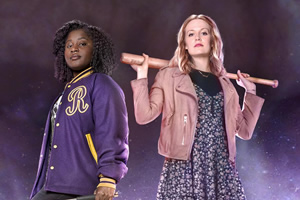
Crazyhead is a show about the supernatural, with two women as the leads, from the creator of Misfits (a show I found strangely wonderful) and so I was definitely excited. What I got was a well-acted, sometimes clever, but mostly generic, and more unforgivably, really boring first season. 

The show centers on Amy, who works at a bowling alley and doesn’t seem particularly pleased with her life. She also happens to have the ability to see demons when they possess a person’s body (everyone else just sees them as looking normal). Amy is played by Cara Theobold—who does a terrific job portraying Amy’s sweet kind of fumbling nature that hides a well of pain and anger. Amy meets Raquel, who also can see the demons, after being attacked by a demon.  Raquel is played by Susan Wokoma, who is also excellent, and easily pulls off Raquel’s quick to anger, quick to joke personality that she seems to be using as a cover for the strangeness she has to endure in her life. Once the demons find out they can be seen, that Amy and Raquel are what they refer to as “seers,” they decide the problem has to be dealt with and it completely upends Amy’s life.

Okay, so the concept is great, it’s like Buffy. I’m in. Howard Overman’s previous series Misfits took a generic supernatural premise—average people getting super powers—and twisted it into something else entirely: what if the people getting the superpowers are young offenders doing community service? What if the super powers really sort of suck? That show was fast paced, hilariously funny, and exuberant in its willingness to embrace every bit of strangeness it could. Crazyhead on the other hand tries far too hard to do the same. The exorcism requires one of the women to pee on the possessed. A woman kicks a dead bunny body like a football. And none of it is funny.

The other main problem with the show is that it doesn’t feel at all surprising. If I’d never seen another show about the supernatural, maybe I would have loved the way demons are portrayed here. But after Buffy, Supernatural, and countless others, this seems like another go round on a playground that’s been grown out of.

In addition to the great cast, the show does have a great soundtrack as well and some inspired jokes. However, that’s not enough to make up for the fact that I seriously wanted to fast forward through most of the episodes to see if anything more interesting was going to happen (and I can handle a lot of boring periods. I watched all of season 9 of Supernatural, people).

So, for those looking for something as exciting and original as Misfits, look elsewhere.

The Math

Baseline Assessment: 4/10

Bonuses: +1 for acting, +1 for female friendship taking the center stage, +1 for its very cool title sequence

Penalties: -1 for dragging, -1 for one death that really irritated me

Nerd Coefficient: 5/10 "
problematic, but has redeeming qualities"


***

POSTED BY: Chloe, speculative fiction fan in all forms, monster theorist, and Nerds of a Feather blogger since 2016.

Monday, January 23, 2017

Nanoreviews: The Rise of Io, The Four Thousand The Eight Hundred, Everything Belongs to the Future


Chu, Wesley. The Rise of Io [Orbit, 2016]

It took a moment to really process how the change of Quasing from Tao to Io would impact the story being told, but I think it was a necessary decision. At this point, telling the story of Tao and Cameron Tan would be rehashing the original Tao trilogy as well as basically telling the story of James Bond. Io, on the other hand, is an unknown quantity as is her new host Ella Patel. The Rise of Io is as good as everything Chu has written, which is to say that it is quite good indeed. The deeper we get into the relationship between Io and Ella, the better the novel gets.
Score: 8/10


Egan, Greg. The Four Thousand, The Eight Hundred [Subterranean Press, 2016]

A question of ethics: Is it acceptable to sacrifice the lives of a relatively few number of people in exchange for securing the safety of a larger group? Or, to reverse the question: Is it acceptable to risk the lives of a larger group of people in order to save the lives of a smaller group?

A question of ethics: At what point, if you feel that injustices were done towards your ancestors, are you and your generation due reparations?

These are some of the thought experiments Greg Egan weaves through his novella The Four Thousand, The Eight Hundred. This is well done hard science fiction.
Score: 7/10


Penny, Laurie. Everything Belongs to the Future [Tor.com Publishing, 2016]

If I started this review just five days sooner, I'd have been able to write a full review.  But, I didn't, so I'll just tell you that Everything Belongs to the Future is one of my favorite of all of Tor.com Publishing's 2016 novellas. Top 5 for sure, and there were some damn good stories.  Laurie Penny's novella looks at a future where the secret to extending life has been unlocked, but it comes at a price - a very high price that only the rich can afford and everyone else is left farther and farther behind. But there are protests and opposition and betrayal and conspiracy.  We know early on that something significant occurred because the interstitials are letters from prison, but having an idea about the end does nothing to minimize the tension and intensity of the novella. Everything Belongs to the Future is stunning and simply excellent. I cannot recommend it highly enough.
Score: 9/10


POSTED BY: Joe Sherry - Writer / Editor at Adventures in Reading since 2004. Nerds of a Feather contributor since 2015, editor since 2016. Minnesotan.

Friday, January 20, 2017

Microreview [books] Half-Resurrection Blues by Daniel Jose Older


Every so often you pick up a book and before you even realize it the world around you has fallen away, you've been absorbed into the book, your reality no longer exists, and what you hold in your hands has taken over. Half-Resurrection Blues is such a book. Daniel Jose Older creates a world so seamlessly overlapping the world as we know it that I lost track of myself as I read.

I must admit, I am incredibly slow to jump on the Older bandwagon. I have been buying the books but have not had the chance to sit down and read them. Whew nelly, am I ever kicking myself now. Older is one of those rare authors for me where once I've read something, I want to, need to, seek out everything they've ever published and binge read all the things. Seriously, he is just that good.

It is more than just the story/plot. For one, Older manages to  layer his imagined world onto our existing one with such a deft touch that I felt I could be looking in on an actual reality. The characters are richly nuanced with depth and personality. 

You feel connected to these characters and want to know more. I am thankful the other three novels that make up the Bone Street Rumba series are already out because I will be reading them A.S.A.P.

And the writing. 

The. 

Writing. 

Older's writing is without a doubt some of the best from every angle. And this is part of why I am kicking myself for not making his books a priority sooner. His writing transports you in a way not many writers can. 

You don't feel like you're reading a book, you feel as though you've stepped into the room where things are actually happening. Dialogue is real and reflective of the society we live in. Description is not laborious or distracting. You won't find yourself skimming parts as he's made every word count.

I now realize I haven't even mentioned what happens in the book! I am so enamored with the execution and awesomeness of this book I jumped right into telling you why.

Carlos Delacruz is a half-dead/half-living agent for the New York Council of the Dead. Delacruz executes the orders of the Council without question until New Year's Eve when he is sent to kill another inbetweener like himself. After killing his target, Carlos begins down a path that will lead to the truth behind his past and the potential residing within himself.

It is a truly action-packed ride into a fantasy world you'll happily fall into.

Do yourself a favor, go buy this book!

The Math:

Baseline Assessment: 9/10

Bonuses: +1 For pure amazingness

Penalties:  -1 For you the reader if you haven't bought it already.

Nerd Coefficient: 9/10 "A roller coaster ride not to be missed."

***

POSTED BY: Shana DuBois--extreme bibliophile and seeker of raindrops.

Reference: Older, Daniel Jose. Half-Resurrection Blues [Roc Fantasy, 2015]

Our scoring system explained.

Thursday, January 19, 2017

Thursday Morning Superhero

With the potential end of the world happening in the very near future I urge everyone to go read as many good comic books as you possibly can! There are so many good options out there for readers of all tastes.  Just this week I read about Kaiju (some may argue that point), Star Wars archaeologists, and torrid affair between a cat and bat.


Pick of the Week:
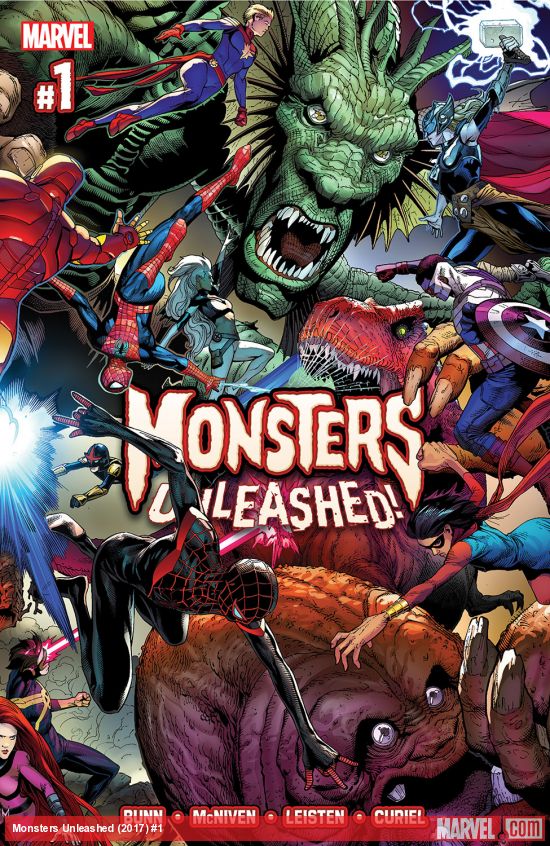
Monsters Unleashed #1 - If you need more of a reason to pick this title up beyond Cullen Bunn and giant monsters, I can't really help you.  Some unknown force has unleaded seemingly hundreds of giant monsters across the globe.  It is not clear why this is happening, but superheros in New York, London, and elsewhere are scrambling to save their homelands and fell these giant beasts.  Elsa Bloodstone, an archaeologist whose family has specialized in stopping threats like this for generations is frustrated because she knew this day was approaching, and fears that her expertise on this subject may not be enough.  This title is an absolute blast and highlights Bunn's ability to mix in his vast knowledge of all things monster related and his uncanny knack for sprinkling in humor where appropriate.  Really looking forward to where this series is heading.

The Rest:
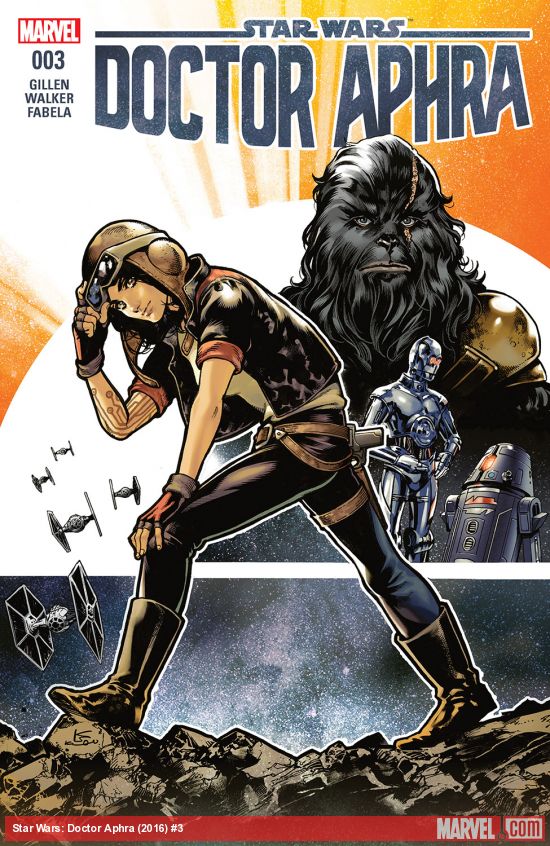
Doctor Aphra #3 - Sticking with the theme of archaeology, Doctor Aphra finds herself properly finishing her dissertation with the help of her father.  She is not too happy about having to complete her research, which involves dealing with her father and trying to locate a hidden temple on Yavin.  With a nice distraction from Krrsantian, a psychotic Wookiee, and the assistance of my two favorite droids of all time, Triple-Zero and Beetee, Aphra and her father are able to infiltrate the former Rebel base and pull some Indiana Jones trickery to locate the temple.  While the story is entertaining, the side characters steal the show from Aphra.  From Krrsantian ripping off the blaster from an AT-ST and using it as his personal blaster, or Triple-Zero referring to Beetee as a very needy psychopath, the cast in this series always has a surprise up their sleeve that puts a big smile on my face.

Batman #15 - In the only disappointing book of the week, Batman explores his relationship with Selina Kyle in what was a mildly entertaining story.  I enjoyed the premise of Catwoman protecting a former friend of hers from the orphanage, but it is undone by the attempt at romance and the near nudity that feels very out of place.  I am not anti-nudity in some comics, but I will admit that the old man inside of me was upset thinking about the kids that will pick up a Batman title because it is Batman.  While I feel that this series is stumbling out of the gates with its new creators, it looks like we will get a new arc featuring Bane in issue #16 and hopefully things will pick up.


POSTED BY MIKE N. aka Victor Domashev -- comic guy, proudly raising nerdy kids, and Nerds of a Feather contributor since 2012. 

Wednesday, January 18, 2017

Problem Daughters: An interview with Djibril al-Ayad on a New Anthology


An upcoming anthology of speculative works around intersectional feminism.

Fans of thought-provoking SFF may already know of The Future Fire. They’ve published wonderful social-political and progressive fiction and poetry. (Please note for transparency: I’ve been published there, but there is no bias on my part as I was a huge fan before I ever submitted.)
Currently the publishing arm of Futurefire.net is working on an exciting new anthology, Problem Daughters: An Anthology of Science Fiction and Fantasy from the Fringes of Feminism. Here is the description of the project: “Problem Daughters will amplify the voices of women who are sometimes excluded from mainstream feminism. It will be an anthology of beautiful, thoughtful, unconventional speculative fiction and poetry around the theme of intersectional feminism, focusing on the lives and experiences of marginalized women, such as those who are of color, QUILTBAG, disabled, sex workers, and all intersections of these.” Currently, the anthology is working on fundraising and then will open for submissions.
I talked with the general editor of The Future Fire—who is also co-editing the anthology, Djibril al-Ayad, about the anthology and about the deep need for this type of anthology (especially right now).

Questions:
1. How did the idea for the anthology come about?

It began with a very informal online chat between Nicolette and Rivqa and myself (who have never met, and hadn’t even chatted often before that, although I admire both of their work) on definitions of feminism, including jokes and parlor-game style expositions like the Bechdel Test. This led to more serious criticisms of exclusionary feminisms, and what it would take to foreground those women who are marginalized by the mainstream: women in sex work, trans women, disabled women, women of color, women wearing veils or other markers of (non-Christian) religion, and others. Once we had drawn up our own inclusive, intersectional definition, it seemed a shame not to do something with it, so we expanded it into a Call for Submissions! We’re now fundraising to turn this into a professional paying anthology, and pretty confident that it will go ahead.

2. What is your editorial process like when you approach an anthology?

Every anthology I have worked on (this is the sixth) has been a collaboratively edited project, which for me is 90% of the fun. So we write the call for subs together, we plan the campaign (if we need to fundraise, or promote to reviewers and bloggers, for example), and we read slush together. Usually what happens is that we split submissions between us—once we’re sure we’re sufficiently on the same page to be able to filter out the 1/2 – 2/3 of stories that don’t really fit the call—and compare notes on those that we think are worth a second opinion. Anything we both/all unambiguously love goes into the shortlist, which is revisited at the end of the reading period. The shortlist usually ends up two or three times as long as the final table of contents has room for, so some hard decisions have to be made—not only based on quality, but also on fit to the theme, balance with other works accepted, coverage of the field as a whole, etc., and sometimes it is precisely those stories that one editor was lukewarm about, but another had a different experience or insight and talked them into realizing how wonderful and important they are, which prove to be the best fit and most impactful. Of course the hard work doesn’t stop there, we have to edit, typeset, negotiate contracts, send out review copies, format e-versions, copy-edit, promote, but that wasn’t what you were asking about!

3. Why do you think it's important to have an "intersectional anthology"?

The short answer is that any work or project that claims to be feminist or anti-racist or any other social justice focused should be intersectional, because marginalization and discrimination do not happen in a vacuum. In the words of Flavia Dzodan, “My feminism will be intersectional or it will be bullshit.” In my experience, the best stories—by any standard, including quality, sense-of-wonder, what have you—that were submitted to any of our previous anthologies on body politics, postcolonialism, disability issues or multilingual literature, were those that recognized and represented the intersection of identities, that you cannot talk about sex with out race and sexuality and class and language and disability and religion and education, and vice versa.

In the case of Problem Daughters what we will focus on in particular is those aspects of women’s identity that are often excluded from some aspects of mainstream feminism. Not only quietly including all marginalizations (which everyone should be doing anyway), but specifically challenging problems in that definition, such as insisting on stories in which trans women or disabled women are wholly and completely women, in which issues facing women of color or non-English speakers are important as those prioritized by white feminists, in which veil-wearing women or sex workers are not considered “enemies” of feminism.

4. In what ways can readers and writers help support the anthology?

Most importantly? Buy the anthology! Read it. Review it. Write stories or poems for it, and submit them when the CFS is open. We’re doing this project because we want great content and we want squillions of people to read them. In the meantime we need as many people as possible to support the campaign, which will help make the anthology happen and be as big and fabulous as possible (which has got to be a good thing whether you’re a reader or a writer…). Several ways you can do that:

        i.            Back the fundraiser (igg.me/at/problem-daughters). This is effectively pre-ordering the anthology, in e-book or paperback versions. If you want to support at a slightly higher level, there are also limited edition hardcovers, and other perks from our friends including art prints, jam, dolls, story or TV script critiques, and more.
      ii.            Boost the signal. We’re blogging, tweeting, facebooking, and otherwise spreading the word on social media and elsewhere, and every share, like and repost helps get it in front of more eyes. Ideally you will post about the campaign in your own words, so your friends know who it’s coming from. Most valuable of all is if you can send details to mailing lists or other fora that we haven’t reached at all yet. Your friends, your writing group, your scifi or feminist activism convention.
    iii.            Offer to interview the editors on your blog—or even better, for a wide-circulation site or magazine—host a guest post, or run some other kind of promotion for us. Round table discussions and chats are a good way to get some buzz going, as are games and contests if anyone has any ideas.

Any and all ideas welcome. Do get in touch!

5. What would you say are the ultimate goals for this book?

We’re a small press, so we’re realistic in that we know we’re never going to sell a million copies or hit the NYT bestseller lists, and the editors aren’t going to get a Hugo for this. The idea is and always was, as I said, to get as many people as possible reading, and talking, and riffing off the ideas, and being inspired to new projects, and looking for (or commissioning) more work from authors of their favorite pieces. It would be great if some of the stories were recognized in best-of volumes or award nominations (our authors from previous anthologies have had a few of these). Probably my favorite thing that has happened with these books is when we’ve been told that a college professor has assigned the book to be read by their students, which is kind of the ultimate endorsement! Of course all of these things are kind of side-effects, and in any case totally dependent on, the one thing that is in our control: making this as brilliant an anthology as we can, full of amazing and mindblowing stories that people want to read and then aren’t able to forget. I can’t want to start seeing them!

6. What question do you wish I'd asked and how would you answer it?

“What has been the best thing about working on this anthology project, Djibril?”

Well, I’m glad you asked me that, Chloe, because it has been an amazing experience so far, and I could talk about meeting so many wonderful authors, artists, editors, bloggers and others who helped us with getting the word out, or the eye-wateringly generous people who have backed the fundraiser (either financially, or by donating perks), or the Twitter followers who have responded to our discussions of intersectional feminism so positively and helpfully. But if I were to pick one thing, it would have to be the honor and pleasure it has been to work with and become friends with my co-editors Rivqa and Nicolette, who have been energetic, professional, knowledgeable, delightful, and most importantly (for the project) both bring unique perspectives and experiences on the theme, which will be essential for the process of reading submissions and editing stories, as I was saying before. We’re extremely fortunate to have them both on board, and—what a bonus!—we’re having a world of fun in the process!
***

It was a pleasure conducting this interview with Djibril—who has long been an extremely supportive and generous voice within SFF—and I can’t wait to read this anthology!
For more information on the editors:

Djibril is by night the dashing, queer general editor of The Future
Fire, by day a mild-mannered, bespectacled historian and educational
futurist. He previously co-edited the anthologies Outlaw Bodies, We
See a Different Frontier, Accessing the Future, TFF-X and Fae Visions
of the Mediterranean for Futurefire.net Publishing.
Rivqa Rafael is a queer Jewish writer and editor based in Sydney. She started writing speculative fiction well before earning degrees in science and writing, although they have probably helped. Her previous gig as subeditor and reviews editor for Cosmos magazine likewise fueled her imagination. Her short stories have appeared in Hear Me Roar (Ticonderoga Publications), The Never Never Land (CSFG Publishing), and Defying Doomsday (Twelfth Planet Press). In 2016, she won the Ditmar Award for Best New Talent.

Nicolette Barischoff was born with spastic cerebral palsy, which has only made her more awesome. Her fiction has appeared in Long Hidden, Accessing the Future, The Journal of Unlikely Academia, Podcastle, and Angels of the Meanwhile. She regularly writes about disability, feminism, sex- and body-positivity, and how all these fit together. She’s been on the front page of CBS New York, where they called her activism public pornography and suggested her face was a Public Order Crime.