Thursday, March 2, 2017

Thursday Morning Superhero

It looks like 2017 is the year that I say goodbye to some of my favorite comic books and it kicks off this week with the finale of Nailbiter, Joshua Williamson and Mike Henderson's story about a small town in Oregon that kept producing serial killers.  It has been a wild ride and a series that I will revisit annually.  I should also briefly add that Image Comics is publishing some amazing stories.  I was unaware of how it was dominating my pull-list until I looked at my stack of comics this week.


Pick of the Week:
Royal City #1 - This debut issue from Jeff Lemire is absolutely stunning and hearkens back to his earlier work like Essex County and Sweet Tooth.  I have really enjoyed his venture into science fiction and have really enjoyed his Old Man Logan arc, but there is something so chilling and satisfying reading one of his books that is grounded like this.  The setting of this story is Royal City, a small manufacturing city that has seen its better days.  Peter Pike, the patriarch of this story, suffers a stroke when he thinks he hears the voice of his son through the radio.  His family, each with quirks of their own that we can all relate to, returns to be by his side and are likely going to be forced to confront their differences and what happened to Tommy in 1993.  This issue has me absolutely hooked and I cannot wait to see what unfolds in the months to come.  To even further enhance your experience reading this book Lemire created a Spotify playlist that is worth checking out here.

The Rest:
Nailbiter #30 - I have long thought that most of the series that I truly love are series that have a clear beginning, middle, and end.  They don't drag on longer than they need to and really focus on the characters that drew me in early on.  Joshua Williamson and Mike Henderson were able to accomplish this with Nailbiter and provided an enjoyable ending with a great epilogue.  I worried early on that I wouldn't enjoy how they explained the big mystery in this series (what is it about Buckaroo that causes so many people to become serial killers), but am happy to report that you will not be disappointed as you read through these 30 issues, peeling back layers of the mystery with each one, until the big reveal.  As I mentioned earlier, this is a series that is going to make it to my annual read list and I can't wait to return to Buckaroo, Oregon later this year.

Batman #18 - This is probably the best rebirth issue yet.  Tom King did an amazing job showing the parallels between a young Bruce Wayne and Bane as the two battled.  Bane, wanting to work out a deal for The Pirate, delivered a thrashing to Batman that was reminiscent to the time he broke the bat's back.  While the continuation of the "I am Bane" arc was solid, the paralell flashback was the star and a great demonstration of how powerful this medium is.  Great work from the entire creative team, including King, David Finch, Danny Miki, Jordie Bellaire, and John Workman.  Looking forward to what comes next.


Star Wars #29 - It pains me to say, but I think that this will be the last issue of this series I pick up.  Its not that it isn't good, but that I feel that its connection to the original trilogy has dwindled.  That was what brought me in and it is harder to form that bridge from the movies to this book.  I still plan on reading some of the other Star Wars books, but will take a break from this one for a bit.  Definitely still an interesting read, but it is time for me to move on.


The Walking Dead #165 - This is another series that I fear will go by the wayside for me soon.  While I am really enjoying the odd pairing of Rick and Negan, I feel the overall narrative has remained stagnant for some time.  Each individual arc is interesting and Robert Kirkman is the master of keeping people on their toes and throwing a wrench or two into the gears, but we are reaching the point of no return in terms of revisiting this series.  I am an old man who has an early bedtime and don't fathom every going back through 165 issues.  While it is still fun, I worry that it is only limping along and grunting as it moves forward.


Paper Girls #12 - Things don't appear to be working out so well in the new time period the girls find themselves in as the hostiles and creatures don't appear to be too friendly.  They have learned a little bit, thanks to the universal translator, from one woman, but she is concerned about the safety of her child and doesn't seem like she is going to provide much assistance.  This series remains to be very bizarre and enjoyable and one that should win some Eisners this year.


POSTED BY MIKE N. aka Victor Domashev -- comic guy, proudly raising nerdy kids, and Nerds of a Feather contributor since 2012. 

Wednesday, March 1, 2017

Introducing...DYSTOPIAN VISIONS


Dystopianism is back in vogue. 1984 and The Handmaid’s Tale have both recently topped bestseller lists, with other classics making appearances as well. The reason for this sudden surge of interest should be no mystery; science fiction is, after all, a reflection of our hopes and fears for the future, and fear undoubtedly rules the present.

Yet dystopia—or, more accurately, dystopianism—never really went away. Indeed, in the 96 years since Yevgeny Zamyatin published We, authors working inside and out of genre have offered a broad spectrum of dystopian visions. Many are quite distant from the statist nightmares imagined by Zamyatin, Huxley, Orwell, Bradbury and Atwood. Postapocalyptic fiction, for example, presents readers with a stateless dystopia, in which the collapse of the modern state redefines the human life as nasty, brutish and short. And gritty or grimdark fantasy is arguably another form of dystopianism, where societies are marked by the arbitrary use of violence and a near constant state of war. Meanwhile, the classic statist dystopia has ruled the burgeoning YA space for nearly a decade—first with the breakout success of Suzanne Collins’ Hunger Games trilogy, and followed by the popular Divergent and Maze Runner franchises.


Dystopianism, Broadly Defined

This broad definition may surprise some readers, or strike them as unreflective of established convention, which holds that dystopian fiction relates narrowly to life under oppressive states. This convention exists, however, for strictly historical reasons.

Dystopianism, in essence, emerged as an inversion of utopianism, a fictional style with roots in philosophy (think Plato) that grew in popularity alongside the Romantic movement of the late 19th century. At that time, growth in literacy, global connectedness and faith in the notion of scientific/technological progress were fueling interest in a broad range of idealistic movements, from the individualized (e.g. liberalism and democracy) to the communal (e.g. nationalism and socialism).

Unsurprisngly, most romantic works of utopian fiction are political treatises barely disguised by their science fictional clothing. Take News from Nowhere by William Morris (1890), in which the Victorian protagonist wakes to find himself in a post-scarcity future marked by socioeconomic egalitarianism, volunteerism and communal rather than state authority. The central idea, then, is to use science fictional extrapolation as a mechanism through which to explore what society could be like if only certain (great) ideas would be implemented.

Zamyatin, who authored the first modern dystopia, simply took this formula and reversed the polarity—telling the story of atomized individuals trapped in a Marxist-Leninist nightmare desperately seeking to assert even the most rudimentary form of individualism. Huxley followed with Brave New World, where eugenics, corporate “Fordism” (i.e. labor mechanization) and psychosocial manipulation achieve the same effect. Orwell’s 1984, the most widely read of the three foundational texts, combines elements of both earlier works. And all three reflect the deep anxiety, embedded in the 20th century zeitgeist, of a mechanized terror that reduces individuals to cogs in the machine.

Later dystopias play a similar role, albeit reflecting somewhat different conceptions of the oppressive state. Fahrenheit 451, published at the height of McCarthyism, takes place against a backdrop of anti-intellectualism and the criminalization of knowledge; and The Handmaid’s Tale, published at the precise moment when fundamentalist Christianity became a force in U.S. electoral politics, imagines class and gender oppression in a science fictional theocracy. Like their forebears, these books follow the established protocol of juxtaposing the individual against oppressive state and society.

But is statism really intrinsic to the concept of "dystopia?" I would argue that no—it’s not. Rather, this is defining a genre by its tropes, which Ian Sales has rightfully critiqued as a rationale for defining genre boundaries. Instead, I’d argue that dystopianism is defined by the extrapolation of our sociopolitical nightmares onto invented worlds, whether they by futuristic or fantastic. Dystopianism, furthermore, exists for the express purpose of theorizing about the present. Thus dystopianism can and should encompass other forms of extrapolation beyond those portrayed in the classic dystopias.


Stateless Dystopia

While one group of 20th century writers envisioned futures defined by terrifying, statist modes of oppression, another began questioning what would come after nuclear war, pandemic disease, ecological extinction event or anthropomorphic environmental disaster. These works are commonly labeled postapocalyptic, in reference to their “creation event,” but nearly all center on forms of precarity engendered by a breakdown of political and social institutions (rather than their repurposing for oppressive means by a modern state apparatus). In other words, stateless dystopia.

Postapocalyptic fiction is not always straightforwardly dystopian. The subset of “cosy” postapocalyptic fiction, best exemplified by Earth Abides, is distinctly utopian—cheerfully (some might say naively) imagining better worlds built off the ashes of this one. Others, like Octavia Butlers Parable of the Sower and Emily St. John Mandel’s Station 11, juxtapose the extreme precarity and threat of living in stateless spaces with the indomitability of the human spirit and its creativity in adapting to circumstances. And other works, like Alas Babylon and On the Beach, have too short a time horizon to really explore what comes after.

Most works of postapocalyptic fiction, however, present the reader with straightforwardly bad places where bad things happen as a matter of course, and as a consequence of the collapse of both political and social institutions. Like The Road, in which a boy and his father navigate an inherently violent and threatening post-disaster landscape; or Marcel Theroux's Far North, where the prevalence of such landscapes enables the would-be architects of a more traditionally Orwellian nightmare to begin construction of such a state out of the chaos. The absence of the state is what defines these envisioned futures as dystopian.


Fantasy Dystopias

While dystopianism is most commonly associated with science fiction, there is a distinctly dystopian streak evident in fantasy—especially in fantasy’s recent, gritty turn. Glen Cook’s pathbreaking Chronicles of the Black Company centers on a mercenary company warring on the side of oppressive tyranny against a fanatical religious movement. A Song of Ice and Fire presents a world in which violence is arbitrary, cruel and ever-present. And Steven Erikson’s Malazan Book of the Fallen is replete with dystopian themes of misery, corrupt, falling societies and cultures, and endemic warfare.

Dystopian themes are also evident in epic fantasy that isn’t normally classified as gritty or grimdark. Take Brandon Sanderson’s Mistborn series, which is set in a fairly classic statist dystopia, or N.K. Jemisin’s Dreamblood series, with its society focused on harvesting dreams, the most powerful of which are found at the moment of death. Those who are deemed too corrupt or elderly to contribute to society are killed by the Gatherers, their dreamblood extracted in the process..   

And one could equally argue that the bulk of traditional epic fantasies, in which stable polities are threatened with the unending terror of conquest and subjugation by malevolence, are animated by fear of dystopia! However, unlike Mistborn, few actually examine what life is like under said malevolence. Yet dystopia looms nonetheless.


Dystopianism in Young Adult Fiction

While dystopianism is evident in these corners of adult-focused genre, it practically rules the burgeouning YA space. This began in 2008, when Suzanne Collins’ Hunger Games trilogy emerged to fill the popular void left by Harry Potter. Though derivative (of Battle Royale especially), Hunger Games became a bona fide sensation, leading to a high profile film series and numerous imitators—many of which, like Divergent or Maze Runner, are now multimillion dollar franchises themselves. And postapocalyptic YA, most of which fits into our category of stateless dystopia, is nearly as popular among YA readers.


Dystopian Visions


This series, conceived of as a sequel to Cyberpunk Revisited, seeks to explore questions of what dystopianism is and what purpose(s) it serves. What are the tropes and conventions of modern dystopian fiction? How have dystopian visions evolved over time, both in terms of approach and theme? And what do dystopian visions about the points in time and space in which they are written?

Equally, we will ask questions about why we like to read about dystopias. Is it possible that we even find them comforting, and if so, why?

Finally, but perhaps most importantly, we will consider dystopianisms’s complex relationship to its forebear, utopianism. We will explore works where dystopianism serves to negatively define utopia, as well as those where dystopia and utopia are presented side-by-side. Just how essential or intrinsic is the concept of utopia to that of dystopia?

We will explore these and other questions through a series of essays and dossier-style reviews, including of works not commonly associated with dystopianism, but which present dystopian themes. Our dossiers will have the following subheadings:

Filetype: whether the work under review is a book, film, game, etc.

File Under: whether the work presents a statist, stateless, fantasy or hybrid-form dystopia.

Executive Summary: summary of the plot. 
Dystopian Visions: discussion of dystopian themes/content present in the work. 

 
Utopian Undercurrents: whether and to what degree the work's dystopianism underlies a utopian understanding of politics, society, etc. 
Level of Hell: a quantitative rating of how terrible the presented dystopia is, from first to ninth—with an explanation of the rating.

Legacy: the importance of the work in question within its field.

 
In Retrospect: an editorial commentary on how good/not good the work is, from the vantage point of 2017.
Interspersed with these dossier reviews, we and a selection of guest writers will explore how to contextualize dystopia and dystopianism within literature and other media, as well as the moments in time and space when it has surged forward into popular consciousness.

The 1980s represent one such period. The Empire in Star Wars, one notes, is essentially a statist dystopia, while George Lucas paid more direct homage to his literary forebears in THX1138. For that matter, nearly every action/sci-fi flick from the '80s takes place within, or makes reference to, dystopian futures. So do the most memorable science fictional comics of the day: Judge Dredd, Akira, Days of Future Past, V for Vendetta, etc. And cyberpunk is arguably dystopian as well.

Similarly, we will try to understand what social and cultural factors may have fueled the emergence of YA dystopias during the 2000s, or how current world geopolitics might alter our view of dystopianism in entertainment media. Conversely, we will ask whether interest in dystopia necessarily reflects underlying concerns with the direction of the world, or whether one may talk of dystopia in purely aesthetic terms.

In the end, our goal is to come to some sort of understanding--messy as it may be--about what dystopianism is and why we are attracted to it. And, of course, we hope to have fun in the process.

Dystopian Visions will run through March and April, 2017, with stories posted every Monday and Wednesday.


Tuesday, February 28, 2017

Microreivew [book]: Game of Shadows by Erika Lewis


Ethan Makkai lives with his over-protective, putting it mildly, mother in a tiny apartment in Los Angeles. Ethan Makkai can also see ghosts. Something he and his mother work hard to keep a secret. For his fifteenth birthday, Ethan hopes his mother will let him walk to school without her for once. She refuses and he manages to sneak out and meet up with a friend. This reckless decision becomes the catalyst for Ethan's world turning upside down.

As Ethan is getting into a fight with a school yard bully a man claiming to be his grandfather turns up. However, Ethan's mother has told him nothing of where she comes from or their family, and Ethan questions if the man is telling the truth. There is little time to argue when Ethan's mother calls and they hear her screaming. Rushing back to the apartment under attack from vicious birds they find the place ransacked and his mother missing.

Ethan must trust the man to help him find his mother and the truth about his past and his future. Traveling to a hidden continent, Tara, Ethan learns his gift is not the curse he always thought but a means to save his mother and the people of Tara.

I am always weary of portal fantasies (that's a whole other post). While this one does start predictably like most others, it is really the characters that made this book shine. Ethan is faced with seemingly impossible tasks, particularly since he only just learned about this other world, and yet he faces them all head-on and with witty asides. I often found myself smiling and laughing at Ethan's commentary as he adjusts to a new way of life.

The story is a fast-paced adventure of rescue and intrigue where you can never be too certain where loyalties are held. Lewis smoothly blends elements of Celtic mythology into the world-building of Tara with just enough of a twist it warranted a fun dictionary at the back of the book.

It was such an engaging read because of the strength of characters and I enjoyed getting to know them. In fact, because the main protagonists do start younger (teenager) I am pretty excited for the next installment to see how they continue to grow into their own.

If you are looking for a fun, character-driven fantasy, you won't want to miss Game of Shadows.


The Math:
Baseline Assessment: 8/10  

Bonuses: +1 strong characters and world-building  
Penalties:  -1 for predictable beginning  
Nerd Coefficient: 8/10 "A great start to a new series!"
  ***
POSTED BY: Shana DuBois--extreme bibliophile and seeker of raindrops.

Reference: Lewis, Erika. Game of Shadows [Tor, 2017]

Monday, February 27, 2017

Microreview [book]: The Stars Are Legion by Kameron Hurley

A stunning redefinition of space opera filled with high action and adventure.


The Stars Are Legion is Kameron Hurley's standalone space opera. If you're at all familiar with the work of Kameron Hurley you know that slapping a simple genre label on one of her novels is an act of folly. 

The Stars Are Legion is a reimagining of what space opera can look like. An interstellar war has raged for generations, worlds have been destroyed, and the fate of the whole war rests on the battle for one final world. This all sounds like standard space opera, except in the hands of Kameron Hurley this is the bare skeleton she uses to build a much more amazing structure.

One of my favorite aspects of The Stars Are Legion is something Hurley does across many of her novels. Technology is often bio-organic.  It's messy and the world ships here are tightly contained worlds with corridors more akin to arteries than simple passageways. But, of course, nothing is simple here. There are elements of the womb-punk of Hurley's debut novel God's War. I almost wrote that not much else was similar except in the use of how wombs are a significant plot device, but that's not true either. Like God's War, The Stars Are Legion includes kick ass women,x the use of insects as weapons, and betrayal. Like The Mirror Empire, The Stars Are Legion includes families and empires at war with each other and with themselves.

The Stars Are Legion is ugly and messy and violent and while it contains space battles and warfare across worlds, this is a space opera like none other.  Hell, the women not only give birth to the supplies their worlds need, but they give birth to new worlds themselves. Show me a space opera that does that.

More than just focusing on all the cool and nasty stuff Kameron Hurley uses to build her novel, we should also discuss just how kick ass The Stars Are Legion is. Hurley has packed The Stars Are Legion with action, space battles, invasion, the exploration of worlds, betrayal, murder, adventure, and pretty much everything you might want out of a novel. I suppose I can't realistically claim that it i everything you want, but it's definitely everything I want and it's delivered in an unexpected package.

When I say unexpected, I don't mean that it is unexpected Kameron Hurley wrote such an spectacular novel. I expect that. We should expect the excellence. What we don't expect is how we get there.  Through the betrayals and the nasty and the ugly, Kameron Hurley has created something beautiful and moving. 


The Math

Baseline Assessment: 9/10

Bonuses: +1 because all of the characters are women, but it's just the way of life

Penalties: -1 because it could be difficult to figure out how the world works (as in, "I don't understand the setting")

Nerd Coefficient: 9/10 "Very High Quality / Standout in its Category". 
See more about our scoring system here.


Reference: Hurley, Kameron. The Stars Are Legion. [Saga, 2017] 


POSTED BY: Joe Sherry - Writer / Editor at Adventures in Reading since 2004. Nerds of a Feather contributor since 2015, editor since 2016. Minnesotan.   

Friday, February 24, 2017

Microreview [novel]: Viscera by Gabriel Squailia

An incredibly visceral (naturally) fantasy adventure. 


I can honestly say that Viscera isn't quite like anything I've read before. Which is to say, I'm not sure what I was expecting when I picked up the book. A thrilling fantasy adventure to prevent a great atrocity from being committed? Well…there's a bit that here, yes. The story is fast and full of magic both blindingly bright and disturbingly dark, with a plot that dances along a razor's edge and characters drawn with compassion, nuance, and plenty of wit. But this isn't a conventional fantasy adventure. In fact, conventional is about the last thing I would call this novel. Instead, what's here is breathtaking in its originality, its innovation, and its wicked fun. As the title implies, it is a visceral experience that doesn't shy away from blood and guts and, well, just about anything.

The plot follows a number of characters, and it is with its cast that I feel the best work is done. Not that the setting or plot or suspense or action isn't well done. It is. But the novel manages to capture with its cast san assortment of people struggling with the world they are forced to live in. Each person is both running from a past full of pain and grief and running toward a future where they might be allowed to hope and have some measure of peace. For Rafe, one of the viewpoint characters, it means running away from a family that misgendered him and a city that has taken the one person he cared for most away. It means living daily with the threat of discovery and violence. He starts the book and the future only stretches so far as the next hit, the next high, as he's become addicted to a powerful drug. As the book progresses, though, the future begins to open up again, bringing with it the chance at healing and wholeness. For Ashlan, the other primary viewpoint character and an immortal being who seems able to heal from any wound, it means running from the passions and hopes of her past and toward the promise of oblivion.

It might be obvious by now that this is not the cheeriest of stories, though I will say it maintains a delightful dry humor throughout and a good dose of weirdness. When you have one of the characters being a murderous puppet animated by magical intestines and bent on revenge, and another a woman who travels with a stitched-together undead bear, things are kept very interesting. But there is a darkness that pervades the setting and the characters, and it's a darkness that is important right now. Because this story recognizes the shape of history and explores it through this fantastical lens. It's something that becomes more and more clear as the different characters are revealed, each from different points in time. Ashlan is the oldest, and has seen the most, and in many ways seems to me to be exhausted by the way that history never seems to change or get better. That there's always another atrocity waiting, another tyrant that will rise. And Rafe is the youngest of the characters, but even so he's disillusioned by the world around him, bears the scars of other people's hatred and intolerance. In between you see that there have been times in the city where queer and trans people have been accepted, where there was peace, but it didn't last. If there's a cycle at work here, it's one that begins and ends in violence and intolerance.

There's an idea out there that history leans toward progress. It's something that's been shared a lot in the current landscape. But I don't really believe that. Or at least, I think progress is a loaded term. It's a way of saying that now is the best time. That we are the best people. The most enlightened. And I love that this novel shatters that idea. That it asks "progress for who?" Who is better off now, when these people face constant harassment and violence? And I love even more that the novel doesn't stop there. Because this is a beautifully hopeful and uplifting novel, for all that it explores trauma and violence. It seems to see the damage being done and doesn't rely on some historical perspective to make things better. Instead, it shows the power of people helping people. If the future is to lean toward progress, then it's going to take a great many people pushing it in that direction. For Rafe, for Ashlan, for the people of the novel—it's not about just surviving. It's about taking an active stance. It's about trying, even when it seems like it's hopeless. It's about having the guts to keep reaching not for progress but for compassion and empathy.

Are you looking for a fantasy novel with a vivid and bloody setting and a sly, haunting mood? Are you hungry for a book with righteously queer and trans characters dealing with trauma and loss, hope and resistance? Do you yearn to read about an adventuring party made up of two drug addicted fortune-worshipers, a pacifist immortal, a murderous puppet, and a witch with her zombie-bear butler? Then read this novel. It's amazing.

The Math

Baseline Assessment: 8/10

Bonuses: +1 for zombie-bear butler. +1 for maintaining hope even in the face of some heavy and haunting material

Negatives: -1 because MOAR zombie-bear butler plz!!!

Nerd Coefficient: 9/10 "Exceptional!" see our full rating system here.

---

POSTED BY: Charles, avid reader, reviewer, and sometimes writer of speculative fiction. Contributor to Nerds of a Feather since 2014.

Reference: Squailia, Gabriel. Viscera [Talos, 2016]

Thursday, February 23, 2017

Thursday Morning Superhero

This week's pull-list only featured two books that were both must-reads.  In this slow week I didn't feel it was appropriate to name one as the pick of the week and felt a simple review of two titles that you absolutely should be reading would be a better approach.  In no particular order I present this week's books that are complete polar opposites of one another.


Picks of the Week:

Curse Words #2 - The first issue of this series hit me like a van from the 80's with a radical wizard airbrushed on the side.  If that isn't enough to get you on board, the email in which to send letters has a .horse domain.  That is correct.  Dot freakin' horse.  In the first issue Wizord, a fierce wizard sent to earth from the Hole World, realizes that he cannot destroy the world in which his powers make him virtually a god.  This upsets Sizzajee, the leader of the Hole World who sent Wizord to destroy all humans.  We last left off wondering what became of the baseball stadium and the fans within after witnessing Wizord murder Cornwall (another wizard sent to kill Wizord).  In this issue we learn the fate of the stadium and its residents, and learn more about Wizord, Sizzajee, and this acid trip of a world that Charles Soule and Ryan Brone have created.  The first two issues have been a complete sensory overload and this is rapidly becoming my favorite book.  I might even have to send an email to a .horse domain for only the third time in my life.

Valiant High #1 - If you haven't been reading some of the stellar books that Valiant has been publishing then you are missing out.  I am a big fan of Bloodshot and Faith has been a massive hit.  When I heard that there was a mini-series consisting of the Valiant heroes as high school students, I was intrigued.  Under the leadership of Principal Harada and gym coach Bloodshot (my favorite), Livewire, Faith, and other high school heroes will have to navigate the issues that all teenagers deal with.  In this mash-up of Archie, She's All That and Sky High, writer Daniel Kibblesmith infuses this series with smart humor, high school antics, and a lot of Bloodshot yelling.  This book serves as a fun way to learn about the Valiant Universe and promises to be a lot of fun.


POSTED BY MIKE N. aka Victor Domashev -- comic guy, proudly raising nerdy kids, and Nerds of a Feather contributor since 2012. 

Wednesday, February 22, 2017

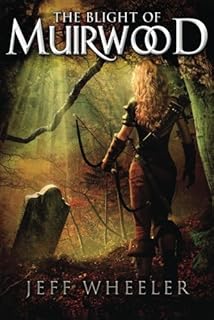
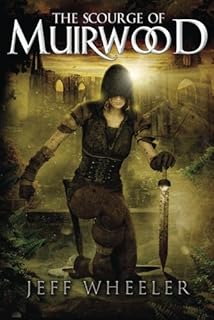
Microreview [books]: The (original) Muirwood trilogy, by Jeff Wheeler

Beats the pants (most of the way) off of expectations, but—ironically—insists in a prudish way that everyone’s pants stay on


Buy them here.

Former computer guy at Intel becomes full-time—and self-published!—writer, you say? What is he writing, instruction manuals? Ha ha, but it turns out the joke was on me: Wheeler writes with uncommon, almost lyrical beauty at times, and his decision to hang this 'romantasy' (romance fantasy, though romance is a pretty integral part of fantasy as a genre so perhaps this is one portmanteau too far, even for me) on the formidable shoulders of heroine Lia, a teenaged sorcerer-priestess (witch?), was a brilliant one. He adds a fair bit of interesting, if somewhat undeveloped, social commentary and critique in to his world-building as well: Lia is a Wretched (i.e., a bastard), so we can immediately predict one of her Monomythic quests will be to discover the identity of her parents. She is strong in the “medium” (i.e., quasi-intelligent fate/magic which responds to strength of belief/faith), and uses this and all her many other talents to kick some major butt.

The original trilogy unfolds skillfully and Wheeler does a good job of sustaining reader interest throughout, even if the extreme youth of Lia and her beau (the former barely a teenager when she falls for him, the latter borderline creepy given he’s four years older) is hard to swallow. The only serious fault of this series (aside from a(n un)healthy dose of Mormon church-inspired prissy morality which is enough to make notorious “no sex before marriage” Stephenie Meyer look like a sex-crazed lunatic!) is that it’s quite predictable: there was literally a 100% chance that “foundling who turns out to be an incredibly powerful sorceress and warrior, in unrequited-but-sort-of-or-actually-totally-requited love with a boy who has sworn his heart to a mysterious missing princess” will turn out to be—you guessed it—said princess, not the thoroughly inferior girl everyone thinks is the princess. About twenty pages in, the entire trajectory of the trilogy was already taking shape in my mind, and sure enough, after that point there weren’t many surprises.

If a story lacks unexpected twists and turns—if its entire scope is easily guessable within the first few minutes of picking it up—can it really be worth reading? Happily, the answer is a resounding yes! Ralph Waldo Emerson or some uppity idiot like that once said “Life’s not about the destination, it’s about the journey”, and it holds true here. Despite the priggishness, despite the fact that the true enemies turn out to be all women, lascivious Satanist-like succubi-priestesses (mostly patterned on French women, for some reason) whose greatest weapon is their seductive power over men (!), and even though we know practically everything that Lia will face once we catch a glimpse of her story beginning to unfold (basically, will she be Mary, or Eve: a virgin heroine or a ‘whore of Babylon’ type figure—a choice, needless to say, that from a narratological standpoint is no choice at all), it’s still quite enjoyable to watch Lia struggle to find her way, and navigate the heady perils of teenage romance while juggling the fate of all creation!

Gee, I wonder if this warrior-priestess who can do friggin' anything might be that lost princess everyone is talking about? Nah, it's probably just a coincidence.

So while it loses a few points for predictability and major pruditude, this story earns full marks for entertainment value, and nearly full marks for the technical side, as Wheeler writes quite well—even the agape-themed dialogue is fairly believable. I mean, who doesn’t want to read a story about a teenaged polymath warrior-sorceress saving the world? Plus, romance!


The Math:


Objective assessment: 8/10

Bonuses: +1 for making Lia so awesome/faultless it’s borderline ridiculous, +1 for exceeding expectations in nearly all ways, including high entertainment value despite penalty #1 below

Penalties: -1 for being so thoroughly predictable, -1 for priggitude (to the point of treating women who allow someone to kiss them on the cheek after a dance as the epitome of evil) -1 for treating being female as more likely than men to lead to great corruption and suffering (hey Wheeler: read a history book! Men tend to suck at peace, human rights, etc. soooo much more than women)

Nerd coefficient: 7/10 “An enjoyable experience, but not without its flaws”


[I think in this case our scoring system is very accurate indeed: this book is well above average yet not quite an ‘I was blown away’-level book, which as you see here is just what a 7/10 is meant to convey!]

This review is the work of Zhaoyun, a romantasy-lover since forever and NOAF contributor since 2013.