Saturday, March 9, 2013

Crysis 3


time to save mankind...again

Well, the final chapter in the much lauded Crysis saga is out, and it's chock full of new goodies. Sadly, I never played the first Crysis because I didn't have access to Big Blue or any of the world's other supercomputers at the time it was released. The game was PC only when the first one came out and it was notorious for requiring very powerful CPUs to run smoothly. If you didn't have a top-of-the-line machine, too bad. It was a poor choice, in my opinion, because they effectively limited the number of people whose machines could handle the game, thereby limiting overall unit purchases. Impressive graphics are one thing, but to program your way out of sales is just silly. That said, the second and third Cryses (What's the plural of Crysis?) came out on both PS3 and Xbox 360 so a much wider audience was able to enjoy this unique first person shooter. 

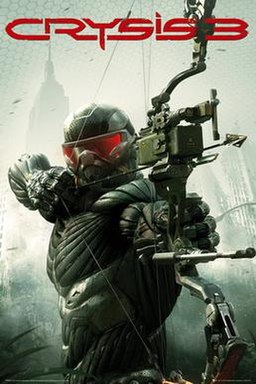
i really want a nanosuit!


There are several new additions to both the nanosuit and your weapon options. It still offers the capability to operate in both stealth and armored modes, thereby deciding what type of gaming experience you will have. They also added the ability to hack certain enemies in order to get them to fight on your side, destroying both Ceph and CELL enemies. It took me a while to figure out that hacking can be performed from a distance, which led to a few untimely deaths, but once I'd mastered the technique it became clear what an invaluable tool hacking could be. 


As you can see from the picture above, they've added a bow and arrow to the vast array of both human and alien artillery. Unlike previous weapons, you can fire this multiple times while in stealth mode without having to allow your suit to restore its energy. In Crysis 2, one shot from most weapons meant you became visible and all enemies immediately began to blow you away. With the bow, playing the game in stealth mode was much more effective and, therefore, enjoyable. The arrows came in four different types: a plain impact arrow, an explosive-tipped arrow, an electrocuting arrow, and finally an arrow that exploded when in close proximity to enemies with the capability of taking out more than one bad guy at a time. However, they were careful to limit your ammo with the arrows just as they did with rifles, making them extremely valuable. I let go with more than one word I wouldn't want my mom to hear when I missed an enemy with one of these precious pieces of weaponry. I can't overemphasize the effect the addition of the bow had on gameplay. It really added an entirely new way to go about the game, which is rare in today's plethora of first-person shooters. 

the crysis universe
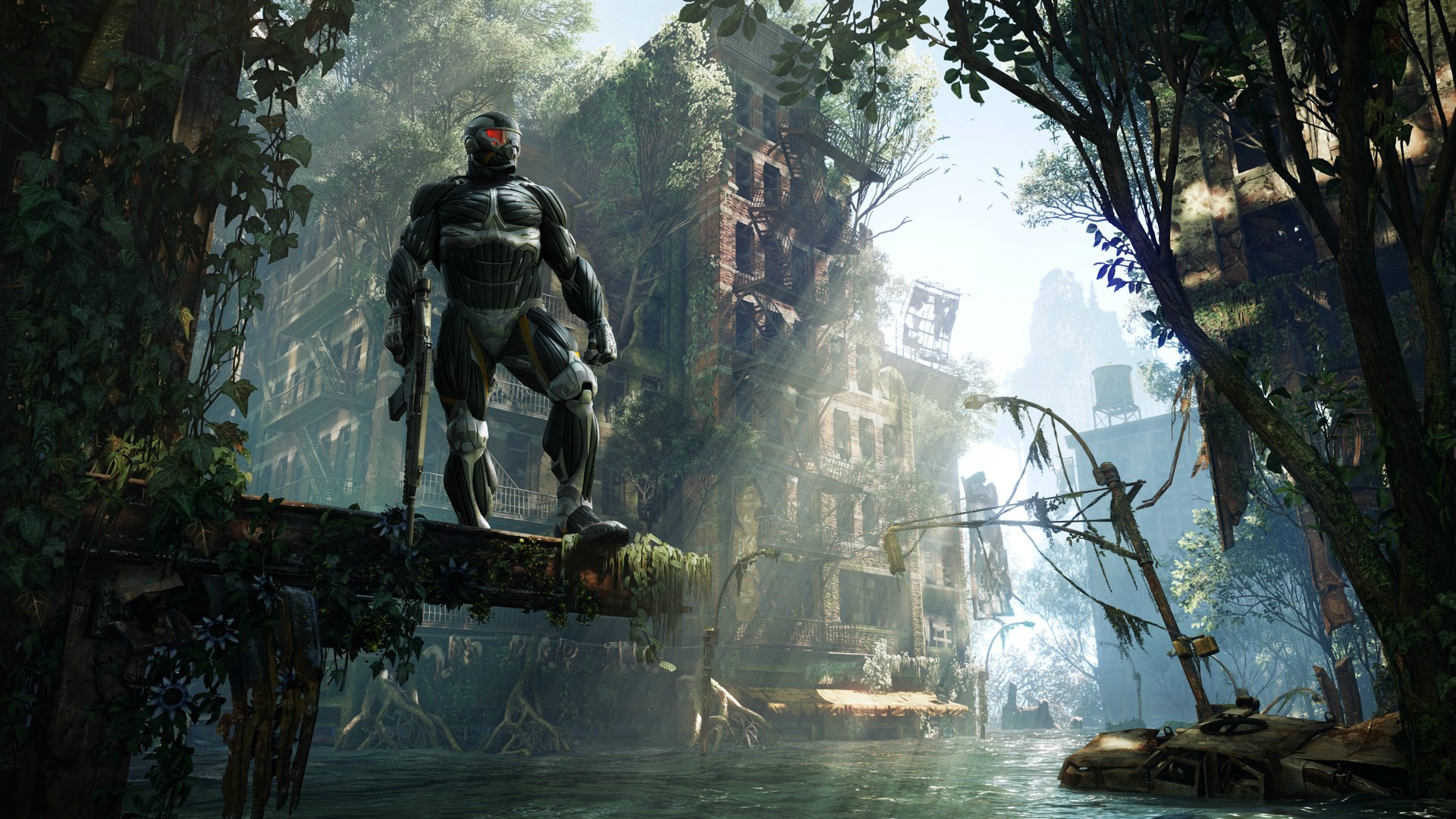

As with Crysis 2, I was often confused to exactly what was going on with the plot. While the gameplay is as addictive as any game out there (I played Crysis 2 three times), the story is a bit lacking in continuity and clarity. With gameplay this addictive, it's easy to overlook some of the plot holes, but they're there and they're glaring. -SPOILER WARNING- While I won't divulge all the details or the ending, if you're a die hard Crysis fan and don't want to know anything about the plot before you play it, you might want to skip to the next heading. 


24 years have passed since the events of Crysis 2. CELL (a government/corporate superpower) have held you hostage until now. They have learned to use alien Ceph technology to provide unlimited free power to the planet. Unfortunately, they didn't realize this would help bring about the end of all life on the planet so that it could be colonized by the Ceph. Once released from CELL custody, you join a group of resistance fighters to try to stop the impending doom from alien invaders. They reunite you with one of the former members of your unit, I'm assuming from Crysis 1, and off you go to stop the Ceph. The writers do a pretty good job of creating some emotional connection to your partner "Psycho" as well as his ex-girlfriend and leader of the resistance, Claire, a component that was sorely lacking in the previous game. 


As the game progresses, you learn that the fighting that took place in Crysis 2 was just the second phase in the Ceph's plan for total colonization of Earth. If the second phase is ineffective, as it was, they move on to phase 3. It consists of opening a wormhole to the Ceph home planet and bringing the "Alpha Ceph" to Earth to finish what the smaller units were unable to complete. I don't want to go into too much detail and ruin the game for you, but let's just say there's only one thing on planet Earth that can stop their plan...you!

where this game really shines


As previously stated, this game isn't tons of fun due to the story line. It's a blast because of the gameplay. Playing as a literal supersoldier of the future is an experience many games attempt to create, but none have succeeded on the level of Crysis. You have the ability to engage your nanosuit's armor and charge into a fight with all guns blazing. You also have the option of cloaking and stealthily picking off unsuspecting enemies one at a time. If you're a fan of the Tom Clancy games like Ghost Recon, you should definitely give this one a try. It takes stealth gaming and blows it up to previously unreachable heights using technological advantages that no other title can provide. 


This game boasts many more enemies than Crysis 2, raising the level of difficulty significantly. As you progress through the game, enemies become more numerous and deadly leading up to the final levels that require multiple attempts to clear. I believe I died more in the last two levels than the other six combined. If you missed out on Crysis 2, don't worry. The story plays second fiddle to the action, which is some of the best I've ever experienced. The graphics are second to none. The gameplay mechanics are plentiful and perfect. In short, if you're a gamer who plays for the story, you might want to skip Crysis 3. If you're just in it for the action, don't miss out on this gorgeous piece of explosive excitement. 

the math

Objective Score: 8/10 (I'd give it an 8.5, but we don't do decimals at NoaF)

Bonuses: +1 for the spectacular array of weapons and gameplay options.

Penalties: -1 for the often confusing plot.

Nerd Coeffecient: 8/10 Well worth your time and attention.

Thursday, March 7, 2013

Thursday Morning Superhero

Another week of comics and another week of all really good titles. It was a struggle to select one title as pick of the week when all of them were so good. The intrigue from Sex #1 leaves me wanting more (easy there tiger), Snapshot continued the fast pace of the first issue, and Age of Ultron was simply great. In the end only one title can garner top honors and that goes to the one with vikings.


Pick of the Week: Helheim #1 - The creative team of Cullen Bunn, Joelle Jones, and Nick Filardi sure manage to cram in quite a bit into one issue. The pace is frantic, the action is fierce, and the art from Jones captures the fear and intensity that these vikings possess. I challenge you to read through this issue and not be clamoring for the second one. It hooks you early and delivers an ending that will bring you back.

In the story we learn that Rikard and his fellow Vikings have a common foe in the witch Groa. They are returning from an unsuccessful attempt to kill her in which many vikings were lost. It seems that the witch is interested in Bera, Rikard's special lady friend, who Rikard's father isn't afraid to sell out. In this debut issue we see prophetic visions, humans rising from the grave, magic, and a hero that appears invincible while his enemies are still alive. Who doesn't love a good nordic tale involving witches and magic penned by a mind the likes of Bunn. It looks like the Oni Press has another hit on its hand courtesy of Bunn and his crew.

The Rest:

Sex #1 - Simon Cooke seems to be a Bruce Wayne with more flaws as he returns home to Saturn to take over the family company and remain retired from his role as the armored saint in this new Image title with great potential and interesting characters established in one issue.

Snapshot #2 - The pace of this comic does not slow down in issue #2 as Jake escapes and finds an ally in Callie, the daughter of the man who was supposedly dead in the photos, and tries to uncover more information in this web of deceit he is now knee deep in.

Age of Ultron #1 - Stunning first issue that just barely missed pick of the week honors from Brian Michael Bendis as the Avengers seek to merely survive in a post apocalyptic New York controlled by Ultrons.


Wednesday, March 6, 2013

Microreview [Web TV]: Strip Search


Funded as a stretch goal as part of the Penny Arcade Sells Out Kickstarter, the duo of Mike and Jerry are bringing the interwebs a reality show in which they seek the next big web cartoonist.  Strip Search follows the mold of other reality shows in that these 12 strangers have all been selected to live in house and compete in a series of challenges for a one year with their comic fully integrated at Penny Arcade and $15,000 cash. What distinguishes Strip Search from your standard run of the mill reality show competition is the unique twist that Mike and Jerry will have for contestants (ping pong!) and the fact that all of the individuals competing are real, talented human beings.  For access to the show and info on all of the cartoonists click here.

Six male and six female artists made the cut out of the over 1,000 applications that were submitted. They were brought to Seattle, blindfolded, and transported to their house where they are cut off from the outside world. After watching the first episode, the Penny Arcade fold rounded up an impressive group of artists. One familiar face, Lexxy, from the first season of PATv may have a target on her back as she has been through the Penny Arcade gauntlet before. Other artists have established web comics, some hope to branch into web comics, and one is even an artist for Dreamworks.  Definitely an impressive group of artists that should lead to some very tight competitions.

The first two episodes are pretty tame, but very endearing. You get to know the 12 individuals who are competing and there doesn't seem to be a bad one in the bunch. I am sure that will change as the series progresses, but it is all fun and games to this point.  Casual swearing and social awkwardness seem to be the theme for the 12 hopefuls and I am just fine with that.

Episode 2 focuses on an ice breaker game that shows the viewer the level of talent that the show has landed. In a game called fax machine (a cross between telephone and pictionary), we not only get to see the quick cartoonist skills these artists posses, but are provided an insight into their creative mind.  Through this simple game, it is clear that all 12 of the artists on the show have a legitimate shot of winning.

The real competition will pick up with episode 3 which launches on Friday (new episodes on Tuesdays and Fridays) as the contestants face their first challenge and elimination.

One thing I loved about the Penny Arcade reality show is that it gave us fans a peek behind the curtain and showed that the Penny Arcade is a labor of love and is created thoughtfully through a group of passionate individuals. Strip Search is a natural evolution in that they are inviting members from outside of their family into their world.

From the graphics to the chip tune soundtrack, the production quality bar has been raised from the first 3 seasons of PATv. This show feels like it could air on TBS following King of the Nerds. What really makes this show stand out is how real it feels. In a world of reality tv in which contestants are participating to get their 15 minutes, it is clear that these 12 individuals are passionate about what they do and want to make the difficult task in securing a career as a cartoonist.

For the latest episodes and biographies on all of the artists, visit the Strip Search website here.

The Math:

Objective Quality: 8/10

Bonuses: +1 for potential booby traps in the house, +1 for being able to swear on the web

Penalties: -1 for a host that should be more enthusiastic

Web TV Coefficient: 9/10 - Very high quality/standout in its category

[See explanation of our non-inflated scores here.]

Tuesday, March 5, 2013

Microreview [Crime Fiction]: The Disassembled Man

The Disassembled Man
Nate Flexer
New Pulp Press


The Meat

[SPOILER BELOW]

I have not been looking forward to writing this review. I wanted to like The Disassembled Man, I really did.  But I did not. This does mean that I hated it -- I didn't. This does not mean I had a hard time reading it -- it only took me a few sessions over a weekend. And I wanted to like it because it's the debut novel from Nate Flexer. Who's this guy? He's a working man, a high school teacher. A bona fide productive member of society, unlike your average novelist. (Or academic.)

The Disassembled Man is unfortunately a fairly standard Jim Thompson homage. And herein lies the problem. Thompson is the king of the crime novel, IMHO. But Thompson -- like any good crime writer, royal or common -- hit upon a formula and stuck with it. (With the exception of The Grifters, no one reads his non-formulaic work.) A good formula, perhaps ironically, is hard to replicate. No one really tries to sound like The Ramones. And writers should probably avoid the Thompson model. They don't, but I mostly manage to avoid these novels. Mostly.

The plot of The Disassembled Man is pretty straightforward Thompson. The book's hero, Frankie Avicious, is a psychopath who decides to get rich by killing someone, which then requires that he kill someone else, and so -- because innocents abound in these worlds -- until Avicious gets his due. (That's not the spoiler.) There's the Southwestern Gothic setting -- Arizona. There's the industry setting, a slaughterhouse in this case. There are women with various immoral dispositions. 

Flexer tries perhaps to compensate for his adherence to Thompson's formula with witty dialogue. Metaphors, analogies, and similes abound. A lot of this is like a lot of that. Flexer's intention is clearly to create a sophomoric version of P.I. monologues -- Philip Marlowe meets Always Sunny. He succeeded in eliciting a smirk or two, but overall the constant attempt at wit became tiring, the incessant description and commentary of the protagonist slowing down the reading of the novel. I often wished Flexer would relax a bit and let the plot develop more organically.

OK, now for the SPOILER:

The last third of the novel begins with a twist. I will not go into great detail, but there's incest. I am not a fan of the use of this taboo. Rarely is it managed well, not since Arrested Development at least. It has also been a bit overused over the last decade or so. Flexer's approach to the subject, to his credit, was in keeping with novel's ethos and fits the plot relatively well. But it's still incest, so it's too intentionally shocking.

Maybe there's an audience for The Disassembled Man. I don't know how to end this post.


The Math

Objective score: 5/10

Bonuses: None.

Penalties: Pass.

Nerd coefficient: 5/10

Monday, March 4, 2013

Microreview [book]: Adrift on the Sea of Rains by Ian Sales


Adrift on the Sea of Rains, Ian Sales [Whippleshield Press]

My first exposure to serious science fiction came around age 12. I was already deep into fantasy and detective novels, but for whatever reason felt tugged to this one shelf of my father's book collection, where there sat a row of worn paperbacks with names like Childhood's End and The Martian Chronicles. I'd always found the notion of space travel romantic--I was a child of the Space Shuttle-era, after all, and I'd loved the kid-targeted SF films I'd been exposed to at a young age--Star Wars, E.T., The Black Hole, etc. So perhaps it was foreordained that I would gravitate to that part of the library? Before I dared read them, I would just pick the books off the shelf and sit there, staring at the detailed sketches of space stations, star ships and extra-planetary colonies that graced their covers.

When I did finally bite the bullet, I started with Arthur C. Clarke's Islands in the Sky, a 1952 novel about a boy who wins a contest and gets to go up to an orbital space station. It felt incredibly realistic, like something that could actually happen--to me, when I was older and the space program was as advanced and evolved as it was sure to be. After devouring that and every other Clarke novel on the shelf, I moved on to Bradbury and Asimov. My father's taste for science fiction, though, trailed off sometime in the mid-1960s, and so I was left to discover things like the New Wave and everything that came after on my own. As I've grown older, my tastes have changed, reflecting changes in the genre. I am, generally speaking, more attracted to the "speculative" side of the past forty years, embodied by authors like J.G. Ballard and Iain M. Banks, than I am to "realistic" or "hard" side popularized by Larry Niven, Greg Bear and others like them. But I still have a soft spot for the exuberant, nuts-and-bolts SF of the 1950s and early 1960s.

And so it is with great pleasure that I recommend Adrift on the Sea of Rains to you. I'm tempted to say it feels simultaneously forward-thinking and like a throwback to those classics, but Lavie Tidhar beat me to the punch. Still, it is a good way to describe this strange, oddly satisfying novella, because injects a healthy dose of New Wave weirdness to a well-rendered Clarke-ian nuts-and-bolts setting.

Adrift of the Sea of Rains follows the decaying fortunes of a group of American astronauts stationed on the Moon in alternate-historical version of the late Cold War. The United States and Soviet Union have, in this timeline, done the unthinkable, and nuked each other (and the rest of the world) to oblivion. While this might ultimately doom the stranded astronauts, they have in their possession a Nazi Wunderwaffe called the Bell, which can cycle through "evolutions--alternate dimensions in a physics apparently ruled by M-Theory. The astronauts use the Bell to search for a version on Earth in which nuclear Armageddon has not, in fact, already happened.

Sales intersperses this story (told in present tense) with the (italicized and past-tense) recollections of protagonist Commander Vance Peterson. These segments tell the backstory of war, and Peterson's role in it, in some detail, though Sales never leaves character perspective, and thus mercifully keeps us safe from the horrors of infodumping. Throughout these sections Sales sprinkles little details about experimental aircraft that, judging from the appendix, are based on real Pentagon projects from the Cold War. It's all very nerdy, in the best possible sense of the term.

That said, I did take issue with one thing--the Wunderwaffe. To me it felt like a splotch of deus ex machina on an otherwise meticulously tidy fabric. I see how it gets Sales where he wants to go in the story, and I do appreciate how it allows him to talk about the psychology of the Cold Warrior, but I can't help but wonder if this was the most effective mechanism for getting there. In the end, though, that's a question I don't have an answer to, and it also didn't greatly reduce my enjoyment of this rather unique book. As it happens, Adrift on the Sea of Rains isn't just a good read, but the kind of book that begs for a re-read. And there aren't that many books I review that fit that bill, so take that as the high praise it's meant to be.

One Final Thing...

We all know about the lols involved with self-publishing, but we also should, by now, understand that there are legitimately good books being published this way. There's a reason for that, as this story attests. Now, I don't know if Sales tried to take Adrift to established publishers or if he thought it would be too much bother, but either way he's produced and published exactly the kind of book the established publishers should be trying very hard to get ahold of. The BSFA nomination is well-deserved. 

The Math

Baseline Assessment: 8/10

Bonuses: +1 for a happy marriage between the old school and the new; +1 for all the rich detail delivered through character perspective.

Penalties: -1 for the deus ex machina.

Nerd Coefficient: 9/10.

Saturday, March 2, 2013

PS4 Announcement


finally!!!

It has seemed like decades since the PS2 and original Xbox became surpassed by the current crop of console offerings. In reality, it's only been 7 and 8 years respectively, if you count by Christmases like Sony and Microsoft do! Unless you were living under a rock last week, you heard Sony has debuted the PlayStation 4. Kind of. They unveiled some gameplay and trailers, but they didn't give us a look at the actual machine. The picture above is concept art.

In order to be completely honest, I'll cop to owning an Xbox 360. However, I'm not a raging fanboy. Not being able to play God of War any more is killing me! When people ask me for advice, as a young girl at Best Buy did just last week, I tell them to ignore the Blu Ray player. You can buy an off-brand Blu Ray player for fifty bucks and a Sony for ninety. It's no reason to choose a console considering the fact that you're going to spend hundreds if not thousands of dollars on games over the life of the purchase. There are two main factors to consider when choosing whether to go with Sony or Microsoft. Wii is for families and doesn't compete much in the hardcore gamer market so we'll ignore them for now. The first and most important factor to consider when choosing which system to purchase is what your gaming friends play. You'll want to play online some, even if you aren't a big Call of Duty multiplayer addict. The only way to play with friends is to have the same brand console. The second and less important, but still pronounced differentiation between the PS4 and the new Xbox are the exclusive titles. Most games come out on both so it isn't a huge issue, but you should consider if you're more of a Halo/Gears of War type player or if you like Metal Gear, God of War, and Gran Turismo instead. Other than these two factors, there isn't much that should persuade you one way or the other, in my humble opinion. They are far and away the most important pieces of your console purchasing decision.


ps4 dual shock 4 controller

The only piece of actual hardware that was debuted was the new controller. They have added a touchpad that is clearly visible in the picture above. It boasts a microphone and headphone jack so you can catch every last highly offensive word the 8-year-olds are throwing at you on Call of Duty. There is also a new "share" button that allows you to intrude further into the lives of people you knew 17 years ago on Facebook. Hopefully that "friends" list is limited to those on the PlayStation Network. I really don't want social media news feed updates about how a former high school teammate is doing in Gran Turismo 6. I wouldn't mind updates within the Sony Network, but taking it to social media is a bit of a stretch unless you have a purely gaming identity there, separate from your main profile page.


the firepower

Leaks coming out of CES say that the PS4 is going to use an AMD Jaguar 8-core chip to churn through software like butter. There are also several articles saying the 4 will boast 8 Gig of DDR5 RAM (one article I read said this would actually be 4 Gig of DDR3). What this means to you, if you don't speak fluent nerd, is that Sony hopes to have the ability for their PS4 to be turned off in the middle of a game, then picked up hours later and started within seconds. No more 60 second boot times and returning back to your last save point. It's like having a non-stop autosave feature and a machine you no longer have to turn off...EVER! I mean, technically it's "off", but when it will start up and return to play in under 5 seconds, what's the difference? 


The graphics processing unit is equivalent to an AMD Radeon 8750. I currently have a Radeon 8750 in my home tower, so this isn't a great leap forward. It's the combination of this quality chip with the other components that will allow this unit to make a big improvement in graphic capabilities. Besides, consoles are easier to program for than CPU games. I feel somewhat sorry for PC game programmers because they're writing for a massive array of computer types. They want to make the best game possible while keeping the system requirements low enough that the highest number of systems can handle the game. Think of the original Crysis. There were four total computers in the US that could run that game at the highest graphic settings. It was supposedly the best-looking game ever on a CPU, but nobody could play it because the system requirements were so high. They essentially programmed their way out of profits.


Console programmers, on the other hand, know exactly what processor, RAM capabilities, graphics card, and hard drive limitations for which they're writing. There is no need to write code so that older machines can handle the workload. As with most generations, the early games won't maximize the console's abilities  As programmers get used to what a machine can do, graphics improve for a period of time, then hit a wall and can't really get better beyond that point. Black Ops 2 (2012) was a massive improvement over Medal of Honor: Airborne (2007). Dead Space 1 (2008) and Dead Space 3 (2013) showed similar improvement in graphics. However, anyone that has played Fallout 3 (2008) and New Vegas (2010) didn't see a massive improvement in graphics between the two. Same goes for Borderlands 1(2009) and 2 (2012). It was pretty much the same gameplay and look with a different environment for those sequels.  


the ps4 eye


One of the most obvious additions is the PS4 "Eye". To call this a copy of the Kinect would be a statement of the obvious so pointless I can't believe I'm typing it right now. Eye-ready games will be controllable using body movements and voice commands. It will be able to take video of players and insert them into the game. It will use two 1280 x 800 resolution (essentially 720p), 85% wide angle cameras and be able to differentiate between players in the foreground and background. While none of this is new to Kinect users, it will bring an even playing field to Sony and Microsoft in the ever-growing motion capture game market. This was a no-brainer to those who follow the console market closely.

i'm psyched!!!

Like I said before, it seems like a long time since we got a console generation upgrade. The Xbox 720, or whatever they're going to call it (the current "secret" project name is Durango), is scheduled to be announced on April 26th. Both consoles should be available for Christmas this year. Let the console wars continue! I'll probably stick with Microsoft since 90% of my friends and family own Xboxes, but that is in no way an endorsement. Ask your friends what they have, then review the exclusive titles and make your own decision. And by the way, is there anybody out there that will let me come over and play God of War: Ascension? That game looks sick!


Friday, March 1, 2013

The Nerdy Kitchen

I’m a kitchen appliance and gadget junkie. My sister is a scientist. In my search for the perfect gift for her birthday (which I've already missed), I've found there's a lot of common ground between us in the kitchen: chemistry! Here are some nerdy books about cooking and food.

For the chemistry nerd:
Cook's Illustrated is responsible for America's Test Kitchen, arguably the most scientific show on TV. They tweak recipes until they get them just right with a lot of trials and controlled variables. Plus there's the nostalgia factor because it's a little like watching "The Anal-Rententive Cook" SNL sketch -- with a bowtie. The Science of Good Cooking (Cook's Illustrated Cookbooks) reads a little dry, but the knowledge in it is absolutely invaluable, especially if you want to be the kind of cook that can just wing it in the kitchen.

For the history nerd:
Salt: A World History is a pretty fascinating read that explores the cultural, chemical, and historical story of salt through time. It's less funny than Bill Bryson, but it still gives you the smug satisfaction from reading well-written popular non-fiction.


For the math nerd:
A must-read for any baker, Ratio: The Simple Codes Behind the Craft of Everyday Cooking simplifies the math of baking. The secret? Vodka.
No, really, vodka is the secret to a lot of baking, especially pie crust. It cooks off faster than water, leaving the flaky crust your dirty mind is adding apple filling to.


For the n00b:
Good Eats: The Early Years is hands down one of the best Christmas presents I've ever gotten. Pair it with Good Eats DVD sets and you're giving any nerdy foody the brain+mouthgasms that Alton consistently delivers. He's silly, smart, and empowering.

There's more: Good Eats 2: The Middle Years and Good Eats 3: The Later Years.