Friday, November 14, 2014

Microreview [book]: American Gods by Neil Gaiman

A modern classic that takes urban fantasy to a new level.


I am slowly making my way through all of the fantasy must reads. So far I’ve covered ASoIaF, LoTR, Gormenghast, and First Law, just to name a few. Once I finish the Malazan Book of the Fallen (only 1.5 books left!) I may take on WoT. Needless to say, I’ve had to narrow down my TBR list to include only speculative fiction. It now looks something like this:


Neil Gaiman’s American Gods was at the top of my fantasy must reads sub-list because I knew it was not just a fantasy must read, but a must read overall.

The story takes place in modern day America and follows the main character, Shadow Moon, as he is released from prison and enters the employ of one Mr. Wednesday, a mysterious, somewhat shady individual who seems to know way too much about Shadow’s past. Shadow is a good man. He is kind and sympathetic but not pathetic and you definitely wouldn’t want to be on his bad side. Employed as a bodyguard to Mr. Wednesday, Shadow travels all around the country while Wednesday tries to recruit a select group of individuals to his cause. And what a select group of individuals it is. The cast of characters in this book is phenomenal, but next to Shadow I think my favorite is Samantha. She’s a wise-talking hitch-hiking college student who can hold her own in any situation.

I am intentionally being very vague about the story line because I don’t want to ruin anything for you. It is rare to go into a book like this blind, but I did and it was fantastic. I will tell you though that American Gods is an extremely poignant commentary on American culture and refreshingly, it does not have a post-apocalyptic dystopian view of the future. What it really is, is a piece of literary mastery that does what good literature does best: states where we are, where we came from, and where we are going as a people, a culture. American Gods reminds us that while some Americans have always been here, most of us are or our ancestors were immigrants and that when we or our families came to America, pieces of culture came too. But as time progresses and generations begin to fade, so to do those pieces of culture, and new ones spring up in their place.

In a sense, American Gods is told from the perspective of those fading pieces of culture. We learn of the struggles they faced to get here and what is happening to them now that they are becoming forgotten. We are an audience to their pain, their helplessness, and their futile endeavors as they come to terms with their evident obsolescence. It makes me think of my family, who immigrated to America three generations ago, and how as we lose certain members so to do we lose an emphasis on the traditions they kept so rooted. I think that on some level everyone can relate to American Gods, and you certainly don’t have to be American to feel the impact of the story’s themes.

If you haven’t read this book you should. I guarantee it will be one of the best books you’ve ever read. If you’re TBR list looks like mine and you can’t add American Gods to the top, please just make sure you read it before it’s turned into a TV Series. While I will probably watch the show because I love the story that much, there is just no way visual media can do this book justice. The literary value American Gods is too great. Once you read the book (or if you like spoilers) come back and click here and here to have your mind blown.

With so many books and so little time, a must read like this is a relief. There is nothing worse than finally delving into a much hyped must read to find it doesn’t live up to expectation. American Gods is must read worth reading. And it’s a stand-alone (although there is other source material to read and maybe even a sequel coming) which means you don’t have to worry about devoting the better portion of a year to finishing a double digit doorstopper series.


The Math

Baseline assessment: 10/10

Bonuses: +1 for not whitewashing Shadow

Penalties: -1 for reviewer bias (since my background is in Anthropology and English criticism I may be somewhat bias towards this book)

Nerd coefficient: still 10/10 and I’d give it an 11 if I could

-- Tia

Reference: Gaiman, Neil. American Gods [William Morrow, Headline, 2001]


Thursday, November 13, 2014

Thursday Morning Superhero

It has been a good week of nerd rage.  From the SDCC Preregistration drama on Saturday to the reinventing of Dr. Doom for the Fantastic Four movie.  The SDCC drama involved a conspiracy that the good folks at SDCC wanted to keep SoCal residents from purchasing passes in an effort to fill hotel space.  Given the speed in which hotels fill up for SDCC I am not sure I follow the logic in that one.  The rage surrounding Doom is justified, but considering Hollywood's track record with comic book characters we should have seen it coming.  Still, one of the most feared super villains of all time turned into a programmer/blogger is pretty egregious.  At least we got some great books to distract us this week.


Pick of the Week:
Wytches #2 - I'm not sure why, but the more comics I read the more drawn I am to the horror genre.  The comic book medium is extremely effective and building up the suspense that has you on the edge of your seat as you nervously turn the page.  Scott Snyder's take on what a witch is paired with Jock's wild artistic style work incredibly well to really create a creepy book.  The scenes where Sailor thinks she sees a witch through the pool window will haunt my dreams tonight.  Snyder effectively paces the story and creates high levels of tension that make waiting for the next issue very difficult.  I don't want to wait until December and am willing to pledge someone to make issue 3 hit the shelf early.

The Rest:
The Walking Dead #134 - Things pick up a bit for me in the new arc with this issue.  Still not sold on the new group or the idea of the talking zombies, but I have enjoyed the older Carl.  My affinity for Carl might be the reason why this issue got things going again.  I enjoy the risks that Robert Kirkman takes with his characters and he pulled a doozy this week.  What went down with Carl and Sophia will hopefully have a lasting development.


Batman #36 - Scott Snyder continues to deliver a solid book.  The Joker is back and he has used his Joker toxin to corrupt the Justice League.  As I mentioned with issue #35, Batman's level of paranoia is highly entertaining.  This issue featured kryponite gum and with a quick "p'too!", Batman delivers some pain to Superman by spitting in his eye.   In all seriousness, it once again like Batman is going to be in over his head with Joker's latest scheme, but it should be fun to watch him wiggle his way out of it.


Captain America #1 - Sam Wilson, the Falcon, made his impressive debut wielding the shield as the new Captain America.  While this may be a gimmick, others have filled the shoes of Steve Rogers and it seems fitting for one of his best friends to step up in the time of need.  We get to watch his first raid on a Hydra facility and it felt like a throwback to the simple stop the super villain scheme.  No inter-dimensional travel or anything cosmic, just good beat 'em up action.  This is a welcome return and the type of Captain America that I enjoy the most.  I am officially on the bandwagon of Sam Wilson as the new Cap.  There is something cool about seeing Cap fly with his bird buddy.


POSTED BY MIKE N. aka Victor Domashev -- comic guy, proudly raising nerdy kids, and Nerds of a Feather contributor since 2012.


Wednesday, November 12, 2014

Microreview [book]: War Dogs, by Greg Bear

Commendable Attention to Logistics, Lamentably Lackluster Ending

Bear, Greg. War Dogs. Orbit, 2014.
Buy it here.

Irrelevant Note: while reading this, I just could not shake the feeling that the true title is, or should be, "War Bears" by Greg Dog. I confess to a glimmer of disappointment that this is not the case. But be that as it may...

Finally, a story about Mars that doesn't demand total suspension of disbelief! Bear has carefully crafted a tale that is both consistently entertaining to read, thanks to the snappy dialogue and descriptions, and yet also serious about exploring the practical difficulties that would ensue in a near-future interplanetary war. It's a scenario in which technology is much more advanced than today but not unrecognizably so, and logistical problems like supplying air, water and weapons to the "Skyrines" landing on Mars to fight the Bad Aliens on behalf of the mysterious Good Aliens have been taken seriously. It was a refreshing change to read a story that doesn't simply skip all that pesky logistics by concocting some pseudo-scientific, deus ex machina uber-tech solution (FTL drives! Ansibles!), but instead delves into the nitty-gritty about how in seven hells one could possibly arrange to fight anywhere but on Earth.

We follow a not-as-dumb-as-he-seems-but-still-kind-of-dumb protagonist, Michael Venn, through his adventures on Mars, which he narrates mostly in the historical present, but this chronological retelling is complicated by periodic cut-scenes, so to speak, to the true present, back on Earth, where he is trying to make sense of all that happened. I know this is a common literary device, and I further acknowledge that in the vast majority of stories the survival of the main character(s) is never seriously in doubt, but I still have qualms about it, since why remove all hint of suspense about the main character's ultimate fate? That said, I can't get on Bear's case too much, since I don't have the faintest idea how to tell the sort of tale he's telling in any other way but this suspense-less split-time approach or the plodding, 'chronological order' method.

It is hard not to empathize with Venn and the other Skyrines as they land right in the middle of a planet-sized SNAFU, and as they (and we) spend the rest of the story trying to figure out what's gone wrong and why, and who they can trust (pretty much nobody, of course). But while the story requires considerably less disbelief than most that deal with the Red Planet ("Quaaaaid...start the reactor—free Maaaars!" and whatnot), certain elements felt like false notes in an otherwise pleasant melody. 


Whatever other objections to War Dogs you might muster, at least it had no Weird Stuff As Hard To Believe As It Is Creepy!

First off, is there any force in the universe that could convince people to stop saying Foxtrot Uniform Charlie Kilo (if you know what I mean)? And given all the advanced tech granted us Earthlings by the Gurus, and the importance of the Skyrines' mission to and on Mars, it seems unlikely, to say the least, that Venn would have made it back to Earth yet avoided being mobbed by the rich and powerful, and all by means of the simplest subterfuge regarding his identity. There were other false notes here and there, but I dare not say more since I am already teetering on the edge of blabbing about the Big Reveal.

The ending to the book was surprisingly anticlimactic, even considering it's obviously intended to be only the first installment in a larger story arc/series, and I expected rather more from sci fi veteran Bear, who judging from his other work certainly knows how to close the deal story-wise. But Bear handled most aspects of this intriguing story very well indeed, and has, in me, a reader eager to devour subsequent books on Venn and his decidedly unusual life!


The Math


Objective assessment: 6/10

Bonuses: +1 for witty banter, +1 for taking the practical/logistical science involved in the story seriously (so no tech-as-magic solutions, except maybe for the cryogenic goop)

Penalties: -1 for the 'not with a bang but a whimper' ending, 1st book of a trilogy notwithstanding

Nerd coefficient: 7/10 "An enjoyable experience, but not without its flaws"

[See here for more info about why a 7/10 is 'a bit of alright,' as my Aussie friends might say!]

Zhaoyun, longtime connoisseur of the finest SF/F (plus, it must be admitted, a bunch of not the finest SF/F, e.g., I keep watching The 100 even though I know it's a steaming pile of crap), has provoked literally dozens of laughs, guffaws or energetic chuckles worldwide since beginning to write for Nerds of a Feather in 2013.

Tuesday, November 11, 2014

Revisiting Dragon Age

A Look Back Before Dragon Age: Inquisition

It’s been three and a half years since Bioware released the last major entry in the Dragon Age series. In video game sequel time, that’s about a million years ago. An entire new generation of consoles has been released since Dragon Age 2. Three Assassin’s Creeds and four Calls of Duty were released since Dragon Age 2. Dragon Age: Inquisition is coming next week. I think it’s time for a refresher on Dragon Age, and whether or not we should be excited for Inquisition.

Dragon Age: Origins was the first major game in the series. After Knights of the Old Republic, Jade Empire, and Mass Effect, Origins felt like a return to form for Bioware fans like me, who remember Baldur’s Gate and their older Infinity engine games fondly. Where Infinity engine games were Dungeons & Dragons based, Dragon Age was an entirely original fantasy setting and system. What Bioware brought back with Origins was diverse backgrounds and character selections: different races, classes, entirely different prologue chapters based on those combinations. On PC, it also brought back a more tactical combat system. You could take the camera into an overhead perspective and position your characters to block melee enemies or flank them. It wasn’t strictly turn-based, but almost every ability had a cooldown time. The story was a typical fantasy epic of good versus evil but it also included some civil intrigue. A lot of attention to world-building was given in Origins, and there was a massive amount of text codex entries to flesh out the land of Thedas.

On a whole, I was a huge fan of Dragon Age: Origins. In fact, it was the first proper Bioware RPG I ever finished besides Mass Effect. Beating Dragon Age: Origins felt like a spiritual victory to me. I had played bits and pieces of all of the previous Bioware games, but Dragon Age: Origins pulled me in with a new fantasy world and traditional RPG combat. In the old Infinity engine titles, I would get sidetracked or I’d hit a difficulty wall at about the 10 hour mark, and I’d play something else. Dragon Age: Origins held my attention for the whole 40+ hours. “I can finish a proper Bioware RPG,” I thought to myself. I can do what millions of others have already figured out, but that’s beside the point. I’ve really enjoyed playing those RPGs in the past, and this was the first one I saw through to completion. It felt like a milestone for me and Bioware.

By this time, Bioware was deep into development on Dragon Age 2. Dragon Age 2? Yes, a proper numbered sequel to a game with a relatively dumb title. I mean, Dragon Age isn’t exactly descriptive, and “Origins” is usually tacked on to the prequel, not the first entry. But regardless, we were going to get Dragon Age 2, and it’s going to be a smaller, more focused game than the last! Wait, what? Instead of going for bigger and more, as most sequels, numbered sequels, do, Dragon Age 2 was promising a tighter focus and more compact experience focused on a single character and a single city over the span of several years.

I’m going to be honest here: I think Dragon Age 2 is an awful game. Rather than a diverse selection of backgrounds, you could play a human male or female, warrior, rogue, or mage. Dragon Age 2’s Hawke was a fantasy equivalent of Mass Effect’s Shepard. Like Shepard, Hawke is fully voiced, which is an improvement over Origins’ near silent protagonists. The combat in Dragon Age 2 was also punched up a bit to be more action-y and look less like characters waiting for their turn to swing at you. Those are the almost good things about the game.

The bad parts about it can be measured by what it doesn’t have compared to Dragon Age: Origins. The top-down tactical perspective is gone. That’s okay, because tactical battles are also gone. Enemies frequently warp into combat from thin air, making any kind of positioning irrelevant. Battles became slogs that made me only wish they would end sooner. These battles don’t take place in diverse locations anymore either. Nevermind the limited scope of the game, where you spend most of your time in a single city that doesn’t significantly change over the years, but areas of the game are frequently reused and passed off as entirely different locations. You’ll get very familiar with a particular cave structure. Anytime you go to a cave, it’s the same map, but with different doors blocked off. You can see the rest of the map in the minimap, but you can’t get there. You can see where the doors should be, but there’s just a giant stone block. The companion characters ranged from uninteresting to outright unlikeable. The story is on a clear rail, with no meaningful choices to be made. Dragon Age 2 is the definition of a sequel that was rushed out of the door to capitalize on the successes of Dragon Age: Origins and the popularity of Mass Effect.

Where does this leave Dragon Age: Inquisition? I won’t speculate on the content or how Inquistion looks. However, we can look at the previous games. Origins was a fantastic roleplaying game. Dragon Age 2 was a mess that didn't come close to living up to expectations. Since Dragon Age 2, Bioware has released the MMO Star Wars: The Old Republic, and Mass Effect 3. I don’t think it’s a stretch to say that both of those have been divisive games, and neither of them have been unqualified masterpieces. There’s still a massive amount of Dragon Age materials that aren’t Origins or Dragon Age 2, including the Awakenings expansion for Origins, mountains of DLC for both games, mobile games, comic books, a web video series (featuring Felicia Day), and five novels, among other Dragon Age media. If you want to immerse yourself in the Dragon Age world, there are plenty of ways to do it. It's a deep, rich world with a lot of interesting characters and stories, but the mainstream games are one for two in terms of being worth playing. In the meantime, I would hold off on making any pre-release purchases on Inquisition until you can play it for yourself.

***

POSTED BY: brian, sci-fi/fantasy/video game dork and contributor since 2014
 

Monday, November 10, 2014

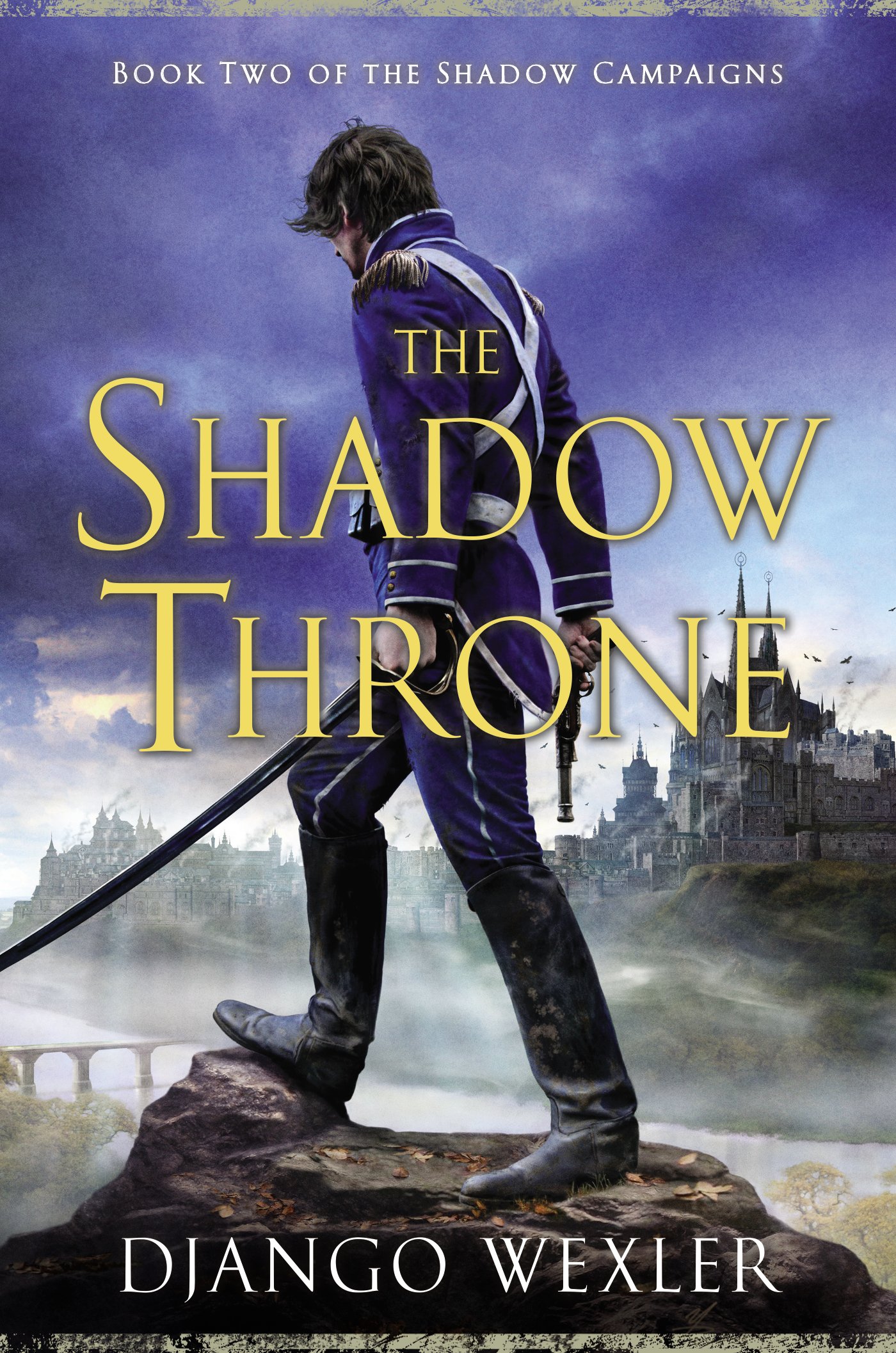
Microreview [book]: The Shadow Throne by Django Wexler

Embracing the messiness.


Django Wexler's The Thousand Names was one of my favorite books of 2013. It struck me as an unusually tight, character-based fantasy novel that mined its early modern source material effectively, while featuring some of the best battle sequences this side of the Blackwater. And it's a book that has, over time, grown in my estimation. So if you haven't read it, stop reading, go to your favorite store (or digital store) and get a copy. Then start reading this review again when you're done--I wouldn't want to spoil the fun for you, after all.

The Shadow Throne leaves the campaign trail for the messier world of political upheaval. Captain Marcus d"Ivoire and Lieutenant Winter Ihrenglass accompany the mercurial Colonel Janus bet Vhalnich on a fast ship to the Vordanai capital, where the king's death is imminent. His daughter, Raesinia Orboan, is widely viewed as weak, and Janus fears she will fall under the spell of Duke Orlanko, head of Vordan's feared secret police. As we found out toward the end of The Thousand Names, Orlanko is in league with the Sworn Church and its demon-carriers. Making matters worse, he has used instruments at his disposal to house one of the magical-ability granting demons within the princess herself--a secret that, if let out, would destroy her. But Janus also knows this, and is determined to stop Orlanko's power play at all costs.

Raesenia, meanwhile, is not the weak-willed pawn everyone seems to assume she is. Her inner demon has granted her the power of physical regeneration, which she uses to escape the palace by night (along with a super spy sidekick, of course). From there she assumes the identity of a student radical and leads a cabal of agitators in a bid to create a counterweight to Orlanko.

While the political opposition grows in power and popularity, a parallel set of developments emerge on the docks, where the lower classes are organizing behind "Mad Jane," a charismatic leader taking a stand against the oppressive practice of tax farming, i.e. the giving out of taxation permits to foreign agents from neighboring Borel (so that Orlanko and the crown can pay off their debts without dipping into state treasures). These two budding opposition movements--one bourgeois and intellectual, the other proletarian and tough--come together on one fateful night, after which nothing will be the same.

If this feels like a departure from The Thousand Names, that's because it is. And, to be honest, there were moments when I missed the set-piece battles and fighting person camaraderie that made the first book such a winner. Particularly at the beginning, The Shadow Throne shows symptoms of "bridging chapter syndrome." Pacing is an issue early on, while several plot devices that are telegraphed as "very important" early on disappear as the book progresses (though one or two promise to return in book three).

These are things I normally complain about, but here's the thing--ultimately they don't matter. Why? Because whatever faults this sequel has, they are more than compensated for by the things it does well. And not just well, but uniquely well.

Wexler has created a political environment largely based on Europe's modern-era revolutions. The greatest echo is of the French, but there are shades of the Russian and English in there, as well as of the failed revolutions of 1848. As someone who has read widely on the historical source material, I was happy to see that, while Wexler takes understandable liberties with history (this is fiction, after all, and fantasy fiction at that), he keeps things messy in the way this kind of setting should be messy. 1789 was, after all, the moment when representative government changed from a theoretical abstraction or "that thing the Americans are struggling to build way over there," to "that thing everyone will eventually want for themselves." And it's the birth moment of nationalism* too, that point after which subjects became citizens, states were reframed as birthrights and "birthright" cleft of its rigid caste privileges and given over to "the people." These birthing processes were messy and often very ugly; Wexler edits some of the ugliest bits out, but leaves most intact. 

Possibly coming in the next volume.
And Wexler gets extra kudos for not eliding the questions of class that emerged alongside this transformation. The student-led uprising, which seeks to re-establish the Deputies-General (re: a more parliamentary version of the French Estates General), is a deeply fragmented but ultimately bourgeois-intellectual movement. While it seeks to assert the "authority of the people" over the monarchy and nobility, it also defines "the interests of the people" in decidedly bourgeois terms, and treats the proletarian dockworkers movement, which aligns behind the noble Vhalnich, with deep trepidation. In French history, this rift fed into the generations-long seesaw between bourgeois republicans and the commoners aligned behind the Bonaparte family. Similar dynamics, Wexler suggests, may rear their head later in the series.

There are a number of other things I greatly appreciated about this book, not least of which is the writing itself. As in The Thousand Names, Wexler's prose is neat and unpretentious, satisfied to settle into the background, where complex character construction and thematic elucidation take place. I also enjoyed the fact that, outside Orlanko, there aren't really any "villains"--just competing interests and flawed decisions. It's hard to make that work, but Wexler does it well.

I did, however, want to see more of Orlanko himself. We are told he's hated and feared, but we don't ever really get to see it in action. Though the few scenes he's in do tantalize with potential, he's mostly relegated to the background, and I guess I'm just saying I wish there was a little more foregrounding of his character. Janus presents a different problem. He's a memorable and well-developed character--the high achieving savant whose methods are as opaque as his motives. At the same time, he's a bit too clever, like MacGuyver but with strategy instead of ordinary household items.

These are fairly minor issues, though. All in all, The Shadow Throne is an inventive, exciting and fun fantasy novel that can be read as a straight adventure but has additional value for history buffs and those who want deeper politics in their fantasy novels. Oh, and if you were hoping for more of Wexler's super well-rendered battles? There just so happens to be a real doozy at the end. Now, when does book three come out?

*Patriotism and ethnocentrism existed before 1789, but nationalism is a distinctly modern phenomenon born of the French Revolution.


The Math

Baseline Assessment: 8/10

Bonuses: +1 for utilizing a historian's view of politics (i.e. it's messy); +1 for the subtle and effective class narrative.

Penalties: -1 for moar Orlanko plz; -1 for plotting/pacing issues early on.

Nerd Coefficient: 8/10


***

POSTED BY: The G--purveyor of nerdliness, genre fanatic and Nerds of a
Feather founder/administrator (2012).


Reference: Wexler, Django. The Shadow Throne [Roc, 2014]

Friday, November 7, 2014

Call of Duty: Advanced Warfare Multiplayer

[Call of Duty: Advanced Warfare, Sledgehammer Games, Activision, 2014]

Wow, that's a long name! 

No wonder people turn to acronyms when talking about most games these days. The names are getting ridiculously long. CoD:AW, tES:S, WoW:WtoLK, FH2, etc. We've even gotten so lazy, or game type titles have gotten so long, that we use acronyms to describe game types like FPS, MMORPG, TPS, and whatever else you can think of. None of this really has much to do with the game itself, it's just an observation I made when I realized it took five seconds every time I typed or spoke the name of this game. It's the same way with movies. The Avengers: Age of Ultron? Seriously? Is that necessary? Wouldn't Avengers 2 suffice? I guess I'm showing my age here by complaining about acronyms, aren't I? I sound like my Grandpa. 


What are you, like forty?

I guess I'm also a hypocrite because I love GRRM's SoIaF:aSoS. Fortunately for me, gaming keeps me young. Without it I'm afraid I'd just be sitting at home, listening to old grunge and indie rock albums from the 90s, complaining about how much better things used to be. Instead, I've managed to retain my sense of childlike wonder as each new generation of console steps up the graphics game and polishes titles to a shiny, impressive state of jaw-dropping wonder. While I've turned into something of a music snob, video games continue to amaze me, and Advanced Warfare is no exception.


Are you ever going to talk about the actual game? 

Yes, eventually. I started writing this week before I had tried out all the multiplayer game types, so that's the place from which those loosely-related opening paragraphs came. I guess I should get to the actual title at some point, though, shouldn't I? Let's start out with the graphics. While Titanfall, Forza Horizon 2, and Destiny have impressive graphics, this is the first game I've played on a next-gen console that really felt like it was starting to maximize the abilities of the console. Take a look at a side-by-side comparison of CoD: Ghosts vs. Advanced Warfare. Even though they're both from an Xbox One, the improvements are starkly evident. 


While the first is an impressive facial re-creation, the second could easily be mistaken for a scene from House of Cards. That's probably due to the programmers using the same facial re-creation technology that James Cameron is using in the second Avatar film. In fact, when I first started the campaign I literally thought that they were using video for the cutscene instead of computer-generated imagery. The facial creases, shadowing, hair, and eyes are the closest thing to actual high definition video that I have ever seen in a game. That fact made the multiplayer take a while to get used to when I first started. Game mechanics aside, and they are deep, the visuals made it so I often found myself so engrossed in the environment that my character ended up suffering the consequences by paying for it with his or her life because I was busy just staring in amazement at the detail in the surrounding area. 

Graphic distractions


The gameplay is some of the most fast-paced I've ever encountered. Some games cause a frantic panic response by simply overwhelming you with an unbeatable number of enemies. While Advanced Warfare has Exo Survival, a style of game that is reminiscent of Gears of War's Horde mode where wave after wave of increasingly large and difficult enemies assault your four-man team, it doesn't rely on such tactics to ratchet up your stress level in the normal multiplayer modes. Instead, it uses a brand-new type of maneuvering to take the game's speed up a notch (or three) over previous iterations of Call of Duty and other similar titles. It takes quite a bit of getting used to, and although I'm not some sort of special forces killing machine, I have played every Call of Duty title since 2, Halos 2-Reach, Titanfall, and (I'm somewhat embarrassed to admit) well over 100 hours of Crucible in Destiny, so I know my way around a multiplayer controller scheme. It's rare that I have to go into an options menu and check out the button scheme in order to figure out how to manipulate a game's protagonist. I can do that on my own 99% of the time. However, I've found myself returning to the Options menu repeatedly because there are so many facets to the character controls that keeping them straight requires more instant recall than any other game I've come across. 


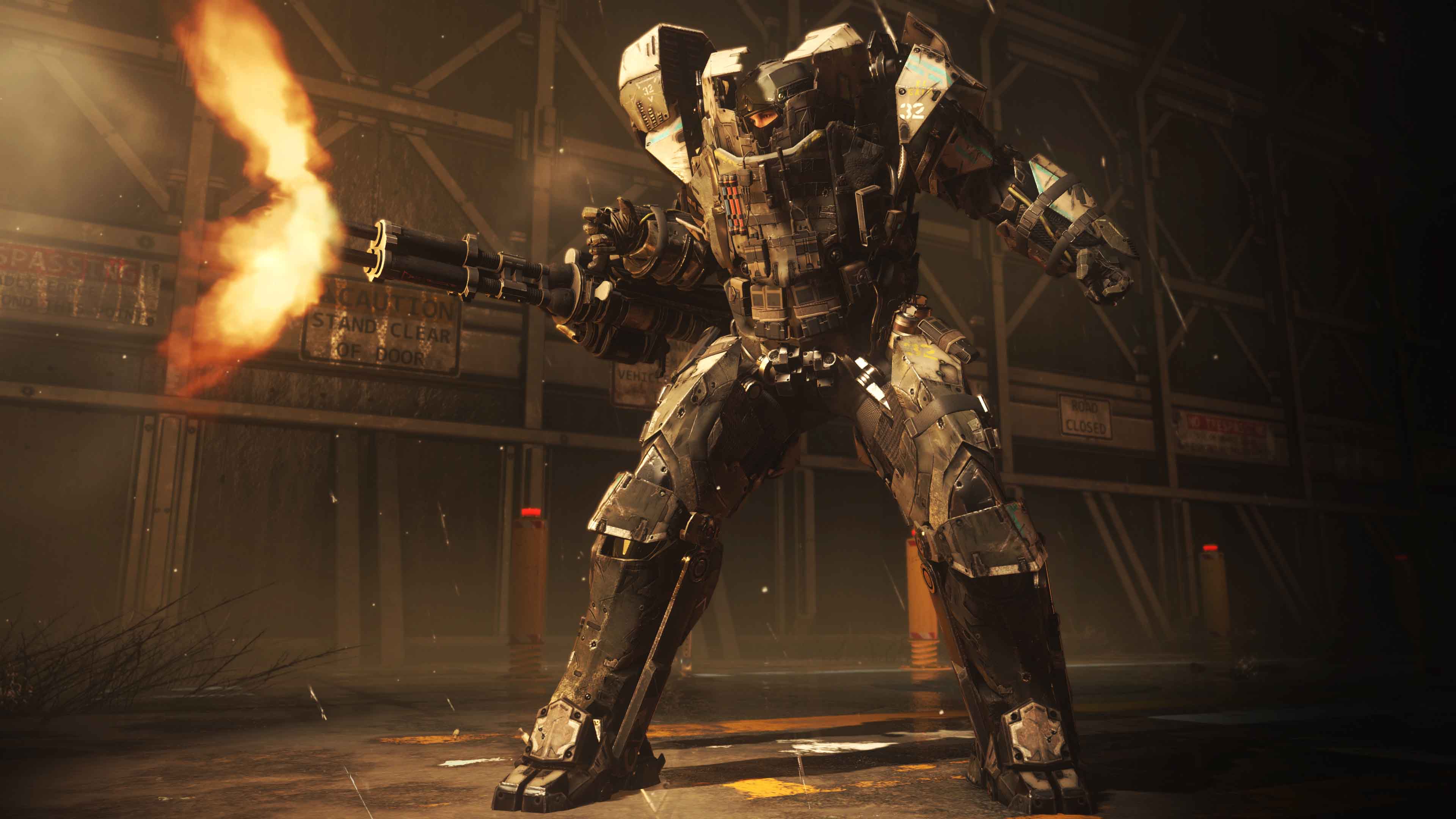
Much of this difficulty is due to the addition of two gameplay mechanics: Exo Abilities and Boost/Dodge jumps. These abilities are both thanks to your Exoskelaton, a sort of super-soldier suit that allows not only special powers like cloaking and extremely fast movement, but also mid-air directional changes that would make Superman jealous. Boost jumps have been oft-maligned as a simple copy of the mechanic in the wildly successful Titanfall title of earlier this year. Although they're probably a bit too similar for me to completely chalk it up to coincidence and ignore the likelihood that Sledgehammer Games didn't, at the very least, have the nearly 1 billion units that the previous blockbuster title's release had cleared in under a month at the forefront of their consciousness when making some of their gameplay mechanic decisions. However, there are some distinct differences between the two. 
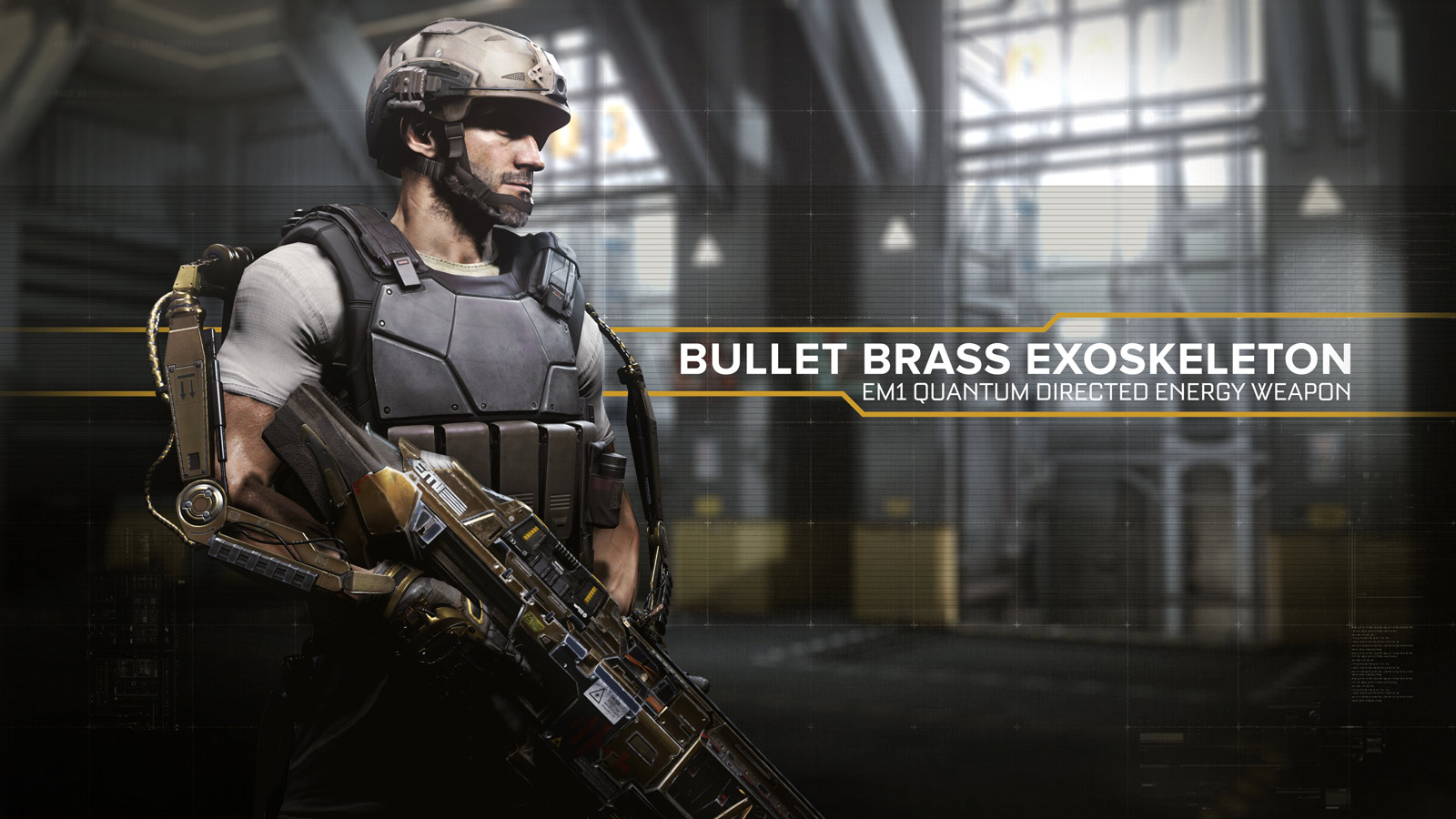


First and foremost, Titanfall's boost is about three times more powerful. The boost in Advanced Warfare only adds about six feet to your original jump, whereas the one in Titanfall takes you nearly thirty feet into the air. The other main difference is that there's a secondary boost (called a "dodge") in Call of Duty. It won't add to your altitude, but you can change direction in mid-air. It offers a shorter trajectory correction that pushes you forward, backward, right, or left. This little option has saved my bacon a bunch of times already, not to mention that the two boosts have sped up the overall gameplay in CoD multiplayer considerably. Call of Duty's multiplayers were already a bit above my head in terms of the number of people playing who seem to not only have no need of sleep, but no need of a job, family, or any of the other normal life obligations that should keep any average person from playing the game 24/7. I may not be the best gamer in the world, but my 44,095-point Xbox Live gamer score belies the fact that I'm, at the bare minimum, a competent player. And yet these guys just annihilate me like I'm a blind, deaf, and dumb 2-year-old with no thumbs. It's embarrassing, to be entirely honest. 


The Exo Abilities are basically just bonus effects that slightly aid your character in several different ways. The shield has been pretty useless for me so far. You have to have it aimed directly at an opponent for it to stop their fire, and I have enough trouble just pointing my laser-sighter machine gun at people. I can't be bothered to move a riot shield around 120 degrees to try in vain to save my worthless life. By the time I get it anywhere near the path of the bullets, I'm already dead. Overclock allows you to run at a heightened rate of speed. It's somewhat useful except for the fact that a simple jump and secondary boost does a better job of moving you along and it is more effective at moving you out of the firing line in the process. Exo Stim is supposed to give your character extra health points, but if it does they aren't enough to keep me from inevitable massacre. I'd need at least two or three of these at a time to make a noticeable difference in my kill/death ratio. The cloak is actually fairly useful at distance, but if an enemy is anywhere near you, you just look like translucent rainbow jelly. Exo Mute silences your movements, thereby making you harder to spot on enemy radar. I have yet to open up the Hover, Ping, or Trophy System Exo Abilities, but it's pretty obvious that Hover allows you to remain in the air for a longer period. Ping shows enemy Exo movement like Stim and Hover. The Trophy System is a passive aid that destroys up to two enemy projectiles when they come in close proximity to your character. 


I can't emphasize enough the speed of this game. I've probably been dying every 5-10 seconds on average. That's a bit much, even for an older gentleman like myself. The leaders who come in first place are still posting 10-15 deaths per five-minute match. Everything happens so fast compared to even the quickest of online multiplayers. On the one hand, it's a bit aggravating. On the other, it keeps you on your toes and you certainly don't get bored easily. The addition of the Boost/Dodge abilities can keep you alive when you would have easily been dogmeat in previous iterations of CoD, when used correctly. The Exo Abilities, while not the overpowering advantage that a Titan gives you over a Pilot, add just enough of an edge to help you eek out an extra kill here and there. They did a fantastic job of adding a plethora of new mechanics without completely changing up the basic way the game is played. While Titanfall and Destiny felt like totally new ways to go about the online multiplayer experience, there's something familiar about Advanced Warfare. It's like they just gave Modern Warfare 3 a healthy dose of steroids and some technological doo-dads and sent it on its way. It is certainly quicker and more stressful than any of the previous Modern Warfare games, but it isn't a complete deviation from the formula that has proven so successful over the years. I guess what I'm trying to say is they did just enough tinkering to make it feel fresh without going overboard and turning it into a completely different game. I, for one, am pleased with the outcome. 

Multiplayer Modes


First, let me get my complaints out of the way so we can get to the good stuff. I only have one strong one, and that is the elimination of Squad Modes. I was so glad when Ghosts came up with this co-operative multiplayer mode that allowed you to take on artificial intelligence with your fellow gamers rather than always facing down enemies that seemed to have been trained by R. Lee Ermey himself. I enjoyed being more evenly matched against my foes rather than feeling like I did when I was 12 and that dude who always played as Guile in Street Fighter 2 showed up at the arcade because I knew I wouldn't be winning any more matches after that. Without Squad Mode, it seems like there's always a "Ranger98" or "Seal85" who is obviously current or recently retired special forces member there to take me out from some ridiculously long distance with a shot I couldn't make by accident if I had 100 tries at it. 


Okay, enough complaining. The ability to customize your characters for your specific style of play is unprecedented. You have 13 points to spend on various perks any way you see fit. You can choose to go the Rennaissance Man route like I did and try to get a little of everything, or you can focus solely on your weapons or Exo powers and really max them out. This really is a multiplayer gamer's dream year's cap of perfection so I'll stop ruining it by acting like a baby because I suck at the stuff. Here are the offerings in Advanced Warfare

Same old, same old


Many a CoD veteran will be glad to see that lots of their old favorites have returned to the multiplayer mode list. Standards like Team Deathmatch, Domination, Kill Confirmed, Search and Rescue, and Capture the Flag are back and better than ever. For the uninitiated, Domination requires you to capture and hold one of three points around the map for as long as you can. The team that holds the most points the longest wins. Kill confirmed requires you to pick up a pair of dog tags that appears where a recently dispatched enemy met his or her untimely end. Grab the tags and you will get the full 100 points of XP gained from a normal kill in other games. Allow a member from the other team to beat you to the tags and you only get half the points a kill would normally bring. Search and Rescue is similar except for the not-so-minor detail that if you happen to be the unlucky chump that gets dispatched, you'd better pray one of your teammates gets to your tags first or you'll be watching the rest of the round from the sidelines. I didn't especially care for this game mode because, as I'm sure you've guessed, I spent a LOT of time in "Spectator Mode," watching other gamers run around the map while my sad ghost was powerless to do a thing. Capture the Flag and Team Deathmatch are pretty self-explanatory. If you don't know what they are by now, I'm afraid there's nothing I can do for you except hope your mom lets you out of the basement sometime this decade. 

New and unique

Although Advanced Warfare contained a majority of game modes that have been tried and true in everything from Halo 2 to the first Modern Warfare, it was some new twists on old modes and other never-before-seen game types that make this Call of Duty look and feel like something you haven't seen a dozen times before. 

Hardpoint


Although Hardpoint isn't a new game mode, the way it's handled is somewhat of a change from the traditional multiplayer game. As in Domination, your team is required to capture and hold a specific spot or "hardpoint" on the map. However, instead of three there is only a single spot and it is constantly moving. In my short experience with the game, I'd say the hardpoint makes at least five moves throughout the 5-7 minute long game. You can have your entire team strategically placed around a solidly held hardpoint, only to have it disappear and return somewhere completely across the map. This manages to keep complete dominance from occurring as can often happen with 2 of the 3 zones of control in Domination. This seemingly small and obvious shift in the pattern of play makes all the difference in this being just another retread and it being a new and exciting way to approach the game's multiplayer. 

Uplink


This is where the game really shines, in this writer's humble opinion. Among the new types of multiplayer mode is a highly enjoyable game titled Uplink. It's essentially Capture the Flag with some futuristic and sport-like twists in the game mechanic. One of your team members has to grab a module and carry it across the map to a satellite uplink module. It's kind of like a cross between rugby and football with lots of bullets thrown in for good measure. This was clearly the biggest change in the multiplayer game modes and felt at times like more of a sports game than an FPS competition. Of course, the other team is constantly trying to take out your ball carrier with heavy machine guns and energy weapons, but other than that it had all the makings of some sort of future-ball sport match.  

Momentum
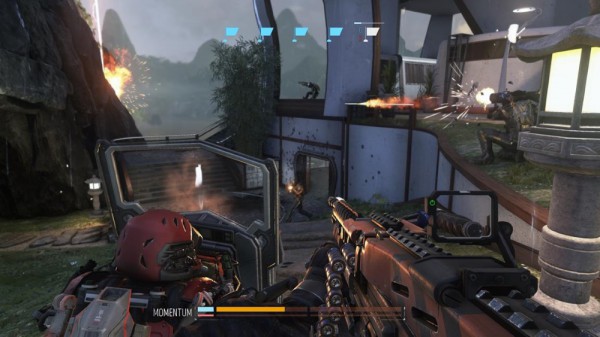


I'll be honest. I didn't enjoy this game mode as much as many of the others. It is also similar to Capture the Flag, but in it there are multiple flags and your team gains momentum (and XP) the more flags you carry to their final destination. The problem that I had with it was that I seemed to die with more frequency in this mode than any other, for some reason. I'm guessing it was the close proximity of both teams to the flag points that made that happen, but that's a regular component in most of the games where something needs to be captured and held or delivered. It also could have been that this was the final game mode I attempted and it was after midnight, so all of the kids had gone to bed and the only players that were left online were the hardcores who spend 40-50 hours per week at one online multiplayer title or another. Whatever the reason, I had trouble lasting more than five seconds with any given life and the constancy of my demise was rather frustrating. That said, the idea behind Momentum is a good one and I will definitely be giving it another chance during the light of day when the overall player skill level dips a bit more with a higher population of average FPS gamers like myself online. 

Maps


So far, Advanced Warfare is limited to four maps in its multiplayer modes, but what maps! They're large, contain a plethora of unique elements like sniping spots and close quarters combat areas, and they had sometimes as many as four or five levels on which battle takes place. With the addition of the Exoskelaton suits and their aid in three-dimensional movement, this felt every bit as widely traversable an environment as Titanfall and its parkour-like wall-running warriors. While none of the maps were quite as big as the ones in that other jet-pack toting multiplayer hit, they never felt small or confined due to the wide array of vertically varied areas that you were able to traverse. As I learn the maps more closely, as is inevitable in all multiplayers, they could begin to feel a bit more confining and limited, but in my first few days with the game I never felt like I'd run out of places to go. As a matter of fact, I only ran into the "end" of a map on a few occasions, and even then there were always at least two or three choices of where to head next so I never felt cornered in by limitations in the environment. 


 A brief summation for the gamer nation

I'll admit, I was skeptical about this game when I picked it up. I was actually planning to review Shadow of Mordor this week but it turned out to be too long to finish (as many RPGs do), so I made the decision on-the-fly to cover the multiplayer aspects of the latest in this, the most popular war simulating FPS in history. Looking back on that decision, I have no regrets. I had enough time to give each game mode its due without selling any of them short on time and I enjoyed the heck out of the experience, to boot! This isn't just the next Call of Duty game. It's a radical shift in how the franchise looks at its most popular of offerings, the multiplayer modes, and Sledgehammer's first foray into the CoD universe has most definitely thrown down the gauntlet to Treyarch and Infiniti Ward, the other two companies in Activision's new three-year development cycle for the series. I look forward to many more hours enjoying this title's unique game modes, including its fascinating take on the not-so-traditional war multiplayer.


The Math

Objective Score: 9/10

Bonuses: +1 for taking some real chances in the way they approached what has become a somewhat formulaic and predictable gaming format with only cosmetic changes being made to what was essentially the same game. Now let's hope they've taken the same approach to the campaign!

Penalties: -1 for all the dying. I mean, come on, every 5-10 seconds? I know I'm not a multiplayer super-hero who spent time in the special forces and uses actual military tactics in the game, but that's still a pretty excessive rate of frequency of death, and I'm not exactly a noob at this sort of thing, either. 

Nerd Coefficient: 9/10. Very high quality. A standout in its category. 

See our scoring system here.  

Thursday, November 6, 2014

Thursday Morning Superhero: Movember Edition

Despite protests from my wife, I am once again clean shaven and baby faced for the month of November.  She understands the Movember is once again upon us and I will be attempting to grow a mustache to raise funds for men's health.  As I reflected upon my poor attempt to grow a mustache, I thought it would be worth our time to consider the top five mustaches in comics.  If you are so inclined and would like to support my Movember campaign you can donate here.


5. J. Jonah Jameson - style: toothbrush - I struggled where to put J.J.J.'s mustache on this list.  Anyone who rocks the Hitler mustache with the confidence that this newspaper magnate does is commendable.  It is also always fun to see him give Spider-man the business and rule The Bugle with an iron fist.  In earlier versions of the list I had him as high as number 1, but upon further reflection feel that he should be happy that he made the list and that he will remain relevant longer than the medium that built his empire.


4. Sinestro - style: classic villain - How could the Green Lantern corps not known that Sinestro was evil.  Look at that mustache!  I applaud his creators John Broome and Gil Kane for embracing the villain stereotype so completely. It's as if someone plucked his head from an old timey black and white movie and pasted it on a yellow body suit.  Such a great visual statement for one of the top villains of all-time.  Would have been higher on the list, but it does feed into the negative stereotypes of mustachioed individuals.


3. Abraham - style: handlebar - Abraham emerged as one of the stronger characters to every join Rick and the gang.  While he had his trust issues and his own ideas about what was best for the group, he was a good dude and the mustache made him more likable.   The handlebar mustache screams that he is a guys' guy, but that he isn't to be crossed.  I think this is best epitomized when, after some serious hesitation, he reluctantly saved Rick's life.  With no Abraham, there is no Rick, and thus he is granted a spot on this list.


2. Drake Sinclair - style: dapper - Drake might as well be the spokesperson for Movember.  Look at the smooth bowler hat, that well groomed stache and his impeccable fashion sense.  While he may wrestle with his inner demons, Drake would have no problem fitting in with the local hipsters purchasing organic quinoa from the bulk bins at the local food co-op.  Appearances are quite deceptive though, as Drake is no stranger to wielding some truly devastating guns.  Definitely worthy of finishing runner-up.


1. Axe Cop - style: cop - Of all of the characters in this list only one can boast that he has had his mustache since birth.  Thanks to an injection of mustache DNA, Axe Cop has always been hip to the Movember campaign and has even had rumors that his life depends on his precious push broom.  There is no question that Axe Cop would not have the impact he has had on the comic scene without his iconic mustache.  I feel that I should salute his mustache each time I see it and have a strange craving for apple pie and Lee Greenwood.

POSTED BY MIKE N. -- comic guy, proudly raising nerdy kids, and Nerds of a Feather contributor since 2012.