Showing posts with label 1990s. Show all posts

Thursday, April 20, 2023

Netflix celebrates 30 years of Power Rangers

In a world afflicted by chronic nostalgitis, only one team of heroes can defeat humankind's mortal enemy... again

The 30th anniversary special episode Power Rangers: Once & Always is a fairly standard Baddie of the Week plot that succeeds at summarizing the show's formula for the ages: enemy shows up, new hero is recruited, big robots fight, enemy explodes, the end. Why fix what ain't broken? My generation ate it up for (at least) 145 episodes and a movie before the first change of costumes, and we loved it. The Power Rangers franchise is now on its 29th season, healthy and well, and, although it has nowhere near the budget or the public presence of the bigger superhero properties, it shows no signs of decline. We may very well go on to have more Power Rangers for another three decades.

Given the show's uninterrupted existence, its part in this century's plague of nostalgic legacyquels has a very different effect compared to productions that were canceled at some point and revived. Power Rangers already has an established tradition of bringing past heroes back for reunion episodes. The franchise embraces the motto "once a Ranger, always a Ranger" in a way that keeps old stars alive in fans' memory. Of course, Once & Always doesn't fit in the present continuity, but that's also true of numerous teamups where previously depowered heroes somehow come back to save the world one (additional) last time.

What sets Once & Always apart from other reunion episodes is that it's focused entirely on the original cast, the team remembered by the first generation of viewers, which allows the plot to offer those now older viewers a more violent and lethal adventure than do current seasons. As an homage to the late and dearly remembered actress Thuy Trang, who played the original Yellow Ranger Trini Kwan in seasons 1 and 2, the story focuses on the team's grief over the loss of their sister-in-arms. The opening of this episode implies that Trini Kwan returned to the team and continued having adventures into her mid-40s, but the character is never shown out of her superheroine suit. The same treatment is used with the Pink, Red, and Green Rangers, who are only seen in costume because their original actors didn't join the production (Amy Jo Johnson declined to reprise her role, Austin St. John is dealing with legal trouble over charges of financial fraud, and Jason David Frank took his life last year).

That leaves us with only two returning heroes from the original team: David Yost as the Blue Ranger and Walter Jones as the Black Ranger (along with fellow stars Steve Cardenas as the second Red Ranger and Catherine Sutherland as the second Pink Ranger, plus Johnny Yong Bosch and Karan Ashley in minor supporting roles). In this adventure, the Power Rangers must reassemble after a botched attempt to revive their mentor Zordon causes the return of their first enemy, Rita Repulsa, who starts capturing multiple teams of Power Rangers across the world to fuel a time machine she plans to use to ensure her past self's victory before the first team is ever recruited. During the crisis unleashed by Rita, Trini's daughter Minh assumes the mantle of the Yellow Ranger, avenges her mother, and helps save the world.

Let's forget for a moment that such a reunion shouldn't even be possible (the dinozords were destroyed by second-season villain Lord Zedd, the Green Ranger was permanently depowered shortly thereafter, the dino power coins were destroyed by third-season villain Rito Revolto, and the second Pink Ranger never had dino powers). None of that matters for the purposes of this story. This is not a continuation of the 90s show, but a celebration of a generational milestone. Of all the nostalgia grabs that inundate us these days, Once & Always is the least cynical. It never pretends that the show was anything more sophisticated than a corny campfest with facile moralizing and barely passable acting. What matters to the viewers of my generation is that it was our corny campfest with facile moralizing and barely passable acting.

The charm of Power Rangers has always rested on its sincere use and reuse of very flat archetypes. When I was an unremarkable awkward nerd, the Blue Ranger taught me that the unremarkable awkward nerd could be best friends with the hypermuscular jock dude and with the fashionable valley girl plus pilot a robot dinosaur to kick butt with plus save the world in time to run home and finish homework. These characters connected with my life in a way that Goku and Wolverine could never hope to. Years later, when I learned that the Blue Ranger actor David Yost was queer, I felt an even closer link to the character. To this day, my phone is set to play the Power Rangers communicator beep tune when it gets a text message. It's hard to believe that this extremely simple, repeatable, color-coded story has been with me for 30 years now, but its basic format still moves me. While acknowledging all the problematic implications of putting child soldiers in front of magical warlords (and the crushing blow to a teenager's self-esteem that is to watch a bulked-up twenty-something play a high schooler), I'll still gawk at the comically huge rayguns, the impractical poses, and the contortionist robots. That's the significance of this anniversary episode. These are the characters who taught my generation about goodness and bravery. These are the characters I filled notebooks of atrociously drawn fanfic with. These are my heroes. Once and always.


Nerd Coefficient: 6/10.

POSTED BY: Arturo Serrano, multiclass Trekkie/Whovian/Moonie, accumulating experience points for still more obsessions.

Friday, February 26, 2016

NERD MUSIC: Weezer

I don't know if it's fair to call Weezer the Grandpappy of Nerd Music, but they were certainly the first band I came across that foregrounded the kind of nerdy experience I was having, and for me, they were certainly the most impactful.

I was at what was basically a summer camp for geeks in 1994, and somebody had a copy of the DGC Rarities, Vol. 1 CD with Weezer's "Jaime" on it. I fell in love with their sound, and somebody else down at the end of the hall had Weezer, and a small group of us all kind of discovered the band together.


For a bunch of 13- and 14-year-olds (boys and girls) who were all kind of terrified of romantic relationships, hearing a band (on the same label as Nirvana!!) sing about being awkward around the opposite sex, holing up in your room listening to records (like we were doing right at that moment as we listened to them!), reading comics and playing D&D, it felt like the kind of band we would have been in if we'd been able to write or play music at all.


And then they blew up with songs like "Undone" and "Buddy Holly." Their success reinforced the idea that we were weird, but we were not alone.


And Weezer was also surprisingly heavy. So where Nirvana was my gateway band into metal (and I got WAY into metal by 1996), when Pinkerton came out and it was distorted and full of feedback and legit heavy but still with the catchy songwriting of Weezer, I happily still listened to Weezer alongside your Sepultura and your At the Gates and your Acid Bath.

More important than how Pinkerton sounded, though, was what it was about. More than anything, it validated Rivers Cuomo as "one of us." He was now this internationally famous rock star, but the first song on the record is called "Tired of Sex," and it wasn't about how great being a rock star was, it was about how even when you're surrounded by women and fame and money, inside you're still the same awkward kid that feels better/safer in your room. I guess on some level maybe that's a bummer, but for me, and a lot of my friends at the time, it wasn't. It felt like the opposite.


About a year later, I had a roommate who played guitar, and I started trying to teach myself to play. I'd been playing drums in metal bands for a few years by that point, but no guitar. So I downloaded a bunch of tabs from this new Internet thing, and I taught myself about half of Pinkerton. This one was fun to play sitting on the West Mall at the University of Texas:


And then Weezer went away. When they came back, Rivers Cuomo disavowed my beloved Pinkerton in interviews, and they were never the same. But that's ok. It was pretty great while it lasted.

And finally, as an aside, Pinkerton is also the source of my favorite-ever misunderstood lyric. For a long time, one of my friends thought the line "Why bother? It's gonna hurt me / It's gonna kill when you desert me" was "My father is gonna hurt me / He's gonna kill when you desert me." Sure, the song is actually called "Why Bother?" and why somebody's father would kill them if their girlfriend left was a mystery. but it made the song way, way darker.

Monday, November 23, 2015

STRANGER THAN FICTION: Masters of Doom by David Kushner

The Two Johns in Prose


Growing up, I was an enormous id Software fan. For me, it started with a pirated copy of Wolfenstein 3D on my Packard Bell 386, but Doom 2 was really my jam. I spent countless hours finding and playing user-made levels and modifications. I lived through the split, when John Romero broke from id to form Ion Storm. I anxiously awaited each new game. Even now, hearing a Doom alum worked on something gives me enough reason to take a look at it. I thought Masters of Doom wouldn't contain much I didn't already know, but I was quite wrong.

Masters of Doom: How Two Guys Created an Empire and Transformed Pop Culture primarily follows the two Johns of id Software, John Romero and John Carmack. Though the narrative involves all members of the id team, it starts with the two Johns. Masters of Doom follows their lives from early adulthood, through the formation of id Software, their formal split, and closes shortly after the release of Quake 3: Team Arena. It's primarily focused on the early days of id, Doom, and Doom's impact on the company.

Masters of Doom is a excellent look at the wild days of 90's game development. I'm talking about when a team of less than 10 can make a game that changes the game industry and makes them bazillions of dollars, which is precisely what id did. Even more incredible, they did so without much of a plan beyond "make games" and "have fun". When you consider how video game hits today are made, it's shocking to me that they got as far as they did. Sure, we occasionally get a Minecraft, but most games are done with teams of hundreds.

What is also surprising is how much internal strife occurred along the way. id made big moves, and stepped on a lot of toes along the way. It's arguable that they didn't even properly utilize the resources they had, with people instrumental to their games' development either half-hearedly doing so, or outright unhappy with the games direction. When Romero split from id, it was huge and public because Romero was a huge, public figure in the gaming community, but there were equally important and devastating losses throughout id's history.

If you're not a fan of Doom, or id Software's games, or game development in general, there might not be a lot of reasons to read Masters of Doom. It knows its audience, the 90's PC gamer, and its audience should know something about the time before heading in. However, if you have any interest in those things, Masters of Doom is truly compelling for providing an inside look at one of the most important video game developers of all time.

***

POSTED BY: brian, sci-fi/fantasy/video game dork and contributor since 2014

Reference: Kushner, David. Masters of Doom: How Two Guys Created an Empire and Transformed Pop Culture [Random House, 2003] 

Monday, April 13, 2015

CYBERPUNK REVISITED: Snow Crash by Neal Stephenson


Dossier: Stephenson, Neal. Snow Crash (Bantam, 1992)

Filetype: Book

File Under: Postcyberpunk

Executive Summary: Hiro Protagonist loses his job as a delivery driver working for the Mafia-controlled Uncle Enzo's Pizza, and nearly loses more than that as punishment for delivering a pizza late, but 15-year-old skateboard Kourier Y.T. takes pity on him and gets the delivery there on time. This begins the unlikely partnership in an alt-future Los Angeles dominated by corporate city-states and "burbclaves" between Hiro and Y.T. Hiro is a world-class programmer and was one of the architects of the Metaverse, a networked, virtual reality simulation that millions around the world log into daily, but now he's a freelance hacker and intelligence stringer for the Feds, who are still on the scene but only just. He also happens to be the world's greatest swordsman -- both within the Metaverse and without. Y.T. lives in a burbclave with her mother, who works for the Feds and, Y.T. thinks, is in the dark about Y.T.'s job as a Kourier. When Hiro's other (and materially more successful) Metaverse co-creator Da5id succumbs to a computer virus called Snow Crash that not only destroys the operator's system but also the operator's brain, Hiro begins investigating inside the Metaverse with the help of his ex-lover and Da5id's ex-wife Juanita, and enlists Y.T. to help out in the real world. Juanita clues Hiro into a connection between ancient Sumerian linguistics, the Tower of Babel, and a bizarre religious sect backed by mega-industrialist L. Bob Rife that lives on a sprawling offshore colony called The Raft. A gigantic Aleutian hitman named Raven fits in somehow with both Snow Crash and The Raft, and if Hiro can't figure out how, then he, Y.T., and Juanita will all wind up dead, and human technological culture blasted back to the stone age.

High-Tech: While there are some cool future-tech devices in Snow Crash, like the magnetic harpoons the Kouriers use, and the rat-things that act as security in all Mr. Lee's Greater Hong Kong franchulates, the chief piece of technology that defines the book is the Metaverse. Think a planet-sized VR Sunset Strip where you have to pay real money for virtual real estate, and if you can afford them, virtual Googlebots called Librarians will dig up any information you can desire just by speaking. Until the Snow Crash drug comes along, the Metaverse and the real world are separate, and dying in the Metaverse is a minor inconvenience. After? Well...

Low-Life: Hiro lives in a U-Stor-It storage unit with a roommate, a noise-rocker named Vitaly Chernobyl. Real estate has become so expensive in LA that families with 'roided-up teenage sons and regular jobs live in burbclaves in the Valley, the rich, as ever, live where they please, and the rest -- like Hiro -- scrape by where they can and carefully step around used syringes and the like when exiting their front doors. Along with the disaffected youth and would-be scenesters that circle Vitaly's band, Hiro has an easy relationship with drug dealers and others who dominate an environment where crime is more of a nebulous concept, depending on what kind of franchise you happen to find yourself in.

Dark Times: Snow Crash chiefly concerns itself with a small cast of characters who are plugged in and savvy to at least the potential of something nefarious going down behind the curtain. The majority of humanity beyond, though, are left largely uncommented-upon. Places outside of the franchulates have become lawless warzones, as witnessed through Y.T.'s trip to Compton, but for most middle-class people, life is probably pretty great. They're all self-medicating, driving big cars, living in cookie-cutter neighborhoods and following the paths expected of them. Hiro, et al., though, are onto the fact that there is a dark undercurrent beneath it all, mostly stemming from L. Bob Rife's having franchised out religion to The Reverend Wayne's Pearly Gates, which is helping to funnel people to The Raft, and potentially doing much worse.

Legacy: There are some influential books, and then there are influential cultural events. Snow Crash is the latter. Where Neuromancer radically re-defined the books that came after it and started a trend that grew larger, that movement reached something of an apotheosis in Snow Crash, a book that literally defined aspects of the culture itself. Ever wonder why icons that represent you on the internet are called "avatars"? While not the first person to use the word in that context, Snow Crash is why it stuck. Stephenson's envisioning of the Metaverse came to shape gaming, with Michael Abrash, the creator of the game Quake, and others freely admitting the debt they owe the book in how they came to think of networked 3D computing. Google Earth? That's pretty much how Hiro's Librarian shows him around. Like Neuromancer, Stephenson's book landed on Time's list of the 100 greatest English-language novels of the 20th century, alongside authors like Fitzgerald, Nabokov, and Pynchon, and genre luminaries like Dashiell Hammett, Raymond Chandler, Gibson, and Philip K. Dick. Nice company.

In Retrospect: Neal Stephenson writes virtuosic prose. Humor, attitude, clarion insights, and all around verve leap off the pages of Snow Crash, making it a tremendous amount of fun to read. Hiro and Y.T. are both intelligent and resourceful, and enjoyable people to spend a book with. It is also refreshing, even today, to read a science fiction novel where female characters give as good as they get, and -- while they may be regarded as sexual objects by other characters in the book -- are not treated like sexual objects by the book, itself. Hiro and Juanita, for instance, despite a past relationship never hit the sheets in the course of the book.

Stephenson also allows us to have fun inside the world he's created, apart from the main narrative of the book. Brief chapters will introduce a new character, follow him, her, or it through an adventure that somehow touches on the main action, and opens a wider window onto the world of the story. Mafia head Uncle Enzo's unexpected interactions with Y.T. are particularly fun, and walking around inside the mind of a Rat Thing is unexpectedly rewarding and touching. The ways in which elements of the world that at first appear structural -- such as the abundance of Reverend Wayne's Pearly Gates franchises -- but eventually become central to the plot are examples of first-rate literary craftsmanship.

The only place where the book falls down a little bit is in the massive info-dump regarding ancient Sumerian and the idea of a language as ones-and-zeros for human beings. The long stretches of the Librarian filling Hiro in on Sumerian mythology are tremendously evocative of, say, the section of the Mythology text book your teacher skipped over or the liner notes to a Morbid Angel album, so while interesting, they slow down the book's momentum. It feels like Stephenson understood this, however, and there's a lot of pinging back-and-forth between Hiro's conversations with the Librarian and Y.T.'s real-life escapades, which become increasingly perilous. And as Zhaoyun remarked in his review of Stephenson's The Diamond Age, this book also ends rather perfunctorily, with almost literally zero "falling action." That is to say, it happens real quick.

Nevertheless, this is a book that lives up to the hype. And for a 20-plus-year-old book concerning network technology to still make a modern reader think "Wow, it'd be cool if we could do that," that's a helluva neat trick to pull.

Analytics

For its time: 5/5
Read today: 4/5
Cybercoefficient: 9/10

Posted by Vance K — who once roomed with a guy who thought Snow Crash was the best book ever written, and, on a separate occasion, boxed that roommate in the backyard while nerds of a feather comics & board game correspondent Mikey kept the ring clock. True story.

Friday, June 27, 2014

Wolfenstein - The New Order

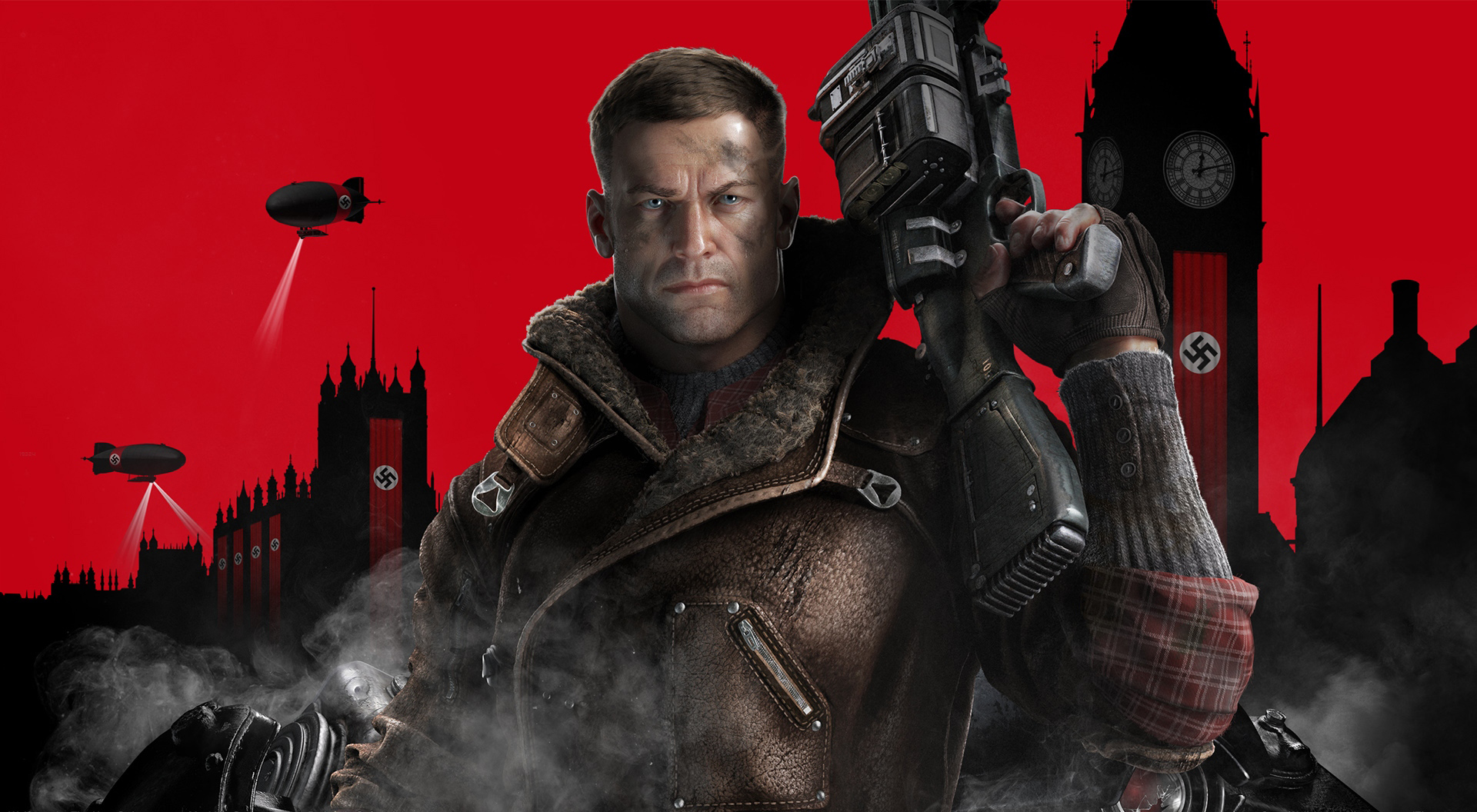
[Wolfenstein - The New Order, Bethesda Softworks, Machinegames, 2014]

A classic re-visited

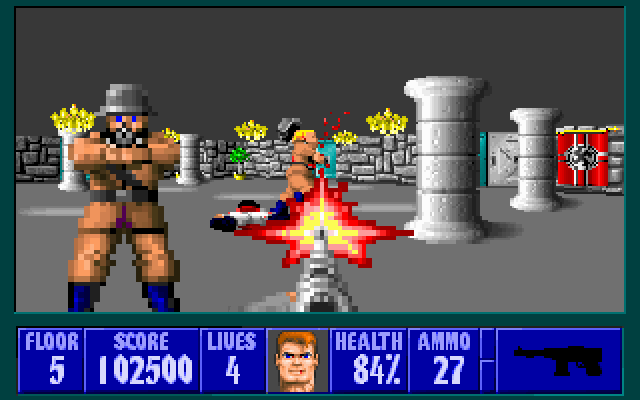
The New Order is the latest in a series that goes back to 1981. Unfortunately, even though I owned a Commodore 64, I didn't play Castle Wolfenstein. It was available on the early system, among others. My first initiation with this classic was with Wolfenstein 3D on my little IBM PC in 1992. In it, you play as Captain B.J Blazkowicz, captured by the Nazis and trying to escape from one of their castles. It was available as shareware (a free game, for those of you born after 1977 unlike me) and is generally credited with being one of the first games to popularize the first-person shooter genre.


I spent weeks, neigh months playing this literal game-changer. It was my original experience with the first-person shooter and my memories are fond, to say the least. Therefore, you can understand why I was noticeably reticent when I heard that they were re-vamping the series yet again. A version of the series came out for the XBox 360 and PlayStation 2 in 2009 to mediocre reviews that generally left fans looking for more. That's why when a new version came out for the XBox One, I had my doubts. That said, I was generally pleased with the result. For one thing, Bethesda Softworks took the reigns. The publishers of personal favorites Fallout and The Elder Scrolls helped to put my mind at ease. For another, the premise is scrumptiously crunchable. It takes place in an alternate universe in which the Nazis won World War II by nuking the U.S. Who couldn't get just a little bit excited about this Tarantino-esque re-writing of history with twinges of childhood nostalgia thrown in for good measure? Only a true Nazi, that's who!


what kind of world did hitler create?

Hitler created a pretty awful place to live, to literally no one's surprise. It's mostly concrete and the Beatles sing neo-nazi ditties because it was that or go to the death camps. When returning as B.J. Blazkowicz, you have been in a coma for over 14 years. You went into the coma in 1946 and didn't come out again until 1960 when the asylum you've been living in is being "liquidated." The kindly old doctor and his wife were killed along with the rest of the patients. The only survivors are their daughter and Blazkowicz, who conveniently wakes up just in time to kill a few Nazis, save her life, and escape. 


You have to be able to suspend a little disbelief to enjoy this one, like forgetting that people who have been in comas for fourteen years can't walk, much less snap necks and fire automatic shotguns within minutes of waking up. However, if you can perform this minor feat of mental gymnastics, you're in for a good time. You eventually meet up with the resistance and take the fight to the Nazis and General "Deathshead" Strasse.


A good multiplayer decision

With nearly everything coming out these days having one including games that probably shouldn't like Grand Theft Auto and Red Dead Redemption, it is refreshing to see a game choose to put all of their effort into creating a quality singly player instead of spending time and effort to make a mediocre and unecessary multiplayer component. According to senior gameplay designer Andreas Öjerfors, the game doesn't contain a multiplayer due to a desire to create the best single player experience possible. "If we could take every bit of energy and sweat the studio has and pour all that into the single-player campaign, it gives us the resources to make something very, very cool, compared to if we would also have to divert some of our resources to making multiplayer." 


In my humble opinion, not enough games make this tough decision today. I realize that the replay-ability rises considerably when companies take this step, but not every game is designed for a multiplayer experience. In the aforementioned Grand Theft Auto, we all played the game with the same single character(s). It simply makes no sense for us all to take the protagonist(s) into a multiplayer game. The math just doesn't work. Even with number five's three main characters, it still felt awkward. With games like Call of Duty and Titanfall that have chosen up front to be multiplayer games, I say run with it. However, there are plenty of titles out there that have a multiplayer that feels tacked on. With these games, they should have just focused their time and energy on the campaign. Instead, you end up with two halves that don't make a whole and a game that feels unfinished. Sometimes adding a multiplayer just because you can takes away from the overall experience and simply shouldn't happen. 


the meat and potatoes


This game was a whole lot of fun. I don't see it winning any Game of the Year awards, but that doesn't mean it wasn't worth picking up. The gameplay is solid. The graphics are impressive, if not mind-blowing. The alternate-history aspect of the story line is intriguing. All-in-all, this is a really good game. I won't go so far as to call it great, but I have trouble when trying to find any flaws in this one. Give it a look. You won't find a reason to be disappointed. 

the math

Objective Score: 7/10

Bonuses: +1 for the use of an alternate universe where the Nazis won WWII. Re-writing history is a winning proposition as proved by Inglorious Basterds.

Penalties: -1 for the need to suspend your disbelief on a regular basis. Once or twice is okay. Every two minutes is a bit much. 

Nerd Coefficient: 7/10 A mostly enjoyable experience.

Friday, September 13, 2013

Road Rash

the classic returns!

In blog form, anyway. I spent countless hours on this beautiful motorcycle racing game with combat mechanics built in. I first played it on the 3DO, a system barely anyone remembers any more. The gist of the game is that you were in a motorcycle road race with, I believe, twelve or fourteen other computer riders. You could use a variety of weapons including clubs, crowbars, nunchuks, and cattle prods to knock them out of your way in an attempt to finish third or better. Failure to do so meant you had to repeat the race and could not proceed to the next level.

The version on the 3DO had one of the best soundtracks to any video game...ever! It's actually where a friend and I discovered Monster Magnet. It also contained Paw, Soundgarden, Swervedriver, and Therapy?, all of which made for a much more intense driving experience.

evolution


With the popularity of the game, six sequels were spawned over time. The next one that hooked me was on the original PlayStation. As you can see above, the graphics got considerably better on the newer machine, but the 3DO version and its soundtrack will always hold a special place in my heart. That said, I was just as addicted to the PS1 version as I was to the 3DO. I spent hours and hours knocking opponents with names like 'Skid' off their bikes with a chain.


Unfortunately, there hasn't been an original Road Rash game made since the Game Boy Advance put out a port in 2003. Come on, EA! This game is one of the best ever! Get off your duff and make a new one for the next-gen consoles we're all about to buy. Who doesn't want to see another Road Rash? Violence, illegal street racing, more violence. What's not to love? 

this is the end


No, seriously, I'm done writing. There isn't a lot to this game beyond the thrill-a-minute action and the flawless mechanics. They kind of tried to add a story in the later versions where you level up your bike and deal with specific NPCs in order to do so. I'm sure something like that will be required by today's sophisticated gamer. However, as long as you get the racing and the combat right, the rest is just gravy. Hope you enjoyed this little stroll down memory lane. Maybe some new games will come out soon that I can review (sigh!). 

the math

Objective Score: 9/10

Bonuses: +1 for the best soundtrack this side of a Tarantino flick

Penalties: -1 for being maddeningly hard to level up on occasion. Remember back when you just couldn't beat a level, no matter how hard you tried? Well, this was made back then. 

Nerd Coefficient: 9/10 Standout in its category.

Friday, August 2, 2013

We Rank 'Em: Best Computer (PC) Games of the mid-1990s

First, a caveat: this list is not a survey of the most influential or most well-known games of the mid-1990s, despite the fact that the mid-90s was arguably when the computer game industry really took off; it represents, instead, my personal opinion based on good if eclectic times in my childhood, almost 20 years ago (writing that last phrase terrified me...), and also on the unique 'replay fun factor in 2013' (codenamed: RFF 2013) assessment, in which 6/10 or above means the game would probably still be fun to play in 2013. In other words, the games on this list are being judged on how well they've stood the test of time, both in my own memory, and also in the sense that, via Dosbox (or Steam), they can still be enjoyably played today.

So some of you may read the list and be astonished/apoplectic with rage that __(fill in name of favorite game here)__ isn't on it, or that __(insert name of hated game here)__ is; just remember that writing this list is like baring my childhood soul to all of you, revealing what I was actually spending time doing in the 1990s (let's just say that homework/sports weren't exactly eating up my time), and thus these games contributed to my own identity, since the 1990s were formative years for me.

One final note: I'm defining 'mid-1990s' to be the years 1993-1997, so excellent games like Half-Life, Thief, and Starcraft (all 1998) are excluded. Maybe down the road a bit we'll do another list of best games of the late 1990s...

One more final note: I simply could not get the list down to just six titles, so I cheated by keeping a tremendous number of 'honorable mentions', which is kind of doubly cheating since it means I did not, in fact, rank 'em.

Best Computer Games of the mid-90s

Hon. Mention: Doom (1993)

Doom literally terrified my childhood self. Whenever a demon or whatever jumped out at me from the gloom I would scream, have a heart attack, leap away (after carefully pausing the game) from the computer and collapse on the floor, gibbering in fear. So Doom gets full marks for atmosphere! But I'm not by nature much of a fan of either a) 1st-person shooters, or b) being reduced to a quivering, dangerously-close-to-wetting-my-pants scaredy cat, which is why I didn't actually play Doom that much, and also why it doesn't make the list proper. Plus, although the graphics and multiplayer functionality and whatnot were impressive for the time, there are plenty of very similar games out there now, which means Doom scores just a 1/10 on the RFF 2013.

Hon. Mention: Panzer General (1994)

The game that popularized the revolutionary hexagonal format, and also spawned countless pimply-faced World War II buffs (=nerds), I too enjoyed the (sometimes counterfactually!) historical challenges of invading/defending Poland, Norway, or even Great Britain or Washington D.C. (that last one felt a bit lacking in terms of historical probability, but it was a fun thought experiment). On the other hand: I don't know about you, but I played, and play, games to escape reality, not to relive it (things like World War II especially) in all its horrific detail. Moreover, because of the rather random combat engine, you can suddenly have some of your best troops decimated, and there are few things so frustrating, indeed heartbreaking, as seeing one's cherished guys get slaughtered. I enjoyed the campaign version waaaay more than the scenario, especially if the latter is against a wily human opponent. So although the game has stood the test of time relatively well—indeed, none of the sequels really surpassed the original—I can't really say it's too high on the 'fun' factor, so on the RFF 2013 scale, it's a 2/10.

Hon. Mention: Daggerfall (1996)

Ah, the Elder Scrolls! This second game in the series was (at least as far as I know) what popularized the nonlinear approach, and I embraced it with gusto. In fact, I never made the slightest effort to progress down the main plotline quests. Sure, some elements of the game, especially dungeon combat, were formulaic (but remember those zombies? Man, they were scary when they appeared around a corner, one arm raised, moaning in that weird way!), but for us would-be hunter-gatherer types, there's nothing better than getting cool new equipment and improving one's skills. The graphics weren't that great even back in 1996, and probably look laughable now, but at the time, replay value was incredibly high. Its RFF 2013 factor is just 3/10, however, because of the other later games in the series, especially the magisterial Skyrim—which has all of the good features of Daggerfall plus amazing graphics and overall stellar game play.

Hon. Mention: Ultracorps (1997)

I really, really liked Ultracorps, a massively multiplayer web-based space conquest game, back in the day—I remember rushing home from school to take my daily turns, which sometimes took up to an hour, and having that be either the high point or the crushing low point of the day depending on how everything ticked out. But I was just an idiot kid in those days, so I wasn't that good at it and I wasted all my in-game money on cool but low cost performance units like CR ORGs, whereas savvier players bought uglier but tougher stuff and then robbed me of my precious empire. Strictly speaking Ultracorps is web-based, not really a computer game; otherwise it would be ranked on this list. It was resurrected recently and can actually be played today (I know because I played it again, about six years ago, and was still awestruck by grandmaster UC_Rommel), so potentially its RFF 2013 could be high, but when I remember how much of my free time was sacrificed on the altar of space domination, and how deeply I was affected when my empire crumbled before my eyes, I can't give it higher than a 5/10.


6. Civilization II (1996)

Some of you are probably wondering why such an excellent game has barely squeaked onto the list. The answer is two-fold: a) the amazing sequels, Civ 3 and especially Civ 4 (not so much Civ 5, in my opinion), and b) the end-game. True, at the time, in the mid-90s, Civ 2 was endlessly fun and a big improvement over Civilization (which itself was groundbreaking and great fun). But I didn't enjoy playing the game out to its grueling conclusion, as all too often (as that recent story about the guy who's been playing the same apocalyptic game off and on for 10 years can attest!) it can get tedious. And although its replay value was high in the 90s, since Civ 4 there's no need to return to a lesser installment like Civ 2, meaning its RFF 2013 is 4/10.

5. X-Com: UFO Defense (1994)

This game was fantastic—and kind of still is, despite its flaws. The graphics look terrible today, but who cares? What some game developers apparently don't know or recognize is that not all of us play games solely for the lush visual experience. X-Com is certainly compelling evidence of that. Strangely, none of the sequels were all that good, or in any case, they couldn't surpass the framework of the original. Recently X-Com was released for like a dollar on Steam, which means if you want to decide for yourself if my RFF 2013 rating of 6/10 is accurate, you can!
You just know your soldiers are going to get blown away as soon as they step off the ramp...

4. Warcraft II (1995)

"I'd rather be sailing!" says one of the human soldiers in Warcraft II, and for some reason, the over-the-top intonation of his jaunty comment sent me into fits of laughter, making the characters' voice-acting, strangely, the one feature of the game that I remember most clearly. This is the game that really sold me on Blizzard, and led me to embrace Starcraft later on; Diablo, which you'll note is not on this list despite being released in 1996, was fun and all, but Warcraft II was way more fun. Indeed, it takes the mid-90s cake for real-time strategy games. Would it be fun to play today? Undoubtedly, but since we now have Starcraft II in addition to Starcraft—both of which were even more fun than Warcraft II—there's really no need to play it, meaning it scores a 5/10 on the RFF 2013 scale.

3. Master of Magic (1994)

Let's get the bad stuff out of the way first: the graphics (whoa), the lack of an autosave (argh!) and the A.I./diplomacy (on Impossible, rival wizards pretty much declare war on you as soon as they can, without the slightest justification, and are completely unwilling to make peace).  But the good stuff vastly outweighs the bad! Send Torin the Chosen into combat with Sky Drakes and Great Wyrms and so forth to plunder the untold riches of the land, forging magical weapons and armor for him and other heroes to wield in their quest...train unstoppable Paladins in your High Men cities, or fierce Doom Drakes in your Draconian ones, and crush your enemies with the power of your conjurations! Does it get any better than that?  Despite the minuses, this game has astonishingly high replayablity even today (as I've rediscovered recently—how alarmingly quickly the time passes when one is playing Master of Magic! Beware lest you play right through the night...), meaning it earns an 8/10 on the RFF 2013 scale.
Ah, Diplomacy! Er...nice to meet you too?
2. Betrayal at Krondor (1993)
I get it now, but this one sure stumped me 20 years ago, before the Internet!

I was just a snot-nosed (and kind of snotty) kid when this game came out—on those 3.5" 'floppy' disks, remember those? And I remember being awed at the size of the game file, which required—count them—seven such disks! This game is much more linear than others on my list, and yet allows for quite a bit of nonlinear exploration of the world (which is what I really enjoyed doing).  Watching the characters improve their skills and getting them new and ever more impressive stuff is one of life's great joys, am I right? Plus, it was set in Midkemia, and as I mentioned in my recent rant about Feist, I liked Midkemia, as a child, almost as much as Middle-Earth (near sacrilege to say, I know). Anyway, this game was awesome when it came out, and is still great fun to play twenty years later, partly because no other games set in Midkemia were nearly as good. It earns a RFF 2013 of 9/10 despite now absurdly bad graphics and, worse yet, me knowing exactly how the game progresses and even remembering some of the solutions to the riddle-chests!

1. Master of Orion II (1996)

It's been 17 years, and still Master of Orion II remains the best space-based empire building game evarrrr! For me, the very early stages of exploration are the most fun of all. Will you find a lush planet ripe for settlement, or a craggy but mineral-rich barren rock, or even, joy of joys, a splinter colony? There are weaker aspects to the game, particularly the A.I./diplomacy situation (whose engine was inherited from Master of Magic, apparently, as the same company made both): for example, in a recent joyful revisiting of MOO 2 I formed an alliance with a neighboring empire, but refused when they demanded I declare war on a third empire. Just two turns later my 'ally' attacked me, in the worst display of wounded pride and pettiness the galaxy had ever seen! And worse yet, they're winning as of this moment :(

Yessss, a splinter colony!  Nooooo, a space hydra!
   But when it's good, Master of Orion 2 is sooo good! And because no other game, including MOO 3, has come even close to recapturing the magic of the original, it earns a perfect 10/10 on the RFF 2013. Just writing this review is making me want to play it again—and I'm going to do so literally as soon as I finish writing!