Showing posts with label romantasy. Show all posts

Friday, July 17, 2026

Book Review: The Feywild Job by C. L. Polk

 A solid piece of D&D tie-in fiction; a missed chance for more

After the heights of 2nd- through 4th-edition Forgotten Realms tie-in fiction, where we got dozens of books across a quarter century, Wizards of the Coast seems to have gone into a bit of a lull in the setting over the decade since 5e bedded in (at least as far as characters not named Drizzt are concerned). That ‘90s TSR fiction is what I cut my fantasy nerd teeth on as a pre-teen and younger teenager; I have very fond memories of it. So I was pleased to see Wizards of the Coast return to tie-in fiction and return to a book set (at least partially) in the Realms. I was equally pleased to see they’ve tapped C. L. Polk, a writer with a great backlist, to write The Feywild Job.

The premise is that two pairs of adventurers are essentially blackmailed by a “client” into a reverse heist: steal a MacGuffin back from someone and return it to its proper place before anyone notices it’s gone. Each pair is led by half of an old duo of thieves—the warlock Saeldian and the bard Kell. That partnership fell apart a decade before the book started, when feelings started to develop between them. This was a problem for Saeldian’s warlock pact (the deal with an Archfey which gives him his powers), which requires him to never fall in love, so he walks out, and the next time he sees Kell is at the start of this heist. The two tagalongs are Kell’s orc druic companion Lorzok and Saeldian’s rogue companion Jubilee. This leads into a heist plot, a potential second-chance romance, and some very of-the-moment cozy-adjacent vibes.

A shift to cozy-adjacent romantasy might seem an odd choice for D&D tie-in fiction, but in a lot of ways I think it actually honours the tradition of the field. The heist-quest plot thread is absolutely classic TSR tie-in stuff. The point of tie-in fiction is at least in part to attract new audiences to the TTRPG product, and romantasy—and its audience—is a potential untapped market for WotC. And to dive into some deep lore, in fact one of the earliest examples of D&D tie-in was what we’d now call romantasy. A spinoff of the early ‘80s Endless Quest Choose Your Own Adventure books was 6 HeartQuest books. Before Drizzt, before the Dragonlance Chronicles, we had CYOA romantasy aimed at teenagers. So the choice of genre seems both perfectly judged for the current moment and a well judged nod to tradition.

And it all works quite well without being a total triumph. If I’d read this as a 13-year-old just realising he was queer at the height of TSR Forgotten Realms fiction, I’d have loved it. And it is a solid, largely well executed example of both a cozy romantasy and a piece of RPG tie-in fiction, but it isn’t more than that, either. I’d certainly put it in the top quartile of D&D fiction ever released, but with the greatest of respect, that isn’t the world’s most searching standard, and I don’t think it quite matches the absolute best of the old 2nd- to 4th-edition tie-ins (notably the best work of Erin Evans and Elaine Cunningham, for example). For the rest of the review I want to talk about why it reaches that upper quartile and why it also doesn’t, in my eyes, extend beyond solidly pretty good.

Polk is a technically excellent writer, and the prose in the book is very well done. A nice eye for imagery, a bit of personality to the narrative voice. One of the risks of D&D fiction is you can sometimes hear the dice rattling in the background, but the integration of spells, combat, and shared world elements is done seamlessly here—this may seem like damning with faint praise, but it really isn’t. It’s a key element of RPG tie-ins, and it is not often done as smoothly as Polk does it here. A number of the action set pieces are done very well, and the lick of horror imagery in the back half of the narrative is well judged and effective. Our non-binary lead in Saeldian is also written sympathetically and subtly. In a lot of ways The Feywild Job is a really good piece of writing in this genre.

But some of the bigger picture elements are not quite at the level of the sentence-by-sentence work. The major forward plot drive for the book is the heist element, and I really just wanted more of it: the planning, the traps, the complications. The first quarter of the book provides a bit of that, but for a book whose title creates an expectation for heist-heavy narrative, it was a little underdone. If you create the expectation, the reader (or I, at least), wants it to be fulfilled. What fills the narrative space not taken up by the heist is the second-chance romance plot between Saeldian and Kell, and unfortunately it doesn’t really compensate. For a romance of this type, understanding the nature of the first breakup, getting a good grasp on motivations and pining and missed opportunity is in my view essential to the whole thing working. And given the nature of that romance plot, the backstory is a little too thinly sketched to get the full effect. There are also a few misplaced details that just leave the break, and the level of bitterness being carried by both parties, feels a little contrived. Finally, for a book with four main cast members, the two leads’ companions are done a little dirty; both Lorzok and Jubilee have glimmers of real interest and very obvious possibility for more in Polk’s capable hands, but just don’t get the time or page space to be fully developed. The unrealised potential really does frustrate.

There is a place for 3-star fiction that doesn’t push—particularly when I was younger, I read a lot of it, I enjoyed a lot of it, and to a lesser degree I still do now. And The Feywild Job is firmly in that bracket. Perhaps because of the nature of tie-in fiction, perhaps because of the reasonably tropey cozy and romance elements, perhaps because of the combination between all of those and a moderately undercooked heist, it just doesn’t rise above it. It’s not a page count issue—it’s a reasonably typical length for this sort of book—but somehow it does seem to be trying to do a bit too much a bit too briefly.

Ultimately, if this is the quality of D&D tie-in we're going to get in the future, we should all be happy: it sets an enjoyable, highly competent standard. The Feywild Job is exactly what it needs to be. I just found myself the slightest bit disappointed it wasn’t more.

Highlights:

  • Well crafted prose and engaging imagery
  • Tie-in fiction which speaks to both tradition and the current moment
  • Just a whiff of missed opportunity

Nerd coefficient: 6/10.

Reference:  Polk, C. L. The Feywild Job [Random House Worlds, 2026].

POSTED BY: Eddie Clark. Professional nerd by day, amateur nerd by night. @dreddieclark.bsky.social

Monday, January 5, 2026

Book Review: Enchanting the Fae Queen by Stephanie Burgis

The second of the Queens of Villainy series

Second in her fantasy series “The Queens of Villainy,” Enchanting the Fae Queen continues Stephanie Burgis' series set in a world of magic and some technology. While I have read other works by her before, I decided to jump in feet first into book two of this series, although I do own, unread, book one, Wooing the Witch Queen.

After reading a rather dark book, I wanted to go for something lighter. And so I found myself picking up what is, in fact, a romantasy in name¹ as well. And I want to talk about that for a moment before I even get to the book itself. Romantasy has, retroactively, been seen to being going back at least to Emma Bull’s War for the Oaks², But as far as I can tell, Romantasy became a thing in the early 2010’s with authors like Sarah J Maas. But in recent years, especially it seems in the age of Covid, that it has been pushed and expanded as a comfort read, and authors either squeezed into it or marketed as such.

I’ve read a lot of fantasy in my life, and what is now being seen as Romantasy, ex post facto, and what I have seen is that Romantasy is the rising trend in fantasy. I've talked about Grimdark in the past, which was the reigning ruler of fantasy for quite a while. And even now, there is still a lot of Grimdark out there.  But the new but not so new hotness is Romantasy.  Many of the secondary world fantasy books I am offered these days are pitched as Romantasy. Right or wrong, Romantasy is perceived as the rising subgenre. I myself have tried a couple of Romantasy books and bounced off all of them. The irony is that Romantasy has been pitched and shown often as a comfortable subgenre, a subgenre one reads for pleasure and immersion in the story of a relationship. But I'd to this point failed to really enjoy it.

And so we come to Enchanting the Fae Queen.

In some ways, this was also a challenge as well as a reach for something lighter. What would jumping into book two of a Romantasy series be like? Could it hold up for me as a reader of fantasy? Could I actually "get" Romantasy as a subgenre? I decided to go deliberately outside my comfort zone, even if it is ostensibly to a "comfort subgenre".  I knew the basic setup of the Queens of Villainy verse but was scant on the details. Could a second novel in a Romantasy series hold me? And so, not well armed at all, I went in.

Enchanting the Fae Queen features one of the soi-disant Queens of Villainy, Queen Lorelei. Originally from Faerie, she rules one of the three realms that border a human and very dangerous empire run by Emperor Otto. Otto is a young and dangerous empire running an empire that, from context feels vaguely mid to late 19th century. There seems to be a mixture of both German and French influences to this Empire Trains are relatively new, there are gas lamps, but technology has not progressed any further. Otto himself feels like a Kaiser Wilhelm II, young, impetuous, expansionistic, with a helping of intolerance that is both medieval and, sadly, positively modern.

Lorelei herself is the Queen of a Kingdom on the borders of this hungry hungry Empire, but the novel’s focus, as a Romantasy is on the relationship between her and General de Moireul of the Empire. They’ve had entanglements for years, but, now, as the Empire is rearing up yet again to try and make war on the Queens, Lorelei proves impetuous. She kidnaps Gerard and in the process launches them into a tournament in Faerie. Faerie has changed since the time she was once there, and Lorelei and Gerard not only have to work together, but something else, not only to even possibly win the tournament, not even to stop a war neither want, but just to survive. And, find a connection, together.

And thus a story unfolds.

As mentioned above, Romantasy’s conventions and focus are on the development of relationships, particularly romantic ones. As a result, I was left with a lot of questions about the worldbuilding that I do not think that the first book, Wooing the Witch Queen, address, either. That’s not what the book really is focused on, or what the book is for.

I did try to read the book with the protocols of a fantasy novel, and I did find that to be a somewhat frustrating experience. Even given that I came into the middle of a series, I was left with a lot of questions about how the world works that seemed to be not answered, or at least not really the concern of the writer. The use of magic, especially Fae magic, mind, and a secondary fantasy world kept the novel firmly in the realm of being fantasy, even if the protocols didn’t always quite fit. To give one telling point: This is a secondary fantasy world, but one whose geography is rather vaguely described and there is, indeed, no map.³ Now, mind you, in a world where portal magic among the Queens is not uncommon, the Empire itself doesn’t seem to have much of this.

But how does it read, overall, protocols aside for a moment? Burgis has a warm and inviting style to her writing. Yes, it is character focused, more in a moment about that. Burgis has a number of speeds of her writing, directing the writing and its flow to keep the reader engaged and turning pages. She narrows down nicely into details, especially how the characters are feeling and acting, during some trials, and handwaves and telescopes others once we get the point of what is going on and how the trials are proceeding. She uses mainly Lorelei as our point of view, although she also briefly brings us into other points of view as well. Burgis has honed her style to be very readable. I hesitate to use the word light, because Burgis is serious about developing her characters and relationships. She has a softer touch on worldbuilding and plot, but when it comes to writing characters, this is where her writing truly shines.

But back to protocols and focusing on those characters and relationships. It is reading the book with the protocols of a romance novel that one can better judge the novel’s merits. And on those merits the novel succeeded for me on much stronger ground. The development of the Lorelei-Gerard relationship is the backbone and superstructure of the novel and the story proceeds on familiar lines, and executed excellently. It’s the classic enemies to lovers trope, although Lorelei has had a thing for Gerard, opponent as he might be, for quite some time. Both of them, though, have strongly guarded and hardened hearts. Lorelei is self-described as a rake, an enthusiastic lover, but one who does not give her own heart in the process. She has and does cut a swath across the landscape and is known to do so. Gerard on the other hand has never given his heart to anyone. He is so focused on his job, his duty, his honor, that he has never found the place in his heart for another. Especially not the Fae Queen who has tormented him with tricks and gambits for years.

But, in the course of the aforementioned Tournament that the two find themselves in, the two’s relationship slowly starts to develop. It follows a slowly pattern of the two falling for each other, despite themselves, in a rising and falling pattern, with setbacks, declarations, finally getting together, and of course, in the end, the setback and finally the HEA (Happily Ever After).

The innovation, such as it is with a Romantasy like the Queens of Villainy series is that this happens in a fantasy verse. And yes, while Romance is the better frame and protocol with which to understand most Romantasy novels such as this series, the protocol of fantasy and the overall fantastic plot still applies and has to be accounted for. The first book in the series, Wooing the Witch Queen, is an HEA, but the characters are still here in the second book, and are secondary characters to the overall plot. The fantasy world and its problems still go on, the Empire is still out there, and in this second book, Otto and his plans are, I gather, have darkened since the first book.

What this all means is that the third and final book, Melting the Ice Queen, is going to complete the trilogy and resolve the fantasy plot. But, like the first novel’s relationship is clearly in an HEA and remains so, this novel and the Lorelei-Gerard relationship will remain stable and be nurtured, even as the third novel focuses on a new one, with the third Queen of Villainy. That relationship promises to be a queer one. I do want to mention that while this world seems queer-friendly, it will only be in the third novel that we get a queer relationship forward and featured. From what I understand, in Romantasy, queer relationships are rather in the minority at present. Perhaps Burgis’ third novel and the culmination of the Queens of Villainy series will help balance that. Romantasy, I feel, like any genre or subgenre, should be diverse. It is important for it to be so.

One more point. The title. The title of this novel, and indeed the titles of all three novels, are focused on the MC woman partner. Wooing the Witch Queen. Enchanting the Fae Queen. Melting the Ice Queen. The woman-focused and female MC focused main character titling is showing the importance of providing such framing for female readers. This series would be very different in outward appearance if they were identical inside but rather they were titled Wooing the Archduke and Enchanting the General. Although, as noted above, the third novel’s retitling would be something like Melting the Ice Priestess.

It would appear I have much to learn about reading the protocols of Romantasy, and writers like Burgis, whom I have read before, but in this age of Romantasy, are finding a home and receptive audience for the stories they want to tell.

--

Highlights

  • Romantasy, second in a series. 
  • Strong character beats
  • Well written, engaging and entertaining 


Reference: Burgis, Stephanie, Enchanting the Fae Queen (Bramble, 2026)


¹ It is pretty clear that although Romantasy is a new term, previous works by Stephanie Burgis, such as Snowspelled, are, retrospectively, definitely Romantasy as well.


² Of course, I had thought that War for the Oaks was a progenitor of modern Urban Fantasy, which goes to show that categories have overlap, as well as the fact that there are books that subgenres desperately want to “claim” for their own.


³ Yes, I realize not every fantasy world has a map or even needs a map. And there are Romantasy novels with gorgeous maps. But we get to the protocols again, and how to read this book. And I think, although it is coming here in a footnote, that to read Romantasy, one MUST read and accept the fusion of both protocols and that not all the check boxes are going to be checked.  Or perhaps Romantasy is a spectrum, with more or less elements of fantasy and romance between various novels, authors and series. Or is Romantasy, like I sometimes think of Horror, more of a mode or color and not a subgenre at all? Is it a polder, a boundary land?  I am sure people with far more credentials than I are going to explore this in coming years, and it should. 


POSTED BY: Paul Weimer. Ubiquitous in Shadow, but I’m just this guy, you know? @princejvstin.

Wednesday, August 27, 2025

Book Review: The Raven Key by Harper L. Carnes

Can you hope for love if your heart is filled with shadows?

Seth is a troubled high school student. His first boyfriend dumped him without saying why, and his second turned out to be a violent abuser. Maybe his newest crush, a mysterious college student with a melancholic air, will be Mr. Right? The only problem is that his crush is an adult, and Seth won't be for some months, so the legal implications of pursuing that relationship leave everyone looking bad. Choosing lust over good sense, Seth lies about his age, betting that soon enough it won't matter anyway. Spoiler: it does turn out to matter, with heartbreaking results.

But his age isn't the worst secret Seth is keeping. There's a darkness inside him, an ancient power that has remained dormant all his life. The threat he carries moved his mother to try to kill him as a child, and he's been dealing with that trauma ever since. Even with her locked away in a mental hospital, he hasn't gotten rid of the constant nightmares. Of course, he has never believed her desperate claims that he's too dangerous for this world, that the thing that lurks within him must be eliminated. He tells himself she's just hopelessly deluded. She has to be.

Still, strange events seem to follow Seth everywhere. His touch starts giving people small electric shocks. A wolf crosses his path, looking at him like it knows him from somewhere. And no matter where he goes, a flock of ravens is never far behind, watching out for anyone who dares to threaten him. He takes refuge in his new relationship to try to forget about all the weirdness, but his Tall, Dark, Handsome obviously knows more of occult matters than he's letting on, and the way his eyes gleam sometimes hints of something beyond this realm...

The Raven Key is a slow-burn romantasy that takes its sweet time to really get going, but the extended buildup is no less enjoyable than the action. For most of the first half of the book, we follow Seth taking the risk to fall in love again after some awful past attempts, and the hidden encounters with his crush are narrated with the sweetness of youthful yearning. One almost forgets this was supposed to be a fantasy story, with how much space is given to developing this growing relationship, but the author knows how to make the mundane feel compelling and meaningful. Seth just wants to be happy, despite the indelible way his mother hurt him, despite his self-doubts, despite the legally questionable choices he knows he's making. And by the story's midpoint, it almost looks like he's succeded.

But the weirdness only gets worse from there, snowballing into an unstoppable train of awful consequence after awful consequence that starts when his boyfriend finds out about his age. That part is painful enough, but at the same time the presence that lives inside Seth gains more power and starts manifesting its intentions in horrific ways, seizing more and more control over him. He needs to find where this curse came from, even if it means talking to his mother after all these years, because if he doesn't stop what's happening to him, he will lose himself completely, and the whole world will suffer.

The escalating revelations that come during the second half of the book do a good job of rewarding the reader for waiting all through the first half. The truth behind Seth's curse points to a layer of mystical phenomena underlying our reality, giving the reader the right amount of detail to satisfy this book's longstanding mysteries but leaving ample space for further secrets to be explored. The ending, however, comes too abruptly, a cliffhanger at the wrong time that makes the built-up momentum crash against the last page. It's one thing to write your book as the first in a series and leave some events unfinished; it's another to take your climactic scene and rip it with a machete. The misjudged execution of this ending is the only reason I don't give the book a higher score.

The Raven Key is written with impressively polished prose for a debut, and the thorny legal question at the center of its plot is handled with the proper care and nuance. It's clearly conceived as introducing a whole series, and the reader must be prepared for a less than conclusive ending to this first entry. Setting aside that last bit, it's a captivating story with a solidly delineated protagonist and judicious doses of worldbuilding. Recommended with minor reservations.

Nerd Coefficient: 6/10.

POSTED BY: Arturo Serrano, multiclass Trekkie/Whovian/Moonie/Miraculer, accumulating experience points for still more obsessions.

Reference: Carnes, Harper L. The Raven Key [self-published, 2023].

Friday, May 3, 2024

Review: The Borgia Dove by Jo Graham

The second in a historical fantasy series centering about Giulia Farnese, mistress to Cardinal Rodrigo of the Borgia family. Yes, that Borgia family.


The first book in Jo Graham’s series, A Blackened Mirror, introduced us to the upbringing and early life of Giulia from a historical fantasy perspective. While the actual woman in history is her basis, Graham leavened her upbringing by making her a virginal (and kept deliberately so) seer, and used in magical rites amongst the scheme of factions seeking control of the Papacy in late 15th century Italy. That book ended with Giulia firmly as the concubine of the powerful and alluring Rodrigo Borgia, a man whose ambitions are to become the next Pope.

The Borgia Dove continues this story.

The year is 1492. Columbus has just started to sail the ocean blue, but has not yet reached the Americas, but he will, in a couple of months. What is also going to happen in even shorter order is Pope Innocent III is going to die. Rodrigo, now in his early 60’s, sees this as his last and best hope to become Pope. Giulia, as his mistress, wants to help him, not only because he is her lover, but the humanist side of the Church is far more appealing to her than the more traditional and conservative factions led by Rodrigo’s enemy Cardinal Della Rovere. But no longer a virgin, Giulia no longer has magic powers, and so to help Rodrigo, must cultivate other forms of power to help him succeed in the Conclave, and survive the deadly politics of 15th century Rome.

And so a story is told.

You probably have heard of the Borgias before, and may have seen, for example, the Showtime series The Borgias, with Jeremy Irons as the titular character. Giulia Farnese is an important secondary character in that series, even as it focuses on the Borgias more directly. Here, by making Giulia the primary focus, we get a look at events that are covered in the premiere episode of that series, but with Giulia’s perspective.

With Giulia as the focus, we do get Rodrigo as a major secondary character, as well as other Borgias and the other major characters in late 15th century Rome. Yes, the infamous Lucrezia Borgia is here, but she’s a 12 year old girl. She’s curious, bright, intelligent, and devoted to her father’s success. She is, at this stage in her life, nothing like what her infamy brought her. Also note the aforementioned Showtime series definitely aged her up. She also is, in this novel, most definitely Giulia’s protégé. Giulia may only be eighteen herself (again, the show aged her up), but she provides a female role model for Lucrezia. And their interactions are among the most delightful in the book.

Also, let’s talk about the fantastic elements, since the book does provide more than a patina of historical fantasy that Graham started in the first book. For while she may not think she is a magical “Dove” anymore, Giulia soon learns that while she thought she was finished with magic once she became Rodrigo’s lover, magic, and the higher powers, are not finished with her. Both those who would support her, and those who would seek to tear her down.

It’s a very sensual and sensuous book, and readers of Graham before are not going to be surprised by this. Not just sexual and carnal pleasures, mind you, but the entire world is brought with all the senses in mind. We get to feel, to smell, to taste, to see and to touch the late 15th century Rome that Giulia inhabits. The charm of having breakfast with a friend, spreading soft cheese over bread. The deadly darkness of the streets of Rome at night. The elegant seductiveness of a dance and a party. And much more. Graham’s writing brings us into Giulia’s world, life, passions and desires in a fully immersive way.

There is a lot of talk in SFF circles these days about romantasy: fantasy with a strong romance focus and theme. Although this novel does not claim that title, I think that this novel definitely would qualify for those looking for such work. Giulia is plainly in a romantic relationship with Rodrigo and considers him the love of her life, quite loyally so. Time and again, people outside her think she is in it for the money alone (the simony of the Borgias is portrayed as being part and parcel of the times and is not judged too negatively thereby), and Giulia insists, to others and to herself that she is not. And indeed, we see opportunities where Giulia could, if her heart was truly for gold and not Rodrigo, where she could “feather her own nest” and she does not take them.

Yes, some readers may find it distasteful that Giulia is indeed a third of Rodrigo’s age, and indeed, that does get brought up in the book as well. Graham shows this as a meeting of minds as well as hearts and souls. Together, on all three strands, she depicts Giulia and Rodrigo coming together, the Dove and the Bull (The Bull is a symbol of House Borgia). It may be a May-December romance, but the author makes it believable and more importantly, sympathetic to the reader.

And Giulia is a person a lot of readers can relate with. She’s curious, intelligent, loves to read, and seeks out books. Not just magical books, as part of the fantastic elements of this novel, but just books in general, in a world that Gutenberg has not yet set aflame with his invention. Giulia loves literacy, thought and that way of transmitting knowledge and story and that love comes across the page to us. One could easily imagine sitting to a lunch with Giulia and discussing Plutarch, Dante, and more. The novel is also full of allusions and references to books and writers for the savvy reader to discover.

Graham has done an excellent job here in making The Borgia Dove a standalone novel even as it builds on the life of Giulia and her upbringing from the first novel. While I would never want to turn you away from reading the first book, if you wanted to start the series here (perhaps you are a fan of Jeremy Irons’ portrayal or the whole very cut and thrust life of the Borgias), or just have limited time, I think you completely and utterly could begin here. Unlike the first book, which takes place over a number of years as Giulia grows up, learns who and what she is, and gets plunged into matters, the focus of this book, time-wise, is much narrower. Much of the book takes place during the week or so of that Papal Enclave that, spoilers for 500 years ago, will make Rodrigo into Pope Alexander VI. But what Giulia’s story brings to a story already told is her, female perspective, and the secret magical history of those who would oppose and cast down Rodrigo, and what Giulia must do, and is willing to do, in order to preserve her lover’s life, power and position.

Given the complex richness of Giulia’s life, and of course now the whole Borgia project, I look forward to what Graham will do in the third volume. I think it will be a challenge, since as hazy as history goes for most people, the Borgias are a name that still involve a lot of negativity and while the first two books have focused specifically on Giulia and kept people like the young Lucrezia in minor roles, going forward with the series means Graham will have an uphill climb in further changing people’s perceptions of Rodrigo, Lucrezia and the rest. I look forward to seeing how she takes on this challenge.

--

Highlights:
  • 15th Century Rome and Papal Politics strongly on display
  • Giulia Farnese is a captivating character to capture your heart and mind
  • Sensuous and immersive writing to bring you into Giulia’s world.

Reference: Graham, Jo, The Borgia Dove, [Candlemark and Gleam, 2024]


POSTED BY: Paul Weimer. Ubiquitous in Shadow, but I’m just this guy, you know? @princejvstin.

Tuesday, December 5, 2023

Review: All the Hidden Paths by Foz Meadows

Treading similar political and emotional ground to the first story, and defying narrative conventions to remind us that people are fundamentally people, and that change is an incremental thing.

The sequel to A Strange and Stubborn Endurance, where nobleman Vel is sent to marry across the border, but on the eve of the move is discovered in flagrante with his - male - lover, and so goes to marry the brother of the intended betrothed (and political shenanigans ensue), All the Hidden Paths sees the same protagonists (and a bonus third) head deeper into Tithena, and its politics, as they are called to the capital. There, they must discover who's been trying to attack them and why, as well as hope their fledgling relationship can stand up to these new stresses, as well as the lingering hurts of the first book.

I've seen a number of reviews discuss this book, and highlight specifically what they consider a flaw - that the story "artificially" recreates some of the parameters of the first book so we can essentially redo the same plot and the same character dynamics over again, rather than have to take things in a new direction. However, I disagree.

At the end of the first book, our protagonists are married and have feelings for each other, but have known each other only a handful of weeks. There is camaraderie, lust, fellowship and romance, yes... but there's not a longstanding relationship and trust and reliance. They care for each other, they want each other and they want to work together for the good of their marriage and their situation. But they don't know each other, not fully. And this is much of the crux of the second book, and of the issues many reviews I've seen have had with it. Because this lack of knowledge that Foz Meadows takes such pains to remind us of, leads them to doubt. Not the good intentions of their husband, no, but the strength of their still-new relationship. Of course they have doubts! One of the two protagonists, Vel, is brilliantly portrayed in the first book as having pretty severe anxiety. Of course he's worried his husband is going to find him annoying, or care about other things ahead of him. Of course he's worried that his lack of grasp of the politics of the country he's only just moved to is going to hinder them. It's who we've consistently been told he is, and honestly, they're perfectly reasonable doubts to have in the circumstances. Yes, they leave us with a reiteration of the dynamic of "oh god am I annoying Cae? He's going to get sick of my bullshit isn't he?". But to me, this is a strength. Just because they won in the end of the first story and are married and fancy the heck out of each other doesn't magically solve trauma and anxiety and self-esteem issues and the longstanding habits of existing in a culture where gayness is extremely taboo and so any relationships are fleeting and secret and dangerous and desperately fragile things. One hot guy from a culture that's a bit more open is not a panacaea, nor should it be, and it is, in my opinion, a great strength of the book that Meadows has not caved to the narrative inertia to make it so.

The other great part of this is giving us a new character from Vel's home country, and another gay, aristocratic man at that. In Asrien, we have someone whom we might assume, from his identical context, would approach things in a similar way to Vel - would have the same fasciation with Tithenai culture, the same disdain for their shared Ralian mores and homeland. But he doesn't. Despite all that his country does and thinks about people like him, Asrien cares about it. He prefers the food. He disparages Tithena and its way of doing things in moments he thinks he can do so. He hates what it has done to him, but doesn't hate it, and has not quite left it behind, in sharp contrast to Vel's wholehearted embrace of his new home.

Because we have Vel and a Tithenai man as our primary viewpoint characters, this attitude isn't taken well, but when you fit it into the broader context of the story, and of Asrien's behaviour and backstory, it's really well done, and a source of great sympathy for his character from the reader. Much like his approach to trauma and anxiety, Meadows has done a really great job of giving us the multifaceted nuance and complexity of how someone oppressed by their culture can feel all sorts of ways about it, no matter how inconsistent or illogical they may seem to someone on the outside. He gets that feelings are feelings and people are people, and consistently shows us that in all its variety.

With these two points, there's a lot of strength to the book to compare to the first - people, personalities and interpersonal relationships are always beautifully crafted and nuanced. Beyond that, Meadows has a fantastic way with descriptions, especially of food (I have some intensely clear ideas of what Tithenai food is like and I want to eat all of it) and of fashion. We always know what Vel, Asrien and Cae are wearing, its colour and texture and cut and not only does it make the novel deeply visual, but it adds to the characterisation. Vel particularly clearly thinks about fashion, and when we have his viewpoint telling us about it, it shows us more of him, more of how he looks at the world around him and presents himself in it, and more of how the culture of the world presents itself. It's unusual for a story to have such a neat grasp of fashion as social language, and there's a really great moment - only a snippet really - where Vel wonders what to wear to a foreign court he's never been to, how he makes the impression they need to make, and in that tiny bit of discussion we get a whole swathe of... not even context, but just the acknowledgement that the context exists, even if our characters don't even know it themselves. And I love it. I love subtle, thoughtful worldbuilding like this, and it's been an absolute strength in both books.

And, building on that in something not quite so present in the first - in All the Hidden Paths we do get some critique of Tithena, that felt, by that point, much needed. Cae loves his country and Vel has thrown himself into his adopted homeland in exile (understandably), and so in both of their views, it's been very easy to see it as a perfect, equalitarian utopia. But nothing is ever so perfect, and people are always people, and in showing us the internal politics of the court of the capital, Meadows has done some great work undercutting that perfection without completely bursting the bubble. We still understand why Vel likes it, why Cae cares about his home, but we begin to see the odd crack appearing, and revealing it to be just as realistic-feeling a country as the far more flawed Ralia.

Alas, not everything can be perfect though. While the world-building and culture-crafting is impeccable, the politics leave something to be desired. There's a lot going on in the last third of the book - and a lot of players we've never met before - and there's simply not enough time to get to know everyone and everything necessary to feel emotionally connected to it all. The shenanigans make sense on a logical level, the solution is comprehensible, but they don't have the gutpunch that the ending of the first book did, simply because we've not had enough time getting to know all the players to really care about them, outside of our viewpoints characters.

Some of this is simply a pacing issue - a huge early chunk of the book is spent on the road with not a great deal happening (beyond some perfectly decent character work for Vel and Cae and some dangerous occurrences), and so when we flip to court politics, there's a big tone shift and pace shift, and there's just not enough book to accommodate everything we need at the speed we might need it. But beyond that, the court politics is just much less close to our main characters - geographically and emotionally. It's not their home town, their family, their closest people anymore, and we feel that as the reader in how the characters approach the problems... and we feel the lack. We're just not invested in the same way. There's a lot of potential in what's there, but without the feeling to go with it, it just rings a little hollow by the ending. If we could have just spent a little bit longer, and known the people involved a little bit better, it could have been really wonderful.

There are also a few small but niggling unresolved threads throughout, things that were hinted at and then never picked up on. A character is remarked upon as strange several times, another character tells us that if we don't know they're not going to say it aloud... and then... nothing. Don't leave us hanging like this Foz! Another character is looked for, has their absence noted, is sought for by some, but never turns up and their absence again feels just a little odd. Is there going to be a sequel? Are these things we'll learn more about then? I don't know! I don't mind hints that stretch across books, but they have to feel like things that might get resolved, rather than just forgotten threads never quite tied off, and at the moment, all the ones I noticed felt like the latter.

That said, while there are flaws, they don't ultimately get in the way of what is, at its core, a story very truly about people in the best way possible. It's not quite as impactful or as bittersweet as A Strange and Stubborn Endurance but nonetheless All the Hidden Paths is also a story about healing and personal change in the wake of both acute tragedy and the long term harms of a stifling, oppressive culture. Its strength lies in how authentically Meadows portrays this, and how humanly - it's so easy to feel deeply for both protagonists, and even more so than its predecessor for Cae, who now has his own hurts from the events of that story. If you loved the characters in the first book and want to see them continue to struggle and grow together, the sequel is fulfilling and worthwhile, and I harbour a hope that there will be a third book to tie off all the loose ends, and give a fully satisfying series the close it deserves.

--

The Math

Highlights: authentic approach to mental health and personal growth, two main characters who are both absolute numpties in the best possible way, some really beautifully described fantasy fashion

Nerd Coefficient: 7/10

Reference: Foz Meadows, All the Hidden Paths [Tor, 2023]


POSTED BY: Roseanna Pendlebury, the humble servant of a very loud cat. @chloroform_tea

Wednesday, November 15, 2023

Review: Mortal Follies by Alexis Hall

 A compelling, cheeky, charming narrator making magic out of an already great story.

Did I buy it just for the cover art? No... but I wouldn't blame me if I did.
Credit: Radiante Mozzarelle

Some people like their stories with the prose taking a backseat, getting out of the way - streamlined, as Max Gladstone called it - rather than the focus of the story. Some people like the prose to be purposeful, pretty or poetic, far more the point of the endeavour. If such a distinction in views exists for narrators, as well as their narrative, Alex Hall has leaned so far onto the second side of the scale that the whole thing is tipped over off the table and onto the floor, no doubt to the amusement (or at the hands) of Puck, Mortal Follies' charming, cheeky and absolutely centre stage raconteur. Far more than our protagonist, antagonist or love interest, Puck is the main character of the story he's telling here, even if he does his best to make us think otherwise, and he is also, absolutely, the star and highlight - he is a delight.

Much of what Mortal Follies is doing is in the mode of a lot of popular romantasy around nowadays. We've got regency, we've got fairies, we've got polite society shenanigans, fancy dresses, forbidden love and hijinks, all wrapped up in a relatively light tone, even when events take a turn for the sour. But the devil - or hobgoblin - is in the detail, and it is there that Hall has thrived in making his story really stand out.

Firstly, by so aggressively highlighting our external, third person narrator Puck, we're already standing somewhat apart form the norm. He gives us a clear narrative voice while mostly being uninvolved in the actualities of the plot, and that's really rather rare in stories. Which is a shame, because it's a really great tool for influencing the tone of the narrative, and that's where it shines here - Puck is consistently clear about his emotional responses to human behaviour, and his interests and boredom with various events, which gives him a clear licence to direct the narrative lens in specific ways. Some of this is how the tone is maintained as lightly as it is, even in the worst circumstances. Puck, simply, is not overly concerned by mortal suffering, so can rise above it. It is also a particularly neat way to draw a curtain across sex scenes - Puck isn't interested in the physicality of it, as he tells us, but the dynamics, and so it is on sex's effect on the characters more generally that he focusses, pulling away from the nitty gritty without the story ever starting to feeling prudish in its avoidance. More than an unreliable narrator (though he is one, sometimes, and I do love that when done well), he is a partisan and opinionated narrator, and turns the whole story in on itself, reflecting his personality back to the reader.

Luckily, it's a very compelling one.

In part, this is because he's extremely funny. I legitimately found myself giggling while reading, in a way I rarely do, and it's simply because he has a specific sort of dry, deadpan humour that gets me every time. It's understated, it's not the point, but it suffuses every sentence and, alongside the lightness of tone, makes the whole thing intensely readable. If I had to compare it to anything, I'd say it has an element of the Tom Stoppard to it, that witty, light but surprisingly deep sort of acerbity that fizzes across from phrase to phrase with delicate speed.

And this comes through in the character dialogue too - conversations bounce back and forward, simultaneously substanceless and laden with meaning and intent, the tip of an iceberg of characterisation that leaves you in no doubt that these people do all know each other deeply, intimately... and are going to use that knowledge to wind each other up. This is particularly true in the conversations between our protagonist, her best friend and her cousin, all of whom are clearly the closest of friends and thus sometimes think the others are absolute fools (as only good friends can).

In fairness, they sometimes very much are fools, especially when it comes to investigating the mystery which is the core of the early part of the story. There was something utterly delightful about a bunch of total amateurs trying to solve a complex puzzle and turning out - to their honest admission as well as the reader's observation - to be completely hopeless at it. They're regency socialites; what would they know about curses? Nothing. They have no leads, no expertise... and I'm making this sound terrible, as if they spend the first third of the book pootling around achieving nothing, which they do... but it's good. It's novel, which is some of the joy, but it also never feels extraneous to the story either. It feels true, where them being competent wouldn't. And watching them fail and falter is a far better insight to who they (and the narrator) are as people than success ever would be.

Of course, it's also an excuse to introduce, and keep introducing, the dark and mysterious love interest, who might actually know literally anything of use. She's also sarcastic and funny, but in a Byronic way (per the protagonist). Little bit of brooding, as a treat. And then of course completely fraught underneath the surface. Top marks on all counts, 10/10 for her.

The really interesting thing about her - or rather about the romance in general - is that it and the initial part of the plot aren't coterminous. We get overlapping layers of plot and romance and plot and romance, and again this is something that feels like it ought not to work, and yet Hall has pulled it together. What truly sells it, if anything, is the in-world reasoning - our dark and mysterious love interest thinks it might be a mite exploitative to ravish a young innocent while she's riding on the adrenaline high of life-threatening hijinks. And well... now I think about it... she's probably not wrong. And this is a thoughtfulness around tropes, around ideas, that comes through throughout the book, and makes it all the better. Yes it's light and frothy, but there's real substance to back it up.

The same can be said about the worldbuilding, much to my delight. A good chunk of the plot takes place in regency era Bath, but in a world with a thriving classical cultic scene, not to mention actual witches, fairies and spirits around the place. Because we have for our narrator Puck, we get a pleasing but entirely definite insight into much of these - he sees the invisible, knows some of the unknowable, and of course has opinions about everyone involved - but even if we didn't, for the characters, it's a matter of course that magic and old gods are real. They lie alongside Christianity in a way that feels wholly apropos for the neoclassical mania of the period, and Hall has done the most endearing thing for me and got the details right - we get a couple of really neat little niche factoids subtly alluded to in places, as well as the cult of Magna Mater and accompanying societal discomfort that is very Roman in tone and some entirely tidily presented historicity both for classical mythology generally and Bath specifically. It's not a substantial core of the book, and I'd never call it a mythology retelling or anything, but where it draws on it for its backdrop, it does it well and gracefully, and always precisely in keeping with the interests and mores of its setting. I always prefer light touch worldbuilding, and Hall has done it in just the right way to keep me happy - what we have works well, is accurate, alludes to greater depths, but never feels the need to spell any of it out exhaustively because it's simply not the point. The reader can be trusted to infer the salient points, so we can get onto the fun stuff (witty repartee).

All in all, this was an extremely fun read, with some very clever tweaks to normal formulae, as well as a beautifully presented setting and a charming, funny and very present narrative voice. I really hope, given how neatly the concept of Puck telling the story is framed, with hints to a whole set of events outside of this story, that we get more along these lines, but outside of this time and place. Puck as narrator absolutely made this a book worth reading, and I would be delighted to get more from him in the same vein.

--

The Math

Highlights: genuinely witty banter, light touch but accurate regency setting (but make it magic), thoughtful tweaks to well-known forms, top tier narrator, stunning cover art

Nerd Coefficient: 9/10

Reference: Mortal Follies, Alexis Hall [Gollancz, 2023]

POSTED BY: Roseanna Pendlebury, the humble servant of a very loud cat. @chloroform_tea

Wednesday, February 22, 2017

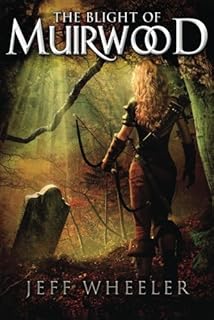
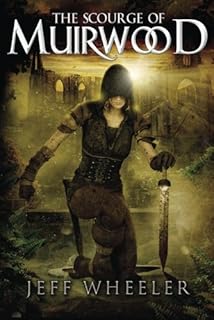
Microreview [books]: The (original) Muirwood trilogy, by Jeff Wheeler

Beats the pants (most of the way) off of expectations, but—ironically—insists in a prudish way that everyone’s pants stay on


Buy them here.

Former computer guy at Intel becomes full-time—and self-published!—writer, you say? What is he writing, instruction manuals? Ha ha, but it turns out the joke was on me: Wheeler writes with uncommon, almost lyrical beauty at times, and his decision to hang this 'romantasy' (romance fantasy, though romance is a pretty integral part of fantasy as a genre so perhaps this is one portmanteau too far, even for me) on the formidable shoulders of heroine Lia, a teenaged sorcerer-priestess (witch?), was a brilliant one. He adds a fair bit of interesting, if somewhat undeveloped, social commentary and critique in to his world-building as well: Lia is a Wretched (i.e., a bastard), so we can immediately predict one of her Monomythic quests will be to discover the identity of her parents. She is strong in the “medium” (i.e., quasi-intelligent fate/magic which responds to strength of belief/faith), and uses this and all her many other talents to kick some major butt.

The original trilogy unfolds skillfully and Wheeler does a good job of sustaining reader interest throughout, even if the extreme youth of Lia and her beau (the former barely a teenager when she falls for him, the latter borderline creepy given he’s four years older) is hard to swallow. The only serious fault of this series (aside from a(n un)healthy dose of Mormon church-inspired prissy morality which is enough to make notorious “no sex before marriage” Stephenie Meyer look like a sex-crazed lunatic!) is that it’s quite predictable: there was literally a 100% chance that “foundling who turns out to be an incredibly powerful sorceress and warrior, in unrequited-but-sort-of-or-actually-totally-requited love with a boy who has sworn his heart to a mysterious missing princess” will turn out to be—you guessed it—said princess, not the thoroughly inferior girl everyone thinks is the princess. About twenty pages in, the entire trajectory of the trilogy was already taking shape in my mind, and sure enough, after that point there weren’t many surprises.

If a story lacks unexpected twists and turns—if its entire scope is easily guessable within the first few minutes of picking it up—can it really be worth reading? Happily, the answer is a resounding yes! Ralph Waldo Emerson or some uppity idiot like that once said “Life’s not about the destination, it’s about the journey”, and it holds true here. Despite the priggishness, despite the fact that the true enemies turn out to be all women, lascivious Satanist-like succubi-priestesses (mostly patterned on French women, for some reason) whose greatest weapon is their seductive power over men (!), and even though we know practically everything that Lia will face once we catch a glimpse of her story beginning to unfold (basically, will she be Mary, or Eve: a virgin heroine or a ‘whore of Babylon’ type figure—a choice, needless to say, that from a narratological standpoint is no choice at all), it’s still quite enjoyable to watch Lia struggle to find her way, and navigate the heady perils of teenage romance while juggling the fate of all creation!

Gee, I wonder if this warrior-priestess who can do friggin' anything might be that lost princess everyone is talking about? Nah, it's probably just a coincidence.

So while it loses a few points for predictability and major pruditude, this story earns full marks for entertainment value, and nearly full marks for the technical side, as Wheeler writes quite well—even the agape-themed dialogue is fairly believable. I mean, who doesn’t want to read a story about a teenaged polymath warrior-sorceress saving the world? Plus, romance!


The Math:


Objective assessment: 8/10

Bonuses: +1 for making Lia so awesome/faultless it’s borderline ridiculous, +1 for exceeding expectations in nearly all ways, including high entertainment value despite penalty #1 below

Penalties: -1 for being so thoroughly predictable, -1 for priggitude (to the point of treating women who allow someone to kiss them on the cheek after a dance as the epitome of evil) -1 for treating being female as more likely than men to lead to great corruption and suffering (hey Wheeler: read a history book! Men tend to suck at peace, human rights, etc. soooo much more than women)

Nerd coefficient: 7/10 “An enjoyable experience, but not without its flaws”


[I think in this case our scoring system is very accurate indeed: this book is well above average yet not quite an ‘I was blown away’-level book, which as you see here is just what a 7/10 is meant to convey!]

This review is the work of Zhaoyun, a romantasy-lover since forever and NOAF contributor since 2013.