Showing posts with label Nintendo. Show all posts

Thursday, February 29, 2024

The State of the Video Game Industry: A Discussion

Shaking up the Video Games Industry


Recently it was announced that Microsoft will be bringing some of its first-party games to rival platforms. While it is not unheard of (as is the case with the Ori series to the Nintendo Switch), this cracks the door open to a potential new era in the console gaming sphere. But before this, some history.

A little over twenty-two years ago, on November 15, 2001, Microsoft released a new gaming brand; the Xbox. This act reintroduced an American console manufacturer into the fold and brought innovations and new corporate tactics to the console side of the gaming industry for the next two decades. As Sega phased out (their previous two consoles failing to break the ten million mark), a huge shift occurred; Sony, Nintendo, and Microsoft were now the big three. With an American console maker in the mix, the two Japanese giants would make pivots to stay competitive in a market that they’d dominated.

Bill Gates wanted a competitor in a sphere he assumed would compete with the PC industry. With the PS2’s ability to play DVDs and CDs in addition to games, this was perceived as a potential threat and thus a need to enter the arena. While the PS2 handily trounced Microsoft’s first offering and Nintendo’s Gamecube (Playstation 2 sold over triple the amount of its competitor’s combined sales), Sony relied too much on its namesake for their successor and hubris caused a gaping opportunity. This is when Microsoft brought out the big guns.

While Nintendo ended up doing its own thing with the Wii (lower power console for a more casual audience), Xbox and Playstation competed directly for the same audience. This is the generation in which Microsoft introduced the Xbox dashboard, better Xbox Live services, higher visibility of indie games, a great controller, and easily replaceable hard drives. They also highlighted micro-transactions, pointless DLC, a higher focus on timed-exclusive content, and the biggest repair bill that any console manufacturer has had to dole out (thanks Red Ring of Death). Despite Xbox 360’s shortcomings, Sony priced their PS3 at $600 and launched a year later. Their online tech was miles behind (though free), and their messaging equated to: “If you can’t afford it, get a second job.” It took Sony years to recover from their mistakes and eventually overtake the 360, but in turn, they learned a very important lesson; exploit your opponent’s weakness and hammer away when the opportunity presents itself.

Microsoft’s launch of the Xbox One (their third console, not to be confused with the original, simply named Xbox) was a mess. Their messaging confused fans and casuals. The inclusion of Kinect frustrated those who didn’t want it, the console requiring a constant internet connection angered those with poor or no connectivity, the focus on digital-only games left physical lovers in the dust, and to top it all off, the console was weaker, yet more expensive than it’s competitor; the PS4. The Xbox One was ahead of its time. This singular major Microsoft error set Sony up for success throughout the entire generation, which bled into the current one with the PS5. Sony deployed the same tactics Microsoft used in the previous generation; timed exclusives, full exclusive content, procuring franchises synonymous with the other platform, keeping certain characters exclusive to their platform, using their leading position to make better deals, etc.

Though Microsoft has put out some decent games these past few generations, they couldn’t match Sony or Nintendo in the breadth of titles that were either high quality or could sell on name recognition alone. Their Forza games have been a highlight, but their bread and butter, Halo and Gears, dropped from “legendary” status to “great”. In the case of Fable, it disappeared completely (though there is a new one in development). While they’ve released some fantastic indie games, nothing has propelled the Xbox brand to reach the same heights that they had in the 360 generation. So, Microsoft decided to buy a bunch of developers. Then they did the unthinkable in the console space; they bought entire publishers.

With Bethesda and Activision (and let’s not forget Obsidian, Mojang, and inXile) under their umbrella, Microsoft was sure to take the top spot, put their main competitor out of business (or at least demote them to third place), and begin to take control of the console narrative once again as they did in the glory days of the 360. But something happened. Despite all the acquisitions and even an entire exclusive Bethesda title (Starfield), GamePass subscriber numbers haven’t increased and Microsoft has decided to shift tactics. Recent rumors stated that the heads of Microsoft want ubiquity, no more console squabbling. Every screen is now an Xbox. The internet went wild with speculation. Which games would come to rival consoles? What was the point of owning an Xbox if there were no more true exclusives? Will there be another Xbox console?

Unfortunately, the messaging from Phil Spencer and company wasn't entirely clear. What we do know is that Microsoft will be dipping its toes further into the waters of third-party publishing (on PS5 and Switch) with four titles. Microsoft says that Pentiment (Obsidian), Hi-Fi Rush (Tango), Sea of Thieves (Rare), and Grounded (Obsidian) will be the first four titles to have the honor of building the bridge between Sony and Microsoft. While all four will be coming to PlayStation platforms, only Pentiment and Hi-Fi Rush will release on Switch.


With this bit of history and current information in mind, I’d like to ask G, being an Xbox owner, what his thoughts are on the matter. While it may make sense for Microsoft as a whole in the long run, is this a good idea for the Xbox brand or does it weaken its value?


G - I’ll be honest, I thought Microsoft was going to bring Gamepass to the PlayStation and thus end The Console Wars. I was convinced that Microsoft didn’t really want to be selling consoles anymore, but did want to be the Netflix of the coming age of video game streaming. What better way to do that than to first become the biggest and best provider of subscription content and then to offer it on all platforms?

That didn’t happen, of course. Instead we found out that some Xbox-exclusive titles would eventually come to the PS5. Which…doesn’t really move the needle for anyone. But I think it does point to a structural problem in gaming: namely, that The Console Wars are a relic of a lost age and don’t really make any sense for anyone anymore, but Microsoft and Sony are still stuck in the trenches because they are too heavily invested to pivot.

I want to explore that idea in a bit more depth - and get your extended thoughts. Here are mine:

So I’ve been on Team Xbox since around 2002. I had a PS2 already but got an Xbox so I could play Halo and the Splinter Cell games, which at the time were Xbox exclusives. When it came time to upgrade to the next generation, I went with the Xbox 360. It felt like a no-brainer - at that point Xbox Live was lightyears ahead of the PlayStation Network. If you wanted to play online with your friends, Xbox Live delivered a streamlined experience that Sony just couldn’t match. And, like a lot of others at the time, I got hooked on Call of Duty’s competitive multiplayer.

Of course Sony caught up, so when the Xbox One squared up against the PS4 Microsoft needed a new selling point. The Kinect was the gimmick, but really they wanted to sell the Xbox One as a media platform - the centerpiece of your entertainment system. This was around the time that streaming began to replace cable in earnest. The problem, of course, was that Apple, Roku and others were developing devices that could do this just as well, but were much smaller. And that’s even before Smart TVs hit the market. Now you don’t even need a device.

Microsoft’s pivot to streaming turned out to be both a dead-end and a distraction. As you say, the Xbox One just didn’t have the exclusives that powered the Xbox and 360. Sony, meanwhile, had decided to focus on games, bringing a diverse array of critically-acclaimed exclusives to the market that Microsoft failed to match. Turns out people buy consoles to play games - and that’s why the PS4 outsold the Xbox One by more than 2-to-1.

Fast-forward to the current generation. I debated getting a PS5 instead of a Series X, but it wasn’t easy to find either at launch. Eventually I managed to find a Series X bundled with Gamepass Ultimate so I went with that. It wasn’t intentional, though I’ve enjoyed the Series X and Gamepass quite a bit.

What I learned, though, is that Gamepass is more or less all that’s on offer. Despite all those big acquisitions, there aren’t many exclusives to speak of, and the ones that exist have been underwhelming (Halo: Infinite was a massive disappointment). Microsoft wants you to pivot to streaming - and the recurring revenues that a subscription model provides. And like with online play and video streaming, they have correctly identified the next big thing. But as with Netflix, there’s going to be a lot more competition soon too. And that doesn’t just mean fighting for customers’ subscription dollars; it also means fighting rival streaming platforms for content.

That said, Sony has also been struggling. The PS5 may be outselling the Series X/S, but Sony has overinvested in VR and spent a ton of money trying to get another Destiny on the market - and, in the process, lost focus on the exclusive single-player games that helped it win the last round of The Console Wars. This is partly because budgets for triple-A titles have ballooned, reducing their ROI - but it’s also partly because big corporations can be really dumb (and often are).

So here we are, at a crossroads where both companies seem a bit lost. Microsoft, for the 2nd generation running, is trying to find its killer app when we all know the killer app is releasing top-flight games. Sony, meanwhile, should know it needs to focus on games but those games aren’t as profitable as they used to be. Does anyone really benefit from The Console Wars anymore? And what does a viable alternative look like?


Joe D - It’s funny, I completely forgot about the whole multimedia approach that Microsoft tried to sell at the Xbox One reveal. It may have been the single most detrimental aspect of the showcase. While I never ended up getting an Xbox One—I had three 360s die on me and was hesitant to invest—I heard the television integration was well implemented. As I said, I think they were way ahead of the times with their focus. It may have gone differently if they focused as much on the games.

Getting back to the question, I do believe the consumers benefit from competition, but not the Console War itself. It has grown from a simple rivalry (from the Nintendo/Sega/PlayStation days) to a vitriolic cesspool. Console zealots now send death threats to developers and tear to shreds all who criticize their beloved. God forbid you want to make a post on social media criticizing a company you support (as I have tried to with some of Sony’s poorer choices), the rabid dogs find their way to you immediately. But outside of the crazy hecklers, the competition between the companies has forced innovation in the video game industry. Let’s go back to the 360/PS3 competition. Sony was so comfortable resting on their laurels at the end of the Playstation 2 generation that they didn’t think they needed to compete. With more third-party companies supporting Xbox, Microsoft’s pressure forced them to rely on their first party a whole lot more than ever before. During the PS3 era, Sony was much more daring than today. We got the Resistance 1, 2, & 3, Infamous 1 & 2, Uncharted 1, 2, & 3, The Last of Us, Killzone 2 & 3, LittleBigPlanet 1 & 2, and so many more. On the reverse, PS2’s success made Microsoft come out of the gates early and set the precedent for online reliability and services for not only that gen but the future of gaming on consoles. Sony’s insistence on BluRay made Microsoft do the same (Yay, no more disc swapping). Nintendo meanwhile just does unique things that Sony or Microsoft try to piggyback off of (motion controls anyone?). Once Nintendo began to do their own thing with the Wii, it became a two-horse race between Sony and Microsoft.

(List of Sony Published PS3 Games)

I think the reason the rivalry has gone on so long is because, as you said, both companies are entrenched. Sony even more so due to PlayStation’s importance to it, with PS accounting for a third of its revenue. This next part is speculation, but I believe Microsoft allowed the Xbox division to do their thing, to make Xbox the number one place to play, and the guys at the Xbox division were like rich kids at a playground trying to one-up their opponent. As recently as 2019, they spoke about how they were in a position to “spend Sony out of business.” After failing to get out of third place three generations in a row, and more importantly, after the massive acquisitions they made (Bethesda for $7.5 billion, Activision for $69 billion), the higher-ups at Microsoft decided it was time to recoup their investment and come up with a new strategy.

I agree with you that Sony seems a bit lost. I don’t know of any first-party games planned for this year (a first in a very long time), and that’s rather disappointing as I love a majority of their studios. I revere The Last of Us and thought that the Part 1 remake was brilliantly done, but if Naughty Dog releases one more remaster or remake of that series before another new game, I will lose my mind. Tying into what you said about Sony trying to create another Destiny, Naughty Dog’s live-service game was canceled because the studio was going to have to choose between being a live-service studio or a single-player game studio. I was rather disappointed because I enjoyed the Factions multiplayer, but I would prefer their single-player focus. That said, forcing studios that don’t traditionally make live-service games into live-service studios is an odd choice, especially considering people have come to PlayStation for their prestigious single-player experiences. Hopefully, their current success with Helldivers 2 will make them realize they could outsource to second parties for that sort of thing (or purchase a multiplayer dev).

There is something that worries me though. If Microsoft exits stage left, will Sony continue to produce as much excellent content, knowing that no competitor is trying to usurp their market share? Sony was misleading with their “We believe in generations” message at the beginning of this generation, but they have consistently released at least one or two Game of the Year contenders every year since 2015 despite being far ahead of their prime competitor. What will happen if Microsoft pulls out of the console space and simply goes full streaming? Will Sony keep their service as well, or will it let it die off since they own the hardware front? Their PlayStation Plus upper tiers have become much better in response to Microsoft, but it’s not their priority.

I fear that video games will go full streaming service and it affects the quality of the games. While we may get some decent AA games, AAA games will become a relic of the past. As much as I love my Netflix shows, I won’t find a movie with Avengers: Infinity War’s budget as a day and date release. I think Sony may go on for a while longer with consoles while Microsoft becomes more ubiquitous with GamePass. If every game has to eventually launch on a streaming service on release day, as Microsoft says they want to do, how do you think that affects the game industry and the games themselves? While I agree both streaming services are great for consumers, do you think it will be good for devs in the long run? Could it affect creativity in the AAA and AA space?


G - I’ll never understand why some fans think aligning with one massive corporation over another is an important moral choice. Just make the best choice for you and be happy with that choice - why does it matter what anyone else prefers? But everything is zero sum these days, no matter how mundane or, ultimately, inconsequential the battle is.

But anyways, back to the topic at hand…at this point I don’t think we have to worry about Microsoft abandoning the Xbox, at least not for a few years. But I also don’t think The Console Wars, as currently structured, really benefit either Microsoft or Sony. Sure, PlayStation revenues are higher, but the Xbox platform appears to be more profitable; as a percentage of revenues, Microsoft’s margin is almost double Sony’s. So there is something for each company’s Board to be unhappy about.


Also worth noting that Nintendo’s profit margins are the highest of all, and by a long-shot. This is a direct result of Nintendo’s decision to opt out of The Console Wars. They’ve had their ups and downs, but scored a hit with the portable Nintendo Switch - which is now the 3rd best-selling console of all-time. How did they do it? They stopped trying to keep up on hardware tech specs and instead focused on making high-quality first-party games and then making them fun (and convenient) to play.

I don’t know if either Sony or Microsoft can emulate Nintendo’s model, the same way Dell or Lenovo can’t really emulate Apple’s. But it’s time for a rethink - and that’s why it seemed plausible that Microsoft would start to offer Gamepass available on the PlayStation. They aren’t doing it, apparently, but would it really be a bad idea?

I agree that we don’t want a situation where only Sony makes a console for triple-A games, and recent layoffs suggest that’s not even a great bet right now. But maybe there are alternatives! Maybe what we really need to see is Microsoft and Sony strike a partnership where they both keep making consoles, but those consoles are compatible with each other. You would need a standard OS but each could have a custom build of that OS. Both could then focus on delivering games - and their streaming services, as I’m 100% convinced this is where the market is heading. Thoughts?


Joe D - You’re right about Sony’s current model being unsustainable, the profits get smaller while game costs continue to rise. More info will come from the recent layoffs, though it seems to me to be a restructuring of how they manage their studios. With Jim Ryan on the out, maybe the company will go back to focusing on single player games, or at least that's what they say. When it comes to hardware, I doubt that Sony gives Microsoft any leeway in the console space. If Microsoft backs out of making consoles, then maybe Sony will take a Nintendo approach and make their games with a lower budget. I think that having a dedicated gaming system could eventually become obsolete, with people streaming from their television, computer, or some kind of attachment (like an Amazon Fire Stick). Who knows, maybe the Amazon Fire Stick will eventually provide both PlayStation Plus and Game Pass on it within ten years. If it comes down to competing streaming services, Microsoft is well-positioned to demolish any competitor.

I think the situation could be this: Nintendo makes the casual console, Sony makes the high-spec console, and Microsoft tries to proliferate through using Game Pass. If Microsoft gets rid of the need to spend as much on competing consoles, they could use that money to grow the Game Pass library and put it on PlayStation and Switch. When the streaming service space expands, they’ll have more leverage to force Sony to innovate.

Eventually, I see the space becoming a place where Microsoft and Sony simply have timed-exclusive content on each platform (like Netflix and Hulu), with exclusive content that they make in-house. It’s kind of like it is now, but you won’t own any of the content unless you decide to buy it, and even then it will be digital so you’ll only own the license, not the game itself. So long as Microsoft produces a console, I’m not sure when Game Pass would come to PlayStation, as it would make their console obsolete. The only reason to get an Xbox would be because you like their OS, but I doubt that would be a high consumer motivator in the console space. I think that by publishing these four games on PlayStation, Microsoft is testing the third-party waters and it will eventually lead to their exit from the console space (possibly after the next generation). 


Though this is an inconclusive viewpoint, I think it could have both positive and negative effects on the industry. While we already discussed the negatives, the positives would allow Microsoft to play to its strengths and get on more screens, and it would allow Sony to back off on spending so much on their games since their main competitor is out of the race, giving them more profitability and the ability to create more first-party content. I can’t be sure how this is going to change the industry, but I’m sure it will have a profound effect in the upcoming years. I’ll keep my fingers crossed that whatever happens, I’ll always have a way to own my media.


https://www.deviantart.com/creepertube83/art/CT83-Big-Three-Gaming-Consoles-973691629

https://www.reddit.com/r/PS3/comments/m3mgo0/heres_all_the_ps3_games_that_are_published_by/


https://www.rappler.com/technology/gaming/xbox-game-pass-playstation-plus-philippines-comparison-2022/

Monday, April 10, 2023

MicroReview [Movie]: The Super Mario Bros. Movie

Let's-A-Go (see this movie)!


The Super Mario Bros. Movie is Nintendo’s second attempt to bring the world’s favorite Italian plumber —and brother—to the big screen. This time they wisely went with an animated approach to bring the mustachioed duo to life. Considering the Mario series of games have always been rather bland in story but rich in gameplay, I wondered how they would transition this to a feature-length film. Everyone knows the “our princess is in another castle” device that’s synonymous with the franchise, but besides the main focal point of saving the princess, what else is there?

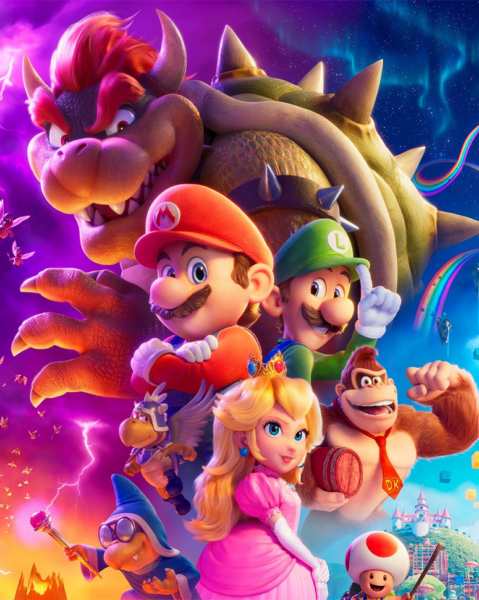
The Super Mario Bros. Movie immediately scraps the old story device, instead making Princess Peach (Anya Taylor-Joy) assist Mario (Chris Pratt) in rescuing his brother, Luigi (Charlie Day) while also defending the Mushroom Kingdom. Peach peacefully rules her obeying Toad subjects and commands with enthusiasm, a far cry from the perpetually captured princess in the video games. Bowser (Jack Black) has been taking over the other kingdoms, and with the Super Star, he now has what he needs to propose to Princess Peach.

Bowser’s desire for Peach leads to some comical scenes that allow Jack Black to shine in the role. In addition, Pratt, Day, Keegan-Michael Key (Toad), and Fred Armisen (Cranky Kong) do well in their respective roles, bringing life to an already colorful movie. Seth Rogen, on the other hand, delivers a rather bland performance, though sometimes the writing sand line delivery saves him. Charles Martinet has a cameo that will instantly be recognizable to fans of the games, and I’m thankful that they went with someone else for the voice of Mario. For all the backlash from fans, Pratt does a good job adapting the character to a feature film. It works well, as mentioned earlier, along with all the other characters.

Illumination’s animation looks beautiful, truly bringing the Mushroom Kingdom to life. The bright, colorful Toads and vibrant jungles of Kong country contrast with Bowser’s Dark Lands to encompass much of what the Mario games dream of. I would love to see an upcoming Mario game with even a fraction of the quality of this film. It nails the aesthetic, and any Mario fan will appreciate the respect paid to the source material in this aspect.

But what of other aspects? References are laid throughout the film, filled to the brim and bursting. Some are cleverly included, small details that fans of the games will appreciate (like the little speed boost after Mario hits a nice drift on Rainbow Road). While others are forced in, making a point to jab the game’s inside jokes toward the long-time fan. While the first few welcome chuckles, the movie’s constant reliance on them gets old quickly. The score is, as expected, delightful and nostalgia inducing.

Despite the movie being filled with obvious, contrived puns (some of which land, mind you), the overall story is simple, yet effective. Even if it all feels a bit rushed. The movie has a better story than any Mario game I’ve played (though I haven't played them all), and they keep the viewer at a breakneck pace as they introduce new characters and obstacles. Foes become allies in no time at all and the plot resolves itself in a quick hour and thirty-five minutes. I believe this is a strength in some ways, as most movies don't need to run for two-plus hours. The issue here is the over-reliance on its references. It feels as if they want to make sure they include something from almost every Mario game ever—as if this will be the last chance they have to do something like this (and if early numbers are indicative of future success, there will certainly be a sequel). They could have used the time showing some of those hidden Mario gems to tighten up the plot a bit. Despite this, the movie doesn't overstay its welcome and manages to cater well to both fans and young audiences.

As I took in the vibrant world created by Illumination, I did my best to absorb as much of the inclusion of Mario lore as I could. At times, the references became overwhelming to the point that I couldn't keep track, but it still works. Watching Mario fail repeatedly on an obstacle course from Peach kept me entertained, paying tribute to the numerous times I (and every other player) died to Bullet Bill and Fire Bars. The hesitation Mario shows before making the wrong move is directly reflective of player interaction with the games. I greatly respected this attention to detail throughout the film when done properly.

In the end, The Super Mario Bros. Movie tries to do too much, but it still works well at being what it needs to be: an entertaining film that attracts both fans and newcomers that sets up future installments. And even if you don't love it, it doesn’t force you to sit there for too long. It holds plenty of promise that will hopefully be honed in a sequel.


The Math

Objective Assessment: 7/10

Bonus: +1 for respect to the video gamer's expereince. +1 for amazing visuals and animations. +1 for vocal performances/casting.

Penalties: -1 for too many references. -1 for forced puns. -1 feeling rushed.

Nerd Coefficient: 7/10

Posted by: Joe DelFranco - Fiction writer and lover of most things video games. On most days you can find him writing at his favorite spot in the little state of Rhode Island.

Monday, January 20, 2014

More Awesome NES Music

After the WE RANK 'EM, some notable readers argued for the inclusion of their favorite game songs. Here are a few of them:

1. Mega Man 2: Opening Theme (from Scott Lynch, author of The Republic of Thieves)


2. The Legend of Zelda: Opening Theme (from Rob Bedford, blogger)


3. Final Fantasy III: Eternal Wind (from Justin Landon, blogger)


3. Blaster Master: Area One Theme (from me, because I couldn't resist)


Friday, June 14, 2013

Monaco: What's Yours Is Mine


Live Arcade Thievery

Monaco is a throwback to the tabletop games of old. It takes a top-down view in the same vein as the classics of the eighties, Pac-Man, Space Invaders, and Centipede. I can still remember waiting for a table at Western Sizzler as a child and playing a tabletop Ms. Pac-Man, but I digress. This Xbox Live Arcade beauty has won several independent game of the year awards. It has a 79 on Metacritic, which is pretty good considering its graphics would fit right in with those other tabletop games. Let's just say they don't rely on stunning CG to cover the lack of a quality game.


Monaco proves you don't need mind-blowing graphics to create an enjoyable game. It has a fun story, a good sense of humor, a nice melange of character options, and challenging gameplay. Put them all together and you get a unique game that takes you back fondly to your earliest years in video gaming. You can keep the "you're old" jokes to a minimum. I realize I'm dating myself here. The comparison to Ms. Pac-Man or, more accurately, Gauntlet, are apt in both visual depiction and enjoyment.

The gist is that you are a part of an Ocean's Eleven-like team of thieves, burglars, and general n'er-do-wells. Holding down L2 or left trigger put you into "sneak" mode. This made you fairly hard to detect, but if you walked in front of an officer, it didn't matter at all. You start the game with four of the eight character types. The other four must be liberated from captivity before they can be used. Along the line you rob banks, steal yachts, crack safes, kill cops, and cause country-wide mayhem. The story was cute, but not where developers placed their focus. The focus was clearly on unique and addictive gameplay.


All of the speaking in the game is in French, which is strange considering the developers are based out of San Francisco. However, I suppose the events of the game do take place in Monaco, so it makes sense on those terms. You can play the game in single player mode, but it really shines when four players are trying to be stealthy together. The chaos is unlike anything I've seen in Halo or Call of Duty. Instead of it being four times easier, as is usually the case when you fill out a multiplayer team, it was four times more challenging. Keeping one character hidden is hard enough. Keeping four out of all the guards' line of sight was nearly impossible. I was definitely the weak link in the chain, too. In my defense, my friends had been playing for two weeks and it was my first time. Now that you've heard my excuse, you'll understand I know that of which I speak when I say that you spend a LOT of time in multiplayer reviving teammates. 


The line-of-sight display used in Monaco means you can only see what was visible by your flashlight or ambient light from the environment. Even though certain rooms may be on the screen, unless you are physically in them you can't see what's going on. It would be nice to know whether there are cops inside or not. This effective visual decision made picking locks and entering new areas nerve racking, but in a good way. It was one of the little stealth additions that make Monaco a success. When you aren't relying on stunning graphics as so many of today's games do, you absolutely must have extra polish on your gameplay to get any attention at all from the gaming public. 

cast of characters


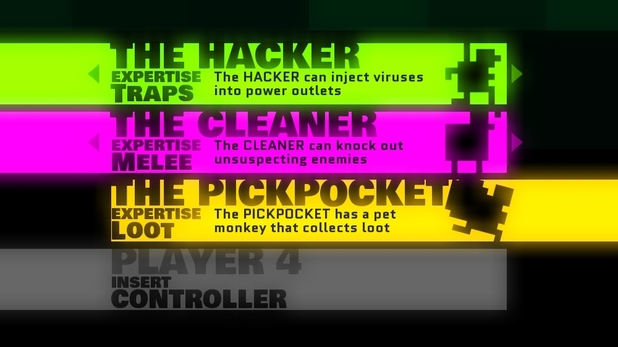
There are eight playable character types in Monaco. Each one brings a certain set of skills to the action. I found the Cleaner to be the most effective in the early going. Later on, the unlockable Mole became a personal favorite. Here is a list of the characters and their powers:

  • The Hacker can disable computers and cameras faster than other characters. He can also create computer viruses from outlets. 
  • The Cleaner can knock out unsuspecting guards. If they don't see you coming, you can put them to sleep for a short period of time. The Cleaner also uses med-packs faster than other characters. 
  • The Pickpocket has an adorable pet monkey that collects coins and other loot for him. Hector (the monkey) won't alert guards, so you can stay hidden while he does the dirty work for you. The Pickpocket also hides in bushes faster than his compatriots. 
  • The Gentleman can create a disguise while hidden. It doesn't last very long, but can be vital in keeping you from meeting your maker when being tailed by five or six trigger-happy coppers. For some reason, they don't seem to realize that they were shooting at you not seconds before once you don a disguise. He also enters getaway vehicles faster than the other thieves, but I never found that to be an advantage as you were pretty much free-and-clear once you reached the car. 
  • The Mole has the ability to chomp through most walls and obstructions. This was invaluable when you were trying to escape from a bevy of guards. It also made getting around the board more straightforward. One of the problems I had with the game was the inability to tell what was a door and what was a wall. With the mole, you could go through either. 
  • The Redhead has the ability to seduce a single enemy. More than one and she was toast, but she can get one guard to chill out if he's chasing her by himself. She also revived teammates faster than any other character type. 
  • The Locksmith can, fairly obviously, pick locks very quickly. That includes doors, safes, cash registers, and ATMs. 
  • The Lookout has the useful abilty to see every guard on a level while sneaking. She can move faster than any of the other types. She can also open windows, vents, and stairs faster than the rest. 

retro revolution


The music is as retro as the graphics. It brings to mind Scott Joplin and leans heavily on piano music from the first half of the twentieth century. The opening music sounds like it belongs in a saloon in Dodge City with Wyatt Earp dealing Faro. It also plays a part by informing the action. When you are undetected, there is little to no soundtrack. Someone just tickles the ivory. However, when a posse of guards is hot on your trail, the Joplin-esque piano really kicks into high gear. I found it to be a quality addition that really improved the overall experience. 


The game is very challenging, sometimes a bit too much so. It operates under the same gameplay model as those previously mentioned games from the eighties. You aren't supposed to be able to clear a level on your first try. This model varies widely from most modern games. Many of today's titles have levels that are passable on your first try. The focus is more on progressing the story line than mastering each individual level. For example, I knew every level warp, extra life, secret trick, and negative world in Super Mario Brothers. In today's games, an online walkthrough is almost always required to learn every secret that a title has to offer. For completionists, online walkthroughs have become a completely necessary part of the gaming experience. Many people, myself included, purchase 400-page game guides in order to achieve the same level of knowledge about a game that used to be acquired via multiple deaths and playthroughs. 


One reason for this shift in gaming trends is simply the size of games. HowLongToBeat.com claims Ms. Pac-Man takes 2-3 hours to beat, but I never came anywhere close to lasting that long. It took 3-4 hours to cover every level of Super Mario Brothers. Some single missions in Skyrim could take that long. To reach the same level of completionist OCD relief in Skyrim as Mario, you would have to spend at least 200 hours playing the game. If Skyrim missions were as difficult as those in Monaco, that number would be closer to 1,000. At first, the requirement that you replay levels over and over was a tad annoying. As the game went on, though, I grew to love the older style of gameplay. Like Mario Brothers and Pac-Man, you are given three lives in Monaco. Once you use them up, it's game over. It's been quite a while since I played a game with a limited number of lives. The retro-style design and gameplay were great fun and a nice change of pace from most of my recent fare. Although it could be a bit disheartening when you failed a level for the tenth time, it made it all the sweeter when you finally cleared it. I did more yelling at this game on my television than I have at anything short of sports for a long time, both out of anger and sheer joy.


the math


Objective Score: 8/10

Bonuses: +1 for making a supremely rewarding game despite the lack of graphics on par with this generation's biggest titles. I'm not a huge "independent" gamer, but Monaco has convinced me to give more Live Arcade indie titles a try. 

Penalties: -1 for being so difficult as to possibly turn off some gamers before they really get into it. If I didn't have to play it for this blog, I might not have made it through.

Nerd Coeffecient: 8/10. Well worth your time and attention. 

Saturday, April 6, 2013

Retro Review: Mega Man


Today it's time for a walk down memory lane. I'll be reviewing the 8-bit Nintendo classic Mega Man. It has spawned at least 50 sequels on various consoles and was one of the most popular games on the original Nintendo system. This was in my top 5 favorites on the 8-bit machine along with Super Mario Brothers, Mike Tyson's Punch Out, Bionic Commando, and Contra. The one thing these games all have in common is their replay-ability. I spent a good portion of my elementary and middle school years playing these games, probably in the thousands of hours, as depressing as that admission may be. Mega Man's boss fights and weapon upgrades were a first in those early days of gaming. 


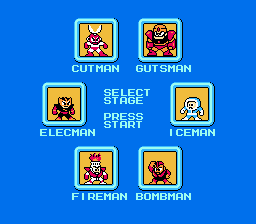
For those who were on Mars and didn't play Mega Man, it was a side-scrolling shooter-type game where you had to face a series of six enemies before facing the evil Dr. Wily in order to finish the game. Once you beat an enemy you were able to take on their powers in order to use them against the rest of the evil robots you faced. All seven robots, the evil six and Mega Man, were created by Dr. Light. However, his assistant Dr. Wily stole the robots and re-programmed them to follow his evil commands. Mega Man was the only one who was able to withstand the re-programming and he is tasked with fighting through his former brethren in order to stop Dr. Wily. 

the enemies


Bombman


As if you couldn't guess, Bombman throws bombs at you. Once you reach him, he jumps around the room tossing bombs in your general direction. As long as you could avoid the explosions, he was a relatively easy boss to take down. His only chance was to get you stuck in a corner and blast away. If you kept moving, you were probably fine. I usually started off with Bombman due to his easy beat-ability. It's like basketball, start shooting layups and work your way out to three pointers to build your confidence. 

Gutsman


Gutsman, on the other hand, was one of the most difficult levels in the game. Not only was his level one of the hardest, Gutsman was one of the two hardest bosses in the game. Gutsman would jump into the air. When he landed, it could not only damage you, but it also dropped a boulder that he would throw at you that caused considerable damage. Using the power you gained from Bombman was the best way to take him down. Hitting him with three bombs was enough to waste him and move on to the next level. 

Cutman


Cutman's level was a lot harder than he was, but there was a key to beating him that, if you screwed it up, meant your life. I died a lot more falling from beams in this level than I ever did from Cutman. The aforementioned key to beating him involved using the power you gained from Gutsman. Cutman was probably the most agile opponent you faced. He flew around the room and tossed boomerang-shaped scissors at you. There were two boulders in the room that you had to pick up and use to hit him. If you scored on both hits, he was done. If not, you were probably the one that ended up dead. 

Elecman


Elecman was another of the more difficult enemies in the game. He shot an electrical beam in all directions and three hits from it was all she wrote for our hero. On the flipside, if you used the power you gained after beating Cutman, you could finish him off in three shots, as well. His level included many electrical obstacles that required split-second timing to negotiate. Other than Gutsman, this was likely the toughest level to get through in order to reach the boss. 

Iceman


Iceman was a relatively easy beat if you had already taken down Elecman. He, fairly obviously, shot ice arrows at you while floating through the air. You had to jump between the ice arrows in order to avoid damage, but retaliating with your Elecman power quickly finished him off. Once you got the timing of his attacks down, he was easy to deal with.

Fireman


I usually saved Fireman for last because he was pretty tough. Using common sense you could figure out that the powers you gained from Iceman were the best attack to use against him. Every time you hit him, he fired a blast of fire at you. All you had to do was time your jump over it correctly, then hit him again. However, this was harder than it sounds. His attack was a large fire burst and it was easy to mess up your timing and get burned. Other than his attack being quite powerful, he was a relatively easy boss because he never left the ground and never fired at you until you fired first. So long as you timed your jumps perfectly, he was not that difficult, but timing your jumps perfectly took some measure of practice. By the end of my Mega Man playing days I could do it with my eyes closed, but when I first got the game this maneuver was one of the more difficult moves to pull off consistently. 

Dr. Wily


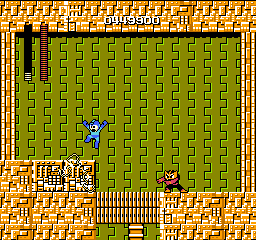
Getting to Dr. Wily was pretty tough. You had to fight past another two new bosses as well as facing all of the other boss characters again. First off is a big lava monster that shot parts of himself, boiling lava, at our hero. When he opened his eye to attack, you had to hit him in it. There was no other way to damage the guy. After him, you had to battle Cutman and Elecman again. Then you fought a Mega Man clone. He had all your powers with the minor detail that they're more powerful than yours. After you killed off your clone, they brought in someone I've seen called "Bubbleman". He fires bubbles. Scary, I know. The room has four boulders in it, hinting that your Gutsman power is probably the best way to beat him. After that, you re-fight Bombman, Fireman, Iceman, and Gutsman in that order. Finally, it's time to meet the big boss himself.


Dr Wily appeared in his red spaceship and fired at you with his cannon. After you were able to destroy his cannon, Wily's damaged ship started its last gasp attacks. His cannon and cockpit both explode and his attacks sped up considerably. Once you finally hit him enough using a variety of the powers you gained throughout the game, you win! Woohoo! 

why i loved it

The total gameplay time was probably a bit under 10 hours. It wasn't like Super Mario Brothers where you could sit down and beat it in an hour or two. Other than Zelda, it was one of the longer great NES games that required a bit of time input to finish. When you put a decent amount of time into a game, the payoff seems like it's more worth the effort than shorter, albeit fantastic games like Mario Bros. and Contra. Mega Man also took a considerable amount of time to figure out how to beat each level. Unlike today's games where, unless you're playing on Insane difficulty you can usually clear most levels with five deaths or less, I probably died 10-20 times per level in Mega Man. Games have changed considerably in that facet over time. Very few of today's games require so many attempts to clear a level or beat a mission. Although they have vastly increased in story quality, their overall difficulty has definitely dropped since the days of Mega Man and its ilk. 


Mega Man was one of the greatest games on the original 8-bit Nintendo. Although it may have spawned a few too many sequels, the original will always hold a special place in my heart. Hopefully it does for you, too. I hope you've enjoyed this trip down memory lane. Next week I'll get back to current games and review Bioshock Infinite. See you then!

the math

Objective score: 9/10

Bonuses: +1 for breaking ground in games by adding the ability to add power-ups to your weaponry.

Penalties: -1 for taking the easy way out by having you replay each boss in the final level.

Nerd coefficient: 9/10. Very high quality/standout in its category.