Showing posts with label Feminist Science Fiction. Show all posts

Monday, September 23, 2024

Film Review: The Substance

In order to sculpt yourself into your ideal form, how much are you willing to chip away?

For The Substance's lead role, a 50-year-old performer desperate to stay afloat in the ruthlessly sexist job market of show business, Demi Moore was the perfect casting choice, not only because of the parallels with real life (Moore's career has veered away from the dazzling spotlight she enjoyed in the '90s), but also because of the implicit irony in the fact that it takes a 60-year-old actress to portray Hollywood's idea of 50. To be clear, Moore is an exceptionally attractive 60-year-old, and her character's arc is valuable for reminding those of us of the homelier persuasion that not even a renowned star gifted with her breathtaking caliber of beauty is immune to the image insecurities that the patriarchy imposes on us all.

The Substance tells the story of Elisabeth, an Oscar-winning actress whose fame has faded over the years, a transition that the film represents with a brilliantly designed time-lapse of her slowly eroding star on the Walk of Fame. She hosts a morning fitness show à la Cindy Crawford, until she's fired by a pervy studio executive (played in gaudy extravagance by Dennis Quaid) who wants a younger face on the screen. In shock over the sudden news, Elisabeth gets distracted while driving and has a serious accident that she somehow survives unharmed. Here's where a certain strain of film criticism would propose the reading that Elisabeth actually dies in the accident and everything we see from that point on is her torment in the afterlife. I'm not a fan of that type of interpretation, because I find it facile and unconstructive, but in this case it may as well be true: what Elisabeth goes through after the accident is, in every sense, hell.

Before leaving the hospital, Elisabeth is approached by a suspiciously good-looking nurse who leads her to a clandestine treatment that promises to turn people into their best versions—and to make sure there's no confusion, here "best" means "pretty." The eponymous Substance is an injection that triggers cellular division at the most literal level: Elisabeth's body contorts and warps until it rips itself open, letting a young, stunning, smooth-skinned, perfectly shaped woman step out. This scene is painstaking in its deliberate gruesomeness, and it reminded me of the no less horrifying violence involved in real beauty treatments. Think for a moment about the butchering of the human form that routinely goes on in a plastic surgery clinic, and the idea of pushing an entire adult body out of your spine doesn't sound so far-fetched.

According to the instruction manual, the younger body can only survive for one week, sustained by daily injections extracted from the older body. Then the patient must switch back to inhabiting the older body for the next week, and the cycle restarts. So Elisabeth must alternate her life with her other self, who goes by the name Sue. Under this fresher, livelier persona, it takes no effort for the jaw-droppingly gorgeous Sue to get hired to replace Elisabeth as the new fitness instructor on TV and, while she's at it, to embark on a meteoric modeling career that puts her on every billboard and magazine cover. As Sue, Elisabeth can vicariously receive the adoration and popularity that she misses from her glory days, but the younger body still depends on the older one to stay alive. As long as she follows the instructions, nothing should go wrong. The complications arise when Sue gets a little too ambitious and starts trying to push Elisabeth out of the way.

All through the movie, we're reminded that Elisabeth and Sue are one person. The escalating insults, lesions and betrayals they inflict on each other are really self-insults, self-lesions, self-betrayals. This is the cleverest trick in The Substance: it takes the hidden toil of self-hatred that underlies extreme beauty regimens and makes it explicit.

The Substance wastes no time in making it clear that it has no interest in subtlety. Moviegoers are already aware of the economic and social subjugation of women by means of impossible beauty standards, and even the ghastly ordeal that Elisabeth endures in her quest to be valued again is only a few degrees removed from reality. A core component of this injustice, besides the basic sexism, is the distorting effect of fame: after decades in the spotlight, Elisabeth's psyche is at a state where she must earn nothing less than the fanatical adoration of the masses in order to fulfill the minimal human need of feeling respected.

In accordance with the intensity of stimulus that Elisabeth requires, The Substance is an unforgiving assault on the viewer's senses. The screen bursts wide with a parade of open wounds, rotten tissue, vomit, needles, guts, creaky joints, loose teeth, and assorted bodily fluids, each matched with the corresponding sound effect. The foley team had the daunting task to come up with a whole palette of variations on "squelch": we hear flesh being pierced, torn, stretched, crushed, munched on. The experience of watching The Substance is designed to bring the viewer as close as possible to suffering the same punishment Elisabeth goes through.

One can think of The Substance as an abomination stitched together from stolen organs: take the first act of Death Becomes Her, the second act of The Nutty Professor, and the third act of The Fly, paint it over with an emotional tone distilled from the psychological disintegration of Black Swan, and set it all on fire with the climax of Carrie. To sit down for this film is to gorge on a banquet of flaky skin and brittle bones and dripping pus. Once Elisabeth is at open war with Sue, the gore factor only goes higher and higher, and when you think the film has reached the edge of gruesome imagery it can dare to produce, it shatters that edge with the strength of interminable torrents of blood. You will only make it to the end of this film by being dragged into it as an unwilling officiant in its profane rite, because the tyranny of glamour and celebrity knows no limit with regard to the parts of humanity that it demands in sacrifice.


Nerd Coefficient: 9/10.

POSTED BY: Arturo Serrano, multiclass Trekkie/Whovian/Moonie/Miraculer, accumulating experience points for still more obsessions.

Thursday, September 5, 2024

Film Review: Blink Twice

What you don't know will absolutely hurt you

That the über-rich act as if they were exempt from the law of the land, common rules of courtesy, and basic human decency isn't news to anybody. Nor is their disturbingly common tendency to build secret lairs that keep the world out (and its pesky laws). And the disingenuous non-apology apology has become the rare genre of drama where bad men all recite the same lines while hoping no one will remember the spectacle.

Zoë Kravitz's debut as a film director, Blink Twice, points an irate finger at the uselessness of the public apology tour. The story is deceptively simple: a working-class woman crashes an exclusive party for billionaires, gets the attention of a sketchy creep with money, and joins his entourage for a tropical getaway at his private island. Soon enough, we learn that the reason this place is disconnected from the world is exactly what you were suspecting when you bought your movie ticket.

During the first half, the storytelling is cleverly anchored on what it's not showing: at the private island, our protagonist finds all the gourmet dishes, cocktails, sunny afternoons at the swimming pool, and wild drug-fueled parties that anyone would imagine the 1% have an endless supply of. This goes on day after day until you suddenly wonder: hey, if this is supposed to be a hedonistic extravaganza of excess and licentiousness... where's the sex? What we've seen so far is surprisingly chaste.

What are we not seeing?

Of course, it turns out there is sex on this private island, and oh boy does it make you wish you hadn't seen anything.

The modus operandi of the villains in this story is a terrifying logical extension of what happens in real life: the focus isn't on not doing evil, but on not getting caught. If you're used to controlling thousands of subordinates, it's easy to be lured by the prospect of controlling perception and memory. The same sociopathic traits behind the harmful actions of powerful people can produce elaborate mechanisms of deceit. Nothing to see here, keep going, don't believe your own eyes.

Channing Tatum plays the main villain with a dramatic potency I never suspected he had, especially in a tense scene toward the end, where his character spells out his worldview with raw fury. Maybe this achievement in acting should be attributed to Kravitz's direction, which makes the whole feat even more artistically interesting: she's crafted a burning portrait of evil from the image of her real-life fiancé.

Blink Twice has a mystery plot, but it's very direct about it. There are no layers of symbolism or allegory. It could be because the message it conveys needs to be shouted clearly: #MeToo has been a big necessary step, but it's been far from enough. Roman Polanski still walks free. And Woody Allen. And Bryan Singer, and Bill Cosby, and Brett Ratner, and Louis C.K., and James Franco, and Kevin Spacey, and untold numbers of other perpetrators who haven't been exposed yet. It hits hard to watch Blink Twice while the Neil Gaiman case is still unfolding.

It's a no-brainer to empathize with this protagonist, but I'm ambivalent about the revenge fantasy with which the movie ends. After the secondary villains have been dispatched with bloody gusto, the final boss gets trapped forever in the bliss of ignorance. One thing I'll grant is that this choice leads to an important point of discussion: what's an appropriate punishment for unrepentant abusers?

Blink Twice is an effective thriller that knows how to maintain high tension even long after all the secrets have been revealed. The trick it plays on the viewer is the same one abusers execute on their victims: it's absolutely obvious that something very wrong is happening, but as long as no one acknowledges it, the pretense can continue.


Nerd Coefficient: 7/10.

POSTED BY: Arturo Serrano, multiclass Trekkie/Whovian/Moonie/Miraculer, accumulating experience points for still more obsessions.

Wednesday, July 26, 2023

Review: Our Shadows Have Claws

A journey through the hidden corners of a continent's imagination

Edited by Yamile Saied Méndez and Amparo Ortiz, Our Shadows Have Claws is a bone-chilling anthology that gathers folk monsters from all corners of Latin America. Now, before I proceed to reviewing this book, I feel I have to insert an important note. At Nerds of a Feather, I've previously covered other collections of speculative short fiction from the Latin diaspora, which I'm always excited to do; I see it as my small contribution toward increasing the visibility of Latin authors. Like many contemporary writings by bilingual migrants, those stories contained bilingual dialogues; by now it's become increasingly accepted that people who publish in English and come from cultures where English is a foreign presence shouldn't have to treat their own mother tongue as the weird Other. As an aspiring writer myself, with English as my second language, I can appreciate the empowering effect of demanding English to accommodate our words instead of the other way around.

However, in Our Shadows Have Claws I find a substantially higher proportion of untranslated Spanish compared to previous collections I've reviewed, which will doubtlessly make the stories hard to follow for the monolingual reader. On discussing this point I must be mindful of my own position. I'm not a member of the diaspora, so I'm not qualified to evaluate the verisimilitude of Spanglish and successive code-switching in the context of the geographic settings where those dialogues occur. Speaking only for my experience as a reader, I had no difficulty with the book because I grew up with Spanish; your particular mileage may vary. The authors' (and editors') choice to include this much untranslated Spanish places the book in the middle of a conversation about intended audience, a conversation that was already intense back when Junot Díaz miraculously convinced The New Yorker to print his Spanglish untouched by the editorial hand.

All this is to say that Our Shadows Have Claws is unapologetically not meant for the incurious gringo. In a way, it's fitting for a collection of spooky fiction to make itself a bit elusive, partially out of the reach of unprepared eyes. So let's get to the stories.

The Nightingale and the Lark by Chantel Acevedo, about the doomed love between the respective descendants of a lineage of cryptid rescuers and a lineage of cryptid hunters, leans on Latin America's thorny baggage of civil wars to comment on the regrettable ease with which inherited grudges can continue to poison social ties.

I tracked my father the way I'd been taught to
track monsters—silently, on alert, like a woodland
creature. I could smell his aftershave, hear the faint
crackling sound his left ankle made every few steps,
spot the places on the earth where he'd knelt down.


¿Dónde Está el Duende? by Jenny Torres Sanchez, about a girl haunted by the sound of nighttime scratching during a visit to her profoundly disturbed cousin, takes advantage of the stylistic arsenal of first-person narration to draw the reader into the perspective of a second-generation immigrant gradually losing her memory and identity.

I don't know how much time has passed when I suddenly sense
something else in the room. A heavy, threatening presence that
thickens the air and makes my mind feel muggy. Some part of me
tries to scream, but my mouth won't open. My voice won't work.


El Viejo de la Bolsa by Alexandra Villasante, about an unofficial foster home that welcomes the children of missing political dissidents, makes Cold War dictatorships pass through the lens of allegory to portray with an understated expressiveness how the loss of basic civil rights can feel as dreadful as an urban legend told to make children behave.

Making people disappear is like balancing
an equation; one half is the taking of a person,
the other half is pretending not to see.


Beware the Empty Subway Car by Maika Moulite and Maritza Moulite, about a teenage mutant cannibal shapeshifter on the loose in Manhattan, deftly weaves together the desire for prey and the desire for human connection, thus subverting the power dynamic that occurs when comfortable New Yorkers choose not to see those in need among them.

As he shifts back in his seat to eat a slice, his scent
meets your nostrils. He smells sweet but not sickly so.
Your mouth waters. You take a bite of pizza and try
not to wonder what it would be like to do the same to him.


Dismembered by Ann Dávila Cardinal, about a grieving granddaughter who returns to a childhood home where things start to go bump in the night, suggests an original, gentler tweak on the trope of ghosts with unfinished business.

I was heading to my room, trying not to think about the fact
that I was alone in the house, when I heard a dragging sound
outside the front windows. Like someone was hauling a full
garbage bag across the gravel with long, scritching noises.


Blood Kin by Ari Tison, about a family physically and spiritually wounded by territorial encroachment on their Native reservation, balances the tragic tone of its ending with a resounding plea for drawing strength from the struggles of those who resisted colonization before us.

His eyes are horrified, and he begins to pull himself
away, half mauled. But I have no doubt what to do.
No doubt to finish. To let my ever-present fire pour on
him. I tear him apart. Limb by limb until he is no more.


La Boca del Lobo by M. García Peña, about a girl dangerously fascinated with a particular spot in the woods near her parents' former home, invites the reader to walk through her dreams and daydreams as she reconnects with her half-forgotten wild side.

A stabbing pain juts into my back reaching out
through my hands, my feet, my mouth. My body arches
forward, raising me up to my tiptoes, I feel the crack
of each individual finger breaking, shaping, growing.


Blood-Stained Hands Like Yours by Gabriela Martins, about a homeless orphan desperate to prevent her family curse from hurting the girl she loves, builds slowly toward a triumphant affirmation of our ability to redefine ourselves beyond the evil we've inherited.

She wakes up choking in sobs, overwhelmed by a heavy
smell she couldn't identify at first. She touches her face, and
it's slick, but… not with tears. Her fingers come away red.


The Boy from Hell by Amparo Ortiz, about a young slayer pursuing the clues to a vampire who's been stalking her classmates, proposes an interesting parallel between the abstruse politics of vampire clan rivalries and the equally arbitrary dynamics of Latin-on-Latin racism.

The deeper I get, the thicker the bushes are; there's
barely any space for solid footing. Cows moo at me a few
feet away. None have obvious bite marks, so I'm safe from
being attacked by four-legged bloodsucking mammals.


La Patasola by Racquel Marie, about an avenging spirit who seeks unfaithful men to brutally punish them, is curiously set far from the Colombian mountains where this folk monster is said to roam, which, for all the gore in its plot, suggests the comforting notion that the power of our stories can still sustain and protect us wherever we go.

She emerges from the shadows slowly, crawling across
the ground on her hands and foot. As grotesque as her
flesh is, her body moves fluidly. Like she learned to prowl
from the very pumas whose teeth tore her to shreds.


The Other Side of the Mountain by Claribel A. Ortega, about a young man who goes on a quest to rescue his sister from the witch who kidnapped her, plays with the standard hero's journey and puts it on its head, warning that in the jungle there are forces you can't defeat.

Her skin was not skin, but feathers. Her hair
stringy and thin against a visible scalp, with
large bulging eyes and lips sharp like a beak.
Her fingernails long and twisted like claws.


La Madrina by Yamile Saied Méndez, about a house built on the road between life and death, where a personified cosmic force gives succor to those uncertain of their journey, descends upon the reader like a soothing balm before sending us back on our quest.

I stumbled toward the witch light. Somewhere in
the brambles, I lost one of my shoes. Thorns tore
through my soles. Blood seeped through my nylons.
The earth drank it thirstily, like a payment for a grace.


Sugary Deaths by Lilliam Rivera, about an unrepenting womanizer who one day makes the poor choice of messing with the wrong girl, is a straightforward but impactful revenge fantasy set in the streets of a 1980s Nuyorican neighborhood.

Across the street, the stone gargoyles on her building stand
as they always have, but instead of their usual poses,
one holds a handkerchief as if crying, another appears
to be shouting, while another holds a spiked club.


Leave No Tracks by Julia Alvarez, about a secret community of river spirits with a natural defense against the exterior world, has in its biracial protagonist an example of how you can fight for your homeland and your heritage even if you already have a life settled far away from it.

When he saw me, he didn't chase after me.
Instead he sang me a song he made up on the spot.
Day after day he returned and sang it. That's
when I realized not all humans are inhuman.


The Hour of the Wolf by Courtney Alameda, about a high school mean girl haunted by a savage presence she unwittingly summoned, closes the book with a terrifying game of cat and mouse that honors the wave of supernatural flicks that swept the 1960s.

The Tukákame is a god of death and cruelty. At night, he
comes forth from the deep places of the earth to hunt, taking
the form of a wolf. But his true form is that of a skeleton,
and he garbs himself in the skins and bones of his victims.


A common thread in many of these stories is a warning to the gringos to not mess with what they don't understand. One by one, colonizers, exploiters, harassers, bigots and plain vanilla jerks meet their demise at the hands (or claws) of the beasts that roam our mountains and jungles. This is not only a collection that showcases our folk monsters, but one that explores the specific unequal relationship between the United States and Latin America. I'm usually not very moved by revenge fantasies, but there are some days when white Latinophobia gets so irritating I would just like to roar it into shreds. Perhaps you've heard of the classic Mexican Llorona. Now meet her extended family. Read, and tremble.


Nerd Coefficient: 8/10.

POSTED BY: Arturo Serrano, multiclass Trekkie/Whovian/Moonie/Miraculer, accumulating experience points for still more obsessions.
Reference: Méndez, Yamile Saied and Ortiz, Amparo [editors]. Our Shadows Have Claws [Algonquin Young Readers, 2022].

Wednesday, May 24, 2023

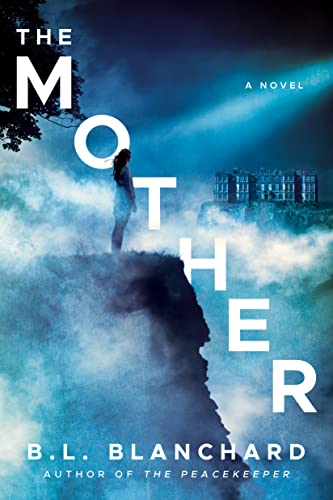
Review: The Mother by B. L. Blanchard

A sequel that fails to measure up to the quality of its predecessor

The least interesting type of alternate history is the turning of tables. Novels such as The Mirage by Matt Ruff and Through Darkest Europe by Harry Turtledove are just amusing curiosities, with little substance to chew on. It's one thing to show the possible advancement of populations that in our world have been mistreated and exploited, like author B. L. Blanchard did wonderfully in The Peacekeeper; it's another thing to rain all kinds of misfortune upon the populations that in our world have been privileged, like she does in its sequel The Mother.

Both books are nominally set in the same alternate world, where colonization never happened and Europe never sought to rule the world, but the events of one novel don't connect to the other, which means the sequel can be read on its own. In The Mother, we follow Marie, a desperate housewife fleeing an unhappy marriage in a nightmare version of Britain, where the Enlightenment never happened and every nobleman is a miniature Henry VIII, eager to murder his wife if she fails to produce a son. Europe in general is under the grip of Catholic theocracy (the Holy Roman Empire never dissolved), but the novel singles out Britain as the most extreme case, a Taliban regime on steroids where women have no human rights and purity culture is law.

The novel is not without some merit: there's a notable use of cognitive estrangement in showing us these characters behave with the strictest Victorian prudishness in a world of camera phones. The horrors of absolute patriarchy and rigid class segregation in this setting are magnified by modern surveillance technology that lets husbands track their wives' movements on a tablet. The effect is a curious form of disorientation, as if Jane Eyre had taken a wrong turn through Stepford and crashed into Gilead. And, to the novel's credit, this is not too far from certain alarming #tradwife trends in the real world. However, beyond the shock value of presenting us with a whole continent held in a protofascist iron grip, The Mother doesn't have much in the way of statements of its own to make. We already know patriarchy is bad, and classism is bad, and theocracy is bad. We've already received the news from Iran and Saudi Arabia. We don't need to hear it again.

In terms of speculative content, The Mother is a rehash of every sexist dystopia. In terms of literary achievement, it doesn't rise above misery porn. In terms of structure, its plot is sustained by contrived chance encounters. By the middle of the book, it's become an established pattern: our protagonist is in a desperate situation, all hope seems lost, and suddenly, out of nowhere, a character who can save her enters the scene. Even the climax of the story hinges on this device—four times. Besides this narrative vice, the dialogues sound artificial, at times overly melodramatic and at times transparently expository. When characters lament to each other about the sad state of the world, they often recite lists of factoids that only the reader needs to hear. And the all too frequent flashbacks needlessly spell out the emotional stakes that were already clear from previous scenes, sometimes recounting the exact same events, as if the author didn't trust her first telling of them.

It's hard to believe that The Mother comes from the same author who wrote the immeasurably better The Peacekeeper. However, this drop in quality is less surprising upon revisiting the clichés that populate the ending of The Peacekeeper. If Blanchard intends to continue this series, one must hope she returns to the ignored places where the change in history brought better fortunes instead of indulging even further in doom and gloom.


Nerd Coefficient: 4/10.

POSTED BY: Arturo Serrano, multiclass Trekkie/Whovian/Moonie/Miraculer, accumulating experience points for still more obsessions.

Reference: Blanchard, B. L. The Mother [47North, 2023].

Friday, January 6, 2023

'Kindred' demonstrates the power of stories to generate empathy

To focus on the entertainment value of this story would be to miss the point of why it's being told

Roger Ebert famously described the audiovisual medium as an empathy machine. New Hulu series Kindred, adapted from Octavia Butler's 1979 novel, is a good demonstration of how accurate those words were. In this story, Dana James, a modern, independent woman from the 21st century, is mysteriously dragged across time into the Antebellum plantation where her ancestors lived, and the past horrors of American history become lived reality for her, and much less directly, for the viewer.

There's only so much that a story can tell you about the human condition, and yet our most effective way to express it is precisely via storytelling. This tension was in Butler's mind at the time of writing Kindred. One important lesson from social justice movements is the idea that some experiences can't be fully communicated. You'd have to have been there. Butler herself cited such a gap in perspective as one of the motivations for her novel: the facts of American slavery that you can find in a textbook weren't just a history lesson for the people who had to live through it. From our vantage point in this century, it's too easy to feel detached from a monstrous social order that happened to people who are now dead. It's too tempting to develop for the enslaved populations of yesteryear the same indifference one might feel for the ancient Sumerians. Kindred seems to be saying to American audiences: this isn't just a tale of times past. This is your tale, your life. You exist because of these horrors. You don't get to form a concept of yourself that doesn't include the evil that happened here.

The merit of a work like Kindred is that it helps make these truths accessible even to those of us who have no ties to that history. That's the effect of the empathy machine: someone like me, a complete outsider, gets something as close as possible to bearing witness. I still have no idea of what it's like to live under race-based slavery, and I cannot pretend to have any standing to speak on American racial relations; I'm not American, not Black, and not descended from slaves. My identity is Latino, which comes with a historical baggage of its own. I cannot say what Kindred means for Black American viewers. Black critics have already commented on Kindred's representation of slavery far more competently and acutely than I ever could. What I can say is that, for an outsider like me, the series succeeds at touching the crucial emotions of curiosity and empathy that are the base minimum for solidarity.

A while ago, when I reviewed the TV adaptation of The Underground Railroad, I said that slavery narratives don't exist to entertain you. They tell violent events, but the violence isn't supposed to be exciting. They tell of pain and betrayal and injustice, but not so that you can get vicarious satisfaction through the victory of the good guys. In Kindred, Dana comes to believe that her role in the story is that of a heroine whose quest is to preserve her lineage. But she's not thrown into the past because she's destined to save the day. She's there because those events made her, as they made the country. She's there because those events are in her and all around her, as is true of every American.

Butler published her novel in 1979, at a particularly fluid moment in both the civil rights struggle and the speculative genres. The inexplicable phenomenon of being transported to the lives of Dana's ancestors hits very differently now, for a generation of viewers who grew up with Back to the Future or The Butterfly Effect. Dana (and the screenwriting team) spends too much of the runtime trying to figure out the rules of time travel, as if this were the kind of story that gets resolved by a stroke of genius. But Kindred is not a technical mystery in the vein of Asimov or Clarke. Dana starts her journey with the wrong impression of what kind of story she's in. To be fair, this may be intentional on the writers' part: the character of Dana is a writer herself, so it's understandable that her first impulse upon meeting the unknown would be to analyze it as a story, to pull it apart and try to make sense of the plot logic. And that's the mistake that Kindred warns against. To treat history as a story is to blur its facticity. Stories have a resolution; history simply goes on. And the history of American slavery has very much gone on.

The irony of this message about the value of true history is that Kindred is, of course, just a story. When the novel was first published, it was viewed by some critics as a feminist response to Roots, which does claim to be true history. Whereas Roots narrates the effort to reconstruct events from second-hand testimonies, Kindred suggests that nothing less than direct, personal experience will do. If you weren't there, you're not going to understand. And if you don't understand, it's not your fault, but you shouldn't use that as an excuse either; it's still your responsibility to make an effort toward empathy.

Despite the emotional effectiveness of this adaptation, sometimes it steers too far in the direction of a cerebral time travel puzzle, which is the wrong approach for this story. The use of a break in the rules of reality in a seemingly ordinary way to express a painful history is a narrative technique that doesn't match the Anglo-speaking tradition of hard science fiction and is closer to the Latin American tradition of magical realism. Kindred expresses a unique relationship that Black Americans have with time, one in which years' worth of suffering seem to pass while the majority doesn't notice, and the one sentiment capable of linking those incompatible perspectives is the universal human experience of mortal dread. It would have been more satisfying if, instead of the technicalities of time travel, the writers had given closer attention to the human side of the story.


Nerd Coefficient: 7/10.

POSTED BY: Arturo Serrano, multiclass Trekkie/Whovian/Moonie/Miraculer, accumulating experience points for still more obsessions.

Monday, October 17, 2022

Marvel remains faithful to its TV formula: start promising, end meh

Yet another Marvel character with great potential becomes trapped by the insatiable sequel-teasing machine

Once upon a time, a short scene after the ending of Iron Man 2 sufficed to tease Thor. That's no longer satisfactory for Marvel continuity completists. Now the stories themselves are being increasingly invaded by the promise of later stories, with less and less space for what they have to say about themselves. If there's a unifying theme for the MCU Phase 4, it seems to be about successively sacrificing each character in the service of selling another. Thus a discussion of the problems with She-Hulk needs to be, unfortunately, a boring retread of the current problems with the rest of the MCU. Black Widow exists to set up Hawkeye, which exists to set up Echo. The Falcon and the Winter Soldier is a 5-hour ad for Captain America 4. The latter half of WandaVision is derailed by the need to set up Doctor Strange 2 and The Marvels. This trend reached its self-devouring culmination in the miniseries She-Hulk, which was hijacked since its very first episode by the decision to tease whatever movie Bruce Banner will next appear in.

In a rare example of human-sized stakes, She-Hulk's ongoing quest through her series is to land a decent boyfriend. That's a perfectly valid quest; the current state of society has relegated love and happiness to Holy Grail status. To write a superpowered woman in a dating plot lends the story a magnifying lens with which to explore contemporary gender politics, body image issues, unfair double standards, online harassment, work/life balance, and the still unfinished work of 21st-century feminism. However, since one of She-Hulk's superpowers is to cross the metafictional barrier, her quest becomes one of seizing control of her own narrative and defeating the usual entitled manchildren who throw a fit whenever there's a strong woman on the screen.

The metafictional layer placed on top of She-Hulk allows for further development of a fascinating concept that was first hinted at in WandaVision and then explored more overtly in Eternals: Marvel heroes are prisoners of the franchise. They can never have their own lives. They're toys for Kevin (sorry, K.E.V.I.N.) to play with again and again and again. Since Disney can never have enough money, the story can never be allowed to end. At the extradiegetic level, this means that every movie has another one looming in the horizon, with the actors being replaced as they age (so we have rising characters written as successors to Captain America, Hawkeye, and soon Iron Man). At the diegetic level, this means that the original status quo must prevail. One brief line in She-Hulk establishes that the Sokovia Accords have been repealed, which returns things to the way they were before Civil War (not that our heroes paid any attention to the Accords after Civil War either). From watching Moon Knight or Ms. Marvel, you'd never guess that the Blip happened at all. Spider-Man: No Way Home is so averse to having a plot of its own that it unburies five other movies and then removes itself from the continuity. Things must remain just as they've always been, because the road must remain open for the next movie.

The perennial present isn't a big problem in comic books; readers accept that the heroes get rewritten and rebooted and updated all the time. That's how Batman has stayed at the age of vaguely thirty-something since 1939. But maintaining an unchanged state of affairs in the MCU demands resorting to overcomplicated excuses because this franchise burdened itself with the impossible pretense that all its stories happen together, so the setting must be kept as generic as possible to accommodate every bit of the story, because every bit of it is equally inviolable canon. Here we have an interesting case study in how far narrative conventions can be stretched before they break: this is a story that has been stuck in a neverending second act since 2012. Instead of pulling a Days of Future Past and restarting the timeline, the MCU doubles down and insists that even the other Marvel movies not made by Marvel are part of the same big story.

What this means for Phase 4 is an unsolvable dilemma. If the writers of a new show want to focus on their plot and not have to bother with the rest of the MCU, we get an isolated oddity (like Moon Knight). But if the writers want to build links that establish where their show is relative to the rest, we get not so much a show as an extended trailer for what's next (like She-Hulk).

She-Hulk could have been so much better. I've said the same of WandaVision, and Shang Chi, and Doctor Strange 2, and Eternals, and for exactly the same reason: the story cannot move past its To Be Continued status. Forget about this story, because The Show Must Go On. She-Hulk's desperate efforts to make her show her own stood no chance against the popularly awaited return of Daredevil and the news that Bruce Banner has a son. Although the writers of She-Hulk are obviously aware of the problem (just look at the title of the finale), their solution comes off as disingenuous. After an intentionally ridiculous number of Final Boss fights pile up simultaneously, She-Hulk decides that her actual enemy is Marvel Studios, so she breaks into the corporate headquarters and makes a reasoned speech about the clichés of the superhero genre and the intrusion of cameos into what should be her moment of triumph. The irksome thing about this writing choice is that it means Marvel acknowledges the problem with the Marvel formula, but can't be bothered to innovate. The protagonist states what we've been saying about the MCU, only to give us—not even more of the same, but less than the same. Somehow she saved the day. What happened, you ask? We've got no time, and look, Bruce has a son!

Having She-Hulk name the bad writing we've been complaining about for quite a while, only to railroad the ending of the show with the same old sequel bait we know to expect, feels like an extended version of another irritating Marvel tic: I point out the absurdity of my joke, so that when I go ahead and tell you the joke, you can no longer point out the absurdity. In this case, She-Hulk's monologue is presented as: I write my own harsh review, so that when I give you a mediocre ending anyway, you can no longer give me a harsh review.

I'd say good try, Marvel, but it isn't really a good one.

You see, there's a deeper problem in how She-Hulk pretends to listen to an alternate opinion before giving its protagonist her happy ending: the underlying conflict, which we're suddenly expected to believe is between She-Hulk and Marvel Studios, is pulled out of a hat. When She-Hulk visits the Al G. Rhythm in charge of all Marvel content, it fails to convey the same gravitas as Neo visiting the Architect. By superhero rules, this is supposed to be her ultimate epic battle. Not against the Abomination, not against Titania, not against Intelligencia, but against K.E.V.I.N., a surprise villain we'd been given zero hints about. For a moment there's the faintest hope that Marvel Studios will show some honest introspection, but it turns out to be a big joke. How are we meant to read the power dynamic here? Did She-Hulk defeat K.E.V.I.N.? Does K.E.V.I.N. still control her life behind the scenes? Will She-Hulk win all her future battles by rewriting the script? Depending on the answer, either K.E.V.I.N. or She-Hulk hold omnipotent control over the MCU, but knowing Marvel, this possibility is unlikely to be revisited. The purpose of inserting K.E.V.I.N. here is not to criticize Kevin Feige's stranglehold over the franchise, or address the machine-like uniformity of Marvel plots, but to sneak in the word "Nexus" like WandaVision did earlier. The great reveal bears no relation to the story we're watching. The ending bears no relation to the story we're watching. The story we're watching bears no relation to the story we're watching. It's Easter eggs all the way down.

She-Hulk's style of self-reference and self-parody is the kind of daring experimentation that WandaVision should have ended with. Instead, we're left with a more troubling reminder of WandaVision: perfunctory gestures toward a pending conversation on how society responds to strong women. This is a topic both shows allude to, but don't actually want to discuss. The internet trolls recruited by Intelligencia end up serving as a mere reminder that internet trolls exist. She-Hulk doesn't use them to say anything about online misogyny, only to point at it. The real-life manosphere has spread nonsense about this show in the same terms the script gives to its fictional trolls. OK, we get it: Marvel knew there would be a nasty reaction from an annoying minority. The producers did their homework: the leader of the hate group regurgitates old talking points we're tired of seeing repeated a thousand times in YouTube comments. The bad faith arguments are copied beat by beat and left untouched. Most crucially, the show pretends to engage with the discussion by merely representing it. But don't be fooled: She-Hulk has no time for taking a stance on toxic masculinity. Intelligencia is not there to add meaning to the story; it's only there to let us know that Marvel knows. It's like the studio naïvely believes that its tactic of preemptive self-deprecation will work on meta-ironic edgelords (i.e., "Twitter armor").

Such anxious defensive moves (the return of fan-favorite Wong, the return of fan-favorite Daredevil, the return of fan-favorite Hulk) feel calculated as a way of apology for daring to waste fans' time with a woman-led series. She-Hulk got trapped between her natural impulse to grow as a protagonist and the producers' unconfessed fear that too much growth would provoke another Captain Marvel-type backlash. This aversion to growth was literal: the digital design of She-Hulk was reportedly made smaller, the only conceivable explanation being that the studio was worried that a more muscular shape in a woman would turn off male viewers.

What results from this intricate web of preventative counter-counter-measures is, at the end of the day, the addition of She-Hulk to the pile of toys in Kevin Feige's drawer. He'll take her out to play again some day, and then she'll go back into storage. Like Wanda, like the Falcon, like Loki, like Ant-Man, She-Hulk is a tool, useful for promoting upcoming releases. The story is not about its characters. The story is about the imperative to prolong the story. Perpetually deferred resolution is the curse of being an MCU character. That is, too, the curse of being an MCU viewer.


The Math

Baseline Assessment: 7/10.

Bonuses: +1 for effective jokes, +3 for opening the MCU to the mundane side of superpowered life.

Penalties: −2 for the frustratingly bumpy pacing of the first episode, −3 for demonstrating the exploitation of digital artists.

Nerd Coefficient: 6/10.

POSTED BY: Arturo Serrano, multiclass Trekkie/Whovian/Moonie/Miraculer, accumulating experience points for still more obsessions.

Monday, November 23, 2020

Nerds on Tour: Before She Sleeps by Bina Shah (2018 novel)


Dossier
: Before She Sleeps by Bina Shah

Location: Pakistan

Package Type: Book

Itinerary: Before She Sleeps is set in the futuristic Green City, in the newly reconstituted nation of South West Asia, a few decades after wars and a pandemic of mutated HPV have brought the old world order to its knees and caused the deaths of a disproportionate number of women. To rebuild itself, South West Asia has instituted strict citizenship rules which require women to be married to multiple men, and to have their fertility constantly monitored and artifically boosted in order to increase the population once more. It's a system which utterly disempowers women and has wide-ranging impacts on human relationships in general, and a small number of women have found a way out of the system, escaping to a haven called the Panah where they live underground and out of view of the authorities. However, to maintain the Panah, women are expected to engage in what is effectively sex work in all but the most literal sense: they are sent out to the homes of wealthy, allegedly trustworthy men, where they spend the night in intimate but non-sexual companionship - a form of relationship which is apparently missing from Green City under its current regime.

Sabine is one of the Panah's women, having grown up in a relatively stable, traditional family until the death of her mother under suspicious circumstances. Sabine is relatively content with her life on the margins with the Panah, although she is having trouble maintaining boundaries with one particular client; she's also an insomniac, and the other women around her express concern over her inability to sleep. Also prominent in the book are Lin, the niece of the Panah's founder and its current leader; Rupa, another member of the collective who, unlike the others, feels she was forced into this life and that she would have been content within the system if circumstances hadn't conspired against her; and Reuben, a senior Green City official and secret benefactor of the collective. When things start to go wrong for Sabine, she finds herself coming into the radius of Julian, a doctor whose commitment to medical ethics comes into conflict with the Panah's rules. The relationship between the two of them, and the attempts of the rest of the characters to untangle what has gone wrong with Sabine and whether she - and the Panah - can be saved, is what drives Before She Sleeps to its ultimate conclusion.


Travel Log
Before She Sleeps is an intriguing entry in the canon of patriarchal dystopia - a story set in a future west Asia that combines the phenomenon of "missing women" with a level of extreme government control over reproduction. Unlike the obvious comp title, The Handmaid's Tale (and if it seems dull to bring that up, I note that my copy of Before She Sleeps has a Margaret Atwood quote on the front cover and makes direct reference in the blurb, so the comparison is very much invited), Shah's book focuses on the lives of women who have in some way escaped from that system, drawing attention to the ways they (and female relatives) exerted agency before and after joining the Panah. It also allows Before She Sleeps to explore the crushing weight of patriarchy even for women outside its direct control: the Panah, far from being a utopian space for the women who find it, is effectively a brothel which gives its residents no choice in whether they want to engage in the work it gives them. That work exists at the mercy of elite men, and is particularly subject to the whims of Reuben, who becomes an increasingly antagonistic figure in the novel's landscape as it progresses. By portraying how constrained even an escape from the official systems of Green City is, the novel drives home the extent of patriarchy and the systems which prop it up, while still offering the reader protagonists with agency and decisions about how they live. Before She Sleeps also differs from The Handmaid's Tale in that the patriarchy it builds up is not a religious one: in this future, religiosity is frowned on as a relic of the past, but patriarchal attitudes towards women are upheld through a medical focus on their reproductive role and the insistence that good citizenship for women means doing one's reproductive duty to the nation, sacrificing all aspects of themselves for its continuation and a hypothetically better future. (Note: Like most books in this sub-genre, there's no space for trans folk in the world of Before She Sleeps, and the book itself doesn't have any exploration of how trans people try to exist in its world.)

As the book progresses, the focus shifts from a more mosaic novel approach with the relationships and circumstances in the Panah (including some flashback sequences), to a more narrow focus on Sabine and Julien - and it's ultimately their relationship and the circumstances in which they end the book that provides its tentative note of hope. While the second half was just as satisfying as the first in its way, and the growth of the relationship between Sabine and Julian, while fast, is nicely done. Julian is, perhaps, a little too perfect for the society he's grown up in: a doctor who prizes his own ethical integrity above his own security within the regime, and who immediately overcomes any ingrained biases against women (in fairness, as a younger man in a junior position he's apparently met very few of them aside from his mother) to form a bond of equals with Sabine and to continue to risk his job and his life for her well beyond the point where he might have an escape that would preserve his own position. Then again, Before She Sleeps isn't a long book, and it's clear that there are avenues that might have been explored had the book gone into more depth with some of its characters - a greater role for Rupa with more internal growth, or a more in-depth reckoning with the way men like Julien have taken in patriarchal attitudes and how that affects the way they react to the women of the Panah and their attempts to secure freedom. That said, Before She Sleeps does hang together effectively with the length and story that it does have, and I didn't feel that anything was missing that affected my enjoyment of its closing pages, even if they were quite focused on just two of the characters I'd originally become invested in.

Before She Sleeps is a worthwhile book, one that offers a vision of dystopian patriarchy that complements its forerunners (Maggie Shen King's An Excess Male is another interesting book, one that also takes place in Asia and deals with missing women and subsequent polyandry, which could easily be read in conversation with this) while offering its own speculative take. Before She Sleeps does contain mentions of rape (though no graphic depictions) and of other abuses towards women, and extensive discussion of pregnancy, including complications and miscarriage, so readers will want to be aware of that before taking it on.


Analytics

The Adventure: 4/5
The Scenery: 4/5.
NerdTrip Rating: 8/10

POSTED BY: Adri, Nerds of a Feather co-editor, is a semi-aquatic migratory mammal most often found in the UK. She has many opinions about SFF books, and is also partial to gaming, baking, interacting with dogs, and Asian-style karaoke. Find her on Twitter at @adrijjy

Wednesday, April 17, 2019

Feminist Futures: Dreamsnake by Vonda N. McIntyre


When we started planning for the Feminist Futures project at Nerds of a Feather last year, I had a lot of thoughts about what I wanted to cover. Russ and Tiptree? Yes please! (Le Guin was already well in hand.) Something to fit within our main time period but also demonstrate the existence of marginalised voices outside white cis women? Enter Jessica Amanda Salmonson's pioneering women-led adventure fantasy anthology, Amazons!. And I knew wanted to do something from a more thematic perspective, looking at how feminisms of the time hold up to modern perspectives, particularly where assumptions of the gender binary come in.

Those posts exist. However, one post that I wanted to write, that I expressed my excitement for to the rest of the team, that didn't happen? That was Dreamsnake, by Vonda N. McIntyre. My copy of that book is currently in a friend's storage box, and I never quite figured things out in time to get hold of them. Dreamsnake, the Hugo, Nebula and Locus winning post-apocalyptic story of healing and hallucinogenic venom, whose author somehow doesn't get offered up in the same breath as Le Guin, Russ, Tiptree and Butler nearly as much as her contributions to the genre merit, would have to wait.

Then, just a couple of weeks ago, Vonda McIntyre died after a short battle with pancreatic cancer. The catalogue of her contributions to genre - in her original stories, her canon-enhancing Star Trek novelisations and tie-ins, her founding of the Clarion West writers workshop and of the Book View Cafe ebook site, and her support and warmth to others - have since been written by those much better placed than I to appreciate the loss her death represents. Through these posts, I learned from these posts was just how much of a contribution McIntyre has made, and learning about these things through obituaries always, always, feels like too little too late.

So, last weekend, I returned to Dreamsnake, to remind myself of how it felt to experience this weird, wonderful story the first time around. It's a post that's been too long in the making, but even though the author is no longer with us, it's certainly not too late to put her feminist future in this series where it belongs.


Dossier: Dreamsnake by Vonda N. McIntyre

Filetype: Book

Executive Summary: Snake is a healer in a fractured post-apocalyptic world, travelling through various communities which live out relatively isolated existences in a world which appears to have gone through nuclear war. As you might guess from her name, the title, and almost every book cover Dreamsnake has been released with (except for a 1994 edition which decides to focus on the book's stripey horse. There's also... this.) this healing involves snakes: Mist, an albino cobra, and Sand, a rattlesnake, are both bred to synthesise various cures and vaccinations for illnesses, representing a combination of genetic engineering and on-the-spot biochemistry. The third snake is even more special: Grass is a dreamsnake, an extremely rare "offworlder" breed able to create hallucinations and pleasant dreams which are most often used to ease the pain of the dying.

Dreamsnake's plot falls roughly into three episodic parts. In the first - which originally formed the self-contained novelette "Of Mist, Grass and Sand" - she meets with a nomadic desert community who seek help for a sick child, but panic when she leaves the boy with Grass overnight and kill the dreamsnake, leaving Snake bereft of one third of her abilities despite her success in eventually healing the boy's illness. Initially resigned to returning to her community to admit the loss, Snake is instead persuaded to travel into the mountains to the region's only "city" - an underground vault still closed off to outside visitors but which might be willing to help her in return for information about one of their own. The second act sidetracks this journey somewhat as Snake spends time in a mountain community healing the town's mayor and fixing everyone's problems, leaving with an adopted daughter and a shady follower apparently trying to steal her stuff. In the third act, Snake's interactions with that shady follower leads her to an unexpected source of Dreamsnakes and a dangerous showdown with the man who keeps them. Interspersed with all of this are brief scenes from the perspective of Arevin, a man who despite only meeting with Snake briefly in the opening has now been set up as her designated heterosexual love interest and is seeking to close the gap between them. Arevin is not going to make much more of an appearance in this review, which should indicate how much I think this romance adds to the overall plot.


Feminist FutureDreamsnake's science fictional underpinnings are mainly rooted in biology and genetic engineering, and the technology-disguised-as-magic of the healers and their snakes is complemented by other assumed developments in humanity, particularly when it comes to fertility. It's assumed that everyone in this world has enough physiological control over themselves to, uh, raise and lower the temperature of different body parts, preventing the release of gametes while letting them have all the no-strings-attached sex that they want. The ability to have sex divorced from threat of pregnancy plays out as a constant through the different communities in Snake's world, meaning that sex for pleasure is widely accepted and cohabitation is usually based on more than pairings, but that people can become ostracised if they get a reputation for not having control, as its assumed that sex with a risk of pregnancy won't be enjoyable for anyone involved. Given the level of technology that societies have in Dreamsnake, there's an implication that these scientific underpinnings came at least in part from whatever society came before Snake's, and while this is left completely mysterious it's still pretty revolutionary to consider that despite apparently wiping themselves out in a nuclear war, these forerunners also found time to take the gendered implications of fertility seriously and focus scientific priorities on it.It's also worth looking at the characterisation here. Dreamsnake follows a protagonist who it's hard to believe predates the "paragon Bioware protagonist" stereotype by two decades (maybe more, I have no idea how pathologically helpful you can be in Baldur's Gate). Snake is practical, sensible in both her actions and her emotional regulation, and constantly able to overcome the biases and irrationalities of people around her, and the narrative is happy to showcase her ability to do so, deepening the worldbuilding through what we see through her eyes. Snake gains different reactions from different people, but they are all through the lens of her being a healer - a non-gendered role - and aside from assumptions of heterosexuality there's no suggestion that Snake's journeys through the world are particularly shaped by her being a woman. It's a refreshing standpoint, reinforced by moments like Arevin taking the lead on childcare within his extended family, which makes me forgive the occasional moments where Snake comes across as a little too annoyingly right about everything, and it's a point that leads me on to...


Hope for the Future: In almost all post-apocalyptic stories I can think of, where human society contracts from a lost age of high technology into pockets of isolation, there's generally a patriarchy involved. Whether it's a return to "natural" hierarchies across society and the assumed erosion of status for women due to lack of average muscle mass, or the creation of pockets of extreme - often religious fundamentalist - patriarchy as part of a patchwork of ideologies, if you're reading a post apocalyptic story in which women exist, there's probably going to be some heightened misogyny, rape and exploitation somewhere, and it's probably going to be at least a side plot to the main narrative. There's an assumption that, without the social, cultural and technological forces of our current society, at least some men are going to go back to the default state of treating women like things.


What sets Dreamsnake apart is that it completely resists this interpretation of post-apocalyptic society. Sure, all of the societies Snake visits have their own permutations of close-mindedness, societal bias and emotional repression, with some interesting, understated nuances here. Arevin's people don't tell their names to anyone except immediate family and very close friends, making the fact that Snake learns his name in the short time they are together an indicator of how quickly and deeply he develops feelings for her; a group of nomadic scavengers are persuaded to overcome their fear of outsiders' medication and experiments with the promise of a Tetanus vaccination; the mountain community are collectively obsessed with beauty and ostracise Melissa, the girl Snake adopts, largely because of facial burns. What none of these societies have is baked-in misogyny: a point which is driven home (as cringey as this is going to be for modern readers) by the rape subplot with Melissa and her guardian. When Snake finds out that Melissa is being raped, she is completely thrown by how monstrous a person would have to be to do something like that, and faces a challenge in bringing the man's behaviour to light because the community's leaders are equally unable to believe that someone would force sex on another person. Although I'm a lot less impressed on a second reading with the introduction of male violence just to drive home how little male violence this book has, it does achieve that effect.

Moreover, the lack of baked-in patriarchy and restrictions on Snake's actions by virtue of being a woman make the antagonist of the third act, North, much more compelling and sinister, because the threat he represents is not overshadowed by the general awfulness of society, or played up to have to compete with the casually awful predators that men without societal constraints are expected to be in post-apocalyptic fiction. There are a ton of predatory undertones to North's behaviour towards Snake and Melissa, but these climactic scenes benefit from being allowed to stand as the behaviour of an awful person, rather than the inevitable result of a woman in post-apocalyptic times trying to do something besides staying at home with the water purifiers.

Legacy: Dreamsnake clearly made quite an impression on its release, winning the Hugo, Nebula and Locus (SF) awards. In doing so, McIntyre became the third author after Larry Niven (Ringworld) and Arthur C. Clarke (Rendezvous with Rama) to pick up all three awards for the same book. What I don't know, but would be interested to find out, is how many other authors have picked up an award for a short fiction piece, as McIntyre did for the novelette "Of Mist, Grass and Sand" (which won a Nebula) and then gone on to win again with a reworked longer piece. I can't think of any other examples, but that doesn't mean they're not out there...

In Retrospect: Four decades after its release, Dreamsnake is a fascinating and worthwhile read, with a world that's just as interesting on a second visit and which is well integrated into an episodic, character driven plot. There are elements that might look different if Dreamsnake were written today: the sexual violence against Melissa feels like an exhausting contribution to an overused plot device from a modern perspective, even though it's not used to humiliate her or to titillate the audience, and despite the expansion in what constitutes a family unit, the actual relationships and humans of Snake's world are pretty heterosexual and binary, particularly given the big biological reveal at the end. Nevertheless, this is a book which deserves all of its current recognition and more: a work which looks the patriarchy of our own world in the face and says "nope, this one's not for you". It may only be a small part of McIntyre's legacy but it's one I'm so grateful to have experienced.


Analytics

For its time: 5/5
Read today: 4/5.
Wollstonecraft Meter: 9/10


POSTED BY: Adri is a semi-aquatic migratory mammal most often found in the UK. She has many opinions about SFF books, and is also partial to gaming, baking, interacting with dogs, and Asian-style karaoke. Find her on Twitter at @adrijjy.

Reference: McIntyre, Vonda. Dreamsnake [Houghton Mifflin, 1978].

Monday, January 7, 2019

Feminist Futures: The Female Man


Dossier: Russ, Joanna. The Female Man [Bantam, 1975]

Filetype: Book

Executive Summary: Two women -- Joanna, a writer living in 1970s New York, and Jeannine, who lives in a parallel reality where the Great Depression never ended -- find their lives uprooted when Janet Evason, a time traveler from a future, all-female society called Whileaway, gathers them into her orbit.


Joanna is a staunch feminist and shows Janet around her world as the two women attempt to explain each's reality to the other. Jeannine is obsessed with the idea of marriage, and her mother's constant pressure doesn't help things. Jeannine is not enthusiastic about marriage, or her current best prospect, a guy named Cal, but the prospect of either getting married or remaining unmarried consumes most of her thoughts. After Janet collects Jeannine, the three women retreat to the home of a "typical family." This home is provided by the Wildings, and their daughter, Laura Rose, who begins exploring a sexual relationship with Janet.

Janet explains Whileaway's technologically advanced, but largely agrarian society, where all sexual relationships are homosexual, since a plague killed off all men many generations earlier. Children are conceived through a scientific process, and children only stay with their biological mothers for a few years before going away to school and then the series of work placements that will occupy the rest of their lives. Joanna and Jeannine are able to briefly visit Whileaway, and meet Janet's wife. 

In visiting Jeannine's milieu, Jeannine visits her family and goes on dates with several men, trying to imagine what a marriage to one of them might look like, and if it would be better than settling for Cal.

Ultimately, all three women find themselves transported to yet another reality, this time by Jael, an assassin from a dystopian future where the men and women are locked into a literal battle of the sexes. Jael takes the three women through her reality, assassinates a male leader, and reveals the technology that has allowed her to pull together these four versions of the same woman, but from different, parallel timelines.

Feminist Future: Jael suggests to Janet that there was no plague that wiped out the men of her timeline, but rather a literal battle like the one Jael is currently living through, and then the female survivors eradicated that narrative from their histories as Whileaway evolved from the resulting peace. Although Janet doesn't believe her, this suggests that the book is positing three possible futures: one in which the men and women continue on with women struggling to achieve equality and making small progress here and there, which extends from Joanna and Jeannine's presents; another in which, as women are ascendant in power, the men literally fight back against any further progress and the sexes are segregated; and finally, a future in which only one sex survives. The final scenario is the only peaceful one, although Whileaway is shown to have its own share of violence, however rare.

Hope for the Future: At the end of the book and after their stay with Jael, Joanna and Jeannine return to their timelines with a new sense of power and purpose. There is a stronger sense that they will not only advocate more strongly for themselves, but for other women, as well. There's no clear roadmap toward peaceful co-existence between men and women, but the sense that progress is possible is definitely there.

Legacy: This book is probably Russ' most influential work of fiction, where her book How to Suppress Women's Writing is likely her most heralded work of non-fiction. It takes the ideas of feminism and foregrounds them in a fairly didactic way, and confronts head-on many assumptions about ability and the place of women in society. It's interesting to think of this book in conversation with Herland (which Russ may or may not have had access to), because both are largely works of explication, where there isn't a whole lot of plot movement. In the same way that Charlotte Perkins Gilman wrote three men that were meant to capture three aspects of masculinity, Russ' four women are clearly archetypes of different aspects of the female experience, if not "femininity." 

It is a near-certainty that, for many female readers in 1975, this book was the first time they were able to see themselves in science fiction. From Joanna's ardent striving for equality in a world that isn't interested, to Janet's deft and capable discharge of her many different roles and jobs, to Jeannine's inner monologue and back-and-forth with her mother about what she was doing with her life, to the ferocity of spirit and desire to exact vengeance that Jael encapsulates, there are so many aspects of womanhood that Russ just comes out and addresses frankly and directly. In The Female Man, there's no way to hide behind the narrative or pretend, like so many of James Tiptree, Jr.'s readers did, that the subtext isn't really saying *that.*

In Retrospect: Stylistically, this book is a challenge. I don't know how critics have parsed it into which literary movements, but to me, the style is postmodern in the same way that the works of Donald Barthelme or some of Kurt Vonnegut's works are. In Vonnegut's Breakfast of Champions, there's a moment where he writes himself, the author, into the book as he attempts to deal with the repercussions of his mother's suicide, and in Timequake, he seemed to not really want to write the novel, so he largely wrote about writing the novel. Russ' work here pre-dates those books by at least a decade. She writes herself into the novel, and out of it. Her character Joanna is both her and not her. The writing is elliptical and tangential, and seems less concerned with narrative than emotional clarity. And there are a lot of emotions the Russ is attempting to work through. So certainly, the style of the telling will be a barrier to some readers, as even contemporary experimental novels are. 


The closest we really get to a propulsive narrative happens in the last third of the novel after Jael gathers the other three Js together. This is also the most problematic section of the book. I'm not the right person to have a discussion about intersectionality, but I will say that as a contemporary reader, Russ' characterizations of the marginalized within Jael's gender segregated society made me feel icky. Given what I've already said about the style of the novel, it can be hard to pin down exactly what I think Russ was saying at the time of the writing about non-conforming individuals, but it didn't feel great. I had a bigger problem with those passages than I did with Jael extolling the virtues of killing all men.

I think that in the end, The Female Man is a profound time capsule of a moment in which feminism was undergoing a radical shift toward the mainstream, and as a book that asks more questions than it gives answers, it's still an important read. As a guy, reading this book provides both an analytical and empathetic framework for understanding not just other works by female authors in a broader context, but it also offers a window into moving through the world as a woman. Conversations that Russ presents from a party, or an evening out, I know I've heard before, but they are so cringe-inducing, I can only hope I've never been one of the participants.  

The stylistic experiments are probably less engrossing than they were when they were new, but they help anchor the book in an emotional now that still resonates, almost fifty years after the book was first written.

Analytics

For its time: 5/5
Read today: 3.5/5.
Wollstonecraft Meter: 8.5/10


Published by Vance K — co-editor and cult film reviewer at nerds of a feather since 2012.

Monday, November 26, 2018

Feminist Futures: A Door Into Ocean


Dossier: Slonczewski, Joan. A Door Into Ocean [Arbor House, 1986]

Filetype: Book

Executive Summary
This is the story of a planet of women, the Sharers of Shora, and what happens when they come back into contact with a patriarchal society after thousands of years of isolation. Shora, a completely ocean-covered planet, is in a binary system with Valedon, a “normal” world; the latter is one of the ninety-odd members of a galactic order decimated by a long-ago calamity, which has led the remnants of humanity to adopt strict prohibitions on certain types of technology, notably nuclear power. The million inhabitants of Shora have only recently been “rediscovered” by Valedon, and have escaped notice of this remnant government, but the situation is not going to last: the representative of the Patriarch (did I mention that the ruler of the galactic order is literally called "The Patriarch"?) is due to visit, and thanks to increasing trade between the two planets, he’s finally putting Shora on his agenda.

We get a couple of interesting snapshots of Valedon’s caste-based society, and its internal conflicts and interactions with the galactic patriarchy. However, most of the book’s narrative and effort is expended on fleshing out Shora itself. Plotwise, this is a book of two halves. The first is a slow build introducing the characters, their worlds, and the conflicts between them: Sharers Merwen and her daughter Lystra; a Valan called Berenice who is part of the first family to re-establish contact with Shora; and a Valan boy called Spinel, who undertakes an “apprenticeship” with Merwen and becomes the lens through which we learn about more alien aspects of Sharer culture. Inevitably, despite Berenice’s best efforts, Valedon ends up sending a military force to subdue Shora, headed by her fiance Realgar, and the second half deals with the fallout from and resistance to this occupation, and its ultimate effects on both societies.

Feminist Future
The Sharers’ entire existence relies on immense knowledge of and adaptation to the ocean world around them, but the “men = technology, women = nature” stereotype is undermined by their reliance on advanced biological engineering to maintain their existence. The Sharers themselves are a product of this engineering: they are hairless, with webbed hands and large feet, and they develop a symbiotic relationship with a dermatological microbe that helps store oxygen and prolong the time they can spend underwater, while also turning their entire skin purple. They are all female, and must also use their technology for reproduction. Sharer women are considered adults when they take a “selfname”, which is supposed to represent their own worst trait – “the impatient”, “the inconsiderate”, “the lazy”, and they are then encouraged to spend their adult lives disowning that name.

Reinforcing their alien-ness, to the Valans if not to the audience, is a completely different outlook on life and society, based on the concept of (you guessed it) Sharing. This approach borders on silly at times, and I was unconvinced by the linguistic representation in particular; we are told, in the language, that there is no distinction between subject and object for verbs, so “dog eats bone” and “bone eats dog” are literally the same sentence, represented on the page by “the dog shares eating with the bone”. Slonczewski illustrates this by having Merwen, one of the major Sharer characters, mysteriously say “oh, but does not the bone eat the dog?” a few times, except with examples picked to be a bit more convincing. This linguistic element is by the far the most prominent weak link in the otherwise excellent worldbuilding.

Hope for the Future
On a community level, yes. Despite trials and losses (of which the greatest may be… their innocence…) the Sharers manage to overcome the Valan invasion through a combination of non-violent resistance, quiet reasoning and good old fashioned winding people up. The galactic patriarch hanging in the background adds useful short-term constraints on Valan behaviour: they can’t commit genocide against the Sharers, because genocidal technology is a power which can only be employed by the patriarch, and he won’t hesitate to use it against them next time he is in town – such is the balance of power when masculinity is on the line. However, it also leaves a cloud over proceedings at the end, with Sharer society safe from Valedon but perhaps not from the return of an overwhelming and unreasonable masculine force.

A Door Into Ocean is pretty gender essentialist, and the biological engineering of the Sharers means it also embraces eugenics, at least in terms of physical adaptation to Shora's environment. In its defence, the plot does try to contextualise this somewhat: yes, the Sharers are an idealised version of a "feminine" society, but the explanation is not because they’re all female – rather their extreme living environment in the best way they can requires utter adherence to a cooperative, communistic way of life. Sharers still make difficult choices, fall in love, fall out of love, deal with criminals using a dismal understanding of mental healthcare (not that idealised after all...), and fail to live in close proximity to their annoying mothers. But they don’t have more than isolated incidents of murder or violence and or stratification within society, because their society is too precarious to allow those things, and their grasp of technology allows them to still make those precarious lives comfortable and well-connected in a way which doesn’t map onto any human society that I’m aware of. The conflict with Valedon pushes them into more difficult internal debate, particularly regarding the development and use of biological weapons which would be well within their capacity, but the justifications for using these are very different to the usual rationale for inflicting violence on an enemy. On the other side, the Valans and their different factions are a little more broadly painted and generally ended up blending together for me, although I was pleased that most of the military units were depicted as having women at all levels below the very top, and one of those women in particular is very much an ally to patriarchy and instrumental in keeping the conflict going, reinforcing the idea that we are watching a clash of societies and not some narrow, patriarchy-dependent Battle of the Sexes.

The two POV Valans blend well in that mix, and it’s telling that of these two, it’s Spinel who ultimately takes the teachings of Shora to heart, though not by completely rejecting the things he’s learned from his own upbringing. Spinel starts off extremely uncertain and closed off to the Sharers, having been brought unwillingly to the planet to satisfy his parents. However, his experiences on Shora, and a brief return to Valedon, allow him to re-evaluate his own identity and the ways in which one can derive meaning and status in a community. Of course, there’s also an inevitable romance with Lystra.  I can’t say the book needed this romance specifically, but their overall relationship is useful for providing an in-universe answer to the “is The Other human?” question which plagues the characters on both sides for most of the book.

LegacyA Door Into Ocean was published in 1986, the same year as Pamela Sergeant's The Shore of Women and two years before Sheri S. Tepper's The Gate to Women's Country. It won the John W. Campbell Award for Best Science Fiction Novel (not to be confused with the John W. Campbell award given to best new writers), making Slonczewski the first woman to win the award. Despite this, A Door Into Ocean doesn't seem to have maintained the same level of cultural relevance as other titles in its subgenre, which is a shame because I think it's actually one of the best of the bunch. Slonczewski's biology-driven science fiction puts me in mind of authors like Julie E. Czerneda, who also incorporates a lot of biological science into her books, and A Door Into Ocean also deserves a place among the canon of speculative fiction which makes use of "hard" science beyond the manly domain of astrophysics where too many conversations about hard science fiction still start and end.

In Retrospect: It’s ultimately hard for me to separate my enjoyment of this book out from the fact it ticks a lot of my personal boxes: ocean planet, brilliant interactions between women, and a set of political tensions that has an interesting, complex conclusion. I also feel it avoids some of the missteps that make some of its contemporaries make. There’s a lot here to enjoy even for a less partial reader, both in terms of the worldbuilding and technology, as well as in its approach to conflict. If you’re not sure whether you like novels about planets of women taking on the patriarchy, you could do a lot worse than to start here — despite its more essentialist moments. 


Analytics

For its time: 4/5
Read today: 3/5
Wollstonecraft Meter: 7/10


[Note: this review has been adapted from a 2017 review originally published on Adri's Book Reviews. In the 18 months since I wrote the original, I've learned and changed my opinions on the portrayal of all-female-societies and how they impact the marginalisation of trans and non-binary genders and sexes in fiction. The content of this review has been updated to reflect that and, though I'm leaving the original alone for posterity, I consider this updated version to be the one that reflects my current feelings on the text.]


POSTED BY: Adri is a semi-aquatic migratory mammal most often found in the UK. She has many opinions about SFF books, and is also partial to gaming, baking, interacting with dogs, and Asian-style karaoke. Find her on Twitter at @adrijjy.