Showing posts with label Alex White. Show all posts

Tuesday, June 22, 2021

Nanoreviews: The Witness for the Dead, The Worst of All Possible Worlds, The Liar of Red Valley


Addison, Katherine. The Witness for the Dead [Tor Books (US)/Solaris (UK), 2021]

The long awaited continuation of The Goblin Emperor takes place far away from Maia's court and almost all of the characters of the first book, taking place mostly in the distant small city of Amalo where Thara Celahar - the witness for the dead who uncovered the truth of the previous Emperor's death in the first book - has ended up working. Thara's situation, already challenging during the events of The Goblin Emperor, got even worse over the course of the book, but he has maintained his attitude towards upholding his profession. It's his Witnessing that leads him to take on a series of tasks in Amalo and its surrounding areas - most prominently, the death of an opera singer in mysterious circumstances - and through that, take us on an adventure as an audience through more of this intricate, fascinating world.

The Witness for the Dead is a very different book to its predecessor, although much of the DNA carries over. While Amalo is a significantly more provincial setting, the fundamental worldbuilding quirks - this is a world full of elves and goblins (who are apparently different races of the same species rather than completely different species) who express emotions through their ear position, have "good hair" if it's white and accepts intricate braids, and in the parts where the series has been set, look down on goblins as less than elves in a much closer corollary to human racism than most fantasy worlds create. Thara, too, is a similarity, as a protagonist fundamentally interested in doing the right thing, although his professional calling and the way it is portrayed, particularly when it comes to making difficult decisions, feels different to Maia. There are small details in the development Amalo, too, which make it feel convincingly like a provincial capital whose political elites are far enough from the centre for it to affect the way their political ambitions play out, without being fully disconnected from the emperor's reach.

With intricate worldbuilding and cinnamon roll protagonist in place, The Witness for the Dead has an easy recipe for success, and it uses those elements to solid effect. My favourite parts of the book by far are those involving the mystery at the opera company, as Thara uncovers the mystery behind the death of Arvenean Shelsin, a mid-soprano whose behaviour quickly turns up plenty of reasons for someone to dislike her. Thara's scenes at the opera, and particularly his dynamic with Pel-Thenhior, its composer, feel tight and engaging. So too do the other cases Thara takes on - a disputed inheritance, a ghoul sighting in a neighbouring town, a marital poisoning that threatens to be the latest in a series - although none bring the vibrancy of supporting characters that the opera does. Where Witness for the Dead struggles is in interweaving all of these strands together into something that maintains tension and engagement throughout. The mid section, in particular, I found it harder to stay engaged (because there's no opera bits, are you seeing a theme here). In a book that didn't have such a high bar to live up to, this might not have been worthy of note, but it is worth setting expectations that Witness for the Dead doesn't quite hit the same magic as its predecessor, nor did it leave me with quite the same feeling of warm, fuzzy, heartwarming hope as I got from the end of The Goblin Emperor. For what it does do, though, this is a really enjoyable book, in a world that I'd read more from in a heartbeat.

Rating: 7/10


White, Alex. The Worst of All Possible Worlds [Orbit, 2021]

One of the best parts of long-haul storytelling, something that book series and TV shows have the opportunity to do that their more self-contained counterparts often don't, is the ability to play out character relationships over the long haul. Sometimes that's a relatively static process, trying to maintain a roughly consistent dynamic within a set of characters while balancing the stories on top of it. Sometimes, it makes space for lots of big reversals and redemptions and splinter arcs which keep the drama levels high while enabling the characters to react to events as they happen. And sometimes, you get a crew or a found family that just gets cosier and more enjoyable to spend time with the longer a series goes on. That's how I feel about Alex White's trilogy-ending The Worst of All Possible Worlds, which brings the adventures of Nilah, Boots, Orna and the crew of the Capricious to a close in an adventure that's fast paced, high stakes and full of character moments that I really enjoyed (the wedding being a particular highlight, because who doesn't enjoy a good spaceship wedding?)

The other great thing about this series - covered in my longer reviews of its two predecessors - is how seamlessly it blends magic into a fighty shooty space opera. Almost everyone in the Salvagers universe has some kind of magic power (and not having magic is a significant disability in a world where a lot of technology is built around it, as Boots can attest) but the way these range from small abilities like being able to keep things clean, right up to control over space and time, makes the things involving people who can do the latter legitimately terrifying and unpleasant for everyone whose powers are more modest. Even more than its predecessors, The Worst of All Possible Worlds seems to lean in to an "age of arcanum gone to space" feel, particularly given the quest objective in this one (which I won't spoil if you haven't picked up the series yet).

The Salvagers series might not be as flashily extraordinary as some of its peers on the space opera shelf, but it more than holds its own as an adventure that blends space opera with fantasy tropes. The Worst of All Possible Worlds really sticks the landing for these characters too, and I'm very glad I stuck it out for the full trilogy.

Rating: 7/10

Goodwater, Walter. The Liar of Red Valley [Solaris, 2021]

Is the American Gothic genre supposed to be this much fun to read? I feel weird saying it, and yet that's the first thing I think about Walter Goodwater's fast-paced small-town novel, in which the residents of Red Valley apparently maintain the most petty, small-town mindset in the face of bizarre rules and events which govern their home. After the sudden death of her mother, Sadie inherits the title of the Liar of Red Valley, a woman responsible for keeping people's darkest secrets so that they don't have to live with their reality (for a price, of course). The only problem is that Sadie's mother never really prepared her for her role, or taught her what it means to be part of the magical fabric that keeps Red Valley - and its mysterious King - in balance.

The Liar of Red Valley is effective in its creepiness - the recurring presence of the Laughing Boys, young men who invite demons to live in their skulls for the high it brings, is a particular highlight - but because Sadie is such a resourceful protagonist (albeit one with an isolated, complicated past), it never feels like it wallows in that creepiness. Instead, the story is pacey and fast-moving, introducing us to a range of weird and wonderful characters on the fringes of Red Valley's society and putting her on a path to figure out, you know, the town's whole deal, and whether the folk who don't fit in to the population's narrow view of respectability can do anything to build a community there. The result is - oh no, I'm going to say it again - a great deal of fun, which seems odd for a "chilling" Gothic but I enjoyed the hell out of reading this book and that's what's important here.

Rating: 8/10


Posted by: Adri, Nerds of a Feather co-editor, is a semi-aquatic migratory mammal most often found in the UK. She has many opinions about SFF books, and is also partial to gaming, baking, interacting with dogs, and Asian-style karaoke. Find her on Twitter at @adrijjy

Friday, November 1, 2019

Post-Halloween Special: The Bookish Witch Tag

Halloween might be over but there's still time to squeeze in a bit more spooky autumnal content! Last week I was tagged by Brianne of Bree Reads Books in the "Bookish Witch"  tag over on Booktube - that's Youtube channels about books, if you're behind on your non-blog technology. The  tag was started by Claire Rousseau, herself a fabulous Booktuber and podcaster of repute, as part of the magnificently-named Claire Witch Project. You can watch Claire's video here or read the transcript here.

Not to pass up the opportunity for some cross-fandom meme pollination, I asked fellow witch fan Phoebe to help me come up with answers to the questions, involving all things witchy and magical. Here's what we came up with!

1. Hop on your broomstick and pick a favourite witchy setting.

Image result for chilling adventures of sabrinaAdri: It might just be because of the stories I grew up with, but I'm a big fan of magic schools and the whole Worst Witch/Hogwarts vibe. Is it weird that these kids aren't learning any basic life skills beyond potions and fortune telling beyond age 11? Yes! Do I still want to be like them? Absolutely.

Phoebe: A big old house in the hills—like Sabrina’s home in The Chilling Adventures of Sabrina.


2. Whip out your wand and choose a favourite magic system.
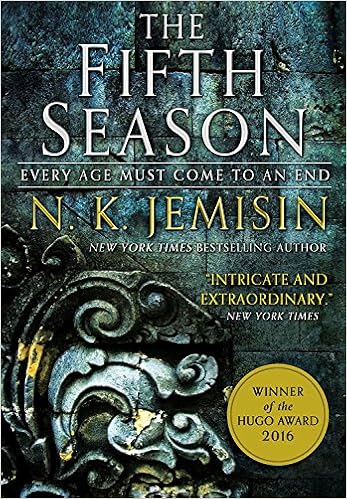
Image result for the fifth seasonPhoebe: I love N. K. Jemisin’s geological system in The Broken Earth trilogy!

Adri: Alex White's Salvagers series - beginning with A Big Ship at the Edge of the Universe. It's a really interesting take on innate magic, with well-thought through societal and technological modifications it implies, and if that's not enough it all happens in spaaaaaace. Laurie J. Marks' weird and yet totally sensible Elemental Logic, in the series of the same name, is a close second.


3. Gather up your magical herbs & occult ingredients, and pick some favourite tropes from witch stories.

Image result for finding baba yaga
Adri: I'm a big fan of stories which involve a mentorship element between women, so tales like Jane Yolen's Finding Baba Yaga, where the witch character has skills and understanding to offer to a girl who has sought her out, are deeply satisfying subversions of the "evil solitary crone" trope for me.

Phoebe: Accidental possession stories.


4. Open up your grimoire & pick a book of magic to help in your casting.

Image result for women who run with wolvesPhoebe: If we’re talking about actual books of magic, I’m a big fan of Women Who Run with Wolves by Clarissa Pinkola Estés and Truth or Dare by Starhawk.

Adri: My brain is insisting I say the giant book in the opening credits from Buffy the Vampire Slayer. Does that count? If I give it more thought, though, I'd go for Alix E. Harrow's "A Witches Guide to Escape: A Practical Compendium of Portal Fantasies", or Diane Duane's "So You Want to be a Wizard", both in-universe books from the stories of the same name.


5. Stir that bubbling cauldron & choose a witchy brew and/or wizardy snack.

ImagePhoebe: Anything brewed with lavender. 

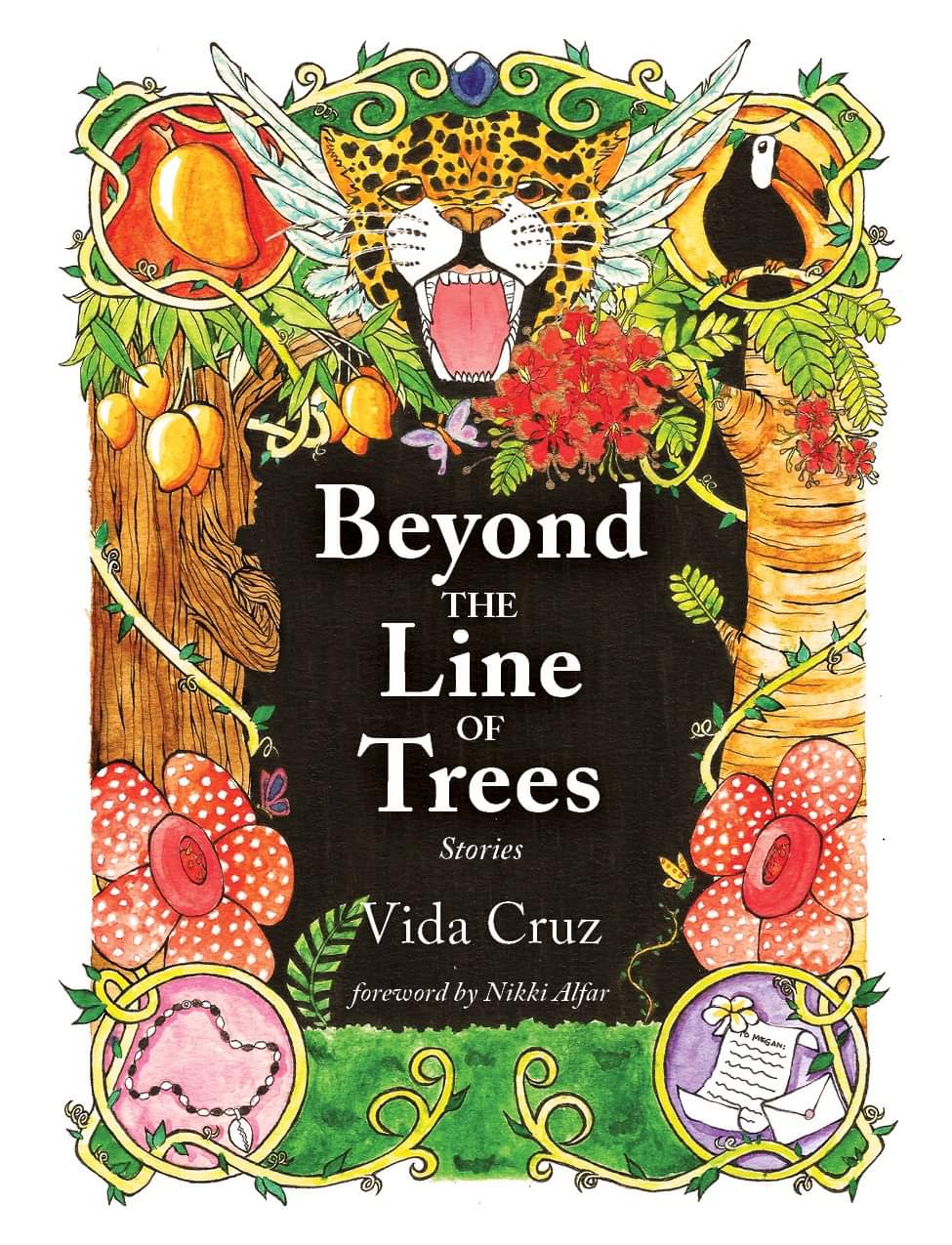
Adri: Mangoes! Mangoes are amazing and they also play a big role in Vida Cruz's magical collection "Beyond the Line of Trees", meaning they are now very much linked to the practice of magic for me.


6. Summon your familiar! Either show us your actual familiar and give them some scritches behind the ears OR tell us about your favourite fictional animal.

Phoebe: It’s a fox, and I hope to have one tattooed eventually. Though I also have a weird connection to bears that I inherited from my dad.

Adri: I could probably fill an entire post with pictures of my dog friends and their roles within a fictional coven! But lets keep things simple and just summon Brodie, dog of my soul, whose spookiest credential is that earlier today he farted so loudly that he scared himself.

Also acting social media manager
7. And finally, call to your coven by tagging some fellow Halloween loving book nerds. 

Halloween might be over, but we'd still love to hear about your favourite witchy and/or magical things from media - let us know if you feel inspired to fill out the tag over on your own blog or Twitter!

POSTED BY: Adri, Nerds of a Feather co-editor, is a semi-aquatic migratory mammal most often found in the UK. She has many opinions about SFF books, and is also partial to gaming, baking, interacting with dogs, and Asian-style karaoke. Find her on Twitter at @adrijjy.

Phoebe Wagner currently studies at University of Nevada: Reno. When not writing or reading, she can be found kayaking at the nearest lake. Follow her at phoebe-wagner.com or on Twitter @pheebs_w.

Tuesday, December 4, 2018

Microreview [Book]: A Bad Deal for the Whole Galaxy by Alex White

White continues to deliver on action-packed space adventures in a strong, satisfying sequel to A Big Ship at the Edge of the Universe.


Hurrah! With this review, I have officially reached my "sequeliversary" for Nerds of a Feather: Alex White's A Big Ship at the Edge of the Universe was one of the first books I reviewed on this site, and now here I am looking at its successor for your potential reading pleasure! Admittedly, there were only six months between the two, but I still think that's cool. If you haven't read White's breakneck opener full of grumpy yet brilliant ladies and satisfying space magic, now's the time to go check out that review and the book behind it...

A Bad Deal for the Whole Galaxy opens one year after we last saw the crew of the Capricious, having hunted down the big ship at the edge of the universe (also known as the Harrow) and started to uncover a galaxy spanning plot. Like it's predecessor, Bad Deal doesn't waste any time, throwing its audience right into the middle of things. Former racecar driver and rich kid Nilah Brio is still running with the crew of the Capricious under Captain Cordell, trying to pick up agents under the control of the first book's Big Bad. Unfortuantely, while they've had some luck mopping up, they're much less able to pick up a live person to interrogate. Of course, we've joined the Capricious at this moment for a reason, and obviously that reason is because they're about to go and pick up Elizabeth "Boots" Ellsworth, one of the few people in the galaxy born without magic, who left the crew again at the end of the previous book to retire to a nice quiet planet and farm whiskey (or something). Obviously this retirement does not survive contact with the gang, who get extremely drunk and convince her to come back for One More Job - again.

Through their initial running around and a convenient pre-death monologue from an early target, the Capricious crew uncover information that leads them to the Children of the Singularity: a cult of hyper-libertarian space nationalists who hate weakness, intergalactic peace institutions and the Capricious crew. The Children are manipulating the galactic internet to create false information about the Capricious and generally redefine galactic history to their own ends, and appear to be at the heart of the conspiracy involving Henrik Witts and the Harrow, so they are clearly in line for taking down. Honestly, the "whys" of what happens next don't come across as particular integral - there's a powerful magic artefact involved, and figures from Boots' past and from the destruction of Clarkesfall, the planet from which many of the crew hail from, play roles, but at the end of the day it feels like we are infiltrating the angry-boy death cult, with all that it entails, Because It Is There and That's What the Capricious Does Now. I'm on board with that.

White's mixture of magic and science fiction continues to be very enjoyable. The basic premise is that almost everyone is born with a particular "mark" which allows you to do a specific type of magic, from "hoteliers" who are really good at cleaning to "mechanists" who can talk to and hack machines to "readers" who can extract memories and truths. Inevitably, the villains end up with less savoury powers, ranging from bit players who get to shoot lasers out of their hands to the "gods" at the top the conspiracy the Capricious are attempting to unravel, who each appear to have immense powers over time, space and reality. The organ that controls your magic - your cardoid - also basically acts as an identity marker, like a fingerprint or retina would be in our world. The entire technological base of the Salvagers universe is seamlessly integrated with these magical powers, something that means that for a arcana dystocia sufferer (i.e. muggle) like Boots, navigating the world is more difficult at every turn, as technologies simply don't recognise her existence or work properly for her. While this is more often played as an advantage where the plot is concerned, especially where subterfuge is required, White does make it clear how frustrating this must be to live with day-to-day, without compromising on Boots' portrayal as a hardass, resourceful middle-aged woman.

The rest of the characterisation is also strong, if occasionally a bit flat when it comes to the ensemble. Nilah Brio has grown up significantly in the year she's spent with the Capricious, and its interesting to watch her increased levels of empathy and self-awareness and to see them bump up against the still far more significant and traumatic experiences of the rest of the crew. Nilah is resourceful and interesting, but she's ultimately still a rich girl palling around with a group of war veterans, refugees and traumatised child experiments. To my excitement, Nilah's relationship with robot-mechanist and quartermaster Orna continues into this book and becomes its own minor but well-done plot thread. Cordell remains satisfyingly captain-y, the rest of the crew get enough development to remind you you're around without taking up much of the action, and there's a new pair in town in the form of Jeannie and Alister Ferrier, twins who have the same magical mark - a genetic near-impossibility in the Salvagers' world - and an obligatory mysterious, traumatic past. On the antagonist side, the presence of "godlike" magic makes the threat suitably terrifying despite the ease with which the Capricious crew seem to cut through some of the lower orders of the Children, and the stakes for the main antagonist battle make for a highly satisfying climax.

I've recently been thinking a lot about series and sequels in science fiction and my own feelings about when to continue to invest in a set of books and when to bow out. First books often make me feel more excited for the promise of the series than the book itself, and this makes me want to give series a second or third chance even when initial entries haven't blown me away - with my TBR pile usually expanding accordingly. It's something I can do less now, as my reading time has gone down in the past few months and I need to be more selective with what I use it on. However, A Bad Deal for the Whole Galaxy is the kind of book that bears out the strategy. Where I found Big Ship breakneck to the point of confusion, Bad Deal was still fast paced but easier to follow in its action. Where Big Ship relied a little too heavily on coincidence and inertia to get a particular set of characters together, in Bad Deal everyone has grown into their roles and while there's still interpersonal tension, there's also a lot more weight behind some of the relationships, which you could only get through time spent with the characters.

It feels like we're in a golden moment for fantastic, pulpy-yet-self-aware action-heavy space opera, and White's series is a very worthy addition in that current line-up. With a threequel already on the cards for next year, we haven't seen the last of Boots, Nilah, Cordell and the gang, and I'm definitely going to be in line for their future adventures.

The Math
Baseline Assessment: 7/10

Bonuses: +1 A sequel experience that really rewarded my attention past the first book; +1 Disabled middle-aged woman protagonist who still gets to be the most unquestioned badass on the team.

Penalties: -1 Occasional flatness in background characterisation and plot motivations

Nerd Coefficient: 8/10

POSTED BY: Adri is a semi-aquatic migratory mammal most often found in the UK. She has many opinions about SFF books, and is also partial to gaming, baking, interacting with dogs, and Asian-style karaoke.

Reference: White, Alex. A Bad Deal for the Whole Galaxy [Orbit, 2018].

Tuesday, June 26, 2018

Microreview [Book]: A Big Ship at the Edge of the Universe, by Alex White

There's tons to enjoy about Big Ship, especially the synthesis of high technology with a unique magical system.


So, let's get this out of the way first: Yes, the title of this book is super reminiscent of Becky Chambers. Yes, both involve crews of misfits with vague Firefly overtones travelling the length of the galaxy to find the mysterious object in the title. Yes, I may have replaced the actual blurb of "A Big Ship at the Edge of the Universe" with the words "like Wayfarers?" in my head, which made for a fair bit of mental adjustment when I actually started reading. Because aside from the Firefly-esque touches, there's not much of the Wayfarers in White's high octane everything-but-the-kitchen-sink magical space opera, whose tone feels more reminiscent of Rachel Bach's Fortune's Pawn or the gunrunner parts of the Indranan War series by K.B. Wagers while simultaneously bursting with its own flair.

In White's world, technologies for FTL space travel and advanced AIs exist alongside magical powers which almost all humans are innately born with. These powers, or glyphs, are apparently fixed at birth and can be highly specific, meaning nearly everyone is a superhero in one narrow area while having normal capabilities in every other field. The powers we see range from low-key practical stuff like cleaning magic, to the ability to talk to machines or turn yourself into a sniper unable to miss a shot, right through to hardcore supervillain stuff like teleporting people into pocket dimensions and conducting large-scale mental manipulation. Glyphs have a biological basis, meaning genetic errors are possible: some individuals are born with "deformed" glyphs which don't function as intended, and a very few are born with "arcana dystocia", unable to practise any magic at all. The condition prevents these people from interacting with advanced technologies that require magic, as well as being stigmatised and misunderstood among the general population.

Elizabeth "Boots" Elsworth is one such non-magical individual, although she's got by just fine for forty years even after leaving her former military career under traumatic circumstances. Boots develops fake salvage maps for a living, a career which is getting progressively less viable, but she may just have stumbled on a genuine find: information leading to the Harrow, a big ship at the edge of the universe (of course) with an enormous salvage fee available to anyone who finds it. Unfortunately, Boots discovers this information just as her past is about to catch up with her in the form of the Capricious, the warship she used to serve on, complete with former captain Cordell. Simultaneously, almost-champion racing driver, arcane mechanist and spoiled rich kid Nilah Brio is in the middle of her championship-deciding race when another driver is killed in front of her,  with the mysterious killer teleporting Nilah off of the track and out of the running for the title. Nilah is outraged by this turn of events (although perhaps not for the reasons that a decent person would be), and attempts to call in some of her extensive privilege to secure her safety, but events instead conspire to put her in the path of Boots and Cordell. Out of options, Nilah is taken in by the Capricious, which takes on the task of salvaging the Harrow and unravelling the mystery behind the ship, the murder, and other events coalescing around their crew.

A Big Ship at the Edge of the Universe is fast paced almost to a fault, with fight scenes, chase sequences, character development moments and plot advancements all occurring in lightning quick succession. On several occasions I had to go back and reread passages after it became clear I'd missed key information the first time around: the book's fast paced action sequences almost demand to be read quickly, and it can be hard to switch gears afterwards to pick up details of the complex and somewhat convoluted plot. Character motivations were also tricky to keep straight. Nilah is not particularly interested in military history and is basically on the Capricious by coincidence, but has become invested in finding her colleague's murderer and ideally avoiding death herself. Boots and Cordell are initially interested in the Harrow for the salvage fee, but things get personal when they discover the ship is linked to traumatic events that drove them apart in the first place. There are also a lot of plot elements that start as coincidence and then get retroactively justified, which is somewhat unsatisfying. It's not enough to spoil the book, especially as the characters and their relationships are compelling enough on their own (particularly Cordell and Boots, as well as Nilah's developing romantic interest with fellow mechanist Orna), but wondering why the characters are invested in what they're doing comes perilously close to wondering why I'm invested in what the characters are doing...

Despite making me unusually defensive about my reading comprehension skills, however, there's tons to enjoy about Big Ship, especially the synthesis of high technology with a unique magical system and the hints of history which lift the plot from generic heist to something richer. The crew of the Capricious are also fascinating, and there are plenty of characters beyond Cordell, Boots and Nilah who I'd like to get to know better. By the end, Big Ship had presented a satisfying conclusion to its central mystery while also leaving plenty of elements open for a sequel: which, I am pleased to learn, is scheduled to arrive before the end of this year.


The Math

Baseline Assessment: 7/10

Bonuses: +1 seamless integration of the arcane into a science fictional setting

Penalties: -1 everything goes by faster than a Lang Autosports racecar

Nerd Coefficient: 7/10 "A mostly enjoyable experience". See more about our scoring system here.

***

POSTED BY: Adri is a semi-aquatic migratory mammal most often found in the UK. She has many opinions about SFF books, and is also partial to gaming, baking, interacting with dogs, and Asian-style karaoke.


Reference: White, Alex. A Big Ship at the Edge of the Universe [Orbit, 2018].