Tuesday, January 21, 2014

Microreview [book] : End of the Road : An Anthology of Original Short Stories, Various Authors


Various authors, The End of the Road : An Anthology of Original Short Stories [Solaris Books, 2013]

The Meat:

Many short story collections search for connections, loose ties, to justify the odds-and-sods group they've managed to assemble, often more at the mercy of publishing contracts and budgets as by creativity. This anthology from Solaris and edited by Jonathan Oliver, however, has made the excellent move to commission original stories around a single-worded brief - 'Road'. In this, much like the similarly themed and excellent Granta Books collections, Oliver and co have created a compilation that is free to roam as far and wide down various routes, whilst still having a unifying spirit of the task at hand. It's a bit like when at school your English teacher would get everyone to write a story all with the same title, and everyone would try to come up with unusual and wild interpretations. 

The collection also has the superb factor of being from authors from across the globe. The variety and complexity is great, and I highly recommend this to anyone who has never got into the idea of short stories, as it would make an engrossing introduction.

We start with Phillip Reeve's We Know Where We're Goin', which seems set in a frontier America of vague location. A young woman volunteers to fetch supplies from back down the asphalt road her community have been building and living alongside all her life. As she journeys back the way they came, and memories of childhood are piqued, she comes to a destination both surprising and rather haunting. As with all the stories here, it fits no particular genre, but has its own cocktail - part-western, part-sci-fi, but only a touch of each.

Driver Error by Paul Meloy is a heart-stopping yet also melancholy zombies at night horror, as a former priest encounters the undead on a country lane. The ending is brutal and chilling. Fade To Gold by Benjanun Sriduangkaew of Thailand is gentler, stranger and beautifully-written. As with the other works here from non-English language countries, I wondered at the effect translation can have on syntax and tone, but no mention is made of translating so I can only assume the prose is the original wording and is delightful. So too, but closer to my home, is Rio Youers's Widow. Well, delightful might be a bit of a stretch for the gruesome torture on display here, but the story that leads to this scene of terrible cruelty is moving and engrossing. A much softer but no less affecting piece by Anil Menon takes us on the road with pilgrims in India who meet a dark fate, and Zen Cho delivers a hugely-entertaining yet tender Malaysian underworld tale of demons that like curry chicken bread and a ghost girl dealing with death.

From one of my favourite countries comes probably my favourite story of them all. The Filipino expat Rochita Loenen-Ruiz's Of The Flying Guardians is a mad and wonderful telling of an ancient forest creature's search for a mate, which takes him along a destructive road through his jungle home, into strange and erotic contact with a human soldier, and ends in ferocious fairy-tale fashion. The ecological subtext, the subverting of gender roles and the otherness of the main character all combine perfectly, and I look forward to reading more from Loenen-Ruiz.

Ian Whates's tale is vaunted as a surprising twist on the usual hitch-hiker thriller but I'm afraid I found little thrilling or surprising in his story of an unhappily-married man being seduced by a con artist. In most short story collections it would stand out as immensely readable and convincingly drawn, but here it felt a bit bland and unoriginal. Meanwhile Adam Neville's Always In Our Hearts is neither, and, as the last story in the book, brings things to a close darkly and brilliantly. A misanthropic cab driver is hired to drive a connected series of weird passengers around before their confusing behaviour is revealed in a fantastical and horrific climax. Great fun and made me think of the recent domestic horror films of Ben Wheatley.

So overall a mixed bag as always with short stories, and not necessarily standard Feather genre fayre throughout, but one well worth dipping into as the high standard rarely falters, and some of these stories are the best things I've read in a long while. Seek it out and discover a whole world of good writing.

The Math:
Baseline Assessment: 7/10

Bonuses: +1 for Oliver's refreshing harvest of international writers and various styles under a simple 'road' theme

Penalties: none 

Nerd Coefficient: 8/10 'Well worth your time and attention'

To find out how our scoring works, see our scoring method here- http://www.nerds-feather.com/2012/04/about-micro-review-scores.html?m=1

Monday, January 20, 2014

More Awesome NES Music

After the WE RANK 'EM, some notable readers argued for the inclusion of their favorite game songs. Here are a few of them:

1. Mega Man 2: Opening Theme (from Scott Lynch, author of The Republic of Thieves)


2. The Legend of Zelda: Opening Theme (from Rob Bedford, blogger)


3. Final Fantasy III: Eternal Wind (from Justin Landon, blogger)


3. Blaster Master: Area One Theme (from me, because I couldn't resist)


Friday, January 17, 2014

Peggle 2


the council of peggle masters

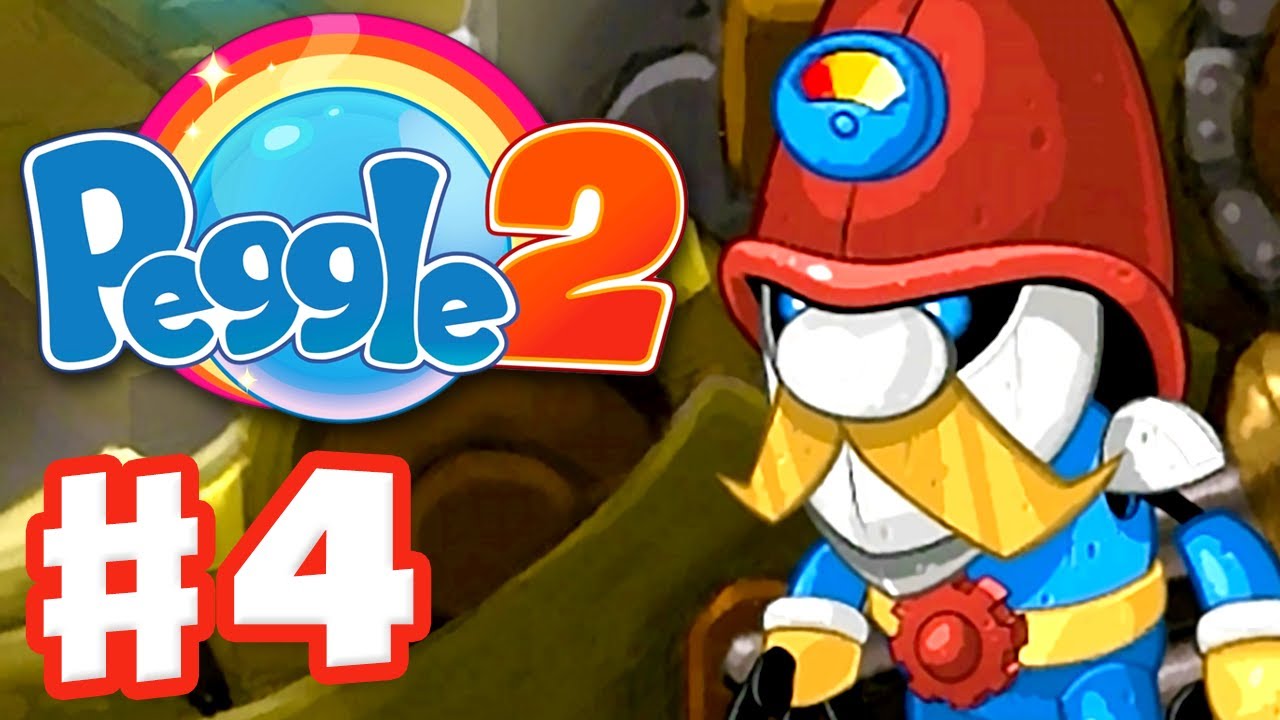
I realize I was a little bit behind the times with my review of Peggle 1, so I decided to jump on the ball and get my Peggle 2 review out in a timely fashion. This sequel is as fun and addictive as the original without feeling like a re-tread. There are new Peggle Masters, funnier dialogue, and more or less effective powers, depending on the current master for the levels you're on at the current time. Bjorn Unicorn is the only returning character. For those who missed the first Peggle review, the gist of the game is the same. You have ten pinballs and you have to shoot them at 25 red pegs. Hit all 25 pegs and you clear the level. Miss any and you have to start the whole thing over.


While I don't think there's anything here that wouldn't have been capable using the Xbox 360's hardware, there are definite improvements in the graphics in this game. They have come up with new and interesting ways to make hitting the red pegs more difficult to hit. There are expanding and contracting groupings of pegs. They also have double-pegs that require two hits to remove from the board. All-in-all, I felt this was a slightly more difficult game than the first, but also more enjoyable for the depth of character it offered in the Peggle Masters. In that vein, let's get to the Peggle Master breakdown.

who's the master? sho 'nuff!


1. Bjorn Unicorn

Bjorn's power is the same in this game as it was in the first. His ability is to show you where your peg will bounce after it hits its first target. This is easily the weakest power, but it's also the opening level, so what do you expect? Atomic bombs? I don't think so. 


2. Jeffrey the Troll

Jeff is a less-than-subtle homage to the Coen Brothers' classic character, The Dude. His special power includes firing a huge bowling ball that wipes out entire swaths of pegs. It's one of the more potent special powers in the game. Jeff recounts many quips that will be instantly recognizable to fans of the film, along with being a lazy drunk (as opposed to a pothead), and a huge fan of bowling. "There's a beverage here, man!"


3. Berg the Yeti

(Ice)Berg is a friendly fellow with a penchant for going pantless. His power is known as Ice Breath and it can be either the most or least useful power in the game, depending on your shot. When you hit his green power peg, Berg begins to blow. This North wind causes all pegs that are hit to move rather than disappear. Any other peg they hit will also begin to move with the wind. It doesn't blow in any particular direction, just causes the pegs to slide across the board. Hit a good shot and you can wipe out nearly half the board. Hit a bad one and there might as well not be a power peg there at all. Still, Berg's sparkling personality and his bare-bottomed dance make him one of the most likable characters in the game. 


4. Stormin' Gnorman

Gnorman the Gnome is a robotic master of small stature but great power. Once Gnorman's power is activated, each peg that is hit will electrify and wipe out three corresponding pegs. Even though he appears to have a Napoleon complex, building a robotic suit to increase his stature to a whopping 3'4", Gnorman's power is extremely useful and rarely leaves pegs unpunished. Although he is quite a way into the game, I found his boards some of the easiest to clear due to his electrical powers. He isn't as amenable as some of the other characters, but what he lacks in personality he more than makes up for in Peggle Power. 


5. Luna the Ghost

Although Luna is adorable, her powers are quite strong. Once you strike her green pegs, she makes all the blue pegs on the board disappear, leaving nothing but red targets for you to hit. While some might say this takes all the fun out of the game, her boards were difficult enough that they would be neigh impossible without a little help from Luna. Her adorable little visage belies one of the most powerful Peggle Master powers in either game. 


Summarizification

While Peggle 2 doesn't make any great strides from the first iteration, it doesn't really have to. Why mess with a winning formula? This game is just as fun and addictive as the original. The new masters are quite enjoyable and the powers that they've come up with are different enough from the first while still remaining useful that they make this sequel a welcome addition to the Peggle universe. 


the math

Objective Score: 8/10

Bonuses: +1 for not messing up one of the better gaming formulas. They could have gone all "Galactic Puzzle Quest" and ruined a good thing, but they didn't. Instead, they simply added new characters and managed to create new, useful powers that keep a fun game just that...fun. 

Penalties: -1 for not adding more Peggle Masters. I was a bit disappointed that there were fewer masters in this game than in the first.  I mean, this came out on Xbox One so it's not like they don't have the computing power to make it work. Oh well...

Nerd Coefficient: 8/10. Well worth your time and attention. 

Thursday, January 16, 2014

Thursday Morning Superhero

There were so many great books out this week and I am bummed that I couldn't get them all.  The current arc of The Sixth Gun is one of my favorite thus far in the series and the second arc of Ghosted is off to a hauntingly good start.  If you are a fan of horror and the supernatural it is a great time to be reading some funny books.


Pick of the Week:
The Sixth Gun #37 - Curse you Cullen Bunn!  I don't want to have to wait until the next issue to see what happens.  The beginning of the end is upon us and there is no limit to what ends people will go to in order to claim the six.  Sinclair and company have brought the devil to Brimstone and he isn't leaving without the six. Jesup, who was given Missy Hume's gun from Griselda the Grey, launches an all out assault in order to claim the six and isn't beyond burning down the entire town in order to get his hands on the guns.  I loved seeing the guns in action again and tore through this book at a feverish pace.  Bunn is the master of the suspenseful ending and once again he has me plagued by the final frame.  While I don't want to see this series end, it appears that Bunn is sending this series off with a bang.

The Rest:
Ghosted #6 - The second arc of Ghosted is already off to a smashing start.  Quickly becoming one of my favorite comics, Joshua Williamson and Davide Gianfelice put together a simply stunning book. Protagonist Jackson Winters, a former thief, cannot escape his past and his reputation of someone who can steal the supernatural.  After successfully stealing a ghost from the Trask Mansion, Winters appears to want to live the easy life.  With the large number of individuals he has wronged, Winters is not likely to find peace anytime soon.  Gianfelice does a masterful job establishing a dark and creepy mood for this title. The scenes in the Trask Mansion are glorious and I look forward to uncovering more about this mysterious house.  I have a feeling that Williamson has a lot of surprises up his sleeve for both the Trask Mansion and Winters himself.  If you are a fan of the Sixth Gun or Locke and Key you should do yourself a favor and pick up this title.

Harbinger #20 - I decided to check out this Valiant title after hearing some good rumbles about it and it being dubbed a good leaping on point.  I am glad I checked it out, but felt a little lost at times.  Toyo Harada, a man with immense psionic powers who leads the Foundation, has taken control of the world through his invisible control of the corporations.  Two groups, the Renegades and Project Rising Spirit (comprised of individuals with psionic abilities) oppose the Foundation and recently escaped the artificial reality that Harada had imprisoned them.  Harada seems to be in full control, but the Renegades begin to emerge and an uprising may be imminent.  I enjoyed how Harada took control via terrorism, but with his unique ability was able to gain legitimate global control and support.  Fun, action packed series that captured my interest.  I will check out another issue or two to see what goes down.

Skyman #1 - A new superhero comic from Dark Horse, Skyman has an interesting premise that I hope pays off. Project Skyman is a secret government program that has been keeping the U.S. safe for quite some time.  The methods aren't really on the up and up and a couple of incidents has president in hot water.  In an attempt to save the program, sergeant Eric Reid has been recruited as the new Skyman.  Tensions are high as Reid's introduction to the program is a PR stunt that has offended some of the members currently in the system.  Throw in some racial tension and the fact that Reid is disabled without the suit and you have an idea that may just work.  Not fully sold, but will check out issue #2.

Li'l Battlestar Galactica One Shot - Art Baltazar has returned with another all ages title for Dynamite.  This time the Battlestar Galactica (the original) world has been turned into a Saturday morning cartoon by Mr. Baltazar and the results are pleasing.  His style translates well to the Galactica and readers will be treated to a fun book that will be equally enjoyed by the little comic reader in your life.  Fun book.

Wednesday, January 15, 2014

Microreview [TV]: Betas


The Meat

No, no, Betas isn't a sequel or spin-off of the defunct SyFy Channel show Alphas, although you'd be forgiven for not knowing otherwise. Instead, Betas is one of the two inaugural series from Amazon Studios (along with the Congressional satire Alpha House), in the web mega-colossus' attempt to get in on some of that yummy, yummy Netflix original programming business. Since it'll take a minute to get back to the show itself, let me just say for now that it's surprisingly, tremendously, good.

Backing up: you may remember that in April of 2013, Amazon posted 14 pilots online and asked the site's visitors to watch and review them, thereby determining which would be greenlit for an entire season. To me, it seemed like a dumb way to do things, and the whole Amazon Studios model made a lot of people nervous. The "studio" had begun by soliciting scripts from non-professional writers and encouraging them to more-or-less sign their rights away in a nebulous quagmire of "collaboration" where other writers or site users could suggest and even make changes to a writer's work. They got in trouble for this, and were pressured to change how they went about doing things. So when they announced their pilots, I and many others didn't have high expectations. Plus, I figured the fix was in anyway for high-profile projects like the TV spin-off of box-office winner Zombieland.

But then Zombieland didn't make the cut. And two shows that seemed interchangeable on paper — Betas and Browsers — felt like Amazon was making the same mistake the networks did a couple of years ago with their glut of shows about "guys learning to be more like men," but this time it was "if we make enough shows about twentysomethings and technology, one is bound to stick." Thankfully, Betas was the one that made the cut, because it has risen above even the most generous of expectations.

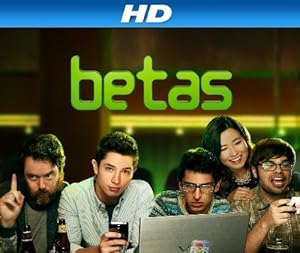
The show centers around the small team behind a start-up dating app in Silicon Valley. The pilot introduced us to the character types the show staked out — the straitlaced main character and team leader, his quirky, awkward best friend, the pudgy, inappropriate guy, and the girl that hangs out with them. Not thrilling stuff, but competent. Excellent TV comedies will begin with such character types, and slowly reveal more and more humanity in the characters. Over a few seasons, they begin to feel real, and we begin to care about them beyond how often they make us laugh. Think of the evolution of someone like Michael Scott on the American The Office or Marshall on How I Met Your Mother, who got to experience real emotions and tragedy inside a relatively safe sitcom. What's remarkable about Betas is how stunningly fast the show's creators have been able to get their characters to that point. By episode six or so, each character had been given a central role in a particular episode, and none of the characters or the actors portraying them squandered their opportunities. The tech setting is interesting and the evolution of the team's business is an engaging part of the show, but the deft character exploration is really where it shines. There is no sitcom in memory that has made me feel for and root for its characters as quickly as this show has.

You can only watch Betas if you're an Amazon Prime subscriber. Is it (to keep the Silicon Valley motif going) the killer app for this service? Not yet. But if you are a subscriber already, you should be watching. It's no-holds-barred sitcomedy against a backdrop of safe and banal network comedies that would never dream of challenging the rules and formulas Betas gleefully and confidently undermines.

The Math

Objective Quality: 7/10

Bonuses: +1 for not shying away from the human drama between characters; +1 for introducing and then disposing of characters network shows would've kept around for six seasons; +1 for the blase manner it deals with themes other shows would (and have) spent a lot of time congratulating themselves for addressing at all, like a character struggling with his sexual identity

Penalties: -1 for being maybe a little too hipster; -1 as insurance against the rest of the season (which has yet to be released at the time of this writing) not living up to the promise of the first part

Nerd Coefficient: 8/10. As good or better than anything on a network

To find out why a Nerds of a Feather "8" would be even higher on other sites, check out our scoring system here.

Tuesday, January 14, 2014

Microreview [book]: Ritual Crime Unit : Under The Skin by E.E.Richardson


Richardson, E. E. Under the Skin (Ritual Crime Unit). Abandon Books.

The Meat :

The first novel aimed at adults from teen horror author E.E. Richardson, Under The Skin is the first in what must be a planned series of books following a fictitious team of British police, known as the Ritual Crime Unit.

Starting with a nighttime raid on a barn, we meet the chief protagonist, DCI Pierce, a middle-aged officer who's been working in the RCU long enough to have the right mix of knowledge and cynicism to fit the classic jaded hero role. Her thoughts and actions are the focus throughout, and she makes for a fairly absorbing guide into Richardson's world.

What the author enjoyably does is to slowly allow us to gain an understanding into Pierce's work and the fantasy world of the unit without spelling it out in standard bad cop procedural fashion. Straight away we are told of 'skinbinders' and magical tattoos and animal pelts being stitched to humans, but the details and reasons are hazy. No time is given for, say, a new recruit to be schooled in all this for the benefit of the reader. We stay with Pierce from the off, as the raid goes horribly wrong, she loses her team to injury and worse, and she spends the following hours racing to solve the mystery.

The skinbinders, the pelts, the silver bullets, are all part of a weird, hidden world of police work where dark magic and ancient rites are real. A series of killings occur at the hands of people who have, through these rites, shifted their bodies into lethal animal form, taking on the form of the skins they bind to themselves. As Pierce attempts to hunt down the culprits, a shadowy government task force pulls her off the case and forces her to spend the rest of day working on the fringes.

So we have a rebellious cop going against procedure. We have bossy superiors and secret service interference. We have a tough, no-nonsense female hero who eats greasy lunches and talks tough with the best of her colleagues. We have, in short, all the ingredients for a dull tred through tired clichés and predictable scenarios, and, admittedly, some dialogue and moments do hallmark this being the case. Yet combined with the original fantasy elements, the story keeps things believable and enjoyable. All the action takes place in the bland everyday of suburban Leeds, a town in the north of England, and most of the characters, including Pierce, have a down-to-earth, underplayed humanity to them that fits the setting. Ok, it's not Nordic noir but it's also not shouty CSI territory, and despite the far-fetched magical action, the events and people all seem very rooted in the real world.

The book ends on a cliffhanger - a rather chilling one - and many loose ends are left dangling, supporting the idea of this being the first in a series, and so it should be, as Richardson does an absorbing job of introducing us to the RCU. What I would have liked more of, and hope to see in the next chapter, are other characters, and more complex details, than this non-stop drama allowed for. Yet I would happily follow Pierce and whoever her new team are in the future.


The Math:
Objective Score: 6/10

Bonuses: +1 for resisting cliché and dull exposition; +1 for a compelling and sympathetic protagonist; +1 for leaving us wanting more

Penalties: -1 for a being a bit too brief and light on complexity; -1 for, whilst gaining believability, letting the normal dominate over the more exciting fantasy

Nerd Coefficient: 7/10


Monday, January 13, 2014

Microreview [crime fiction]: The Wrong Quarry


Collins, Max Allan. The Wrong Quarry [Hard Case Crime, 2013]

The Meat

I love when an ending saves a book.

The Wrong Quarry, Max Allan Collins’s eleventh entry in the Quarry series, continues the exploits of Marine-sniper-turned-contract-killer Quarry—hence the title. At this point in his career, Quarry has killed his handler, known only as The Broker, and he’s hit on a new business model. Using his old boss’s files, he stalks assassins on the job, finds out who the target is, and offers the marked for death bastard a deal: Quarry will rub out both the assassins and whoever paid for the hit. For a fee. The Wrong Quarry opens with our hero following a hit team to the quaint town of Stockwell, Missouri where he soon finds himself immersed in the mysterious disappearance of Candy Stockwell, the granddaughter of the town’s patriarch. Quarry soon discovers that the family of the missing teen has put a hit on the man they believe is responsible: middle-aged and clearly gay dance instructor, Roger Vale. Quarry strikes a deal with Vale to turn the tables on Stockwell and quickly gets to work—though he can’t quite shake the feeling that he’s being played by someone.

The Wrong Quarry is an uneven, though ultimately enjoyable novel. The first hundred pages are a rapid read. Collins gives you the set-up and plunges directly into the heart of the matter. By the middle of the book, however, the story gets a bit bogged down in the back-story of Candy Stockwell. The problem is that Quarry spends far too much time talking to people who knew Candy, none of whom offer more then what we knew by page 40: Candy is/was a rich brat, prom queen, gifted artist, and town slut. The actual circumstances surrounding her death remain completely shrouded in mystery, with Collins not offering us—or Quarry—any clues as to what happened to her. Around page 168, The Wrong Quarry was hovering between and a 5 and a 6.

But Collins salvages the book in the last 50 pages with a well-placed twist—and then a second one for good measure.

This is my first Quarry novel, so there’s a good chance that I’m missing something. There seems to be a tension at the heart of the book: is it a murder mystery or an action tale? Quarry is, after all, an assassin. But only four people get killed in The Wrong Quarry. The book often reads more like a murder mystery. But Quarry’s detective work doesn’t really uncover much. By the novel’s end, it becomes apparent that this tension stems from Quarry’s professional development rather than the structure of Collins’s narrative. Towards the book’s conclusion Quarry says, “I wasn’t just killing people anymore. I had put myself in the position of having to think about the reasons why people were killed.” Since I am not a longtime reader of the series, I cannot say whether this transformation has been gradual or whether it begins with The Wrong Quarry. Nevertheless, I appreciated it.

Collins is an able writer. He balances terseness and subtle flourishes, adding (sometimes corny) humor to the straightforward narrative. I did find the sex scenes a little heavy-handed. I am by no means a prude—and the Catholic guilt instilled in me as a child has long since worn off—but there’s a certain sophomoric coarseness in the depiction of a few of the sex scenes and in the all-too-frequent references to Quarry’s torpedo. But this accounts for no more than five pages of the book. The rest is pretty damn good.


The Math

Objective score: 7/10

Bonuses: +1 for just 221 pages; +1 for two twists

Penalties: -1 for making me blush

Nerd coefficient: 8/10