Tuesday, September 8, 2015

THE MONTHLY ROUND - A Taster's Guide to Speculative Short Fiction, 08/2015

Choice. Sometimes it's difficult to find a theme that runs through the stories that I gather together for the Monthly Round, but this month it's all about choice. Making the hard choice, the choice to live, to work together, to try for something impossible even when it might seem selfish. The choices do not always work out, and there is a thick vein of tragedy running through the choices, but at the same time there is a promise of freedom, of a better world, that is just a choice away, and it brings these stories alive to me, gives them a flavor that I just have to share, that I have to stop and enjoy slowly. So pull up a stool and settle in and we'll begin...


Tasting Flight - August 2015


Art by Reiko Murakami
"Given the Advantage of the Blade" by Genevieve Valentine (Lightspeed #63)

In an incredible month from Lightspeed, "Given the Advantage of the Blade" by Genevieve Valentine manages to make the list on the stark imagery of a battle royal between fairy tale women, witches and princesses and thieves and with the taste of blood and loss it's a Merlot, nearly sweet but with a punch that will have your head spinning by the bottom of the bottle. The story features the same scenario played over and over again, the women of fairy tales, the villains and the innocents and everyone in between being given a knife and left in a room. And every time the result is different only really in which survive and which die. In most, there is only one survivor. The action of the story is brilliant, bloody and disturbing. There are no winners, not even the ones that manage to live to try and open the door to leave. And it meets up with how these characters were created, how they were crafted, the cultures they came out of. That in all of the stories there is always blood on the floor. These are the grim tales, reveling in violence, with never an attempt to forgive, to move on, to find the true villains, which were never the witches or the stepmothers but the situations that set them against their stepdaughters, their wards, against themselves. The story is about the expectations on women to perform, to fight and die, for a cause that doesn't serve them. Live or die, the winners were never really in danger at all, were never in the room but set apart from it, controlling it, put the knives in the hands of these women and expected them to carve each other apart. And the story lets its impact be the shock of a knife plunged into flesh and the silence afterward, and like a Merlot there is a glimpse of something sweet, a hope that is not drowned out in the bite of blood and alcohol.

"Infinite Skeins" by Naru Dames Sundar (Crossed Genres #32)

I usually reserve stouts for the darker tales I come across, and "Infinite Skeins" by Naru Dames Sundar is about as dark as they come, chronicling a woman's search for her missing daughter across multiple dimensions. But this story has so much going on with it, so many intricate layers, that it defies being a regular stout, fitting in instead with the lush and complex bourbon barrel mint coffee stout. Focusing on Ayo and Kuan, a couple whose daughter, Xikele, has disappeared without a trace, the story makes excellent use of quantum uncertainty and a device that allows Ayo to travel to different realities, a practice that is the crux of the tragedy of the story, the start of a cycle that Ayo steps into openly, with full knowledge of what it entails. Or she thinks she knows what it entails. In each reality she visits she searches for her lost child, seeking one similar enough to her own that she will be able to take them back, to abduct them just as it seems her own Xikele might have been abducted. An infinite number of realities, of Xikele's, and yet Ayo knows there is danger, that if she takes one too divergent from her own reality that the results could be disastrous. Still, she makes a choice, one that might doom her, and doom her across all realities, a choice that she nonetheless is compelled to make. It's a story as dark as a moonless night, as dark as a stout resting inky in a glass, devouring light, and through it all there is the promise of only more darkness, the promise that these choices Ayo has made will lead only more choices, each made with hope and yet full of consequence. The story is amazing and wins the award for "I cried the most reading this" for the month, combining love and loss and choice in such a way that I couldn't fault Ayo for her decisions even as I saw them play out. Powerful and deep, this is a bourbon barrel mint coffee stout to its core, complex and strong and full of whispered promise. And so, so good.

Art by Tyler Edlin
"Fire Rises" by Alec Austin (Beneath Ceaseless Skies #180)

A story about a woman trying to restore the honor of her family, and also bring opportunity back to her homeland, and also kick a lot of ass, "Fire Rises" by Alec Austin is a red ale, sweet but with a hint of fire and deep enough to make a very satisfying experience. The tale starts out strong and sad when Li, a pyromancer on a mission from her Empire, loses her lover in an attack by a rival agent. The setting that is built in the relatively short space of the story is amazing, mixing science and magic, satellites and systems of power, privilege and affirmative action. On one level the story is about Li's journey to presumably stop a nation from deploying a new satellite, a sort-of moon that will grant their magic-users power and advantage, while also seeking to stop the woman who killed her lover from doing it first, but in a way that will kill thousands and thousands. There is action and adventure and Li is a fun main character, bitter but cunning, powerful but working for a future where everyone has more opportunity than she did. The battles are compelling and visceral and visually captivating, showing off the unique blend of magic and science that make the setting stand out. On another level, though, the story is about finding ways to erase privilege in really the only way that works, and that is by extending the same privilege to all. The story is just so fun while managing to make a subtle point and build strong characters and a rich setting. It captures the nature of red ale, the taste of adventure, of new possibilities.

Art by Julie Dillon
"The Servant" by Emily Devenport (Clarkesworld #107)

Set in the vast expanse of space as a generation ship, once one of a pair, makes its steady way onward, "The Servant" by Emily Devenport is a black lager, refreshing and with a darkness that does little to hide a light finish that gives the darkness a sheen of light. By far the longest story of the issue it appears in, the story capitalizes on the space it uses by taking a hard look at power and capital. The generation ships are run as an aristocracy, ruling families having pushed those less fortunate away from green growing things and into the darkness, to become servants to be abused and mistreated and killed without consideration or remorse. Meanwhile, Oichi is a woman who lost her family when the second of the generation ships was destroyed in a plot to get rid of a technology that would have erased class and privilege. Before they died, though, Oichi received modifications that allow her to be the first to find and communicate with this new technology, which managed to survive the assassination attempt. The story is part mystery, all science fiction, and a lot of fun, the powerful families of the ship all working against each other, plots layered on top of plots, all of which seals the fate of those so sure of their dominance. I love how the story shows the powerful desperate to remain in power, and how that desperation, that lack of trust, is what dooms every corrupt power, that corruption is not a viable system of rule, not indefinitely. And I love Oichi's voice, her hope, her pain and her sense of justice. The story is as dark as space, filled with murder, betrayal, and crimes worse still, but through it all it remains quick and light, fun and moving, like all black lagers should be.

Art by M Sereno
"The Vishikanya's Choice" by Roshani Chokshi (Book Smugglers)

Sudha is a young woman born and raised without options, without control of her life, in "The Vishikanya's Choice" by Roshani Chokshi, a storyh that manages to embody the bitter and crash power of an Imperial IPA. Widowed young and with no prospects in a society in which she suddenly has no value, Sudha is made into a Vishikanya, fed poison until her very touch is deadly, a lesson she learns early on. She is made in a killer, an assassin, and her first mission is to be to kill the great man himself, Alexander of Macedonia. The story earns its Imperial nature from the strength of the prose and also the scale, literally one woman taking on the embodiment of an Empire, a man who has had nothing but choices in life, save perhaps one he was unwilling to take. The parallels and differences between Sudha and Alexander are clear, the one concerned only with being remembered, being a legend, the other concerned only with being free. And while he had that choice all along and simply would not take it, Sudha has lived her life yearning for that choice and being denied it. The story shines with the stubborn resolve of Sudha, her strength to not bend to the choices that have been made for her, to not give up the last of her agency out of fear. Her interactions with Alexander, who she more than matches in terms of presence and intelligence, are compelling and her final choice is uplifting, freeing, full of possibility. Like an Imperial IPA, the experience leaves the reader invigorated, ready for whatever comes next.

Art by Billy Norrby
"Not My Circus, Not My Monkeys: An Elephant's Tale" by Damien Angelica Walters (Apex #75)

An elephant never forgets, not even when it wishes it could, in "Not My Circus, Not My Monkeys: An Elephant's Tale" by Damien Angelica Walters, a story hazy with loss and age and rich with tastes of smoke and earth which fits quite well as a nut brown ale. It follows a circus that has seen better days, run by an abusive Ringmaster and featuring an assortment of people still making their livings off the spectacle, off the lights and glamour of the rings. For the pair of twin acrobats, though, it is slowly killing them, suffocating them and forcing them apart because their lives have become about their act, about their roles of being so similar. And yet they are different, proven when one runs away, when the circus starts to slowly fall apart, all under the watchful gaze of the elephant, who knows the story and pretends to be detached from it, to be too old to care. And yet when the time comes, the story is about it never being too late, that making a change can happen at any time, and those that refuse to, those that give into inertia and fear are those who fall into ruin. The characters are beautifully realized and the story maps a clear trajectory down to Earth, the last days of the Circus, which were always more lies than truths, always more pain than freedom, that were built on the back of exploitation and fear. The elephant remembers it all, and yet no matter the memories there are new ones to be made, new paths to walk, and the story shows the hope that comes even after everything has fallen apart. Haunting but uplifting, it's a nut brown ale in how it leaves the reader feeling, warm and slightly numb and ready for sleep, or something new, or anything.

Shots


Art by Geneva Benton
"Beyond Sapphire Glass" by Margaret Killjoy (Strange Horizons)

This story of two women drawn to each other but separated by their beliefs, by their choices, is a Blue Sapphire, a mix of blue curacao and cranberry juice, sweet in the relationship it depicts, in the way the women obviously care about each other, but with an edge that keeps them apart, unable to bridge the gap between them. The story cuts to the chase, establishing a world where technology is largely outlawed, relegated to a mountain where pilgrims can come and have their consciousnesses uploaded into a computer. For the pilgrim it means eternal life. For the main character it means death, and though the two women find an instant connection in each other, a passion and life that they hadn't known before, they cannot get around the fundamental difference in their philosophies. They both make choices that keep them apart, neither willing to lie, to sacrifice their own values to be with the other. The impact of their relationship, though, is enough to make am impression, to make the memories of that time, even years later and loves before, shine in the main character's mind. The prose is flowing, tragic, the characters so close to something and yet separated by an immeasurable gulf. Sweet and tart, the story makes a very fine Blue Sapphire, easy to drink and yet with a taste that lingers.

"Greenhouse" by Kelli Trapnell (Terraform)

Stark and deadly and filled with some seriously disturbing imagery, this story is a Chlorophyll, a mix of green Chartreuse and ginger beer with a few drops of bitters, arresting and enough to shake a person to their core. The story follows a doctor who has been at the front of an outbreak of a disease that turns its carriers into plants. The plague has only just begun and has been vaguely contained, but what the doctor isn't admitting is that she's been exposed and having dreams about plants. And her choice to keep that fact from her bosses turns out to be much more significant than she thought. The disease, brought on my rising temperatures and perhaps just the world seeking to wipe things back to be green and growing again, mutates and quickens, and the main character is faced with the horror of what she has unleashed, on the disease in all its splendor and destruction, all its life and death. It is a disturbing story, visceral and as compelling as watching the world end, or at least begin to end. Fast and with a growing frenzy of despair, this story is fresh and different, new and captivating. Like a Chlorophyll, there's nothing quite like it, and it's both strange and unsettling and yet with a taste that makes it impossible to put down.

"A Thing in All My Things" by Samuel Marzioli (Urban Fantasy #10)

A man struggles with a monster that lives in his mind and is threatening to break out in this story, which hits like a Barista, a mix of two parts coffee liqueur to one part vodka and topped off with espresso. Tom is struggling to get through life, plagued by a Thing that waits for him wherever he goes, filling him with doubt, fear, self-loathing. It's something that has followed him his entire life, that was grown and nurtured by an abusive mother, a mother whose resent death has sent Tom into a sort of spiral where even the simplest of tasks are made impossible by the Thing. Not about forgiveness so much as about recovery, the story shows both how the Thing might be simply in his mind and but also how it doesn't matter, that it is real to him, and can escape through him into the world, a cycle of abuse and cruelty that Tom has to finally face, to stand up to. There are no easy answers here, no ways to fully banish the pain, the hurt and damage done, but the story does hold that there is still a way forward, a way to at least prevent the Thing from spreading, from wrecking still more of Tom's life than it has. And like a Barista it's an eye-opener, an acknowledgement that some pains and traumas never really leave, but that they can be survived.

--

POSTED BY: Charles, avid reader, reviewer, and sometimes writer of speculative fiction. Contributor to Nerds of a Feather since 2014.

Friday, September 4, 2015

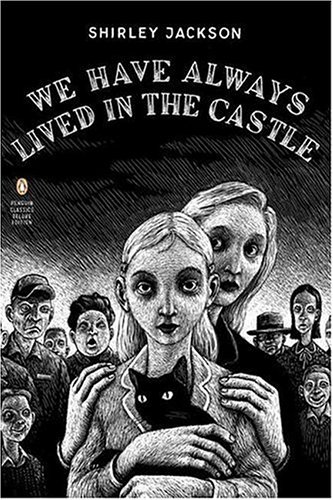
Microreview [book]: We Have Always Lived in the Castle by Shirley Jackson

A great writer's greatest book

Richard Matheson walked in her footsteps, and that's saying something, since countless other genre writers have walked in his, but for someone with literary awards named after her, Shirley Jackson remains somehow an underappreciated writer. Jonathan Lethem points this out in his introduction to the Penguin Classics edition of We Have Always Lived in the Castle. I had read a small handful of Jackson's short stories (including The Lottery, naturally, which she is best remembered for) and The Haunting of Hill House, which is the haunted house book that launched a thousand imitators (and was the source material for one of the best horror movies), but for some reason I had not sought out more of her novels until recently.

In We Have Always Lived in the Castle Mary Katherine Blackwood, known better as Merricat, tells the story of her isolated existence with her older sister Constance and wheelchair-bound Uncle Julian in the grandest house in a small town. Merricat is the only one who can leave the house, because Uncle Julian is incapacitated and Constance has such a fear of the townspeople that she is unable to walk even past the garden of the Blackwood estate. They are all that remains of the once-great Blackwood family, the rest of whom all died within minutes of each other six years earlier, after they were all poisoned with arsenic. Constance was tried for their deaths, and though acquitted, such a stigma was placed upon her and her younger sister that the children in town began singing rhymes about them to scare each other. Each time Merricat enters the town to buy groceries, she feels everyone's eyes constantly upon her, and their whispers always at her back. Nevertheless, Merricat, Constance, and Uncle Julian are content with their quiet little lives.

But then Cousin Charles shows up unnanounced. The son of their late father's now-late brother, Charles is apparently all the extended family that remains. Constance is glad to have Charles, and welcomes him into their home, which he apparently plans to live in now. Merricat despises this intrusion, and this change in their lives and routine. He touches things that have always been just...so. He is intolerant of Uncle Julian's constant ruminations about the poisoning. He disapproves of Merricat's superstitious burying of things around the grounds. He intolerably smokes a pipe. But worst of all, he wants Constance to leave the house and get out among people again. Thus begins the struggle between the ferocious, passive-aggressive Merricat, her meek, beloved sister, and this stranger who is clearly after whatever money might remain in the house.

There's nothing else to call this novel but brilliant. It is a brief novel, but full of complexity, surprise, aching dread, and a profound humanity. Profoundly good and profoundly bad. Merricat is 18, but her voice is more akin to that of a 12-year-old. She is a strange blend of wisdom and utter naivety. She clearly has a diagnosable mental disorder. And she is delicately and perfectly rendered by a writer with a profound facility for language and eye for humanity. Merricat is in large part the engine that keeps the isolation engine running for the Blackwood family, and it seems to be -- at least to this reader -- an unhealthy existence. But if it's also a happy one for the people involved...is it good or bad? The same goes for the townspeople. Jackson deftly paints them as monstrous in one moment, and capable of deep empathy in another, and finally...something else. This is The Monsters are Due on Maple Street meets Boo Radley from To Kill a Mockingbird.

Like Neil Gaiman's The Ocean at the End of the Lane, this is one of the best novels I have read in the last few years, and it is a novel that will not leave me.

The Math

Baseline Assessment: 8/10

Bonuses: +1 for Merricat Blackwood; +1 for refusing to paint even the seemingly simplest characters with a single brush

Penalties: -1 only because I didn't give Gaiman's book a 10/10, and that's the closest parallel I can draw to my experience of this book, but it's seriously great and you should read it, probably now

Nerd coefficient: 9/10. Read it. Do it.

Posted by Vance K — usually cult film reviewer, but sometime book and other stuff reviewer and co-editor of nerds of a feather flock together since 2012

Reference: Jackson, Shirley. We Have Always Lived in the Castle [Penguin Classics, 2006]. (Reprint Edition)

Thursday, September 3, 2015

Thursday Morning Superhero


Happy Force Friday eve!  I am curious how many of our readers are going to venture out to check out the new line of toys for Star Wars Episode VII: The Force Awakens?  My kids would be disappointed in me if I didn't brave the midnight scene and try to get my grubby hands on a First Order Stormtrooper, Rey, Kylo Ren, and BB-8 to name a few.  Hopefully my wife won't be upset with the newest wave of Funko Pop!s,  Hot Wheels, Legos, and action figures.  At least my kids will be happy.  Check out the official guide here and let me know in the comments if you plan on going.


Pick of the Week:
Plutonia #1 - If it is from Image and has the name Jeff Lemire attached to it you can guarantee it will be something worth reading.  The creative team of Lemire, Emi Lenox, and Jordie Ballaire gave us the gift of Plutonia this week.  It has a very Stand By Me vibe, which is a good thing, and includes an interesting mix of young characters.  You have your bully from an abusive home, the sister who has her plans ruined by her little brother, the overweight friend who has self-esteem issues, and a self-proclaimed capespotter.  What?  Capespotters are a group of individuals who are fans of superheroes and devote their time to logging sightings of them on the internet.  Seems like a pretty typical day for these teens, but that all changes when they stumble upon Plutonia's dead body.  I think my favorite part of the book is the short story drawn by Lemire that begins to document the final day of Plutonia.  It will be interesting to see how this mystery unfolds and I am looking forward to the emotional journey Lemire will bring us on through the lenses of these children.

The Rest:
Daredevil #18 - This was a bittersweet issue, as we have to bid a fond adieu to Mark Waid.  Waid enjoyed the longest run of Daredevil and it was what brought me back to the Man with No Fear.  While Charles Soule, who is taking the reigns, is no slouch, he has big shoes to fill.  Waid brought Daredevil to the West Coast and wrapped things up by punching Kingpin in the face repeatedly.  I am curious what the future holds for Mr. Waid and am looking for his next project.  Congratulations on an incredible run.


Deadpool vs. Thanos #1 -When I saw this title, there was little I could do to avoid picking it up.  The  premise was intriguing, and it actually taught me something about Deadpool.  I have enjoyed some Deadpool comics in the past, but by no means am a big fan.  This book informed me that it was the mad titan himself, Thanos, who cursed Wade Wilson!  I enjoyed that tidbit and the basic premise that Lady Death has been kidnapped and it is up to unlikely heroes to save her.  I am strangely looking forward to the next issue.


POSTED BY MIKE N. aka Victor Domashev -- comic guy, proudly raising nerdy kids, and Nerds of a Feather contributor since 2012.

Wednesday, September 2, 2015

6 Books with Fantasy Author Sam Sykes


Sam Sykes is author of the Tome of the Undergates trilogy and, more recently, The City Stained Red (which we quite enjoyed), and is also known for his incisive commentary on fantasy and fandom. Today Sam shares his "6 Books" with us...


1. What book are you currently reading?
 I have just now finished A Head Full of Ghosts. Mallory O'Meara, a film producer, and myself have a two-person horror club and she hugely recommended this to me. It may seem like a cop-out to answer this question with a book I am no longer reading, but A Head Full of Ghosts was such a complex and twisty narrative that I'm going to be thinking about it for a very long time.


2. What upcoming book you are really excited about?

You know, I don't really pay attention to what's hot and off the presses. I'm gearing up to read Sebastian de Castell's Traitor's Blade, because someone said it reads a lot like The Lies of Locke Lamora. But that came out awhile ago, didn't it? Oh! I have a standing threat against Tor to give me Brian Staveley's third book, The Last Mortal Bond, as soon as it's in ARC form or I will stand outside their offices in the rain with a boombox over my head playing Spandau Ballet's Gold. I guess if I'm ready to do that, I would be really excited about it.


 3. Is there a book you're currently itching to re-read?

I really don't re-read a lot of books. Partially because I feel a lot of good authors get passed up in favor of re-reads. Not that I blame anyone for re-reading their favorites, but it rarely has the same magic twice for me.


 4. How about a book you've changed your mind about over time--either positively or negatively?

Oh, Justin Landon and I just did a whole podcast about how I changed my mind about Joe Abercrombie. Not his actual stories--those are still great--but for a long time, I thought Joe's sex scenes were the worst things I had ever read, fraught with words like "squelch" and "the root of his cock."

But with time, and more Abercrombie stories, I have come to realize that they are actually brilliant. Abercrombie's stories are all about what it means to be human and how hard it is to be that human. Sex is always the ultimate test in his stories--the moment where there's no more pretense, no more airs to put on, no more goals to aspire to--and his characters always fail that test. It's beautiful and tragic and squelchy.


 5. What's one book, which you read as a child or young adult, that has had a lasting influence on your writing?

Man, we were just having a chat about this on twitter in regards to Dragonlance. But one thing I'd say definitely influenced me was Drizzt Do'Urden novels by R.A. Salvatore, though not in the way you might expect.

Drizzt novels are always fraught with fight scenes. People fight at the drop of a hat and 14-year-old me loved that. But as I grew up with these novels, I started noticing that they were all very clean: a lot of parries, a lot of dodging, a lot of footwork (Salvatore used to be a boxer, I've heard, so I appreciate that detail), and by the end of it, you couldn't read the word "feint" without throwing up. I felt that robbed a lot of the combat of its emotional intensity.

So in my books, fighting is very much impactful. I like describing blades sliding through flesh and the spatter of fluid on the earth, I like writing about that popping sound you hear in your head when something inside you comes loose, I like bone-jarring, ugly, dirty fighting. It makes me feel happy.


 6. Finally, what's your latest book, and why is it awesome?

My latest book is The City Stained Red . It's pretty great for the reasons I've listed above. It's visceral. It's joyful. It's exciting. It's a story of demons walking the earth, thieves' guilds carving each other up in the street, religious armies battling, wizards scheming and the six people caught in the middle of it.

I've alternately heard of it described as a D&D party meets a shonen manga and a soap opera with monsters. I like both of those.

But if you'd like to find out for yourself, you can read the comic prelude at samsykes.com/comic and find excerpts at samsykes.com

-Sam Sykes

Tuesday, September 1, 2015

Microreview [book]: Fantastic Erotica: The Best of Circlet Press 2008-2012 eds. Cecilia Tan and Bethany Zaiatz

[Insert Dirty Joke Here]


The Meat (teehee):

I swear there will be a minimum of penis jokes in this review (starting now I guess), because in all seriousness I think erotica gets a disproportionate amount of derision and disdain from readers in general. It gets put off in its own section, and anyone caught wandering that aisle must deal with an awful lot of strange looks from bookstore patrons and staff. When, really, what this collection is is an amazing collection of speculative stories from a wide range of genres and experiences brought together to entertain, to challenge, and yes, to arouse. The level of the fiction is as good as I've seen in any speculative anthology, and the stories are at turns tragic, inspiring, and incredibly sexy.

Perhaps it's to be expected, because this is a Best Of... anthology, pulling stories in from across multiple years, but that hardly changes the fact that the fiction is amazing. Without a central theme, the collection shows the stories voted the best by readers, writers, and editors, and is presented in such a way to provide a sort of sampler pack of what erotica is and can be, a way of introducing the wary and the gun-shy to a world of adventure, action, and sex. Like all speculative fiction, each story invites the reader to enter into a new world, some like our own and some very much not. And the different styles and settings show that sex is (despite how it's taught in much of the US) very much a part of life, is lifting and powerful and impossible to ignore.

The stories themselves range far and wide. Sacchi Green's "The Pirate from the Sky" stars an all-female bad of pirates in a steampunk Southeast Asia trying to live free, and also perhaps to stop a global war. Meanwhile, in Sunny Moraine's "Catch and Release," a space-faring junk collector finds something floating in the inky dark that turns out to be much more than he bargained for. When Suleiman opens a metal pod to find a woman inside, a woman unlike anything he's even encountered, he finds himself the inheritor to a punishment he doesn't understand and refuses to enforce. On the surface, the stories could not be more different, alt-historical fantasy to deep space science fiction, and yet in each the stories shine as unashamedly speculative and complex, nuanced. Themes of freedom, of rebellion, of loneliness and isolation all intertwine and provide backdrop to hard choices with outcomes that are not always blindingly positive. These are not stories that can be separated from the sex they contain, though. Indeed, sex is central to both stories, the ideas of body autonomy,  of choice, of freedom all tied to the way sex is portrayed and experienced by the characters.

This is not to say that the anthology is without flaws. As said, there is a certain lack of overall structure to the collection, and transitions from story to story can be a little jarring for those not ready to move from historical fantasy to dystopic future to second world fantasy to post-apocalyptic sprawl. The anthology certainly doesn't stay in one place long, which was part of why I liked it but those seeking a more interconnected feeling in terms of genre and theme would probably be better served seeking out a themed anthology instead of this collection, which was voted on and selected to try and provide a sampling of the best of the best erotica. Unfortunately, being a sampling of all sorts of different kinds of stories also means that some are bound to fall a little flat. And while I personally found something to like in every story in the collection, I will admit that there were a few I cared for a little less.

With stories like N.K. Jemisin's "The Dancer's War," though, it is impossible to be anything but incredibly pleased with the collection as a whole. Building a rich second world with a layered and interesting political system, the story shows just how much fun erotica can be, two men locked in a duel, neither willing to admit defeat even as the stakes rise higher and higher. It is an incredibly cute story, but also one that shows a subtle talent for world-building and creating compelling characters. Bernie Mojzes' "Ink," meanwhile, shows just how far erotica can be pushed to the limits. There are all sorts of jokes that could be used when hearing Lovecraftian erotica (I mean, tentacles, come on), and yet the story manages to craft sex and character and loss and longing in a way that is not ridiculous, that does not build to a punch line. Instead, it manages to capture that fear of the unknown, the draw and repulsion, while being sexy. Which I was not expecting at all.

In the end, Fantastic Erotica provides a stunning map to the vast realms of erotica, featuring a nice variety of characters, sexualities, genres, and themes. And they show the power and uniqueness of erotica. These are not science fiction or fantasy stories with sex scenes added in to sell. The sex is integral both to the plot and message of these stories, and is depicted with skill and passion. These are speculative stories, no less deserving of time or consideration than anything that appears in Asimov's or Lightspeed (and indeed many of the names here have appeared in the most prestigious of genre publications). That they feature sex is deliberate, and should not somehow transform them into stories that "true SFF fans" would not read. Sex is just another part of life (a very sexy part) and to treat it as different, as outside "normal" fiction, is to do both SFF and readers as a whole a vast disservice.

The Math:

Baseline Assessment: 8/10

Bonuses: +1 for an amazing variety of stories, sexualities, and genres, +1 making an Eldritch Horror sexy

Negatives: -1 for a lack of clear organization

Nerd Coefficient: 9/10 "probably go out and read this now"

--

POSTED BY: Charles, avid reader, reviewer, and sometimes writer of speculative fiction. Contributor to Nerds of a Feather since 2014.

Reference: eds. Tan, Cecilia and Zaiatz, Bethany. Fantastic Erotica: The Best of Circlet Press 2008-2012 [Circlet, 2013]

Monday, August 31, 2015

Microreview [film]: The Fantastic Four (1994)

This was a movie we weren't supposed to see. Well, I saw it, so joke's on...me?


Sometimes when somebody buys the movie rights to a piece of intellectual property, there's a clause in there that states that the rights will lapse if the buyer doesn't actually make the thing in a given period of time. There have been a few examples recently, and the results are usually unwatchable. There's the Atlas Shrugged trilogy, which started filming two days before the rights were going to lapse, and there's the bizarre pilot to a Wheel of Time TV series that aired on FXX in the dead of night. Long before those, however, was The Fantastic Four. Variety did a good recap of the story behind the 1994 film produced by Roger Corman, and there's a documentary coming out in the next few months that goes into more depth. But the tl;dr version is that the 1994 film was made solely so Constantin Films could retain the rights to the Marvel property, and the film was never intended to be shown. Avi Arad from Marvel even reportedly bought up every copy and had the negatives destroyed to keep it from being seen.

But while that may have worked with the original film elements of The Magnificent Ambersons, that genie doesn't go back into the bottle in the age of computers and the internet.


I am on record as saying unreservedly that I love Roger Corman and believe he has been a singular force for good in American cinema. So if you come at this film wondering what a Roger Corman adaptation of a Marvel comic book property would look like, then it's pretty much exactly what you'd expect. There clearly wasn't a lot of money, so The Thing is a dude in a suit, whose mouth seems to have one pattern of movement, which it goes through every time he's talking. Reed Richards' ability to extend his arms and legs looks terrible. Sets rely more on smoke machines and lighting than on being actual sets, and your prosthetics and makeup are probably on par with an entry in the Leprechaun movie franchise.


But there's so much more here than just paltry production values. Some of it is acting — Jay Underwood as Johnny Storm is particularly egregious, Henry from Punky Brewster plays an astronomy professor at the beginning of the film like he's the top dog at the Al Pacino School for Scenery Chewing™, and Kat Green as Alicia Masters is put in a few spots that Vivien Leigh wouldn't have been able to make even vaguely human. Some of it is the use of early CGI to render the Human Torch, which looks spectacularly bad, and almost caused me to do a real-life spit-take. But mainly what really undermines this movie more than anything are the spectacular collapses in logic and motivation. Here are a couple of my favorites:
  • Two lurking, evil-looking guys who appear to be skilled surgeons keep Victor von Doom alive after a terrible accident, and we next see them ten years later as Dr. Doom's bumbling, incompetent sidekicks
  • After a mishap in space, Reed Richards, Sue and Johnny Storm, and Ben Grimm apparently fall something like 23,000 miles back to Earth, where they land in a field and are happy to be alive, but incurious as to how that could be possible
  • The Jeweler is also a villain in this movie
  • The Jeweler falls in love with Alicia, and when Dr. Doom raids his lair, The Jeweler holds Alicia hostage, as though it would mean anything whatsoever to Dr. Doom if this weird guy in a sewer killed a girl he'd never met
  • Ben becomes The Thing, except for the one time he really needs to be The Thing, and briefly isn't, but then suddenly is again
Also, it should be said that the final shot in the movie is one for the Terrible Movie Hall of Fame™.

In the final reckoning, though, this one's hard to get my head around. It's not awful enough to be a truly to-shelf terrible movie, but it's certainly not good. The fact that everyone is obviously trying to hard to make a good movie actually makes the whole thing a little sad. On the whole, it's probably more worth seeking out because of the lore surrounding it than the actual content of the film.

The Math

Baseline Assessment: 3/10

Bonuses: +1 for Rebecca Staab as Sue Storm, who looks more like a drawing of a comic book character than anyone I've ever seen in another comic book adaptation; +1 for 3-5 legitimate (although unintentional) laugh-out-loud moments; +1 for its place as one of the cult film Holy Grails

Penalties: -1 for crumbling under the weight of basic logic and human emotion; -1 for the Jeweler. Seriously, Dr. Doom isn't enough for your origin story? You need a weird troll running around kidnapping blind girls, too? Why is he in this movie?

Cult Film Coefficient: 4/10. It's worth watching if you can track it down, but don't put yourself out.

Posted by Vance K — cult film reviewer and nerds of a feather, flock together co-editor since 2012.

Friday, August 28, 2015

Microreview [book]: The Inn of the Seven Blessings by Matthew Hughes (Rogues #3)

Third installment in the Rogues anthology edited by George R. R. Martin and Gardner Dozois


The Inn of the Seven Blessings tells the tale of Raffalon, our rogue, who comes across the belongings of a traveler who has landed himself in an unfortunate circumstance (a.k.a., is about to get eaten as dinner). Labeled a thief, Raffalon quickly rummages through these belongings and takes anything he believes to be of value to him. One mysterious item turns out to be more than it seems, and laden with magical properties it sends Raffalon on a bit of a quest.

What I like most about this story is that it is full of classic fantasy tropes, but does not feel contrived or forced. There are good characters and there are bad characters, but there are also in-between characters. Raffalon goes on a rescue mission and then a redemption mission, and in the end must beat the bad guy and receive an award. Sure, I love when books successfully push the boundaries of the genre, challenge pre-conceived notions, and subvert tropes, but it is also refreshing to see that the foundations of the genre can still be done well and are still entertaining.

That’s not to say that The Inn of the Seven Blessings is strictly a conventional fantasy tale, though. While it has many classic elements (quest, girl, bad guys, deities, magic), I wouldn’t necessarily call Raffalon a hero, or Erminia a damsel in distress (there may have be a face slap and knee to the groin). It’s nice to see stories like this that successfully mix the ‘old’ with the ‘new’ in a novel way (yes, pun intended). Plus, the world building is quite fantastic given the limited number of pages available (30-ish) and makes me want to read more about this universe. This is the first I’ve read of Matthew Hughes, and I will definitely add him to my list of authors I want to read more of.

The Math

Objective Assessment: 7/10

Bonuses: +1 incorporating certain fantasy tropes while simultaneously challenging others

Penalties: none

Nerd coefficient: 8/10 "Well worth your time and attention"

I must say, I am really enjoying my read through Rogues. When the stories are wonderful they leave me in awe of the authors' ability to create something so large in such a small place. And when the stories are awful, they are just short enough that it doesn't ruin my day. I'm still reeling over gibberish I've wasted 400 pages of my life on.


Next up: Bent Twig by Joe R. Lansdale
-------

POSTED BY: Tia, who is currently reveling the joy of the short story anthology

Reference: Hughes, Matthew. The Inn of the Seven Blessings. From: Rogues, Eds. George R. R. Martin and Gardner Dozois [Bantam Spectra, 2014]