Monday, April 8, 2013

Microreview [book]: The Daughter Star by Susan Jane Bigelow


The Meat 

Many writers, when you get right down to it, have only one truly good idea.  Such writers may, over the course of their careers, write dozens of novels, poems, and so forth but will forever be remembered for that single masterwork, against which all their other work appears pitiful by comparison.  Joseph Heller (i.e., the guy who wrote Catch-22...and a bunch of other stuff that nobody cares about) is my go-to example of this breed of writer, but it's a frequent phenomenon in the world of science fiction and fantasy literature too, especially in the second variation: all their works are extremely similar. One thinks, in particular, of the always excellent but always predictable Joe Abercrombie, or of K.J. Parker's repetitive though well-crafted variations on the "City gets sacked and the people who sack it found the new City, on ad infinitum" theme.

Genuine improvement in both writing style and increasing sophistication of ideas isn't all that common in the realm of sci-fi/fantasy literature (or arguably in literature in general). Indeed, a given author's first book (Lies of Locke Lamora, anyone?) is often far and away the most intriguing. There's a simple reason for this: people have a finite number of ideas, and when toying with the possibility of becoming a writer, naturally most will put their best foot forward, so to speak.  That's why sequels tend to suck—the first-time author has just used up a tremendous amount of energy, anaerobic respiration-style, to produce book one, but all subsequent work requires the long, painful, slow burn of aerobic respiration.
          
With such a long preamble, you, dear reader(s), will probably be expecting me either to denounce Susan Jane Bigelow for rehashing her earlier works in rebooted form, or possibly to extol the virtues of The Daughter Star as her career-making masterpiece.  The truth about Bigelow and The Daughter Star, however, is nothing so extreme, a fact that is very encouraging.  You see, Bigelow has markedly improved as a writer since her first novel, Broken, whose worldview and writing style both reminded me of nothing so much as Suzanne Collins' Mockingjay (and no, that's not exactly a glowing compliment).  This is cause for celebration—she has managed the difficult feat of surpassing her earlier works on both style and substance, combining a more engaging plot (the ideas are cooler) with more sophisticated handling of dialogue and characterization (the writing is better).
          
In particular, the picture she word-paints of a universe in which humankind has an extremely ambivalent relationship with an alien race, which is at once benefactor and exploiter of humankind, is intriguing, as is the issue of planetary rather than national/religious/human solidarity.  If humankind had to leave Earth and be split into two groups and be bundled off to two very different worlds, one (in a word) awesome and one super-crappy, one can easily imagine how resentment at getting the short stick might simmer for a few decades, then eventually boil over into some interstellar unpleasantness.  This sort of thing is why I read science fiction: it takes the world we know and introduces a giant "what if ____?" to the equation, then explores the various ramifications such an altered world would present its inhabitants.
          
One problem with The Daughter Star is actually that, to my mind, there were rather too many "what if?" questions, especially near the end, with a big reveal that all might not be as post-Earth history claims.  Having several drastic differences from the current world in which we live made the book less engaging to me, since it was harder to see how this or that aspect of the created world was commenting on the "real" world (something all literature tries to do, or so I rather naively believe).
          
This brings us to the other problem: the one glaring exception to the "I can't see what this part of the story has to do with the real world" principle.  The main character of The Daughter Star, an interstellar trade fleet pilot, is a lesbian, sent home after her fleet disbands as tensions simmering between the two settled worlds break out into open war, and the entire first quarter of the book explores how small-minded and judgmental everyone from her crappy nation is, in the process providing a rather laborious account of the awfulness of her family, and especially her father (pressure from everyone to settle down, stop flying around in space and find a dependable man, almost house arrest, withholding of vital mail, etc.), and this is without even having come out to them!  That fully 25% of the novel is devoted, in Campbellian terms, to the pre-"call to adventure" stage of the hero's journey seems excessive to me. I mean, sure, it's good to hear the reasons for a given hero(ine)'s desire to leave on an adventure, but ultimately, readers want to read about the adventure, not a pseudo-sermon about how nice it would be if the protagonist were somewhere else. We get it: overly fundamentalist parents/societies who insist that women stay at home are icky. There—I just summed up dozens of pages in thirteen words!
          
You, dear reader(s), might be itching to object here that, if earlier I took Bigelow to task for overloading her book with premises that have little relation to the real world, this sort of clearly resonant issue should be right up my alley, and normally I would agree with you.  But here, it's just too didactic. Actually, the entire novel, which has plenty of interesting and even morally ambiguous, almost femme-fatale female characters, has not a single even remotely sympathetic male character (except for one old guy near the end).
           
It seems that in this future universe, men are kind of horrible, but because this part of the novel is so clearly, almost allegorically commenting on the world of today, it's hard not to conclude that men are bad news.  Of course, that's probably true to a point, but these sorts of sweeping generalizations tend to pop up only in, say, wartime propaganda—and even then usually we get one or two "good guys" objecting to their own group's horrible conduct.  The reason propagandists create this moral complexity among the enemy, and thereby avoid depicting them as an interchangeable ravening mob, is because it's truer to real life experience to present a gray rather than a stark black and white world, and more convincing as propaganda.
          
My objection, then, isn't to the generalization itself, but to the unambiguous way men in this novel are characterized: they're pretty much an undifferentiated mass of thuggish, bossy jerks. I am of the opinion The Daughter Star could have been improved by a more sophisticated treatment of this universe's men, not because it somehow isn't politically correct to have a book where men behave like overbearing monsters that crawled out of Slytherin House, but because it felt, on the level of dialogue and characterization, to be a rather crude caricature of actual (hu)man behavior, and far less successful than her treatment of women (and even female aliens!).
          
Still, the ending certainly left the door hanging wide open for a sequel, so perhaps in Bigelow's subsequent journeys to the universe she has created, she'll pull a J.K. Rowling and (Harry Potter spoiler alert! For the three people on earth who don't know the story yet) show how seemingly awful male characters, the Draco Malfoys and Snapes of her world, might have some redeeming qualities after all (though something tells me the father won't be getting a Snape-style reappraisal). 
          
All in all, however, there is enough that works well in The Daughter Star to justify both a) reading it, and b) being intrigued enough to look forward to the eventual sequel.


The Math

Objective score: 7/10

Bonuses: +1 for winning the Most Improved award: major improvements in both style and story sophistication from earlier work

Penalties: -1 for having all male characters suck so hard, -1 for the extended, almost didactic treatment of the "family drama" in the first 25%

Nerd Coefficient: 6/10  "still enjoyable, but the flaws are hard to ignore"

[This score might seem cruelly low, but actually, it isn't at all; you can see an explanation of our non-inflated scores here.]

Saturday, April 6, 2013

Retro Review: Mega Man


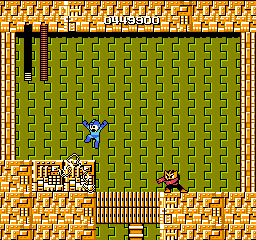
Today it's time for a walk down memory lane. I'll be reviewing the 8-bit Nintendo classic Mega Man. It has spawned at least 50 sequels on various consoles and was one of the most popular games on the original Nintendo system. This was in my top 5 favorites on the 8-bit machine along with Super Mario Brothers, Mike Tyson's Punch Out, Bionic Commando, and Contra. The one thing these games all have in common is their replay-ability. I spent a good portion of my elementary and middle school years playing these games, probably in the thousands of hours, as depressing as that admission may be. Mega Man's boss fights and weapon upgrades were a first in those early days of gaming. 


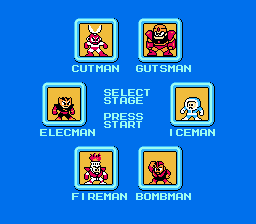
For those who were on Mars and didn't play Mega Man, it was a side-scrolling shooter-type game where you had to face a series of six enemies before facing the evil Dr. Wily in order to finish the game. Once you beat an enemy you were able to take on their powers in order to use them against the rest of the evil robots you faced. All seven robots, the evil six and Mega Man, were created by Dr. Light. However, his assistant Dr. Wily stole the robots and re-programmed them to follow his evil commands. Mega Man was the only one who was able to withstand the re-programming and he is tasked with fighting through his former brethren in order to stop Dr. Wily. 

the enemies


Bombman


As if you couldn't guess, Bombman throws bombs at you. Once you reach him, he jumps around the room tossing bombs in your general direction. As long as you could avoid the explosions, he was a relatively easy boss to take down. His only chance was to get you stuck in a corner and blast away. If you kept moving, you were probably fine. I usually started off with Bombman due to his easy beat-ability. It's like basketball, start shooting layups and work your way out to three pointers to build your confidence. 

Gutsman


Gutsman, on the other hand, was one of the most difficult levels in the game. Not only was his level one of the hardest, Gutsman was one of the two hardest bosses in the game. Gutsman would jump into the air. When he landed, it could not only damage you, but it also dropped a boulder that he would throw at you that caused considerable damage. Using the power you gained from Bombman was the best way to take him down. Hitting him with three bombs was enough to waste him and move on to the next level. 

Cutman


Cutman's level was a lot harder than he was, but there was a key to beating him that, if you screwed it up, meant your life. I died a lot more falling from beams in this level than I ever did from Cutman. The aforementioned key to beating him involved using the power you gained from Gutsman. Cutman was probably the most agile opponent you faced. He flew around the room and tossed boomerang-shaped scissors at you. There were two boulders in the room that you had to pick up and use to hit him. If you scored on both hits, he was done. If not, you were probably the one that ended up dead. 

Elecman


Elecman was another of the more difficult enemies in the game. He shot an electrical beam in all directions and three hits from it was all she wrote for our hero. On the flipside, if you used the power you gained after beating Cutman, you could finish him off in three shots, as well. His level included many electrical obstacles that required split-second timing to negotiate. Other than Gutsman, this was likely the toughest level to get through in order to reach the boss. 

Iceman


Iceman was a relatively easy beat if you had already taken down Elecman. He, fairly obviously, shot ice arrows at you while floating through the air. You had to jump between the ice arrows in order to avoid damage, but retaliating with your Elecman power quickly finished him off. Once you got the timing of his attacks down, he was easy to deal with.

Fireman


I usually saved Fireman for last because he was pretty tough. Using common sense you could figure out that the powers you gained from Iceman were the best attack to use against him. Every time you hit him, he fired a blast of fire at you. All you had to do was time your jump over it correctly, then hit him again. However, this was harder than it sounds. His attack was a large fire burst and it was easy to mess up your timing and get burned. Other than his attack being quite powerful, he was a relatively easy boss because he never left the ground and never fired at you until you fired first. So long as you timed your jumps perfectly, he was not that difficult, but timing your jumps perfectly took some measure of practice. By the end of my Mega Man playing days I could do it with my eyes closed, but when I first got the game this maneuver was one of the more difficult moves to pull off consistently. 

Dr. Wily


Getting to Dr. Wily was pretty tough. You had to fight past another two new bosses as well as facing all of the other boss characters again. First off is a big lava monster that shot parts of himself, boiling lava, at our hero. When he opened his eye to attack, you had to hit him in it. There was no other way to damage the guy. After him, you had to battle Cutman and Elecman again. Then you fought a Mega Man clone. He had all your powers with the minor detail that they're more powerful than yours. After you killed off your clone, they brought in someone I've seen called "Bubbleman". He fires bubbles. Scary, I know. The room has four boulders in it, hinting that your Gutsman power is probably the best way to beat him. After that, you re-fight Bombman, Fireman, Iceman, and Gutsman in that order. Finally, it's time to meet the big boss himself.


Dr Wily appeared in his red spaceship and fired at you with his cannon. After you were able to destroy his cannon, Wily's damaged ship started its last gasp attacks. His cannon and cockpit both explode and his attacks sped up considerably. Once you finally hit him enough using a variety of the powers you gained throughout the game, you win! Woohoo! 

why i loved it

The total gameplay time was probably a bit under 10 hours. It wasn't like Super Mario Brothers where you could sit down and beat it in an hour or two. Other than Zelda, it was one of the longer great NES games that required a bit of time input to finish. When you put a decent amount of time into a game, the payoff seems like it's more worth the effort than shorter, albeit fantastic games like Mario Bros. and Contra. Mega Man also took a considerable amount of time to figure out how to beat each level. Unlike today's games where, unless you're playing on Insane difficulty you can usually clear most levels with five deaths or less, I probably died 10-20 times per level in Mega Man. Games have changed considerably in that facet over time. Very few of today's games require so many attempts to clear a level or beat a mission. Although they have vastly increased in story quality, their overall difficulty has definitely dropped since the days of Mega Man and its ilk. 


Mega Man was one of the greatest games on the original 8-bit Nintendo. Although it may have spawned a few too many sequels, the original will always hold a special place in my heart. Hopefully it does for you, too. I hope you've enjoyed this trip down memory lane. Next week I'll get back to current games and review Bioshock Infinite. See you then!

the math

Objective score: 9/10

Bonuses: +1 for breaking ground in games by adding the ability to add power-ups to your weaponry.

Penalties: -1 for taking the easy way out by having you replay each boss in the final level.

Nerd coefficient: 9/10. Very high quality/standout in its category.


Friday, April 5, 2013

Microreview [film]: Lady in the Lake


The Meat

Lady in the Lake is the kind of movie that receives mention and has some clips featured routinely in documentaries about film noir because it's a movie with a capital-G Gimmick. For this Raymond Chandler adaptation, the entire movie was shot in "first person," meaning that the camera stands in for detective Philip Marlowe himself. Other actors address their conversations directly to the camera, if somebody punches Marlowe, or kisses him, they punch or kiss the camera, and if Marlowe looks in the mirror, we see...well, not the camera, but actor Robert Montgomery, who also directed.

This whole project was Montgomery's brainchild, and nobody but him seems to have cared too much for the idea. Raymond Chandler never liked the idea (and likely didn't care for MGM using somebody else's adaptation of the book, after Chandler had already adapted it himself), the studio didn't like it and made Montgomery shoot some interstitial segments where he addresses the camera directly, and audiences didn't like it either, since they paid their two bits to see Robert Montgomery in a movie, not listen to him in a movie. But it's certainly an ambitious directorial debut, and Robert Montgomery got what he wanted out of it, which was an opportunity to move from in front of the camera to behind it, where he would spend most of the rest of his career.

But how's the movie itself? More or less mediocre in every way. The plot is your standard Chandler-esque maze of lies and double-crosses, this time concerning a web of mistresses of different men, powerful each in his own way, and each of whose trails cross somehow in the town of Little Fawn Lake (think Big Bear, for those of you familiar with Los Angeles). The movie differs considerably from its source material, focusing most of its energy on the relationship between Marlowe and his client Adrianne Fromsett, whose role was expanded for the movie. It lacks Chandler's edge and lyricism, and what results is a shallow but enjoyable detective story with some unique camera work.

The Math

Objective Quality: 6/10

Penalties: -1 for noir stalwart Audrey Totter's repeated and cartoonish expressions of shock, anger, and/or disgust, all directed right at the camera lens; -1 for the cop-out interstitials that break into the first-person POV conceit arbitrarily

Bonuses: +1 for its place in the Movie Gimmicks Hall of Fame; +1 for Robert Montgomery being the father of Elizabeth, my favorite TV witch ever

Nerd Coefficient: 6/10. Still enjoyable, but the flaws are hard to ignore.
The spectacular new Raymond Chandler picture! In which
Audrey Totter simply can't BELIEVE a single damn thing
anyone tells her! 

[See explanation of our non-inflated scores here.]

Thursday, April 4, 2013

Thursday Morning Superhero

I feel bad that I haven't been able to name Age of Ultron pick of the week because I have truly been loving this series.  This week it is pitted against the third to the last issue of Locke and Key and is once again runner-up.  If you haven't checked out Age of Ultron by Brian Michael Bendis I highly recommend it.  That being said, Joe Hill and Gabriel Rodriguez are wrapping up one of the best pieces of fiction that I have ever read.  Hard to compete with a title like this.  Time for the least shocking pick of the week ever!


Pick of the Week:
Locke and Key: Omega #4: The sheer amount of emotion that this series is currently evoking in me should be illegal.  Never have I been more concerned about a group of characters in a comic or have I felt tension that is this palpable.  Dodge's plan to unleash the demons from beyond the door is looking like a foregone conclusion and I know that I am going to shed some tears as this series reaches its conclusion.  Tyler's growth as a character may be my favorite thing about this series.  From the young man who bottled up his emotions to the leader he has become has been a pleasure to witness.  I am sad that there are only two issues left, but I can't wait to complete this journey that has been a true pleasure to be a part of.

The Rest:
Age of Ultron #4 - After the shocking reveal that Ultron was using Vision to manage his destruction, the remaining survivors have a plan that we will begin to see in the next issue.

Snapshot #3 - This fast-paced tale from Andy Diggle takes an unexpected twist in what has been a fun ride that will reach its conclusion next issue.

Miss Fury #1 - This pulp title from Dynamite Entertainment is fun and worth your time if you think you would enjoy a curvacious superhero, Nazis, time travel, and a daring heist.

Wednesday, April 3, 2013

Microreview [book]: The Lady in the Lake by Raymond Chandler


The Meat

Every year I try to re-read one of Raymond Chandler's seven completed novels, and though other interests and commitments sometimes win out, I did manage to have a second go at The Lady in the Lake this year [collected in a lovely Library of America edition with the rest of his later novels]. It was a fun experience, as it's the one I've read the fewest number of times, and as such, remember the least well. But there's also a reason for that--The Lady in the Lake simply isn't Chandler's best.

Still, Chandler at his worst is on par with pretty much any other genre writer at his or her best. Or at least close. Genre writers, you see, are often quite good at producing well-paced and memorable stories, but it's rare to see them elevate their game to the level of art. In Chandler's case, that's pretty much how it happened. In the beginning, he was a company man who liked pulp magazines and figured, if he could copy the Perry Mason formula, he could make some money as a writer, maybe even break into Hollywood. It just so happened that he had a way with words.

That said, there are times when when Chandler reminds me more of those literary fiction types who like to slum it in genre, the kind for whom genre is a vehicle and a means to an end rather than the ends in themselves. Like Thomas Pynchon, perhaps, or Margaret Atwood (though without Atwood's tortured relationship to science fiction, since Chandler never had a problem identifying with the detective novel). The shoe does seem to fit, especially when you consider the fact that, while the Marlowe novels are atmospheric and deeply compelling human dramas, they aren't necessarily that good as mysteries.

In many ways, The Lake in the Lake is the novel that best exemplifies this dynamic. Action begins with private investigator Philip Marlowe at the office of one Derace Kingsley, a perfume executive whose wife has disappeared under mysterious circumstances. He's received a telegram from El Paso, Texas, in which Crystal Kingsley informs him that she's running off to Mexico with shady casanova Chris Lavery. Only, when Kingsley runs into Lavery in Los Angeles, it becomes clear that this isn't what happened. Kingsley has Marlowe go up to his cabin at Puma Point (the real-world's Big Bear, for the curious), where Crystal Kingsley was last seen. Marlowe encounters Bill Chess, the alcoholic caretaker of the Kingsley property, only to find a body floating in nearby Little Fawn Lake. Several more murders occur, and Marlowe gets tangled up with a shady doctor, corrupt Bay City (Santa Monica) cops and a rather intricate game of bait-and-switch.

While entertaining, the story is convoluted, meandering and hinges on a few implausible plot mechanisms. But that isn't why we read Chandler. Rather, it's for the tight, playful and elusive dialogue, where more is said between the lines than in them. It's for the heady atmospherics--the cloying menace of 1940s Los Angeles, the grit and grime underneath the Hollywood glitter--and for the endlessly complex characters, with their opaque motivations and rich histories of pain and heartache. And it's for Marlowe himself, a tragic figure trying to live by a code in a world where corruption and malfeasance are the norm, and where any attempt to swim against the stream is pretty much doomed to failure. In such a world, toughness isn't measured by how you throw a punch, but how you take them. Marlowe sure does takes his share, and he keeps coming up for more. But he knows as well as we do that it can't go on forever. He has his victories, but they are small and pyrrhic at best.

The most memorable moments in The Lady in the Lake come from Marlowe's  interactions with Bay City detective Al Degarmo and Kingsley's secretary, Adrienne Fromset. Degarmo initially appears to be a cardboard cutout of the sinister and perhaps a little slow cop on the take, but he turns out to have a peculiar, complex relationship to the events at hand, and a slippery set of motivations. It's never quite clear, up until the penultimate scene, what he'll do and why. Then there's Fromset, who Marlowe quickly (and correctly) recognizes as the most competent person in the whole affair, and whose ultimate role in the drama is left ambiguous. There's more than Chandler tells us, but we're left to ponder what that might be on our own.

All that said, The Lady in the Lake fails to measure up to some of Chandler's other novels. It doesn't have the revolutionary exuberance of The Big Sleep, which mapped out new crime fiction territory so thoroughly that most of it is now cliche. And, though weighty, it lacks the emotional heft of Farewell, My Lovely or The Long Goodbye. Still, if you like crime fiction, and especially if you like the American roman noir, you owe it to yourself to read this book. Just maybe not as often as you read a few of the others...

The Math

Baseline Assessment: 9/10

Bonuses: +1 for the writing, especially the dialogue; +1 for Degarmo and Fromset.

Penalties: -1 for not actually being a well-constructed mystery; -1 for a the "yeah, right" ending.

Nerd Coefficient: 9/10. "Very high quality/standout in its category."

Tuesday, April 2, 2013

Microreview [film]: The Atomic Submarine

The Meat

It pains me to admit that -- despite how much I love the Criterion Collection -- they just don't seem to know what makes a B-movie a cult movie. You can't just trot out any picture that was shot in six days sometime in the 1950s and expect it to be engaging. Sadly, that is the case with The Atomic Submarine. Even sadder, though, is that now I've watched the entire Criterion Monsters and Madmen collection, and I have to report that none of the movies are particularly noteworthy. The Atomic Submarine has the flaws you'd expect on a movie shot in six days (and probably written in even fewer) -- bizarre and nonsensical dialogue, utterly inexplicable character motivations, hundreds of feet of stock film footage, and strange lapses in logic or narrative -- but the biggest problem with the movie itself is the fundamental place that it's coming from.

In the movie, submarines exploring the Arctic Circle are being mysteriously attacked by some type of energy that's sending them down to Davy Jones' locker. The U.S. Navy puts together a crack squad of seamen and sends them off aboard the Tiger Shark, the baddest mamma-jamma in the whole fleet of atomic submarines. Nobody except a random Englishman aboard seems to know what they're all doing there, but apparently the plan is to spend the next few months making a big, bow tie-shaped path over and around the North Pole in the sub. As it happens, the disturbance that's been sinking subs is actually an alien spaceship that's been staying underwater, since it originated on an aquatic planet. Once the crew of the Tiger Shark figure this out, boy howdy is it killin' time.

The movie really loses points due to this shaky moral footing. This is First Contact with an alien race, and not only are the humans immediately resolved to kill it, but the movie holds up their mindset, pursuit, and actions as right and just. If a movie has something interesting to say, I'm willing to forgive...well, pretty much every single failing in Plan 9 from Outer Space...but The Atomic Submarine represents the kind of belligerent jingoism that left the entire world on the precipice of self-destruction for basically the entire second half of the twentieth century.

The Math

Objective Quality: 3/10

Penalties: -1 for making human nature look particularly brutal and thoughtless; -1 for an alien that looked like a live-action Mr. Hankey and made my stomach hurt.

Bonuses: +1 for the interesting idea that the reason flying saucers were never seen more than once was because they were submersed underwater; +1 for fun with miniature submarines and a fishtank

Cult Film Coefficient: 3/10. Very little good I can say about this.
Howdy Ho! I'm here to colonize your world!

[See explanation of our non-inflated scores here.]

Monday, April 1, 2013

Microreview [TV]: Game of Thrones Season Premiere


The Meat

It was bound to let us down. It’s bad enough that we’ve been waiting since June for a new episode of Game of Thrones. But I am sure that many of us watched seasons 1 and 2 in the interim. I remember watching it during two weeks of torrential rain last summer in Belfast. In fact, I watched the final episode of last season prior to the premier.

Maybe this colored my experience watching tonight’s episode. But it was unclear if it was setting up this season or wrapping up the last. Granted, this is fairly close to how the novels transition from one to another—though Martin does usually begin each installment with a vignette that never seems to tie in with anything at all in the pages that follow.

I wanted something more tonight. Much more.

Nothing really happened. Daenerys meets her potential army, but still struggles with morality and other barriers to success in politics. Jon Snow joins the Wildings—but we knew that. The King-beyond-the-Wall Mance Raider is introduced, played by Ciarán Hinds. (He’s always spot on in whatever role he takes, though I have a soft spot for him since he played Ceaser in the underrated series Rome.) The Onion Knight survives the Battle at Blackwater and makes his way back to Stannis’s court—and is promptly carted off to the dungeon in my least favorite subplot. (I know it’s necessary. I just don’t care.) Sansa and Littlefinger talked about something.

There’s was a lot of talking about something.

It will come as no surprise that the Lannisters once again collectively stole the show. Though Peter Dinklage has rightfully become the face of Game of Thrones, both Tywin (Charles Dance) and especially Cersei (wonderfully played  by Lena Headey) contribute to this family’s charismatic dominance over the series. The tense exchange between Twyin and Tyrion over the latter’s birthright stood in marked contrast the relatively unimportant dialog in every other scene of tonight’s episode. To some extent, the openly hostile relation between Tyrion on one end, and Cersi and their father on the other provides the show the closest it gets to a hero vs. villain scenario. The Lannisters, after all, are not really the villains here—just Tywin, Cersei, and, of course, Joffrey. But Tyrion is certainly no villain, simply a man trying to play the hand he was dealt. Even Jaime is on the road to redemption. 

Jaime’s redemption will be a subplot throughout this season and the next—which makes his and Brianne’s absence from tonight episode notable. In fact, neither Arya nor Bran made an appearance. I hope the absence of the two Stark children and Jaime are not indicative of how this season plays outs. Theirs are among the more interesting stories in the book.

This review may be negative, but it’s lovingly negative, these are but the gripes of a fan. And since I have no intention of rereading the source material, I will continue watching. 


The Math
Objective Score: 6/10

Bonus: +1 for Cersei mentioning that she had heard Tyrion lost his nose in the battle

Penalties: -1 for the absence of Arya (letting you slide on Bran and Jaime); -1 for the charity scene (seriously, I just didn't get that); 

Nerd Coefficient: 5/10