Monday, February 17, 2014

Microreview [film] : A Field in England directed by Ben Wheatley


{the posters were too good to choose just one}

A Field In England [Ben Wheatley, UK, 2013]

This haunting, beautiful, nightmarish and exasperating film was the first British film to get the Cronenberg treatment of a simultaneous release - on dvd, online and in cinema; and being funded by cable channel Film4 was on T.V. not long after. Only now has it come out in the U.S., however, so I thought it was time for an appraisal as it is both one of the most frustrating and most wonderful horror films I have seen in years, and therefore one I recommend seeking out.

Set during the English Civil War (1640's or thereabout's; before your time anyway), the film begins in the thick of battle somewhere in the countryside. We encounter the bookish and terrified Whitehead (Reece Shearsmith, always excellent and possibly familiar from the legendary League of Gentlemen) who flees the smoke and cannon fire with two deserters. Soon they meet the mysterious and threatening O'Neill (the equally-excellent Michael Smiley) who soon has them under his vicious control, digging for treasure in an anonymous (and emponymous) field. Then they stand around talking like they are in a Beckett play, before going nuts.

Not exactly Dickensian levels of plot, then. Nor is there much in the way of dialogue, and that which occurs often confuses more than explains events. To say this is a mysterious film is to say air is a bit tricky to see. It's baffling and deliberately-so. It doesn't make sense. It has non sequiturs and lengthy periods of plot-less imagery. It estranges the viewer and yet assaults them. All these things are to be freely taken as negatives, and I got the impression the film-makers weren't keen to please anyone other than those that shared their interests and tastes. And yet alienating and niche works are often the most powerful, and personal. For whilst, for example, I have found David Lynch's surrealism and incomprehendable plots sometimes to leave me feeling cold, something here hit home. Well, maybe not hit. Crawled. Slunk.

And then it lingered, like the song you can't stop playing or the book you didn't want to end. Walking down the road days later, I found myself lost in thought about what for me is the flim's highlight - a moment so bizarre as to teeter on the edge of comedy, only to fall back into the ditch of horror. To avoid spoilers yet to illustrate how odd this film is, this moment is a slow-motion shot of Whitehead walking out of a tent, grinning. Not exactly exciting sounding, but trust me - if you like films that, bluntly, creep you out - this moment will disturb and delight in equal measure.


That slow-motion shot is just one example of the stunning digital cinematography by Laurie Rose. Black and white and naturally lit, faces pop from the screen, and the grey skies press down and the balnd flora swims in the wind. This visual palette is then edited in gripping and twisted fashion by Wheatley and the writer-editor Amy Jump (to whom Wheatley is husband), especially when images are mirrored, reversed, spun and generally screwed with in a hypnotosing way at the film's climax, resulting in a psychedlic sequence that was impressive and yet hard to watch. Wheatley also composes static portaits of his characters, staring down the lens or fixed mid-movement, as if posing for a painter. The score, meanwhile, is really fantastic. In fact all departments, form sound to costume, seem to have been given free reign to excel.


Now, as I glance back on the last few paragraphs, I can see I'm deep into writing a rave review. So I'll quickly halt and change tack, for I need to remind you of the 'frustating' and 'exasperating' tags I used. This is not a film that makes sense, and despite a love of mystery and stories that wonder rather than explain, I was frustrated by the impossible-to-understand actions of most of the characters, the reliance on surrealism over realism, and the ending that it is simply as mad as a drunk badger in a sack of mosquitos. I found myself annoyed and upset by the insanity on display, and yearning for sense and reality to arrive. However, I was also conflicted in this reaction - the very things I found wanting were the things that made the film so other-worldly and powerful. Sure, a lot of the goings-on can be explained by hallucinations brought on by mushroom eating and battle trauma, but most of it was sheer craziness. And this kept the horror at the centre of the 'story'. As frustrated as the lack of a clear plot or explanation left me, I revelled in this frightening disorientation and confusion. This is the realm of horror than is more deep, cold terror of the unknown, than mortal shock, like the emotions that come from the weirdest and most disturbing nightmares, where you wake up with an aftertaste of fear but no ability to explain why it was so scary. There are no monsters here, no zombies or Freddies or Jasons. Just atmosphere, dread and human cruelty and pain.

It is also a difficult film to'enjoy'. None of the people are appealing or cause much empathy, and they have no clear mission or goal (their decision to go find an alleged tavern for a pint is quickly thwarted) to root for. It's also set in a world that is to me drab and reminiscent of countless cold and dull Sunday walks in the countryside with my family as a kid, but perhaps English fields are more exotic and fascinating to foreign eyes. Perhaps not. I do admit that a familiarity with the historical background, and with the ferns and trunks of the landscape made it all more captivating than it might otherwise have been, but, as I watched at home on the telly, I found my eyes wandering and there were at least three trips to the kitchen. I never do that during Man vs Food... This is down to a story flaw I believe; the very madness and surrealism from which comes the film's strongest elements and best moments would be damaged by coherence and conventional plotting, but the lack of those makes for less gripping viewing overall.


The cast do an amazing job all round and they help to humanise the other-worldliness of it all. Sheersmith is awkward, arrogant, nerdy and weak, yet also the emotional heart of the film; we feel his pain and root for his survivial the most. Smiley is bullying, charming and cruel, full of the righteous anger that was the due of the invaded and enslaved Irish of the era, and cloaked in occult strangeness on top. The others all represent different shades to human personality and behaviour (the kind fool, the cocky thug) without a hint that they aren't of their time; they all look like they live in their costumes.

As is hopefully clear, A Field In England is - more so than even Wheatley's previous film Kill List - a demanding viewing experience. If the idea of men screaming for ages in muddy grass puts you off, you may find you need to watch Agents of Shield or something afterwards to bring some colour and warmth back to your mind. Maybe some tunes from Despicable Me 2 and a hot chocolate. It has strong influences (an obscure 70's film, 'Winstanley', being the chief one), amazing elements and a great cast, yet many flaws. It is not an outright triumph, but it is different, and for that is to be applauded. Just be in a happy place when you watch it.

The Mathematics:

Cricket crease measurement : 7/10

Goals :  +1 for being so lovingly and obsessively made, and acted; +1 for the moments that stayed with me for days- true horror; +1 for taking on unusual and rarely-seen period in history; +1 for not pandering to such mainstram desires as coherence or meaning

Off-sides : -1 for not pandering to such sensible desires as coherence or meaning; -1 for a reduction in thrill born out of having characters that are hard to root for and a story with no endgame; -1 for doing the rather dull trick of resolving things with bullets

Nerd Coefficient : 8/10 "well worth your time and attention"

POSTED BY : English Scribbler - film-fanatic, book-worm and failed fiddle player. Nerds of A Feather contributor since 2013.


Friday, February 14, 2014

Forza Motorsport 5


Forza Motorsport 5 [Turn 10, Microsoft Studios, 2013]


I did a short blurb about Forza Motorsport 5 in my Xbox One post, but I've enjoyed the game so much I felt it deserved its own review.  Forza is one of those games that hasn't changed much from version to version. I can understand why. You don't want to mess with success. There are a few minor changes from 4 to 5 that I didn't especially care for, but plenty of positives that make this game clearly the best of the series. 

Pros


Let's get right to it. This game is beautiful! The graphics are gorgeous. Turn 10 really put forth some effort to get everything to look right. Even the reflections of buildings on the cars is spot-on. Several times I found myself mesmerized by the reflection in the rear window or trunk, only to find my car sliding off onto the dirt track. It is just as easy to get lost in the surroundings. I had a friend who went to the Indianapolis 500 and said the experience was re-created down to the last detail. My uncle raced at Sebring and was shocked at the accuracy of the job they did at building the race track in virtual space. 


My only knock on that part of the game was the seemingly small amount of tracks. While you were required to tackle each track in a number of different ways, both in direction and layout, there were only twelve original tracks in the game. Thirteen if you count the Top Gear Test Track, which was used for game-like challenges that included knocking over a certain number of bowling pins or navigating between barrels. There are 587 races (If I did my addition correctly), and you don't need a mathematician to tell you that you've got to stretch twelve tracks pretty far to cover that much ground. However, it was a nice round number that allowed you to learn all the tracks, backwards and forwards. 


Among the many aspects of realism in Forza 5 that I liked was the fact that they no longer just give you cars as a reward for leveling up. In Forzas 2 and 4, you were given a new ride each time your driver level was raised. Not so in Forza 5. In this game, you have to earn your cars. You could do this by either winning races, leveling up, or completing "series." There are six groups of races with between three and six series per group and around eight races in each series. Completing a race nabs you between three and ten thousand dollars, depending on the race and your finishing spot. If you finish a series, you get twelve grand and some bonus tracks. A new level gets you thirty-five thousand dollars. This may sound like a lot of money, but when you're trying to buy a million-dollar Ferrari, it takes some time to put together a big enough nest egg to purchase that dream car.


Drivatars

One of the welcome new additions to the Forza line-up are the Drivatars. These are, as I'm sure you've surmised, driving avatars. The game takes three races to learn your personal style, then refines that style over the remainder of your career. Any time one of your friends races, your Drivatar takes part in their race. The game keeps track of when you make a "Good Turn" and a "Perfect Turn" in order to allow your avatar to perform to a similar level in the same situation. Not only is it fun to pretend you're playing against your friends and, in a way, you are, but your Drivatar makes money when it takes part in other races. I don't have a ton of friends with this game, but I still get daily updates with regard to my Drivatar's earnings. 


Cons

There was very little about this game I didn't like, but I would be remiss if I didn't at least mention a few things. The first is the tendency for Drivatars and online gamers to treat an Audi R8 like a bumper car. The multiplayer was especially bad, although the problem existed in single player, as well. Let's be honest, nobody is going to enter a race with their $4 million Bugatti Veyron Super Sport and act like they're in a demolition derby. I was as guilty as the rest in single player, but I tried to show a little respect when playing against other live gamers. They weren't offering the same olive branch, unfortunately. 


Aside from the opposing players' attempts to painfully crush you, there was very little else that bothered me about this game. Although at times this had more in common with Burnout than Gran Turismo, I suppose it isn't up to Microsoft to decide how you use their simulator. They were tasked with making a believable physics engine with realistic sound and response, which they did quite well. At first I didn't care for the removal of the "Car Ahead" and "Car Behind" times that were frequently flashed across the screen in Forza 4, but I eventually got used to the new style of play and simply kept an eye on my mini-map to ensure I was keeping other players at a safe distance. 


Did you know it's pronounced like "Pizza?" Fort-za. 

I didn't until I watched some reviews of Forza 4. We established in my last choral performance that Italian is not one of my stronger languages. Anyway, I got this game on Day One and I've been playing it ever since. I only have six series to go out of forty-one, so I'm not doing too badly. If you're a fan of racing simulators, you can't go wrong with Forza 5, especially since Gran Turismo 7 isn't coming out for another year-and-a-half. It's the perfect mix of enough tuning and upgrades to satisfy a gear-head while not turning off a know-nothing like myself. Heck, any game you can play almost daily for nearly three months without starting over or losing pathetically is a quality title. 

Baseline Assessment: 8/10

Penalties: -1 for taking away the "Car Behind" notification. I relied heavily on that to know where the competition was in relation to my vehicle.

Bonuses: +1 for the most realistic driving game I've ever played. The graphics, sound, and controls are superb!

Nerd Coefficient: 8/10. Well worth your time and attention.

See here for our scoring system. 

POSTED BY: Brad Epperley - Guy who REALLY wants a Bugatti Super Sport. Nerds of a Feather contributor since 2012. 

Thursday, February 13, 2014

Thursday Morning Superhero

Welcome to another installment of Thursday Morning Superhero.  Well the good folks at Epic Registration and San Diego Comic Con debuted the preregistration lottery and it seemed to work out quite well.  As always there were horror stories about the system crashing, not getting the days you want, and so forth, but it didn't seem as bad as in years past.  The system crashed on me when I was about to check out, but a friend got in shortly after I did and secured my four day pass.  Sorry to those that weren't as lucky and best of luck with the general sale.  I always feel that the trip is worth it without a badge.  There is enough to do between the Nerd HQ and the Gaslamp that a good time should be had by all.  Oh yeah.  Some comics came out this week.


Pick of the Week:
Sixth Gun #38 - Cullen Bunn is putting together what looks to be one of the best endings I have ever read to a series.  Asher Cobb continues on his rampage as Griselda the Grey whispers false promises in his ear.  This doesn't bode well for Drake and his crew, who for the most part want to destroy the six.  Griselda's attack on Brimstone seems to be unstoppable and Drake and Becky appear to be facing their greatest challenge yet.  Jessup and Griselda's minions appear to be an unstoppable force, especially when you consider they have caused Asher to turn.  What I have loved about these past few issues is how they call back to the first arc of this story.  The six are being used in full force, the return to Brimstone, and the freaking return of Billjohn!   While it has been fun to revisit the past, this issue establishes just how dangerous the guns are.  Even those who don't possess the guns, but are near them, are at risk.  Bunn pulled some surprises that I didn't see coming and this was an emotional ride to say the least.  I don't know if I have enjoyed this series more over the past three years than I am right now, and that is saying a lot.  On a side note, the best quote in the issue goes to Kirby who said, "I hope they note that this was the day I finally grew weary of shooting snake-faced hombres."  Stunning issue in what appears to be an epic conclusion to one of the best modern comic series.

The Rest:
The Walking Dead #121 - Chapter 7 of "All out War" came out this week and established a somber tone early on.   If you recall from the last issue, Negan and his crew hit Rick and company with an all out assault that left many dead and houses burned to the ground.  Understandably this leaves Rick's camp divided and even has Rick questioning his plan.  A much slower paced read, but a good change of pace for what has been quite the event.  I am worried that someone I care about is going to die in the next couple of issues.  Curse you Kirkman for creating characters that I feel personally vested in.

Batman #28 - Scott Snyder delivers a curve ball with this issue and ventures away from Year One and teases us with the next chapter for the Dark Knight, Batman Eternal.  Set at some point in the not so distant future, Gotham has become a police state with mandatory 8pm curfews.  Batman, along with his new sidekick?, Blue Bird, infiltrate an underground nightclub to speak to the current kingpin of crime.  A fun book that does a nice job with the tease. I am actually quite curious to learn about what is going on in Gotham and why some things I don't want to spoil are taking place.  As long as Snyder is writing Batman I will continue to read it.

The Fuse #1 - Interesting debut from Antony Johnston.  The Fuse is a space station that appears to be an escape for people who want to leave their lives on Earth in the past.  This doesn't populate the Fuse with the best citizens, but for whatever reason (I am sure we will find out) Dietrich volunteered to work homicide in this god forsaken place.  The first homicide surrounds the murder of cablers, homeless individuals, and little is known as to why they are being targeting.  Not a bad debut, but nothing that is too noteworthy either.

Posted by: Mike N.-- comic guy, proudly raising nerdy kids, and Nerds of a Feather contributor since 2012.

Wednesday, February 12, 2014

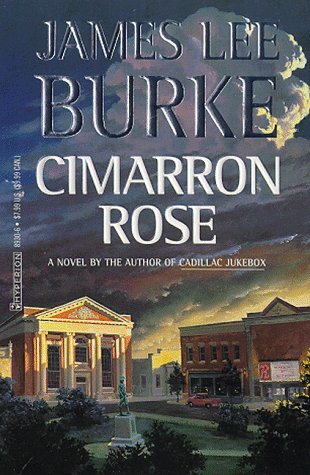
Microreview [book]: Cimarron Rose by James Lee Burke


Burke, James Lee. Cimarron Rose [Hyperion, 1997]
File under: crime, thrillers

If you'll recall, I found James Lee Burke's Bitterroot to be a distinctly well-written and atmospheric crime novel, so much so that I didn't linger on the book's flaws. So when I started Cimarron Rose, the first in the Billy Bob Holland series, I expected to find more of the same--that is, after all, what tends to happen with one-a-year crime series. A formula is established, after which a limited number of pieces get plugged into set places. Lots of stuff repeats, including language.

The plot is basically this: Billy Bob's out-of-wedlock son Lucas has been accused of a murder he didn't commit. Billy Bob sets out to clear his name, so when he discovers that Lucas is sharing a wing of the county jail with two sadistic killers, he figures to use any stuff Lucas overhears to establish good faith. Only, one of the killers escapes and the other gets out. That second one, a super creepy dude named Garland T. Moon, has some weird thing for Billy Bob. Meanwhile, local rich guy Jack Vanzandt tries to hire Billy Bob to help his Joffrey-esque son get out of some assault charge. Only, Darl Vanzandt appears to be connected to the murder Lucas is accused of. Darl, it turns out, is the leader of a gang of affluenza-suffering rich kids. Darl is bad news.

Add to this a love story between Billy Bob and a local Sheriffs deputy, a menacing Mexican drug agent who may or may not be connected to Billy Bob's past (you'll recall from my previous review that Billy Bob used to be a Texas Ranger, until he and his partner, L. Q. Navarro, crossed the border to kill off a bunch of drug mules, at which point Billy Bob accidentally shot his partner), and--just like in Bitterroot--a superfluous mobster and equally superfluous dirty federal agent (see also: stock characters).


Oh, and did I mention that L. Q. Navarro talks to Billy Bob, and Billy Bob also from time to time reads long passages from his great-grandfather's diary, which tells the tale of his courtship with a beautiful Native American women, the eponymous Rose of Cimarron? Because all that happens too.

Sum it all up and you've got clusterfuck-a-la-Bitterroot on the menu. Only, in Bitterroot, Burke more than makes up for the messy plot with his writing, which is vivid, tense and atmospheric. And the messy elements are really just a bunch of red herrings anyways. Unnecessary, sure, but not problematically so. For about two-thirds of the book, I expected to write the same in my review of Cimarron Rose. Burke's writing is, after all, vivid, tense and atmospheric--here as elsewhere. And Burke seems, at least, to know where he's going with things.

Yet whereas Bitterroot moves slowly towards an almost inevitable end, shaking of the silly and superfluous plot elements as it goes along, Cimarron Rose goes to the wrong places. Compelling narrative threads get de-emphasized in favor of the stuff that feels grafted on at the last minute. As a result, tension that's been building over the course of the novel fizzles, while other, ultimately important storylines feel rushed--or, worse, make no sense whatsoever. Note: Poochie died on the way back to his home planet.


And then there are Great-Grandpa Sam's diaries--which, as far as I'm concerned add nothing of value to the book. I thought they might, but in the end they do not. Sure, the whole book-within-a-book thing can work, but that kinda sorta depends on the interior book being: a) important; and b) interesting. Lemonade?


At the end of the day, Cimarron Rose tries to be many things--a neo-Western, a political thriller, a love story, a trial drama, a social critique, etc.--but isn't any of these things in sufficient quantity to be compelling. And the really frustrating thing? It could have been a quality small-batch bourbon distilled by a master craftsman--like Bitterroot. Instead it's a Long Island Ice Tea of cheap well liquor from a North Hollywood dive served up by the guy who played Mr. Belvedere's stunt double on Fantasy Island. Or, perhaps, a little something like this...


The Math

Baseline Assessment: 5/10

Bonuses: +1 for Burke is actually a very talented writer, and that does show for the first 2/3 of the book.

Penalties: -1 for the giant, gaping plot holes; -1 for the ending, which is BSG-level bad; -1 no, actually, it's worse--so bad that it ruins nearly everything that was, up to this point. compelling.

Nerd Coefficient: 3/10. "Very little good I can say about this."

Yes, a 3/10 means this is an awful book. 

POSTED BY: The G--purveyor of nerdliness, genre fanatic and Nerds of a
Feather contributor since 2012.

Tuesday, February 11, 2014

Microreview [book]: Knife-Sworn, book two of the Tower and Knife trilogy, by Mazarkis Williams


Williams, Mazarkis. Knife-Sworn. Jo Fletcher Books, 2012
Buy

The Meat
Let's talk about the sequel paradox. What is the sequel paradox, you might ask? It's the catch-22 at the heart of the entire enterprise of sequel-writing. Requirement one of the sequel paradox is that any sequel must be similar to, in the sense of being logically consistent with, the original. If, for example, we have a long-suffering, mostly ordinary protagonist in book (or movie, or whatever) one but in book two the same protagonist is suddenly a lasers-from-the-eyes kind of ubermensch, that will certainly jar the audience, as the basic premise of the original has been violated, as have our expectations—this is true, incidentally, even if the radically new framework is great.

But requirement two of the sequel paradox is that any sequel must be noticeably distinct, thematically and otherwise, from the original. This is necessary mostly for artistic reasons, but also partly just to avoid the charge of unoriginality or "cashing in" on an earlier book's success by releasing the same story rehashed. I almost hesitate to give specific examples, because the evaluation of books or any other kind of popular culture product is so subjective that someone out there is bound to be incredulous/apoplectic with fury that I would dare to mention _____ as an example of a cash-in, but I'll take the plunge anyway (sorry, Molly!). I think Ender's Shadow is the go-to example of a book that fails to fulfill requirement two; it is a 're-telling' of Card's original Ender's Game, and despite its frilly accoutrements, I felt nothing significant had been added—no new story had been told. This sort of rehashing is utterly unlike the reimagining of, say, the Battlestar Galactica world, which was so radically unlike the original that fans (in the entire world, are there seriously more than like five living fans of the unimpressive original series?) complained it was too different. Starbuck and Boomer are women? Whaaat? (But of course, it was awesome; if you don't believe me, go watch the dreary, formulaic original series.)

Obviously, the two requirements are not exactly in harmony with each other, and consequently, you'll probably agree that only rarely do sequels manage to equal—and by definition can almost never surpass—the original work. Books two thru six of the Harry Potter series are examples of sequels that manage, to a greater or lesser extent depending on a variety of factors (personal taste, mostly), to fulfill both requirements. They are all very similar in framework, etc. to the original, but advance certain aspects of a larger story and represent distinct iterations of the 'schoolyard drama' story.

Now, at last, we can turn to Mazarkis Williams' Knife-Sworn, the sequel to her excellent The Emperor's Knife (I quite agree with Jemmy's assessment of said volume, or if anything think it even better than he did). Does Williams manage to walk the tight-rope between similarity and originality in his sequel? The answer, I would suggest, is a qualified 'not exactly.'

To be sure, many of fans' favorite characters and story elements from book one 'reprise their roles', so to speak, in Knife-Sworn. Sarmin is back, facing an even greater threat, and he enlists the aid of his unlikely ally Grada along with many others. The same 'palace intrigue' web of deceit and shifting alliances reappears to dominate the Emperor's court.

At this point, you're probably expecting me to denounce the book for failing the originality requirement—being too similar to the original, in other words—but if anything, Williams leaned too far the other way. Certain elements present in the first installment of the series, it may be assumed, will be back, or even enhanced, for the sequel. As I mentioned above, Sarmin is back, but in book two he lacks the very quality that so dazzled readers in book one, namely a certain (je ne sais quoi!) pizzazz, that instinctive ability to unravel problems and ravel (this probably isn't a word, but it definitely should be!) solutions with his pattern-magic. What good is a brooding princeling, now emperor, who spends the entire book failing to understand either the threat he faces, o r what to do about it?

The key to the sequel tightrope is not to lean too far in either direction, maintaining balance somewhere in the middle between similarity and originality. Williams, in my view, departed too far from the original depiction of Sarmin, making him a less effective character around which to weave a story.

Lest we end up judging Williams over-harshly, let me say that he did much better, in this sequel, than most authors can hope to, since the vast majority of sequels are markedly worse than the first volumes. And only a tiny handful manage to equal their original effort (as I've mentioned here before, this is due to many factors, first and foremost the simple fact that many authors doubtless 'use up' most of their best ideas in their first books, the ones that establish their reputations and careers, revving their engines so much on book one that they end up slogging through the sequels on empty). So Williams is in the relatively rare second-best category, in my opinion: his sequel is a bit less impressive than his first book, but remains very entertaining indeed, a worthy if not stunning successor to the magic of book one. I confess myself worried about book three, however (to be reviewed here ere long), because of the The Farthest Shore --> Tehanu kind of direction, vis-a-vis Sarmin (equivalent to Ged, more or less) Williams seems to be going. Stay tuned!

The Math

Baseline assessment: 6/10

Bonuses: +1 for making Grada totally awesome

Penalties: -1 for making Sarmin kind of suck

Nerd coefficient: 6/10 "Still enjoyable, but the flaws are hard to ignore"

[You can find out more about our awesome scoring system here.]


This review brought to you by Zhaoyun (that's "Shining Cloud" for all you hoi polloi who don't know me personally/know Mandarin Chinese), sf/f book and movie aficionado and main cast member of Nerds of a Feather since early 2013.   

Monday, February 10, 2014

GIVEAWAY: Wolfhound Century by Peter Higgens

In order to celebrate the launch of Peter Higgens' new novel, Truth and Fear, the good folks at Orbit are providing five (five!) copies of his debut, Wolfhound Century, to lucky NoaF readers in the U.S. or Canada. Don't know the book yet? Well, here's what it's about:
 Investigator Vissarion Lom has been summoned to the capital in order to catch a terrorist --- and ordered to report directly to the head of the secret police. 

A totalitarian state, worn down by an endless war, must be seen to crush home-grown insurgents with an iron fist. But Lom discovers Mirgorod to be more corrupted than he imagined: a murky world of secret police and revolutionaries, cabaret clubs and doomed artists. 


Lom has been chosen because he is an outsider, not involved in the struggle for power within the party. And because of the sliver of angel stone implanted in his head
Now, you may recall that we liked Wolfhound Century quite a bit. In fact, Jemmy said:
Fans of dystopian fiction, noir, and science fiction and fantasy (especially those weary of tired old world building that always seems to center on English history or Western European norms) will find much of interest in this book. I, for one, can't wait to see what happens next.
So do you live in the U.S. or Canada? If so, enter today to win your copy!


Details

Participants have to be 18 years of age or older to participate. Void where prohibited by law. Giveaway rules are subject to change.

This giveaway is open to anyone with a US or Canadian shipping address. The giveaway ends at 11:59pm PT on February 17, 2014. We will announce the winner later that day.

To enter, just follow the instructions on the rafflecopter widget below (if you don't do it via rafflecopter, we won't know that you entered the contest) and choose one of four actions:
1. Like us on facebook (2 pts.)
2. Follow us on twitter (2 pt.)
3. Tweet about the giveaway (1 pt. but can be done once per day)
4. Leave a comment telling us what book is your most anticipated of 2014 (2 pts.)

a Rafflecopter giveaway

Friday, February 7, 2014

Microreview [book]: Night of the Furies


Taylor, J.M., Night of the Furies [New Pulp Press, 2013]
File under: pulp
Buy or Download for Kindle


The Meat

Night of the Furies reminds you often that it is a tragedy, a Greek one at that. Though I couldn’t help comparing it to Hamlet. Either way, vengeance directs the play.

Giorgio’s the son of a Boston mob boss, a kid with a bright future. Until his mother “uncle" kill Giorgio’s dad and seize his imperial criminal birthright. Giorgio responds by doing what any Sicilian kid would do: faking his death and devoting himself to avenging his dad’s death.

Published under the pseudonym J.M Taylor, Night of the Furies nonlinearly tells the story of Giorgio’s life, from his initial decision to seek revenge to dealing with the fallout from the killing of his mother and mafia boss stepfather/“uncle.” Part historical novel, part criminal biography, part morality play, Night of the Furies is deceptively complex, though ultimately unsatisfying.

The biggest drawback to Night of the Furies is its parallel narrative structure. Half the book follows the aftermath of Giorgio’s matricide, the other half recounting of his criminal career up to the double murder. While the two narratives converge at the end, neither felt fully developed. It was never clear exactly what kind of book Night of the Furies wants to be: there are a couple of heists, a bit of a prison story, and, of course, the mafia. These nods to the subgenres of hardboiled fiction, however, get in the way of Giorgio’s quest for vengeance. Without belaboring the comparison, Night of the Furies is ultimately a criticism of vengeance much as is Hamlet. The novel’s final twist bears this out—but there’s nothing I will write about that. A linear narrative—whether focused on Giorgio’s biography or the killing and its unfortunate aftermath—would perhaps have made for a more enjoyable read. Without the interaction between the two narratives, however, the problem of vengeance may not emerged as it did through the parallel chronologies. Unfortunately, Giorgio’s struggle with vengeance as a moral imperative is too often intermittent, particularly in the biographical segments, too focused on normal criminal stuff.

I had another issue while reading this book, one that was ultimately resolved by book’s end. Giorgio is not a good man. Big surprise, this is crime fiction. We read this stuff because we like rooting for villains, either because its fun or because its morally challenging. PI’s were loved because of their cool, which provided cover for their moral indiscretions. Would we have rooted for hitmen in the nineties had they not been pop culture junkies? On the other end, Jim Thompson's psychos are uncomfortably sympathetic, exemplified Lou Ford's intellectual detachment. Night of the Furies's Giorgio, other than his vengeance drive, is a cipher. There’s little about him to offset his villainy, sufficiently highlighted in the novel's first third. For much of the book, his amorality and shallowness bothered me. But Giorgio’s lack of personal and moral depth becomes essential to the moral resolution of the conflict.

Then again, this is crime fiction. I’m probably overthinking it.


Night of the Furies is to be commended for its page count, 187!, and Taylor’s brisk pacing and unadorned, though not colorless, style. I never found myself bored and I read it fast, the two things I look for in crime fiction. 

It's also violent. Very violent. 


The Math

Baseline Assessment: 6/10

Bonuses: +1 for 187 pages

Penalties: -1 for cliched way-too-easy-crime-fiction sex on (I shit you not) p. 69

Nerd Coefficient: 6/10