Wednesday, December 11, 2013

Microreview [book]: Rocket Science, edited by Ian Sales


The Meat

   As my recent reviews have amply attested, I have an almost instinctive dislike for anthologies. Analyzing my own knee-jerk dislike for the third time now, I've hit upon a new potential reason: I think the real problem is I don't really like short stories very much. After all, let's be honest—most short stories have, at their heart and core, either sub-par ideas which cannot sustain a novella or novel length treatment, or really clever ideas that should have been expanded into a novel. It's a rare story whose ideal (in the Leibnitz sense of the best of all possible worlds) length is just a few thousand words. I mean, that's only like three pictures!
   Maybe this resentment at the existence of short stories comes from the fact that by nature I personally am firmly in the "Why use 100 words to say something pithily when you could use 10,000 prettier ones to say it floridly?" camp. In other words, I am incapable of writing short stories; even simple ideas take so long for me to dress them up in description and hyperbole that they quickly become anything but short.
   However, I will certainly acknowledge the existence of a certain rare beast, that short story so cleverly done even I cannot imagine it any longer (or shorter, come to think of it!) than it is. A few of Philip K. Dick's stories, despite their inevitably atrocious titles, are like that: he sketches out a brilliant and intriguing idea, spins together a little story-meat to hang onto the idea-bones, and then poof! it's over, at least until it's made into a fantastic (Verhoeven's Total Recall, Scott's Blade Runner), acceptable (Tamahori's Next, Woo's Paycheck, Spielberg's Minority Report) or puzzlingly bad (the other Total Recall, A Scanner Darkly, etc.) movie.
   Yes, great short stories can haunt readers big-time with their pithy goodness. No less a literary giant than Edgar Allen Poe once famously said (or at least, someone once claimed to me that he said), no one should ever write anything longer than one can read in a single brief sitting. On the other hand, he was a creep-toid who married his thirteen year old first cousin, and I liked the novel inspired by his poem Annabel Lee way more than I liked anything actually written by Poe himself, so in that sense I'd say the score is People who Write Novels: 1, People who Write Short Stories/Marry Teenage Relatives: 0. Purloin that, Poe!
   This seems like as good a time as any to turn to Rocket Science, which I can say is unlike any other anthology I've ever read or even heard of, and I definitely mean that as a compliment. What surprised me was how much I enjoyed reading it, despite it being an anthology full of very short stories, and me with an instinctive dislike for both a) anthologies, and b) short stories. Some such stories are really excellent—I think editor Ian Sales got the volume started on exactly the right foot with the first story, Kimmel's multi-generational, whimsical romp through space which has a children's book about the moon as its timeless anchor. This is the sort of story that can recapture for all of us former children the sense of wonder we all must surely have felt at the thought of space flight or travel, or indeed space in general.
   Thematically, the anthology is strongly rooted in hard science (fiction), specifically space travel and the various logistical and other issues such travel has already raised or may raise in the future. With such a consistent theme, it avoids the most common pitfall ensnaring anthologies everywhere: having a loose, ill-defined generic theme that lacks cohesion (another way of saying "having an editor who isn't invested in the project or, for political reasons, can't or won't reject/demand heavy revision of the weirder or less thematically appropriate entries"). Some of the better-themed anthologies out there will refuse to limit themselves to a single genre, instead exploring ways the theme can maintain cohesion even across genres.
   But this anthology took the idea of a unifying theme to a whole new level, including—get ready for it—non-fiction articles as well! My goodness, I learned things about space and traveling in it, cold hard facts no less, from reading this book! How often can one say one genuinely learned something from one's ostensibly fluffy nighttime sci fi reading material? I am totally on board with this editing strategy—perhaps this will start a trend and we'll begin seeing more volumes that put the science back into science fiction, breaking down the Great Schism between 'fiction' and 'non' still further! I hope so.
   That said, a few of the non-fiction entries (especially the final one), while informative, read more like plugs for the author's own books and accomplishments than an attempt to explain to today's mindless youth some genuine problems humans already do and will continue to face in attempting space travel. This is another way of saying that a few, though by no means all (the one on radiation was great, for example), of the non-fiction pieces could have used more bells and whistles writing-wise and fewer self-promotional statements, which are doubtless to be expected in publications for the scientific community where precedence and name recognition are presumably of vital importance, but feel out of place in a volume like this.
   My only other gripe with the volume is my usual one: while some of the stories were perfect as is, several others felt like the fascinating beginnings of a longer story, ending just when things were getting interesting and readers began to form emotional bonds with characters. So, ultimately, I pose this challenge to all you short story writers and fans out there: how can you be certain that leaving a story in 'short' form is the best length? I have yet to hear a convincing argument in favor of short stories as a medium, and would instead suggest that most short stories are failures by virtue of their length—bring on the indignant responses! (And if you try to bring in Poe to support your "short stories are best" argument, keep in mind that you'll automatically lose tons of points because he was an incestuous weirdo.)

My new favorite short story (until now it was Hemingway's "For sale: baby shoes. Never worn.")

The Math

Baseline assessment: 6/10

Bonuses: +1 for having real gems like Kimmel's story (and editorially for leading off with it, making full use of the primacy effect), +1 for (mostly) seamlessly weaving non-fiction into the volume, +1 for having such a strong unifying theme

Penalties: -1 for being mostly (too) short stories, -1 for the self-promotion in some of the non-fiction (if I wanted to read about how awesome you are, brainiacs, I'd just read your articles in Nature or whatever!)

Nerd coefficient: 7/10   "an enjoyable experience, but not without its flaws"


See here why anyone could and should be proud of a 7/10 from us!

Tuesday, December 10, 2013

Microreview [book]: Loki by Mike Vasich


Vasich, Mike. Loki [CreateSpace/Amazon Digital, 2011]
Buy: Kindle; Print

I'm usually pretty wary of self-published books, for all the reasons Dean outlined in his April column. There's so much out there, so few ways to tell the good from the bad and the ugly and so little time to devote to reading books. Inevitably, I want filters, and that's what you get from traditional publishing--multiple individuals who have read the work in question and decided it's worth spending money on. It might still end up being crap, but the risk is managed.

That said, there are actually some very good self-published books out there. I reviewed two of them in the past year: Ian Sales' Adrift on the Sea of Rains and The Eye With Which the Universe Beholds Itself. That was by design--I know Ian from online interaction over a lengthy-ish period, know how he thinks about SF (and that he does think about it) and had already heard good things from reputable sources. So reading those books represented, at most, a calculated risk.

I came upon Mike Vasich's Loki in a wholly different way: I saw it on Amazon, was drawn in by the excellent cover art, lingered for the interesting topic and then bought it because, well, it sounded intriguing. And it was so convincingly intriguing-sounding that I just assumed it was traditionally published. I had no idea it was self-published until much later, when I was telling my cousin about the book and he asked who published it.

But being self-published wasn't the only reason I might have had to dismiss Loki. After all, it is about Vikings--or, more accurately, the religion and mythology of pre-Christian Scandinavia. See, I've read nearly all of the Icelandic sagas, and know quite a bit about Viking history and culture. As a consequence, I find it very difficult to enjoy depictions of them in popular art, since you can basically count historically accurate and culturally-sensitive depictions of Vikings on one hand. Sorry History Channel, but claiming the raid on Lindisfarne was the first time Scandinavians realized people lived to the West of them and misrepresenting the nature of authority in pre-Christian Scandinavia are deal-breakers for me. So how, exactly, was I going to enjoy a self-published retelling of cherished Scandinavian myths by some random American?

As it happens, it wasn't very difficult at all to enjoy, because Loki is really fucking good. The book appears, at first, to be one of those "let's tell a story from another character's perspective," like Grendel or the Gregory Macguire books. In this case, to tell the myth of Ragnarok from the perspective of its antagonist, Loki, and in the process, transform him from villain into antihero. While there are chapters from Loki's perspective, and they are broadly sympathetic, that's not quite what the book sets out to do. Rather, it's a modern retelling of Ragnarok from the perspectives of four gods and one monster: Loki, Tyr, Freya, Odin and Loki's wolf-child, Fenrir.

Ragnarok, for those who do not know, is an end-of-the-world myth, a cataclysmic battle of gods, giants and monsters that will destroy all creation and cause its rebirth into something purer. The myth was a cultural touchstone for the Vikings, who believed in fatalism above all else, and what could be more fatalistic than an end to everything known and knowable, even the gods?

Odin
Vasich clearly knows the source material, and the retelling manages to feel simultaneously like a departure from that source material and faithful to it at the same time. The Odin chapters are a particular strength--Vasich portrays the King of the Aesir as a man tormented by knowledge, one who knows the future and, as such, can no longer distinguish it from the present or past, producing acute moments of confusion and panic. He is a tragic figure, burdened with truths beyond the comprehension of mortals and gods alike, and for whom there can be no escape.

 I also appreciate the connections Vasich draws between the Norse cosmology and modern theoretical physics. The nine worlds of creation are linked by Yggdrasil, the tree of life, which in Loki is a sort of permeable superstring linking the dimensional worlds of Asgard, Vangard, Midgard, Jotunheim, Muispellsheim, etc. It's subtle enough to make me wonder if I'm not reading too much into things, but I'm pretty sure it's intentional.

There are, of course, some weaknesses to the book. While the prose is generally good, there are times when it ventures into the dark realm of infodumping, most notably in the Loki chapters. And the actual battle of Ragnarok kinda sorta happens too quickly, kind of like if Star Wars had just cut from the first shot of Yavin 4 to Luke dropping the photon torpedo into the Death Star. But these are small concerns, because Loki is, on balance, a very good book that anyone interested in Norse mythology will appreciate. It's also proof positive that self-published books can be every bit as good as traditionally published ones.

The Math

Baseline assessment: 7/10.

Bonuses: +1 for the portrayal of Odin, which manages to be simultaneously faithful to the source material and go beyond it; +1 for managing to modernize Norse mythology without alienating this cranky old Viking-lover.

Penalties: -1 for some annoying infodumping.

Nerd Coefficient: 8/10. "Well worth your time and attention."

Monday, December 9, 2013

Microreview [book]: Binary by Michael Crichton/John Lange


Binary
Michael Crichton (writing as John Lange)

The Meat

I have previously written on this blog about my admiration for hacks. Hacks are like session musicians: their job is to produce efficiently and effectively. And well. And often. Some of my heroes are hacks. Mark Twain was a hack. So was Chet Atkins.

Michael Crichton was in medical school when he wrote his first novels. Medical school. How he managed to write a single novel while in med school is beyond me—I can barely write my dissertation and that’s all I have to do. But he wrote them. Binary is the second that I personally have read. (Full disclosure: It’s also the second Crichton novel that I have ever read.) This was an enjoyable novel, plot and nothing more. Crichton shows expertise in pacing and suspense, moving the story along to a somewhat forgettable conclusion. But I enjoyed getting there.

Crichton's hackery, in other words, was evident even as a student.  

The story: It’s 1972. Millionaire playboy and wannabe terrorist John Wright plots to kill President Nixon—and much of the population of San Diego—with VX nerve gas. John Graves is an intelligence agent out to stop him. They’re both unstable geniuses, so there’s a lot of outwitting and attempted outwitting at the heart of the story.

This is a humble novel, not promising more than what it can deliver, which was an enjoyable Sunday afternoon. There’s little character development, with Crichton cleverly slipping enough background information on the rivals at the center of Binary to give the story a bit of dramatic flavor. The book is mostly plot, each scene’s sole purpose being to move story forward. A couple of moments did feel forced and, in contrast with the rest of the book, wordy. Particularly the lecture on VX nerve gas—though I did learn something.

The writing here is largely economical, just enough description and dialogue to push through to the conclusion. Crichton’s age shows—he’s still learning here—but there’s also clear expertise and skill demonstrated throughout this book. Crichton had certainly developed his craft in the five years between Binary and Scratch One, which I reviewed here a few weeks back. Binary is also more than thirty pages shorter than the earlier novel. One point bonus. (But I’m penalizing the book one point for the villain’s erectile difficulty as the cause of his terrorist behavior. The vague John-Wright-is-mad-about-China thing didn’t really make sense, but still…)

And it should be noted that there were very few instances of actual violence in the story and only a handful of guns. Bravo.


The Math

Objective score: 7/10

Bonuses: +1 for very few guns; +1 for being only 220 pages

Penalities: -1 for impotence

Nerd Coefficient: 8/10

Thursday, December 5, 2013

Thursday Morning Superhero

It is good to be back after taking a week off for Turkey Day.  I was very happy to learn that Artful Daggers is making it to print and the first trade of Ghosted dropped.  Two series that are well worth your time and your dollars.  All Out War is living up to the hype in the world of the Walking Dead and I am proud to report that Abraham's Army raised over $3,000 in its Movember campaign.  Thanks to all who contributed!

Pick of the Week:
Trillium #5 - What Jeff Lemire is doing with this medium simply isn't fair.  Not only is this sci-fi tale of time travel and intersecting worlds fascinating, he is challenging the notion on how comics should be read.  Nika and William find themselves in each others' worlds and struggle to find meaning in their new environments.  Nika feels ill as she is seeming trapped in her Victorian world and William struggles with his life in the future.  There are hints at what can bring these two back together and I can't wait to get my mitts on the next issue.  Lemire should be an intimidating force to other creators with the work he is producing.

The Rest:
The Victories #7 - Brian Avon Oeming has a series on his hands that has been a pure pleasure to read. It was hinted that a big event was occurring in this issue and Oeming delivered.  I will not spoil anything, but I was left with my jaw on the floor.  The Victories are trapped and D.D. is attempting to free them.  Despite a large number of superheroes in their unmentionables, Oeming delivers an issue that is both emotional and exciting.  If you are a fan of Powers and are not reading this title, what is wrong with you?

Six Gun Gorilla #6 - This series came to its conclusion as Blue was able to topple the corrupt corporations that televised the death of countless humans for entertainment.  The ending left the door open for the series to continue, which would be fine by me.  This series has had its highs and lows, but is original enough that I would continue to check out this title.

Inhumanity #1 - Matt Fraction has taken the helm of the Inhumans and his debut issue should give all fans of the Inhumans reason to celebrate.   The destruction of Attilian has revealed that Inhumans have been living amongst the humans for many years.   Fraction manages to provide a quality history on the Inhumans and sets the stage for how the destruction of Attilian could impact the Marvel Universe.  Solid debut issue.

Wednesday, December 4, 2013

Grimdark Fantasy/Heavy Metal Pairings

I've always had eclectic taste in music, but Spotify has clearly exacerbated these scattershot tendencies. For a while, all I could listen to was opera. Then I fixated on the indie rock of my teenage years before switching gears to a heady mix of minimal techno, 90s hip-hop and alt-country. Lately, though, I've been listening to almost non-stop metal. Among other things, the experience got me thinking about parallels with fantasy, and specifically, with the dark, anti-heroic fantasy variously called "gritty" or "grimdark."

Both exhibit similar preoccupations--with death, violence, suffering and a moral compass that either problematizes or outright embraces the things traditionally categorized as "bad." Both, moreover, embrace "darkness" to such an extent as to border on the ridiculous. When it all works, both gritty/grimdark fantasy and metal can be some powerful, visceral shit. But most popular art isn't good, and neither grimdark nor metal is an exception to the rule. Making matters worse, in these cases the crap generally takes the form of corny-ass pubescent male power-fantasies. And we really need is more of those, right?

Metalhead/Grimdark Aficionado
For the moment, though, let's put all that aside and concentrate on the good stuff, the expertly crafted, complex and full-bodied vintages of grimdark and metal alike. And while we're at it, let's wonder: what if we paired some really good grimdark books with some really good metal albums? After all, like wines and foods, or snacks and movies, certain albums just seem to go with certain books.

Selection Criteria

Okay, here are the rules. First, I've chosen 6 grimdark fantasy books, perhaps not the exact 6 best ever written, but 6 of the best I've ever had the pleasure to read. Next, I paired these will metal albums that, in my mind, best exemplify what these books mean to me. I decided to limit my choices to those available as full albums via Spotify. (This meant that I couldn't link to Black Sabbath's seminal album Paranoid, but that's not a huge deal.) I've embedded Spotify links to each, and if you listen to them, the bands will get some money (not much per listen, but it aggregates). I've also included Amazon links for both the books and albums, so if you like the look of any of them, you can support the creators (and us!) by purchasing via the link provided.

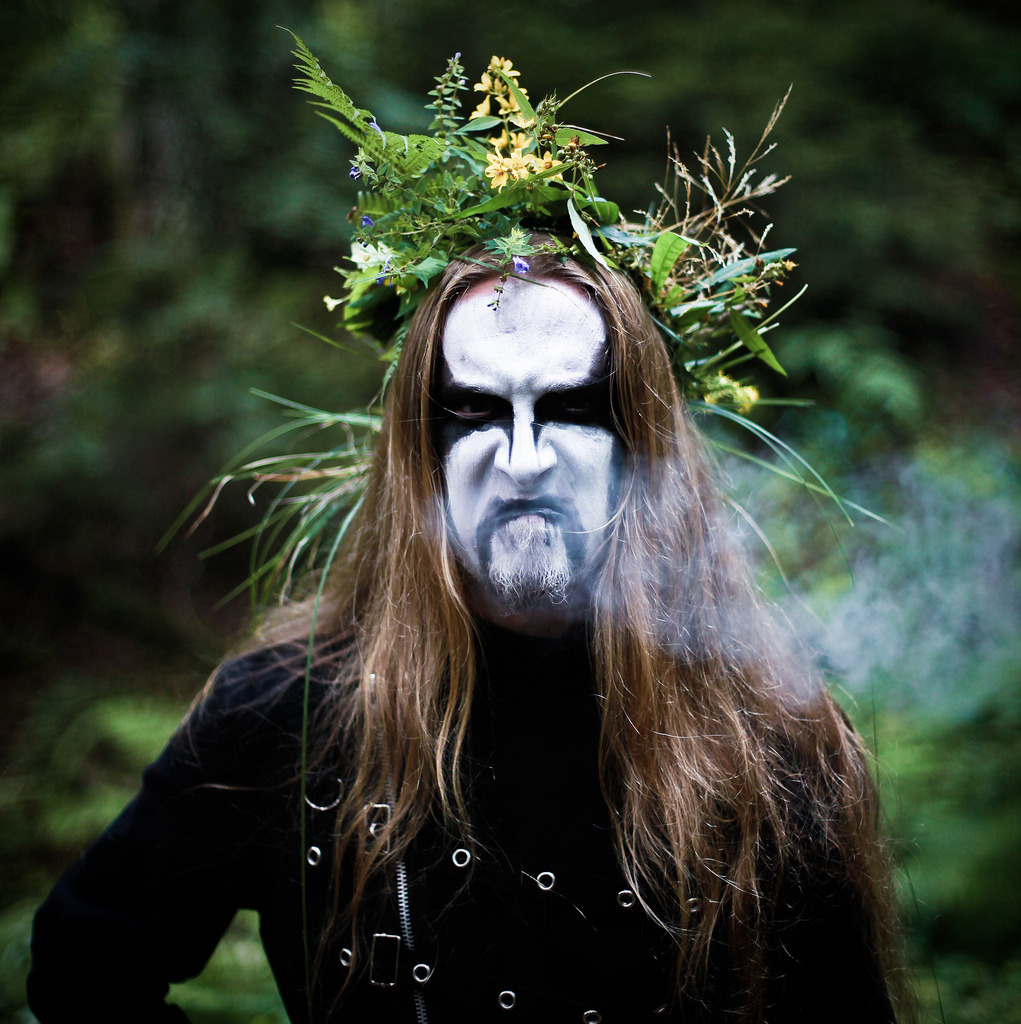
Now, keep in mind that, when it comes to metal, my tastes run to the black. Black metal is--and of this there can be no doubt--the most absurd style in music history. Its primarily influences are, in no particular order, thrash metal, Wagnerian opera, crust punk and "evil." The drumming and tremelo picking are so fast that melodies are typically forced to run at half-time. The guitar noodling of thrash and death metal is, by and large, dispensed with, yet compositional arrangements are as indulgent as the noodliest prog rock. And in its quest for "ultimate darkness," black metal often veers into self-parody. (Oh, and did I mention that a bunch of black metal fools in the 90s Norway went around killing people and burning down historical landmarks? Because they did.*) Still, if you can get past these kinds of things (and the growling), then you'll see that some of this shit, at least, is ill as fuck.

But even if black metal is overrepresented on this list, I've also included a few classic albums, and another that falls into the de-Satanized category of post-black. So without further ado, I present to you six Grimdark/Metal pairings. Don't forget to swish and spit after you taste...

The Pairings

1. Chronicles of the Black Company by Glen Cook/Black Metal by Venom

Glen Cook basically invented grimdark fantasy back in the '80s. Yet despite being the one who first raised banners against the dreary Tolkein clones that dominated the genre in those days, he remains criminally under-read and underappreciated--even, apparently, by many of the authors he blazed trails for. That led me to pair this omnibus of short novels with Venom's hugely influential album Black Metal, which, among other things, convinced a bunch of Scandinavians to put on corpse paint, declare their allegiance to Satan and start acting out the stuff Venom were having a laugh about. The fit is just about perfect: both Chronicles of the Black Company and Black Metal are almost absurdly grim, dripping with gooey Lovecraftian darkness to the point where it becomes funny. Not only do both Cook and Venom recognize that, they positively revel in it. And besides, doesn't "Countess Bathory" feel kind of like a tribute to The Lady?

Have a listen...


2. A Game of Thrones by George R. R. Martin/Hammerheart by Bathory


A Song of Ice and Fire has always reminded me a bit of the Niebelungenlied, the medieval epic about a hero who travels to a foreign court and gets murdered for it. It also served as a major inspiration for Wagner and a tidy slice of 19th century Germany Romanticism, and since that's basically the root of all modern fantasy, it makes sense to pair A Game of Thrones with the most Wagnerian of metal album: Bathory's 1990 Viking metal masterpiece Hammerheart. Like A Game of Thrones, Hammerheart has served a gateway of sorts for many a fantasy fan--the kind of thing that opens up a world of possibilities never before imagined. Neither is perfect, but they are touchstones for a reason, and a vast cut above the glut of impersonators that would follow in their wake. I mean, "Shores in Flame"--come on! Have you ever heard anything that epic? And for that matter, "One Rode to Asa Bay" could easily double as a lament for Ned.

Have a listen...


3. Best Served Cold by Joe Abercrombie/Seventh Son of a Seventh Son by Iron Maiden


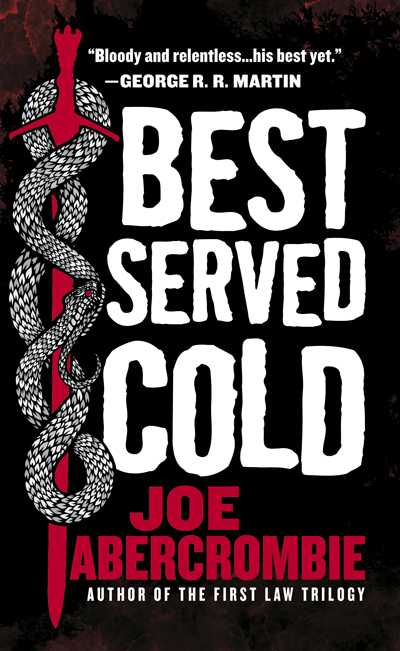
Considering not only black metal's absurd darkness and comical grimness, but also its fixation with swords and other medievalisms, you might think I'd bust out the Enslaved for Lord Grimdark himself. Joe Abercrombie, though, is not your average grimdark practitioner. Superficially he seems a lot like Glen Cook, in the sense that they both write about violent mercenary antiheroes in war-torn fantasy worlds, and because they can both be awfully funny in the process. But Abercrombie's approach feels more playful, the humor more overt (and English) and thus distinct from Cook's nightmare absurdism. So corpsepaint and synthesizers just didn't seem like a fitting tribute my favorite of Abercrombie's novels. Rather, when I think of Best Served Cold, the sound I hear is a falsetto belted out above galloping rhythm guitar, from a singer grasping a sword raised high into the air as the pyrotechnics blaze behind him. And that could be mean only one thing: Iron Maiden!

Have a listen...


4. The Company by K. J. Parker/Reign In Blood by Slayer.


The Company is sort of an odd duck on this list, but not because KJ Parker may be a woman (as in, is a gender neutral pseudonym for a person commonly thought to be a woman) writing in a genre dominated by men, or because (s)he is an exceptionally good prose stylist (which (s)he is). Rather, the principle difference is of scale: though The Company centers on mercenaries in a war-torn land, a common theme among our entries, Parker dumps them on an island sandbox and then has them go at it. The result feels like a cross between Lost and the Danny Boyle film Shallow Grave. It's intimate and claustrophobic, like a tightening noose, with Parker studiously refraining from cutting the tension with humor. Claustrophobia and humorlessness combined with technical expertise? That sounds like death metal to me! And though Slayer isn't technically death metal, there would be no such thing without Reign in Blood, which incidentally is also cited by many as the greatest thrash album of all-time. Like Parker's novel, this album works because of Slayer's tight focus on the man-made horrors of war and violence. And because the riffs are just heavy as hell.

Have a listen...


5. The Book of the New Sun by Gene Wolfe/Celestial Lineage by Wolves in the Throne Room


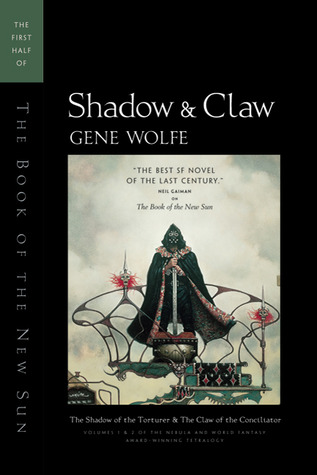
The Book of the New Sun is considered by some to be the best fantasy novel/series ever written. Only it might not actually be fantasy. Categorization issues aside, Wolfe interweaves the assumptions and expectations of quasi-medieval fantasy into the fatalistic futurism and stargazing of dying Earth science fiction. Exactly like Wolves in the Throne Room's 2011 masterpiece, which is one of the most complex and challenging records metal has ever produced--I mean, just sit back and let the majesty of "Thuja Magus Imperium" cascade over you. It's ridiculously good. Of course, both Wolfe and Wolves are also distinctly acquired tastes, things that don't gratify quickly as much as reward patience. But that's all part of their appeal to me. And hey, you know what else? Wolves in the Throne Room not only make mesmerizing black metal symphonies, but actually have interesting things to say about life as well. So there's that too.

Have a listen...


6. Gardens of the Moon by Steven Erikson/In the Nightside Eclipse by Emperor


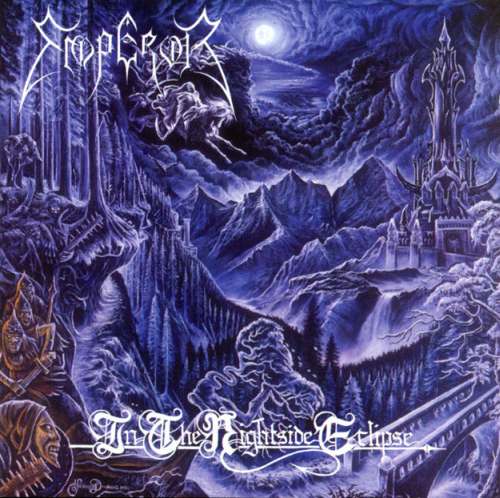
Though The Lord of the Rings and A Song of Ice and Fire are much more widely read, and though The Book of the New Sun and The Mists of Avalon are arguably more literary, you will never fall short of people making a case for Erikson's Malazan Book of the Fallen as the most significant fantasy series ever written. Whether that's true or not, the Malazan series (which also includes books written by Erikson's collaborator Ian Esslemont) is certainly one of the most ambitious. Ken from Neth Space once described this sprawling, complex and on-going work as "post-modern and meta-fictional," and I'll be damned if that's not exactly what it is. So what could possibly pair better with that than Emperor's meta-black metal opera In the Nightside Eclipse? Like Erikson's Malazan novels, Emperor delves into the darkness that inhabits the human psyche, human institutions and perhaps most interestingly, the environments humans inhabit. The vast nighttime wilderness of Norway can be felt in every riff and soaring synth pad. Plus it's one of those albums, like The Beatles White Album, that just feels like the definitive iteration of a sound, like there really isn't much else to be said after it's been said so emphatically. And to be honest, until I heard Wolves in the Throne Room and Deafheaven, I openly questioned whether there was anything left for metal to say post-Emperor. I was thankfully wrong, but this is still the most artistic and sophisticated metal album I've ever heard.

Have a listen...


*Now I know these are big hurdles for most people, and I respect that. I personally draw the line at Burzum (the one featuring the dude who killed the other dude and then became a Nazi).

Tuesday, December 3, 2013

Microreview (TV)- Doctor Who: The Unearthly Child (1963); An Adventurein Space and Time (2013); The Day of the Doctor (2013).


On the 23rd of November, 1963, as British families gathered in the front of their television sets, watching in shock and disbelief at the news of Kennedy's assassination the day before, a new programme aired on the BBC. A then-startling psychedelic image, caused by a camera filming itself in a monitor, slowly revealed lettering that formed into the title of what has since become the longest-running science fiction show of all time. Now, half a century later, a very different BBC, with a global reach and American co-funding, has been celebrating this event with pride and not a little smugness. Despite this self-satisfied air to the publicity and some of the supportive programming, the three central broadcasts I will discuss here all managed to be individually wonderful and collectively really rather impressive.

'Doctor Who' was not destined to be the success it's become. It began as an attempt by a charismatic Canadian producer, poached from rival channel ITV, to drum up bigger Saturday night audiences between the end of the football results and the evening variety shows. Believing in science fiction's popularity with children, but wanting, as the BBC still did back then, to also educate, he envisaged a show with a cranky old character who could travel through space and time, resulting in both fun adventures and a little science and history tuition.


As an experiment of a project, it was relegated to a novice female producer and a young Indian-background director (both hugely unusual hires at the time) and shot in the smallest, least well-maintained studio. It was reshot after bosses complained about the result, and as said earlier, the JFK murder distracted from its launch, resulting in its being repeated the following week. Convinced they had a flop on their hands, all were surprised when suddenly it began to capture the minds and hearts of children around the country.


This tale has been dramatised by the Sherlock and Who writer and actor (and League of Gentleman legend) Mark Gatiss as 'An Adventure In Time and Space'. It succeeds admirably, with keen attention to period detail, the evident (self?) love of the series, the strong cast (including Brian Coz as the afore-mentioned producer and a revelatory David Bradley as William Hartnell, the cranky and difficult original star), and painstaking recreation of the scenes, shot for shot, that are in the original episodes. There is also a transcendent moment at the very end which put a lump in my throat, which I won't spoil but it wonderfully linked the history of the series together in one surprising shot. There remains something self-congratulatory about proceedings, and the regular winks to our knowledge of events grates occasionally - and I'm sure my job in TV makes me fonder of depictions of its processes than others -  but it immediately made me want to watch that very first episode. BBC4, the home of highbrow and low-action, obliged straight after the drama ended on BBC2.


And here was the finished article of all that behind-the-scenes drama. Despite growing up with the series, I was an early 80s fan and had never watched these early black-and-white series. What I expected was there - stilted acting, prim accents, shaky sets and limited budgets. 


What I didn't was a joy - the edginess, the eccentricity, the humour and the silliness of the episodes I knew were all there from the start, albeit in a very old school English fashion with all speaking in brittle Received Pronuciation. The single best thing was also the moment I loved as a kid - the title sequence. Here, as I mentioned earlier, was the truly rebellious imagery, along with an electronic score and effects soundtrack that was the wacky love-child of the Beeb's sound dept; as shown in the Adventures drama, keys were scraped on piano strings to make the sound of the Tardis, the Doctor's vehicle.


Hartnell was a choice for the times. Paternal and wrought with gravitas, he is as far from the current (and youngest) actor to take the role as it is possible to be (until the Bieber stage musical). Matt Smith, however, is the real star of the celebrations. The heir to David Tennant's mastery of the modern throne, Smith enjoys the same appreciation and respect as Tennant and Eccelstone, but Ecclestone never seized the fun and celebrity of the part the way Tennant and Smith have. And here was young master Matt, grinning gamely and effusing emotionally, over every broadcast moment they could seize, from behind-the-scenes specials to live studio events, to the films themselves. Despite the fairly public knowledge that it is a tough show to work on with huge demands for a relatively tight budget (Agents of Shield it ain't) - Ecclestone even claimed he left due the unpleasant work environment - it is a crown in British TV production, an outright success that is near critic-proof. The fact that the anniversary episode was shown in 94 countries simultaneously and in cinemas in glorious 3D shows how beloved it is.


And the new episode itself, The Day of the Doctor, worked seemingly effortlessly. It would be pointless to go through the pretzel plotline here. Merely google-searching 'Doctor W..' will get anyone what they need to know and I'm not about to be a David to the Goliath of write-ups and blogs about this programme. I loved what I loved in it, and was bored by what dragged for me, and annoyed by what cherish quirks grated - for me. I thought John Hurt was indulged and underwritten. I thought the music was lazy at times. The aliens were terrible. I didn't get to watch with 3D specs. But I'll join the general chorus in saying it worked, it was fun, it had more plotholes that a novel written on Swiss cheese, it was amusing and touching.


Matt Smith was especially good, and as it was he who got me interested in the series as an adult, having always liked his work, and I prefer his goofy limbs and stern mania to Tennant's bolshy mate with a heart of gold trick. To be fair, Doctor David set the scene for Doctor Matt, bringing a sadness behind the glee and a tragedy behind the silly monster fights. And Smith, and Stephen Moffat- the 'showrunner' as you may say- have run with it. So, here, as with Adventure, there is a final moment so sweet, so cheeky and yet so respectful, that any fan or geeky follower of any genre would recognise a true love of the programme, a genuine desire to be a part of its history, that is so much more than the sly winks of Weedon or the nods of Abrahms.


One of the real pleasure of being a modern Who fan - and I am a late one, slow to join my friends in enjoying the revived series (don't let the 50 year hype fool you- the series all but paused between 1989 and 2005 due to falling fans) - is this mesh of old and new, of carefree modern special effects highs jinks and that rare beast in TV: lineage. Carson clips with Letterman watching. Attenborough seeing his younger self with the gorillas. An early news report from David Frost or Larry King. Such tangible reaches back to the past are rare, and to be treasured. And Smith smiling in wonder and respect at one of his forebears is for me one of the tv moments of the year. 

Will Doctor Who will be around in 2063? In a way it's an idea that can live for ever (as the protagonist pretty much can), but this blast of affectionate nostalgia over the last few weeks has made it clear how rooted in the post-war, quaint world of police phone boxes it remains, and how important the memories of parents watching as children are to the popularity of it. Whether as that world fades away and as those memories die off the audience will dwindle too, it will be interesting to see. But I'm glad something of that quirky post-war sci-fi charm remains, for now at least.


Monday, December 2, 2013

Microreview [comics]: The Fifth Beatle

Tiwary, Vivek J., Andrew C. Robinson and Kyle Baker. The Fifth Beatle [Dark Horse, 2013].


Available via: Independent Bookstores; Amazon 

The Meat

Graphic novel The Fifth Beatle, published last week by Dark Horse comics, was a labor of love by writer Vivek Tiwary, who felt that in all the mountains of volumes ever written on the Beatles, there had never been a fitting amount of ink devoted to the story of Brian Epstein, the band's manager. He's right — Epstein has largely been relegated to the corners of the Beatles' story, possibly because of his early death at age 32 in 1967, and his attendant inability to get his own version of events out there and write books and whatnot. The problem with The Fifth Beatle is that it may string together a series of events that tell a more-or-less complete story, but there's very little emotional or psychological insight or storytelling prowess on display here, so the whole thing seems a bit like a very pretty Cliff's Notes version of a better work.

Epstein was Jewish, and secretly gay, which were two big strikes against him in a blue-collar, Protestant town like Liverpool in the early 1960s. While working at his family's record store, he saw local band The Beatles perform, and got the crazy idea that they could be "bigger than Elvis." Epstein talked the boys into letting him manage them, even though he'd never attempted to do anything like that before. He paid for them to record a demo, shaped their image, got them signed to a record deal, and a couple of years later they were, in fact, bigger than Elvis. But according to The Fifth Beatle, Epstein was never satisfied, was obsessed by mistakes he had made, like negotiating a bad deal for merchandising rights, and fell into prescription drug abuse to combat his exhaustion and homosexuality, until he overdosed and died at home after Sgt. Pepper's Lonely Hearts Club Band was released.

I kept feeling like the pieces for a compelling story were all in front of me while reading this graphic novel, but they never came together. Epstein's struggles were all internal — he certainly had every trapping of external success and accomplishment — yet this book does a poor job of conveying anything but the externalities. Sure, I can take a guess as to what it may have felt like to have always felt like an outsider, always harboring secrets and fear, but this telling doesn't help me out any. And then in the final pages, it takes such a bizarre, Surreal turn that hinges around Epstein's assistant Moxie, a character I didn't know was a composite character, made up of several people who filled many roles in Epstein's life, that I found myself lost. I had to Google Moxie, and after a little background reading, found the ending a little more comprehensible. But it seems like a big mistake to make, assuming a baseline level of knowledge in your audience about a story you're telling because you don't think enough people know about it...

The Math

Baseline Assessment: 6/10

Bonuses: +1 for the hand-painted, watercolor artwork by Andrew Robinson. It's quite remarkable, even if much of the overt symbolism on the pages is heavy-handed.

Penalties: -1 for its inability to get inside its main character; -1 for a clumsy ending

Nerd Coefficient: 5/10. Equal parts good and bad.