Showing posts with label trilogy. Show all posts

Thursday, July 23, 2026

Series Review: The Amberlough Dossier, by Lara Elena Donnelly

A clear-eyed, relevant exploration of the tragic humanity of flawed people, flawed countries, and how impotence does not excuse wrongdoing

I picked up Amberlough, the first of Lara Elena Donnelly’s rich, thoughtful, and distressingly still-relevant trilogy of politics and style, because of the style alone. ‘Ooh,’ I thought, ‘Moulin-rouge-flavoured nightclubs with art-nouveau style, queer flamboyance, and a 1930s-bohemianism! Sounds like fantastic fun! Sign me up!’

And it was fantastic. The absinthe flowed, the nightclub performers danced and bantered and exuded fae-like glamours over their bewitched spectators. What is more, Amberlough city has a functional streetcar system, further adding to its already stratospheric base level of extreme sexiness. But was this series fun? Not really. Because fucking fascism always has to ruin everything.

This series is beautifully constructed in three parts: the fascist take-over, the resistance, and the aftermath. But where other writers might turn this into an inspiring, rah-rah tale of the RISING TO THE CHALLENGE and RESTORATION OF JUSTICE and EVERYMAN HEROES WILL TRIUMPH AGAINST EVIL THROUGH THE POWER OF COLLECTIVE ACTION, this series is decidedly more restrained. Everything is complicated. Everyone is complicated. There is hope for a better future, yes, but the flaws and constraints and uncountable opportunities to make the wrong choice temper that hope in a way that feels both realistic and depressingly relevant.

The story revolves around an interconnected ensemble of key players, who expand and contract in number throughout the series. In Book 1, Amberlough, we have Aristide Makricosta, a wildly popular, glamorous, (ageing) nightclub performer, who has, through a series of disagreeable compromises, entirely remade himself from a country boy of dubious ethnicity to the ne plus ultra of Amberlough nightlife. Cyril DePaul is a government agent who is simultaneously sleeping with Aristide and investigating him (not very effectively) for drug smuggling. Needless to say, this relationship necessitates a certain divide between work life and personal life. Finally, we have Cordelia Lehane, a stripper who works with Aristide at the nightclub. 

When the story begins, the nation of Gedda ---  a loose confederation of different regions, much like the UK --- is preparing for an election in which the governing party, a regionalist faction that favours backing off to let each region govern itself, is facing off against the rapidly strengthening One State Party or OSP. The OSP stands not only for a unified government, but a unified people, a unified culture, a unified ethnicity, a unified morality. People like Aristide, who work the wrong jobs, love the wrong type of people, and walk around with the wrong skin colour and shape of nose, face a rough future if the Ospies take over. And the Ospies have a good chance of it: When Cyril is sent to investigate the possibility of election fraud, they lose no time in finding his weak points and manipulating him to aid their efforts in rising to power.

In Book 2, Armistice, the action shifts to a different country of Porachis. Porachis has a subcontinental flavour, but it’s a subcontinent where British colonialism didn’t happen, and where Bollywood, not Hollywood, defines the international standard of film studio glamour. There, Cyril’s sister, Lilian DePaul, is working in the Geddan diplomatic office. Like Cyril, she is serving the Ospies, and like Cyril, they are enforcing her compliance --- in her case, by threatening her son. Yet Lilian is hardly a downtrodden victim here. She is very good at her job, highly respected in Porachis, and maintains access to her family’s inherited wealth. She may not like the Ospies, but she is doing well under their rule. Aristide, too, is making the best of matters. He has fled Gedda to land on his feet in the Porachin film industry, where he gains international acclaim and spends his time sleeping with handsome men much younger than him, drinking too much, and generally living the life of glorious public dissipation that often betokens internal emptiness and despair. Only Cordelia is suffering under Ospie rule, and only Cordelia has been doing anything about it.

In Book 3, Amnesty, the Ospies are gone, and Cordelia is a hero. Hooray! But that doesn’t mean everything is all right again. Are the heroes of the resistance the right people to lead a country once they’ve overthrown the government? Aristide and Lilian have returned home to Amberlough --- but how can you pick up the threads of your old life, when you and your home and all the people you once knew and loved have changed so much? And how can you build a future when the misdeeds of the past --- arms-dealing, drug-smuggling, collaboration with the enemy --- are brought into the open for some long-delayed justice? What value is there in justice, if it cannot bring back the dead, and serves only to hurt the living?

These books are profoundly melancholy, because they identify so precisely all the complications inherent in a story that a simpler book would present as a rousing, heartening, rallying cry to resist oppression and build a better world. Cyril and Lilian’s collaboration with the Ospies seems utterly unforgivable from the outside, the weak actions of weak people (especially Cyril --- oh, especially Cyril!) but when we see the story from inside their heads, it’s brutally clear why they act as they do. Aristide’s collapse into dissipation and despair is distressing --- but what would you do if you had clawed your way from the dregs of society into a moment of glittering triumph, only to have everything you’d built, and everyone you loved, ripped away from under you?

The set dressing of this story --- Art Deco Europe --- gives the rise of the Ospies a classic Nazi odour. But the book has more universal applicability than that. The publication dates (2017, 2018, and 2019) makes one suspect that a great deal of this series was inspired by living through the rise of the far right and the first Trump administration (although the parallels break down a bit now, during the second Trump administration, largely because the Ospies have much less interest in destroying science and medicine and general government function than MAGA). The agitations of regions wanting to break away from the central government give Brexit referendum vibes, or Scottish or Catalan independence. The complex relationships between certain regions within Gedda and other countries outside Gedda have a distinct whiff of Northern Ireland. And that’s not even leaving Europe! The reality is that every complex society will have its agitators against central authority, and authoritarian assholes are always lurking, eager to assume control. The central themes of this series, the flawed actors, the flawed governments, the flawed cultures, the flawed movements, are not specific to one point of time. They are universally, tragically, perpetually relevant. 

And what is worse, it remains unclear how much power any individual actually has to change anything. Would the Ospies still have come to power if Cyril hadn’t been coerced to aid them? Probably! Would there have been a resistance to bring them down if Cordelia hadn’t gotten involved? Maybe! Will Lilian be able to affect the form of the new government once the Ospies are gone? Who knows? This series is full of sympathetic, flawed humans, committing tragically understandable misdeeds, with no guarantee that anything they do matters. It is bleak. It is grim. It is complicated.

And yet: there is hope. The Ospies come to power, but they can be overthrown, and although we don’t know if Amberlough will find its way to a just future --- with or without Lilian’s involvement --- there is a path in that direction. People and society are complicated. The world of Amberlough is complicated. But so is ours; and it is a comfort to see these complications acknowledged on the page, without losing sight of the possibility of hope. 

--

The Math

Nerd coefficient: 9/10, very high quality/standout in its category

Highlights:

  • Complex people, complex setting, complex themes
  • Glamour and style
  • Melancholy
  • Streetcars 

References:  

Donnelly, Lara Elena. Amberlough. [Tor 2017].

Donnelly, Lara Elena. Armistice. [Tor 2018].

Donnelly, Lara Elena. Amnesty. [Tor 2019].

CLARA COHEN lives in Scotland in a creaky old building with pipes for gas lighting still lurking under her floorboards. She is an experimental linguist by profession, and calligrapher and Islamic geometric artist by vocation. During figure skating season she does blather on a bit about figure skating. She is on Mastodon at wandering.shop/@ergative or on Bluesky at https://bsky.app/profile/ergative-abs.bsky.social.

Wednesday, June 4, 2025

Realm of the Elderlings Project: The Liveship Traders Book 3: Ship of Destiny

A magnificent tapestry of genius, marred by an unfortunate dog turd in the corner

Cover art by Stephen Youll

Robin Hobb is rightly acknowledged to be a wizard of characterization, and I have seen many people opine that The Liveship Traders is the best entry in the Realm of the Elderlings series. I agree with both statements. I cannot stress enough how much I agree with these statements. In fact, I agree with them so hard that I'm not actually going to go into much depth about characterization per se here, because they have already been discussed by everyone else with an ounce of sense and taste. Instead I'll talk about two other elements of this fantastic book, by this fantastic author, the culmination of this fantastic series. To wit, I'm going to poke at what I think underlies her fantastic characterization, and then also dissect why That One Thing about this book feels like such a betrayal of the otherwise untainted fantasticness. Be warned: this will include discussions of rape.

But first, let's revel in what works. My argument here is that the characters in this book sing so sweetly because they're all scaffolded by a thematically consistent structure: deal-making.  It's in the title, actually: The Liveship Traders. These people, the inhabitants of Bingtown, live and die by trading. They founded their city on a deal with the Satrap of Jamaillia; their current troubles originate in the Satrap's decision to renege on that deal; and as we find out, the solution to their troubles requires making new deals. Everything is deals. And every deal, in this book, is centered around a tripartite choice:

You can preserve your life. You can preserve your dignity. Or you can preserve your identity. Which do you concede, and which do you protect? Not every deal allows you to preserve all three.

Everyone comes up against this choice, at one point or another. And the decisions they make as they negotiate their way through the story forms the foundation of their character.

Let us start with Malta Vestrit, who finally reaches the apex of her arc in this book. We have already seen her first steps in deal-making in Mad Ship, most notably her negotiation with Tintaglia, the dragon. In that deal, she agreed to help free Tintaglia from her buried cocoon in return for Tintaglia's help rescuing her father (Kyle Haven, ptooey). In other words, Malta's first bargain is a straightforward trade: survival for survival.

But as her development proceeds, her deals become more complex, making use of the full tripartite structure of values. In the aftermath of the earthquake that indirectly frees Tintaglia, Malta has been flung together with the deeply pathetic and incompetent Satrap of Jamaillia, Cosgo; and throughout this final book she must make deals of increasing complexity, all of which require compromises between survival, dignity, and identity. First, when she and Cosgo are picked up by some Chalcedeans, the stakes are small and personal: she must swallow her own dignity and hide her identity, pretending to be Cosgo's slave girl, because only by propping up his own dignity can she ensure his survival. And only if he survives, and is recognized as the Satrap, can he have the power to protect her, ensuring her own survival. Later, when Cosgo meets Captain Red, one of Kennit's pirates, Malta again takes the lead in bargaining, this time not just for personal survival, but to enlist the aid of the pirates to return Cosgo to his throne. Cosgo is fully ignorant of this calculus. He fumes, "'This is degrading! You would reduce my life and the fate of the throne to the squabbling of merchants... But what else should I expect from a Trader's daughter? Your whole life has been buying and selling." Malta, taking no shit from him, returns, "Merchants broker goods. Satraps and nobles broker power. You, noble Magnadon, deceive yourself if you believe there is a great difference in these mechanisms" (pg. 580-581). She is a Bingtowner through and through in this moment: She recognizes that everything can be negotiated, at all levels, from personal survival to the fate of nations. Indeed, when Cosgo eventually meets Kennit, it is Malta who leads the negotiations for a treaty between the Pirate Isles and Jamaillia proper. She is magnificent. All hail Queen Malta!

We get the same tripartite deal structure with non-human characters. Consider the sea serpents, who we know now are baby dragons, on a desperate quest for their old spawning grounds. They eventually find their way to the liveship Vivacia, who, recall, is now under the control of Kennit, and also has a dead dragon in her. The serpents make a deal with this dead dragon, who calls herself Bolt. Bolt agrees to lead the serpents to their spawning grounds, if they lend their strength to Bolt's ends—which, at the moment, involve serving Kennit. Sea serpent armies are useful things for pirates on a mission, after all. But the serpents are uncertain that Bolt will be able to follow through on her end of the bargain, because, as one serpent says, "To help us, she will have to beg help of the humans. While she insists she is all dragon, I do not think she can humble herself to do that" (pg. 456). In other words, the serpents will make a deal that concedes their dignity and identity for survival, but they are not certain that Bolt can do the same. Bolt is already dead; Bolt does not stand to gain survival, so the serpents doubt that she would concede her identity and dignity as she must do to uphold her promise. She has nothing to gain by this bargain.

This tripartite structure of bargaining becomes more complex in Serilla's character arc. When we first met her in Book 2, she'd been envisioning a future for herself in Bingtown, that magical city that she'd studied from afar for so long. However, en route to Bingtown, she disagrees with Cosgo, and Cosgo responds by withdrawing his protection from her. She suffers exactly the fate that Malta negotiates so skillfully to avoid: without Cosgo's protection, there's nothing to prevent the ship's captain from kidnapping her, an unprotected woman, and holding her as a sex slave. (The captain is from Chalced—the super-duper sexist slaving bad nation. Not to be too ethnically essentialist about it, but boy does Chalced suck.) It's rough, and it leaves a mark. Even after Serilla manages to escape the captain's power and scrape together some sort of power for herself as the voice of the Satrap in Bingtown, she is haunted by what she had to endure. Yes, she survived, but she survived because she prioritized survival, and in so doing gave up her identity and dignity.

The Serilla who escapes the Chalcedean captain is no longer that same accomplished scholar and respected voice in Jamaillia's government—and that loss explains a lot of what she does in her brief period in power in Bingtown. She bargains with the wrong people, and makes the wrong deals. Rather than seeking to find a path for the good of Bingtown as a whole, smoothing over the roiled waters of New Trader against Old Trader, Satrap loyalists against conniving Jamaillian traitors, she instead makes deals that protect her position and status as the voice of the Satrap. She has survived, and is now scrabbling to recover dignity—but at the expense of her identity. Or maybe not! Whether she was ever the expert on Bingtown matters that she fancied herself to be is an open question, but after the Chalcedean captain was through with her, she is emphatically not that person anymore. Her character arc is about how she can regain an identity for herself, renegotiate it, in light of what she endured.

Serilla's arc, as well as the importance of being willing to renegotiate one's identity, is mirrored by Bingtown as a whole. Bingtown's original foundation was a concession of dignity and survival against identity: they agreed to crushing fees and tariffs owed to Jamaillia, and died early deaths for generations, in order to build the Bingtown that we now have. There's a lovely moment early in the book featuring a meeting of the Town Council, when it seems that Bingtown's troubles are purely internal. Ronica Vestrit arrives early at the neglected Traders' Concourse, whose upkeep was traditionally the responsibility of Trader families. It's fallen into disrepair, but Ronica begins cleaning it, and slowly other Traders arrive and begin to help her. When the meeting begins, Serilla expects to control matters (insisting on her dignity), but the Traders themselves don't quite realize that, and their old habits emerge: consensus-seeking, self-governance, shared responsibilities. Bingtown's core identity asserts itself, despite Serilla's attempts at control.

So, naturally, in proper Hobbian fashion, things promptly get worse. A Chalcedean fleet, allied with the conspirators who kidnapped the Satrap and set off the whole mess in the first place, arrives to besiege their waters. In the same way that Serilla was held captive by the Chalcedean captain, so too is Bingtown now besieged by the Chalced fleet; and in the same way that Serilla had to concede identity and dignity for survival, so too must Bingtown consider what it will give up in the face of Chalced and the conspirators' challenge.

Roed Caern, an Old Trader who allies with Serilla, suggests that preserving the 'real' Bingtown, the heart of Bingtown's identity, means preserving the Old Traders and only the Old Traders. The New Traders are not Bingtown, he says. They don't live in Bingtown, they don't die in Bingtown, they don't pay the price in survival and dignity that 'real' Bingtowners pay. They live in Chalced, they are loyal to Chalced. They do not deserve to remain in Bingtown—especially not now when Chalced is the aggressor! And given what we, the readers, have seen of the prices that Old Traders have paid—the plagues, the deformities, the early deaths—and given what we've seen of how horrible Chalced is, this is a persusasive argument. Until, of course, you hear Roed's proposal: gather together the New Traders, force them to leave, and slaughter them all if they refuse.

It's easy to tell a story about remaining true to one's identity in the face of challenges, as Bingtown did when they cleaned the Trader's Concourse; but what makes Hobb's take so much subtler is how she pokes at the underside of that platitude: what is one's identity, truly? What does it mean to be true to it? What kinds of atrocities can be condoned in defense of it?

Later, Ronica pursues an alternate course. She meets with the rest of the groups that live in and around Bingtown: the Rain Wild Traders, the Three Ships Immigrants, the Tattooed (i.e. enslaved people from Chalced who have been imported by New Traders). She makes a different deal with them: if they rally together to defend Bingtown against Chalced and claim its independence, in return the new Bingtown will be kinder to them. Slavery will be truly outlawed, not just relabeled 'indentured servitude,' and they will be able to own land and build their own lives. This alliance is the opposite of Roed Caern's offer: concede the idea of 'traditional' Bingtown identity, and in turn its people—all its people—gain dignity and survival.

But this is Robin Hobb, remember. Such a lovely conclusion would be too easy, so instead we get a dragon. Tintaglia has very different ideas about human dignity and identity from these Bingtowners. Humans are naturally subservient to dragons, thinks Tintaglia. Of course they must praise her and serve her and acknowledge her as their overlord. But wait a moment, think the Bingtowners, dragons can do useful things like chasing Chalcedean warships away from Bingtown harbour. So the Bingtowners decide, in inimitable Bingtown fashion, to Make A Deal. And in this deal, we see them concede their dignity, bowing down before Tintaglia, in favor of survival. And their identity, so newly renegotiated, doesn't survive untouched either. Bingtown may claim independence from Jamaillia, but its self-governance will not be complete, because now humans live in a world of dragons, who will always claim mastery over them. It is a bit of a blow to this new city-state, but they are Bingtowners still; and Bingtowners negotiate. And so they bargain with Tintaglia, and in so doing, they illuminate the core part of Bingtown identity that has been preserved: they are traders. They make deals.

Do you see? Do you see how it all ties together? Everything is bargains, negotiations, about what is conceded and what is defended. It structures the plots; it structures the characters. It is a web of intricacy and brilliance.

And because it is so intricate and brilliant and consistent and structured, I must now take a moment to talk about Kennit. Specifically, Kennit's decision to rape Althea towards the end of the book.

What?

Why?

First, it was entirely gratuitous. You can just feel how every scene involving the rape, the lead-up, and the aftermath could easily be chopped out of the book entirely. It sits very uneasily on top of this otherwise tightly woven tapestry of the narrative. It's like a dog turd on the carpet. It doesn't match, and it makes everything around it gross.

But second, it's wildly out of character for Kennit. Everyone says so. Althea says, "He raped me," and they say, "Kennit? He would never!" Yes, this is a whole Believe Women plot point, and yes, there is a place for such plots in books. But not, I maintain, in this particular book. Because I myself do not believe Kennit would do such a thing. I saw him do it on the page, and still I thought, "Kennit? No! He would never." It goes against everything about his character that we've come to know so well throughout the book.

(Arguably) Worse, it undermines the effectiveness of the end of his character arc. His journey, the secrets of his childhood, his bond with Paragon, his identity as a Ludluck, leading up to his eventual death—all that could be incredibly moving and powerful: the complicated legacy of a complicated man who died a complicated death. His fantastic character arc, as we discover, turns out to be built around his own negotiation of the foundational tripartite bargain structure: his childhood identity is erased so that he can survive; and his adult identity is built around a ferocious defense of dignity, because his survival came at such a cost. Even his bond with Paragon is core to that, because Paragon preserved all that remains of his identity, in keeping him alive during his horrific abuses at the hands of Igrot the pirate. Kennit dies in Paragon's arms. How can this not bring tears to your eyes?

Well, the instant Kennit becomes a rapist, I no longer care about it. Any of it. All that character work, wasted. I look at it and think, "Huh, what an incredibly skillful revelation of his motivations and backstory. Gosh, I really wish I cared." But I don't. Rapists don't deserve that from me.

And I just don't understand why it's there in the first place! If the goal here was to make him a villain, rather than just an antagonist, we've already got thematically consistent hints that he's a bad dude. First, he negotiates in bad faith. He does not intend to keep his bargains with Malta. Leave aside all the piracy and killing of people; a man's clearly a villain if he negotiates in bad faith with a Bingtowner! And, more subtlely, in re-inventing himself, he does not renegotiate an authentic identity, but builds an entirely new one, while insisting that Paragon, the only clue to his old name, must be destroyed. That's not cool. You don't get to sidestep a whole third of the tripartite foundation of this book's thematic structure! And you definitely shouldn't be killing a liveship. In a trilogy called The Liveship Traders, a person who kills liveships and does not trade honestly is pretty clearly the villain. He does not need to be a rapist.

So: Kennit-the-rapist was a very unfortunate decision. It is so wildly unfortunate, and so clearly uncomfortable with everything else in the whole-ass trilogy, that I have decided in my head-canon that perhaps it's not Hobb's fault. Maybe the publishers didn't trust Hobb or her readers, and wanted to force her to shove in some gratuitous on-the-nose signal that Kennit is a villain, because heaven forbid a book written in the 90s not have a rape scene in it; and goodness knows we can't trust readers to pick up on who the villain is if we don't bonk them over the head with it. And it is out of the question for a book to have a complicated antagonist instead of a villain! Hence the rape. Thusly I have decided in my revisionist-head-history.

So I shall step around this turd on the carpet, and instead admire the colours, the pattern, the wool, and the complexity of the design that make up the rest of this book. The master-weaver Robin Hobb cannot be held responsible for the leavings of an incontinent dog.

Reference: Hobb, Robin. Ship of Destiny [Bantam, 2000].

CLARA COHEN lives in Scotland in a creaky old building with pipes for gas lighting still lurking under her floorboards. She is an experimental linguist by profession, and calligrapher and Islamic geometric artist by vocation. During figure skating season she does blather on a bit about figure skating. She is on Mastodon at wandering.shop/@ergative, and on Bluesky at https://bsky.app/profile/ergative-abs.bsky.social

Tuesday, October 3, 2023

Review: Age of Ash (Kithamar #1) and Blade of Dream (Kithamar #2), by Daniel Abraham

A structural experiment that doesn’t quite work out

Jacket design by Lauren Panepinto

; Jacket art by Daniel Dociu


z
The perspective of a story’s narrative can have enormous consequences for how readers react to its events. This is why head-hopping and multi-POV structures are so effective. When done well, we can see the internal motivations of an action in one chapter, and then explore the external effects or perceptions of that same action in another. When done extremely well, it can overset a tale entirely, yanking out our foundational assumptions and collapsing our understanding of how things fit together into a pile of rubble, from which a new understanding can emerge.

This is what Abraham is aiming to do with the first two books of his Kithamar trilogy. The first, Age of Ash, was a solid introduction to the city of Kithamar, characterized primarily by its very sensitive exploration of how grief can cause people to do unhinged, ill-thought-out, usefully plot-advancing things. Alys, a street crook from the poorest district of Kithamar, learns that her brother has been killed carrying out some shady plot. Fuzzy-headed with grief and rage, and lacking the kind of social—or indeed physical—safety net that might support less impoverished and desparate people through such a terrible time, she sets herself to discover what her brother was up to, and why he got killed. Her only help comes from the well-meaning efforts of her friend Sammish, who is equally impoverished and desperate, and who helps Alys because she nurses a hopeless romantic flame in her bosom that, it’s clear, will never be returned.

Through a series of blundering, unwise, and entirely believable actions, Alys finds herself wrapped in the same threads that wound her brother to his death, threads that she willingly entangles herself in, because to understand what happened to her brother she must take on his role in the world. Yet these same entanglements, however well (or poorly) they tie her to her brother’s memory, alienate Sammish, who finds herself working against Alys's adopted goals, undertaking actions on her own initative, motivated by her own moral compass in a way that Alys is incapable of doing. As Alys becomes progressively more isolated, she undertakes progressively more reckless actions, and events build and develop in extremely satisfying ways. Alys's journey through her grief, and her emotional arc as she comes to terms with what her brother was, and what she is becoming, is executed beautifully and skillfully, in a way that I don’t think I’ve seen done in this way in all my years of devouring SFF as a genre.

Intercutting this character arc is a broad plot that is much more workmanlike: An evil entity has haunted Kithamar for generations, but it requires a certain maguffin to complete its plans. Mystical opponents work against it, a stranger comes to town, the ruling family gets up to unthinking hijinks that interfere with the evil influence’s plans, and Alys and Sammish are tangled up in the thick of it.

Age of Ash ends with a temporary—but by no means permanent—setback to the entity's schemes, leaving open multiple avenues for it to pursue its evil plans and advance the plot further. Yet the ending doesn’t feel like a cliffhanger, because Alys and Sammish’s contributions to the story are tied up quite beautifully, in ways that are true to their characters and their character arcs. I was contented to finish with their stories when I finished the book. The trilogy is not about them as characters; they simply inhabited the first book and helped nudge the events to the next stage.


This is why Blade of Dream, the second book in the series, simply did not work for me. Because in Blade of Dream, events do not proceed to the next stage. We go back to the beginning again. Structurally, it’s clear what it’s intended to do. It relates the same events from Age of Ash, taking place over the course of the year, starting with the death of one ruler, old Prince Ausai, and ascension of his heir, and ending with the death of the second ruler and the ascension of a third. But the same events of this turbulent year are now related from a different set of perspectives. Rather than viewing the titanic struggles for control of the city from the perspective of street rats Alys and Sammish, now we see it from the perspective of the wealthy, the royal.

The problem with this structural exercise, though, is that we don’t really learn anything new. The events of Age of Ash were not unclear or mysterious. They were pretty straightforward by the end. I knew what the maguffin did; who opposed it; why the various participants in the power struggle did the things they did. Seeing all of the same events from the other side didn’t shed any new light or overset any old understandings. The same characters appear and do the same things, and nothing changes the second time round. As just one example, in Age of Ash, Alys is ordered to kill a canoodling couple, and we see the event unfold from her perspective. In Blade of Dream, we see the same sequence from the perspective of the canoodlers. But nothing was gained by revisiting the event. The canoodling couple did not do anything unexpected or enlightening; they were not privately advancing the plot in any way before they were interrupted by assassins. They were canoodling. Then Alys arrived. And I already knew what was going to happen, so there was no drama or suspense about it. You shouldn’t be bored by assassination attempts in your books, and I was bored. That’s a bad sign.

Perhaps there are balls set in motion in Blade of Dream that I’m not seeing, because they’re still rolling quietly into position. It’s not impossible. Abraham is a very fine writer, with a wonderful grasp on setting and character and complex social and political machinations. Don’t forget that he’s one half of James S. A. Corey, author of The Expanse, which set a new bar for modern space opera. (Also don’t forget that he’s written two outstanding fantasy series before now—The Long Price Quartet and The Dagger and the Coin—which I cannot recommend highly enough.) Possibly Kithamar will explode into the brilliance of a structural long game when Book 3 rolls around. I certainly plan to read it. 

But the fact remains that Abraham wrote a rather dull, repetitive Book 2 while he heaved those balls into position. I sincerely hope that Book 3 makes my patience worth it. But if it begins with the same death of Old Prince Ausai, and I have to slog through that same year a third time over, I’ll be very annoyed.

--

Highlights

Nerd coefficient: 6/10: still enjoyable, but the flaws are hard to ignore

Highlights:

  • Beautiful emotional arcs (book 1)
  • Very well-developed city-as-character
  • Repetitive structural conceit

CLARA COHEN lives in Scotland in a creaky old building with pipes for gas lighting still lurking under her floorboards. She is an experimental linguist by profession, and calligrapher and Islamic geometric artist by vocation. During figure skating season she does blather on a bit about figure skating. She is on Mastodon at wandering.shop/@ergative.

References:

Abraham, Daniel. Age of Ash. [Orbit 2022]

Abraham, Daniel. Blade of Dream. [Orbit 2023]
 

Monday, February 3, 2020

Interview: A.K. Larkwood, author of The Unspoken Name


A.K. Larkwood's debut fantasy novel, The Unspoken Name, is already garnering rave reviews ahead of it's February release. A novel that offers Gods who may not have your best interests at heart, a sacrifice who becomes an assassin, witty dialog, complex relationships, and characters who have to deal with escaping their own destinies, this is the kind of story that pulls you right in from the first chapter. If that didn't get your attention, when Tor announced the deal with Larkwood last May, her quote was “The Unspoken Name grew out of my long-standing curiosity about villains’ sidekicks: what might it take to stay loyal to a boss who is clearly bad news? What do you owe to someone who saves your life, and what do they owe to you?” Consider my attention grabbed and owned!

The good news is that there is a lengthy excerpt available at Tor.com. The better news is that this is the first book in a series, so you'll get to spend more time in this world. I realize now, I am forcing you to choose between reading this interview first, or reading the excerpt first.

A.K. Larkwood lives in England with her wife and their cat. She's worked in media relations, higher education, and is now studying law. She was kind enough to answer my questions about what inspired her to write this series, her unique approach to developing magic systems, the joy of writing Csorwe and Tal's relationship, her favorite fantasy reads, and more.

Let's get to the interview!


A.K. Larkwood (photo credit Vicki Bailey / VHB Photography
NOAF: The Unspoken Name has some classic fantasy adventure trappings - old magics, watchful gods, assassins, warring wizards, and such. How did you know what classic fantasy elements to keep, which to ditch, and which to reinvent entirely?

A.K.L.: There was definitely a tension between my deep and abiding love of classic swords-and-sorcery, and my eagerness to do something new.

Before working on The Unspoken Name, I’d had the idea that a fantasy setting should be almost independent of its story, a place with predictable rules in which you could run a tabletop RPG if you so chose. I’d shelved a project which ran on desperately conventional lines, in a vaguely Medieval European setting. I was always looking up the origins of different plants to avoid the classic "why are there potatoes in Lord of the Rings" trap, which I saw at the time as an anachronistic gaffe. I’d had to rewrite a scene I really loved because, as it turns out, sunflowers didn’t arrive in Europe until the 16th century.

This all seemed really important and meaningful at the time for reasons which are now opaque to me - why should an invented world share the geography, botany and colonial history of our world, unless that’s something you want to meaningfully engage with?

In this book I wanted to rethink the idea of anachronism, to resist the idea of a fantasy setting as a fully-realised simulation, with a defined “tech level” and a little snowglobe of geopolitics. Plausibility is not a bad thing, but there are sometimes more interesting questions for a fantasy writer to ask than “could things happen like this in the real world?”

NOAF: How did you get the idea for The Unspoken Name?

A.K.L.:
I could probably come up with a different answer for this for every day of the week! But one of the first things I figured out was how magic was going to work. I’m not always keen on a defined “magic system” in which everything is known and casting a spell is a reliable transaction, but I do see that if you're going to give some characters access to vast cosmic power you need to find ways to make that a huge problem for them.

I’d been struck by the way divine magic works in Saladin Ahmed’s Throne of the Crescent Moon. Interlacing magic with religion makes it feel less artificial, more embedded in the world, and gives you an opportunity to draw interesting contrasts between different cultures and practices. But it still left me with the problem of how to set limits on what you can actually do with magic.

The solution I eventually came up with is that a mage draws power from their patron deity, with whom they have a more-or-less personal relationship. I liked the idea of the major constraint on your magical power being emotional rather than technical, based on your lifelong dealings with this inhuman immortal being who may or may not have your best interests at heart.

NOAF: I am so intrigued by Csorwe's culture, and what she is expected to do in her life. How did you develop Csorwe's character and the culture she grows up in?

A.K.L.: I have to admit I’m not a very systematic worldbuilder. New facets of the world arise from a combination of what's needed for the story, and what feels intuitively like a good flavour. In the case of Csorwe’s upbringing at the House of Silence, the narrative called for a religious community with a commitment to sacrifice, and the aesthetic hook was that sense of austerity and isolation, things buried in the snow, the immense bleakness of the boreal forest.

After the initial concept I tend to develop setting as I go along, through characters’ experience. The House of Silence came into being through Csorwe’s eyes, and the details I invented are the things she would care about. So while in real life it’s probably the case that environment shapes personality, the reverse is true for me here. With another protagonist, it would have turned out very different.


NOAF: Without giving us too many spoilers, can you tell us which parts of the book were the most fun for you to write? What was the hardest scene to write?

A.K.L.: My favourite parts to write were any interactions between Csorwe and her colleague/rival Tal. I’m really interested in writing co-worker dynamics because they can be as complicated and hierarchical as family relationships - you don't have a lot of choice about these people being in your life, but you're all bound by a certain amount of common experience and in the end you're probably going to have to find a way to co-exist.

Csorwe and Tal feel they have a licence to be as nasty as possible to each other and nobody stops them, because they both work for a wizard whose approach to Human Resources… falls short of best practice.

Without spoiling it, one of the hardest parts to write was an interrogation scene. It’s supposed to be tense and unsettling, so I didn't want to pull the punch, but I’m really tired of reading voyeuristic depictions of women suffering as passive objects. So that was a challenge - trying to focus in on the character in a way that feels like we’re with her rather than looking in from outside.

NOAF: How different is the finished book from your early drafts? Did any of your early ideas change drastically?

A.K.L.: Definitely - the core dynamic between Csorwe and the wizard was there from the start but almost all the other characters have been developed beyond recognition.

Early drafts also included some vague background homophobia, I think from the same uninformed ideas about anachronism which had me frantically googling the global distribution of Helianthus back in 2012. I had no actual desire to write about anyone’s guilt or fear regarding their sexual orientation! But so many of the books I'd read that bothered to include queer characters at all did include some sad wrangling with the topic, so it somehow felt formally necessary. Realising there was no real reason to do any of that was very freeing.

NOAF: The Unspoken Name is the first in a trilogy. I'm always interested in how authors decide at which scene one book should end, and if the next book should pick up immediately afterward, or a few months or years afterward. How did you go about making those decisions?

A.K.L.: I wanted The Unspoken Name to stand alone as one story, so - without giving away too much about the ending - I aimed to tie up the loose ends as much as possible. I’m revising the sequel at the moment, and hope to build on that to tell another story that's complete in itself. It does start a few years after the events of Unspoken - the idea is to give it space to stand on its own, to be able to come at the characters from a fresh perspective.

NOAF: Did you read a lot of fantasy fiction growing up? Which books had an influence on the stories you are telling now?

A.K.L.: I’ve always been a sci-fi and fantasy fan. I used to think I was going to have to grow out of books about demons and witches someday, because my family aren’t SFF nerds and I didn’t really know these books existed for adults! I’m glad to have been wrong about that.

There are obviously dozens of influences I could name, but in terms of sheer technical impact the winner might be Brian Jacques’ Redwall series, which I read from age 8-12 or so.

These are, of course, adventure stories about talking mice with swords. There are dozens of them and they're all pretty identical - you can be sure there will be an epic journey, a prophetic riddle, an extravagantly evil supervillain, a lavishly-described feast - but it does mean that if that's your thing, you'll never be disappointed. Jacques’ storytelling craft is tremendous. I would have read a hundred of these books. I had a recurring dream about finding a new shelf of new Redwall books at the library. They hit me at just the moment when I was trying to write stories for the first time, and made my tiny brain explode with the sheer possibilities: I learned about using multiple narrative points of view, fleshing out the antagonists, and putting in a giant talking snake that eats people.

They're also a good example of how a book can be formative in what it doesn't give you. I was both enchanted and unsatisfied by the Redwall antagonists. I loved the baddies and I loved how often we got to see what was going on in their heads, but I remember thinking even then that it was weird how the rats and stoats were almost always evil (in fairness, this does get subverted somewhat in the later books). I’ve always been interested in the trappings of “villainy” and the kinds of characters who are pigeonholed as villainous - what their actual motivations and loyalties might actually be. My writings from around that time are full of plucky young goblins and demons who turn against the dark schemes of their bosses, so in some ways I’ve been writing the same book for 20 years.

(I met Brian Jacques when I was about 10 and, of course, piped up are you going to do more female villains???? proving that I’ve always been this person. He was very nice about it.)

NOAF: What have you read (or watched, or listened to) lately that you really enjoyed?

A.K.L.: I was lucky enough to read an advance copy of Nghi Vo’s The Empress of Salt and Fortune, which was a breath of fresh air in every sense - bracing and revitalising. It’s a novella about an exiled empress who devises a painstaking revenge, seen through the eyes of her loyal maidservant. It’s really remarkable to me for packing a novel’s amount of punch while also perfectly occupying the novella form.

NOAF: What kind of science fiction and/or fantasy is your favorite to read?

A.K.L.: I’m open to anything, but it’s especially easy to sell me on a fantasy book where the main character has a job that doesn’t map easily to a Dungeons and Dragons class - cook, detective, journalist, lawyer, musician… To name some recent favourites, Caitlin Starling’s The Luminous Dead features a professional caver, Claire Bartlett’s We Rule The Night is about pilots, and the protagonist of Kai Ashante Wilson’s A Taste of Honey is the keeper of the palace animals. I think my favourite mundane profession made lively is in the video game Return of the Obra Dinn, which tells a fascinating fantasy-horror story through the eyes of an insurance adjuster. I’d love to see more of that.

NOAF: Thanks for joining us!

POSTED BY: Andrea Johnson lives in Michigan with her husband and too many books. She can be found on twitter, @redhead5318 , where she posts about books, food, and assorted nerdery.

Friday, April 25, 2014

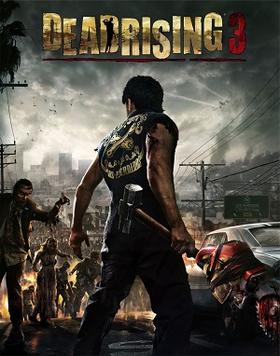
Dead Rising 3

[Dead Rising 3, Capcom Vancouver, Microsoft Studios, 2013]

low expectations

Let me start out by saying that I wasn't really hoping for a lot from this title. I own the first Dead Rising for the Xbox 360 but I didn't make it very far into the game. The control scheme was horrendous and I never really got involved in the story. I played a few hours of it and put it away, never to be picked up again. It got decent reviews and I usually enjoy a good zombie game/show/movie, but for some reason the first Dead Rising didn't grab me. I never picked up the sequel. Due to those facts, I didn't expect a lot from the third entry in this trilogy. I'll be honest with you, I only picked it up because of the somewhat depressing dearth of games for the Xbox One and my having beaten everything else out there that's even half worth playing. 


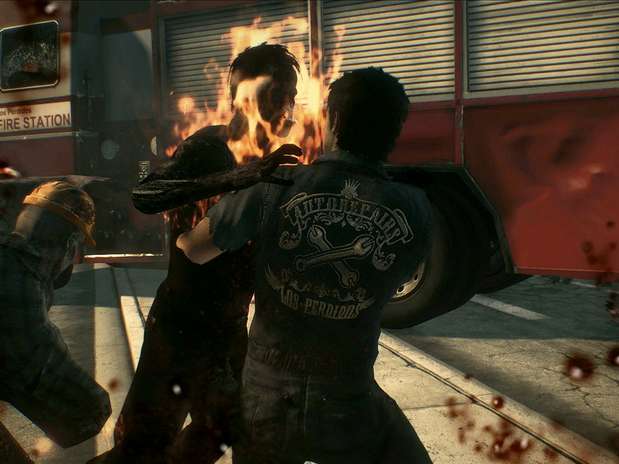
Knowing that, you can imagine my surprise when it turned out to be a really creative, well-honed, bloody good time (pun fully intended). The story is well-crafted. The control scheme is fairly deep, yet quickly graspable. The graphics are quite nice. The protagonist is likable. The open-world is large and fun to explore. In short, Dead Rising 3 is a really decent game, much to my surprise. 

why does this keep happening?


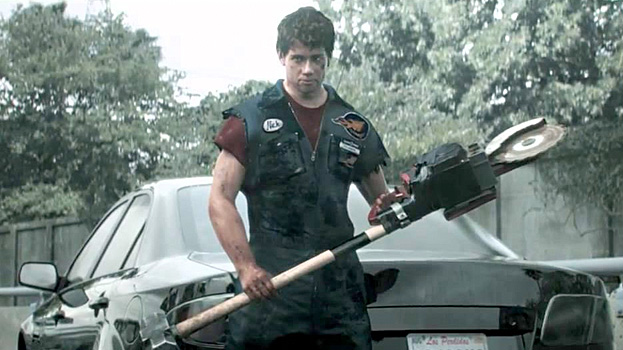
The events of Dead Rising 3 detail the third major outbreak of zombie-itis. They take place ten years after Dead Rising 2 in a fictional city called Los Perdidos, California. This is the third outbreak of its kind. A small group of uninfected including the protagonist, mechanic Nick Ramos, his boss Rhonda, and a runaway named Annie is holed up inside a diner in the city. They see a news report that the city will be the recipient of a nuclear bomb in six days and decide it would probably be best to get out before that particular package arrives. The rest of the game follows Nick and his friends' attempts to escape the bomb and the explanation of the genesis of the outbreak, which, as it turns out, is a huge government plot. Don't worry, I won't ruin the twists and turns for you if you intend to give this game a run. Suffice it to say that the plot is quite interesting and Nick plays an integral part in both the creation and solution of the outbreak problem. 

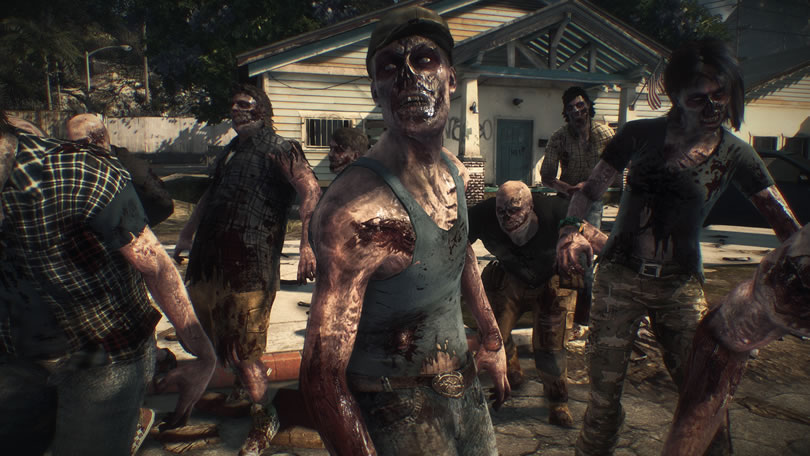
man, that's a LOT of zombies!


The gameplay in DR3 is very impressive. Nick, being a mechanic, is able to craft various useful tools from the plethora of items found around the open world map. Not only can he create extremely useful and often funny vehicles, but he can generate some 300-plus weapons as well as various food recipes that have varying types of effect on him and his companions. The crafting is so deep that I didn't even cover half of the options in my first playthrough of the game. 


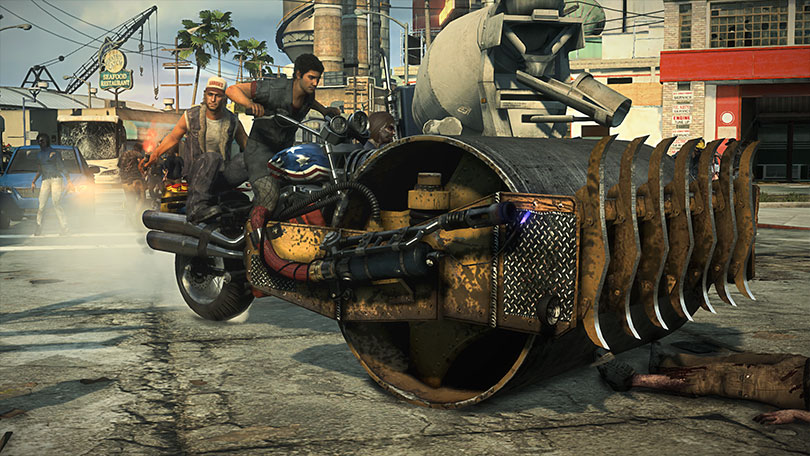
Some examples of this piece of the game are the RollerHawg, which is the welding of a motorcycle to a steamroller. It has the speed of a bike with the destructive power of a two-ton crushing machine. A 2x4 and a lead pipe created a particularly effective bashing weapon called Heavy Metal. A sledgehammer and a car battery created a beast of a beatdown melee machine titled the Electric Crusher. Among the most hilarious bits of crafting is the addition of a leaf blower and a massager to make a gun that fires...well...it shoots dildos. 


The crafting options also extend to food. As you are attacked by zombies, either hit, tackled, or as they try to bite you, your health meter will deteriorate. Nick has to eat in order to replenish his health. It isn't particularly hard to find food lying around the world, but culinary items could be added to one another to give specific boosts to Nick's abilities. For example, adding candy to coffee creates Quick Step, allowing Nick to sprint without getting winded for a short period of time. Three cups of coffee and a bottle of vodka makes Energizer, which causes Nick to become invulnerable to attacks. A ham and three bottles of liquor creates Spitfire, which, as the name suggests, allows him to breathe fire on the undead in his immediate vicinity. 


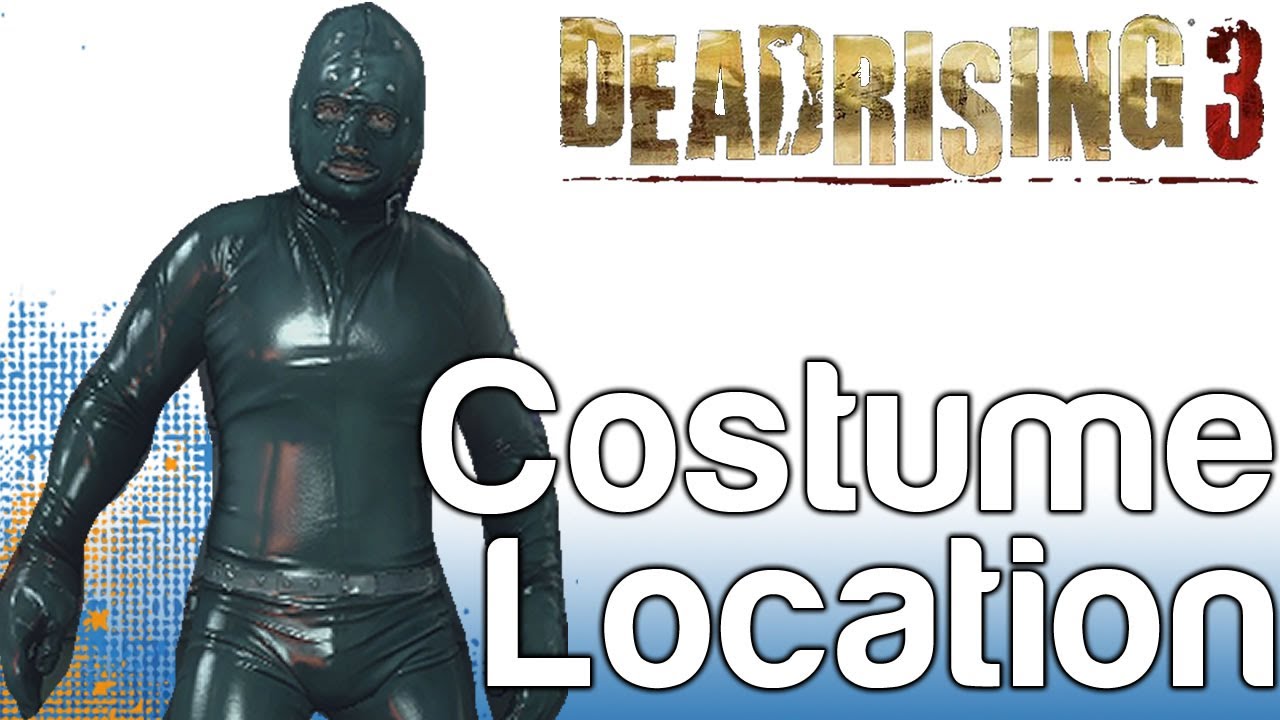
what are you wearing?!


Probably the most humorous part of Dead Rising 3 is the costumes. As you can see above, one of the many options was reminiscent of the Gimp from Pulp Fiction. In an adult store, you can find a full S&M suit along with go-go boots. Although Nick will complain every time you force him to put on the getup, I loved playing in the leather-zippered outfit because I just couldn't stop laughing at the poor guy. Among the other clothing options are a disco suit straight out of Saturday Night Fever, a tuxedo, a child's superhero outfit, a woman's Star Trek uniform, and even a Blanka mask from Street Fighter II. 


that about sums it up

I could go on for hours about the story, but I'd hate to spoil any of it for those of you who are going to play the game. It isn't Shakespeare, but it has enough twists, turns, and jokes to make it a very enjoyable experience. For the completionist gamer, there are tons of collectables. Not only are there weapon blueprints that are necessary if you want to make some of the more than three hundred combo weapons, but there are books that give Nick advantages in some areas such as more XP, increased damage, or weapon durability. There are also bodies of the dead that tell little stories about their sad endings. It has statues that serve little purpose beyond the joy of collecting. Finally, there are side quests that allow Nick to help other survivors along the way. 


how it ends...

Kidding. I'm only kidding. I won't tell you how it ends. What I will tell you is that there are multiple endings to the game depending on decisions you make throughout. I wouldn't have learned about this nice little addition had I not failed in my first attempt at finishing the game. However, it was very nice to see that Capcom allows for more than one outcome. Although I still love Titanfall, one of its major drawbacks, in my humble opinion, is the fact that the game's result is the same whether you succeed or fail in your missions. Dead Rising 3 isn't so uncreative. 


My final judgment of Dead Rising 3 is, as stated before, that it exceeded my expectations by a wide margin. I picked up the game to pass some time, not even sure that I would finish it due to my experience with the first Dead Rising. What I got was a thoroughly enjoyable, well-crafted game that sucked me in and surpassed my hopes in all areas. While I doubt it will win any game-of-the-year awards, you can be assured that this one isn't a dead end like its predecessor. If you're a fan of the Walking Dead or Left 4 Dead 1 or 2, give this game a try. I don't think you'll be sorry that you did. It is much more fun than the former and much deeper than the latter. If wiping out zombies is your thing, then this is your game. I killed over 27,000 of the undead in my first playthrough and I hope to top that number in my second, which begins tonight. Happy hunting!


Objective Score: 7/10

Bonuses: +1 for the unexpected and hilarious sense of humor in the game.

Penalties: I honestly can't think of any. While it isn't the best game ever, it does what it's supposed to very well. Kudos, Capcom!

Nerd Coefficient: 8/10. Well worth your time and attention.