Showing posts with label alternate dimensions. Show all posts

Tuesday, August 12, 2025

Book Review: Time's Agent by Brenda Peynado

You can't just stuff your problems in a pocket

Everywhere you go, there are places that feel like they would lead to another world. For me, it was one hallway in the middle school I went to that had a sign that said it was off-limits for students (I eventually found an excuse to go down it, and it ended up on the upper level of seats for the school’s rather large auditorium—prosaic, sure, but nothing makes a teenager want to do something more than being told not to do that thing). For many of us, these are backrooms, gas stations, airports, and places that you expect simply to pass through, never lingering there. It is this human impulse that Brenda Peynado stretches out in her novella Time’s Agent, published in 2024 by Tor.com.

Time’s Agent is set in a near-future Dominican Republic, where capitalism lumbers ever longer and teeters on the edge of collapse but never actually gives the satisfaction thereof. In this future, humanity has figured out how to access ‘pocket universes,’ other planes of existence that have different sizes and different rates of the passage of time. Since it is the nature of capitalism to enclose the commons, as was done to common lands in Europe in the early modern period, its forces march inexorably into these pocket universes and use them to suck ever more value from not only the pocket universes, but from the people who are sent to them.

Peynado spends a lot of time showing just how these pocket universes are exploited. It is common for the poor to do backbreaking agricultural labor in a universe where time flows much faster than in ours; they enter in their twenties and come out in their sixties when only a few days have passed in our world. It bears mentioning that the benefits of pockets are not only for the wealthy, as others have become wealthy by selling pockets to the poor; some parents use the pockets as cribs to put their children in while they work, while students at university use them to study for exams while saving time in the present.

A small thing that Peynado does that I liked is the distinction between how time passes in the main world versus time as experienced by a person in a pocket dimension, such as the farm workers mentioned in the previous paragraph. The very concept of different time streams accessible to a society can wreak chaos on how we usually reckon somebody’s age. I kept making mental comparisons to Isaac Asimov’s 1955 novel The End of Eternity, where time travelers have to keep up with what Asimov calls ‘physiotime,’ a straightforwardly useful concept I am surprised more writers haven’t made off with. I have no idea if Peynado has taken a page from Asimov (the concept strikes me as obvious enough for someone to derive independently; indeed it was something I had thought about before I read the Asimov novel) but, being the massive nerd I am, I noticed the similarity.

And as with all new discoveries and all new inventions, the powers that be will use them in one way, and the downtrodden and marginalized will find their own uses. Such are your main characters: a lesbian couple, one of whom is of Haitian heritage (Haitians are very much a marginalized group in the Dominican Republic). In the early days of the exploration of pocket universes, they both belonged to a scientific institute whose investigations of the new phenomena are humane, even humanistic. They are rudely thrown out when the institute is commandeered by the sort of vulture capitalist that destroys anything good in the world, and through shenanigans related to pocket dimensions, find themselves hurled decades into the future, where the enclosure of the pocket commons is complete.

There’s a heavy throughline of loss in this novella. The two main characters had a daughter, but they lose her, and one of them tries to ‘resurrect’ her in a hamhanded way that bears the hallmark of someone stuck in the bargaining stage of grief (while at first the particular method of ‘resurrection’ felt like a digression, the more I thought about it, the more it fit into the book’s thematic core). More broadly, that same character has a fascination with the Taíno people, the indigenous people of the island of Hispaniola (which is shared by Haiti and the Dominican Republic), whom she suspects of having found a way to use pocket universes to their own uses.

In giving the Taíno access to the pockets, Peynado takes an old Orientalist trope and flips it on its head. Many works of white-written science fiction and fantasy give any number of ancient civilizations, often those in Africa or Asia or the Americas (rarely Europe, but occasionally so, such as the ancient Greek nuclear-powered mecha of the First Occult War in many SCP articles). In those works, this trope has unpleasant undertones, often with the sneaking suspicion that the white authors saw these cultures as inherently ‘mysterious’ and as such gave them license to just make things out of whole cloth. Sometimes, it ends up unintentionally justifying historical atrocities, such as in Wolfenstein: the New Order. Not so here; Peynado uses this trope in a very sensitive way, one that makes the Taíno come off as the reasonable, sensible people who don’t feel the need to obscure things with systems of thought justifying colonialism. The way it ultimately plays out is something I found to be very clever.

Time’s Agent is a very efficient book. I am very impressed with how many ideas could be packed into two hundred pages and change while still having fully-fleshed out characters and a gripping, often heart-rending plot. This book manages to be the synthesis resolving the thesis of those old idea-heavy ’50s science fiction (with modern descendants) and the antithesis of the more character-heavy SFF novel. Peynado shows she can do both things very well, and I feel that she is an author whose future efforts will be worth paying attention to.

Reference: Brenda Peynado, Time's Agent [Tor.com, 2024].

POSTED BY: Alex Wallace, alternate history buff who reads more than is healthy.

Wednesday, March 9, 2022

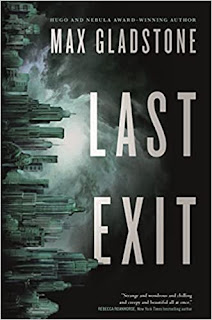
Microreview: Last Exit by Max Gladstone

A multiverse SFF story about the bonds and bounds of a group of friends, and what they owe to each other.

Zelda has a problem. For the last ten years, she has been traveling the United States, using her gift to heal the cracks in the world to try and keep together a 21st century US that seemingly is on the brink of falling apart. Ten years ago, she and her friends, including her love, Sal, made a daring journey into alternate worlds. That journey ended in disaster. 

But now Zelda needs to get the band back together, to journey back into the alternate worlds. But her friends have moved on from traveling the dangerous alternate worlds. But with Sal’s young cousin June, who has unusual powers of her own, the need to find Sal is stronger than ever before. But what forces are chasing them across the real and alternate worlds?  And what precisely happened to Sal?

These are the big questions at the heart of Max Gladstone’s Last Exit.

Portal fantasies are something that go in and out of fashion in SFF. Until a few years ago, Portal fantasies had been fallow, taking a backseat to subgenres like Grimdark, the prominence of the Martin/Abercrombie/Erikson style of fantasy, and so on. With authors like Seanan McGuire, Alix Harrow, and Foz Meadows, multiversal fantasy has seen a resurgence. Much of this new crop of multiversal fantasy has been sui generis, or reaching through to fairy tales, or to epic fantasy. Works really in conversation with earlier generations of multiverse fantasy are thinner on the ground, much less taking them apart.

Enter Last Exit. Last Exit has many parents, but the ones you will see immediately are both from the pen of Roger Zelazny. Roadmarks and The Chronicles of Amber. 

Let me tackle the second one first, since it is the weaker influence. In many ways this story is a “take that” at the Chronicles of Amber. In that series, it is an upper crust of nobles from one (two if you count the Courts) families who walk a Pattern/Logrus and are the only “real people” in a world of shadows who can travel between worlds. And as commonly depicted, these people are very much mostly white men having the balance of power in Amber. 

My contrast, Gladstone’s travelers across the “alts” are ordinary people from a variety of backgrounds on Earth (the diversity of them on all axes is stark compared to the Barimen family). Their control of their powers is not as assured as Corwin, Fiona and company (I kept thinking of their powers in terms of a Second Amber Series “Broken Pattern”, especially given the alts and situations they keep falling into). There is, as it so happens, a Princess and a Castle in the novel, and are quite a central point to the resolution to the story. 

But Roadmarks, I think, is an even better fit for an inspiration for Gladstone, even if Roadmarks itself is not *quite* a multiverse story, but is at its heart a time travel/alternate history  novel. Roadmarks is the story of Red Dorakeen, who is trying to get to a place he can’t quite remember. Red is eventually joined on the road by his son Randy, who is new to the Road, the path that he can and does take along the flow of history. Red’s twisting relationship is with Leila, with a narrative and storyline that only becomes clear in the end. Red is running from forces he is not quite sure of the origin or provenance of. Each of these has a cognate within Last Exit, the parallels are clear to a reader of both.  One thing that Roadmarks lacks, but Last Exit has, is the space for all this. Roadmarks is a short novel and the ideas and scenes stuff the novel to bursting, with some of what is introduced getting short shrift. Last Exit has much more space in order to let his environment and ideas thrive. I think it makes an interesting “response” to Roadmarks and I encourage readers to read both.

Gladstone’s idea of the alts, is difficult to talk about, because there is a central mystery to the alts that you don’t quite realize is a mystery until the author points at an aspect of them that the reader takes for granted for a bunch of the novel. Gladstone’s penchant for description and evocation of the worlds next to ours is top notch, and immersive. His story is not one of tourism of these alternate worlds. Frankly, traveling these worlds is not a glorious pilgrimage along the road, but very much a labor. This is not the kind of multiverse fantasy where Gladstone will dazzle you with wonderful places they visit. No, not at all. The alts are dark, twisted, broken, apocalyptic. His road is not one I’d want to go off running onto, Camera in hand. No indeed.

Even more so, no surprise for those who have read his previous work, is that he gives some thought to the limits, and abilities and consequences of the powers the protagonists, including young June, possess. Like Amber, there is enough of a quasi hemi demi science fictional consideration of a fantasy concept to make the novel much more of a science fantasy sort of work, and I am here for that. There is enough of the numinous mystery of how it all works, including to the protagonists, to keep readers wondering and thinking and being drawn forward by that rope, as well as the other strands of the narrative.

But as much as Gladstone sets up all of this worldbuilding and thinking about multiversal fantasy and being in conversation with the older generation of multiversal fantasy, this is not, in the end, a story about those powers, about traveling lots of alternate world, of seeing wondrous (even darkly wondrous vistas).  No, this is the story of Zelda, and how her relationship with Sal went wrong. Of how she and the other travelers came together, and fell apart, and how they come back again to get the band back together, to try and finish what they began. Of how June, Sal’s cousin, fits into this found family on the road. Of how time, and circumstance, and life, have changed these individuals, what they have done after leaving their company, of how they have tried to make their way in the world, and how they try to fit back together for this one additional attempt to make it all work, and make what they once had, work. 

In many ways this is a book that is a punch in the gut to read. Not only the state of the world, as depicted in it...this is firmly a book of our times, our place, that could not have been effectively written in the 20th century. It’s also how relationships form, are messy, how they fall apart, and how the attempts to rebuild or restore things is far far more difficult than any movie or book can imagine. How trying to protect a small corner of the world, even a few people, can be an act of heroism as great as trying to save the world. The book is not blunderous, it is sharp, it cuts like a monofilament blade, fillets your heart, but in the end all makes sense and you stand at the end of the Road, glad that you have taken a harsh, unforgiving, but rewarding and immersive journey. Going into this book, I was expecting an immersive Gladstone book that might especially be good in audio form for one of my road trips. Instead, I got an experience very different, and vastly more rewarding than I imagined.

---

The Math

Baseline Assessment: 8/10.

Bonuses: +1 for very strong characters and fraught and messy relationships between them. For a world with multiverse travel, it is the characters more than the landscapes and locations which ultimately sing the best.

+1 for not being the book that I was expecting--for being something deeper, and more, than I imagined going on.

Penalties: -1 The book may well not be what all readers are expecting...this is a two edged strength and weakness to the novel.

Nerd Coefficient: 9/10

Reference: Gladstone, Max. Last Exit  [Tor, 2022]

Paul Weimer. Ubiquitous in Shadow, but I’m just this guy, you know? @princejvstin.


Friday, December 5, 2014

Microreview [book]: The Bloodline Feud by Charles Stross

All in the Family


Let's get some admin stuff straight first: The Bloodline Feud is a re-release. It's actually the combination of two previously released books, The Family Trade and The Hidden Family. The Merchant Princes series is six books, but they've been re-released as a trilogy (as Stross originally intended) with each book now containing two of the previously released titles. The Bloodline Feud is the first of the re-released trilogy.

In The Bloodline Feud, we meet Miriam Beckstein, a biotech reporter who immediately loses her job for uncovering a story too big to handle. After visiting her adoptive mother, she finds a pendant in her biological mother's belongings that allows her to travel to another Earth. This Earth, however, never left medieval society, and she's the long lost daughter of a countess, and niece of a powerful duke. She is, more or less, lost royalty with more money and power than she'd ever had in the mundane world. Her collective family are known as The Clan, and they are world-walkers. They've established a base of power in the medieval world through mercantilism, importing and exporting goods between Earths. However, not everyone is thrilled to see Miriam, as she and her line of the family were suspected dead for so long. She has enemies inside The Clan, enemies outside of The Clan, and another mysterious faction that also poses a threat. Among these, she must conform and navigate the social world of this alternate Earth, and she's not quite sure she's willing to give up the comforts of the Earth she has known for so long in exchange for palace politics, reduced agency, and near-limitless wealth.

Of the Stross novels I've read, The Bloodline Feud is the least fantastic. World-walking is tantamount to magic, but this story has a lot to do with how Miriam rejects the majority of medieval life and the family trade (hence the first book's title). She's an independent, strong-willed woman who doesn't see the benefit in exchanging even her mediocre life in the modern world for an arranged marriage and the life of royalty. However, none of this is particularly boring because it's well paced. Miriam's life is threatened on a number of occasions and the palace politics approach the machinations of a Song of Ice and Fire novel.

What I described before is largely the beginning of the first book, and the second book introduces a twist into the story. It takes the book into a fairly interesting, if a little predictable, direction. While the point of view largely follows Miriam, there are the bits and pieces of other peoples' perspectives as needed to inform the reader of things Miriam cannot know. Again, these are well placed and keep the story interesting to read.

Unfortunately, the characters are fairly flat. Miriam and her mother are interesting, but the rest hold no secrets (even the ones who do hold secrets from Miriam) and do nothing unpredictable. The story also happened to vomit out the most interesting parts at the very last 50 pages. It wraps up with plenty of unresolved matters (expected, because it's part of a series), but it also glosses over some significant events. Getting closer to the ending, I knew it was not going to put a bow on every plot string, but I expected some of the more significant events to get bit more gravity. I also found it fairly odd that more than enough time is spent in the beginning to describe Miriam's current occupation, but that mostly goes to hell in the first 100 pages, and it's brought up again maybe five times over the course of the rest of the novel. I guess it gives background to her actions but there's not much use for a biotech reporter in the medieval world, and her strength's don't seem to rely upon that background.

Sad to say, though I enjoyed this book, it is probably the weakest I've read from Stross. It's got an interesting hook, but perhaps it is a bit too long. The two books combined suffer, where a solid break between them might have been more appropriate.

The Math

Baseline Assessment: 5/10

Bonuses: +1 intricate family plotting

Penalties: -1 completely steamrolled ending

Nerd Coefficient: 5/10 (Problematic, but has redeeming qualities)

***

POSTED BY: brian, sci-fi/fantasy/video game dork and contributor since 2014

Reference: Stross, Charles. The Bloodline Feud [Tor Books, 2014]

Friday, September 19, 2014

Destiny

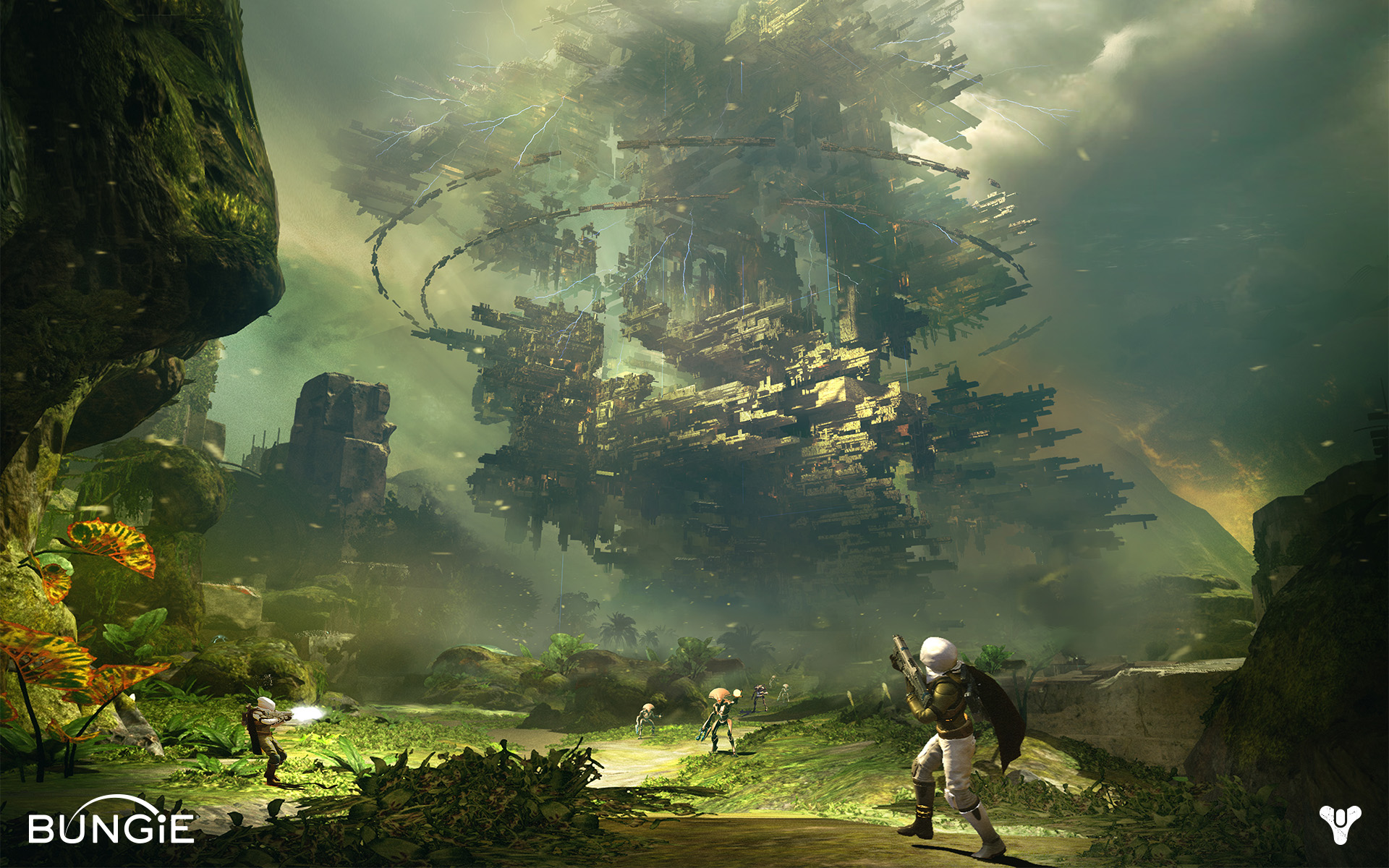
[Destiny, Bungie, Activision, 2014]

One of the Biggest Video Game Releases in History, You Say?

Well, probably, but not as big as Activision Blizzard initially reported. Although they announced $500 million in first day sales, they only shipped $500 million worth of units to stores, but the actual sales were quite a bit lower. They really only made about $325 million in sales during the first five days on Destiny. However, that's nothing to smirk at, and Call of Duty: Ghosts did the same thing claiming $1 billion sold on day one when the actual number was also significantly lower. It has been one of the most hyped games the public has ever seen with the television marketing campaign costing somewhere in the neighborhood of $6.7 million. However, the fact that they didn't release early copies to critics for release day reviews was a bit disconcerting. When a movie does that, you know it is going to be a stinker. The reasoning Bungie gave for the decision, and it does make sense, is that they wanted critics to have the ability to play a fully populated MMO (Massively Multiplayer Online) rather than one with only a few other critics online at the time. With MMOs, there are thousands of people online at the same time occupying the same virtual worlds, so it would make a difference in how the game appears if critics gave it a try without all of the actual players running around doing missions in the area. It would also make some parts of the game unplayable as they require three-man teams to even begin, much less complete. Anyway, enough with the hype, let's get to the meat of the game!


Gameplay

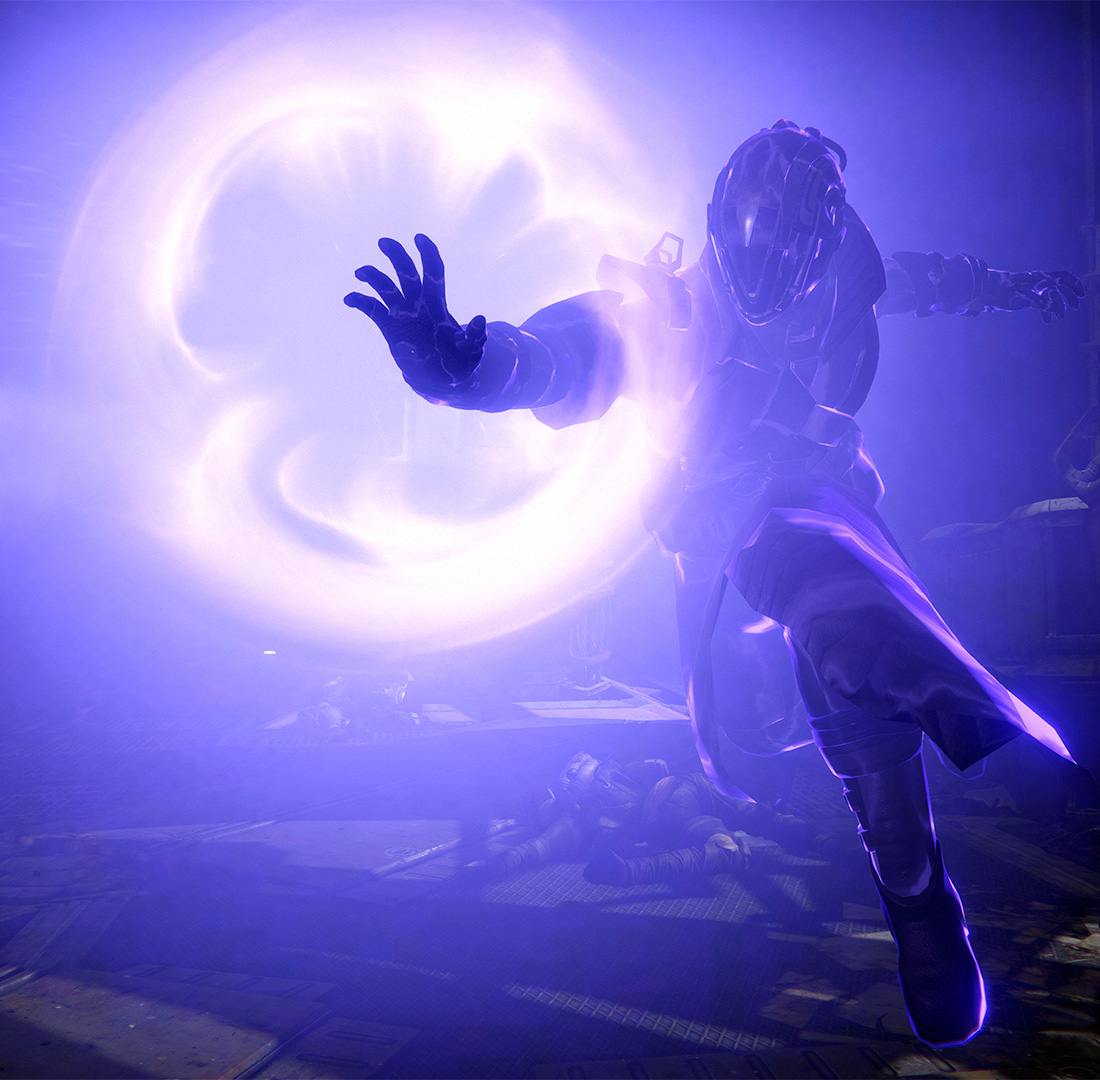
I'll cut to the chase. This game is about as polished as they come with regard to mechanics. It plays like a Porsche drives. Smooth. You start out by choosing between three types of protagonist. There are Titans, which are the tanks of the game. They can take massive amounts of damage without dying, but lag drastically behind the other two in movement and damage recovery. The second is the Hunter. This character class moves quickly and easily with a high agility score. Unfortunately it takes forever to heal with the lowest recovery setting of the three classes. The third type is the Warlock. This is your typical mage that can recover quicker than the other two, but doesn't have very dangerous attacks outside of its special magic moves. The Warlock isn't the quickest of movers, either. All of that said, I've played all three characters and it seems like Bungie did a pretty good job of balancing out their various skills and deficiencies. Each character also has two subclasses that define their special moves. You should choose your subclass early because any upgrades to one won't transfer over to the other. Pick a subclass based on its special moves and stick with it throughout the game. 


Beyond that, you can choose between Human, Awoken, and Exo. You can customize the look of your character, but race and the appearance are only cosmetic. They don't effect how the character plays at all. Humans are, well, like us. They managed to survive the destruction wrought by the Darkness, dubbed the Collapse, and are just trying to survive in the last city not controlled by its minions. The Awoken are humanoids with bluish skin and an ethereal glow about them. They are based on mythological creatures such as elves, vampires, ghosts, and angels. The Exo are either machine or cyborg, I've read both definitions. They supposedly survived the Collapse but have no memory of their history before that. 


There are four species of alien enemies that fight for the Darkness: the Fallen, the Vex, the Hive, and the Cabal. The Fallen are scavengers that are attempting to take over the Earth. They are filthy urchins that constantly look for anything of value left behind after the Collapse. Vex are robots that employ a hive mind, all connected to a single consciousness. They came to our universe through warp gates from another dimension and mostly populate Venus. Hive are a species of undead that live on the Earth's moon. Their strength is in numbers and they tend to attack in hordes. Finally, the Cabal are massive creatures that employ thick armor and huge metal shields for protection. They generally stick to Mars missions and are the last species you encounter before finishing the campaign. None of the species like each other and you can often sit back and watch firefights where they kill off one another, leaving a much smaller force for you to take out before moving further through the game's many maps. Unfortunately I had to dig up nearly all of this information about the enemy species online because so little of their background stories is covered in the game itself due to the painfully thin plot. But more on that later. 


Special Moves


Each character type has two special moves. The first is called a Super Charge and it is the more powerful of the two. The second is a melee attack that has various effects depending on character type and subclass. All special moves can only be used sparingly and take time to recharge. Grenades act the same way. 

Titan


The Titan's Super Charges are titled Fist of Havoc and Ward of Dawn. The Fist causes the player to jump in the air and come crashing down, slamming both clinched hands into the earth causing high levels of damage to any nearby enemies. Ward of Dawn creates a small shield through which the player can fire but no projectiles can penetrate. The Titan's melee attacks are dubbed Storm Fist and Disintegrate. Storm Fist is simply an overpowered punch that does a lot more damage than your average pop to the jaw. Disintegrate actually has nothing to do with disintegration. After you smack an enemy you absorb any incoming attacks and transform them into ammo, health, or a quick recharge for Storm Fist. 

Warlock


The Warlock's Super Charge attacks are referred to as Nova Bomb and Radiance. Nova Bomb hurls a bolt of damaging light at the enemy. Radiance boosts your skill recharge speed, damage resistance, and melee damage resistance for a brief period. The Warlock's melee attacks are called Energy Drain and Scorch. The first one, strangely enough, drains energy. Heh. It removes health from your enemy and speeds the recovery of your health, grenades, or Nova Bomb. More than any other character class, I found the effects to the Warlock's Super Charge attack to be vastly superior to its melee attack. 

Hunter
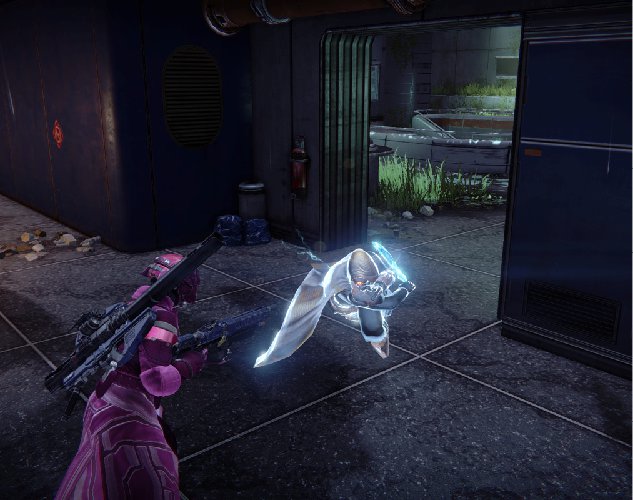

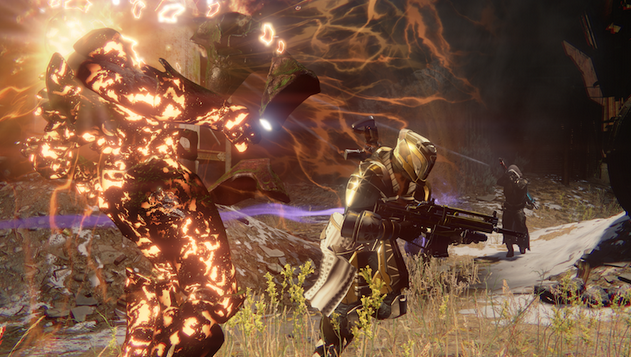
The Hunter's subclass' Super Charges are Arc Blade and Golden Gun. These two are easily the most visually appealing of all the special moves. Arc Blade generates a knife of pure energy for about eight seconds, letting you attack as many enemies as you can in that time period. For most, one shot is all it takes. Bosses may require multiple hits, but the attacks come so fast that they can't do anything but reel in pain from the impact. With Golden Gun, you fly up into the air in a yellow whirlwind of flame, landing with a fiery pistol in your hand. You have three highly damaging shots with the revolver that, again, take out nearly anything but a boss with a single shell. The Hunter's melee attacks are Throwing Knife and Blink Strike. It's as if Bungie had to balance the beauty of the special moves with the plainness of the melee attacks. Throwing knife is decently effective, but no more impressive in graphic design than a knife thrown in Call of Duty. Blink Strike is also unimpressive, being merely an extended melee attack with more range than your standard stab with a kitchen knife. 

Bang Bangs and High Fashion


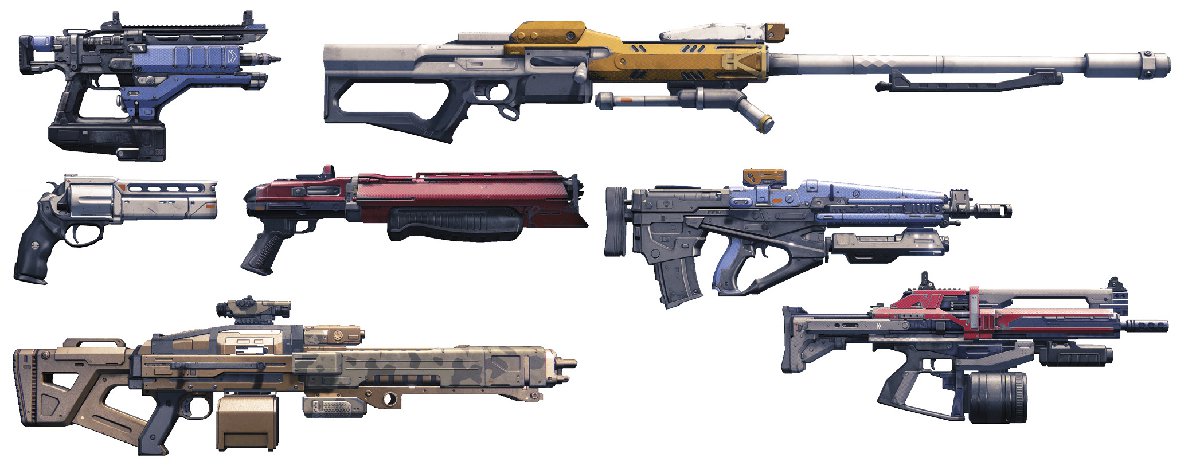
There are a plethora of weapons and armor to choose from in Destiny. Your character carries one primary weapon, one secondary weapon, and one heavy weapon. The primary weapons include auto rifles (machine guns), hand cannons (revolvers), scout rifles (hunting rifles), and pulse rifles that fire three-round bursts. The secondary weapons are the shotgun, fusion rifle, and sniper rifle. Heavy weapons are just a rocket launcher and a machine gun. Each weapon group can have a variety of upgrades. I won't bore you with every single option as that list would take up three pages and this review is long enough already. Some examples are Quickdraw, Upgrade Damage, Kinetic Damage, Extended Mag, Hawkeye, Warhead Verniers, Reactive Reload, and Void Damage just to name a few. Upgrades are available on every weapon and must be earned in battle. On top of that, you have to have enough Glimmer, the primary currency of Destiny, and, with many, additions like Ascendent Shards, Weapon Parts, and Plasteel Plating. 

The armor consists of four different pieces: the helmet, gauntlets, chest armor, and leg armor. Each one carries with it bonuses, just like the weapons. Not only do they have the same upgrades as the guns, but they also hold bonuses for Intellect, Discipline, and Strength. That's just a short way of saying your Super Charge, your specialized grenades, and your melee attack, respectively. You also wear a class identifier, which is a scarf for the Titan, a cloak for the Hunter, and a bond for the Warlock. You can also purchase these pieces of clothing in order to ally yourself with one of the cults (More on them later). While wearing a piece of cult clothing, all of your reputation points go toward that cult rather than your Vanguard score. It makes little difference beyond allowing you to purchase items from specific vendors. There is no bonus or upgrade given by wearing one piece over another. 


Campaign


While the gameplay in this game is fantastic, its one shortcoming is in the story. I suspect the reason for so many of the hot-or-cold reviews that have been coming out is the plot. It is very vague and there isn't much to it. The Traveler - a massive, moon-sized, planet-looking thing - comes to Earth and teaches us about space travel. Humans populate Mars and Venus. Then, the Darkness, the Traveler's ancient enemy, destroys nearly all of mankind. A small group of humans, Awoken, and Exo survived and are fighting the minions of the Darkness. There. That's the whole thing in four sentences. Of course there are more detailed mini-stories in the missions, but that's the gist. The missions usually consist of traveling to somewhere, killing a bunch of minor enemies, then killing a boss and going back to the Tower for a reward. Usually I'm worried about giving away too many spoilers in a review but with Destiny it's hard to do so because there's just not that much to spoil. It's unfortunate that the story doesn't have much depth because the rest of it is spectacular, but sadly that's the case.  


For players that were expecting the next science fiction epic like Halo or Mass Effect, they will be sorely disappointed with Destiny. The universe is sparse and barren. The massive hype of the next epic science fiction masterpiece has fallen painfully flat. For players that just wanted a finely polished FPS MMO, there are few out there that are better. I believe that the main culprit behind all of the highly polarized reviews, both from professional critics and users, is the thin plot. It's like Bungie spent so much time building lush, verdant landscapes and intelligent, believable AI that they ran out of time and threw the story together in the last thirty minutes before the deadline. I fully expect that Destiny 2 will flush out the universe quite a bit due to all the negative press. At least I hope so, because the franchise has such great potential that it would be a crying shame to let it remain so unfulfilled. 

There is a soft cap of 20 on every character, but it is possible to go beyond that ceiling by collecting "Light Points." The only way to get light points is by equipping gear that has a certain light point amount assigned to it. With this light-infused gear on your character, your level can rise above the level 20 cap. I've seen players online reach as high as 27, but I'm not sure there is a true cap on your character. Due to the limit of 100 Vanguard/Crucible marks (other currencies) you can accrue per week, it's hard to tell this close to the game's release what the true limit is, if any. It isn't necessary to join a cult in order to get gear with high light points, not to mention damage/defense numbers, but it helps. 


Multiplayer Games


Initially the pure multiplayer aspect, dubbed the Crucible, left me feeling more than a bit disappointed. There was only a single game type on the Xbox One. I'm not much of a multiplayer addict. I just prestiged my first character on Call of Duty: Ghosts last month if that's any indication. Due to that fact, I've done less-than-spectacularly in the Crucible. That said, I've managed to level up to 24. They equal out the leveling for the purposes of multiplayer, but I suspect from my numerous deaths that the same can not be said for the weapons and armor. I'll shoot someone five times with a high-powered rifle and they just hit me once with a machine gun and I'm the one that goes down. Something's not right about that.


Vanguard


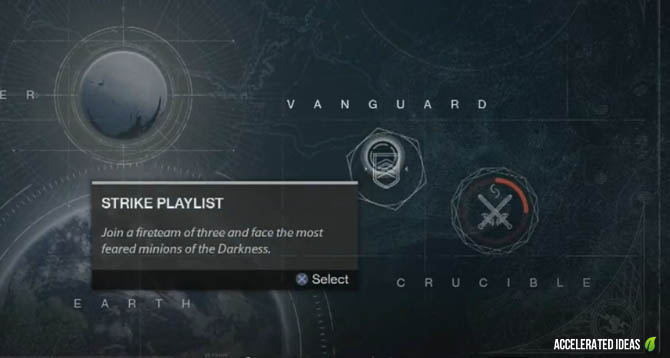
The Vanguard is a game mode where you take on Strike missions with two other players. There are four levels of Vanguard mission to choose from of varying difficulty. The game requires that you undertake these missions with three players, but that doesn't mean you have to have two other friends online in order to complete them. The servers do a good job of matching you with similarly-leveled players. These missions offer you Vanguard Reputation and Marks that can be spent with the Vanguard and cult merchants in the Tower to purchase special armor and weapons. There is a limit of 100 Vanguard/Crucible Marks per week that can be earned. I'm not sure if that's to keep the multiplayer from becoming an unbalanced mess, to keep players coming back each week for more, or a little of both. Either way, I've maxed out my Vanguard/Crucible Marks for the week so my desire to run these slightly more difficult missions has wained until next Monday. 


Crucible

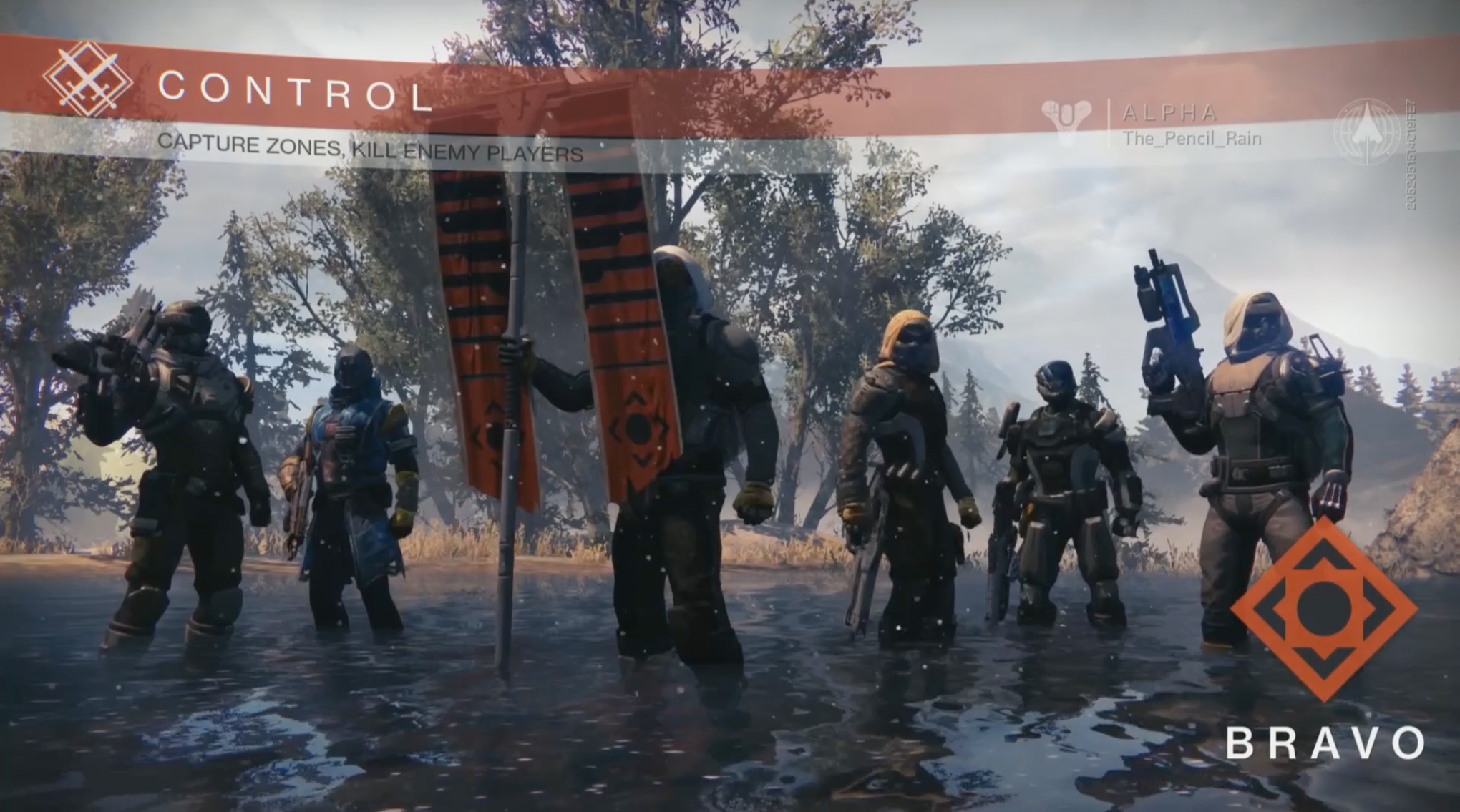
The Crucible is the game's true multiplayer portion. It started with only one game type on day one of the release, but it has since expanded to four. That's still a sadly low number for the developers who essentially created the multiplayer craze with Halo, but it's enough to keep a casual multiplayer participant like myself happy for the time being. The four game types are called Control, Clash, Rumble, and Skirmish. In Control, two teams of three players have to capture three zones and hold them. Doing so increases your point total for every kill. Clash is classic team deathmatch with six gamers on each team. Rumble is an every-man-for-himself game where every one of the six players is out for the others' blood. Skirmish is just a smaller version of Clash where the teams are made up of three players instead of six. In Crucible matches, you win Crucible Reputation and Marks, which are spent on weapons and armor from one of the three cults. 


Join a Cult


There are three factions in Destiny. Bungie refers to them as "cults." They include The Future War cult, the Dead Orbit cult, and the New Monarchy. You have to reach level 20 before you can join up with one of them, but they're the only way to get the most powerful weapons and armor in the game. Well, almost the only way. You can stay non-affiliated and use your Crucible Marks to buy things from the Crucible salespeople in the Tower. All four factions' pieces of armor contain a light point amount. As mentioned before, light points are the only way you can level up your character above the soft 20 cap. From what I can tell, the cult contacts in the game (there are three, one for each group) and the two Crucible salespeople (a non-political, general group) have the best weapons and armor for sale when compared to the Vanguard leaders.  
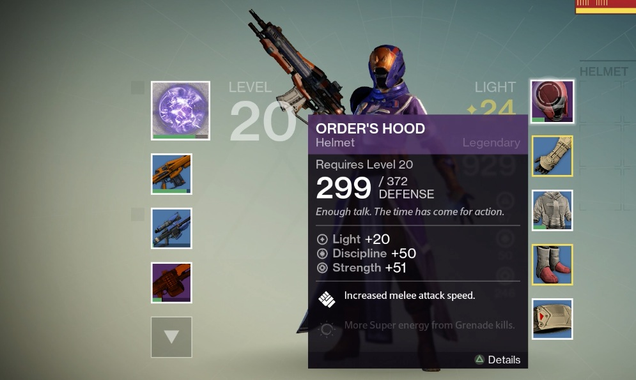

There are advantages to choosing one cult over another based on the way you choose to play. Each one has an effect on two of your three attributes, those being Intellect, Discipline, and Strength. Choosing a cult will give you the opportunity to gain bonuses to these attributes through their armor. If you purchase Dead Orbit armor you get a bonus to Discipline and Strength, reducing the cooldown time of your grenades and melee attack. Joining the Future War gives boosts to your Intelligence and Discipline (grenade and Super Charge cooldown). The New Monarchy offers you the chance to get bonuses in Intelligence and Strength (Super Charge and melee). Each group has a history that isn't really covered in the game and I won't get into here. You don't use Glimmer to purchase items from the Dead Orbit, New Monarchy, Future War, or Crucible vendors. Instead, you have to earn Vanguard and Crucible Marks. These are an entirely separate type of currency that must be earned by doing Strike missions for Vanguard marks or Crucible battles for theirs.

Music and Environment


Two places apart from the gameplay where Destiny really shines are the lush soundtrack and the impressive, varied battlegrounds. That shouldn't be a surprise, though. Bungie used the same duo of composers that wrote the music for the Halo series, Michael Salvatori and Martin O'Donnell. Even Paul McCartney collaborated on the project. Yes, that Paul McCartney. The music fits the game perfectly, building with the action and easing off into lush soundscapes for the menus and load screens. The suspenseful parts of the game were made even more intense with spooky ambience. There are even seamless transitions between portions of the game where there normally would have been only silence. 


The environments are as sumptuous and varied as the planets on which they represent. The Earth portions take place in what used to be Russia and it is every bit a decrepit wasteland as Mad Max or Cormac McCarthy's The Road. The moon looks just like the footage we've all seen dozens of times in movies and on television. The Red Planet appears like the shots that were beamed back from the Curiosity rover. Some poetic license was taken and "ancient" ruins were added to give the maps some variety. Finally, Venus emerges as a tropical rainforest after it had been developed by terraformers. Suffice it to say the graphics in this game are second-to-none. 


Tick, Tock, Tick, Tock...

According to www.howlongtobeat.com, Destiny takes ten hours to complete the main story and seventeen-and-a-half for the campaign plus extras. I found that to be a bit of an underestimate. I did all of the missions in the game including the Strike missions and easily spent twenty-plus hours on the campaign before I even touched the multiplayer modes. Now, I'm a bit of an OCD perfectionist when it comes to finishing a big game that I'm enjoying (That's a nice way of saying I'm anal), but even so, it isn't something you can do in a day like the Call of Duty campaigns. So plan on a good week or so unless you're one of those people who partakes in eight-to-ten hour marathon gaming sessions. 


The Math

Objective Score: 9/10

Bonuses: +1 for being one of the smoothest games I've played, mechanics-wise, not to mention it's just plain beautiful. Plus, your sidekick, Ghost, is voiced by Tyrion, Game of Thrones' Peter Dinklage!

Penalties: -1 for the paper-thin plot. I mean, come on! What did they spend, twenty or thirty minutes writing the story? This is supposed to be the next big science fiction franchise, but instead it's merely an FPS MMO, albeit a very good one. Here's hoping Destiny 2 brings a lot more to the universe than Bungie's first outing did. -1 for the painfully long load screen scenes. I realize that it would take light years to reach Venus, but that doesn't mean you have to take it literally in the game for the sake of realism. I probably spent at least 2 hours of my life during the last week watching my ship hover in space between missions as it loaded up the Tower or the next mission. 

Nerd Coefficient: 8/10.  Well worth your time and attention. 


Friday, September 5, 2014

Contrast

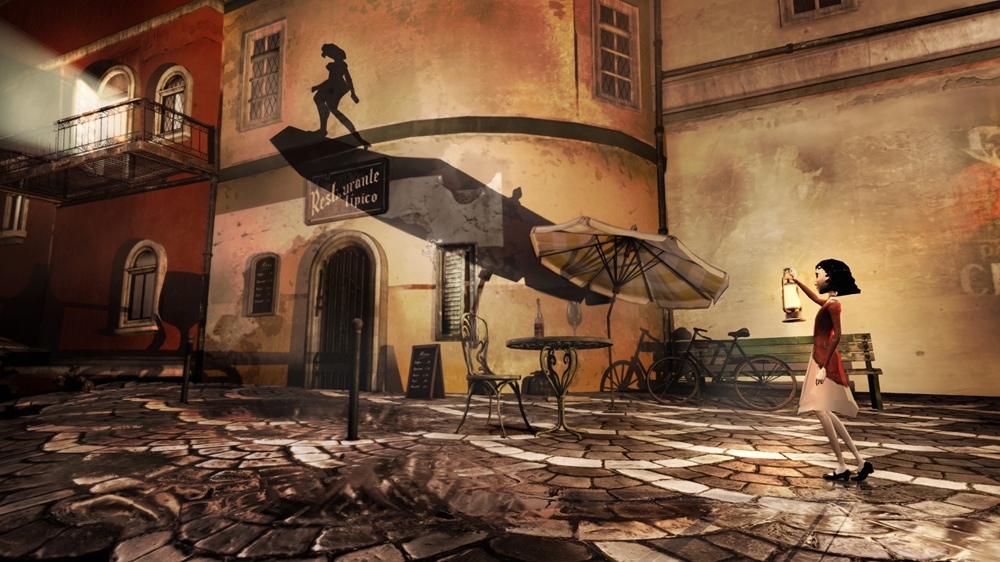
[Contrast, Compulsion Games, Focus Home Interactive, 2014]

Like Nothing Else

As the heading implies, Contrast is like nothing you've ever played before. Of course, there are elements of the game that resemble titles you have in your library, but it manages to introduce a totally new dimension in gameplay that has never been previously attempted. The film noir aspects and the idea of a broken family are nothing new. However, the use of light and shadow as a means to get around the setting, tell the story, and solve puzzles is an entirely new mechanic in gaming. It is somewhat difficult to explain, so I'll just show you. Take a look at this video and you'll see what I mean. Dawn, the protagonist and playable character, can "shift" into and out of shadows. She can (and must) manipulate light sources in order to create shadows and complete levels. 


The Story

As I said before, you play as Dawn, the sexy yet silent "imaginary" friend of Didi. Didi is a young girl of 7 or 8 whose mother is a lounge singer and aspiring star named Kat. Her father, Johnny, has been kicked out of the house for perpetrating one too many offenses against his family in the form of cons, schemes, and various other less-than-successful sketchy ventures.

I won't get too in-depth as the story is one place that this game really shines. I will just say that Didi enlists Dawn and her ability to "shift" between the three-dimensional world of color and the dark versus light, two-dimensional world of the shadows to ensure that Johnny's most recent plan doesn't falter and their family can become a single functioning unit once again.


One thing I will say is that I especially liked the ideas that were introduced about the multiverse and the possibility that either Didi, Dawn, or maybe even all of the characters exist in different dimensions. This fascinating theory was furthered by the fact that the entire game takes place in a sort of floating city like that found in BioShock: Infinite. Although it was never really explained why you were walking around in a town that was surrounded by places you could easily fall off of without so much as a hint of a guardrail or other protective apparatus, that only added to the sense that you were operating in another dimension than the one we all inhabit.  

Gameplay

Didi and Dawn are the only two characters that appear in three dimensions in the game. All of the other characters only appear as shadows, even though Didi responds to them as though they were three-dimensional flesh-and-blood people. This also serves to increase the player's sense that they are playing in an environment that exists between dimensions, or at least one that is alternate from our own.


Most of the actual game centers around Dawn's ability to "shift" between two and three dimensions. At times she walks the streets and alleys like any normal character would in a game. At other times, she is flattened into a shadow and must navigate using only other shadows as one would use a sidewalk for transportation, walking thirty feet up along walls as though they were solid ground. At times, Dawn must manipulate light sources in the third dimension in order to navigate the second. Other times, she uses existing character's shadows to move around the world of Contrast. Much of this navigation is done as part of a puzzle that must be solved to further the story. It is an extremely creative, if a little hard to grasp, method of maneuvering about the environment. 

Control Scheme

This was one place where I really felt that this game fell short. The controls were as squirrelly as they could be. If Grand Theft Auto is like trying to drive a tank, this is like herding cats. Getting Dawn to go where you wanted her to could be an exercise in futility. I died dozens of times when she simply fell to her death due to poor controls. Getting Dawn to do exactly what you wanted her to do often required repeated attempts and sometimes the simplest of movements were maddeningly difficult.


Conclusives

While this game has its flaws, they are easily out-shined by its unique approach to gameplay and the new methods it uses to the traditional platforming puzzle game. The story draws you in and you actually care about Didi and her family, becoming fascinated by their lives and emotionally attached to the outcome. The mystery contained in the world of Contrast is one that still has me considering all the possibilities it presents with regard to multiple universes and dimensions. Multiverse theory is one that has always intrigued me and this game does a wonderful job of presenting some of its details while maintaining a plausible and heart-warming plot at its core. 


The Math

Baseline Assessment: 7/10

Bonuses: +1 for creating a new type of gameplay mechanic that is unique and original.

Penalties: -1 for game controls that had me cursing like a sailor at times. 

Nerd Coefficient: 7/10 - A mostly enjoyable experience. 

Friday, May 30, 2014

Skyrim: Dragonborn DLC

[Skryim: Dragonborn, Bethesda Game Studios, Bethesda Softworks, 2012]

what took so long?

I realize that this third and final downloadable content package for Skyrim came out about a year-and-a-half ago, but I'm just getting around to it. When I played Oblivion, I bought the Game of the Year Edition, so all of the DLC came with the game. I racked up over 180 hours on the thing and completed every quest in the game, DLC included. However, with Skyrim I bought it on Day One and, to be honest, when I finished the main story line I was ready to put it down for a while. I never thought it would take me this long to get back to it, though. That said, here we are, and here's my critique of the highest rated of the Skyrim DLC offerings.  


what's the buzz? Tell me what's-a-happenin'!

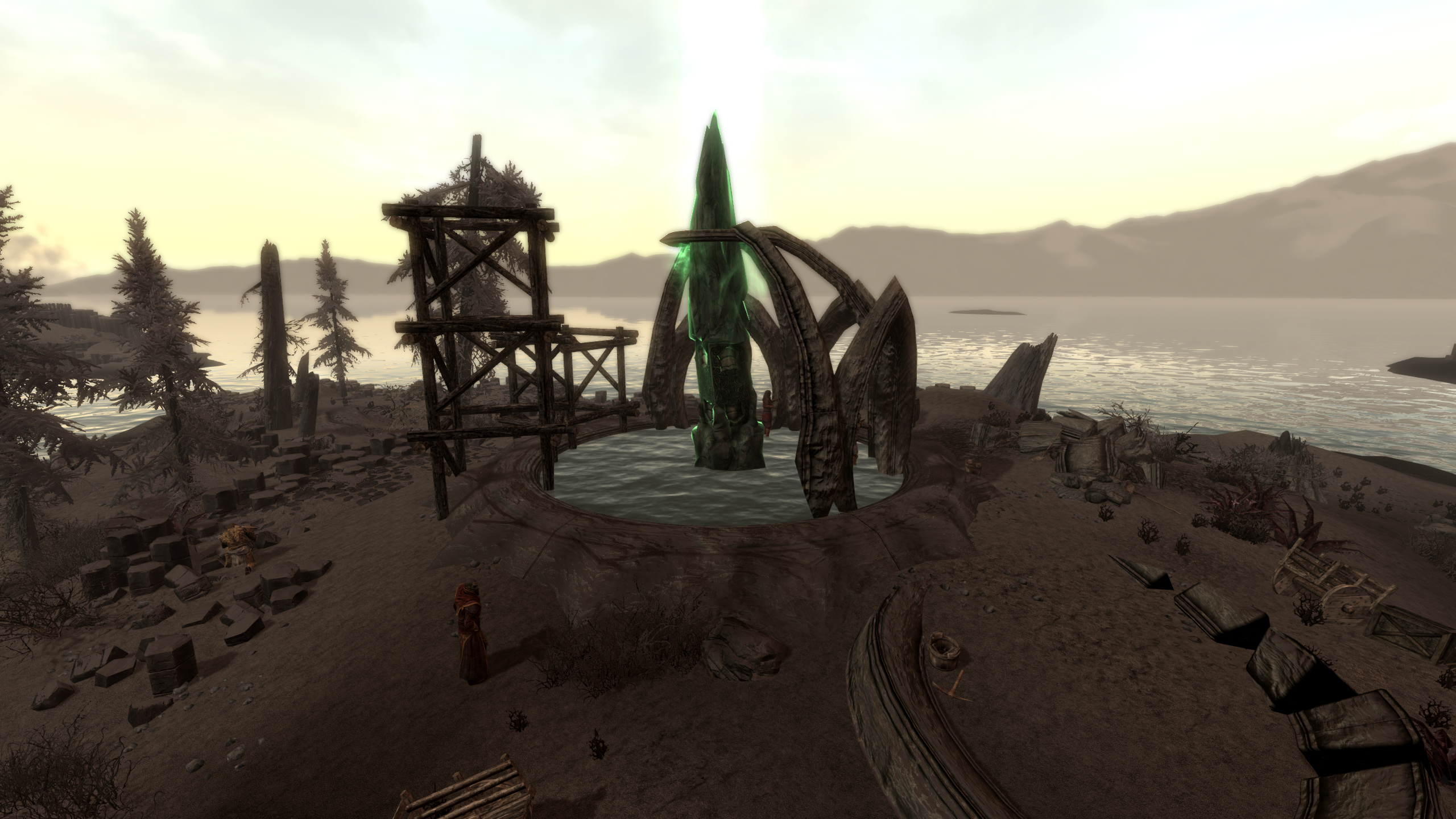
After you've downloaded the Dragonborn DLC package and you start to play, you are quickly attacked by a group of cultists on behalf of one Miraak, who turns out to be the first Dragonborn. This type of aggression will not stand, man, so you set out to find Miraak and put him down. In order to track down your failed assassin, you hop on a ship headed for Solstheim, an island in Morrowind. Long time Elder Scrolls players will remember Morrowind from the third game in the series, and Solstheim from Bloodmoon, an expansion pack for the same. 


You do some sleuthing in an attempt to locate Miraak, but the islanders only seem to have a vague recollection of who or what he is. It's almost like they've all had the same mostly forgotten dream about the man, but they can't seem to remember any details about the first Dragonborn. Eventually, you find your way to the Temple of Miraak where you team up with Frea, a woman from Skaal whose people are being tormented by the evil, power-hungry villain. It turns out he is using the people of Skaal in an attempt to return to Tamriel and take over. He has placed them, along with many other citizens of Solstheim, into some sort of a trance where they are using formerly helpful magic stones to bring about his triumphant return and the downfall of Skyrim. 


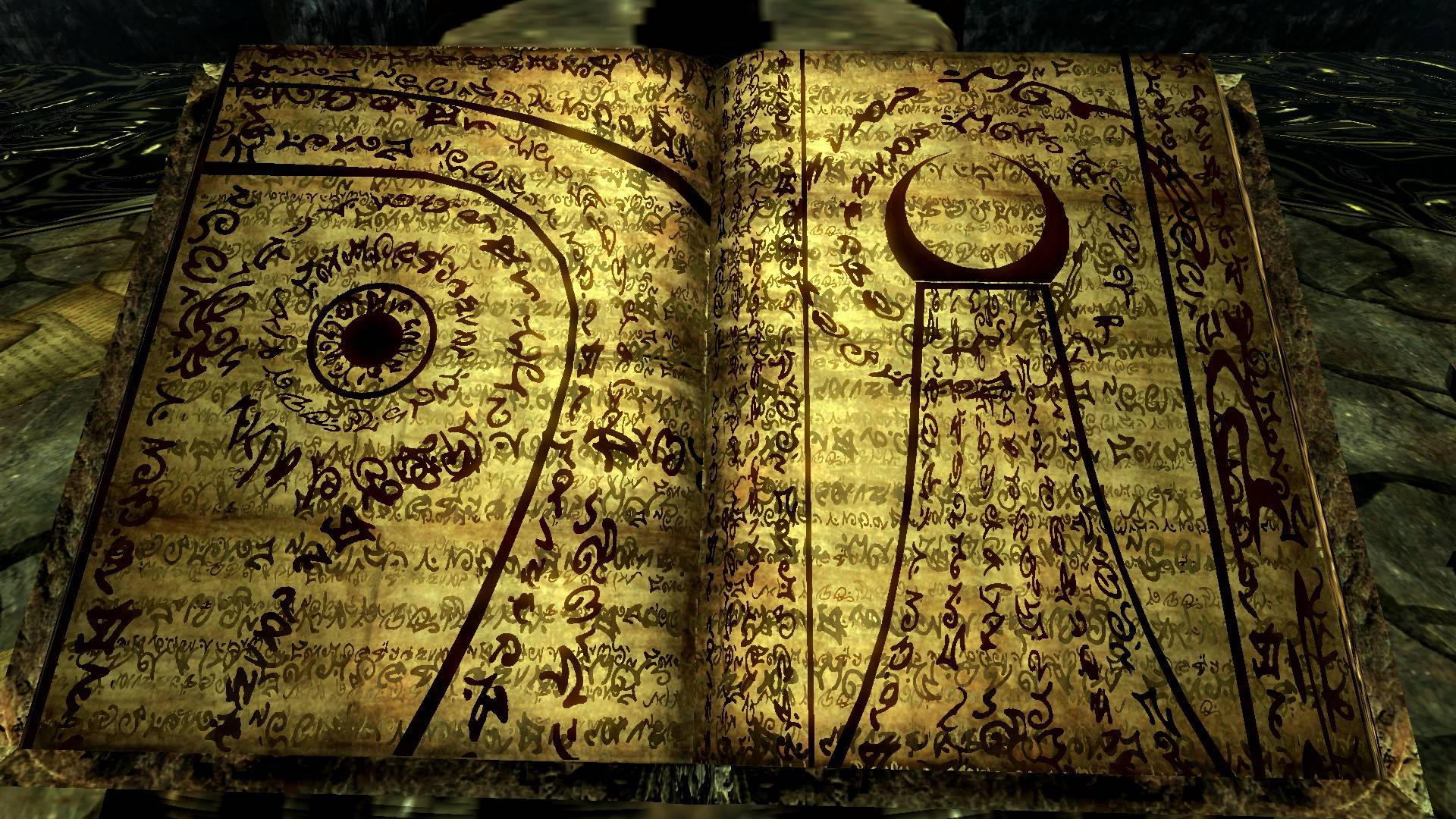
You learn all of this when you find a "Black Book" deep in the recesses of Miraak's Temple and read it. Upon opening the text, you and Frea are transported to the Apocrypha, which is another dimension temporarily inhabited by Miraak as he prepares for his hostile takeover of your homeland. For reasons that don't really make sense, considering that you are the only other Dragonborn in Tamriel, Miraak doesn't find you to be much of a threat and he sends you and Frea back to Solstheim. I understand that it's necessary in order to keep the events of the DLC moving along, but this is a HUGE plot hole in the story. I mean, come on, he's already sent cultist assassins to kill you once. You spend the rest of the story gaining enough power to eventually take the man down. He's got you right there, in his dimension, surrounded by his cultists, underpowered and untrained, and he lets you go?! 


Now, I realize I've been talking about magic rocks and other dimensions, so obviously a little suspension of your disbelief is necessary to enjoy the game, but I just couldn't ever let go of this plot hole in my head. I won't go into too much detail about the rest of the story for those who haven't played it yet but intend to, but you literally spend the rest of the game trying to gain enough power to defeat Miraak. Due to that fact, you have to assume that you don't possess the necessary powers at this point in the game. It's the Skyrim equivalent of a Bond villain monologuing just long enough for James to escape from the overly-elaborate trap that has been set for him and defeat whatever SPECTRE baddy has come for him this time. All Miraak had to do was kill you, right then and there, and it's over. He wins. Instead, he sends you back to Morrowind to learn everything you need to know to eventually defeat him. Ugh. Sorry to harp on it so long but it really bugged me. 


so, you hated it?

No, I actually really enjoyed it. For one thing, you FINALLY get to ride dragons! It's something that I'd been dying to do since I killed my first dragon nearly three years ago. Not only that, but it was nice to have something new to do in the Elder Scrolls universe while waiting for the Elder Scrolls Online to come out (Thanks for pushing it back six months, Bethesda! Boo!!!) Unlike Oblivion, which I beat in its entirety in one huge go around, this served to break up Skyrim into at least two chunks. I fully intend to purchase at least one more piece of DLC because I had so much fun returning to Tamriel in Dragonborn. Aside from that one huge plot hole, it was a truly enjoyable experience. I can't wait to get Dawnguard or Hearthfire and do some more exploring of my favorite RPG world while I wait for the Elder Scrolls Online to come out. 


time for the breakdown

While I didn't enjoy this DLC as much as the Shivering Isles from Oblivion, it definitely holds its own against the Knights of the Nine. With the aforementioned postponement of the Elder Scrolls Online, my hunger for more of Tamriel has only grown. It was the perfect time for me to dig back into Skyrim and, having put off buying any of the DLC until now, I was able to do so without starting over and re-playing any parts of the game that I've already beaten. While it isn't revolutionary, Dragonborn was an enjoyable trip back into the lands of the Elder Scrolls and I can easily recommend it for anyone who is itching to get back into the zone in preparation for the next Bethesda release. 

the math

Objective Score: 7/10

Bonuses: +1 for just giving me more Skyrim. I truly love these games and, as long as they aren't total garbage, I will continue to enjoy most anything Bethesda puts out in the Elder Scrolls universe. 

Penalties: -1 for that HUGE plot hole I just couldn't get past. I mean, come on! He's right there! JUST KILL HIM!!! Ugh. Okay, I'll let it go now. 

Nerd Coefficient: 7/10. A mostly enjoyable experience.   

Wednesday, April 9, 2014

Microreview [book]: A Different Kingdom, by Paul Kearney

Kearney, Paul. A Different Kingdom. Solaris Books: 2014.
 

Or, What is Love?

 The Meat

 You know what's creepy? Male adolescent desire, that's what, and who it targets. Of course, one could argue that it's pretty indiscriminate, or rather un-discriminating, by its very nature, but surely even for oversexed teenaged boys there are people who should be off-limits.
   Enter Michael Fey, the aptly named wild boy of Ireland/the Wood, whose first experience of desire—for someone who, I would have thought, would be off-limits—triggers the strange, haunting journey of his life. Or at least, the half of his life that is interesting, namely the portion he spends outside of time in the eponymous 'different kingdom' of the Wood, a wild land full of wolves, goblins and fairy-folk (as well as human bands of hardened wanderers) aplenty, as well as the crusading Catholic priests and their knight protectors. This part of Kearney's tale is riveting, for the most part—we read in amazement of each new development or challenge facing Michael and his beloved Cat, and cheer them on when they set out on their impossible quest.
   Yet this brief synopsis has already hit upon the two main problems I had with Kearney's well-written and engaging book. Firstly, the story is told non-sequentially, jumping around in time and between the worlds but basically alternating between Michael in the 'real' world and the fairy-land—but I had no issue with this somewhat unconventional structure, only with the content of the portions about the real world. Michael is uninteresting, or rather, is interesting only in the strange world of the other side, where he is a great warrior in his prime, not an awkward boy of thirteen or, even worse, an awkward 'middle-aged' 28 year old. 


Problem number one: Michael turning from this...
...into this.

More importantly, he is accompanied by his great love, Cat, in the fairy world, and Cat is plenty interesting.
   
   And here we have problem number two: Cat and Michael are deeply in love, soul-mates really, and yet Cat is not the 'first love' to which I refer above for Michael, despite which fact she agrees to accompany him on his quest to find that other girl. My willing suspension of disbelief took a major hit at that point, and Cat ceased to be a fiery character with a genuine identity and became, instead, only a simulacra of what Michael wanted—a wild girl with the appearance of true spirit but one who secretly would follow him anywhere, even to rescue his other lost love! The story does eventually develop in such a way as perhaps to explain why she turned out to have less depth than the reader might have expected, but that too is a disappointing revelation given our certainty that the two are truly in love.
   What IS love (baby don't hurt me)? When we say something like 'unconditional love', do we really mean "Yes, I'll help you replace me with someone else that you love better?" My answer is "No", not because it's inconceivable a person could be this selfless but because Michael's very identity is bound up in this forbidden love story with the other girl, and why would a person with any depth find herself falling in love with a weirdo like him anyway? This is a million times more true in the real world, when he's apparently destined to be nothing but a big overweight smoking alcoholic loser. Even his decision to leave the wild wood and return 'home' seems odd, since it was such a fundamental part of his very nature to seek his first love; why would he ever give up, as (no spoiler here, really) we swiftly learn he must have given the sections devoted to his prematurely middle-aged twenty-eight year old self in our world?
   Parts of the story are extremely well-written, lyrical in their beauty, and despite being rather too long overall (in my opinion), I would still recommend this book, but with major reservations, as outlined above. You might want to skim over the 'real world' sections from the middle of the book on (the early ones are more interesting in that the separation between 'real' and 'fairy' is much more permeable when Michael is a boy), at least until the end, where the two worlds again seem to collide in a haunting, wistful conclusion. Call me a sucker poisoned by years of Hollywood romances, but I was really hoping less for wistfulness than for a genuine, worlds-can't-keep-us-apart love affair between Michael and Cat!

The Math

Baseline assessment: 7/10

Bonuses: +1 for the mesmerizing weirdness of the fairy-world

Penalties: -1 for the dismal drudgery of (Michael in) the real world, -1 for failing to develop Cat into a genuine alternative to the object of his forbidden love quest

Nerd coefficient: 6/10 "Still enjoyable, but the flaws are hard to ignore."


[Actually, a 6/10 ain't bad in our book!]

Brought to you by Zhaoyun, sf/f book and movie aficionado and main cast member of Nerds of a Feather since early 2013.