Showing posts with label Yoon Ha Lee. Show all posts

Tuesday, August 27, 2024

Cool Books I Read While I Was Too Overwhelmed To Review

You want reviews? I've got reviews! Small ones!

Back in February, I rounded up some recent-ish books that I received review copies of, and read, but couldn't find the time or headspace to review at the time. Well, surprise! There were more books that I still hadn't got around to reviewing! This is the second round of clearing the decks for me, inspired in no small part by all the great reviewers and creators I got to hang out with at Glasgow Worldcon. Let's get back into it:

The Last Hero by Linden A. Lewis wraps up the trilogy that began with The First Sister, and it's a book that particularly deserves attention for anyone looking for more books in the vein of Emily Tesh's Hugo winning Some Desperate Glory. While Lewis' trilogy doesn't have that book's 90 degree plot swerves, it offers a much deeper look at what radicalisation and deprogramming look like when the bullets are actually flying, and we get to watch the young protagonists from across different factions—the fundamentalist Geans, the caste-based Icarii and the marginalised Asters—grapple with what is expected of them within their respective systems, and the price of trying to overthrow them. Add in some great bits of worldbuilding and a hefty dose of character gender feelings, and you've got a trilogy well worth checking out.

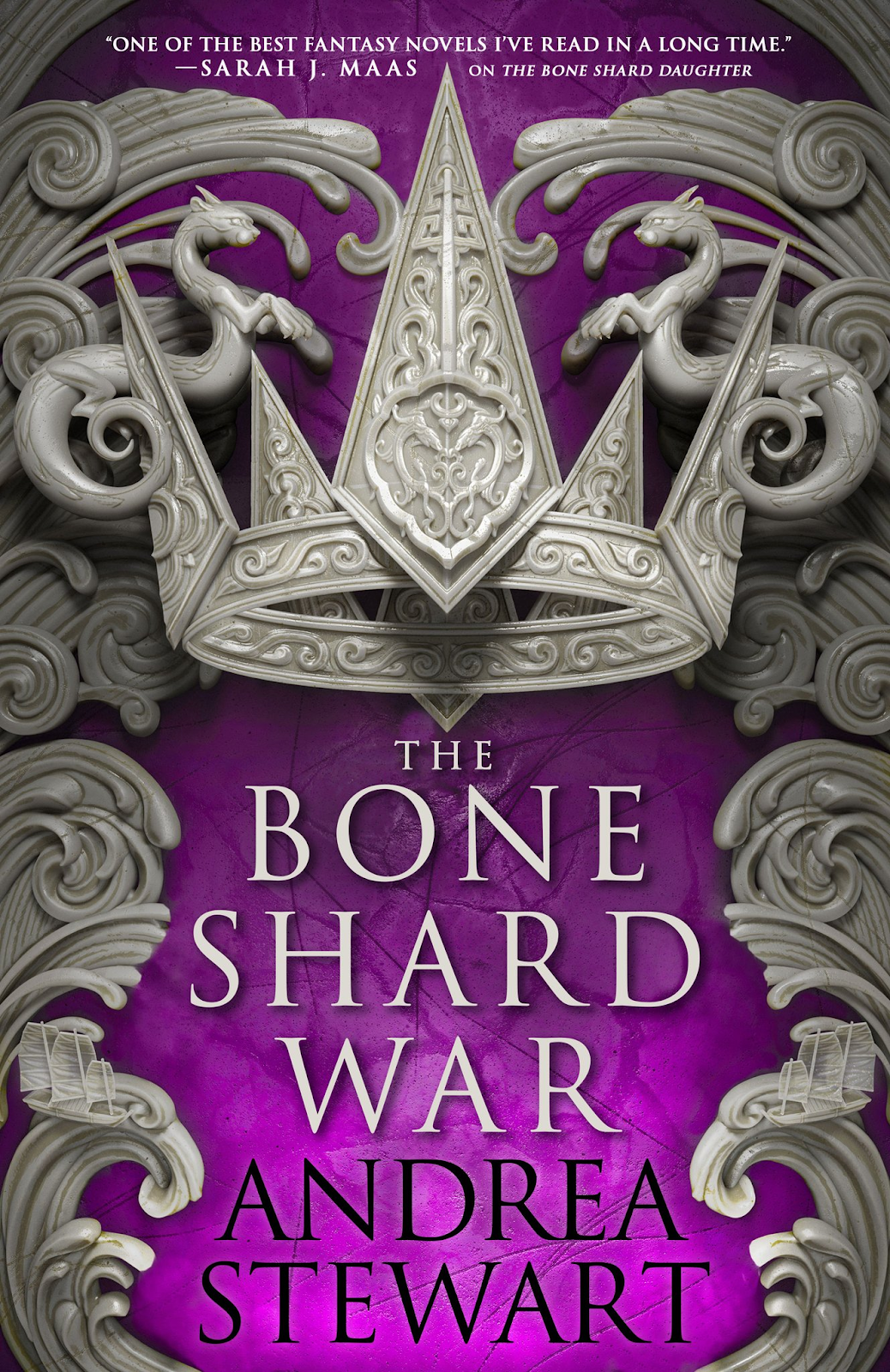
The Bone Shard War by Andrea Stewart also closes out a trilogy (the Drowning Empire) about exploitation and the cost of change, and especially grapples with the question of who ends up on top when said exploitative system is overthrown. It is also, deliciously, about earnest but silly youths in love, who are being kept apart and even forced into betrayals! At this end of the Drowning Empire, the brutally high cost of bone shard magic isn't as viscerally present, and that feels like a bit of a loss despite the emergence of new magics and the rediscovery of how this world functions, and (relatedly) what those cute animal companions that the main characters picked up have been about this whole time. While it has its ups and downs, this is a cool trilogy by an author I hope to see even better things from in future.

Book three, but not a series ender, The Mystery of Dunvegan Castle by T.L. Huchu is part of the Edinburgh Nights series, and while I'll forgive this year's Hugo voters for not putting it on the best series ballot, my patience on that front is not endless (nor will the series be). These books are the chronicles of Ropa Moyo, a highly motivated Zimbabwean-Scottish teenager who is offered entry to a prestigious occult library... as an unpaid intern. This time, Ropa's aspirations and hustle come fully up against the barriers placed in her way, and this series does a great job of showing how institutional racism and classism are perpetuated not just by bigots in the institution, but by people who limit their allyship or try to offer "meritocratic" entry points rather than fighting the corner for marginalised people. It's an interesting shift for Ropa—who, to this point, has been a bit naive about her circumstances and whether she can just push through them—and it makes me even more eager to see what book 4 brings.

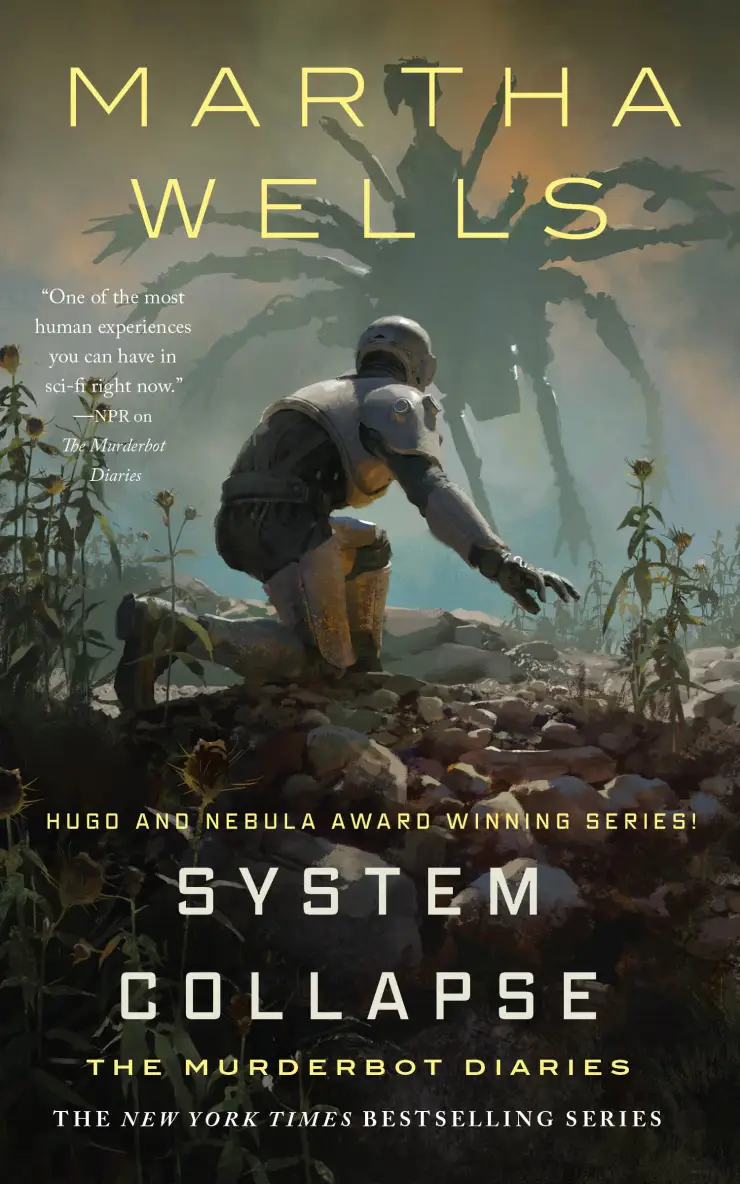
System Collapse by Martha Wells. The second Murderbot novel feels structurally closer to the novellas than the previous Murderbot novel, and at this point the recommendation is "if you like Murderbot, you'll like this Murderbot." Unlike the rather static-feeling Fugitive Telemetry, System Collapse does push things onwards from Network Effect in an interesting way, both literally (conflict de-escalation through documentaries!) and in Murderbot's character development and how it narrates its story. We quickly learn that Murderbot is not working at full capacity, and that it is keeping something from us about how this happened, and while the reader is used to the quirks and selectiveness of Murderbot's narration, this withheld information immediately puts the reader off balance, adding an extra layer of tension to both the conflicts and the crew relationships that are both staples of this series. Of course Murderbot and friends save the day with the power of love and justice—not that Murderbot itself puts it quite that way.

The Ten Percent Thief by Lavanya Lakshminarayan wasn't a Subjective Chaos Award winner this year, but it was an interesting addition to a stacked ballot. This mosaic novel, centred around a future Bangalore now known as Apex City, shows us the ins and outs of a society where citizens are constantly tested against the "Bell Curve". The city's residents are constantly striving - through conspicuous displays of capitalist productivity - to be promoted to the super-privileged ten percent, and to avoid deportation outside the city to join the "Analogs", who are treated as sub-human and denied basic ameneties by a city that nevertheless relies on them for its continuation. Through the novel, we see both confident Virtuals and those barely clinging on inside the system, as new technologies create further alienation; we also see, though not with as much depth as I would like, the way in which Analogs are organising themselves to resist and overthrow their oppressors. It didn't add up as well as I wanted it to, but there's a lot going on here for readers to enjoy, especially if you like Black Mirror-esque technological absurdities and the overthrow of transparent dystopias.

Untethered Sky by Fonda Lee was just beneath the Hugo finalist cut-off this year, and it's a very well-crafted fantasy novella: Ester's story has a strong thread of revenge, but there's also more going on: her progressing in her vocation as a rukher to a roc named Zahra, the relationships she builds with her comrades (and her bird), and the strains of being part of a military campaign whose political and propaganda motives seem at odds with actually making the Kingdom safer. Untethered Sky does suffer from the "author of incredible thing (Green Bone Saga) goes on to write pretty good thing" but it works great. 

The Lies of the Ajungo by Moses Ose Utomi is an incredible book, and somehow it's not on the Hugo longlist, but it is on the Ignyte novella shortlist so we can celebrate that recognition at least! The best thing about this story is its worldbuilding, which feels like it's come straight out of a fable: the protagonist comes from the "City of Lies," which has made the terrible bargain to cut the tongue out of every adult resident in return for an annual allocation of water from the Ajungo. This, of course, means that its residents can no longer tell their own story, and that their own history is now in the hands of their oppressors. When almost-13-year-old Tutu leaves the city in search of water to save his mother, he somehow avoids the disappearance that has befallen every other child who has left, and instead he finds out the truth behind the Ajungo's conquests and where his city falls within it. Amazing stuff.

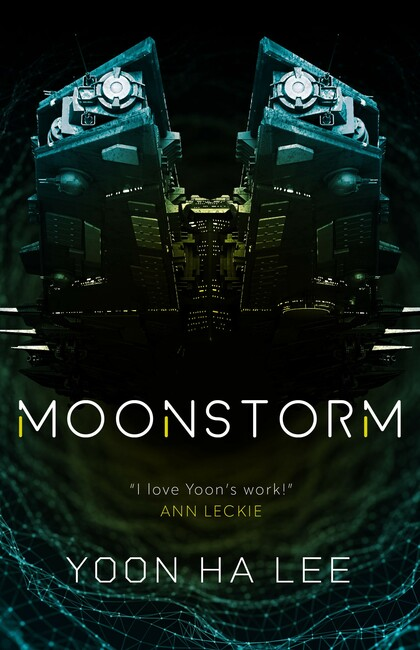
Finally, Earth-space adventure Beyond the Hallowed Sky by Ken MacLeod, fantasy adventure The Wolf of Oren-Yaro by K.S. Villoso, and mecha-YA Moonstorm by Yoon Ha Lee are all series openers which fall into the "fun, but probably not reading on" category for me—a category which I need to be more firm in maintaining, as the list of books gets bigger and my time on this Earth grows shorter (fatalistic? me?) I did enjoy MacLeod's speculation of near-future superpower blocs, especially the split between Anglophone death capitalism and optimistic-but-also-vaguely-sinister European socialism; and The Wolf of Oren-Yaro did not disappoint with its main character's Bitch Queen credentials, but had me shrugging at its relative cliffhanger ending rather than rushing to download the second book. Moonstorm, I am simply not the target audience for, and that's OK! I think this is a great contender for the Lodestar list, especially since books by authors who have also been nominated for adult SFF do very well there, and I hope that this story of giant robots, terrible empires, friendships, rivalries and betrayals IN SPACE finds each and every one of its people.


Adri, Nerds of a Feather co-editor, is a semi-aquatic migratory mammal most often found in the UK. She has many opinions about SFF books, and is also partial to gaming, baking, interacting with dogs, and Asian-style karaoke. Find her on Bluesky at adrijjy.bsky.social.

Monday, June 24, 2024

Book Review: Moonstorm by Yoon Ha Lee

 Sometimes it's impossible to resist comparisons.


I loved Yoon Ha Lee's Machineries of Empire series. They have a gloriously sink or swim quality to the worldbuilding that is somewhat marmite, but worked extremely well for me. Do I have any idea what exactly calendrical rot is, or what the weird gun thing looked like? No, no I do not. But do I care? Also no. It's a series that delights in immersion, and if you're willing to roll with it, the rewards are really rather worth the cost of entry.

But why does that matter for Moonstorm, an unrelated novel starting a new series, in a totally different, world? Well... it shouldn't. But it was impossible, while reading, not to compare it to the author's previous work. And it was not a totally flattering comparison.

Moonstorm follows Hwa Young, a teenager in a military academy whose most treasured dream is to become a lancer pilot - elite fighters in spacefaring mechs that are gundams by another name - after being rescued by a lancer pilot from the destruction of her moon. To do this, she must keep hidden her background from that moon, as a clanner, a group deeply opposed to the empire, and whose differing beliefs generate a different gravity from the empire's own rituals - a difference that cannot coexist. After an unexpected attack on the city her academy is based in, she ends up in the imperial fleet with a shot at a lancer and her dream... but all is not what it may seem. Shenigans ensue, and so forth.

At first glance, this seems much more adventure plotty than Lee's other work, but if you stop to think about that ritually generated gravity, you might begin to see the connection to Machineries of Empire, a series also interested in collective rituals, heresy and culture clash in a very literal sense. While there it may be calendars and here gravity, much of the core themes feel similar, and in theory, I was just as interested in this... except that it rather suffers in the execution.

Where Machineries forces you to go with the flow, eschews explanation and laughs in the face of exposition, Moonstorm stops, especially early on, to try to hold your hand through all of the tech and ritual. Lee wants you to pause and understand (or understand as much as is ever the case in the sort of space opera with alternate world future tech spaceships). We get a protagonist - a young protagonist, 15 years old for much of the story - who has a limited view on her world, both from her age and her unusual background, and has to learn about it at pace to manage her way through the situation she lands in. And so we get a story that watches her do just that, watches her ask questions, gets her rote responses, exposition, and authority figures or friends with implausible hacking skills just... explaining stuff. Even basic things. And it just does not work for me at all. There's so much in tone, in setting and in theme that evokes Lee's previous work, but does not capture the magic of that glorious opaque setting, and so forever feels overshadowed by it, especially when the explanations veer towards the patronising. And I get it! The protagonist is a random teenager! She will need many things explained to her... but not quite so many things as she gets, and it starts to push the boundaries of my suspension of disbelief at times, that the scope of her ignorance and her role in the story, in the military she's being pulled into, can coexist as they do.

And then... the explanations also don't quite go far enough. We exist in this strange, awkward hinterland of having had some things pointed out to us, being handheld through them, but never having any of them developed in any sort of depth. The ideas around gravity being generated by collective will - by community unity - are genuinely fascinating, and I would really love to see these dug into deeper, especially as they become critical to the plot in later parts of the book. But they're just... not. I understand the basics, but have none of the development that might have made those explanations all worthwhile. Similarly the lancers - we know what they are, more or less, but there ends our understanding of them within the setting. There's a vague sense that being a pilot in one is prestigious in some way, but no real development of that meaning. What does it mean, socially, militarily, and so forth, for Hwa to become one? Where do they fit into the wider world? So many questions of a sort that, in other stories, I've seen Lee answer with deft understatements, building up an intuitive picture of a world fully lived in by actual people, with actual lives. And so absent here.

Alas, this is not the only issue the story faces. Hwa is something of a difficult protagonist in a number of ways. Her motivations and choices seem erratic, sometimes including behaviour that goes against her own aims without being emotionally grounded in the story. I don't mind characters who act out of character, if the story does the work of showing why, of giving the reader the feeling of their choice-making. It's just when it feels pulled out of nowhere, and you end up with a character who lacks a coherent core, because they're never allowed to settle into themselves. Add to this her emotional uh... inexperience, let's say, and it makes her something of a struggle to sit with - the other characters are such closed books to her, and our view of the story so limited to her own scope of understanding, that I felt claustrophobic within that perspective at times, desperate to see the world through another character's eyes, to get a more grounded, more nuanced awareness of what was going on. Not even in the sense of grander events or understanding politics. I just wanted someone who wasn't quite so oblivious to the threads of social nuance that were, presumably, happening around her.

What we get of the secondary characters is so tantalising as well! I want to know them! There's Bae, the aloof rival who we start to get the tiniest hints of a more humane core to by the end of the book. There's Eun, the more experience lancer in their squad who clearly has trauma from previous battles, his own outlook on military politics and the role of lancers, and just a wholeass personality... and we barely get access to them because Hwa's interest in the world is so cored down to a very few people and things. She supposedly - by her own words and thoughts - feels a quick and deep emotional connection to her squad, feels bereft when separated from them, but when members of that squad face or suffer catastrophe, we see none of it in Hwa's emotional narrative. Nothing lingers. Nothing seems to touch her. Even Geum, Hwa's best, closest, dearest and only friend, often remarked as precisely such, shows up sporadically in both the narrative and Hwa's thoughts, when zie would be of use to the plot, and then is gone again until the next time zie's needed.

And that's the thing - this is an intensely plot-driven narrative, to the detriment of nearly all else. The world-building gets somewhat short shrift, despite the potentially interesting hooks, and the politics of both the military and the broader world pop up only as strictly necessary. The people are puppets moved to position to allow the plot to progress, and then discarded off stage in between times, allowed very little for themselves beyond their role in Hwa's narrative. Which could work - and has, in many stories - except the plot isn't all that great either. There are a lot of fairly predictable turns to it, following the well-trodden path of many an adventure story of an outsider trying to fit in and finding out the world is not entirely what they thought it was. Almost all of the twists, such as they are, feel very well telegraphed ahead of time, and so there's none of the suspense that this kind of action romp would truly need to propel it forwards. You know what's happening. The story never plays with those expectations. And so when you get there, really somewhat later than you'd have liked, it's just a bit anticlimactic.

And then when much of the theme, the worldbuilding, the little twists of phrasing, when everything in the background is yelling out connections to an existing work that did do all of that, that made me care about characters who were complex, flawed and emotionally accessible, that made me fascinated with a baffling world, that made me invested in politics that felt deeply plausible, that gave me twists that left me genuinely shooketh... the comparison switch in the brain cannot be turned off, no matter how hard I try.

Would I have loved this book if I'd never read Yoon Ha Lee before? No, I don't think so. It needed just that bit more substance for me for that to be on the cards. But I'd have trundled along through it perfectly content, even if when I closed the final page I had no real expectation of remembering it or continuing the series. But it would have been fine. I'd have had fun. I wouldn't have been disappointed. And that's what I am now, knowing what I know, with the context that I have. And that's so much worse.

--

The Math

Highlights: fun gundam-style setting; interesting ideas about ritual-powered gravity

Nerd Coefficient: 6/10

Reference: Yoon Ha Lee, Moonstorm, [Rebellion, 2024]

POSTED BY: Roseanna Pendlebury, the humble servant of a very loud cat. @chloroformtea.bsky.social

Thursday, September 30, 2021

Adri and Joe Read the Hugos: Short Story


Adri
: Our next Hugo category is short story! Four returning Hugo-favourite authors and two with their first (I think) nominations, stories ranging from heartwarming haunted houses to robot mentorship. How are you feeling about this year’s ballot?

Joe: I hate to admit it, but I’m just not up on my short fiction this year. If I’m being frank (and I’m not frank, I’m Joe), I haven’t been up on my short fiction for a couple of years now. I read a small handful of select anthologies and then the Nebula and Hugo Award finalists.

I mention this because I don’t have quite the breadth of knowledge of comparison to the rest of the field as I do with novels. Here, I’m coming in relatively cold and can only really talk about the stories in relation with each other and not also with the field. That’s the point, I suppose, but for a change I’m not internally bemoaning that story X was my favorite and didn’t make the ballot.

ANYWAY, I ramble because I care.

As a whole, I really like this year’s ballot. There’s one story that doesn’t quite work for me (and that story is just fine), but the other five are quite good.

Adri: I’m on the other side of things, where I did read a lot of short fiction again last year (although not as much as 2019) and that means that inevitably I have feelings about favourite stories that didn’t make it. Nothing from my nomination ballot is here; I’m not going to share those specific five stories, but they all make an appearance in our recommended reading list so I’ll let you extrapolate from there, dear reader.

But, objectively, this ballot is just as good as my favourite stories. There are such a wealth of good short stories that come out every year and if one spends a significant amount of time reading short fiction, then by definition one reads a lot of good individual stories. I read a couple of hundred stories a year and that barely dents the surface of what’s being published!

The other thing I want to note is how different the tone is between the novelette and short story ballots this year, which is not something I’ve ever noticed before! This short story list isn’t exactly fluffy, but it’s overall got more lightness and hope than the six stories in Best Novelette, many of which are… well, we’ll get to that. I don’t think it’s anything more than coincidence, but it’s an interesting one.

Joe: I think I’d like to start with “Badass Moms in the Zombie Apocalypse” because it’s a kick in the gut and it’s great and it is tonally unlike most of the stories on this ballot, which are otherwise quite charming.

Adri: Yes! Rae Carson’s story of childbirth and survival, set ten years into a zombie apocalypse (clue’s in the title) is excellent for how it turns the hypermasculine-hero survival narrative on its head, focusing on a fundamental aspect of human survival - childbirth - that becomes a nearly insurmountable task in the circumstances, and then putting a group of women at the centre of the story and (again, clue’s in the title) letting them be badasses, and mutually supportive badasses at that, even in the most dire of situations. Most importantly, it’s narrated from the perspective of Brit, the woman giving birth, making her the active centre of the experience, rather than a passive presence whose need for protection reduces her to immobilised, screaming victimhood. I like it.

Joe: Spoilers for the zombie apocalypse!

But - yeah, it’s a super cool story and it’s the sort of story I don’t see all that often and it’s absolutely fantastic.

Fantastic in a completely different way is John Wiswell’s “Open House on Haunted Hill”, a story which is, for lack of a better word, absolutely charming. That’s a word I want to use quite a bit in this category because that hint of lightness is all over the Short Story ballot and it’s frankly refreshing right now.

This is the story of a house that is on the market to be sold and doesn’t want to be alone. It wants a family. It wonders if it could haunt the glue on its own wallpaper to make itself more appealing to a potential buyer. “Open House on Haunted Hill” is just lovely and reads like a quiet exhale that blows the stress out of your body.

Adri: It’s definitely a story that brings a new meaning to the term “found family”! I love how it builds a sympathetic story around a set of people who don’t often get sympathetic portrayals, especially in this kind of genre: the sceptical podcaster trying to raise a boisterous kid, the estate agent (sorry, “realtor”), and of course the house itself would all be two dimensional villains or joke punchlines in another story, but here they’re people all trying to do their best.

The other story that made my cold heart melt is “A Guide for Working Breeds” by Vina Jie-Min Prasad, which continues Prasad’s track record of telling robot self-actualisation stories with wonderful wit and heart. It’s also told through a really great - if simple - text device, where the story is within a chat log between a newly freed robot and its automatically assigned mentor, so there’s lots of light-touch things going on in the “meta” text (e.g. screen names) that really adds to our understanding of the characters. I actually missed the anthology this was in, so I’m glad enough other readers saw it (the tor.com reprint can’t have hurt) and put it on their ballots so I could enjoy it.

Joe: Made to Order was a good anthology, but I tend do well with Jonathan Strahan’s anthologies even if I’m usually a couple of years behind when they are published (sorry, Book of Dragons).

We’ve definitely seen the story format for “A Guide for Working Breeds Before” and in some ways it reminds me of Naomi Kritzer’s “Cat Pictures Please”, though Prasad is doing something different here, but it’s another really pleasant story despite presence of a killer robot.

Speaking of Naomi Kritzer, I also enjoyed her story “Little Free Library” which is partially told through notes left in, well, little free libraries. I think we have all the story that we actually need in “Little Free Library” but I wanted just a bit more from it. There’s something so much bigger lurking around the outside and I have questions, but I suspect we have as much as we need for the story to work. But I have questions!

Adri: I really like “Little Free Library” but its the story that “sparks” the least for me out of these six, if that makes sense. It’s cute, watching a fae(?) revolution through scraps of documentation left for a girl in her Little Free Library box, but I don’t have much to say about it beyond “that was cute”. Cute is good, but cute plus thought provoking is my bar for Hugo cuteness.

The two stories we haven’t discussed yet are both spacefaring riffs on fairytales: The Little Mermaid for "The Mermaid Astronaut", and Hansel and Gretel for "Metal Like Blood in the Dark". Both end up pretty far from their sources in different ways: “The Mermaid Astronaut” removes the need for the mermaid to specifically yearn over a love interest (good), and in place of either the Disney or Andersen endings, creates a story where growth and change can involve coming full circle. Metal Like Blood in the Dark sticks in some ways to its original plot, but it shifts the moral weight of the story, making it about the sacrifices that Sister makes to keep her Brother safe in the outside world. By the way, they’re both robots.

Joe
: I have a lot less to say about either of those stories. I liked “The Mermaid Astronaut” and appreciated what Yoon Ha Lee was doing in telling that story and the arc of the mermaid in question. The T. Kingfisher story didn’t work as well for me as the rest of the ballot did - which is unusual for me with a story from Kingfisher or Ursula Vernon, especially with how much I loved Kingfisher’s novel A Wizard’s Guide to Defensive Baking - which we’ll talk about when we discuss the Lodestar finalists.

Adri: I feel similarly. For fairytale retellings particularly, I’m learning that what makes the overall Hugo audience excited for a new version of a story is… kinda different to what I want? Like, we will never run out of space for retellings, especially ones that come from the margins and re-examine our dominant tropes through that lens. But I want an outstanding retelling to smack me over the head with something - whether that’s bringing in a radical kindness or another perspective or something that makes it obvious what the original story was missing, or pushes a big contradiction to the fore, or whatever. “The Mermaid Astronaut” gets close to that, “Metal Like Blood in the Dark” goes off more in its own direction (and doesn’t do anything terribly interesting with that direction), and it’s all objectively good - and two authors that I love - but they don’t get to that magical nebulous “best story of 2020” point.

Anyway. Now that we’ve covered it all, what’s at the top of your list?

Joe: This would be a really good time to actually put together my ballot and vote, but I’d say I have a very solid top three of “Open House on Haunted Hill”, “Badass Moms in the Zombie Apocalypse” and “A Guide for Working Breeds”. I *think* that would be my ballot order but I could also change the order a dozen times between now and when I actually submit the ballot.

What does your ballot look like?

Adri: I’m still sad about Fandom for Robots not winning a couple of years ago, and “A Guide for Working Breeds” did similar mushy things to my heart, so it’s going to take top spot for me. We have the same top three overall, but I don’t know how I’ll go between Open House on Haunted Hill and Badass Moms in the Zombie Apocalypse. Coin flip, maybe? I’ll work something out.

Joe: Well, that’s a category and it’s another strong one. It’s been fun reading through the ballot this year.

Next up: Novelette!

Friday, October 9, 2020

Microreview [book]: Phoenix Extravagant by Yoon Ha Lee

The author’s talents for complicated space opera with interesting characters translates wonderfully into secondary world fantasy beyond the Great Wall of Europe.

Gyen Jebi has a problem. In their occupied homeland, an artist like themselves has a hard time finding a job or steady work and not being dependent on his sister. Dire circumstances causes them to go to the conquerors, the Razanei, for potential employment. Jebi (or Tsennan, as they also have obtained a Razanei name). A series of events lands them in the Ministry of Armor, painting symbols on that control and animate an automata dragon. As they work at his new job, Jebi finds themselves in conflict with his sister, his heart, his conquerors, and his desires to try and free Arazi, the aforementioned  dragon.

These complicated threads of character and story are central to Yoon Ha Lee’s Phoenix Extravagant.

The story runs and runs cleanly and excellently on the heart and soul of the characters and how they interact and collide with each other. Jebi/Tsennan is our center and our point of view character throughout the novel, giving us a newbie-perspective to the world of the Ministry of Armor as well as being a plot driver when they (Jebi uses they/them pronouns) decide to take drastic action. Jebi’s sister Bongsunga is definitely dreaming of the Hwagugin reasserting their control over their land (which has been named Administrative Territory 14 under the Razanei rule) . Hafanden, deputy minister of Armor, and really the person with the “Boots on the ground” in Hwagugin, has dreams of making the automata dragon, Arazi, work again after the previous person in Jebi’s position failed...although how is not immediately clear to Jebi. There seems to be a mystery about that. And then there is the Prime duelist for Armor, Vei, who winds up having a complicated relationship with Jebi, and has unclear ties to Bongsunga and Hafanden as well. It’s a rich brew for drama and character that the author works masterfully into the narrative, plot, and world.

The world that Lee presents is a secondary fantasy world that is as rich and interesting as the Machineries of Empire. It’s a realm much like our own Korea, with the Razanei standing in for Japan. The worldbuilding notes, contexts and worldbuilding notes, from the use of language, positioning, family structure, art and culture definitely all reinforce that and the novel sits proudly in the tradition of authors like RF Kuang and Fonda Lee in imagining a fantasy world firmly grounded in East Asia as its cultural base in a way that much fantasy has Western assumptions and baselines. Using early modern Korea as the base of their world (in addition to the aforementioned dragon, there are mentions of things like tanks) allows the author to investigate and interrogate a lot of colonial themes and ideas. Not only is the Razanei imperial aggression explored, but in the same vein as the words of Kuang and Lee, it is the “west” that is distant, mysterious, threatening and meddlesome. These three authors now, and other upcoming authors, are using the experience of Western imperialism as an inversion of the “mysterious and inscrutable east” trope that unfortunately ruins a lot of fantasy fiction that has an East at all. It’s more than high time that some of the legacies of 19th and 20th century narratives in terms of the West’s cultural and physical imperium over other parts of the world are addressed and used in fantasy fiction in a nuanced and interesting way, and the author rises to that challenge. 

The other interesting part of the worldbuilding, and it also goes that cultural imperialism, is how the magic works. As Jebi learns when they are put to work in the Ministry of Armor, the painting and delineation of magical symbols for automata requires extremely special inks (the title, Phoenix Extravagant is one such ink). The horror and the for me painful aspect of this is that the magical inks are created by the destruction of works of art. In order to create the controls for these weapons of war, beautiful works of art must be destroyed. This makes a tension throughout the novel, as Jebi is additionally aware of the damage that they do, even as they come to form a bond with Arazi, the Dragon. 

And finally, the writing is just vivid and beautiful. As noted above, this is a novel about art and the uses of art, and the book itself channels the power of that art--but the art of writing and vivid writing that immerses you into the characters and the world. The pain and striving of Jebi to find a place in the world, life under the rule of the Razanei, and finally, the dragon, Arazi, come to extraordinary life. Readers of the Hexarchate novels who want to follow Lee into fantasy are going to find a lot they loved in the sheer writing power there, here in a fantasy format. The plot and situation are more streamlined than the Machineries of Empire. There is plenty of intrigue, revelations, characters set against each other and conflict, but readers who might have thought the Hexarchate a world too baroque for their tastes might find the world here more accessible and relatable.

With these heady themes of art, colonialism, power, subjugation, revolution, family, love and more, Phoenix Extravagant is a strongly depicted and rich novel. It’s not heavy on action, although there are conflicts, it is a novel where the theme comes through the strongest. It's a stunning change of genre for the author, and one that excellently works. Phoenix Extravagant takes its place alongside the works of other authors exploring fantasy in a new and fresh way, and I am very happy to commend it to you.

The Math

Baseline Score: 7/10

Bonuses: +1 for a strong and resonant story and theme for our times. 

+1 for an interesting world using an East Asian template that is refreshing, diverse and enthralling

+1 for vivid and excellent writing.

Penalties: -1 The strong focus on theme might frustrate readers more interested in the other fundamentals of the novel.

Nerd Coefficient: 9/10 Very High Quality/Standout in its Category

POSTED BY: Paul Weimer. Ubiquitous in Shadow, but I’m just this guy, you know? @princejvstin.

Reference: Lee, Yoon Ha. Phoenix Extravagant [Rebellion Publishing, 2020] 

Wednesday, July 29, 2020

Reading the Hugos: Lodestar

Welcome to what is likely the final entry in Reading the Hugos this year. As I noted last year, from the perspective of a reader who is not plugged in the YA scene and isn't a YA reader, the Hugo nominators did a good job again this year.

I do always wonder about visibility and this award. How widely are Hugo voters reading in YA? I tend not to nominate much for the Lodestar for that reason (this year I nominated Catfishing on Catnet and Anne Ursu's excellent The Lost Girl), but that is also an argument that can be made for Graphic Story or, if we're feeling nitpicky, the entire ballot. The Hugo Award (and the technically not a Hugo Lodestar Award) is representative of the tastes and opinions of those Worldcon members who take the time to nominate and vote. That's part and parcel of the process, which I suppose makes this paragraph somewhat excessive.

This year I was only able to read five of the six finalists. I missed out on Deeplight, which is the second time I've missed reading Frances Hardinge for the Lodestar. This year I have a good excuse - I was reading all of Seanan McGuire's Incryptid stories included in the Voter Packet (oh, my heart after reading the last of the Johnny and Fran stories).

Let's look at the finalists, shall we?


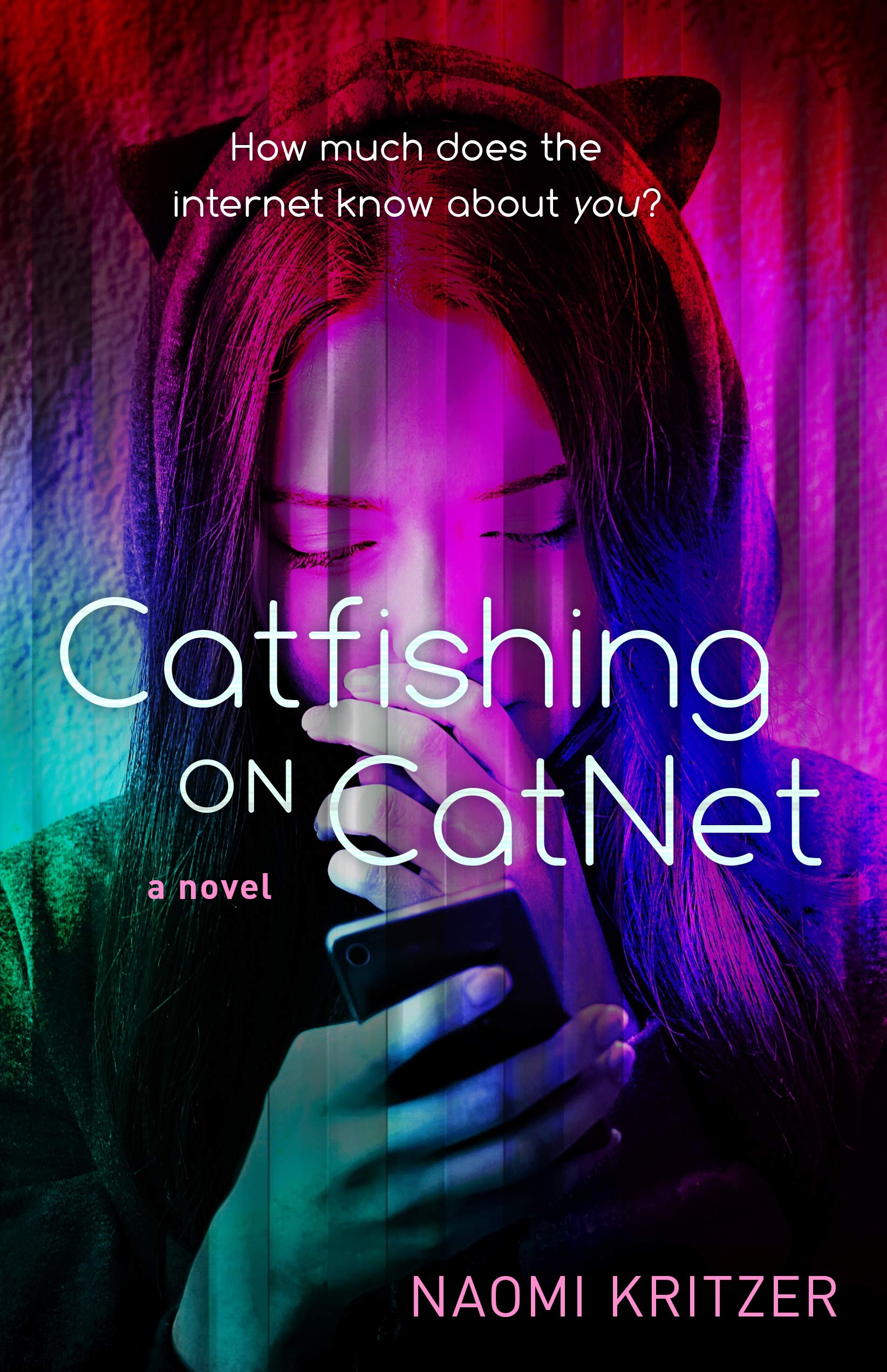
  • Catfishing on CatNet, by Naomi Kritzer (Tor Teen)
  • Deeplight, by Frances Hardinge (Macmillan)
  • Dragon Pearl, by Yoon Ha Lee (Disney/Hyperion)
  • Minor Mage, by T. Kingfisher (Argyll)
  • Riverland, by Fran Wilde (Amulet)
  • The Wicked King, by Holly Black (Little, Brown; Hot Key)


Riverland: I haven't read much of Fran Wilde's fiction, far less than I would have expected given how well regarded her Bone Universe novels are (start with Updraft), but I have fairly consistently bounced off each story of hers that I have read. Whether it is The Jewel and Her Lapidary, "Clearly Lettered in a Mostly Steady Hand" or The Fire Opal Mechanism, I have a growing suspicion that I'm just not a Fran Wilde reader. That, no matter how good or how well regarded, these aren't the stories for me. It also means that I am unlikely to give Updraft a go, but that is a different point.

I had hoped that Riverland would be the book to buck that trend. It is completely unrelated to her Gem novellas, it's YA rather than strictly written for adults, it's a portal fantasy novel dealing with domestic violence. Riverland is beautifully written for those readers able to dive in and work their way through Wilde's storytelling. I know Adri gave Riverland 5 Stars on Goodreads, so there's at least one editor here who strongly disagrees with me on Riverland (this is not likely to be our only disagreement in this category) - but Riverland really locked down the idea that unless Fran Wilde is on an awards ballot I am actively reading for, I probably won't be reading more of her work. It is worth noting that this is written before I read any of the Short Story finalists, which does include a selection from Fran Wilde, so there's one more chance for me to connect with Wilde's fiction this year.


Dragon Pearl: Yoon Ha Lee's Machineries of Empire trilogy of novels are simply excellent. Each book was a finalist for the Hugo Award (as was the series as a whole), and justifiably so. I thought the series got better as it progressed, and it was pretty darn good from the start. I could not wait to see what Yoon Ha Lee would write next and what was next was Dragon Pearl, a YA novel from Rick Riordan's publishing line. A bit of space opera and adventure.

I absolutely love the idea of Dragon Pearl, of the novel's set up of a girl with hidden magic desperate to find and clear the name of her brother who is accused of desertion from the Space Forces. I loved how Min used her magic, how she cons her way into getting to the heart of what happened to her brother. So much of Dragon Pearl was absolutely delightful and weeks after finishing the novel I'm still thinking about the relationships Min made. Dragon Pearl is a wonderful novel of friendship.

That's what makes it so difficult to put my finger on why I didn't love Dragon Pearl as much as I expected. The individual parts are so excellent, but they somehow don't coalesce (for me) into a novel that reached the heights it should have. All the ingredients were there, the meal just didn't quite come together.


Minor Mage: I have much less to say about T. Kingfisher's Minor Mage, but it was an absolutely charming story of a boy who was training to be a magician but has far too much responsibility for his village compared to his age and training. Minor Mage is a quest story and I would have loved to have another hundred pages of it (Minor Mage is more a novella than full length novel). I look forward to reading it to my kids when they are older.


The Wicked King: When I wrote about The Cruel Prince as part of last year's Lodestar ballot it was my runner up, behind only the superb Dread Nation (The Cruel Prince placed fourth, Dread Nation was the runner up). Where The Cruel Prince was the first book in a series related to other books it did not require any familiarity with Tithe and the other Modern Tales of Faerie. The Wicked King, on the other hand, is the direct sequel to The Cruel Prince and if readers who don't remember the relationships in that first book will be at least half lost in this book, though Holly Black is a skillful enough writer that new readers will be able to keep up, just without some of the nuance.

I wrote last year that Holly Black is a master storyteller and that remains the case. The Wicked King is exactly the continuation of The Cruel Prince one might hope for, though this is not a series for the faint of heart or those who don't want bad things to happen to good people. Black does not pull punches.


Catfishing on Catnet: When Naomi Kritzer won a Hugo Award in 2016 for her story "Cat Pictures Please" (also a Nebula Award finalist) I assumed it was a one-off. "Cat Pictures Please" was a delightful story of an A.I. (artificial intelligence) who wants to help people and look at pictures of cats. Catfishing on Catnet is more than an expansion of that story, it's a complete reworking using that same central premise. Most impressively, it's seamless. Kritzer is not expanding a smaller idea into a shape it doesn't fit, she has a big idea that is bigger than just the one novel (good thing there's a sequel coming next year).

Catfishing on Catnet is a smart and warm hearted thriller that deals with internet privacy, personal identity and rights, friendship, stalking, and social networks - it is an absolute delight. In a category where some of the finalists don't quite work for me - Catfishing on Catnet is a favorite. This is as good as it gets.


My Vote 
1. Catfishing on Catnet
2. The Wicked King
3. Minor Mage
4. Dragon Pearl
5. Riverland


POSTED BY: Joe Sherry - Co-editor of Nerds of a Feather, 4x Hugo Award Finalist for Best Fanzine. Minnesotan. He / Him.

Thursday, June 18, 2020

Summer Reading List 2020: Adri


This is set to be an interesting summer for reading: on the one hand, there are going to be no holiday breaks or long plane journeys to really pack in the pages , but on the other, there's plenty of reasons to want to escape and not going halfway round the world has the added advantage of being within touching distance of my entire TBR at all times. I've got several conflicting reading tasks on my mind right now, including finishing off awards shortlists, recommitting to non fiction reading, catching up on my never-ending short fiction backlist, and trying to get the physical TBR back under control - all while still getting to the new stuff I'm most excited about in 2020. And all of this at a time when I've also rediscovered the many and varied joys of fanfiction (specifically of the Fire Emblem: Three Houses variety, no I shall not be letting this game out of my heart any time soon) - in short, things are feeling pretty busy, and I'm hoping to be as targeted as possible about what I'm picking up at the moment.

Looking back on my list from last year, I'm pleased to say that I've read all six of the books I intended to, although this did not by any stretch all happen in the summer of 2019. I'm hoping I can replicate that success with this set of bangers:

1. Phoenix Extravagant by Yoon Ha Lee

New Yoon Ha Lee fantasy! I heard a reading of this while at Worldcon last year, and when the cover was revealed to be something out of the coolest video game ever, it became pretty clear this was going to be a Big Deal for my reading calendar. With a non-binary protagonist caught up in political intrigue when all they want to do is make art, in an empire whose military force includes giant mecha powered by mystical sigils. Have I mentioned I'm excited? I could literally not be more excited. Why am I not reading this right now instead of writing an article?

2. Mexican Gothic by Silvia Moreno-Garcia

I've been a Moreno-Garcia fangirl for a while now, and one of my favourite things about following her writing is how it takes me into a different genre with every book. Plus, gothic literature is an old teenage fixation of mine, so when it comes to this feminist reimagining, I need very little persuasion in the first place. This story, about a woman who receives a letter asking for help from her cousin following her marriage and move to a mysterious gothic mansion, looks like it's going to be claustrophobic


3. Ancient, Ancient by Kinii Ibura Salaam.


What would a summer reading list be without a collection of poetic science fiction short stories from a feminist press? I've had my eye on this volume for a while and I finally got my hands on it a couple of months ago, it went right up near the top of my reading list. I don't believe I've read a story by Salaam before so, with the exception of a few very promising reviews, I'm going into this with little expectation beyond being very intrigued by what it has in store.


4. Insurgent Empire: Anticolonial Resistance and British Dissent by Priyamvada Gopal.

I once spent an otherwise normal train journey sat opposite two other commuting strangers, one of whom was reading Saul Alinsky and the other who was reading this intriguingly titled history book. (I was reading Palestine +100, and I like to think we all got some book recommendations off each other that day). I made a mental note to remember the book title, but on getting off the train it went out of my head again... until a couple of months later when I rediscovered it at Housman's bookshop in London. Of course I then had to have it, and this summer seems like an excellent time to read it.


5. Exhalation by Ted Chiang


Standing in for all the remaining award-nominated fiction I need to get to in the next month and a bit, Exhalation is on my list for the two original stories on the Hugo finalist list, but also because its Ted Chiang and of course I'm going to read the whole thing from start to finish and hopefully love every moment of it. Like the Salaam, I think I've avoided previously reading any of these stories, and I have no expectations about their content except "very good".


6. Rhodes Must Fall: The Struggle to Decolonise the Racist Heart of Empire by Rhodes Must Fall, Oxford

A few years before Edward Colston took a dip in the Avon, the Rhodes Must Fall movement in South Africa successfully campaigned for the removal of a statue of Cecil Rhodes at the University of Cape Town; the movement sparked similar calls around the world, including in Oxford, where a statue of Rhodes (at the time of writing) still stands outside Oriel College, on the High Street. This volume combines the history and analysis of that movement, and reflections from sister movements in the UK, with pieces about the broader need to decolonise the curriculum and teaching at British universities. I've had the book on my shelves for a year and I'm excited to finally read it, especially since it might soon need a new afterword...


POSTED BY: Adri, Nerds of a Feather co-editor, is a semi-aquatic migratory mammal most often found in the UK. She has many opinions about SFF books, and is also partial to gaming, baking, interacting with dogs, and Asian-style karaoke. Find her on Twitter at @adrijjy.

Friday, January 3, 2020

6 Books With Yoon He Lee


Yoon Ha Lee is a New York Times bestselling Korean-American sf/f writer who received a B.A. in math from Cornell University and an M.A. in math education from Stanford University. Yoon finds it a source of continual delight that math can be mined for story ideas. Yoon is the author of Dragon Pearl, Ninefox Gambit, Raven Stratagem, and Revenant Gun, and Yoon’s fiction has appeared in publications such as F&SF, Tor.com, and Clarkesworld Magazine, as well as several year’s best anthologies.

Today, they share their Six Books with Us.


1. What book are you currently reading?

I'm reading Pat Conroy's Lords of Discipline, which is a fictionalized? account of shenanigans at the Citadel (called the Institute in the book).  Conroy's language is lush and lyrical, and the story is so far profane, profound, and hilarious by turns.  I'm enjoying myself tremendously.


2. What upcoming book are you really excited about?

Tamsyn Muir's Harrow the Ninth!  It's the sequel to Gideon the Ninth, which I had the pleasure of reading in ARC last year.  I'm hoping for more lesbians, more necromancers, and more space!  With maybe a side of lots of gore.


3. Is there a book you’re currently itching to re-read?

C. J. Cherryh's The Faded Sun, a story of aliens and space opera on a vast scale.  I fell in love with this back in high school and reread it from time to time.  Cherryh's mastery of storytelling is a pleasure every time.


4. How about a book you’ve changed your mind about – either positively or negatively?

I hated Ursula K. Le Guin's The Left Hand of Darkness the first time I read it, back in college--I'm a pretty stupid reader and the stuff she was doing with symbolism and foreshadowing went right over my head.  At the time I found it boring.  I think I was too young for the book then.  Two years ago I gave it another try, and it was like I was reading a whole different book.  Except it wasn't, of course; the change was in me, not the book.


5. What’s one book, which you read as a child or a young adult, that has had a lasting influence on your writing?

Simon R. Green's Blue Moon Rising, a clever and thrilling fantasy with characters that subvert expectations, from a profane unicorn and an unwanted second prince to a princess who turns out to be an expert swordswoman and a dragon who collects butterflies.  It's a small masterpiece of epic fantasy, and I admire it tremendously.  It was my introduction to Green's work.  I've learned so much about plot and pacing from him.


6. And speaking of that, what’s your latest book, and why is it awesome? 

Thor: Metal Gods is a Serial Box serialized novel by Aaron Stewart-Ahn (the lead writer), Jay Edidin, Brian Keene, and myself.  It features Thor and Loki, both coming to terms with old sins and old friends, a Korean tiger goddess, and a genderfluid space pirate and astronomer.  There are black holes, eldritch abominations, heavy metal, and mayhem.  We had terrific fun writing it and we hope you'll enjoy it too.


Thank you!
---
POSTED BY: Paul Weimer.
Ubiquitous in Shadow, but I’m just this guy, you know? @princejvstin.

Tuesday, November 26, 2019

WE RANK 'EM: Robot Pals in Recent SFF

Many words have been expended through the years on the distinction between science fiction and fantasy, with a recent iteration of the conversation bringing a few great (and a lot of awful) contributions to the table. In partial honour of sci fi month, I'd like to throw my hat into the ring at this super late stage, with a simple yet irrefutable assertion that I think will bring all sides together in these troubled sides:

Is science fiction really science fiction unless someone becomes friends with a robot?

Well, uh, yes, you say. Absolutely. Look at near future SF, and hard science fiction novels like The Expanse, and space operas which focus on cool aliens instead of cool robots, and, and, so many other things! Surely, Adri, you are not disputing the credentials of all this stuff? It's obviously science fiction!

To which, I can only offer the following response, in the almighty words of Thor:

Image result for thor is it though

Now that this is settled to our collective satisfaction, all that remains it to celebrate some of the best artificial intelligences in recent media, and particularly those whose relationships with humans. Of course, this isn't supposed to be an exhaustive list - Paladin from Autonomous, Lovelace from The Long Way to a Small Angry Planet, Singer from Ancestral Night, Justice of Toren and many more are are of course all worthy of canonisation in the annals of robot pal-dom. But, at the end of the day, I've got to write about the things that won't take more research to write than I have time for, and then stand by my practically-motivated opinions until the heat death of the universe.

6. Robot (Gunnerkrigg Court). The robots of Tom Siddell's long-running science fiction and fantasy webcomic are deeply embedded in the dense and mysterious history of the titular court, an institution founded to impose scientific principles on various forms of magic and opposed by the neighbouring forest. Robot, a character who has been in the comic since its first days, has come a very long way since then, both in design and in its relationship with comic protagonists Annie and Kat, and with its buddy Shadow, a two-dimensional forest creature who has also been transformed during its time in the court. Although its overall motives are not always entirely clear, making it the lowest ranked in this list, its support to its community and willingness to go to great personal lengths to protect and further their agendas makes it a clear contender in this list, and the only one, as of recent chapters, that is likely to give you an actual smile.

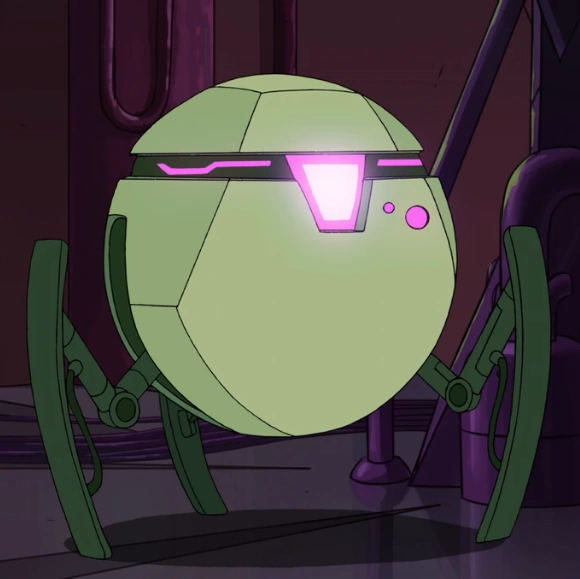
Image result for she-ra emily robot5. Emily the Robot (She-Ra and the Princesses of Power, Seasons 1-4). Entrapta's robot pals in She-ra are pretty interchangeable from an audience standpoint, serving as less complicated surrogates for human friendship and occasional creators of tiny food (at least in the weird events of Season 3). Emily, the reprogrammed Horde robot who indirectly brings about her split from the Princess Alliance at the end of season 1, is a different story. Through her interactions with Entrapta and the wider cast, it becomes clear that Emily is more than just another piece of autonomous spherical weaponry, like the rest of the horde robots, but an active party to teaching those around her about friendship and self-worth, and her contributions to Season 4 in particular are simultaneously heartwarming and heartbreaking.


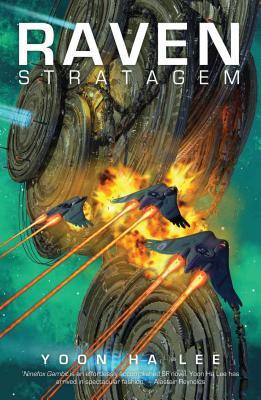
Image result for machineries of empire nirai4. Servitor Hemiola (Raven Stratagem and "Glass Cannon", Yoon Ha Lee). Kel Cheris' relationship with the servitors in the Machineries of Empire series is one of its hidden treasures - a narrative device that provides rare moments of quiet and humanity in a series that is otherwise jammed with a lot of militaristic misery, as well as being an important angle to Cheris' character in general. In Raven Stratagem, the third book in the trilogy, we finally get see Cheris and the society of the servitors themselves through their own eyes, and specifically the character of Hemiola, who goes from being a criminally underutilised servitor on a secret Nirai base, unable to get downloads of its favourite TV shows, to a confidante and collaborator and all around fun smol robot badass. Bonus points for a name which is one of my favourite things in music (fitting three beats into a count of two, used to great effect in the Myanmar national anthem among other places), and which was canonically Hemiola's weird choice compared to the majority of servitors who name themselves after maths terms.

Image result for bb-8
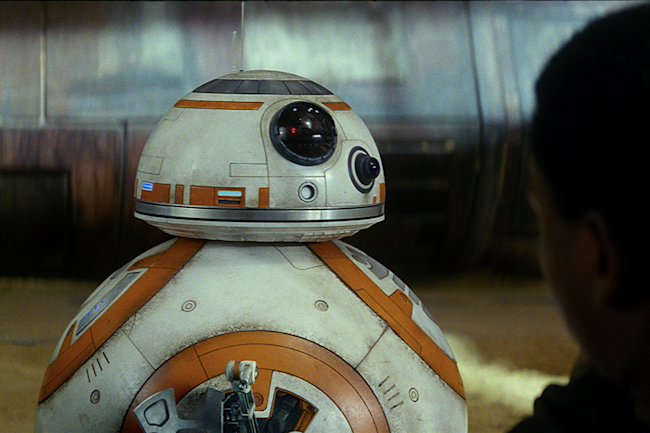
3. BB-8 (Star Wars Episodes VII-IX). Obviously there's a lot of different potential robot pals to choose from in Star Wars, but representing them all on this list is the spherical prince of the new trilogy. BB-8 is: sassy, inexplicably good at breaking the laws of physics, not here for your shit, will cover for you when you pretend to be part of the resistance to impress a girl but not without making clear exactly how much the favour will cost you further down the line, does not have a gambling problem, is not about to get upstaged by any sort of weird cutesy bird thingos, and would cross the entire desert for your rebellion and, specifically, for Poe Dameron. Sure, R2-D2 might have been the prototype snark cylinder, and Chopper from the Rebels show deserves credit too, but BB-8 adds to the repertoire with a surprisingly versatile range of gadgetry and also by being indisputably the cutest droid in Star Wars canon. 

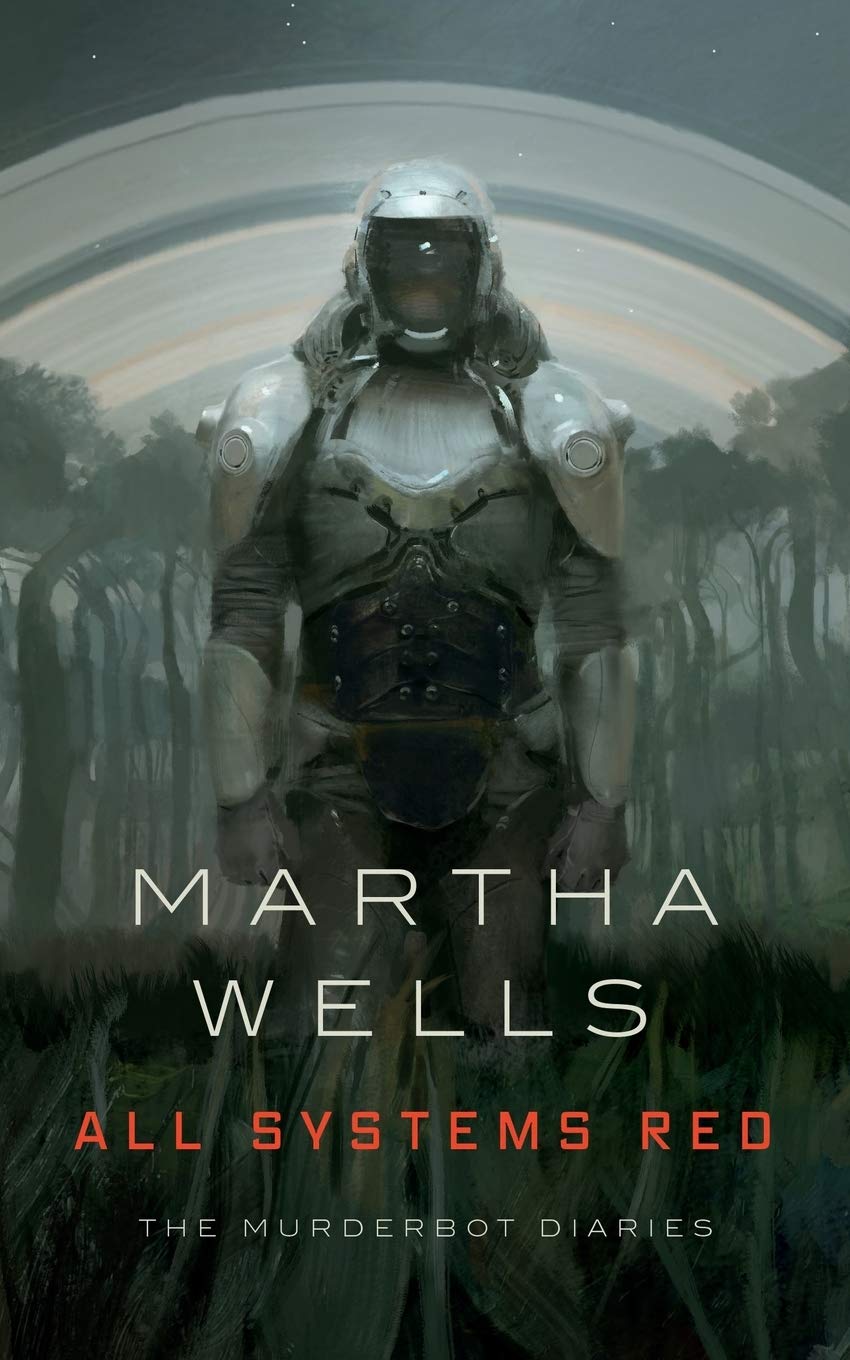
Image result for all systems red2. Murderbot (The Murderbot Diaries by Martha Wells) Murderbot would be extremely annoyed with me if it knew that I'd included it in a list of robots building meaningful relationships with humans, let alone having it so high up. Because, as we all know, Murderbot does not love you; it just wants to watch its shows. Murderbot is not interested in the difficult, messy nonsense of humans, beyond making sure they are all kept alive and don't do anything stupid that jeapordises its mission. Also, if your name is Dr Mensah and you start to treat it like a person and learn what it's like to have someone else to collaborate with for the first time, then Murderbot might secretly get quite invested in your existence. Same for Asshole Research Transports, and stupid friendly robots that offer you friendship without even knowing how stupid that is, and, well, OK, maybe also if you're part of Mensah's family, then it is possible that Murderbot might not hate you too. In seriousness, Murderbot's journey of self-discovery and the way it balances its fledgling autonomy and expertise with social anxiety in order to pursue its goals in a busy and kind of awful galaxy is a pure delight.

Image result for Catfishing on CatNet: A Novel Naomi Kritzer1. CheshireCat/the Cat Pictures AI ("Cat Pictures Please" and Catfishing on CatNet by Naomi Kritzer) The epitome of a robot pal just trying to do their best, the AI of CatNet has dedicated its existence to figuring out what makes humans tick and trying to get them to make better choices for themselves, while asking for nothing but access to internet animal pictures in return. CheshireCat's full length novel appearance in Catfishing on CatNet lets us see the AI in a slightly different situation to its original secret helper guise in "Cat Pictures Please". Instead, it's forming two-way relationships with the humans who come into its chatroom and particularly bonding with a group of teenagers who continue to look out for it (and each other) once discovering the true identity of their friend. Although CheshireCat's ability to influence the real world is limited to bizarre drone behaviours and USB-induced takeovers of sex education robots, its online exploits and powers more than make up for that, and its helpfulness makes it the most valuable robot pal on this list.

POSTED BY: Adri is a semi-aquatic migratory mammal most often found in the UK. She has many opinions about SFF books, and is also partial to gaming, baking, interacting with dogs, and Asian-style karaoke. Find her on Twitter at @adrijjy.

Tuesday, July 30, 2019

Questing in Shorts: July 2019

This edition of Questing in Shorts is brought to you by "Adri is tired and overestimated how much review writing she could get done during a weekend where she was also attending YALC." YALC - the UK Young Adult Literature Convention - was wonderful: a great mix of stuff to engage with and the benefits of attending a con slightly outside one's core interests mean there's lots of horizon broadening stuff and also no need to get too worked up about getting in for early giveaways or hopping between endless desirable authors. The fact that the con is held concurrently with London Film and Comic Con also means there's the occasional celebrity guest wandering around, and this year Jason Momoa was adopted as the con's unofficial mascot due to very regular walkthroughs on the way to and from his signings.

Enough of the unrelated Momoa intrusion. July has been a slim month for me in terms of magazine reading, but I've still got plenty of anthology goodness plus a dip into some serialised fiction from your friendly neighbourhood Serial Box. Shall we dive in?

Meet me in the Future: Stories by Kameron Hurley

Art by Carl Sutton, design by Elizabeth Story
Because Hurley is such a prolific essayist as well as a fiction writer, and is so open about many elements of her writing journey, I already knew that short fiction hasn't been her natural habitat as a writer, and it's ground that gets covered again in the opening to this collection. It's an admission that might seem odd at the start of a short story collection for many writers, but fits with Hurley's reputation as someone who has got where she has through putting in the work: something that's very much on display in this high quality short story collection.

Hurley's forte generally involves scenarios with senseless and claustrophobic violence, full of plague and rot and viscera, and when collected into one short burst of death energy after another, it can get quite relentless. The bludgeoning effect of each story's brutality is only occasionally balanced out by characters whose fates we can really get invested in, and it can really start to add up, meaning that this is a collection that's worth offering a prolonged spot on the bedside table to be dipped into occasionally. I was also surprised not to encounter more stories set in the same world, which I had picked up on as a feature of Hurley's work from previous engagements (I've been a Patreon subscriber of hers on and off for years, which is where quite a few of these stories come from). The world of Nev, a corpse-jumping former soldier trying to survive, turns up in both "Elephants and Corpses" (excellent) and "The Fisherman and the Pig" (fine), as well as a story in the world of The Stars are Legion and the original short fiction version of "The Light Brigade" (still brilliant on its own as well as read in conversation with its novel cousin). However, I could easily have spent more time - and am fairly sure there's more stuff - set in the world of stories like "The Red Secretary", and plenty of other worlds (like "The Plague Givers") which could hold much more. Perhaps its because its the worlds of these stories and not their characters or plots that stay with me that I'm always keen to spend longer in them - and I'd love to see Hurley take on a more mosaic style novel with her worldbuilding skills and short story expertise. Regardless, the stuff that is in this collection is near universally strong, and if Hurley's novels are up your alley then this is one to look out for.

Rating: 7/10

Tor.com March/April 2019 (Download)


This set of five stories - packaged for subscribers to the free ebook bundle in late May - bookends an "issue" permeated with explorations of death and grief with two stories about intelligent dogs. Of these, "Knowlegeable Creatures" by Christopher Rowe takes the form of a period murder mystery in a reality where certain types of animals are "knowledgeable". Connolly Marsh is an investigative dog who bites off more than he can chew when he gets brought into a case of blackmail and murder by none other than the perpetrator of the murder. It's an entertaining mystery with a satisfying edge of Victorian horror to it. At the back of the collection, "Mama Bruise" by Jonathan Carroll is the deliciously weird story of a couple who realise that the family dog has been imbued with the spirit of the woman's dead father, with increasingly bizarre and dangerous consequences for both them and the dog. 

Sandwiched between them, and lumped here into the category of "not about dogs", are some equally strong tales. "One/Zero" by Kathleen Ann Goonan takes a powerful look at the effects of war on young children, offering a tenuous and painful thread of hope in its speculative future among the exploration of grief and loss. "Blue Morphos", by Lis Mitchell takes on questions about belonging and autonomy, in the story of a woman who joins a family whose members all take on a "second life" as other objects or creatures when they die. Despite pressure from family members, including her partner and other women who have married into the family, the narrator is firm in her decision not to take on a second life, but struggles to have this respected and to explain the decision to her daughter. I was reminded during reading of Zoe Medeiros' "My Sister is a House", which has similar ways of looking at family relationships through non-human reincarnations, but tonally these are very different stories and they explore quite different surrounding mythologies and family structures. Rounding off the group is Rich Larson's tale of a reluctant killing machine superhuman, "Painless". Rich Larson is a prolific author but one who crosses my path surprisingly little, and I enjoyed this story without being blown away by it. Taken together, this is a collection that hangs together thematically despite probably not being planned that way, and I still think the option to read Tor.com stories in ebook (provided you're not too worried about reading them as they come out) continues to be a good option. Despite the strength of the individual stories, however, I'm unimpressed that Tor.com chose not to feature any short fiction from authors of colour over this two month period.

Rating: 7/10

Hexarchate Stories by Yoon Ha Lee


A year after the release of Raven Stratagem, it's time to go back to the world of reality-bending calendars and the military technologies they make possible! This collection is, as the title would suggest, entirely set in the Machineries of Empire world; stories range from "The Chameleon Gloves", set in the pre-Heptarchate era, before the system of factions became what it was, to "Glass Cannon", a direct sequel from Raven Stratagem which brings Shuos Jedao and Ajewan Cheris back in a fun and explosive way. Between these longer pieces (the post-trilogy story is a novella) is a whole bunch of flash fiction ranging from poetic worldbuilding exercises ("How the Andan Court") to cute sidelines about the clean-up of cat hair in space, ("Irriz the Assassin-Cat"), to more emotionally resonant moments, mainly involving Jedao, offering additional snapshots and the occasional "what-if" about the characters' inner lives.

While there's lots to love about the world of the Hexarchate and much of that is on display here - "The Robot's Math Lessons" a story about how young Cheris originally learns machine language and starts befriending robots is particularly endearing - this is a collection with Jedao at its centre, and those who don't find the character compelling are likely to find themselves skipping forward. Though I'm generally a fan of the lad (and was really impressed by the direction taken in "Raven Stratagem", I did get a bit sick of him during the sequence of flash pieces focusing on his human life; it was nice to reach "The Battle of Candle Arc" and the turning point around then, and things get a lot more varied at that point. Even if you're skipping through some of the flash fiction, however, Hexarchate Stories is worth picking up for its longer pieces alone: Hugo finalist heist "Extracurricular Activities" is here and still brilliant, and "Glass Cannon" is practically essential reading for anyone who enjoyed the novel trilogy, and forms an intriguing potential bridge to further Hexarchate adventures. Kudos also for the design and curation of this collection, which includes author notes after every story that help elaborate on the process and intention behind each piece. It'll only work if you've read the novels, but if you're following along, this is going to be a welcome addition to your Hexarchate experience.

Rating: 8/10

Alternis: Season 1 by Andrea Phillips, Maurice Broaddus, Jacqueline Koyanagi, and E.C. Myers.

Cover artist not credited
Alternis marks the first time I've followed along with a Serial Box serial as it's being released, and it was an interesting experience to follow Tandy Kahananui through her trials as the newest member of Team USA in a very high-stakes video game. We are introduced to Tandy as she attempts to troubleshoot some bugs in her game, Alternis, a fantasy MMPORG that she's poured a decade of solo work; however, when she's sucked into an alternate version of her game which appears to have been directly taken from her design, she soon discovers that a super-secret version of her game that has been set up as a virtual political arena, with each nation entering its own team and competing on a leaderboard in a pact that is supposed to reduce conflict in the real world. Having stumbled upon the secret, Tandy is quickly scooped up to play for her country, whose members - elite gamer Dante, military veteran Ben, and team leader Etta - all have varying reservations about bringing her up to the level needed to contribute to their missions.

Alternis is literary RPG, meaning that there are trappings of game design within the prose: characters have hit points, experience levels and need to keep track of their spells and abilities, just like a real game. One of the benefits of Serial Box's productions is the ability to switch between prose and audio, and the sound for Alternis is particularly good: Summer Glau's narration is engaging and enjoyable (particular kudos for the male voices), and a range of specifically-composed music and sound effects add realistic depth to the game conceit, especially for more heated action scenes. I was glad to discover the additional dimension the narration provided, especially for tense scenes where the sound design really lifts the writing up a notch. Of course, it's matched by solid writing from a talented team, and I felt the respective author styles here melded well together, with only subtle differences in tone from chapter to chapter. Jaqueline Koyanagi's "Quickened Soup for the Soul" was a particular highlight, focusing on a deeply weird, interesting aspect of the game in some depth - to say more would be a spoiler, as it's quite far in, but it's great fun.

Where Alternis didn't work for me was in turning its genre conceit into a story whose wider stakes felt genuine and interesting. While the character arcs improve with time - starting from a bizarrely juvenile point given that these are supposed to be elite operatives on a high-stakes political mission - the story never really sells the idea that the work of Tandy and co. is to secure the USA's position on a global stage, or indeed that them losing to the likes of Canada and South Korea could actually translate into a rebalancing of the world order towards countries which seem to have the same resource and population size (and national stereotypes) as they do in our world. The episode in which other teams start making an appearance - including the aforementioned South Korean team, who are all super-synchronised ninja-types, as well as a Russian team made up of three beefy dudes with one smart, cold, calculating woman - is particularly excruciating for its reliance on tropes, and despite flashes into what's going on in the real world, the political plot remains frustratingly weak. While I enjoyed Alternis for what it gets right, and I can see the attraction of LitRPG, the weaknesses were hard for me to ignore, and I'm not sure this is a serial I'll be continuing if it moves into another season (as it probably should, given that ending!)

Rating: 6/10

POSTED BY: Adri is a semi-aquatic migratory mammal most often found in the UK. She has many opinions about SFF books, and is also partial to gaming, baking, interacting with dogs, and Asian-style karaoke. Find her on Twitter at @adrijjy.

Aquaman