Saturday, May 18, 2013

First Impressions: XCOM Enemy Unknown


wandering the desert

For gamers, the current months are something akin to Moses and the Israelites after their liberation from Egypt. It's slim pickings out there. Other than the fourth Borderlands add-on downloadable content in June, there's not much coming down the pike until Grand Theft Auto V in September. It's usually the time of year most of us either pull out the best games of the last year for another playthrough, or go find something to do outside. 


Much like the Hebrews, I was wandering the desert (also known as Best Buy) last weekend  looking for manna from heaven. Then I saw XCOM. My cousin had loaned me the game several weeks ago with a highly positive recommendation, but it's been a while since I played a real-time strategy and tactics type game. I'm used to squad games that use a turn-based combat system, but most of the ones I've played are Japanese. Ever since he gave me the disc, it had just been sitting on my shelf. I hadn't heard of it and the back cover copy didn't really grab me. However, I already had it so I thought I'd do some research to see if it was any good. To my shock and excitement, the only game this year with a higher rating on Metacritic.com was Bioshock Infinite. XCOM was rated a 90 while Bioshock got a 93. XCOM came out last October, but it was clearly the best option I had for playing a quality game right now. 


It was that or play the new Star Trek game, and it's getting absolutely demolished by critics. So far, I have to say I made the right choice. 

the big picture


The Earth is under alien attack. A truly original concept in gaming, I know, but the approach to the traditional theme is different than any I've seen. The game is a re-make of a 1994 Amiga game that was later converted to the original Playstation. I missed the first one, but this version is awfully fun. You are in charge of XCOM, the Extraterrestrial Combat Unit. They are responsible for the protection of Earth from an increasing number of alien abductions and direct attacks. As you can see above, all the continents and many of the largest countries on the planet are counting on you. Fail to adequately protect them and they will leave your fragile alliance, preferring to be responsible for their own defense.


In order to learn about alien attacks, you must scan the planet looking for activity. You begin the game with one satellite. As you progress, you build and deploy more satellites over different countries. They are used to catch incoming alien ships before they get to the planet's surface. If an incoming ship is identified, you can scramble Interceptors to take them down. If you are able to destroy the alien warship, you then send your squad of soldiers to the crash site to wipe out any survivors and recover alien technology that survived the impact.

strategy and tactics
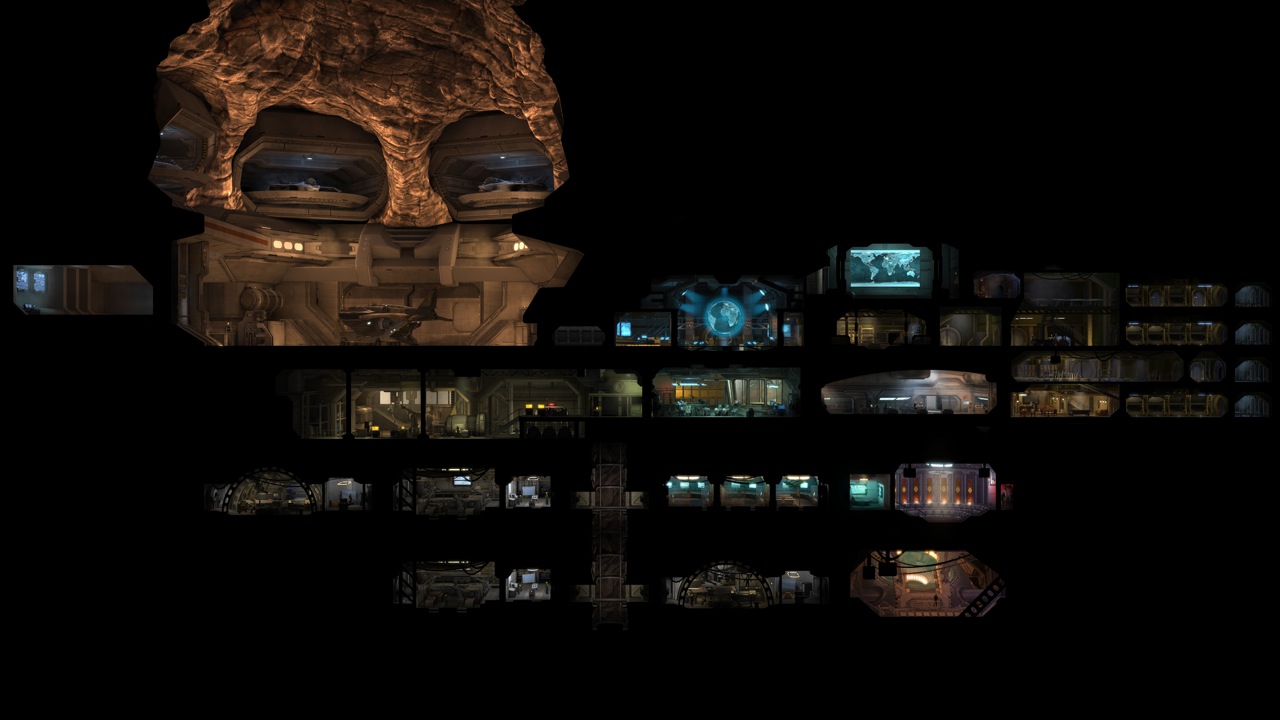

A large part of the game involves your team of researchers and scientists. The researchers take alien technology your squad recovered from alien abduction attempts or crashed UFOs and use it to upgrade your own weaponry and technology. The picture above is the XCOM headquarters, also know as the Ant Farm. It contains your Engineering and Research divisions, as well as a barracks for your troops, the Situation Room that tracks worldwide panic levels, a hangar to house satellite-protecting Interceptors, and Mission Control from which you launch attacks on enemy incursions.


You can expand your "Ant Farm" by building new facilities such as Power Plants, Thermo Generators, Foundries, and Satellite Uplinks. You must have satellite uplinks to control and monitor the various satellites you've put into orbit. The foundry allows you to develop upgrades for your existing weapons, armor, and vehicles. Power plants and thermo generators merely improve the speed and skill with which you create new items and facilities. The depth and detail involved in simply learning all the aspects of this game was astounding. It made the upgrade system in other RPGs like Skyrim look simplistic in comparison. I'm some 15+ hours in and I still feel I've only scratched the surface. While I have a general understanding of the game at this point, I still feel there's a lot more to discover before I've finished it all.

squad combat


Before leaving on any combat missions, you must outfit your squad. You begin the game with four members, but can expand it to six as you gain experience and cash by completing early missions. The soldiers come in several types including Assault, Support, Heavy, and Sniper. Each one has upgradable skills that are added to their arsenal of moves as they are promoted up the chain of command. Snipers gain a headshot. Heavies can fire a rocket launcher. Assault troops gain the ability to fire after moving or get off two shots per turn instead of the normal one. Support can use multiple medpacks to heal other squad members during battle. 


The combat in XCOM is turn-based, which is unusual in Western games, in my experience. I've played several turn-based games this generation including Lost Odyssey, Star Ocean, and Tales of Vesparia, but they were all Japanese. This is the first American game of its type that I've experienced. XCOM was made by Firaxis, the company headed by Sid Meier, the famous creator of the Civilization series. For the uninitiated, turn-based combat is kind of like playing a board game or Dungeons & Dragons. Each character, including the enemies, gets one turn to make a move. After that, the game moves on to the next character and allows them to make a single move. 


While some Call of Duty fans might find this style of combat slow and tedious, it adds considerably to the strategic aspect of the gaming mechanic. You must use competent squad-based tactics if you want to keep all of your soldiers alive throughout the mission. The quickest way to kill off a character is to send them charging off by themselves, Rambo-style. I learned the hard way that lone soldiers are quickly ganged up on and wiped out by groups of enemies beyond their ability to withstand. 

the breakdown
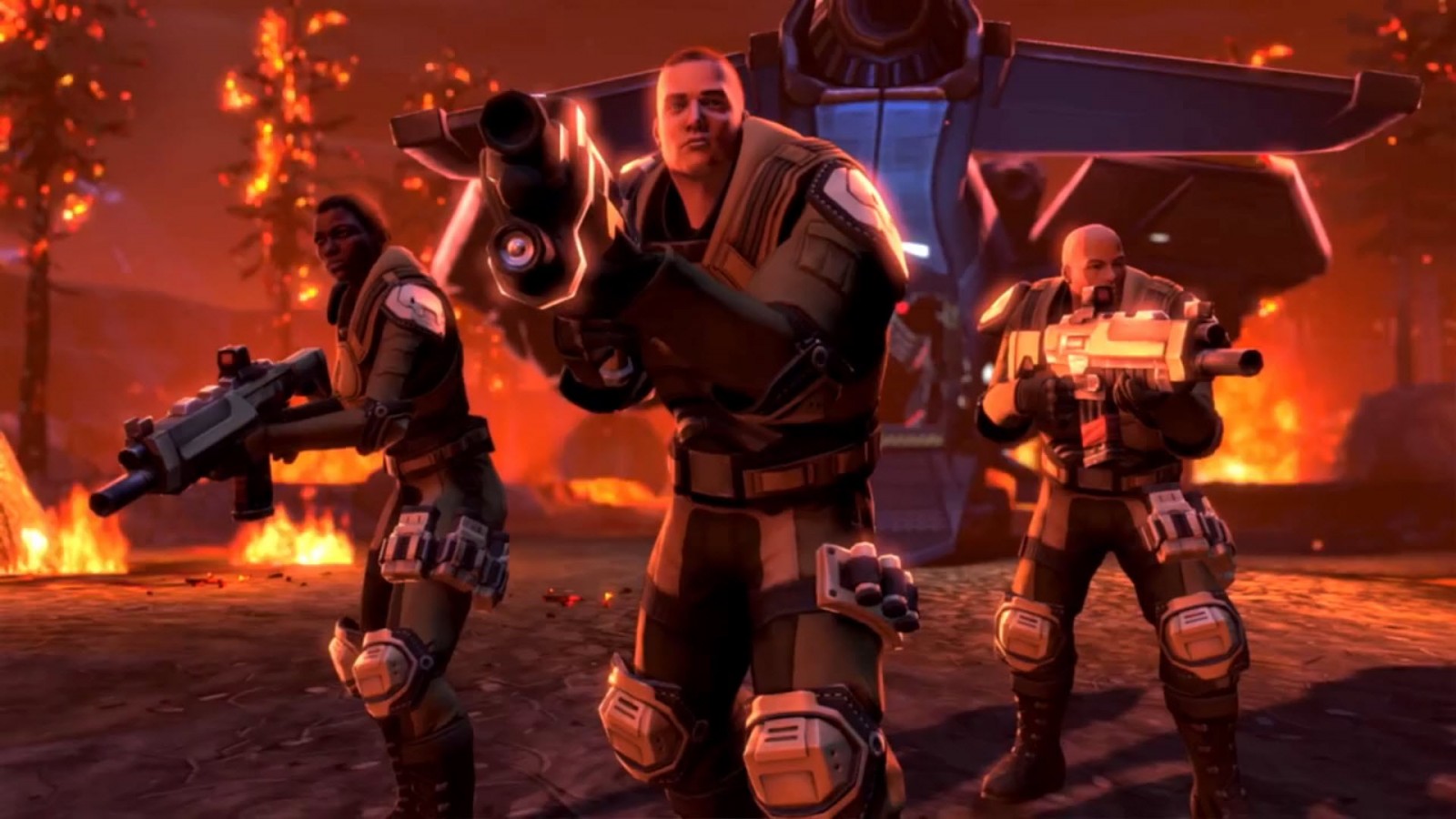

Although this is considerably different than any of my recent gaming experiences, I've been enjoying it immensely. I wish I'd had time to finish the game this week, but it requires 30+ hours of gameplay to complete and I simply didn't have the time to finish it in five days. That said, if I had to rate this game today I would give it an 8 or a 9. Although the game has tons of moving parts and keeping track of them all seems daunting at first, once you've grasped the various responsibilities you have as the leader of XCOM, the smoothness with which they work in tandem is nothing short of amazing. 

If, like me, you're looking for a quality game during this down-time in big name releases, give XCOM a look. It isn't for everybody. If you're a fan of the Call of Duty series or other shooters like Halo, this one may not be for you as the action isn't as fast-paced or intense as those blockbusters. On the other hand, if you enjoy a game with depth that requires thought and planning in order to succeed, XCOM is right up your alley. It is very similar to Sid Meier's Civilization series, but set in a completely different universe. If you are a fan of his previous games, I believe you will enjoy this title just as much if not more. Good luck and happy gaming!

Friday, May 17, 2013

POWER POLL: The 6 Most Haunting Sci-Fi Films of All-Time

Welcome to our first-ever nerds of a feather Power Poll! We asked each of our regular contributors, as well as monthly columnist Dean, to compile a list of the 6 Most Haunting Sci-Fi Films of All-Time. The criteria for "most haunting" were simple: the films that get into your head and under you skin; the ones whose images stick with you long after the credits roll. We then apportioned points to each film based upon their position on the list--6 for being #1, 5 for being #2 and so on. With so many great films out there to choose from, it will come as little surprise that there was a whole lot of variance from list to list. There was enough agreement, however, to put this list together...


Honorable Mention: Sunshine (dir. Danny Boyle, 2007)

Zhaoyun: (Recommended soundtrack for this micro-microreview: Further, by VNV Nation.) What if the sun stopped shining? If there was a time before the sun existed, it stands to reason there’ll be a time after it flares out and dies...but what if that time was, not in five billion years or whatever, but in five? That’s the question this imperfect but haunting film asks. We see a world leached of its vitality, washed out, pale in the dying sunlight, and we watch as a group of eggheads tries to do some vaguely scientific CPR on the sun (it’s not as lame as it sounds, I assure you). Plus, the Cheshire Cat-like eyes of Cillian Murphy are an automatic +5 on the hauntingness scale!


6. District 9 (dir. Neill Blomkamp, 2009)

Mike: Drawing inspiration from South Africa's experience under Apartheid, Neill Blomkamp dazzles his audience as a modern-day Johannesburg has segregated an influx of an alien race in a shanty-town labeled District 9. The transformation of Wikus, a human charged with evicting the "Prawns" of District 9, and the overt portrayal of racism and paranoia pulls the wizard's curtain back on our own society's shortcomings. Sharlto Copley delivers a stunning performance and the mockumentary style provides this story with a sense of realism that is often missed in the sci-fi genre. Sprinkle in plenty of gore and a pinch of emotional trauma (Wikus’ transformation into a “Prawn”) and you are left with a sci-fi movie that will haunt you for quite some time.


5. Event Horizon (dir. Paul W. S. Anderson, 1997)

Molly: I almost left this movie off my list for a narrower definition of “science fiction” -- the wormhole/inter-dimensional travel to Hell leans just a little too far into horror fantasy. But really, that’s the charm of this movie: it feels like a good sci-fi film until it slaps you in the face with “INFINITE TERROR.” I’d consider it the quintessential “space horror” film. It’s haunting because it will burn certain scary images into your mind and give you that clench-your-buttcheeks feeling for the rest of the night. Psychological torment, mutilation and vivisection, fake-out happy ending... plus seeing Sam Neill all scary will upset all the fuzzy-wuzzies you feel for him as the beloved Dr. Grant (like when 
you realized the clown in It was Tim Curry).


4. Solyaris (dir. Andrei Tarkovsky, 1972)

The G: Sure it’s slow, overlong and sports the special effects wizardry of Tom Baker-era Dr. Who, but Solyaris may well be the most haunting science fiction film ever made. Why? Because it’s a film about a planet that gets into your head and makes that haunt you into reality, that’s why. And what does poor Chris Kelvin get haunted by? Oh, just the ghost of his beloved wife, who committed suicide some time past. The cramped quarters of the space station add a claustrophobic element to a story that’s already utterly unnerving, getting under your skin until you’re desperate for Kelvin to just crawl out and space himself out of an airlock. It’s exquisitely shot too, alternating color and black and white for effect, and sends a message to those commercial sellouts Ingmar Bergman and Akira Kurosawa that, when it comes to mesmerizing-yet-impenetrable meditations on the dark recesses of mind and soul, Tarkovsky is the fucking man.


3. Alien (dir. Ridley Scott, 1979)

Brad: When you’re discussing the most haunting science fiction films ever made, Alien absolutely must be a part of the conversation. Ridley Scott’s oft-copied classic hits many of our natural human fears with pinpoint accuracy. The most obvious of these is the fear of being killed by a monster that wouldn’t have much trouble dispatching the velociraptors from Jurassic Park, nevermind us soft, slow-moving skin-sacks. However, if that was all it had going for it, Alien might have faded quietly into the plethora of monster movies that none of us really remember a week after viewing. Luckily for all of us, that was only the beginning. I don’t know about you, but the thought of having a parasite living inside of me gives me the heeby-jeebies. Oh, and don't forget that Isolation is enough to drive many people insane, and the crew of the Nostromo is in deep space, which is about as isolated as one can get. Finally there is the android Ash, played to perfection by Ian Holm. From B-movie cult classics like Maximum Overdrive to quality films like Terminator and 2001 we are simultaneously fascinated and terrified by the specter of our technology turning on us with deadly repercussions. Alien seamlessly combines this multitude of natural, deep-seated human fears into one of the most memorably haunting films of all time.


2. Blade Runner (dir. Ridley Scott, 1982)

Vance: I have to admit that I don't find Blade Runner to be a great movie. I think I've seen all of the versions out there, and while some are definitely better than others they all feel like a collection of great scenes in search of the right wrapper. That said, the best few of these versions improve upon the Philip K. Dick source material, and so many of the scenes stand alone as utterly unforgettable. The greatest of these is Roy Batty's rooftop speech, "All those moments will be lost in time, like tears in rain." These are the moments that linger, much more so to me than any esoteric debates about whether or not Deckard is a replicant. And man, do they linger.


1. 2001: A Space Odyssey (dir. Stanley Kubrick, 1968)

The G: A good portion of 2001’s power comes from the fact that it asks a lot of questions, but doesn’t provide a lot of definitive answers. What are the monoliths? Are they sentient or devices? If the latter, who made them and for what purpose? Do they make HAL go crazy so that Dave can sublimate into a giant space fetus? I’ve seen the film more than a dozen times and I still don’t know (though I have some defensible theories). Besides, virtually any scene from this freakadalic masterpiece can lodge in your brain for weeks, like Frank Poole’s death, HAL’s termination or just that big-ass monolith floating in space with Ligeti’s Atmospheres playing ominously in the background. Oh, and did I mention there’s no sound in space? Score one for physics.

Thursday, May 16, 2013

Tales from a Board Gaming Convention: Geekway to the West

This past weekend I had the pleasure to attend Geekway to the West, a board gaming convention in St. Louis.  These past few years I have found myself attending more and more conventions, but I have yet to attend a gaming specific convention.  A couple of my friends tweeted about attending Geekway and I decided that sounded like a fun idea.  I must say that I am very happy I gave it a go.

I made the three hour drive from my home to St. Louis on Friday and arrived at the convention 5 hours before my friends would make an appearance and did not no a single soul at the convention.  I nervously picked up my badge and was given the basic info on how to check out games, win prizes, various tournaments that were taking place, and a schedule of events.

After cruising the library of over 800 titles to select from, I decided to cruise the main ballroom to find a flag for a group of gamers looking for additional players.  Oddly enough the first group I joined was playing a homemade game (although very well made).  They informed me that other players had sat down only to leave, but I was intrigued.  It was a board game in which you laid down tiles, creating a different board in each play, collected various items to solve a cure (or be cursed), and either solve the curse or kill the remaining players.  The game was actually quite fun and it was very educational to see the process that went into creating a homemade board game that you hope to one day publish.  The couple who made the game were very nice and we all had a nice time playing the game.

The zombies won quite easily
After playing other games with groups my friends finally arrived and following that evening's raffle, we sat down to play Last Night on Earth.  As newbies to the game we brought a "Players Wanted" flag with us to see if anyone wanted to join us as we played as either zombies or humans on the last night on earth.  Since we had not played the game we decided to play with the beginners rules to get the basics of the game.  Lucky for us one of the Geekway volunteers, Tim, joined us and was able to run the game with the advance rules.  The game was loads of fun and felt like a B movie.  

The rest of the weekend was filled with similar experiences.  It struck me at one point in the convention that I had not seen one person look or sound upset.  In gaming at home and with friends (or especially with my 5-year old son) I am used to someone being upset at losing or when someone plays a card or takes an action that adversely affects another player.  The magic of this gaming convention was that we were all amongst friends, we were all playing games, and we were all having fun.  Add to the fact that Miniature Market gave away free gifts for attending, had games on sale 4 for $20, and allowed Geekway attendees to shop directly from their warehouse, we were in board gaming heaven.  Geekway featured card games, dexterity games, kids games, strategy games, card games, dice games, role playing games, and more. 

After spending over 24 hours over a three day period playing board games I can only look back and smile and rank the top 5 games I played over the weekend.

1. Zombicide - We were only able to play 2 games of Zombicide due to its popularity at the convention. Zombicide is a game in which you assume the role of a survivor attempting to survive the zombie apocalypse.  What I enjoy about Zombicide is how the game increases its intensity as the game progresses.   As soon as one player in your group levels up, each zombie spawn is more terrifying, and each objective harder to obtain.  We were unsuccessful in our Zombicide attempt, but had an absolute blast attempting it.

2. Flash Point - As someone with a very competitive wife, I am always on the lookout for cooperative games.  Flash Point is a cooperative game in which you assume the role of a fire fighter attempting to keep a fire at bay and rescue survivors.  The fire can get out of hand quick so it is imperative that you work well with your team in order to be successful.  Tim once again joined us for this game and I am happy to report that we were able to save all seven victims before the structure collapsed.


3. Space Alert - In what was the most unique game I played over the weekend, Space Alert is a real-time, cooperative game in which you assume the role of a crewman of a spaceship stranded in an asteroid field.  As a team you work together through a series of rounds as dictated by a CD that takes you through a 10 minute senario.  During these frantic 10 minutes, the players all play their actions face down and communicate to one another what steps they are taking.  Whether you are giggling the mouse to keep the computer from falling asleep to firing lasers at a target you hope is in range, you won't know if you were successful until you resolve everything upon completion of the CD.   Despite not quite saving our spaceship, this was an intriguing game that I hope to pick up soon.

Gearbox for Formula D
4. Formula D - With time to kill prior to the Saturday night raffle I was allowed to make our game selection.  Despite being a proud owner of the game, I encouraged my friends to join me for a round of Formula D and we were all quite pleased.  Formula D is a car racing game in which you attempt to navigate a course and take the checkered flag.  With each gear you shift you role a different die, you are required to slow down and make numerous stops in turns, and each character has a unique ability that will hopefully allow you to win.  Despite overshooting some turns and taking damage to my tires, I was able to secure the checkered flag and take home victory!

This was all that was left standing,
but that is enough.
5. Castle Panic - My final choice for top games of the weekend is a castle defense, cooperative game that leaves you and your group trying to defend your towers from an oncoming attack of goblins, orcs and more!  Utilizing cards and the luck of the die, each player attempts to slow the various minions that seek to destroy all six of your castle towers.  Unsuccessful in our first attempt, our second attempt was barely successful.  What I loved about Castle Panic is that it is a game I can imagine playing with either my son or my friends who are serious gamers.  It was fun, quick, and easy to play.

Thursday Morning Superhero

Thursday is upon us so it is time for the latest installment of Thursday Morning Superhero.  This week felt a little slow in terms of titles that caught my eye, but the books I purchased from my LCS were definitely above par.  The twists and turns of Age of Ultron have impressed me thus far.  I am not usually one for big comic events, but have enjoyed this ride and don't know how they are going to write themselves out of the situation Wolverine and the Invisible Woman are in.  Dynamite launched a new Battlestar Galactica title based on the 70's television show that was a good read, Helheim may be my favorite new title, and The Dream Merchant from Image Comics had one of the best #1 issues of recent memories.  On to the comics!


Pick of the Week:
Helheim #3 - For me Helheim secured itself as another runaway hit from Cullen Bunn this week.  While I thoroughly enjoyed issue 1 (which just sold out its second printing) and 2, the growth that the pieced together hero Rikard showed in this issue took it to another level.  Bera raised Rikard from the dead and turned him into a Draugr, a raised from the dead killing machine.  He was supposed to kill the other witch, Groa, and anyone who sides with her.  Rikard, however, has no desire to kill any women or children and believes he was raised to protect his people.  Throw in the fact that his father does not like the abomination his son has become and wants to give him a proper death and the unlikely partner, the orphaned Kadlin, that Rikard has found, and you have a series that should provide interesting twists and turns in the upcoming issues.  Bunn has a knack for the supernatural and is displaying it in full force with Helheim.

The Rest:
The Dream Merchant #1 - This is a book that you should keep your eye on. Winslow is currently in a mental ward due to his dream that has been recurring every night since he was a child.  He is flying through a different world with an alien landscape and does not know the meaning.  In the action packed debut, Winslow is pursued by wraith-like beings and learns that he is the last human carrying the memory of how the world once was.  Very enjoyable title that is well written and easy on the eyes.

Age of Ultron #8 - Wolverine and the Invisible Woman are further investigated by the Defends led by Tony Stark.  Things are disrupted when Morgan Le Fay and her alien force invades and brings total havoc to the Defenders, putting them in a situation that is eerily similar to the fate Ultron had brought to Earth.  Once again the superheros are in a situation that seems impossible to navigate away from.  Should be interesting to see what happens next.

Battlestar Galactica #1 - This new Battlestar Galactica title, based on the 70's television series, was easy to get into, a fun read, and provided a nice twist to bring readers back.  Nothing terribly original or fascinating happened in this one, but I may be back for more depending on what I read.  Best part about the issue was the stunning variant cover from Chris Eliopoulous. 

Wednesday, May 15, 2013

AiIP: Proper Author Care

The huge increase in ease of self-publishing- and decrease in cost- has led to a shift, not just in the way books are read and sold, but in the way they are discovered, marketed and promoted. Gone are the days where a select few reviews in periodicals had the power to make a book (although those entities still exist and have power), replaced by a multitude of sites such as this one, and GoodReads, where readers exert tremendous cumulative influence via their own ratings, reviews and promotion.

The Care and Feeding of an Author on Amazon, by Sherry Snider
This, for the record, is a good thing- mostly. It is, of course, open to abuse, but so were the old systems. Many people have no rating system between five stars and one, and will give a two-star review because their devise froze up while they were reading a given book. In the aggregate, though, it's a good thing to see the audience at large being able to sound off on and share books easily.

Which leads to that list to the right, which has made the rounds a couple times in the past months. Some authors love it (most notably those who aren't particularly noteworthy) while others decry it.

So, to be brutally honest with y'all and myself, I am soundly in the 'not noteworthy' camp of author (so far), but I don't agree with the sentiment that anything is owed to the person you just shelled out a few bucks to. If you buy my book (and I most certainly hope you do), here's what I ask from you:

Enjoy it.

If you want to do the rest of the things on that list, I will appreciate it. A lot. Because it will likely lead to more sales, which in turn lead to me writing more, which in turn means I hopefully will be able to write more for you to enjoy. Now, you might not enjoy my book. That's your right, as it would be your right to give it a horrid rating and review. But all I can ask, as an author, is for you to enjoy my book.

However, the people who really benefit from you rating and reviewing it (honestly) is the community at large. With the proliferation of indie works out there of varying quality, reader reviews will serve to guide others to quality work and make that stand out from the static.

It's about more than the care and feeding of an author, but about the literary community as a whole- authors and readers.

Hot Off the Presses

If you've been reading this column for a while, a while back I interviewed SC Harrison, who had a pretty rad fantasy novel out. Well, she's grown up into horror and her first horror release, Planks comes out next month. I will have a review shortly, but holy cow you guys it's so good. So stay tuned for that.

It's already way over-funded, but there is a Kickstarter for The Very Hungry Cthulupillar which I can confidentiality say is the greatest thing ever.

Rolling with Kickstarter, Walk the Fire is a promising SciFi anthology with just a few days and several bucks to go.

Moving across the pond, SciFind is launching a monthly short SF/F/H magazine, or attempting to, and there will be a story from yours truly in it if it gets funded. So not only do you get really good fiction, you get to support my alcoholism writing career.

One last bit of blatant self-promotion, but I have a few bookmarks to give away. I'll be doing a new run before too long, with different art, so if you want the really early stuff, this is pretty much the last chance to get it.

Tuesday, May 14, 2013

Spurs to Spandex: Why Westerns Died and Superheroes Fly

In his only DVD commentary, which accompanies his 1950 movie Winchester '73, Jimmy Stewart was asked about the enduring popularity of Westerns. In his own words, Stewart answered that he believed the Western was the essential version of the American identity, that it totally encapsulates the pull-yourself-up-by-your-bootstraps, hard-work-makes-anything-possible American ethos. He believed that to this day we had maintained a frontier mentality, and in retelling the story of the United States' westward expansion we continued to tell stories that spoke meaningfully to our present-day lives. And for that reason, screen legend Jimmy Stewart felt the Western would remain enduringly popular for as long as people made movies.

Sorry, Jimmy.
Jimmy Stewart
"Well, this is what I think of YOU!"
For the last decade or more, there's been a new sheriff in town, and he wears spandex instead of spurs. And he can usually fly. And more often than not, he's super-well coiffed and bullets pretty much just bounce off of him. Because he's a superhero. I believe this shift in the genre balance is more meaningful than just a simple evolution of tastes. First, I think Hollywood has yet to understand (but is starting to) that "Superhero" has become an actual genre, and with that comes a tremendous degree of latitude that film executives are still unwilling to exploit, but that a market exists for. But second, and more importantly, I think this evolution in genre preference is actually a response to a much larger cultural shift that has changed the fundamental definition of what it means to be an American.
Captain America
"Pretty sure I'm still what it means to be American, bud."
In many ways, Westerns and Superhero Movies are identical. They are both action/adventure-oriented stories that 1) celebrate the "individual" as a type/archetype, 2) exist in a reality outside of the audience's own (past/future/alternate present) and so are essentially fantasies, and 3) are primarily concerned with the intersection of violence and power. While some movies are overtly and explicitly concerned with that question (The Man Who Shot Liberty Valance and Spider-Man, for instance), both genres are fundamentally undergirded by the push-pull between violence and power. In the Western, it's your outlaws and scheming land-grabbers pitted against the homesteader or lawman, and both sides are pretty much outfitted with the same gear -- your six-shooter and Henry rifle, or something similar. For Superhero Movies, it is generally the massive, superhuman power of the hero pitted against either the massive, superhuman power or the mechanical product of the massive, superhuman brain of the villain. It's the same struggle, but played out with different toys against a different backdrop. Both sides possess the tools of violence, but the struggle is between whether to use those tools for good or ill.

In the 21st century, then, we prefer our stories about outliers caught up in the battle between good and evil to be clothed in more capes and fewer chaps. More explosions, fewer horses. More stardust, less, well, actual dust. A quick look at BoxOfficeMojo bears this out. The box office-tracking site lists 55 Superhero Movies released since January 1, 2000, and only 32 Westerns in the same time period. That's not a tremendous difference, but take a look at the highest-grossing Western of all time, Dances with Wolves (yep, really), and its lifetime theatrical gross of $184 million. BoxOfficeMojo lists 18 Superhero Movies that have all eclipsed Wolves, all but one of which have come out in the last decade. Dances with Wolves came out 23 years ago. Even adjusted for inflation, there are at least seven Superhero Movies released since Wolves that have left it well in the dust.

If this is the case, if Superhero Movies have established themselves as their own genre and have taken the place of the Western, what does that mean for filmmakers and fans? A lot, naturally, but until the people who greenlight movies are hip to this transformation, we're not going to see much innovation. We can look at the incredible breadth of stories Westerns provided as a possible indicator of things to come. Tables were turned, where we began to see antiheroes and were asked to invest in the story from the "bad guy's" perspective, we saw stories of smaller lives touched by much larger struggles playing out around them, allegories for cultural and religious struggles, broken people forced into the hero mold and asked to do something beyond themselves, fringe voices telling familiar stories in entirely different ways, comedies, etc.

"But wait!" you may be saying, "We've already seen all of that in Superhero Movies!" Right. Because a genre establishes a set of tropes and the storyteller's creativity rearranges those pieces into something new within familiar boundaries. It's what allows audiences to experience something new while also getting exactly what they expected. The hang-up right now is the familiar fear-based decision-making process inside of Hollywood. Until a broader way of looking at this type of movie takes hold, the response you're most likely to get to a new idea (especially if it doesn't involve a pre-existing character, like, say, Stretch Armstrong...or Aquaman) is "Well, didn't such-and-such movie already do that?" I've run into this both as a writer and working in studio development. One case in particular involved a superhero comedy script that a manager sat on because somebody "already did a superhero comedy and it tanked," only to have the script for Kick-Ass come along a few months later and step into that gap.

Is it possible that a Superhero genre isn't large or diverse enough to contain that many stories, though? No. We have 80 years of superhero comics that refute that pretty definitively. Like anything, the quality of the storytelling will usually win out, especially as the market becomes more mature. I do not believe it can become saturated in any real sense, but expectations have to be adjusted. Not every movie with a cape or a costume will make $100 million. Chronicle didn't cost much, didn't have a huge marketing push, but it gave audiences a new twist and did well, despite not coming from a pre-existing property. With successes like that, and with the emergence of independent filmmakers stepping into the waters with films like the little-seen Super, I expect Hollywood will begin experimenting a little more, inasmuch as it ever really allows experimentation.

Why this surge in superhero popularity? After all, we've had superheroes in comic books since the 1930s, and superheroes like Flash Gordon in films since about the same time, but they never enjoyed the same broad-based appeal that they're seeing now. Imagine walking into Bob Evans' office at Paramount in 1972 and pitching The Avengers why don't you? I'll argue that this new swell in popularity is because the Superhero story, much more than the Western, has become the quintessential American story for today's audience. This is the genre -- for all of its fantasy -- that speaks most directly to our lives today.
The Avengers Godfather
"They're going to make him some shawarma he can't refuse."
It comes down to how we answer one, giant question: What really is the American Dream? As far back as Fitzgerald, we pretty much knew it wasn't simply amassing great gobs of money (although a few years after Gatsby we'd face a long American Nightmare when great gobs of money suddenly evaporated, and then we'd do it all over again 90 years later). The Declaration of Independence outlines the familiar "life, liberty, and the pursuit of happiness," where the emphasis is on one's ability to pursue something that might make them happy without facing barriers based on race, creed, or color. We've done a pretty shaky job of that in the last 250 years, though, and these days people have pretty much figured that out. If that version of the American Dream has become so mist-enshrouded and distant that it may as well be a literal dream for all but a very few Americans, then what has taken its place? Hard work doesn't pay off like it used to. Many of the hardest working people in this country can barely keep a roof over their heads, and people who have played by the rules and "done everything right" can find themselves out of work for years and unable to repay medical or student loan debts.

Superheroes tend to have a couple of things in common: they exist in a primarily urban landscape, and they believe in magic. Just like their audiences. As a culture, we are far more likely to believe in magic today than in hard work, and not without reason. Sut Jhally, one of the foremost media scholars in the U.S., really doesn't like advertising. In Advertising and the End of the World he argues persuasively that the entire consumerist model is based on a belief in the magically transformative abilities of products. Listen up, guys, drinking poor, mass-produced beer will make beautiful women attracted to you. Buying this or that article of clothing or car will make your sad, dull life exciting and fresh! This bottle of household cleaner will unleash a muscular bald man who will scrub your floors! You get it, you've seen TV.

But reality has begun to approximate this magical aspect of our daily narrative. Peter Parker, Steve Rogers, Harry Potter, Carrie Underwood, Jennifer Hudson, Snooki, and all of the Kardashians share one thing in common: they were unknown, regular people who had something inside of them just waiting to be discovered and exploited on a larger stage. They were destined for greatness. We watch reality TV and Superhero Movies wishing that someone would see past our own humble situations, recognize our latent talent or nobility, and lift us out of our everyday lives. I mean, tell me that there's no magic in a world where a woman can make a sex tape with a mediocre rapper and then become so much more famous than that rapper that the entire rest of her family becomes famous. Tell me that's not magic.
This one. This one is like, the most famous one ever.
I don't think there's an antidote to this type of thinking, any more than there was an antidote to the glorification of a genocidal period of national history. In time, we become more educated, we perceive more of reality, or different aspects of it, and these observations inform our view of ourselves, both individually and collectively. We then seek out stories that speak to us. Today, and for some unknown period of time stretching out ahead of us, those stories will involve gods and goddesses...er, I mean knights, er...cowboys and Indians?

Oh, right. Superheroes.

There is probably a much better, longer, and more fully researched and articulated version of this idea that I could've written if I'd had a bunch of time, but you do what you can.

Monday, May 13, 2013

Microreview [book]: Promise of Blood by Brian McClellan

Brian McClellan, Promise of Blood [Orbit, 2013]


The Meat

If ever a title gives away the contents of the book, it's this one. Brian McLellan promises blood, and blood he delivers in spades. 

The story begins with a coup d'etat (straight out of the French Revolution, with all its attendant savagery and gore). In a bold move, Field Marshal Tamas, a powerful powder mage, (literally) guillotines the monarchy and kills off the corrupt cabal of sorcerers who upheld the King's rule. Tamas and his small cadre of powder mages overthrow the political system, leading Tamas to declare "The Age of Kings is dead... and I have killed it." But his great victory is haunted by a counterrevolution, internecine struggle, and an important but nebulous mystery: in their dying breaths, each member of the royal cabal Tamas had assassinated whispered, "You can't break Kresimir's curse." Worried about the implications of their dying message, Tamas sends Adamat, a police investigator with a special Knack of a perfect memory, to investigate. At the same time, Tamas also sends his son Taniel (a talented powder mage accompanied by a "savage" girl, Ka-Poel) to track down an uncommonly powerful member of the royal cabal who escaped assassination. Gradually, Tamas begins to realize that his revolution has triggered a series of events that may change the world forever. 

Promise of Blood is Brian McClellan's debut novel and the first book in his Powder Mage Trilogy. It is on the whole a fast-paced, enjoyable, and well-written dark fantasy, one that finds similarities not only with Brandon Sanderson's Mistborn series, but also with the recent trend of grit or grimdark in high fantasy.  The sheer brutality featured in Promise of Blood at times reminded me of Joe Abercrombie's First Law trilogy. Thus fans of the grittier turn in the genre will find much to appreciate in McClellan's debut.

One of the most interesting aspects of this book is its three overlapping magic systems. First, powder magic. With this, McClellan is taking a page (or a chapter) from Brandon Sanderson's Mistborn series. The similarities with Mistborn's allomancy are striking. Powder mages can consume gunpowder, which gives them heightened abilities and senses and dulls pain. Powder mages can use their magic to explode gunpowder, float bullets, curve them around difficult to reach areas, and aim with superb accuracy. Second, the Else. This is a more traditional magic used by members of the royal cabal and the Predeii. It involves manipulating "the Else," the energy that surrounds us in our world. And sorcerers must put on their special rune-based gloves in order to do so. These first two overlapping magic systems create an interesting tension between the upstart powder mages and their traditional royal cabal rivals. Third, voodoo...? Ka-Poel, the "savage" who accompanies Taniel, uses a special type of magic (that McClellan leaves unexplained) that involves the use of dolls and other organic elements associated with voodoo.

McClellan is firmly entrenching himself in the "grittier," darker tradition of recent fantasy, and at times it feels as if his writing uses brutality for no other purpose than shock value. Now I am not opposed to brutality, gore, and death. I have had no difficulty getting through even the most brutal scenes of Steven Erikson's Malazan Book of the Fallen... after all, the brutality in those books serves an overall purpose. But at times, Promise of Blood seems to use violence for shock value. This is something we at Nerds of a Feather have complained about in the past (I won't belabor this point, but if you are interested see here). McClellan's weird fascination with severed fingers, in particular, highlights this point.

Promise of Blood also suffers from rather weak treatment of women. Adamat highlights his world's pervasive misogyny when he thinks: "Damned woman. What he'd give for an obedient wife." This is not a problem in itself. People can be misogynistic in the real world, so it is understandable that characters in a fantasy world may be as well. But McClellan does not complicate his world's misogyny through the introduction of nuanced and strong female characters. Granted, his female characters (the Predeii and Ka-Poel) wield perhaps the most powerful magics. But his female protagonists (and antagonists) all are annoyingly weak in some way, have sordid pasts, or lust for power. Nila is a weak and indecisive maid/laundress, one who keeps finding herself thrust into situations she cannot influence. Vlora, Taniel's fiancee, is talented in powder magic, but weak in resolve (she cheats on him before the story begins) and spends most of the time off camera. And Ka-Poel may be powerful as well, but she underwent unspeakable abuse in her past, abuse from which Taniel saved her.  

Finally, the story seems to wander at times, and not all the story arcs fit together. The Nila story arc, in particular, feels directionless, lacks sufficient tension, and does not fit with the book's overall tenor. I suspect that Nila will play a much broader role in the upcoming books, but her story fell flat in this first volume.

In the end, McClellan has crafted a new fantasy series that will appeal to (and will find a strong audience in) young male readers. Although it remains to be seen where he will take his Powder Mage Trilogy, I doubt that I will stay on for the ride.      

The Math

Baseline Assessment: 6/10

Bonuses: +1 for his interesting and overlapping magic systems; +1 for Adom.

Penalties: -1 for a pervasive misogyny; -1 for his weird fascination with severed fingers; -1 for the Nila story arc.

Nerd Coefficient: 5/10 "equal parts good and bad"

Read about our scoring system here. And remember, we categorically reject grade inflation!