Tuesday, August 11, 2015

Gen Con 2015: Five Games Under the Radar

Over 61,000 gamers filled the halls of the Indianapolis Convention Center to play games with their fellow nerds for this year's Gen Con.  The gaming hobby is thriving and it was a blast participating in the best four days of gaming in the world.   This convention is only going to get bigger as events and hotels sold out within minutes.  With such a large and captive audience, Gen Con is the ideal setting for some major announcements and releases.  Big games like Mysterium and Flick 'em Up generated large amounts of buzz, but I have five under the radar games that you will want to check out in the next year or so.


1. Cat Tower - The surprise hit at the IDW Games and Pandasaurus booth was Cat Tower. In a simple game of stacking cats, players take turns rolling a die and stacking cardboard cats in an attempt to get the tower as high as possible without knocking it down.  It sounds simple, but gets stressful as the tower of cats gets higher and higher.  This is going to see the table a lot in my family and might possibly pair well with some adult beverages.  What is not to love about stacking cats.


2. Candy Chaser - My gaming group has been enjoying bluffing games for some time.  My son, who is eight, has expressed an interest in this genre and Candy Chaser from Iello Games may be his gateway game.  In Candy Chaser, you are the Han Solo of candy.  Players attempt to be the best candy smuggler in the galaxy, but you have to be careful not to tip your hand as you could find yourself out of the game.  It will be fun to challenge my son in a new form of strategy, but I am a bit nervous about teaching him to be too deceptive.  I may regret it when he is older.


3. Star Trek: Five Year Mission - While not too under the radar, Star Trek: Five Year Mission from Mayfair Games is a cooperative dice placement game that assigns players as roles in the crew in an attempt to avoid total destruction.  There are a few twists that the game throws at you, whether it be emergencies that require you to address them in 60 seconds or limits to your communication.  I was able to check this out in a charity function and it is organized chaos at its finest.  Great cooperative game that will have you on the edge of your seat.


4. Bottom of the 9th - This game pulls on all of my nostalgic heart strings.  Bottom of the 9th by Dice Hate Me Games is a two-player game in which one player is the closer and one player is the home team trying to push one more run across the plate.  Using bluffing, deduction, and the luck of the dice, this game is sure to recreate the tension and drama of a one-run game.  To keep things fresh, players have the options of mixing up their line-up with Topps inspired trading cards.  I feel like I am 8 again!


5. The Village Crone- This new release is expected to ship in October from Fireside Games.  Players assume the roles of witches and hope to cast spells on unexpected villagers to earn points and secure victory.  The board is made up of six modular tiles, which adds replay value, and travel around collecting ingredients and casting spells.  The game is easy to learn and play, but offers enough depth to keep players interested as they attempt to earn 13 points and be named the Village Crone.  This sounds like it will make a great new gateway game and could very well bring even more people into the wonderful world of gaming.

POSTED BY MIKE N. aka Victor Domashev -- comic guy, proudly raising nerdy kids, and Nerds of a Feather contributor since 2012.

Monday, August 10, 2015

6 Books with Science Fiction and Fantasy Author Aidan Moher


Aidan Moher is an author and Hugo award-winning editor of A Dribble of Ink, a blog about science fiction and fantasy. He likes his family and beaches, and lives in Canada. Today Aidan shares his "6 books" with us...

1. What book are you currently reading?

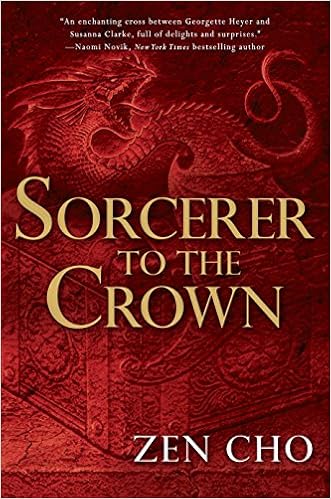
I started Zen Cho's Sorcerer to the Crown last night and I haven't been able to put it down since. It's lovely. Imagine the charisma and honesty of Katherine Addison's The Goblin Emperor mixed with the magic-stuffed period drama of Susanna Clarke's Jonathan Strange & Mr Norrell without all the fat and tangential tomfoolery. It's very clever and delicate in the way it approaches class, race, and gender in Napoleonic-era England. An absolute joy so far.


2. What upcoming book are you really excited about?

If it's not cheating to mention something I've read that doesn't release until January, 2016, I'm going to say Charlie Jane Anders' All the Birds in the Sky . It's a weird, wonderful, heartwarming story about love and the apocalypse. I haven't read anything like it before, and Anders does an incredible job of weaving an ever-changing voice through the novels' narrative to match her aging protagonists. It's a wonderful accomplishment and I think it's going to hit like a wildfire when it's released early next year.

If that's cheating, then I'll choose The Spider's War by Daniel Abraham. It's the concluding volume to his terrific The Dagger and the Coin series--which is one of the most refreshing and subversive epic fantasy series of the past decade. I love the way he is consistently mingling expected tropes with unexpected results, and Geder Palliako is one of the most endearing and fascinating anti-heroes since C.S. Friedman introduced readers to Gerald Tarrant in the Coldfire trilogy.

3. Is there a book you're currently itching to re-read?

Terry Brooks' The Elfstones of Shannara --in part because of the upcoming television adaptation, which looks surprisingly good, and in part because, well... you'll find out in a couple of weeks.


4. How about a book you've changed your mind about over time--either positively or negatively?

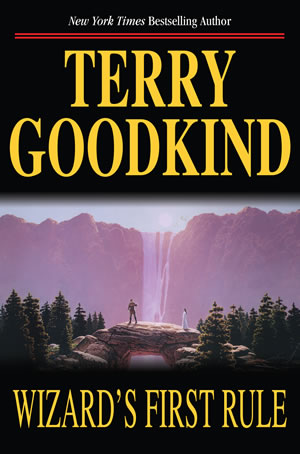
I could go on at length about my adolescent love and respect for Terry Goodkind's The Sword of Truth series, but I won't. I so infrequently re-read novels that my original opinions of them, for good or ill, remain rather crystalline.


5. What's one book, which you read as a child or young adult, that has had a lasting influence on your writing?

Calling back to question three, Terry Brooks' epic fantasies, particularly The Elfstones of Shannara, had a huge impact on me as a writer, and really cemented me as a fan of big, secondary world fantasy. I loved the way he juggled multiple storylines and had flawed, vulnerable protagonists--something I continue to try to work into my stories whenever possible. The Elfstones of Shannara is his Brooks' best work, and the Shannara series was a perfect stepping stone for a young reader just coming off of Tolkien.

6. And speaking of that, what's your latest book, and why is it awesome?

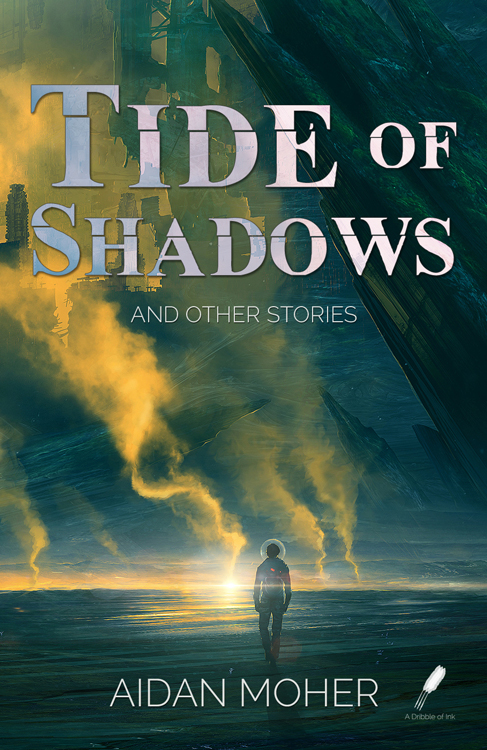
My latest book (also my first) is called Tide of Shadows and Other Stories . It's a short story collection featuring a wide range of science fiction and fantasy stories spanning interstellar colonialism, a love triangle between a knight, a princess, and a dragon, and a grandchild's love for her mysterious (and very old) grandmother in a world covered by ash. I'm incredible proud of the breadth of the collection. In his review of the collection, which had me absolutely tickled, Rob Boffard, author of Tracer, said, "Each of the stories is like a little clock: beautifully crafted, intricate, distinctively handmade, with a dozen tiny complications in its inner workings. The range is unreal: space stations, angel wings, fairytale dragons, ancient shadow monsters…all unconnected, and yet it feels like it’s all part of a bigger whole. It’s exquisite."

-Aidan Moher

***

POSTED BY: The G--purveyor of nerdliness, genre fanatic and Nerds of a
Feather founder/administrator, since 2012.

Friday, August 7, 2015

THE MONTHLY ROUND - A Taster's Guide to Speculative Short Fiction, 07/2015

July has come, which here in Wisconsin means scorching temperatures and summer storms. It also means, apparently, very good speculative fiction. This month was honestly so full of stories that I loved that trying to pick my favorite nine was really, really difficult. 

The tastes of this month run a little toward the generational, especially with regards to escaping the trap of tradition for tradition's sake. Many of the stories this month involve people striving to honor the past while breaking down barriers, while shattering expectations. It's a difficult thing, to live with the weight of history, but a beautiful thing to learn from it and to strive to do better. From science fiction to fantasy, the stories this month capture that summer hope, that blazing optimism that everyone is capable of steering their own lives into a brilliant future.

So come and taste the stories of summer...

Tasting Flight - July 2015

"Luminous" by A.E. Ash (Book Smugglers)


Art by  Yasmin Khudari
About a woman stranded on an alien world with only her thoughts and routines, who is joined by a being very different than anything she's ever encountered before, "Luminous" by A.E. Ash is a white IPA, effused in light and with a crisp bitterness of age, of longing, of fear. The plot follows Jyothi, a scientist left behind alone on a world after war called her fellow scientists homeward. Out of contact with them, she has no idea if the rest of humanity even exists anymore or not, and isn't likely to find out. She's trapped in routine, monotony, until one day a dream tells her to go west and she witnesses a falling star. Literally. Young, shining, and gorgeous, the man who was a star confounds her, not least because the two are drawn to each other despite Jyothi being much older. The story does an excellent job of exploring the loneliness of Jyothi's situation and strangeness of West's (as the fallen star comes to be known) transformation. I loved the way that "classic" tropes involving love and age are flipped here, how the ending comes off as new and fresh and romantically alive. There is a sense of loneliness ending, of walls being lowered, of exploration and discovery in ways that go beyond cataloging the alien life on a new world. Like the best of white IPAs, the story is refreshing with a soft edge, light and lifting and with the feeling of old ghosts being put to rest.

"The Star Maiden" by Roshani Chokshi (Shimmer #26)


Art by Sandro Castelli
Old and new clash and mingle in a completely different way in "The Star Maiden" by Roshani Chokshi, a story that captures the taste of Kristalweizen brewed with honey, crisp and simple and yet reminiscent of times long past. In the story, Tala is a young girl growing up around her grandmother, Lola, who claims to be a star maiden, a woman once at peace in the night sky but trapped on Earth for a lifetime, trapped not just by the man who seduced her but by her love of him and the love of her family, kept from her true home by the hope that she will be able to go there again, not alone but able to take Tala with her to visit. At first Tala is enchanted by the stories, but as time passes the childhood fancy begins to leave her and she stops believing, setting up the central tragedy of the story, the fracturing of the relationship that brought the most joy to both Tala and Lola. Delicately balanced, the story succeeds in bringing the magic of Lola's stories alive but also making understandable the resentment of Tala, her teenage pain and lashing out. It's a story about falling out of the beliefs and mythology of your culture, about rejecting the past only to find something there, later, worth holding on to, worth rediscovering and cherishing. Like many of my favorite stories this month, this one explores the space between generations, the space for growth and also for understanding, captured so well in the lingering images of Tala and Lola, the rift between them healed. Like a good honey Kristalweizen, the story balances classic flavors and newer innovations to create a complex tasting experience.

"The Rainbow Flame" by Shveta Thakrar (Uncanny #5)


Art by Antonio Javier Caparo
Rupali, a woman responsible for creating the rainbow candles that anchor the stars in the sky and maintain order in the world, begins to question the wisdom of her station in "The Rainbow Flame" by Shveta Thakrar, a story with a different mix of new and old, a red blend wine with rich complexity despite its young age. The story layers traditions upon traditions, traps Rupali in a place where her imagination itself is used to maintain order, to prevent change or progress in favor of keeping the rigid sameness of her elders. And Rupali is left to navigate a course between honoring her family, honoring her ancestors, and doing what she knows is right. The story captures the beauty and possibility of youth, not only its energy but its new perspective, its ability to see around the stock explanations for why things are the way they are. Rupali is alive with potential that is wasted by the necessities of the status quo, without much thought paid to whether she wants to make the sacrifice and, even more importantly, whether that sacrifice is worth making. The action is fast, the characters well rendered and the setting intense, a world kept still and stagnant, if relatively happy. The conflict of the story revolves around whether that relative happiness, that contentment, is worth the subjugation of even one person, is worth the loss of innovation, change, and progress. The story captures the feeling of newness, of optimism that future generations are not just decadent fools, but have something to teach and contribute to society. Like a good blend wine, there is the tendency to dismiss the characters of the story as too young, too inexperienced or lacking subtlety, but there is a joy there to the story, something incredibly drinkable, fruity, and fun for even the most experienced of tasters.

"When Your Child Strays From God" by Sam J. Miller (Clarkesworld #106)


Art by Julie Dillon
Following a mother in search of a son she has lost in more ways than one, "When Your Child Strays From God" by Sam J. Miller is all Imperial Stout, a hammer between the eyes in terms of strength but with a taste that is sweet, filled with flavors both familiar and dark. The mother, a religious woman caught in a bad situation, is unwilling to stand between her abusive husband and son who obviously has no interest in being who his father wants him to be. But still she is willing to do anything to find him, to make sure he is safe, taking a strange drug in order to track him down, and in doing so she opens herself not just to the strange visions the drug induces, but to an empathy that she cannot avoid, that causes her world to shake and shatter. Probably the most wrenching story I've read so far this year, it manages to avoid making the mother an object of scorn or even pity. It manages, with elegance and through a surreal landscape, to capture her, mirroring the drug state perfectly, creating for her the same empathy that she finds for her son. Not that it forgives her for her actions, or for what she failed to do for her son, but it does not deny her growth, does not cast her in the role of evil villain. Once again this month delivers a story steeped in the conflict between dogmatic tradition and youthful progress. Here is a story of a woman who finds herself having to make a choice, to either confine her son and herself to the cage that their beliefs had made for them or to find a newer way that, while offering no assurances at salvation, still represents the only way forward, the only way to heal. Incredibly optimistic even as it is heartbreakingly sad, the story hits and doesn't stop hitting, leaving me as a reader a bit numb. Like an Imperial Stout, it is powerfully strong but also complex, layered, and deeply rewarding.

"At the End of Babel" by Michael Livingston (Tor)


Art by Greg Ruth
About Tabitha Horse Raven, the last speaker of the Karesan language, in a future where to be different is to be criminal, "At the End of Babel" by Michael Livingston is a red ale, stained the color of blood but with a promise of sweetness, of relief after troubles. The story moves as Tabitha, the last of her family, travels to the site where her father and most of the other Karesan speakers were killed because in this future there is but one culture, but one language, and any threat to that uniformity is dealt with...harshly. There is a weight to the events, Tabitha's journey being one of fatality in some ways, a wish perhaps to not be the last any longer and so in some ways a trip to die because she is guilty she survived, that she was spared in the massacre that claimed the rest of her family. More than that, though, it is the fulfillment of a promise, the finishing of a dance that her father started, an act of resistance that lingers as long as there are any to speak of it, as long as there are people to remember. The story does a nice job navigating the tricky terrain of the subject matter, honoring the culture Tabitha belongs to with an effort to not make it exotic, not make it a caricature of Native American culture. I'm hardly the best to judge, but it seems to walk the line successfully, capturing some of the history of the Southwest and how the government seems to make the same mistakes over and over again, history repeating. Only there is a magic in language, in any language, and it's something that Tabitha proves as she completes her father's dance and awakens something that was never exactly sleeping, revealing a power that cannot be hidden or suppressed with the red paint of blood. Powerful but with a crisp and flowing voice and style, the story, like a good red ale, presents a nicely subtle flavor, sweet but with an edge that makes it impossible to ignore. 

"The Insurrectionist and the Empress Who Reigns Over Time" by Benjanun Sriduangkaew (Beneath Ceaseless Skies #178)


Art by Julie Dillon
A tale of betrayal and forgiveness, conflict and healing, "The Insurrectionist and the Empress Who Reigns Over Time" by Benjanun Sriduangkaew is a brandy old-fashioned, a drink that is full of regret and pain but one that seems to creep back again and again, an old friend with hidden depth and possibilities. The story, set in a world where there seem to be no men at all, features Sanhi, a strategist specializing in how to bring down corrupt governments, who is possessed of a strange gift of always being able to avoid capture, always being just out of reach of her foes, as well as a group of friends who stand beside her, including her blade-master lover. Until the day the Empress finds her and imprisons her for a year that turns out to be much more than that thanks to the Empress' ability to jump through time. Even as Sanhi expects to be killed, though, it turns out the Empress has a different task in mind for her, and a few surprises as well. The story is, at its core, about trust and betrayal, Sanhi finding that the woman she loved is not who she thought and having to face how much that matters, how much of her feelings were false and how many, despite the duplicity, were true. The story explores the wounds opened by distrust, by not believing enough in the person you love, and how those wounds are not necessarily fatal to a relationship. For in the end the story chooses to show how the mistakes made in the past can sometimes be undone, how lies can give way to truth and how the future is not set in stone, is alive with hope and beauty. Like a brandy old fashioned, there is a feeling of guilt and shame and loss, as anyone who has woken up after having had a few too many can attest to. But there is also a forgiveness and a healing, a vulnerability and a drive to try again, with the knowledge that whatever happens, it's worth the striving for.

Shots

"Sometimes Heron" by Mari Ness (Lackington's #7)


Art by Kat Weaver
Quieter and about insecurity and transformation, this one is a Smiling Duck, a mix of equal parts root beer schnapps and bourbon topped with club soda. The story is a personal account of a person transforming from creature to creature, from duck to tiger to cow to heron, each transformation becoming the taking of an avatar, a creature to represent the fluid states of the narrator. At the same time, it is the story of a woman struggling with the different aspects of herself, a boy who breaks roles, a duck who does well in the rain, a cow because sometimes it's hard to avoid becoming things we don't want to be. The story is poignant and builds up the human part of the narrator slowly, though with each transformation, with each confession, a picture of this person comes clearer, and I found myself identifying with each new form. Because everyone has different roles, different ways of coping with the world, different attempts to be the tiger while it seems too often we find ourselves in less flattering shapes. Short and sweet, there is a depth to it that makes it, like a Smiling Duck, a compelling experience.

"How the World Was Made--A Super Crown" by Roger Bonair-Agard (Apex #74)


Art by Carly Sorge
Occasionally I like to cheat on here, and this is my cheat, not a story exactly but also very much a story. This poem, a series of entwined sonnets, is a Trickster, a mixture of amaretto, vodka, brandy, coffee liqueur, and Irish cream on the rocks and topped with milk. The result is a poem that is a striking tale of the creation of the world, of how everything came to be, not with commands from on high but through the act of storytelling. The creator here is Anansi, a dancer and a liar and an artist. The world that he creates is one that he writes, and is only possible because of his skills to lie and to revel in life. There is guidance, of course, a sort of proto-world that Anansi dwells in but it is lifeless without the touch of creativity, without the ability to say what isn't, the ability to make what wasn't. There is such a power and a joy here, the power and joy that comes from creation and art, from writing and from storytelling. That the important part of  it all is not what is true or not, but what is real, and Anansi makes the world he wants real but stamping it down with his feet, by populating it with his dreams. The poem is moving and has some serious legs to it, keeping up its arc over twenty-five sonnets. Like a Trickster, it is full of enough juice to down most people in one go, but is compelling, begging the reader on and on into the dance.

"Portrait of My Wife as a Boat" by Samantha Murray (Flash Fiction Online)


Art by Dario Bijelac
About two women separated by their natures, joined by the love they have for each other, this story is a Salty Kiss, a mix of three parts rum with one part blue Curaçao with a splash of lime and rimmed with lime and sea salt. There is such a longing with this story, all the loneliness of a couple torn between the sea and the shore. It's more than just one being a sailor, though. In a way that would be too easy to overcome. Instead, one of them is actually a were-boat, is meant for the sea in ways that other humans are meant for solid land. It's a transformation that is slightly disturbing and also beautiful, freeing, though it also takes the two women apart, the one unable to truly offer a pull that is as strong as the sea, and yet even so not hating it, not despising it or her love. Because to hate the sea would be to hate the woman she cares for, and the story manages to tell a tale that is both tragic and empowering, that is freeing and yet makes one glad to have a drink to hide behind, glad that the salty taste can be from the glass and not the tears. Powerful and with a lingering loneliness, the story really does live up to the promise of including a were-boat.

--


POSTED BY: Charlesavid reader, reviewer, and sometimes writer of speculative fiction. Contributor to Nerds of a Feather since 2014.

Thursday, August 6, 2015

Thursday Morning Superhero

A relatively low key week in comics this week.  As I type away I am distracted by the Great Fables Wake which I will be attending next week.  In an attempt to recreate the love of Fablescon, the good folks at Austin Books and Comics will host a wake for the beloved series Fables.  For more info check out the Tumblr here


Pick of the Week:

Nailbiter #15 - I really don't want to wait until October for the next issue.  Things got real as the crew ventured further in the caves under the graveyard.  Joshua Williamson has mastered the art of keeping the reader hooked by revealing just enough information to create more questions.  There is some sort of master plan and I fear for the people of Buckaroo, Oregon.  The feds have officially set up camp in town and the reveal at the end is going to make the next two months difficult.  At least it is plenty of time to read this series again.

The Rest:
Darth Vader #8 - Things are not going well for Lord Vader.  After failing to capture Luke on Tatooine, things appear to be getting better when his assistant pulls off an impossible heist from an Imperial Cruiser.  Vader is quickly put in his place by the Emperor as he is still being held responsible for the Death Star.  It is very interesting to read about a time when Vader was the low man on the totem pole.  Good stuff.


Mad Max Fury Road: Max Part Two - We finally learn who the two characters Max flashes back on during Fury Road.  In a somewhat disappointing issue, Max ventures down into a den of Buzzards to rescue his ride and a little girl.  While the pedal was pressed to the floor the entire time, I was really hoping to gain more insights into the characters.  The film was brilliant, and these comics had the unique opportunity to really provide the context that was lacking.  In the end it was entertaining, but shallow.


 POSTED BY MIKE N. aka Victor Domashev -- comic guy, proudly raising nerdy kids, and Nerds of a Feather contributor since 2012. 

Wednesday, August 5, 2015

6 Books with Science Fiction and Fantasy Author Linda Nagata


Linda Nagata is an award-winning science fiction and fantasy writer from Hawaii. She has written thirteen novels including The Red: First Light, a near-future military thriller that was a finalist for the Nebula and John W. Campbell Memorial Awards in its self-published version, and is now available from Saga Press. Her short fiction includes the story "Nahiku West," runner-up for the 2013 Theodore Sturgeon Memorial Award.

1. What book are you currently reading?

Ghost Fleet by P. W. Singer and August Cole

Both authors are experts in the defense industry, and Ghost Fleet is a novel of World War III, based around current and proposed technologies. Just out this summer, it takes a look at the US military’s vulnerabilities, with an opening that is absolutely terrifying because it feels so possible. Confession: I’m listening to the audiobook instead of actually reading.


2. What upcoming book you are really excited about?

Aurora by Kim Stanley Robinson

I'm a huge fan of KSR’s early work and I’m looking forward to this. The reviews have been amazing.


3. Is there a book you're currently itching to re-read?

Downbelow Station by C. J. Cherryh. This, and Merchanter's Luck, were favorites way back when, and there’s been so much recent discussion of Cherryh’s work that I’d like to re-read these and refresh my memory. Unfortunately, I read slowly, and there’s so much I need to keep up with, it’s unlikely I’ll get back to them anytime soon.


4. How about a book you've changed your mind about over time--either positively or negatively?

Neuromancer by William Gibson. This was a hard question for me to answer, because I rarely re-read books, but I did finally read this again last spring and I’m even more impressed with it now, than when I was a beginning writer. The writing and world building are amazing.


5. What's one book, which you read as a child or young adult, that has had a lasting influence on your writing?

Lord of the Rings by J. R. R. Tolkien. I read this book when I was eleven or twelve and loved it so much that it ruined me for epic fantasy for years to come. I had no interest in reading any other epic fantasy novels that were coming out at the time, so in a sense you could say it drove me into science fiction.


6. And speaking of that, what's *your* latest book, and why is it awesome?

The Trials , book 2 of The Red Trilogy. This is a trilogy of high-tech, near-future military thrillers, with all three books out this year, and I’m very happy to report that book 1 has been appealing both to long-time readers of military SF, and to those who rarely read in the subgenre. The Trials drops on August 18. It continues the story begun in book 1, touching on themes of surveillance and security in a wired world, vigilantism, and the hero’s role.


-Linda Nagata


***

POSTED BY: The G--purveyor of nerdliness, genre fanatic and Nerds of a
Feather founder/administrator, since 2012.

Tuesday, August 4, 2015

Zhaoyun's Third Annual Splendiferous Summer Reading List

Boom!


1) Various Stuff by Brandon "Branderson" Sanderson


It took me a while to warm up to Brandon Sanderson, but I now think he's cool enough to deserve his own one-man celebrity portmanteau: Branderson. I just hope if he has a male child he will name (or already has named?) him Brandonson. Anyway, my initial distrust was totally irrational, sparked by the sudden burst of (almost certainly mistaken!) insight, while reading Neal Stephenson's Reamde, that the workhorse sci fi/fantasy author good ole' Neal was mocking must be Sanderson. I had no desire to read books by the Thomas Kinkade of sf/f, I haughtily huffed. But then I read a short story by Branderson, and liked it immensely. This gateway taste led to a sampling of the Mistborn series, which I found to be excellent (though I'm still on the fence about the Alloy of Law industrial age digression). Currently, I'm midway through the first couple of books of the Stormlight Archives series, and am loving it so far!


2) The Good, The Bad, and the Smug, by Tom Holt
 

The world needs a new Terry Pratchett, and Holt may be it: based on this book (which I've already finished), he's got much of Pratchett's wit and word-crafting skill. Holt still has a lot of growing to do before his feet fill out into Pratchett's dauntingly awesome shoes, but he's certainly on the right track, if this book is any indication.


3) Dark Eden and Mother of Eden, by Chris Beckett


I'm excited to read straight-up science fiction again—it's been a long time. Everything I've heard about this series, especially Beckett's speculations on the linguistic effects of the passage of time on another world, has me in a tizzy, so much so that I've begun to worry if I/Beckett have created an expectations trap out of which no book, no matter how brilliant, can escape. Time will tell!


4) A Prospect of War, by Ian Sales


My thoughts on this are similar to #3 above: science fiction has been singing its siren song to me for quite some time now, and I am looking forward to being dashed upon the rocks and swallowed up by the Scylla of space opera! I feel certain this Odyssey references are mixed up, but not everyone is as long-suffering as him, to slog through the tedium of yet another detour on his road home. Honestly, from Troy to Ithaca is like a three-week journey, tops—even with only hands for paddles.


5) The Shepherd's Crown, by Terry Pratchett


See #2 for praise, by implication, for the late master of words Terry Pratchett. I loved his work over the years, and it will be quite upsetting to read this knowing that it's the last thing he wrote before his tragic death, but I'll read it anyway, because not to do so would be even worse.


6) The Buried Giant, by Kazuo Ishiguro


Actually, I'm not certain I'll read this; Ishiguro doesn't wow my socks off, if anything sometimes irritating the socks back on me for failing to reach the full potential of his interesting ideas. Reading his books is maddening, as I keep expecting some titanic, earth-shattering denouement and instead he delivers not a bang but a whimper. Yo, Ishiguro: enough whimpering! It's time to make a bang!


And that, as they say, is that! 

Brought to you by Zhaoyun, reader of dreams and dreamer of books here at NOAF since 2013.

Monday, August 3, 2015

Microreview [book] : No Man's World - Black Hand Gang, by Pat Kelleher

A book to end all books?


There is a too-commonly analogy used for tough tasks or times being like WW1 trench life. In this case it is appropriate both because this book starts in those trenches, and because at times getting through it felt how I imagine struggling through gluey mud might be as bombs slam down around and the tears roll down my face, failing to wash away the false hope that one day it will all be over.

Alright, that's a tad harsh. A mightly-tad harsh, in fact, as there is a lot in Kelleher's writing to enjoy. Sadly there is so much to not enjoy that this is my 'didn't finish the book' book review for the season.

We begin on the Western Front in October, 1916, as various British soldiers are introduced within the terror and tedium of trench warfare. Kelleher from the off shows he hasn't skimped on research time and seems to relish each piece of jargon he sprinkles into the prose - 'whizz-bangs', 'Very lights' and 'Blighty's abound. However, whilst the stage feels authentic to someone who has studied the era and the conflict in some detail themselves (I was obsessed with WW1 as a teenager), the actors and action placed on said stage don't, quite. The key blame lies I think from the start with Kelleher's dialogue. Perhaps he is the victim of over-familiarity with the 'bloody 'ell, Tommy' way of talking by the soldiers, or the 'that will do, lad, stand down, there's a good chap' of the officers. Yet there are ways to make cliches come alive again, and his characters don't manage to feel like real people you would meet in the street, withe in 1916 or now. There are a couple of exceptions, particularly once time is given to the inner thoughts of some of the men, and the key characters of Atkins, Everson and Jeffries seem to be made of more complex stuff, but the pantomime 'gor blimey' feel of the rest of the cast of conscripts kept me firmly in the 'disbelief unsuspended' camp.

Soon enough, the reverse deus ex machina arrives - an explosive earthquake, a fog, and a bang, and the Tommies' patch of Somme earth is teleported to what quickly turns out to be another planet. Rather handily, the air is breathable and the temperature survivable, but of course almost every single animal and plant not only can but actively wants to kill them. Marooned on their field of mud and surrounded by giant hounds, flying dinosaur-type things and grass that shoots spikes, our soldiers, along with a priest and a few nurses, must learn both to survive and how they came to be there, in order to find their way back home.

The author, despite my above negativity, is a decent world-builder, and his descriptive language is often rich and imaginative, and constitutes much of my enjoyment and my continued interest in reading. Although the lurches into fantastical action are not often smooth (weird boulders are 'casually' mentioned then in the next paragraph reveal themselves to be killer beetles, for example), the visual detailing is a large ingredient in the fun of the tale. However, Kelleher then lets it all down by enormous, giant beetle-sized failures of logic and description. The best example is when a native of the planet is first encountered. The briefest of description of them as a 'wild man' with standard human appearance is followed by his immediately talking to them in broken English. This is calmly accepted by the soldiers - "the Tommies were not too shocked that the man spoke English. As soldiers of the great and glorious British Empire, they were used to the idea that Johnny Foreigner would speak at least some English, even if it was in an odd accent. It was only right and proper, after all".

It might seem odd that I have just quoted a fairly random line of the novel at length, but this was the exact point at which the story began to lose me, and looking back on it now, there is so much wrong here. Now, I'm not thinking the author is saying that about their reaction with anything other than hindsighted sarcasm, but the very fact that he is commenting from afar on their beliefs left me cold, for if that is what it is, it is a self-congratulatory and distancing authorial voice we are hearing, not that of a passive narrator of fantasy and sic-fi adventure. As elsewhere, Kelleher feels the amateurish need to overstate, to underline his points. Whilst this is happening, though, the complete lack of logic to why they are talking in English (don't even get me started on the insect overlords chatting away to the soldiers) is not addressed. I don't mean addressed by the writer - that explanation may come later - but addressed by anyone in the story. No one says 'we are on an alien planet and maybe we should wonder at that'. It would be my first question after hello.

The weak plot points continue, and are too numerous to mention, but a vital one to highlight is the Jeffries character. A mysterious, devil-worshipping murderer of an officer, it is his actions that largely further the plot, and for a while we are given hints it may be his fault the teleportation happened. However, whilst anyone, anything of distinction from the swathes of blandly gruff yet loveable Tommies is welcome, his arch villainy is too cartoonish. Sure, we are in a world of trees with poisonous snot and insect slave-owners who can leap 30ft, but to not ground the human reactors to the world with relatable behaviour, even if that is murderous and insane, is a fault.

Am I being too harsh on what is surely meant to be a fun piece of classic sci-fi homage to Burroughs, Wells et al? It's WW1 soldiers fighting aliens for cripes's sake. Well, no, I'm not. If Kelleher had the vigour and skill to launch into his tale sharply and tell it with rhythm and flair, this might have been my read of the year - it is after all a great premise with lots of potential. But he labours through introduction after introduction and then labours through page after page of dull interpersonal relationships between the soldiers, constantly sapping the pace. Letters home to a sweetheart are used to skip periods of time, when we should be breathing each breath of their existence, and action is delayed in favour of cheery exchanges over work duty or about the attractive nurses- UM! EXCUSE ME GUYS! YOU ARE ON AN ALIEN WORLD THAT INSTANTLY ATTACKED YOU! Maybe a little focus and speed to events?!  It is almost as if Kelleher is distracted from his plot by his world build and people, and forget they are there to serve the story, not the other way around.

Ultimately, it was difficult to pin down what kept me reading on. Once I realised it was to finish so I could write the review I had promised to write for this site, so you could read it and decide if it was for you, I decided to stop at about four fifths of the way through the first novel (part of a trilogy now available from Abaddon Books) and start this review. Because, if you're eating a bad soup, do you keep eating to check the bottom? No. you do not. So you find me, lips stained with bad soup, begging you to not bother with this series, and instead go and read The Time Machine, or some Dan Dare comics, or watch some early Flash Gordon. For those early examples of science fiction put this deep in their shade. Maybe have some nice green Gazpacho with it. Perfect for these summer afternoons...


The Math

Baseline Assessment : 4/10

Bonuses : +1 for really making me want to know what happens, even though it hurt to carry on, due imaginative landscaping and a mystery hook to the plot; +1 for taking me back to when I was 13 and would read tale of alien worlds and a comic series called  Tommy's War; +! for respecting the horrors of war and the hardship of command based on a class system  

Negatives : -1 for the lurches in tone -e.g. from many men dying by their side to a comic quip a second later; -1 for the awful drug sequences; -1 for the relentless modern perspective imposed on the situation and morality, whilst somehow wallowing in all the talk of the Bosche and the patronising working class pluckiness

Nerd Co-efficient : 4/10 "not very good " see our scoring system here

Reference: Kelleher, Pat. No Man's World trilogy [Abaddon Books, 2015]

written by English Scribbler who needs to find a good book, sharpish