Showing posts with label translation. Show all posts

Monday, August 11, 2025

Book Review: On the Calculation of Volume by Solvej Balle (tr. Barbara Haveland)

 A lingering, thoughtful take on the human experience of living through a time loop


Published in 2024 in the US but 2025 in the UK, the first installation of Solvej Balle's series, translated from Danish by Barbara Haveland, is a strange old book. The protagonist, Tara Selter, is trapped in a time loop. She relives the 18th of November over and over again, recording in her notes - which appear to be the text we are reading - the events of the many iterations that only she remembers, over the course of a full year of experiential time.

It is not a particularly unusual day. Tara works - with her husband - in the antique books trade, and in the first iteration of the day, before anything unusual happens, she spends the day in Paris buying books, chatting to other buyers and sellers, and meeting up with an old friend and his new girlfriend. It is a good day, but not a strange one, with no precipitating incident or obvious inception point. We only read about this unextraordinary day after knowing about the premise - Tara is up front with her situation in her notes before looping back to what led to her predicament, because why wouldn't she be? These are her notes, and she already knows what she experienced. But even when looking back at the original 18th of November, with the benefit of hindsight, there is no foreshadowing, no suggestion of some malevolent force that has brought about this unthinkable intrusion of unreality into Tara's world.

And that is, in many ways, the core of the story I want to linger on. This is not a book about an easily solvable problem. It doesn't follow Tara as she pulls together the clues and the science to reverse this and make her way back to the normal flow of time. She tries - of course she tries - to figure out a pattern to the events. But she's no scientist, and there is no pattern she can see. Her attempts to understand the problem slowly turn into - very human - irrational pattern seeking and superstitious belief by the end of the volume. This is not a story about a grand adventure against the odds. Instead, it's a story about her experience of this inexplicable event.

On the face of it, that experience is a whole lot of not very much. It's the day to day of surviving. It's the progression of the decision of whether she tells her husband every day what's happened, and pulls him into trying to solve it or not. It's the slow decrease in available food in the house and nearby supermarket as she continues through her year. It's looking up at the vastness of the sky at night and feeling like your smallness in the world means that all this - whatever it is - can't be permanent in unsolvable. It's bird song and peeing in the garden and walking and just the very granular daily experience of her life in this situation. And, as such, it is full of her feelings and musings, more than anything else. No, however much you're thinking, more than that. This is a phenomenally insular, introspective book.

Luckily, Tara is an interesting character in whose mind to sit, and more critically, Balle and Haveland have a really good line in prose that makes those mundane moments sing. I've already mentioned the stars, but I think that scene really does epitomise what this book is truly good at. Tara has been feeling very concerned about her impact on the world around her, and about how utterly unsolvable this problem seems. She worries, as she realises her repeated trips to the supermarket are depleting the food stocks despite the recurrence of the day, that over time she is just going to deplete a wider and wider field of resources, becoming some awful monster - her word - that impacts the world around her without its knowledge. Then one night she goes out into the garden in the dark, wrapped in her duvet, and looks up at the night sky. In her musing on the vastness of it all, she finds some measure of peace in her insignificance, and a quiet belief that it can't all be irreparable, if she is so small.

As it happens, that feeling doesn't last, but that doesn't even really matter. Its significance is in the experience of it, the zooming into a small moment of time and sitting with a person and their very real feelings about an impossible thing they're living through.

I find this is an under-represented approach in SFF - at least in the mainstream modern SFF I mostly consume - to its detriment. We are rich in stories about solving problems, action and plot driven explorations of what if. But there have been a few stories I've come across recently that take those what ifs and those ideas, and ask instead - what would it really be like to live through them? It comes through in Julia Armfield's Private Rites, it is a strong aspect of Kaliane Bradley's The Ministry of Time and it is deeply embedded here. The core idea at their heart may not be new - climate change, time travel and time loops are all established SFF tropes - but what makes them feel fresh is their approach from the experiential end. As someone very interested in people, and in seeing human experience at a granular level in fiction, this is so refreshing. Because it would be absolutely boggling to live through any of the events in any of those books. How would one cope? Asking that question is, to me, just as critical as asking about the science, the ideas, the solution to the puzzle, and if anything more so for its relative absence in the field.

The answer, here at least, is that Tara increasingly doesn't cope. She initially is pulled towards her husband, wanting to work with him to face this, but over the passage of her experiential time, finds the gap between them widening too far for her to cross day after day. She hides from him but stays close, at first, and then widens the gap between them as she feels their psychological gap widening. Fewer and fewer other people make themselves known in the narrative as the number of days of the time loop rack up, and as she pulls in tighter and tighter to herself, losing her sense of the normal rhythms of the world. And all of this, she notices and narrates; she is nothing if not a self-aware protagonist. But this too feels a reflex of the situation she finds herself in - she has no one to talk to about this but herself, in her notes, and so all of that ruminative approach is her act of trying to deal with the inexplicable bearing down on her.

There's a lot in here about isolation, and how that would affect a person, done with realism and sensitivity. It is impossible not to feel for her, not to pause in those cold, empty rooms, in those quiet days, and feel the very mundane but real melancholy of it. The great tragedy of this temporal incident is how much it cuts her off from the people closest to her, quite literally. For a day whose first iteration is full of warmth and friendship, it becomes incredibly stark and bleak.

This isolation also plays into something that feels a little underexplored in SF texts - at least in my experience - the realities of how much someone would or would not believe the fantastical when it happens to them in their life. Often, a character will accept easily because it is simply expedient to the story that they do so - if it's a plot and action driven narrative, you need to get the character past the blocker that impedes the narrative from happening. Or perhaps it's a story that wants to subvert that, and has a character refusing to believe what's in front of them while it continues to unfold. Tara is neither of these. She believes relatively easily, and based off the smallest of details. The first time the repetition unfolded, the thing that caught her attention was a fellow traveller at her Paris hotel dropping a croissant at breakfast in just precisely the same way as the previous day. Alone, it wasn't enough for her to fully understand and believe, but it sparked the thought that leads her to finally understanding. Does that seem too easy? Maybe... except when you are so embedded in the narration of her experience. It turns out, the speed of her acceptance isn't the thing, it's instead being able to fully grasp the little emotional pieces that go into it. Because the narrative is so concerned with her interiority, with narrating her thoughts in detail, it becomes very easy to see why she accepts it when she does, because we effectively experience that thought process with her.

By not just blurring but removing - as much as possible - the boundary between the reader and the character, Balle has created an incredibly moving and rich text that addresses key emotional questions about the experience of the impossible. If your calculus works that way, yes it comes at the cost of plot (and indeed, resolution - this is the first volume of a planned seven, the first sequel of which is already available in English) - this is not a story in which a great deal of significant events happen - but I believe that what it offers instead is not only worth that sacrifice, but sidesteps the idea of it as a sacrifice entirely. It is a wholly different text, with different concerns, approaching an SFnal problem from an unusual angle, and enriching the genre as a whole by so doing. If you are interested in human experience, in character, and in the quiet melancholy of a single person's thought, this is a book that will absolutely deliver that, along with a thoughtful approach to an SFnal problem. 

Balle sings an ode to the intimate quiet of personal reflection in the hardest of times, and to the pain of isolation. I would definitely encourage you to listen.

--

The Math

Highlights: beautiful prose and translation, interesting approach to the human aspect of the SFnal, granular and poignant interiority

Nerd Coefficient: 9/10

Reference: Solvej Balle, On the Calculation of Volume [Faber & Faber, 2025]. Translated by Barbara Haveland. 

POSTED BY: Roseanna Pendlebury, the humble servant of a very loud cat. @chloroformtea.bsky.social

Thursday, June 12, 2025

Book Review: Red Sword by Bora Chung (tr. Anton Hur)

A gut-punch in book form.

A while ago, Molly Templeton wrote a piece at Reactor about not needing to understand everything in a book that I vibed with so very hard - I am quite a "roll with it" reader in many ways, and it is lovely to have someone put good words around an experience you've had. It came back to me as I was reading Red Sword, the new novel from Bora Chung, because not only is it a story without a lot of handholds to find while reading, but is in fact one where the confusion is emphatically part of the point. It is a story that languishes in that feeling of ignorance, of lostness, and does something fantastic with it.

The story begins with ignorance - the protagonist is on an alien world, at a loss about most of the details, knowing only that she has been brought there by an imperial power who have violently coerced her into this place to fight. What then proceeds for a large chunk of the novel is action absolutely devoid of context. Things... happen. The protagonist endures and experiences. We the reader experience alongside her. We have just as little context as she does, must endure the bafflement along with her. The events that she experiences and endures are confusing, traumatic, violent and often horrible. The novel is full of sequences of fighting, of death. People - many of whom the protagonist knows by description rather than name - are forced to fight an overwhelmingly superior enemy without guns, and die horribly in the act of it, beginning in the first few pages with an unnamed man the protagonist has come to love during their mutual imprisonment on the ship that brought them to this planet to fight.

Her experience then is shaped not by understanding but by inexplicable bloodshed and death. For a cause she doesn't know, let alone support, in a place she doesn't know, with rules she doesn't know. But she keeps being pushed back into these violent encounters, suffering at the hands of the imperials who brought her here as well as the mysterious white aliens they fight.

Already, I think it's clear this sounds like a grim story. It is. It's apparently inspired by the stories of Korean soldiers who were sent to fight in Russia for the Qing Dynasty, and that sense of powerlessness, of being dragged into an outside conflict, comes through at every turn. But it's not just the events and the thematic resonances of this that reinforce it. It's the language.

This is a translated novel, so it's never going to be clear (particularly to me, who speaks no Korean), the extent to which the object that comes into my hands owes its phrasing to Bora Chung or to the translator, Anton Hur. But whatever portions they poured in to the alchemical pot that made this worked perfectly, and particularly in one specific way: the sparseness of the prose. Now I am normally a fan of ornate. Give me something deliciously overwritten and I will, like as not, go mad for it. But Red Sword goes hard in the opposite direction, and is just as brutally impactful for it as something embracing adjectival rococo. To the extent that... I don't even quite understand how it's doing it. How using simple sentences, direct statements, with flat tonality, somehow turns into an emotional gutpunch. There are brief moments that make sense - after a paragraph of text, the contrasting bluntness of a single, brief sentence character death obviously has the benefit of contrast. But it's not just those individual moments. It's the whole thing. All of it is in this almost detached, distant, plain language. And yet it manages to be some of the most emotionally affecting.

To give a specific example, there's a long section in the middle of the book, where the protagonist is thrown from violent situation to violent situation on a foggy field of battle. She doesn't know where she's going or what's going on, and she is simply trying to survive situation by situation. It culminates with a scene of her smashing a weapon into the body of an imperial soldier over and over and over and over again, before cutting to a section break, and then opening the next with her being distracted from almost a reverie by a female scream.

I put the book down after reading that section, hit with a sudden certainty that what I just read was a vivid depiction of someone in shock.

That's what Chung and Hur's prose does here - it situates you emphatically in this experience of living moment to moment, contextless and confused, and by doing so in such blunt terms, hammers home the reality of that experience. Like the protagonist, you are completely at sea in the horror of it all. Her emotions echo out to the reader through this sympathetic experience. The detachment isn't detachment; it's indicative of the real emotional toll being exacted by the horrors she faces. And it is so powerfully done, it cannot be quickly consumed. For all its simplicity, it is prose you need to sit with and digest. I can't quite figure out how its doing what it's doing, but I can absolutely revel in the experience of it.

As the story goes on, some context does leak in. There is some sense of clarity and closure by the final part of the story, but even then, that feeling of being lost never truly ebbs. The bones of the context are there, but we don't have the fleshing out of exposition that would be my expectation of the usual speculative novel. There's no grand speech laying out motive. Only snippets, and even they form a small part of a larger picture unseen, only speculated. But we don't need to have the architects of all this misery come to speak their peace. We see someone experiencing its effects. What does the context matter in the face of the facts? What do the explanations matter in the face of the suffering?

A lot of this, I think, also comes down to trust. Chung lays actions out simply and clearly, with short snippets of dialogue, and mostly expects the reader to infer meaning from how they interact, how those pieces of dialogue or the rare intrusions of meta interact with one another, or to infer that meaning is, at this point, unattainable. Explanations come predominantly at the granular level - how the protagonist got out of the river, how she broke her sword, how she shot the gun. Overarching plot theorising? Not so much. But these moments piece together into a whole, and that whole shows us those effects. We see what this empire is by what it does.

And so I think this is a novel that makes an art out of incomplete understanding. It would be a worse book if the underpinnings were explained at any point, and especially the start, because it would rob us of the chance to ride along with the protagonist and be lost with her, to flow with the story as she flows with it, in shared confusion. It is that shared experience that absolutely makes the story what it is, and allows for some incredibly powerful moments. I do not think I have read scenes of violence in a story - especially as someone who generally finds battle scenes and extended fights tedious - that have affected me quite so strongly, and I think it is precisely because I have to experience them situated in the moment with the character, rather than trying to fit them into a broader context, or seeing them as a moving part in a puzzle, a set piece hurdle to traverse. They're not. The violence is, the experience of that violence, is the point. The protagonist's experience is the point. When the story reaches its conclusion, a number of questions open up about personhood, about who gets to be real, and about the disposability of human life in the endless grind of the imperial machine. Those questions are better served by the time spent paying attention to the material consequences of those imperial decisions.

Red Sword is deceptively simple. Its simplicity is its power; its contextlessness is the point. By removing all the guardrails, it forces the reader to confront the brutality of the experiences of its protagonist, and reckon with them purely as they are, before coming to any kind of broader conclusions about the wider politics at play. The human first. The real, lived moment first. The consequences first. Only then context, a little, but even that ultimately serves that larger section of the text. Chung has turned confusion into an emotional weapon, and drives it home with every brief, brutal sentence. I may not have always understood it all, but I felt it.

--

The Math

Highlights: 

  • some of the best writing of violence I've come across in a book
  • vivid, clipped prose that shocks you into emotions
  • immersive perspective

Nerd Coefficient: 9/10

Reference: Bora Chung, Red Sword, [Honford Star, 2025]. Translator: Anton Hur.

POSTED BY: Roseanna Pendlebury, the humble servant of a very loud cat. @chloroformtea.bsky.social

Thursday, August 1, 2024

Book Review: A Magical Girl Retires by Park Seolyeon (translated by Anton Hur)

Magical girl manga meets millennial angst

CW: discussion of character experiencing suicidal thoughts.

I can't decide if this book is very deep or just very odd. It's quite possibly both.

A Magical Girl Retires follows an unnamed young Korean girl struggling with debt and a difficult job market, unable to live up to the promise she showed in her grandfather's jewellery shop, never having become the watch designer she dreamed she would be. At the start of the story, this drives her to a bridge in the night, contemplating jumping into the water below and hoping no one notices or is inconvenienced by her. Just as she finds herself unable to do it, a stranger appears to tell her that she is destined for greatness, not this, and to come away immediately. She is thus drawn into the world of magical girls, real-life magic-wielders like the figures from manga, who use their skills to make the world a better place.

Which sounds... well, there are some obvious places that story can go, and this isn't quite any of them, though it does follow some of their themes some of the time. But the narrative never quite sticks to any of the expected paths, winding in between them but never fully committing, and what you get at the end is instead a strange, dreamy and meandering study of a character reassessing her place in the world and her relationship to her self-image, to her abilities, and to what power means. The depth of it all sort of sneaks up on you on the way, presenting itself gently, subtly.

And that approach bears out in other aspects too—especially the worldbuilding, such as it is. It's a story that very much assumes you know what magical girls in manga are, how they transform, and approximately what they do, because it has little interest in spelling out the basics for you. If you've ever watched a few episodes of Sailor Moon, that's more than enough, but in the actual text of the book there's very limited interest in drawing that picture for you then and there. The focus instead is far more on the mundane sides of the job —because it is, in this story, very much a job— from conferences and job fairs to unions and international co-operation and jurisdictions. Without going full ham with it, Park does a lot of work to undermine the sparkle of it all, tying it back to the most uninteresting basics of life, money, food, housing, the day-to-day grind and what do you actually do. This becomes especially true through the protagonist's perspective, as her precarity, her knowledge of how precipitous her own situation is, casts a shadow of realism over everything she encounters. Her fridge —the source of a good deal of her debt at the start of the story— recurs at several points as a touchstone for these themes, constantly bringing the reader back to the realities of the story.

And in this lies its strength: it is, by and large, a story about all that angst, that daily life stuff, with the magic... not exactly sprinkled on top, because it's fundamental to how the story is being told, but ultimately in service to the angst rather than the other way around. It's not about magical girls, not really; they're just the way Park is making the key points.

And those key points live or die on how relatable —distressing to use this particular word, but needs must— you find the unnamed protagonist. If you've ever been stuck at a pointless, rubbish job with a ridiculous boss because you need the pittance it pays, if you've ever been stuck at a point where the basics you assumed everyone have start to seem more luxurious than you'd ever have expected —like a fridge, for example— then her motivations and her journey are incredibly effective. It's a story calling out to lost twenty-somethings who feel adrift in the world, no longer steered by the guidance provided in childhood, not yet acquainted with the more self-assured situation of the thirties and beyond.

And by using a framework intrinsically tied to childhood, as magical girl stories so often are, it really dials up the pathos, even as it twists those girls into something more mundane and adult. Only magic can bring you unionisation, a good credit score, and a well-paying job with long term prospects, it seems to say.

This is before we even get into the climate crisis part of the narrative, which is... well, it's blunt, let's say that. The magical girls are all well aware that the planet is doomed at its current rate, and are doing everything they can to fix it. As part of this, they know they need the magical girl with the power to control time, as only she can prevent the inevitable planetary apocalypse that's coming to us all.

Wow, that sounds miserable when I type it out. And I won't lie; it is, by turns, quite a depressing book. But those other turns more than make up for it.

Because the other main thread running through it is that of relationships, the need for people in one's life, and what they can bring, even to someone right down in the pits of it all. There are two that figure most strongly: that of the protagonist with her deceased grandfather, and his memory, and with the magical girl who finds her on the bridge, Ah Roa. Ah Roa has the gift of prophecy, and is our protagonist's cheerful, knowledgeable guide into the world of magical-girling. But she is also, instantly but quite understandably, very fond of her too. And throughout the story, that fondness, alongside the often-prompted memories of a loving, nurturing and proud grandfather, serve as a balm to all the grimness, and slowly, very slowly, pull our main character out of her hole and back into the world again.

Against the background of climate change and an unexpected, rather more immediate, magical threat to all of humanity, that's what this story is about: surviving precarity day by day, the solace we take in those around us, and one person steadily pulling herself out of a hole and remembering to dream of the things she can do with her tomorrows. Despite the glittery transformations and mirrors that see the future, it is a story about a little life, finding little steps into progress, in ways many of us will find something comforting, familiar or recognisable. It uses the trappings of childhood magic to highlight some very grown-up problems, and the delicacy of that contrast is beautifully handled throughout, ending up packing far bigger a punch than its short size might suggest.


Highlights: meaningful character relationships; intensely likeable main character; lovely art pages

Nerd Coefficient: 8/10.

Reference: Park Seolyeon. A Magical Girl Retires [HarperVia, 2024].

POSTED BY: Roseanna Pendlebury, the humble servant of a very loud cat. @chloroformtea.bsky.social

Monday, October 31, 2022

Microreview: Deep Wheel Orcadia by Harry Josephine Giles

 An eerie collection of poems in the Orkney dialect, musing on themes of home, identity and belonging, against the backdrop of deep space.


Just as a bit of context for this review, I listened to the audiobook read by the author while reading the physical book, in order to get the proper sound of the language. I suspect this definitely influenced my enjoyment of it, as someone who does not speak Orcadian specifically or Scots more generally. It is perfectly possible to enjoy this entirely in print or entirely in the audio, but there were definitely aspects of both I appreciated having as part of the experience.

Deep Wheel Orcadia tells, in a series of poems, the story of Astrid, returning home from art school on Mars to the struggling deep space station she grew up on, and Darling, who has found herself there while running from a life and identity she doesn't want, as well as snippets of those others who live on the station. It is told initially in the Orkney dialect of the Scots language, with a translation mostly in standard English (we'll get back to this) underneath. The poems are mostly a sequential story, but play around with rhythm and form between the various viewpoints and themes they cover throughout the story.

As a story, it's haunting and emotionally vivid. As the poems pass by, we begin to see Darling's need to find her place, and how this may be it, it contrast to how conflicted Astrid is about her home station and her place in it, and about her art that she supposedly came back to work on. Her interactions with her parents are understated but resonant, full of unspoken sadness between them, captured in small words and juxtapositions, and underlined by her parents' interactions with each other, and the rest of the station. Her time with Darling is charged and fraught, not just for Darling herself but what Darling represents to Astrid. And even her simply being on the station is laden with poignancy - the poem Astrid gangs tae kirk encapsulates this beautifully, as well as being such a raw piece of musing on the conflict between the nostalgia of returning to your home church and all its rituals when it's a religion you've chosen to discard while away.

And this is where it succeeds as poetry - each poem can stand alone in its meaning, in its feeling, as well as stringing together to form a greater whole of storytelling. The rhythm and shape of them shifts to what is needed for the moment, and so the pace varies, from the quiet slowness of the introductory poems, to the bustle and gathering momentum of the dance, to the snippety precision of watching Øyvind working. They exist all as moments, frozen in amber, independent and crystal sharp. And they are so clearly poems for reading, for sounding out - when read by Giles herself, there is an evident music and rhythm to them - that you cannot help but linger over the words of them, reading them back and again to find the mouth-feel of a perfect phrase (which is all the better when you've had Giles reading them to you herself, so you know quite how good they sound as they are meant to be pronounced).

But as well as being both a piece of storytelling and a set of poems, Deep Wheel Orcadia is an exercise in translational art. As a reader coming into it without Orkney Scots, my experience of the poems in their original language is necessarily scaffolded by the translations - I can understand some of the original, get the gist and the feel and the sound - but a significant part of the vocabulary is new to me, and it does not always read how I might expect it to. And so I need the English too. But because the English is also written by the author, and because she has chosen a particular way of translating words and concepts that may not map perfectly onto English, what you get, when you combine both sets of text, are two pieces of a whole, rather than an original and its lesser shadow.

For example, in the first poem, one verse reads:

pierheads trang wi yoles, wi glims,
an fund the gloup atween ootbye an in
clossan slaa - but only noo,
wi this soond, deus sheu ken whar sheu is.

While the translation reads:

pierheads fullactiveintimate with boats, with gleampointlights, and found the chasmcleft between outside and inside closing laxslowly - but only now, with this sound, does she know where she is.

I have never come across the word trang, before, and so giving me fullactiveintimate conveys a hint of the sort of multi-faceted sense that a speaker would have for it, a feel for the flavour of the word beyond a direct English translation. She could, of course, have simply chosen one word to translate trang as, whichever she felt most suited this context. And it would have made the English reading more fluid, more simple. But then, what does that mean for the original text - do you give an English that can be consumed alone, and risk that many people then do just that, ignoring the Orkney? Do you sacrifice a depth of sense for readability?

As someone who was taught to translate poetry - albeit from dead languages only and a number of years ago - quite often the answer is "yes". The translator chooses the meaning they think most suits the setting, most evokes the feeling of the original, or reads best, or sits more nicely in the language of their translation. And this isn't a bad decision - you provide the reader with accessibility into something that they would not have otherwise, and you do your best to get them as close to feeling it as possible.

But... but. In doing that, you do tend to sacrifice the original. And when the original is at least partially accessible, as Orkney is to an English speaker - trang may be obscured from me, but but only noo, wi this soond, deus sheu ken whar sheu is is well within my grasp - that feels wasteful. And so the English here does not stand alone - it needs the Orkney to give you rhythm and sound and smoothness, the flow of poetry written to be read. But that gives space for the depth that smoothness obscures, and I have a better sense for what trang might mean than I ever otherwise would.

And in some ways, the Orkney needs the English too - not for sense or reading pleasure, but for experiencing the complexity of the art that Giles has made here. Because those translations are art too - they are a conversation between the languages, a relationship nearly as present as the ones between the characters.

This becomes even more apparent as the story progresses, and we see Darling start to pick up snippets of Orcadian, weaving them into her otherwise English phrasings. There's also the character Noor, who has come to the station from away, but lived there now a while, and her language is mainly English, but peppered with parts of speech she's picked up from her time - and again, the extent of that shifts through the story, and with what she's discussing and with whom. Language and the conversation between language, mutual intelligibility and cultural disconnection, are all at the heart of the story being told, and by viewing it in both languages, we see the two halves of Astrid and the changing self of Darling, and their ongoing conversations within themselves and between each other. Because it is such a story of the self one chooses to be, through the vector of place and culture and language, having language at the forefront of the experience makes it that much more real and vivid to the reader.

And so Giles has taken three separate pieces of artistry - narrative, poetry and translation - and not only excelled at each individually, but skilfully managed the synthesis of the three into a coherent and wondrous whole. They all inform each other, they all relate back to each other, and they are all needed to get a full understanding of how deeply clever this book is. Nor is that even the whole of it - there's a running theme of echoes between island life and space station life, the way the people of the station evoke fishermen in the dangers of their work. The way religion and mythology sit quietly underneath parts of it, in the language and the way people live their lives. And then there's the artistry of how understated it all is - how much Giles manages to convey in so few words, in emotion and story telling and haunting mystery. It's not a work about giving you answers, or providing a simple, linear narrative with a clear ending. But what it is is a work that builds a beautiful, intense feeling of familiarity with a group of people living their lives, both entirely remote and strangely familiar. There's a huge galaxy outside of the station we see here, a whole world glimpsed in snippets, of people's lives we'll never see the edges of. But its incompleteness, its isolation, is exactly part of its art. We cannot ever know the full story - we're just seeing the conversation, the feeling and the moment. And they're glorious.

--

The Math

Baseline Assessment: 9/10

Bonuses: +1 for being the sort of text where the more you think on it, the more you read it, the more layers of sheer artistry become apparent

Penalties: none

Nerd Coefficient: 10/10

Reference:  Harry Josephine Giles, Deep Wheel Orcadia [Picador, 2021]

POSTED BY: Roseanna Pendlebury, the humble servant of a very loud cat. @chloroform_tea


Tuesday, October 12, 2021

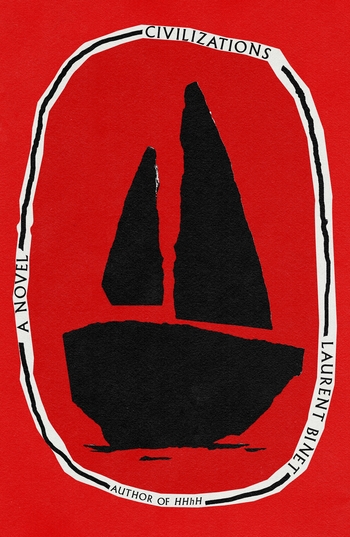
Review: Civilizations by Laurent Binet

A fun thought experiment without a clear aim or meaning

If you move past the thousands of stories where the Nazis win and the thousands more where the Confederacy wins, the third most popular alternate history scenario would probably be reverse imperialism. Novels like Orson Scott Card's Pastwatch, Christopher Evans' Aztec Century and Federico Andahazi's The Conqueror play with the suggestive possibility of Native Americans being equipped to fight off the European invaders and maybe even conquer Europe. Because of the nontrivial technological difference between both continents in the 1500s, plotting a believable Montezuma's Revenge requires either inserting an earlier event that delays the development of European warfare and/or boosts Native military capabilities. Unfortunately, this also requires the attribution of European colonial practices to Native populations, which ends up revealing more about Europe's unconfessed anxieties than about real-world justice.

Laurent Binet's alternate history novel Civilizations was originally published in French in 2019 and since then has been translated into a number of languages, with the English version by Sam Taylor just out this year. It describes an Inca invasion of Western Europe, starting with the aftermath of the Lisbon earthquake of 1531. Just as the weakened Portuguese are starting to recover, Inca leader Atahualpa marches on and accumulates victory after victory until he becomes a force capable of challenging the Holy Roman Emperor and the Ottoman Sultan.

The book is written in a breakneck pace that does no service to its massive scope. Instead of reading literature (in the artistic sense of the word), it feels like reading a history book. This kills any chance for enjoyment. Civilizations covers centuries' worth of plot across dozens of countries, but it's written in an over-summarized style that is set at too much distance from the events. The reader would like to witness the diplomatic meetings and the battle planning sessions and the oceanic trips, but what the book delivers is the CliffsNotes version of itself. Conversations that should be captivating and impactful are instead reported second-hand, as if by a journalist held to a word count limit. Huge military campaigns breeze by without taking the time to leave an effect on the reader. World-changing decisions are remarked upon with no weight; romantic liaisons and political betrayals proceed matter-of-factly. The plot just occurs by a methodical procession of steps. No event is allowed to breathe.

The substance of the novel is the third section, where Atahualpa marches over Europe. The first two exist only to provide the bare minimum of justification for why Atahualpa is able to do this. They tell how Native Americans learned ironsmithing (from stranded Vikings) and shipbuilding (from a doomed Christopher Columbus), but they hurry past the reader's eyes so soon that their characters don't feel like full people but like ingredients in a recipe, as if the author was irritated with the need to explain the story and couldn't wait to be done with this part. It doesn't fulfill any deeper purpose to have Vikings reach precolonial Cuba and Peru: they're just there under a painfully shoehorned excuse with the sole purpose of delivering horses and antibodies before promptly exiting the stage. Likewise with Columbus, who only seems to be in this novel to leave his ships in Cuba and die.

This use of people as pawns is consistent with the novel's stated position on history as a process that does not follow the direction of human choices but merely unfolds from impersonal forces that take no account of our wants. At one point the narrator says, "if we are honest enough to recognize the truth, rather than imagining that we are masters of our own destiny, circumstances made the decision," and later it refers to "fatal destiny, which directs, arranges and settles everything in its own way." If a destiny beyond the grasp of human comprehension is already a suspect notion in historiography, it's fatal in fiction. Binet does not treat his characters as autonomous moral agents but as pebbles dragged by the river of history.

If the beginning of the novel is about putting the pieces in place, the main, third section tells an even more improbable journey by Atahualpa, the last heir to the Inca throne, all the way from the Peruvian mountains to the Caribbean islands. He has no logical reason to go there, but the plot needs him to stumble upon the ships left by Columbus and refurbish them for a trip to the unknown lands of Europe, which for some reason he finds preferable to the more urgent matter of resolving the civil war in his own kingdom. Binet can't seem to decide whether Atahualpa is a shrewd tactician or a political amateur; the way he somehow never loses a battle yet fails to understand the larger context of European royal rivalries has a just-so quality that makes the whole affair harder to swallow.

Civilizations is a good example of why you need sensitivity readers when writing about oppressed peoples. The first two sections, where Europeans make contact with Native Americans, abound in otherizing clichés like "We are at the mercy of Skrælings more ferocious than trolls" and "It was obvious to me that these were people lacking in everything." Even later, when telling events from Atahualpa's perspective, the text still refers to him as a being possessed of an "animalistic survival instinct," and the Nahua tribes are described as "a fierce, bloodthirsty people." And for a French writer to treat the conquest of Algiers as a historical necessity leaves a lingering bad taste.

Although this was probably not a good story idea for a white writer to undertake, it's curiously fitting that a French writer expends so many lines in singing the praises of Cuban vegetation as a place of mysterious wonders, given that it was precisely Cuban writers steeped in French literature (Lezama, Sarduy, Carpentier) who first spread the tropes of magical realism that so often have reduced the Americas to an exotic stereotype. Unsurprisingly, Binet treats this stereotype as unquestioned fact when he writes about the "dazzling torrent of colors" that assaults Europeans when they land on Cuba.

The alternate world of Civilizations is an experiment that doesn't bother to reach conclusions. Completely ignoring the fact that the Inca Empire was in every way an empire, Binet imagines a utopia of agrarian reform and religious equality that has too much of guilty wish fulfillment. If in the real world the French imposed an emperor on Mexico, in this fictional timeline the Mexicans impose an emperor on France. What does this say? What truth about humanity are we meant to infer? Binet does not seem interested in those questions. The novel comes off as a "Heh, take that" and nothing more.

The Math

Baseline Assessment: 5/10.

Bonuses: +1 for the fictional letters between historical figures, the only sections where events appeared to be of serious consequence.

Penalties: −1 for being the millionth novel to perpetuate the myth that Medieval Europeans thought the world was flat.

Nerd Coefficient: 5/10.

POSTED BY: Arturo Serrano, multiclass Trekkie/Whovian/Moonie/Miraculer, accumulating experience points for still more obsessions.

Reference: Binet, Laurent [author], Taylor, Sam [translator]. Civilizations [Farrar, Straus and Giroux, 2021].

Wednesday, November 18, 2020

Nerds on Tour: Interview with Translator Andy Dudak


Thanks to magazines like Clarkesworld and Samovar, not only am I gaining access to more translated science fiction, but I'm also getting to see who the translators are. An author might write the most amazing short story the planet has ever seen. . . but if they didn't write it in English, I'm never going to see it unless a translator comes to the rescue.  

While on a Clarkesworld kick, I noticed that Andy Dudak's name cropped up over and over in that magazine, as a translator of Chinese stories.  When Dudak agreed to an interview about his work and experiences, I was over the moon!  His Mandarin to English translations have appeared in Clarkesworld, Asimov's, Apex, Pathlight Magazine, and elsewhere. Dudak lived in China for 10 years, and the authors he has translated include Liu Cixin, Chen Qiufan, Tang Fei, Jiang Bo, Bao Shu, A Que, among others.

An accomplished author himself, Dudak's original fiction has appeared in Interzone, Analog, Science Fiction World, and multiple anthologies. His story ‘Love in the Time of Immuno-Sharing' was a finalist for the Eugie Foster Award.    You can learn more about Dudak's work and his translations at his website, Andydudak.home.blog, and by following him on twitter, where he is @Andy_Dudak.

Dudak let me pick his brain on everything from how he got his start, to how he managed to get his own fiction translated into Mandarin and published in China's Science Fiction World, what's happening right now in Chinese science fiction, and so much more.  And I was good, I promise, I didn't send him the fifty (at least!) other questions I wanted to ask.  Let's get to the interview!

NOAF: How did you get started with translating science fiction and fantasy? What languages do you translate? 

Andy Dudak: I translate Mandarin to English. I’d been translating contracts and other business-related documents for a few years, and I’d been writing my own fiction for many years, when Tod McCoy suggested I try translating fiction. This was at MidAmericon in 2016. That night I approached Neil Clarke at a bar con and asked him to give me a try. Neil had published a few of my originals by then. I think that helped him take a chance on me. A couple weeks later I was translating ‘Western Heaven’ by Chen Hongyu. Somehow, I never thought of this on my own. It’s all down to Tod really.

NOAF: How do you find works to translate into English? Does the author contact you, or do you contact the author? 

AD: I get a lot of commissions directly from Neil Clarke, who has a deal with StoryCom, a company in China that provides him stories for Clarkesworld. Neil and Ken Liu negotiated this deal with StoryCom years ago. So, about 2 to 5 times a year I get an email from Neil with a story attached, or several stories to choose from. At other times I’ve approached writers directly, either on WeChat or at a con, and asked them to let me translate a story on spec, betting that I could sell the translations. I’ve done this 5 times now. I’ve sold ‘The Heaven-Moving Way’ by Chi Hui to Apex, ‘Casualties of the Quake’ by Wang Yuan to Analog, and ‘Forger Mr. Z’ by Chen Qiufan to Asimov’s. Tang Fei’s award-winning story ‘Spore’ is still on submission, and a story by Gu Shi is currently at the rough draft stage.

NOAF: What do you do, when you run into a word or phrase in another language that just doesn't translate to English? What about rhymes or word puns, how do you deal with those?

AD: I often have to choose between literal or figurative translations of Chinese idioms (usually of the four-character Chengyu variety). Most of the time I go for a figurative translation, since as Ken Liu has pointed out, translating fiction is about recreating a reader experience, not just ferrying literal meaning from one language to another. For example, 九牛一毛 literally means “nine cows and one cow hair.” A good figurative translation would be “just a drop in the bucket.” There have been a few times I translated idioms literally, to preserve some Chinese flavor if I felt that fit the story, counting on context or an endnote to clarify the meaning. If I come up against something—an idiom or word or cultural reference—that stumps me, I go to my Chinese friends and colleagues for help. Luckily, after a decade living in China, I have a wide support network.

NOAF: You recently tweeted that you were working on translating a story that consisted entirely of dialog. Is translating dialog a different art than translating a paragraph of exposition, or are they about the same?

AD: This is the Gu Shi story mentioned above. Dialog is a bit different because you’re considering the voice of a character in addition to the voice of the author. But I also find it a bit easier because you’ve got an additional layer of context (you know who’s talking) to help you when it comes to ambiguous language.

NOAF: At the Virtual ConNewZealand Worldcon, you were part of a panel titled “Post The Three-Body Problem: What is Happening in Mainland Chinese Science Fiction?”. I wasn't able to attend the panel, so I'll ask you right now – what is happening in Mainland Chinese science fiction? Did The Three-Body Problem change contemporary Chinese science fiction, and if yes, how?

AD: I don’t know that Liu Cixin directly influenced style or subject matter, but his Hugo win shined a spotlight on Chinese sci-fi, which is extremely diverse. There’s no pithy way to characterize it. It’s as if the eras and genres of Anglophone sci-fi (Golden Age, New Wave, Cyberpunk, Cli-fi, etc.) are all happening at once in China. You have surreal Han Song, a kind of Chinese Kafka, contemporaneous with Chen Qiufan, whom you could compare to Paolo Bacigalupi. Both of those are crude comparisons though. What’s happening in Chinese sci-fi is a diverse flowering of styles, hybrids, and the utterly new. China is an entire civilization, and it has changed radically over the last 40 years. The science fiction reflects this. It is audacious (Tang Fei), socially trenchant (Hao Jingfang), grimly prophetic (Yan Leisheng), heartbreaking (Wang Yuan), psychedelically mind-boggling (Zhang Ran, ShakeSpace), dreamlike (A Que), and visionary (Jiang Bo).

NOAF: You've had your own work published in Science Fiction World, China's premier SFF magazine. Did you do your own translating? How is the publishing experience in China different than the publishing experience at an English Language magazine (such as Clarkesworld, Analog, Apex Magazine, Interzone, and other magazines where you've been published)? 

AD: I only translate in one direction, Mandarin to English. It’s easier if the target language is your native tongue. I could go the other way, but I would take forever and require a lot of help. It was Ladon Gao (@GaoLadon on Twitter, follow and hire him!) who translated my originals ‘Taste the Whip’ and ‘Cryptic Female Choice’ into Mandarin. ‘Taste the Whip’ ended up in Science Fiction World, the biggest sci-fi mag on the planet by readership. Ladon was my student at Beijing Language and Culture University, School of Translation and Interpreting. As to how publishing in China is different… much shorter response times! Incidentally, ‘Cryptic Female Choice’ also ended up in a prestigious magazine, with Tang Fei’s help. The magazine is Works (作品), and my story was in the same issue as Nobel-winner Mo Yan. Ladon is a machine, and a talented writer himself.  

NOAF: Thanks so much for this amazing interview Andy!

 POSTED BY: Andrea Johnson lives in Michigan with her husband and too many books. She can be found on twitter, @redhead5318 , where she posts about books, food, and assorted nerdery.  

Monday, November 9, 2020

Nerds on Tour: Interview with Translator Rachel Cordasco

When I first got into blogging, and widening my SF reading horizons, I'd often visit The World SF Blog, run by Lavie Tidhar.  That site came to a natural end back in 2013, and I waited patiently for someone to take up the mantle of showcasing international speculative fiction. My wait paid off! In 2014, Rachel Cordasco became a fellow irregular at SFSignal, and then she started her own website, SF In Translation, which offers running lists of translated speculative fiction, reviews, interviews, essays, and more.  SF In Translation was the new World SF Blog I'd been waiting for! (You can also follow her on twitter at @Rcordas)

Cordasco is herself, a translator,  she translates from Italian to English.   She's translated work by Clelia Farris, Serena Fiandro, Maurizio Cometto, Nicoletta Vallorani, and had their stories published in magazines such as Samovar, Clarkesworld, World Literature Today, and elsewhere.   Cordasco has written essays and reviews promoting international voices at Tor.com, SFRA Review, Book Riot, Locus, and many other magazines and websites. 

I've interviewed plenty of writers, and editors, and artists, so it is very excited for me to get to interview translators as well!  What do you do when you run into a phrase or pun that just doesn't quite work in English? How do you get something you translated published in an English language magazine? Cordasco answered those questions, and many more, below.   Let's get to the interview!

 NOAF: How did you get started with translating science fiction and fantasy? What languages do you translate?

RC: I started translating short speculative fiction about a year after launching SFinTranslation.com. At that time, I noticed that relatively little Italian speculative fiction was available in English and, having studied Italian several years before, I decided to give it a try. I’ve always loved learning languages, and I translated a bit in college (French Symbolist poetry), so bringing Italian sf into English was a rewarding challenge. If I had unlimited amounts of time, I would brush up on the Hebrew, Russian, and French that I learned in my younger days and try to translate some sf written in those languages, but for now, I look forward to bringing more Italian sf into English.

NOAF: How do you find works to translate into English? Does the author contact you, or do you contact the author?

 RC: My route to translating Italian sf was definitely unusual. I initially reached out to an Italian editor whom I knew on social media, and he sent me a few stories. Then other writers started contacting me directly, asking if I would be willing to translate their work. Eventually, I connected with Francesco Verso, who started sending me stories by Nicoletta Vallorani and Clelia Farris, with whom I’ve built a great translating relationship. Additionally, a couple of years ago, I found an Italian sf e-zine and started reading some stories there, which is how I met Serena Fiandro, for whom I’ve translated two stories.

NOAF: As the translator, what's your role in getting the short story published in an English language magazine? (are you involved with the submitting the story to magazines, writing cover letters, dealing with editors, etc?)

RC: I always offer to be the one who submits the final English version and discusses the details with the editor if the story is accepted. All of the authors with whom I’ve worked have been happy with this arrangement, but of course they are looped in to all final decisions.

NOAF: What do you do, when you run into a word or phrase in another language that just doesn't translate to English? What about rhymes or word puns, how do you deal with those?

RC: I love this question because it goes to the heart of what I enjoy about translation. My mind loves to chew on words and phrases in Italian in order to reflect them accurately and appropriately in English. I’ve had many wonderful discussions over email with Clelia Farris, for example, about how a particular Italian idiom might be reflected in a similar kind of English expression. In some of her stories, she uses Sardinian terms and puns, which is challenging but quite rewarding to think through. In some cases, I add a footnote to explain the pun, thereby giving the reader a kind of mini-lesson in Italian while showing them just how fun the language can be. Two of my favorite examples are from Clelia’s story “Gabola”: in one case, she uses the Sardinian word “nonnixedda,” which contains the word “nonna” (Italian for “grandmother”) and a diminutive (-xedda), leading me to choose the English word “Granny.” In the second case, Clelia uses a word that refers to heaping curses on someone, which I thought through by falling back on my knowledge of Yiddish curses!

NOAF: When you first started translating, did you have any misconceptions? If yes, what were they?

RC: Since I never formally studied translation practices, I found myself working through many of the usual questions translators face (which I subsequently read and heard about thanks to books on translation theory and some translation podcasts). Like some translators just starting out, I stayed so close to the texts I was working on that the English version seemed a bit stilted. Only after several translations was I able to relax and feel comfortable straying from the text in order to make the English readable and enjoyable. The authors I’ve worked with have been crucial in helping me do this and in supporting my choices.

NOAF: As a translator, what are some of your biggest challenges?

RC: I still struggle with how literal I want my translations to be and how confident I am in my word and idiom choices. Only time and experience will help me gain that confidence.

NOAF: How does it take you to translate a short story? How about a novel? 

RC: I haven’t tackled any novels yet, though I did translate six of the seven stories in Clelia Farris’s collection Creative Surgery within a three-month period. Because I translate slowly and I only have time in the evenings and on weekends to do it, short stories can take me several days.

The authors I work with understand this and never rush me, knowing that I’ll take the necessary time to make the translation the best it can be.Because I translate slowly and I only have time in the evenings and on weekends to do it, short stories can take me several days. The authors I work with understand this and never rush me, knowing that I’ll take the necessary time to make the translation the best it can be.

NOAF: Thank you so much Rachel!


 POSTED BY: Andrea Johnson lives in Michigan with her husband and too many books. She can be found on twitter, @redhead5318 , where she posts about books, food, and assorted nerdery. 

Tuesday, August 13, 2019

Microreview [book]: The Heart of the Circle by Keren Landsman, translated by Daniella Zamir

Emotionally driven queer romance set against a backdrop of magically-driven political unrest in alternate Tel Aviv

Cover design by Francesca Corsini
The Heart of the Circle, by Keren Landsman, was originally published in Hebrew last year, but this month it's coming out in an English translation from Angry Robot. Finding english-language urban fantasy that takes place outside of American or British locales is pretty unusual, and with its promise of an unusual social role for magic coupled with the Tel Aviv setting, this was a book I was intrigued to pick up.

The main character, Reed is an empath, also known as a "moody": a type of sorcerer living in a world where magic powers are regularly manifested but treated with different levels of discrimination. Living in Tel Aviv, in a society that's apparently known for being more tolerant of sorcerers while still forcing segregation and exclusion on most aspects of their lives, he's torn between the increasing political unrest affecting the city, and wanting to live his life along with his (mostly sorcerous) friends and ("normie") family. Tension in the city is ramping up as sorcerers become the target of murders by the Sons of Simeon, an extremist group, and Reed becomes increasingly embroiled in their plot. Complicating the whole thing are the presence of "damuses" - seers - on both sides, with the Sons of Simeon attempting to manipulate the streams of his future and force him into sacrificing himself and the movement for the sake of his friends. Living with all this, and trying to care for his damus best friend Daphne, would be hard enough if Reed's ex hadn't shown up with an attractive single "moody" ex of his own in tow, who comes with his own extensive baggage about the treatment of sorcerers in this world's equivalent of the USA, and misgivings about starting a relationship with a doomed man.

It's that romance between Reed and Lee which forms front and centre of the plot of The Heart of the Circle, and if the fact that its a doomed relationship between two empaths didn't clue you in, let me explicitly note that there are quite a lot of feelings involved from start to finish. There's the trauma of long-term oppression and their short term situation; complex webs of guilt around their respective powers and, in Lee's case, socialisation around not sharing emotions in general; pre-emptive grief over the Reed's impending doom and the predictions about what it will do to Lee's own life; and obviously all the giddy romantic stuff you could ever possibly want. Because Reed and Lee can feel each other's feelings - and Reed can directly manipulate emotions in others, although this comes with its own taboos - everything gets amplified and dissected and the emotional impact of their situation is generally at the very core of everyone's response. It makes for difficult, slow reading at points, particularly towards the end, but it also feels like an interesting take on its subject matter, placing the character's emotional arcs front and centre while still maintaining the fantasy aspects as a core part of the experience.


Because its told through a narrator who is completely wrapped up his own feelings and direct situation, worldbuilding is delivered in a way that's often painfully subtle. Offhand remarks, meaningless to the characters, clue us in to the existence of a "Confederacy" in North America, or the craters across the entirety of Europe, or the fact that sorcerer's can't vote in Israel despite its reputation as a "safe" city for them - which show how commonplace they are to him, while coming as a complete surprise and shakeup to a reader in our world. The general effect is of a world that's even more wartorn, unstable and unequal than our own, but it's deliberately left in the background, brought up by a character who doesn't find these elements particularly remarkable. The lack of focus on areas of worldbuilding which are commonplace to Reed but novel to the audience also stretches to the magic of this world, which is split into elemental sorcerers (not super explored but in control of air, water, fire and earth respectively) and psychic empaths and seers. Psychics in particular seem to have a lot of weapons at their disposal for altering reality and there's some fairly complex scenes where powers end up weaponised either for practice or in a real life-and-death scenario. Although Reed and Lee's different backgrounds allow for some time exploring different talents and introducing some of the verbal and gestural slang used by the sorcerer community, the mechanics of a lot of what they do is left deliberately vague. Of cousre, there's a sense that this is true for the characters as well as the audience: the use and development of magic powers has been greatly constrained by society's prejudice and fear, so while Reed can hone his abilities to project emotions onto the printed word, there's clearly a great deal of untapped potential which sorcerers are unable to openly share despite the support mechanisms in their communities.

Reed and Lee's romantic relationship is backed up with a nuanced though occasionally uneven group of characters forming that wider community, including said awkward ex Blaze, his new girlfriend River, and a group of younger sorcerers who Reed volunteers as a mentor for, as well as more distant Providing a counterweight to much of the group is Reed's non sorcerous brother Matthew and Sherry, a police officer he's (possibly) in the early stages of dating, and who happens to be a "pebble" or earth sorcerer. Both offer a link to the more "mainstream" - Matthew because of his status as a "normie", Sherry because she has successfully broken in to a more mainstream job despite being a sorcerer - and the book does a reasonable job of showing, almost entirely through sympathetic characters like Matthew and Reed's colleague Daniel, why the prejudice and fear against sorcerers exist in the first place.

Treating magic as a stand-in for other marginalisations is not a politically neutral act, and I suspect The Heart of the Circle is going to raise some eyebrows in translation over its treatment of segregation (introduced in the form of bus seats, which to an English speaking audience is about as real-world-US-South-racism-coded as it gets) in a narrative which otherwise doesn't have anything to say about race. Some sorcerers share talents with their family members, but others, like Reed, have "normies" for relatives and are even more reliant on the "found family" of the sorcerer community. There's no stigma attached to Reed an Lee's same-sex relationship either, meaning that the fantasy angle is carrying the full weight of the oppression storylines here - not to mention the religious discrimination angle which the Sons of Simeon bring to the table. To unpick what this means would go beyond the scope of this review, but it's a narrative choice I feel many readers might want a heads up on beforehand. Of course, as a translated work, The Heart of the Circle was not written with English-speaking readers or context in mind, and that's very much worth noting too.

Ultimately, I don't know that I enjoyed reading The Heart of the Circle. It's a hard story, and fraught romantic feelings tend not to be my personal jam. That said, it's a book that's absolutely stayed with me afterwards in its portrayal of everyday life under oppression and trauma. As a reader, what you take out of The Heart of the Circle is going to very much depend on the extent to which you care about the things Reed cares about - his romantic life, his close friends and family, taking care of himself in an oppressive society that has wrung him out while still being invested and trying to help with the future of the next generation. Despite his absorption in his own life and future, its hard not to sympathise with his position and that of the wider community, and it makes for an intriguing, emotionally-driven fantasy of the kind I'd like to see more of.

The Math

Baseline Assessment: 8/10

Bonuses: +1 Effortless creation of an alternate, urban fantasy Tel Aviv

Penalties: -1 Feelings on feelings on feelings can get a bit much; -1 Some of the secondary characters deserved more

Nerd Coefficient: 7/10

POSTED BY: Adri is a semi-aquatic migratory mammal most often found in the UK. She has many opinions about SFF books, and is also partial to gaming, baking, interacting with dogs, and Asian-style karaoke. Find her on Twitter at @adrijjy.


Reference: Landsman, Keren tr. Daniella Zamir. The Heart of the Circle [Angry Robot, 2019]

Wednesday, August 23, 2017

New Books Spotlight

Welcome to another edition of the New Books Spotlight, where each month or so we curate a selection of 6 forthcoming books we find notable, interesting, and intriguing. It gives us the opportunity to shine a brief spotlight on some stuff we're itching to get our hands on.

What are you looking forward to? Anything you want to argue with us about? Is there something we should consider spotlighting in the future? Let us know in the comments!


Bear, Elizabeth, The Stone in the Skull [Tor Books, 2017]

Publisher's description:
The Stone in the Skull, the first volume in her new trilogy, takes readers over the dangerous mountain passes of the Steles of the Sky and south into the Lotus Kingdoms.

The Gage is a brass automaton created by a wizard of Messaline around the core of a human being. His wizard is long dead, and he works as a mercenary. He is carrying a message from a the most powerful sorcerer of Messaline to the Rajni of the Lotus Kingdom. With him is The Dead Man, a bitter survivor of the body guard of the deposed Uthman Caliphate, protecting the message and the Gage. They are friends, of a peculiar sort.

They are walking into a dynastic war between the rulers of the shattered bits of a once great Empire.
 Why We Want It: When I hear there is anything new from Elizabeth Bear I am already in line. Seriously. Bear's novels never fail to sweep me up and away. Her last, Karen Memory, was a phenomenal weird western I've given multiple times as gifts. I suspect this one will be on my gift-giving guide as well.


Toptas, Hasan Ali, Shadowless [Bloomsbury, 2017]

Publisher's description:
In an Anatolian village forgotten by both God and the government, the muhtar has been elected leader for the sixteenth successive year. When he staggers to bed that night, drunk on raki and his own well-deserved success, the village is prosperous. But when he is woken by his wife the next evening he discovers that Nuri, the barber, has disappeared without a trace in the dead of night, and the community begins to fracture.

In a nameless town far away, Nuri walks into a barbershop as if from a dream, not knowing how he has arrived. Try as he might, he cannot grasp the strands of his memory. The facts of his past life shift and evade him, and as other customers come and go, they too struggle to recall how they got there.

Blurring the lines of reality to terrific effect, Shadowless is both a compelling mystery and an enduring evocation of displacement from one of the finest, most exciting voices in Turkish literature today.
 Why We Want It: I love finding genre in translation and after stumbling on this cover I knew I had to put this one on my list. I'm not sure I've read any Turkish literature yet so this will be such a wonderful addition to my shelves.


Alderman, Naomi, The Power [Little, Brown and Company, 2017]

Publisher's description:
In THE POWER, the world is a recognizable place: there's a rich Nigerian boy who lounges around the family pool; a foster kid whose religious parents hide their true nature; an ambitious American politician; a tough London girl from a tricky family. But then a vital new force takes root and flourishes, causing their lives to converge with devastating effect. Teenage girls now have immense physical power--they can cause agonizing pain and even death. And, with this small twist of nature, the world drastically resets.

From award-winning author Naomi Alderman, THE POWER is speculative fiction at its most ambitious and provocative, at once taking us on a thrilling journey to an alternate reality, and exposing our own world in bold and surprising ways.
Why We Want It: It has a blurb from Margaret Atwood on the cover and the premise sounds flipping incredible. I want this book so much!


Hearne, Kevin, A Plague of Giants [Del Rey, 2017]

Publiser's description:
From the author of The Iron Druid Chronicles, a thrilling novel that kicks off a fantasy series with an entirely new mythology—complete with shape-shifting bards, fire-wielding giants, and children who can speak to astonishing beasts

MOTHER AND WARRIOR
Tallynd is a soldier who has already survived her toughest battle: losing her husband. But now she finds herself on the front lines of an invasion of giants, intent on wiping out the entire kingdom, including Tallynd’s two sons—all that she has left. The stakes have never been higher. If Tallynd fails, her boys may never become men.

SCHOLAR AND SPY
Dervan is an historian who longs for a simple, quiet life. But he’s drawn into intrigue when he’s hired to record the tales of a mysterious bard who may be a spy or even an assassin for a rival kingdom. As the bard shares his fantastical stories, Dervan makes a shocking discovery: He may have a connection to the tales, one that will bring his own secrets to light.

REBEL AND HERO
Abhi’s family have always been hunters, but Abhi wants to choose a different life for himself. Embarking on a journey of self-discovery, Abhi soon learns that his destiny is far greater than he imagined: a powerful new magic thrust upon him may hold the key to defeating the giants once and for all—if it doesn’t destroy him first.

Set in a magical world of terror and wonder, this novel is a deeply felt epic of courage and war, in which the fates of these characters intertwine—and where ordinary people become heroes, and their lives become legend.
Why We Want It: I love Kevin Hearne's writing and his approach to world-building. I am beyond stoked for this upcoming epic fantasy.


Moreno-Garcia, Silvia, The Beautiful Ones [Thomas Dunne Books, 2017]

Publisher's description:
Antonina Beaulieu is in the glittering city of Loisail for her first Grand Season, where she will attend balls and mingle among high society in hopes of landing a suitable husband. But Antonina is telekinetic, and strange events in her past have made her the subject of malicious gossip and hardly a sought-after bride. Now, under the tutelage of her cousin’s wife, she is finally ready to shed the past and learn the proper ways of society.

Antonina, who prefers her family's country home to the glamorous ballrooms of the wealthy, finds it increasingly difficult to conform to society’s ideals for women, especially when she falls under the spell of the dazzling telekinetic performer Hector Auvray. As their romance blossoms, and he teaches her how to hone and control her telekinetic gift, she can't help but feel a marriage proposal is imminent.

Little does Antonina know that Hector and those closest to her are hiding a devastating secret that will crush her world and force her to confront who she really is and what she's willing to sacrifice.
Why We Want It: I think Silvia Moreno-Garcia is too often overlooked when people are looking for their next favorite read. Pick up any of her novels and you better settle in because you will be sucked in and not want to leave her world.


Stearns, R.E., Barbary Station [Saga Press, 2017]

Publisher's description:
Two engineers hijack a spaceship to join some space pirates—only to discover the pirates are hiding from a malevolent AI. Now they have to outwit the AI if they want to join the pirate crew—and survive long enough to enjoy it.

Adda and Iridian are newly minted engineers, but aren’t able to find any work in a solar system ruined by economic collapse after an interplanetary war. Desperate for employment, they hijack a colony ship and plan to join a famed pirate crew living in luxury at Barbary Station, an abandoned shipbreaking station in deep space.

But when they arrive there, nothing is as expected. The pirates aren’t living in luxury—they’re hiding in a makeshift base welded onto the station’s exterior hull. The artificial intelligence controlling the station’s security system has gone mad, trying to kill all station residents and shooting down any ship that attempts to leave—so there’s no way out.

Adda and Iridian have one chance to earn a place on the pirate crew: destroy the artificial intelligence. The last engineer who went up against the AI met an untimely end, and the pirates are taking bets on how the newcomers will die. But Adda and Iridian plan to beat the odds.

There’s a glorious future in piracy…if only they can survive long enough.

Why We Want It: Yes. Yes. Yes. Give this to me now please and thank you. I have been waiting for this book since I first heard about it a year ago.