Showing posts with label French. Show all posts

Tuesday, October 12, 2021

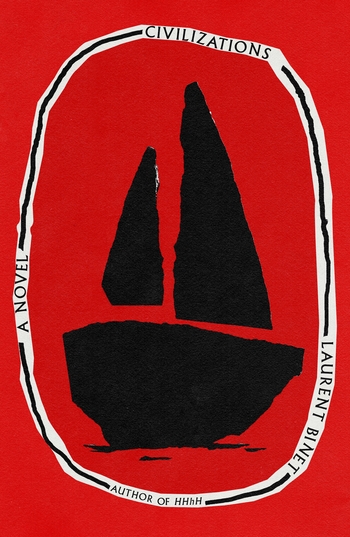
Review: Civilizations by Laurent Binet

A fun thought experiment without a clear aim or meaning
If you move past the thousands of stories where the Nazis win and the thousands more where the Confederacy wins, the third most popular alternate history scenario would probably be reverse imperialism. Novels like Orson Scott Card's Pastwatch, Christopher Evans' Aztec Century and Federico Andahazi's The Conqueror play with the suggestive possibility of Native Americans being equipped to fight off the European invaders and maybe even conquer Europe. Because of the nontrivial technological difference between both continents in the 1500s, plotting a believable Montezuma's Revenge requires either inserting an earlier event that delays the development of European warfare and/or boosts Native military capabilities. Unfortunately, this also requires the attribution of European colonial practices to Native populations, which ends up revealing more about Europe's unconfessed anxieties than about real-world justice.

Laurent Binet's alternate history novel Civilizations was originally published in French in 2019 and since then has been translated into a number of languages, with the English version by Sam Taylor just out this year. It describes an Inca invasion of Western Europe, starting with the aftermath of the Lisbon earthquake of 1531. Just as the weakened Portuguese are starting to recover, Inca leader Atahualpa marches on and accumulates victory after victory until he becomes a force capable of challenging the Holy Roman Emperor and the Ottoman Sultan.

The book is written in a breakneck pace that does no service to its massive scope. Instead of reading literature (in the artistic sense of the word), it feels like reading a history book. This kills any chance for enjoyment. Civilizations covers centuries' worth of plot across dozens of countries, but it's written in an over-summarized style that is set at too much distance from the events. The reader would like to witness the diplomatic meetings and the battle planning sessions and the oceanic trips, but what the book delivers is the CliffsNotes version of itself. Conversations that should be captivating and impactful are instead reported second-hand, as if by a journalist held to a word count limit. Huge military campaigns breeze by without taking the time to leave an effect on the reader. World-changing decisions are remarked upon with no weight; romantic liaisons and political betrayals proceed matter-of-factly. The plot just occurs by a methodical procession of steps. No event is allowed to breathe.

The substance of the novel is the third section, where Atahualpa marches over Europe. The first two exist only to provide the bare minimum of justification for why Atahualpa is able to do this. They tell how Native Americans learned ironsmithing (from stranded Vikings) and shipbuilding (from a doomed Christopher Columbus), but they hurry past the reader's eyes so soon that their characters don't feel like full people but like ingredients in a recipe, as if the author was irritated with the need to explain the story and couldn't wait to be done with this part. It doesn't fulfill any deeper purpose to have Vikings reach precolonial Cuba and Peru: they're just there under a painfully shoehorned excuse with the sole purpose of delivering horses and antibodies before promptly exiting the stage. Likewise with Columbus, who only seems to be in this novel to leave his ships in Cuba and die.

This use of people as pawns is consistent with the novel's stated position on history as a process that does not follow the direction of human choices but merely unfolds from impersonal forces that take no account of our wants. At one point the narrator says, "if we are honest enough to recognize the truth, rather than imagining that we are masters of our own destiny, circumstances made the decision," and later it refers to "fatal destiny, which directs, arranges and settles everything in its own way." If a destiny beyond the grasp of human comprehension is already a suspect notion in historiography, it's fatal in fiction. Binet does not treat his characters as autonomous moral agents but as pebbles dragged by the river of history.

If the beginning of the novel is about putting the pieces in place, the main, third section tells an even more improbable journey by Atahualpa, the last heir to the Inca throne, all the way from the Peruvian mountains to the Caribbean islands. He has no logical reason to go there, but the plot needs him to stumble upon the ships left by Columbus and refurbish them for a trip to the unknown lands of Europe, which for some reason he finds preferable to the more urgent matter of resolving the civil war in his own kingdom. Binet can't seem to decide whether Atahualpa is a shrewd tactician or a political amateur; the way he somehow never loses a battle yet fails to understand the larger context of European royal rivalries has a just-so quality that makes the whole affair harder to swallow.

Civilizations is a good example of why you need sensitivity readers when writing about oppressed peoples. The first two sections, where Europeans make contact with Native Americans, abound in otherizing clichés like "We are at the mercy of Skrælings more ferocious than trolls" and "It was obvious to me that these were people lacking in everything." Even later, when telling events from Atahualpa's perspective, the text still refers to him as a being possessed of an "animalistic survival instinct," and the Nahua tribes are described as "a fierce, bloodthirsty people." And for a French writer to treat the conquest of Algiers as a historical necessity leaves a lingering bad taste.

Although this was probably not a good story idea for a white writer to undertake, it's curiously fitting that a French writer expends so many lines in singing the praises of Cuban vegetation as a place of mysterious wonders, given that it was precisely Cuban writers steeped in French literature (Lezama, Sarduy, Carpentier) who first spread the tropes of magical realism that so often have reduced the Americas to an exotic stereotype. Unsurprisingly, Binet treats this stereotype as unquestioned fact when he writes about the "dazzling torrent of colors" that assaults Europeans when they land on Cuba.

The alternate world of Civilizations is an experiment that doesn't bother to reach conclusions. Completely ignoring the fact that the Inca Empire was in every way an empire, Binet imagines a utopia of agrarian reform and religious equality that has too much of guilty wish fulfillment. If in the real world the French imposed an emperor on Mexico, in this fictional timeline the Mexicans impose an emperor on France. What does this say? What truth about humanity are we meant to infer? Binet does not seem interested in those questions. The novel comes off as a "Heh, take that" and nothing more.

The Math

Baseline Assessment: 5/10.

Bonuses: +1 for the fictional letters between historical figures, the only sections where events appeared to be of serious consequence.

Penalties: −1 for being the millionth novel to perpetuate the myth that Medieval Europeans thought the world was flat.

Nerd Coefficient: 5/10.

POSTED BY: Arturo Serrano, multiclass Trekkie/Whovian/Moonie/Miraculer, accumulating experience points for still more obsessions.

Reference: Binet, Laurent [author], Taylor, Sam [translator]. Civilizations [Farrar, Straus and Giroux, 2021].

Wednesday, January 17, 2018

Microreview [film]: Fantastic Planet

A Visually Unique Sci-Fi Allegory


On a planet inhabited by a giant, blue, humanoid race known as Draags, they have a rodent problem. And the rodents are us.

Sometimes, a kind-hearted Draag child will claim a human — known as Oms — as a pet, like we would hamster. Not like a dog, a companion, but like a tiny, living toy whose novelty can't really last that long. But by and large, Oms are treated as a nuisance and are regularly purged from the fields outside the city to keep the population of wild Oms down. The main Draag that Fantastic Planet follows is a child named Tiwa, and her pet Om is Terr. As Draags age, they begin their instruction, which is telepathic in nature, and all Draag knowledge is conveyed using a special headset. Terr ages much more rapidly than Tiwa, and eventually finds a way to steal her headset, escape, and bring knowledge to a group of wild Oms living outside of town in desperate need of something that will allow them to survive the coming purges.

So you wouldn't say that Fantastic Planet is particularly light fare, despite the large-eyed, actually-kind-of-cute character design of the Draags that adorns much of the promotional material for this 1973 animated film. In fact, the opening of the film is quite emotional, as we watch Draag children flick a human mother back and forth in play, until she finally stops moving. Like human children might thoughtlessly do to a bug. It's hard to know exactly what to write about this movie, because even forty-five years after its release, it remains essentially a totally unique experience. I had seen moments of it, and as a big fan of animation, I came to it specifically to see the animation. The story could have been nonsense, or just a psychedelic mish-mash of imagery, and it really wouldn't have mattered to me. Visually, this looked like it would be a stunning work, and it definitely delivered.

But the depth and effectiveness of the narrative surprised me, and in fact continued to surprise me as the film unfolded. I was drawn to the stunning visuals, and would kind of get lost in them, but then find myself getting yanked back into the story afresh, and thinking, "Wow, this really is good!"

Over the years, there have been debates about the allegorical meaning of the film — whether we are to understand it as a plea for better relations among peoples, or perhaps a message about the importance of animal rights and welfare. I'm not sure it matters very much. What I took away from Fantastic Planet was an invitation to greater awareness, of both the self and of others, and to the importance of compassion. If we can obtain it, we may exercise that compassion on behalf of others, or on behalf of animals, or on behalf of the planet, I suppose, but the important thing is that we do exercise it.

I think such a universal message helps this film to stand somewhat outside of time. While the music is waaaaay 1970s, and the years-long French-Czech co-production took place against the backdrop of Soviet tanks rolling into Prague, the film's message is timeless and the animation singular (visually not dissimilar to Terry Gilliam's Monty Python work, but deployed in a completely different manner), so I don't think you have to be a big animation nerd like me to find something touching and thought-provoking in this one-of-a-kind sci-fi film.

The Math

Baseline Assessment: 7/10

Bonuses: +1 for the engrossing animation; +1 for telling a compelling story for adults at a time when that's not really how animation was thought of

Penalties: -1 for feeling a little slight at only 71 minutes

Nerd Coefficient: 8/10, well worth your time and attention. (About microreview scores)


Posted by Vance K — co-editor and cult film reviewer at nerds of a feather, flock together since 2012, sometime animator.

Monday, March 20, 2017

DYSTOPIAN VISIONS: City of Lost Children


Dossier: City of Lost Children

Filetype: Film

File Under: Stateless Dystopia

Executive Summary: One, a circus strongman in a surrealistic nightmare world that is equal parts Salvador Dali, Tom Waits spoken-word pieces, and Charles Dickens, via Fritz Lang's Metropolis, sees his little brother Donree abducted from a crowd and begins a single-minded hunt for him. One is aware, certainly, of the criminal element that runs through this society like capillaries, and of the roving bands of cyborg cultists that seem to be part police force and part kidnapping ring, but One is completely unaware of something far stranger at play...the scientist Krank.

Located on a secret, aquatic fortress, Krank and his brothers and sister are all created beings, the products of The Original. But they are all somehow broken. Martha is a dwarf; Uncle Irvin is a brain without a body, and plagued by migraines; the clone henchmen all have narcolepsy; and Krank cannot dream. Krank has been supplying the cultists with the cybernetic apparatuses they drive into their eyes and ears to better comprehend the true nature of reality. In exchange, the cultists have been stealing children for Krank's experiments. He believes that by inducing dreams in these stolen children, he will unlock the secret and gain the ability to dream for himself.

One meets a young girl named Miette, an orphan who has been forced into a life of crime by The Octopus, conjoined twins who control the lives of a large group of orphans and force them to commit both petty and elaborate robberies. After One helps Miette and her peers steal a safe, the two become unlikely partners and continue the search for Donree, braving the cyborg cult, The Octopus, tics trained to deliver murderous poison at the bidding of an organ grinder, and more as they move closer to a confrontation with Krank.

Dystopian Visions: Equal parts surrealism and dystopia, City of Lost Children draws upon the horrors of a Dickensian world of an invisible underclass with no hope for ever moving out of their station beneath this society (but is there even an upperclass in this world?), and fuses that with elements of both technological and fundamentalist dystopia. The lives of Miette and her fellow orphans are rarely presented as in strictly mortal peril, but their existence is bleak, and the idea of "childhood" is completely alien. The cyborgs, known as The Cyclops, are seen in their cultish meetings in a scene that is evocative of those in Metropolis where the robot Maria whips the underground workers into a rebellious frenzy with fire-and-brimstone religious fervor. 


This world is essentially one of lawlessness, where reason is not to be relied on, and destructive forces of many different stripes imperil everyone, forcing them into terrible choices that ultimately prove impossible to live with. We see converts give up their eye and ear in terror as they join The Cyclops. We see lackeys and con men forced into crimes they would never otherwise entertain. We see Krank's family suffer with their own monstrous actions, never certain if the scales can be balanced between their own pain they are trying to mitigate, and the pain in so many others they cause.

Utopian Undercurrents: In the legend of The Original, we see the glimmer of a utopian ideal in a man who attempted to use science to create beauty, intelligence, and a gateway to deeper understanding. But whether through that one man's personal limitations, or the hubris of any man attempting to create such things, the end result wound up being a horrible distortion that actually brought more pain and confusion into the world.


Level of Hell: Third. The world here is grim, for certain, but throughout it, we see that the human capacity for love and connection remains strong. It has not been eradicated, nor has it been actively subverted, as we see in many statist dystopias. One has deep connections with Donree and Miette, there are strong connections between many of the orphans, and even Martha is fiercely protective of Krank and the other creations. Love does not conquer all, but love always puts up a fight.

Legacy: If you enjoy Amelie, you can thank this earlier Jean-Pierre Jeunet film. The subsequent films Dark City and The Matrix also drew heavily from the same palette this film established.

In Retrospect: This movie is so good. The cleverness, the humor, the performances, including the otherworldly, old-soul performance of Judith Vittet as Miette and Ron Perlman speaking in French as One are astounding. As a work of visual imagination, this film has few peers. It is a masterpiece.


Analytics

For its time: 5/5
Watched today: 5/5.
Oppressometer Readout: 10/10.