Showing posts with label blogs. Show all posts

Saturday, May 7, 2016

Lady Business Gets a Hugo Nomination!

As per their announcement:

We at Lady Business are excited to announce that we have accepted a place on the final ballot for Best Fanzine in the 2016 Hugo Awards.

This is a strange year to be be a Hugo finalist. If you've been following the Hugo Awards, you know that the last couple of years have been controversial. We prefer not to dwell on the controversy here, but if you’re unfamiliar and would like a summary, Fanlore has a good overview. After the 2016 finalists were announced, one of the original five Fanzine finalists, Black Gate, withdrew from consideration. The Hugo administrators contacted us to let us know that we were next in the voting tally, and offered us the open slot. After some conflicted deliberation, we decided that we wanted to acknowledge the people who voted for us in the nomination phase, and we accepted a place on the final list.

The nomination is, in my opinion, well deserved. Lady Business is a fantastic genre blog, featuring great writing, incisive critique and an approach that manages to be fun and challenging at the same time (which is a really hard act to pull off). And they cover a lot of stuff that gets short shrift elsewhere, like fan fiction. So please join us in congratulating our friends at Lady Business and wishing them the best of luck in the final round of voting!


Sunday, August 23, 2015

A Personal Thank You to 29 Awesome People (and some blogs)

So the Hugo voting statistics are available, and it looks like 'nerds of a feather, flock together' received the 12th most nominating votes. That's still a far cry from the 68 garnered by nominee #5 (and eventual winner) Journey Planet, but it's also the first time we've made the longlist.

More importantly, it means that 29 individuals believe enough in what we've built and what we're doing here to cast a vote for this site, and that makes me happier than anything else. I am humbled by  and grateful to each and every one of you for your support. I hope that we continue to earn your time and attention in years to come.

Finally, I want to recognize a few other sites on the longlist who I think are really deserving:

#4 Black Gate

I'd kind of forgotten about Black Gate, to be honest, but I was hugely impressed with how they, and writer Matthew David Surridge, comported themselves after receiving puppy nominations. I've since fallen back in love with the venerable site--and especially with, you know, the stuff about books. Top notch content, though could use a site redesign.

#7 Lady Business

One of my shortlist nominees, and just an outstanding site.

#8 File770

Another one I'd sort of written off in past years, but now it has to be considered the frontrunner for 2016, due to Mike Glyer's decision to chronicle the whole sordid affair. Somewhere right now I suspect a sociologist is silently thanking you.

#9 A Dribble of Ink

The 2014 winner, and the site that convinced me to start this one. Beautifully designed and a showcase for Aidan Moher's elegant writing on fantasy.

#11 SF Signal

I mean, come on--these guys are just too awesome for words.

#13 SF Mistressworks

One of the few SF/F blogs I'd classify as important.

You are all winners in my book.

Wednesday, April 22, 2015

BLOGTABLE: Impending Doom!


Welcome to this month's Blogtable! I'm Dean E.S. Richard, and I will be your host this month. For those of you who may not know me, I write (primarily) science fiction, including the 3024AD Short Stories and the short story 'Far', which you can read for free this week over at QuarterReads. I also love to drink and cook, and even venture outside to snowboard or kayak. Primarily, I am obnoxious on Twitter. But enough about me. Time to meet your respondents:

Respondent the First: SEAN E. WILLIAMS is the NEW YORK TIMES best selling writer of FAIREST: THE RETURN OF THE MAHARAJA for Vertigo, THE VAMPIRE DIARIES and SENSATION COMICS for DC Comics, ARTFUL DAGGERS for Monkeybrain Comics and IDW Publishing, and more. He co-founded the comics publishing company Comicker LLC, which launched with its Comicker Digital label in 2015. You can find him at seanewilliams.com, or on Twitter at @sean_e_williams. Comicker Digital can be found at ComickerDigital.com, or on Twitter at @ComickerLLC.


Respondent the Second: E. Catherine Tobler's fiction has appeared in Lightspeed, Clarkesworld, and SciFiction.  She was a Sturgeon Award nominee in 2013, and is currently senior editor at Shimmer Magazine. Her first novel, Rings of Anubis, is now available. For more visit www.ecatherine.com. Buy her book here.


Respondent the Third: Scott Whitmore Scott is an avid reader, and his most excellent review blog can be found here. He is just past what some may consider the midpoint of life (51 53), but likes to think he is still open-minded and (at least) partially aware of what’s going on in the world of pop culture. He has also written two three novels, his most recent being Green Zulu Five One. (ed: Update your blog bio, Scott)


In Which Dean Ponders the IMPENDING DOOM of publishing!


Prompt: Nearly any commentary on publishing these days reads like a 1950's science fiction movie poster. AMAZON! INDIE PRESS! INTERNET OUTRAGE! LACK OF DIVERSITY! Lost in that mess, it seems, is the fact that people actually read a lot. It's fairly safe to assume people will keep doing so. But in what fashion? Is there a way all the present options can coexist?

Those questions come with myriad options, so let's attempt to narrow them down for the purposes of this post:

1. With the massive variety of reading options out there (ebook stores, WattPad and the like, etc), is there a way to ensure the average reader will get a quality product, or does the medium benefit from a near-total lack of gatekeepers?

2. How, in said mess of options, can authors effectively reach and build an audience for their works?

To our respondents!

Sean: The lack of gatekeepers is a huge benefit in a lot of ways, as it allows for series that might not exist otherwise to reach the marketplace. For example, there's a large call for more diversity in YA fiction (well, in every storytelling medium), but publishers are slow to change their ways, partly because they don't know how well they'll sell, but also because they don't know how to market diverse titles.  I've seen this firsthand as a creator.  Luckily, the tide is starting to turn, like with a majority of the top-selling titles in Marvel's Buy-One-Get-One sale at comiXology being female-led series.  Things are getting better, and having an open marketplace showed that that was possible, and that it was needed.

As far as the quality question goes, readers know what they can expect quality-wise from larger publishers, such as DC or IDW.  It's something we're going for at Comicker as well.  But regardless of if it's self-published or published by the Big 2, user reviews are what people look to nowadays - either in comments, ratings, or via social media. If something's bad, people will let other people know.  It's the whole Yelp phenomenon - people will post a review if they don't like something, but they won't necessarily if they DO like it.  That's why I personally aim to only make recommendations via social media - there's so much negativity out there, I'd rather lift up the quality books than try to cut down books I don't enjoy as much.
One of the reasons I co-founded Comicker, and one of the reasons we launched with our Comicker Digital label, is because digital offers the biggest audience, and one that's growing. There are huge swaths of this country (and the world, in fact) that don't have a good comic shop or book store within driving distance, but tablets are becoming commonplace.  There's no shortage of readers out there, and from what I can see, there's no shortage of quality creators either.  There's room for everyone.

E. Catherine: "Quality product" can be defined in many ways, of course--what one reader finds to be quality, another may not. I would point anyone toward recent Hugo Award controversies as evidence of recent battles over quality, what does and does not "deserve" to have a place at the table. What one editor does not care for will find a home with another; the same is true of readers. What one person loves, another will loathe.

If gate-keepers are defined as editors and publishers, I don't think those are going to vanish any time soon, even among those who choose to self-publish. Certainly there are authors who won't bother, wanting to get their work into the market as soon as possible, but fortunately we live in an age of being able to read a sample before we purchase (oh gosh, we can do that in bookstores, too!), so readers can still determine if a work meets their own definition of quality before purchase.

If I knew the answer to the second question, about authors building and reaching an audience, I would surely be rich by now. I think audience attention is divided now more than ever--there's so much of everything. Video games and TV shows and movies and comics and tabletop games and apps and music. When everything and everyone is striving to be on top of the pile and have their voice be the loudest, it's overwhelming. I think authors have to trust that they will find their audience even if it takes a while. Love what you do, because that will come through in how you promote and speak of it to others.

Scott: I don’t think it is possible to *guarantee* readers get a quality product. First off, everyone has their own opinion on what constitutes quality. I dislike typos, but honestly if I’m paying $1-3 for an Indie author eBook I’m a lot more tolerant than I would be of a traditionally published eBook costing $10-15. As long as the story is good, I’ll give the benefit of the doubt to the Indie writer because I know what it’s like facing the choice of hiring an editor or paying your mortgage. (PS: I find typos in Trad Pub books all the time, too.)

The wide-open nature of the field these days certainly favors Indie writers. Anyone with a computer and a little knowledge can publish a book (eBook or paperback) and sell it on the web. Anyone lacking the computer and/or knowledge can hire someone with those things to publish a book for them. I’ve helped a couple people do it for free. Personally, I like that it has become easy for people to express themselves creatively.

Now, for readers this is a Good News/Not So Good News situation. There are many, many more books to choose from, some exploring topics previously ignored by Trad Pub (which usually focuses on playing it safe over being inventive) and this is Good. But having so many options can be overwhelming, paralyzing readers who just want to easily find a good book, and that is Not Good. Generally Indie books are much less expensive and that is Good. Stories that are poorly written or technical deficient, and there will be some (many?), are Not Good.

Now may be a good spot to discuss reviews. Ideally, reviews should help readers and writers equally, steering consumers to works they are likely to enjoy while letting substandard authors know they need to work harder. Unfortunately, we all know there is a lot of “gaming the system.” Recently, I’ve seen a surge in the number of websites offering glowing reviews for a fee, and I have been contacted a couple times by writers suggesting a “5-star swap” in which I praise their book and they praise mine. There are even books on how to set up “review circles” and create false personas for writing multiple reviews of the same book. Looking past these ethical lapses, even honest reviews from readers can be misleading and/or useless. My favorite is a one-star review of a novella featuring space ships on the cover: “Too much sci-fi.” One may wonder why the reviewer bought the book in the first place but the bottom line is the review tells me nothing about whether the book is worth my money. 

As to the second point, if I knew, I’d be driving a much sexier car than my 2007 Dodge (Ed: Yeah, right).

Ok, seriously, I think it starts with the writing. The cliché is “the cream rises to the top.” Your story must be compelling, inventive, exciting, mind-blowing, engaging, cool — pick an adjective. What comes next is a bit of a “chicken or the egg” deal. When the story is good enough, you’re going to get readers who will want to tell someone they know about it, and maybe write a positive, useful review, too. But to create that lovely word of mouth you’ve first got to get the story in front as many mouths (and eyes) as possible. Social media blitzes, free giveaways, contests, and targeted adverts are all options. But remember how egalitarian the whole deal is these days? Yeah, everyone else is doing the same things. How to stand out in such a crowded field? I just don’t know (see above re: my Dodge).

Wednesday, October 22, 2014

Our Approach to Reviewing: Embrace the Gray

Recent events have put focus on negative reviews and so-called “hate blogging,” which I guess just means regular blogging but with added invective. These conversations bring to mind other recent discussions among authors, critics and fans in SF/F, not least of which those centered on author/reader interactions, interpretive space and the role of review outlets, such as this one. Reflection on these topics has, in turn, inspired me to further articulate the approach we take to reviewing creative products--not just books, but films, comics and games as well.

This is not to say that our way is the only way. Other sites do things differently than we do, and that makes me happy. I enjoy reading a whole range of review styles. Some reviewers only write about books they would recommend; others are much harsher than we are. Criticism must encompass a range of styles and approaches, and even the most negative can be useful in “moving the needle,” as Justin Landon recently put it in a discussion on twitter. (Emphasis on "can"; in other cases, it does no such thing.)

With all that in mind, here is a further articulation of our approach to reviewing:


1. This site does not, as a rule, engage in “hate reviewing.” We may be indignant or frustrated with something we encounter, but we try to be fair and highlight both positives and negatives. On the flipside, this site also does not engage in “review cheerleading,” wherein reviewers uncritically promote the text at hand.

To cite example of the former, the lowest score I’ve ever given to a book is 3/10, for James Lee Burke’s crime novel Cimarron Rose. Yet even a book I describe as “a Long Island Ice Tea of cheap well liquor from a North Hollywood dive served up by the guy who played Mr. Belvedere's stunt double on Fantasy Island” also gets a nod for prose that is “vivid, tense and atmospheric.” And Burke is a really talented writer (see this other review); he just happens to have written what is, in my opinion, a pretty bad book.

Conversely, I can highly rate George R. R. Martin’s first three Song of Ice and Fire books for the richness of world-building, intricacies of plotting and depth of characterization—among the best I’ve encountered in epic fantasy—while simultaneously noting how problematic they can be in other respects (the casual rapeyness, the exoticizing of Eastern cultures, etc.). Generally speaking, liking a given text does not mean you have to approve of or even tolerate everything about it, while finding elements of a text objectionable does not mean you can’t enjoy or appreciate other things about it. (This *should* be commonsense, but in a world of 140-character arguments, purity often wins over nuance.)

Our scoring system is designed around this assumption of “grayness” and consequent rejection of essentialist logic. If selected at random, books should score on a bell curve—a Gaussian or normal distribution, centered on 5/10. However, because we do not select books entirely at random, our score distribution is skewed to the right. Nevertheless, we believe that both extreme high and low scores should be ultra rare. That means the vast majority of things we review will by definition do some things well and other things less well.

2. We believe that books, films, comics and games are conversations among creators and consumers, and not the sole "property" of the writer. As Robert Jackson Bennett put it, "when you bring your own perspective and state of mind to my stuff, you are by default changing it – giving it nuance, color, beauties, associations, problems, and conundrums I could never hope to. The human mind is a wonderfully, tantalizingly strange thing, and it is endlessly more complicated than any book could ever be." At the same time, we believe that authors (and other creators) do have vast ranges of special insight--on intentionality, on inspiration, on authorial context and on what never made it off the cutting floor, as well as more obvious things like "what I'm planning to do with these characters in book two." In a sense this reflects the classic emic/etic (i.e. insider/outsider) distinction in anthropology--the insider has specialized knowledge not available to the outsider; the outsider has critical distance. As such, we support author/reader interaction and enjoy hearing about the creative process from the creators themselves. We just don't think their opinions are the only ones that matter.

3. As a rule, we avoid drawing inferences about creators-as-people from the fictional texts they produce. In other words, just because we decide a book contains “problematic gender relations” doesn’t mean we’ve concluded the author has problematic views on gender in the real world. It just means the author has produced a text that we find problematic on the issue of gender. If it becomes a pattern over time, we may conclude that the author’s writing generally displays problematic attitudes on gender. We would still be careful about drawing conclusions about the author’s actual feelings or beliefs--especially when we're in negative territory--unless there was significant corroborating evidence from outside fictional texts (e.g. public statements, behaviors, etc.) to back that up.

4. We also assume most authors, comic creators, filmmakers and game developers implicitly understand that this is where we are coming from, and most of the time they do. If they do not, we will reiterate the position that we stick to the text and don’t judge individuals solely on the fiction/films/comics/games they produce. If our language is sloppy on the distinction, we will make note of that and strive to be clearer in the future. If, however, it is the creator who can’t distinguish between criticism of text and criticism of person, then there really isn’t much we can do about that.

5. We present ourselves as a group blog with a carefully crafted institutional voice, but note that we are simultaneously a collection of individuals with different assumptions and interpretive frameworks. We don’t always like or dislike the same stuff, and may strongly disagree with each other, as in this case.

6. In the end, nerds of a feather, flock together is a fundamentally critical project, which seeks to provide honest and trustworthy recommendations to genre readers. Yet we also accept the fact that opinion is fundamentally subjective. Arguments, such as those found in reviews, are just opinions with supporting evidence—a case, if you will, predicated on that supporting evidence. We strive to produce good arguments in our reviews, but understand that no argument could ever convince everyone. This is a good thing—life would be awfully dull if everyone just agreed all the time, and no one would ever learn anything. What would be the purpose of reviewing then?


***

POSTED BY: The G--purveyor of nerdliness, genre fanatic and Nerds of a Feather founder/administrator (2012).

Tuesday, September 17, 2013

Islands in an Archipelago

If you consider yourself a "fan" of science and fantasy fiction, or are a professional in the SFF publishing industry, then by you have probably read--or at least heard of--the recent hubbub surrounding Renay's essay in Strange Horizons. The gist of the essay, if I understand it correctly, is the notion that the barriers separating fans from authors are crumbling, that this is a direct result of the commodification of fan writing (my word, not Renay's), and that more is lost than gained from this development. For the record, it's an interesting and thought-provoking article. I do not understand why tit would make you angry, upset or--god forbid--entice you to send an angry email full of sexual violence triggers, as someone apparently has done.

That said, let me say, straight out, that I do not agree with Renay. I read it as a "back to Eden" argument based on (what I consider to be) the faulty premise that this commodification is something new, that it is necessarily "bad" and that, even if it were, that there is some state of antediluvian paradise to return to. I don't see a fundamental problem with author/blogger interactions, and welcome them on this site.

That said, let me also say, straight out, that I completely agree with Renay. Like Justin Langdon, I read it not as a call for authors to stay out of critical online discussions of their work, but to strongly consider, before engaging, whether the type of engagement they are considering is in anyone's best interests--including their own. If authors want to respond, they can do so on their own blogs or elsewhere--at their own peril, of course.

"Wait, hold on--didn't you just say you DIDN'T AGREE?! How can both of those things be true?"


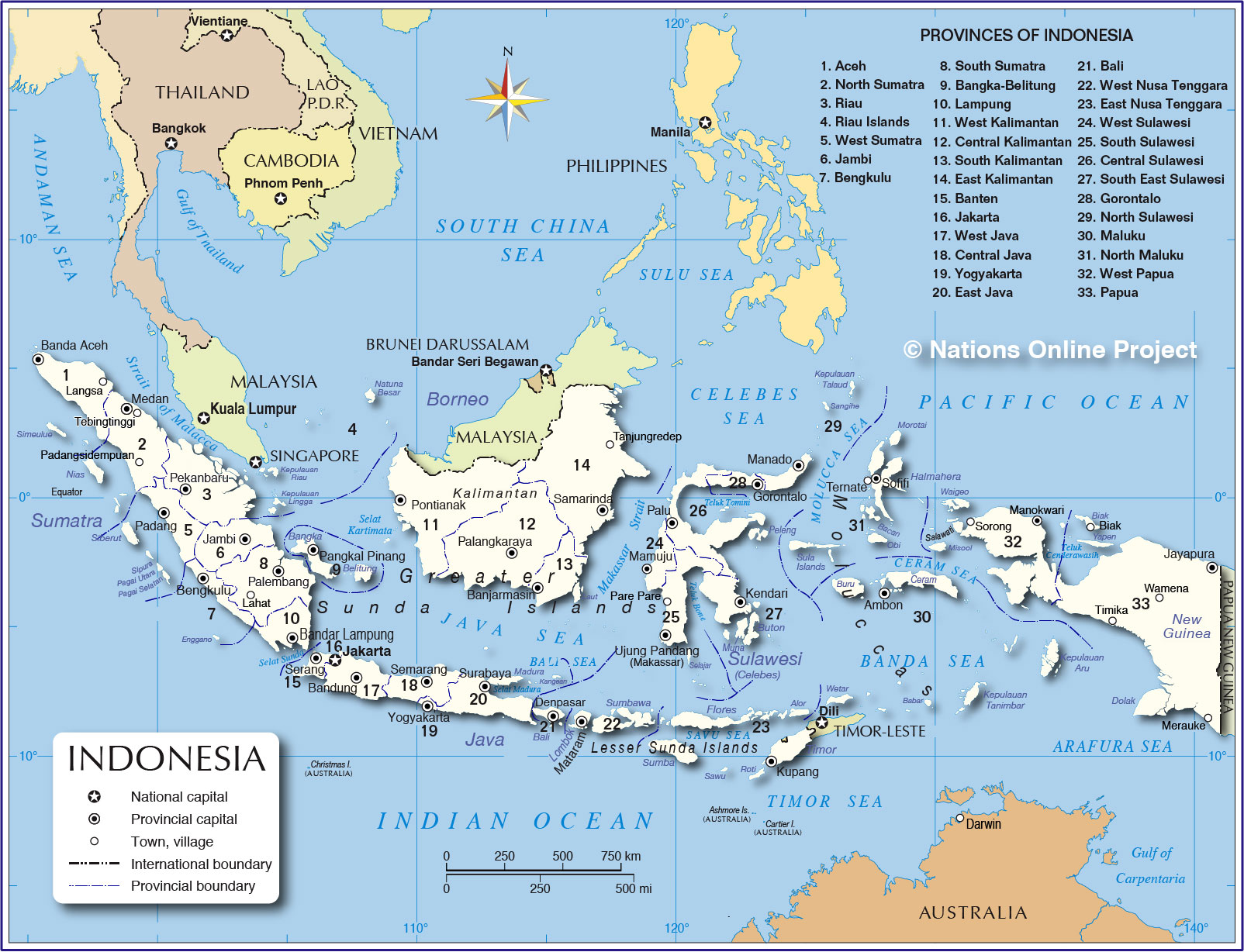
I did, indeed. If you're confused, let me explain: I've just spent the last two months in Indonesia, which as you might should know is not only the fourth largest country in the world, but a massive archipelago of islands that share a lot of culture, but are also all distinct in numerous ways. Because interactions across islands were limited by geography until fairly recently, languages, foods, customary laws, marriage rituals and even conceptions of time vary considerably more than you typically find in countries where regions form a contiguous landmass.


So I thought of Indonesia and it struck me: every blog is an island in the archipelago of criticism. We share a lot--and in the age of the internets, we share increasingly more. But we all have our own customs and "cultures." This is fine. This is good, even. Diversity is healthy. We can embrace this and be better for it.

With regards this site, let me be upfront (and this time I'm serious) and say that I, and we, welcome author interaction. Here, on twitter, elsewhere. I'll take the small percentage of negative interactions as the price for the much larger percentage of interesting interactions. That's me, that's us, that's our culture and this is our island. Tourists welcome.

With regards other sites and other ways of doing things, let me also be upfront (serious again) and say that this does not bother me in the slightest. I get why bloggers would want their islands to be "safe spaces" for fans to discuss work critically without imperious authorial intervention, and why bloggers would respond harshly to this kind of thing. I understand why Ana from The Book Smugglers was irked by Ben Aaronovitch's entry into discussion of her review of his books. That blog has a specific culture, and he blundered into it like old colonial wearing a pith hat riding a rickshaw.

"Wait, hold on--ARRRG, you're doing it again! You're not taking a clear position!!"

That's right, I'm not. Because I don't live on that island; I just visit. Looking at that interaction, sure, I would have done things differently. If I were Ben, I would have reframed that comment as "this is what I intended," rather than "this is the correct interpretation." If I were Ana, I probably would have said the same thing but in less strident tone. But hey--you know what? That's not my island! I don't have--or want--the right to impose my cultural assumptions on anyone else. I can, however, decide whether I want to visit that island again...and you know what? I do.

I like the fact that there are other reviewers out there doing things differently. Aidan Moher, Liz Bourke, Ian Sales, Jonathan McCalmont, Justin Langdon, Ria from Bibliotropic, Stefan Raets and all the rest--I don't go to these people to read the same old shit I'm slingin'. I visit their islands because their unique perspectives and approaches help me think more critically about the genre. Trust me, it's more fun that way.

I guess that leaves me to wonder: does this make me a fan blogger or an industry blogger? I don't know...I'm just trying to keep these beaches clean and make sure there's something worth visiting for.

...like grilled seafood.

Great, now I'm hungry...