Showing posts with label Watchmen Wednesdays. Show all posts

Wednesday, December 18, 2019

Watchmen Wednesdays: Episode 9

Watchmen Wednesdays: Episode 9

And so it comes to an end. What started as a show I didn't hear much hype about became the most talked about and exciting show of the year. Showrunner Damon Lindelof provided a master class on storytelling in a nine episode arc that was also just super fun.

In many ways, episode eight set-up the expectations of episode nine, "See How They Fly." We already know Cal/Dr. M was teleported by the white supremacist group the Seventh Kavalry and that Lady Trieu has a plan to stop them.

First, Veidt's storyline is brought together through several flashbacks. Turns out, Lady Trieu is his daughter after her mother, a refugee working as a cleaning lady, inseminated herself with Veidt's collected cum kept hidden in his office. As one might guess, Veidt disowns her, says he'll never call her daughter, and that she has to work her way up from nothing just like he did (in typical grumpy white man style).

Of course, this isn't going to stop Lady Trieu. As we know from the rest of the season, she is successful, to the point that even Veidt must acknowledge her as his daughter in order to escape Europa and his torturous utopia. In the bodies spelled out in corpses of Mr. Phillips and Ms. Crookshanks, we now see he has written on the moon not only "save me" but "save me daughter." Thus, Veidt is rescued by Lady Trieu--and my fan theory was confirmed! In order to make the flight back, he's coated in some sort of gold goo that hardens. It is Veidt in Lady Trieu's garden, not a statue! I feel very gratified by my little moment. Lady Trieu unthaws him, and he gets to come along for the festivities.

While the Seventh Kavalry successfully captures Cal/Dr. M, Lady Trieu's plan is also successful and she kills the Seventh Kavalry leadership. That being said, Veidt is convinced that Trieu would be just as bad of a choice as the white supremacist Senator Keene to take on the powers for Dr. Manhattan. The season isn't necessarily charitable when it comes to demonstrating her ability to empathize, but we are never given the chance to know if she would have been good in blue. Veidt comes up with a plan to stop her, using frozen baby squids teleported to the center of Tulsa, OK, which destroys not only her machine but her, as well. Only on Watchmen, folks.

Even Veidt can't save Dr. M, but Angela is there when he dies. His powers are drained into Trieu's machine, and after that, we aren't sure, though Lindelof and his team have given us several clues that seem to confirm the next Dr. M.

Angela Abar in a Watchmen promo with a significant tint to the color palette. 
First, the focus on eggs. Dr. M tells Will Reeves who relays to Angela that: "You can't make an omelette without breaking a few eggs." While eggs have been a motif throughout the season, the previous episode featured dialogue between Dr. M and Angela about if he could transfer his powers into someone else, and he uses an egg as an example--he could put his powers in the organic material, which would then activate once someone ate it. Later in episode eight, Angela breaks a carton of eggs out of anger that Dr. M won't do anything to save himself. At the end of the episode, she walks into the house and sees the broken carton. As she begins to clean it up, she remembers the conversation about transferring his powers via the egg. Of course, she cracks the egg, eats it, and tries to walk on the pool water, which Dr. M had done earlier that night. And, that's where the show ends, with her foot just about to touch the pool.

That being said, I think this promo picture makes it pretty clear who, if anyone, is the next Dr. Manhattan.

The end of the season doesn't wrap up much the loose ends--such as if Veidt will go to trial again, this time for massacring people via giant squid rather than killing the clones. There's a chance that Damon Lindelof will make another season, but I'm also okay with the show ending as a near perfect run. I've still got a lot of thoughts spinning around, so I hope to write a longer essay about the series as a whole next year, but until then, I've got some suggestions to keep up the Watchmen vibe through the holidays!

  • If you're like me and haven't read the original for various reasons, that might be a good place to start! I'm planning on reading Watchmen by Alan Moore and Dave Gibbons over the next few weeks.
  • If you're an old time fan and the show has reignited the fires, then check out Doomsday Clock (2017-2019) by Geoff Johns, the sequel to the original comic. 
  • If you want a deep dive into the TV show lore, then check out Peteypedia, a wiki constructed by the writers' room to give you all the good details.   

Thanks for reading along and experiencing Watchmen with me! I hope to see you in 2020 for a longer conversation about the series as a whole (and I'm sure we'll be talking about it once the Hugo nominations come out!).


Phoebe Wagner currently studies at University of Nevada: Reno. When not writing or reading, she can be found kayaking at the nearest lake. Follow her at phoebe-wagner.com or on Twitter @pheebs_w.

Wednesday, December 4, 2019

Watchmen Wednesdays: Episode 7

Hey all, I've been pretty unconcerned about spoilers so far in these posts, but I did want to make a quick note that there is a major spoiler in this episode. If you intend to watch the show and haven't yet, I'd suggest you stop reading until you've caught up.

In episode seven, "An Almost Religious Awe," we begin to get some answers. Angela is having her grandfather's memories flushed from her system; Lady Trieu is administering the procedure; and Laurie Blake is continuing her investigation by talking to Chief Judd Crawford's widow. In Veidt wonderland, he's been under trial for 365 days by a jury of the clones for trying to escape his prison. 

Veidt during his trial by the clones.

As part of Angela recovering from taking the Nostalgia pills, her own memories flashback. She remembers the death of her parents after Vietnam became the fifty-first state. They are killed by a suicide bomber screaming: "Death to the Occupiers!" While this is just a small moment, it motivated Angela to becomes a police officer as a small child, which creates an interesting link between not only violence and the police, but the police as a colonizing force. I'm interested to see where this theme goes in the final two episodes. 

Laurie Blake has figured out that Chief Judd Crawford was a white  supremacist and confronts his wife, suggesting that their plan was to use the Seventh Kavalry to help make Senator Joe Keene (a Kalvary member) president, but Blake was thinking a little too small. The Seventh Kavalry have bigger plans, as Joe Keene reveals when he gives a speech about how hard it is to be a white man in the US. While he comes short of saying the word "genocide," it seems like that's where the Seventh Kavalry is headed--by capturing, killing, and turning one of their own into Dr. Manhattan. 

Yes, the blue wonder is revealed in this episode! Frankly, I'm surprised and impressed I didn't see it coming since it's totally clear in hindsight that Angela's husband Cal did not have nearly enough to do in the show, plot-wise, considering he was in almost every episode. The scenes between Lady Trieu and Angela fill in the backstory. Angela left Vietnam with her husband Cal after he had a car accident that gave him total amnesia. They start a new life in the US, except, as the end of the episode shows, Cal isn't exactly what he appears. Angela says he wiped his memory so they could be together and proceeds to burst open his skull with a hammer and pull out a familiar image--Dr. Manhattan's forehead mark. 

As might be expected, most of Twitter started freaking out over the biggest reveal yet on Watchmen. At the same time, though, I want to point one of the other powerful moments in the episode, at least for me, anyway: white supremacy being taken seriously as an actual threat. In the scenes with Lady Trieu and Angela, Lady Trieu reveals her plan to save humanity--from white supremacists. Not only are they a threat, but the Seventh Kavalry is the threat. While Watchmen isn't the first piece of media to do this, I appreciate it's also localized. The Kavalry is making a huge impact in Tulsa, OK, but also in the police force across the country, as shown in Will Reeves' memories. In addition to that, they have plans for the presidency through Senator Joe Keene, which become superseded by the idea of using Dr. Manhattan. In other words, the Seven Kavalry isn't some bungling group of a handful of racists trying to steal a nuke, they are a wide network across the US.

At a time when it would be easy to turn the Seventh Kavalry into a punchline, Watchmen demonstrates how truly threatening white supremacy can be and the measures that should be taken to stop it.  


Phoebe Wagner currently studies at University of Nevada: Reno. When not writing or reading, she can be found kayaking at the nearest lake. Follow her at phoebe-wagner.com or on Twitter @pheebs_w.
Wednesday, November 27, 2019

Watchmen Wednesdays: Episode 6

Watchmen Wednesdays!

The meta gets real!

In episode six of Watchmen, "This Extraordinary Being," very few narrative plot lines resurface, but important content regarding the themes of this show is explored more fully, from racial violence to police brutality to white-washing superheroes. While exploring all these themes in nuance and detail, it's still an entertaining--if brutal--episode.

As seen at the end of episode five, one of the last things Angela Abar does before her arrest is swallow all the pills left behind by Will Reeves, her grandfather. These pills are a drug called Nostalgia, which basically contains individual memories of that person's life, allowing that person to relive the memories in detail. So, the episode is almost entirely Will Reeves' story, told in black and white. Honestly, it's a magnificent episode. The black and white choice doesn't feel gimmicky, and POV shots from Will Reeves are used with great precision, particularly during violent moments.

The basic plot unfolds as a story of a black police officer turned vigilante. Will Reeves is immediately discriminated against, even during his graduation from the police academy. He's warned by multiple people in the force to beware of "cyclops," which turns out to be the shorthand for KKK in the police department. The secret symbol for the "cyclops" group is a twist on the current popularity among the alt-right to flash the "okay" hand symbol, which did make me crack up. Will Reeves turns vigilante after some of the KKK cops pretend to lynch him before cutting him down. On his walk back, the noose still hanging around his neck, he encounters a mugging and he pulls on the hood.

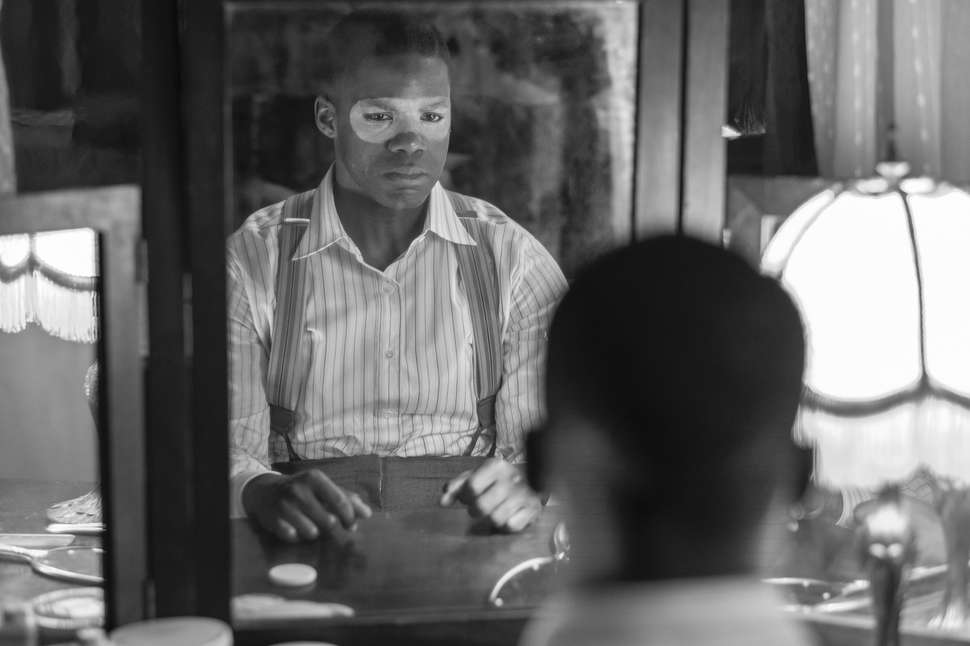
He becomes Hooded Justice, one of the first vigilantes that later joins the Minutemen. Earlier in the season, we'd been introduced to Hooded Justice through the documentary that is meta-commentary throughout the episode, but in that documentary, Hooded Justice is clearly white. Part of the documentary is shown in this episode, and Hooded Justice does reveal his face--a white guy. Through the black and white footage, Will Reeves is shown putting on white make up around his eyes because that was the only way his vigilante work would be accepted.

Will Reeves in white make-up, a mirror to Sister Knight's black mask.

This is proven true when he joins the Minutemen. While the leader of the Minutemen and his gay lover says he's "open-minded" but tells Will to not take off his hood, even among the other Minutemen. Their racism is confirmed when the Minutemen do an advertisement at a press conference that uses racists imagery. Similarly, in small gestures, this episode deals with other themes that have been an undercurrent throughout the show, such as police violence, Will Reeves/Angela Abar as black police officers, and historical foundations of white supremacist groups (such as the KKK to Seventh Kavalry).

The episode ends on one important plot point with reverberations for the future. The KKK cops are using a type of visual hypnosis to brainwash people into fighting each other--particularly black people in this episode. In 2019, Will uses this same technology to hypnotize the police chief and make him hang himself.

While this episode didn't necessarily advance the plot (and was the first episode that didn't feature an Ozymandias storyline), it did so much to advance the themes and provide historical context for not only Will Reeves' actions, but that of the Seventh Kavalry and the current police institution.

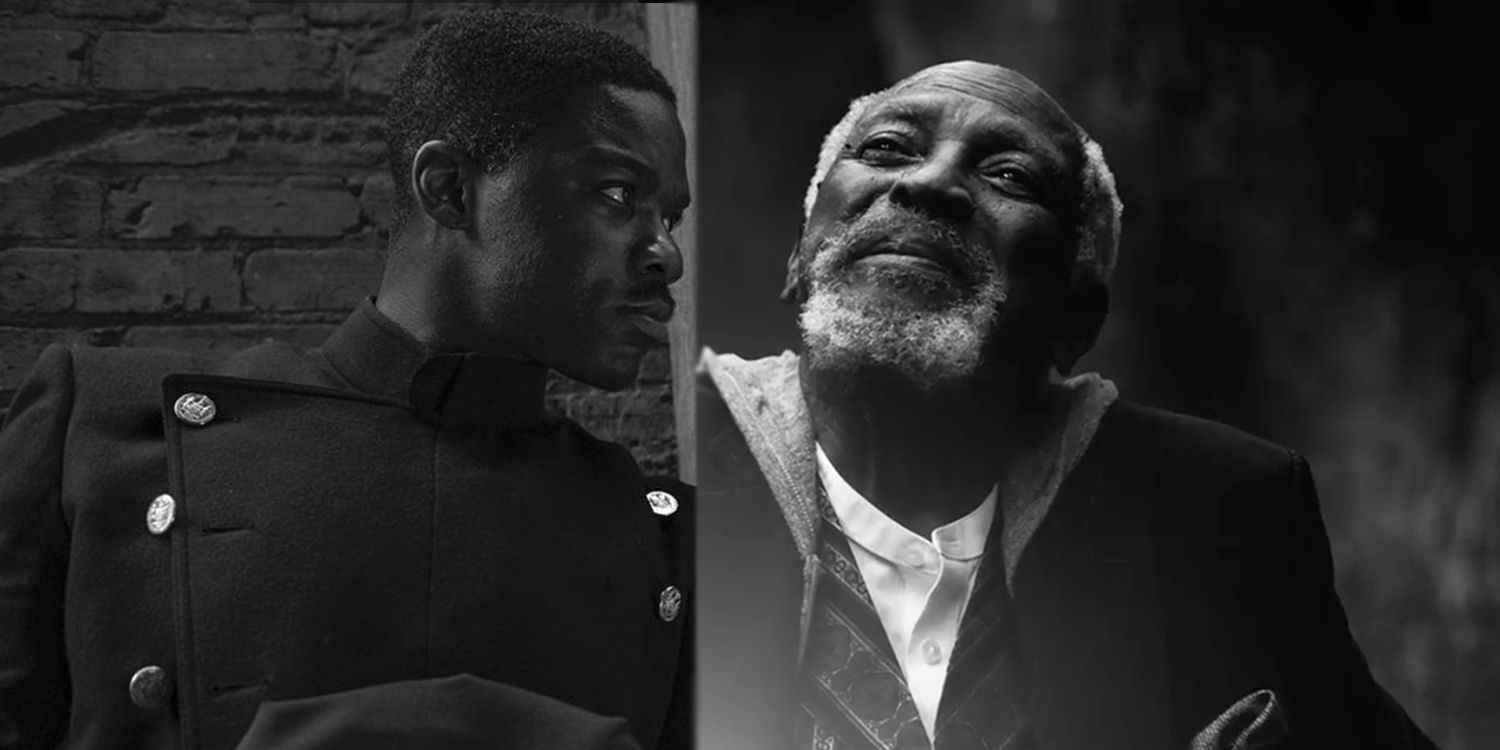
Young and older Will Reeves.

After that emotional ride, I'm interested to see how the next episode will pick up the plot threads. With only three episodes to go, my hope is waning that we will have a satisfactory or fulfilling ending as too many mysterious have been posited at this point, but if the last few episodes can stay true to the emotions of the season, it will be satisfying. Here's to next week!


Phoebe Wagner currently studies at University of Nevada: Reno. When not writing or reading, she can be found kayaking at the nearest lake. Follow her at phoebe-wagner.com or on Twitter @pheebs_w.
Wednesday, November 20, 2019

Watchmen Wednesdays: Episode 5

A deep character dive into Wade/Looking Glass.

Episode Five, "Little Fear of Lightning," opens with Wade (Looking Glass played by Tim Blake Nelson) in 1985. Wade is on an evangelizing mission from Oklahoma to New Jersey to convert people before the Doomsday Clock hits midnight with the onslaught of nuclear holocaust. Those that have read the original comic book will recognize what's about to happen--a giant squid drops on NYC, thus uniting humanity and diverting nuclear holocaust. Wade lives with the psychological fallout of being within the psychic blast from the squid. Much of the episode is a deep dive into Wade's neurosis.

Wade/Looking Glass with his mask rolled up

The other plot thread of this episode remains Veidt/Ozymandias. He finally realizes his dream of breaking free from his idyllic "prison" by having his clone slaves catapult him out of what we discover is some sort of atmosphere bubble or perhaps a hologram. On the other side, he walks on a moon around Jupiter. Out of the bodies of dead clones he catapulted last episode, he spells "HELP" just in time for a satellite to float by and snap a photo. He's jerked back to "earth" by the Game Warden, who says he's under arrest. The Game Warden is masked, so we still don't know who (or what) he is.

Ready to moon walk

One of the final plot points to keep in mind going forward is that Wade betrays Angela/Sister Knight to Agent Blake. But more on this in a second. 

Over the past five episodes, showrunner Damon Lindelof has switched from a plot driven series--following the mystery of who killed police Chief Judd Crawford--to multiple mysterious plot threads that focus on character motivations, such as this episode with Wade's fear of extra-dimensional attack. While this decision doesn't help progress the plot that much, it does engage with some of the social justice issues that are permeating the plot and characters of Watchmen.

This episode in particular demonstrates how white supremacists radicalize others in a way that feels incredibly relevant to the current rise of fascism in the US. Let's take a closer look at Wade.

  1. As a child, he's not only religious but a part of a cultish doomsday group. On an evangelizing mission is when this idea is shattered by the falling squid, which is tied up in his PTSD. 
  2. This experience leaves him with PTSD that we see him working out through a type of anonymous meeting. His PTSD appears to have broken up his marriage with a successful woman, further destabilizing him. 
  3. After meeting with a woman who Wade instantly likes, and who also experiences paranoia over extra-dimensional attack, he ends up believing she is working for the Seventh Kavalry and follows her to one of their headquarters. This relationship, though short, continues to destabilize what the "truth" is for Wade. It also further ostracizes him as he claims he doesn't have any friends and then is tricked by this woman.
  4. The Seventh Kavalry capture him and basically red pill him by revealing the "truth"--they show him videos that state the squid was created by Veidt/Ozymandias as part of a decades-long plan to have Robert Redford elected president and make for a more peaceful and equitable world. 

While the viewer is unsure whether Wade has been converted to the Seventh Kavalry, the first thing Wade does afterward is purposefully betray Angela/Sister Knight, which causes an all too familiar scene: A black person with hands up and police with guns drawn while a white person watches.

One of the more sinister moments of the series also happens during Wade's capture. The Oklahoma senator Joe Keene (James Wolk) is revealed as part of the Kavalry as was Judd Crawford, the police chief with a Klan hood in his closet. Keene says: "Each of us manag[ed] our respective teams to keep the peace." While such a line can go unnoticed, it points to the power structures seen in place today as inherently racist leadership maintains power, whether it's Iowa Representative Steve King or ICE agents. Watchmen continues to be subversive since episode one, and even though Wade's episode only inches the plot forward, the social justice issues again play an important role.

And, let's not forget that Watchmen somehow turned a joke into political commentary with squid-pro-quo. Even Veidt couldn't have planned better timing.


Phoebe Wagner currently studies at University of Nevada: Reno. When not writing or reading, she can be found kayaking at the nearest lake. Follow her at phoebe-wagner.com or on Twitter @pheebs_w.

Wednesday, November 13, 2019

Watchmen Wednesdays: Episode 4

Buckle in for maybe the weirdest one yet.

In episode four, “If You Don’t Like My Story, Write Your Own,” more characters are introduced and few mysterious solved. The episode opens with the introduction of Lady Trieu (excellently portrayed by Hong Chau), who wants to buy a farmer’s house and land—the payment? A baby that is biologically theirs due to leftover genetic material from when they medically tried to have a baby years ago. Of course, this seals the deal—just in time as something crashed onto the farmland they just sold, thus making it Lady Trieu’s.

Lady Trieu and the baby payment
We don’t know much about Lady Trieu, but here’s what we do know: she’s from Vietnam, she’s uber-rich, she bought Veidt’s/Ozymandias’ company, and she’s building the first wonder of the “new world” (ie something that can withstand the climate crisis). She’s also the one who took Angela's grandfather Will Reeves.

Over in Veidt wonderland, we did receive one answer—where do the clones come from? Wellll, apparently Veidt fishes them out of a lake like crab babies and then somehow grows them at a painfully quick speed (as demonstrated by the horrible screaming). Was anyone else as horrified by this as I was? It fits with the true weirdness of Veidt’s world but, dang, that was pretty awful. We aren’t given any time to recover from that weirdness before the newly grown clones are ushered into the dining hall to clean up their own clone massacre. Veidt admits to killing them all. That’s a big yikes from me, mate.

They get rid of the bodies by catapulting them.

When it comes to Angela and Agent Blake, the episode mostly featured a stand off. Angela is trying to keep Will Reeves a secret (as much as she resents him for screwing up her life) even while Blake takes over the investigation of the dead chief. I can only assume their relationship is going to explode pretty soon.

A few new mysterious pop-up or are remembered. First, the squids. No new information but the episode reminds us about them. Second, another new superhero appears—Lube Man—but all he does is run away from Angela and slide into a sewer. The object that crashes on the farm is never revealed, either, and Lady Trieu comes with a host of her own mysteries. Plus, the very end of the episode features Will Reeves repeating the “tick-tock” that has been associated largely with the white supremacist terrorist group the Seventh Kavalry (who were largely absent this episode).

For the reasons listed above, I gotta say this wasn’t my favorite episode. Last week, we got some answers and the return of a favorite character (and Agent Blake as played by Jean Smart is still brilliant and wonderful). This episode just created so many more questions that I worry aren’t going to be resolved in five episodes. I definitely trust showrunner Damon Lindelof (of Lost fame/infamy). He’s given us an amazing opening for a difficult show and got a nonfan pretty invested in this world. I’m down to see what he’s going to do with the remaining episodes.

Here’s what some other folks are talking about:
FIYAH poetry editor and writer Brandon O'Brien on Tom Mison

Speculative Writer Victor LaValle on Episode 4
Speculative Writer Brooke Bolander on the Veidt babies

My predictions for next week: the squids are gonna come baaaaaack, and I have a theory that Veidt is trapped in Lady Trieu's statue of himself. 


Phoebe Wagner currently studies at University of Nevada: Reno. When not writing or reading, she can be found kayaking at the nearest lake. Follow her at phoebe-wagner.com or on Twitter @pheebs_w.

Wednesday, November 6, 2019

Introducing Watchmen Wednesdays

Introducing Watchmen Wednesdays!

Regina King plays Angela Abar/Sister Night.


After seeing the first two episodes of HBO’s adaption of Watchmen, I’m itching to write about it. First, I’m going to be upfront and say I’m not a huge fan of the comics or the Zack Snyder movie (2009). Of Alan Moore’s work, I preferred V for Vendetta or Swamp Thing for the commentary on environmental issues and governmental power whereas Watchmen felt more so for fans of comic book superheroes, which I still struggle to engage with due issues of social justice, particularly sexism (though with writers like Saladin Ahmed, Roxane Gay, Ta-Nehisi Coates, Nalo Hopkinson, and so on, comics are becoming more aware of social justice issues for sure). So, when the trailer came out for HBO’s adaption, I was interested but not overly so. I figured I’d give it a few episodes and see. The trailer suggested a strong political undertone—which made sense for Watchmen as a whole—but I worried it wouldn’t go far enough and just be some neo-liberal commentary that pretends to solve racism by the end of the first season.

Not so! Episode one, “It’s Summer and We’re Running Out of Ice,” begins with the massacre at Black Wallstreet in Tulsa, Oklahoma in 1921. The opening sequence of scenes depicts the KKK on a killing spree and destroying property. While intense and difficult to watch, the show was quickly praised on Twitter and other media websites (see Leah Schnelback’s wonderful write up for Tor.com here) for representing a moment in history often forgotten by (white) history books. This sequence sets the tone for the first two episodes in a timeline that has diverged from our present. Instead, Robert Redford is president, Vietnam is a state, reparations are enacted but called Redfordations, and police wear masks.

Sister Knight and Looking Glass walk with yellow-masked police.


 The story revolves around Angela Abar (played by Regina King), a police officer injured during an attack that caused all police to wear masks afterward. Rather than just the yellow bandanna many police wear, Angela becomes Sister Knight, working alongside Looking Glass (also called Wade and played by Tim Blake Nelson) and Red Scare (played by Andrew Howard). With the police at their backs, they work to take down a violent white militia who wear Rorschach masks and go by the Seventh Kavalry. After a black police officer is killed by a Kavalry member, the force is galvanized into taking them out.

The Seventh Kavalry in Rorschach masks.


Now, this storyline is reasonability straightforward—cue the weirdness. Jeremy Irons plays an unnamed character (that is maybe Ozymandias?) with servants that seem awfully android-like. Or maybe clones. Regardless, they do not act fully in tune with human society. Little is revealed of Iron’s character, but we know he is writing a play and one android, Mr. Phillips (played by Tom Mison of Sleepy Hollow fame) gives him a watch as a present.

The episode ends with death of the white police chief, Judd Crawford (Don Johnson). He’s lynched and the person who calls to tell Angela about the chief’s death is an elderly black man in a wheelchair, sitting by the body. As the episode ends, it’s clear this man, Will Reeves (Louis Gosset Jr.), is a survivor of the Tulsa Massacre. 

Episode 2, “Martial Feats of Comanche Horsemanship,” (no, I have no idea what the title means) mainly focuses on three plots: investigating the murder of Chief Crawford, Jeremy Iron’s character and his play, and discovering how Angela is connected to the elderly Will Reeves. While interrogating him, Will tells Angela that the police force has skeletons in the closet, which prompts her to go investigate at the memorial for Chief Crawford, even though he was her longtime friend.

In nicely cinematic moment, Angela enters the Crawford’s bougie house and as she passes through the mourners, it becomes clear she is the only person of color in the room. If the viewer can catch this pointed shot, then what follows next shouldn’t be too surprising: Judd Crawford has a KKK hood with a sheriff’s star in his closet.

Meanwhile, in an effort to stop the cop killings, the police force raid the local Seventh Kalvary hangout at a white trailer park. The scene is a brutal reversal of police violence so often depicted on the news today, whether it’s against BLM protestors or the Hong Kong revolutionaries. Angela hesitates to become involved in the violence until a white guy with a bat attempts to take out her friend Wade/Looking Glass, which prompts her to beat the man bloody.

Jeremy Irons' character with Ms. Crookshanks and Mr. Phillips.


Interspersed between these incidents of police brutality is the weirdness of Jeremy Irons’ character. In his storyline, we see the play he was writing performed by his possibly androids Mr. Phillips and Ms. Crookshanks. The play depicts the creation of Dr. Manhattan’s powers (which has prompted new fan theories that Irons is Dr. Manhattan, who according to the show, is living on Mars). As part of the play, one of the Mr. Phillips clones/androids/who knows is burned alive while Irons’ character yells at Ms. Crookshanks to cry real tears. It’s horrifying in that surreal arthouse kind of way. After Mr. Phillips burns up, another Mr. Phillips—painted blue and, you guessed it, naked—lowers from the ceiling. The sequence ends with little more understanding of Irons’ character, except to blur whether or not he is Ozymandias.

The episode ends on two threads. A documentary that has been discussed throughout the first episode is aired (and watched by some characters). It seems to depict the original “heroes” of the Watchmen comic and their origin stories. The second thread is Will Reeves. Angela is about to turn him in and puts him in her car when a giant magnet attached to a helicopter steals him away (and her car). All we know is that Will doesn’t seem surprised and winks at Angela.

Episode three, "She Was Killed by Space Junk," returns to familiar territory. The episode starts with Laurie Blake (an excellently cast Jean Smart), who now hunts vigilantes for the FBI. Not only that, she's rather good at it. She's sent to Tulsa to investigate the murder of Judd Crawford and teams up with Agent Petey, a former PhD in History turned agent who provides the historical context for the characters since the end of the comic book (or if it's been awhile for the viewer since reading Watchmen). Most of the episode allows for the heroes to be seen through the jaded eyes of Laurie Blake, yet again adding layers of complications, such as police violence portrayed behind the mask, as Blake says: "Do you know how you can tell the difference between a masked cop and a vigilante? Me neither."

Following in the footsteps of introducing Blake's character, Jeremy Irons is revealed to officially be Ozymandias. Yet, as soon as this mystery is cleared up, another is produced: the Game Warden, which Ozymandias calls his adversary.

The episode ends in a call back to episode two, as an SUV falls out of the sky, apparently the same one that Will Reeves escaped in. While a little slower paced than the previous two episodes, the introduction of Blake sets the stage for Alan Moore's creation to become more involved in this latest adaptation. And, Dr. Manhattan continues to be teased--can they get away without actually putting him and his iconic crotch on screen? We'll see.

For the rest of the season, I’ll be providing episode recaps, diving into some theories, and writing about my own ideas (will we get a cameo from Robert Redford?). So far, Watchmen has provided an interesting cultural critique of the violent, nationalist time we are experience, complete with commentary on police brutality and forgotten racially-motivated violence. There’s a lot of our own forgotten history to be explored through this lens.


Posted by Phoebe Wagner, a PhD student reading and writing out of Reno, Nevada.