Showing posts with label Square Enix. Show all posts

Friday, August 11, 2023

Microreview [Video Game]: Final Fantasy XVI by Creative Business Unit III

It's Final Fantasy, but faster.


In Final Fantasy XVI, divine beasts clash in the skies while magic wielders called bearers submit to the will of their oppressors. Fans eager to become absorbed in yet another Final Fantasy game will be pleased to know that many of the franchise’s staples remain, even if the traditional gameplay format has been abandoned for a more action-centric focus. Larger-than-life battles rule the realm while the player uncovers the hidden secrets behind Valisthea. And at the center of it all? Clive and his motley crew.

I’ll admit that I haven't played every game in the franchise due to a lack of access in my youth, but I’ve played enough Final Fantasy titles to get the gist of what makes a title that represents the brand. One would have thought that being turn-based was one of them, or at least partially turn-based—but no. Final Fantasy is about a group of characters on an epic journey, someone named Cid, and Moogles. Anyone worried about missing out on any of those things need to fear not, XVI comes packing heat.

The story places the player in the shoes of Clive Rosfield, firstborn son of the Duke of Rosaria, and older brother to Joshua, dominant of the Phoenix. The game introduces the player to many story elements all at once, which can be a bit staggering. Thankfully the folks at Creative Business Unit III implemented their Active Time Lore (ATL) system. The ATL allows the player to pause at almost any given time and access a screen that shows them relevant information pertaining to the player’s current situation. A cutscene between two characters would have information on both of these characters, where they are, what/who they are discussing, and other important information. Of course, the player can access as much of this information through Loresman Harpocrates, but the ATL is a lifesaver, especially in a game with as much backstory and lore as XVI. While natural story reveals and progression are always preferred, for something as lengthy as XVI, it’s nice to have a boost. I used the ATL during almost every cutscene and think it has a place in future games as well.


Though the story is easy to follow (particularly with help from the ATL), some moments hinder the overall impact of the developer’s narrative goals. Some character motivations don’t align, some characters are too simple, while some are fantastic. It’s a mixed bag that works most of the time, but when it doesn’t it leaves me confused. The main female party member, Jill, is a sweet, fierce, yet compliant character. However, she was given to the Rosfield family as a ward when an invasion against them had failed. Why then is Jill so agreeable with the protagonists? Was her life at the duchy better than it had been with her family? An extra layer of complexity would have brought more depth to the character. Unfortunately, the female characters are not very deep. The good ones are agreeable, and the evil ones are either crazy or pure evil (I’m looking at you, Benedikta, and Anabella). Odd that, because Clive exhibits a lot of emotional complexity throughout the adventure. Despite this, the good guys are all still likable and enjoyable. Cid, Gav, Jill, and everyone at the hideaway round out a good cast and won’t be easily forgotten. It’s just unfortunate that the blacksmith has more emotional intricacy than the main female character.

While the story is mostly solid, some moments make no sense. Times where Clive is in his head and talking to past versions of himself while he fights god-like creatures were poor substitutes for better narrative devices. Thankfully the game drops those and comes to rely on what's happening in reality. The story blossoms and allows the players to take on Eikonic boss battles that would make the old God of War games proud. Huge, world-altering events occur, causing exciting shifts in the narrative. Like its major inspiration—A Game of Thrones— no character is safe from the chopping block. Unlike the inspiration, however, the game sometimes excessively uses profanity and instead of fitting the world, comes off as rather immature, like playing a Call of Duty game. It also doesn't help that the end arc is the weakest part of the narrative. In one sentence, Clive uses the words “final” and “fantasy” in a cringe-inducing declaration. The minor gripes are overshadowed by a lengthy, enjoyable storyline with intense boss fights and endearing cinematic sequences.


In one breath I thought that the quest writing was amazing, and in the next, I wondered who thought the next quest was a good idea. There are some great side quests in XVI, but some awful ones as well. Even the main storyline has the player doing a fetch quest at one point. Some feel lazy, while others may bring you to the brink of tears. Quite an odd combination, though I wish there was someone who caught the imbalance. While the side quests could be a mixed bag, the beast hunts were a great distraction and a nice way to hone your skills and engage in the best aspect of the game.

The combat is the best part of XVI. Clive gains the power of Eikons throughout his adventure, employing new ways of dispatching enemies. Each Eikon harnesses a different element, but with enough ability points, the player can mix and match these powers to create a flow that works for them. Creating combos feels fantastic, the fast-paced action reminiscent of Devil May Cry (complete with Devil Trigger and everything). I almost always found myself engaged in combat even when unnecessary because I enjoyed chaining combos and defeating groups of enemies. The boss fights are rewarding and, like the quest design, remind me a lot of Final Fantasy XIV (the MMO). The emulation is clear, and it was a brilliant idea to have people who design many boss fights per year come in and help design some for a single-player game. Though many will be disappointed in the lack of turn-based gameplay, the replacement is refined and enjoyable. I only wish there were more RPG elements here, XVI is a long action-adventure game and not much of an action RPG.


The technical aspect of the game is mostly pristine, with some frame rate drops being the main offender. Otherwise, the visuals are wonderful, particularly the gorgeous vistas and massive Mothercrystals. The combat effects are gorgeous, and the cutscene animations are great. The load times are fantastically short, I would find myself fast-traveling to a town I was already in because the load time would be shorter than my on-foot travel. Creative Business Unit III took advantage of the hardware, from the SSD to the DualSense implementation—XVI makes the PS5 sing.

The audio design is top-notch. The soundtrack makes the game soar, making boss battles even more grand than they would be otherwise, while also hitting the narratively sensitive moments at just the right time (though there were a few moments to contradict this). Masayoshi Soken should be commended for the score. The voice acting is great, even if the dialogue writing is sometimes stilted. The voice actors all lend distinctive, unique voices—especially Cid—to the cast of characters that are easily identifiable without looking at the screen. The audio is an elevatory aspect of this game that cannot be overlooked. I can't count the number of times I continued humming the battle music after pausing the game to go do something else.


The oxymoronic title indicates pumping lifeblood for the long venerated franchise. Final Fantasy XVI is anything but a final entry in this long-running saga, and it’s a great pivoting point for action-based iterations in the series’ future. When I finish a Final Fantasy game, I look forward to the next iteration, but I would be happy to see more from Valisthea. XVI lives up to most of its potential, offering memorable iconic clashes with spectacular visuals and audio. Though there are many more moments I wished had been explored (like the massive fight between Ifrit and Phoenix and any strife between their dominants), the game covers almost all of its bases and ends in a way that feels right for the story. Final Fantasy XVI may not be perfect, but it’s a great entry into one of the longest-running franchises in the video game industry and a thrilling action game in its own right.

The Math

Objective Assessment: 8/10

Bonus: +2 for gorgeous visuals and fantasic audio. +1 for massive story with world-shifting events.

Penalties: -1 for uneven side quests. -1 for not satisfyingly convincing me that bearers would not simply use their powers to kill their oppresors. -1 for not fleshing out the primary female characters a bit more.

Nerd Coefficient: 8/10

Posted by: Joe DelFranco - Fiction writer and lover of most things video games. On most days you can find him writing at his favorite spot in the little state of Rhode Island.

Friday, December 28, 2018

Microreview [video game]: Shadow of the Tomb Raider by Eidos Montreal (developer)

In its own Shadow

 
Tomb Raider (2015) made me a Tomb Raider fan. Despite being a Playstation owner and playing lots of video games in the timeframe when the original Tomb Raider was popular and hugely mainstream, I never got into it. Never even played it. But Tomb Raider (2015) got a ton of positive reviews and it was a fun action/stealth/Metroidvania-ish game that I loved, so I’ve been onboard for the sequels since. But something about Shadow of the Tomb Raider felt off.

As in all Tomb Raider games, you are Lara Croft, archaeologist, anthropologist, indistinct researcher of some sort, and you are still fighting Trinity, the Illuminati-esque villains who were responsible for your father’s death. This time, Croft’s exploits unintentionally but directly initiate the apocalypse. As natural disaster threatens to destroy the world, Croft has to stop the apocalypse, stop Trinity, and regain the trust of indigenous people whose still-living culture she is maybe plundering and maybe exploiting.

Shadow of the Tomb Raider dodges most of the “Croft forgot how to use the tools she acquired in previous games” problem of most Metroidvania sequels, but not all of them. Basic traversal stuff that was learned in previous games like rope arrows and some new tricks like rope rappelling are given from the start, but she has to learn how to use a shotgun to blow open some debris-covered doors? The new gates to progress also aren’t very convincing as they’re just stronger versions of stuff you already know. For example, doors you can open with a rope pull from the start also come in a variety where they use braided rope and you need a special rope ascender to open them. Okay, but you never use that rope ascender to, I don’t know, ascend a rope. It’s strictly for busting doors open. Another example is your makeshift knife. In the opening areas, it’s all you have because Croft survives a plane crash. But you quickly get back into civilization and yet you still can’t get through some doors because your knife isn’t tough enough. It’s a bit incongruent.

The action feels a bit loose too. Every encounter with an enemy seemed to either result in me dying immediately or easily dispatching the enemies with an assault rifle. Once stealth is broken, there’s almost no point in trying to go back into hiding, so I may as well put away the bow and start shooting. It is more satisfying to achieve the stealth puzzle of killing everyone without being spotted, but there’s no particular penalty for running in and noisily shooting everyone.

This all might sound like the gameplay is crap, and it’s not. It looks great, controls perfectly well as far as the platforming and movement go, and it’s still fun to explore the world and solve platforming puzzles. But I merely enjoyed it because I’ve seen this game before. The previous Tomb Raider games have done much of the same thing and better. Shadow of the Tomb Raider is a good game, where its predecessors were great.


The Math
Baseline Assessment: 7/10

Bonuses: +1 few games look better than this

Penalties: -1 doesn't achieve the same level of greatness as the previous games

Nerd Coefficient: 7/10 (an enjoyable experience, but not without its flaws)

***

POSTED BY: brian, sci-fi/fantasy/video game dork and contributor since 2014

Reference: Eidos Montreal. Shadow of the Tomb Raider [Square Enix, 2018]

Friday, June 8, 2018

Summer Reading List 2018: brian

Last year's Summer of Harry Potter ended up being the Summer, Autumn, and Winter of Harry Potter. In an effort not to repeat that mistake, this year will be the Summer of Good Anime Movies, a task I could accomplish in a weekend if I wanted to. So far, I've got ten movies named, focusing on critically and popularly acclaimed anime movies I haven't seen. I've chosen this theme because I haven't seen anything Miyazaki and that's kind of a huge blindspot, right? But good anime movies won't absorb all of my free time, so I've added some of the novels and video games I'll be enjoying too.

1. My Neighbor Totoro, by Hayao Miyazaki (director)

Here we go, starting the show with the showstopper. I've never seen My Neighbor Totoro. I'm going to correct that. I understand I could fill a list of Good Anime Movies with nothing by Miyazaki, but if I have to name one that I've probably heard of the most, it's My Neighbor Totoro.


2. Paprika, by Satoshi Kon (director)

Another acclaimed anime director whose works I've never seen is Satoshi Kon, so his films are also part of my list. Paprika is a film that I remember making some real waves when it released in 2006, and I never got around to it. 


3. Authority, by Jeff VanderMeer

You may remember from my review that I absolutely loved the film Annihilation, but wasn't particularly hot on the novel Annihilation. Regardless, I'm continuing this series to see if maybe some of what made the film so enjoyable was pulled from the other books in the trilogy. Even if it wasn't, I still want to know what else happens in Area X.


4. All Systems Red, by Martha Wells

Wells is absolutely cranking these novels out, with this one having just released a year ago, the second in May of this year, and a third before the end of summer. All Systems Red was well received and I got it free from the Tor newsletter, so this summer is as good of a time as any to check it out. Space travel and robots really speak to me.


5. Final Fantasy XV, by Square Enix (developer)

Hi, I'm brian and I've never finished a Final Fantasy game. That's not entirely true because I did finish Final Fantasy Adventure, but that was technically a Secret of Mana game. None of that matters, though, because I've played almost every Final Fantasy and didn't really enjoy any of them except this one. I expect this is the game that's going to carry me through most of the summer with the DLC episodes. And I'm not too optimistic about this, but playing it has been making me feel like I should revisit FFVIII and FFXIII, the two that probably caught my attention the most before I stopped playing them.


6. Pillars of Eternity 2: Deadfire, by Obsidian Entertainment (developer)

This is the entry for "PC RPG like a dozen others that I own but will never finish". It's not a short list and I added to it when I backed this game, like its predecessor, on Kickstarter. It just came out and I feel like I can't start it until I finish the first Pillars of Eternity, which will never happen. Why did I even list this? Let's call it aspirational thinking.


 ***

POSTED BY: brian, sci-fi/fantasy/video game dork and contributor since 2014

Friday, March 3, 2017

Microreview [video game]: Deus Ex: Mankind Divided by Eidos Montreal

Classy Warfare

 
We've reached the fourth entry in the 17 year old series, and we've seen two games followed by two prequel games. The series famously started with the approach "all conspiracy theories are real", but the most recent entries, Human Revolution and Mankind Divided, have skewed away from the most outlandish conspiracies and closer to cyberpunk influences. Still conspiracy is at the center of the theme, and they're beginning to run out of steam with Mankind Divided.

You are once again Adam Jensen, mechanically augmented ex-cop, ex head of security for an augmentation manufacturer, now Interpol agent. You're based in Prague after The Incident, in which most augmented people lost control of themselves and attacked others until their controlling entity was stopped by Jensen. The world is now deeply divided into pro-augmentation and anti-augmentation, with a UN vote removing rights for augmented people coming soon. From this stage, Jensen must investigate the bombing of a subway station that is blamed on pro-aug extremists.

Mankind Divided takes the "any approach to a problem works" philosophy all the way through. If you're sneaky, there's cover to hide behind and venting ducts to crawl through everywhere. Are you shooty? Get your guns out, there's plenty to shoot. Want to hack computers and talk your way out of problems? That works! Lethal, nonlethal, silent, noisy, it all works. An amazing amount of work went into this game to give you the ability to play it as you like.

This is also reflected in Prague itself. By the end, you'll feel like you know the city because every neighborhood and location is well detailed and obviously lived-in. The amount of detail in the levels and thought that went into the gameplay really reflects the love the developers have for the game.

One of the hallmarks of Deus Ex is a globe-hopping plot. That doesn't exist here, but it's not necessarily a detriment. You'll spend almost all of your time in Prague. Again, Prague is so well fleshed-out that it's not Dragon Age 2 situation, but I did absolutely get worn out seeing the same subway train loading screen.

With so much attention given to the gameplay and the city, the conspiracy and the plot as a whole are fairly weak. It tells a very simple story with a lot of the more compelling elements taking place as side missions. It's got one beat (augs vs. non-augs) that it hits over and over. It's not a new beat, as this conflict has been at least touched on by all previous Deus Ex games, and that's a big disappointment. It also suffers from feeling under developed. It's not a short game by any means, but it feels like it ends just as it's picking up. The ending also obviously leads into the next game. This is a real bummer because it seems that the studio is moving on to Marvel games in the near future.

On a not-unrelated note, I would be remiss if I did not mention the presence of expendable microtransactions in this single player game. You can pay real cash for in-game cash or praxis points, the ability development currency. It is utterly unnecessary as I found no need for any more praxis points or cash to support my personal playstyle, but you could make the game a lot easier on yourself with straight cash. And, like currency in the game, once you use it, it's gone. It's not like you're buying yourself a permanently larger chest of cash for every playthrough. You spend your cash and your praxis points and they're gone. It doesn't detract from the game because the game is clearly balanced and designed to be played without external influence, but that just highlights how utterly unnecessary the microtransactions are.

With the future of the series in doubt, this isn't exactly the note that I wanted to see it go out on. Mankind Divided is fun and open-ended in ways that many games can't get close to, but it's hampered by a thin story in a series that used to get high marks for complex storytelling. I don't think Deus Ex is dead by any means, but Mankind Divided makes the case for spending more time on the Marvel games that are sure to bring in piles of money with less effort necessary to impress. Deus Ex: Mankind Divided is a good game that should have been great.

The Math

Baseline Assessment: 8/10

Bonuses: +1 truly a "play as you like" game

Penalties: -2 weak main plot for a plot-heavy series, -1 spending a ton of time criss-crossing Prague can get a little tiring

Nerd Coefficient: 6/10 (still enjoyable, but the flaws are hard to ignore)

***

POSTED BY: brian, sci-fi/fantasy/video game dork and contributor since 2014

Reference: Eidos Montreal. Deus Ex: Mankind Divided [Square Enix, 2016] 

Wednesday, March 12, 2014

Tomb Raider - Definitive Edition

[Tomb Raider: Definitive Edition, Crystal Dynamics, Square Enix 2013-14]

It's an origin story

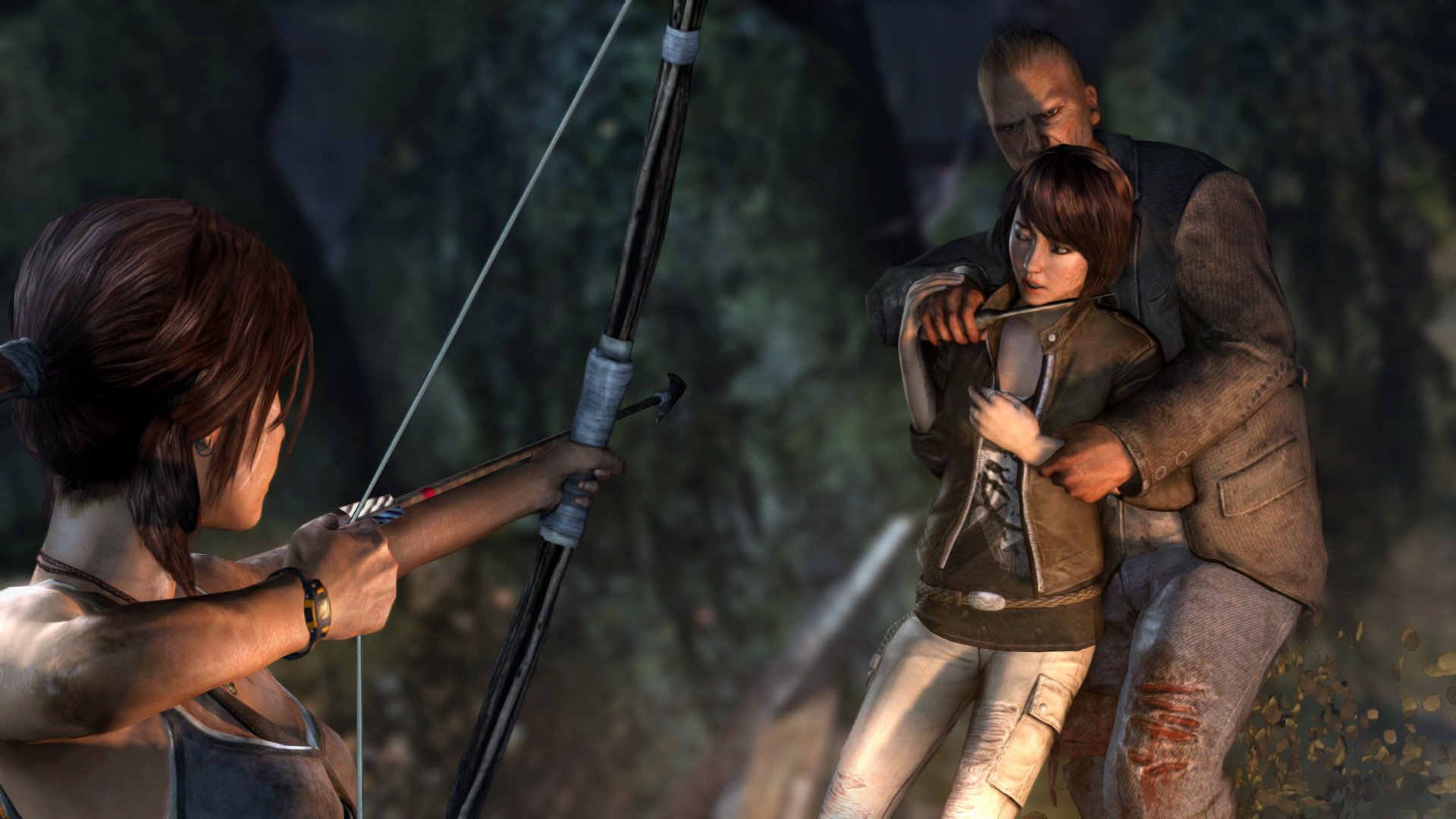
There, now that I got that huge spoiler out of the way I can talk about the game. I was impressed by Tomb Raider in the same way I was impressed by Ryse. I went into it with mediocre expectations and had them summarily deconstructed by quality titles. I'll admit up front I'm not a huge fanboy of the series. I played a little bit of Tomb Raider on the PS2 but that's really the full extent of my experience with Lara Croft.


I guess that means I picked a good place to start, albeit due to the sad fact that there's a dearth of good Xbox One games available. Let's all hope Titanfall is everything it's cracked up to be. Anyway, back on track, this game tells of the beginnings of Lara Croft and how she came to be the Tomb Raider in her more well-known roles. It turns out Lara's father was one helluvan explorer, too. She has a father figure in the game who has replaced her father since his untimely death named Roth. 

Roth is both Lara's caretaker and her coach, challenging her to push her limits rather than resting on her father's laurels. At the same time, his favorite saying seems to be, "You're a Croft," which was what lent such weight to her father's legend. The two adventurers are on a hunt for an island called Yamatai, the mythical home of ancient Japanese goddess, Himiko. These two and a small team of others set out to make a reality television show about the discovery of the legend of Himiko. Unfortunately for them, they find her. 

the island


The island of Yamatai, found in the aptly named Devil's Triangle off Japan, turns out to have more than its share of natives. These half-insane worshipers of Himiko are led by Father Mathias. Although mostly crazy, Mathias has figured out that they must appease Himiko in order to leave the island. On this one fact he and Lara agree. However, he means to do it by human sacrifice while she simply wants to release Himiko's spirit, thereby lifting the curse keeping them all there and allowing both the stranded adventurers and the natives to leave the cursed island. 


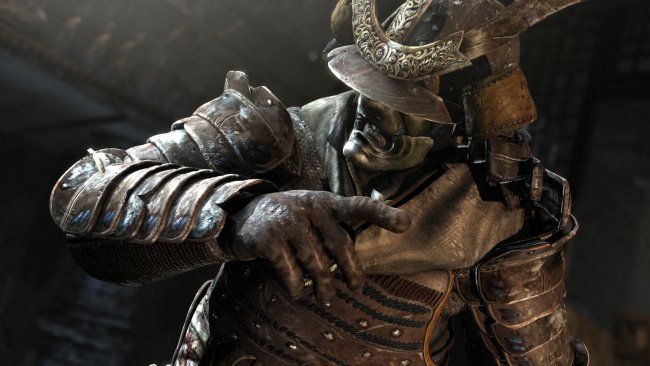
There is also an ancient race of samurai-type warriors that protect Himiko and the island. These gruesome warriors that should be long-dead are a huge threat and not to be trifled with. It's best to avoid them altogether if possible. I won't spoil the game by telling you what happens. Just suffice it to say that Lara learns her actions can have deadly consequences, a lesson she is forced to take in repeatedly. This maybe the reason that she is such a lone wolf in the earlier (later) games. 

gameplay


I've been playing some Assassin's Creed so that's probably why this game reminds me of it more than most others. You must think in three dimensions when figuring out how to get around. You can climb rock faces as seen above using your pick axe. You can fire arrows into specialized areas to create zip-lines and climbing ropes. You also have to solve a good deal of puzzles to progress through the game. Due to these facts, it is very much like the historical series in its mechanics, if not its historical accuracy. 


There are two ways to level up in the game, one for Lara and one for her gear. She has skills that include her ability to traverse the landscape, battle, and hunting. Her gear includes a bow and arrow, shotgun, pistol, and rifle. All of these can be improved by leveling. The skill points are gained by leveling Lara through task completion. Gear is leveled by salvaging parts from both the surroundings and by hunting and skinning animals in the environment. The leveling system isn't overly difficult or deep, but serviceable enough to keep the game interesting. 

the breakdown


This introduction into the world of Lara Croft is a highly successful one. The plot contains enough twists and turns to keep it interesting and the character depth helps you understand her motivation, if it doesn't exactly make you fall in love with Lara's companions. The gameplay mechanics are well-crafted and keep you on your toes, constantly requiring you to learn then use new mechanics in order to progress through the game. Although there were a few puzzles that required me to go hunting youtube for a walkthrough, most were difficult enough to warrant some stress without resorting to "cheating" in order to complete. The graphics are very nice for a port from 2013's Tomb Raider with noticeable upgrades in both the characters and environment for the next-generation consoles. I was unable to tell a difference between the Xbox One and PS4 editions, although I read that the PS4 had the slight edge in most comparisons. Overall, I can recommend this game as a fun installment for both seasoned tomb raiders and newbies like myself just looking for a way to pass the time until some more exciting titles are released. 

the math

Objective Score: 8/10

Bonuses: +1 for creation of a believable introduction to the world of Lara Croft.

Penalties: -1 for not really adding much to warrant a "Definitive Edition." While the graphics upgrade is nice, this is hardly Oblivion with its Knights of the Nine and Shivering Isles add-ons. 

Nerd Coefficient: 8/10. Well worth your time and attention. 

Brad Epperley--Gaming Guru, Ommmmm...gonna spam you from my camping spot in the shed. Haha! Nerds of a Feather contributor since 2012.