Showing posts with label Shirley Jackson. Show all posts

Thursday, November 29, 2018

Tip of the Hat: The Haunting of Hill House (Netflix)

Just before Halloween, Netflix released the limited series The Haunting of Hill House, based on the 1959 novel of the same name by Shirley Jackson. The book already inspired an iconic film adaptation in 1963, The Haunting, and for my money, The Haunting is as good as classic horror movies come. It also inspired The Legend of Hell House from 1973 by way of writer Richard Matheson’s largely derivative source novel Hell House, and then a forgettable filmed remake with Liam Neeson in the 1990s.

And Shirley Jackson is a titan. Not only is her original book more than worthy on its own merits, but she also wrote one of my favorite novels, We Have Always Lived in the Castle, and left a legacy of short stories that belong on any one of multiple literary Mt. Rushmores. Everybody has to read “The Lottery” in high school, but the fact she has not remained a household name is a huge oversight. But...

I say all of that to say this: I really, really like Shirley Jackson, and was so worried the creative team behind this 10-episode limited series would swing and miss. I need *not* have worried. This show is a masterpiece. There are simply not enough good things I can say about it, and I regret I wasn’t able to get a review together in time to be relevant. So instead, I simply tip my hat to a profound, intelligent, and moving work of art. That’s also a real long horror movie.

A Masterpiece of Adaptation

Executive Producer and series director Mike Flanagan and his team of writers laid the foundation with a truly inspired adaptation. In Jackson’s original, a paranormal researcher named Dr. Montague assembles a team of sensitives to stay in Hill House, reputed to be the most haunted house in the United States. Hill House was built by Hugh Crain, an eccentric millionaire, and various violent deaths descended on his family, centering on the house. Montague hopes to prove scientifically that the spirits, and therefore the paranormal at large, are real, and assembles his team with the tough, worldly Theodora, the shy, reserved Eleanor Vance, and Luke Sanderson, heir to the house. It soon becomes apparent that Eleanor has a strong connection to the house, or vice-versa, and seems to be in danger of losing touch with reality or succumbing to the house’s ill will, depending on your read.

How best to modernize what has been called the greatest haunted house novel of them all? Turns out, you start with nobody knowing the house is haunted, and make Hugh and his wife Olivia house flippers with a big family. Let the original haunting and horror befall the Crain family and their little children, and then, as adults, force them to revisit the house after their own experiences have formed the basis of the house’s reputation. From little things, like names — the way Eleanor Crain becomes Eleanor Vance, one of the Crain daughters being named Shirley — to big character stuff like giving Luke Sanderson’s alcoholism to one of the grown Crain children, and plot moments that are either direct quotations from the book or subtle homages, I could simply go on and on and on about the decisions made to both honor the source material while fully owning a new telling with a strong vision.

There is a certain fatalism regarding human cruelty that runs through Jackson’s work. That is largely absent in the adaptation. There is certainly a fatalism — bad things, real bad things, are going to befall these people, through no fault of their own — in that the train is coming and no one will be able to stop it. But this family, however estranged from one another, have a shared love for each other at the core of their various relationships, and this pull provides the adaptation with a profound emotional shape and resonance.


A Masterpiece of Design and Direction

Episode 6. Ye gods.

The whole season is beautifully directed, but Episode 6 has an utterly astonishing long-take in it that took my breath away on every level. From staging, to conflict writing, to set construction, to blocking, to dialogue and performance, to surprise and terror, there is simply no parallel that I’m aware of in film. I know about Welles, I know about Hitchcock, Altman, Cradle Will Rock, Birdman, and I’m telling you I’ve never seen anything like it.

I could, and have, gone on and on in fine detail (wake my wife up and ask her), but I’ll leave it here. I hope Shirley Jackson would be proud. To steal a line from Ornette Coleman, beauty is a rare thing, and for this novel to succeed, and its film adaptation to succeed, and now this television adaptation to succeed on a bewildering scale...I am simply happy to be a fan that gets to experience it.

Posted by Vance K — cult film reviewer and co-editor of the Hugo-nominated nerds of a feather since 2012. Musician and Emmy-winning producer. And look, a bunch a damn Emmys better fall like rocks on this version of Hill House. Just saying.

Wednesday, August 31, 2016

Microreview [book]: The Sundial by Shirley Jackson

It's not her best, but nobody did what Jackson did best any better.


Shirley Jackson is best remembered for her short story The Lottery, and it's a puzzle to me why that story never made more people seek out more of her other work. Shirley Jackson should've been a rock star, and not just of genre fiction like The Haunting of Hill House, which spawned arguably the greatest black-and-white horror movie ever made. Sure, many genre aficionados like Stephen King, notably, consider her a legend, and her novel We Have Always Lived in the Castle is one of the great books you're likely to read. All that is to say that I am a happy man when I find a stray copy of a Shirley Jackson book at my local used book store, and I approach them expecting quite a lot.

On the one hand, The Sundial isn't her best book. But on the other hand, it has a lot of what she does better than anybody in it, and it presages her greatest works, which were yet to come.

The Sundial tells the story of the Halloran House and its inhabitants, none of whom are what you'd call "likable characters." Out of the huge cast of characters, especially for such a slim book, the most prominent is Orianna Halloran, whom we meet when the book opens, just after the funeral of her only son, Lionel. Other members of the family, notably Lionel's widow and young daughter, openly accuse Orianna of killing Lionel by shoving him down the stairs, so that she could inherit the house. Orianna is a piece of work — she's cunning, ruthless, shrewd, and really just smarter than anybody else in the house. It's this characterization that makes her at least a fascinating character to read, if not root for, and her biting, clear-eyed manipulation of everyone else in the house is where Jackson's perceptive writing just absolutely shines. The extended Halloran family and staff who populate the home are put on their heels when Aunt Fanny, Orianna's sister-in-law and daughter of the late Mr. Halloran, who built the sprawling house, sees a vision of her departed father in the garden, by the sundial, and he informs Fanny that the world will shortly be consumed by flame, and all will perish, with the exception of those living in the house. Those, he can protect. Little-by-little, the house acquires a small handful of new residents (including a stranger Aunt Fanny picks up on a street corner in town and dubs "The Captain," for reasons known only to her), and what seems like the confused hallucination of beleaguered Aunt Fanny gains more credence with subsequent visions, and all who live in the home begin making preparations for the coming apocalypse.

I cannot stress enough how awful these people are. There is a long sequence late in the novel where they invite the townspeople up to the house and grounds for a barbeque, to give the little peons one last moment of happiness before the end of days — of which said peons are totally unaware. Because what joy in life could working people possibly have unless it is gifted them by the fabulously well-to-do Hallorans from the sprawling estate on the top of the hill? But Jackson's gift for capturing human behavior, and pettiness, sometimes, with such finely observed detail really shines in segments like this. It's a joy to observe Aunt Fanny's foolish entitlement juxtaposed with scenes of the villagers interacting with her, in which we realize she is so transparent in her cluelessness that everybody is in on the joke except her. The book's themes of wealth, entitlement, and gender roles still resonate today, and I think in large part that's less a statement about the stagnation of progress or anything like that, but more a tribute to Jackson's ability to grab onto the fundamentally human, and show us sad realities of how we interact with each other on a day-to-day basis.

On the whole, there are too many characters for such a short book, so we see some characters in razor focus, while others recede into a sort of literary soup, where it becomes difficult to remember which tertiary spoiled young woman is which. And even though the book is intended to leave some questions about the future, I felt it ended perhaps a page too early. After a shocking twist at the end that literally dropped my jaw (but was totally earned and set up deftly from the first page), I felt I'd been left dangling a little. So Shirley Jackson's best book about a sprawling house with its own personality is undoubtedly The Haunting of Hill House, and her best book about a wealthy, reclusive family is undoubtedly We Have Always Lived in the Castle, but The Sundial is still a fine example of the kind of writing that made Shirley Jackson such a force.

The Math

Baseline Assessment: 7/10

Bonuses: +1 for Orianna Halloran; +1 for "The Captain"; +1 for just getting human beings right, warts and all (even if sometimes more wart than not)

Penalties: -1 for too many characters; -1 for too abrupt an ending; -1 for being essentially a rough sketch of better works to come

Nerd Coefficient: 7/10. "A mostly enjoyable experience."

REFERENCE: Jackson, Shirley. The Sundial [Farrar, Straus & Cuddahy, 1958]

Our scoring system demystified.

Posted by Vance K — Emmy-winning producer, cult film reviewer, and co-editor of nerds of a feather, flock together since 2012.

Tuesday, June 14, 2016

Vance's Summer Reading List

I love Summer Reading List time at NoaF because my life is generally an overwhelming, downhill-rolling snowball of demands on my time/mental capacity, so I sometimes find myself suddenly realizing in horror that I haven't actually held a book in my hands for weeks at a time. But our Summer Reading Lists give me a chance to blow the dust off of my TBR pile and actually make some kind of plan-of-attack. These are the books I'll be laying siege to over the next three months.


1. Bone: The Complete Cartoon Epic by Jeff Smith [Cartoon Books, 2004]

At WonderCon this year, I told my daughter she could pick out a book at the Comic Book Legal Defense Fund table, and with wide eyes she selected the 1300-plus page complete edition of Bone. She's a couple of hundred of pages in, but I'm planning on stealing it from her. Or at least installing my own bookmark that I can march forward after she's in bed for the night. This all-ages comic is truly epic in scope, unfolding the story of three Bone-creatures who get kicked out of Boneville and wind up unwittingly sparking a battle of good and evil between the forces of The Spirit of the Locust, great dragons whom very few people still believe in, bizarre "rat creatures" who inhabit the forest, and the disbanded kingdom of humans who are caught in between. The black-and-white illustrations (just black and white, no grey, even) owe a debt to Walt Kelley's Pogo comics, and are tremendously engaging. It's like Lord of the Rings, but funny.

2. The Sculptor by Scott McCloud [First Second, 2015]

Author of the seminal Understanding Comics, Scott McCloud's new graphic novel received all kinds of raves upon its release last year. It's a story that takes the idea of pouring your life into your art in a very literal direction, and I'm very much looking forward to reading something that I think will have a lot of interesting things to say about the emotional process of creativity. The premise of asking the question "What art would you make if you knew you had less than a year to live?" is a profound one, and one that, as a songwriter particularly, resonates very deeply with me.


3. Radiance by Catherynne Valente [Tor, 2015]

I picked this one up after reading the glowing review that appeared here on Nerds of a Feather because the prospect of exploring the solar system as depicted in early silent films sounded amazing and fun. But I have to admit, I've started this one already and I'm not sold. It's not particularly fun and the narrative device of different characters essentially monologing each chapter has me pretty put-off by the unmotivated infodumping. May have to put this aside in favor of something else on this list and circle back.


4. The Sundial by Shirley Jackson [Ace Books, 1958]

I love me some Shirley Jackson. I was browsing aimlessly in my local used book shop and found an ancient paperback of this book lying sideways on the wrong shelf, so I counted it a happy accident and snapped it up. The back matter suggests that a bizarre family gathered together in their large home receives a vision of the apocalypse and has to decide what to do about it. I can pretty much guarantee that the decisions they make won't be what you'd consider solid, healthy, well-reasoned ones.


5. Harry Potter À L'École des Sorciers by JK Rowling [Folio Junior, 2011]

Tia recommended revisiting Harry Potter via audiobook, and I'm attempting something...similar? This week I finished the entire French course in Duolingo, and in my hubris, I ordered the first Harry Potter book in French. They still talk too fast for me in the French movies I have on DVD, and I needed to do something to expand my skills and keep learning, so I thought this might be a good way. I have Google Translate on my phone for words I don't know, and an optimistic outlook that may or may not disapparate once I actually attempt this feat. I'm about thirty years past when they say the best time to learn a new language is, so I'm keeping my fingers crossed.


6. Every Heart a Doorway by Seanan McGuire [Tor, 2016]

The premise of this book is so amazing it feels like one of those "How did nobody think of this before??" moments: what happens to kids like Dorothy after Oz, or the Pevensie kids after Narnia, or any of the countless child protagonists we all grew up identifying with after they are forced back into the hum-drum everyday of life-as-we-know it? If the premise wasn't enough to hook me (and it would've been), Joe Sherry's enthusiastic review helped seal the deal. It's currently checked out at my local library, and I wait for its return...


Posted by Vance K -- Cult film reviewer and co-editor of Nerds of a Feather, Flock Together since 2012. Studier of foreign languages on iPhone apps since 2014.

Friday, September 4, 2015

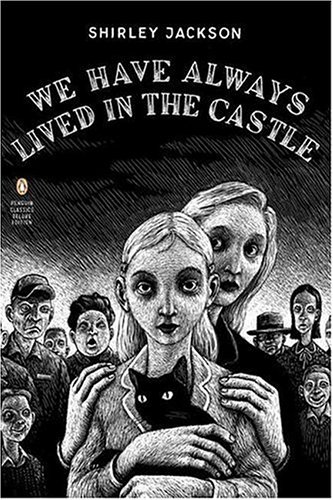
Microreview [book]: We Have Always Lived in the Castle by Shirley Jackson

A great writer's greatest book

Richard Matheson walked in her footsteps, and that's saying something, since countless other genre writers have walked in his, but for someone with literary awards named after her, Shirley Jackson remains somehow an underappreciated writer. Jonathan Lethem points this out in his introduction to the Penguin Classics edition of We Have Always Lived in the Castle. I had read a small handful of Jackson's short stories (including The Lottery, naturally, which she is best remembered for) and The Haunting of Hill House, which is the haunted house book that launched a thousand imitators (and was the source material for one of the best horror movies), but for some reason I had not sought out more of her novels until recently.

In We Have Always Lived in the Castle Mary Katherine Blackwood, known better as Merricat, tells the story of her isolated existence with her older sister Constance and wheelchair-bound Uncle Julian in the grandest house in a small town. Merricat is the only one who can leave the house, because Uncle Julian is incapacitated and Constance has such a fear of the townspeople that she is unable to walk even past the garden of the Blackwood estate. They are all that remains of the once-great Blackwood family, the rest of whom all died within minutes of each other six years earlier, after they were all poisoned with arsenic. Constance was tried for their deaths, and though acquitted, such a stigma was placed upon her and her younger sister that the children in town began singing rhymes about them to scare each other. Each time Merricat enters the town to buy groceries, she feels everyone's eyes constantly upon her, and their whispers always at her back. Nevertheless, Merricat, Constance, and Uncle Julian are content with their quiet little lives.

But then Cousin Charles shows up unnanounced. The son of their late father's now-late brother, Charles is apparently all the extended family that remains. Constance is glad to have Charles, and welcomes him into their home, which he apparently plans to live in now. Merricat despises this intrusion, and this change in their lives and routine. He touches things that have always been just...so. He is intolerant of Uncle Julian's constant ruminations about the poisoning. He disapproves of Merricat's superstitious burying of things around the grounds. He intolerably smokes a pipe. But worst of all, he wants Constance to leave the house and get out among people again. Thus begins the struggle between the ferocious, passive-aggressive Merricat, her meek, beloved sister, and this stranger who is clearly after whatever money might remain in the house.

There's nothing else to call this novel but brilliant. It is a brief novel, but full of complexity, surprise, aching dread, and a profound humanity. Profoundly good and profoundly bad. Merricat is 18, but her voice is more akin to that of a 12-year-old. She is a strange blend of wisdom and utter naivety. She clearly has a diagnosable mental disorder. And she is delicately and perfectly rendered by a writer with a profound facility for language and eye for humanity. Merricat is in large part the engine that keeps the isolation engine running for the Blackwood family, and it seems to be -- at least to this reader -- an unhealthy existence. But if it's also a happy one for the people involved...is it good or bad? The same goes for the townspeople. Jackson deftly paints them as monstrous in one moment, and capable of deep empathy in another, and finally...something else. This is The Monsters are Due on Maple Street meets Boo Radley from To Kill a Mockingbird.

Like Neil Gaiman's The Ocean at the End of the Lane, this is one of the best novels I have read in the last few years, and it is a novel that will not leave me.

The Math

Baseline Assessment: 8/10

Bonuses: +1 for Merricat Blackwood; +1 for refusing to paint even the seemingly simplest characters with a single brush

Penalties: -1 only because I didn't give Gaiman's book a 10/10, and that's the closest parallel I can draw to my experience of this book, but it's seriously great and you should read it, probably now

Nerd coefficient: 9/10. Read it. Do it.

Posted by Vance K — usually cult film reviewer, but sometime book and other stuff reviewer and co-editor of nerds of a feather flock together since 2012

Reference: Jackson, Shirley. We Have Always Lived in the Castle [Penguin Classics, 2006]. (Reprint Edition)