Showing posts with label Santa Monica Studio. Show all posts

Tuesday, March 5, 2024

Microreview [Video Game]: God of War Ragnarök: Valhalla by Santa Monica Studios

Out with the new, in with the old.


Upon receiving a mysterious invite, Kratos and Mimir row their way to the shores of Valhalla. Old characters resurface. Friends who were once foes discuss the possible meaning of the invite and the dangers that await Kratos and Mimir inside of Valhalla. Meanwhile, I’m wondering how Santa Monica Studios got away with releasing this content five days after its announcement and at no cost to the player. That’s right, the story and combat-focused add-on to one of the best games of 2022 and one of the best action games in current memory has free additional content. It’s time to reinstall the game and add this DLC to your download list.

My initial doubts upon hearing that Sony's Santa Monica Studio was releasing a free rogue-lite DLC for God of War Ragnarök were two-fold. One, it’s combat-focused and I wish they would just move on to the story of their next game, and two, it’s free and probably a cheap add-on. Well, I’m glad to say that I was fully proved wrong on the second worry, and completely reassured on the first. Valhalla is a worthy add-on to God of War Ragnarök in every way, from combat to story-telling, this is one of the few pieces of DLC that I’m glad a developer made (I have a thing about single-player DLC: I generally dislike that it exists).

The DLC is both combat and story-focused, ensuring that players returning for either aspect are satisfied (though this is significantly more combat-focused than story). This isn’t some little thank you to the fans for supporting the game, this is a full closure of Kratos’ character arc from the two reboot games, and for other characters as well. Some valkyries make appearances and add to the narrative, along with Mimir and Freya. Kratos’ reflection of self and his past actions are not only observed and resolved here, but they are also a wonderful throwback to the past. While events from Kratos’ past are brought up occasionally and glossed over in the main games (due to Kratos’ reluctance to speak deeply about it), those events are now put on full display and dissected for the character’s growth. Mimir also experiences growth in Valhalla, as do some others that I’ll leave the player to discover and experience. The only thing missing is our favorite boy (I hope he’s doing okay out there).


Valhalla
’s systems take inspiration from other rogue-lites, but from 2020’s Hades specifically. If you’re going to be inspired by a story-based rogue-lite, Hades is the one to look to. More story is revealed through each attempt through Valhalla, creating a desire to start one more run for the sake of the narrative. But also, the combat. The combat was wonderful in God of War Ragnarök, and it’s even better here. At the beginning of each run, you focus on a build with a specific weapon of your choosing. From then on, the rest of the run will allow you to focus on that weapon and its upgrades. You are still free to use the other weapons and their runic attacks, but all upgrades and perks will be tied to a specific weapon.

Swapping between weapons is a breeze and creating combos with them is just as, if not even more, satisfying than in the main game. You can choose to increase burn damage with your Blades or have automatic frost awaken at the end of a finisher on your Leviathan Axe. Continuing combos through evasion is a great choice, or adding realm shifts contingent upon other actions creates more opportunity for extra damage. The builds aren't quite as complex as a full rogue-lite like Hades, but it’s still fun to experiment and move through the arenas. While Kratos rides on Zagreus’ coattails, he still pays tribute in a meaningful way that makes this add-on worth someone's time.

Considering the breadth of enemy choices in God of War Ragnarök, Valhalla had a lot to pull from (and it does). Many of the enemies from the main game will make an appearance, and that includes boss battles as well. I cycled through quite a few times and still found enemies I hadn’t seen in the mode before. Kratos also encounters some baddies from his Greek days, adding a bit more nostalgia to an already nostalgic trip down memory lane. The game lasted significantly longer than I anticipated, and I was sad when I realized that I had encountered all the story elements and lines of dialogue that the game had to offer, but that just reinforced how much I enjoyed the game in the first place.


I’ve been playing Valhalla (when I have the time) for the last two months. It shouldn't take anyone who is playing consistently that long to beat it, but it still offers quite a bang for one’s non-existent buck. Santa Monica Studios could have easily charged fifteen to twenty dollars for this DLC and it would have still reviewed well because of the amount of quality content that it provides. It is free to download and accessible to owners of the original game. More than being free, it is an essential add-on to the God of War franchise and a worthy follow-up to God of War Ragnarök. So, if you haven’t yet, what are you waiting for? Have I mentioned that it’s free?

--

The Math

Objective Assessment: 8.5/10

Bonus: +1 for giving a great reason to reinstall the game (and for being free). +1 for additonal character arcs. 

Penalties: -1 for absence of father/son dynamic that is a staple of the reboots. -1 for limited random combat arenas.

Nerd Coefficient: 8.5/10

Posted by: Joe DelFranco - Fiction writer and lover of most things video games. On most days you can find him writing at his favorite spot in the little state of Rhode Island.

Wednesday, December 28, 2022

Review [Video Game]: God of War Ragnarök by Santa Monica Studio

Godly. What a sequel should be.


As Kratos’ snow-flecked fur sways in the Midgardian Fimbulwinter winds, he holds the pouch that once held his wife's ashes. The look of loss and longing, of deep undying love comes across in every crease of Kratos’ face. I could feel his pain, his wistfulness at a glance. Upon hearing his son return, he puts the pouch away and regains his composure. This opening moment is but a sign of things to come. Through clever writing, phenomenal animation, and god-tier performances, God of War Ragnarök successfully executes all the themes it sets out to explore and more.


Atreus, no longer a boy, is obsessed with the prophecy of Loki and wishes to understand more about his heritage and the role he will play come Ragnarök. The character progressions of Kratos, Atreus, Mimir, and other characters remain here and are bolstered by situational dialogue carefully crafted by Santa Monica Studio. From the outset, God of War Ragnarök is fueled with adrenaline-inducing sequences balanced with grounding moments to build character relations that pull the player further into the narrative. It’s an assault on two fronts, and both are handled exceptionally. You want the combat and the epic boss battles, but you also want more of the heartfelt story. The equilibrium is divine and is a prime example of Santa Monica Studio’s quality and attention to video games and storytelling composition.

God of War
and God of War Ragnarök are two parts of a whole. Each game has its own focus. While God of War focuses on the journey and growth between Kratos and Atreus, Ragnarök is about building trust and subverting prophecy. Both games have a similar core, but Ragnarök doubles down on what was introduced at the beginning of 2018—the game tasks the heroes to be better. To be better than what the world expects of them, and to be better than their history would reveal of them. This is not only for the main characters, but almost every supporting cast member from Kratos to Mimir, and from Birgir to Byggvir these characters set to right the wrongs of their past and make for a better future.
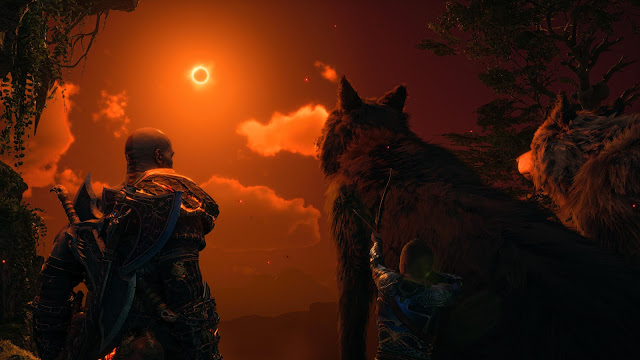

Sony Santa Monica achieved this (and excelled) by writing breathing characters with goals that fit within the narrative. Kratos would normally not help a wandering spirit, but once explained to, he may change his mind and sees the benefit or go along with a companion just to spend some time with them. Or, maybe he is trying to ingratiate himself with another character. In some cases, he sees the plight of another in himself and wishes to help. Character motivations are consistently present throughout the game, and it drives the phenomenal main story, but especially the side quests.

When it comes to side quests, God of War Ragnarök has some of the best around. They make sense and fit perfectly into the story. They feel natural and most content in the game feels well connected to the core—the task of being better. The side quest feels like primary content, creating a wonderful tapestry of game design. Even some of the side content feels anchored in the world. The draugr holes are optional but see the player continuously taking down a draugr that returns over and over again. With a few simple lines of dialogue from Mimir and a page of lore in the notebook, the game gives this side distraction some life, elevating it above the simple “go here, kill this”. There’s almost always a reason for it, and I loved that aspect of this game. There are a few things that seem superfluous—like the treasure maps and some realm tears—which feel like they were included because the prequel had them. But that’s about it, everything else feels like a moving part that works together to drive the experience forward.


Every aspect of God of War Ragnarök is masterfully done, including the award-winning score, which represents each character perfectly. From the simplicity of Kratos’ heavy, powerful theme to Atreus’, which exudes a sense of adventure and questioning—each musical element seized my attention as it melded with the adventure at hand and the actions taking place within it. Bear McCreary’s leitmotifs are implemented impeccably for an engrossing score that carries as much of the emotional heft as the character performances. Ragnarök’s soundtrack is one of the few I’ve listened to after I completed the game.
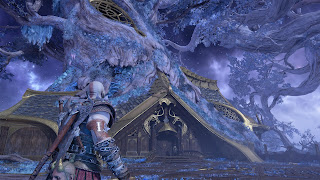
Speaking of the character performances… Wow. Eric Williams (the game’s director) ensured there were no tertiary characters. Each character has a purpose and backstory. Even those with minimal dialogue—especially those you find in a certain Vanir god’s camp—are memorable and worth spending an extra moment with to listen to their optional dialogue. But where the game shines most is in its primary characters and their stunning performances. Christopher Judge’s Kratos and Sunny Suljic’s Atreus are both wonderful, powerful characters that play off of one another so well. Different performances that contrast, yet work in tandem with such grace that I was moved to the brink of tears on multiple occasions. But that isn’t where the powerful performances stop. One scene involving a certain character (character name absent to avoid potential spoilers) left me hollow, the character’s pain became my own and I almost broke down. The empty feeling of helplessness, of grief and misery, was so perfectly enacted that I could do nothing but put the controller down, reflect, and applaud Adam John Harrington for his line delivery. This isn't speaking of Freya and Mimir, who add to these delightful performances. The game is full of so many incredible, affecting moments that it’s difficult to pick the most memorable.
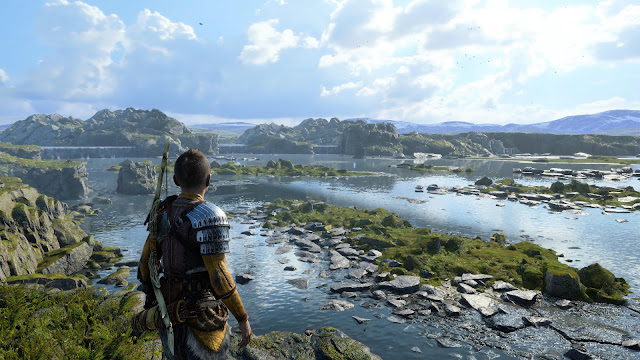

Considering this is a cinematic-heavy game, vocal and motion-capture performances are principal aspects of Ragnarök. The allies aren’t the only characters that put on a dazzling display, but so too do the villains. Thor and Odin were both flawless casting choices. My initial impression of Odin was that of a used car salesman, which at first didn't mesh well with the Odin I had crafted in my mind. But Richard Schiff’s Odin consistently pulled me into his lies, convincing me that he meant to do good, that he only sought knowledge, a way to make the world better. He was sly, slimy, and impeccable. The themes that apply to the heroes, specifically the task of being better, apply to the villains as well. It’s brilliant to see these characters, while at odds, attempt these similar goals.
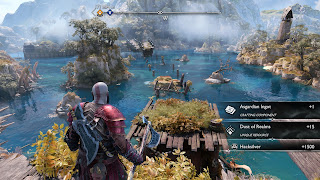
The beauty in the character arcs of these deities is in their humanization. It was difficult to empathize with Kratos from the original trilogy. He was a bloodthirsty savage that accidentally killed his own family. But the new Kratos practices restraint and tries to listen to others and understand their plight. He struggles with the fear that he may never truly change. Thor, verbally abused by his father and used only for his muscle, takes to drink to drown away his pain. Freya, coping with the death of her son reflects on her role in it. These human traits ground the experience, and how they affect others makes Ragnarök s tapestry all the more beautiful.

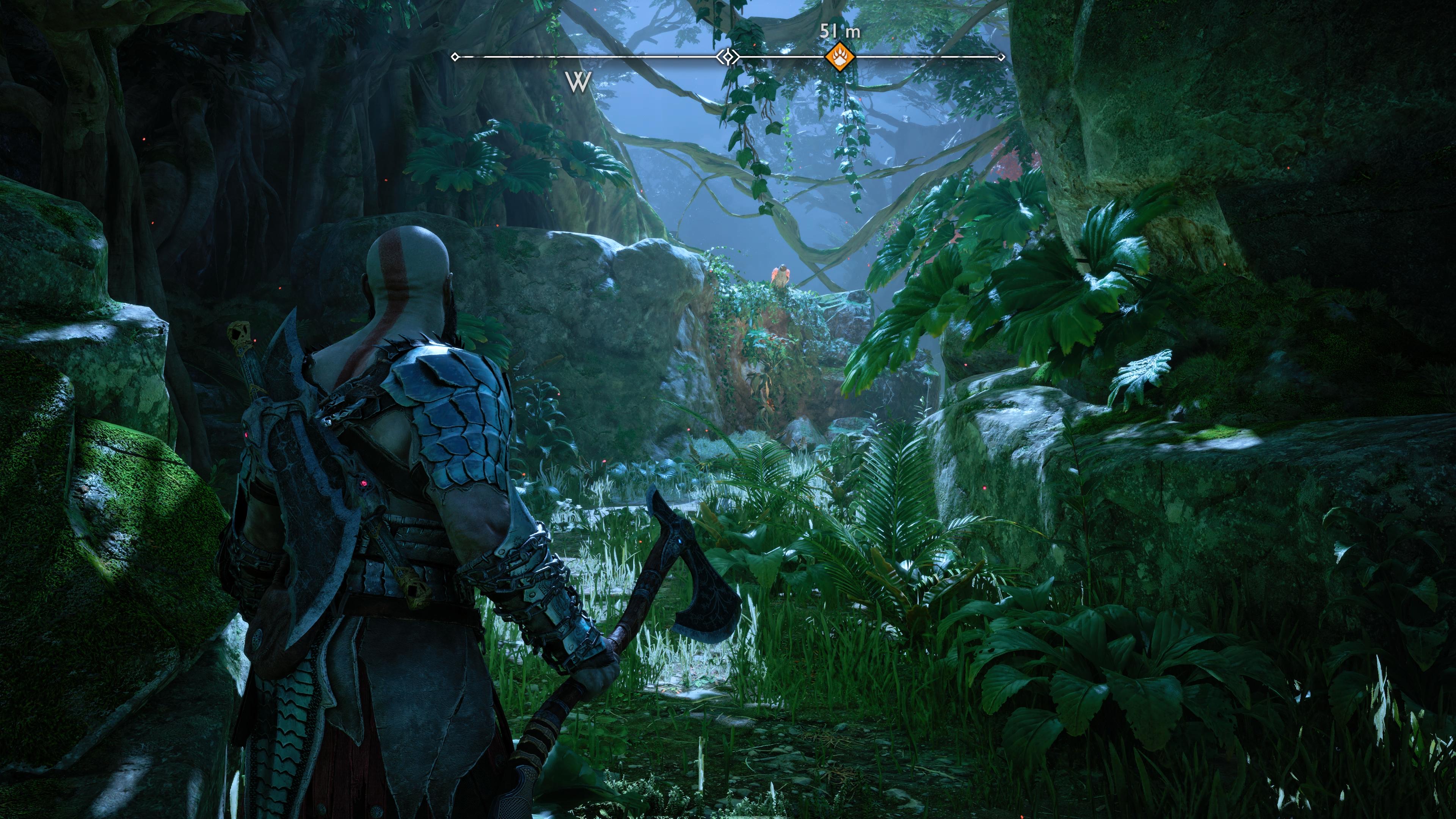
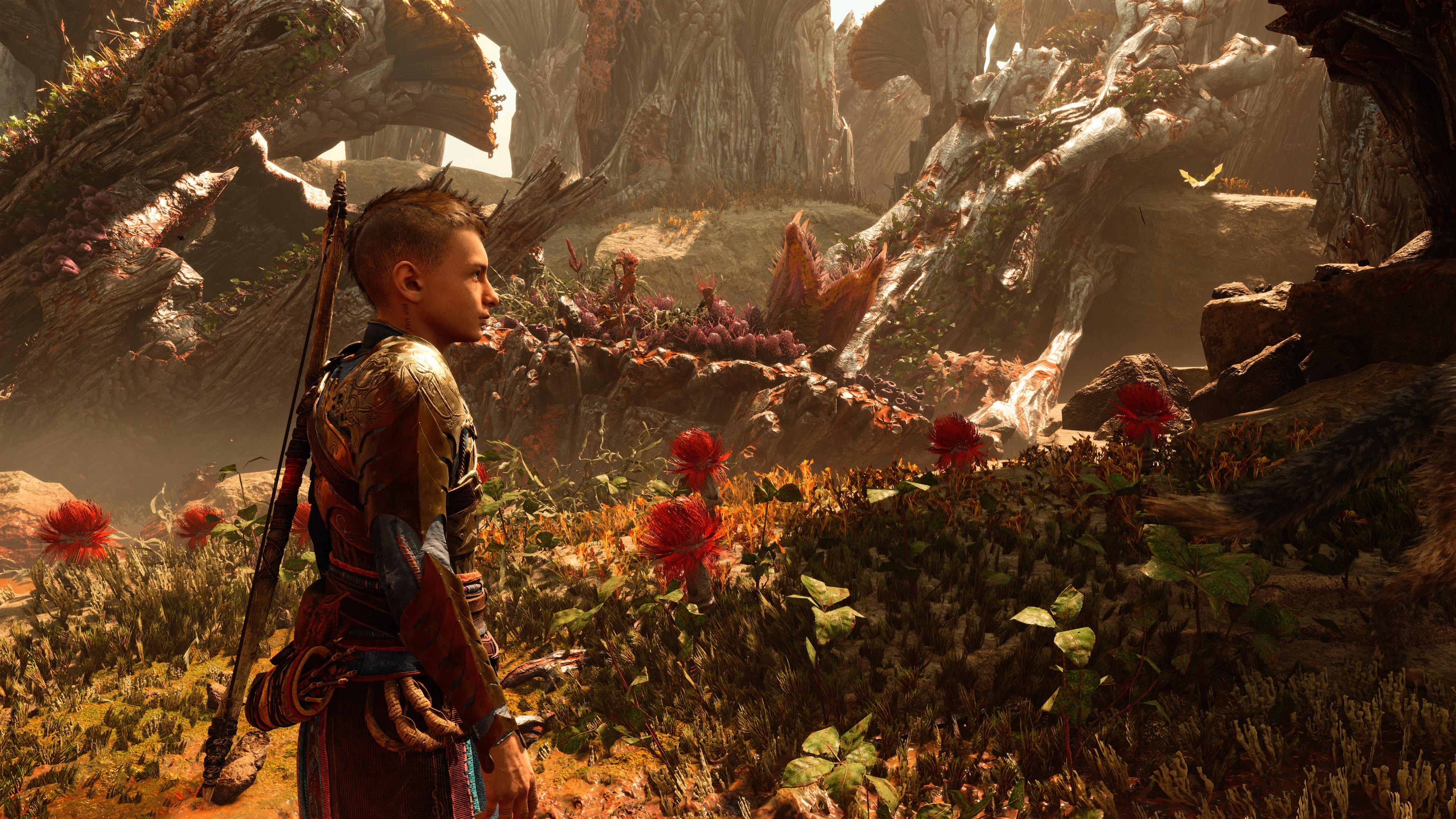
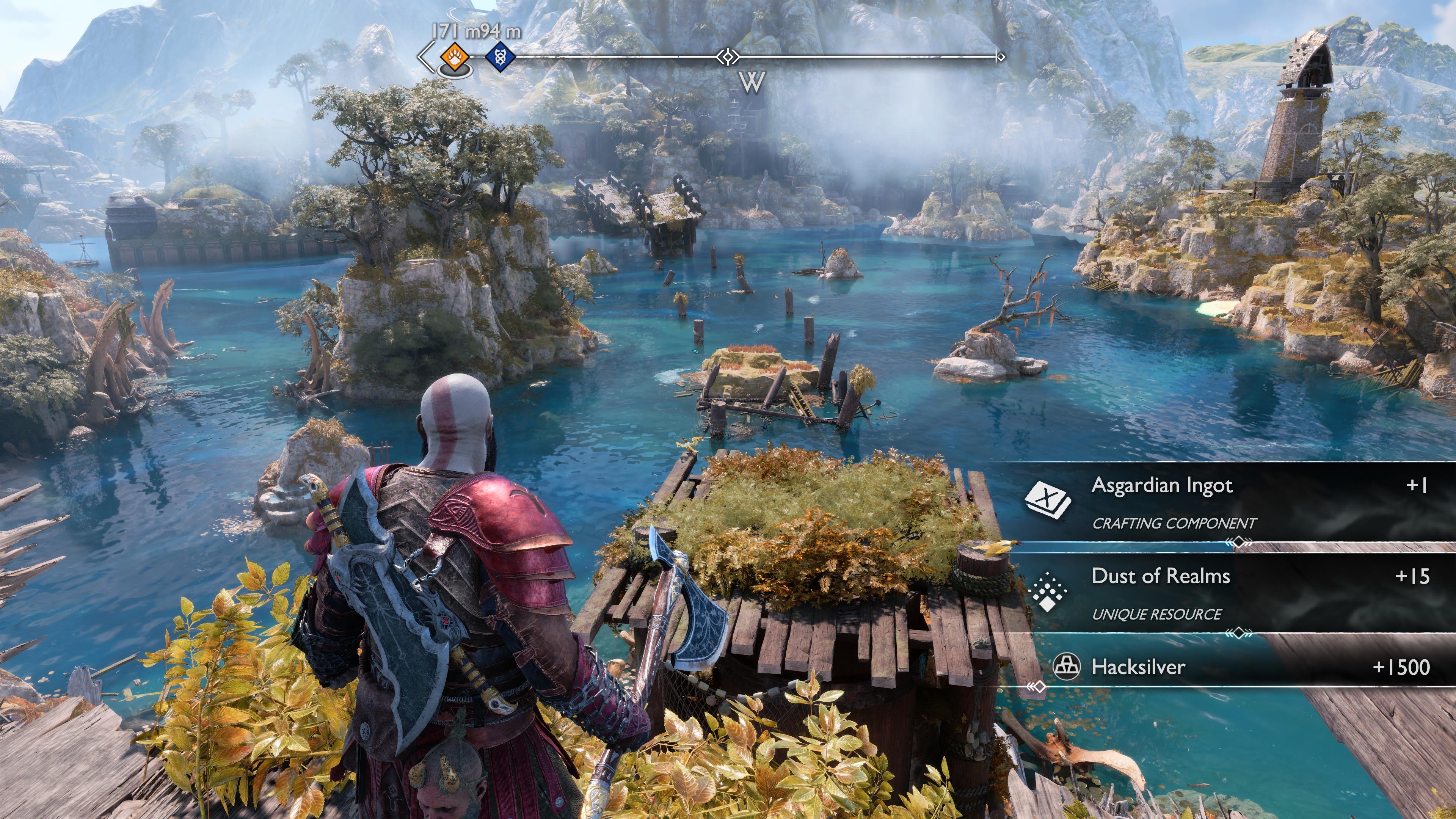
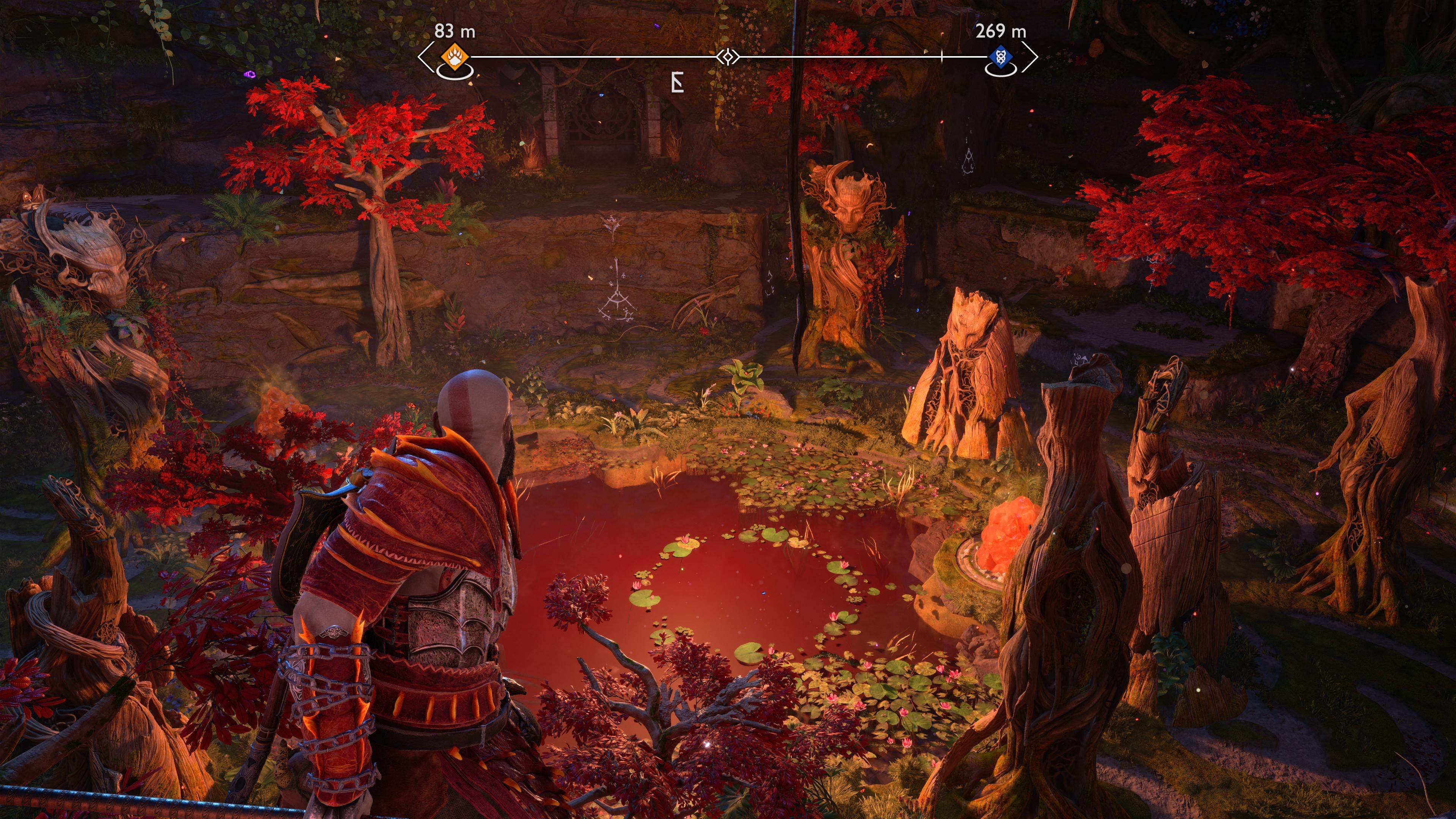
The characters and writing aren't where the beauty ends. Ragnarök’s art direction is splendid. The visuals are crisp and each of the nine realms is realized with fastidious care. From the lush fauna and deadly flora of Vanaheim to the glistening waters surrounding Asgard, and through the rough deserts of Alfheim, no detail is spared. Some areas are massive, eclipsing the explorable areas of the prequel. Midgard, Vanaheim, Svartalfheim, and Alfheim all have explorable areas with optional quests and side activities to get lost in, making this the largest God of War game of all time. Despite that scope, however, the developers never sacrifice visual fidelity. All visuals are honed to a fine point and add to the absorbing nature of the title. This includes all of the character models and the animations that bring them to life. It doesn't hurt that Santa Monica Studio did their best to make the world of Ragnarök feel much more lived in, Svartalfheim being the prime example.


The expertly crafted animations are seen in every facet of this game, from the cinematic sequences to the combat, and from enemy movements to the boss battles. The animation team at Santa Monica Studios are experts in their field and are matched by very few in the industry. The fluidity with which the combat appears on the screen is sublime. The timing between combat combinations combined with the animation sequences that accompany them is an absolute joy to play around with. It’s the most fluid and enjoyable combat system that has come out this year. The weapon play is a blast and kept me coming back for more. More crucible challenges, and more optional boss fights. The balancing between the multiple weapons in the game will be familiar to anyone who played the prequel. Ragnarök is an even better game mechanically and forces the players to familiarize themselves with the combos and controls, specifically the higher you go on the difficulty.

The challenge in the game is ever-persistent, though isn't unforgiving. Managing Kratos’ multiple weapons at different distances maximizes the player’s options, creating new fun ways to play, and constantly unlocking new abilities the more you level up. In 2018’s God of War, pressing the triangle button simply recalled the axe. In Ragnarök, the triangle button uses a weapon's special ability that imbues the weapon with elemental capabilities. Playing around with these options was the most enjoyable aspect of the gameplay. But not the only good one.

I loved the puzzles. They were balanced and gave the pace of the game a constant flow. I was never stuck for too long and enjoyed trying to figure out what to do with the elemental effects of my weapons and how to time my axe throws. Combining the fire effects of Kratos’ blades with Atreus’ sigil arrows also created fun encounters of their own, both of the puzzle and enemy variety. I was delighted to see the Nornir puzzle chests make a return. I never found myself irritated with a puzzle, the game keeps them balanced. There were times when one of my companions would give me the occasional hint to solve a puzzle when I didn’t want it, but those moments were few and far between.


The main complaint many had with the prequel was a lack of enemy types. Ragnarök addresses this and then some. So many enemy types have been added to this sequel that I constantly found myself engaging in new combat experiences. I enjoyed fighting enemies that challenged my gameplay style, forcing me to use a new weapon differently, or swapping out my shield type to help me deal with the type of attack that they delivered. The alligator-like dreki were enjoyable and challenging, quick and deadly. So too were the hunters and many of the other additions to the enemy variety. Ragnarök replaces the search for Valkyries with a different optional challenge quest: Berserkers. These enemies are the toughest in the game and present different challenges to Valkyrie counterparts. Some of them are capable of summoning more enemies into the match, while others have siblings to fight alongside them. While I enjoyed the splendid design and combat of the Valkyries more, I preferred the Berserker side quest that Kratos partakes in on behalf of Mimir.

It’s difficult to pick issues out in this game. I ran into one bug in my fifty hours and it was purely aesthetic (and fixed itself within a moment). As mentioned, my companion gave me hints before I wanted them every so often. In a few instances, I discovered some lore that would trigger another codex unlock. I would then have to search through the codex to find what I was looking for; a slight inconvenience.


When the final lines of the main story are delivered, the characters’ emotions became my own. Their intent and delivery set an example for any developers in the industry who want to create cinematic games with strong, believable character arcs and a wide, emotional story. The visions of Cory Barlog and Eric Williams come to life over fifty hours and don't let go even after the credits finish rolling. The developers even go so far as to ensure that no big lore questions go unanswered. When I finished God of War in 2018, I thought that there was no way that it could be topped by its sequel. But once I finished Ragnarök, I realized that Santa Monica Studios did the incredible; they subverted my expectations and delivered a sequel that not only equaled its predecessor but surpassed it in many ways. God of War Ragnarök is the rare sequel that, like Kratos himself, strives to be better than its past iterations and deftly succeeds. Ragnarök is my favorite experience of this console cycle. It’s a shame I’ll have to wait another four years for another game from this sensational studio.


The Math

Objective Assessment: 10/10

Bonus: +1 for phenomenal animation and VO performances. +1 some of the best side quests in a video game. +1 for engaging, enjoyable gameplay. +1 for fantastic character development. +1 for vibrant, contrasting art style with high quality visuals.

Penalties: -1 for minor UI annoyances.

Nerd Coefficient: 10/10

Posted by: Joe DelFranco - Fiction writer and lover of most things video games. On most days you can find him writing at his favorite spot in the little state of Rhode Island.

Wednesday, March 30, 2022

Review [Video Game]: God of War by Santa Monica Studio

Be Better.


How do you craft a primary combat mechanic that remains as enjoyable after thirty hours of gameplay as it did after its first use? Ask Santa Monica Studio. How do you ensure that every side quest is weaved into the overarching plot, ensuring nothing feels superfluous or overstays its welcome? Ask Santa Monica Studio. How does one create a narrative that engages the player over its entire runtime, rarely ever skipping a beat? Sony’s Santa Monica Studio has the answer. How do you masterfully employ a single shot camera technique in a video game without having past games to reference? Again, Santa Monica Studio can tell you how. How do you take a broken god and help him overcome his generational trauma without ever making him break character? I think you know where I’m going with this.


God of War
(2018) elevates the franchise that began in 2005 by rebooting everything we knew about the old games and transitioning to adapt to the ever-evolving industry. The gameplay is one of the biggest deviations from the original series of games. The camera has switched from a fixed camera that changed with every encounter to a third-person single-shot camera that never leaves our hero (outside of cutscenes). This has made the game more intimate. Boss fights like the massive scale Cronos showdown in God of War III are a thing of the past, as the camera never zooms out during gameplay to show such a scale. That being said, there are some massive beasts and bosses to fight in God of War, and the new camera makes them feel all the more dangerous and exciting. The spectacle isn’t abandoned, but some of it is sacrificed for the sake of a more grounded experience. And it exceeds expectations.

The primary combat mechanic sees the player use Kratos’ Leviathan axe to dispatch foes. There are light axe swings, which are quick but do less damage. There are heavy attacks, which are slower but deal more damage. And then there's the axe throw, the most enjoyable mechanic in the game. The player can aim Kratos’ axe and send it flying at enemies, then recall it mid-flight to continue to use it in combination with other moves. Imbued with ice, the Leviathan axe can freeze foes as well. If Kratos charges his axe throw he can bury it into a foe, freezing them for a short time while he follows up with his fists or turns his attention toward another enemy. Throughout the game, new abilities are unlocked along with runic attacks that keep the gameplay fresh and the combos exhilarating.

To add a layer of depth to the combat, Kratos’ son, Atreus, assists with his trusty bow. This mechanic is controlled by the player and allows for more strategy within each battle. Do you use Atreus’ shock arrows to do more damage to a group, or do you use his light arrows to stun one enemy and set them up for an instant finisher? Atreus can also summon ethereal beasts with his bow that take on the abilities of whichever bow type (shock or light) you have equipped. The game mechanics are seamless and enjoyable, even when the limits of player skill are tested. God of War bests its contemporaries in the gameplay space, this includes the famed FromSoft games.

The modified combat is a beautiful partner to the new camera. During gameplay, it follows Kratos closely, but outside, it’s a seamless single shot. There are no “cut-to” scenes in God of War which make the game all the more immersive, bringing every event closer to the player which creates no jarring transitions that we find in traditional cutscenes (which are necessary for scenes happening in other locations). To avoid the common camera, the game sticks with our main protagonists throughout the entire journey and it’s something special to see it employed so well à la 1917. It was a huge risk for Santa Monica Studio, but boy did it pay off.


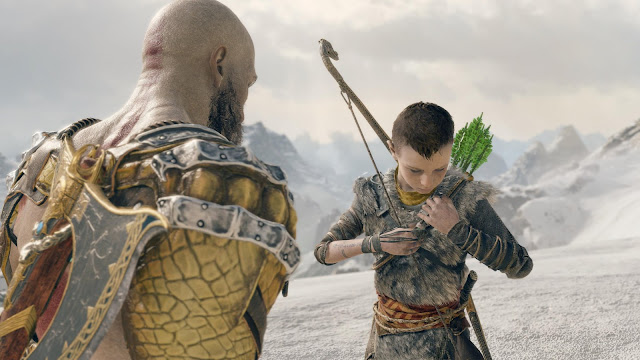
Settled and hidden in the Norse wilds, Kratos and Atreus have been tasked by the late Faye (wife and mother to our protagonists) to spread her ashes upon the highest mountain in all the realms. What proceeds is an emotional journey that spans many human issues, but at its core, never strays from the plot; the growth between a father and son. God of War’s laser focus on its themes intertwines into every aspect of the game, making every side quest and errand feel like a cohesive whole like I would have missed out on something important if I’d have skipped it. This is deftly done by employing smooth facial animations and natural dialogue between Kratos, Atreus, and Mimir, not to mention the occasional appearances of the Witch in the Woods, Brokk, and Sindri. Each character’s voice actors do a fantastic job of making these characters feel unique and lifelike. The performances cannot be overstated. The slightest shift in Kratos’ demeanor is monumental and praiseworthy, sometimes raising the hair on my arms or bringing a tear to my eye.


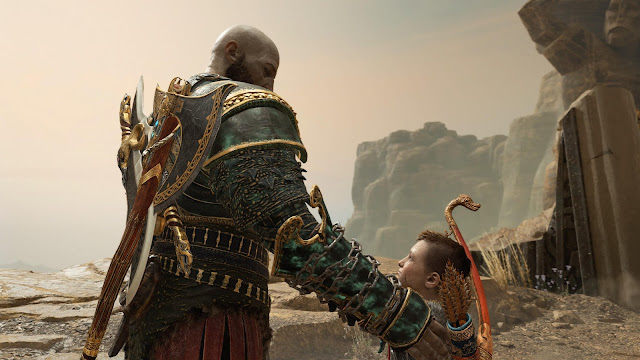
Kratos, abandoned by his father at birth, and later betrayed by said father employing a massive sword through the chest, doesn't quite have the best paternal figure to look up to when raising his son. The only thing he knows is that he won’t do to his son what his father did to him, but other than that, parenthood is a frightening unknown that he’s left to his wife, Faye, for most of Atreus’ life. Kratos would sooner kill gods than show vulnerability. Raised as a Spartan, Kratos was raised to know only fury, combat, chaos, and bloodlust but throughout God of War, we see him issue restraint, to be better than he was. To only use combat when necessary. His organic growth is perfectly paced and sprinkled throughout the narrative.

God of War’s pacing is yet another massive praise I have for Cory Barlog and Santa Monica Studio. In an open/hub world, it can be difficult to maintain a steady pace due to all the distractions a game throws at you, but this game sidesteps this problem. Main story missions will cut off side quests when urgency is needed to follow the path of the quest, despite being able to traverse the world.

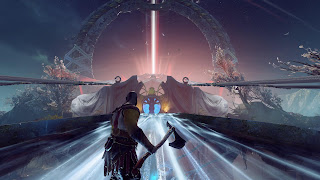
Traversal is carried out in three ways; by foot, by boat, and through the Mystic Gateways (God of War’s fast travel method). Dialogue is written for all three of these traversal methods, especially via boat and gateways. Mimir fills these gaps in exciting gameplay with lore, keeping the player engaged and invested in the world. If the player exits the boat before Mimir is done telling a story, he simply resumes it the next time you jump in the boat with a “Where were we?” Mystic Gateways bring our protagonists across the map in a fraction of the time. To avoid putting the player through a loading screen, Sony Santa Monica takes our heroes through the roots of Yggdrasil and has Mimir tell them a tale. This fast travel area is a brilliant cover-up that distracts the player while the level loads. In doing this, Sony Santa Monica essentially eliminates load times throughout the games, with the player only ever having to look at a loading screen upon boot up and when reloading after a death.

While on foot, combat is accompanied by puzzles that range from timed axe throw sequences to finding hidden runes to unlock chests. The puzzles add a nice change of gameplay that never frustrates, but sometimes take a few moments to figure out leading to fun aha! moments. All of the written lore is also discovered on foot. Since Atreus is the only one capable of reading the runes, Kratos tasks him with keeping the journal, his youthful snark evident in the words. Jotnar shrines, lore markers, and scrolls are the main forms of lore delivery throughout the realms, unlocking some of these will prompt more stories from Mimir!

What would a God of War game be without intense, frenetic boss fights? Well, this entry has you covered. Each boss is unique and engaging, from the Stranger to the Valkyries, God of War never lets up. The Valkyries are optional bosses but are the most challenging in the game. Beating them all unlocks the ability to fight the queen Valkyrie, Sigrún, and is she a doozy. One of the most challenging fights I’ve experienced in a game, so make sure you bring your best armor. To upgrade gear in the end game, the player must travel to Niflheim and Muspelheim to have a chance against their toughest foes. Muspehlheim offers combat challenges issued by Surtr, while Niflheim offers a rogue-lite-esque timed challenge, but both realms offer more world lore revelations and welcome distractions from the main quest.

In addition to the masterful character animations, each realm is carefully crafted and oozes beauty and history. Alfheim is a sight to behold, the land of the elves is just as mystical and entrancing as the elves themselves. Helheim’s haunted frost can be felt upon entering its gates, with Hræsvelg looming ever so dauntingly in the background. The main gameplay area, Midgard, is a gorgeous place to explore, with The Lake of the Nine an excellent anchor for the game’s hub world. Years after its release, God of War is still one of the best-looking games thanks to the vision of its art team.

Toward the beginning of God of War, there is a moment where Atreus is tasked with shooting a deer. In his haste, he misses, frustrating Kratos and causing some tension between them. Atreus immediately apologizes, to which Kratos responds; “Do not be sorry, be better.” This game takes this mantra and expands on it, from Kratos’ personal growth to the abandonment of misogynistic tropes employed in the earlier entries. God of War doesn't apologize for its past. It accepts it and uses it to change both the franchise and its main character in a way that benefits the series, the player, and storytelling in the game industry as a whole.


It is rare to see a game like God of War in today’s video game industry: a micro-transaction and DLC free single-player narrative that doesn't overstay its welcome with superfluous padding. Four years ago, when I played God of War for the first time, I remember thinking that I wished more games were like it. Four years later that feeling remains. God of War isn’t just a phenomenal game. It’s a blueprint for the industry, a benchmark that developers have, and will look to embrace in the future in some aspect or another, and that’s quite an incredible thing to experience.

The Math

Objective Assessment: 10/10

Bonus: +1 for some of the best cinematic, engrossing boss fights. +1 for seamless use of single shot camera. +1 for excellent pacing. +1 for natural character development.

Penalties: If anything, I would say that the game could use more basic enemy types, but it never hindered my enjoyment of the game and was only ever an afterthought.

Nerd Coefficient: 10/10

Posted by: Joe DelFranco - Fiction writer and lover of most things video games. On most days you can find him writing at his favorite spot in the little state of Rhode Island.