Showing posts with label Samuel R. Delany. Show all posts

Tuesday, December 8, 2020

Major and Minor: On Speculative Fiction as Canonical Literature

Hi all, unfortunately my PhD work has kept me from reviewing, but I will be back with reviews in 2021! I have a few essays to show for my time away, and the following essay is inspired by conversations around why speculative literature is not respected as a genre in the US literary world, particularly when teaching English literature. I hope you enjoy!


Major and Minor: On Speculative Fiction as Canonical Literature

Speculative literature is often cited and criticized for escapism, a critique used to dismiss much popular or “low” literature from westerns to romances. Indeed, the speculative literature that rises into a more literary market usually undercuts the idea of adventure for a slow or more meditative text, such as some of Samuel R. Delany’s work. That being said, all fiction is, at some level, escapist (even if not escapist to every reader’s taste), and plenty of canonical literary fiction features escape into adventure or romance, such as Ernest Hemingway’s work. This leaves the unreality—the otherworldly nature—of speculative literature as the main cause for it being labeled “low,” yet that becomes complicated by magical realism or Indigenous realism, suggesting that speculative literature might be less “low” literature and more a representation of a wider reality, as Ursula K. Le Guin said in her National Book Award Foundation Medal acceptance speech. 
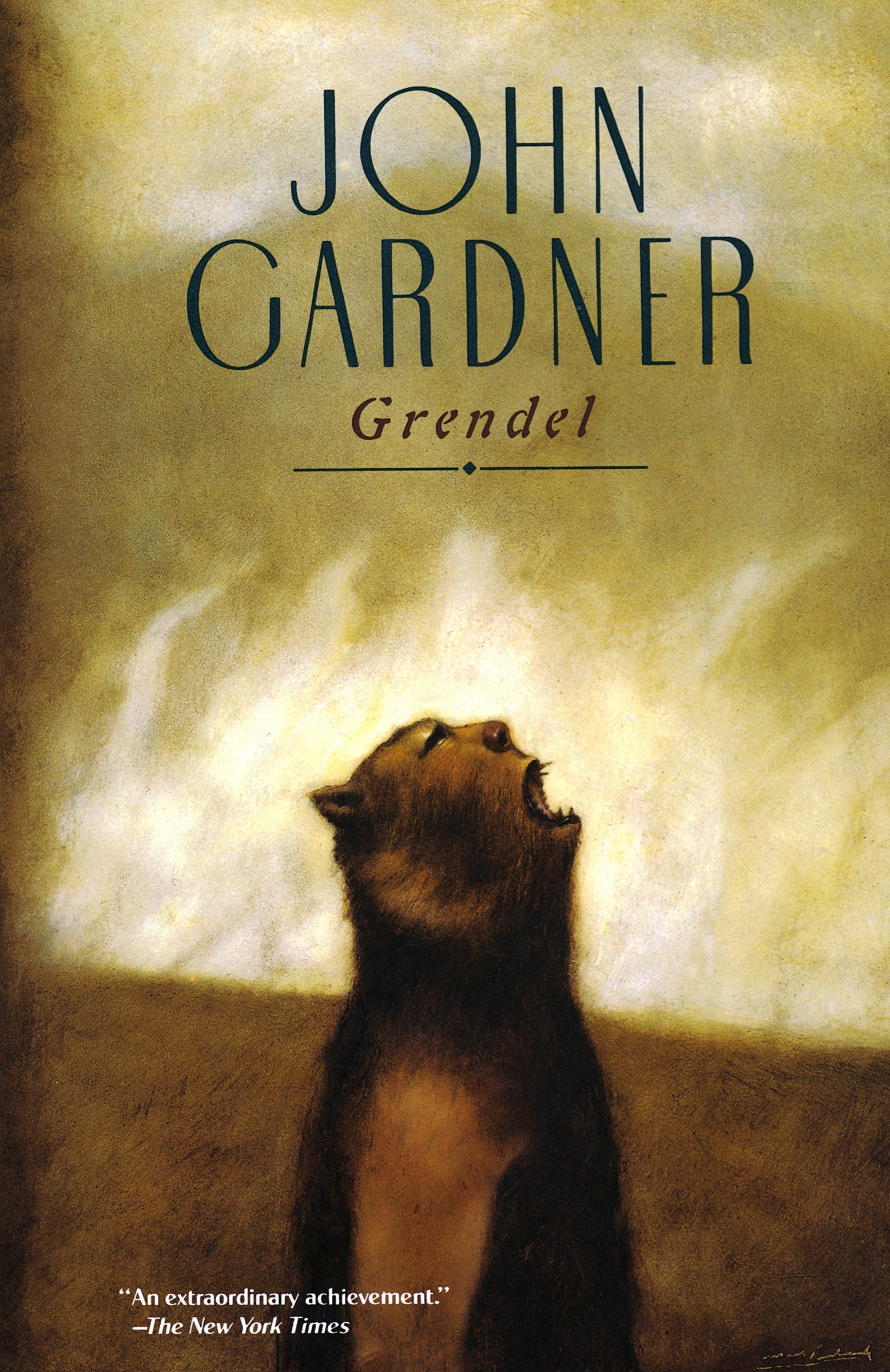
Image of cover of Grendel by John Gardner
Ultimately, I argue that this otherworldly nature is why speculative fiction writers are rarely recognized as canonical literary writers whereas authors of other genres from mystery writers to historical fiction writers are recognized as canonical: their work takes place in some form of the real world, something recognizable if not familiar. This unreality of speculative literature does not support the nationalizing goal of American Literature, particularly when shaping the canon. As Delany argues, this familiarity reaches to the sentence level, so the literary reader already knows how to engage with the text, even if not in an accustomed genre. Yet, these readers are in the minority as the popularity of speculative literature continues to grow with each generation. Indeed, many canonical writers of American literature have written speculative fiction, from W. E. B. Du Bois to Mark Twain to Toni Morrison. Contemporary authors continue to blur the lines between speculative and literary genres. For instance, where does one shelve Marlon James’s Black Leopard, Red Wolf (2019)? Or Kelly Link and Carmen Maria Machado? John Gardner’s Grendel (1971) is often shelved in the speculative section, but the rest of his novels are in the literary section. As suggested by such authors, the separation by genre makes little sense, particularly among such important writers. Indeed, I believe that speculative literature should be included in the American literary canon as it has as much cultural relevance as a literary text even if not set in the real world. 

“Low” literature and popular culture has always been associated with the masses. Particularly with speculative fiction, the genre has grown from dime novels, followed by the pulp era of the mid-1900s. While different speculative writers have tried to separate themselves from this history (particularly during the Golden Age of Science Fiction when authors were trying to raise the genre’s status), it’s worth noting that Conan the Barbarian remains in the popular consciousness while the average person could not name a character from James Joyce. Yet, the canon values James Joyce over Conan. Fredric Jameson suggests that this gap cannot be overcome because speculative fiction has a “dialectical relationship” with high literature: 

It would in my opinion be a mistake to make the ‘apologia’ for SF in terms of specifically ‘high’ literary values—to try, in other words, to recuperate this or that major text as exceptional, in much the same way as some literary critics have tried to recuperate Hammett or Chandler for the lineage of Dostoyevsky, say, or Faulkner. SF is a sub-genre with a complex and interesting formal history of its own, and with its own dynamic, which is not that of high culture, but which stands in a complementary and dialectical relationship to high culture or modernism as such. (283) 

I would argue that, as part of the dialectical relationship, that speculative fiction undercuts the conditions of modernity and high culture. Certainly, literary writers have undermined and are undermining white supremacy and the heteropatriarchy, but less of those texts have been canonized in American literature. Whereas, the speculative canon—even a more conservative list—contains many novels and writers undermining the status quo, such as Robert A. Heinlein, Philip K. Dick, Joanna Russ, James Tiptree Jr./Alice Bradley Sheldon, Samuel R. Delany, William Gibson, Octavia E. Butler, Ursula K. Le Guin, among others. Due to these elements—working against canonical ideas, writing unfamiliar worlds, and a separate writing tradition—even the immense popularity of speculative literature would not afford it entrance to the canon, particularly when the nationalizing goal of creating and teaching the canon of American literature is taken into account. 

As Jameson argues, there are specific differences between speculative fiction and literary fiction.  Initially, there are the types of stories that can be told—though this is not a hard rule. Delany’s Dhalgren (1975) could have been marketed as literary fiction in a different day, and, indeed, is treated as one of the most literary examples of speculative fiction. Following Delany, though, it should be noted that speculative fiction requires a different way of reading than literary fiction. In his essay “About 5,750 Words” (1978), Delany takes a semiotics approach to speculative fiction. He argues: “Any serious discussion of speculative fiction must first get away from the distracting concept of SF content and examine precisely what sort of word-beast sits before us” (15). To that end, he breaks down a sentence that could appear in a science fiction story to demonstrate his theory about the act of reading, which he describes as correcting a picture. He writes: “A sixty-thousand word novel is one picture corrected fifty-nine thousand, nine hundred and ninety-nine times” (5). He breaks down the following sentence word by word to demonstrate when the image corrected could no longer be realism: “The red sun is high, the blue low. Look! We are worlds and worlds away” (7). In Delany’s theory, the picture was not fully corrected until the word “low” transported the reader to a different planet, one with two suns. This example leads to one of his more well-cited critical thoughts: “‘The door dilated,’ is meaningless as naturalistic fiction, [….] As SF—as an event that hasn’t happened, yet still must be interpreted in terms of the physically explainable—it is quite as wonderous as [Harlan Ellison] feels it” (13). Therefore, a certain affect can be achieved in speculative fiction that cannot be achieved in literary fiction. 

Ultimately, Delany writes: “I can think of no series of words that could appear in a piece of naturalistic fiction that could not also appear in the same order in a piece of speculative fiction. I can, however, think of many series of words that, while fine for speculative fiction, would be meaningless as naturalism. Which then is the major and which the subcategory” (12)? From a stylistics approach, I agree with Delany that speculative fiction offers more sentence-level possibility than literary fiction. Indeed, other genres also meet this criteria for literary fiction—any sentence appearing in a western, mystery, romance, could also appear in a literary novel. But, if creativity was the main value of “major” literature, then certainly the lines would be redrawn. This issue speaks to larger question of why speculative fiction is not considered literary while other genres have been elevated, such as historical fiction. Because speculative literature has the potential—and often is—totally separate from reality, its unfamiliarity regulates it to a separate shelf. 
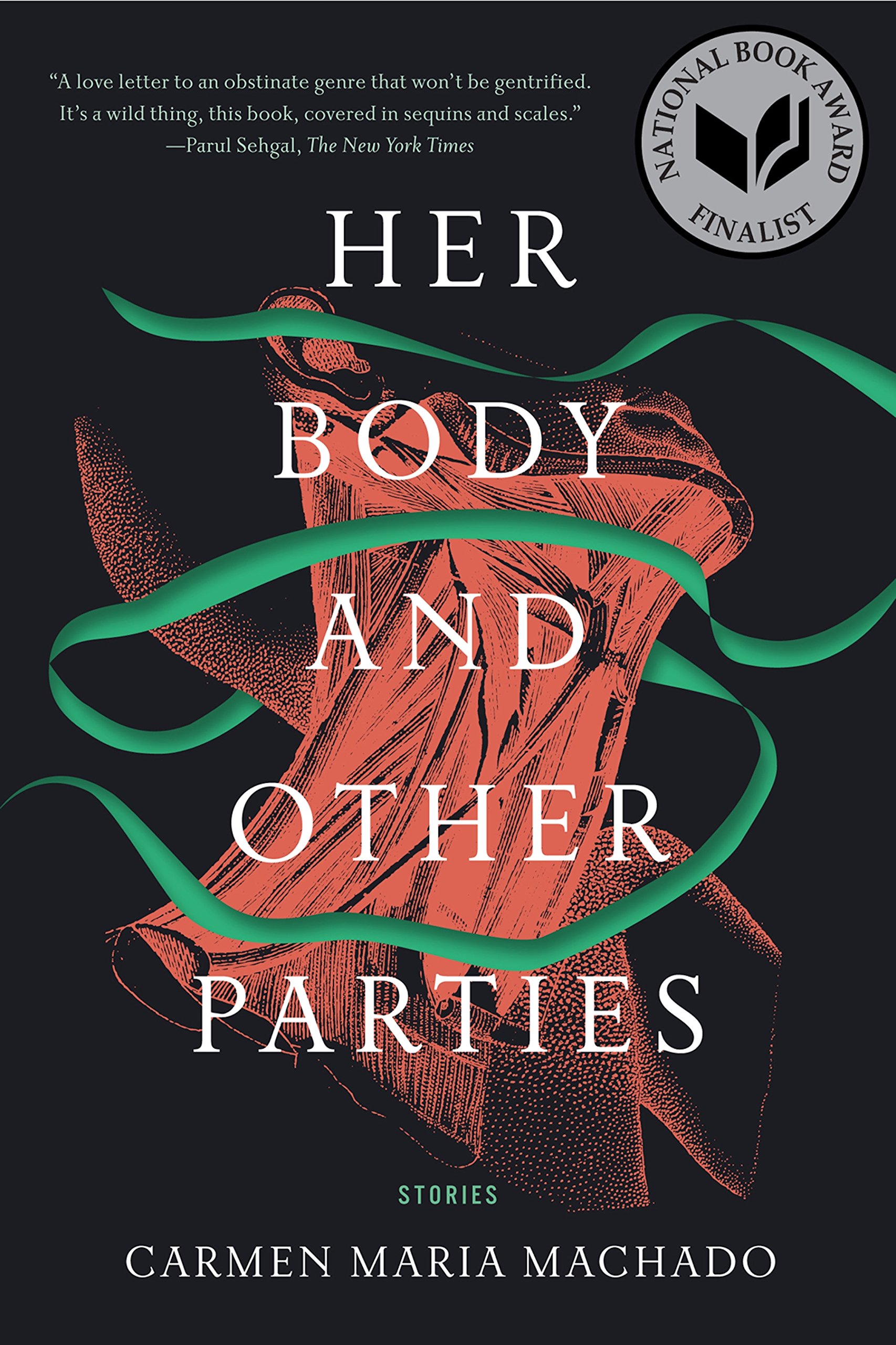
Cover image of Her Body and Other Parties
Indeed, literary writers that straddle the line between speculative and literary careers often play with this issue of language. For example, take Machado’s collection Her Body and Other Parties (2017), which combines literary fiction and speculative fiction throughout, usually within a story. Yet, this collection
would be recognized as a literary offering (even if one of the previously published stories appeared in the genre magazine, Strange Horizons). That being said, her stories dip into outright speculative fiction, not even soft fabulism that authors like Karen Russell or Kevin Brockmeier achieve. In her short story “Inventory,” Machado switches mid-story from traditional literary fiction to science fiction, particularly dystopian fiction. Indeed, the format—a list of sexual encounters—would play better to a literary audience than to a speculative audience. Similarly, the slow pacing and lack of fantastical elements also suggests a literary purview. As the narrator reaches adulthood, the speculative element comes to light: “We watched as the newscaster vanished and was replaced with a list of symptoms of the virus blossoming a state away, in northern California” (Machado 36). Even this comment would not necessarily remove the story from the realm of literary fiction as an epidemic is certainly not a fantastical idea. Yet, this dip into low literature allows Machado to expand the range of her story, quickly settling it within a survival dystopia narrative familiar to speculative readers. Indeed, it’s the dystopian setting that turns the story from cheeky to moving. 

At first, the story’s structure intimates it will be a list of sexual encounters, each paragraph introducing who the narrator engages with, such as “Two boys, one girl. One of them my boyfriend” (Machado 33). After the virus begins spreading across the US, the narrator’s or characters’ movements are included. Early during the epidemic, she flees from people rather than the virus: “When [sex] was over and she was showering, I packed a suitcase and got in my car and drove” (Machado 37). Once she settles in Maine, others start coming to her: “One man. National Guard. When he first showed up at my doorstep, I assumed he was there to evacuate me, but it turned out he’d abandoned his post” (Machado 40). Many of these lines remain staunchly in realism, though comments about the narrator “check[ing] their eyes” or asking “how far behind the virus was” err toward the speculative (Machado 40, 41). Yet, readers familiar with the genre and tropes—such as the religious leader and her flock or the fact the narrator allows anyone near her hideout—can sense what will happen, which makes the final paragraph of the story even more moving as all three styles of narrative lists come together. First, a new character appears: “One woman. Much older than me. While she waited for the three days to pass [to demonstrate she was negative for the virus], she meditated on a sand dune” (Machado 43). The list structure means the narrator will have a sexual encounter with this person. Yet, as represented by this section being the longest, this woman is different.

Quickly they form a connection: “I couldn’t remember the last time I’d smiled so much. She stayed. More refugees filtered through the cottage, through us, the last stop before the border, and we fed them and played games with the little ones. We got careless” (Machado 42). As to be expected in such a dystopian narrative, what the narrator cares about does not survive. Indeed, her lover dies from the virus, and the narrator gets “into a dinghy and [rows] to the island, to this island, where I have been stashing food since I got to the cottage. I drank water and set up my tent and began to make lists” (Machado 43). Thus, the story’s form and the genre are united as the dystopia epidemic genre becomes the occasion for the making of the lists. Returning to Delany, many of the sentences in this short story could appear in a realist text, yet the story’s impact would be undermined without the dystopian setting. In other words, the story is first speculative, then literary, as this story would not exist without the speculative element.
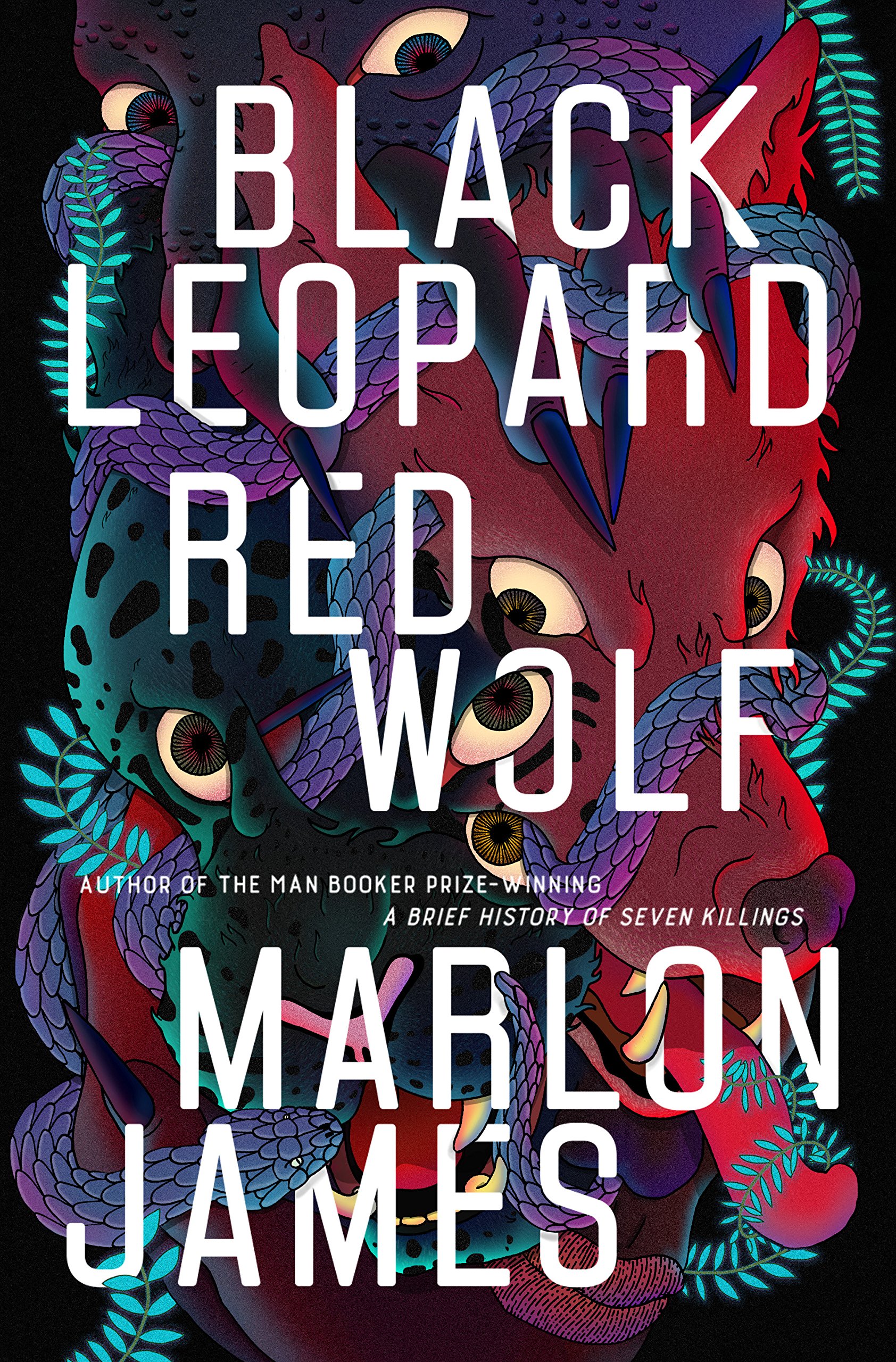
Cover of Black Leopard, Red Wolf
For a literary reader unfamiliar with speculative literature, many of Machado’s short fiction would still be palatable, even if perhaps misunderstood. This is why Marlon James beautifully muddies the water with Black Leopard, Red Wolf. Not only must literary readers learn a new way to read (which is why I believe critics struggled to see parts of the fantasy as anything more than metaphor), but they must also consult a different literary history. A critic’s ability to recognize allusions to Shakespeare or classical mythology or Faulkner would not be (much) help in this novel. Rather, knowledge of Tolkien, Delany, Saunders, and Howard is necessary to untangle the multi-layered narrative. For instance, a literary reader could interpret when the main character, Tracker, travels through a forest called the Darklands as a metaphoric quest. Rather, a speculative reader recognizes a familiar trope in a quest narrative: when the party must travel through an area they know better than to enter. Indeed, the scene where Tracker and the others discuss whether to enter the Darklands is reminiscent of Tolkien’s Fellowship discussing whether or not to enter the Mines of Moria: 

“Through the Darklands in one day. Around the lands is three days. Any man with sense would make the choice,” Fumeli said.

“Well, man and boy, choose whatever you want. We go round,” [Tracker] said. (James 228)

 Because James so directly engages with a fantasy trope, a speculative reader can expect the Darklands to be full of danger. Indeed, Tracker and his companions barely escape, but they are rewarded with a magical door that leads them straight to their destination—even if they are chased into it by a monstrous monkey. Yet, nothing really “happens” in this section other than the adventure. Little new information is revealed about the characters. Tracker’s prowess as a warrior is established again, but that has not been in question for the reader. Indeed, like many epic fantasies or sword-and-sorcery narratives, this section is action for the sake of action.

Unlike in literary novels, reading metaphor or symbols into magical moments is doing a disservice to the writer. In speculative literature, James’s shape-shifting leopard and Tracker’s lover is truly a shape-shifting leopard, not a metaphor about queer love. In one of the more sentimental sections, Tracker and the Leopard save children from being murdered for their magical abilities. One of the children, a girl who turns into smoke, has nightmares during her sleep, shifting from her human body to intangible smoke, but Tracker learns how to comfort her, thus earning her lifelong friendship (James 56-7). While it may be tempting to write about these shifting bodies such as the girl and the Leopard as metaphoric, these characters should be read as actually possessing such abilities. While the shifting body maybe a theme evident in James’s worldbuilding, in a speculative novel, the critic must approach what’s on the page as part of that world’s reality as created by the author. By accepting what’s on the page as that novel’s reality, a literary reader must engage with the text in a very different way than they might engage with a literary text. Indeed, I argue this otherworldliness is one of the major reasons that speculative literature maintains a “low” literature.  

As for the inclusion of speculative fiction in the canon, I wholeheartedly argue that it should be included as ideas present in speculative fiction have had tremendous impact on the popular imagination and are thus part of the fabric of US culture and national identity.  While Jameson would argue that places speculative fiction too close to high literature while ignoring the genre’s own interesting history, I wish the canon was not divided by shelves in the bookstore but rather kept together, “major” and “minor” literatures all on the same shelf. While reading deeply within a genre or mode provides certain insights, I argue that the canon of a country should not be limited to one genre: literary fiction. First, the archive should be recovered and those canonical authors who have written speculative literature should have such texts taught, such Herland (1915) by Charlotte Perkins Gilman or “The Comet” by W. E. B. Du Bois (1920). Once these texts have been recovered, hopefully it would be easier to read and understand other foundational texts of speculative literature. For example, I, Robot has had a large impact on the popular understanding of robotics through Isaac Asimov’s Three Laws. Does not this text comment on modernity and Enlightenment ideals in a way that might be useful to compare to Mary Shelley’s Frankenstein (1823)? Similarly, does not Delany’s Dhalgren demonstrate racial tension in urban cities during the 1960s and 70s in a unique way? What insights and revelations could be gleaned by teaching Dhalgren and Ralph Ellison’s Invisible Man (1952) back to back? Even though speculative literature might not represent the reader’s reality on the page, it does offer different critical lenses for viewing cultural issues. 


Works Cited

Delany, Samuel R. The Jewel-Hinged Jaw: Notes on the Language of Science Fiction. Revised edition, Wesleyan UP, 2009.

James, Marlon. Black Leopard, Red Wolf. Riverhead Books, 2019.

Jameson, Frederic. Archaeologies of the Future: The Desire Called Utopia and Other Science Fictions. Verso, 2005.

Machado, Carmen Maria. “Inventory.” Her Body and Other Parties. Graywolf Press, 33-43, 2017.


Phoebe Wagner is a PhD candidate at University of Nevada, Reno. When not writing or reading, she can be found kayaking at the nearest lake. Follow her at phoebe-wagner.com or on Twitter @pheebs_w


Monday, October 28, 2019

The Hugo Initiative: Blogtable (1968, Best Short Story)

The widest focus of The Hugo Initiative has been on the Best Novel category and examining the influence and importance of the various winners, but a goal for the project was to also engage with some of the other categories across the history of the Hugo Awards. With that in mind, we are looking at the three finalists for Best Short Story in 1968.
“I Have No Mouth, and I Must Scream,” Harlan Ellison (If Mar 1967)
“Aye, and Gomorrah…,” Samuel R. Delany (Dangerous Visions)
“The Jigsaw Man,” Larry Niven (Dangerous Visions)
Adri: I can’t quite believe I’m reading Dangerous Visions / Harlan Ellison for you…

Joe: I’m not sure I fully processed that Harlan Ellison is at least partially (if not fully) responsible for everything on this ballot. Dangerous Visions really was a landmark anthology in 1967. I bought a copy years ago and until now, have never actually cracked the cover. So, I suppose, thank us all for that for picking this year’s category.

Paul: I picked up Dangerous Visions (and Again, Dangerous Visions) umpty years ago when I was in a very deep Harlan Ellison phase, as I read collection after collection of his work, including his non fiction stuff. But I had not read any Ellison in a number of years before we decided to set this up. So I guess I was overdue!


Adri: First on the list, and winner of this particular year, is “I Have No Mouth, and I Must Scream”, by Harlan Ellison - his second award in the short story category, after ““Repent, Harlequin!” said the Ticktockman” in 1966 (no, me neither). The story follows a small group who are apparently the last survivors of the human race, as they wander through a nightmarish underground hellscape run by AM, an all-powerful AI which has wiped out the rest of humanity and now tortures them in revenge for its own suffering. There’s some vague motivations in terms of plot movement but most of the story is just about detailing the various miseries that the humans have inflicted on them (and sometimes inflict on each other) and their diminishing hope of escape.

Joe: Even though I know I’ve never read Delany or Niven, I had always assumed that I’ve read a handful of Ellison’s short stories. I haven’t. “I Have No Mouth, and I Must Scream” is my first (and to date only) Harlan Ellison story. I’ve been at least vaguely aware of it over the years. I knew there was a video game based on it and that the story was horrifying.

This is an ugly, ugly story and I don’t know if it is actually good despite it’s stature in genre history. The story is moderately compelling, but the grimness and torture seem to be the point. There’s a place for that, but I’m not really here for grim torture porn laced with misogyny and that’s what Ellison serves up.

Honestly, the best thing coming out of “I Have No Mouth, and I Must Scream” is the title. It’s a great title and has become so ubiquitous within the genre that I’ve used it as a template for jokes. The jokes land reasonably well, but I’m not sure the story does anymore.

Adri: I have read two thirds of these authors before but Ellison is new!

I generally agree with Joe above. Everything in this story is pretty gratuitous, and the storytelling skill is put to the service of thinking up unpleasant circumstances in which to put the characters. There are also some decidedly clumsy moments, like the way in which information about their location is imparted through some casual “story time” in the middle of the endless torture.

The story’s treatment of Ellen, the only woman in the group of humans, is a particular low point. All of the characters are presented as caricatures, through the lens of an unreliable narrator - although to a modern reader he falls uncomfortably close to just reading like a standard old school white male protag - but Ellen is seen entirely through the lens of her sexuality, and effectively as a sexual outlet for the rest of the men. She’s also black, and the only character whose race is mentioned. The whole thing reads as misogynoir of the highest order, and coupled with some drive-by and frankly nonsensical homophobia which I don’t even want to touch, it makes this story pretty unpleasant.

Honestly, I also found the climax to the story a bit underwhelming. Perhaps it’s because of how well-used and evocative the title is, but I didn’t find the “now human is blob person” to be as much of a final twist as I am clearly expected to.

Paul: I remember jazzing on this story decades ago. “How grim, how dark, how twisted, the narrator is now immortal and going to live as a thing in the belly of the beast forever.” I saw it as a tragedy, and a deserved fate too, for the rather unpleasant narrator. That’s how I saw this story before this time.

This reading of the story was somewhat different. Some things were still the same. The clear and really evocative writing. A world, sketched in easily and effortlessly. A contrast of character and character types, a way to have a variety of archetypes to set in this horrible situation. It’s the dystopia of all dystopias, four people alive with a malevolent AI acting like an Old Testament Yahweh to torture them forever and ever. The setup and premise and basis are potent and powerful, then and now. I still think the ending is pretty dark and grim and potent.

It was the other things I saw this time, that I did not see on prior readings, that really jumped out at me. The casual misogyny of the story with how the story handles Ellen. The homophobia now was something that really jumped out at me. I will say, explicitly, Adri, what you didn’t: “He had been gay, and the machine had given him an organ fit for a horse.”. I mean, what the hell, Ellison? What the heck is that even supposed to mean? I get the whole “everyone gets tortured with what they fear and hate, especially our narrator who doesn’t even realize how messed up he is himself, but that does not even try and hit the mark in the case of Benny. I just couldn’t accept it anymore.

Our second story is “Aye, and Gomorrah” by Samuel Delany. The story (which ended up winning the Nebula Award for Best SF story) gives us a world where astronauts, Spacers are neutered before puberty so that there isn't a mutation of their gametes. Our story follows Kelly, one of these Spacers, who finds that the only real company that will tolerate him besides other Spacers are Frelks. Frelks are fetishists who are aroused by the company of the neutered Spacers and will even pay them for that contact. There is conversation and debate and tension between Kelly and the Frelks he associates with, as the fundamental problem of Spacers, being unable to have sexual relations, and being shunned by most of society, are shunted into associating mainly with the Frelks, who can’t help their hopeless attraction to a group who cannot truly return their desire. More poignantly still, it is the Spacer inability to return that desire which heightens that desire among the Frelks.


Adri: I get that Ellison predates Delaney in the genre world by about a decade, but I’m not sure that makes it forgivable for the introduction to imply Delaney is a “new” or upcoming author when he had nine science fiction novels out by this stage.

This is a really interesting story because it’s so firmly about sexual transgression and queerness and kink, in ways which the current myths of genre would have us believe weren’t being written at this time. Clearly they were, and Ellison’s patronising introduction of Delaney aside, the fact that this rose to the top of Dangerous Visions for readers in 1968 makes it clear that the appetite for queer SF explorations - despite perhaps not being done in the most unproblematic way, from a modern angle - was clearly there.

That said, like the others, I’m not sure what to make of the story itself on an initial reading. I found the lack of opinion or perspective from the spacer themself to be kind of bizarre - we never get a sense of what spacers get out of their relationships with frelks, beyond getting paid. It feels like a line is being drawn between their lack of sexuality and their lack of opinion on human contact in general. Again, I’m not quite sure what I’d want to see here instead, in context, but I’m just left a bit confused and that’s definitely not been my response to Delaney works previously.

Joe: I probably spent far too long trying to figure out what exactly a “frelk” was, which was important but not as important as the amount of time I spent on it. The thing is, I’m still somewhat unclear because I’m working on the details more than the emotional arc of the story.

Spacers are neutered before puberty and feel no sexual desire because the neuter allows them to safely work in space with the radiation. Frelks are people who love and desire Spacers, knowing that they can’t really get what they want in return. But - somehow Spacers can still gigolo at frelks and pick them up and get paid. Those are details, but they’re not the story.

The story, I think, might be able to at least partially be tied up into this quote
“You don’t choose your perversions. You have no perversions at all. You’re free of the whole business. I love you for that, Spacer. My love starts with the fear of love. Isn’t that beautiful? A pervert substitutes something unattainable for ‘normal’ love: the homosexual, a mirror, the fetishist, a shoe or a watch or a girdle.”
I may not grasp what I’ve read, but I really appreciate that sentiment.

Also, I wish I didn’t read Ellison’s introduction to the story which includes a crack about pitiful homosexuals living at home with their parents. There’s stuff to get into here given that it is in the intro to a Delany story (which is beside the point of its general offensiveness), but I’m not sure it’s really worth the time.

Paul: It’s been a long long time since I read this, and I had not remembered it at all. I read the DV and ADV anthologies and so I know I must have read it, but it didn’t press on me, then. Maybe it was a case of not grokking what I read, then.

Now, I understood it a lot better. At least I think I do, anyway. Fetishization, prostitution, the literal neutering of one’s desires and one’s sexuality, it’s clear that Delany was playing with very potent concepts, now, and especially then. What did the readers in the late 60’s make of this (answer they gave it a Nebula award). I can see why I blacked it out of my mind back at the time, because I probably didn’t understand it at all then. I read it twice here and now to try and grasp what I am reading. I think I do better with longer form Delany, so that I am in the text, in the space longer and more immersed so that I really get my mind around it. Shorter Delany doesn’t let me do that and re-reading it kind of puts me at the start, again and again. I think this story is ultimately about loneliness, and trying to transcend it, no matter what one’s nature is.

Joe: In Larry Niven’s “The Jigsaw Man”, the advent of blood typing has led to people convicted of the most serious crimes being forced to “donate” their organs for the betterment of society and to provide restitution for said crimes. But, because the societal demand for those organs is so high, lawmakers have re-evaluated the degree of criminality required for the death penalty and organ donation.

Adri: Because my experience with Niven to date was with Ringworld, a novel that to my modern eyes calls forth images of the Halo video games before anything else, I really side-eyed the introduction to this which states that Niven is in the game of hard science fiction only, things that are provable with current facts and progress, no speculation here. This story then sets itself up as what effectively reads as an alternate history: though I think the setting is intended to be near-future relative to the time of writing, because it draws on the discovery of blood types in 1940 it bases its vision of the future on assumptions about the social and ethical significance of that discovery which, even at the time, were provably false.

It’s a shame, because I think I’d have been a lot more well-disposed to the story if I wasn’t applying such strong scrutiny to its plausibility. The idea of exploitation of people’s lives and bodies by rich and privileged groups is a theme that’s just as timely now as it apparently was at the time of writing (see, for more recent examples, Never Let Me Go and Jupiter Ascending, or any speculative future with corporate indenture in its worldbuilding). In some ways, the construction of the story to leave the protagonist’s very minor crimes as an eventual twist sort of undermines this, in that it hides the extent of injustice within the system until the final sentences.

As with I Have No Mouth and I Must Scream, the elements that rely on horror were the least successful for me - during the actual scene dealing with the organ harvesting technology I had to wonder what it would look like if someone like Kameron Hurley had been writing 50 years earlier. Otherwise, while I certainly wouldn’t say The Jigsaw Man changed my life, and I wouldn’t say it lives up to its own promises when it comes to “just the facts” SF, I did quite enjoy the action here.

Paul: Like Ellison, I had a strong and long Niven phase, where I read all of his stories, read all of his novels,really thought that what SF and especially SF Space opera was, that is what Larry Niven was writing. Just like I tried to read all of Heinlein’s future stories, I tried to read everything in the Larry Niven timeline of Known Space.

The Jigsaw Man is a pretty old story and pretty early in the timeline. It turns on the implications of one premise and I admired, then and now, just how that it goes from the implications of that one premise: guaranteed no-rejection organ transplant technology. Given that premise,the entire world we see spins out, from Niven’s vision. The old and the rich will criminialize everything, with the death penalty, for the steady supply of organs that will keeo the rich alive as long as possible. And thus we have someone who violated some traffic laws being under a death sentence.

Today, I am much more cynical than I was back when I first read the story and I am more inclined to believe it would really go this way than I did back in the day. Wouldn’t the rich see the organs of others as a resource and thus make sure they could get them by any means necessary? I agree it is a VERY fearful story and fearful vision, but does that mean that Niven is *wrong*?


Joe: Larry Niven wrote “The Jigsaw Man” in the still early days of human kidney transplants and as liver, lung, and heart transplants were just beginning to be worked on, some more successfully than others. It’s a fascinating concept that Niven saw those medical advances, the possibility, and what he saw as a possible future was that the ability to save human organs in transplants could be enough to change the morality and the law in countries so that the death penalty would become rampant and in use for even minor crimes.

It’s easy to say looking back on a story written some fifty years ago that Niven is pushing a crazy fearful vision of the future. “The Jigsaw Man” feels like a stretch, even for science fiction. It’s not a story that I can see written today (at least not as a story written in a plausible future). I can see how it might have been plausible then, but I don’t see it as plausible now. At least not without a greater revolution - something that goes further in codifying the privilege of the wealthy into law. More than just having enough money to be somewhat above the law, but rather to have that status fully protected. I don’t see that future.

Adri: Paul, here’s a question that you are uniquely qualified among us to answer: Do you think that the Delaney and Niven stories are two of the strongest from the Dangerous Visions anthology? It clearly underscores how important it was at the time that ⅔ of the ballot is drawn from it, but I find myself wondering (without having the time to commit to the rest of this quite large volume, for now) what drew voters particularly to these two.

Paul: These are strong stories in a strong anthology, but Hugo and Nebula voters aside, I think there are equally strong stories in the volume.

“Faith of our Fathers” by Philip K Dick is maybe the one best distillation of PKD into a story that you can possibly get. Its for me THE PKD story and its a personal favorite.

“Gonna Roll the Bones” is a fantastic Fritz Leiber story that I also think is really strong.(It won the Hugo for best Novelette!)

Auto da Fe by Roger Zelazny is a very Zelazny story, but I don’t think it’s his best, but its a really good Zelazny. That IS a theme of the anthology for all of it being Dangerous Visions, it’s an anthology where time and again, the real distillation of an author is found in the story they wrote. Spinrad’s Carcinoma Angels is also in that tradition, and really potent and powerful, with a killer ending.

Granted, DV is not all great, and I think there are some real clunkers of stories--clunkers by authors I really otherwise like, too.

Joe: Here’s a question to close out this Hugo conversation. Now that we’ve read the 1968 Short Story ballot - how would you vote? Who would you give the award to?

Adri: This is a really hard question, because there’s so many factors involved with information I don’t have access to - this is such a tiny snapshot into a full year of story, and the genre has evolved so much since this was considered the top flight of material. What I can say definitively is that “I Have No Mouth, and I Must Scream” would be at the bottom of my list - if I were thinking through my equivalent processes in recent Hugos, it would then be a toss-up between the story I liked more (Niven), or the story I think probably had more to say (Delany). I can’t begin to answer the question on where “No Award” would go, though - what constituted Hugo Worthy in 1968? The story I liked least, apparently, so where does that leave my analysis.

Paul: How would I have voted? That’s a good question and has multiple answers based on whether you’re asking how I’d have voted when I first read the stories, or NOW? Back in the day, I would have gone Ellison-Niven-Delany. Now? I think the misogyny and homophobia of the Ellison would knock it off of its perch but I feel conflicted between the Niven and the Delany, with maybe the Niven just edging it out. I would NOT No Award the Ellison, though. But ask me again in five years and my opinion on that could change.

Joe: I expected a wider range of opinions, but I agree with both of you on this. It’s a toss up between Niven and Delany. Niven’s story is a bit smoother and hits my storytelling buttons, but I think Delany’s is better written and has much more to say. There’s a more important point to “Aye, and Gomorroah”. Harlan Ellison would rank third. I wouldn’t consider No Award, but I seldom use No Award.

Anyway, this was fun. Thank you both.


Joe Sherry - Co-editor of Nerds of a Feather, 3x Hugo Award Finalist for Best Fanzine. Minnesotan

Adri is a semi-aquatic migratory mammal most often found in the UK. She has many opinions about SFF books, and is also partial to gaming, baking, interacting with dogs, and Asian-style karaoke. Find her on Twitter at @adrijjy.

Paul Weimer. Ubiquitous in Shadow, but I’m just this guy, you know? @princejvstin.

Tuesday, June 4, 2019

Summer Reading List 2019: Phoebe

Hello, fellow nerds! As I've mentioned a few times on here, I'm currently in a PhD program studying English literature with a focus on environmental and speculative writers. For those of you who have lived the PhD life, you probably have an idea of what's on my summer reading list: comps. While I'm not super close to taking my comprehensive exams (basically a test with a lot of timed writing and hundreds of required books), I'm going to start chipping away at the list:


Since I'm studying speculative writers, much of the reading, especially at this early stage, will be books I've just missed or haven't gotten to yet, like Dhalgren. Of course, no comps list would be complete without plenty of theory, so when I'm exhausted from all the academic language, I picked up the perfect remedy at a used book sale:


Yes, that is a shelf of much pulpy speculative, with some classics thrown in. I figured what could be better than to de-stress from reading about postmodernism than unicorns on an epic quest?

So, as I embark on my own quest to defeat the dark lord of comprehensive exams, here's a snippet of what I'll be reading this summer!


1. Dhalgren by Samuel R. Delany (1974)

A sci-fi classic that I have stared at on the shelf for years, now. Growing up, I was much more of a fantasy-reading kid, so I knew of Delany but never picked up his books, even when I went through a classic SF reading phase. Of course, a comprehensive list of American speculative literature wouldn't be complete without Dhalgren, and I'm excited to dive in.


2. Imaro by Charles R. Saunders (1981)

Another classic of speculative literature, though less read, I believe. I first became interested in Imaro as an early example of sword & sorcery and diversity in SF. Since I read and wrote about Marlon James' Black Leopard, Red Wolf, I've become more interested in the power of sword & sorcery as escapist decolonizing fiction. I'm excited for a romp and will probably use this novel as a short, fun read when I'm exhausted by the heavy hitters.


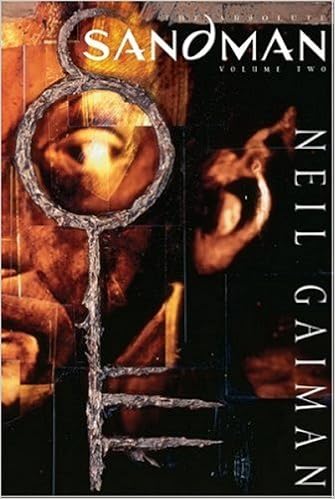
3. The Sandman: The Complete Series by Neil Gaiman (1997)

I've ready a lot of Neil Gaiman's other work, and he's one of my most influential authors as a young writer. I've paged through and read several volumes of Sandman, but I haven't sat down and poured over it. I have the four volume annotated editions, and look forward to following the Sandman into a dreamy extravaganza.


4. The Female Man by Joanna Russ (1975)

As I promised, lots of classics on this list. For a better write up than this tiny blurb, check out Vance's post right here at Nerds! When making my comprehensive exams reading list, there are certain books that one knows must be included if talking about American speculative writers. Of course, Russ is one of them. That being said, The Female Man is one of those texts that I've always heard about and referenced when discussing SF and feminism, but I haven't read it nor really know anything about it. But Vance's summary sounds pretty wild--time travel, alternate dimensions, assassins. I'm totally down for something like that being on my required reading list.


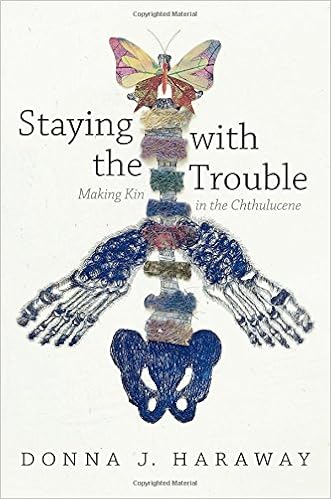
5. Staying with the Trouble: Making Kin in the Chthulucene by Donna Haraway (2016)

Haraway is known for her confusing, riddling academic language. This is an accurate depiction of her writing, though it is also kinda fun when you have words like "chthulucene" thrown around. The reason it my be of interest to readers of this blog is her inclusion of speculative writers like Ursula K. Le Guin and Octavia Butler. While she was known for her work in feminist theory (particularly the Cyborg Manifesto), this current book delves into eco-criticism, especially other-than-humans. I've flipped through this book, but don't normally make it more than a page at a time. This summer, though, I have hoped of writing an article titled "Tentacular Spectacular: Dungeons & Dragons as Embodiment of Nonhumanity," which would force me to read Haraway's book (as the title comes from one of her chapters) AND I'd get to write about my favorite D&D livestream The C-Team. Theory and D&D, no better pairing.


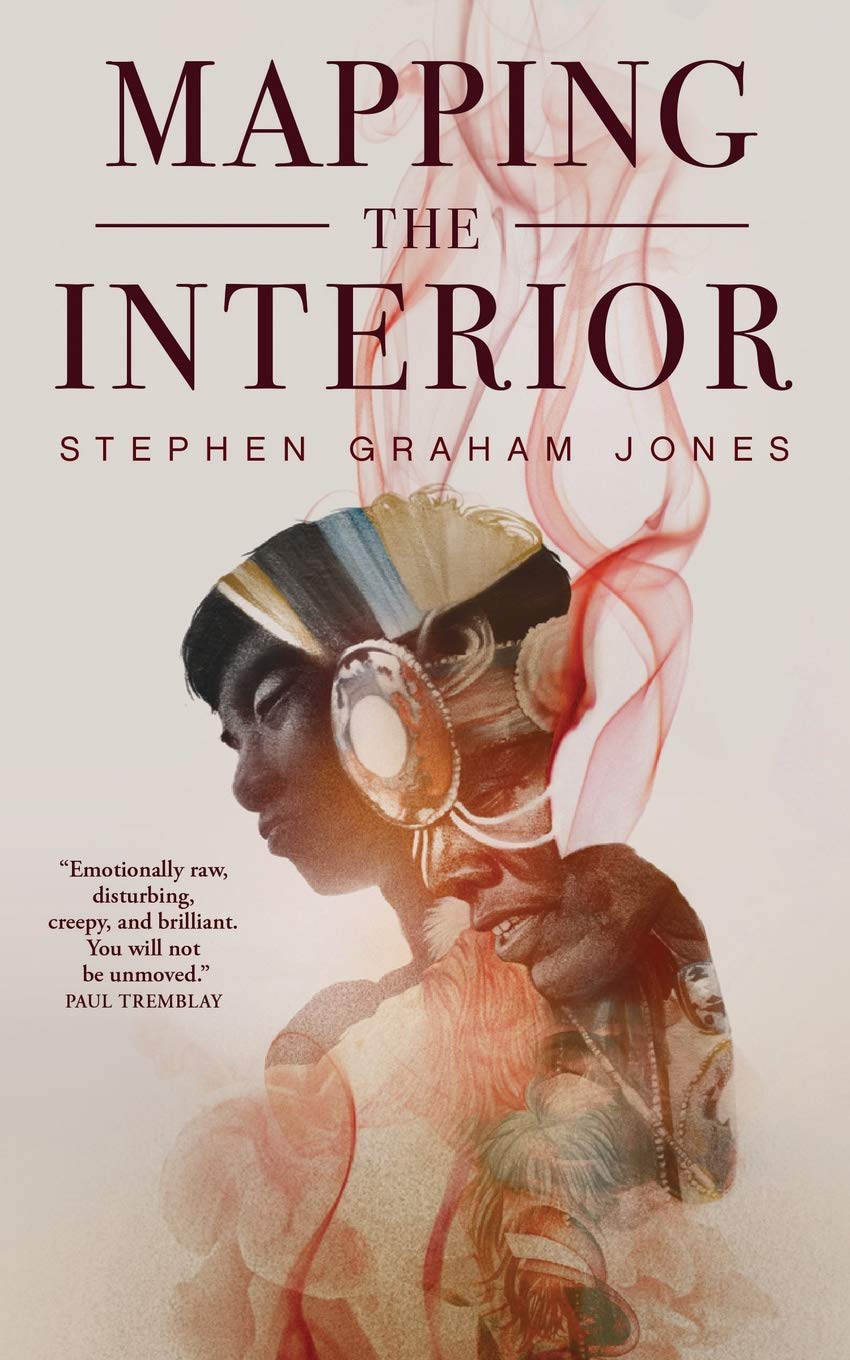
6. Mapping the Interior by Stephen Graham Jones (2017)

One of the more modern authors on my list, I've wanted to read Jones' work for quite awhile. I still hope to pick up Mongrels at some point (I'm a sucker for werewolf stories), but a horror story about mapping the interior of a house pushes so many buttons not only in speculative literature but also more broadly in the literary cannon. Additionally, it's a shorter read, which gives some nice balance to starting this list with Dhalgren. Overall, I've heard lots of good things about this novella and Jones' writing in general, so I'm happy to finally dive in!


Phoebe Wagner currently studies at University of Nevada: Reno. When not writing or reading, she can be found kayaking at the nearest lake. Follow her at phoebe-wagner.com or on Twitter @pheebs_w.