Showing posts with label Rebellion. Show all posts

Monday, May 5, 2025

Rebellions are Built on Hope: Andor S2E2

In “Sagrona Teema,” the separation of class and who is endangered during the rebellion becomes clear

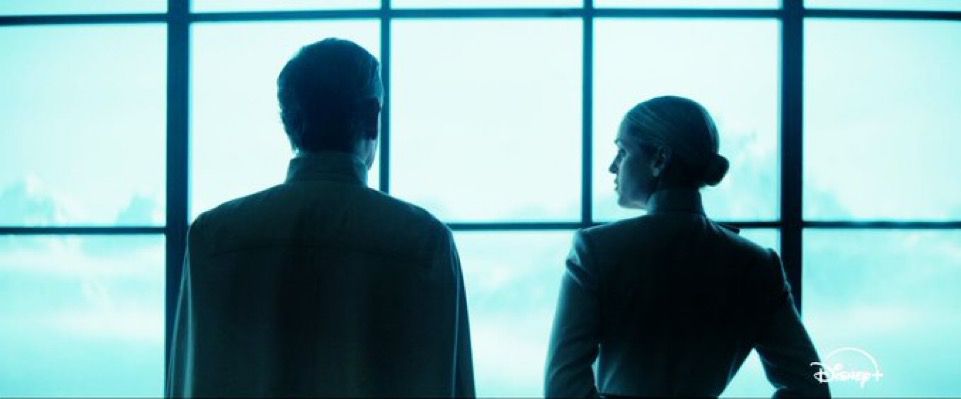
Mon Mothma, Cassian Andor, and Inspector Krennic pose from the waist up in front of a Coruscant cityscape.

While episode 1 of Andor season 2 sets the foundation for various problems, episode 2 explicitly demonstrates who is at risk when taking direct action against the Empire—the undocumented, the worker, the person of color. Following in the footsteps of season 1, this season not only continues to examine how a galactic empire would function but also turns a critical eye to how the opposition to empire functions. In these first three episodes, culminating with “Harvest” (more in my next post), a clear critique of leftist opposition rises.

This critical look comes from the juxtaposition of Mon Mothma on Chandrila with Bix on Mina-Rau. In season 1, I appreciated Genevieve O’Reilly’s portrayal of Mothma, but this season, she’s truly hit her stride as she hosts a three-day wedding for her daughter. Long shots show her talking with guests before slipping into her role as a funder of the rebellion all while navigating the guilt of her teenage daughter being wed to a stranger, which Mothma agreed to in order to help Luthen.

One of the guests is Tay Kolma (Ben Miles), who Mothma worked with in season 1 in order to hide some financial blemishes as she funnels money to Luthen and the rebellion. At first, Tay seemed totally dedicated to the cause—and with a bit of a crush on Mothma, possibly. Now, his wife has divorced him, and he seems to have soured with Mothma—or at least think he deserves more attention, however that might be interpreted.

This lavish party is juxtaposed with Brasso, Bix, and Wilmon on Mina-Rau, where the Empire has arrived to audit the farming groups, including arresting undocumented farm workers. In solidarity with his workers, the grain farmer tries to help Brasso and the others figure out how to escape Imperial detection in hopes of furthering the rebellion’s mission.

While Mothma may have to deal with Tay’s indelicate advances for more attention, Bix finds herself cornered by an Imperial officer asking her out on a date. Even though she claims her husband will be returning to the planet soon, that doesn’t seem to deter the officer. As an undocumented, migrant worker, Bix’s position is far more dangerous than Mothma’s. The interweaving of the stories of these two women both working for the rebellion reflect the often real-world implications of who is most endangered during times of protest and revolt. While Mothma stands to lose much, her precarity does not represent the same risk that Bix, an undocumented woman of color, is taking.

While I often find myself caught up in the plot and minute political commentary of Andor, this first arc also has beautiful visual storytelling. Mon Mothma’s home filled with lavishly dressed guests is bright and decadent in color and saturation compared to Brasso, Bix, and Wilmon’s current home, where the shots are less saturated, the skies grayer, and the uniformity of wheat dulls the view. Both storylines are full of life as well as secrecy. Where Brasso, Bix, and Wilmon have lovers, friends, and community, some of who know about their illicit activity, Mothma finds herself alienated while surrounded by people.

These two communal storylines further juxtapose with one of my favorite aspects of Andor: showrunner Tony Gilroy’s continued dedication to making the Empire less cool. In this episode, it’s revealed that Dedra Meero is living with Syril Karn (played by Kyle Soller). While their relationship is hinted as a possibility at the end of season 1, I was still surprised to see them living together. In her totally white and devoid of character apartment, she and Syril reunite after her work trip to learn about the Ghorman plan. It is the most awkward and purposefully cringe interaction of the show.
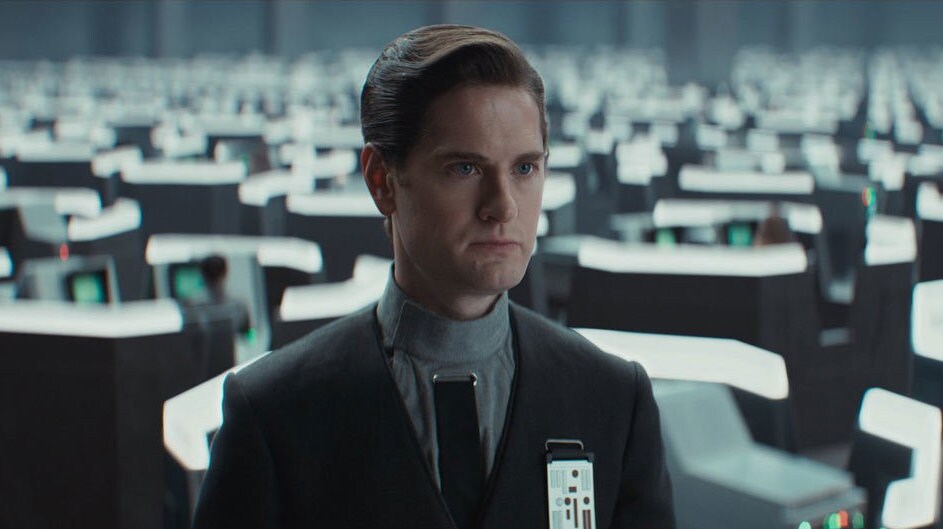
Syril Karn in a room filled with people working at futuristic computer stations. Shown from the shoulders up in his black uniform.

In my next post about the third episode, “Harvest,” I’ll write more about the importance of portraying the Empire as an empire, but for now, I was reminded when watching this episode of a video essay, “Fascists will waste your time” by Thought Slime, which reiterates again and again that we need to remember that fascists are, simply, evil losers. I’ve always struggled with how “cool” the Empire appears in much of Star Wars, even while doing evil acts, and Andor was one of the first Star Wars properties to directly confront this idea—at least that I was aware of. I appreciate the continued dedication to this task. Dedra and Syril having a relationship does not detract from how socially broken, awkward, and fascist they are. They have little to no social awareness in addition to being cruel.

The final important plot point in “Sagrona Teema” involves Cassian, who is able to escape the Maya Pei rebels. Their continued infighting and silly arguments have delayed him considerably, which feels especially scary while his friends are facing down the Empire on Mina-Rau. We do get one final hint that the Maya Pei band are going to be important as Cassian finally managed to steal back his ship and fly away—right over the towers of Yavin 4.
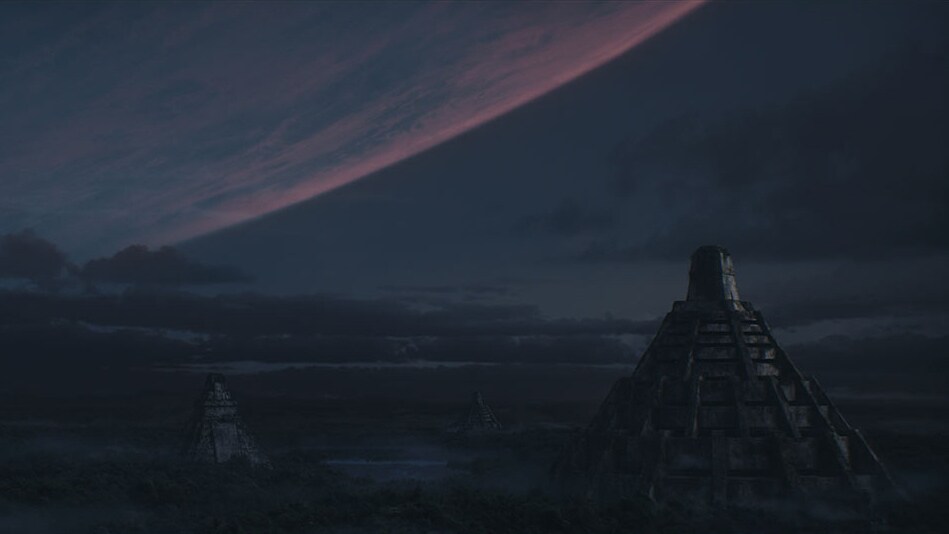
A planet in sunset hues is in the sky while the iconic towers of Yavin 4 rise from a green jungle at dusk.


POSTED BY: Phoebe Wagner (she/they) is an author, editor, and academic writing and living at the intersection of speculative fiction and environmentalism.

Monday, April 28, 2025

Rebellions are Built on Hope: Andor S2E1

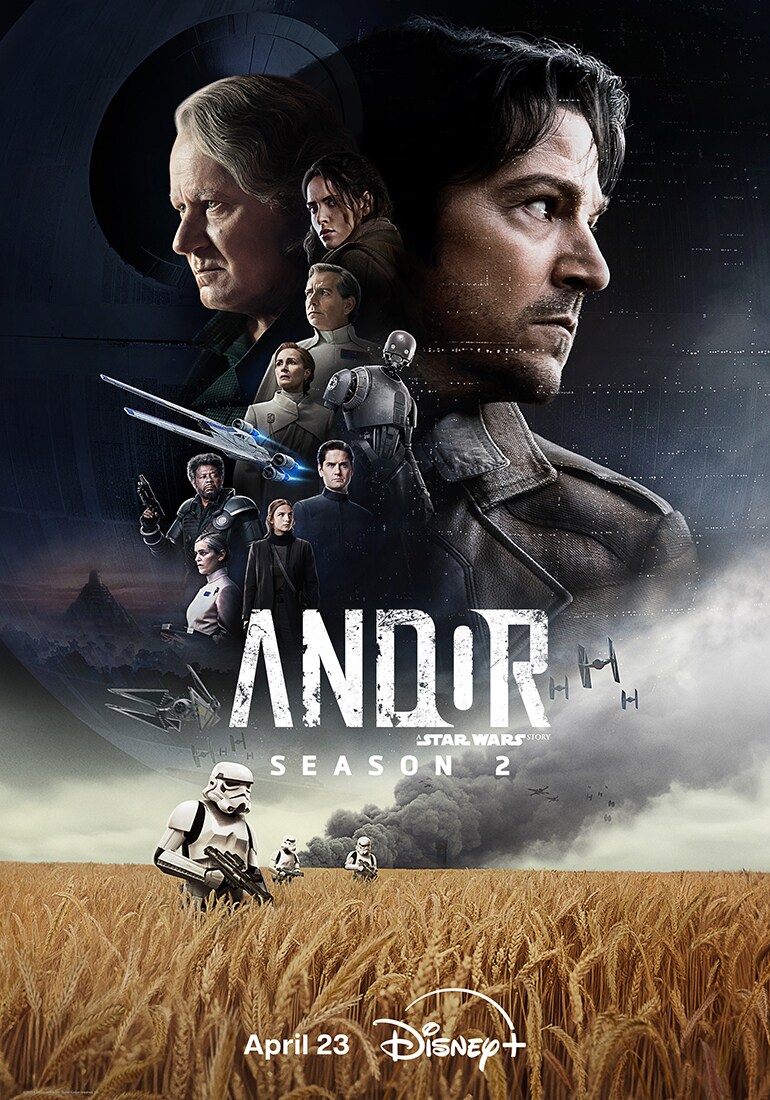
A TV show poster featuring a collage of serious faces, including Diego Luna as Cassian Andor. Overlaid across a storm sky, at the bottom, white Stormtroopers search a field of wheat.

As some of you know, I’m a big Andor fan, have reviewed season one, written about the show, and have a Cassian quote tattooed on my arm. With season two premiering, I wanted to take a closer look at each episode and some of the politics and modes of resistance—and just plain great storytelling. 

Over the next few weeks, I’ll be reviewing each episode. Disney has chosen to release the twelve episodes in four chunks, but I’ve decided to slow down and give each episode it’s due. As I’ve rewatched season one, I continue to be surprised by the nuance of the show, and I’m hoping the same for season two (and so far, it hasn’t disappointed!). I’ll be writing these reviews with the assumption readers have watched season one and watched the episode, so I won’t be tagging spoilers. As readers of my previous Andor content will know, one of my major fascinations with the series is the anti-fascist aspect of the storytelling, so these pieces will lean in that direction. On to season two!

The first episode is titled “One Year Later,” and much like the description, the episode sets up a lot of plot lines: “An undercover mission. A sanctuary threatened. A Chandrilan wedding. A chilling imperial plan.” The hour-long episode sets up these four plotlines, which seem to have a rotating centrality to the season as a whole. 

The episode opens with Niya (Rachelle Diedericks), helping Cassian Andor (with continued excellent acting by Diego Luna) steal an experimental TIE fighter model. She’s new to helping the rebellion, and she’s nervous. Part of this scene shows how Cassian has changed over the past year since he fled the planet Ferrix with his friends Brasso (Joplin Sibtain), Bix (Adria Arjona), and Wilmon Paak (Muhannad Bhaier). Cassian has come into his own and presents a level of leadership more reminiscent of the Cassian Andor from Rogue One. When comforting Niya, we get one of those great, inspiring Andor moments: “The Empire cannot win. You’ll never feel right unless you’re doing what you can to stop them. You’re coming home to yourself.” 

This moment builds to Cassian confidently entering the TIE fighter, starting it, and—absolutely messing up. Even though his prominence as a pilot was a major point of season one, he cannot figure out how to fly the fighter, and his quiet exit becomes a serious action sequence before he finally escape. But this escape is only the beginning of his problems. 

Two dirty men in rough armor glare down at someone. They are surrounded by jungle greenery.

Enter the Maya Pei. When Cassian lands to meet his Rebellion contact, a group of guerrilla fighters capture him instead. He realizes they are the Maya Pei, a group that the Rebellion has even supported in the past, but they refuse to believe he isn’t what he looks like—an Imperial pilot. The Maya Pei are clearly part of the rebellion in terms of their hatred of the Empire, but they seem totally inept and infighting quickly divides the group.

In episode one, Cassian’s storyline is the least political, but also the most fascinating as it seems off kilter to the seriousness of the other plotlines. The Maya Pei are hilariously bad at being guerrilla fighters. Right now, their depiction lacks some nuance since guerrilla warfare has been very successful against many authoritarian regimes, so this clownish depiction seems at odds with the serious and thoughtful analysis of empire and revolt of the previous season. I currently have two ideas. First, I think the Maya Pei will return in the season to bring some of that nuance. Second, this season seems to be speaking to the problems of leftist responses to empire, especially the early stages of rebellion (which may feel familiar to U.S. viewers). I’m curious how this thread will continue or not. 

Turning to the other three storylines, the Empire’s plotline held the most fascination for me. I loved how Andor season one made the Empire feel like an empire down to making it clear the people who support it are just weird, dangerous, isolated people (like all Fascists are). The Empire in Andor is rarely, if ever, cool but rather banal and bureaucratic, which doesn't mean they aren't dangerous. Dedra Meero (with an amazing performance by Denise Gough) is invited to join a top secret project led by Director Orson Krennic (Ben Mendelsohn). I assumed Krennic would be a much later reveal as a major returning character from Rogue One, so I was pleasantly surprised to see him revealed in episode one. 

The imperial project is a mining operation on the planet Ghorman. The Ghorman people are set up as a somewhat powerful entity—at least one that won’t go quietly—and in order to be able to mine the planet, they will have to be subdued. The Empire has already worked to undermine the Ghorman reputation through propaganda. In a move that feels so relevant to the social media misinformation of today, two hired propagandists explain how certain stereotypes of the Ghorman people were started by their propaganda.

Krennic and Dedra stand in front of a blue-gray window, seen from the waist up.

This chilling boardroom sequence discussing how the Empire intends to destroy a people, culture, and planet for a mining operation felt particularly poignant when paralleled with the third storyline—visas. While Cassian is running missions for the Luthen (Stellan SkarsgĂ„rd), his Rebellion contact from season one, his friends Bix, Brasso, and Wilmon are living as undocumented agricultural workers on Mina-Rau. Over the past year, they’ve settled in, with Brasso in a long-term relationship with a citizen and Wilmon dating a citizen, which is causing problems with her parents because he doesn’t have a visa. 

In the U.S., it’s impossible not to feel the poignancy of one of our most popular franchises showing the struggles of undocumented people. This moment is paralleled with the boardroom scene as Krennic and other members of the fascist Empire work to dispossess another people of their planet, thus turning them into refugees—if they survive. 

Much like season one, the first episode of season two is a slow burn (though the next two episodes build quickly). Yet, these four storylines (I’ll talk about Mon Mothma and Chandril in the next episode review), set up the gritty realism of a fascist Empire—and the real fight against it—that I have come to expect in Andor

As such a big fan of the first season, I was deeply worried about season two. Writer Tony Gilroy could still disappoint, but I, once again, feel like I’m in careful hands. 

POSTED BY: Phoebe Wagner (she/they) is an author, editor, and academic writing and living at the intersection of speculative fiction and environmentalism.

Monday, March 4, 2019

Microreview [book]: JUDGES Volume 1 by Michael Carroll, Charles J. Eskew, and George Mann

Breakin' the Law

 
How does the world get from the police we know today to Judge Dredd? JUDGES Volume 1 brings us closer to the answer with a trio of short stories set in the Judge Dredd universe. It doesn't quite reach the bombast of that source material though.

The three stories take place in the early day of the Judges program, where newly trained judges are paired up with the normal police force between the police are eliminated entirely. Each story seemingly takes us closer to that complete replacement, with the first one starting with a group of judges walking into a police station for integration and takeover. The stories are a murder mystery, a race against the clock to find a killer's last victim, and a battle against an unusually armed gang and they're serviceable plots.

But if you're not familiar with the Judges program or the Judge Dredd world, these stories aren't going to do you a lot of favors in the way of building this world. I came into them only knowing what I learned from the Judge Dredd movie (awful) and the later Dredd (AWESOME) and JUDGES Volume 1 didn't exactly expand my knowledge of this world. It talks plenty about the Law Ranger motorcycle as an object or the judge's helmets without describing any of them. I'm told the Judges program is law now, but what brought it about or why isn't elaborated on. I guess it assumes anyone going into these stories would know this stuff from the start and that's a false assumption. Something that's pitched as the early days of the Judges should make a minimum effort to bring new readers into this world.

I also found the stories themselves to be lacking in Judge Dredd-esque action. There's no lack of action in either movie, but these stories are largely about police work. They have plenty to say about class and race, but it's all a little pedestrian. The third story in the trio, When the Light Lay Still, at least has the most fleshed out characters but it also suffers from some timeline confusion as each chapter jumps around in time. I don't want to reveal myself as an idiot but I didn't feel like I caught the whole story between these skips back and forth in time and mixed up uses of criminal aliases. Even a relationship between the main character and a love interest is a mixed bag of implied wrongings and stated actions.

While the first two stories are okay if plodding, the third is a real rollercoaster. It's both excitingly ambitious and overly complex. JUDGES Volume 1, between the okay stories and lack of world-building, is for fans of the source material only.

---

The Math

Baseline Assessment: 5/10

Bonuses: +1 Judge Poet and Judge Jones from When the Light Lay Still are written like real human characters

Penalties: -1 Next to no world-building for Dredd newbies

Nerd Coefficient: 5/10 (problematic, but has redeeming qualities)

***

POSTED BY: brian, sci-fi/fantasy/video game dork and contributor since 2014

Reference: Carroll, Michael, Eskew, Charles J., and Mann, George. JUDGES Volume 1 (Rebellion, 2019)