Showing posts with label Nintendo Switch. Show all posts

Tuesday, January 9, 2024

Microreview [Video Game]: Deadly Premonition 2: A Blessing in Disguise by White Owls and Toybox Inc.

I wish that a premonition warned me about this game.


The first game in this series, Deadly Premonition, was a cult classic that was released in 2010. The game received mixed reviews and was one of those love-it-or-hate-it kind of games for most. The best compliment I can give the game is that it was memorable. There was a uniqueness to the title that evoked a specific feeling of whimsy whenever the title was mentioned. That's not to say I don’t recall all of the game's negative traits (of which there were many), but the distinct essence of Deadly Premonition kept the game in a more positive glow for this reviewer even after a decade. Three years ago, Swery and the teams at Toy Box Inc. and White Owls decided to throw us back into the shoes of Francis York Morgan so that we could solve the case of the red seeds and figure out who’s been chopping people up all while discussing films in a wholly unusual and obsessive way.

The most simple way I could describe Deadly Premonition 2 is that it is exactly what a sequel shouldn’t be. The game attempts to create another bizarre story (and boy is it bizarre), but in the process loses out on what made the original unique and memorable in the first place. Now, there is a high possibility that I may be forgetting some of the fine details of the original, and my mind and views on the world and its politics have indeed changed these last ten years, but I don’t recall the original’s quirk being tied to incest and transphobia. When I think of this game in ten years, these are the things I will remember.

This isn't to say that the game’s director/writer intended any sort of transphobia (though one non-transphobic character misgenders at some point) through the lens of the creator, but it’s used more as a tool to create an uncomfortable otherness. It comes across as ignorant, not to mention the glossed-over conversation of race in the American South. It attempts inclusion by incorporating persons of color, a trans character, and a character with mental disabilities, but fails to have a reason to do so. The inclusion isn’t meaningful and ends up setting these characters up as caricatures to be used for the plot. It’s a wasted opportunity that unfortunately brings to light the need for more well-researched and appropriate inclusion of minorities in video game media.


All this aside, the story is an unhinged mess. One of the final cutscenes has so much going on that I’m not quite sure the writer understands what it means to create rules within a universe and then abide by them. So many things go unexplained, and not in a quirky and mysterious way that makes me want to continue to figure everything out. There is some random guy named Houngan who appears on reflective surfaces and gives you oracles that essentially allow you to solve the case. Who is he? Why does he exist? Does he exist? I have no idea. I Googled him, thinking maybe I missed something because I skipped so many awful, unrewarding side quests, but no. There is no clear answer about the character or whether he exists. While there is a chance that I could discover more about the creator’s motives through multiple play-throughs of the game, that would mean playing the game again.

The gameplay is abysmal. The controls feel awful, like no time has passed between 2010 when the original game was released, and 2020’s sequel. The skateboarding segments feel worse than the old Tony Hawk games from the ‘90s. The shooting also feels antiquated. I can’t think of a single gameplay aspect I can commend this game for. The original game’s shooting mechanics were understandable (though still awful), they were a last-minute addition to increase the entertainment value of the game. They knew the sequel would include them from the start and still bungled it. It is not exciting or fun to play almost any aspect of this game (except for the maybe the stone skipping mini-game). At one point, the game tasked me with following a dog that moves faster than I walk, but slower than I run, so I had to keep a constant pace with him as we seemingly traversed the entire town of Le Carré. Halfway through this mission, I put the game down for a week. I almost never put a game down in the middle of a mission, let alone for a week.

The final segments of each chapter force the player through long, boring shooting segments that astound me. Over the twenty hours of gameplay the main story provides, you face off against maybe seven enemy types. Three of them are animals (wolves, alligators, and bees (yes, bees)) and are encountered in the daytime. You'll find the other four in the other world and a new one is unveiled each chapter. But here’s the thing; the AI is awful, and in addition, they repeat the same audio over, and over, and over. “Snip, snip, snip!” It’s laughable.

The performance? You guessed it; atrocious. You would think that a game with basic semi-cell-shading graphics, low-poly geometry, and simple animation would perform fine, but the game stutters constantly. It’s never fully unplayable, but it constantly reminds you that you're playing a poorly optimized game. While I played this on the Switch, it’s not an excuse. The game doesn’t push any graphical or gameplay boundaries so the hindrances are unwarranted.

There are some redeeming factors to the game. It never crashed on me despite performance issues. The story is followable for the most part and some of the characters bring some charm to the small town, like Patricia. Despite the basic graphics and lack of an endearing art style, the game manages to eke out a sense of a unique small town vibe for Le Carré, and though it isn’t particularly pretty to look at or explore, it has an odd coziness to it. There were moments that I enjoyed exploring Le Carré with Patricia and trying to solve the gruesome murders, but I frequently found the rest of the game getting in the way.


Whether I was watching a dreadfully long exposition scene, killing mundane enemies with early PS2 shooting mechanics, or listening to York repeat the same conversation to himself a hundred times, I found Deadly Premonition 2 to be a complete slog. It feels antiquated in all the wrong ways and doesn’t particularly reward you for that patience with a great story. It’s interesting, to be sure. It has moments of decent storytelling but overall feels weird just to be weird. And if that’s your thing and you loved the original game, then you may enjoy this. If, like me, you enjoyed the original game for its quirk and uniqueness, but disliked the gameplay and some of its story drivel, you may find yourself repulsed by Deadly Premonition 2’s lack of advancement in any meaningful area of game design. Francis York Morgan may have some charm, but hearing him say “Lollipop, I just wanted to say that” for the fiftieth time begins to grate on one’s nerves. If you have no investment in the series, skip this game.

--

The Math

Objective Assessment: 4/10

Bonus: +1 for some catchy tunes. +1 for being completable and mostly understandable.

Penalties: -2 for everything else.

Nerd Coefficient: 4/10

Posted by: Joe DelFranco - Fiction writer and lover of most things video games. On most days you can find him writing at his favorite spot in the little state of Rhode Island.

Thursday, July 13, 2023

Review [Video Game]: Pokémon Violet by Game Freak

Like stale meat between two fresh slices of bread.


The highly anticipated Pokémon Violet launched to middling reviews last November (and is the reason I’ve waited until now to play it). With performance issues galore, the game showered the Internet with memes for over a month. Performance issues aside, Pokémon Violet suffers from one of the worst things a video game series can do: remain stagnant. Last year’s Pokémon Legends Arceus offered a flawed glimmer of hope for the future of the series. While some of the mechanics from Legends Arceus carry over here, something is amiss. Despite the new additions, Pokémon Violet is a clear example of a franchise without much competition.

The opening scene of Pokémon Violet introduces the player to Paldea, a sprawling open world consisting of many different biomes with many Pokémon to capture and trainers to battle. At first glance, this is exactly what fans—myself included—have been asking for. An open-ended adventure that allows players to be the kind of trainer that they desire with the ability to go where they want and when they want. In some ways, Violet excels, while in others it nosedives.

Like many other bigger open worlds, players slowly gain the ability to traverse more terrain as they progress through the game. This can be done by following Arven’s quest line. A new mechanic introduced in Violet/Scarlet sees the player obtain the box legendary from the outset, but only in the form of a vehicle (sorry, no easy powerful legendary for you). Exploration of the world is often satisfying, not entrancing. The game often looks bland and uninspiring; a step above Legends Arceus, but not a steep one. With frequent texture pop-ins, the game world can be a letdown to explore. Pokémon frequently appear out of nowhere—breaking immersion, and people in the distance walk with LOD animations, making them look like jerky robots until you get up close. For being the world’s number one entertainment franchise, this is unacceptable.


One of my favorite additions to Legends Arceus was the ability to stealthily sneak up on an unsuspecting Pokémon and throw a ball to catch it. This often ignored the necessity to engage in battle when I simply wanted to catch a wild ‘mon. But alas, Violet and Scarlet did not include this amazing feature. Instead, they've added the ability to send your Pokémon out to do battle with other wild monsters (without engaging the battle screen) and gather any items it finds along the way. While I loved this feature it was sometimes unresponsive. The player is also given the ability to lock on to a specific wild Pokémon so that they could throw a ball and engage in battle. Unfortunately, I found the lock-on mechanic to be a bit unresponsive as well, so I barely used it.

The combat is trite and, like the world itself, uninspiring. In this game, they introduced a new mechanic called terastallization (talk about a mouth full). This allows a Pokémon with the ability to change their type to their Terra type and increase the damage output of said type. The game makes you sit through a small animation every single time that you want to use this ability. It provides a decent boost, but considering the game isn’t that challenging, I found it more satisfying to ignore the mechanic altogether so I could avoid the cutscene. With no option to skip certain cutscenes (catching a Pokémon, terastallizing, loading into a raid, raid catching, etc.), I found myself frequently sighing when going to use certain mechanics or load up a raid. There was an option to skip all cutscenes, but that would include anything related to the story as well. A massive oversight that I’m not sure would have solved my problem.

Battling is the same as ever. Each Pokémon has access to four moves at any given time, though now they can thankfully relearn things from the main menu instead of having to go to a specific location. Regardless, Pokémon's battle system is outdated. While I wouldn't expect a complete overhaul of an established franchise, some fresh and exciting additions would be nice (and no, terastallizing isn’t the answer). Persona 5 has proven that turn-based combat can introduce a bit of exciting flair to an age-old system. Pokémon relies on type matchups; fire beats grass, grass beats water, water beats fire, etc. Once you’ve learned type matchups, there is no challenge you can’t beat. The game’s combat is straightforward and I couldn't wait to be out of the battle screen.

Leveling up is also straightforward; beat wild Pokémon/trainers and get experience. Leveling up is very easy, but the game’s open-world structure is unbalanced. Back in the day, Pokémon gyms used to be a challenge. By restricting how far trainers could level their Pokémon (before they would start to disobey you), players would generally stop training and try to get to the next gym and challenge them so that they could increase their Pokémon’s obedience level. For some reason, Violet doesn't do this. You can go anywhere and level up as much as you want. Then, when I’d go to battle a boss, I demolished them. Instead of making each gym’s power reflect the order in which you visit them, they have a specific structure that the game doesn't tell you about. By the time I got to the last gym leader, all their Pokémon were under level twenty while mine were over level seventy.


The new Pokémon designs are mostly great. I loved the starters, though not necessarily all of their evolutions. It was nice to build a team of some of my favorites with a few cool newcomers. I just wish the legendary scene was a bit stronger here. It’s possible that if the game had a stronger incentive, I would have removed all the stakes and chased the additional legendary Pokémon, but as is, I had no desire to catch them all after the credits rolled. Gone are the days where I would chase Suicune from one area to another just for a chance to catch them.

While I love trouncing enemies and feeling like an amazing Pokémon trainer, the journey is poorly written. Violet attempts to replicate some aspects of the Persona series, but only in a very lazy and spiritless way. The academy (of which the player is a student) has classes that can be attended, but they are optional. You can grow closer to academy staff but it has no impact on, well, anything. Three types of badges can be obtained; the standard gym badges, Arven’s quest badges, and Team Star base battle badges. This adds a little diversity to the gameplay but feels like more of an addition for addition’s sake and not a meaningful expansion of what the series could be.

Speaking of Team Star, the writing is an absolute joke. The developers have forgotten that the player base consists mostly of people between the ages of twenty and twenty-nine. While I do not expect the game to have a very mature story, past Pokémon games have proven that more complex subjects can be explored (Black and White). The entire game—but especially the Team Star quest line—feels like a patronizing joke. A game that was written exclusively for seven-year-olds.


Negative tones cover most of this review, but the game works well despite some performance issues. Filling the Pokedex is an enjoyable experience and exploring can be rewarding at times. But considering this series sells so well, it’s a shame that Game Freak couldn't evolve the series in a more satisfying way, one that appeals to both new, younger players and classic players as well. With many issues adding up to huge annoyances, Pokémon Violet feels like a misfire. But, it sold over twenty-two million copies and has no direct competition, so I don’t see any huge gameplay evolutions incoming. Though the open world and a few mechanics bring some fresh concepts to a mainline Pokémon game, it is bogged down by trite combat design, unskippable gameplay cutscenes, geometry that you can get stuck on, and a story written specifically for children. If this game were a sandwich, it would be like stale meat between two fresh pieces of bread. Hopefully, Game Freak’s next entry uses more fresh ingredients.

--

The Math

Objective Assessment: 7/10

Bonus: +1 for being able to send Pokémon out to explore. +1 for new Pokémon designs.

Penalties: -1 for awful writing. -1 for unskippable gameplay cutscenes. -1 for boring combat.

Nerd Coefficient: 6/10

Posted by: Joe DelFranco - Fiction writer and lover of most things video games. On most days you can find him writing at his favorite spot in the little state of Rhode Island.

Monday, March 27, 2023

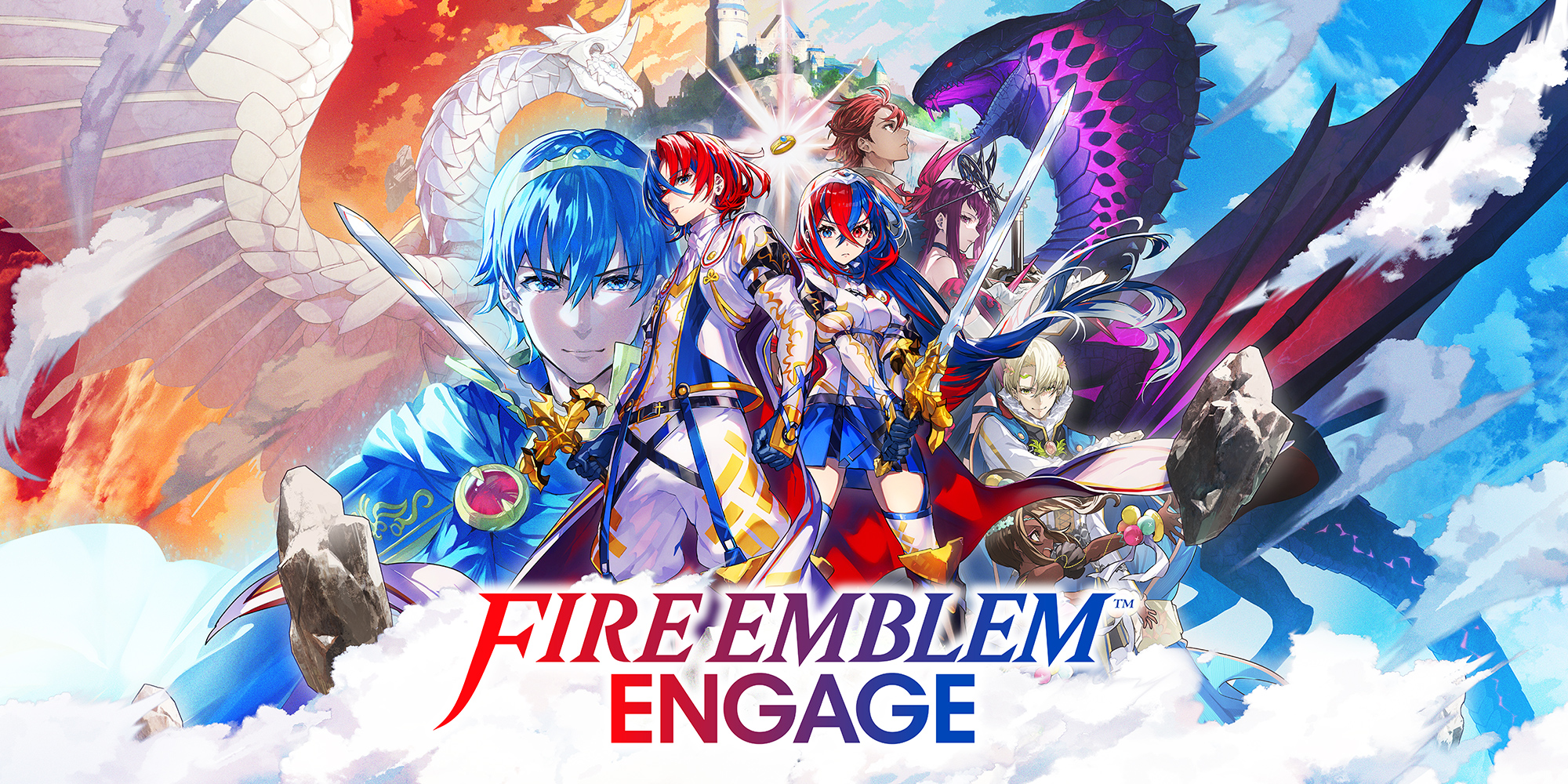
Game Review: Fire Emblem: Engage

 A real change of pace from the previous iteration of the series, and lacking some of the depth of plot and themes, but a fun game nonetheless.


In my opinion, every game needs a dating sim/romance component and a fishing minigame. Fire Emblem: Engage technically has both of these things. Alas, this is not enough a perfect game to make.

For some context, I came into Fire Emblem via Three Houses, and have since played Three Hopes, Engage and about half of Awakening. I am not deeply immersed in the lore, the vibe and the general themes of these games, and am mainly coming into as someone who loved Three Houses.

And... it's not as good a game as Three Houses.

I'll go onto the positives (of which there are plenty) in a moment, but I'm going to start by focussing on how different these two games are, because it is such an interesting contrast for me. Three Houses was intensely replayable, complex, political and deep, and a critical part of all of that, in my opinion, is that much of the tension, the drama and the conflict embedded in the game is prompted, enacted or realised by the human participants. Yes there are magic dragons, of course there are, but the problems you're trying to solve have very human causes. More than anything else, it's a game about a focussed geopolitical situation, in which you are closely involved with much of the power players in the disputes, and can take a role in guiding the situation as it develops. You have a hand in shaping the growth of the nobility of three countries in conflict, and a significant role in how that conflict plays out over the span of years. And this is the sort of very human drama I absolutely adore. Adri goes into more detail about some of what makes Three Houses great here, so I won't bang on about it, but suffice it to say, I found it weighty, thoughtful and complex, as well as a fun opportunity to go hit bad guys with swords.

Enter Fire Emblem: Engage, a very different beast. The conflict here is much more on a grand, mythical scale. You have much fewer choices, your backstory is intense from the get-go and you're pretty much instantly surrounded by people who agree with each other and are very on board with your dramatic, world-saving mission. The Fell Dragon - clue as to his good/evil alignment very much in the name - is the big bad introduced from the very beginning, and your protagonist is set on the path to defeating him instantly. Yes, you visit the countries of the new world you're embedded in, and yes, they have politics, but it is all very solvable in the way of any magical destined protagonist - you are literally holy to many of them, so of course they join your quest without qualms. And this is the heart of my problem with the game. There is very little in the way of human drama, the meaty, substantial stuff that makes me want to spam character interactions to unlock more of their support conversations. Where many of the Three Houses characters have relatively interesting backstories that get teased out in their support conversations with the protagonist and their classmates, in Engage, almost all of them are rendered down to one or two traits, simple silhouettes to the richer oil paintings of the previous game. And so their dialogue, all their character moments, end up feeling samey because they simply do not have that much to talk about, and nothing to have drama about. One of your first friends in the game is Alfred, crown prince of Firene, and despite maxxing out many of his support conversations, I learnt very little about him beyond his enthusiasm for muscles, exercise and particularly running. This is a man destined to lead one of the four nations of the world (and incidentally, a hilariously weedy little boy to be so obsessed with his own henchness).

And this lack of real substance stretches out wider across the game too. Where in Three Houses you have a home base in a monastery, and its rhythms dictate your actions and how you spend your time between missions in a way that requires balance - because you can only do so many things - Engage gives you none of that necessity of choice. You can do everything. And it's optimal to do everything (because much of it gives you small combat boosts or other minor benefits). But because it lacks that necessary economy, and because there is so much of it to get through, it feels like make-work in a way that Three Houses rarely did. There were times when I sat down to play Engage and the entire session was working my way through the various activities of your home base, just so I was ready to go into an encounter in my next session, and that is so dull, even for someone like me, who is prone to completionism and grinding.

It simply lacks the solid core of meaning that I was expecting from having played Three Houses and that was really sad.

However, I said I would talk about positives, and there are definitely plenty of those too.

What is going on with this outfit? We may never know

I say this with fondness - this game is batshit. The lore, the visuals, the styling, the character art, it's all bonkers. It has the silly-o-meter turned way up to eleven at all times, for no discernible reason. Which, if you go in expecting a deep political game, is a disappointing thing. But once you begin to accept what this game actually is and is trying to be, once you let go of those expectations... well it's a heck of a lot of fun. I spent my teenage years watching more Naruto and Bleach than any human really ought to, and Fire Emblem: Engage appeals to the same part of my brain that adored those shows. They are ridiculous, overblown and often nonsensical, even by their own presented logics, but they are intensely, constantly fun and they know themselves to be as ridiculous as they are. If you're willing to let go of your need for logic, sense and... well the basic fundamentals of grown-up story telling, they can be such a joyous ride, and by the time I got to the end, that was what I found with Engage.
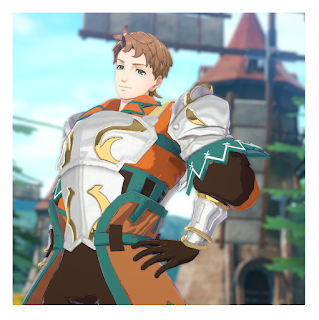
My best boy Boucheron

There are also a lot of characters, and so inevitably, there's someone for everyone to love. I thought I'd found my absolute favourite within the first couple of chapters, and then even in the late game, someone came along to challenge that. Are they going to enter the hall of fame of my favourite video game characters of all time? Of course not, Alistair Theirin still exists. And they're not complex enough for that. But again, if you're willing to buy into the silliness, there is something there for almost anyone to love.

It is also, critically, still a Fire Emblem game in the mechanics. I have almost nothing to critique there - maybe the class changing could have been made a little smoother - but much to praise, especially in the return of the attack triangle, and the use of the break mechanic. If you attack an opponent with a weapon that beats theirs in the triangle - sword beats axe beats lance beats sword - then you cause them to "break" and prevent them from counter-attacking, which adds a whole extra dimension to your battle planning.

The use of backup characters is also an interesting addition - fighters with this designation can join in another character's attack from nearby, making positioning around the battlefield even more critical. 

And then, lest you worry I forgot about it, there's the "engage" part. If you've seen any of the trailers for the game, you'll have seen the absolute nostalgia-fest that is a core part of the entire package - you can summon heroes from previous Fire Emblem games and use them to help in the battles in this one. The in-game logic behind why this happens is... scant at best... but let's not examine too closely, because the benefits it brings to gameplay are brilliant. Do you pair up an emblem and a fighter who have similar skills, making them easier to use and boosting what they're already best at over time? Or do you use the emblems to iron out the weaknesses in your fighters? Do they stay with one character, building a strong relationship for better gains as the game goes on? Or do they move around, sharing their skills more widely and building a much more flexible team? The options are many, and it has a clear impact on how and who you play in every encounter. For an uncertain player, the game guides you towards certain emblem/character pairings, but they are by no means mandatory, and a huge part of the fun is in discovering how different pairings match up - some characters cause emblems to use different attacks or weapons, depending on their own skillsets and build.
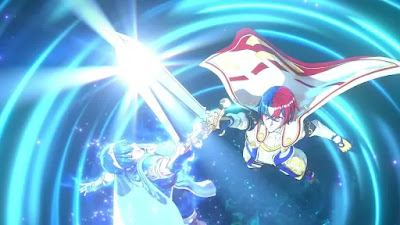
The Emblems are also just undeniably cool

The emblems also have an economy built into them - you can engage them only for a certain number of turns, and only use their special attack once in that time, before having to refresh either by engaging in combat without them, or positioning yourself around the map to pick up the one-use effect to refill the emblem charge. So again this gives more decision - do you save up their big attacks for the boss of each encounter, or use them to make the journey to get their quicker and smoother?

That being said, the emblems do come with their own part of the busywork of continuing the game, and I got very bored very quickly of having characters polish the emblems' rings (behave) between each encounter. But unlike many other portions of the game, the busywork here at least feels integrated, and you can see the benefits of it in fairly short order, even if it's a little dull in the process.

And lest you think one needs to have played all the previous games to enjoy the emblems, that's absolutely not true. I'm sure it adds an extra dimension to them and their conversations with the protagonist, but even as someone with a limited knowledge of Fire Emblem lore, I found them a fascinating part of the game, even beyond their gameplay benefits. The role they play in the story, both for the protagonist, their allies and their enemies, is what makes the game stand out for me, and it brought a real tactical consideration that might have otherwise been lacking.

And so that's the dichotomy of Engage. In pure gameplay terms, it's incredibly fun and tactical, with a lot of thinking and planning needed to pull off the battles to the player's satisfaction. And if you're willing to drop your expectations and go in taking the very silly anime bullshit storyline on its own terms, it's light, enjoyable and pacey, even if not the most substantial. But as soon as you put any real scrutiny on the plot or characters, they simply cannot bear the weight, and it is very very hard at times not to engage that scrutiny. There are parts of the plot, especially towards the end game, that stretch credulity, and some character decisions that are occasionally baffling. The epilogue particularly had me scratching my head somewhat. The romance aspect, already very much a small part of most Fire Emblem games, is particularly downplayed here, and I think this is a weakness of the game. I wasn't sure for most of it if S-rank supports were even going to happen, if there was a romance component, and so when it eventually showed up, it felt very tacked on. There is also the problem that, if you definitely want to romance someone, you need to spoil yourself by looking up guides before making the critical decisions, as there's a distinct lack of clarity or frankly sense in who is, and is not, available (which I found out to my grave disappointment - I have simply headcanoned the outcome I got to be Not True because it displeased me so).

So if you're in it for people, for meaningful plot and complex dynamics, this isn't the game for you. But if you want a silly romp that will make you feel like a twelve-year-old again, absolutely play it, and you'll have a grand old time in the process. And if you want it purely for the Fire Emblem gameplay and mechanics? You're in major luck, because those, they have absolutely nailed. For me personally, it gets a lower rating because I am above all a characters person, but don't let that put you off if you have other priorities.

--

The Math

Highlights: Genuinely interesting mechanics both old and new, interesting new feature of the emblems, extremely fun

Nerd Coefficient: 6/10

Reference: Fire Emblem: Engage [Nintendo, 2023]

POSTED BY: Roseanna Pendlebury, the humble servant of a very loud cat. @chloroform_tea

Wednesday, July 6, 2022

Microreview [Video Game]: Pokémon Legends: Arceus by Game Freak

Ever wanted a Pokémon game to switch it up? Well, here it is!


Introduced as a youth to the Pokémon franchise, there used to always be a special feeling when I’d start up a game and hear the cheery, yet empowering soundtrack play. After playing one game, I knew what was in store; choose your starter, fight your rival, go on an adventure, fight Team whatever their name is, and beat the Elite Four. Eventually, this formula became stale, and though Pokémon games sell themselves without the need for change, core players found themselves not completing some of the games. Over time Game Freak and Nintendo tried to switch things up, but nothing ever created a substantial shift, that is, until now (I hope). Pokémon Legends: Arceus injects some brand new mechanics into the franchise. Though it's only a spinoff, I hope that some of these things will be carried over to the mainline entries.

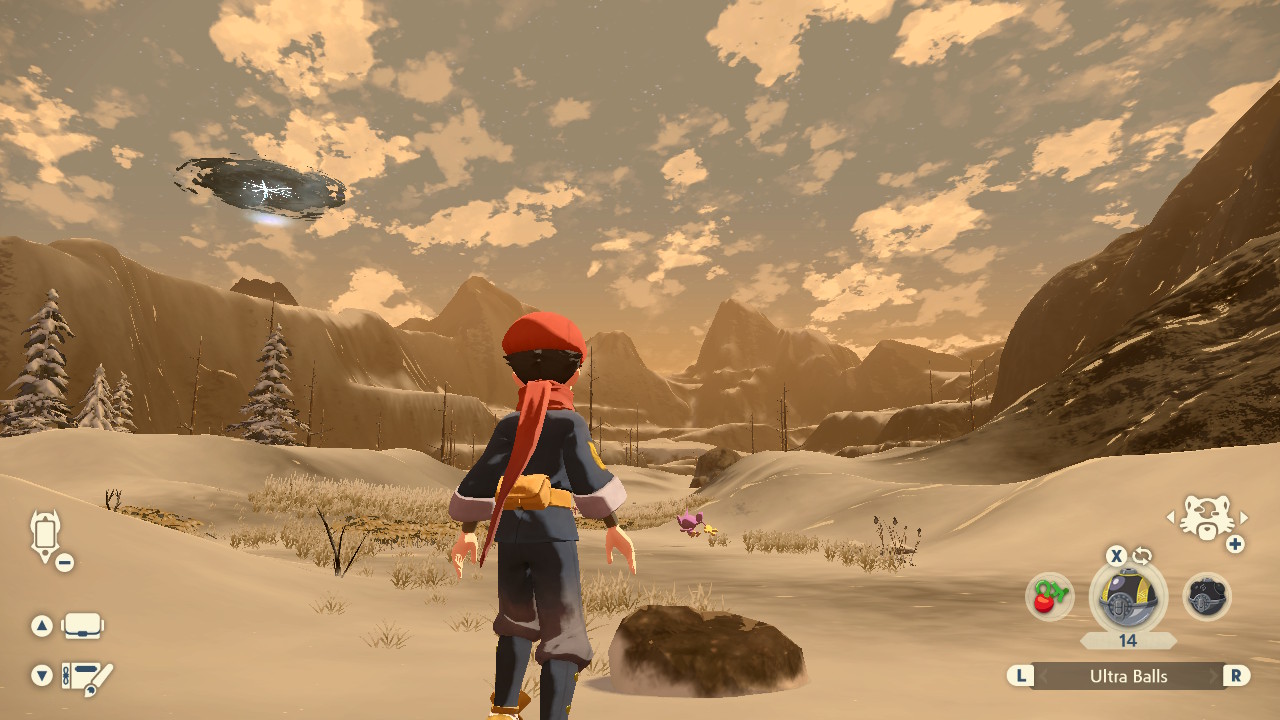
The most exciting addition to Legends has to be the new capture system. Players can now attempt to capture Pokémon without the aid of their fellow ‘mons in battle. Instead, as the player character, you can directly throw a ball at a wild Pokémon for an attempted catch. Three different types of balls have varying effects: standard Poké/great/ultra balls, feather/wing/jet balls (good for catching flying and fast-moving Pokémon), and heavy/leaden/gigaton balls (extremely effective if you hit an unsuspecting Pokémon from behind). This type of capture system removes the tedium of having to weaken Pokémon in battle every single time. Do you hide in the grass and throw a feather ball from far away and watch it fly across the map? Do you get up close and try for a backstab capture with a heavy ball, knowing the Pokémon can turn around at any second? The game emits a satisfying sound whenever you hit a Pokémon from behind. Or you could always do what I did and hit every Bidoof in the face with an ultra ball. Works every time.

In addition to a revamped capture system, Legends adds a more exciting Pokédex. Considering this game takes place a long time ago, the inhabitants have yet to truly understand Pokémon. Most people are afraid of them (yes, even the lowly Bidoof is feared by all). The game takes place in the Sinnoh region during early settlement, back when it went by the name of Hisui. The diamond and pearl clans are at each other’s throats and Team Galaxy is trying to research Pokémon to ensure that Hisui’s inhabitants have a better understanding of the world around them. Luckily for everyone, the player character drops from a rift in the sky to help out. This is where the new (old?) Pokédex comes in. It’s up to the player to research and help fill out the dex. Every Pokémon requires a different set of tasks to fully research. For instance, some dex objectives will have the player catch a certain amount of a specific Pokémon, some will have them see that ‘mon defeated multiple times, some will want to see them use a certain move, etc.


I spent my first few hours in Legends being a good little Pokémon trainer, catching everything I could find, filling out the Pokédex objectives, and exploring everywhere I could. The initial hours of the game are enticing, especially for an old-school fan of the series. Using the player character to navigate Pokémon battles and having to avoid their attacks was a fun new mechanic. I enjoyed feeling like not only were my Pokémon battling, but I was too. And it makes sense. Not all wild monsters are going to ignore you until you throw out another ‘mon, the more aggressive ones would probably attack you too, and the skittish would run away. Due to different Pokémon natures, some will ignore you, some will watch and wait for you to make a move, some will run, and some will attack on sight. For the record, in absolute Bidoof fashion, Bidoof will ignore you, even when you're directly in front of his face.

Depending on how many new Pokémon are captured and how many Pokédex objectives have been fulfilled on your return from the field, you receive currency and experience toward your Team Galaxy rank. Your rank within Team Galaxy determines your ability to train Pokémon to a certain level, akin to badges in the traditional games, so it’s a good idea to get to level seven so you can get your ‘mons to level one hundred. That is if you make it that far.

Unfortunately, I found that the luster of the new mechanics began to fade after about fifteen hours (out of twenty-five I put in). The quest design is rather uninspiring, with many side missions being simple fetch quests. The main quest is pretty straightforward but eventually becomes rather silly. The diamond and pearl clans who were once at war now seem more like immature siblings. The writing in Pokémon games can be and has been (looking at you Black and White), better. Unfortunately, this title is one of the weaker entries in that regard.

What’s worse, the reward for maxing out a Pokemon’s research in the Pokédex is… wait for it… nothing! That’s right. Of those objectives I mentioned earlier, you only need to achieve ten points worth of research to consider the ‘dex entry filled. In some cases, Pokémon can have over thirty objective squares to achieve. The more diligent player isn't rewarded for the effort. It’s nice that Game Freak catered to the more casual player, but they left the hardcore players in the dust in the process.


The worst offender in Legends is the bland, uninspired world. The game initially felt like such a departure from the standard Pokémon game that I was blinded to how underdeveloped the playable areas were. They hit all the basic biomes with a beach area, grasslands, tundra, a volcano, etc., but it never feels like more than a bland map with variety implemented for the sake of variety.

One of the best additions includes alternate versions of some Pokémon and their evolutions. Scyther gets a cool evolution in the form of Kleavor (bug/rock type) while Growlithe and Arcanine take on a different look and become fire/rock types. Instead of offering a new set of three starters, Legends gives the players a choice between Oshawott, Rowlet, and Cyndaquil. Each of these Pokémon are well known, but to spice it up, each one has a new final evolution. Typhlosion becomes Fire/Ghost, Decidueye becomes grass/fighting, and Samurott becomes a water/dark type. These alternate evolution/versions of the Pokémon were a much welcome addition, with some being silly and others quite well designed.

For players looking to add more challenges to the game, Game Freak implemented alpha Pokémon. You can find these ‘mons in the wild and they put up quite a fight. They are much bigger and stronger than the average Pokémon of its species and re-spawn less frequently, so you have to balance your offense and defense when approaching one if you want to catch them. I thought this was a great addition to a not very challenging game. That is unless we’re talking about the final trainer battle in the main story.

The final human trainer boss battle is a doozy. Completely unbalanced with the rest of the game, and to be honest, quite frustrating considering how the game never offers up much of a challenge in the way of trainer v trainer battles. The inclusion of fast and strong moves adds an extra layer to the turn-based combat (with fast moves letting you attack quicker and with less damage, and strong moves doing the opposite), though I never needed to pay much attention to it until the final battle. I wish the mechanic had been necessary throughout the campaign.


Though Pokémon Legends: Arceus misses the mark on a few important things, it’s never a bad game. It’s an enjoyable experience that becomes a bit easier to put down over time. When I first started the game, I picked it up every night for a few hours. Eventually, I would pick it up every few weeks to make sure I finished it, but once I started playing again, I would appreciate the simple joy of collecting all the little critters around the map. It’s just too bad the innovative ideas aren't supported by the story, characters, and world this entry deserves. That being said, if your favorite aspect of any Pokémon is catching, then this one is absolutely for you. And though there isn’t a huge reward for maxing out your research, there is one for catching them all. The Pokémon god Arceus awaits. Boot up your Switch and start collecting!

The Math

Objective Assessment: 7/10

Bonus: +1 for new and enjoyable capture/battle mechanics. +1 for the addition of alpha Pokémon. +1 for the new alternate Pokémon designs.

Penalties: -1 for poor character/story writing. -1 for a bland and ugly world. -1 lack of satisfying research rewards for more hardcore players.

Nerd Coefficient: 7/10

Posted by: Joe DelFranco - Fiction writer and lover of most things video games. On most days you can find him writing at his favorite spot in the little state of Rhode Island.