A real change of pace from the previous iteration of the series, and lacking some of the depth of plot and themes, but a fun game nonetheless.
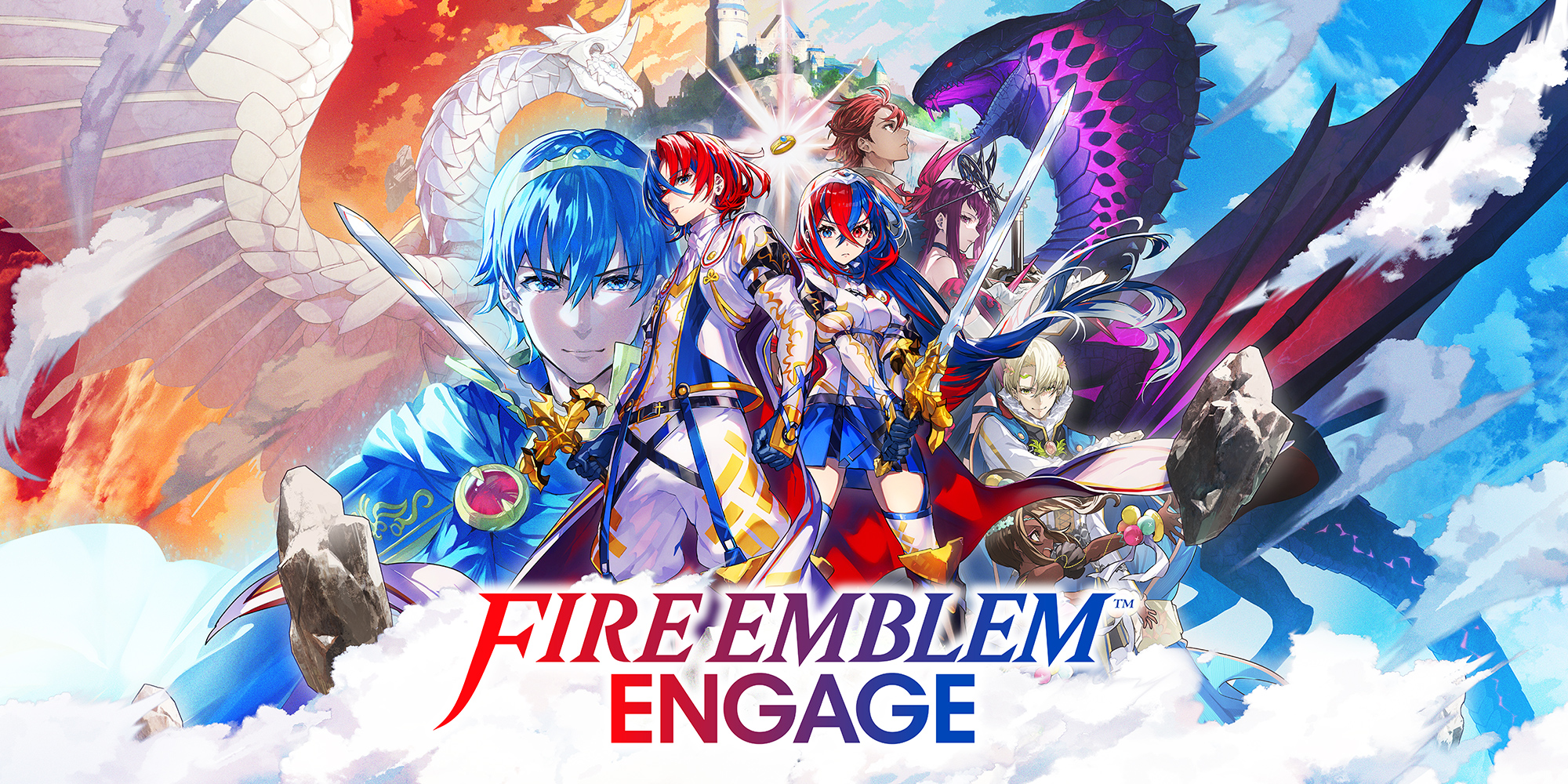
In my opinion, every game needs a dating sim/romance component and a fishing minigame. Fire Emblem: Engage technically has both of these things. Alas, this is not enough a perfect game to make.
For some context, I came into Fire Emblem via Three Houses, and have since played Three Hopes, Engage and about half of Awakening. I am not deeply immersed in the lore, the vibe and the general themes of these games, and am mainly coming into as someone who loved Three Houses.
And... it's not as good a game as Three Houses.
I'll go onto the positives (of which there are plenty) in a moment, but I'm going to start by focussing on how different these two games are, because it is such an interesting contrast for me. Three Houses was intensely replayable, complex, political and deep, and a critical part of all of that, in my opinion, is that much of the tension, the drama and the conflict embedded in the game is prompted, enacted or realised by the human participants. Yes there are magic dragons, of course there are, but the problems you're trying to solve have very human causes. More than anything else, it's a game about a focussed geopolitical situation, in which you are closely involved with much of the power players in the disputes, and can take a role in guiding the situation as it develops. You have a hand in shaping the growth of the nobility of three countries in conflict, and a significant role in how that conflict plays out over the span of years. And this is the sort of very human drama I absolutely adore. Adri goes into more detail about some of what makes Three Houses great here, so I won't bang on about it, but suffice it to say, I found it weighty, thoughtful and complex, as well as a fun opportunity to go hit bad guys with swords.
Enter Fire Emblem: Engage, a very different beast. The conflict here is much more on a grand, mythical scale. You have much fewer choices, your backstory is intense from the get-go and you're pretty much instantly surrounded by people who agree with each other and are very on board with your dramatic, world-saving mission. The Fell Dragon - clue as to his good/evil alignment very much in the name - is the big bad introduced from the very beginning, and your protagonist is set on the path to defeating him instantly. Yes, you visit the countries of the new world you're embedded in, and yes, they have politics, but it is all very solvable in the way of any magical destined protagonist - you are literally holy to many of them, so of course they join your quest without qualms. And this is the heart of my problem with the game. There is very little in the way of human drama, the meaty, substantial stuff that makes me want to spam character interactions to unlock more of their support conversations. Where many of the Three Houses characters have relatively interesting backstories that get teased out in their support conversations with the protagonist and their classmates, in Engage, almost all of them are rendered down to one or two traits, simple silhouettes to the richer oil paintings of the previous game. And so their dialogue, all their character moments, end up feeling samey because they simply do not have that much to talk about, and nothing to have drama about. One of your first friends in the game is Alfred, crown prince of Firene, and despite maxxing out many of his support conversations, I learnt very little about him beyond his enthusiasm for muscles, exercise and particularly running. This is a man destined to lead one of the four nations of the world (and incidentally, a hilariously weedy little boy to be so obsessed with his own henchness).
And this lack of real substance stretches out wider across the game too. Where in Three Houses you have a home base in a monastery, and its rhythms dictate your actions and how you spend your time between missions in a way that requires balance - because you can only do so many things - Engage gives you none of that necessity of choice. You can do everything. And it's optimal to do everything (because much of it gives you small combat boosts or other minor benefits). But because it lacks that necessary economy, and because there is so much of it to get through, it feels like make-work in a way that Three Houses rarely did. There were times when I sat down to play Engage and the entire session was working my way through the various activities of your home base, just so I was ready to go into an encounter in my next session, and that is so dull, even for someone like me, who is prone to completionism and grinding.
It simply lacks the solid core of meaning that I was expecting from having played Three Houses and that was really sad.
However, I said I would talk about positives, and there are definitely plenty of those too.
 |
| What is going on with this outfit? We may never know |
I say this with fondness - this game is batshit. The lore, the visuals, the styling, the character art, it's all bonkers. It has the silly-o-meter turned way up to eleven at all times, for no discernible reason. Which, if you go in expecting a deep political game, is a disappointing thing. But once you begin to accept what this game actually is and is trying to be, once you let go of those expectations... well it's a heck of a lot of fun. I spent my teenage years watching more Naruto and Bleach than any human really ought to, and Fire Emblem: Engage appeals to the same part of my brain that adored those shows. They are ridiculous, overblown and often nonsensical, even by their own presented logics, but they are intensely, constantly fun and they know themselves to be as ridiculous as they are. If you're willing to let go of your need for logic, sense and... well the basic fundamentals of grown-up story telling, they can be such a joyous ride, and by the time I got to the end, that was what I found with Engage.
 |
| My best boy Boucheron |
It is also, critically, still a Fire Emblem game in the mechanics. I have almost nothing to critique there - maybe the class changing could have been made a little smoother - but much to praise, especially in the return of the attack triangle, and the use of the break mechanic. If you attack an opponent with a weapon that beats theirs in the triangle - sword beats axe beats lance beats sword - then you cause them to "break" and prevent them from counter-attacking, which adds a whole extra dimension to your battle planning.
The use of backup characters is also an interesting addition - fighters with this designation can join in another character's attack from nearby, making positioning around the battlefield even more critical.
And then, lest you worry I forgot about it, there's the "engage" part. If you've seen any of the trailers for the game, you'll have seen the absolute nostalgia-fest that is a core part of the entire package - you can summon heroes from previous Fire Emblem games and use them to help in the battles in this one. The in-game logic behind why this happens is... scant at best... but let's not examine too closely, because the benefits it brings to gameplay are brilliant. Do you pair up an emblem and a fighter who have similar skills, making them easier to use and boosting what they're already best at over time? Or do you use the emblems to iron out the weaknesses in your fighters? Do they stay with one character, building a strong relationship for better gains as the game goes on? Or do they move around, sharing their skills more widely and building a much more flexible team? The options are many, and it has a clear impact on how and who you play in every encounter. For an uncertain player, the game guides you towards certain emblem/character pairings, but they are by no means mandatory, and a huge part of the fun is in discovering how different pairings match up - some characters cause emblems to use different attacks or weapons, depending on their own skillsets and build.
 |
| The Emblems are also just undeniably cool |
The emblems also have an economy built into them - you can engage them only for a certain number of turns, and only use their special attack once in that time, before having to refresh either by engaging in combat without them, or positioning yourself around the map to pick up the one-use effect to refill the emblem charge. So again this gives more decision - do you save up their big attacks for the boss of each encounter, or use them to make the journey to get their quicker and smoother?
That being said, the emblems do come with their own part of the busywork of continuing the game, and I got very bored very quickly of having characters polish the emblems' rings (behave) between each encounter. But unlike many other portions of the game, the busywork here at least feels integrated, and you can see the benefits of it in fairly short order, even if it's a little dull in the process.
And lest you think one needs to have played all the previous games to enjoy the emblems, that's absolutely not true. I'm sure it adds an extra dimension to them and their conversations with the protagonist, but even as someone with a limited knowledge of Fire Emblem lore, I found them a fascinating part of the game, even beyond their gameplay benefits. The role they play in the story, both for the protagonist, their allies and their enemies, is what makes the game stand out for me, and it brought a real tactical consideration that might have otherwise been lacking.
And so that's the dichotomy of Engage. In pure gameplay terms, it's incredibly fun and tactical, with a lot of thinking and planning needed to pull off the battles to the player's satisfaction. And if you're willing to drop your expectations and go in taking the very silly anime bullshit storyline on its own terms, it's light, enjoyable and pacey, even if not the most substantial. But as soon as you put any real scrutiny on the plot or characters, they simply cannot bear the weight, and it is very very hard at times not to engage that scrutiny. There are parts of the plot, especially towards the end game, that stretch credulity, and some character decisions that are occasionally baffling. The epilogue particularly had me scratching my head somewhat. The romance aspect, already very much a small part of most Fire Emblem games, is particularly downplayed here, and I think this is a weakness of the game. I wasn't sure for most of it if S-rank supports were even going to happen, if there was a romance component, and so when it eventually showed up, it felt very tacked on. There is also the problem that, if you definitely want to romance someone, you need to spoil yourself by looking up guides before making the critical decisions, as there's a distinct lack of clarity or frankly sense in who is, and is not, available (which I found out to my grave disappointment - I have simply headcanoned the outcome I got to be Not True because it displeased me so).
So if you're in it for people, for meaningful plot and complex dynamics, this isn't the game for you. But if you want a silly romp that will make you feel like a twelve-year-old again, absolutely play it, and you'll have a grand old time in the process. And if you want it purely for the Fire Emblem gameplay and mechanics? You're in major luck, because those, they have absolutely nailed. For me personally, it gets a lower rating because I am above all a characters person, but don't let that put you off if you have other priorities.
--
The Math
Highlights: Genuinely interesting mechanics both old and new, interesting new feature of the emblems, extremely fun
Nerd Coefficient: 6/10
Reference: Fire Emblem: Engage [Nintendo, 2023]
POSTED BY: Roseanna Pendlebury, the humble servant of a very loud cat. @chloroform_tea


