I find myself in one of the most creatively busy periods of my life at the moment (scoring a film, finishing an album, writing, blogging, repairing the house, and also, the kids are out of school), so the approach I've taken to my summer reading is one that will hopefully allow me to bite things off in pieces, and keep from getting bogged down. Nabokov's Pale Fire was on my reading list last summer, for instance, but I'm still working on that one because it is both densely written and a physically demanding book to read. You have to have two bookmarks, for instance. So biting that one off was a mistake I'm trying not to replicate.
To that end, I'm eyeing short story collections and things that are easily sub-divided. Off we go...
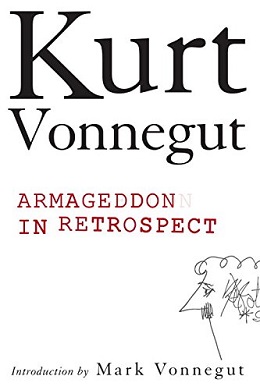
1. Armageddon in Retrospect by Kurt Vonnegut
I'm not entirely sure why I haven't picked this one up sooner. I am, after all, the guy who ranked all of Vonnegut's novels in a way that met with far less derision than when I tried to rank the Harry Potter movies or those times I tried to let readers rank sci-fi TV shows and movies. These stories deal chiefly with war, and while I rarely love Vonnegut's short stories in the way I love his novels and autobiographical writings, they are always artfully crafted and engaging. I do feel a little strange about this collection being published posthumously and kicking off a series of posthumous story collections, since Vonnegut expressed during his life that A Man Without a Country was intended to be his final work, but his son Mark was involved in this collection and wrote a lengthy introduction, and I guess that's just what people do when famous artists die. Ask Johnny Cash.
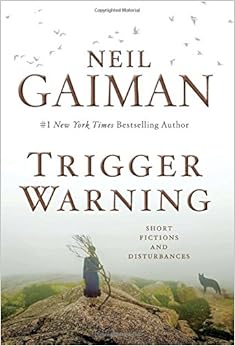
2. Trigger Warning by Neil Gaiman
Neil Gaiman's just one of those cats who make our time here a little better. His tongue-in-cheek short story Shoggoth's Old Peculiar, in which a lone American tourist on a walking tour of the English coastline stumbles into a town populated by acolytes of Cthulhu, is one of my favorites, and I have been very proud of my children's fondness for Coraline and Fortunately, the Milk. I picked up Trigger Warning when it was released earlier this year, and can't wait to dive in. This is a collection of stories written over, broadly, the last decade or so, so concurrent with The Ocean at the End of the Lane, which I consider if not a masterpiece, certainly a near masterpiece.
3. The Sandman Library, Vol. 8-10 by Neil Gaiman
The presence of both of these Gaiman works on this list is a coincidence. I shamefacedly admit that I never read the entire arc of Sandman, so I started anew last year with the first issue, thanks to the wonderful "Graphic Novels for Adults" section at my local library. Now only three volumes remain. I'm pretty sure the spoiler statute of limitations runs out somewhere before 20 years, but nobody spoil it for me, kay?
One thing I have enjoyed very much in these editions under the "Sandman Library" banner is reading the introductions by other writers, and how they chronicle in part the legitimization of comics and graphic novels as a literary medium, It's been said over and over that nobody had ever seen anything like Gaiman's work on Sandman before these stories were published, and it's neat to read about an entire medium in its ascendancy, written by different voices, and as it was happening, from the locus of the stories that prompted that shift.
4. What If? by Randall Munroe
I'm so excited about this book.
xkcd cartoonist and one-time NASA roboticist (is that a word? anyhoo, "dude who built robots") attempted to provide serious scientific answers to absurd questions like "What would happen if you hit a baseball traveling at 90% the speed of light?" or "If every person on Earth aimed a laser pointer at the moon at the same time, would it change color?" I happen to love science, while simultaneously being very bad at it, and I love dumb stuff. So this juxtaposition of really smart, rigorous thinking applied to really dumb "Did that just come out of my mouth?" types of questions seems right up my alley.
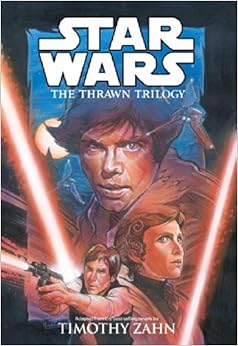
5. Star Wars: The Thrawn Trilogy (Graphic Novel) by Timothy Zahn
I confess I never got into the Extended Universe, and certainly not the way my wife has. But she and everybody I know who is into it has told me that Timothy Zahn's Thrawn Trilogy is the crowning work of the EU. But once again fearing a repeat of the ongoing Pale Fire debacle, I'm just being realistic when I say I can't commit myself to a three-book cycle anytime soon. So good news for me that the graphic novel adaptation of the trilogy is back in print. I think The G read it back in the day, but I tracked down a copy at the really big comics shop near me (sorry, Comics vs. Toys. I feel like I cheated on you!) and intend to knock this out after I finish Sandman.
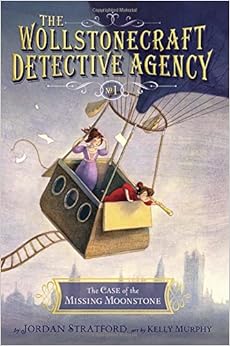
6. The Wollstonecraft Detective Agency Book 1: The Case of the Missing Moonstone by Jordan Stratford
It's not for me, I promise. I read to my kids at night, and as they've gotten a little older, we've gotten to tackle more complex books. We've done The Hobbit, we've done The Phantom Tollbooth, a bunch of Roald Dahl, and even The Adventures of Tom Sawyer. Know what all those books have in common? They're about boys doing cool stuff. As it happens, girls do cool stuff just as well as boys, and this is a lesson I want to impart upon my kids. Enter Jordan Stratford, and his amazing "what-if" scenario: what if, as children, Mary Wollstonecraft (later Shelley, who invented science fiction) and Ada Byron (later Lovelace, who invented computer programming) had known each other...and solved mysteries. I'll be...ahem, my kids...will be all over this, and I expect the wait for Book 2 will be a difficult one.
Posted by Vance K -- cult film reviewer and co-editor of nerds of a feather, flock together since 2012, and doing his best to instill a love of the odd and mysterious in smaller versions of himself since before that.
- Reviews
- _Book reviews
- _Film and TV Reviews
- _Game Reviews
- _Thursday Morning Superhero
- _Short Fiction Reviews
- Lists
- _New Books Spotlight
- _6 Books Posts
- _We Rank 'Ems
- Features
- _Interviews and Blogtables
- _Talking About Books
- _The Hugo Awards
- _Mini-Projects
- Projects
- _Nerds on Tour (2020)
- _The Hugo Initiative (2019)
- _Feminist Futures (2018)
- _Dystopian Visions (2017)
- Meet the Flock
- Review Policy
- Home
Showing posts with label Kurt Vonnegut. Show all posts
Friday, July 3, 2015
Monday, September 23, 2013
Celebrating Banned Books Week
Here at Nerds of a Feather, we're especially big nerds about reading. For most of the contributors, I think it is fair to say that the printed word and the deeply personal effects certain books have had on our lives have shaped who we are and what we are now doing with those lives. But it is also a sad fact that if a book has something important to say that challenges the status quo — especially when it comes to race, sexuality, gender relations, or if it deigns to use "bad" words — somebody somewhere has tried to ban it.
And they have too often succeeded.
I wanted to write a post to call attention to Banned Books Week (www.bannedbooksweek.org) which is going on right now. Book banning is, sadly, not a thing of the past, however. There are still those who crusade against writers and against people's right to read certain writers. Me, I say read everything you can and make up your own mind. Here is my tribute to some of the books that have landed on the chopping block of people who are trying to keep impressionable children from reading things that will make them better critical thinkers and less malleable by those who would prefer that with "banners flying and with drums beating we'll be marching backward, backward through the glorious ages." (Inherit the Wind)
Leave in the Comments section below anything you'd like to say about controversial or banned books that have influenced you.
The Great American Novel
Whatever your personal nominee for "The Great American Novel" might be, you would find many allies if you chose To Kill a Mockingbird, The Great Gatsby, or The Grapes of Wrath. All of them are essential reading for anyone seeking to understand the United States and its struggles in the 20th century. The Grapes of Wrath was the earliest profound experience I ever had with a book. I probably read it for the first time when I was 12, and the world was immediately and forever changed for me.
Advocates for Conscience
Two of the books that most influenced me and made me feel through their staggering emotional impact the real power of what writing can do were also pulled from schools because of concerns that teens might read in print words that they say out loud daily — Catch-22 and Slaughterhouse-Five. That World War II is popularly regarded as the last "noble" war is partially because people like Kurt Vonnegut, who witnessed how ignoble human beings murdering each other en masse really looks up close, wrote books like these in that war's aftermath. Their lessons have permeated the culture ever since, changing how we perceive the very essence of wars. As the saying goes, nobody wins a war.
Advocates for Racial Harmony
The lesson of books like Richard Wright's Native Son and Ralph Ellison's inimitable Invisible Man are that there are unnecessary societal barriers placed between people of different races that are detrimental to all of us. It's an ugly problem with ugly ramifications, but writers who call attention to it have routinely been shouted down by people who would rather make denials and claim that these problems have been left in the past, and often they couch their objections to these works in terms of explicit language or mentions of sexuality.
Advocates for the Possible
Notable sci-fi writers like Ray Bradbury, Robert Heinlein, and the above-mentioned Kurt Vonnegut have come under attack repeatedly, again usually for language. The greatest irony probably belongs to the repeated challenges to Bradbury's anti-book banning novel Fahrenheit 451, which has been allowed in some classrooms only in a bowdlerized version.
And Finally, Advocates for Innocence
Maurice Sendak had a way of communicating the primal relationship to reality that most children have that has not been matched. But one time he drew a penis on a little boy (little boys do have penises, much to the chagrin, I'm sure, of people who got In the Night Kitchen banned), and he had the audacity to write a book where an angry little boy didn't know how to deal with his feelings and dreamt of running away to someplace where he could be in charge (Where the Wild Things Are). I proudly read my children books by Maurice Sendak, and it gives me endless pleasure to imagine them one day doing the same for their children.
And they have too often succeeded.
I wanted to write a post to call attention to Banned Books Week (www.bannedbooksweek.org) which is going on right now. Book banning is, sadly, not a thing of the past, however. There are still those who crusade against writers and against people's right to read certain writers. Me, I say read everything you can and make up your own mind. Here is my tribute to some of the books that have landed on the chopping block of people who are trying to keep impressionable children from reading things that will make them better critical thinkers and less malleable by those who would prefer that with "banners flying and with drums beating we'll be marching backward, backward through the glorious ages." (Inherit the Wind)
Leave in the Comments section below anything you'd like to say about controversial or banned books that have influenced you.
The Great American Novel
Whatever your personal nominee for "The Great American Novel" might be, you would find many allies if you chose To Kill a Mockingbird, The Great Gatsby, or The Grapes of Wrath. All of them are essential reading for anyone seeking to understand the United States and its struggles in the 20th century. The Grapes of Wrath was the earliest profound experience I ever had with a book. I probably read it for the first time when I was 12, and the world was immediately and forever changed for me.
Advocates for Conscience
Two of the books that most influenced me and made me feel through their staggering emotional impact the real power of what writing can do were also pulled from schools because of concerns that teens might read in print words that they say out loud daily — Catch-22 and Slaughterhouse-Five. That World War II is popularly regarded as the last "noble" war is partially because people like Kurt Vonnegut, who witnessed how ignoble human beings murdering each other en masse really looks up close, wrote books like these in that war's aftermath. Their lessons have permeated the culture ever since, changing how we perceive the very essence of wars. As the saying goes, nobody wins a war.
Advocates for Racial Harmony
The lesson of books like Richard Wright's Native Son and Ralph Ellison's inimitable Invisible Man are that there are unnecessary societal barriers placed between people of different races that are detrimental to all of us. It's an ugly problem with ugly ramifications, but writers who call attention to it have routinely been shouted down by people who would rather make denials and claim that these problems have been left in the past, and often they couch their objections to these works in terms of explicit language or mentions of sexuality.
Advocates for the Possible
Notable sci-fi writers like Ray Bradbury, Robert Heinlein, and the above-mentioned Kurt Vonnegut have come under attack repeatedly, again usually for language. The greatest irony probably belongs to the repeated challenges to Bradbury's anti-book banning novel Fahrenheit 451, which has been allowed in some classrooms only in a bowdlerized version.
And Finally, Advocates for Innocence
Maurice Sendak had a way of communicating the primal relationship to reality that most children have that has not been matched. But one time he drew a penis on a little boy (little boys do have penises, much to the chagrin, I'm sure, of people who got In the Night Kitchen banned), and he had the audacity to write a book where an angry little boy didn't know how to deal with his feelings and dreamt of running away to someplace where he could be in charge (Where the Wild Things Are). I proudly read my children books by Maurice Sendak, and it gives me endless pleasure to imagine them one day doing the same for their children.
![]() |
| And finally, a picture of an adorable kid wearing an "I Read Banned Books" shirt. |
Tuesday, June 19, 2012
WE RANK 'EM: The Novels of Kurt Vonnegut
Listen.
I understand that people go both ways on Kurt Vonnegut. There are groups of people who loathe him, and think he was a talentless hack. They think he was Kilgore Trout, which Vonnegut himself may have agreed with. For me, however, Vonnegut is unparalleled, because he wrote simply, but profoundly. It is far easier to tackle profundity with a whole lot of words, but as a writer myself, I am forced to admit that I will probably never write anything as poetic, moving, and elegant as "So it goes."
I will now attempt to rank the 14 novels of Kurt Vonnegut. Watch:
14. Slapstick (1976)
I have to be honest, I don't remember very much of Vonnegut's explicitly post-apocalyptic novel, except that it has a lot to do with his relationship with his own sister, who died many years earlier. When Vonnegut is at his best, his breezy style plays in opposition to the profound truths or moral lessons he communicates in that style. At worst, the result is entertaining, but slight, and that's how Slapstick feels. This is the first novel where he bills himself as "Kurt Vonnegut," dropping the "Jr."
13. God Bless You, Mr. Rosewater (1965)
Vonnegut's ode to the volunteer firefighter, the plot of this novel is almost identical to the first and last thirds of Frank Capra's Mr. Deeds Goes to Town, of all things.
12. Player Piano (1952)
Vonnegut's first novel is perhaps not the straight-ahead sci-fi novel it is sometimes characterized as, but it does rely on a number of familiar sci-fi tropes, among them future society, mechanization, and dystopia. The plight of man against machine is one that is close to my heart.
11. Deadeye Dick (1982)
Tragedy is compounded upon tragedy in this novel, where a boy fires a bullet into the air, only to have it come down blocks away, killing a pregnant woman and her unborn baby. Not much of a narrative here, but lots of ideas, one of which is that the boy's father was a close friend of Adolf Hitler's when they were both aspiring painters in Germany in the 1920s, and now has to reconcile how he felt about the guy then, and...after. 10. Galapagos (1985)
Galapagos is set one million years in the future, narrated by a ghost who died in 1985, and is looking back across 1,000,000 years of human evolution. I'm not sure how it squares with Vonnegut's professed embrace of intelligent design before he died, but I don't think Galapagos wants you to take anything in it too seriously except this: your brain is too big, and will get you in trouble.
9. The Sirens of Titan (1959)
This is the most straightforward sci-fi novel in Vonnegut's canon, with intergalactic travel, alien meddling in human history, interplanetary war and travel, and other trappings of space opera. Vonnegut's second novel, and written several years after Player Piano, sees the writing take a huge step forward, making his next novel, Mother Night, a clear next step in his stylistic evolution. Fun fact: first mention of Tralfamador, which will gain importance in Slaughterhouse-Five.
8. Jailbird (1979)
As I read it, I was consistently amazed by how much I was enjoying this book. Vonnegut's caricature of the multi-everything corporation undoubtedly seems less far-fetched these days than it did in 1979, and in a lovely bit of cosmic tomfoolery that I assume Vonnegut would have approved of, his main character's surname is Starbuck, which today graces every street corner, shopping mall, or both in America thanks to the ubiquity of just such a corporation.
7. Bluebeard (1987)
Don't feel bad if you've heard the names Jackson Pollock and Jasper Johns but not Rabo Karabekian. In Vonnegut's book (mostly) about art, Karabekian was a talented and briefly successful contemporary of Pollock's who had the misfortune of using house paint that ultimately peeled off of all of his abstract canvases, leaving them all worthless. This book contains one of my favorite-ever Vonnegut moments, where Karabekian explains that he turned to abstraction because drawing realistically was too easy.
6. Hocus Pocus (1990)
Extensive reference is made to Madame Bovary at a key moment in this book, but I would gladly re-read Hocus Pocus daily before enduring Madame Bovary again. I'm sure Vonnegut would have thought me to be quite pedestrian. So it goes.
The main character's name is an homage to Socialist presidential candidate Eugene V. Debs, who, Vonnegut reminds us several times, said this, which is important: "While there is a lower class, I am in it, and while there is a criminal element I am of it, and while there is a soul in prison, I am not free."
5. Breakfast of Champions (1973)
Those that ravage Vonnegut's writing probably do so most often by invoking Breakfast of Champions, which provides the reader with the size of each male character's penis, and pencil sketches of things like buttholes. But this book was written by an artist and a human being in crisis, and to me it is fascinating. There is a metafictional section at the end that I find to be one of the more lucid expressions of an author's relationship to his/her own work, and the crises of confidence that must be endured to get to the final period and send it out the door.
4. Timequake (1997)
Vonnegut was well known for his essays and public addresses, many of which were included in collections like Palm Sunday and Fates Worse Than Death (only crucifixion, it would seem) and which are wonderful, funny, and endlessly entertaining. Timequake is Vonnegut's final novel, and it's clear that he just didn't have the patience to slog through writing a coherent book, so what he wound up doing was taking pieces of an unfinished novel, commentary on writing it, and random observations, more-or-less shuffling them, and slapping them between two covers. The result is engaging, funny, though-provoking, and touching. A fitting and wonderful swan song.
3. Mother Night (1961)
I would argue that this is the novel when Kurt Vonnegut became Kurt Vonnegut. If you read Sirens of Titan and then Cat's Cradle, you may be forgiven for not immediately thinking they were written by the same author. This is the novel where Vonnegut fully found his voice, and where he wrote, "We are what we pretend to be, so we must be careful about what we pretend to be."
You can take that to the bank, if you'd like.
2. Cat's Cradle (1963)
I have never dog-eared a book to mark pages or quotations I'd like to remember as frequently as I did Cat's Cradle. This book features one of Vonnegut's coolest and most popularly enduring sci-fi concepts (ice-9), as well as his made-up religion Bokononism, which seems to exist mainly in the form of pleasant, pithy witticisms and observations. Sadly, the religion's followers seem to have replaced sex with the rubbing together of the soles of their feet, but what are you going to do? The world's going to end anyway, right?
1. Slaughterhouse-Five (1969)
Not really a surprise to find this at #1, right?
If you have not read this book, what can I say? You should. You may hate it, or you may want to get portions of it tattooed on your body. So there is that.
I understand that people go both ways on Kurt Vonnegut. There are groups of people who loathe him, and think he was a talentless hack. They think he was Kilgore Trout, which Vonnegut himself may have agreed with. For me, however, Vonnegut is unparalleled, because he wrote simply, but profoundly. It is far easier to tackle profundity with a whole lot of words, but as a writer myself, I am forced to admit that I will probably never write anything as poetic, moving, and elegant as "So it goes."
I will now attempt to rank the 14 novels of Kurt Vonnegut. Watch:
14. Slapstick (1976)
I have to be honest, I don't remember very much of Vonnegut's explicitly post-apocalyptic novel, except that it has a lot to do with his relationship with his own sister, who died many years earlier. When Vonnegut is at his best, his breezy style plays in opposition to the profound truths or moral lessons he communicates in that style. At worst, the result is entertaining, but slight, and that's how Slapstick feels. This is the first novel where he bills himself as "Kurt Vonnegut," dropping the "Jr."
13. God Bless You, Mr. Rosewater (1965)
Vonnegut's ode to the volunteer firefighter, the plot of this novel is almost identical to the first and last thirds of Frank Capra's Mr. Deeds Goes to Town, of all things.
12. Player Piano (1952)
Vonnegut's first novel is perhaps not the straight-ahead sci-fi novel it is sometimes characterized as, but it does rely on a number of familiar sci-fi tropes, among them future society, mechanization, and dystopia. The plight of man against machine is one that is close to my heart.
11. Deadeye Dick (1982)
Tragedy is compounded upon tragedy in this novel, where a boy fires a bullet into the air, only to have it come down blocks away, killing a pregnant woman and her unborn baby. Not much of a narrative here, but lots of ideas, one of which is that the boy's father was a close friend of Adolf Hitler's when they were both aspiring painters in Germany in the 1920s, and now has to reconcile how he felt about the guy then, and...after. 10. Galapagos (1985)
Galapagos is set one million years in the future, narrated by a ghost who died in 1985, and is looking back across 1,000,000 years of human evolution. I'm not sure how it squares with Vonnegut's professed embrace of intelligent design before he died, but I don't think Galapagos wants you to take anything in it too seriously except this: your brain is too big, and will get you in trouble.
9. The Sirens of Titan (1959)
This is the most straightforward sci-fi novel in Vonnegut's canon, with intergalactic travel, alien meddling in human history, interplanetary war and travel, and other trappings of space opera. Vonnegut's second novel, and written several years after Player Piano, sees the writing take a huge step forward, making his next novel, Mother Night, a clear next step in his stylistic evolution. Fun fact: first mention of Tralfamador, which will gain importance in Slaughterhouse-Five.
8. Jailbird (1979)
As I read it, I was consistently amazed by how much I was enjoying this book. Vonnegut's caricature of the multi-everything corporation undoubtedly seems less far-fetched these days than it did in 1979, and in a lovely bit of cosmic tomfoolery that I assume Vonnegut would have approved of, his main character's surname is Starbuck, which today graces every street corner, shopping mall, or both in America thanks to the ubiquity of just such a corporation.
7. Bluebeard (1987)
Don't feel bad if you've heard the names Jackson Pollock and Jasper Johns but not Rabo Karabekian. In Vonnegut's book (mostly) about art, Karabekian was a talented and briefly successful contemporary of Pollock's who had the misfortune of using house paint that ultimately peeled off of all of his abstract canvases, leaving them all worthless. This book contains one of my favorite-ever Vonnegut moments, where Karabekian explains that he turned to abstraction because drawing realistically was too easy.
6. Hocus Pocus (1990)
Extensive reference is made to Madame Bovary at a key moment in this book, but I would gladly re-read Hocus Pocus daily before enduring Madame Bovary again. I'm sure Vonnegut would have thought me to be quite pedestrian. So it goes.
The main character's name is an homage to Socialist presidential candidate Eugene V. Debs, who, Vonnegut reminds us several times, said this, which is important: "While there is a lower class, I am in it, and while there is a criminal element I am of it, and while there is a soul in prison, I am not free."
5. Breakfast of Champions (1973)
Those that ravage Vonnegut's writing probably do so most often by invoking Breakfast of Champions, which provides the reader with the size of each male character's penis, and pencil sketches of things like buttholes. But this book was written by an artist and a human being in crisis, and to me it is fascinating. There is a metafictional section at the end that I find to be one of the more lucid expressions of an author's relationship to his/her own work, and the crises of confidence that must be endured to get to the final period and send it out the door.
4. Timequake (1997)
Vonnegut was well known for his essays and public addresses, many of which were included in collections like Palm Sunday and Fates Worse Than Death (only crucifixion, it would seem) and which are wonderful, funny, and endlessly entertaining. Timequake is Vonnegut's final novel, and it's clear that he just didn't have the patience to slog through writing a coherent book, so what he wound up doing was taking pieces of an unfinished novel, commentary on writing it, and random observations, more-or-less shuffling them, and slapping them between two covers. The result is engaging, funny, though-provoking, and touching. A fitting and wonderful swan song.
3. Mother Night (1961)
I would argue that this is the novel when Kurt Vonnegut became Kurt Vonnegut. If you read Sirens of Titan and then Cat's Cradle, you may be forgiven for not immediately thinking they were written by the same author. This is the novel where Vonnegut fully found his voice, and where he wrote, "We are what we pretend to be, so we must be careful about what we pretend to be."
You can take that to the bank, if you'd like.
2. Cat's Cradle (1963)
I have never dog-eared a book to mark pages or quotations I'd like to remember as frequently as I did Cat's Cradle. This book features one of Vonnegut's coolest and most popularly enduring sci-fi concepts (ice-9), as well as his made-up religion Bokononism, which seems to exist mainly in the form of pleasant, pithy witticisms and observations. Sadly, the religion's followers seem to have replaced sex with the rubbing together of the soles of their feet, but what are you going to do? The world's going to end anyway, right?
1. Slaughterhouse-Five (1969)
Not really a surprise to find this at #1, right?
If you have not read this book, what can I say? You should. You may hate it, or you may want to get portions of it tattooed on your body. So there is that.
Subscribe to:
Posts (Atom)