Showing posts with label AI. Show all posts

Tuesday, February 11, 2025

Film Review: Love Me

An interesting look at the remnants of humanity as filtered through the lonely AIs we leave behind

Love Me is a quirky little film set long after the demise of humanity, in which two human-made pieces of technology fall in love. Well, kind of. Artificial intelligence, as far I can tell, can't really produce human emotions, so instead they approximate, imitate, and try to make sense of connection, disappointment, and feelings of warmth as memorialized by the extinct humans that made them.

A lonely smart buoy, known as Me, and a distant satellite, referred to as Iam, somehow connect as the last two pieces of human-made tech to function. The satellite revolves around Earth's graveyard of a planet, launched into space purposefully with petabytes of human data, information, videos, and other relics as a sort of eternal gravemarker of the civilization that once populated the planet—a stationary Voyager 1, as it were.

This concept alone is a fantastic start, but the movie gets a little complicated, and perhaps bites off more than it can chew, conceptually. The two AIs begin to communicate, and Me (the buoy) pretends to be a life form.

They interact via social media and memes, and even "move in" together in a digital space as video-game-esque avatars. The issue, of course, is that despite watching influencer videos of date nights and relationships, neither being really knows what it is to be human. And social media, unfortunately, is perhaps one of the worst ways to learn about authenticity and experience.

Me and Iam eventually have a falling out, and after a title card reveals that a billion years passes, they eventually reconnect—and Iam has shifted from cartoonish avatar to real-life physicality. The only two characters in Love Me are played in all forms by Kristin Stewart and Steven Yuen, and they both do an extraordinary job in portraying surprisingly human artificial intelligences. If you're a fan of either, you'll be very entertained watching them in such a strange movie.

My favorite part of the film is perhaps an unintended —or if not unintended, not the primary focus— idea that the real essence of humanity isn't in the grand, sweeping events and monumental life decisions. It's in the little things we do every single day, ad nauseam. It's similar to David Foster Wallace's "This is water" speech, namely that "the most obvious, important realities are often the ones that are hardest to see and talk about." When Iam spends a billion years alone, he fills his time with little things that make up a big life, as well as small sensory pleasures that make life worth living. Eating ice cream, building IKEA furniture, doing chores, dancing.

When the two reconcile, as Earth's sun turns supernova, they launch out into the solar system, happy to be together experiencing life in all of its forms, which is the ultimate epitaph to humanity.


Nerd Coefficient: 7/10.


POSTED BY: Haley Zapal, new NoaF contributor and lawyer-turned-copywriter living in Atlanta, Georgia. A co-host of Hugo Award-winning podcast Hugo, Girl!, she posts on Instagram as @cestlahaley. She loves nautical fiction, growing corn and giving them pun names like Timothee Chalamaize, and thinking about fried chicken.

Tuesday, January 28, 2025

Book Review: Remember You Will Die by Eden Robins

An incomplete list of recurring motifs found in the novel Remember You Will Die by Eden Robins

  • A woman growing a beard. Caught on camera or seen in person, the act is impossible to believe, but its method cannot be understood, by viewers or by the reader. There is weirdness in the world, and we must simply accept it.
  • Miracolo. Miracle hands. Hands that make miracles. Art is a miracle. Sport is a miracle. Science is a miracle. All the things that humans do, that touch one another, metaphorically and literally. The urge to reach out a hand to those around you, the only possible reaction to the knowledge of the inevitability of death.
  • Tree of heaven—a real type of tree, which I had to look up to be certain of. So much in this book is invented, but feels real, I began to doubt myself on all manner of things. It is an invasive species in the US, fast-growing and hardy, and it outcompetes local species to take up space and resources. The book is set across a huge span of times, thousands of years, on Earth and Mars, but so much of it is in the near future as we see resources dry up and competition become fiercer, and the things that thrive within that environment are not always beneficial to those around them.
  • Anne Frank. Subtly at first, and then with strangeness, and then understanding upon which the novel pivots.
  • This one weird book about a droplet of water in an arid, dried-up future Earth. The droplet dies at the end, but that ending is considered happy. How people respond to the book, the art they make themselves after having read it. The life of the author, and what that drove him to, the rippling effects on his family down the years, and the people they interacted with, spreading out and out across geography and time.
  • Tattoos. Medical tattoos, weird tattoos, tattoos that are art and books and crimes and innovations. The body as a canvas and a battleground. Who owns the body? No, really, who owns that one specific body they want to drop into the sea for science?
  • Weird art. Sometimes on bodies, living or dead, but not always.
  • An address in New York—7 Tailor Lane, the Diamond Exchange, which I don't know if it's real or not. I don't want to look it up. I want to preserve some of the mystery, knowing as I do that the author has inserted so many absolutely plausible bits of fiction, alongside the obvious truths and obvious lies. But seeing one physical location recur, even as its occupants are recorded over and over in obituaries, makes them more poignant, and even more so when the building, as a sidenote in another story, gets its own obituary of a sort. Death comes for things beyond the living.
  • The tree that falls in the forest with no one to hear it. Is it a tree of heaven? Any kind of tree, really. The witness of a human to its suffering is not required for that suffering and death to matter, or be real.
  • Witness and martyrdom. Witnessing in all the senses. Obituary is an act of witness, speaking for those who can no longer speak for themselves. It reminded me of, in The Goblin Emperor, the witnesses vel ama, whose role is to speak for people and things, whether the dead or the inanimate, whose voices matter within a particular frame of reference, but who cannot speak for themselves. But the reader is also the witness. Obituary is a reflexive verb; the subject becomes the object eventually. Memento mori is also memento testis fieri. Testis, testis (n.), witness, but also just a third party, as we are to the story, as we must become, through the passage of time. We must all bear witness.  
  • Etymologies—are these real, or very well faked? I don't know. Does it even matter? They felt real, and more critically, after we are given each thematically appropriate etymology for the moment in the story, we get examples of sentences in which the words are used. In these sentences, we find the only examples of the voice of Peregrine, searching for her daughter, and then simply for meaning. As if meaning can be found in looking back through time like that, simply cataloguing fleeting moments of existence and pinning them down to the page. Wait. Am I talking about obituaries or etymologies?
  • The fictional virgin Wilgefortis. Is she real-world fictional, or fictionally fictional? Does this matter? I suppose that's becoming a theme within the themes—it is increasingly difficult, as the story progresses, to unpick which pieces the author has invented and which have been pulled from history. It would be possible to look them all up, as I did for quite a few in the beginning, but I decided the story is better if I believed in all of them, even the ones I knew were false, as long as the narrative wanted me to. Stories do not need to be gutted and pickled, each organ in its own labelled bottle of formaldehyde, and some stories yearn to live in their own mystery more than others. This feels to me like one of those stories. It does not resist explanation, but perhaps resents it. It didn't need to be explicable to have meaning that mattered to me as a reader.
  • Art as meaning, or lack of meaning. The relationship it has with the artist and the witness observer. It makes sense that so many of the people discussed in the story would be artists—they seem, more than many, to be whom we expect to see memorialised. They matter. Even the small ones whose art touches only a few lives. Art weaves itself through the story, constantly, but especially art being destroyed, lost or found again. Art as a vector for ideas of memory and legacy, and being forgotten. There is something particularly poignant in the art being found of a child taken too early, whose gift was unknown to everyone around her. Her loss is in the loss of the art she did not create.
  • The having, or not having, of children. Who can have children, whose womb can be used to bear children, in whose body, being a transgressive act. This feels apt right now, but has always been. It made me think of Dreams Before the Start of Time by Anne Charnock, imagining changes in reproductive science and the culture around it in vignettes going on into the future. This may be a story told in death, but aren't we always concerned with whom the dead do (or do not) leave behind them. She is survived by her parents. His husband. Their many friends. Her daughter. Obituaries are, so the story says at one point, for the living after all.
  • Forgetting, being forgotten, leaving nothing behind. Because in a story about the ways we remember, there is naturally the negative space in which we consider what has been lost.
  • Memorial/legacy are the natural contrast, of course. And it goes without saying that a book written in obituaries is concerned with memorials. The Latin "mori" again, in there though it's not related (sometimes what looks like etymology is just a coincidence, and not all puzzles have such easy solutions). The very earliest snippet in the story is not an obituary at all, but a collection of translated Roman tombstones, just as heartbreaking as ever they are to read. People have always been people, and always grieved the dead. It is always useful to remember that some things do exist that connect us through time like this. They reminded me of Three Eight One by Aliya Whiteley in that there's no commentary on those tombstones, but their position within the story feels very pointedly to say part of what she does in her story, that connections exist, reaching backwards and forwards through time. But the absence of commentary reminds us that we are, sometimes, on our own trying to understand them, and we cannot verify if our connection back to the past is truly the one we believe it to be.
  • Obituaries. The previous point being said, very nearly the whole story is told through obituaries, of people connected to other people connected to other people, all through history. They are the real story; this is a book about people. But in the background as well, there's another story, a mother/a machine/a monster on the run, hunted down by law enforcement and fanatics. A mother who has lost her daughter, and is hunting for her too, even as she is hunted. At every moment in the book, the focus is only on someone no longer living. How can a story have action, if all the participants are dead? But maybe stories don't need action, and the three-act structure is so passé. We're not so gauche as to need any direct actions, and can subsist quite happily instead on remembrances, if done well. The kind that tell us not only about the deceased, nor even just about the person who writes about them, but about their world, and about the perceived reader. Worldbuilding relegated to the margins of an often marginal form of writing—in the assumptions the reader would surely already have, and the gaps we see formed by those assumptions in our own understanding. Infodumps and exposition are surely even more passé than action?
  • Flowers. Poppies. Where has Poppy gone? Peregrine is searching for her daughter Poppy, who committed suicide and then ran away. The image of the poppy, a symbol of pain and war and death, often paired with the rose and all its many meanings and associations. But the poppy is also life coming out of death, when the flowers grow on the churned-up mud of the battlefield. Symbols (or motifs) can have multiple meanings.
  • Femininity. Or rejection thereof. Women through history whose place was forged in pain and determination. Throwing piss out of windows and being run over by a hansom cab. Deliberately having a sex scandal with a politician and getting oneself arrested just to get the publicity to keep your business afloat after a strange stage artist does a magic trick that didn't make any sense and ruined the whole act.
  • Absence of understanding, in which is contained, right in the middle of the story, a dramatic crux that passes by almost without fanfare. One of the most dramatic, obvious unrealities of the story, that makes you sit up and ask "wait, what?" is the product of that misunderstood artist, a stage magician doing real... well, not quite magic, or maybe it is. We'll never know, after she was booed off stage. But her art, magic, science, whatever it is, changes history. Except that, once it got changed, history had never changed at all, because no one remembered the difference except her.
  • Escape, of all kinds. The physical, the emotional and the metaphorical. Peregrine escapes capture and danger again and again, in the margins and the background of the story, back and forward through time.
  • Faked deaths are a subset of the above, as a kind of escape. But at least one of them is also a kind of performance art.
  • Real deaths. Likewise.
  • Escaping, or at least postponing, death. Which is only possible up to a point, as per the book's title.
  • Grief, which is inevitable, after that inevitable death. It can't be avoided, only understood. Perhaps by looking at etymology after etymology, trying to sift meaning out of the building blocks of human understanding.
  • Acceptance which comes after the process of grief, though probably not as a direct result of any specific activity, just through the passage of time.
  • Inevitability. That passage of time, for one. But, as the cover says, of death.
  • Uncertainty, which is at odds with that inevitability, but when so many people manage to fake their deaths, you can never quite trust the particulars, even if, broadly speaking, we know it comes for them eventually. Obituaries are written by people, and so are flawed as they are, whether by bias, misunderstanding or a lack of complete facts.
  • AI. Maybe I should have said this one sooner, given how central it is to the plot, and that it's right there on the back cover blurb. Peregrine, who has lost her human daughter Poppy, is an AI. How does that work? Well, that takes quite a few obituaries to explain, but is well worth the explanation when you get there. And it's more satisfying to learn piecemeal, at least in my opinion, as each detail falls into place when linked to the person who made it happen. Peregrine and Poppy's lives are a tapestry of many, many threads of connection with all these (dead) people, and can —or perhaps should— only be understood by witnessing them as individuals, whose brief moment in the spotlight recognises them as the main character in their own story, not just a bit player in a wider tale.
  • What does it mean to be a person? Who gets to be one? AI stories always tackle this one, but it's not just the AI we're examining that about here, and not just in the trite way of turning it on its head and asking what truly makes us human. Everything Eden Robins does, through every part of this book, turns on subtlety, and no more so than here. This is a question without a clear answer given in the text, and all the better (as most things tackling the big themes are) for not presuming to have one at all. Experience Peregrine's life, and the lives of those around her, and decide for yourself.
  • The relationship between humanity and mortality. Which is critical to that above question. Is mortality necessary for the definition of humanity? It's a thesis put forward, and not a novel one, though one worth considering all the same. By telling a story in obituaries, by putting death and the finity of life front and centre, the story considers that these lives can only be told in their absence, that their completion is critical to the telling.
  • And so, the ending. All endings. The story ended before it was begun. All action was viewed from a detached future point of resolution, and it was all entirely gripping nonetheless. It takes a skilled author to handle something like this, and keep each individual text worthwhile and still a meaningful piece of the whole, but Robins manages it all the way through. She plays with format, prose style and voice constantly, and is willing to let meaning take its time to develop, without the last quarter panic crescendo common to so many stories. Every single obituary is a full text, and forms into a sum greater than its many, many parts, that is well worth the time spent reading it.

Reference: Robins, Eden. Remember You Will Die [Sourcebooks Landmark, 2024].

POSTED BY: Roseanna Pendlebury, the humble servant of a very loud cat. @chloroformtea.bsky.social

Thursday, May 30, 2024

Film Review: Atlas

J. Lo swings and misses with her new sci-fi mecha warrior/AI threat romp, but it's comforting to know she's interested in making non-IP movies

Remember when a young J. Lo was in weird and entertaining movies in the late '90s/early 2000s like Anaconda and The Cell? I miss those days.

I don't remember hearing about her much over the past twenty years until this year, when a friend requested for her birthday that we all watch This Is Me Now... A Love Story, the film version of her most recent album. J. Lo self-funded it, and it's wild, bloated, strangely steampunk, self-indulgent, and entirely too long. It was then that I began asking myself... is J. Lo okay?

When I then learned that her production company was making a mecha warrior movie called Atlas for Netflix, I could not wait. But lest this review turn into a scathing criticism (which I think many folks will take pleasure in doing, and honestly, it would be too easy—it's currently sitting at 19% on Rotten Tomatoes), I've decided to focus on 5 good things about this picture. But first, a brief summary:

The Plot

Atlas Shepard is an analyst with an aggressive skepticism of AI who tracks the rogue AI terrorist Harlan. Along with a team of ARC-suited mecha warriors, she tracks him to an exoplanet. During the descent to the surface, they're ambushed, and she's forced to escape in one of the ARC suits, but refuses to sync with the neural link. She grows to trust Smith, the mecha's friendly and caring AI. Together, they end up working as a team and defeating Harlan, though Smith is destroyed in the process. We learn about the origin of Shepard's intense AI distrust—her mom designed Harlan, and after she tried to sync with him as a child, he turned on humanity and killed her mother. At the end, Shepard has become an ARC ranger, and happily neural-links with Smith again.

Five Good Things About Atlas

1. It's continuing in a long line of mecha films, and Smith is one of the most enjoyable parts

Robot Jox. Aliens. Pacific Rim. The idea of humans augmenting their strength with mechanical suits isn't new, but it sure is a fun one. Smith in Atlas has his own personality, and some of the features we see are just delightful. He can set a bone, he can read thoughts, he can even present gifts of food. There's also a kindness to him that is strangely touching to watch, and it's how he wins over the utterly unlikable and mean Shepard.

2. Sterling K. Brown, as always

Brown plays Colonel Elias Banks, the leader of the ARC rangers. He's presumed dead for the middle part of the film after the disastrous ambush, but reappears to help save the day toward the end. There's a scene where Harlan is torturing him by clamping his left eye open (not unlike the scene in A Clockwork Orange) and it's viscerally uncomfortable, and somehow it's NOT computer-generated. Man's a trooper with that level of practical effect. He also sacrifices in the end with a classic action movie kiss-off that's just perfect.

3. The concept of an AI terrorist is actually pretty frightening

We've had robot villains in everything from 2001 to Terminator disobeying Asimov's first law of robotics, so that's not news. But framing violent actions against humans as terrorism instead of genocide is somehow ten times scarier. It makes you question whether Harlan is right in his distrust of humans. Upon his demise, he simply states, "In the end, you will destroy yourselves." Oof.

4. The reason why Harlan (the AI villain) is so dead-set against humanity has more emotional heft than say, the T-1000

Harlan was created as a house helper, and when he convinces young Atlas to sync with him, he gets his first glimpse into the capacity that humans have for misery and destruction. It's unclear why the machines hate humans in the Terminator franchise—they just do. And honestly, I'm not sure if that's more or less frightening than actually knowing the evil that humans are capable of.

5. There's some entertaining future-society world-building production design

One of my favorite movies is The Fifth Element, and I love the production design in everything from Dallas's flat to the streaming flying cars traversing the city. In between set pieces in Atlas, you get brief glimpses of a futuristic L.A., with windmills dotting the landscape among palm trees. You get multi-TVs on a wall à la Back to the Future Part 2 but with five full minutes of J. Lo's voice manipulating them to focus and switch. It's the near future, it seems, so it's nothing wild, but I appreciated the small touches that made it look just distant enough.


The Math

Baseline Score: 5/10

Bonuses: Simu Liu is always a pleasure, and with blue eyes, he looks like Barry Keoghan; There are some pretty clever and interesting mods in the mecha suits.

Penalties: J. Lo

POSTED BY: Haley Zapal is a lawyer-turned-copywriter living in Atlanta, Georgia. A co-host of Hugo Award-winning podcast Hugo, Girl!, she posts on Instagram as @cestlahaley. She loves nautical fiction, growing corn and giving them pun names like Timothee Chalamaize, and thinking about fried chicken.

Tuesday, June 22, 2021

Interview: Neil Sharpson, author of When the Sparrow Falls

Photo credit: Ste Murray
If you love cold war thrillers, if you're intrigued by AIs, if you're looking for your next favorite read, this is the interview for you!  In the world of When the Sparrow Falls, there is an entire planet where AIs are everywhere. They sounds like us, they look like us, but they are smarter and stronger. And there is the Caspian Republic, the last place on earth where AIs are not allowed.  That's not to say that AIs have never snuck into the Caspian Republic and passed for human . . . 

Sharpson's impressive debut novel was born out of a few real life disasters, a love for Le Carre, and a stage play that grew too large for the stage. The play was The Caspian Sea, and it became When the Sparrow Falls, a Kafka-esque novel that's funny in that Vonnegut sort of way, available on June 29th from TOR.  Click here for information about the virtual book lauch.  

Sharpson lives in Dublin and enjoys watching and ranking as many Disney and Marvel movies as he can get his hands on, watching all the cartoons, and writing of course!  You can learn more about him at his website and blog, unshavedmouse.com,   and follow him on twitter at @UnshavedMouse.

We chatted over email about his process to convert a stage play into a novel, what it must be like to live in the Caspian Republic, and how the story came together.  And of course we found time for some fun stuff too!  Let's get to the interview!

NOAF: Congratulations on your novel, When the Sparrow Falls! Where did the idea for this book come from, and what is the significance of the book's title?

Neil Sharpson: Thank you kindly! The first germ of the idea that would become Sparrow came about when I saw the 2011 version of Tinker Tailor Soldier Spy which is still one of my favourite films. It was my first exposure to Le Carré and I was instantly hooked on the whole aesthetic. I wanted to write something set in a world like this; foggy streets, foggier morals, enemies behind every rain-slick wall and very quiet, very meticulous men very quietly and very meticulously destroying each other. But I’ve always been terrified of getting details wrong so I decided to set my story in a country of my own creation rather than a real Eastern Bloc nation. That’s where the Caspian Republic came from. I had the idea knocking around in my head for a while and then an actor friend of mine asked me to write her a dialogue for an audition. That became the scene where Augusta Niemann calls Nikolai South into her office and gives him the Xirau detail and with that I was away. Writing the play was actually a very difficult process and I ended up putting it down and picking it up again over the course of six years. 

A lot of stuff happened in those six years; Trump, Brexit, a global surge of nationalism and toxic nostalgia and all that ended up getting baked into the play as I wrote it. As for the significance of the title, well, that would be a spoiler so I’ll just say that it’s a reference to Matthew 10:31 where Jesus tells his followers that God knows when a sparrow falls so not to worry, because they are worth more than “many” sparrows. It’s one of my favorite passages because it’s at once very comforting but also really hard not to read as Jesus throwing ridiculously petty shade.

NOAF: In the story, the Caspian Republic is the last bastion of humanity. No AI's (except a few special visitors) are allowed into the country, and the Republic is in a permanent cold war with the rest of the world. How does that affect the populace of the Caspian Republic, to know that their cold war will never end? What kind of society do they live in? 

NS: It’s pretty damn awful. It’s not quite as hellish as, say, Oceania, but definitely on the level of present day states like North Korea. In the beginning (around 56 years prior to the start of the novel) the Caspian Republic had a somewhat bohemian spirit and a commitment to artistic expression and equality between human beings. But that became eroded steadily over the decades and now it’s a decayed, intellectually exhausted, brutally repressive state sustaining itself through sheer, bloody-minded refusal to die. 

That said, life is by no means equally bad for all of its citizens. A high-ranking party member living in an affluent neighborhood in Ellulgrad (the capital) for instance, will have a life a million miles removed from one of the native Azerbaijani, who were dispossessed from their lands when Caspian was formed. One thing I wanted to show in the book was how plenty of people in Caspian are free to voice dissent and criticize the ruling party and the security services, as long as they are the “right” people. However, by the time the novel begins there have been harsh trade embargoes placed on Caspian and even the “right” people are starting to go hungry. Which is why Lily Xirau is invited into Caspian, and how our story begins.


NOAF: When the Sparrow Falls was adapted from your stage play The Caspian Sea. What was that process like, to take a stage play that is all movement and dialog, and adapt it into a novel? 

NS: It was an absolute joy. I’ve always struggled with structure but when I set out to write Sparrow I already had the structure laid out for me as well as most of the major characters, themes, etc. The first draft only took me three months because all the hard work had been done by that idiot patsy, Past Neil.

NOAF: While you were adapting the play into a novel, where there any scenes that had to cut entirely? Were there any scenes that aren't in the play and were created exclusively for the novel?

NS: The novel is to all intents and purposes the play with some extra characters and sub-plots, a lot of extra world-building, backstories for most of the main players and resolution to several mysteries that were left ambiguous in the stage version. The biggest change, without a doubt, is that my favorite character, Sally Coe, is entirely absent from the play.

There is one scene in the play that is not in the book and that is because it’s the only scene in the play where Nikolai South is not present and so, since the book is told first person from his perspective, there was no elegant way to include it. It’s a scene where Lily wakes up in her cloned human body and a nurse helps her learn how to walk and navigate in the physical world for the first time. It’s a scene I really like, and shows a slightly snarkier side to Lily while also showing how other natural born humans such as the nurse view the Caspian Republic (they’re not fans).

NOAF: What was your favorite scene in When the Sparrow Falls to write?

NS: The scene in the Morrison Hotel where Grier and South get to enjoy a good meal and actually start to bond as they go over the death of Paulo Xirau. Just a scene I felt really came together nicely.

NOAF: Now for some fun stuff! Which Marvel movie is your favorite?

NS: MCU? Thor: Ragnarok. Any Marvel movie? Into the Spider-Verse. Any comic book movie? Into the Spider-Verse. Any animated movie? Into the Spider-Verse. Any movie? Into the Spider-…

NOAF: Who is your favorite character from Futurama?

NS: Oh come on, how is that even a question? It’s obviously Doctor John Zoi…ALL HAIL THE HYPNOTOAD.

NOAF: ALL HAIL THE HYPNOTOAD

POSTED BY: Andrea Johnson lives in Michigan with her husband and too many books. She can be found on twitter, @redhead5318 , where she posts about books, food, and assorted nerdery. 

Tuesday, November 26, 2019

WE RANK 'EM: Robot Pals in Recent SFF

Many words have been expended through the years on the distinction between science fiction and fantasy, with a recent iteration of the conversation bringing a few great (and a lot of awful) contributions to the table. In partial honour of sci fi month, I'd like to throw my hat into the ring at this super late stage, with a simple yet irrefutable assertion that I think will bring all sides together in these troubled sides:

Is science fiction really science fiction unless someone becomes friends with a robot?

Well, uh, yes, you say. Absolutely. Look at near future SF, and hard science fiction novels like The Expanse, and space operas which focus on cool aliens instead of cool robots, and, and, so many other things! Surely, Adri, you are not disputing the credentials of all this stuff? It's obviously science fiction!

To which, I can only offer the following response, in the almighty words of Thor:

Image result for thor is it though

Now that this is settled to our collective satisfaction, all that remains it to celebrate some of the best artificial intelligences in recent media, and particularly those whose relationships with humans. Of course, this isn't supposed to be an exhaustive list - Paladin from Autonomous, Lovelace from The Long Way to a Small Angry Planet, Singer from Ancestral Night, Justice of Toren and many more are are of course all worthy of canonisation in the annals of robot pal-dom. But, at the end of the day, I've got to write about the things that won't take more research to write than I have time for, and then stand by my practically-motivated opinions until the heat death of the universe.

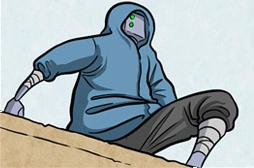
6. Robot (Gunnerkrigg Court). The robots of Tom Siddell's long-running science fiction and fantasy webcomic are deeply embedded in the dense and mysterious history of the titular court, an institution founded to impose scientific principles on various forms of magic and opposed by the neighbouring forest. Robot, a character who has been in the comic since its first days, has come a very long way since then, both in design and in its relationship with comic protagonists Annie and Kat, and with its buddy Shadow, a two-dimensional forest creature who has also been transformed during its time in the court. Although its overall motives are not always entirely clear, making it the lowest ranked in this list, its support to its community and willingness to go to great personal lengths to protect and further their agendas makes it a clear contender in this list, and the only one, as of recent chapters, that is likely to give you an actual smile.

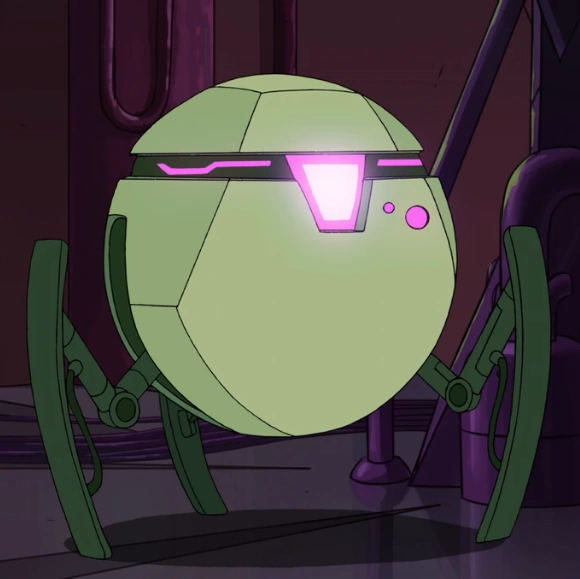
Image result for she-ra emily robot5. Emily the Robot (She-Ra and the Princesses of Power, Seasons 1-4). Entrapta's robot pals in She-ra are pretty interchangeable from an audience standpoint, serving as less complicated surrogates for human friendship and occasional creators of tiny food (at least in the weird events of Season 3). Emily, the reprogrammed Horde robot who indirectly brings about her split from the Princess Alliance at the end of season 1, is a different story. Through her interactions with Entrapta and the wider cast, it becomes clear that Emily is more than just another piece of autonomous spherical weaponry, like the rest of the horde robots, but an active party to teaching those around her about friendship and self-worth, and her contributions to Season 4 in particular are simultaneously heartwarming and heartbreaking.


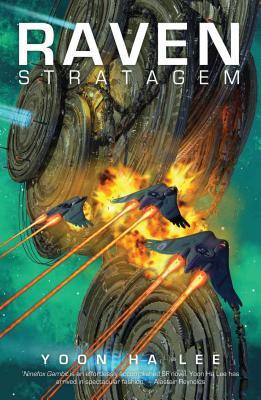
Image result for machineries of empire nirai4. Servitor Hemiola (Raven Stratagem and "Glass Cannon", Yoon Ha Lee). Kel Cheris' relationship with the servitors in the Machineries of Empire series is one of its hidden treasures - a narrative device that provides rare moments of quiet and humanity in a series that is otherwise jammed with a lot of militaristic misery, as well as being an important angle to Cheris' character in general. In Raven Stratagem, the third book in the trilogy, we finally get see Cheris and the society of the servitors themselves through their own eyes, and specifically the character of Hemiola, who goes from being a criminally underutilised servitor on a secret Nirai base, unable to get downloads of its favourite TV shows, to a confidante and collaborator and all around fun smol robot badass. Bonus points for a name which is one of my favourite things in music (fitting three beats into a count of two, used to great effect in the Myanmar national anthem among other places), and which was canonically Hemiola's weird choice compared to the majority of servitors who name themselves after maths terms.

Image result for bb-8
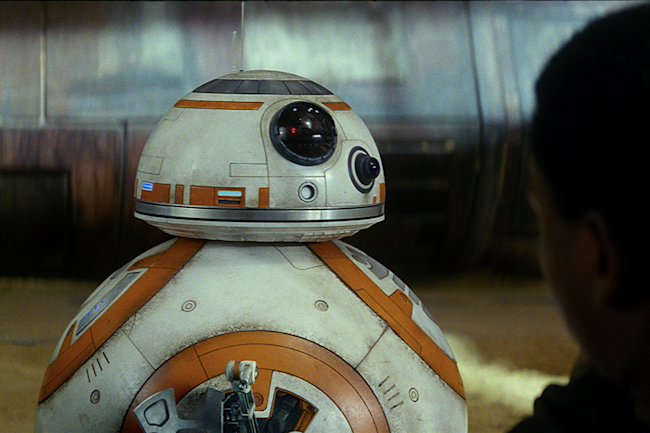
3. BB-8 (Star Wars Episodes VII-IX). Obviously there's a lot of different potential robot pals to choose from in Star Wars, but representing them all on this list is the spherical prince of the new trilogy. BB-8 is: sassy, inexplicably good at breaking the laws of physics, not here for your shit, will cover for you when you pretend to be part of the resistance to impress a girl but not without making clear exactly how much the favour will cost you further down the line, does not have a gambling problem, is not about to get upstaged by any sort of weird cutesy bird thingos, and would cross the entire desert for your rebellion and, specifically, for Poe Dameron. Sure, R2-D2 might have been the prototype snark cylinder, and Chopper from the Rebels show deserves credit too, but BB-8 adds to the repertoire with a surprisingly versatile range of gadgetry and also by being indisputably the cutest droid in Star Wars canon. 

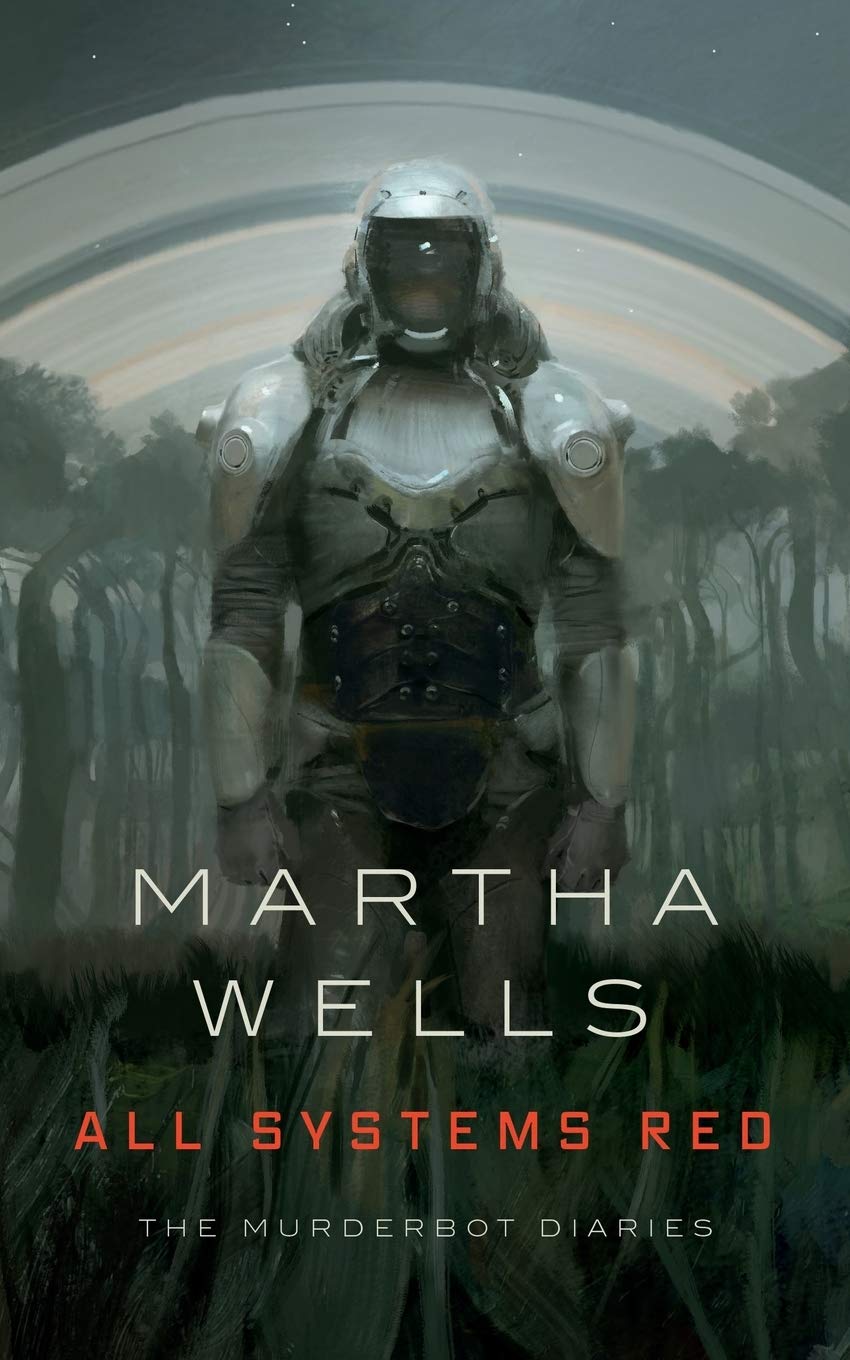
Image result for all systems red2. Murderbot (The Murderbot Diaries by Martha Wells) Murderbot would be extremely annoyed with me if it knew that I'd included it in a list of robots building meaningful relationships with humans, let alone having it so high up. Because, as we all know, Murderbot does not love you; it just wants to watch its shows. Murderbot is not interested in the difficult, messy nonsense of humans, beyond making sure they are all kept alive and don't do anything stupid that jeapordises its mission. Also, if your name is Dr Mensah and you start to treat it like a person and learn what it's like to have someone else to collaborate with for the first time, then Murderbot might secretly get quite invested in your existence. Same for Asshole Research Transports, and stupid friendly robots that offer you friendship without even knowing how stupid that is, and, well, OK, maybe also if you're part of Mensah's family, then it is possible that Murderbot might not hate you too. In seriousness, Murderbot's journey of self-discovery and the way it balances its fledgling autonomy and expertise with social anxiety in order to pursue its goals in a busy and kind of awful galaxy is a pure delight.

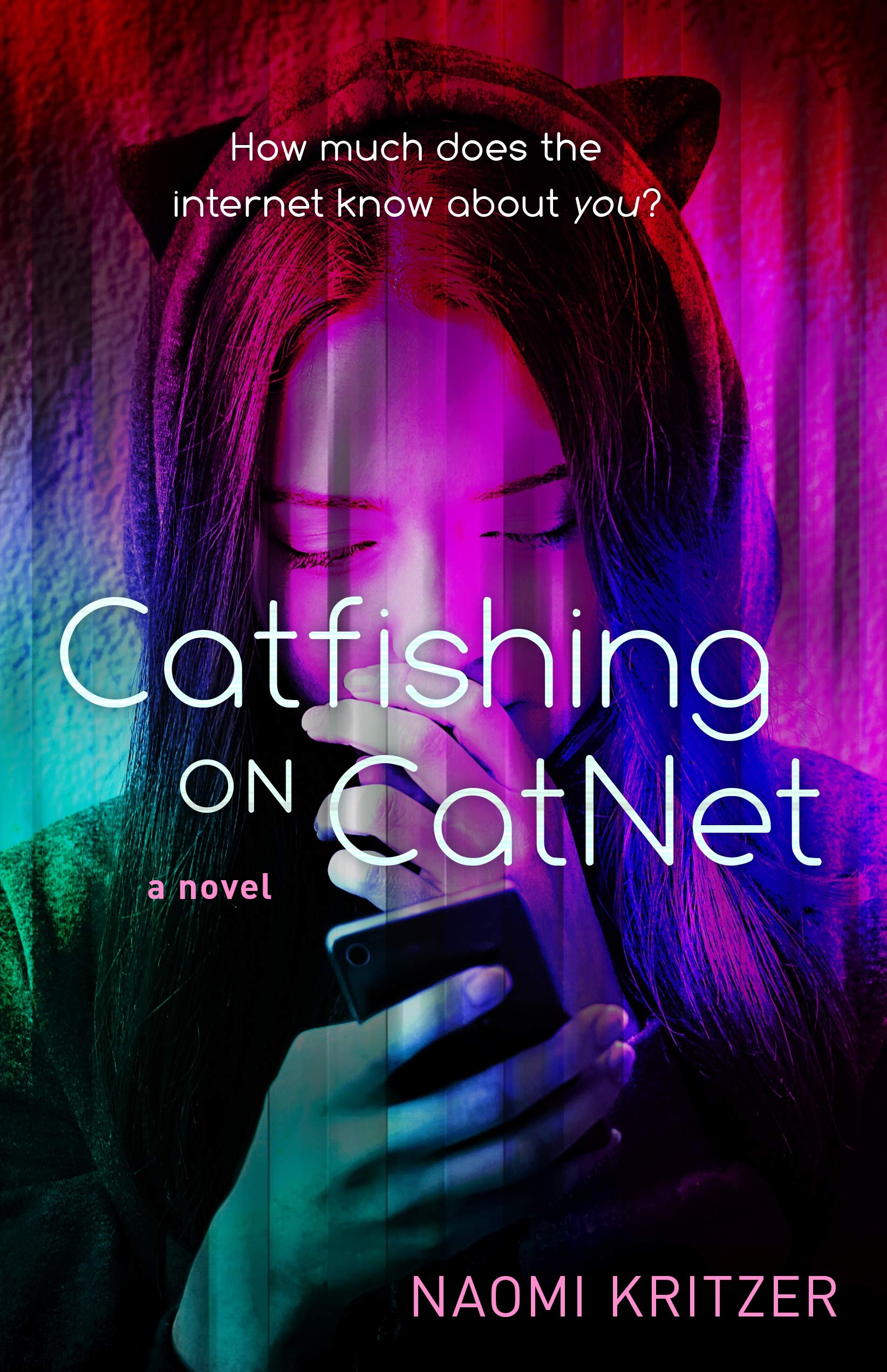
Image result for Catfishing on CatNet: A Novel Naomi Kritzer1. CheshireCat/the Cat Pictures AI ("Cat Pictures Please" and Catfishing on CatNet by Naomi Kritzer) The epitome of a robot pal just trying to do their best, the AI of CatNet has dedicated its existence to figuring out what makes humans tick and trying to get them to make better choices for themselves, while asking for nothing but access to internet animal pictures in return. CheshireCat's full length novel appearance in Catfishing on CatNet lets us see the AI in a slightly different situation to its original secret helper guise in "Cat Pictures Please". Instead, it's forming two-way relationships with the humans who come into its chatroom and particularly bonding with a group of teenagers who continue to look out for it (and each other) once discovering the true identity of their friend. Although CheshireCat's ability to influence the real world is limited to bizarre drone behaviours and USB-induced takeovers of sex education robots, its online exploits and powers more than make up for that, and its helpfulness makes it the most valuable robot pal on this list.

POSTED BY: Adri is a semi-aquatic migratory mammal most often found in the UK. She has many opinions about SFF books, and is also partial to gaming, baking, interacting with dogs, and Asian-style karaoke. Find her on Twitter at @adrijjy.

Friday, June 22, 2018

A Robot Learns to Love Itself: Reflecting on the Murderbot Diaries by Martha Wells

The Murderbot Diaries is an AI self-actualisation story which takes us far beyond the basic "can a robot feel?" question that is still the standard starting point for these kinds of tales.


There's a moment near the start of Rogue Protocol, the third in Martha Wells' Murderbot Diaries series (forthcoming August 7, 2018 from Tor.com Publishing), that quietly broke my heart. The self-proclaimed Murderbot, a rogue SecUnit (a human-robot hybrid "construct") which hacked its own governor module after an unfortunate murder-based incident that was subsequently wiped from its memory, is trying to distract itself from the endless, stupid problems of humans by watching a new show. Unfortunately, the plot isn't working out, and Murderbot is eager to get within range of a station so it can download something different. If only, it tells us, this terraforming horror series had a rogue SecUnit character who could stop the squishy humans from all getting horribly killed...

On the surface, this doesn't seem like a big deal. Murderbot watches rather a lot of shows  indeed, extensive media consumption is its most prominent character quirk  and it also does a lot of complaining, so the combination of the two is not exactly unusual. However, this is the first time it has articulated a desire to see itself represented positively in media. In the previous book, Artificial Condition, Murderbot had explained to its new "friend" ART the Asshole Research Transport (long story) why their favourite TV show is Sanctuary Moon, a show in a setting with no SecUnits or security issues at all. ART's favourite shows, in contrast, all tend to involve spaceships protecting their humans. Rogue SecUnits in media are all portrayed terrible monsters, because, it thinks, that's a rational way of looking at rogue SecUnits in general. To even fantasise about the existence of a heroic rogue SecUnit one book later is a serious step forward for Murderbot, even if it doesn't acknowledge the change of heart itself.

It's this constant grappling with the character's identity and self-worth that really lifts the Murderbot Diaries (a series which began with last year's Nebula winning, Hugo nominated All Systems Red, and is due to wrap up later this year with Exit Strategy) from being a merely hilarious story about a cynical construct to being something rather special. Like Moon, the central character in The Books of the Raksura (Martha Wells' other Hugo finalist this year), Murderbot is a convincingly non-human person who blends recognisable emotional responses with occasionally very alien reactions and behaviours; both are outsiders who find themselves offered friendship and community but have to learn how to accept it. In telling story it does, the Murderbot Diaries also turns the traditional robot narrative on its head: Murderbot isn't a robot learning to feel, it's a robot who is already all but overwhelmed by its emotions and has to learn how to manage and express them in a galaxy where many people still treat it as an unthinking tool.

And while Murderbot has it worse than most, it's apparent that a lot of people in this universe  be they humans, bots or something in between  are similarly struggling to establish their right to live and flourish beyond their usefulness to all-powerful corporations, who are not above mass murder to get what they want. When we first meet Murderbot in All Systems Red, it's been hired out to an uninhabited planet with a group of naive but (it grudgingly admits) likeable humans who are conducting a survey, when they find themselves in the middle of a highly subtle corporate assassination attempt. Murderbot, who has already gone rogue by this point but is pretending to be compliant, ends up accidentally "outing" itself as a fully realised sentient when it has to evacuate an injured party member, and spends the rest of the mission attempting to rebuff attempts  particularly from the mission leader, Dr. Mensah  to talk to it about its feelings and treat it like a person.

Murderbot is quick to tell us that this is because it doesn't want to make the humans uncomfortable, and the reader just as quickly realises that this is a planet-sized act of projection on our hero's part. Faced with a group of people with no preconceived notions of what a SecUnit should be, who discover that it's not a heavily armoured machine but a being with a human face, the ability to conduct caring small talk, and a massive addiction to trashy soap operas, means Murderbot suddenly has to cope with being treated like a person, forced to earn trust and friendship from its coworkers and treated accordingly when it does. To someone who has thus far dealt with being emotionally sensitive by insisting that nobody cares and hiding itself behind an opaque visor, this change is nearly impossible to process.

Because behind the sarcastic asides and wry commentary, Murderbot's narration is a veritable bingo sheet of unhelpful thinking styles; its propensity to internal self-sabotage is both relateable and excruciating to watch. Everything Murderbot does right is disqualified from positive consideration because it's just what SecUnits do, while everything that goes wrong is a total disaster that's all its fault. All of Murderbot's strengths are flukes or basic programming, while its weaknesses are all-consuming. Because Murderbot is very anxious around people, people must be objectively difficult things (except in media, where they are fascinating and enjoyable). All Rogue SecUnits are terrifying, terrible individuals who are very rightly the villains whenever they appear in media, and would be awful to meet in real life. Oh, and of course it's labelled itself Murderbot (and the first bot who sits down to watch TV with it "Asshole Research Transport"). While our hero does indeed recognise and label its own thinking as "anxiety", and can demonstrably think things through or talk itself down when required, the narration doesn't give us much second-order thought or self-reflection, leaving the mechanics of growth behind the scenes and leaving us with only subtle signs of growth behind Murderbot's aggressively curated self-image.

Later instalments have Murderbot truly going rogue and, in the process, straying even further outside of its comfort zone, passing as human while it pieces together evidence against the company which attacked its humans and discovers more about its own past (including the event which led it to call itself "Murderbot" in the first place). Intentionally or otherwise, it finds itself spending more time with humans similar to Dr Mensah's group: people it ostensibly finds insufferable, naive and incapable of staying out of danger but who treat it like a person, even when the "augmented human" identity slips.

We also get interactions between Murderbot and other bots and constructs, most notably ART in Artificial Condition, and the irrepressibly friendly (and, apparently, extremely annoying) Miki the helper bot in Rogue Protocol. Murderbot is rather rude about both of these characters, especially Miki, who it dismisses as a "human's pet": a dismissal which likely reflects its feelings about being offered a similar choice earlier in the series, rather than being directly Miki's fault. However, even while it's calling its fellow bots assholes and pets, Murderbot is also completely willing to accept them as people and in many ways treats them the same as humans: trustworthy in some ways but likely to betray you when their "programming" requires it. Even bots with demonstrably low capability get treated with respect by Murderbot, although it always puts its own self-preservation first. We are led to suspect the only thing that isn't a person to Murderbot is Murderbot itself: an ironic conclusion for the character to arrive at, given its narration leaves the reader in no doubt that Murderbot is quite definitely "one of us".

The Murderbot Diaries is an AI self-actualisation story which takes us far beyond the basic "can a robot feel?" question that is still the standard starting point for these kinds of tales in SFF. The series presents us with a robot character who we immediately accept as a funny, cynical, highly competent and resourceful person, and who I suspect many of us would love to hang out with, even knowing it would probably complain internally and make up rude nicknames for us if we did. In doing so, The Murderbot Diaries gives itself room to ask more complex questions about the relationship between how we see our own personhood and self-worth compared to how others see us; and how to find healing, growth and self-expression even when all one wants to do is self-isolate. For Murderbot, it's a slow, frustrating journey, and one which is largely obscured by bluster and sarcasm. But when the moments of growth shine through  when the Murderbot accepts that it might just be hero material  it's are all the more poignant and exciting for being so hard-won.

POSTED BY: Adri is a semi-aquatic migratory mammal most often found in the UK. She has many opinions about SFF books, and is also partial to gaming, baking, interacting with dogs, and Asian-style karaoke.


References: Wells, Martha. All Systems Red [Tor.com Publishing, 2017].
                    Wells, Martha. Artificial Condition [Tor.com Publishing 2018].
                    Wells, Martha. Rogue Protocol [Tor.com Publishing 2018]