Wednesday, August 14, 2013

Microreview [book]: Parasite, by Mira Grant

The Meat (literally)

   You know how allergies in children are multiplying exponentially recently, and how some people blame overuse of antibacterial soaps and overprotective parenting and hypoallergenic pillows and whatever? Well, what if that problem reached epidemic proportions, and somebody came up with a quick-fix solution—let's call it an 'intestinal bodyguard'—an implant that could regulate your body's immune system, administer necessary medications, and pretty much do everything but make popcorn? Sounds pretty sweet to me, so I can see why, when marketed like this, most people in the near-future world of Mira Grant's Parasite jump all over themselves to get one.  But like all deals that seem too good to be true (curse you, Nigerian prince of emails!), there's a catch.  That implant we're talking about? It's this.


What do you get when you combine this
With this? Answer: nightmares.


Say wuuut?

   Since in Grant's world, practically everyone has voluntarily swallowed a genetically engineered super-tapeworm egg to take advantage of the myriad health benefits of being a gracious host, it's kind of hard to feel bad for them when their 'guests' get riled up and the inevitable disaster begins.  I won't say much about how the plot unfolds, but let's just say that with these tapeworms, many people get a) more than they bargained for, and b) the hard goodbye (Sin City style, if Sin City was infested with parasites—and come to think of it, Sin City probably is!).
   So the book's sci-fi premise is a bit implausible, since I can scarcely imagine a scenario in which even considerable health benefits could convince me to let a tapeworm play house inside me. In fact, just the thought of that is so creepy I'm getting phantom pains in my abdomen, and having flashbacks to Alien...
   But anyway, if one suspends one's disbelief, Grant rewards us with an often entertaining account of how such a world could start to fall apart. I say 'entertaining' because creepy sleepwalkers flopping around in the middle of the street or whatever is just an awesome image, right out of a sci fi movie storyboard, and 'often' because of some stylistic and pacing issues in the telling.
   The good stuff first: many of the developments in the story occur in or around the mega-corporation Symbogen, and Grant gives a masterful portrayal of the way a company responsible for such a potentially revolutionary product—to wit, the super-tapeworms—might rush both to ram it through FDA and other testing as quickly and unsafely as possible, and also to cover its tracks in the event someone discovers a 'situation' with that wonder product. Plus, however unlikely a scenario it may be, it's an intriguing one, and Grant deserves a lot of credit for exploring the ramifications, especially on the level of institutions. The way she opens each chapter, with quotes from interviews/written work
s of various key characters, is an especially nice touch.
Executive Decision--and Steven Seagal--at their best
  And now the bad: the protagonist Sal(ly) Mitchell is incredibly annoying. Or rather, Grant's ceaseless description of her anxieties (legion) and the utterly uninteresting life she's leading despite having narrowly survived a super-serious accident failed to win me over to Sally's side as a reader. I kept hoping Grant would pull an Executive Decision-like 'airlock Steven Seagal and save us from his on-screen charm' move and kill her off early on, switching focus to someone cooler, but sadly, we stay with Sal. 

   And since this is the first book in a planned series, I think we're stuck with her for the future, unless of course I'm messing with you and, like in John Dies at the End, the main character does just that. Those of you who have read/seen said gem will get what I mean!
   In Sal, Grant has crafted a character whose response to virtually everything is "I don't want to know." Nobody likes ostriches, am I right? There's an M. Night Shyamalan-esque 'twist' to Sal which from about 20% of the way in was blindingly obvious to everyone, reader and characters alike, except for Sal herself, who fought against the big reveal the way Tea Partiers fought Obamacare. This being the only book by Grant that I've read, I can't say whether this is a problem with Grant's writing in general, or with fleshing out this particular character, but when giving us a window on Sal's internal thought process, Grant falls back again and again on a two-sentence combo, some variation of the phrase "I wasn't sure I wanted to know the answer. I wasn't sure I'd ever sleep again if I didn't know the answer." (This particular instance is a direct quote from about 70% of the way through, but other examples abound.)
   And if Sal has a favorite word in the recesses of her own mind, it's definitely 'uncomfortable', which is what pretty much everything makes her. You know who I like better? Oedipus. Sure, he did the nasty with his mom and totally murdered his dad, but when the time came for him to face the truth, he did it (and even went the extra mile by stabbing his own eyes out in penance!).  Sal, I'm afraid, could use a little truth-facing, eye-stabbing courage. The truth will set you free, but nobody ever promised it'd be all about bunnies and ice cream, you whiner!
   The book is also, shall we say, deliberately paced.  If you like the Fast and Furious series, consider yourself forewarned—this book is not that. It's more like a Koreeda Hirokazu movie, really, or, dare I say it, The Fellowship of the Ring. Nothing at all happens of note until 40% of the way through (in Koreeda's case, usually nothing at all happens, period! And yet some of his films are just brilliant—it's an enigma), though it does slowly build in excitement after that (hampered mightily, in this case, by head-in-the-sand Sal's reluctance to participate in the story unfolding all around her). Perhaps the book suffered from being part of a series, with Grant saving some of the good stuff for later installments?
   So all in all, Grant's Parasite is a mixed bag—an intriguing if wildly improbable what if that is handled fairly well, though despite, not because of, the main character and her infuriating reluctance to see the truth and let the story get on with itself.
  

The Math


Baseline assessment: 6/10

Bonuses: +1 for the concepts of Symbogen and for the Banks interviews heading each chapter, +1 for a bizarre and fascinating premise

Penalties: -1 for Sal and her mantra "I don't want to know", -1 for Koreeda pace without Koreeda magic touch

Nerd coefficient: 6/10 "Still enjoyable, but the flaws (I'm thinking of you, Sal!) are hard to ignore"


See why a 6 actually means Parasite is better than most books I've read!

Tuesday, August 13, 2013

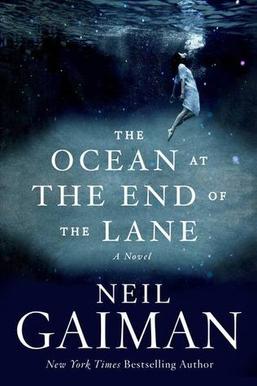
Microreview [book]: The Ocean at the End of the Lane

Gaiman, Neil. The Ocean at the End of the Lane. [William Morrow, 2013]

The Meat

The Ocean at the End of the Lane is about a child, but I'm not sure if it's intended to be a children's book. This is probably not unexpected, since Neil Gaiman has a different idea of children's literature than most people. His Newbery Award-winning The Graveyard Book begins with a toddler's family being murdered, after all. But in the case of Gaiman's new book, it can hardly matter. I'm not sure that this is a masterpiece, but it is certainly a moving and extremely resonant book that I am certain can mean different things, all of them equally valid, to readers of different ages.

The plot concerns a middle-aged man who visits the street where he grew up, and unconsciously takes a detour to the Hempstock Farm, at the end of the lane. He asks after his forgotten childhood friend, Lettie Hempstock, and remembers that she called the duck pond on the farm "her ocean." We are given the wonderfully inviting line "I remembered that, and in remembering, I remembered everything." What he remembers is a few weeks from his seventh year, when a lodger at his family's home committed suicide, and unwittingly opened a gateway between this world and the larger reality of creation, which is populated with many more things than are dreamt of in our philosophy, Horatio. The narrator, as a boy, experiences many familiar childhood fears, from strangers, to the loss of a pet, to malicious babysitters, but is also treated (as are we) to the idea that for all the horrors we may believe in, there is an equal measure of good out there that we had not expected to find.

Gaiman is quoted as once having said that the difference between America and England is that in England, 100 miles is a long way, and in America, 100 years is a long time. This is absolutely true, but as an American, it is hard to really get my head around how old things in Europe can really be. In the story, it is mentioned that the Hempstock Farm is mentioned in The Domesday Book, which was the first landed survey of Britain after William the Conqueror arrived in 1066. That's nearly a thousand years ago. And the story deals also in things that are older yet. Against such a backdrop, a story about memory, and all we have unwittingly lost as our childhood eyes give way to world-weary middle-aged ones, takes on added poignancy.

Madeline L'Engle, of A Wrinkle in Time fame, wrote a non-fiction book about the creative process called Walking on Water. In it, she talks about early memories of being able to run across the surface of a pond as a child because, I guess like Yosemite Sam, who must learn about gravity before he can fall, she didn't know she shouldn't be able to. I've never been sure that I believed her, but I believe that she believed it. Gaiman's is a work of fiction, but in the same way, it made me wonder what magic I have forgotten, and it made me long for the ability to see it once again. Even if briefly.

The Math

Objective Quality: 9/10

Bonuses: +1 for making something very new feel very old, indeed

Penalties: -1 for coming in at a scant 192 pages, and making me wish it were far longer

Nerd Coefficient: 9/10. Very high quality, standout in its category.

Click here to read up on our scoring system, and why a "9" is serious business.

Monday, August 12, 2013

Let's Define Terms, Shall We?

Ian Sales recently posted a piece on how to define science and/or speculative fiction, and specifically, how to contrast it to fantasy fiction. Both genres, he argues, are literatures of wonder, but they are distinguished from one another through the degree of agency possessed by characters in these made-up worlds. It’s a thoughtful argument, and merits due attention. That said, I think Ian undervalues agency in fantasy—especially in books that adopt a systematic, rules-based approach to magic. But it’s also true of “soft” magic fantasy—heroes and heroines facing the mysterious power of a sorcerer are basically in the same boat as wildcat colonists faced with a Colonial Dreadnought training its guns on them from orbit. Disparities in access to magic limit agency in the same way disparities in access to technology limit agency in science fiction. I guess that’s a sort of corollary to Sanderson’s Second Law.

Wait...Don't We All Know The Difference Already?

The commonsense way to differentiate fantasy from science fiction is simple: fantasy has magical wonder; science fiction has technological wonder. Alternatively, fantasy draws from mythology; science fiction draws from scientific theory. Fantasy projects backwards to reimagine history (or the present); science fiction projects forward in order to imagine the future. These methods of distinguishing the sister genres have a lot going for them, not least of which is the fact that they represent how most people think about the question, when they think about it at all.

Still, like Ian, I think we can do better. Or, to put it another way, I think we’re better served by a more sophisticated mode of categorization. That does not mean we need more categories. In fact, as much as categorization is a part of human cognition, the fact is that no typology is ever 100% accurate—life is a series of interlocking Venn Diagrams, not a collection of neat boxes. When you trade in two categories for three, you are often just exchanging one fuzzy area for two. Worse, your new category may only describe a limited range of cases in that fuzzy area. Crossovers are okay—it’s fine to just call something science fiction with fantasy elements, or fantasy with science fiction elements. We don’t need silly categories like “science fantasy” that obscure more than they reveal. (Is the fantasy really “scientific,” as the grammar would indicate? And why does the introduction of fantasy elements make it not fiction?)

What we need is more precise and interesting definitions for our base categories.

Distinctions, Distinctions

Besides the science vs. fantasy fiction dichotomy (to which we should also add horror fiction), there’s a broader differentiation between so-called speculative fiction, on the one hand, and fantastic fiction (i.e. fantasy and horror) on the other. Speculative and science fiction correlate to a large degree, but are nevertheless different from one another. The speculative alternative to the science fiction label emerged with the New Wave, and from the sense that “science fiction” was too positivist, too Campbellian, too restrictive and, well, kind of embarrassing to identify with. For some practitioners, in fact, use of "speculative" in place of "science" fiction is just code for "I've got literary pretensions and think I'm better than you."

For others, though, the speculative fiction label represents the attempt to widen the tent, taking in not only traditional science fiction, but also alternate history and the sort of “alternate present” fiction that authors like Thomas Pynchon and JG Ballard made famous. Certainly proponents of this usage also hope to leave the genre ghetto, or at least make it look more respectable, but in this case it's secondary.

The basic premise of speculative fiction, within this paradigm, is to take present-day reality, change a discrete number of variables and explore what that would be like. The changes are all plausible, given our understanding of the physical world, human psychology, sociology and so forth. Fantastic fiction is similarly premised on altering a set number of conditions in present-day reality; only those changes are odds with said understanding of how things work. That yields our first categorical distinction:

Speculative fiction is the literature of plausible alternatives to present-day reality.

Fantastic fiction is the literature of implausible alternatives to present-day reality.

By taking these broad definitions as a starting part, it becomes clear that the main labels of "wonder literature"--science fiction, fantasy and horror--are subsets or internal categories to these broader categories. Within the speculative category, we can place science fiction, historical fiction, alternate history fiction and alternate reality/slipstream fiction. Within fantastic fiction, there's fantasy (and all internal differentiation between epic/S&S fantasy and contemporary/urban fantasy), paranormal fiction and horror. Ignoring the little fellas for the moment, here are what I think are useful definitions for the big three--science fiction, fantasy and horror:

Science fiction is the literature of physical or technological alternatives to present-day reality. 
Fantasy is the literature of magical or metaphysical alternatives to present-day reality.

Horror is the literature of paranormal or supernatural alternatives to present-day reality, in which the alternatives are presented as necessarily malignant.

Final Note

Inevitably, someone will take issue with this scheme on the basis of sound argumentation and compelling evidence. To me that's really cool, so I look forward to that. In fact, here's an example drawn up by someone whose thinking is close to mine, but different in fundamental ways:


[Source.]

However, inevitably someone else will take issue with these scheme on the basis that one or two books don't really fit into any of the categories. I won't respond with the trite phrase “the exception proves the rule,” because exceptions don’t prove anything except that there are exceptions. And with categorization schemes, there are always exceptions, crossovers, hybrids and so on. So instead I'll just say: "yeah, you're right--that doesn't fit. Now let's embrace the gray.

Friday, August 9, 2013

Forza Motorsport 4


I'm back!

Sorry to have been away for so long. I got a new job in a different city that required a lengthy move so I took a few weeks off. Don't worry, though, things are back to normal here at NoaF with regard to games. This week we're still in a lull when it comes to new games so I decided to take a look at some games genres I haven't played for a while. Other than Blur, I don't think I've played a racing game in years so I decided to go with the fourth installment in the Forza series this week. It was roundly lauded and got a 91 on metacritic, so I was fairly assured of a quality gaming experience, and Forza 4 didn't disappoint.

When I get high, get high on speed


There are over 400 cars in Forza 4, including this beautiful Ford GT that I picked up earlier in the week. It's an over-powered beast that is hard to control on turns, but what fun I had trying to keep it in line! The game starts you out as the previous iterations did with 4-cylinder hatchbacks and little bumper cars. It's akin to the training levels on other games, preparing you for the higher levels and faster cars. 


The game offers everything from little put-around cars like the above to Ferrari Gallardos and Formula 1 racing cars. Half of the fun is in upgrading little hatchbacks to the point they can take on Ford Mustangs and Pontiac GTOs. The other half of the fun is actually leveling up enough to drive those pieces of American muscle. The only downside to the car selection in this game is the lack of Porsches. I've always wanted a Porsche in real life and I'm afraid games are as close as I'm going to come. Unfortunately just not in this particular game. That said, it's got a wide enough selection to keep you constantly entertained.

So, how's the game?


The game itself is very similar to previous versions of Forza, just with more polish. As you can tell from the pictures, it's about as close to realism as a game can come. The designers call it "photorealism." I call it impressively awesome. The sound quality is a significant step up from Forza 1 and 2 (I never played 3). You can even tell a difference in the engine noise when you add upgrades to your cars. The tracks are all real and include some of the most famous pieces of pavement on the planet. On the one hand, the realism is second-to-none. On the other hand, I wish they would have added some more tracks to the library because I felt like I'd played over half of them before. It was nice to remember when a turn was coming or where a good spot to pass was located, but it felt strangely like I'd already played the game before. Deja vu isn't a sensation that most games strive to acheive, but Forza 4 had it in spades. 


If you enjoy racing games, I highly recommend you give Forza 4 a try if you haven't already. I picked it up for thirty bucks at Best Buy and you can probably get it even cheaper used. You can upgrade your cars piece-by-piece or use a simplified upgrade mode (for the non-gearheads among us) that makes all those decisions for you. It doesn't have quite the depth that Gran Turismo has in this area, but if you don't know a head gasket from a headliner like me, it's not that big of a deal. I had fun getting back out on the track and playing with a bunch of toys I'll never be able to afford, and you will, too. Check out Forza 4 if you're looking for a way to pass the time until GTA5 comes out. You won't be disappointed. 

the math

Objective score: 8/10

Bonuses: +1 for the unbelievable realism. When it comes to bringing the experience of driving to a console, they nailed it. 

Penalties: -1 for not having Porsche on their list of cars. I'm assuming they have an exclusive deal with Gran Turismo or something. Even so, I was disappointed to not see the legendary autos in the list of possibilities. 

Nerd coefficient: 8/10. Well worth your time and attention.

Thursday, August 8, 2013

Thursday Morning Superhero

I must admit that I am quite distracted this week.  My son will be celebrating his sixth birthday on Friday, I will be attending Gen Con for the first time next week, and I have been prepping for my day job as students will be returning to campus soon.  What I needed was a solid collection of books this week to give me an escape from everything that is happening here.  I must say that the comic gods delivered.


Pick of the Week:
Trillium #1 - Jeff Lemire's science fiction epic Trillium debuted this week with high expectations.  Lemire has never disappointed me in the past and his work continues to be simply stunning.  What he does with his comics isn't fair to other creators.  What moves me most with the work of Lemire is his ability to create intrigue and mystery through a simple facial expression, and how past relationships define who a character was and who they become.  The premise of the book is that Nika, a scientist set to secure trillium flowers from an alien race, has had her timeline drastically reduced to complete her work for the good of humanity.  At the center of the Atabithian village is a mysterious temple.  William, a archaeologist who is suffering from war flashbacks, is from the past and is seeking an Incan temple of great power.  Their two paths intersect in a way that is not only satisfying from a story standpoint, but from the process of reading the physical comic as well.  Mild spoiler, but Lemire designed this comic as a flip book with a separate story for each character.  Their point of meeting is at the middle of the book with reversed panels upside down from one another.  Simply stunning.  I had high hopes for Trillium, given how much I have enjoyed The Underwater Welder, Sweet Tooth, and Essex County, and it looks like Lemire is delivering another classic full on mystery and parental relationships.  Well played sir.

The Rest:
Burn to Lose: Burn the Orphanage - This title may be the polar opposite of Trillium.  You can throw depth, mystery, and character development out the window for some good mindless fun.  In this tale we learn that Rock, a cross between Ryu, Ken, and Johnny from the Karate Kid, was in an orphanage that was burned down when he was a kid.  He was the only survivor and he is going to punch his way on the streets, in a bar, and against stripper ninjas to exact his revenge.  Yep.  That's about it.

Robocop #1 -  I guess they can't all be enjoyable.  When I saw that Boom! Studios was releasing a new My brain saw Frank Miller + comic + Robocop = Gold!  I should have listened to my friend who said he was excited initially, until he remember that Miller wrote Robocop 2.  Based on a Miller script for Robocop 3, you may want to pass on this one.  A clunky story paired together with subpar art and you have my $4 regret of the week.

Helheim #6 - Cullen Bunn wraps up the first arc of his nordic tale in stunning fashion.  The witches
feud comes to its dramatic conclusion with twists that I did not see coming.  Bunn really hits the nail on the head with his balance between horror and drama.  Rikard's father plays a significant role and I fear for him in upcoming arcs.  I don't want to spoil anything, but if you have missed this book so far you will want to pick up the trade.

Artful Daggers #6 - This Mokeybrain title from Sean Williams and Adam Knave really picked things up this week.  The Tricksters are finally becoming what the corporations feared what they would become.  An uprising is in the works, but the amount of deception and lack of trust amongst members will ensure that nothing is easy.  One of the best bargains on the comic market today at only $.99 an issue.  You could pick up the current arc on ComiXology for less than $6!

Ten Grand #4 - Following an emotionally charged issue, Joe is presented with a new challenge that shakes him to the core.  For the first time since he struck his bargain, he is unable to reach his angel on the other side.  Enlisting the help of a trapped soul, Joe learns that not only is his angel missing, but Sarah's soul is missing as well.  Really enjoying this series.

What I Should Have Read:
Manhattan Projects #13 - I really want to return to this series at some point, and it sounds like I missed a great issue.  Fictional versions of Einstein and other World War II era scientists are featured in this flashback issue.

Satellite Sam #2 - Mike is not only dealing with the loss of his father, but with the pressure to fill in as his replacement.  He turns to the bottle and the story switches focus to the owner of the station, adding another wrinkle in this ever complicated period piece.


Wednesday, August 7, 2013

Microreview [crime fiction]: Ugly Behavior


Ugly Behavior
Steve Rasnic Tem


The Meat

This will be a deeply ambivalent review. I’ll explain.

Ugly Behavior, a collection of murder stories by dark fantasy author Steve Rasnic Tem, was not an easy read. This isn’t on its face a bad thing. In fact, I am slow when it comes to reading a short story collection. I might read a novel in an afternoon. A collection will take me a month, often more. I’ll read one at a time, two if I’m focused. It took me over three months to finish Ugly Behavior. I had other books, novels, to review—and I prefer novels to short stories.

But there’s another reason that this book was a hard read: these stories are brutal. Ugly Behavior seems to have been, in hindsight, an understatement. Rasnic Tem—I feel the impulse to write his full name just to be safe—Steve Rasnic Tem has a very dark, very violent, very creepy imagination. Very violent. I’ve read enough crime fiction to have experience with literary brutality. I’d like to think that I've read some of the best. And rarely have I been moved by it. So, well played, sir.

Steve Rasnic Tem—“SRT”?—doesn’t employ gore. This isn’t cheap violence. This is carefully crafted brutality, not the comic carnage of Hannibal. The actual violence in the stories is, on the surface level, unrealistic, almost absurd. Cigarette burns around a woman’s eyes, a women pricked with a bladed cane, women crushed, women squeezed—there’s a lot of violence against women, which I’ll get to. But Rasnic Tem’s writes very well. So regardless the method, the deaths provoked revulsion at some points, shock at others. Again, well played, sir. Clive Barker conjuring Jim Thompson. Ugly Behavior is effective.

I should mention the stories themselves. They seemed largely to revolve around two themes: love and bodies. Bodies decaying, bodies disfigured, bodies scarred. The giant hands of the hero of “The Crusher,” who fears what they’ll do if he holds a woman. “The Stench” concerns a man driven mad by the odors of the city—especially those emanating from its female citizens. In “Jesse,” a Huckleberryesque killing spree drives one teen to see rot and decay wherever he and his murderous buddy go. The killer in "Stones"  feels his body turning, or rather returning, to stone, while the GG Alin-like hero of “Ugly Behavior” does, well, he uses his body to do what GG Alin did. Bodies, bodily fluids, bodily decay. Things that disgust are a big part of the book.

So is love, particularly between a man and a woman, husbands and wives, fathers and daughters, killers and victims. The murdered in Ugly Behavior are almost all women. But not just women, very weak women, perhaps even inherent victims. Women as targets of male violence. I do not want to imply that Steve Rasnic Tem is in any way a misogynist. And he certainly does not portray female characters as hateful, as deserving what they get. In fact, his portrayals of women appear largely sympathetic. His best, Jane the paranoid heroine or “Sharp Edges,” is a qualified victim, but she—I can’t say more without spoiling the story.

Even in Ugly Behavior’s two best entries—“Saguaro Night” and “Living Arrangements,” heartfelt, but violent, stories about fathers and daughters—the women are sympathetic, yet powerless, dependent on men to rescue or avenge them. And ultimately scarred and bruised by the men they love. Given crime fiction’s troubling history with glorifying violence against women, I am wary of this. And perhaps that’s why I am ambivalent about this collection.

But, Rasnic Tem—I hope someone corrects me so I can reedit it on the sly—is a truly skilled writer. These stories were generally creepy and sometimes terrifying. The absurdity of the aging child killer in “The Child Killer” made for one of the better stories in the collection. Bonus for that story's nod to Buffalo Bill’s layer/labyrinth from Silence of the Lambs.  And “The Rat Catcher.” Perhaps the oddest story in Ugly Behavior—which is saying something.

This is a collection of well-written brutality. I appreciated the artistry. I just didn’t feel very good about the world after reading it.

The Math
Objective score: 7/10
Bonuses: +1 for being disgusting
Penalties: -1 for the women-as-victims them; -1 for making me feel like shit
Nerd coefficient: 6/10


Tuesday, August 6, 2013

Microreview [book]: The Emperor's Knife by Mazarkis Williams

Mazarkis Williams, The Emperor's Knife [Jo Fletcher, 2011]


The Meat

What a surprisingly confident debut! Well-written, hard-hitting, fast-paced, and quite enjoyable, The Emperor's Knife is a fitting introduction to Mazarkis Williams's new fantasy series, the Tower and Knife Trilogy.

The Emperor's Knife follows three main characters (alongside a host of interesting secondary personalities): Sarmin, a forgotten prince who has been locked in a tower for much of his life after watching his family get executed; the Windreader Mesema, who is brought to the Cerani Imperial Court from her tribal grasslands (ostensibly to marry Sarmin) and soon finds herself sucked into a deadly game of Cerani politics; and Eyul, an assassin who has long been burdened with the task of spilling royal blood. It was Eyul who executed Sarmin's brothers--for it is only the Emperor's Knife, the knife Eyul wields, that is fit to shed royal blood. The three protagonists stories intersect around a plague that has been running its course through the capital, a plague that takes shape as a pattern on its victims' bodies. The plague is so rampant that some suggest it has even spread to Emperor Beyon himself. 

The story really succeeds as a character-driven drama. Williams creates wonderfully complex set of characters to whom the reader can relate. For Mesema, this is a coming-of-age tale of a young tribeswoman subject to the politics of the capital. Her relationship with the at-times-cruel Emperor Beyon was at times a source of anxiety, and at other times quite touching. For Sarmin, the question is whether his long years of captivity made him dangerous and cruel, or kind, compassionate, and committed against slavery and confinement of all types. And Williams highlights the inner conflict and the divide between loyalty and duty in the Emperor's assassin, Eyul.

In some aspects, the world building was absolutely fantastic. The fact that the Williams set The Emperor's Knife in a non-Western-influenced (Middle Eastern, to be a bit more specific) setting was refreshing, to say the least. So were the magic systems in the Cerani world. First, elemental magic. Used by the mages of the realm, this type of magic forcibly fuses an elemental within a human mage's body. Although at first the elemental's consciousness is subsumed into and controlled by the human mage, as the elemental grows in power this switches, and the elemental eventually takes over. I appreciated that twist, showing the danger inherent in magic and why there are so few magicians throughout the world. Second, pattern magic, an older type of magic used by Sarmin and the arch-villain of the story, the Pattern Master. Mysterious and arcane, pattern magic nevertheless captures the imagination--once a pattern forms on a person's body, that person is either driven insane or finds his or her conscious mind subverted, controlled at the whims of the pattern's master. Thus all who show the pattern's tell-tale marks are put to death... until the pattern finds itself a new host in the Emperor Beyon. Lastly, windreading. This type of magic appears somewhat similar to pattern magic, and is used by those in the Windreader tribe.

Other world-building elements are rather poorly fleshed out, however. Take, for instance, the culture and life of Cerani. Williams provides a fantastic glimpse into court life in the Cerani Empire, with all the intrigues and political battles that entails. But one never gets a sense of a world outside of the court. Nor does the reader ever encounter people outside the court--one rarely sees anything akin to a bustling city, with its booming ports and busy marketplaces. In fact, the whole book feels as if only nobles and their guardsmen populate the supposedly vast imperial capital. 

Another small problem had to do with the book's pacing. The book begins to drag in the middle, with Mesema foundering in the capital, and Eyul on his quest through the desert. Moreover, the conclusion is thrust on the reader way too quickly. At times, this book felt more like a beer to be gulped down instead of scotch to be sipped. 

Williams does engage in an interesting subversion of common literary tropes, which some readers may find quite well done. This involves a minor spoiler, so feel free to skip ahead if you want to remain blissfully ignorant.

!Minor Spoiler Ahoy!

In this case, the author is dealing with the trope of the weak and subservient woman. After setting up the trope, the author subtly (and later blatantly) subverts it, revealing how in many senses women were true masters, or the major cogs in the overall political machine of Cerani life. It was particularly well done, but it left me with a sour taste in my mouth. Why set up the masculine world trope only to subvert it? Is this even necessary anymore? I have always believed that the best way to subvert a trope of a weak woman in society is by foregrounding strong women and their exploits. I would have much preferred this to any big reveal that women were in many senses the true (if behind-the-scenes) leaders.

!Minor Spoiler Ended!

Although at times problematic, The Emperor's Knife was overall a very fun read. Mazarkis Williams has produced a surprisingly good debut, and has piqued my interest in seeing how the series develops...

The Math

Baseline Assessment: 7/10

Bonuses: +1 for pattern magic; +1 for well-done characters.

Penalties: -1 for problems with pacing; -1 for the sense that the world was only populated with nobles and guardsmen.

Nerd Coefficient: 7/10 "an enjoyable experience, but not without its flaws"

See why our scoring system is awesome here.