Monday, January 14, 2013

Scalzi, The Human Division, Episode 1: The B-Team

Novelist, satirist, blogger and SFWA president John Scalzi has returned to his Old Man's War universe with The Human Division, a serialized novel whose first "episode" (i.e. chapter) comes out January 15, 2013.  The good folks at Tor/Forge were kind enough to provide me advance copies of Episodes 1-3, so in an experiment of sorts, I'll be reviewing each of these chapters a day before their release. 


Background

If you recall, I was disappointed with Redshirts, Scalzi's satire of logistical inconsistencies in the Star Trek universe, and TV/film science fiction in general. It's not that the book was bad, per se, but I found its self-referential "meta" humor to be a bit tedious. I couldn't help but wish Scalzi had, instead, produced something more like the serious yet darkly humorous Old Man's War series. That time has come.

For those who don't know it, the OMW series comprises a trilogy plus a fourth book retelling the story from the perspective of a child, Zoe, who figures heavily into the story arc. Many readers I've spoken with interpret the series as an uncritical homage to Robert Heinlein, and specifically, to the militaristic space opera Starship Troopers. But while there's certainly an element of homage involved, the OMW books are deeply critical of the jingoism and aggressive militarism at the heart of Starship Troopers and a lot of military SF. In that sense they are much closer to Joe Haldeman's anti-war classic The Forever War, which was also written as a response to Heinlein.

Let me explain: in the future, Earth's colonies have far outpaced the home planet in terms of technology and dominate it politically. Earth is overcrowded, while the Colonial Union controls a vast, galaxy spanning but sparsely populated dominion. However, it is in a state of constant warfare with other galactic powers. So the Colonial Union recruits poor people from impoverished, overcrowded countries on Earth and sets them up as pioneers on far-flung planets--at times without warning them that the planets are inhabited or claimed by rival powers. The Colonial Defense Forces, in turn, recruit primarily among the more developed countries, like the United States. But they also boast a 75% casualty rate, which would usually pose a serious recruitment problem. The CDF, though, has developed a way to genetically enhance its soldiers and regrow their bodies under super-resiliant, green skin. This, in turn, allows them to recruit soldiers and staff from senior citizens who, being old already, don't really care as much if they die in 10 years. What could possibly go wrong with that? 

The B-Team

Evidently lots. I don't want to spoil anything if you haven't read the original books, but I sort of have to point out that by the beginning of The Human Division, the Colonial Union has grown up a bit and, for the most part, gets along with its neighbors now. Unfortunately, that comes at a price. Earth, the source of the colonists and soldiers behind the Colonial Union's galactic expansion, doesn't want to play ball anymore, and given the high casualty rates for CDF personnel, now there really is a recruitment problem. And beyond the borders of the Colonial Union, hundreds of alien species have organized into the Conclave, a powerful political entity that enforces the galactic ban on colonization and views the Colonial Union with ambivalence bordering on hostility. Humanity, accustomed to bullying its way around the galaxy by force of arms, now has to rely on its diplomatic corps to ensure its survival through treaty and negotiation.

On just such a mission, a crack diplomatic team and its military escort go missing under mysterious circumstances. CDF Lieutenant Harry Wilson, technical advisor to brusk and unlovable diplomat Ode Abumwe, happens to be nearby. He is sent to investigate, while Abumwe is tasked with completing negotiations with the once-antagonistic Uchte. This "B-team" soon discovers that there is much more to this story than meets the eye, with potentially terrible implications for the Colonial Union and the galaxy at large.

So How Was It?

In a word? Awesome. After my disappointment with Redshirts, I'm happy to say that everything that I loved about the OMW series is back: the memorable characters, the crisp dialogue, the sharp but unfussy prose, the well-realized world and, most of all, the characteristic balance of humor and gravity. Of course, some of the things I didn't love about OMW are back too, chiefly, the overly American future it takes place in and the characters' occasional over-reliance on wisecracking and smartassery. On balance, though, The B-Team is an entirely fun yet still hefty piece of writing, which left me satisfied yet eagerly anticipating the next episode.

In that sense, it works like good serialized TV shows--think Battlestar Galactica (remake) or The Wire. You devour an episode and then are given a week to mull it over, discuss it over the watercooler, get in arguments online about what's going to happen next and start counting down the days until the next one comes out. That's obviously what Scalzi and Tor had in mind when they decided on this format.

Whether it works remains to be seen. An obvious problem faced by TV shows is viewership attrition. Take Lost, for example: it's viewership in Season 1 was considerably larger than it was in Season 4. Will readers stick it out to the end? Hard to tell at this point, though as a premier episode, The B-Team does everything it needs to do in order to keep the reader tuned in next week. I certainly will be.

The Math

Baseline Assessment: 8/10

Bonuses: +1 for getting back to what made the OMW books so fun; +1 for successfully pulling off the serialization thing.

Penalties: -1 for "America in Space."

Nerd Coefficient: 9/10. "Very high quality/standout in its category."

Read about our scoring system, in which average is a 5/10, here

Saturday, January 12, 2013

Microreviw [comics]: Footnotes in Gaza


The Meat

"What you're doing doesn't fit into the category of real-time news."

This was how journalist-cartoonist Joe Sacco's application for a press pass to visit Gaza got rejected. And there's a good deal of truth to this statement. Sacco spent five years working on Footnotes in Gaza -- far too long for those of us who waited for new work from the most underrated of all modern comic book creators. Granted other artists and writers may have had more influence over the medium, but few can be credited with creating a genre almost single-handedly. Of course, comic book journalism is hardly popular, though its credibility slowly creeps forward. Sure it will probably not save journalism. But in a world in which fiction is far too dominant -- I need not even comment on "reality" TV -- attempts to uncover the truth are inherently worthy. And when done in comic book form, efforts become valiant. In my view, at least.

Footnotes in Gaza is in some way an accidental sequel to Sacco's monumental Palestine series. But the differences between the two works are considerable. Whereas Palestine was largely journalistic, Footnotes is almost scholarly. Sacco is not engaged in mere reportage in the book, but with historical investigation, with uncovering events that have been overshadowed by more important events.

Here's where our man encounters some predictable criticism. First, there's the simple fact that any investigative work undertaken in Palestine based largely from the Palestinian perspectives is by definition controversial. Sacco is doing much more than this. His work focuses on massacres committed by Israeli forces against Palestinians in 1956. Good luck with that.

But Sacco -- who I suspect is sympathetic to the Palestinian cause -- strikes a remarkably objective tone. Due to the lack of documentary evidence of the events that occurred in Rafah and Khan Younis, Sacco must rely entirely on the memories of Palestinians who witnessed the incidents. Sacco does not naively accept the credibility of these recollections. Rather, he delights in presenting the often contradictory memories of the residents of Khan Younis and Rafah, or pondering the reliability of memory and even of history itself. Footnotes in fact demonstrates more critical distance, skepticism, and wariness in the face of memory than do many works by social scientist who all too often privilege the subaltern for the sake of being pomo.

That's enough about the politics of it all.

Sacco's art is at its finest in Footnotes. His characterizations remain purposely ugly. People in Sacco's pages grimace and frown, they look uncomfortable, angry, and frightened. Then again, Sacco's protagonists live in the kinds of places that will piss a person off and make them grimace all too often. Beyond his exaggerated cartooning of the human form, Sacco's minimalist photorealistic landscapes deserve immense praise. Clean, sparse lines and precise perspective accentuate the griminess and hopelessness of life in southern Gaza.

I do have one criticism: Sacco's disjointed storytelling. I claimed above that Footnotes in Gaza is more an academic than a journalistic endeavor. Well, that's only partly true. Much of the book details Sacco's experience researching the incidents, thus it reads at time like a memoir. Overall, the back-and-forth transitioning between these experience and the reconstruction of the 1956 events is effective. It provides the reader with a stark understanding of the deeply entrenched nature of the Palestinian conflicts. But at other times, particular in the Rafah chapters, these transition impede the narrative telling of the incident.

This is a minuscule criticism, one made for the sake of criticism itself. Joe Sacco's Footnotes in Gaza is quite simply an important work, an indication of the heights to which comic books can aspire.

Yeah, I actually wrote that.


The Math

I don't feel like beating around the bush: 10/10

Cross-posted at Bullets and Ballots.

Friday, January 11, 2013

Microreview [book]: Tropic Moon by Simenon

Tropic Moon by Simenon [New York Review Books Classics, 1933]


The Meat

Simenon is best known for his Inspector Maigret novels, which enjoy a rabid cult following among detective fiction enthusiasts. But he also wrote a series of roman durs, "hard novels" that have more in common with the grimdark noir of James M. Cain or Patricia Highsmith. Tropic Moon is one of these: the tale of a poorly adjusted but politically well-connected Frenchman who travels to Gabon during late colonialism in search of fortune and self-actualization, only to discover the place ruled by shady characters, abiding corruption and vicious racism. The book caused such a stir, in fact, that the Belgian Simenon was actually banned from traveling to France's colonies after the book's publication. But how does it stand up today?

To begin, the book is extraordinarily well-written. If you are unfamiliar with Simenon's prose style, then suffice to say that "economical" doesn't even begin to do justice to it--it's downright minimalist, and makes Hemingway look like he was paid by the word. There's a moment early on in the book where protagonist Timar is seduced by Adèle, the independent, morally ambiguous manager of the expat hotel he lives in. The entire seduction, from first stray glance to post-coital ambiguity, takes place over the course of a single sentence, yet somehow says enough to fill multiple pages. It's breathtaking, even in translation. At other times, though, the terse style just feels sort of bare, with little in the way of in-depth characterization beyond Timar or Adèle.

Simenon, writing for a late colonial period audience, does a good job portraying the dominant European view of Africa as a malarial backwater only good for exploiting, and of Africans as something in-between lesser human beings and a form of wildlife. Timar shares these assumptions, to a degree, though as the book goes on he begins to see the humanity of France's colonial subjects, and the inhumanity of French colonial domination. There's also a murder mystery, but it isn't much of a mystery.

Overall, for me the novel feels a bit anachronistic. Others disagree: Alice Fisher, writing in the Observer, calls Simenon's depiction of French colonialism "transcendent." And I think, back in 1933, it must have been really subversive. But I've read a lot of these kinds of novels, from Max Haavelar to Graham Greene's A Burn-Out Case, and no matter how shocking colonial corruption, racism and violence are portrayed in these books, they are still written for audiences that see colonialism and racialism as normal and acceptable, and as such have to set things up so as to gradually draw the reader into the conclusion that these things are/were in actuality terrible. This is thoroughly understandable, given the place and time these books were written, but today we--or more accurately most of us--already know European colonialism was terrible. That shift in assumptions on the part of the reader renders the subtleties and setups of books like Tropic Moon less compelling than, say, an actual historical account of colonialism, or novels written by former colonial subjects like Chinua Achebe's No Longer At East, neither of which pull punches in the same way.*

Is that an unfair criticism? I admit it might be, and I sympathize with Simenon's mission to cast an unflattering light on the French colonial dominion in such a way that even many of those who had accepted it would begin to instead question it. But it's not 1933 anymore, and Timar's journey from casual acceptance of racism to the now quite outdated antiracism of 80 years ago is just kind of, well, not that interesting to read about.

The Math

Baseline Assessment: 6/10

Bonuses: +1 for the exercise in prose minimalism; +1 for the excellent new translation.

Penalties: -1 for the book's subversiveness and progressivism feeling pretty dated; -1 for that subversiveness and progressivism being the main attraction here; -1 for the book consequentially being pretty boring to read today.

Nerd Coefficient: 5/10. "Problematic, but has redeeming qualities."

*Note of clarification: I'm not saying it's problematic to read about the terrible qualities of colonialism, but rather that the novel holds back because it's trying to gradually pull readers, from a different place and time, towards the same view of colonialism Simenon had. I think today's readers can (and should) gravitate towards accounts that even less compromising.

Thursday, January 10, 2013

Thursday Morning Superhero

For your viewing pleasure this week I tackled the conclusion of the epic Infinite Vacation, another installment of the Detective Comics, The Walking Dead and Negan, and a Star Wars comic that was quite enjoyable.  I love reading comics.


The Best:
Infinite Vacation #5 - It took 2 years, but the payoff was astounding.  Nick Spencer and Christian Ward created a beautiful book and a stunning conclusion to Infinite Vacation.  In this epic finale we learn of Mark's plan, which involved many other Marks, and his narrow escape to set things right.  What happens between him and Claire?  You should really pick up all of these books (only 5 issues!) and enjoy this twisted story with loads and loads of heart.  The design of this book alone warrants the purchase of a physical copy.  Ward outdoes himself and really delivered a stunning final book.  Click here to read my thoughts on the first 4 issues if you so desire.

Runner-up:
Star Wars #1 - Dark Horse has started a new ongoing Star Wars comic penned by Brian Wood.  If you are a fan of the original trilogy then I think you will be pleased with this debut.  Taking place following the conclusion of Episode IV, the rebellion is looking for a new location to establish a rebel base, but fear a spy is among them.  Meanwhile, the Emperor is displeased with Vader's failure and sets some things in motion that do not please Vader.  Very happy with the start of this series and I look forward to what happens next.

The not so good:
Repossessed #1 - I gave this title a shot in the dark in the hopes of discovering a new surprise book and was not successful.  The premise is an agency that, for a fee, will repossess demons from loved ones.  They are sent to pursue a client they don't feel is truly possessed and accept as it pays well.  Turns out, the demons are trying to trap them and they are in a hairy situation.  While the premise is OK, I can't say that the art or story did anything to draw me in.

The Rest:
Walking Dead #106 - Not a whole lot happened in this issue, but Kirkman is the master of delivering a final panel that leaves you begging for the next issue.  Rick finally finds where Negan's camp is and plans on finding out if Carl is there.   Some good zombie action and Carl continues to impress in a good issue, but one that left me wanting more.

Superior Spider-man #1 - After the events of Spider-man #700 I was intrigued enough to pick up this issue.  We get to experience Octavius at the helm of Parker and Spider-man and I found it quite enjoyable.  While creepy at times, when he is with Mary Jane, the internal struggle and the increase in intellect really breathed some fresh air into this franchise.  Definitely a good start to a series that I imagine a lot of people have issue with.

Detective Comics #16 - The Death of the Family event continues in this issue as Batman is trying to clean up the streets of copycat Joker gangs.  The difficulty lies in stopping the ones that are an actual threat and simply scaring the ones that are not legitimate.  This book shines in the second story in which we learn of the exploits of the new Penguin, the Emperor Penguin.  Clearly Ignatius Ogilvy is going to be a villain who will see a rise in power while Gotham is distracted by the Joker.  Well done Layman.

Wednesday, January 9, 2013

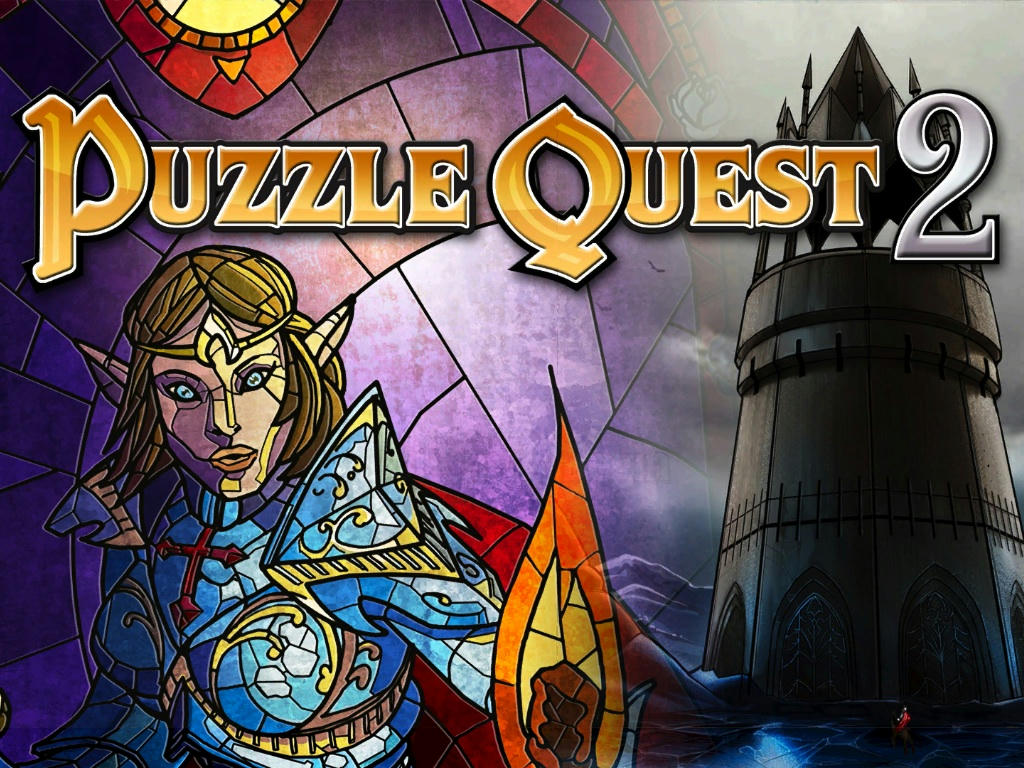
Puzzle Quest 2


Puzzle Game and RPG in One Package? Say it ain't so!

As a matter of fact, it is so. I don't have any new games to review this week so I thought I would dig into my old bag of goodies. Actually this is an oldie and a newbie. I played it when it first came out on Xbox in 2010 and I just realized with my new Samsung Android phone that they're giving it away free in the App Store. I can only hope there aren't more charges to come as I already bought this game once. I checked and the Apple Store also has a free version they're calling "Freemium" which I guess means you get the full game for free. They still list the $3.99 version, but why would you do that when the free one is right there next to it? 


The RPG Part

This game is really an RPG with a puzzle game installed for the purposes of battle. Rather than face your foes with sword or spells in hand, you face them on a board somewhat similar to Bejeweled or Tetris. There are four playable classes: Barbarian, Sorcerer, Assassin, and Templar. Each has their own strengths and weaknesses. Barbarians and Templars are good with weapons. Assassins are good with poisons and sneak attacks. Sorcerers are good at, well, spells, of course! You travel across the country of Verloren, doing good deeds and fighting every kind of bad guy imaginable from wolves to wargs, orcs, evil sorcerers, and even dragons. The story is a bit lacking, but it's serviceable enough to get you through the game without wanting to quit. Where it REALLY shines is in the puzzle and character leveling aspects. Once you have built your character for a while, you learn their strengths and can use them in battle to great effect. My assassin was so powerful I finished several battles without giving the enemy a single turn. As with all RPGs, the focus on character building is a major part of this game. If you spend your leveling points in areas where your character lacks power, you just end up wasting them. This is a hard lesson to learn and I had to start over with a new character upon realizing I had wasted many of my leveling options. You have to match your choices about how to power up your character to their strengths in order to eventually become an all-powerful killing machine like me :-)


The Puzzle Part

As stated before, this game is half-puzzle and half-RPG. The puzzle half is very similar to Bejeweled. You have to match three or more similar gems in a row in order to proceed. If you match four gems in a row, you get an extra turn. Whatever color gem you match increases your mana of the same color. Mana is what you use to fuel attack and protection spells. If you match skulls, it does immediate damage to your enemy. If you match those little pieces that look like iron fists, you can use them for weapon attacks, personal defense, or potions/poisons. As you travel through Verloren, you will encounter citizens in need of aid and goblins in need of killing. All of this battle takes place on the gem board. As the game progresses, the enemies become more and more difficult, but if you've done a good job leveling up you shouldn't have a problem. Spend a little time researching your character before you start and it will pay dividends once you hit the real tough guys. 


Summary

This game maybe a couple years old, but it holds up well. There appears to be no difference between the console and the portable versions that I can tell, and I would notice since Puzzle Quest 2 is all I'm playing on my phone these days. If you're a fan of Bejeweled or Tetris, give this a try. You might just enjoy the RPG aspects. If you're an RPG fan, you might find the battle a bit tedious so try this on your phone for free first. If you like it, you might consider getting the full version so you can play on a big screen. I'm not a huge fan of either genre, but when combined as masterfully as they are in this game, I can't resist. 

The Math

Objective Score: 7/10

Bonuses: +1 for combining two game formats that rarely meet in puzzle and RPG. 

Penalties: None that I can think of. For what it is, this game is near-perfect. 

Nerd Coefficient: 8/10 Well worth your time and attention (but try it on a phone first for free to make sure you like it!).

Tuesday, January 8, 2013

Infinite Vacation


A journey that began in May of 2011 is coming to its conclusion this week.  When I picked up Infinite Vacation at my local comic shop I had no idea what I was getting into.  It had an employee recommendation tag on it and was written by Nick Spencer, who I knew from his work on Morning Glories.  What I found was a book filled with twists and turns that left me salivating for the next issue.  The trouble was that there was no regularity to which the books were released.  It wasn't until early 2012 that we got issue #4.  While frustrating, the book remained fresh and took darker and more twisted turns with each turn of the page.  Upon hearing the news that the series would be concluding with issue #5 (64 pages!) this week, it felt appropriate to revisit this title again.  I am so happy I did.


The book centers around the Infinite Vacation corporation that has software that allows users can trade, buy, and sell their way through limitless alternate iterations of themselves.  Were you always curious what would happen if you dropped out of college to pursue your music career?  For $4,500 you can.  Want to see what life would be like if you didn't break up with your high school sweetheart?  With Infinite Vacation that power is on your mobile device or home computer.  Utilizing the probability engine, the fine folk at Infinite Vacation allow you to experience your wildest fantasy (and if you know anything about the twisted mind of Nick Spencer, i.e. Bedlam, there are some strange alternatives).

Our protagonist, Mark, visits an average of 9 alternate versions of his life per day, yet always ends up bored, alone, and in a dead end job.  No matter how hard he tries to find the perfect life things don't ever seem to work out.  On top of that, he recently attended the funeral for one of his alternative selfs and there seems to be a trend of them dying lately. His worries over his impending death are lost when he spys an attractive lady at the coffee shop who appears to be flirting with him.

Mark, of course, blows this opportunity and learns that she was interested, but knowing that he vacations frequently, she is not interested.  Turns out she is a deadender, a religious group that does not condone the idea of traveling across the multiverse.

As he sits at home and ponders this lost girl, another version of himself bursts in upset accusing him of murdering himself.

Without getting into spoilers, because you should pick up and read issues #1-4 before Wednesday, we learn that the Infinite Vacation people are out to kill our version of Mark.  We meet redneck Mark, who would have existed if his dad got custody of him, nudist Mark, and hacker Mark who team up to help our Mark uncover why they are after him.

Claire, the girl from the coffee shop, plays a significant role as the unlikely duo attempt to take down Infinite Vacation.  The good folk of Infinite Vacation are not above boxing universes (collapsing them and killing everyone inside), in order to stop Mark.  Infinite Vacation also unleashes the terror that is canibal Mark into multiple universes.  Safe to say that I will have a difficult time forgetting some of the terrible exploits and quotes from this fiendish character.

In 64 glorious pages this Wednesday we will learn what our Mark has planned to save the girl and save the day.

Christian Ward provides the art for this comic and his range of styles well fits the book.  Some scenes are elaborately detailed, close-ups of characters face either evoke a connection with the reader or instill terror, and you are constantly turning the book upside down and sideways to mimic the movement one must feel crossing the multiverse.  Ward's art greatly enhances this book and elevates the insane world in which we are engrossed.  It may have taken 2 years for this five-issue story to reach its conclusion, but after revisiting issues #1-4, it appears to have been worth the wait.  While I would have preferred an app that allowed me to travel to an alternative universe where the books came out quicker, I am very excited to crack open the book on Wednesday and read the conclusion to this phenomenal story.  Spencer also tweeted that you should pick up the physical copy if possible, because there are some effects that involve turning pages and what-not that will work better with a physical comic.  Happy reading!


Star Trek vs. the Angry Birds

My household has fallen under a spell, and its name is Angry Birds Star Wars. What I didn't realize, however, was that Red Bird, Chuck, et al had also made it to another galaxy, not so far away, and not so long ago. Also, Ashley Judd was there. Take a look: