Choice. Sometimes it's difficult to find a theme that runs through the stories that I gather together for the Monthly Round, but this month it's all about choice. Making the hard choice, the choice to live, to work together, to try for something impossible even when it might seem selfish. The choices do not always work out, and there is a thick vein of tragedy running through the choices, but at the same time there is a promise of freedom, of a better world, that is just a choice away, and it brings these stories alive to me, gives them a flavor that I just have to share, that I have to stop and enjoy slowly. So pull up a stool and settle in and we'll begin...
Tasting Flight - August 2015
"Given the Advantage of the Blade" by Genevieve Valentine (
Lightspeed #63)
In an incredible month from
Lightspeed, "Given the Advantage of the Blade" by Genevieve Valentine manages to make the list on the stark imagery of a battle royal between fairy tale women, witches and princesses and thieves and with the taste of blood and loss it's a Merlot, nearly sweet but with a punch that will have your head spinning by the bottom of the bottle. The story features the same scenario played over and over again, the women of fairy tales, the villains and the innocents and everyone in between being given a knife and left in a room. And every time the result is different only really in which survive and which die. In most, there is only one survivor. The action of the story is brilliant, bloody and disturbing. There are no winners, not even the ones that manage to live to try and open the door to leave. And it meets up with how these characters were created, how they were crafted, the cultures they came out of. That in all of the stories there is always blood on the floor. These are the grim tales, reveling in violence, with never an attempt to forgive, to move on, to find the true villains, which were never the witches or the stepmothers but the situations that set them against their stepdaughters, their wards, against themselves. The story is about the expectations on women to perform, to fight and die, for a cause that doesn't serve them. Live or die, the winners were never really in danger at all, were never in the room but set apart from it, controlling it, put the knives in the hands of these women and expected them to carve each other apart. And the story lets its impact be the shock of a knife plunged into flesh and the silence afterward, and like a Merlot there is a glimpse of something sweet, a hope that is not drowned out in the bite of blood and alcohol.

"Infinite Skeins" by Naru Dames Sundar (
Crossed Genres #32)
I usually reserve stouts for the darker tales I come across, and "Infinite Skeins" by Naru Dames Sundar is about as dark as they come, chronicling a woman's search for her missing daughter across multiple dimensions. But this story has so much going on with it, so many intricate layers, that it defies being a regular stout, fitting in instead with the lush and complex bourbon barrel mint coffee stout. Focusing on Ayo and Kuan, a couple whose daughter, Xikele, has disappeared without a trace, the story makes excellent use of quantum uncertainty and a device that allows Ayo to travel to different realities, a practice that is the crux of the tragedy of the story, the start of a cycle that Ayo steps into openly, with full knowledge of what it entails. Or she thinks she knows what it entails. In each reality she visits she searches for her lost child, seeking one similar enough to her own that she will be able to take them back, to abduct them just as it seems her own Xikele might have been abducted. An infinite number of realities, of Xikele's, and yet Ayo knows there is danger, that if she takes one too divergent from her own reality that the results could be disastrous. Still, she makes a choice, one that might doom her, and doom her across all realities, a choice that she nonetheless is compelled to make. It's a story as dark as a moonless night, as dark as a stout resting inky in a glass, devouring light, and through it all there is the promise of only more darkness, the promise that these choices Ayo has made will lead only more choices, each made with hope and yet full of consequence. The story is amazing and wins the award for "I cried the most reading this" for the month, combining love and loss and choice in such a way that I couldn't fault Ayo for her decisions even as I saw them play out. Powerful and deep, this is a bourbon barrel mint coffee stout to its core, complex and strong and full of whispered promise. And so, so good.
"Fire Rises" by Alec Austin (
Beneath Ceaseless Skies #180)
A story about a woman trying to restore the honor of her family, and also bring opportunity back to her homeland, and also kick a lot of ass, "Fire Rises" by Alec Austin is a red ale, sweet but with a hint of fire and deep enough to make a very satisfying experience. The tale starts out strong and sad when Li, a pyromancer on a mission from her Empire, loses her lover in an attack by a rival agent. The setting that is built in the relatively short space of the story is amazing, mixing science and magic, satellites and systems of power, privilege and affirmative action. On one level the story is about Li's journey to presumably stop a nation from deploying a new satellite, a sort-of moon that will grant their magic-users power and advantage, while also seeking to stop the woman who killed her lover from doing it first, but in a way that will kill thousands and thousands. There is action and adventure and Li is a fun main character, bitter but cunning, powerful but working for a future where everyone has more opportunity than she did. The battles are compelling and visceral and visually captivating, showing off the unique blend of magic and science that make the setting stand out. On another level, though, the story is about finding ways to erase privilege in really the only way that works, and that is by extending the same privilege to all. The story is just so fun while managing to make a subtle point and build strong characters and a rich setting. It captures the nature of red ale, the taste of adventure, of new possibilities.
"The Servant" by Emily Devenport (
Clarkesworld #107)
Set in the vast expanse of space as a generation ship, once one of a pair, makes its steady way onward, "The Servant" by Emily Devenport is a black lager, refreshing and with a darkness that does little to hide a light finish that gives the darkness a sheen of light. By far the longest story of the issue it appears in, the story capitalizes on the space it uses by taking a hard look at power and capital. The generation ships are run as an aristocracy, ruling families having pushed those less fortunate away from green growing things and into the darkness, to become servants to be abused and mistreated and killed without consideration or remorse. Meanwhile, Oichi is a woman who lost her family when the second of the generation ships was destroyed in a plot to get rid of a technology that would have erased class and privilege. Before they died, though, Oichi received modifications that allow her to be the first to find and communicate with this new technology, which managed to survive the assassination attempt. The story is part mystery, all science fiction, and a lot of fun, the powerful families of the ship all working against each other, plots layered on top of plots, all of which seals the fate of those so sure of their dominance. I love how the story shows the powerful desperate to remain in power, and how that desperation, that lack of trust, is what dooms every corrupt power, that corruption is not a viable system of rule, not indefinitely. And I love Oichi's voice, her hope, her pain and her sense of justice. The story is as dark as space, filled with murder, betrayal, and crimes worse still, but through it all it remains quick and light, fun and moving, like all black lagers should be.
"The Vishikanya's Choice" by Roshani Chokshi (
Book Smugglers)
Sudha is a young woman born and raised without options, without control of her life, in "The Vishikanya's Choice" by Roshani Chokshi, a storyh that manages to embody the bitter and crash power of an Imperial IPA. Widowed young and with no prospects in a society in which she suddenly has no value, Sudha is made into a Vishikanya, fed poison until her very touch is deadly, a lesson she learns early on. She is made in a killer, an assassin, and her first mission is to be to kill the great man himself, Alexander of Macedonia. The story earns its Imperial nature from the strength of the prose and also the scale, literally one woman taking on the embodiment of an Empire, a man who has had nothing but choices in life, save perhaps one he was unwilling to take. The parallels and differences between Sudha and Alexander are clear, the one concerned only with being remembered, being a legend, the other concerned only with being free. And while he had that choice all along and simply would not take it, Sudha has lived her life yearning for that choice and being denied it. The story shines with the stubborn resolve of Sudha, her strength to not bend to the choices that have been made for her, to not give up the last of her agency out of fear. Her interactions with Alexander, who she more than matches in terms of presence and intelligence, are compelling and her final choice is uplifting, freeing, full of possibility. Like an Imperial IPA, the experience leaves the reader invigorated, ready for whatever comes next.
"Not My Circus, Not My Monkeys: An Elephant's Tale" by Damien Angelica Walters (
Apex #75)
An elephant never forgets, not even when it wishes it could, in "Not My Circus, Not My Monkeys: An Elephant's Tale" by Damien Angelica Walters, a story hazy with loss and age and rich with tastes of smoke and earth which fits quite well as a nut brown ale. It follows a circus that has seen better days, run by an abusive Ringmaster and featuring an assortment of people still making their livings off the spectacle, off the lights and glamour of the rings. For the pair of twin acrobats, though, it is slowly killing them, suffocating them and forcing them apart because their lives have become about their act, about their roles of being so similar. And yet they are different, proven when one runs away, when the circus starts to slowly fall apart, all under the watchful gaze of the elephant, who knows the story and pretends to be detached from it, to be too old to care. And yet when the time comes, the story is about it never being too late, that making a change can happen at any time, and those that refuse to, those that give into inertia and fear are those who fall into ruin. The characters are beautifully realized and the story maps a clear trajectory down to Earth, the last days of the Circus, which were always more lies than truths, always more pain than freedom, that were built on the back of exploitation and fear. The elephant remembers it all, and yet no matter the memories there are new ones to be made, new paths to walk, and the story shows the hope that comes even after everything has fallen apart. Haunting but uplifting, it's a nut brown ale in how it leaves the reader feeling, warm and slightly numb and ready for sleep, or something new, or anything.
Shots
"Beyond Sapphire Glass" by Margaret Killjoy (
Strange Horizons)
This story of two women drawn to each other but separated by their beliefs, by their choices, is a Blue Sapphire, a mix of blue curacao and cranberry juice, sweet in the relationship it depicts, in the way the women obviously care about each other, but with an edge that keeps them apart, unable to bridge the gap between them. The story cuts to the chase, establishing a world where technology is largely outlawed, relegated to a mountain where pilgrims can come and have their consciousnesses uploaded into a computer. For the pilgrim it means eternal life. For the main character it means death, and though the two women find an instant connection in each other, a passion and life that they hadn't known before, they cannot get around the fundamental difference in their philosophies. They both make choices that keep them apart, neither willing to lie, to sacrifice their own values to be with the other. The impact of their relationship, though, is enough to make am impression, to make the memories of that time, even years later and loves before, shine in the main character's mind. The prose is flowing, tragic, the characters so close to something and yet separated by an immeasurable gulf. Sweet and tart, the story makes a very fine Blue Sapphire, easy to drink and yet with a taste that lingers.

"Greenhouse" by Kelli Trapnell (Terraform)
Stark and deadly and filled with some seriously disturbing imagery, this story is a Chlorophyll, a mix of green Chartreuse and ginger beer with a few drops of bitters, arresting and enough to shake a person to their core. The story follows a doctor who has been at the front of an outbreak of a disease that turns its carriers into plants. The plague has only just begun and has been vaguely contained, but what the doctor isn't admitting is that she's been exposed and having dreams about plants. And her choice to keep that fact from her bosses turns out to be much more significant than she thought. The disease, brought on my rising temperatures and perhaps just the world seeking to wipe things back to be green and growing again, mutates and quickens, and the main character is faced with the horror of what she has unleashed, on the disease in all its splendor and destruction, all its life and death. It is a disturbing story, visceral and as compelling as watching the world end, or at least begin to end. Fast and with a growing frenzy of despair, this story is fresh and different, new and captivating. Like a Chlorophyll, there's nothing quite like it, and it's both strange and unsettling and yet with a taste that makes it impossible to put down.

"A Thing in All My Things" by Samuel Marzioli (
Urban Fantasy #10)
A man struggles with a monster that lives in his mind and is threatening to break out in this story, which hits like a Barista, a mix of two parts coffee liqueur to one part vodka and topped off with espresso. Tom is struggling to get through life, plagued by a Thing that waits for him wherever he goes, filling him with doubt, fear, self-loathing. It's something that has followed him his entire life, that was grown and nurtured by an abusive mother, a mother whose resent death has sent Tom into a sort of spiral where even the simplest of tasks are made impossible by the Thing. Not about forgiveness so much as about recovery, the story shows both how the Thing might be simply in his mind and but also how it doesn't matter, that it is real to him, and can escape through him into the world, a cycle of abuse and cruelty that Tom has to finally face, to stand up to. There are no easy answers here, no ways to fully banish the pain, the hurt and damage done, but the story does hold that there is still a way forward, a way to at least prevent the Thing from spreading, from wrecking still more of Tom's life than it has. And like a Barista it's an eye-opener, an acknowledgement that some pains and traumas never really leave, but that they can be survived.
--
POSTED BY: Charles, avid reader, reviewer, and sometimes writer of speculative fiction. Contributor to Nerds of a Feather since 2014.


 Darth Vader #9 - Things get a bit awkward in this issue as Vader is forced to assist an Imperial investigator who is attempting to find out who hijacked a boatload of credits from an Imperial cruiser. If you recall, Vader teamed up with Aphra to make the heist look like an accident from an asteroid collision. The dialogue between Vader and the investigator is quite entertaining, as both hint at to what really happened, but are forced to go through the motions of the investigation together. It will be interesting to see how this investigation unfolds, but I am more curious as to why Aphra is seeking out a retired military clerk on Naboo. The plot thickens.


 by Lauren Beukes is everything I want a mystery to be. It's creepy as hell, beautiful, complex, terrifying and endlessly human. This is a book that tells the story of a city and the many twisted lives within it as it unfolds a gruesome whodunnit.
 by Kai Ashante Wilson. WIlson is one of the best new writers on the fantasy scene and this book is easily one of the best I've read all year. It's how fantasy should be done, with imagination and poetry and heartrending emotion and amazing action.
 by Nalo Hopkinson is one of my favorite sci-fi YAs. I read it when I was first starting to write Shadowshaper and it really opened up doors as to what a book could do. Amazing worldbuilding, amazing characters, dynamic plot.
 by Anne Rice, I think it was more a matter of not being in the right mood. I appreciated the writing but didn't get drawn into the story and put it down. Didn't pick it up again until about 4 years later and loved every word. That is a hell of a book, through and through. So glad I gave it a second chance.
 by Douglas Adams - we listened to the audio version on family roadtrips when I was a kid and I'm sure that's part of why I write supernatural noir today. This book has a terrific balance of hilarity and seriousness. It's grim and fascinating and really one of the best examples of the Old Gods In the Modern World trope.
 , my first Young Adult book, came out in June. It's about a girl in Brooklyn who learns her family is connected to an ancient magic that allows people to bring works of art to life with spirits. It's about friendship and creativity and culture and survival.


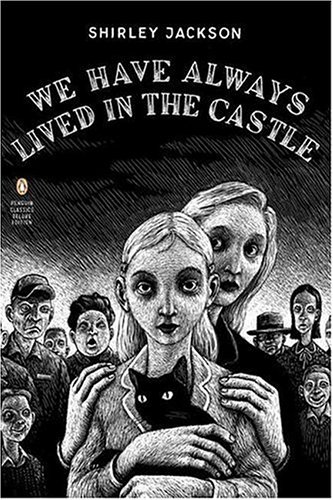


 trilogy and, more recently,
  (which we
 . Mallory O'Meara, a film producer, and myself have a two-person horror club and she hugely recommended this to me. It may seem like a cop-out to answer this question with a book I am no longer reading, but A Head Full of Ghosts was such a complex and twisty narrative that I'm going to be thinking about it for a very long time.
 , because someone said it reads a lot like
  . But that came out awhile ago, didn't it? Oh! I have a standing threat against Tor to give me Brian Staveley's third book, The Last Mortal Bond, as soon as it's in ARC form or I will stand outside their offices in the rain with a boombox over my head playing Spandau Ballet's Gold. I guess if I'm ready to do that, I would be really excited about it.

 . Not his actual stories--those are still great--but for a long time, I thought Joe's sex scenes were the worst things I had ever read, fraught with words like "squelch" and "the root of his cock."
 novels by R.A. Salvatore, though not in the way you might expect.
