Wednesday, June 15, 2022

The Jurassic franchise has gone the way of the dinosaurs

With its disregard for theme, characterization, or plot logic, Jurassic World Dominion is unworthy of the franchise's revered legacy

The last time I wrote about the Jurassic franchise, I warned that Fallen Kingdom was trying to be so many things at once that it exhausted the possibilities for the story to keep growing. Time has proven me correct: its sequel Dominion is a flavorless purée with so little sense of its own identity that it's made of moments stitched together to pose like a movie. A monster meat market (stolen from Pacific Rim), an extended motorcycle chase (stolen from James Bond) or a cave detour with pointless hat rescue (stolen from Indiana Jones) hint at a world that is more interesting than the tightly contained glimpse we're given. And even within all the constraints this movie imposes on itself, it's remarkable that such an overcomplicated plot needs so many perfect coincidences to keep moving.

How did we get here? At the end of Fallen Kingdom, two world-shattering events happened: dinosaurs were released into the world, and we learned that the same dinosaur-cloning technology had been used to clone a human. Either of those two twists should have resulted in drastic changes in everyday life for the sequel to explore. But the start of Dominion pays just the most perfunctory lip service to that new state of affairs before jumping right back to a tiny ensemble of protagonists who, three movies in, haven't earned a reason for us to care about them. Chris Pratt's Owen Grady is somewhere in Nevada playing cowboy, taming a herbivore dinosaur we never meet again, while Bryce Dallas Howard's Claire Dearing is still trying to redeem herself with petty acts of heroism. These two establishing scenes are so disjointed from each other that it comes as a jarring surprise when we learn that Owen and Claire are actually back as a couple.

After these multiple skippable prologues with no consequence, the story proper begins when Maisie Lockwood, the aforementioned human clone, is kidnapped along with a velociraptor clone. Where Fallen Kingdom tried to establish a thematic parallel between dinosaur cloning and human cloning, here it's made explicit: the quest to save both victims is the same, the miraculous tale of their birth is told with the same reverence, and the ethically compromised scientist wants them for the same technobabble reasons. But if this rescue plot feels too small and remote from the somewhat more urgent fact that there are dinosaurs loose all over the planet, the plot behind the plot is even more obscure: an evil corporation wants to control the world's food supply, so they create both mutant locusts with dinosaur DNA, designed to eat everything, and proprietary mutant seeds that the locusts won't touch.

All this is so much unnecessary material added on top of the basic Jurassic premise that you could cut the fluff and make totally different movies with it. This might have been a movie about mutant locusts and mutant seeds, and not be a Jurassic movie at all. This might even have been a movie about the quest for a cloned child, and not be a Jurassic movie at all. The whole reason why we go to see a Jurassic movie is for the simple, primal delight of watching dinosaurs munch on people, so it's strange (although perhaps not so much if you recall that this movie has two casts' worth of unkillable protagonists) that Dominion features more violence committed against the dinosaurs than by them.

For all that Fallen Kingdom closed off narrative avenues, it left a valuable one open, a theme that until then had only been implied: that the Jurassic franchise is at the same time a moralizing fable of environmental preservation and a monster/survival/horror/thriller, but the three original films didn't explore that ambiguity to the degree that Fallen Kingdom did. Perhaps The Lost World came closest to making that kind of statement, the thorniest conflict in monster movie tropes: that you have an ethical responsibility toward the monster that's trying to eat you. The choice in Fallen Kingdom to introduce a human clone, who can tell us how she feels about her existence, is an apt substitute for the impossibility to articulate the dinosaurs' point of view (and it's no coincidence that it's this clone character who makes the crucial choice to liberate the dinosaurs). But also, on a more honest reading, we need the character of Maisie because the franchise ran out of things to say about the dinosaurs. Owen's speech about mutual respect with raptors doesn't really pay off (much less when most of his scenes with raptors involve running from them), and his ridiculous trademark posture with her palm stretched out, as if he's cosplaying Iron Man, gets tiresome really fast. Maisie should have been the heart of Dominion, but instead she's a hot potato jumping from set piece to set piece.

The action scenes are fine, and the dinosaurs are adequately scary, but you can only keep replaying the greatest hits from "high-tech compound fails to contain dinosaurs" so many times before it feels predictable. When all the named protagonists are movie superstars that you know the plot can't let die, the threats feel hollow, and the fights therefore fall flat. Nevermind how these characters are capable of keeping their perfect hairstyle after each scene: it's amazing that they can run so fast with all the plot armor they're carrying. But you can't have fight scenes without someone getting injured, and that pushes the movie into an ethical contradiction: our heroes are supposed to be environmentalist defenders of the very same wildlife they spend two hours stabbing, punching, and tasing. At some point, you have to ask: does Jurassic World Dominion want the dinosaurs to survive or not? And when is it going to make a case for us to care either way?

After the day is saved, nothing really changes. The looming food crisis is averted as suddenly as it was introduced. Dinosaurs are still part of daily life, but daily life appears much the same. Maisie is still profitable to every biotech company in the world, but miraculously no one tries to kidnap her again. There's still a black market in dinosaurs, which our heroes are content to leave be. A big speech is made about the need for humility if humankind is to coexist with the dinosaurs, but we don't get to see what that coexistence really looks like for ordinary people. As soon as the named protagonists achieve what they want, the outer world ceases to matter.

The Jurassic franchise has fallen prey to the same malaise of every big IP in our era of sequelitis: it forgot to be about something, and has opted to use big, flashy spectacle to disguise the lack of substance. With its too numerous contrivances, painfully unfunny jokes, uninspired dialogue, and confusing editing, this movie hits the franchise like the proverbial meteorite that put an end to the era of the big lizards. Just like Ghostbusters: Afterlife committed unforgivable necromancy in reanimating both its plot and its star, Jurassic World Dominion is guilty of cloning an inviable descendant of a fossilized relic.


The Math

Baseline Assessment: 5/10.

Bonuses: +1 for some visually stunning shots.

Penalties: −1 for dragging back the original cast to give them zero character development, −1 for having on its hands the prefect premise of dinosaurs walking among us and wasting it entirely on promo featurettes.

Nerd Coefficient: 4/10.

POSTED BY: Arturo Serrano, multiclass Trekkie/Whovian/Moonie/Miraculer, accumulating experience points for still more obsessions.

Tuesday, June 14, 2022

Microreview [Book]: All the Seas of the World by Guy Gavriel Kay

If you want to feel sad about mosaics, exile and dolphins, Guy Gavriel Kay is absolutely your man. If you want to be cheered up? Not so much.

Sometimes authors get worn into their niche, so much so that, especially when they’re good, you have to remind yourself to rate each book just for itself, rather than against the rest of their work, because it’s not fair otherwise. Guy Gavriel Kay is one of those authors, at least for me. With the exception of the Fionavar Tapestry books (because they’re just something different to the rest of his stuff), everything he’s written that I’ve read is just… great, and so it’s hard coming into a new one with the weight of all those expectations behind it. If it’s good, well, that’s just to be expected. You’re ranking him on an unfair scale of… himself… where the “low end” is still a solid 8/10.

All Guy Gavriel Kay books must also be rated on the sorrow-o-meter, because he apparently loves to shred the souls of his readers (exquisitely, beautifully, tenderly… but shredding them nonetheless).

All the Seas of the World ranks middlingly on both of these scales (so, by other metrics, a great and terribly sad book).

The book is set in a very thinly veiled alternate version of the Mediterranean world in the latter half of the fifteenth century. The countries’ names have all been changed (sometimes subtly, sometimes unsubtly), as have those of people, places and groups, but the political and historical stories being invoked are pretty clearly shining through. It follows the events of Children of Earth and Sky and A Brightness Long Ago, looping in characters we’ve already met in this stories, but following the threads of other, new characters and their paths through the world, and focussing on different themes, as well as reflecting on some old ones.

Overwhelmingly, All the Seas of the World is a book about exile and homecoming and one’s place in the world. Both of the protagonists have been forcibly removed from their origins – one a Jew (the Kindath, in-world) expelled as a child from Spain/Esperaña (that’s one of the unsubtle ones), now a trader and sometimes corsair, and the other an Italian/Batiaran Christian/Jaddite women kidnapped as a child and raised as a slave/guard until her escape and joining of the corsair crew – and much of both of their stories is about them coming to terms with the lasting effects of their exiles, and what their life might mean to them moving forward. Many of the side characters riff on the same themes – a Muslim/Asharite scholar kidnapped and kept in Rome/Rhodias, writing an account of his captivity, another scholar living and working with him in Rhodias, having fled from Constantinople/Sarantium at its fall, another an Italian/Batiaran mercenary commander, spending every spring on campaign away from his much loved wife. Even briefly met characters have their lost places that we look back on. All of it builds together into a song of longing that runs throughout the whole story, hitting different beats but always on-theme. You might think that such a relentless monofocus on a single theme might dim the impact of the message, but by looking at the same feeling in different directions, from different people, often on opposite sides of the conflicts within the book, Kay manages to keep it fresh, keep it from becoming too much, or from the reader becoming sensitised to the rawness of it.

This awareness of the multi-faceted nature of the conflicts he describes is a long-standing strength of Kay’s, but I think one that is showcased more explicitly here than in some of his other works. The Middle Sea around which all the action takes place in the story is one full of both religious and political conflict – it’s the world in the aftermath of the fall of Constantinople, where the tension between Christian/Jaddite and Muslim/Asharite is palpable, and the dangers of this conflict, of corsair raids on coastal cities on both sides, are current and ongoing. It’s the world where Frances/Ferrieres and Spain/Esperaña are vying for dominance, where the various Italian/Batiaran city states exist in a constant state of war, where Jews/Kindath are expelled or murdered if found in Spain/Esperaña. It would be very easy for an author to pick a side in a single one of these conflicts, and make it a simple story, but the story is made the richer by there being good and bad on all sides we interact with in any depth. It is a complex world, as the world was back then, and a complex story to reflect that.

This complexity filters down to all levels of the story too – perhaps here to its detriment. All of the major players have complex lives, loves, losses, that are explored as we travel with them, and if we were just experiencing those from the very core cast, this would likely be fine. However, because we’re looping in old faces from previous books – which hasn’t generally been Kay’s mode previously – the story relies on you remembering why you care about certain characters from the past, what matters to them. And I… don’t entirely. There were several points when it took me a while to bring to mind exactly who someone was and why they mattered, and that feeling of floundering did drag the story down. There are an awful lot of faces in this story, and in his previous ones, and while the cast list at the start of the book is something of a help, it’s not quite sufficient to connect all the dots if you, like me, haven’t read A Brightness Long Ago since it came out in 2019 (and Children of Earth and Sky in 2016). The story does what it can to remind you, but that still leaves a little gap in many cases, because it’s hard to infodump subtly every time a character shows up. Some of them, there are no hints, because hints would run counter to what the reminder of that character is doing – there’s a statue of a woman encountered in a city visited by the main characters, which turns out to have been a non-main character in The Lions of Al-Rassan. The woman the statue represents has been forgotten, and the moment of it is about that forgetting, that passing of information that was once known into nothingness. There’s no real way this information could have been conveyed in-narrative without breaking some of the flow, ruining that moment, so I was left with a vague sense of irritation that I knew I should know her, but I did not (until I asked someone else, who had a better memory than I did). By doing all these call-backs – and there are a lot – Kay is risking them often not landing perfectly, and that missed landing is a minor point of disjoint in the reading experience. And that’s putting aside how they might come across to someone who has only read some of his previous works.

On the flip side, when they do land, a lot of these callbacks are incredibly evocative. There are repeated motifs that Kay likes to call on, shorthands for some of the core themes (of sad things) that run through each of his stories, and by dropping little reminders in here and there, when they work, he does very skilfully bring you back to that place of old sadness, in a way that mirrors the old griefs of the characters as they experience the events of the story. It is absolutely a borrowed glory, and one that wouldn’t have an impact on a new reader, but when you come to it from the right place, it does such a good and subtle job of playing on your feelings. The dolphins in the water outside Constantinople/Sarantium call all the way back to the events of The Sarantine Mosaic duology, for instance, which absolutely wrecked my heart, and so I got a nice little echo of that seeing them again.

Almost all of Kay’s historical fiction works exist in orbit around the void that is the fall of Sarantium. He has not (as yet) written a book about that event itself, and nor do I expect he will, but it exists throughout all the others, ahead and behind them, making itself known in little and large ways. All the Seas of the World is the first book looking firmly backwards at it, and as such, has the feel of endings and stories closing. I don’t know if that means his next works will look elsewhere, but that’s how it felt to me. But because it is a book drawing on all of those previous threads, highlighting them, and being able to look back with full knowledge, it felt a little like sometimes I could see the scaffolding that held the story together, rather than just the beautiful (sad) façade I’m used to getting. It was still good, still beautiful, still sad, but it didn’t quite have the magic of some of what has come before, and what magic it did have was often leaning heavily on its predecessors to truly work.

--

The Math

Baseline Assessment: 7/10 

Bonuses: +1 delicately handling a character from a very traumatised background and giving her a realistic and hopeful path forward
+1 saving the subtle intrusions of the fantastical for the moments where they'll have maximum impact/confusion

Penalties: -1 leaning too heavily on past books to really tug the heartstrings, rather than making new ways to hurt my soul

Nerd Coefficient: 8/10

Reference:  Guy Gavriel Kay, All the Seas of the World [Hodder & Stoughton, 2022]

POSTED BY: Roseanna Pendlebury, the humble servant of a very loud cat. @chloroform_tea

Monday, June 13, 2022

Adri and Joe Watch the Hugos: Best Dramatic Presentation


Adri: Continuing our unorthodox sequencing of categories this year, let’s talk about Best Dramatic Presentation! This chat is mostly going to be about long form, because you’re a big movie watcher and somehow, despite normally skipping the category, I’ve actually made the effort to watch all the nominees this year. Not only that, but I’ve seen five out of six of the short form nominees, and there’s a chance I might even dive into a free Apple TV subscription and watch For All Mankind before voting closes in August too.

This year, the BDP long form list includes five movies and one series - WandaVision - which I definitely think benefits from being included as a whole piece of work. Half the nominees are in the Disney stable: one Disney animation (Encanto) and two Marvel properties (WandaVision and Shang-Chi). Rounding out the list, we’ve got a witty Korean space adventure, Space Sweepers, and two ultra-serious takes on cornerstones of genre: (the first half of) Dune and The Green Knight. It all feels solidly genre (no awful Eurovision-as-seen-by-America movies, thank you voters), solidly Hugo quality, and it makes for a pretty interesting and varied set of viewing experiences.

What are your thoughts on the finalists as a whole?

Joe: Well, I’d like to start by arguing with you about last year’s Eurovision movie which was an absolute delight despite the inclusion of Will Ferrell as lead actor - but outside of Ferrell, Eurovision was a lot of fun and “Husavik” should have won an Oscar over the song from Judas and the Black Messiah because it was perfection in a song and also music that is important in the context of the movie should always win over end credits songs (though “Fight For You” is a really good song, if I’m being fair).

Wait - we’re talking about the Hugos, right? Sorry, I’ve got Oscar opinions.

Adri: Perhaps we should schedule in a “retro” 2021 Hugo conversation about the merits of that movie and to what extent the presence of Will Ferrell completely negates and outweighs them. Husavik is solid though, I’ll give you that.

Joe: That would be a conversation to have over that hypothetical beverage of choice, I think, but I’m more than happy to detour / derail this year’s Hugo conversation if you’d like.

As a whole, though, this is a really nice lineup of finalists. You mentioned the three selections from Disney in Long Form, but there’s a lot of quality in those selections. You’ll note that The Eternals isn’t on the ballot (and I really hope it’s not #7 on the long list). Not that we need to spend any time on the Eternals, but it felt like the lesser parts of three different better movies and we didn’t get any of those movies - but Shang Chi was wonderful, WandaVision was something specific and special, and we’ve seen Encanto quite a few times in my house. In some ways the surprises are The Green Knight and Space Sweepers - only because I wasn’t sure how many people would have seen either.

Likewise, I dig the variety of Short Form even if some of the episodes are deeper cuts from series that I’m not watching and might not quite get to by the end of voting. I’m certainly not caught up on the category for this conversation, but I think that’s okay. It is a sign, though, of how widely the Hugo nominators are watching for their SFF. It could also be a sign about how diffuse the vote totals might be. That’ll be something to pay attention to when it comes to looking at the Long List in August.

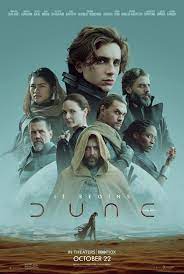
I think I’d like to start by talking about the film I think is most likely to win Long Form, which is Dune (officially retitled as Dune: Part One now that Warner Bros gave Villeneuve the funding to make the second movie).

The existence of Dune doesn’t make it an automatic winner, though i will note that the SciFi Channel miniseries Frank Herbert’s Dune was a finalist in 2001 (losing to Crouching Tiger, Hidden Dragon) - but Dune is biiiiiiig budget “core” science fiction. Whatever your feelings about David Lynch’s adaptation from the 80’s and Sting’s codpiece, this was probably the most anticipated science fiction property we’re likely to get and if there was even a chance Villeneuve was going to get the movie right, it was going to pay off huge - especially within the genre communities, though we’re not as remotely starved for the good stuff as we were decades ago.

But I think Villeneuve did nail Dune: Part One. It’s incomplete in ways that are completely necessary (I shudder to think about how this works as a single film) - so I’d understand anyone who was less than fully satisfied by the storytelling of Dune - but for a property I’ve read a number of times and watched every adaptation of - this was fantastic.

I also think the “bigness” (and the Dune of it all) is what’s going to push it over the top in the voting. It’s what I think the Hugo voters want science fiction to be all about.

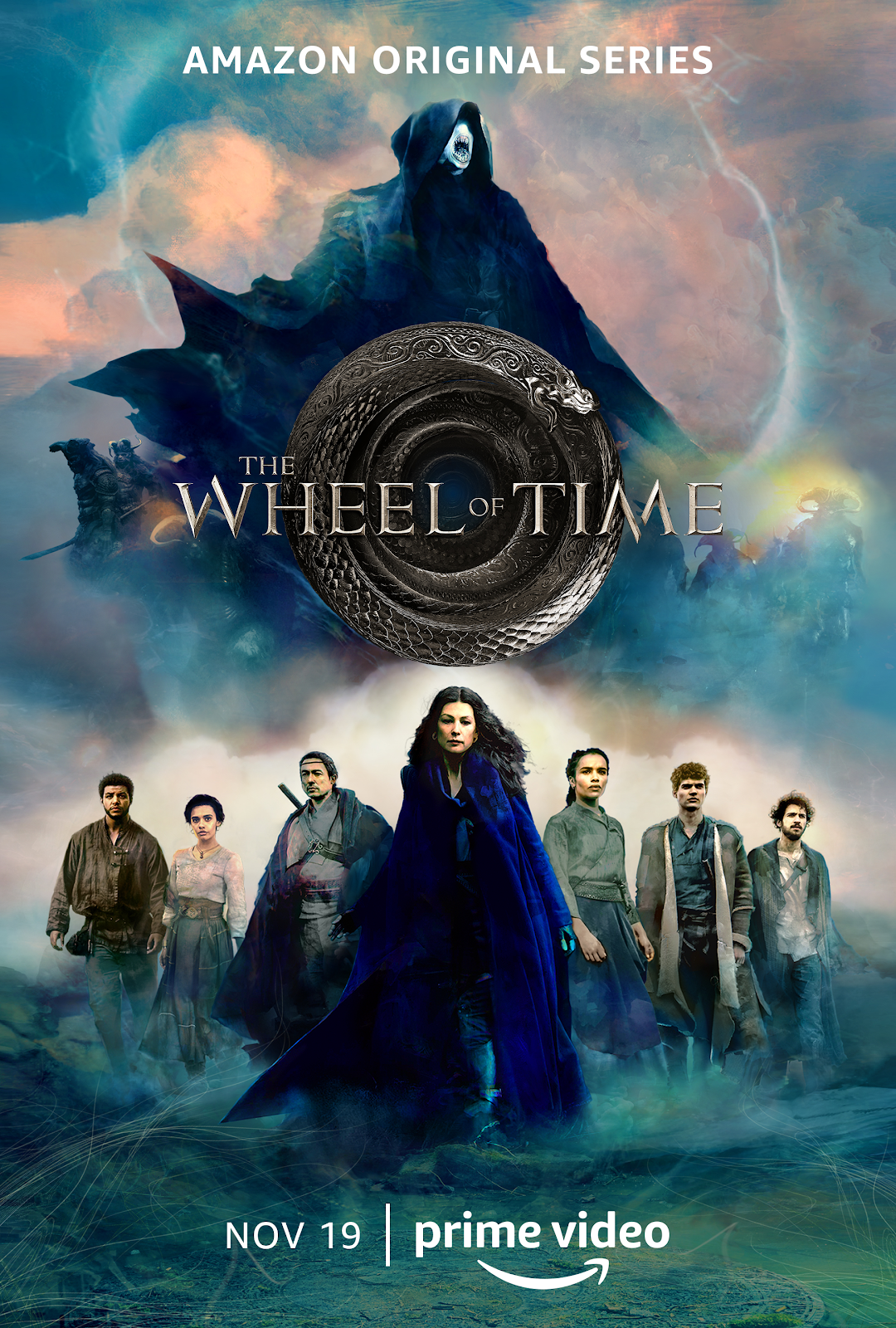
Adri: Ah, Dune. I agree with you that this feels like the most likely winner (the only thing I see beating it is WandaVision), and it’s amazing the sort of white messiah drama you can get away with in 2021 if it’s in service of a beloved book adaptation. Dune the film has all the orientalism (and fatphobia) of its precursors, and that annoys the heck out of me, especially when compared to Wheel of Time in short form which, despite its gender essentialist limitations, did put some effort into reinterpreting its source in a way that included people of colour and queer identities. But, that’s a tangent.

Setting aside the limitations of its source material, though, Dune is kind of amazing as a big, heavy, unapologetically weird and ritualistic spectacle of a film, full of lingering shots of giant machines - and sandworms - and slow builds towards climactic moments. Also there is Zendaya, looking cute and windswept in a dream desert. I’ve never seen the old adaptation but this one carefully avoids any hint of campiness that might suggest its taking itself less than 100% seriously. I can see the artistic merit in it all, but I’ll be honest: it bored me to tears. I don’t care about Frank Herbert’s big vision and despite the presence of Jason Momoa and Oscar Isaac (albeit not wearing their best configurations of facial hair), I found nothing to keep me invested in this ponderous, dated take on colonialism in space.

Joe: Here’s the thing, that big vision from Frank Herbert *has* to come into play for Dune to not be the white savior / pro-colonialist take that Part One feels like. Paul’s journey starts out that way, we’re told he is the chosen one, the result of generations of a breeding program (with a small twist at the end if you want to nerd about it) - but if Villaneuve can make Dune Messiah as well as Dune: Part Two, it’ll turn that concept on its head because it’s a failure. Dune itself, though, taken without the sequels - absolutely.

I was disappointed with the portrayal of Baron Harkonnen here. It could have been done differently and less fatphobic, and *still* gotten across everything about that character.

Adri
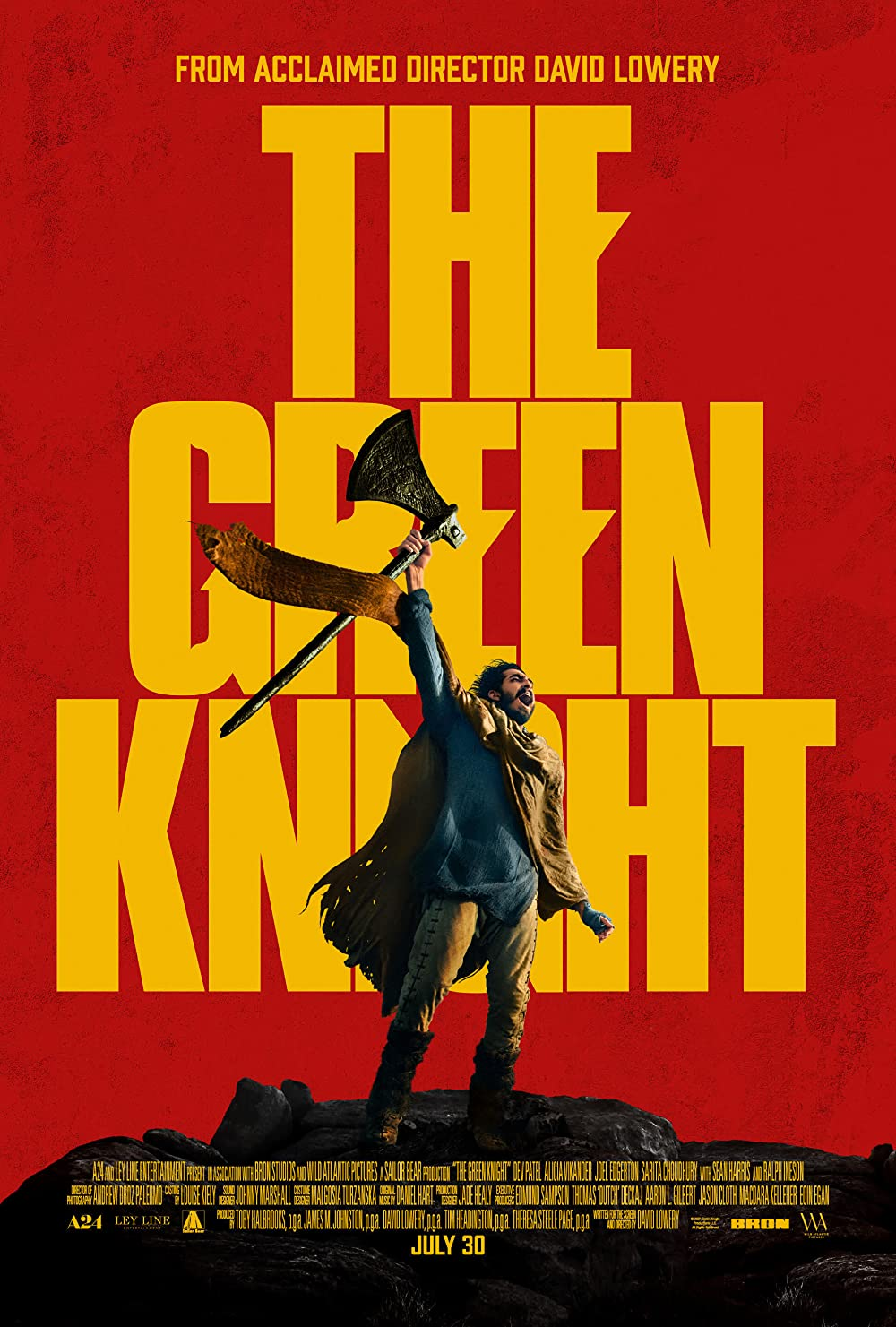
: Sticking with the big serious artsy films, let's chat about The Green Knight - because this is one I expected to really test my patience, and actually I enjoyed it a lot. It’s a retelling of Gawain and the Green Knight, with Dev Patel as a real wasteman version of the Arthurian hero. The story covers the Knight’s challenge and Gawain’s quest, a year later, to find him and allow him to return the mortal blow. It’s a very stripped down version of the official text and its moral - Arthur, Guinevere and Morgan are here, but unnamed, and the sequence of gift exchange at the castle is reduced to one of several events of the course of the journey - but what it lacks on that front is more than made up for by the constant unsettling tone and the tension it brings. It’s so sparse that it feels like a myth come to life - a feeling reinforced by the actual dream sequences and off-the-wall elements that show up for no reason that really moves anything forward. I came away from it not knowing what to think, but I certainly do think a lot about that movie now, and I feel like that means it’s succeeded at what it set out to do.

Joe: I don’t remember a time when I haven’t been reading Arthurian legends, or a time when I haven’t watched one adaptation or another. I’m a sucker for it all. John Boorman’s Excalibur was a particularly formative film experience for me as a teenager. Heck, I was even a sucker for First Knight, though I’m not sure Richard Gere was the best of all Lancelots. Or the okayest of all Lancelots. I digress, but the larger point is that I was inclined to like, if not love The Green Knight in many of the same ways that I was inclined to love Dune.

I….didn’t. The spareness mixed with excessive fever dream mythic-ness that stuck with you is where I got lost. The core of The Green Knight made sense, even if Gawain’s dumb-assery didn’t but I suppose it did drive the overall narrative, such as it is. The thing is - I’m not sure there was anything there. There’s no there there. Really, I just wanted to say that, but for me it’s true. It’s atmospheric, and that’s something that worked for a lot of people. The Green Knight is a mood, just as Licorice Pizza (not genre) was absolutely a vibe. What would have worked for me, not that anyone is in the practice of making movies or revising stories on my behalf, is the novelization of The Green Knight. The story of this story, which I suppose I can just go read whichever poet wrote Sir Gawain and the Green Knight.

Dev Patel *was* fantastic as Gawain, though. I have zero complaints in the casting and I would absolutely love to see another Arthurian movie with Patel as Gawain, but perhaps one a smidge more conventionally told. Oh! In random trivia, did you know that Liam Neeson played Gawain in Excalibur in one of his earliest roles?

Adri: I did not, thank you for adding to my disappointingly small pool of Liam Neeson facts!

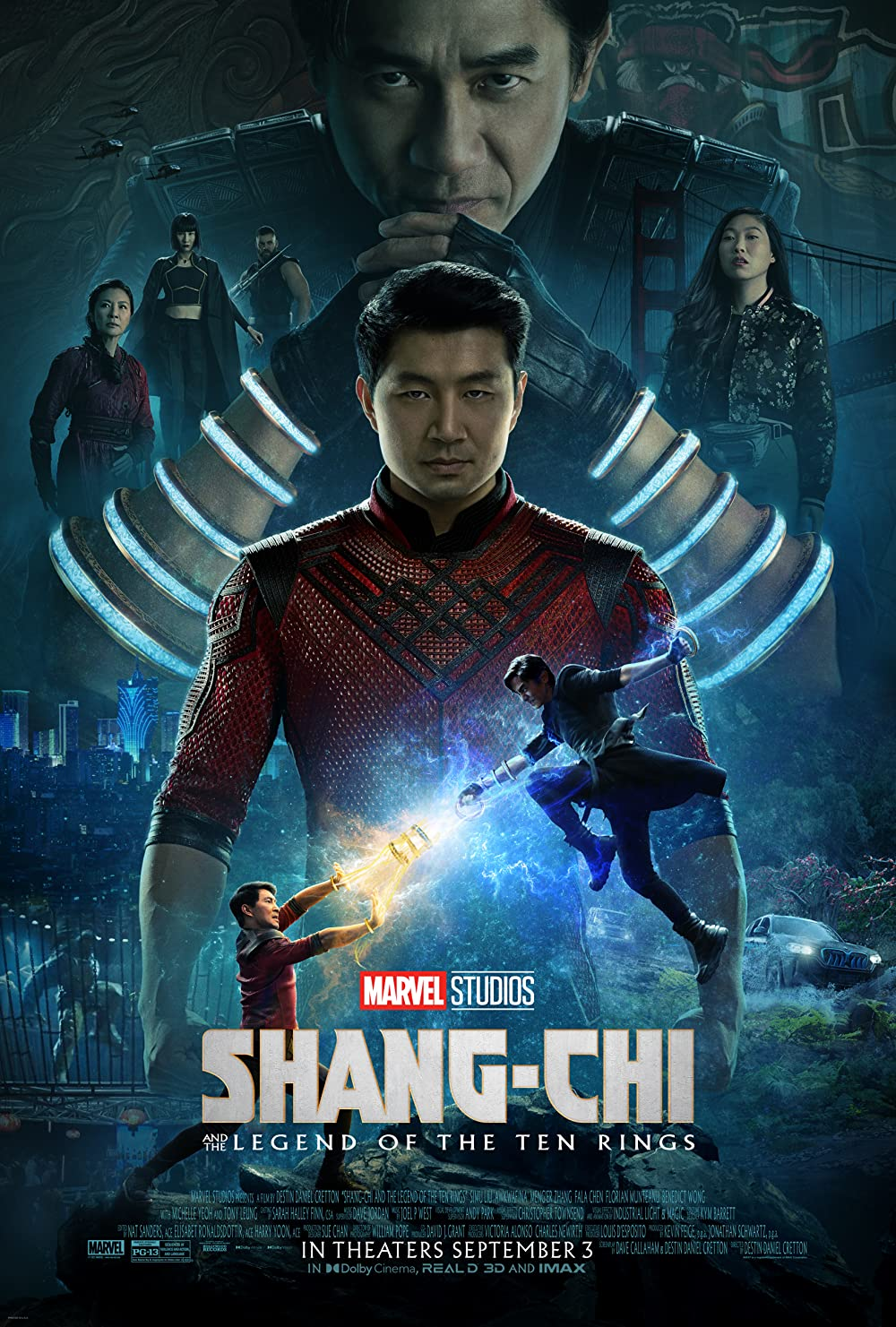
Joe: Something I liked quite a bit more was Shang-Chi and the Legend of the Ten Rings. I’m not sure if every movie needs to be an origin story - but Simu Liu was spectacular as Shang Chi and the more of him in future Marvel movies the better. I’m also a big fan of Awkwafina in pretty much every movie I’ve seen (or heard) her in. I understand she’s somewhat controversial for some reason that I haven’t paid any attention to, but she hits just the right mark as Katy here and I likewise hope that Katy continues as Shang-Chi’s sidekick / best friend.

Adri: I’m aware Awkwafina has been pulled up for her use of Black American stereotypes in her comedy - for example, there’s a scene in Crazy Rich Asians where she puts on a “blaccent” that has been pulled up for critique. That clip is pretty yikes but it’s very difficult, as a white British person, for me to pick up on more subtle aspects of that appropriation without it being pointed out to me, so I don’t know to what extent it comes into play in Shang-Chi. On a surface level, I also really enjoyed her performance here.

Joe
: It’s also not something I necessarily pick up on, which is perhaps a sign of my particular privilege. I just tend to enjoy her performances without knowing anything else about her.

Shang-Chi and the Legend of the Ten Rings is straight up a Marvel movie, with everything that entails, but at the same time it felt fresher than most - possibly because this isn’t a story that I’m familiar with, not that a lack of familiarity made The Eternals any fresher. It helps that Simu Liu is charismatic as hell, Awkwafina is a delight, and Shang Chi is *fun*. Unlike the Eternals, these are characters I want to see again and if we’re thinking about the larger Marvel Cinematic Universe and what the future of it looks like - that future *has* to include Shang Chi in a very prominent position.

And, not to handwave away the idea of Shang-Chi as a Marvel movie to dismiss it, but it’s a Marvel movie. A good one, but it does what it does and hits the beats you expect and it is well done, but it’s a Marvel movie. We know what this is. We can contrast this with WandaVision because that’s a different sort of thing as a long form tv show and I also think it’s *fascinating* that WandaVision was intended to be the second show out before Falcon and the Winter Soldier was pushed.

Adri: Yeah, my feelings about Shang-Chi can be summarised with “that was a fun iteration of the standard formula”. Cool aesthetics, good characters,, and it’s nice to have a Marvel movie that can be almost entirely understood without all the prior Marvel baggage (if you leave before the credits, the only outright point of confusion for a new viewer will be “wait, half the world’s population disappeared before?”, and you’ll miss the relevance of Wong and Trevor Slattery (who, to be fair, I’d also forgotten the past appearance of until just now (whoops, brackets in brackets))). I’ll happily take more origin story superhero movies if it mitigates the increasing level of prior knowledge that you’re expected to have to watch the MCU, though of course more origin stories = more movies you have to watch to understand the big team-ups. I am terrible at watching films and therefore films that require you to watch other films are kind of the worst for me.

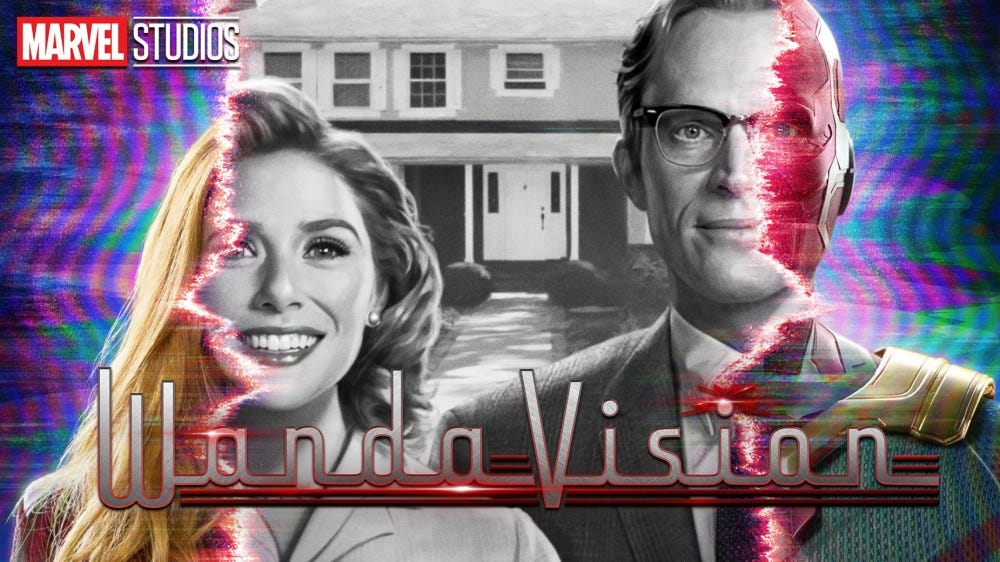
Anyway, so far I have only watched the post-Endgame stuff that has landed on this ballot, and my feelings are Loki = good but don’t care about that guy, Shang-Chi = lots of fun but doesn’t really set my world on fire, and then there’s WandaVision, which is formula breaking and emotionally intelligent and, I think, kind of amazing. I’d tried and failed to watch the series last year, tapping out fifteen minutes into the ‘50s sitcom homage (TV that expects you to have watched other TV, also not a good angle for me), but once you get past the first two episodes and their playing the sitcom premise relatively straight, things get a whole lot more interesting.

Joe
: I had to talk my wife through the first episode of WandaVision, which probably succeeded for me because I had read / heard enough about what was going on with the format - so I was on board for how absolutely cool the concept was (especially if you know there’s a concept and don’t nope out of the first fifteen minutes). But then, I was partially raised on television and have seen just about all of the reference points.

I’m on board with the general criticism of WandaVision, which is that it just *had* to conclude with a very Marvel big battle - but all of this is based on comic book characters so I just assume that it’s a given that someone is going to start throwing magical fists at some point. But around the magical fists was probably the most compelling and emotionally affecting story in the entire MCU.

Adri: That’s fair, it does end up in a far less interesting “place” than where it begins (and with a lot less Monica Rambeau than I expected). It is also very much in the midst of Big Marvel Storytelling, so you won’t understand what happened here unless you’ve seen a lot of previous content, and there’s further evolution for Wanda in Doctor Strange and clearly more stories to come. But I just really like the way it uses the evolving storytelling language of sitcoms, and does so to talk about grief through this angle of the lost potential for domesticity and quiet family happiness, when “normal family time” is something we very rarely see superhero movies do (except whatever happened for a moment there with Hawkeye, which was silly).

Joe: Yeah - as a whole, WandaVision was just so well done and interesting creatively. Which is in stark contrast to the show that was *supposed* to go first - Falcon and the Winter Soldier, which was just….basic (though not as dishwater dull as Loki was, but I maybe had higher hopes for Loki than I did for F&WS).

Adri: Funny aside about Loki, and short form in general: I spent episodes 1-4 (with 4, “The Nexus Event”, being the Hugo nominated episode) feeling increasingly invested in all the wild antics and the whole deal with the timeline authority and its weird authoritarianism. Then I got to The Nexus Event, watched it in all its post-credit cliffhanger glory, went “that’s exciting!” and have since felt no desire to go back and actually finish the story off. The same thing happened to me with Wheel of Time (who could the dragon reborn possibly be?? Is it Rand the Bland????), but at least with Wheel of Time I knew I was uninvested, whereas Loki’s shallow hold on me turned out to be a surprise! Contrast, again, with Star Trek: Lower Decks, which I also felt quite uninvested in - I’m not a Star Trek person, so most of the referential material has minimal resonance for me - but which very easily kept my attention after the specific Hugo nominated episode was done.

Joe
: I don’t re-watch a whole lot right now, but I adored The Wheel of Time so much I actually re-watched that first season. I wanted more, to the point that I also started my series re-read in order to scratch that itch. My only real complaint is that the season really should have been at least two episodes longer because the pacing was a bit rushed at times - but I’m obviously coming at that show as a long time fan of the books. Loki, on the other hand, I expected to be invested in because the character was a lot of fun in a supporting role - but the whole concept of Loki the show just did *not* work for me. There were moments, but nothing that coalesced to anything interesting. Contrast that to The Expanse, which is a show that I love but seldom feel compelled to rush through or make appointment viewing - but “Nemesis Games” was a hell of an exciting episode that I cared quite a bit about.

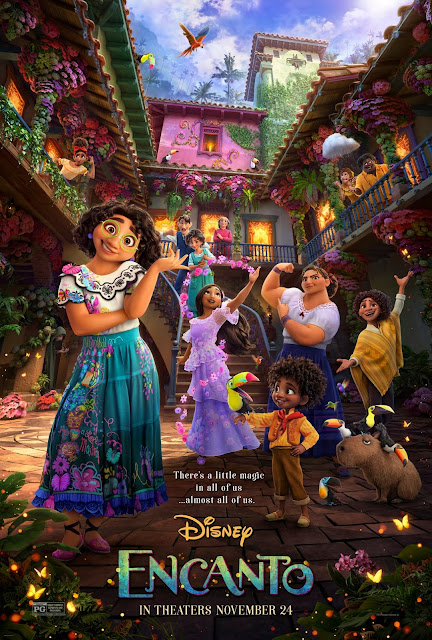
Adri: But let’s talk about the last couple of movies. Encanto is the core Disney formula’s take on Colombian aesthetics and culture, and it’s success in doing so was analysed by our own Arturo in his essay last year far better than either of us could articulate (though one key takeaway is that Colombia got a much better movie in Encanto than the region of South East Asia got in the blandfest that was Raya). Centred around the Madrigal family and their only non-magical daughter Mirabel as she tries to keep her home from (literally) falling apart, Encanto provides an entertaining and fresh-feeling take on the classic “young woman seeks self actualisation despite the obstacles presented by her family and/or culture” story that Disney has been telling, against one backdrop or another, since at least The Little Mermaid. It’s also got some excellent songs from Lin-Manuel Miranda. I live my life without the presence of small children and have therefore only seen Encanto once, so I don’t know if it gets better or worse on repeated watch - but there are worse things to have stuck in your head than “We Don’t Talk about Bruno”, I’m sure.

Joe: Yeah, I don’t know if we’re going to even approach Arturo’s essay, which I still maintain is the best thing we’ve ever published and probably should have been on more people’s ballots for Related Work. If I recall correctly, one of Encanto’s directors saw the essay and said he nailed it.

I won’t argue with you over Raya and the Last Dragon, which I likewise thought was delightful - but I’ve got kids, so I watch most of the Disney / Pixar movies a number of times and Encanto has been on repeat at our house since it came out. First - the music. We saw Encanto in the theater as a family, finding a nice early afternoon time slot that wasn’t too packed, since it’s movie watching in the time of Covid, and I *had* to buy the soundtrack - so that’s something that has also been on repeat in my house since November. Both the movie and the soundtrack hold up to repeat viewings / listenings.

Also, “Surface Pressure” is an absolute banger of a song. Team Luisa all the way.

Adri: I don’t think there’s a bad song in there, but Dos Oruguitas is something else.

The final film we haven’t talked about is Space Sweepers, a Korean space adventure that plays to a lot of very obvious tropes when it comes to character arcs and motivations, but which I thought came together really well, with a lot of funny moments and a surprising amount of emotional depth.

Joe: I really liked Space Sweepers! It’s not my favorite from the Long Form ballot, but it fits in very well. I’ll confess to not being able to give it my 100% undivided attention when I watched it, but it’s also something I would consider giving a re-watch.

Also, I found it interesting how the film envisioned a multi-lingual future. If I have the count correct (and by me, I mean the internet) there were 9 different languages and it all worked and fit together and made sense how that was a thing. It’s not a homogenised future where everyone looks and talks the same within a particular “culture” or location.

Adri
: Yes, I really appreciated the take on languages too - right down to how it has characters who naturally switch between languages and dialects even though it doesn’t make a difference to the way people understand them. Overall, this film didn’t blow me away as much as my favourites in the category, but I really enjoyed watching it and I hope we get to see more of this sort of diverse, irreverent, standalone science fiction in future.

Joe: Well, that’s that for Dramatic Presentation: Long Form. I don’t feel at all certain how I’m going to rank these, but I’m between Dune and WandaVision for that top spot and fairly certain The Green Knight will be at the bottom on my ballot. I could wave my hand at the middle of the ballot. Probably Encanto in third and flip a coin for fourth? What about yours?

Adri: My top three, in order, are WandaVision, Encanto, and The Green Knight! But really I have a top five, and then I have Dune.

Neither of us have finished with the short form nominees yet (although I’m close: I just have to work through the two seasons of For All Mankind leading up to the nominated episode) but do you have any thoughts on the ones you’ve watched? It’s fun to have a category this year that’s not going to be won by The Good Place, and I appreciated the nudge to catch up on Arcane - which is on the whole excellent, despite its infuriating use of facial difference to denote the bad guys and the lack of full confirmation of its overt queer romance - and The Expanse. Overall, I don’t have very strong feelings on the category, but it does cover a lot of ground when it comes to TV sensibilities and that’s great to see.

Joe: We touched on some of my general thoughts earlier (I was bored by Loki, loved Wheel of Time, etc) - but I’m interested in how we, or maybe just I, think about Dramatic Presentation Short Form. In a very correct sense, this is about the discrete episode that is nominated. Is *that* the best piece of short form programming? But it’s also hard to evaluate separately from the context of the show itself. For me, “The Flame of Tar Valon” was one of my favorite episodes in a show that I adore, but it is a more successful episode because there is more context. The episode is earned.

On the other hand, I have absolutely no memory of “The Nexus Event” from Loki and even after reading a recap, only the vague understanding of how that episode fit in and to the overall arc of the show - so, did I like it more than the other episodes of the series. Do I think it’s good on its own? I’m certainly not going to rewatch an episode of a show I didn’t like to find out.
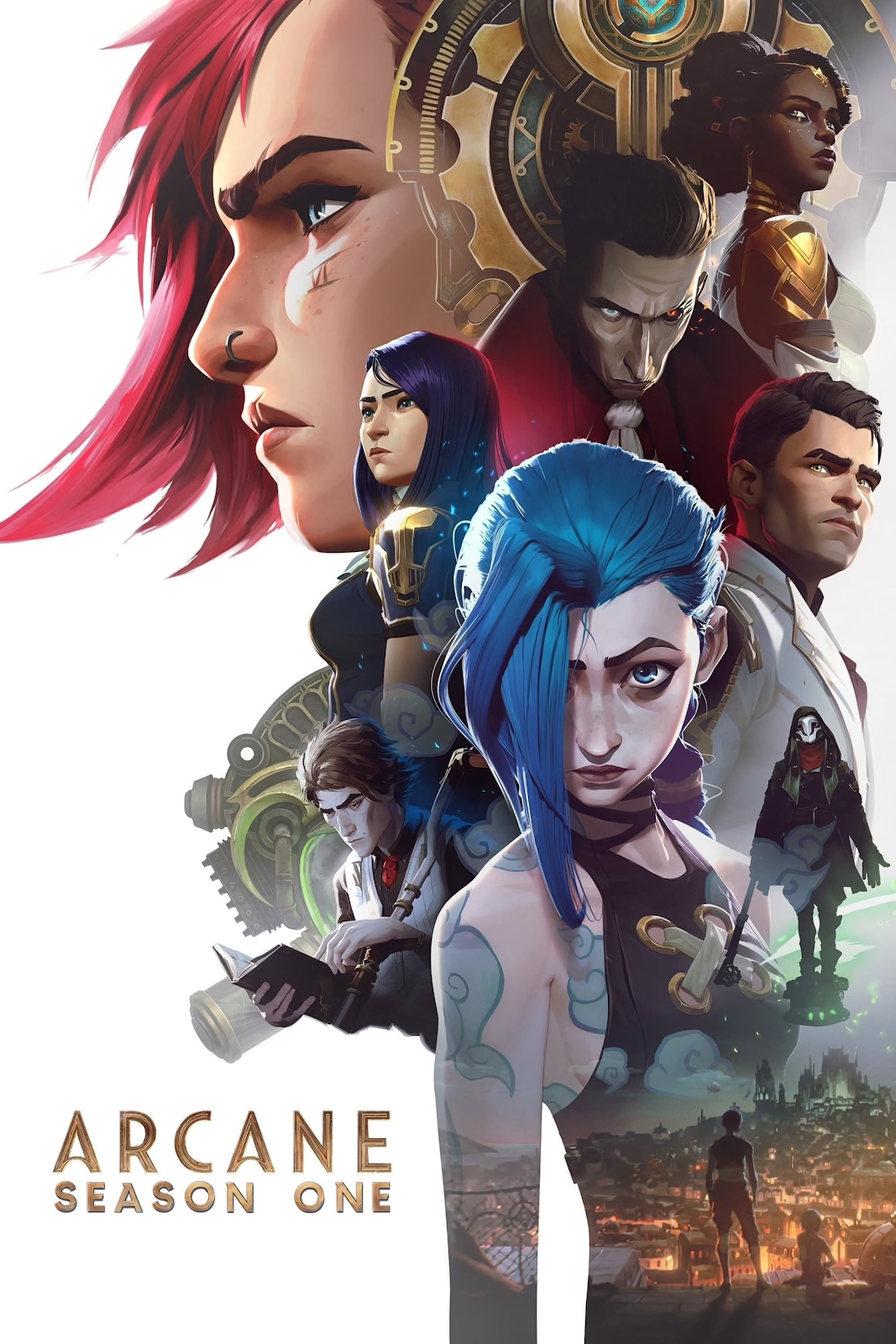
The only other episode I’ve seen (so far) is “Nemesis Games” from The Expanse. It’s the finale from Season 5 - after a brief refresh I remember it much more than the Loki ep, and (as with so much of The Expanse) - it was really good and a hell of a season finale. I haven’t been quite motivated to watch the full season of Arcane just to get to get to the finale, though I’ll admit to watching all 5 seasons of She-Ra last year just to get to the nominated episode(s) so really I’m a fraud. Likewise, I don’t have Apple+ right now and I somehow never started For All Mankind - so I do still want to watch the show, I’m going to wait until whenever an Oscar contender is on later this year and then try to catch up for that month. I’ve got enough streaming in my life that I just don’t have a strong desire to get another provider even just for 1-2 months. I *will* watch the episode of Star Trek: Lower Decks with absolutely no context prior to voting because it’s in the voter packet and I watched a lot of Deep Space Nine and Voyager with no context so why not get back into Star Trek television without context either? I probably will watch Arcane at some point, though. Just not sure if it’ll be before voting closes.

Adri: Nemesis Games suffered from the need to write out a major character following extensive sexual harassment and abuse allegations against one of their actors: it’s handled as well as possible in the context and it doesn’t detract from the overall story, but it does make the episode as a whole a bit odd. Still, I think the Expanse keeps earning its spot in this category. Plus, the Star Trek episode is absolutely watchable in zero context, though it benefits from an understanding and love for Trek in general.

It's going to be Arcane for me in this category, though, unless For All Mankind gets a surprise hold on me.

And with that, we’ve covered all of the dramatic presentations! Join us for our next conversation on short stories, coming (hopefully) soon!

Joe Sherry - Co-editor of Nerds of a Feather, Hugo Award Winner. Minnesotan. He / Him
 
Adri (she/her), Nerds of a Feather co-editor, is a semi-aquatic migratory mammal most often found in the UK. She has many opinions about SFF books, and is also partial to gaming, baking, interacting with dogs, and Asian-style karaoke. Find her on Twitter at @adrijjy 

Thursday, June 9, 2022

6 Books with Scott Drakeford

Scott Drakeford is a longtime lover of the written word, especially fantasy fiction. Rise of the Mages is his debut epic fantasy. He had his first taste of ‘the good stuff’ in his younger years. He spent countless hours reading and re-reading his favorite fantasy novels, shaping him more than was probably healthy, and lurking sites like Wotmania (RIP) while waiting for each new book to come out.Later in life, he was tricked into becoming a “responsible adult”, getting a degree in engineering, and living the corporate life in the technology industry.Scott currently lives in the Boston area with his badass tech wizard of a wife, their tenacious daughter, and two dogs.


Today he tells us about his Six Books

1. What book are you currently reading?


I’m reading an ARC of Flames of Mira by Clay Harmon. Clay has been a friend of mine since we met at World Fantasy Convention in 2018, and I’m pleased to report that his book is fantastic! Clay has done a great job crafting a story that starts with nice pacing and character development. He weaves in an impressive amount of worldbuilding so deftly that you hardly notice it. I’m loving it so far.


2. What upcoming book are you really excited about?


There are just so many good books coming out this year. The Justice of Kings, Engines of Empire, Wake of War, Flames of Mira, The Memory in the Blood, and The Book Eaters all come to mind for 2022, and are all by new or relatively new authors. I think Wake of War might have intrigued me the most. It’s a military thriller written by fellow debut author and veteran Zac Topping, and offers a look at what a near-future rebellion and civil war might look like in the US. It also features my hometown of Salt Lake City, Utah, so I’m really excited to give it a read. A book like this was on my list of stories to write myself, so it will be a real treat to see it done by someone who knows the reality of war in a way I (hopefully) never will.


3. Is there a book you’re currently itching to re-read?


I re-read books a lot. Now that I’m a writer myself, I tend to be overly critical of new-to-me works. It’s difficult to turn the editor brain off and just enjoy books sometimes. I don’t seem to have that problem with books my brain has already decided are good, though, so when I need a real break I tend to find it in re-reads more often than not. It’s a weird mental block I am working to get rid of. 

To finally answer your question: I’ve been meaning to re-read Bernard Cornwell’s Sharpe series. I’m a big fan of Cornwell’s books in general, and the military tactics in my own Age of Ire series are evolving to be somewhere between the sword and shield battles in the Saxon Stories (The Last Kingdom) and the musket and cannon warfare in the Sharpe series. I don’t focus quite so singularly on military tactics like Cornwell does, but it’s a major aspect of what I’m trying to write. And nobody writes an engaging war story like Cornwell. 


4.  A book that you love and wish that you yourself had written.


Easy. The Name of the Wind. And I think it’s because of all the books I love to death – and there are many – The Name of the Wind is just… perfect. I know that there are people who don’t like the slow plot, or that Kvothe is an (overly) gifted person. I think those are unfair critiques, honestly. The book has a plot, it’s just not the primary focus of the story and doesn’t move to resolution quickly. It’s simply not a story about earth-shattering events… for now. The plot is wonderfully fit into the slot that world-building or character arcs might fit in more plot-forward stories. And with respect to Kvothe’s abilities, I think Rothfuss struck a very nice balance. Kvothe is talented enough to make the story interesting, but Rothfuss was very careful to make sure there’s always somebody (or multiple somebodies) that are considerably better, or at least more accomplished and better positioned. To me, both of these are very positive aspects of his story: I love nothing more than rooting for someone who is working to improve themselves and their fortunes, especially when it involves operating outside the lines of polite society. The other positive aspects are well known and obvious. Rothfuss’s prose is clear and effective, yet poetic and provocative at just the right moments. You can tell that Pat is a perfectionist, which I appreciate and sympathize with as a fellow sufferer. His characters are deep, detailed, and nuanced, even those we only see very briefly. Simply said: if I could consume anyone’s writing talent and make it my own, it would be Rothfuss’s. 

5. What’s one book, which you read as a child or a young adult, that has had a lasting influence on your writing?


This answer won’t be all that original either. The first book I can remember reading that had a significant impact on my *writing* was The Eye of the World… and the subsequent five or so books of the Wheel of Time that were out when I started the series around age twelve. It wasn’t the first fantasy I read and loved, but it was the first that made me start thinking about the process and the sheer amount of work associated with writing such intricate societies and character arcs in a world with a very rich history. This didn’t necessarily inspire me to write - in fact, it scared me away from writing for a long time. It seemed an insurmountable task at the time. But what it did was give me an appreciation for the depth involved in top-tier storytelling, and in many subsequent re-reads I gained further appreciation for everything Robert Jordan managed to work into his books. And though I absolutely love the Wheel of Time, it also convinced me to stick with fewer POVs in my own books, lest I wind up with 15 novels that take me more than a lifetime to complete.


6. And speaking of that, what’s your latest book, and why is it awesome?


Thank you for asking! My debut novel, Rise of the Mages, launched on February 8th. It’s an action-adventure fantasy set in a world where (slightly modified) electromagnetic energy, infusori, is the primary energy source for an emerging industrial revolution and for the world’s ‘magic’ practitioners. Two brothers attend a school for infusori engineering and military arts that is seized by a ruler looking to expand his technological capabilities in a bid to win a war that is stifling the economy of his home Province. Emrael, a student of military arts, must go to extreme lengths to save his younger brother Ban, who is captured in the attack. Luckily, he finds a few friends who are (mostly) willing to help.

I tried my best to smoosh together the aspects I loved most from some of my favorite stories: the mystery and adventure of the Wheel of Time, the familial tone of the Belgariad, the pacing of Red Rising, the battles of Cornwell, and the focus on technology and political realism of Modesitt.

Above all, I love this story because it’s everything I had hoped to be capable of creating when I began writing it ten-plus years ago. Some of my deepest fears and desires are wrapped in the various layers of this story, most especially the desire to overcome the misfortunes that befall us all in life and work toward a brighter future with loved ones. The characters and the world have become deeply real to me. I hope they inspire others as much as they have inspired me.


Thank you, Scott!

POSTED BY: Paul Weimer. Ubiquitous in Shadow, but I’m just this guy, you know? @princejvstin.

Microreview [Book]: Dead Collections by Isaac Fellman

Dead Collections offers a unique spin on vampires that just seems so right: of course a vampire would live in the archives!

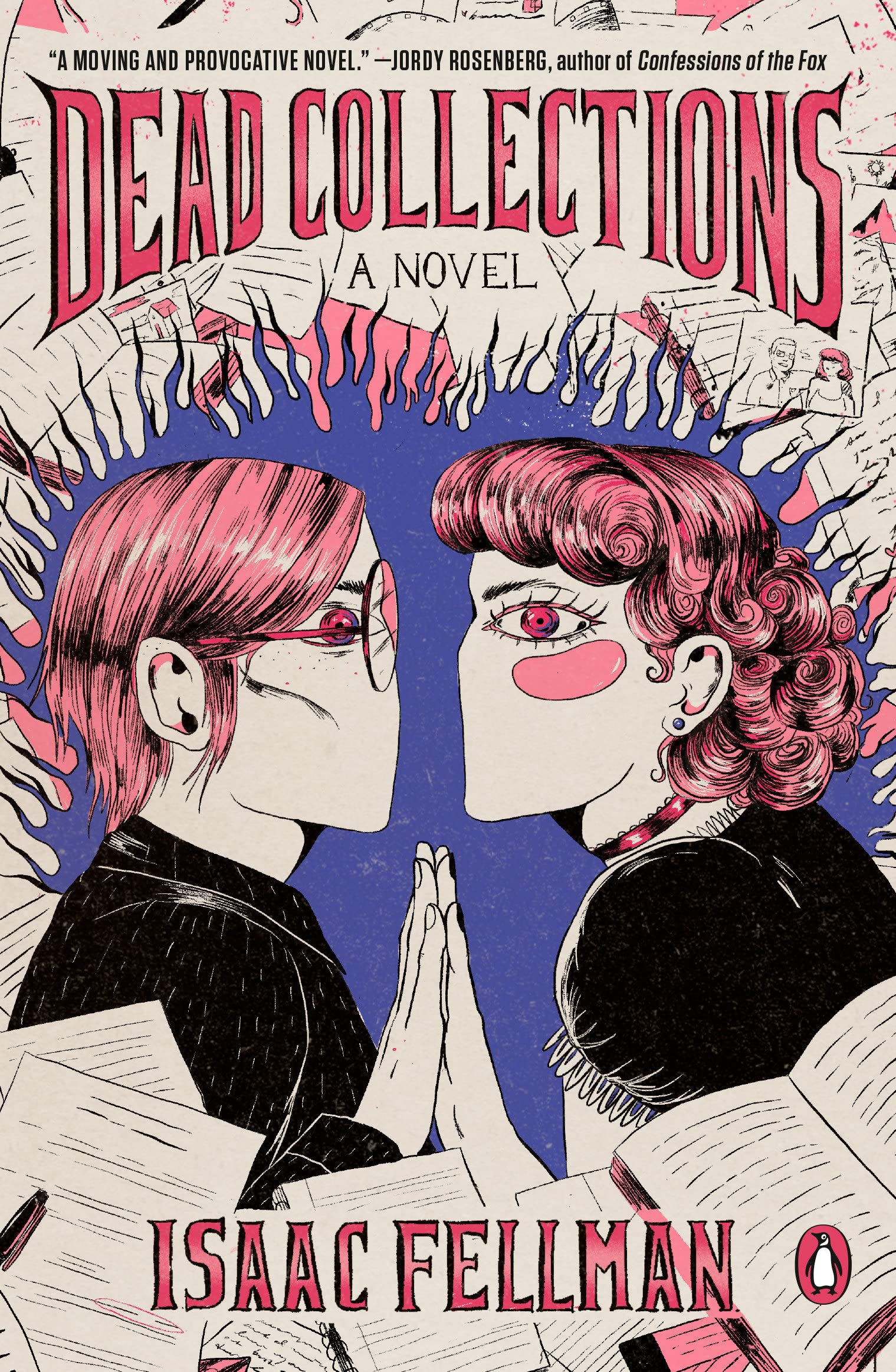
An illustrated cover in pink, white, and blue. Papers, books, and other ephemera surround the two characters, a man and woman pressing their hand together, leaning in as if about to kiss.

Note: This novel deals with the struggles of the LGBTQIA+ community while also being an entertaining vampire romance. Some content warnings I would include: transphobia, transphobic violence, abusive work spaces, emotionally-manipulative relationship, “outing” of personal details. 

Dead Collections by Isaac Fellman follows Sol, an archivist who suffers from a vampirism disease after he “died” of a tetanus mishap contracted in the archives. While all vampire novels are always a little different in what lore they follow, Fellman’s vampires are deathly averse to sunlight. While Sol can drink human blood, it’s a crime, so he receives his needed transfusions at a clinic. As it turns out, being an archivist is a perfect job for a vampire: no sunlight. While Sol was a great archivist before he became a vampire, he now relies on his work to keep him safe since there are so few jobs he could perform as a vampire. Rather than immortality, vampires in Fellman’s world rarely live past three years because of how inhospitable the US is. 

Isaac Fellman, also a trans archivist, brings a depth of knowledge to the archival process that added a level of fun to the text, particularly as an artifact. For instance, in a great rumination on the archive, Sol writes: “My body is an archive. This is not a new idea […] but I always think that people who aren’t archivists miss the ways that archives are quite specifically vampiric” (176). Such moments shine in the book. Like his archivist character, Fellman curates what documents the reader sees as Sol attempts to archive the boxes of Tracy “Trace” Britton’s written work. Secrets are revealed about Britton’s life, but Sol also reminisces on his love of a 1990s TV show called Feet of Clay, on which Britton was a showrunner. 

The novel begins with Britton’s wife Elsie bringing in the boxes, still very much grieving and dealing with Britton’s death. Sol is quickly attracted to Elsie, and the feeling is mutual. Their love blooms, but the remnants of Britton’s life, which both of them are entangled in—Elsie through relationships and Sol through fandom—still haunt them and must be put to rest, or the entire archive could be in peril.

In some ways, the vampirism is the least interesting thing about this novel. It forces some of the social issues, such as Sol not having safe living accommodations. The vampirism also provides a figurative space to discuss issues of trans identity and transphobia, such as the fact that Sol’s transition isn’t continuing the way Sol wishes due to vampirism essentially freezing his body in time. Where the novel shines is less in the vampire lore and more in the archives.

The book itself becomes an archive as Sol narrates his story, but some of that narration is created through archived digital documents, such as e-mails and texts, but also through created documents, such as a series of scripts recounting some of Sol’s experiences in the office. Additionally, some of Britton’s work is collected in the book, such as excerpts from the novel she was attempting to write in the Feet of Clay universe, which was supposed to provide a more satisfying ending for a TV show that was cancelled to soon (I’m sure most of us have felt that gut-wrenching emotion). 

On top of all these archival moments, fandom plays an important role throughout the story as Sol comes to Britton’s archive as a fan. Additionally, Elsie is also involved in archiving as a board member for the Organization for Transformative Works, which runs the very real Archive of Our Own (Ao3). Analogous to the vampire, fandom and fanfiction has created an important space for exploration in the queer community (which is not to say that fanfiction has not also done harm). 

By archiving Britton’s work, Sol reckons with his love of Feet of Clay but also his interest in the show’s creator. As formative to his identity, returning to Sol’s fandom era is a unique way to learn more about his character. The rumination on fandom between Elsie and Sol captures a nostalgia and comfort that favorite, formative narratives can create.

Ultimately, this novel is a queer romance with a happy ending, made all the more interesting through the importance of the archive and fandom. While the vampirism didn’t always seem tightly woven into the story, Isaac Fellman is right: an archive is a perfect space for a vampire.   

_________

The Math

Baseline Assessment: 6/10 

Bonuses: +2 for the archival setting and the meditation on fandom as formative

Penalties: -1 for an interesting take on the vampire, but not so tightly woven into the story

Nerd Coefficient: 7/10: an enjoyable experience, but not without its flaws

Reference:  Isaac Fellman, Dead Collections [Penguin, 2022]

Posted by: Phoebe Wagner (she/her) is an author, editor, and academic writing and living at the intersection of speculative fiction and ecology. She tweets as @pheebs_w.

Wednesday, June 8, 2022

Questing in Shorts: June 2022

This month's short fiction includes an anthology issue from a regular column favourite, plus two new-to-the-column publications:  Shoreline of Infinity and Khōréō. No preamble this month, let's just dive right in!

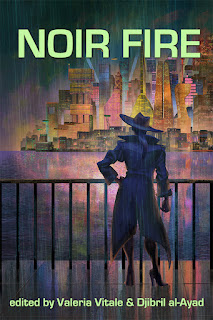
Noir Fire ed. Valeria Vitale and Djibril Al-Ayad (The Future Fire Issue 61)

The Future Fire's regular quarterly issue from April - June has been replaced by this full length anthology, featuring 14 stories of speculative noir fiction plus an introduction from the editors and an afterword by author Fabio Fernandes. Five of these stories are original, and can be read for free on The Future Fire website in place of the quarterly issue; the rest are reprints, including older stories from TFF itself. 

What's great about this anthology is how wide-ranging it manages to be while also maintaining a thread of "yes, this feels like noir" throughout. This is, I believe, nothing short of sorcery, and I'm not enough of a noir afficionado to unravel the threads that keep this set of stories coherent (side note: we had Valeria and Djibril over to talk about speculative noir in an interview last year [http://www.nerds-feather.com/2021/12/speculative-noir-with-valeria-vitale.html] if you're interested in hearing some actual experts talk about the genre as a whole!) but the result is a really effective book which gives you plenty of reasons to keep reading. What is notable is how many stories - not all, but enough to feel like a theme - subvert the individualism and misanthropy of "classic" noir protagonists and substitute it with characters who genuinely care about other people, particularly those at the heart of the mysteries they are solving. Those relationships often serve to highlight the overall bleakness of the stories, even when there's an note of sweetness within the loss. For stories which stick to a more familiar bleak-cyberpunk-mystery aesthetic, it's the relationships that make the stories feel fresh. For example, in "I Will Make You Remember Me" by H. Pueyo (original Portuguese publication Revista Trasgo 2019, translated in Nat. Brut 2020), where investigator Sebastián tries to track down a missing woman, while also beginning a relationship with his mysterious client, the trope of the hard-as-nails detective is made complex by the genuine trauma its investigator struggles with, as an ex-cop who has refused to allow his memories of a prior incident be downloaded from him. "Terminal City", by Zoe Blade (reprinted from The Future Fire 2013), begins with its protagonist finding the body of her co-worker and pursues the mystery of his death, and his final work, against the backdrop of bleak underground tower block; it combines its fast-paced corporate hellscape narrative with moments of grief and connection between its protagonist and their friend, as they seek to make the death they've encountered worthwhile.

Travelling further out on the continuum of weird, we encounter "We Are All Wasteland on the Inside" by Benjanun Sridaungkaew (reprinted from TFF 2016), featuring old spies trying to understand a mysterious curse which is causing one of them to literally fall apart. It's slow and bleak and full of all the weird, dramatic imagery you'd expect from a Sridaungkaew story, set against the backdrop of Bangkok. "A Prayer to St Jude" by M. Bennardo brings a compellingly spooky seaside town gothic aesthetic, with its protagonist, Madame Cassie, working as a fortune teller with a specialism in "finding" lost objects even as she runs from a mysterious figure from her own past. Then there's the noir-meets-katabasis undertaking that is "The Bone Children and the Darkness" by Lorraine Wilson (Stalking Leviathan 2016), in which a village, led by a blind oracle, send an expedition to seek out lost children who have been taken into a mysterious darkness. How does this quest story work as part of a noir anthology? I don't know how to explain it, but it totally does.

Finally, a word about perhaps my favourite story in the anthology: "The Stars, Their Faces Uplifted in Song" by M.L. Clark, about an AI detective sent to unravel a mystery where almost an entire monastery has been mysteriously murdered, leaving just one survivor. Complicating matters is the fact that on this world, Cog, people believe that the universe will cease to exist if the monks of this monastery stop singing, and with that burden now falling on one monk who can't pause for long enough to explain what he witnessed, figuring out the mystery is going to be a tall order. Combined with that mystery, Clark also mixes in the scepticism of the protagonist: this is a spacefaring civilisation, full of people who know that the universe is much older than the song has been sung for, and yet their belief remains powerful regardless; and the social implications of a male-only monastery and the status of the women who work there. It's a fantastic piece of worldbuilding in and of itself, but the sceptical protagonist and the gender elements also hold up a funhouse mirror to some of the more tired tropes of noir, putting them in a setting where they're recognisable while the story does its own thing. Overall, this is an anthology that's well worth your time.


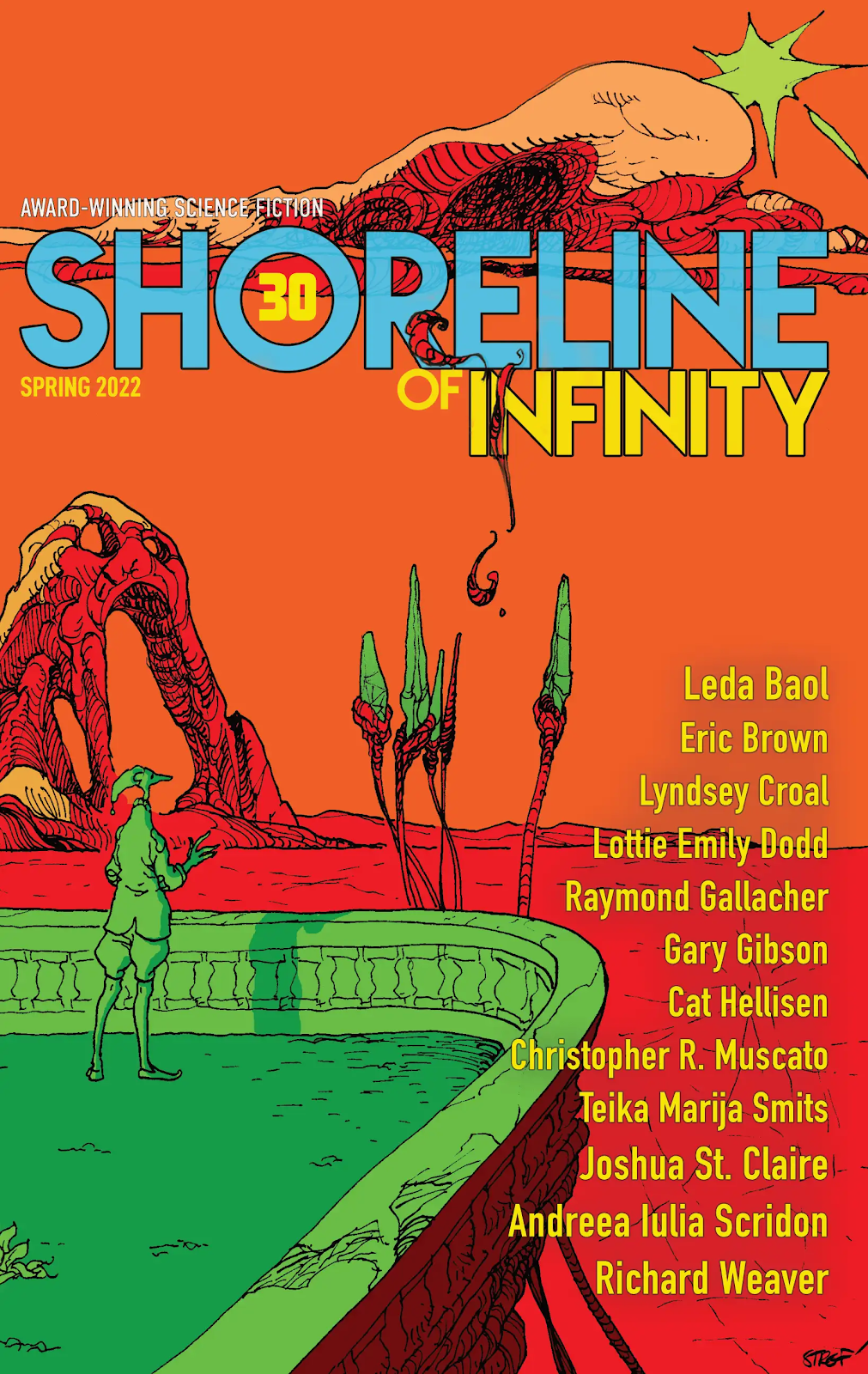
Shoreline of Infinity 30 (Spring 2022)

Shoreline of Infinity is my first experiment with a literary magazine that actually shows up on my doorstep, delivered by the postman, in physical artefact form. I don't get paid enough to start musing on the ins and outs of physical vs. digital publishing, but it is nice to hold paper sometimes, especially when there are pictures, and the novelty of that experience carried me through the content I was less impressed with - namely the serial, "Approaching Human" by Eric Brown, an 50s-style "AI Noir" which doesn't hold up well against anything I just discussed above. That aside, there's some really cool stuff here too, like Lyndsey Croal's The Last Call of the Deep, a flash piece which follows a lonely whale travelling a lifeless ocean changed by rising sea levels and their effect on humans, and Raymond W. Gallacher's The Keep, an atmospheric post-apocalyptic survival story centred around a man living in an ancient, mysterious building. Minotaur/Mindtour melds together myth and spacefaring science fiction in a story about a deceptively simple labyrinth in order to dethrone a corrupt king: its challengers (all given a Theseus designation) enter what looks like an empty dome with a leather bull head at its centre, but almost all of them die within moments of entering. It's up to Theseus Three - who turns out to be the Theseus - to withstand the mental challenges of the labyrinth and to defeat the "minotaur" at its centre. The genre mashup works great, and the ending took me by surprise, bringing home the implications of living out a repeating myth in a way that really packs a punch.

Also of note here are two winners from the Solarpunk Storytelling Showcase, created by Extinction Rebellion and highlight stories which imagine positive, post climate emergency futures. The two flash length pieces here both put the natural world front and centre in their protagonists' coming of age, putting us in the shoes of young people who have only lived in a solarpunk world, even as they know the stories  The Tides Rolled In, by Christopher R. Muscato, isn't so much a narrative as a setting-in-action, as we follow Afton, a girl living on a sustainable floating village which is about to dock with a much larger settlement. Through Afton's eyes, we see the technology that supports her home in action, and it's accompanied by a detailed architectural drawing of the ship by Dustin Jacobus, an industrial design engineer. The second solarpunk story here is The Singer of Seeds, by Leda Baol, which features a coming of age ritual in which children are given a seed, with the kind of plant they get holding significance for their future. It's a cute story, and like The Tides Rolled In, it uses its premise to talk about the significance of the seeds, and of how biodiversity has been protected in this world and the people responsible for it.


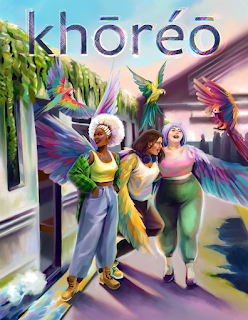
Khōréō Issue 2.1

Khōréō is a quarterly publication of immigrant and diaspora fiction, and this issue is the first of their second year. Khōréō has come recommended and checking out this issue, its not hard to see why. Highlights from the five stories here include "Me and Seed Sheself" by Celeste Rita Baker, about two entities, encased in a tamarind seed, who hitch a ride with a young girl and stay with her as she grows up, until her growth into womanhood comes into conflict with the interests of her seed-spirit friends. There's a lot of concepts and strangeness packed into a relatively short length here, making this a story that really benefits from rereading and taking more of the concepts in. 

Also worthy of note here is "Matchmaker, Matchmaker" by Evalyn Broderick. This is a story about two Jewish women interviewing for marriage to an eligible young man who has come from another planet to meet them, but while both Esther and her friend Chaviva feel constrained by tradition which insists that men must travel to them in order to marry, what they really want is to be able to stay together. The resulting story deals with a queer awakening within a traditional context that is presented as very heteronormative, but where adapting that tradition doesn't mean confronting bigotry - it just means taking an option that you didn't realise was available.

Adri (she/her), Nerds of a Feather co-editor, is a semi-aquatic migratory mammal most often found in the UK. She has many opinions about SFF books, and is also partial to gaming, baking, interacting with dogs, and Asian-style karaoke. Find her on Twitter at @adrijjy

Tuesday, June 7, 2022

Review [Television]: Undone

An underrated, insightful gem of a show that will undo your emotions in the best way.


The plot device that probably comes to many people's minds when thinking of ambiguity in fiction is whether fantastical happenings are truly fantasy or whether it's a figment in a mentally ill character's imagination. Almost always, it's a lazy plot device. It skirts answers, solidity, and finality in favor of cheap shock and a shallow veneer of intellectualism. Ambiguity works best if each interpretation elevates the story, not muddies it. Undone understands this more than almost anything I've seen. It’s a show that digs deep into the dilemmas of time travel and struggles of mental illness through character development and a clear emotional through line. 

Alma (Rosa Salazar) doesn’t have the perfect life. She’s struck by ennui, her father died under mysterious circumstances, and she doesn’t always have the greatest relationship with the rest of her family. Then, she almost dies in a car crash, and develops an ability to move through time. With her newfound power, she’s set on a mission to find out more about her father and his questionable demise. Mental illness, familial relationships, as well as romantic ones are explored in an ambitious tapestry.

Animation has so much potential to transcend the limitations of live action and go for broke through its imagery and creativity. Undone does such a thing, making the most of its medium, through creative transitions, like when a disparate setting collapses into another without being jarring, or an abundance of flashy visuals that could be overwhelming in another medium. The animation style is Rotoscope in which animators trace over live action visuals to deliver more "realistic" performances. That is never more clear than in the facial expressions. Lifelike looks of distress, joy, and anger are conveyed subtlety from a quirked mouth or a glint in an eye. And it never veered into uncanny valley territory for me.

One complaint I have for the show is that the midsection of Undone’s first season can be repetitive as Alma is learning her powers. While I don't think a training montage would be appropriate, I think a classier variant could be devised to speed things along a little more. However, the latter part of season 1 and the entirety of season 2 are a burst of momentum and creativity. Plot lines contort until they're as twisty as can be while still being comprehensible, while the social dynamics that were quietly built in the early stretch of the show pop off with satisfying explosiveness.

Undone isn't empty ambiguity. Its exploration of mental illness lays the foundation for its realistic story beats, while its time traveling exploits decorate it with vibrant imagination. While it offers two interpretations for what's going on, the ambiguity doesn't undercut one interpretation over another. Rather, the journey the show goes through uses its more imaginative sections to give more insight to its realistic interpretation and vice versa. Whichever interpretation you choose will be informed and enhanced by the entirety of what you watched, not just some of it. And what a rewarding experience it is.

The Math:

Baseline Assessment: 8/10

Positives: +1 for a brilliantly executed animation style.
+1 for heart-wrenching explorations of intergenerational trauma and mental illness.

Negatives: -1 for a couple repetitive episodes

Nerd Coefficient: 9/10

POSTED BY: Sean Dowie - Screenwriter, editor, lover of all books that make him nod his head and say, "Neat!”