Showing posts with label serial box. Show all posts

Tuesday, July 30, 2019

Questing in Shorts: July 2019

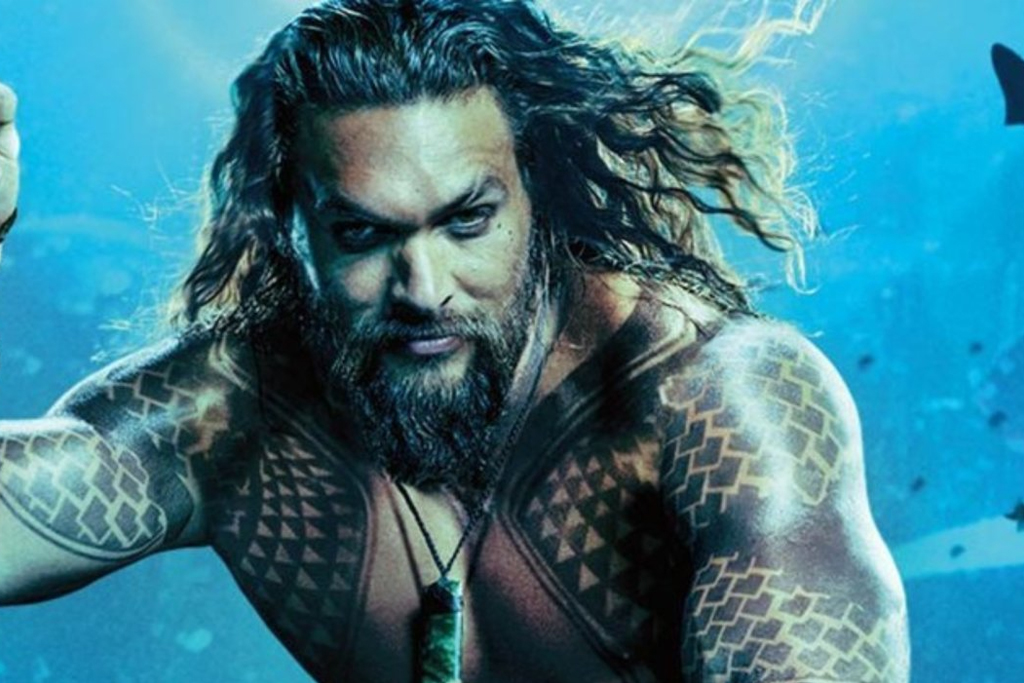
This edition of Questing in Shorts is brought to you by "Adri is tired and overestimated how much review writing she could get done during a weekend where she was also attending YALC." YALC - the UK Young Adult Literature Convention - was wonderful: a great mix of stuff to engage with and the benefits of attending a con slightly outside one's core interests mean there's lots of horizon broadening stuff and also no need to get too worked up about getting in for early giveaways or hopping between endless desirable authors. The fact that the con is held concurrently with London Film and Comic Con also means there's the occasional celebrity guest wandering around, and this year Jason Momoa was adopted as the con's unofficial mascot due to very regular walkthroughs on the way to and from his signings.

Enough of the unrelated Momoa intrusion. July has been a slim month for me in terms of magazine reading, but I've still got plenty of anthology goodness plus a dip into some serialised fiction from your friendly neighbourhood Serial Box. Shall we dive in?

Meet me in the Future: Stories by Kameron Hurley

Art by Carl Sutton, design by Elizabeth Story
Because Hurley is such a prolific essayist as well as a fiction writer, and is so open about many elements of her writing journey, I already knew that short fiction hasn't been her natural habitat as a writer, and it's ground that gets covered again in the opening to this collection. It's an admission that might seem odd at the start of a short story collection for many writers, but fits with Hurley's reputation as someone who has got where she has through putting in the work: something that's very much on display in this high quality short story collection.

Hurley's forte generally involves scenarios with senseless and claustrophobic violence, full of plague and rot and viscera, and when collected into one short burst of death energy after another, it can get quite relentless. The bludgeoning effect of each story's brutality is only occasionally balanced out by characters whose fates we can really get invested in, and it can really start to add up, meaning that this is a collection that's worth offering a prolonged spot on the bedside table to be dipped into occasionally. I was also surprised not to encounter more stories set in the same world, which I had picked up on as a feature of Hurley's work from previous engagements (I've been a Patreon subscriber of hers on and off for years, which is where quite a few of these stories come from). The world of Nev, a corpse-jumping former soldier trying to survive, turns up in both "Elephants and Corpses" (excellent) and "The Fisherman and the Pig" (fine), as well as a story in the world of The Stars are Legion and the original short fiction version of "The Light Brigade" (still brilliant on its own as well as read in conversation with its novel cousin). However, I could easily have spent more time - and am fairly sure there's more stuff - set in the world of stories like "The Red Secretary", and plenty of other worlds (like "The Plague Givers") which could hold much more. Perhaps its because its the worlds of these stories and not their characters or plots that stay with me that I'm always keen to spend longer in them - and I'd love to see Hurley take on a more mosaic style novel with her worldbuilding skills and short story expertise. Regardless, the stuff that is in this collection is near universally strong, and if Hurley's novels are up your alley then this is one to look out for.

Rating: 7/10

Tor.com March/April 2019 (Download)


This set of five stories - packaged for subscribers to the free ebook bundle in late May - bookends an "issue" permeated with explorations of death and grief with two stories about intelligent dogs. Of these, "Knowlegeable Creatures" by Christopher Rowe takes the form of a period murder mystery in a reality where certain types of animals are "knowledgeable". Connolly Marsh is an investigative dog who bites off more than he can chew when he gets brought into a case of blackmail and murder by none other than the perpetrator of the murder. It's an entertaining mystery with a satisfying edge of Victorian horror to it. At the back of the collection, "Mama Bruise" by Jonathan Carroll is the deliciously weird story of a couple who realise that the family dog has been imbued with the spirit of the woman's dead father, with increasingly bizarre and dangerous consequences for both them and the dog. 

Sandwiched between them, and lumped here into the category of "not about dogs", are some equally strong tales. "One/Zero" by Kathleen Ann Goonan takes a powerful look at the effects of war on young children, offering a tenuous and painful thread of hope in its speculative future among the exploration of grief and loss. "Blue Morphos", by Lis Mitchell takes on questions about belonging and autonomy, in the story of a woman who joins a family whose members all take on a "second life" as other objects or creatures when they die. Despite pressure from family members, including her partner and other women who have married into the family, the narrator is firm in her decision not to take on a second life, but struggles to have this respected and to explain the decision to her daughter. I was reminded during reading of Zoe Medeiros' "My Sister is a House", which has similar ways of looking at family relationships through non-human reincarnations, but tonally these are very different stories and they explore quite different surrounding mythologies and family structures. Rounding off the group is Rich Larson's tale of a reluctant killing machine superhuman, "Painless". Rich Larson is a prolific author but one who crosses my path surprisingly little, and I enjoyed this story without being blown away by it. Taken together, this is a collection that hangs together thematically despite probably not being planned that way, and I still think the option to read Tor.com stories in ebook (provided you're not too worried about reading them as they come out) continues to be a good option. Despite the strength of the individual stories, however, I'm unimpressed that Tor.com chose not to feature any short fiction from authors of colour over this two month period.

Rating: 7/10

Hexarchate Stories by Yoon Ha Lee


A year after the release of Raven Stratagem, it's time to go back to the world of reality-bending calendars and the military technologies they make possible! This collection is, as the title would suggest, entirely set in the Machineries of Empire world; stories range from "The Chameleon Gloves", set in the pre-Heptarchate era, before the system of factions became what it was, to "Glass Cannon", a direct sequel from Raven Stratagem which brings Shuos Jedao and Ajewan Cheris back in a fun and explosive way. Between these longer pieces (the post-trilogy story is a novella) is a whole bunch of flash fiction ranging from poetic worldbuilding exercises ("How the Andan Court") to cute sidelines about the clean-up of cat hair in space, ("Irriz the Assassin-Cat"), to more emotionally resonant moments, mainly involving Jedao, offering additional snapshots and the occasional "what-if" about the characters' inner lives.

While there's lots to love about the world of the Hexarchate and much of that is on display here - "The Robot's Math Lessons" a story about how young Cheris originally learns machine language and starts befriending robots is particularly endearing - this is a collection with Jedao at its centre, and those who don't find the character compelling are likely to find themselves skipping forward. Though I'm generally a fan of the lad (and was really impressed by the direction taken in "Raven Stratagem", I did get a bit sick of him during the sequence of flash pieces focusing on his human life; it was nice to reach "The Battle of Candle Arc" and the turning point around then, and things get a lot more varied at that point. Even if you're skipping through some of the flash fiction, however, Hexarchate Stories is worth picking up for its longer pieces alone: Hugo finalist heist "Extracurricular Activities" is here and still brilliant, and "Glass Cannon" is practically essential reading for anyone who enjoyed the novel trilogy, and forms an intriguing potential bridge to further Hexarchate adventures. Kudos also for the design and curation of this collection, which includes author notes after every story that help elaborate on the process and intention behind each piece. It'll only work if you've read the novels, but if you're following along, this is going to be a welcome addition to your Hexarchate experience.

Rating: 8/10

Alternis: Season 1 by Andrea Phillips, Maurice Broaddus, Jacqueline Koyanagi, and E.C. Myers.

Cover artist not credited
Alternis marks the first time I've followed along with a Serial Box serial as it's being released, and it was an interesting experience to follow Tandy Kahananui through her trials as the newest member of Team USA in a very high-stakes video game. We are introduced to Tandy as she attempts to troubleshoot some bugs in her game, Alternis, a fantasy MMPORG that she's poured a decade of solo work; however, when she's sucked into an alternate version of her game which appears to have been directly taken from her design, she soon discovers that a super-secret version of her game that has been set up as a virtual political arena, with each nation entering its own team and competing on a leaderboard in a pact that is supposed to reduce conflict in the real world. Having stumbled upon the secret, Tandy is quickly scooped up to play for her country, whose members - elite gamer Dante, military veteran Ben, and team leader Etta - all have varying reservations about bringing her up to the level needed to contribute to their missions.

Alternis is literary RPG, meaning that there are trappings of game design within the prose: characters have hit points, experience levels and need to keep track of their spells and abilities, just like a real game. One of the benefits of Serial Box's productions is the ability to switch between prose and audio, and the sound for Alternis is particularly good: Summer Glau's narration is engaging and enjoyable (particular kudos for the male voices), and a range of specifically-composed music and sound effects add realistic depth to the game conceit, especially for more heated action scenes. I was glad to discover the additional dimension the narration provided, especially for tense scenes where the sound design really lifts the writing up a notch. Of course, it's matched by solid writing from a talented team, and I felt the respective author styles here melded well together, with only subtle differences in tone from chapter to chapter. Jaqueline Koyanagi's "Quickened Soup for the Soul" was a particular highlight, focusing on a deeply weird, interesting aspect of the game in some depth - to say more would be a spoiler, as it's quite far in, but it's great fun.

Where Alternis didn't work for me was in turning its genre conceit into a story whose wider stakes felt genuine and interesting. While the character arcs improve with time - starting from a bizarrely juvenile point given that these are supposed to be elite operatives on a high-stakes political mission - the story never really sells the idea that the work of Tandy and co. is to secure the USA's position on a global stage, or indeed that them losing to the likes of Canada and South Korea could actually translate into a rebalancing of the world order towards countries which seem to have the same resource and population size (and national stereotypes) as they do in our world. The episode in which other teams start making an appearance - including the aforementioned South Korean team, who are all super-synchronised ninja-types, as well as a Russian team made up of three beefy dudes with one smart, cold, calculating woman - is particularly excruciating for its reliance on tropes, and despite flashes into what's going on in the real world, the political plot remains frustratingly weak. While I enjoyed Alternis for what it gets right, and I can see the attraction of LitRPG, the weaknesses were hard for me to ignore, and I'm not sure this is a serial I'll be continuing if it moves into another season (as it probably should, given that ending!)

Rating: 6/10

POSTED BY: Adri is a semi-aquatic migratory mammal most often found in the UK. She has many opinions about SFF books, and is also partial to gaming, baking, interacting with dogs, and Asian-style karaoke. Find her on Twitter at @adrijjy.

Aquaman

Wednesday, June 5, 2019

Summer Reading List 2019: Adri

Has it really been a year since I was last putting together a summer reading list for Nerds of a Feather, right at the start of my time as a reviewer here? How time has flown!

I was pleasantly surprised to realise that I read five out of the six books on my list from 2018, despite getting pretty busy in unexpected ways (alas, the Robin Hobb reread has fallen off the radar for now, though I still hope to return to the world of the Six Duchies someday). This year, I've already taken my big vacation in February, and I'll be spending most of my weekdays enjoying relative peace and catching-up time while everyone else is on holiday at the day job, while also appreciating city sunshine and long northern summer days with friends and family. That said, I also have big plans for quality time in parks and cafes, getting to grips with some of the reading that's been piling up for me, and it's as good a time as any to get strategic about what's on my radar and burning up to the top of the TBR pile.

Last year, I was very kind to myself and said I would make a summer list that cut through all the weird guilt about things I "should" be reading. This year, I'm skipping all the be-nice-to-self stuff and leaning right into that weird guilt, because I have so many books that I want to read so very, very much and it makes me sad that there hasn't been time to get to them yet. This list is therefore a not-so-secret plea for someone to invent me some kind of Genevieve Cogman style personal library where time is suspended and all the books are around - as long as there's plenty of natural light in there too.


1. The Light Brigade by Kameron Hurley

I've heard a lot of good things about this book, in particular that it's Kameron Hurley levelling up, which I didn't even realise was possible. Obviously, I preordered it and it's therefore been sitting on my shelf since release day, judging me with its beautiful cover and its apparently even better contents. Actually reading the thing will let me engage more deeply with some of those reviews I've been avoiding, for fear of spoiling the experience.


2. Tremontaine Season 2 by Ellen Kushner, Joel Derfner, Tessa Gratton, Mary Anne Moharanj, Paul Witcover, Racheline Maltese and Alaya Dawn Johnson.

My excuse for not getting to some of the amazing Serial Box titles on my e-reader is that I've accidentally filed them away in a category that I never check when I'm looking for new things. How long it would take to fix this? About ten seconds. Have I done it? Of course not. Maybe putting this on my summer reading list will be the extra kick it takes to get something done about the whole sorry situation, and to catch up with some of the great and not-so-good of Kushner's vibrant city after Season 1's intriguing endings.


3. Jade War by Fonda Lee

I've had the sequel to Jade City, one of my top books of 2017, on preorder since last December and I'm excited that this summer will bring it into my desperately grasping hands. This continuation of Lee's epic fantasy about gang supremacy and geopolitics in a modern Asian-inspired world looks like it promises to ramp up the action even further, no doubt bringing more fantastic jade-powered fight sequences, complex character motivations and likeability, and hopefully some unexpected twists along the way.


4.  A Bond Undone by Jin Yong.

The sequel to A Hero Born continues the story of this mega-famous Chinese 1950s wuxia epic, which is now being translated into English for the first time. Despite its stereotypes and quirks, I found myself absolutely enthralled by A Hero Born, with its story of doomed Song patriots and colourful martial arts masters, and the destinies of two children: noble but dim Guo Jing, and smart but spoiled Yang Kang. The first book left things on a very unfinished note (it's only one volume of the first four which make up "Legend of the Condor Heroes", which is itself first of a trilogy) so it's time to brush up on my Song era history again and dive back in.

5. Brothers of the Gun: A Memoir of the Syrian War by Marwan Hisham and Molly Crabapple.

My 2019 reading spreadsheet reliably informs me that I have read zero non-fiction books so far this year, and while that's not too worrying - it's not where my head's been at and I'm satisfied that I do plenty of non-fiction reading and Engagement With The Real World through non-book means - I do want to set the smallest of goals to not end the year on zero. This beautifully illustrated memoir was on my TBR shelf for a while, before I made the schoolchild error of lending it to someone before I'd read it, but luckily recovering it and putting it on my list later in summer will be straightforward enough.

6. Biting the Sun by Tanith Lee.

I'm cheating by counting Lee's Four-BEE duology as a single title, because it's sitting on my shelf in its original two-novel form: "Don't Bite the Sun" and "Drinking Sapphire Wine". I've been interested in Lee's crumbling future utopia teen nihilist story for a long time but held back because only the first was available for purchase in the UK and apparently they really do benefit from being read together. A recent second-hand bookshop trip solved the problem for me, and now these are top of my list of feminist SF classics to get through this summer.


POSTED BY: Adri is a semi-aquatic migratory mammal most often found in the UK. She has many opinions about SFF books, and is also partial to gaming, baking, interacting with dogs, and Asian-style karaoke. Find her on Twitter at @adrijjy.
Tuesday, March 5, 2019

Microreview [Book]: The Vela, by Yoon Ha Lee, Becky Chambers, Rivers Solomon and S.L. Huang

Serial Box's new space opera is an action-packed, politically-driven adventure written by an impressive author lineup.


The Vela, the latest exercise in collaborative serialised fiction from Serial Box, brings together an all-star quartet of science fiction writers: Yoon Ha Lee, creator of the mindbending mathemagical Hexarchate series; Becky Chambers, who brought the best kind of slice-of-life into space with the Wayfarers series; Rivers Solomon, Campbell nominee and creator of An Unkindness of Ghosts; and S.L Huang, whose action-packed Cas Russell series is being republished by Tor after an initial self-published run. Together, they take on a space opera that touches on the strengths of all four of these works, while being something very different. Welcome to the system home to Khayyam, Gan-de and Hypatia, where the careless extraction of hydrogen by wealthy inner planets is causing the slow collapse of the sun and the death, over centuries, of all inhabitable worlds - beginning, of course, with the blameless, impoverished outer worlds. Mix in a hardened soldier-for-hire who is herself an escapee from the dying worlds, and her naive non-binary sidekick, and you've got an indisputable recipe for success, right?

Pretty much. The Vela is written to be read in short novella-sized chunks over a period of time (although I managed to devour most of it in one sitting without losing interest) and the pattern of tension and plotting that goes with that style makes for a compelling, twisty experience that is more reminiscent of good quality TV than conventional literature. This should come as no surprise to anyone familiar with the model - Serial Box releases its titles in "seasons" for a reason - but it's still an initial adjustment when reading, and those new to the format might have to experiment a little with how best to engage. The plot kicks off with Asala Sikou, the aforementioned refugee soldier, who is brought in by the leader of the wealthy, still-comfortable world of Khayyam to take on an unusual mission: locate the Vela, a ship carrying the last refugees from the latest world on the system's outskirts to have become uninhabitable, and do it with his child, Niko, in tow. Given that the slow extinction crisis has produced a ton of ships full of refugees, the mission to find one particular set of them is odd from the outset, but it soon becomes clear that this is more than a token gesture for a politician's election campaign. Khayyam is not the only political force interested in the Vela and what it carries, and soon the militaristic leader of Gan-De - the closed-off world closest to the refugees - and rebels from the barely-habitable orbiting stations which said refugees are forced into are all involved in a struggle for the system's already tenuous future.

As you'd expect, what follows is a mixture of fast-paced action, fundamentally irreconcilable political showdowns, and some highly entertaining twists and reversals, as Asala and Niko find their way in and out of trouble, make their way across the system, and uncover the true reasons behind the Vela's importance and what it means for their future. The lead pair have a great dynamic and there's plenty of other interesting characters too, representing a diverse, ethically messy version of humanity which contrasts individual capacity for kindness with a hopeless lack of positive collective action. The cultural differences between the different worlds are understated compared to the inequality and political tensions between them, but the touches are there to make these worlds feel lived in. The text also uses its science fictional elements to underscore the sense of inequality between the haves and the have-nots: interplanetary travel is technically accessible to most, but for ordinary people it depends on once-a-decade planetary alignments which allow ships to use gravity rather than burning expensive fuel; only the very wealthy can afford to transport themselves directly under normal circumstances.

In its treatment of interplanetary politics, there's a strong comparison to be drawn between The Vela and The Expanse, which takes place on a similar scale and with similar questions about privilege and inequality. Indeed, while I'm a big fan of The Expanse's current trajectory, The Vela comes stronger out of the gate with its political machinations and its representation, in contrast to the somewhat less inspiring "hardboiled bros in space" feel of Leviathan Wakes. Like The Expanse, The Vela manages to satisfyingly balance the sense of huge, irreconcilable political realities that the refugee crisis is creating, which is beyond the power of Gan-de and Khayyam to solve, and the individual personalities at the helm of some of those forces. I do enjoy stories which push hard on the tension between "good people" and "people working towards good things" (some of whom are terrible), and there's plenty of that here without descending into outright misanthropy.

That said, there were times when I was expecting a little more from The Vela, in terms of its plot and characterisation. In particular, I was frustrated by the tight focus on a few, relatively privileged characters. Asala's presence as the main character should, of course, be the counterweight to that, but despite the exploration of her past as a refugee, her characterisation is strongly shaped by an early display of indifference towards a ship of illegal refugees, which underlines the position of power that she has reached in a way that makes it uncomfortable to view her as representative of the powerless masses at the heart of The Vela's universe. Other than Asala, and a couple of characters who turn up in individual chapters, ordinary people are seen only in nameless glimpses, and that feels like an odd decision for the authors to make in a story of this kind. Additionally, while there's a cracking couple of climactic chapters here, which really blow the possibilities for future instalments wide open, the closing moments of the story leave things on a frustratingly massive end-of-season cliffhanger, and I'm already nervous about the lack of announcement for a sequel. There is enough thematic closure to still make this season a satisfying investment on its own, however, and if you're bothered by excessive cliffhangers then Serial Box's model may not be the one for you anyway.

All in all, The Vela has got a lot going for it, and I do want to take a moment to appreciate the fact that a space opera collectively written by an author team that is mostly queer and mostly people of colour not only exists, but is being published as a headline event with an objectively all-star creative team. If I'm being truly honest, I have to admit I'm a victim of my own high expectations for this title: I feel like this team could produce an Indisputable Best Book Of The Year for me, which this doesn't quite live up to despite its strengths. However, taken with realistic expectations, The Vela is a wonderful adventure, and this is, I hope, just the start of our adventures with Asala, Niko and their broken, beautiful world. I'll definitely be signing up for future instalments.

The Math:

Baseline Score: 8/10

Bonuses: +1 Satisfying interplanetary political machinations without an easy answer in sight.

Penalties: -1 A frustratingly elite cast for a story based on a refugee crisis.

Nerd Coefficient: 8/10

POSTED BY: Adri is a semi-aquatic migratory mammal most often found in the UK. She has many opinions about SFF books, and is also partial to gaming, baking, interacting with dogs, and Asian-style karaoke.

Wednesday, February 13, 2019

Microreview [book]: Ninth Step Station by Malka Older, Fran Wilde, Jacqueline Koyanagi, and Curtis C. Chen

Suddenly Derailed


Tokyo is divided. In the (somewhat) near future, an war with China leaves Tokyo with a Chinese occupation and US-led military peacekeepers. The police force has to contend with both as they go about their duty of upholding the law. Ninth Step Station follows detective Miyako Koreda and her newly assigned peacekeeper partner Emma Higashi as they solve crimes, learn to deal with each other, and try to douse some of the fires that could result in a renewal of the war.

Ninth Step Station is a Serial Box product, which means I got to read the first 10 "episodes" which I assume comprise a season 1. Each episode is approximately novella size.

This format worked well for Ninth Step Station. With a limited number of authors, the deviations in voice and tone between each episode were pretty much non-existent. Every now and then, a character would do something a little out-of-line, but I was pleasantly surprised by how well each story flowed into the next. This is a police procedural, like Law & Order: SVU in a slightly futuristic Tokyo. Each episode follows a new case, but this isn't the kind of thing you could shuffle up and put into any order. Actions in previous stories have impacts later in the series, which is a nice touch. The stories themselves range from a really intriguing mysteries to a little plodding but not terrible.

Where they've nearly lost me, and it remains to be seen if I'm still in it, is the ending of the last episode. It's really not an ending at all. It's like they've built up to a crescendo and then stopped. I had to ask for confirmation that my copy wasn't missing some final chapter or epilogue. I was really put off by how it ends because it doesn't end anything, neither the novella episode nor the novel season. I want this series to continue, but I also expect some satisfying conclusion to the 10 episode season, and I didn't get that.

As with most serialized media, there's a chance this thing never sees a season two and this particular series will suffer badly for it. It stops mid-sentence (figuratively), and I'll be really unhappy if it doesn't continue. But the build up to that non-ending is totally enjoyable. It's an exciting, complex weaving of many strands of plots across personal and national conflicts.

---

The Math
 
Baseline Assessment: 8/10

Bonuses: +1 Chinese detectives Liu and Wong are perfectly crafted scumbags.

Penalties: -2 WHERE. WAS. THE. ENDING?

Nerd Coefficient: 7/10 (an enjoyable experience, but not without its flaws)

***

POSTED BY: brian, sci-fi/fantasy/video game dork and contributor since 2014

Reference: Older, Malka, Wilde, Fran, Koyanagi, Jacqueline, and Chen, Curtis C. Ninth Step Station (Serial Box, 2019)

Tuesday, May 22, 2018

Fireside Chat: Amanda Rose Smith of Serial Box

One of our contributors, Shana, is also the social media manager for Serial Box, a company that creates and distributes serialized audio fiction. Think audiobooks with extra bells and whistles. Shana put me in touch with Amanda Rose Smith (@LadySoundSmith on Twitter), who is the audio producer and composer for most of Serial Box's output, including the new fantasy series Born to the Blade. This series has an impressive pedigree, and boasts a writing team of Michael R. Underwood, Marie Brennan, Malka Older, and Cassandra Khaw. Amanda is an audio pro with literally hundreds of audiobook credits under her belt, and production and composition credits for a number of other projects across many different media. We spoke through the interwebs to discuss some of the ways this type of audio production overlaps and differs from other kinds of production work. — Vance K


VK: Could you give a quick overview of your involvement with Serial Box? I know you composed the Born to the Blade theme, but does it go beyond that?

ARS: Yes, I'm actually the audio producer for just about all the series. So that means I cast (with their final approval) and coordinate the recording and post production. I do all the sound design and themes as well. There are a couple series I didn't do, such as The Witch Who Came in From the Cold and Belgravia, but that's it.

VK: Gotcha. I listened to Born to the Blade Episode 1, and it wasn't exactly what I expected. I don't know why, but the notion of "serialized audio fiction" made me think of old radio shows, with full casts, etc. This was more like an audiobook with sound effects. Is that an accurate description? And for context, I loooove audiobooks.

ARS: Sort of! In the audio world, those old audio dramas are kind of antiquated and I didn't really want to harken back to an older form as much as work towards a newer one. Serial Box calls itself the HBO of reading, and I was thinking of it more as a hybrid between a television series and a book. So my [audio] effects are meant less to give sound to every little thing that might make sound, and more to just subtly make the listening experience a bit more immersive than it would be in a straight audiobook.

VK: Do some of the series feature a full-cast production, or are they exclusively a single narrator?

ARS: Some of them are multicast! Tremontaine has 3 narrators. It's still not like a radio play though, because they tend to narrate different sections from the point of view of different characters, less than speaking directly to each other.

VK: I want to circle back to the "audiobook with sound effects" thing later, but since you mentioned multiple narrators, that leads me to something else. When you're dealing with something that's hours long, are your narrators there with you in-studio, or do they all record separately and then send in the audio? The last time I did a lot of voice over recording, I insisted on bringing them in because — I know many performers have home studios — but I was too nervous as a producer to cede control of the read to someone I hadn't worked with before. What's your approach?

ARS: I do both in different situations. Sometimes I also direct via Skype. If someone is going to record at home, I often do that for the first episode, but we also do comprehensive listen downs and rounds of corrections. So if someone does record at home, self-directed, we make changes as needed if something feels off.

VK: What is that "listen down" like? How many people are involved?

ARS: It varies. Sometimes its just me. Oftentimes, the series producers listen before a piece airs as well. And, depending on the project, I sometimes enlist proofers to listen and note any mistakes. Every episode gets listened to at least twice before airing, which is really important for quality, I think.

VK: How meticulous can you afford to be in line readings and nuances of performance? My work with narration and voice over has extended only to projects that are less than an hour in length, but I'll drill down on almost any single line that isn't as good as I feel it can be. But when you expand out to novel/series-length work, I assume there have to be "we can live with it" moments.

ARS: It does happen sometimes. And certain things are also subjective. It's not always a matter of it being wrong, but of different interpretations. When it comes to straight errors, I'm pretty serious about that, but all the actors we work with are truly fantastic and sometimes their interpretation is something I might not have thought of, but it's still great.

VK: Yeah, that happens a lot. This isn't any kind of revelation, but I feel like the longer the project, the more crucial that trust in the person you've cast becomes. If I'm doing something very brief, I feel like I've got a bag of tricks that can get almost anybody through to a workable final product. But that only holds for so long. What is your casting process, then? Do performers read small samples, do you work off of recommendations, etc?

ARS: I've been working in the audiobook world for about 10 years, so I'm fortunate enough to have a lot of actor contacts. So I draw on them a lot. Generally I get a lot of auditions, pare it down to a few people I think are all great, and then make the final decision from those people with the producers of the series. But trust is SO key. Like, for me, following audition instructions is really important. If you don't do that, how can I trust you to take care of the project?


VK: Right. Circling back, I'm curious what the decision-making process is for how to structure your approach to sound design on a project like Born to the Blade. The canvas seems so vast, you could do an entire start-to-finish sound mix, but instead you pick your spots. What helps govern your approach when the options seem endless?

ARS: Well, obviously time is a factor, as much as I wish it weren't. But it's also an aesthetic choice — for me, it's about supporting the actor's performance, enhancing it, but not competing with it. It's not like a visual medium, where you can design around the dialogue. The whole thing is dialogue. So you have to consider that with the effects, to make sure you aren't covering the performance up. All the information about the story is coming primarily from their words.

VK: Do you have any insight into what's driving the push into serialized fiction at the moment? A couple of years ago John Scalzi started releasing The Human Division as a serial, which harkens back to old...I mean, Dickensian...publishing models, but now the trend seems to have caught on. Is it the influence of podcasting? Something else?

ARS: I think podcasting has a lot to do with it...people are doing a lot of multi-tasking, and I think that these episodes are great for commuting, or doing things around the house. It can be nice to have a bite-sized story rather than a full novel, and also following along with something as its being released, weekly, or monthly, or what have you.

VK: Before moving on, I have to ask — there are people who physically make books who can't stand to read them, there are grips who make movies who can't stand to watch them, etc. — do you get to enjoy podcasts and audiobooks yourself, or does being in the trenches make you want to keep them at arms' length, as a consumer?

ARS: It can be hard. I'm not sure if it's that I want to keep them at arm's length in general, or just that since I spend so much time listening to them that it can be nice to get away. I have about 1000 books under my belt in general, including Serial Box and my other work, I probably end up working on around 75-100 books a year so I don't always want to hear more in my free time, especially since it can be hard not to listen with a work-critical ear. BUT that said, I also really, really enjoy listening to the ones I work on, and sometimes have to re-listen to passages because I was into the story and not paying close-enough attention to the accuracy or what have you. So I really do enjoy listening to them, and I think if for some reason I weren't working on so many I would listen a lot.

VK: That's always a nice feeling. Getting lost in something you helped bring into being.

ARS: Totally!!! I had the Born to the Blade theme stuck in my head for two days, and was really proud of that.

VK: Can we talk about your music? Music started my journey into the arts, and into my career. I started off in a band, we decided to make a music video, made album art, etc., and that got me hired to do graphics, and then video work, etc...So I'm always interested in other artists' journeys. How did your creative/music endeavors intersect with a career in audio production?

ARS: Well, I started off as a classical composition major, specifically interested in film music, and I started engineering originally to record my own music. And then found that I loved that, too. Interestingly enough, my work study was with the office of disability services recording textbooks onto tape for blind and dyslexic students with one of those old little dictation recorders. I'd get their weekly assignments and then read them aloud.

VK: The tools have changed a little bit.

ARS: Heh. For sure. When I was graduating, I realized that as a composer and musician, making a career was...challenging. I come from a poor background and there wasn't anyone able to subsidize a beginning composition career. So given that, I liked recording, I decided to continue school in that vein, and ended up getting a masters in music technology from NYU. Over the years, all the different backgrounds and skills have just kind of...merged interestingly. Recording, composing, and also the out-loud expression of stories. Working for Serial Box has been a particularly cool way to mix all those skill sets.

VK: Between the Born to the Blade theme and the work you have on your website, I'd certainly describe your music as "cinematic." B2tB is as epic and sweeping as you'd expect in a fantasy TV show or movie. Do you bring a sense of genre (of the overall project) to bear when you start composing, or is it rooted in character, story scope, etc?

ARS: Definitely both. Part of what I love about this kind of composition is the opportunity to step into so many different worlds and genres. Just in the themes...Born to the Blade, Remade, Royally Yours, False Idols...they're all totally different styles. I've always been a giant nerd, and most of the other projects I work on are smaller scope, so I was particularly psyched about B2B. I so rarely get to use choirs in my pieces!

VK: When you're digging into pieces that are very different in terms of genre, do you find yourself relying on your training, or do you seek out a lot of examples in that style that you look to for inspiration?

ARS: Both. I always ask the series producer for a few links, even something on YouTube, that they like and that they feel is in the vein of what they want. And if possible, I try to wait until I've finished recording and creating the first episode until I finalize the theme, so I know that it fits with the genre but also the characters and mood and plot trajectory. Music is such an emotional thing, it's hard to explain what something should be in words. Just saying something like "fantasy, epic" means so many different things to so many people.

VK: This is something I struggle with: if you're trying to do a piece that's "like" something else...like a fantasy theme, or like a mystery thing...do you try to nail that thing — the best Amanda Rose Smith version of a mystery theme, for instance — or do you also try to subvert expectations in some ways?

ARS: I don't try to subvert anything unless I think that's part of the process. An old professor of mine once said that in a film, the score is like an invisible actor, or the psyche of a character. It doesn't add something that isn't there, but it does illuminate something that someone might not know is there. So that could subvert expectations in some instances, but that's not my goal. So, for Born to the Blade, it's epic, but its also emotional. There's a lot of political stuff there, and stories about cultures that have been subverted by other ones. So I didn't want to only go big and bombastic, but also to inject some emotion into it.

VK: I think you did. If I remember right, you did some academic work on whether regular folks can tell the difference between acoustic and sampled instruments.

ARS: Yes! That's what my master's thesis was on. Of course that was a decade ago now, but still.

VK: How does that inform your approach to recording? I assume you're mixing live and sampled instruments in a lot of your work?

ARS: Well, mostly due to time constraints, these themes have been largely computer only. But when the opportunity arises, I do like to mix the two, even if listeners can't tell the difference. That doesn't mean it's not worthwhile, for the same reason that an actor's interpretation might be worthwhile even if it's not the same as mine would be. Real live musicians bring their own soul to the work. I've heard other people play things that I've written and thought, "Wow! I didn't even know it could sound like that"

VK: Another lovely feeling.

ARS: I wrote my first orchestral piece when I was 17, and though it was pretty terrible in retrospect, I remember that feeling well.

VK: But for all of that, people can't generally tell the difference, is what you're saying?

ARS: Generally not. Even when I did my experiment in 2008, people only guessed right about half the time. Tut there are certain instruments and genres that are harder to do all with computer.

VK: For sure. But regardless of the method of production, I feel like the goal is always to land emotionally with the listener, or viewer. So if you can accomplish that, what does it matter if the strings are synths or not?

ARS: Agreed!

VK: It seems like in a lot of ways your Serial Box gig is kind of a perfect one for you — you get to bring a lot of strengths to bear. Is this sort of a dream project, or is something dangling out there that you think, "One day I'd really love to...?"

ARS: I think that to some degree, just because of my personality type, I'll always have those dangling ideas. But to be honest, it really IS a fantastic gig for that reason. I get to merge a lot of different skill sets, but also the projects are all super high-quality, and the producers I work with really respect me and the skills and ideas I bring to the table. I feel that I'm really allowed to do a lot creatively. In a perfect world, every project would also have unlimited time for completion too! But alas I can't keep the listeners waiting forever.

Check out Born to the Blade here. And take a look at our (very positive) review of the first two episodes here

Posted by Vance K — cult film reviewer and co-editor of nerds of a feather since 2012, folk musician, and Emmy-winning producer.