Showing posts with label crime films. Show all posts

Monday, November 6, 2023

Review: Killers of the Flower Moon

Scorsese's bloody, brutal, sprawling dive into the core of America


It feels almost pompous of me to attempt to review a Martin Scorcese movie. I mean, It’s Martin Scorsese! He’s one of the greatest directors in the history of film! I, on the other hand, am certainly no Roger Ebert. In some sense, it’s arrogant even; who would want my thoughts on a Martin Scorsese? I’m some guy in the Virginia suburbs of DC with an email job? But I feel compelled to; I sat in that theater for three and a half hours, and, like Christopher Nolan’s Oppenheimer, it barely felt its length, so enthralled I was.

Killers of the Flower Moon is based on the nonfiction book of the same name by David Grann, released in 2014. I finished reading the book maybe an hour and a half before driving to the theater, and it was good to have all that in my mind so freshly. The book itself is a brisk read, rivaling the nonfiction work of Erik Larson, best known for The Devil in the White City about the 1893 Chicago World’s Fair and the murders of H. H. Holmes, in its seamless blend of grandeur and intimacy, as well as its spellbinding prose. There are several little details in the book that Scorsese faithfully renders in the film, giving the proceedings ever more verisimilitude for those who have read just shy of three hundred pages of the history. I would recommend the experience (but perhaps don’t rush yourself as much as I did).

The book and film both concern the Osage Murders, the significance of which requires some explanation. The Osage Nation is an indigenous people who, by the eighteenth century, lived in what is now parts of Missouri, Arkansas, and Kansas. But, as the Stars and Stripes ravaged its way westward, planting white settlers in the ashes of the peoples it had extorted, expelled, or exterminated, they were sent to live in Indian Territory. But, being America, whites simply were not sated with the depopulation of the rest of the continent, and as such they began storming into what would soon be admitted to the Union as the state of Oklahoma. But, as luck would have it, the land that the Osage had settled on happened to be sitting over the smelly, oozy slime that would power the twentieth century: oil.

Because of somewhat arcane legal reasons, the whites who wanted to drill into the plains of Oklahoma had to pay the Osage who lived there, as they had the mineral rights by law. As such, in the early twentieth century many Osage became fantastically wealthy, even having white servants (a stupefyingly rare thing in a society ruled by white supremacy as national ideology). It is in this topsy-turvy roaring twenties boomtown that a series of shocking and mysterious murders rocked Osage country, the state of Oklahoma, and the United States as a whole (this was the age of ballyhoo, after all), all targeting rich Osage or people closely tied to them. Such is the bloody, unusual panorama that Grann wrote about and Scorsese filmed. I had never heard of this before reading the book; it almost feels like something out of the alternate history I love, like a Native American version of Michael Chabon’s The Yiddish Policemen’s Union.

Right from the beginning, Scorsese knows that this whole situation is so very different from what Americans think they know about the indigenous peoples of the country, or the 1920s, or Oklahoma. The first hour or so of the film revels in immersing you in this setting, this topsy-turvy upheaval of American ideology, and fills it with period flare. The cars are beautifully redone, in particular, with a glamor that is doubtlessly part simple distance of time since cars looked like that, but more because of the wealth of this land, and of the people who had made the best out of their ethnic cleansing. The dances look right for the period, and there is enough big band jazz to get your toes tapping in the theater. Perhaps most stunning to me was the refusal to let the Osage characters speak in stereotypical ‘indian’ voices; rather, they all talk with drawls of varying thickness, which is odd to hear from those in traditional costume, but then you remember you are, after all, in Oklahoma, and it all makes sense.

The showing I went to had a recorded message from Scorsese played before the actual film. Part of it was him thanking the audience for showing up to a physical theater to watch the film (reminding me, surprisingly, of Dungeons and Dragons: Honor Among Thieves, which is practically night and day when juxtaposed with this film), but part of it was about how much support came from the Osage Nation in the current day. Through the film, there’s the subtle je ne sais quoi that tells your gut that this is not just a white man’s fantasy. The culture of the Osage, almost annihilated, flourishes on-screen, lovingly recreated. Scorsese has talked about how the film was changed from focusing on Federal agent Tom White (played here by Jesse Plemmons) to something more focused on the Osage themselves, at the advice from the people of that nation he consulted. From what I can tell, every Osage character (and one non-Osage indigenous character) are all played by Native American actors. Scorsese demonstrates a level of care here that many lesser white directors would simply eschew for convenience’s sake. He is smart enough, and more importantly empathetic enough, to bring forth the rich culture of these people, and show the killings as the murderous white aberration that they truly were.

The cast is sprawling, as historical epics like these so often have (take Scorsese’s The Irishman as another example), but the story is propelled, more than anyone else, by its three leads: Leonardo DiCaprio, Robert De Niro, and Lily Gladstone. It is the tension, the love, the hate, the greed, and the desperation that binds these three characters together, the three that form the whirring, raging dynamo that leaves so many dead in its wake.

Leonardo DiCaprio plays Ernest Burkhart, just out of the Army after fighting in France, here to take up an offer from his uncle William King Hale (De Niro). Both are not what you’d expect from each actor; both are villainous, revoltingly so by the end of the film. DiCaprio, ever the suave, confident leading man, is here a man who is in the thralls of a superior, who is divided in no small part due to his loyalty, and his sense of obligation, to his uncle, the man who brought him here and is in the process of making him filthy, stinking rich. De Niro was almost unrecognizable as Hale, and, having not paid too much attention to the trailers or the posters, I was not entirely sure it was him until the end credits, so good the makeup is. Perhaps more surprisingly, you will behold Robert De Niro delivering his lines in a thick Southern drawl, which I never expected. De Niro’s roles have certainly been more sinister, on average, than DiCaprio’s (his outing as a flamboyant pirate in the film adaptation of Stardust notwithstanding, an addition not present in the book that nevertheless improved the experience immensely), but here he is not a mobster, for a mobster is a thief who acts outside of polite society. Here, he is the sort of thief who constitutes polite society, who defines what ‘politeness’ and ‘professional’ and ‘common sense’ are, in a society with land theft at its bedrock, with a supposed gentility and generosity masking an utter rapaciousness, a sinister duality befitting an antebellum plantation baron.

But as famous as DiCaprio and De Niro are, the truly standout performance is Lily Gladstone, who plays Mollie Burkhart, an Osage woman who grew up in black gold-induced splendor. She starts off with a haughtiness, a princess-like hauteur to her, as she gazes down on her dominion, seeing the white men who she to some degree controls and who to some degree control her. She seems almost aware of how utterly bizarre she is, a survivor of a continental apocalypse who nevertheless reigns over the destroyers, reveling in the irony as well as the more quotidian perquisites of wealth. But as the ravages of the murders rock her town and her family, the self-assuredness begins to slowly crack. She becomes a metaphor for the brief Osage ascendancy herself, collapsing under the crushing weight of manifest destiny, the sine qua non of the American national project.

Mollie is, naturally, somewhat taken aback at Ernest’s romantic advantages; why would a rich woman like her countenance a man like him? But they eventually swoon for each other, her wit and beauty enchanting him, his gung-ho confidence enchanting her. But the fact that she is orders of magnitude wealthier than him is not lost on either of them. Their relationship is genuinely loving, at least at first, and the two care for each other in sickness and in health. Mollie is sick, and increasingly so; she is diabetic in a time when the newest stunning wonder drug is this Canadian discovery called insulin, which is sent to her all the way from the true north strong and free, injected by doctors and then her husband. But Ernest is torn between his legitimate love for her and his addiction to money, the greatest American addiction, egged along by his uncle who loves nothing else.

Whoever wrote the First Epistle to Timothy (historians are agreeing ever more that whoever they were, it wasn’t the Apostle Paul) had a pearl of great wisdom:


“For the love of money is the root of all evil: which while some coveted after, they have erred from the faith, and pierced themselves through with many sorrows.”

1 Timothy 6:10 (King James version)

It is the love of, the thirst for, the addiction to money that drives this film, this bloodshed, this rolling massacre. It is that greed that made America, for it was a business venture that planted the first English colonists in Jamestown and brought the first Black slaves to Virginia’s shores in 1619. But it is not just money, in its raw form, not merely accounting tables and bank statements. It was the caste system, called ‘race,’ by Spaniards and eagerly adopted by the rest of the European world, that was used as the cement holding the bricks of American enterprise together, that was upturned so utterly by the fantastic wealth of the Osage, whose luck in finding that oil rivaled that of Europe, who found the Americas to plunder before the rest of the world did.

So much racist propaganda is dedicated to pushing the notion that white supremacy is natural, inevitable, the natural order of things, and that anything else is at best a brief aberration and at worst a crime against nature. The Osage’s lucky break is living, breathing proof that such a social order is not inevitable, that Manifest Destiny was not written into the law of the universe, that an alternative is possible. That is one of the key thrusts of Killers of the Flower Moon, that the American national ideology is not the only way of living, the only way of being, the only possible arrangement of fortune.

‘Triumph’ feels like too light a word for Killers of the Flower Moon. In some ways, it feels like one of the great historical epics of the Golden Age of Hollywood, but it knows not to play into worn white supremacist tropes, so it feels strikingly, refreshingly modern. It is the rare film that earns a runtime of over three hours, and it is a hell of a ride. Now, if it only had an intermission, it would be perfect.

--

The Math  

Highlights: The whole thing. You can't make me choose a single aspect.

Nerd Coefficient: 11/10


POSTED BY: Alex Wallace, alternate history buff who reads more than is healthy.

Monday, January 12, 2015

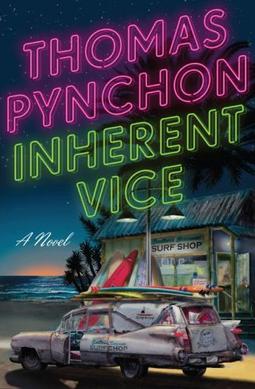
Microreview [book/movie combo}: Inherent Vice

A match made in...well, if not heaven, then at least the South Bay


Book

First of all, I have to preface this by saying Thomas Pynchon is my guy. I haven't read all of his books (they're usually quite long...), but I've read most of them, and re-read most of those. I'm also (no surprise) a fan of genre fiction, so in 2009 when Pynchon published what was touted as a detective novel, I got very excited and picked up Inherent Vice the day it was released. I didn't get a noir/crime/detective genre novel, though. Instead, I got a Pynchon novel whose main character happens to be a P.I.

The story revolves around Larry "Doc" Sportello, a private investigator in the fictional Los Angeles South Bay city of Gordita Beach, California, in 1970, who lives in a perpetual haze of weed smoke and, along with everyone else in the book, under the cloud of the Vietnam War, Nixon White House, and the crashing end of the 1960s, which took place with the Manson murders. The book begins with the familiar P.I. trope of Doc's "ex-old lady" Shasta Fay Hepworth, an aspiring actress and now plaything of the married, high-profile housing developer Mickey Wolfmann, paying Doc a visit. Shasta thinks Mickey's wife and boyfriend may be conspiring to get Mickey involuntarily committed to an asylum in order to get their hands on his money. The next day, Doc is approached at his office by ex-con Tariq Khalil, who is trying to recover money from Glen Charlock, an ex-inmate and member of an Aryan Nation biker gang hired to work as Mickey Wolfmann's bodyguards. Doc begins looking into the related matters, and on his visit to the construction site of Wolfmann's Channel View Estates, he's knocked unconscious and wakes up to find Wolfmann disappeared, Charlock murdered, and Doc himself the prime suspect, thanks to "renaissance" detective "Bigfoot" Bjornsen. He's not really a suspect, but Bigfoot likes to kick Doc around and they have a history. What follows from there, and for the rest of the novel, is much harder to explain. But it involves a secret organization (echoes of the Tristero), faked deaths, lost continents, Hollywood witch hunts, zombies, surf music, Nazis, moral, physical, and legal corruption, and so, so many drugs.

The takeaway is that this book is a tremendously fun and complex (mostly) comic novel that could also be considered pretty much a failure in terms of being a straightforward detective novel. But that's not what it wants to be, and if you're expecting a detective novel, you're going to be waaaay frustrated. Pynchon delights in juggling more and more glass balls, and then gleefully letting them crash to the ground and shatter. This isn't unique to this book — like silly songs and odd sex and long sentences and weird names and and complex, fantastical digressions, they are Pynchon's signature — and if you're willing to take the trip, I'd highly recommend it.


Movie

All of the above does not, to me, sound like a particularly good movie. On it's face, it's too unfocused and meandering a story, with far too many characters, and no clear goal that it sticks with. Judging by popular reactions, many who have not read the book seem to agree. But I think it's because, like I noted above, they're probably expecting a detective movie. I've seen lots of people mention The Long Goodbye and The Big Lebowski as cousins of Inherent Vice, although suggesting that Inherent Vice doesn't measure up artistically.

Allow me to disagree.

First of all, I was in the theater on The Big Lebowski's opening night, and there weren't a whole lot of people in there laughing along with me. And there weren't a whole lot of positive reviews at the time, either. It found its audience later, and that may be the case with Inherent Vice, because time allows movies to be taken for what they are, rather than how the studio marketing department has decided to sell them at the time of their release. To my mind, this is a near-perfect adaptation of Pynchon's book, filled with smart creative decisions that allow it to hang together as a movie.

The first half of the film is an almost literal translation of the events in the book, and then about halfway through, Paul Thomas Anderson made a really smart geographical decision that allowed him to cut about a third of the book out, while maintaining the spirit of those pages. In addition, the movie focuses much more on the relationship between Doc and ex-old lady Shasta Fay, giving the film an emotional through-line that the book simply wasn't that concerned with. Another fantastic decision Anderson made was to give whole swaths of the book's text to the relatively minor character of Sortilege (played by the wonderful Joanna Newsom), which allowed the movie to maintain Pynchon's narrative voice, and helped tie the room together, narratively speaking.

I saw this movie a week ago now, and can't stop thinking about it. I'll probably go see it again this week. I won't suggest it's for everybody — it is not — but it did exactly what it set out to do with very difficult source material. And, as a final aside, I have it on good authority that the author himself is well pleased with how Doc's adventures came out onscreen. If you want to get in touch with me and ask more, you know how to reach me...

The Math

Baseline Assessment: 8/10

Bonuses: +1 for the complex interplay of straight-world, hippie, music, and business cultures (book); +1 for the stunning, single-take scene in which Doc and Shasta Fay have sex, which Katherine Waterston plays both physically and emotionally naked.

Penalties: Nope

Nerd Coefficient: 9/10. Pretty dang great, unless you voted (our would've voted) for Nixon...

Posted by — Vance K. Achiever since March 6, 1998.

Friday, September 6, 2013

Watching Low Winter Sun While White

Enough with the white thugs, Hollywood.

I grew up in Bakersfield, California, a place white thugs (“peckerwoods”) actually exist, a by-product of the Okie migration. A sleep-deprived skinny white dude with “suicidal” tattooed on his forehead is a scary thing. There are lily-white neighborhoods in northwest Bakersfield that I have never—and will never—venture into, day or night.

Bakerfield’s white thug has fictional analogues: Justified’s hillbilly mobsters and the  Nazis who’ll cause Walt to buy that M60 on Breaking Bad. And I’m sure that this white thug exists in every part of America. You just don’t see them often in the movies because they are “white trash,” one of the many thoroughly misrepresented and ridiculed groups on film or in print.

But you see a lot of the other white thug in crime fiction and film. He usually has hair thoroughly greased, a weasely goatee, and wearing a leather jacket over a hoodie. He’s usually Irish Catholic, or at least vaguely ethnic. (Though not Italian. They got their own movies.) And he’s usually from Boston. On FX’s new cop drama Low Winter Sun, he lives in Detroit.

Low Winter Sun takes place in Detroit. And the thugs are white.

The Show is essentially a cop story, and a pretty good one so far. (Is anyone surprised that it’s a remake of a British show?) For my purposes here, I’m only interested in the subplot about a group of skinny white kids who are starting up a drug-and-prostitution business.

That in and of itself doesn’t bother me. Except for the fact that I read a lot of crime fiction and watch a lot of crime films. And, nine times out of ten, the characters are mostly white. Like in fiction and film generally. But I’m not writing about legitimate art. I’m writing about crime.

Before we get to far into this, let me state unequivocally that I don’t for an instant disagree with the fact that in our media, African-American men are depicted overwhelmingly in a negative way. But that’s the news, political discourse, and, disturbingly, Twitter feeds. In the world of seems to me that we don’t see a lot of young black male criminals unless it’s a work marketed as “urban.” Or the black thug is simply there to be arrested, usually by a white, sometimes along with his black partner.

For those films and books for a more “general” audience, expect white criminals.

Granted, white people commit most of the crime in this country. While black and Latino men fill our prisons, this is more a cause of racially-targeted policing, prosecuting, and sentencing practice than of who is actually committing crimes. So, if we want an accurate portrayal of a “criminal,” a white guy isn’t that far off.

But here’s the thing about crime fiction: it often causes us sympathize with the criminal. We identify with him or her, we understand why they do what they do. Even if we’re sure or hope we wouldn’t do the same. And when it dovetails with actually existing social issues—especially race and poverty—crime stories can expose aspects of America that rarely merit the establishment media’s coverage.

Crime fiction has the potential to expose middle class white America to realities never experienced. It doesn’t always have to do so—and it doesn’t have to. Sometimes, most times, I want something fun. But, why not teach me something once in a while?

This is why The Wire was such an important show. For five seasons, it portrayed the reality of black inner city neighborhoods, a stark and sustained examination of the power of the drug economy in poor black communities. For many—myself included—this brutality and desolation was shocking.

How many white people would have watched The Wire had it not been a cops-and-drug-dealer show? Had it been a drama, would people be calling it “the best show ever”?

Justified does the same thing: exposes the drug economy of a poor community, only this one is mainly white. Like west Baltimore, Harlan County is a forgotten community. In many ways, places like Harlan receive even less attention than the inner-city, given our media’s urban and bicoastal biases. I would imagine that many people learned about the pill epidemic in white rural America.

Again not every show has to do this. But, sometimes…

Low Winter Sun’s white thugs seem to me to be more common. (I don’t have any statistics to offer, mainly because I didn’t bother looking.) There’s the whole Boston Irish genre of movies: The Departed, The Town, Mystic River, The Boondock Saints, and other I don’t care to write out. (I’m not happy about having written that last title.) Even Veronica Mars—which I’ve only recently begun watching—has the FitzPatrick brothers. There are Irish Catholic thugs in Balboa County? It gets a pass because the whole show is pretty silly. And good.

Hollywood loves the Irish Catholic or “vaguely-ethnic” thug. It gives handsome white actors who can’t play Italian a chance to portray “real” characters, i.e. urban working class whites. Of course, Hollywood doesn’t make movies about the working class, white or otherwise, unless it’s a movie about a union…or a crime film.

Ray Donovan, in addition to not being very interesting, is Hollywood’s Irish Catholic thug fascination at its most egregious. They finally figured out a way to make a story about Boston Irish criminals, without actually having to go to Boston. Set it in LA!

So, the ball is dropped, Low Winter Sun. You had the opportunity to use a crime story to expose the poverty and desperation of post-industrial black inner-city Detroit. Instead, I get vaguely “ethnic” white guys.


I’ll watch the new episode later tonight.

Wednesday, May 29, 2013

We Rank 'Em: The Hannibal Lecter Movies


“It’s the best show on NBC.” This is how my buddy sold me on Hannibal. Not exactly a ringing endorsement. Community is an unmitigated tragedy. Parks and Recreation is, for reasons I’m not exactly sure about, one of the most overhyped TV shows—following a close second to that utter piece of shit that is The Big Bang Theory. Plus, the cancelled Law & Order. (Fortunately, it's only 17 hours a day on basic cable.) But, with Justified’s season over and Breaking Bad months away, I figured I needed a good weekly crime show to watch. I’m an obsessive, though. It wasn’t enough that I caught up on the show in a week, I decided that I’d watch every Hannibal film. In fact, I had to watch them. Great idea? Probably not, but here are my rankings anyways.

5. Hannibal Rising
A truly terrible—and unnecessary—film. Whereas the rest of the Lecter films go big on suspense, Hannibal Rising is essentially a vengeance fantasy. Here’s the gist: Back in his native Lithuania, a young Hannibal and his family are caught up in the waning days of the WW2. A group of thugs who’d been working as Nazi irregulars hide from the Soviets—who had a penchant for hanging Nazis—and eat Hannibal’s little sister. So naturally, Hannibal will get his revenge—and eat faces in the process. Pretty much everyone involved in this film should be ashamed. Even Thomas Harris, Hannibal’s literary creator, who wrought the story. He at least wasn't thrilled about it, but a paycheck is a paycheck. The cast is made up primarily of Euros, thus bad accents and awkward delivery abounds. Gaspard Ulliel, playing the young Hannibal, doesn’t do much beyond smirking and trying to look evil. And at some point in the film Dominic West gives up speaking with a bad French accent. Paychecks.

4. Hannibal
This actually may be a worse film than Hannibal Rising simply because of the caliber of artists responsible for this boring mess of a film. Well, maybe not Ridley Scott, no stranger to making shitty films over the last few decades. Jodie Foster and Jonathan Demme were wise enough to pass on participating in the film. Julianne Moore tried, more or less, but Agent Starling doesn’t really have much to do in this film other than obsess over Lecter in a basement at FBI headquarters. Anthony Hopkins pretty much smirks, speaks eloquently, and little else. The first third of the film will fool you into thinking the movie might be good. The middle third bores, the last act infuriates. And then the final scene: Hannibal feeding some kid a bit of Ray Liota’s brain. I found the scene offensive, mainly because it was so dumb. (I'm more or less agnostic when it comes to eating Liota's brain.) Dumb—that pretty much describes the film. At least Hannibal Rising is fun to mock.

3. Red Dragon
I don’t remember this film coming out when it did, which was probably a result of the trauma Hannibal induced after I had spent good money to see it. So when Bret Ratner’s directorial credit appeared on the scene, I thought, “Dammit, this is going to suck.” (I still cannot forgive him for what he did to the Dark Phoenix Saga.) But Red Dragon was actually pretty good. The plot moves, Ralph Fiennes play the Tooth Fairy with considerable restraint and creepiness, Hopkins partially makes up for being in Hannibal, and Edward Norton is pretty much Edward Norton. (An aside: Why did we at one point think this guy was the next de Niro? Of course, we was great in Rounders.) The murders were kept fairly simple and therefore, unlike the the serial killers on Dexter, the carnage is anything but cartoonish. In fact, the Hannibal show would have been better served by sticking to such realist brutality—you know, the kind that actually disturbs us—than the overelaborate, overwrought, overthought killings that populate the show. 

2. Manhunter
Red Dragon is an objectively better film than Manhunter, but our #2 gets bonus points for being made in the eighties. And it feels eighties, but in a good way, like Prince or gratuitous nudity in teen comedies. The poster alone screams cocaine and Ronald Reagan. There’s a lot wrong with the film—William Petersen’s inconsistent performance and the very silly violent ending—but none of that bothered me as I watched the film. In fact, I was amazed that I was actually enjoying one of Michael Mann’s movies. Tom Noonan’s portrayal of killer Francis Dolarhyde may actually have been better than that of Ralph Fiennes. Noonan’s Tooth Fairy killer is awkward, quiet, sensitive, and very disturbing without doing all that much. The main drawback of the film is that Brian Cox, despite offering a Lecter almost as chilling as Anthony Hopkins’s, is not given much screen time. Still, a lot of fun.

1. The Silence of the Lambs

This is the Die Hard of the psychological thriller/serial killer film: Genre defining. One need only watch Manhunter and Red Dragon back-to-back to see the impact this movie had. And it’s still chilling as fuck. I don’t think I need to elaborate further.

Saturday, January 5, 2013

We Rank 'Em: The Dumbest Smart Crime Films


I didn't like The Dark Knight. Let's just get that out there right away.

What makes a crime film "smart"? Generally speaking, a director's delusions of grandeur, an ensemble cast, and a refusal to edit. These movies essentially mimic The Godfather, often without success. They seek to be epic, but are often cliched, overblown, and too damn long.

Jackie Brown
Jackie Brown wasn’t loved when it was released. The film was after all Tarintino’s follow-up to Pulp Fiction. Though the movie was fairly boring, we need to consider the context. Pulp Fiction didn’t “define a genre.” It changed film. Disjointed storytelling, ensemble casts, pop culture references: this is what made “cool” films cool in the nineties. Perhaps not coincidentally, Jackie Brown is the least Tarantino of Tarantino’s movies. The movie feels more like what it is: a so-so adaptation of an Elmore Leonard novel. The film has its moments. Pam Grier is mesmerizing in every scene, Samuel L. Jackson is evil, Brigit Fonda delightful, Forester the definition of likable. The problem is that every single scene, every single shot, every interaction between characters, is at least ten seconds too long. Which adds up to a sluggish movie experience.

The Dark Knight
I am sitting in a theater watching The Dark Knight for the first time. I am a lifelong Batman fan, but like most people I have been disappointed with every Batfilm. I am excited about this one. It looks for real. The movie begins. I am enjoying what I see. The movie continues. Heath Ledger is the Joker. The movie ratchets up. A damn fine car chase. The movie ends. The movie continues. OK, two endings. Interesting. The movie keeps on continuing. I am getting annoyed. What was the best Batman adaptation is getting less awesome by the minute. The movie doesn’t end. Introducing Two Face for the sequel. Not bad. The movie refuses to end. The Two Face plot is resolved. Poorly. They’ve wasted the second greatest Batman villain. I now hate The Dark Knight. In the ensuing weeks and months, my alienation from the rest of humanity deepens.

Traffic
The first of Soderberg’s lecture series, Traffic is what I would call a worthy effort. Soderberg’s characters don’t talk, they share information, facts, figures. I wish people on political talk shows were as articulate and persuasive as them. But this sort of messaging does make for good dialog. Traffic’s main problem isn’t its preachiness. The problem is that it’s boring and cliched. Like most of Soderberg's films, it doesn't take any real chances. The anti-drug politician’s daughter is a crackwhore. Consider the irony.


Scarface
I imagine that a healthy chunk of frat boys who’ve bought a Scarface poster or t-shirt have never really watched the film. Maybe they were once in a room where the film was playing. Maybe they've seen YouTube clips. But they didn’t actually watch the movie. It’s long, ridiculous, gratuitous, preposterous. (That sentence is unintentionally Jackie Chilesesque.) And Pacino delivers what is perhaps the poorest performance in an otherwise shameful career. There’s no need to get into Tony Montana’s accent. And even the name. Montana? I grew up in East Bakersfield, I’ve lived in Spain, and I have never met a Latino or Spaniard named “Montana.” If the movie had been made a decade later, the protagonist’s name could have been “Tony Dorito” or “Tony Bell Grande.”


The Town
Crime films like The Town exist for only one reason: to give handsome white actors a chance to play working-class folk. Of course, Hollywood could write stories about actual working class people. Struggling to pay the mortgage, getting laid off, trying to keep the family together. There’s drama in working class lives. But screenwriters are relatively-privileged hacks, who simply pilfer from existing conventions. Instead of realness, we get clichéd characterizations. The Irish Catholic crime film, for example. The Town trots out all the clichés. Thief in love with a civilian. Psycho partner/old buddy from the neighborhood. Obsessed investigator. One last heist. Cool disguises. Plus it takes place in Boston, a place that I am fairly sure exists no longer outside of movies.

Heat
I have lost friendships over the utter piece of shit that is Heat. I have never been so angry at a film. Heat is everything that was bad about the ‘90s movie: too many actors and too many stories; attempts at ironic synchronicity; uninteresting violence; Tom Sizemore. It’s bad enough that Michael Mann just remade his own TV movie. The result is the worst “smart” crime film. Heat could have been good with some heavy editing—considerably more editing than The Dark Knight requires. But Mann had no intention of making a good movie; he was making a great one. Fucking fail. The scene where Pacino hugs the African-American mother of a murder victim is an incredibly thing to watch. A truly execrable film.


Honorable Mention:
Once Upon a Time in America: Long. Boring. That’s all I remember.