Showing posts with label Bungie. Show all posts

Monday, July 6, 2026

Video Game Review: Marathon (Season 1) by Bungie

This ain't a sprint, it's a goddamn marathon.


My teammates are dead. I can hear the enemy team scurrying about; they’re searching for me: the rat in the attic. They know I’m somewhere around and they want to enforce a “no mercy” policy lest the festering rat comes back to bite them. I can hear them continuing their hunt. It feels like they can smell my blood. Then I hear a Recon prime ability activation; my heartbeat quickens: they’re scanning my location. I apply a signal jammer and try to lose myself in a group of bots. Two of the enemies give chase, but I lose them while they fight bots and then I circle back. One player stayed back to loot my teammates. I catch them with their pants down and kill them, then lay claymores around the body bag. I use my Triage Prime ability to bring one of my teammates back instantly (normally a ten-second process). While he heals up, the remainder of the enemy team rushes us. One hits the claymores and goes down to a few bullets, then my teammate and I take down the final player. The rat bites back. Marathon is filled with PvPvE moments like this, from 3v3 to 1v3 to 1v2 to 2v2 to 2v1, all in the matter of a few minutes. What seem like impossible odds are quickly reversed with patience and game knowledge. Not to mention hitting some of your shots.

Marathon
is the latest effort by Bungie, an extraction shooter set in the world of their original Marathon IP from the mid-90s. While the original was a single-player series with some LAN multiplayer options, Marathon of 2026 is anything but: a first-person shooter multiplayer with no single-player elements whatsoever. If any of the old guard are seeking a throwback to the old days, this isn’t it. What Marathon is, however, is absolutely brilliant.

Bungie, despite its developmental and managerial mishaps, makes some good gameplay, and Marathon is no exception. For those who haven’t played an extraction shooter, the goal of the game is to gather loot, get to an extraction point, then leave with it. You can then use the good loot you’ve gotten to use in a future match. If you want to do a quest, or have a key for a loot room, or run Cryo Archive, you’ll want to equip your best gear. Bungie does this with panache. Every element of the game, while not perfect, is meticulously designed and creates an addictive loop that can hook you for hours on end.


The movement is smooth but weighted, with a feel that borders on Halo and Apex Legends. In a similar fashion to the latter-mentioned game, Marathon’s playable entities comprise different shells (playable characters) with different skill-sets. Each one has a tactical, passive, and prime ability, similar to Apex and Overwatch. My main shell, Triage, has three main abilities; med drones that heal over time and prevent a full death of a teammate on a down (not to mention, if a teammate has a drone attached, you can share your consumables with them), an ability that increases the efficiency of volt weapons, and the ability to revive teammates instantly or EMP enemies (or even both simultaneously if you aim it right). In addition, each shell comes with preset baseline stats. These stats can be upgraded over the course of the season either through faction upgrades or implants. For instance, a knife skill of 5 will take five stabs to kill an enemy at full health, but at 100? Two stabs and they’re mince meat. Gunplay feels incredibly responsive with satisfying hit detection. Playing the game is a real treat.

Marathon
is a looker. With top-tier graphics and peak lighting, it would almost make me want to visit if it weren’t so deadly. Tau Ceti IV is a dangerous place, with UESC patrols coming in and out, not to mention alien lifeforms nagging you around every corner (damn you, poison plants!). Every map is distinct and enjoyable to play for its own reasons. Want a smaller, open map with opportunities for mid to long range combat? Perimeter will do the trick. Want to snipe to your heart’s content? Dire Marsh has your back. Close to mid-range? Focus on Outpost. Want to question your life choices and whether one, as a thirty-seven year old person like me, should even play video games anymore? Play Cryo Archive (only available on weekends). Each map is beautifully created and distinct from one another. And while there are certain parts of specific maps that look a little too similar for my liking (like North and South Relay on Perimeter, or some wings of Cryo), the attention to detail is there. Combined with the Codex entries, the artists at Bungie paint a lurid picture of the lives of the Tau Ceti IV settlers.


Speaking of the Codex, this is absolutely brilliant and a huge part of what drew me into Marathon. Certain items that you extract, or specific story missions you complete, or even certain places you discover open up codex entries that share insights into the lives of the scientists and settlers of Tau Ceti IV. What problems did they face? What diseases did they have to fight off? What was this room used for? What were the power dynamics between superiors and inferiors? While much is unanswered, there is much to read up on between matches, and it fills in some holes left by omitting a single-player mode. By doing this, they make four maps feel like part of something bigger. And the best part? Despite dying over and over and over, you can still make progress toward unlocking lore goodies. It makes the defeat not feel so daunting.

One of the biggest elements of this game is the audio. I highly recommend a decent headset for playing Marathon; it can be the difference between life and death and is without a doubt a game saver. Everything, and I meant EVERYTHING, makes a sound. Healing? Makes a sound. Aiming down your sights? Makes a sound. Switching guns? Makes a sound. Crouch walking? Sound. Granted, some things make less noise than others; being able to hear everything puts a player at a distinct advantage, and Bungle has created a game that rewards the ever vigilant. Turn your sound up and focus. The more time spent in the game, the easier it becomes to distinguish what each sound is and how far along an enemy player is toward pulling off a heal or revive.

But what are the flaws? Great question. I didn’t find very many in my multi-month marathon of Marathon. An occasional sound glitch here, a geometry bug there has definitely spoiled an experience and/or ruined a run, but they were rare instances. I’d say the biggest drawback of the game is the learning curve, and that’s not necessarily a negative regarding the game itself, but in the ability to onboard potential players. It took me five hours before I felt like I had somewhat of a grasp on what was going on, even longer to distinguish between the footsteps of UESC and Runner shells, and I am a dedicated gamer. I can only imagine what it would be like for someone a little more casual. The UI management system could be smoother, but like every other aspect of the game, I came to learn it and appreciate its depth. And, as is persistent in most multiplayer games, the occasional weapon balancing issues occur. At first it was the knife, then the bubble/shotgun meta on Cryo Archive, but Bungie has been doing its best to tweak these imbalances.

And don’t get me started on Cryo Archive. It is both the most frustrating and rewarding gaming experience I’ve ever had (in a multiplayer game). I completed a Compiler run (the final raid boss) the night before the end of the season, as well as every Vault except 4, thanks to some friends. The map is so huge it still confuses me in some areas, and despite how much time I’ve spent in there, I still have a ton to learn. I wish the visuals had a little more variance throughout the map (like how Control and Panopticon feel very distinct). But despite the challenge, the reward feels worthwhile.


Marathon
is unapologetically hardcore. There is absolutely nothing about this game that I would recommend to a casual player unless they were willing to take the time to ensure that they learned the game’s systems. You don’t have to be great at this game (I’m not), though it certainly helps. What you need is stubbornness, perseverance, and the knowledge that you will die a lot. Sometimes unfairly, but mostly because you did something stupid. In an age of gaming where everything is made easier (not saying I have any problems with accessibility!), it is nice to see a game that doubles down on its goal, deepening the experience by creating a very hardcore sci-fi multiplayer experience. With Bungie’s regular efforts to update the game and consistently balance not only the gameplay but also the systems within the game, the future for Marathon seems bright, so long as they can retain a decent number of players. My advice: if you are going to play Marathon, expect to play for an entire season and give the game the time it deserves; otherwise, you’re doing both yourself and the game a disservice. With Marathon, I truly believe Bungie has crafted one of the best multiplayer experiences of the last decade and I'm so glad I took the gamble and purchased the game.

--

The Math

Objective Assessment: 9/10

Bonus: +1 for gameplay depth. +1 for world building.

Penalties: -1 for poor player onboarding. -1 for weapon balancing issues.

Nerd Coefficient: 9/10

Posted by: Joe DelFranco - Fiction writer and lover of most things video games. On most days you can find him writing at his favorite spot in the little state of Rhode Island.

Monday, June 1, 2015

Destiny - House of Wolves

Destiny's 2nd Downloadable Content Pack

[Destiny - House of Wolves DLC, Bungie, Activision, 2014]

Wow! A Real Plot!

House of Wolves finally delivers what so many people have been clamoring for in Destiny...a serviceable story line! I know, I know. I was a bit surprised, too. First, some backstory. You knew something was fishy when those Fallen were serving the Queen on the Reef in the original release (For the uninitiated, that's a race of aliens, a matriarch, and an area in space that another race, the Awoken, call home). Well, it turns out your instincts were spot-on. They have started a rebellion against the Queen under a Kell (read: king of a Fallen House, kind of like the Targaryens but much nicer to one another) named Skolas. He has declared himself the Kell of Kells and hopes to overthrow the Awoken and unite the Houses of the Fallen under one banner. Wait, I've seen this before somewhere. It's the Passion and Braveheart mixed up with a smattering of Mass Effect thrown in for that futuristic feel! Sneaky buggers. 


It starts out with the first real mission on Venus. A girl named Petra whose haircut looks like Gary Oldman's from Fifth Element serves as the equivalent of the Awoken Queen's National Security Advisor sends you after the Kell of Kells. Skolas runs from you like a little girl in this mission, but it wouldn't be much of a story if you killed your nemesis and the final boss in the first mission, now would it? Then again, "not very much of a story" has been kind of the theme with Destiny so it wouldn't be a complete shock. Ba-dum-ching! 


From there, you go chasing Skolas around the universe and performing bounties for Petra to earn some pretty worthless junk like shaders and banners. The bounties are actually a pretty nice addition because Skolas' Wolves spawn at certain locations around the galaxy and you don't know exactly when or where they'll show up. When they do, they're tough as nails and require a little help from at least one other player to take down most times. I won't go into spoilers on the rest of the story line, but suffice it to say the plot is significantly better than the paltry offering in the first DLC, The Dark Below, and it's a lot more clear-cut and understandable than the one from the main game. When it comes to the tale they tell, Bungie finally got it right with their new flagship title. 

The Good, The Bad, and the Downright Aggravating 


There are four portions to the House of Wolves, and Bungie has made two of them nearly completely unplayable for the solo gamer. Not only that, but without these unplayable portions, you're stuck at level 32 while the rest of the community moves up to the new cap of 34. Have fun playing PvP with first-gen gear while everybody else is running around with weapons that are 30% more powerful, you loser! Most of their other multiplayer options have come with a component called “matchmaking” that automatically hooks you up with the needed number of players (between 2 and 11, depending on the game mode) to take part in whatever multiplayer mode you choose, be it a Strike Mission where you have to face off against some of the biggest bosses in the game, or the Crucible that contains various types of team vs. team games and an every-man-for-himself option. However, for some reason known only to the programmers at Bungie known forever-onward as elitist punks, certain game modes do not offer the option of matchmaking. There is a reason that this is a major issue.


Bungie has changed the weapon upgrade system, again. The exotic weapons, which you can use in only one slot at a time for your weapons and armor, still just take an exotic shard to max out. Those can still be purchased from Xur on the weekends or by disassembling another exotic. Legendary weapons are where the changes have taken place. They require something called Etheric Light, a substance that has not appeared in the game until now, to max out. In order to level up, you have to max out your armor in order to raise your "Light" level. Therein lies the problem. 


There are only four ways to get Etheric Light: Beating the Prison of Elders on levels 34 or 35, winning the Trials of Osiris, finishing the Weekly Nightfall Strike (a level 32 mission with five enemy modifiers, which give them extreme advantages over the average alien), or reaching levels 3 and 5 in the Iron Banner. Only the fourth offers matchmaking, and it has level advantages disabled so players who have gained Etheric Light in the previous three modes are significantly more likely to win the match. 

Due to the lack of matchmaking, unless you have a Rolodex of friends who have been playing this game since it came out, you are essentially finished with it until September when the next add-on comes out. Either that or Bungie will have to add matchmaking to the parts of the game that offer Etheric Light. Sure, you can play the same Crucible and Strike missions some more, but an entire portion of one section of House of Wolves and 3/4ths of another are unplayable since Bungie, in their infinite wisdom, have decided to make the only parts of the game that allow you to level any higher than 32 impossible to reach for the solo gamer. It just doesn't make any sense to me. Even games that were designed from the ground up as multiplayers like Left 4 Dead and its sequel are playable in solo mode. 


Who Are You, My Mom? 

You Should Get Out There and Make More Friends, Brad!


Does Bungie have some investment in my virtual social life? I'm married with plenty of real friends. I honestly don't need someone to force me to meet people online. Actually, I find it pretty insulting, not to mention annoying, that they would create the game add-on in such a way that nearly half of the content is unplayable for me unless I go out and track down some strangers to play with me. Have you used your headset in an online game of Call of Duty lately? The only people you run into are 8-year-olds with mouths like a sailor, loners that somehow still think teabagging you after they kill you is funny, and people who want to quite literally come to your house and fight you. And potheads. Let's not forget the massive number of gamertags with "420" in them. It's got to be the most common three figure combination on all of Xbox Live and the Playstation Network by a 100:1 margin. I paid the same $20 that every lazy parent of the 10-year-olds online kicking my butt did. 


Should I be penalized because I'm an adult with a job and a life outside of gaming? Apparently Bungie says, "Yes," and that's why I'm finished. I'm done. I'm out. I'll freely admit that I've really enjoyed this game up until now, but I've never felt quite so screwed over by a game developer since I bought E.T. for my Atari. I'll have to think long and hard before I buy another game from Bungie unless this strange requirement to find fellow players somewhere other than inside the gamespace is ceased. I bought House of Wolves without reading too much about it. I just knew it was going to be bigger than the first DLC. However, you can bet I'll do my homework before I shell out any money for the rumored Comet: Planet of Darkness expansion in September. As much as I love being purposefully handicapped or forced into playing with some foul-mouthed kid who drops F-bombs like I take breaths, I'd better be able to play the entire package on my own or using matchmaking, or I'll be leaving Destiny alone for good. 

Thanks for the second DLC rip-off, Bungie. First they gave us half a story. Now they give us half a game. It just doesn't make sense to me at all. Most developers want to include as many players as possible, but they've managed to get rid of this one, and I suspect a few others along with me. Destiny has already caused as much controversy as Grand Theft Auto used to with its paper-thin plot and $20 mini-DLC, The Dink Below. One would think they would want to be as inclusive as possible so as to justify the game's record-setting $1 billion price tag, but apparently they don't need any more players because they've done an excellent job of turning them off and getting rid of them. Honestly, I feel like Bungie owes me ten bucks since I won't be playing half of this game, not due to a lack of desire, but because of their decisions. When I buy a bad game, I'll take the hit to my wallet. When I'm purposefully excluded from an arguably good game I've spent WAAAY too much time playing (We're talking hundreds of hours here, and I don't mean two hundred, or three, or five. Put it this way, when my wife did the math the other day, she just started laughing at me and didn't stop for several minutes), I don't feel completely out of line saying that. I don't expect it, of course, caveat emptor, but I feel like I just got ripped off by someone I'd grown to trust. It's not cool, Bungie, not cool at all. 


Sure, I have friends with Destiny. I'm a nerd, but I'm not a total loner. I have 35 friends on Xbox Live, but only seven of them bought Destiny. Two sold it back because they didn't like it. Three didn't get the House of Wolves expansion pack, and the one who did isn't enough to make up the necessary three-man team needed to play the Trials of Osiris or the Prison of Elders. We're left with one option, get on message boards and search for a third player. I've tried this several times, to no avail. I've pretty much given up on the game at this point, which is too bad. I've been playing it pretty regularly since its release, but as I can't progress any further there's not much reason to keep playing. 

I Guess I Should Talk About the Game


Since this is a review, I'll quit ranting and discuss the new additions to the game. The four new modes are:


  • The story line, which I've already covered. It's tough and flushed out, but unfortunately the only major piece of House of Wolves that really shines for me. You had better have maxed out your character(s) if you want to stand a chance. I already had, so that wasn’t an issue for me, but for players who might have still been working on it in the mid-20s or lower, there’s no way they could make it through without first grinding for a month or so to hit the old level cap of 32.


  • The Prison of Elders. This mode opens upon completion of the main story. It takes place in an actual prison under the Reef, home of the Awoken. It contains many wolves of the various Houses, but it also holds Fallen, Vex, and Cabal captives that have supposedly attacked the reef at one time or another. After Skolas' uprising, the Queen decided she wanted to clear it out, so you and two other players get dropped into an airlock that opens up onto the four branches of the prison. Once one of the doors opens, you have to go in and kill everything that moves. It could be any of the races, and they all have guns for some reason despite being imprisoned, or even a large Vex boss. There are level 28, 32, 34, and 35 challenges. The level 28 challenge includes matchmaking. The other three do not, and therein lies the crux of my issue with this game add-on.  

  • The third new section is called Trials of Osiris. I would love to tell you about this game mode from personal experience, but unfortunately it doesn't include matchmaking so I haven't been able to play it. However, I've read up on it so at least I can tell you what it's about. It's like Skirmish, where two teams of 3 players each battle, but with several important differences. Unlike most Crucible challenges, level advantages aren't disabled, so you can get spanked by higher-leveled characters. Also, there is no re-spawning so once you're dead, you're dead. You play until you win nine rounds or lose three, whichever comes first. Reaching nine wins is one of the few ways to earn Etheric Light, and it doesn't sound easy. 

  • Finally, they’ve added a Level 28 strike mission. Luckily, it has matchmaking. Sadly, it doesn’t offer you a chance at Etheric Light, either. It is fun, as strikes go. It’s somewhat similar to the Cosmodrome strike where you have to take out Sepiks Prime. That's a big, purple ball that's a lot more dangerous than it sounds. In that mission, you and two other players (who were usually combined into a team using matchmaking) have to survive several rounds of attacks from hordes of enemies, then beat a huge robotic walker that looks like a 60-foot beetle, and finally the purple ball itself. In this strike, you must face off against a Kell named Taniks in the first round, another walker in the second, and finish Taniks off in the third because he ran away from you in the first (running away seems to be a thing with these Kells). 

Summary

While I found the story to be wholly satisfying, it wasn't worth the aggravation of being stuck unable to play the other two large portions of the game without lots of online begging and a little luck, one of which I hate and the other I totally lack, apparently. I can only hope that one of the upcoming patches solves this issue, because it's ridiculous not to have matchmaking in all the game modes. They have the technology. They can rebuild it. The question is, after spending a billion dollars making the thing, do they have six million left over? 

The Math

Objective Score: 4/10. I'll give them the benefit of calling the new strike mission a fourth section and only half the game unplayable, but it's a stretch. Therefore, I've got to take half their points away from the get-go. 

Bonuses: +1 for finally getting the whole "story thing" right.

Penalties: -1 for, well, if you don't know by now then you haven't been paying attention at all and I'm not going to repeat myself. 

Nerd coefficient: 4/10. Problematic, but has redeeming qualities.


Tuesday, October 7, 2014

A Brief History of Bungie

Today we welcome Brian to the Nerds Feather family! Brian is an ex-Army veteran who works in IT in the Midwest (USA). He loves video games, science fiction and fantasy, tabletop RPGs, and long distance running.
 

From Darkness to Destiny

(2014) When I get into a game, I often think about where the game came from. What were its influences? Who made it? What else did they make? This is especially rewarding when I come across a game from a developer that's flown under my radar, and suddenly I have a back catalog of interesting new games to try out. While Bungie is far from flying under anyone's radar, they have been around far longer than some people are aware, with a history reaching years before Halo. This is a brief history of what led to their latest release, Destiny.


(2001 - 2010) The Halo series is what Bungie is most famous for. Spanning five Bungie-developed games (Halo 1 - 3, ODST, and Reach), the original Halo: Combat Evolved is what threw Bungie into the mainstream spotlight. What I find most interesting about the development of Halo: Combat Evolved is that it started life as a real-time strategy game aimed at Mac and PC. In fact, it was unveiled by Steve Jobs at Macworld 1999! You can see a lot of elements of the original Halo in the unveiling trailer, despite being demonstrated in a third person perspective. What's clear is that Halo went through many iterations and changes before release, as many games do.


(2001) Oni is a weird one, right? It's a Bungie game because it was developed by the remote Bungie West studio, but it was their only game. When Microsoft bought Bungie, part of the deal was that their previous arrangement with Take 2 meant Take 2 would continue to publish Oni while the rest of Bungie fell in with Microsoft. Oni is a huge departure from the rest of Bungie's catalog. It's an anime-inspired third-person action game. It's got guns and a fairly deep melee fighting system. Unfortunately, it was completely hamstrung by loose controls and a horrible camera, as typically what kills third-person action games. Combined with being a pretty difficult game, I personally never made it past the first boss. It exploited the worst qualities of the game: aimed shooting and nimble dodging of moving obstacles. A lot of the ideas in Oni were cool, and the main character is clearly a rip-off of Major Motoko Kusanagi from Ghost in the Shell, but the game was nothing to get excited about.


(1997 - 1998) Did I say that Oni was Bungie's biggest departure from their history? Because the Myth series is actually the biggest. They are fantasy real-time strategy games. Making them stand out from other RTS games from that time (Command & Conquer, Warcraft 2), Myth featured a fully 3D battlefield (meaning you could rotate the camera to almost any perspective) and there was no resource management. With a fixed number and composition of units, you had to rely on formations and tactics to beat an enemy that often outnumbered and overpowered you. They also had friendly fire on at all times, so if you didn't tell your grenadiers to stop throwing bombs before your melee fighters got in their range, they'd happily bomb the crap out of your own units. Every unit under your command had a name, and they could gain in ranks through surviving previous missions.

All of these unique qualities made Myth stand out from the rest of the RTS games of the time. You couldn't win with overwhelming numbers. You couldn't win without micro. Positioning was important, and no blob of units was going to survive for long. It was very comparable to how the Total War games depict combat, except on a much smaller scale.


(1994 - 1996) The Marathon series is to Macintoshes, as the Doom series is to PCs. They came out after Doom, and benefit from a number of improvements, but they play pretty close to the same. Like Doom, Marathon is a 2.5D first-person shooter. Marathon didn't have jumping but it did have some low-gravity platforming. Most weapons needed to be reloaded but there was no reload button, so managing when your magazine ran out of bullets was important. The magnum starter pistol that was so popular in Halo: Combat Evolved got its start here in Marathon, as did dual-wielding, and AI characters. In fact, the bulk of the story in the Marathon series is regarding artificial intelligences gone insane. It also involves alien invaders, alien enslavement, cyborg super-soldiers, and alternate realities. The story is largely delivered through computer terminals that can be found scattered through the levels of the game, much like the terminals scattered throughout Halo: Combat Evolved Anniversary Edition and Halo 4. They're all text-based, but they added so much to atmosphere of the game by giving out bits of plot to those who found them.

Like Doom, the Marathon series also featured multiplayer, demo recording, and a long-living map-making community. Marathon 2: Durandal was given an HD remake and released on Xbox 360. Eventually, Bungie released all three Marathon games for free! They can be played on modern hardware using the Aleph One source port, and they're still very playable to those of us used to Doom. You can get all three Marathon games in handy platform-specific bundles here: http://marathon.sourceforge.net/


(1993) If Marathon was the Doom of Macs, then Pathways Into Darkness was the Wolfenstein 3D. Like Marathon, it improved upon the standards set by Wolfenstein 3D. Pathways was a more complex games and it had a time limit. In the game, you are racing against the clock to stop an ancient god from awakening and destroying the Earth. It had an inventory system, puzzles, and an item that allowed the player to speak with the dead. Through this, they would learn parts of the story as well as mission hints. I can't say I've played Pathways Into Darkness, which is a bummer because it sounds pretty awesome! But Blendo Games, makers of several fantastic indie games, did an abbreviated remake using the Doom 3 engine called Pathways Redux that can be found here: http://blendogames.com/older.htm

And that's that! There are older Bungie titles, but they're far lesser known than these. As can be seen by their history, Bungie has a way of taking existing ideas, adding their own innovations, and making some amazing games. Despite the relatively mixed reception to Destiny, I'm hoping they continue to make new and exciting games for a long time.

Friday, September 19, 2014

Destiny

[Destiny, Bungie, Activision, 2014]

One of the Biggest Video Game Releases in History, You Say?

Well, probably, but not as big as Activision Blizzard initially reported. Although they announced $500 million in first day sales, they only shipped $500 million worth of units to stores, but the actual sales were quite a bit lower. They really only made about $325 million in sales during the first five days on Destiny. However, that's nothing to smirk at, and Call of Duty: Ghosts did the same thing claiming $1 billion sold on day one when the actual number was also significantly lower. It has been one of the most hyped games the public has ever seen with the television marketing campaign costing somewhere in the neighborhood of $6.7 million. However, the fact that they didn't release early copies to critics for release day reviews was a bit disconcerting. When a movie does that, you know it is going to be a stinker. The reasoning Bungie gave for the decision, and it does make sense, is that they wanted critics to have the ability to play a fully populated MMO (Massively Multiplayer Online) rather than one with only a few other critics online at the time. With MMOs, there are thousands of people online at the same time occupying the same virtual worlds, so it would make a difference in how the game appears if critics gave it a try without all of the actual players running around doing missions in the area. It would also make some parts of the game unplayable as they require three-man teams to even begin, much less complete. Anyway, enough with the hype, let's get to the meat of the game!


Gameplay

I'll cut to the chase. This game is about as polished as they come with regard to mechanics. It plays like a Porsche drives. Smooth. You start out by choosing between three types of protagonist. There are Titans, which are the tanks of the game. They can take massive amounts of damage without dying, but lag drastically behind the other two in movement and damage recovery. The second is the Hunter. This character class moves quickly and easily with a high agility score. Unfortunately it takes forever to heal with the lowest recovery setting of the three classes. The third type is the Warlock. This is your typical mage that can recover quicker than the other two, but doesn't have very dangerous attacks outside of its special magic moves. The Warlock isn't the quickest of movers, either. All of that said, I've played all three characters and it seems like Bungie did a pretty good job of balancing out their various skills and deficiencies. Each character also has two subclasses that define their special moves. You should choose your subclass early because any upgrades to one won't transfer over to the other. Pick a subclass based on its special moves and stick with it throughout the game. 


Beyond that, you can choose between Human, Awoken, and Exo. You can customize the look of your character, but race and the appearance are only cosmetic. They don't effect how the character plays at all. Humans are, well, like us. They managed to survive the destruction wrought by the Darkness, dubbed the Collapse, and are just trying to survive in the last city not controlled by its minions. The Awoken are humanoids with bluish skin and an ethereal glow about them. They are based on mythological creatures such as elves, vampires, ghosts, and angels. The Exo are either machine or cyborg, I've read both definitions. They supposedly survived the Collapse but have no memory of their history before that. 


There are four species of alien enemies that fight for the Darkness: the Fallen, the Vex, the Hive, and the Cabal. The Fallen are scavengers that are attempting to take over the Earth. They are filthy urchins that constantly look for anything of value left behind after the Collapse. Vex are robots that employ a hive mind, all connected to a single consciousness. They came to our universe through warp gates from another dimension and mostly populate Venus. Hive are a species of undead that live on the Earth's moon. Their strength is in numbers and they tend to attack in hordes. Finally, the Cabal are massive creatures that employ thick armor and huge metal shields for protection. They generally stick to Mars missions and are the last species you encounter before finishing the campaign. None of the species like each other and you can often sit back and watch firefights where they kill off one another, leaving a much smaller force for you to take out before moving further through the game's many maps. Unfortunately I had to dig up nearly all of this information about the enemy species online because so little of their background stories is covered in the game itself due to the painfully thin plot. But more on that later. 


Special Moves


Each character type has two special moves. The first is called a Super Charge and it is the more powerful of the two. The second is a melee attack that has various effects depending on character type and subclass. All special moves can only be used sparingly and take time to recharge. Grenades act the same way. 

Titan


The Titan's Super Charges are titled Fist of Havoc and Ward of Dawn. The Fist causes the player to jump in the air and come crashing down, slamming both clinched hands into the earth causing high levels of damage to any nearby enemies. Ward of Dawn creates a small shield through which the player can fire but no projectiles can penetrate. The Titan's melee attacks are dubbed Storm Fist and Disintegrate. Storm Fist is simply an overpowered punch that does a lot more damage than your average pop to the jaw. Disintegrate actually has nothing to do with disintegration. After you smack an enemy you absorb any incoming attacks and transform them into ammo, health, or a quick recharge for Storm Fist. 

Warlock


The Warlock's Super Charge attacks are referred to as Nova Bomb and Radiance. Nova Bomb hurls a bolt of damaging light at the enemy. Radiance boosts your skill recharge speed, damage resistance, and melee damage resistance for a brief period. The Warlock's melee attacks are called Energy Drain and Scorch. The first one, strangely enough, drains energy. Heh. It removes health from your enemy and speeds the recovery of your health, grenades, or Nova Bomb. More than any other character class, I found the effects to the Warlock's Super Charge attack to be vastly superior to its melee attack. 

Hunter
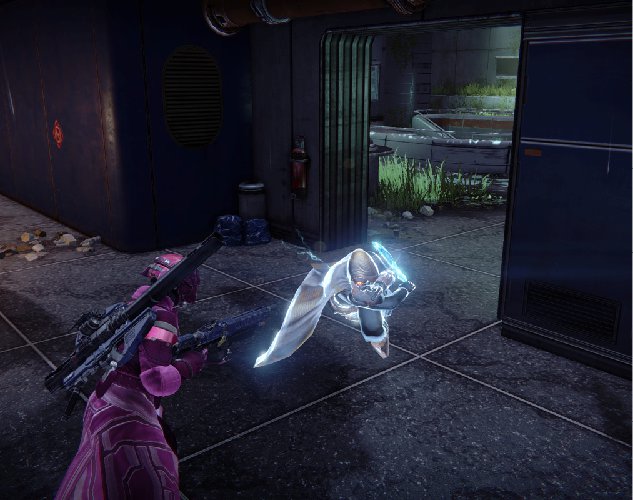

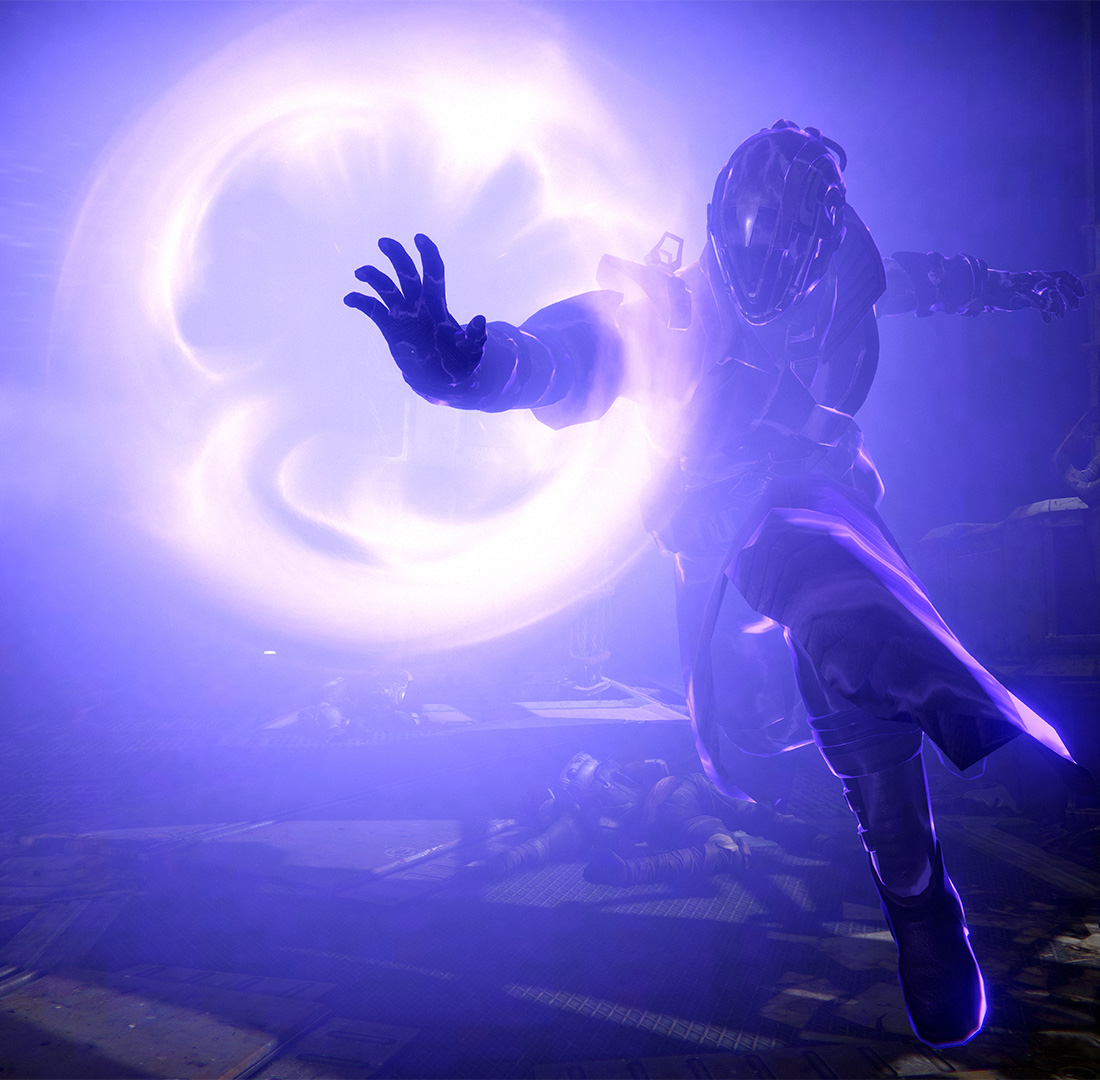
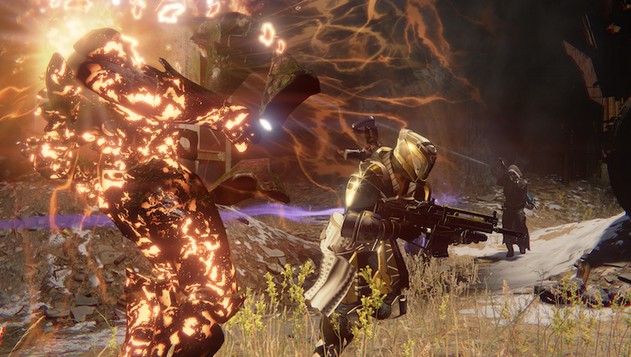
The Hunter's subclass' Super Charges are Arc Blade and Golden Gun. These two are easily the most visually appealing of all the special moves. Arc Blade generates a knife of pure energy for about eight seconds, letting you attack as many enemies as you can in that time period. For most, one shot is all it takes. Bosses may require multiple hits, but the attacks come so fast that they can't do anything but reel in pain from the impact. With Golden Gun, you fly up into the air in a yellow whirlwind of flame, landing with a fiery pistol in your hand. You have three highly damaging shots with the revolver that, again, take out nearly anything but a boss with a single shell. The Hunter's melee attacks are Throwing Knife and Blink Strike. It's as if Bungie had to balance the beauty of the special moves with the plainness of the melee attacks. Throwing knife is decently effective, but no more impressive in graphic design than a knife thrown in Call of Duty. Blink Strike is also unimpressive, being merely an extended melee attack with more range than your standard stab with a kitchen knife. 

Bang Bangs and High Fashion


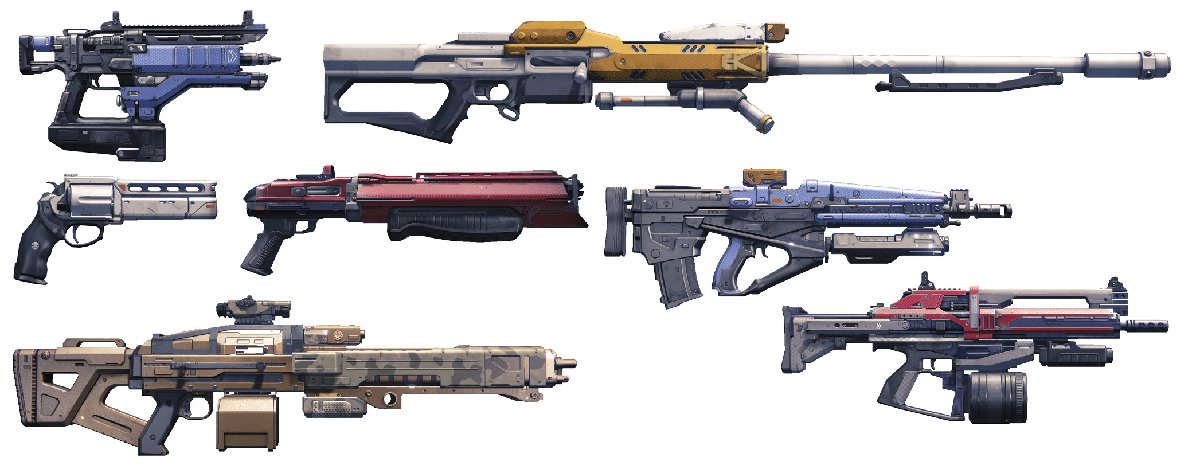
There are a plethora of weapons and armor to choose from in Destiny. Your character carries one primary weapon, one secondary weapon, and one heavy weapon. The primary weapons include auto rifles (machine guns), hand cannons (revolvers), scout rifles (hunting rifles), and pulse rifles that fire three-round bursts. The secondary weapons are the shotgun, fusion rifle, and sniper rifle. Heavy weapons are just a rocket launcher and a machine gun. Each weapon group can have a variety of upgrades. I won't bore you with every single option as that list would take up three pages and this review is long enough already. Some examples are Quickdraw, Upgrade Damage, Kinetic Damage, Extended Mag, Hawkeye, Warhead Verniers, Reactive Reload, and Void Damage just to name a few. Upgrades are available on every weapon and must be earned in battle. On top of that, you have to have enough Glimmer, the primary currency of Destiny, and, with many, additions like Ascendent Shards, Weapon Parts, and Plasteel Plating. 

The armor consists of four different pieces: the helmet, gauntlets, chest armor, and leg armor. Each one carries with it bonuses, just like the weapons. Not only do they have the same upgrades as the guns, but they also hold bonuses for Intellect, Discipline, and Strength. That's just a short way of saying your Super Charge, your specialized grenades, and your melee attack, respectively. You also wear a class identifier, which is a scarf for the Titan, a cloak for the Hunter, and a bond for the Warlock. You can also purchase these pieces of clothing in order to ally yourself with one of the cults (More on them later). While wearing a piece of cult clothing, all of your reputation points go toward that cult rather than your Vanguard score. It makes little difference beyond allowing you to purchase items from specific vendors. There is no bonus or upgrade given by wearing one piece over another. 


Campaign


While the gameplay in this game is fantastic, its one shortcoming is in the story. I suspect the reason for so many of the hot-or-cold reviews that have been coming out is the plot. It is very vague and there isn't much to it. The Traveler - a massive, moon-sized, planet-looking thing - comes to Earth and teaches us about space travel. Humans populate Mars and Venus. Then, the Darkness, the Traveler's ancient enemy, destroys nearly all of mankind. A small group of humans, Awoken, and Exo survived and are fighting the minions of the Darkness. There. That's the whole thing in four sentences. Of course there are more detailed mini-stories in the missions, but that's the gist. The missions usually consist of traveling to somewhere, killing a bunch of minor enemies, then killing a boss and going back to the Tower for a reward. Usually I'm worried about giving away too many spoilers in a review but with Destiny it's hard to do so because there's just not that much to spoil. It's unfortunate that the story doesn't have much depth because the rest of it is spectacular, but sadly that's the case.  


For players that were expecting the next science fiction epic like Halo or Mass Effect, they will be sorely disappointed with Destiny. The universe is sparse and barren. The massive hype of the next epic science fiction masterpiece has fallen painfully flat. For players that just wanted a finely polished FPS MMO, there are few out there that are better. I believe that the main culprit behind all of the highly polarized reviews, both from professional critics and users, is the thin plot. It's like Bungie spent so much time building lush, verdant landscapes and intelligent, believable AI that they ran out of time and threw the story together in the last thirty minutes before the deadline. I fully expect that Destiny 2 will flush out the universe quite a bit due to all the negative press. At least I hope so, because the franchise has such great potential that it would be a crying shame to let it remain so unfulfilled. 

There is a soft cap of 20 on every character, but it is possible to go beyond that ceiling by collecting "Light Points." The only way to get light points is by equipping gear that has a certain light point amount assigned to it. With this light-infused gear on your character, your level can rise above the level 20 cap. I've seen players online reach as high as 27, but I'm not sure there is a true cap on your character. Due to the limit of 100 Vanguard/Crucible marks (other currencies) you can accrue per week, it's hard to tell this close to the game's release what the true limit is, if any. It isn't necessary to join a cult in order to get gear with high light points, not to mention damage/defense numbers, but it helps. 


Multiplayer Games


Initially the pure multiplayer aspect, dubbed the Crucible, left me feeling more than a bit disappointed. There was only a single game type on the Xbox One. I'm not much of a multiplayer addict. I just prestiged my first character on Call of Duty: Ghosts last month if that's any indication. Due to that fact, I've done less-than-spectacularly in the Crucible. That said, I've managed to level up to 24. They equal out the leveling for the purposes of multiplayer, but I suspect from my numerous deaths that the same can not be said for the weapons and armor. I'll shoot someone five times with a high-powered rifle and they just hit me once with a machine gun and I'm the one that goes down. Something's not right about that.


Vanguard


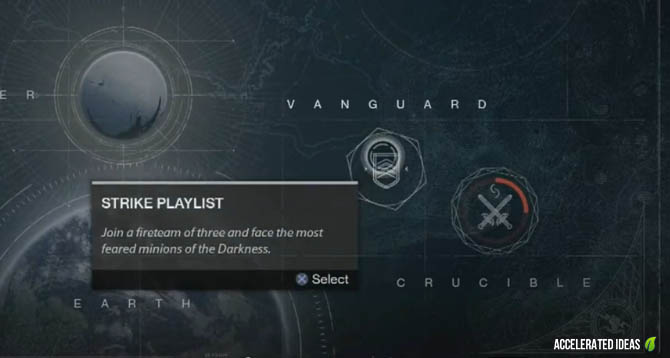
The Vanguard is a game mode where you take on Strike missions with two other players. There are four levels of Vanguard mission to choose from of varying difficulty. The game requires that you undertake these missions with three players, but that doesn't mean you have to have two other friends online in order to complete them. The servers do a good job of matching you with similarly-leveled players. These missions offer you Vanguard Reputation and Marks that can be spent with the Vanguard and cult merchants in the Tower to purchase special armor and weapons. There is a limit of 100 Vanguard/Crucible Marks per week that can be earned. I'm not sure if that's to keep the multiplayer from becoming an unbalanced mess, to keep players coming back each week for more, or a little of both. Either way, I've maxed out my Vanguard/Crucible Marks for the week so my desire to run these slightly more difficult missions has wained until next Monday. 


Crucible

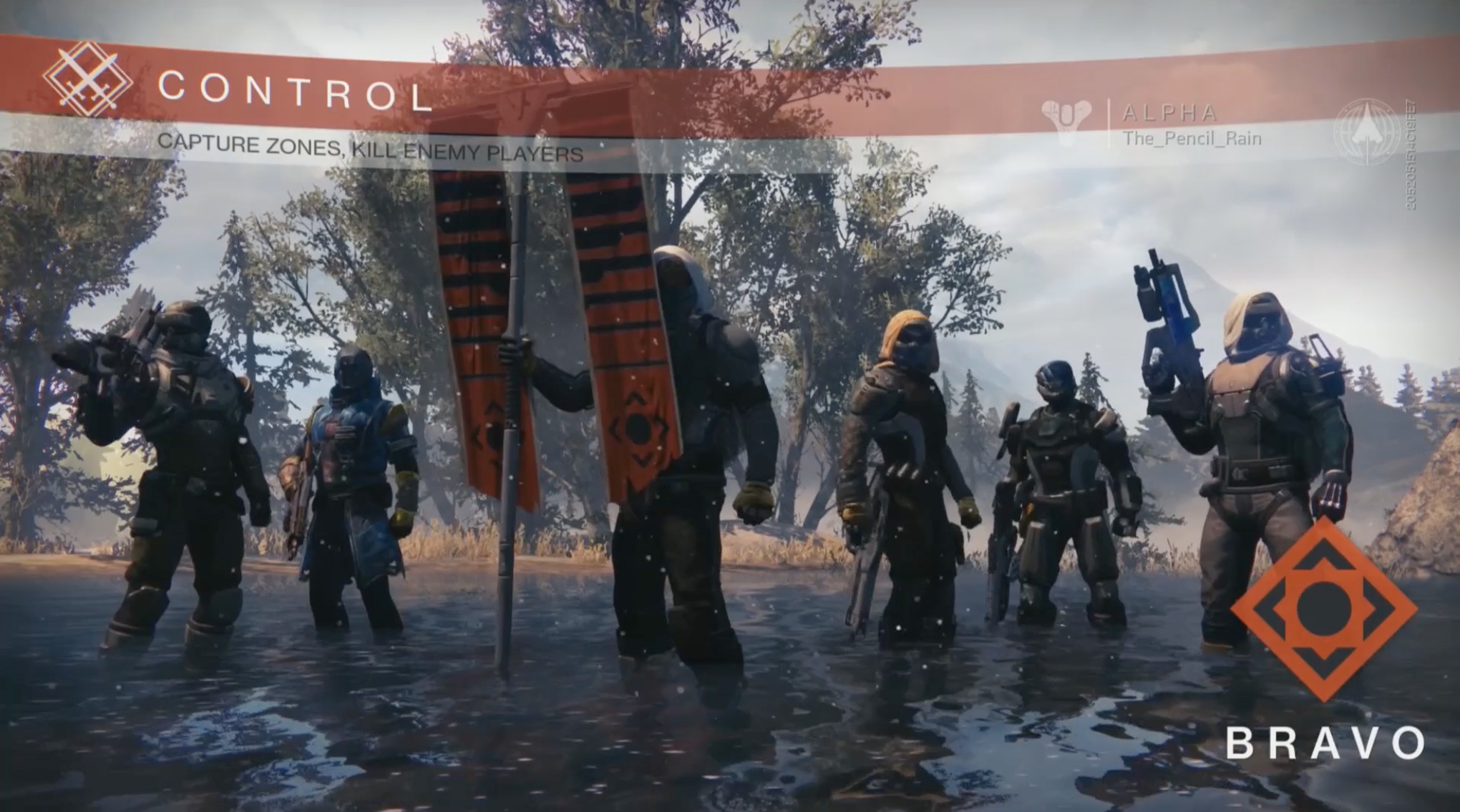
The Crucible is the game's true multiplayer portion. It started with only one game type on day one of the release, but it has since expanded to four. That's still a sadly low number for the developers who essentially created the multiplayer craze with Halo, but it's enough to keep a casual multiplayer participant like myself happy for the time being. The four game types are called Control, Clash, Rumble, and Skirmish. In Control, two teams of three players have to capture three zones and hold them. Doing so increases your point total for every kill. Clash is classic team deathmatch with six gamers on each team. Rumble is an every-man-for-himself game where every one of the six players is out for the others' blood. Skirmish is just a smaller version of Clash where the teams are made up of three players instead of six. In Crucible matches, you win Crucible Reputation and Marks, which are spent on weapons and armor from one of the three cults. 


Join a Cult


There are three factions in Destiny. Bungie refers to them as "cults." They include The Future War cult, the Dead Orbit cult, and the New Monarchy. You have to reach level 20 before you can join up with one of them, but they're the only way to get the most powerful weapons and armor in the game. Well, almost the only way. You can stay non-affiliated and use your Crucible Marks to buy things from the Crucible salespeople in the Tower. All four factions' pieces of armor contain a light point amount. As mentioned before, light points are the only way you can level up your character above the soft 20 cap. From what I can tell, the cult contacts in the game (there are three, one for each group) and the two Crucible salespeople (a non-political, general group) have the best weapons and armor for sale when compared to the Vanguard leaders.  
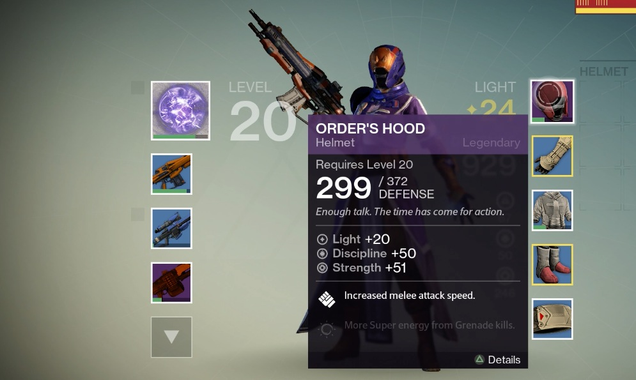

There are advantages to choosing one cult over another based on the way you choose to play. Each one has an effect on two of your three attributes, those being Intellect, Discipline, and Strength. Choosing a cult will give you the opportunity to gain bonuses to these attributes through their armor. If you purchase Dead Orbit armor you get a bonus to Discipline and Strength, reducing the cooldown time of your grenades and melee attack. Joining the Future War gives boosts to your Intelligence and Discipline (grenade and Super Charge cooldown). The New Monarchy offers you the chance to get bonuses in Intelligence and Strength (Super Charge and melee). Each group has a history that isn't really covered in the game and I won't get into here. You don't use Glimmer to purchase items from the Dead Orbit, New Monarchy, Future War, or Crucible vendors. Instead, you have to earn Vanguard and Crucible Marks. These are an entirely separate type of currency that must be earned by doing Strike missions for Vanguard marks or Crucible battles for theirs.

Music and Environment


Two places apart from the gameplay where Destiny really shines are the lush soundtrack and the impressive, varied battlegrounds. That shouldn't be a surprise, though. Bungie used the same duo of composers that wrote the music for the Halo series, Michael Salvatori and Martin O'Donnell. Even Paul McCartney collaborated on the project. Yes, that Paul McCartney. The music fits the game perfectly, building with the action and easing off into lush soundscapes for the menus and load screens. The suspenseful parts of the game were made even more intense with spooky ambience. There are even seamless transitions between portions of the game where there normally would have been only silence. 


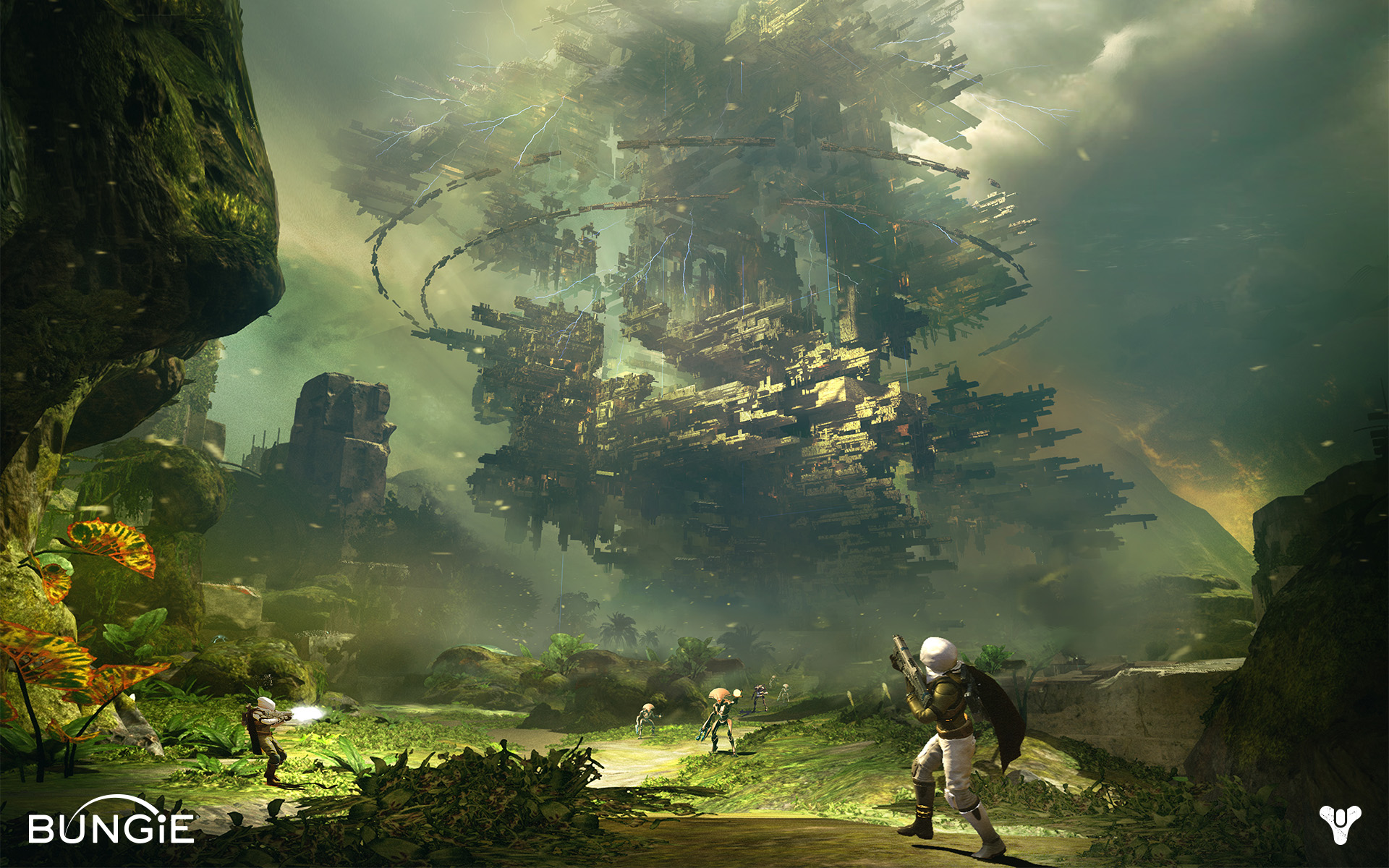
The environments are as sumptuous and varied as the planets on which they represent. The Earth portions take place in what used to be Russia and it is every bit a decrepit wasteland as Mad Max or Cormac McCarthy's The Road. The moon looks just like the footage we've all seen dozens of times in movies and on television. The Red Planet appears like the shots that were beamed back from the Curiosity rover. Some poetic license was taken and "ancient" ruins were added to give the maps some variety. Finally, Venus emerges as a tropical rainforest after it had been developed by terraformers. Suffice it to say the graphics in this game are second-to-none. 


Tick, Tock, Tick, Tock...

According to www.howlongtobeat.com, Destiny takes ten hours to complete the main story and seventeen-and-a-half for the campaign plus extras. I found that to be a bit of an underestimate. I did all of the missions in the game including the Strike missions and easily spent twenty-plus hours on the campaign before I even touched the multiplayer modes. Now, I'm a bit of an OCD perfectionist when it comes to finishing a big game that I'm enjoying (That's a nice way of saying I'm anal), but even so, it isn't something you can do in a day like the Call of Duty campaigns. So plan on a good week or so unless you're one of those people who partakes in eight-to-ten hour marathon gaming sessions. 


The Math

Objective Score: 9/10

Bonuses: +1 for being one of the smoothest games I've played, mechanics-wise, not to mention it's just plain beautiful. Plus, your sidekick, Ghost, is voiced by Tyrion, Game of Thrones' Peter Dinklage!

Penalties: -1 for the paper-thin plot. I mean, come on! What did they spend, twenty or thirty minutes writing the story? This is supposed to be the next big science fiction franchise, but instead it's merely an FPS MMO, albeit a very good one. Here's hoping Destiny 2 brings a lot more to the universe than Bungie's first outing did. -1 for the painfully long load screen scenes. I realize that it would take light years to reach Venus, but that doesn't mean you have to take it literally in the game for the sake of realism. I probably spent at least 2 hours of my life during the last week watching my ship hover in space between missions as it loaded up the Tower or the next mission. 
Nerd Coefficient: 8/10.  Well worth your time and attention.